

The DOI matches its Crossref record; 38 of the 38 references it cites were found in a registry or an index.
CRISPR/Cas9 mediated targeted mutagenesis of the fast growing cyanobacterium Synechococcus elongatus UTEX 2973
Open accessAbstract
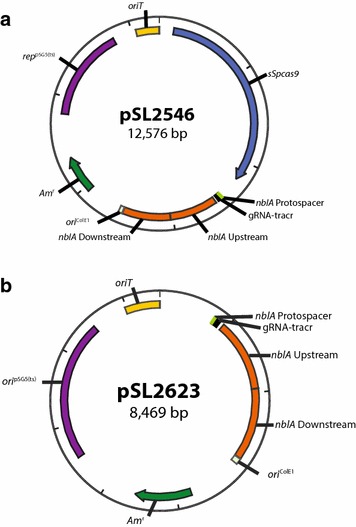
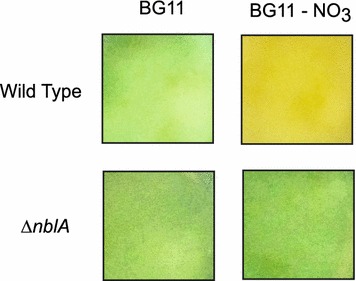
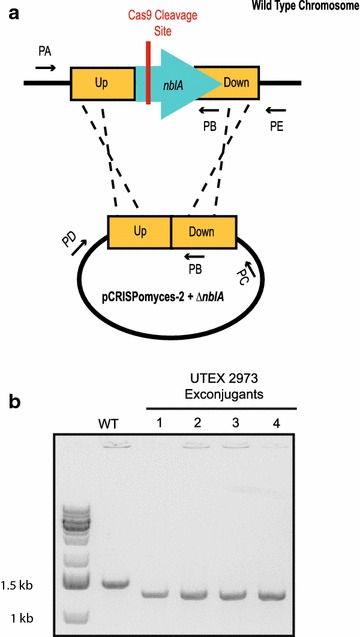
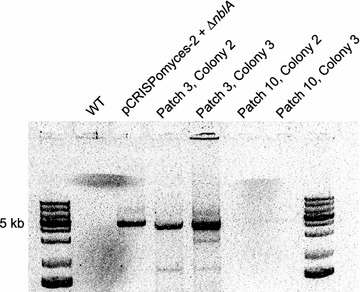
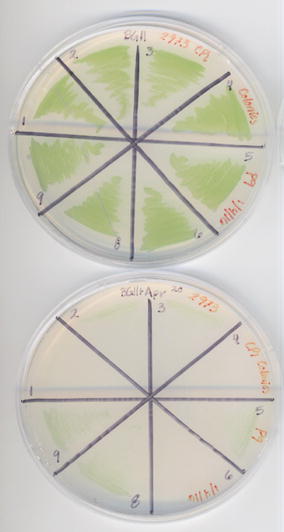
BACKGROUND: As autotrophic prokaryotes, cyanobacteria are ideal chassis organisms for sustainable production of various useful compounds. The newly characterized cyanobacterium Synechococcus elongatus UTEX 2973 is a promising candidate for serving as a microbial cell factory because of its unusually rapid growth rate. Here, we seek to develop a genetic toolkit that enables extensive genomic engineering of Synechococcus 2973 by implementing a CRISPR/Cas9 editing system. We targeted the nblA gene because of its important role in biological response to nitrogen deprivation conditions. RESULTS: First, we determined that the Streptococcus pyogenes Cas9 enzyme is toxic in cyanobacteria, and conjugational transfer of stable, replicating constructs containing the cas9 gene resulted in lethality. However, after switching to a vector that permitted transient expression of the cas9 gene, we achieved markerless editing in 100 % of cyanobacterial exconjugants after the first patch. Moreover, we could readily cure the organisms of antibiotic resistance, resulting in a markerless deletion strain. CONCLUSIONS: High expression levels of the Cas9 protein in Synechococcus 2973 appear to be toxic and result in cell death. However, introduction of a CRISPR/Cas9 genome editing system on a plasmid backbone that leads to transient cas9 expression allowed for efficient markerless genome editing in a wild type genetic background.
Overview
The claims and statistics of this paper haven’t been checked yet.
Run the check — free, no account needed. It reads the open-access text and checks the sources it cites.
Integrity signals
Registry
Cites
Statistics
Figures
Verification
Claims the paper makes
The claims and statistics of this paper haven’t been checked yet.
Run the check — free, no account needed. It reads the open-access text and checks the sources it cites.
Claims other papers make about this one
Each is checked against this paper’s own text: does it say what the citing paper says it does?
The cited source says what the claim attributes to it.
In the citing paper
“Over the past decade, significant progress has been achieved in the development of genetic tools for cyanobacterial metabolic engineering, including improved transformation methods, modular DNA assembly systems, synthetic promoters, and CRISPR-based genome editing technologies [10,16,17].”
From Cyanobacteria as a Photosynthetic Chassis for Metabolic Pathway Engineering with Heterologous Gene Expression (2026) · cites this paper as [17]
Self-check
Percentages, sums and reported differences re-computed from the paper’s own numbers.
The self-check needs the paper’s full text.
Citations
Cites
Multiplex Genome Engineering Using CRISPR/Cas Systems
Cong, L., Ran, F. A., Cox, D., Lin, S., Barretto, R., Habib, N., Hsu, P. D., Wu, X., Jiang, W., Marraffini, L. A., et al. (2013) · Science · doi:10.1126/science.1231143 · Cited by 15,339
Friedberg, E. C., Walker, G. C., Siede, W., Wood, R. D., Schultz, R. A., & Ellenberger, T. (2005) · doi:10.1128/9781555816704 · Cited by 5,683
CRISPR-Cas systems for editing, regulating and targeting genomes
Sander, J. D., & Joung, J. K. (2014) · Nature Biotechnology · doi:10.1038/nbt.2842 · Cited by 3,153
CRISPR RNA Maturation by Trans-Encoded Small RNA and Host Factor RNase III
Deltcheva, E., Chylinski, K., Sharma, C. M., Gonzales, K., Chao, Y., Pirzada, Z. A., Eckert, M. R., Vogel, J., & Charpentier, E. (2011) · Nature · doi:10.1038/nature09886 · Cited by 2,563
CRISPR/Cas, the Immune System of Bacteria and Archaea
Horvath, P., & Barrangou, R. (2010) · Science · doi:10.1126/science.1179555 · Cited by 2,471
RNA-guided editing of bacterial genomes using CRISPR-Cas systems
Jiang, W., Bikard, D., Cox, D., Zhang, F., & Marraffini, L. A. (2013) · Nature Biotechnology · doi:10.1038/nbt.2508 · Cited by 2,429
RNA-guided genetic silencing systems in bacteria and archaea
Wiedenheft, B., Sternberg, S. H., & Doudna, J. A. (2012) · Nature · doi:10.1038/nature10886 · Cited by 1,851
CRISPR-Cas Systems in Bacteria and Archaea: Versatile Small RNAs for Adaptive Defense and Regulation
Bhaya, D., Davison, M., & Barrangou, R. (2011) · Annual Review of Genetics · doi:10.1146/annurev-genet-110410-132430 · Cited by 914
Recombinational Repair of DNA Damage in Escherichia coli and Bacteriophage λ
Kuzminov, A. (1999) · Microbiology and Molecular Biology Reviews · doi:10.1128/mmbr.63.4.751-813.1999 · Cited by 897
Lindberg, P., Park, S., & Melis, A. (2010) · Metabolic Engineering · doi:10.1016/j.ymben.2009.10.001 · Cited by 596
Cited by
Sorted by citations
Items 101–200 of 232
Fast-growing cyanobacterial chassis for synthetic biology application
Li, Z., Li, S., Chen, L., Sun, T., & Zhang, W. (2023) · Critical Reviews in Biotechnology · doi:10.1080/07388551.2023.2166455 · Cited by 31
The role of systems biology in developing non-model cyanobacteria as hosts for chemical production
Mukherjee, B., Madhu, S., & Wangikar, P. P. (2019) · Current Opinion in Biotechnology · doi:10.1016/j.copbio.2019.10.003 · Cited by 30
CRISPR-Based Gene Editing in Acinetobacter baumannii to Combat Antimicrobial Resistance
Junaid, M., Thirapanmethee, K., Khuntayaporn, P., & Chomnawang, M. T. (2023) · Pharmaceuticals · doi:10.3390/ph16070920 · Cited by 35
Racharaks, R., Arnold, W., & Peccia, J. (2021) · Journal of Microbiological Methods · doi:10.1016/j.mimet.2021.106315 · Cited by 29
Bio-solar cell factories for photosynthetic isoprenoids production
Ko, S. C., Lee, H. J., Choi, S. Y., Choi, J., & Woo, H. M. (2018) · Planta · doi:10.1007/s00425-018-2969-8 · Cited by 30
A toolbox to engineer the highly productive cyanobacterium Synechococcus sp. PCC 11901
Victoria, A. J., Selão, T. T., Moreno-Cabezuelo, J. Á., Mills, L. A., Gale, G. A. R., Lea-Smith, D. J., & McCormick, A. J. (2024) · Plant Physiology · doi:10.1093/plphys/kiae261 · Cited by 28
“Our gene targets were cpcB and nblA , which are involved in the synthesis and degradation of phycobili - proteins (PBS), respectively, and have been targeted previously in CRISPR-based studies in PCC 7002 and UTEX 2973 (Gordon et al. 2016; Ungerer and Pakrasi 2016; Wendt et al. 2016).”
BackgroundCustomized molecular tools to strengthen metabolic engineering of cyanobacteria
Klähn, S., Opel, F., & Hess, W. R. (2024) · Green Carbon · doi:10.1016/j.greenca.2024.05.002 · Cited by 27
System-level perturbations of cell metabolism using CRISPR/Cas9
Jakočiūnas, T., Jensen, M. K., & Keasling, J. D. (2017) · Current Opinion in Biotechnology · doi:10.1016/j.copbio.2017.03.014 · Cited by 26
Development of a New Biocontainment Strategy in Model Cyanobacterium Synechococcus Strains
Zhou, Y., Sun, T., Chen, Z., Song, X., Chen, L., & Zhang, W. (2019) · ACS Synthetic Biology · doi:10.1021/acssynbio.9b00282 · Cited by 23
Eswaran, N., Parameswaran, S., & Johnson, T. S. (2021) · Methods in molecular biology · doi:10.1007/978-1-0716-1323-8_20 · Cited by 28
Dual-function chromogenic screening-based CRISPR/Cas9 genome editing system for actinomycetes
Wang, Q., Xie, F., Tong, Y., Habisch, R., Yang, B., Zhang, L., Müller, R., & Fu, C. (2019) · Applied Microbiology and Biotechnology · doi:10.1007/s00253-019-10223-4 · Cited by 24
Native architecture and acclimation of photosynthetic membranes in a fast-growing cyanobacterium
Zhao, L.-S., Li, C.-Y., Chen, X.-L., Wang, Q., Zhang, Y.-Z., & Liu, L.-N. (2022) · Plant Physiology · doi:10.1093/plphys/kiac372 · Cited by 22
A single plasmid based CRISPR interference in Synechocystis 6803 – A proof of concept
Kirtania, P., Hódi, B., Mallick, I., Vass, I. Z., Fehér, T., Vass, I., & Kós, P. B. (2019) · PLOS ONE · doi:10.1371/journal.pone.0225375 · Cited by 22
Synthetic Biology Approaches for Improving Chemical Production in Cyanobacteria
Treece, T. R., Gonzales, J. N., Pressley, J. R., & Atsumi, S. (2022) · Frontiers in Bioengineering and Biotechnology · doi:10.3389/fbioe.2022.869195 · Cited by 23
Cyanobacteria as a Biocatalyst for Sustainable Production of Biofuels and Chemicals
Singh, V. K., Jha, S., Rana, P., Soni, R., Lalnunpuii, R., Singh, P. K., Sinha, R. P., & Singh, G. (2024) · Energies · doi:10.3390/en17020408 · Cited by 22
Determination of Cas9/dCas9 associated toxicity in microbesPreprint
Misra, C. S., Bindal, G., Sodani, M., Wadhawan, S., Kulkarni, S., Gautam, S., Mukhopadhyaya, R., & Rath, D. (2019) · bioRxiv (Cold Spring Harbor Laboratory) · doi:10.1101/848135 · Cited by 22
Chen, M., Dhakal, D., Eckhardt, C. W., Luesch, H., & Ding, Y. (2025) · Natural Product Reports · doi:10.1039/d5np00009b · Cited by 21
Yadav, I., Rautela, A., & Kumar, S. (2021) · World Journal of Microbiology and Biotechnology · doi:10.1007/s11274-021-03157-5 · Cited by 20
Ambily, B., Mol, V. P. L., Sini, H., & Nevin, K. G. (2024) · Journal of Applied Phycology · doi:10.1007/s10811-024-03376-x · Cited by 22
Development of a Cas12a-Based Genome Editing Tool for Moderate Thermophiles
Mohanraju, P., Mougiakos, I., Albers, J., Mabuchi, M. Y., Fuchs, R. T., Curcuru, J. L., van Kranenburg, R., Robb, G. B., & John van der, O. O. S. T. (2021) · The CRISPR Journal · doi:10.1089/crispr.2020.0086 · Cited by 21
Cyanobacteria: role in sustainable biomanufacturing and nitrogen fixation
Nawaz, T., Fahad, S., Gu, L., Saud, S., & Zhou, R. (2024) · Biofuels Bioproducts and Biorefining · doi:10.1002/bbb.2674 · Cited by 22
Lee, H. J., Kim, H. J., Park, Y., & Lee, S. J. (2022) · ACS Synthetic Biology · doi:10.1021/acssynbio.2c00054 · Cited by 20
Phithakrotchanakoon, C., Puseenam, A., Wongwisansri, S., Eurwilaichitr, L., Ingsriswang, S., Tanapongpipat, S., & Roongsawang, N. (2018) · FEMS Microbiology Letters · doi:10.1093/femsle/fny105 · Cited by 19
Insights into cyanobacterial alkane biosynthesis
Parveen, H., & Yazdani, S. S. (2021) · Journal of Industrial Microbiology & Biotechnology · doi:10.1093/jimb/kuab075 · Cited by 19
Exploiting Polyploidy for Markerless and Plasmid-Free Genome Engineering in Cyanobacteria
Jones, C. M., Parrish, S., & Nielsen, D. R. (2021) · ACS Synthetic Biology · doi:10.1021/acssynbio.1c00269 · Cited by 16
Potential of Producing Flavonoids Using Cyanobacteria as a Sustainable Chassis
Jin, H., Wang, Y., Zhao, P., Wang, L., Zhang, S., Meng, D., Yang, Q., Cheong, L.-Z., Bi, Y., & Fu, Y. (2021) · Journal of Agricultural and Food Chemistry · doi:10.1021/acs.jafc.1c04632 · Cited by 17
Cytosine base editing in cyanobacteria by repressing archaic Type IV uracil‐DNA glycosylase
Lee, M., Heo, Y. B., & Woo, H. M. (2023) · The Plant Journal · doi:10.1111/tpj.16074 · Cited by 15
Thermophilic cyanobacteria—exciting, yet challenging biotechnological chassis
Rasul, F., You, D., Jiang, Y., Liu, X., & Daroch, M. (2024) · Applied Microbiology and Biotechnology · doi:10.1007/s00253-024-13082-w · Cited by 17
Bacterial genome editing by coupling Cre-lox and CRISPR-Cas9 systems
Liu, H., Robinson, D. S., Wu, Z., Kuo, R. C., Yoshikuni, Y., Blaby, I. K., & Cheng, J. (2020) · PLoS ONE · doi:10.1371/journal.pone.0241867 · Cited by 17
Vasile, N., Cordara, A., Usai, G., & Re, A. (2021) · Frontiers in Microbiology · doi:10.3389/fmicb.2021.639482 · Cited by 18
Kumar, N., Kar, S., & Shukla, P. (2022) · Bioresource Technology · doi:10.1016/j.biortech.2022.128104 · Cited by 16
Arshad, S., Qadir, M. L., Hussain, N., Ali, Q., Han, S., & Ali, D. (2025) · Functional Plant Biology · doi:10.1071/fp24255 · Cited by 18
Collection, Culturing, and Genome Analyses of Tropical Marine Filamentous Benthic Cyanobacteria
Moss, N. A., Leão, T., Glukhov, E., Gerwick, L. G., & Gerwick, W. H. (2018) · Methods in enzymology on CD-ROM/Methods in enzymology · doi:10.1016/bs.mie.2018.02.014 · Cited by 16
Exploring cyanobacterial diversity for sustainable biotechnology
Selão, T. T. (2022) · Journal of Experimental Botany · doi:10.1093/jxb/erac053 · Cited by 15
Prezza, G., Liao, C., Reichardt, S., Beisel, C. L., & Westermann, A. J. (2024) · Proceedings of the National Academy of Sciences · doi:10.1073/pnas.2311323121 · Cited by 13
Mishra, R., Kaur, P., Soni, R., Madan, A., Agarwal, P., & Singh, G. (2024) · Plant Physiology and Biochemistry · doi:10.1016/j.plaphy.2024.108744 · Cited by 17
Metabolic Engineering and Synthetic Biology of Cyanobacteria for Carbon Capture and Utilization
Pattharaprachayakul, N., Choi, J., Incharoensakdi, A., & Woo, H. M. (2020) · Biotechnology and Bioprocess Engineering · doi:10.1007/s12257-019-0447-1 · Cited by 15
Synthetic Biology in Cyanobacteria and Applications for Biotechnology
Hudson, E. P. (2021) · Wiley eBooks · doi:10.1002/9783527824908.ch5 · Cited by 18
Development of a base editor for convenient and multiplex genome editing in cyanobacteria
Li, X.-D., Liu, L.-M., Xi, Y.-C., Sun, Q.-W., Luo, Z., Huang, H.-L., Wang, X.-W., Jiang, H.-B., & Chen, W. (2024) · Communications Biology · doi:10.1038/s42003-024-06696-3 · Cited by 14
Tamano, K., & Yoshimi, A. (2021) · Frontiers in Fungal Biology · doi:10.3389/ffunb.2021.743070 · Cited by 14
Du, W., Caicedo-Burbano, P., Hellingwerf, K. J., & dos Santos, F. B. (2018) · Advances in experimental medicine and biology · doi:10.1007/978-981-13-0854-3_1 · Cited by 14
Chen, L., Liu, H., Wang, L., Tan, X., & Yang, S. (2021) · Applied Microbiology and Biotechnology · doi:10.1007/s00253-021-11391-y · Cited by 12
CRISPR-Cas mediated genome engineering of cyanobacteria
Sengupta, A., Liu, D., & Pakrasi, H. B. (2022) · Methods in Enzymology · doi:10.1016/bs.mie.2022.07.023 · Cited by 13
Self-citationSynthetic Gene Regulation in Cyanobacteria
Immethun, C. M., & Moon, T. S. (2018) · Advances in experimental medicine and biology · doi:10.1007/978-981-13-0854-3_13 · Cited by 12
On the use of oxygenic photosynthesis for the sustainable production of commodity chemicals
Pérez, A. A., Chen, Q., Hernández, H. P., dos Santos, F. B., & Hellingwerf, K. J. (2019) · Physiologia Plantarum · doi:10.1111/ppl.12946 · Cited by 13
Xie, H., Bourgade, B., Stensjö, K., & Lindblad, P. (2025) · Microbial Cell Factories · doi:10.1186/s12934-025-02727-8 · Cited by 11
Sarnaik, A. P., Sawant, K. R., Khadilkar, J., Pillai, G., Pandit, R. A., & Lali, A. M. (2019) · ACS symposium series · doi:10.1021/bk-2019-1329.ch002 · Cited by 11
Current knowledge on cyanobacterial biobutanol production: advances, challenges, and prospects
Das, M., & Maiti, S. K. (2022) · Reviews in Environmental Science and Bio/Technology · doi:10.1007/s11157-022-09618-z · Cited by 11
Reprogramming Microbial CO2-Metabolizing Chassis With CRISPR-Cas Systems
Yu, H., Wang, S., & Xia, P. (2022) · Frontiers in Bioengineering and Biotechnology · doi:10.3389/fbioe.2022.897204 · Cited by 13
Li, C., Zheng, J., Wu, Y., Wang, X., Shao, H., & Dong, Y. (2022) · Life · doi:10.3390/life12101537 · Cited by 12
Carter, S. R., & Warner, C. M. (2018) · Health Security · doi:10.1089/hs.2018.0067 · Cited by 10
Evaluation of New Genetic Toolkits and Their Role for Ethanol Production in Cyanobacteria
Gundolf, R., Oberleitner, S., & Richter, J. (2019) · Energies · doi:10.3390/en12183515 · Cited by 10
Metabolic engineering and genome editing strategies for enhanced lipid production in microalgae
Chintagunta, A. D., Kumar, S. P. J., & KUMAR, N. S. S. (2024) · Biocell · doi:10.32604/biocell.2024.050540 · Cited by 10
Lonardi, L., Lew-Tong, C., Miranda, B. D., Shanthamani, C. V., Li, E. W., Sahukari, B., Poddar, H., Satheesh, K., & Chadha, U. (2026) · Journal of materials research/Pratt's guide to venture capital sources · doi:10.1557/s43578-025-01709-1 · Cited by 11
Dallo, T., Krishnakumar, R., Kolker, S., & Ruffing, A. M. (2023) · ACS Synthetic Biology · doi:10.1021/acssynbio.2c00653 · Cited by 7
Chen, Z., Hu, J., Dai, J., Zhou, C., Hua, Y., Hua, X., & Zhao, Y. (2024) · Microbiological Research · doi:10.1016/j.micres.2024.127713 · Cited by 8
Sun, X., Li, S., Zhang, F., Sun, T., Chen, L., & Zhang, W. (2021) · ACS Synthetic Biology · doi:10.1021/acssynbio.1c00139 · Cited by 8
The Molecular Toolset and Techniques Required to Build Cyanobacterial Cell Factories
Opel, F., Axmann, I. M., & Klähn, S. (2022) · Advances in Biochemical Engineering/Biotechnology · doi:10.1007/10_2022_210 · Cited by 7
Reprogramming Metabolic Networks and Manipulating Circadian Clocks for Biotechnological Applications
Wang, B., Young, J. D., & Xu, Y. Q. (2021) · Springer eBooks · doi:10.1007/978-3-030-72158-9_14 · Cited by 7
Customizable gene sensing and response without altering endogenous coding sequences
Caliendo, F., Vitu, E., Wang, J., Kuo, S.-H., Sandt, H., Enghuus, C., Tordoff, J., Estrada, N., Collins, J. J., & Weiss, R. (2024) · Nature Chemical Biology · doi:10.1038/s41589-024-01733-y · Cited by 7
Cryopreservation of Synechococcus elongatus UTEX 2973
Racharaks, R., & Peccia, J. (2019) · Journal of Applied Phycology · doi:10.1007/s10811-018-1714-9 · Cited by 7
Misra, C. S., Pandey, N., Appukuttan, D., & Rath, D. (2023) · Microbiology Spectrum · doi:10.1128/spectrum.05204-22 · Cited by 6
Direct Photosynthetic Production of Plastic Building Block Chemicals from CO2
Song, X., Wang, Y., Diao, J., Li, S., Chen, L., & Zhang, W. (2018) · Advances in experimental medicine and biology · doi:10.1007/978-981-13-0854-3_9 · Cited by 6
Engineering Photosynthetic Microbes for Sustainable Bioenergy Production
Srivastava, A., Villalobos, M. B., & Singh, R. K. (2019) · Springer eBooks · doi:10.1007/978-981-32-9595-7_10 · Cited by 6
The Report of Marine Life Genomic ResearchPreprint
Fan, G., Chen, J., Jin, T., Shi, C., Du, X., Zhang, H., Zhang, Y., Li, H., Luo, T. L., Yan, P., et al. (2018) · Preprints.org · doi:10.20944/preprints201812.0156.v1 · Cited by 5
Hou, F., Ke, Z., Xu, Y., Wang, Y., Zhu, G., Gao, H. C., Ji, S., & Xu, X. (2023) · Genes · doi:10.3390/genes14051091 · Cited by 6
Yield Enhancement in Algal Production and Genetic Engineering Tools for Microalgal Biorefinery
Kumari, R., Patel, V., Kumari, P., & Kajla, S. (2024) · Springer eBooks · doi:10.1007/978-981-97-1662-3_19 · Cited by 5
Biswas, S., Niedzwiedzki, D. M., & Pakrasi, H. B. (2024) · Photosynthesis Research · doi:10.1007/s11120-024-01124-3 · Cited by 5
Self-citationHe, H., Gao, K., Mao, B., Shi, G., Li, Y., & Deng, X. (2025) · Biotechnology Journal · doi:10.1002/biot.70162 · Cited by 4
Feng, H.-C., Tan, C.-L., Zheng, X.-M., Yu, X., Gershenzon, J., Li, S., & Liu, Y. D. (2026) · Chemical Engineering Journal · doi:10.1016/j.cej.2025.172487 · Cited by 4
Harnessing the CRISPR/Cas9 in filamentous fungi for the production of secondary metabolites
Karim, M. D., Abuhena, M., Rahman, L., & Al-Rashid, J. (2025) · Systems Microbiology and Biomanufacturing · doi:10.1007/s43393-025-00346-3 · Cited by 4
From the Ocean to the Lab—Assessing Iron Limitation in Cyanobacteria: An Interface Paper
Hunnestad, A. V., Vogel, A. I. M., Armstrong, E. A., Digernes, M. G., Ardelan, M. V., & Hohmann‐Marriott, M. F. (2020) · Microorganisms · doi:10.3390/microorganisms8121889 · Cited by 6
Xie, H., Kukil, K., Lindberg, P., Miao, R., & Lindblad, P. C. (2022) · Clean Energy Production Technologies · doi:10.1007/978-981-16-8090-8_3 · Cited by 4
Synthetic Biology Tools in Cyanobacterial Biotechnology: Recent Developments and Opportunities
Rai, K. K., Rai, R., Singh, S., & Rai, L. C. (2022) · Rhizosphere biology · doi:10.1007/978-981-19-4101-6_10 · Cited by 4
Toward solar biodiesel production from CO2 using engineered cyanobacteria
Woo, H. M., & Lee, H. J. (2017) · FEMS Microbiology Letters · doi:10.1093/femsle/fnx066 · Cited by 4
Repurposing endogenous Type I-D CRISPR-Cas system for genome editing in Synechococcus sp. PCC7002
Yang, S., Zhang, Y., Li, C., & Tan, X. (2024) · Microbiological Research · doi:10.1016/j.micres.2024.127884 · Cited by 3
Cyanobacterial type I CRISPR-Cas systems: distribution, mechanisms, and genome editing applications
Zhang, Y., Yang, S., Zheng, X., & Tan, X. (2025) · Frontiers in Bioengineering and Biotechnology · doi:10.3389/fbioe.2025.1552030 · Cited by 3
Implementation of RAGATH RNA‐associated DNA Endonucleases as Genome Editing Tool in Escherichia coli
Zhou, X., Yang, S., Sun, B., Dong, F., Yin, M., Yu, J., Huang, Z., & Yang, S. (2025) · Biotechnology Journal · doi:10.1002/biot.70005 · Cited by 3
Biofuels from cyanobacteria -a metabolic engineering approach
Pushkaran, P., Edison, L. K., & Pradeep, N. S. (2023) · Plant Science Today · doi:10.14719/pst.2505 · Cited by 3
Tiwari, D., Kumar, N., Bongirwar, R., & Shukla, P. (2024) · World Journal of Microbiology and Biotechnology · doi:10.1007/s11274-024-04064-1 · Cited by 3
Singh, S. K., Shrivastava, A. K., Kumar, A., Singh, V. K., Yadav, D., Modi, A. R., Wang, W., Singh, A. K., Singh, T., Sitther, V., et al. (2020) · Elsevier eBooks · doi:10.1016/b978-0-12-819311-2.00009-7 · Cited by 3
Microbial metabolic engineering and CRISPR; applications and future prospective
Akhtar, T. (2022) · Pure and Applied Biology · doi:10.19045/bspab.2023.120047 · Cited by 3
SEVA-Cpf1, a CRISPR-Cas12a vector for Genome Editing in CyanobacteriaPreprint
Baldanta, S., Guevara, G., & Lloréns, J. M. N. (2022) · Research Square · doi:10.21203/rs.3.rs-1411584/v1 · Cited by 3
Engineering the highly productive cyanobacterium Synechococcus sp. PCC 11901Preprint
Victoria, A. J., Selão, T. T., Moreno-Cabezuelo, J. Á., Mills, L. A., Gale, G. A. R., Lea‐Smith, D. J., & McCormick, A. J. (2023) · bioRxiv (Cold Spring Harbor Laboratory) · doi:10.1101/2023.08.04.552009 · Cited by 3
Programmable adenine base editing in cyanobacteria using an engineered TadA‐Cas9 fusion
Jin, Y., Li, X., Zhu, J., Shao, C., Huang, B., Huang, H., Wang, X., Jiang, H., & Chen, W. (2026) · The Plant Journal · doi:10.1111/tpj.70655 · Cited by 2
Cyanobacterial availability for CRISPR-based genome editing: Current and future challenges
Singh, S. K., Kumar, A., Yadav, M. K., Singh, G., Babu, P. J., Zothanpuia, Z., Chhakchhuak, L., Joshi, N. C., Rai, A. C., Singh, A. K., et al. (2021) · Elsevier eBooks · doi:10.1016/b978-0-323-90634-0.00009-3 · Cited by 2
Paduvetnaya, L., Venkatesh, K. H., & Madhyastha, H. (2024) · Energy, environment, and sustainability · doi:10.1007/978-981-97-1152-9_19 · Cited by 2
The Implication and Advancement of CRISPR Genome Editing in Microalgae and Cyanobacteria
Kushwaha, A. L., Sharma, H. K., & Dasgupta, C. N. (2024) · International Journal on Algae · doi:10.1615/interjalgae.v27.i1.30 · Cited by 2
Noonan, A. J. C., Cameron, P. M. N., Dofher, K., Sukkasam, N., Liu, T. X., Rönn, L., Monshupanee, T., & Hallam, S. (2025) · Communications Biology · doi:10.1038/s42003-025-07853-y · Cited by 2
Cas9-independent tracrRNA cytotoxicity in Lacticaseibacillus paracasei
Arifah, A. Q., Vento, J. M., Kurrer, I., Achmedov, T., & Beisel, C. L. (2025) · microLife · doi:10.1093/femsml/uqaf013 · Cited by 2
Cyanobacteria as a renewable resource for biofuel production
Sahasrabuddhe, D., Sengupta, A., Sengupta, S., Mishra, V., & Wangikar, P. P. (2022) · Elsevier eBooks · doi:10.1016/b978-0-323-88427-3.00006-4 · Cited by 3
Koch, M., & Forchhammer, K. (2021) · Wiley eBooks · doi:10.1002/9783527824908.ch10 · Cited by 2
Walshe, J., & Saha, S. K. (2026) · Current Issues in Molecular Biology · doi:10.3390/cimb48060638 · Cited by 1
“Over the past decade, significant progress has been achieved in the development of genetic tools for cyanobacterial metabolic engineering, including improved transformation meth-ods, modular DNA assembly systems, synthetic promoters, and CRISPR-based genome editing technologies [10,16,17].”
Engineering Modular Polyketide Biosynthesis in Streptomyces Using CRISPR/Cas: A Practical Guide
Massicard, J.-M., Су, Л., Jacob, C., & Weissman, K. J. (2022) · Methods in molecular biology · doi:10.1007/978-1-0716-2273-5_10 · Cited by 1
Trần, C. L., & Nguyen, K. D. (2026) · Natural Resources for Human Health · doi:10.53365/nrfhh/213301 · Cited by 1
Genetic Modifications in Cyanobacteria: Current Status and Future Prospects
Tripathi, K., & Mishra, Y. (2026) · IntechOpen eBooks · doi:10.5772/intechopen.1014041 · Cited by 2
In-silico-driven SynCom engineering with cyanobacteria for efficient pesticide degradation: A review
Raj, A., & Shahid, M. (2026) · Algal Research · doi:10.1016/j.algal.2026.104636 · Cited by 2
Goyal, E., Fayaz, T., Ratha, S. K., & Renuka, N. (2026) · World Journal of Microbiology and Biotechnology · doi:10.1007/s11274-026-05056-z · Cited by 1
Exploring ecological diversity and biosynthetic potential of cyanobacteria for biofuel production
Kufryk, G. I. (2021) · Elsevier eBooks · doi:10.1016/b978-0-323-90634-0.00010-x · Cited by 1
Applications and Prospects of CRISPR-Cas system in Cyanobacteria
Jing, Y. (2023) · BIO Web of Conferences · doi:10.1051/bioconf/20236101009 · Cited by 1
Metadata
- Authors
- Wendt, K. E., Ungerer, J., Cobb, R. E., Zhao, H., & Pakrasi, H. B.
- Affiliations
- Washington University in St. Louis (US)
- University of Illinois Urbana-Champaign (US)
- Corresponding author
- Pakrasi, Himadri B.
- Venue
- Microbial Cell Factories
- Published
- 2016-06-23
- Volume
- 15
- Issue
- 1
- Pages
- 115-115
- ISSN
- 1475-2859 (ISSN-L)
- PMC
- PMC4917971
- OpenAlex
- W2470889463
- Cited by
- 232
- References
- 38
- Citations by year
- 2026: 15 · 2025: 15 · 2024: 24 · 2023: 17 · 2022: 29 · 2021: 23 · 2020: 22 · 2019: 34 · 2018: 31 · 2017: 16 · 2016: 6
- FWCI
- 15.07
- Type
- journal article
- Language
- en
- Open access
- gold
- doi.org
- Locations
- Microbial Cell Factories (publishedVersion, cc-by)
- Europe PMC (PubMed Central) (publishedVersion, cc-by)
- PubMed Central (publishedVersion, cc-by)
- PubMed (publishedVersion)
- OSTI OAI (U.S. Department of Energy Office of Scientific and Technical Information) (submittedVersion)
- Funders
- Office of Science
- National Institute of General Medical Sciences (GM077596)
- Topics
- Life Sciences › Biochemistry, Genetics and Molecular Biology › Molecular Biology › CRISPR and Genetic Engineering
- Life Sciences › Biochemistry, Genetics and Molecular Biology › Molecular Biology › Microbial Metabolic Engineering and Bioproduction
- Life Sciences › Biochemistry, Genetics and Molecular Biology › Genetics › Bacterial Genetics and Biotechnology
- Keywords
- CRISPR/Cas9, cyanobacteria, genome editing, conjugative transfer
- MeSH terms
- Endonucleases, Genetic Techniques, Mutagenesis, Synechococcus, Clustered Regularly Interspaced Short Palindromic Repeats
About these checks
Registry, retraction, Cites and statistics results are computed, not judged, with one exception: a printed reference that no index lists is read once by a model before it counts as a citation error. Claims are extracted by a model and kept only when their quote appears verbatim in the text; each cited source is then checked, with a model’s help, for whether it says what the claim relies on. Those verdicts can be wrong — read the claim’s quote and the cited source before relying on one.
Statistics and arithmetic are recomputed, not judged.
Confidence bands are shown only for fields calibrated on our annotated test set. None is calibrated yet, so no band is shown.
What counts as a claim ›How we measure confidence ›How we check this ›
Are you an author, or do you see a problem with this page? Request a review
