

The polarity protein Scrib mediates epidermal development and exerts a tumor suppressive function during skin carcinogenesis
Open accessThe DOI matches its Crossref record; 75 of the 75 references it cites were found in a registry or an index.
Abstract
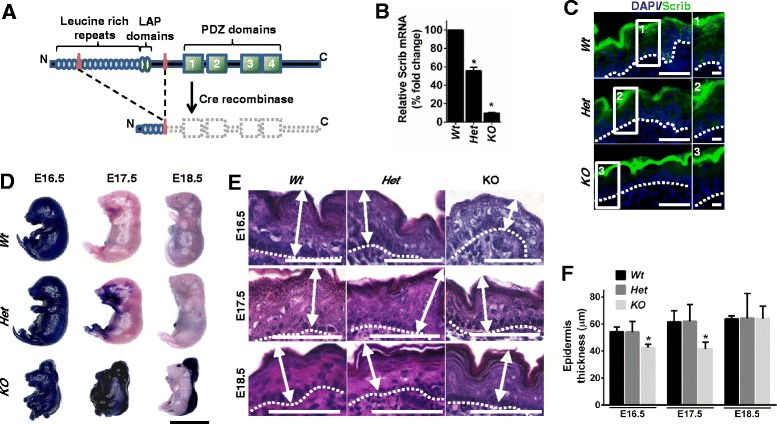
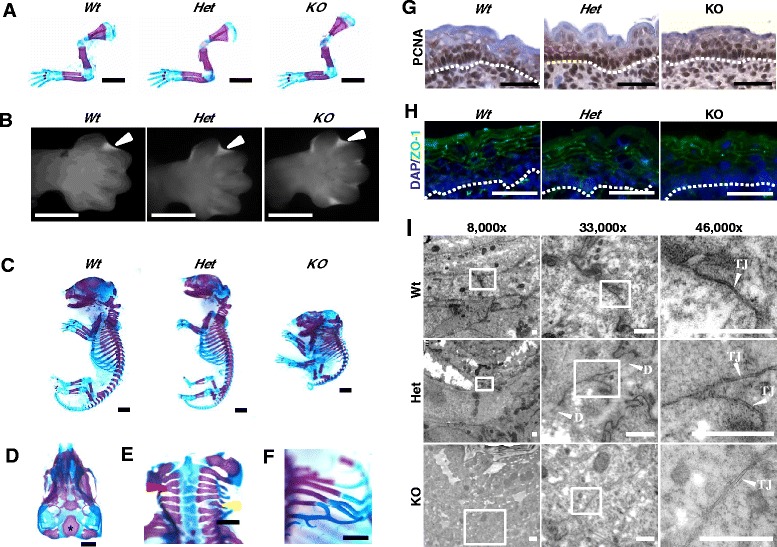
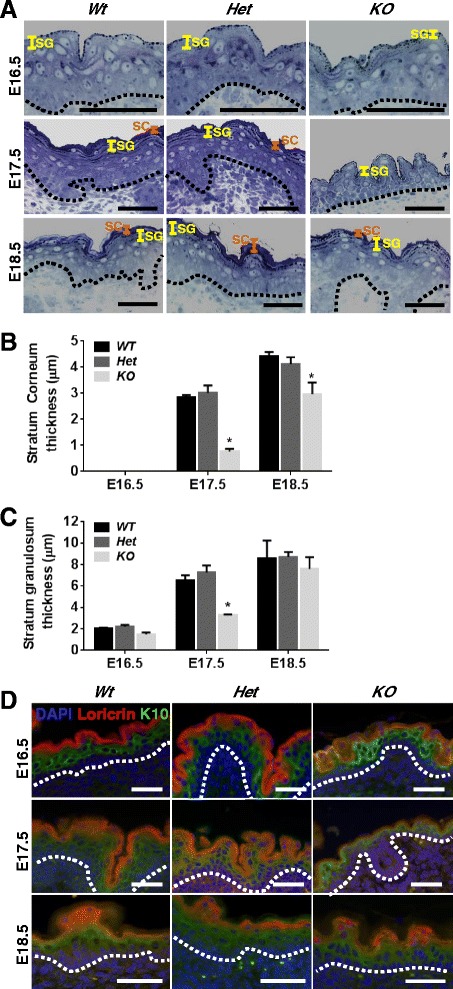
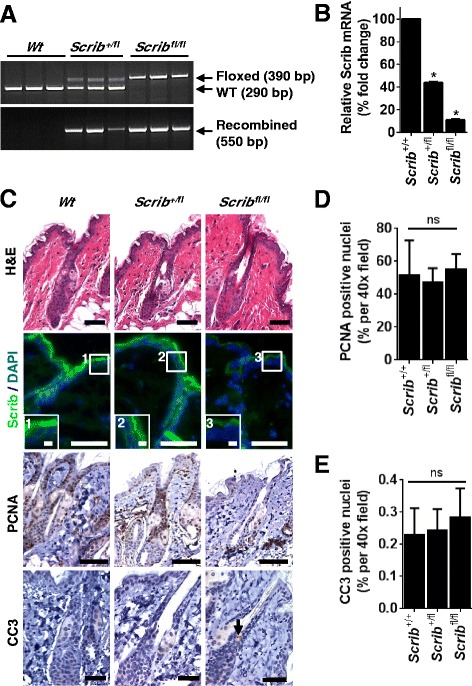
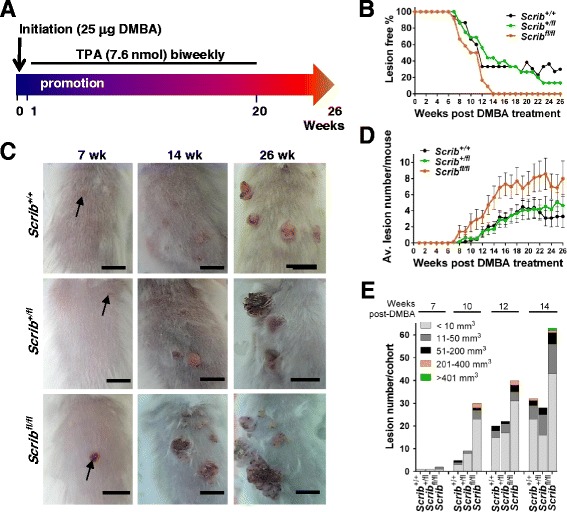
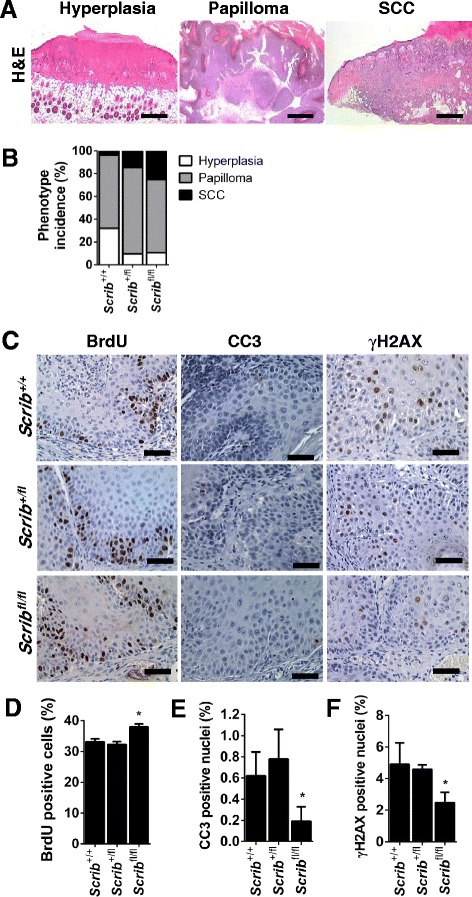
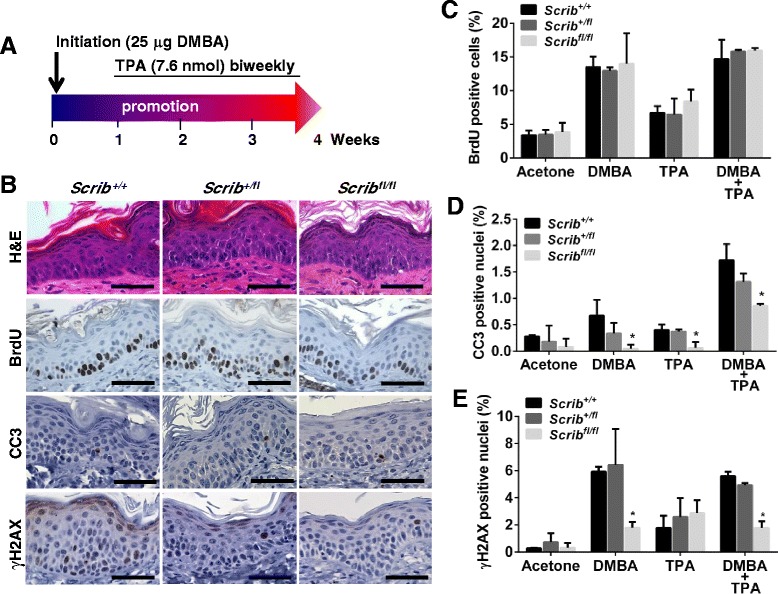
BACKGROUND: The establishment and maintenance of polarity is vital for embryonic development and loss of polarity is a frequent characteristic of epithelial cancers, however the underlying molecular mechanisms remain unclear. Here, we identify a novel role for the polarity protein Scrib as a mediator of epidermal permeability barrier acquisition, skeletal morphogenesis, and as a potent tumor suppressor in cutaneous carcinogenesis. METHODS: To explore the role of Scrib during epidermal development, we compared the permeability of toluidine blue dye in wild-type, Scrib heterozygous and Scrib KO embryonic epidermis at E16.5, E17.5 and E18.5. Mouse embryos were stained with alcian blue and alizarin red for skeletal analysis. To establish whether Scrib plays a tumor suppressive role during skin tumorigenesis and/or progression, we evaluated an autochthonous mouse model of skin carcinogenesis in the context of Scrib loss. We utilised Cre-LoxP technology to conditionally deplete Scrib in adult epidermis, since Scrib KO embryos are neonatal lethal. RESULTS: We establish that Scrib perturbs keratinocyte maturation during embryonic development, causing impaired epidermal barrier formation, and that Scrib is required for skeletal morphogenesis in mice. Analysis of conditional transgenic mice deficient for Scrib specifically within the epidermis revealed no skin pathologies, indicating that Scrib is dispensable for normal adult epidermal homeostasis. Nevertheless, bi-allelic loss of Scrib significantly enhanced tumor multiplicity and progression in an autochthonous model of epidermal carcinogenesis in vivo, demonstrating Scrib is an epidermal tumor suppressor. Mechanistically, we show that apoptosis is the critical effector of Scrib tumor suppressor activity during skin carcinogenesis and provide new insight into the function of polarity proteins during DNA damage repair. CONCLUSIONS: For the first time, we provide genetic evidence of a unique link between skin carcinogenesis and loss of the epithelial polarity regulator Scrib, emphasizing that Scrib exerts a wide-spread tumor suppressive function in epithelia.
Overview
The claims and statistics of this paper haven’t been checked yet.
Free: it reads the open-access text and checks the first 5 claims that cite a source we can check. Create a free account to check every claim.
Integrity signals
Registry
Cites
Statistics
Figures
Verification
Claims the paper makes
The claims and statistics of this paper haven’t been checked yet.
Free: it reads the open-access text and checks the first 5 claims that cite a source we can check. Create a free account to check every claim.
Claims other papers make about this one
Each is checked against this paper’s own text: does it say what the citing paper says it does?
In the citing paper
“In several cases, conditional knockout or heterozygosity does accelerate tumorigenesis, e.g., leading to multifocal prostate hyperplasia (Pearson et al., 2011), and accelerated skin and lung tumorigenesis (Elsum et al., 2014; Pearson et al., 2015).”
From Scribble: A master scaffold in polarity, adhesion, synaptogenesis, and proliferation (2019) · cites this paper as Pearson et al., 2015
In the citing paper
“Conditional Scribble knockout in the prostate epithelium does not disrupt prostate development (Pearson et al., 2011), whereas conditional knockout in the developing skin reveals only a transient delay in formation of the permeability barrier during embryonic development, which later resolves (Pearson et al., 2015).”
From Scribble: A master scaffold in polarity, adhesion, synaptogenesis, and proliferation (2019) · cites this paper as Pearson et al., 2015
In the citing paper
“Tight junction/adherens junction formation and apical–basal polarity are not impaired, but defects are seen in keratinocyte maturation.”
From Scribble: A master scaffold in polarity, adhesion, synaptogenesis, and proliferation (2019) · cites this paper as Pearson et al., 2015
Self-check
Percentages, sums and reported differences re-computed from the paper’s own numbers.
The self-check needs the paper’s full text.
Citations
Cites
The skin: an indispensable barrier
Proksch, E., Brandner, J. M., & Jensen, J. (2008) · Experimental Dermatology · doi:10.1111/j.1600-0625.2008.00786.x · Cited by 2,054 · cited 3×
“EPB formation occurs during late gestation within the outer layer of the epidermis termed the stratum corneum (SC), which comprises corneocytes (terminally differentiated keratinocytes) surrounded by extracellular lipid lamellae [13–15].”
ATM Phosphorylates Histone H2AX in Response to DNA Double-strand Breaks
Burma, S., Chen, B. P., Murphy, M., Kurimasa, A., & Chen, D. J. (2001) · Journal of Biological Chemistry · doi:10.1074/jbc.c100466200 · Cited by 1,954 · cited 1×
“In support, we show that the number of cells positive for the histone variant H2AX phosphorylated at Ser139 (termed γH2AX), previously shown to be associated with ATM- and JNK-dependent apoptosis [48, 49], directly correlates with the number of CC3positive apoptotic cells (Fig.”
Claudin-based tight junctions are crucial for the mammalian epidermal barrier
Furuse, M., Hata, M., Furuse, K., Yoshida, Y., Haratake, A., Sugitani, Y., Noda, T., Kubo, A., & Tsukita, S. (2002) · The Journal of Cell Biology · doi:10.1083/jcb.200110122 · Cited by 1,512
β-Catenin Controls Hair Follicle Morphogenesis and Stem Cell Differentiation in the Skin
Huelsken, J., Vogel, R., Erdmann, B., Cotsarelis, G., & Birchmeier, W. (2001) · Cell · doi:10.1016/s0092-8674(01)00336-1 · Cited by 1,353 · cited 2×
“EIIaCre and K14Cre transgenic mice that express Cre recombinase under the control of the EIIa and K14 promoter have been published previously [37, 69].”
Efficient in vivo manipulation of mouse genomic sequences at the zygote stage.
Lakso, M., Pichel, J. G., Gorman, J. R., Sauer, B., Okamoto, Y., Lee, E., Alt, F. W., & Westphal, H. (1996) · Proceedings of the National Academy of Sciences · doi:10.1073/pnas.93.12.5860 · Cited by 1,125 · cited 1×
“EIIaCre and K14Cre transgenic mice that express Cre recombinase under the control of the EIIa and K14 promoter have been published previously [37, 69].”
Carcinogen-specific mutation and amplification of Ha-ras during mouse skin carcinogenesis
Quintanilla, M., Brown, K., Ramsden, M., & Balmain, A. (1986) · Nature · doi:10.1038/322078a0 · Cited by 859 · cited 1×
“To examine the role of Scrib during epidermal tumor initiation/progression, we used the well-characterised DMBA/TPA two-step chemical skin carcinogenesis model [40, 41].”
Epidermal Stem Cells of the Skin
Blanpain, C., & Fuchs, E. (2006) · Annual Review of Cell and Developmental Biology · doi:10.1146/annurev.cellbio.22.010305.104357 · Cited by 849 · cited 1×
“Basal keratinocytes continually proliferate to replace suprabasal keratinocytes that terminally differentiate as they migrate towards the surface, and are finally sloughed off from the dead/flattened cornified layer [23].”
Localization of apical epithelial determinants by the basolateral PDZ protein Scribble
Bilder, D., & Perrimon, N. (2000) · Nature · doi:10.1038/35001108 · Cited by 716 · cited 1×
“Scrib is an essential gene in flies and mammals; scrib mutant Drosophila larvae fail to pupate owing to lethal overgrowth [5] and Scrib null mice are neonatal lethal owing to severe neural tube and abdominal wall closure defects [7, 8, 10].”
Identification of Vangl2 and Scrb1 as planar polarity genes in mammals
Montcouquiol, M., Rachel, R. A., Lanford, P. J., Copeland, N. G., Jenkins, N. A., & Kelley, M. W. (2003) · Nature · doi:10.1038/nature01618 · Cited by 705 · cited 1×
“During embryonic development, Scrib is also required for lung morphogenesis [9] and cochlear sterociliary bundle organisation [12], underlining the possibility that Scrib universally mediates epithelial morphogenesis.”
Multistage carcinogenesis in mouse skin
DiGiovanni, J. (1992) · Pharmacology & Therapeutics · doi:10.1016/0163-7258(92)90051-z · Cited by 642 · cited 1×
“The dermal infiltration of immune cells in response to TPA has previously been shown to augment proliferation and promote skin carcinogenesis (reviewed in [50]).”
Differential staining of cartilage and bone in whole mouse fetuses by alcian blue and alizarin red S
McLeod, M. J. (1980) · Teratology · doi:10.1002/tera.1420220306 · Cited by 613
Bilder, D. (2004) · Genes & Development · doi:10.1101/gad.1211604 · Cited by 553 · cited 1×
“Consequently, loss of epithelial organisation/ polarization causes aberrant embryonic morphogenesis [5–11], and is a common feature during epithelial cancer formation and progression [1–4, 7].”
E‐cadherin is essential for in vivo epidermal barrier function by regulating tight junctions
Tunggal, J. A., Helfrich, I., Schmitz, A., Schwarz, H., Günzel, D., Fromm, M., Kemler, R., Krieg, T., & Niessen, C. M. (2005) · The EMBO Journal · doi:10.1038/sj.emboj.7600605 · Cited by 491
Crosstalk between small GTPases and polarity proteins in cell polarization
Iden, S., & Collard, J. G. (2008) · Nature Reviews Molecular Cell Biology · doi:10.1038/nrm2521 · Cited by 451 · cited 4×
“In concert with the polarity program, the Scribble complex engages multiple signal transduction cascades to establish apical-basal and planar cell polarity to regulate key cellular processes including proliferation, apoptosis and differentiation [1–4].”
InfluentialHamblet, N. S., Lijam, N., Ruiz-Lozano, P., Wang, J., Yang, Y., Luo, Z., Mei, L., Chien, K. R., Sussman, D. J., & Wynshaw-Boris, A. (2002) · Development · doi:10.1242/dev.00164 · Cited by 441
Zhan, L., Rosenberg, A., Bergami, K. C., Yu, M., Xuan, Z., Jaffe, A. B., Allred, C., & Muthuswamy, S. K. (2008) · Cell · doi:10.1016/j.cell.2008.09.045 · Cited by 436 · cited 4×
“Scrib has previously been shown to influence the ability of cells to undergo apoptosis and anoikis in untransformed and transformed cells [27, 30, 33, 62, 63].”
InfluentialSkin stem cells: rising to the surface
Fuchs, E. (2008) · The Journal of Cell Biology · doi:10.1083/jcb.200708185 · Cited by 433
Patterned acquisition of skin barrier function during development
Hardman, M. J., Sisi, P., Banbury, D. N., & Byrne, C. (1998) · Development · doi:10.1242/dev.125.8.1541 · Cited by 385
Mice deficient in the Rac activator Tiam1 are resistant to Ras-induced skin tumours
Malliri, A., van der Kammen, R. A., Clark, K., van der Valk, M., Michiels, F., & Collard, J. G. (2002) · Nature · doi:10.1038/nature00848 · Cited by 384 · cited 1×
“To examine the role of Scrib during epidermal tumor initiation/progression, we used the well-characterised DMBA/TPA two-step chemical skin carcinogenesis model [40, 41].”
Role of lipids in the formation and maintenance of the cutaneous permeability barrier
Feingold, K. R., & Elias, P. M. (2014) · Biochimica et Biophysica Acta (BBA) - Molecular and Cell Biology of Lipids · doi:10.1016/j.bbalip.2013.11.007 · Cited by 383 · cited 2×
“EPB formation occurs during late gestation within the outer layer of the epidermis termed the stratum corneum (SC), which comprises corneocytes (terminally differentiated keratinocytes) surrounded by extracellular lipid lamellae [13–15].”
Nakagawa, S., & Huibregtse, J. M. (2000) · Molecular and Cellular Biology · doi:10.1128/mcb.20.21.8244-8253.2000 · Cited by 382
Cell Apoptosis: Requirement of H2AX in DNA Ladder Formation, but Not for the Activation of Caspase-3
Lu, C., Zhu, F., Cho, Y.-Y., Tang, F., Zykova, T., Ma, W.-Y., Bode, A. M., & Dong, Z. (2006) · Molecular Cell · doi:10.1016/j.molcel.2006.05.023 · Cited by 353 · cited 1×
“In support, we show that the number of cells positive for the histone variant H2AX phosphorylated at Ser139 (termed γH2AX), previously shown to be associated with ATM- and JNK-dependent apoptosis [48, 49], directly correlates with the number of CC3positive apoptotic cells (Fig.”
Control of tumourigenesis by the Scribble/Dlg/Lgl polarity module
Humbert, P. O., Grzeschik, N. A., Brumby, A. M., Galea, R., Elsum, I., & Richardson, H. E. (2008) · Oncogene · doi:10.1038/onc.2008.341 · Cited by 318
Self-citationA Homolog of Drosophila grainy head Is Essential for Epidermal Integrity in Mice
Ting, S. B., Caddy, J., Hislop, N., Wilanowski, T., Auden, A., Zhao, L.-L., Ellis, S., Kaur, P., Uchida, Y., Holleran, W. M., et al. (2005) · Science · doi:10.1126/science.1107511 · Cited by 310 · cited 1×
“In addition, the planar cell polarity protein Grainyhead-like-3 (Grhl3) and E-cadherin have been previously shown to regulate EPB acquisition by mediating SC formation, cell adhesion and/or extracellular lipid composition in the SG in vivo [19–22].”
Self-citationLessons from Loricrin-Deficient Mice
Koch, P. J., de Viragh, P. A., Scharer, E., Bundman, D., Longley, M. A., Bickenbach, J., Kawachi, Y., Suga, Y., Zhou, Z., Huber, M., et al. (2000) · The Journal of Cell Biology · doi:10.1083/jcb.151.2.389 · Cited by 267
Grieshammer, U., Cebrián, C., Ilagan, R., Meyers, E., Herzlinger, D., & Martin, G. R. (2005) · Development · doi:10.1242/dev.01944 · Cited by 258
Darido, C., Georgy, S. R., Wilanowski, T., Dworkin, S., Auden, A., Zhao, Q., Rank, G., Srivastava, S., Finlay, M. J., Papenfuss, A. T., et al. (2011) · Cancer Cell · doi:10.1016/j.ccr.2011.10.014 · Cited by 224 · cited 1×
“Events that cause an imbalance between keratinocyte self-renewal, differentiation and maturation processes result in cutaneous disorders including eczema, psoriasis [24] and skin cancer [20, 25].”
Pearson, H. B., Perez-Mancera, P. A., Dow, L. E., Ryan, A., Tennstedt, P., Bogani, D., Elsum, I., Greenfield, A., Tuveson, D. A., Simon, R., et al. (2011) · Journal of Clinical Investigation · doi:10.1172/jci58509 · Cited by 185 · cited 10×
“In keeping with the concept that oncogenesis involves abnormal signalling through pathways that regulate embryonic development, Scrib has been shown to play a tumor suppressive function in multiple epithelial tissues [7, 27–30] and is frequently deregulated and mislocalised in human epithelial cancers [7, 27, 31, 32].”
InfluentialSelf-citationYu, Z., Lin, K. K., Bhandari, A., Spencer, J. A., Xu, X., Wang, N., Lu, Z., Gill, G. N., Roop, D. R., Wertz, P., et al. (2006) · Developmental Biology · doi:10.1016/j.ydbio.2006.07.015 · Cited by 172 · cited 1×
“In addition, the planar cell polarity protein Grainyhead-like-3 (Grhl3) and E-cadherin have been previously shown to regulate EPB acquisition by mediating SC formation, cell adhesion and/or extracellular lipid composition in the SG in vivo [19–22].”
Dow, L. E., Elsum, I. A., King, C. L., Kinross, K. M., Richardson, H. E., & Humbert, P. O. (2008) · Oncogene · doi:10.1038/onc.2008.219 · Cited by 171 · cited 1×
“Given that DMBA initiation invariably causes activating Ras mutations in murine epidermis [45], these findings support previous work demonstrating that Scrib loss cooperates with Ras oncogenic activation to promote progression and/or invasion [7, 29, 30, 46].”
Self-citationDevelopmental factor IRF6 exhibits tumor suppressor activity in squamous cell carcinomas
Botti, E., Spallone, G., Moretti, F., Marinari, B., Pinetti, V., Galanti, S., De Meo, P. D., De Nicola, F., Ganci, F., Castrignanò, T., et al. (2011) · Proceedings of the National Academy of Sciences · doi:10.1073/pnas.1110931108 · Cited by 168 · cited 1×
“Events that cause an imbalance between keratinocyte self-renewal, differentiation and maturation processes result in cutaneous disorders including eczema, psoriasis [24] and skin cancer [20, 25].”
Envoplakin, a novel precursor of the cornified envelope that has homology to desmoplakin.
Ruhrberg, C., Hajibagheri, M. A., Simon, M., Dooley, T. P., & Watt, F. M. (1996) · The Journal of cell biology · doi:10.1083/jcb.134.3.715 · Cited by 168 · cited 1×
“envoplakin) [13–16].”
Targeted deletion of the H-ras gene decreases tumor formation in mouse skin carcinogenesis
伊勢, 和., Nakamura, K., Nakao, K., Shimizu, S., Harada, H., Ichise, T., Miyoshi, J., Gondo, Y., Ishikawa, T., Aiba, A., et al. (2000) · Oncogene · doi:10.1038/sj.onc.1203600 · Cited by 160 · cited 1×
“Given that DMBA initiation invariably causes activating Ras mutations in murine epidermis [45], these findings support previous work demonstrating that Scrib loss cooperates with Ras oncogenic activation to promote progression and/or invasion [7, 29, 30, 46].”
Multistep skin cancer in mice as a model to study the evolution of cancer cells
Kemp, C. J. (2005) · Seminars in Cancer Biology · doi:10.1016/j.semcancer.2005.06.003 · Cited by 159 · cited 1×
“DMBA invariably induces HRas activating mutations, while TPA promotes tumor growth by deregulating several signaling networks, including the PKC-Ras/MAPK cascade that mediates proliferation, differentiation and inflammation [42–44].”
Bavinck, J. N. B., Neale, R. Ε., ABENI, D. D., Euvrard, S., Green, A. C., Harwood, C. A., de Koning, M. N. C., Naldi, L., Nindl, I., Pawlita, M., et al. (2010) · Cancer Research · doi:10.1158/0008-5472.can-10-0352 · Cited by 157 · cited 1×
“Indeed, evidence in the literature indicates that human papilloma viruses (HPV) may facilitate the development of SCCs [65, 66] and HPV is reported to target SCRIB for ubiquitin-mediated degradation [67].”
Cell Polarity as a Regulator of Cancer Cell Behavior Plasticity
Muthuswamy, S. K., & Xue, B. (2012) · Annual Review of Cell and Developmental Biology · doi:10.1146/annurev-cellbio-092910-154244 · Cited by 147 · cited 4×
“The Scribble complex resides along the basolateral membrane of epithelial cells and is concentrated at cell-cell junctions [1–3].”
InfluentialDale, B. A., Holbrook, K. A., Fleckman, P. H., Kimball, J. R., Brumbaugh, S., & Sybert, V. P. (1990) · Journal of Investigative Dermatology · doi:10.1111/1523-1747.ep12873301 · Cited by 142 · cited 1×
“Events that cause an imbalance between keratinocyte self-renewal, differentiation and maturation processes result in cutaneous disorders including eczema, psoriasis [24] and skin cancer [20, 25].”
Towards a Molecular Definition of Keratinocyte Activation after Acute Injury to Stratified Epithelia
Coulombe, P. A. (1997) · Biochemical and Biophysical Research Communications · doi:10.1006/bbrc.1997.6945 · Cited by 137 · cited 1×
“Cytokeratin 6 (K6) is detected in the interfollicular epidermis only during hyperproliferative conditions, including psoriasis [38] and wound healing [39], and thus can be used as a surrogate marker of aberrant homeostasis in the epidermis.”
Domains controlling cell polarity and proliferation in the Drosophila tumor suppressor Scribble
Zeitler, J., Hsu, C. P., Dionne, H., & Bilder, D. (2004) · The Journal of Cell Biology · doi:10.1083/jcb.200407158 · Cited by 135 · cited 1×
“Consequently, loss of epithelial organisation/ polarization causes aberrant embryonic morphogenesis [5–11], and is a common feature during epithelial cancer formation and progression [1–4, 7].”
Molecular Mechanisms of Mouse Skin Tumor Promotion
Rundhaug, J. E., & Fischer, S. M. (2010) · Cancers · doi:10.3390/cancers2020436 · Cited by 133 · cited 1×
“DMBA invariably induces HRas activating mutations, while TPA promotes tumor growth by deregulating several signaling networks, including the PKC-Ras/MAPK cascade that mediates proliferation, differentiation and inflammation [42–44].”
Cutaneous Squamous Cell Carcinoma and Human Papillomavirus: Is There an Association?
Aldabagh, B., Angeles, J. G. C., Cardones, A. R., & Arron, S. T. (2012) · Dermatologic Surgery · doi:10.1111/j.1524-4725.2012.02558.x · Cited by 132 · cited 1×
“Indeed, evidence in the literature indicates that human papilloma viruses (HPV) may facilitate the development of SCCs [65, 66] and HPV is reported to target SCRIB for ubiquitin-mediated degradation [67].”
Darido, C., Georgy, S. R., Wilanowski, T., Dworkin, S., Auden, A., Zhao, Q., Rank, G., Srivastava, S., Finlay, M. J., Papenfuss, A. T., et al. (2011) · Institutional Research Information System University of Turin (University of Turin) · Cited by 131
Zarbalis, K., May, S. R., Shen, Y., Ekker, M., Rubenstein, J. L. R., & Peterson, A. S. (2004) · PLoS Biology · doi:10.1371/journal.pbio.0020219 · Cited by 130 · cited 1×
“Scrib is an essential gene in flies and mammals; scrib mutant Drosophila larvae fail to pupate owing to lethal overgrowth [5] and Scrib null mice are neonatal lethal owing to severe neural tube and abdominal wall closure defects [7, 8, 10].”
Tumor Type-Dependent Function of the Par3 Polarity Protein in Skin Tumorigenesis
Iden, S., van Riel, W. E., Schäfer, R., Song, J., Hirose, T., Ohno, S., & Collard, J. G. (2012) · Cancer Cell · doi:10.1016/j.ccr.2012.08.004 · Cited by 128 · cited 1×
“Intriguingly, Iden and colleagues have also reported the polarity protein Par3 is not required for epidermal homeostasis in adult mice, but exerts cell-type dependent pro- and antitumorigenic activity during DMBA/TPA-driven skin lesions by regulating cell growth and survival [61], further emphasising the importance of…”
Role of aPKC Isoforms and Their Binding Partners Par3 and Par6 in Epidermal Barrier Formation
Helfrich, I., Schmitz, A., Zigrino, P., Michels, C., Haase, I., Bivic, A. L., Leitges, M., & Niessen, C. M. (2006) · Journal of Investigative Dermatology · doi:10.1038/sj.jid.5700621 · Cited by 122 · cited 1×
“For example, atypical Protein Kinase C (aPKC), which forms the Par3 apical polarity complex with the PAR (partitioning-defective) proteins Par3 and Par6, has been shown to be required for tight junction formation and barrier function in vitro [18].”
Paudyal, A., Damrau, C., Patterson, V. L., Ermakov, A., Formstone, C., Lalanne, Z., Wells, S., Lu, X., Norris, D. P., Dean, C. H., et al. (2010) · BMC Developmental Biology · doi:10.1186/1471-213x-10-87 · Cited by 109 · cited 3×
“2d-f) resembling Chuzhoi mutant mouse embryos that harbour a mutation in the polarity gene Ptk7 [35] and Dvl2 mouse embryos [36], further illustrating the importance of this network during development.”
InfluentialHanley, K., Rassner, U., Jiang, Y., Vansomphone, D., Crumrine, D., Komüves, L., Elias, P. M., Feingold, K. R., & Williams, M. L. (1996) · Journal of Clinical Investigation · doi:10.1172/jci118706 · Cited by 108 · cited 1×
“As our data demonstrates that Scrib is not essential for EPB formation and keratinocyte maturation, this suggests the presence of a compensatory mechanism, as previously proposed for delayed SC maturation following glucocorticoid, estrogen or thyroid hormone reduction and deletion of proliferator-activated receptor (P…”
Interactions between planar cell polarity genes cause diverse neural tube defects
Murdoch, J. N., Damrau, C., Paudyal, A., Bogani, D., Wells, S. E., Greene, N. D. E., Stanier, P., & Copp, A. J. (2014) · Disease Models & Mechanisms · doi:10.1242/dmm.016758 · Cited by 106 · cited 1×
“While the rescue of EPB acquisition in Scrib KO embryos is likely to reflect the functional redundancy within the polarity network [1, 58, 59] and/or cell intrinsic/extrinsic signalling events mediated by Scrib protein:protein interactions [1–4], future work is necessary to determine how the epidermal development regu…”
The Role of the Apoptotic Machinery in Tumor Suppression
Delbridge, A. R. D., Valente, L. J., & Strasser, A. (2012) · Cold Spring Harbor Perspectives in Biology · doi:10.1101/cshperspect.a008789 · Cited by 102 · cited 1×
“Apoptosis evasion is a characteristic feature of cancer cells that facilitates tumor initiation and progression, as well as the development of drug resistance [68].”
Thyrotropin receptor trafficking relies on the hScrib–βPIX–GIT1–ARF6 pathway
Lahuna, O., Quellari, M., Achard, C. S., Nola, S., Méduri, G., Navarro, C., Vitale, N., Borg, J., & Misrahi, M. (2005) · The EMBO Journal · doi:10.1038/sj.emboj.7600616 · Cited by 102 · cited 1×
“Of note, Scrib has been shown to bind thyroid-stimulating hormone receptor (TSHR) to mediate receptor recycling [60] and hypothyroid mice that harbor a TSHR functional mutation also display a transient delay in SC and EPB formation [53].”
Murdoch, J. N., Rachel, R. A., Shah, S., Beermann, F., Stanier, P., Mason, C. A., & Copp, A. J. (2001) · Genomics · doi:10.1006/geno.2001.6638 · Cited by 101 · cited 1×
“Scrib is an essential gene in flies and mammals; scrib mutant Drosophila larvae fail to pupate owing to lethal overgrowth [5] and Scrib null mice are neonatal lethal owing to severe neural tube and abdominal wall closure defects [7, 8, 10].”
Liu, H., Golebiewski, L., Dow, E. C., Krug, R. M., Javier, R. T., & Rice, A. P. (2010) · Journal of Virology · doi:10.1128/jvi.01278-10 · Cited by 101
Phesse, T. J., Büchert, M., Stuart, E. C., Flanagan, D. J., Faux, M. C., Afshar‐Sterle, S., Walker, F., Zhang, H., Nowell, C. J., Jorissen, R. N., et al. (2014) · Science Signaling · doi:10.1126/scisignal.2005411 · Cited by 83
Self-citationYates, L. L., Schnatwinkel, C., Hazelwood, L., Chessum, L., Paudyal, A., Hilton, H., Romero, M. R., Wilde, J., Bogani, D., Sanderson, J., et al. (2013) · Developmental Biology · doi:10.1016/j.ydbio.2012.11.012 · Cited by 78 · cited 1×
“During embryonic development, Scrib is also required for lung morphogenesis [9] and cochlear sterociliary bundle organisation [12], underlining the possibility that Scrib universally mediates epithelial morphogenesis.”
Lkb1 Deficiency Causes Prostate Neoplasia in the Mouse
Pearson, H. B., McCarthy, A., Collins, C. M. P., Ashworth, A., & Clarke, A. R. (2008) · Cancer Research · doi:10.1158/0008-5472.can-07-5169 · Cited by 76
Self-citationSystematic genetic interaction screens uncover cell polarity regulators and functional redundancy
Fievet, B. T., Rodriguez, J., Naganathan, S., Lee, C., Zeiser, E., Ishidate, T., Shirayama, M., Grill, S., & Ahringer, J. (2013) · Nature Cell Biology · doi:10.1038/ncb2639 · Cited by 74 · cited 1×
“While the rescue of EPB acquisition in Scrib KO embryos is likely to reflect the functional redundancy within the polarity network [1, 58, 59] and/or cell intrinsic/extrinsic signalling events mediated by Scrib protein:protein interactions [1–4], future work is necessary to determine how the epidermal development regu…”
Määttä, A., DiColandrea, T., Groot, K., & Watt, F. M. (2001) · Molecular and Cellular Biology · doi:10.1128/mcb.21.20.7047-7053.2001 · Cited by 71 · cited 1×
“In support, transgenic mice deficient for the cornified envelope proteins loricrin or envoplakin are also predisposed to delayed barrier formation [51, 52].”
El-Shemerly, M. Y. M., Besser, D., Nagasawa, M., & Nagamine, Y. (1997) · Journal of Biological Chemistry · doi:10.1074/jbc.272.49.30599 · Cited by 70
Lohia, M., Qin, Y., & Macara, I. G. (2012) · PLoS ONE · doi:10.1371/journal.pone.0051130 · Cited by 64 · cited 1×
“Of note, we did not detect any alteration in the distribution of the tight-junction protein ZO-1, or the AJ component E-cadherin (Additional file 3: Figure S3F, n = 3), that has been previously shown to co-localise with Scrib to regulate E-cadherin-mediated cell-cell adhesion [47].”
Hanley, K., Rassner, U., Elias, P. M., Williams, M. L., & Feingold, K. R. (1996) · Journal of Investigative Dermatology · doi:10.1111/1523-1747.ep12343405 · Cited by 61 · cited 1×
“As our data demonstrates that Scrib is not essential for EPB formation and keratinocyte maturation, this suggests the presence of a compensatory mechanism, as previously proposed for delayed SC maturation following glucocorticoid, estrogen or thyroid hormone reduction and deletion of proliferator-activated receptor (P…”
Godde, N. J., Sheridan, J. M., Smith, L. K., Pearson, H. B., Britt, K. L., Galea, R. C., Yates, L. L., Visvader, J. E., & Humbert, P. O. (2014) · PLoS Genetics · doi:10.1371/journal.pgen.1004323 · Cited by 60 · cited 4×
“Scrib has previously been shown to influence the ability of cells to undergo apoptosis and anoikis in untransformed and transformed cells [27, 30, 33, 62, 63].”
InfluentialSelf-citationElsum, I. A., Yates, L. L., Pearson, H. B., Phesse, T. J., Long, F., O'Donoghue, R., Ernst, M., Cullinane, C., & Humbert, P. O. (2014) · Oncogene · doi:10.1038/onc.2013.498 · Cited by 60 · cited 3×
“Staining was carried out as described previously [7, 29, 72].”
Self-citationFang, L., Wang, Y., Du, D., Yang, G., Kwok, T. T., Kong, S. K., Chen, B., Chen, D. J., & Chen, Z. (2007) · Cell Research · doi:10.1038/sj.cr.7310145 · Cited by 58
Kim, R., & Armstrong, A. (2012) · Dermatologia clinica · doi:10.1016/j.det.2011.08.008 · Cited by 52
Kamei, Y., Kito, K., Takeuchi, T., Imai, Y., Murase, R., Ueda, N., Kobayashi, N., & Abe, Y. (2007) · Human Pathology · doi:10.1016/j.humpath.2007.01.026 · Cited by 51 · cited 1×
“In keeping with the concept that oncogenesis involves abnormal signalling through pathways that regulate embryonic development, Scrib has been shown to play a tumor suppressive function in multiple epithelial tissues [7, 27–30] and is frequently deregulated and mislocalised in human epithelial cancers [7, 27, 31, 32].”
Role of Peroxisome Proliferator-Activated Receptor α in Epidermal Development in Utero
Schmuth, M., Schoonjans, K., Yu, Q., Fluhr, J. W., Crumrine, D. A., Hachem, J. P., Lau, P., Auwerx, J. H., Elias, P. M., & Feingold, K. R. (2002) · Journal of Investigative Dermatology · doi:10.1046/j.1523-1747.2002.19605.x · Cited by 50 · cited 1×
“As our data demonstrates that Scrib is not essential for EPB formation and keratinocyte maturation, this suggests the presence of a compensatory mechanism, as previously proposed for delayed SC maturation following glucocorticoid, estrogen or thyroid hormone reduction and deletion of proliferator-activated receptor (P…”
Chatterjee, S., Seifried, L., Feigin, M. E., Gibbons, D. L., Scuoppo, C., Lin, W., Rizvi, Z. H., Lind, E., Dissanayake, D., Kurie, J., et al. (2012) · PLoS ONE · doi:10.1371/journal.pone.0034343 · Cited by 40 · cited 1×
“In keeping with the concept that oncogenesis involves abnormal signalling through pathways that regulate embryonic development, Scrib has been shown to play a tumor suppressive function in multiple epithelial tissues [7, 27–30] and is frequently deregulated and mislocalised in human epithelial cancers [7, 27, 31, 32].”
Hypothyroidism Delays Fetal Stratum Corneum Development in Mice
Hanley, K., Devaskar, U. P., Hicks, S. J., Jiang, Y. J., Crumrine, D. A., Elias, P. M., Williams, M. L. K., & Feingold, K. R. (1997) · Pediatric Research · doi:10.1203/00006450-199711000-00010 · Cited by 34 · cited 1×
“Of note, Scrib has been shown to bind thyroid-stimulating hormone receptor (TSHR) to mediate receptor recycling [60] and hypothyroid mice that harbor a TSHR functional mutation also display a transient delay in SC and EPB formation [53].”
Ouyang, Z., Zhan, W., & Dan, L. (2009) · Oncology Research Featuring Preclinical and Clinical Cancer Therapeutics · doi:10.3727/096504010x12767359114045 · Cited by 34 · cited 1×
“In keeping with the concept that oncogenesis involves abnormal signalling through pathways that regulate embryonic development, Scrib has been shown to play a tumor suppressive function in multiple epithelial tissues [7, 27–30] and is frequently deregulated and mislocalised in human epithelial cancers [7, 27, 31, 32].”
A βPIX-PAK2 Complex Confers Protection against Scrib-Dependent and Cadherin-Mediated Apoptosis
Frank, S. R., Bell, J. H., Frödin, M., & Hansen, S. H. (2012) · Current Biology · doi:10.1016/j.cub.2012.07.011 · Cited by 34
Dissecting the role of polarity regulators in cancer through the use of mouse models
Gödde, N., Pearson, H. B., Smith, L. K., & Humbert, P. O. (2014) · Experimental Cell Research · doi:10.1016/j.yexcr.2014.08.036 · Cited by 27 · cited 3×
“In concert with the polarity program, the Scribble complex engages multiple signal transduction cascades to establish apical-basal and planar cell polarity to regulate key cellular processes including proliferation, apoptosis and differentiation [1–4].”
Self-citationMassimi, P., Zori, P., Roberts, S., & Banks, L. (2012) · PLoS ONE · doi:10.1371/journal.pone.0040279 · Cited by 22 · cited 2×
“Scrib has previously been shown to influence the ability of cells to undergo apoptosis and anoikis in untransformed and transformed cells [27, 30, 33, 62, 63].”
Jiang, Y. J., Barish, G. D., Lü, B., Evans, R. M., Crumrine, D. A., Schmuth, M., Elias, P. M., & Feingold, K. R. (2009) · Journal of Investigative Dermatology · doi:10.1038/jid.2009.245 · Cited by 17 · cited 1×
“As our data demonstrates that Scrib is not essential for EPB formation and keratinocyte maturation, this suggests the presence of a compensatory mechanism, as previously proposed for delayed SC maturation following glucocorticoid, estrogen or thyroid hormone reduction and deletion of proliferator-activated receptor (P…”
Longhou, Fang, F., Yi-guo, wang, Dan, D., Du, Guang, Yang, Tim, Tak, et al. (2007) · Cell Research · Cited by 14
Heyden, A., Lützow‐Holm, C., Clausen, O. P. F., Brandtzaeg, P., & Huitfeldt, H. S. (1994) · PubMed · Cited by 12
Cited by
Stephens, R., Lim, K., Portela, M., Kvansakul, M., Humbert, P. O., & Richardson, H. E. (2018) · Journal of Molecular Biology · doi:10.1016/j.jmb.2018.01.011 · Cited by 132
Self-citationScribble: A master scaffold in polarity, adhesion, synaptogenesis, and proliferation
Bonello, T. T., & Peifer, M. (2019) · Journal of Cell Biology · doi:10.1083/jcb.201810103 · Cited by 127
“, 2011), whereas conditional knockout in the developing skin reveals only a transient delay in formation of the permeability barrier during embryonic development, which later resolves (Pearson et al., 2015).”
BackgroundKhalil, S., Delehanty, L., Grado, S., Holy, M., White, Z., Freeman, K., Kurita, R., Nakamura, Y., Bullock, G., & Goldfarb, A. (2018) · Journal of Experimental Medicine · doi:10.1084/jem.20170396 · Cited by 84
Tumor-suppressive functions of long-chain acyl-CoA synthetase 4 in gastric cancer
Ye, X.-J., Zhang, Y., Xiao, W., Li, Y., & Gao, Y. (2016) · IUBMB Life · doi:10.1002/iub.1486 · Cited by 70
The Scribble family in cancer: twentieth anniversary
Santoni, M.-J., Kashyap, R., Camoin, L., & Borg, J.-P. (2020) · Oncogene · doi:10.1038/s41388-020-01478-7 · Cited by 62
Metadata
- Authors
- Pearson, H. B., McGlinn, E., Phesse, T. J., Schlüter, H., Srikumar, A., Gödde, N. J., Woelwer, C. B., Ryan, A., Phillips, W. A., Ernst, M., Kaur, P., & Humbert, P.
- Affiliations
- The University of Melbourne (AU)
- Australian Regenerative Medicine Institute (AU)
- Walter and Eliza Hall Institute of Medical Research (AU)
- German Cancer Research Center (DE)
- Peter MacCallum Cancer Centre (AU)
- TissuPath (AU)
- Corresponding author
- Pearson, Helen B.
- ORCID
- Venue
- Molecular Cancer
- Published
- 2015-09-17
- Volume
- 14
- Issue
- 1
- Pages
- 169-169
- ISSN
- 1476-4598 (ISSN-L)
- PMC
- PMC4574215
- OpenAlex
- W1899153032
- Cited by
- 39
- References
- 75
- Citations by year
- 2026: 2 · 2025: 2 · 2024: 4 · 2023: 3 · 2022: 1 · 2021: 5 · 2020: 3 · 2019: 6 · 2018: 5 · 2017: 6 · 2016: 2
- FWCI
- 2.30
- Type
- journal article
- Language
- en
- Open access
- gold
- doi.org
- Licence
- cc-by
- Locations
- Molecular Cancer (publishedVersion, cc-by)
- PubMed Central (publishedVersion, cc-by)
- PubMed (publishedVersion)
- ORCA Online Research @Cardiff (Cardiff University) (acceptedVersion)
- Monash University Research Portal (Monash University) (acceptedVersion, cc-by)
- Minerva Access (University of Melbourne) (submittedVersion, cc-by)
- eSpace (Curtin University) (submittedVersion, cc-by)
- Funders
- Prostate Cancer Foundation of Australia (YI 1611)
- Cure Cancer Australia Foundation (YI 1611)
- Richard Pratt Foundation (RPF11_02)
- Victorian Cancer Agency (RPF11_02)
- National Health and Medical Research Council (1025239, 1079257, 509015 and 1025874)
- Cancer Council Victoria (807184)
- Topics
- Life Sciences › Biochemistry, Genetics and Molecular Biology › Cell Biology › Skin and Cellular Biology Research
- Life Sciences › Biochemistry, Genetics and Molecular Biology › Molecular Biology › Developmental Biology and Gene Regulation
- Life Sciences › Biochemistry, Genetics and Molecular Biology › Cell Biology › Hippo pathway signaling and YAP/TAZ
- Keywords
- SCRIB, epithelial polarity, epidermal development, skin carcinogenesis, tumor suppressor, epidermal permeability barrier, keratinocyte maturation, skeletal morphogenesis, apoptosis, DNA repair, conditional knockout
- MeSH terms
- Animals, Cell Differentiation, Disease Models, Animal, Embryo, Mammalian, Epidermis, Epithelial Cells, Humans, Skin Neoplasms, Keratinocytes, Genes, Tumor Suppressor, Cell Polarity, Mice, Knockout, Integrases, Intracellular Signaling Peptides and Proteins, Mice, Carcinogenesis
About these checks
Registry, retraction, Cites and statistics results are computed, not judged, with one exception: a printed reference that no index lists is read once by a model before it counts as a citation error. Claims are extracted by a model and kept only when their quote appears verbatim in the text; each cited source is then checked, with a model’s help, for whether it says what the claim relies on. Those verdicts can be wrong — read the claim’s quote and the cited source before relying on one.
Statistics and arithmetic are recomputed, not judged.
Confidence bands are shown only for fields calibrated on our annotated test set. None is calibrated yet, so no band is shown.
What counts as a claim ›How we measure confidence ›How we check this ›
Are you an author, or do you see a problem with this page? Request a review
Data sources
Bibliographic data: Semantic Scholar, OpenAlex, Crossref.
Contains information from the Semantic Scholar Academic Graph Datasets, made available under the ODC Attribution License (ODC-BY 1.0).
Semantic Scholar’s data is described in: Kinney, R., et al. (2023). The Semantic Scholar Open Data Platform. arXiv:2301.10140.
