

Targeting MHC-I molecules for cancer: function, mechanism, and therapeutic prospects
Open accessThe DOI matches its Crossref record; 163 of the 163 references it cites were found in a registry or an index.
Abstract
The molecules of Major histocompatibility class I (MHC-I) load peptides and present them on the cell surface, which provided the immune system with the signal to detect and eliminate the infected or cancerous cells. In the context of cancer, owing to the crucial immune-regulatory roles played by MHC-I molecules, the abnormal modulation of MHC-I expression and function could be hijacked by tumor cells to escape the immune surveillance and attack, thereby promoting tumoral progression and impairing the efficacy of cancer immunotherapy. Here we reviewed and discussed the recent studies and discoveries related to the MHC-I molecules and their multidirectional functions in the development of cancer, mainly focusing on the interactions between MHC-I and the multiple participators in the tumor microenvironment and highlighting the significance of targeting MHC-I for optimizing the efficacy of cancer immunotherapy and a deeper understanding of the dynamic nature and functioning mechanism of MHC-I in cancer.
Overview
The claims and statistics of this paper haven’t been checked yet.
Free: it reads the open-access text and checks the first 5 claims that cite a source we can check. Create a free account to check every claim.
Integrity signals
Registry
Cites
Statistics
Figures
Verification
Claims the paper makes
The claims and statistics of this paper haven’t been checked yet.
Free: it reads the open-access text and checks the first 5 claims that cite a source we can check. Create a free account to check every claim.
Claims other papers make about this one
Each is checked against this paper’s own text: does it say what the citing paper says it does?
The cited source says what the claim attributes to it.
In the citing paper
“It is well-known that T cells recognize the peptide-loaded major histocompatibility complex (pMHC) presented by antigen-presenting cells via the TCRs, thereby triggering the subsequent immune response to kill cancerous or infectious cells [132].”
From Single-cell sequencing to multi-omics: technologies and applications (2024) · cites this paper as [132]
Self-check
Percentages, sums and reported differences re-computed from the paper’s own numbers.
The self-check needs the paper’s full text.
Citations
Cites
1 retracted
RETRACTED ARTICLE: Hurdles to breakthrough in CAR T cell therapy of solid tumors
Marofi, F., Achmad, H., Bokov, D., Abdelbasset, W. K., Alsadoon, Z., Chupradit, S., Suksatan, W., Shariatzadeh, S., Hasanpoor, Z., Yazdanifar, M., et al. (2022) · Stem Cell Research & Therapy · doi:10.1186/s13287-022-02819-x · Cited by 47 · cited 1×
“Notably, negative MHC-I might activate NK cells, which then act as the main cause of CAR-T cell death [141].”
BackgroundRetractedMismatch repair deficiency predicts response of solid tumors to PD-1 blockade
Le, D. T., Durham, J. N., Smith, K. N., Wang, H., Bartlett, B. R., Aulakh, L. K., Lu, S., Kemberling, H., Wilt, C., Luber, B. S., et al. (2017) · Science · doi:10.1126/science.aan6733 · Cited by 6,645 · cited 1×
“In addition, genetic mutations in B2M, resulting in the formation of defective HLA, may also be associated with acquired resistance to ICB treatment [110, 111].”
BackgroundMolecular and genetic properties of tumors associated with local immune cytolytic activity
Rooney, M. S., Shukla, S. A., Wu, C. J., Getz, G., & Hacohen, N. (2015) · Cell · doi:10.1016/j.cell.2014.12.033 · Cited by 3,825 · cited 1×
“They identified the mutation as being enriched in numerous cancer types [46].”
BackgroundMutations Associated with Acquired Resistance to PD-1 Blockade in Melanoma
Zaretsky, J. M., Garcia-Diaz, A., Shin, D. S., Escuin-Ordinas, H., Hugo, W., Hu-Lieskovan, S., Torrejon, D. Y., Abril-Rodriguez, G., Sandoval, S., Barthly, L., et al. (2016) · New England Journal of Medicine · doi:10.1056/nejmoa1604958 · Cited by 3,237 · cited 2×
“In addition, genetic mutations in B2M, resulting in the formation of defective HLA, may also be associated with acquired resistance to ICB treatment [110, 111].”
BackgroundAn immunogenic personal neoantigen vaccine for patients with melanoma
Ott, P. A., Hu, Z., Keskin, D. B., Shukla, S. A., Sun, J., Bozym, D. J., Zhang, W., Luoma, A., Giobbie-Hurder, A., Peter, L., et al. (2017) · Nature · doi:10.1038/nature22991 · Cited by 2,936 · cited 1×
“Tumor neoanti-gen vaccination can enhance the anti-tumor immune response, notably neoantigen-specific T cells [126–128].”
BackgroundIn search of the ‘missing self’: MHC molecules and NK cell recognition
Ljunggren, H.-G., & Kärre, K. (1990) · Immunology Today · doi:10.1016/0167-5699(90)90097-s · Cited by 2,687 · cited 1×
“The majority of researchers believe that MHC-I-deficient cancer cells are killed by NK cells because they cannot bind inhibitory receptors on NK cells [145].”
BackgroundPersonalized RNA mutanome vaccines mobilize poly-specific therapeutic immunity against cancer
Sahin, U., Derhovanessian, E., Miller, M., Kloke, B.-P., Simon, P., Löwer, M., Bukur, V., Tadmor, A. D., Luxemburger, U., Schrörs, B., et al. (2017) · Nature · doi:10.1038/nature23003 · Cited by 2,488
Intracavitary Bacillus Calmette-guerin in the Treatment of Superficial Bladder Tumors
Morales, A., Eidinger, D., & Bruce, A. W. (1976) · Journal of Urology · doi:10.1016/s0022-5347(17)58737-6 · Cited by 1,791
Reits, E. A., Hodge, J. W., Herberts, C. A., Groothuis, T. A., Chakraborty, M., K.Wansley, E., Camphausen, K., Luiten, R. M., de Ru, A. H., Neijssen, J., et al. (2006) · The Journal of Experimental Medicine · doi:10.1084/jem.20052494 · Cited by 1,737 · cited 2×
“Notably, MHC-I could be upregulated by radiation, which makes it possible to improve antigen presentation and increase the recognition capacity and cytotoxicity of T cells [149–152].”
BackgroundSaxena, M., van der Burg, S. H., Melief, C. J. M., & Bhardwaj, N. (2021) · Nature reviews. Cancer · doi:10.1038/s41568-021-00346-0 · Cited by 1,581
Research works printed but not linked: 1
- van Montfoort N Borst L Korrer MJ Sluijter M Marijt KA Santegoets SJ van Ham VJ Ehsan I Charoentong P Andre P NKG2A Blockade Potentiates CD8 T Cell Immunity Induced by Cancer vaccines Cell 2018 175 1744 10.1016/j.cell.2018.10.028 30503208 PMC6354585 · DOI · Paper page
Cited by
Items 101–200 of 256
Breaking immune isolation in glioblastoma
Sung, J., & Hwang, K. (2026) · Drug Resistance Updates · doi:10.1016/j.drup.2026.101412 · Cited by 6
Nuclear OXCT1 attenuates histone β-hydroxybutyrylation-mediated MHC-I transcription
Hu, Z., Lv, W., Wen, T., Sun, J., Ji, G., Ru, S., Sun, X., Wang, Z., Ren, H., Zhang, Y., et al. (2026) · Nature Chemical Biology · doi:10.1038/s41589-026-02229-7 · Cited by 4
“5), and downregulation of MHC-I in tumor cells enables immune evasion, thereby diminishing the efficacy of cancer immunotherapy 6 .”
Take Five: harmonization in personalized cancer vaccines for cancer immunotherapy
Cho, S., Lee, J., Lee, Y.-M., & Nam, J. (2026) · Experimental & Molecular Medicine · doi:10.1038/s12276-026-01807-y · Cited by 4
“This aligns with the general theory that MHC-I neoantigens typically exhibit anticancer effects 80 .”
Moore, J., Ali, U., Vungarala, S., Young-Seigler, A. C., & Tiriveedhi, V. (2024) · Molecular and Clinical Oncology · doi:10.3892/mco.2024.2815 · Cited by 5
Zhu, W., Wu, X., Zhao, Z., Zhou, M. R., Zhang, T., Zhao, D., Jiang, N., Yang, X., Guo, H., Fang, N., et al. (2025) · Analytical Chemistry · doi:10.1021/acs.analchem.4c05648 · Cited by 6
Self-citationHe, Z., Peng, X., Li, J., Zhu, Y., Zhang, X., Duan, J., Ni, J., Ma, M., Wang, J., Liu, Z., et al. (2025) · Chemical Engineering Journal · doi:10.1016/j.cej.2025.161177 · Cited by 4
The potential applications of peptide-loading complex in cancer treatment
Song, Z., Tao, Y., & You, J. (2025) · Frontiers in Immunology · doi:10.3389/fimmu.2025.1526137 · Cited by 5
“(126, 194, 195) Antigen speci fi city Intracellular and neoantigens are part of the broad category.”
Zhang, L., Qian, J., Zhang, X., Lv, Y., Zhao, J., Wang, S., & Xu, H. F. (2025) · ChemistrySelect · doi:10.1002/slct.202500263 · Cited by 4
Selective autophagy receptor hinders antitumor immunity
Liu, J., Kang, R., & Tang, D. (2024) · Trends in cancer · doi:10.1016/j.trecan.2024.11.004 · Cited by 3
Kido, T., & Lau, Y. C. (2025) · Cell & Bioscience · doi:10.1186/s13578-025-01432-8 · Cited by 3
“…in all nucleated mammalian cells including hepatocytes; they form complexes with short peptides of 8–12 amino acids from the cellular proteins and present them on the cell surface as a mechanism for identifying self versus non-self entities of cells in the immune microenvironment [67, 68].”
Immunotherapy for precision medicine in colorectal cancer
Cao, M., Xu, M. Y., Bairmani, Z. A., Bashir, B., Waldman, S. A., & Snook, A. E. (2025) · Expert Review of Precision Medicine and Drug Development · doi:10.1080/23808993.2025.2560303 · Cited by 3
“MHC I peptide presentation is a complicated cellular process, and reliance on MHC I presentation for tumor antigen recognition leaves ample opportunities for escape, such as downregulated expression of MHC I and mediators in the peptide processing pathways [165].”
Ye, X., Sun, Y., Yang, L., Chen, C., Li, S., Dong, S., Qin, X., Li, X., Liu, C., Huo, J., et al. (2025) · Chemical Engineering Journal · doi:10.1016/j.cej.2025.168488 · Cited by 3
Liu, S., Zhang, Y., Meng, Y., Huang, Q., Feng, Z., Wen, L., Yang, X., Zhang, Y., Qiu, L., Wang, Z., et al. (2025) · Journal of Translational Medicine · doi:10.1186/s12967-025-07291-8 · Cited by 3
“The ligand-receptor pair HLA-C-KIR2DL3 within MHC-I signaling pathway network is known to inhibit NK cells activity, thereby preventing HIAscoreHigh epithelial cells lysis [45].”
Self-citationBao, J., Heß, J., Betzler, A. C., Zhang, Z., Tsesmelis, M., Schmid, S., Berry, G., Schuler, P. J., Greve, J., Laban, S. A., et al. (2025) · Journal of Advanced Research · doi:10.1016/j.jare.2025.11.070 · Cited by 3
“This mechanism is particularly relevant in non-hematopoietic tumors or viral infections that bypass professional APCs, as it enables CD8 + T cell priming against tumor-associated antigens released from dying tumor cells or against extracellular viral antigens [70,71].”
Cancer Neuroscience: Linking Neuronal Plasticity with Brain Tumor Growth and Resistance
Khafaga, D. S. R., Basem, Y., AlAtar, H. M., Sherif, A., Ata, A., Sabry, F., El-Morsy, M. T., & Attia, S. S. (2026) · Biology · doi:10.3390/biology15020108 · Cited by 5
“Strikingly, pharmacological inhibition of Cdk5 with roscovi-tine (RSV) in vivo reversed this immunosuppressive program, restored MHC-I expression, and enhanced BrM responsiveness to immunotherapy, highlighting a promising therapeutic strategy to overcome immune resistance [103].”
InfluentialSpeth, J. M., Haggadone, M. D., & Peters-Golden, M. L. (2026) · Frontiers in Immunology · doi:10.3389/fimmu.2025.1708467 · Cited by 3
“Cluster 4 expressed elevated levels of B2m and MHC-associated genes, suggesting that the activation of a subset of AMs may have anti-tumor capacity (30, 31) (Figure 1E).”
Cui, X., Li, C., Zhong, X., Sun, A., Lan, Y., & Wang, Z. (2026) · Biochimica et Biophysica Acta (BBA) - Reviews on Cancer · doi:10.1016/j.bbcan.2026.189532 · Cited by 3
Liu, L., Li, J., Sun, P., Yu, W., Ma, T., Zeng, Y.-L., Zhao, Z., Wei, Q., Liu, Y., Li, J., et al. (2026) · Journal of Medicinal Chemistry · doi:10.1021/acs.jmedchem.5c03234 · Cited by 3
Advances in targeted protein degradation for cancer immunotherapy
Sun, Y., Li, M., Zou, Y., & Shi, B. (2026) · Cell Biomaterials · doi:10.1016/j.celbio.2026.100403 · Cited by 3
Shichkin, V. P., Morva, A., Ulaganathan, V. K., Erin, N., Nativi, C., Kranjc, S., & Rani, S. (2026) · Molecular Cancer · doi:10.1186/s12943-026-02655-0 · Cited by 3
“Inhibitors of DNA or histone methyltrans-ferases can restore MHC-I levels [94, 95], whereas noncoding RNAs (ncRNAs), particularly miRNAs, modulate MHC-I transcription and antigen presentation, influencing immune escape [20].”
Yu, C., Xun, M., Yu, F., Li, H., Liu, Y., Zhang, W., & Yan, J. (2025) · International Journal of Molecular Sciences · doi:10.3390/ijms26104609 · Cited by 4
Zhuang, H., Tang, C., Wang, W., Chen, B., Wang, B., Hua, Y., Ma, X., Wang, Q., Tan, W., Yang, L., et al. (2025) · Clinical Cancer Research · doi:10.1158/1078-0432.ccr-24-4338 · Cited by 3
Xu, N., Qiu, H., Sun, Y., Jin, H., Yan, S., Zhang, F., Song, Y., Zheng, G., Liao, D., Wei, X., et al. (2025) · Journal for ImmunoTherapy of Cancer · doi:10.1136/jitc-2025-011766 · Cited by 3
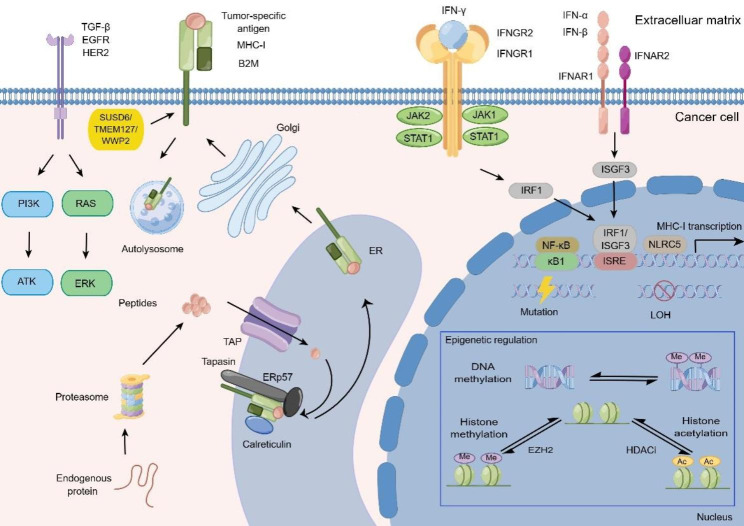
“22 The expression of MHC-I molecules is modulated by multiple mechanisms; at the level of genetic transcription, the major regulator of MHC-I genes is the Nod-like receptor (NLR) family CARD domain containing 5 (NLRC5).”
Palmitoylation modulates antitumor immunity
Tang, F. R., Xu, J., Zhang, Q., Chen, X., Wang, X., Xu, Y.-D., & Li, Z. (2025) · Molecular Biology Reports · doi:10.1007/s11033-025-11084-z · Cited by 3
“They present antigenic peptides derived from intracellular proteins to CD8 + T cells, which then rec - ognize and kill infected or transformed cells [ 71 , 72].”
Chou, C.-L., Lin, C., Li, W., Lee, S., Yang, C., Tian, Y., Shiue, Y., Tsai, H.-H., & Lai, H.-Y. (2024) · Archiv für Pathologische Anatomie und Physiologie und für Klinische Medicin · doi:10.1007/s00428-024-03974-7 · Cited by 3
“It has been indicated that the IFN-α, IFN-β, or IFN-γ signaling could regulate the MHC-I gene transcription [29], which encode heavy chains, and we found that the B2M gene encoding light chain was co-upregulated with CXCL11 (Fig.”
Cancer-associated fungi: An emerging powerful player in cancer immunotherapy
Li, T., Wu, X., Li, X., & Chen, M. (2025) · Biochimica et Biophysica Acta (BBA) - Reviews on Cancer · doi:10.1016/j.bbcan.2025.189287 · Cited by 3
Self-citationSynthetic Biology‐Based Strategy for Nanomedicine Design
Zhang, X., Duan, Q., Zhuang, J., & Huang, X. (2025) · Small Methods · doi:10.1002/smtd.202401969 · Cited by 4
OmniClust: A versatile clustering toolkit for single-cell and spatial transcriptomics data
Cui, Y., Cui, Y., Ding, Y., Nakai, K., Wei, L., Le, Y., Ye, X., & Sakurai, T. (2025) · Methods · doi:10.1016/j.ymeth.2025.03.007 · Cited by 3
Li, W., Zu, L., & Xu, S. (2025) · PubMed Central · doi:10.3779/j.issn.1009-3419.2025.105.01 · Cited by 2
SMARCD1 is a dual regulator of PD-L1 expression and cell proliferation facilitating tumor evasion
Fu, G., Liu, Y., Chen, Q., Yang, Z., Luo, M., & Cai, W. X. (2025) · Pathology - Research and Practice · doi:10.1016/j.prp.2025.155975 · Cited by 2
The significance of miR-142 in tumor progression of diffuse large B-cell lymphoma
Voropaeva, E. N., Серегина, О. Б., Сергеевна, В. М., Николаевна, Б. Т., Skvortsova, N. V., Maximov, V. N., & Pospelova, T. I. (2025) · Oncohematology · doi:10.17650/1818-8346-2025-20-2-87-103 · Cited by 3
Beta-2 microglobulin in lymphoma
Gupta, G., Afzal, M., Goyal, A., Padmapriya, G., Srivastava, M., Chennakesavulu, K., Mohanty, B., Rekha, A., Mazumder, A., Goyal, K., et al. (2025) · Clinica Chimica Acta · doi:10.1016/j.cca.2025.120418 · Cited by 2
Zhu, Z., Gao, C., Li, Y., Xiao, L., Ye, Z., Tao, X., Ye, Y., Tian, Y., Bai, X., & Zhao, J. (2025) · Breast Care · doi:10.1159/000547029 · Cited by 2
“The GSEA results also highlighted the enrichment of pathways such as natural killer cell-mediated cytotoxicity, T-cell receptor signaling, and antigen processing and presentation in BCY, indicating potential immune dysregulation that may affect the effectiveness of anti-tumor immune responses [41].”
Amir, M. A., Huang, H., Tang, R., Zhang, Y., Xiao, Y., Yuan, Q., & Xiao, X. (2025) · Clinical Kidney Journal · doi:10.1093/ckj/sfaf248 · Cited by 2
“In solid organ transplantation, scFvs are typically derived from mis-matched HLA alleles, preferably immunodominant mismatched ones, with minimal cross-reactivity and localized expression restricted to the graft [18 , 46 , 52 , 53 ].”
The role of the major histocompatibility complex (MHC) class I in prostate cancer therapy: A review
Emtiazi, N., Zolfi, E., Mehr, F. K., & Moradi, Y. (2025) · Critical Reviews in Oncology/Hematology · doi:10.1016/j.critrevonc.2025.104897 · Cited by 2
Guo, Y., Wei, J., Tan, G., Li, S., An, H., Wang, C., Hu, Y., Song, N., & Tang, Y. (2025) · ACS Applied Materials & Interfaces · doi:10.1021/acsami.5c11840 · Cited by 2
The promise of TIL therapy for glioblastoma
Pristo, E. L., Hotchkiss, K. M., Corcoran, A. M., Noldner, P., Okada, H., Hickey, J. W., Conejo-Garcia, J. R., Shaz, B. H., & Khasraw, M. (2025) · Trends in cancer · doi:10.1016/j.trecan.2025.10.003 · Cited by 2
Modeling CIC::DUX4 sarcoma reveals oncogene-mediated MHCI-dependent immune evasion
Vachanaram, A. R., Wei, E., Mitanoska, A., Bassett, W., Kyba, M., & Bosnakovski, D. (2025) · Molecular Cancer · doi:10.1186/s12943-025-02485-6 · Cited by 2
“Data are presented as mean ± SEM; * p < 0.05, *** p < 0.001, **** p < 0.0001 by one-way ANOVA ( n = 5) therapeutic anti-tumor T cell responses [61–64].”
InfluentialA Comprehensive View on the Mechanisms of Coronavirus Escaping Innate Immunity
Liu, Y., Lu, H., Li, J., Xie, Y., Hu, G., Pang, S., Lian, S., Liu, J., Zhu, G., & Ding, X. (2025) · Veterinary Sciences · doi:10.3390/vetsci12121156 · Cited by 2
“These peptides are usually derived from the cell’s own proteins, but can also include proteins from viruses or other pathogens [57].”
The Trojan Horse Within: Mechanisms of Immune Evasion in Breast Cancer
Das, B., Winterbottom, C. W., & Sikandar, S. S. (2025) · Cancer Heterogeneity and Plasticity · doi:10.47248/chp2603010001 · Cited by 2
“This reduction is associated with decreased infiltration of lymphocytes into the tumor microenvironment, increased expression of hypoxia-inducible factor-1 α (HIF-1 α ; encoded by HIF1A), and a poorer prognosis regarding distant metastasis-free survival [107– 109].”
Yang, Y., Chen, T., Xu, Z., Cai, J., Wang, W., Pan, L., Cheng, X., & Wang, A. (2025) · Frontiers in Immunology · doi:10.3389/fimmu.2025.1737749 · Cited by 2
Zhang, H., Zhou, X., Feng, L., Li, J., Zhang, W., Sun, Z., & Wang, W. (2026) · International Dental Journal · doi:10.1016/j.identj.2025.109377 · Cited by 2
“24 MHC-I complexes enable antigenic peptide recognition by CD8 ⁺ T cells through TCR scanning.”
Single-cell insights into cisplatin resistance mechanisms in bladder cancer tumor microenvironment
Xu, L., Lin, Y., Shi, G., Zhang, L., Lin, X., & Zhang, T. (2026) · Journal of Biological Chemistry · doi:10.1016/j.jbc.2026.111304 · Cited by 2
Li, X., Chu, T., Chen, W.-W., & Zhang, L.-J. (2026) · Clinics And Research in Hepatology and Gastroenterology · doi:10.1016/j.clinre.2026.102816 · Cited by 2
The Dual Role of Natural Peptides in Cancer Therapy: Anticancer and Immunomodulatory Perspectives
Tsaturyan, A., Hakobyan, H., Hovsepyan, K., Mkrtchyan, A. F., Sargsyan, T. H., Pastore, R., Guerra, G., & Roviello, G. N. (2026) · Oncology Research Featuring Preclinical and Clinical Cancer Therapeutics · doi:10.32604/or.2026.078405 · Cited by 2
“Together, these DAMPs drive dendritic cell maturation, facilitate efficient cross-presentation of tumor antigens, and ultimately initiate a robust adaptive anticancer immune response [125,126].”
O‐GlcNAcylated TAP1 Impairs Antigen Presentation and Promotes Immune Evasion in Bladder Cancer
Wu, J., Ren, X., Zhai, Z., Wang, L., Liang, L., Tan, Z., Zhao, J., Han, Y., Li, Y. F., Guan, F., et al. (2026) · Advanced Science · doi:10.1002/advs.202519955 · Cited by 2
“This complex is then trafficked to the cell surface, thereby facilitating peptide presentation for CD8 + T cell activation [ 8, 9 ].”
Liu, H., Liu, W., Zhang, X., Jiang, Y., Xu, H., Wang, N., Liu, B., & Lin, N. (2026) · Theranostics · doi:10.7150/thno.135134 · Cited by 3
“I heavy chain, β2 ‑ microglobulin, or interferon signaling lead to reduced surface MHC I expression, allowing tumors to escape CD8 T cell recognition [133,134].”
Ali, A., Contreras, P., Darweesh, M. F., Andersson, L., Jin, C., Essand, M., & Yu, D. (2024) · Molecular Therapy — Nucleic Acids · doi:10.1016/j.omtn.2024.102361 · Cited by 2
“20 Interestingly, we also found that the NF-k B pathway is among the up-regulated pathways (Figure 1D), as reported previously.”
Zhang, C., Zhu, J., Lin, H., Zhang, Z., Kang, B., Li, F., Shan, Y., Zhang, Y., Qi, X., Gu, J., et al. (2025) · Cellular Oncology · doi:10.1007/s13402-025-01055-8 · Cited by 2
Gao, Y., Li, J., Mao, J.-X., Jiang, A., Guo, W., & Fu, S. (2025) · Frontiers in Oncology · doi:10.3389/fonc.2025.1562869 · Cited by 2
RNA Isoforms as Broad Targets for Cancer Immunotherapy
Li, G., & Salomonis, N. (2024) · DNA and Cell Biology · doi:10.1089/dna.2024.0108 · Cited by 1
“Thus, NK cell therapies are becoming a promising single or combinatorial therapy option in the arsenal of targeted immunotherapies (Wu et al., 2023).”
Wang, Y., & Seliger, B. (2024) · OncoImmunology · doi:10.1080/2162402x.2024.2370928 · Cited by 1
“6 A number of studies demonstrated an impaired expression of different components of the HLA-I antigen processing and presentation machinery (APM) in multiple tumor types at distinct tumor stages.”
BackgroundHuang, S., & Yin, H. (2024) · Medicine · doi:10.1097/md.0000000000040270 · Cited by 1
Comprehensive analysis of UPK3B as a marker for prognosis and immunity in pancreatic adenocarcinoma
Jian, Z., Pan, T., Li, R., Zhang, W., Cheng, T., Zhang, H., Song, J., Shi, N., & Zhang, Z. (2025) · Scientific Reports · doi:10.1038/s41598-025-97213-x · Cited by 1
“Recent therapeutic strategies have been developed to counteract MHC-I loss, including the use of immune checkpoint inhibitors (ICIs), autophagy inhibitors, and combinatory approaches 23,32,33 .”
de Souza, A. P. R., da Silva, I. M., Vacario, B. G. L., Koike, A., Paz, R. G., Coradi, C., Wrzesinski, E. M. S., Trigo, G. L., Simão, A. N. C., Lozovoy, M. A. B., et al. (2025) · Molecular Biology Reports · doi:10.1007/s11033-025-10738-2 · Cited by 1
Facilitating Colorectal Cancer Treatment by Predicting Peptide-MHC Interaction Via Deep Learning
Wang, Y. (2024) · International Conference on Health Big Data and Intelligent Healthcare (ICHIH) · doi:10.1109/ichih63459.2024.11064890 · Cited by 1
“[2] In this study, our focus lies in predicting the binding affinity between novel antigens and MHC-I molecules in the context of CRC.”
Aljabali, A. A. A., Gammoh, O., Obeid, M. A., Qnais, E. Y., Alqudah, A. M., El‐Tanani, M., & Hatahet, T. (2025) · Current Cancer Drug Targets · doi:10.2174/0115680096381121250628142857 · Cited by 1
“Dendritic cells play a key role in presenting these antigens to T cells, thereby activating them to recognize them, allowing the latter to kill cancerous cells [136, 137].”
Comprehensive analysis of the PLXNA3 gene on prognosis and immune characteristics in breast cancer
Sun, W. H., Xu, Y., Qi, Q., Zhang, W., Pan, H., Sun, G., Wang, S., & Zhou, W. (2025) · Scientific Reports · doi:10.1038/s41598-025-13843-1 · Cited by 1
“Dysregulation of B2M expression impairs MHC-I surface localization and has been widely implicated in immune escape across multiple tumor types 32–34 .”
Yu, C., Li, Y., Liu, Z., Ye, W., Lin, W., Xu, W., Yan, L., & Ye, H. (2025) · Journal of Cellular and Molecular Medicine · doi:10.1111/jcmm.70915 · Cited by 1
“These complexes mediate antigen presentation by binding antigenic peptides on the cell surface, enabling recognition by T-cell receptors (TCRs) on CD8 + T cells and subsequent tumour cell elimination [38].”
Wong, K. K. (2026) · Computer Methods and Programs in Biomedicine · doi:10.1016/j.cmpb.2026.109372 · Cited by 1
“This indicates that PCa cells with MHC expression showed more distinct trajectory or transcriptome that may be amenable to MHC/antigen immunotherapy [65, 66], while TRPM4 inhibitors [45, 67, 68] or ribosomal subunit inhibitors [69] may be recommended to target TREP/post-IP cells.”
Nakashima, M., Iwasaki, T., Katayama, Y., Shimo, M., Takigawa, K., Shimada, N., Matsushita, M., Kuwamoto, S., Sato, S., Toya, M., et al. (2025) · Cancer Science · doi:10.1111/cas.70281 · Cited by 1
Outer membrane vesicles as next-generation vaccine platforms: Mechanisms of antigen presentation
Dai, J., Liu, C., Ding, K., Yu, Z., & Shang, K. (2025) · International Immunopharmacology · doi:10.1016/j.intimp.2025.116075 · Cited by 1
Overcoming Immunotherapy Resistance in Small-Cell Lung Cancer
Canale, M., Suzzi, F., Verlicchi, A., Citarella, F., Delmonte, A., & Ulivi, P. (2026) · Biology · doi:10.3390/biology15040356 · Cited by 2
Kuwahara, A. A., Fenton, E. M., Lovejoy, C., Lee, T., Wang, L., Fogarty, M. M., Jung, J., Guo, S.-M., Maynard, L. H., May, A. P., et al. (2026) · Molecular Therapy Oncology · doi:10.1016/j.omton.2026.201183 · Cited by 1
“For the RG studies described in Figures 2, 3, and 4, all procedures were carried out under sterile surgical conditions at the UCSF Brain Tumor Center, as described previously.”
Beyond HLA-Ia: A multidimensional framework for Neoantigen immunotherapy
Ding, L., Guo, C., Qin, Y., Wu, L., & Wei, P. (2026) · Cellular Immunology · doi:10.1016/j.cellimm.2026.105112 · Cited by 1
Borole, P., Boulanger, D. S. M., & Rajan, A. (2026) · Methods · doi:10.1016/j.ymeth.2026.05.005 · Cited by 1
Cheng, B., Gong, L., Xu, H., Wang, Z., Huang, H., Guan, X., & Wu, P. (2026) · Oncogene · doi:10.1038/s41388-026-03815-8 · Cited by 2
“Within the tumour microenvironment, these innate circuits intersect with androgen-dependent metabolic rewiring and defects in antigen-processing machinery to reduce surface MHC class I expression and limit effective T-cell in fi ltration [29, 50, 51].”
Reshaping tumor immunity by targeting SUMOylation: A novel immunotherapeutic strategy
Yi, M., Wu, X., Guo, P., Yu, X., & Li, W. (2026) · Biochimica et Biophysica Acta (BBA) - Reviews on Cancer · doi:10.1016/j.bbcan.2026.189611 · Cited by 1
Self-citationAnjing, L., Yuan, R., Su, X., Liang, C., Jue, H., & Zhu, C. (2026) · Cancer Reports · doi:10.1002/cnr2.70581 · Cited by 1
“MHC I/II are two important antigen presentation pathways, mediating the activation of CD8 + T and CD4 + T cells respectively [34, 35].”
Gastric Cancer: Pathobiology and Therapeutics
Yu, R., Zhang, M., Meng, Y., Zhu, C., Zhang, W., Zhang, H., Cao, Z., Du, M., Zhao, Z., Bai, J., et al. (2026) · MedComm · doi:10.1002/mco2.70772 · Cited by 1
“Major mechanisms include PD-L1 upregulation on tumor cells to blunt T-cell cytotoxicity [ 245 ], altered MHC expression impairing antigen recognition [ 329 ], and cytokine-driven myeloid reprogramming.”
Zhang, B., Zhong, R., Shi, C., Chu, T., Zhang, W., Wang, H., Gan, X., Zhang, Z., Zhu, C., Li, X., et al. (2026) · Nature Communications · doi:10.1038/s41467-026-73562-7 · Cited by 2
“Proteasome-related genes, PSMB2 and PSMB8, are critical for processing tumor antigens into peptides that activate CD8 + T cells 34,35 .”
Genetic heterogeneity and pathogenetic mechanisms of bovine leukemia virus
Petropavlovskiy, M. V., Donnik, I. M., Krivonogova, A. S., Isaeva, A. G., Badretdinova, A. S., & Martynov, N. A. (2026) · Foods and raw materials · doi:10.21603/2308-4057-2027-2-707 · Cited by 1
Luo, Y., Wang, W., & Yan, J. (2026) · Immunology · doi:10.1111/imm.70160 · Cited by 1
“Functioning as specialised presenters of soluble antigens, B cells utilise B-cell receptor (BCR)- mediated antigen uptake to complement the central tolerance mechanism by targeting circulating self-antigens [24, 25].”
Meo, M. D., & Nicolazzo, C. (2026) · Cancers · doi:10.3390/cancers18132104 · Cited by 1
“In the context of CRC and other solid tumors, intra-tumoral heterogeneity of MHC-I expression reflects a process of genetic and epigenetic immune editing, where clones with reduced APM/MHC-I function are selected under T-cell pressure and can dominate advanced and metastatic lesions [28,31].”
Su, Y., Huang, S., Kuo, C., Xiao, L., Lin, C. Y., Chen, Y., Chang, L.-C., Kuo, M., Wu, C.-C., Peng, J., et al. (2026) · Journal for ImmunoTherapy of Cancer · doi:10.1136/jitc-2026-014770 · Cited by 1
“All protocols involving human specimens were conducted in accordance with institutional and national ethical guidelines.”
Fiore, P. F., Forcelloni, S., Moretta, L., Assenza, M. R., Orecchia, P., Bilotta, M. T., Machwirth, M., Shpati, T., Sanvi, L. W., Haas, D., et al. (2026) · Signal Transduction and Targeted Therapy · doi:10.1038/s41392-026-02827-w · Cited by 1
Majumder, S., Panigrahi, G., & Sahoo, A. (2026) · Molecular Biology Reports · doi:10.1007/s11033-026-12371-z · Cited by 1
Allela, O. Q. B., Shareef, A., Sameer, H. N., Yaseen, A., Athab, Z. H., & Mm, A. (2026) · Current Medical Science · doi:10.1007/s11596-026-00227-3 · Cited by 2
“Since many tumors downregulate antigen-processing machinery components such as TAP, tapasin, and CRT to reduce MHC-I surface expression, restoring or reshaping PLC function can enhance tumor visibility to CD8 ⁺ T cells [164].”
Huang, K., Lin, Y., Zheng, W., Fan, X., Ji, Y., & Feng, S. (2026) · Materials Today Bio · doi:10.1016/j.mtbio.2026.103549 · Cited by 1
“IFN-γ and TNF-α not only directly suppresses tumor proliferation but also enhances tumor immunogenicity by upregulating MHC-I expression [35,36], thereby accounting for the significant tumor regression observed in vivo .”
Tang, D., Lei, J. H., Lin, S., Zhou, J., Wu, X., Qiao, Y., Sun, H., Chen, Q., Xing, F., Wang, X., et al. (2026) · Pharmacological Research · doi:10.1016/j.phrs.2026.108396 · Cited by 2
Self-citationCardoso, R. V., Pereira, P. R., Freitas, C. S., Souza, Y. P., Kalume, D. E., Costa, G., Conte‐Júnior, C. A., & Paschoalin, V. M. F. (2026) · Pharmaceutics · doi:10.3390/pharmaceutics18091123 · Cited by 1
“The presence of MHC I suggests an attempt to reestablish immune surveillance [96].”
Decoding neutrophil spatial heterogeneity and clinical implications in breast cancer
Xu, Y.-Z., Wu, X.-R., Qiu, Z.-Y., Li, Y.-W., Dai, L.-J., Su, G.-H., Zhang, H., Zhang, H.-Y.-L., Li, M., Lv, H., et al. (2026) · Cancer Cell · doi:10.1016/j.ccell.2026.10.005 · Cited by 1
Self-citationEvaluation of Multispecific Drugs Based on Patient‐Derived Immunocompetent Tumor Organoids
Zhao, Z., Wu, X., Zhang, T., Zhou, M. R., Liu, S., Yang, R. L., & Li, J. (2025) · ChemBioChem · doi:10.1002/cbic.202400731 · Cited by 2
Self-citationNCOR2 represses MHC class I molecule expression to drive metastatic progression of breast cancer
Ticha, P., Northey, J. J., Narain, R., Sharma, S., Lakins, J. N., Gonzalez, H., Kersten, K., Ironside, A. J., Drain, A. P., Zidek, M., et al. (2026) · Nature Communications · doi:10.1038/s41467-026-72168-3 · Cited by 1
“The fi ndings expand the repertoire of targetable epigenetic factors that regulate antigen presentation via MHC class I on tumor cells to modulate anti-tumor immunity 82 – 85 .”
Hu, S.-W., & Wang, M. (2025) · Discover Oncology · doi:10.1007/s12672-025-02267-y · Cited by 1
Alkayyal, A. A., Saeedi, N. H., & Moawadh, M. S. (2025) · Advances in Clinical and Experimental Medicine · doi:10.17219/acem/205014 · Cited by 1
Abo-Zaid, A. H., Ali, M. K., Sadik, A. S., & Megahed, A. A. (2025) · Novel Research in Microbiology Journal · doi:10.17582/journal.nrmj/2025/9.4.332.348 · Cited by 1
Hatthakarnkul, P., Fisher, N. C., Santana, L. S., Leslie, H., Legrini, A., Ammar, A., Matly, A., Pennel, K. A. F., Powley, I. R., Bull, C., et al. (2025) · bioRxiv (Cold Spring Harbor Laboratory) · doi:10.1101/2025.03.05.641608 · Cited by 1
May, A. M., Kadomoto, S., Williams, C., Soupir, A. C., The, S., McGue, J. J., Robinson, T., Shelley, G., Hayes, M. T., Fridley, B. L., et al. (2025) · bioRxiv (Cold Spring Harbor Laboratory) · doi:10.1101/2025.06.12.656421 · Cited by 2
Chutoe, C., Webb, E. R., Muir, M., Laing, F., Brunton, V. G., & von Kriegsheim, A. (2025) · bioRxiv (Cold Spring Harbor Laboratory) · doi:10.1101/2025.09.01.672152 · Cited by 3
The Role of T Lymphocyte Subsets in Breast Cancer
Li, Q., & Lu, G. (2024) · Journal of Biosciences and Medicines · doi:10.4236/jbm.2024.1212020
Harnessing CRISPR-Cas9 for Precision Oncological Interventions
-, H. S. (2025) · International Journal For Multidisciplinary Research · doi:10.36948/ijfmr.2025.v07i01.35152
Yin, S.-Q., Ma, H., Li, X.-Q., Xiao, S.-Y., Tulamaiti, A., Zhang, Z.-G., & Xing, X. (2025) · Journal of Pancreatology · doi:10.1097/jp9.0000000000000215
“[22] To assess the impact of B3GNT3 on MHC-I antigen presentation, we measured MHC-I levels on the surface of Capan-1 and AsPC-1 cells following B3GNT3 knockdown using flow cytometry.”
Kaewkedsri, P., Intarawichian, P., Jessadapattarakul, S., Kunprom, W., Koonmee, S., Thanee, M., Somintara, O., Wongbuddha, A., Chadbunchachai, P., Nawapun, S., et al. (2025) · Breast Cancer Targets and Therapy · doi:10.2147/bctt.s506833 · Cited by 1
“16 20–22 While studies in other cancers, such as head and neck squamous cell carcinoma and non-small cell lung carcinoma, have demonstrated that higher PD-L1 expression is associated with loss of MHC class I expression and poorer clinical outcomes, 23,24 the exact relationship between PD-L1 and MHC…”
Jasrotia, S., Verma, A. K., Singh, T., Sheoran, S., Arora, S., Singh, R., Chopra, C., & Kumar, A. (2025) · Research Square · doi:10.21203/rs.3.rs-6024968/v1
The role of inflammasome in breast cancer: a review
Mago, H. C., & Sandhika, W. (2025) · Romanian Journal of Medical Practice · doi:10.37897/rjmp.2025.1.8 · Cited by 1
“Therefore, if there is a downregulating in MHC-I and APM, it can eliminate T cell lympho-cyte-mediated anti-tumor immunity [35].”
Xie, H., Ma, L., He, X., Zhao, S., Wang, J., Zhu, A., Liu, C., Piskareva, O., Deng, C., Meng, F., et al. (2025) · Frontiers in Immunology · doi:10.3389/fimmu.2025.1653533
Immunotherapy's new prospects and clinical difficulties in BRAF ‐mutated acral melanoma
He, K., Fang, M., & Cao, Y. (2025) · Journal of the European Academy of Dermatology and Venereology · doi:10.1111/jdv.70082
“6,7 This brings up a broader clinical query: Is it better to treat with targeted drugs first, followed by immunotherapy?”
Zhang, L., Xu, Y., Guo, J., Lv, X., Liao, L., Zhang, Y., Li, J., Gu, X., Li, H., Pan, Q., et al. (2025) · Research Square · doi:10.21203/rs.3.rs-7555077/v1
Arslan, A., Aktaş, E., Sezerman, O. U., & Özbek, T. (2025) · Veterinary Medicine and Science · doi:10.1002/vms3.70593
Metadata
- Authors
- Wu, X., Li, T., Jiang, R., Yang, X., Guo, H., & Yang, R.
- Affiliations
- Nanjing Drum Tower Hospital (CN)
- Zhongda Hospital Southeast University (CN)
- Fujian Medical University (CN)
- Corresponding author
- Guo, Hongqian
- Yang, Rong
- Venue
- Molecular Cancer
- Published
- 2023-12-02
- Volume
- 22
- Issue
- 1
- Pages
- 194-194
- ISSN
- 1476-4598 (ISSN-L)
- PMC
- PMC10693139
- OpenAlex
- W4389266107
- Semantic Scholar
- e469619bdded549d885ecb201eeb58fe9b6a91e4
- Cited by
- 223
- References
- 163
- Citations by year
- 2026: 78 · 2025: 109 · 2024: 34 · 2023: 2
- FWCI
- 7.23
- Type
- journal article
- Language
- en
- Open access
- gold
- doi.org
- Licence
- cc-by
- creativecommons.org/licenses/by/4.0 (tdm)
- creativecommons.org/licenses/by/4.0 (vor)
- Locations
- Molecular Cancer (publishedVersion, cc-by)
- PubMed Central (publishedVersion, cc-by)
- PubMed (publishedVersion)
- DOAJ (DOAJ: Directory of Open Access Journals) (submittedVersion, cc-by-sa)
- Funders
- National Natural Science Foundation of China (81772710, 82172691)
- Nanjing Science and Technology Development Key Project (YKK19011)
- Topics
- Health Sciences › Medicine › Oncology › Cancer Immunotherapy and Biomarkers
- Life Sciences › Immunology and Microbiology › Immunology › Immunotherapy and Immune Responses
- Life Sciences › Biochemistry, Genetics and Molecular Biology › Molecular Biology › vaccines and immunoinformatics approaches
- Keywords
- MHC class I, cancer immunotherapy, tumor immune evasion, tumor microenvironment, peptide presentation, tumor progression, immune checkpoint blockade
- MeSH terms
- Cell Membrane, Humans, Immunotherapy, Neoplasms, Histocompatibility Antigens Class I, Tumor Microenvironment
About these checks
Registry, retraction, Cites and statistics results are computed, not judged, with one exception: a printed reference that no index lists is read once by a model before it counts as a citation error. Claims are extracted by a model and kept only when their quote appears verbatim in the text; each cited source is then checked, with a model’s help, for whether it says what the claim relies on. Those verdicts can be wrong — read the claim’s quote and the cited source before relying on one.
Statistics and arithmetic are recomputed, not judged.
Confidence bands are shown only for fields calibrated on our annotated test set. None is calibrated yet, so no band is shown.
What counts as a claim ›How we measure confidence ›How we check this ›
Are you an author, or do you see a problem with this page? Request a review
Data sources
Bibliographic data: Semantic Scholar, OpenAlex, Crossref.
Contains information from the Semantic Scholar Academic Graph Datasets, made available under the ODC Attribution License (ODC-BY 1.0).
Semantic Scholar’s data is described in: Kinney, R., et al. (2023). The Semantic Scholar Open Data Platform. arXiv:2301.10140.
