

The share of ultra-processed foods and the overall nutritional quality of diets in the US: evidence from a nationally representative cross-sectional study
Open accessThe DOI matches its Crossref record; 43 of the 43 references it cites were found in a registry or an index.
Abstract
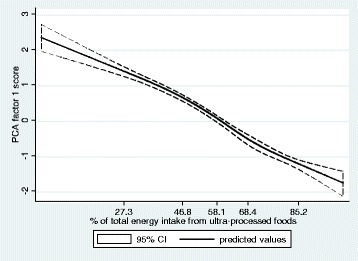
BACKGROUND: Recent population dietary studies indicate that diets rich in ultra-processed foods, increasingly frequent worldwide, are grossly nutritionally unbalanced, suggesting that the dietary contribution of these foods largely determines the overall nutritional quality of contemporaneous diets. Yet, these studies have focused on individual nutrients (one at a time) rather than the overall nutritional quality of the diets. Here we investigate the relationship between the energy contribution of ultra-processed foods in the US diet and its content of critical nutrients, individually and overall. METHODS: We evaluated dietary intakes of 9,317 participants from 2009 to 2010 NHANES aged 1+ years. Food items were classified into unprocessed or minimally processed foods, processed culinary ingredients, processed foods, and ultra-processed foods. First, we examined the average dietary content of macronutrients, micronutrients, and fiber across quintiles of the energy contribution of ultra-processed foods. Then, we used Principal Component Analysis (PCA) to identify a nutrient-balanced dietary pattern to enable the assessment of the overall nutritional quality of the diet. Linear regression was used to explore the association between the dietary share of ultra-processed foods and the balanced-pattern PCA factor score. The scores were thereafter categorized into tertiles, and their distribution was examined across ultra-processed food quintiles. All models incorporated survey sample weights and were adjusted for age, sex, race/ethnicity, family income, and educational attainment. RESULTS: The average content of protein, fiber, vitamins A, C, D, and E, zinc, potassium, phosphorus, magnesium, and calcium in the US diet decreased significantly across quintiles of the energy contribution of ultra-processed foods, while carbohydrate, added sugar, and saturated fat contents increased. An inverse dose-response association was found between ultra-processed food quintiles and overall dietary quality measured through a nutrient-balanced-pattern PCA-derived factor score characterized by being richer in fiber, potassium, magnesium and vitamin C, and having less saturated fat and added sugars. CONCLUSIONS: This study suggests that decreasing the dietary share of ultra-processed foods is a rational and effective way to improve the nutritional quality of US diets.
Overview
The claims and statistics of this paper haven’t been checked yet.
Free: it reads the open-access text and checks the first 5 claims that cite a source we can check. Create a free account to check every claim.
Integrity signals
Registry
Cites
Statistics
Figures
Verification
Claims the paper makes
The claims and statistics of this paper haven’t been checked yet.
Free: it reads the open-access text and checks the first 5 claims that cite a source we can check. Create a free account to check every claim.
Claims other papers make about this one
Each is checked against this paper’s own text: does it say what the citing paper says it does?
The source backs part of the claim, not all of it — or backs it for a different population, condition or comparison.
In the citing paper
“Moreover, refined sugars constitute approximately 20% of caloric intake.”
From The oral microbiome: Role of key organisms and complex networks in oral health and disease (2021) · cites this paper as [252]
Experimental — accuracy not yet measuredIn the citing paper
“In the United States, carbohydrates constitute > 50% of total energy intake, with refined cereal grains representing > 85% of total cereal grains consumed.”
From The oral microbiome: Role of key organisms and complex networks in oral health and disease (2021) · cites this paper as [252]
Self-check
Percentages, sums and reported differences re-computed from the paper’s own numbers.
The self-check needs the paper’s full text.
Citations
Cites
Sontrop, J. M., Dixon, S. N., Garg, A. X., Buendia-Jimenez, I., Dohein, O., Huang, S.-H. S., & Clark, W. F. (2013) · American Journal of Nephrology · doi:10.1159/000350377 · Cited by 5,871
Dietary pattern analysis: a new direction in nutritional epidemiology
Hu, F. B. (2002) · Current Opinion in Lipidology · doi:10.1097/00041433-200202000-00002 · Cited by 4,029 · cited 2×
“linear combinations of them referred to as “components” and which maximize the explained variance [19, 42].”
BackgroundMoshfegh, A. J., Rhodes, D. G., Baer, D. J., Murayi, T., Clemens, J. C., Rumpler, W. V., Paul, D. R., Sebastian, R. S., Kuczynski, K. J., Ingwersen, L. A., et al. (2008) · The American Journal of Clinical Nutrition · doi:10.1093/ajcn/88.2.324 · Cited by 1,982
Ultra‐processed products are becoming dominant in the global food system
Monteiro, C. A., Moubarac, J. ‐., Cannon, G., Ng, S. W., & Popkin, B. (2013) · Obesity Reviews · doi:10.1111/obr.12107 · Cited by 1,827
Self-citationMoodie, R., Stuckler, D., Monteiro, C., Sheron, N., Neal, B., Thamarangsi, T., Lincoln, P., & Casswell, S. (2013) · The Lancet · doi:10.1016/s0140-6736(12)62089-3 · Cited by 1,663
Self-citationNational health and nutrition examination survey: analytic guidelines, 1999-2010.
Cl, J., Paulose‐Ram, R., Ogden, C. L., Carroll, Kruszon‐Moran, D., Dohrmann, S. M., & Curtin, L. R. (2013) · PubMed · Cited by 1,522
USDA National Nutrient Database for Standard Reference, Release 22
(2018) · Cited by 1,285
Monteiro, C. A., Levy, R. B., Claro, R. M., de Castro, I. R. R., & Cannon, G. (2010) · Public Health Nutrition · doi:10.1017/s1368980010003241 · Cited by 1,060 · cited 1×
“Our investigation was based on total effective individual consumption data, rather than on household purchasing data [7, 10, 47], which do not evaluate the fraction of wasted food or purchases at restaurants.”
MethodSelf-citationDietary patterns and health outcomes
Kant, A. K. (2004) · Journal of the American Dietetic Association · doi:10.1016/j.jada.2004.01.010 · Cited by 1,028 · cited 1×
“The PCA method also has limitations such as subjective decisions regarding the number of extracted components, method of rotation, naming of components, and cutoffs for factor loadings [23, 31, 49].”
MethodA new classification of foods based on the extent and purpose of their processing
Monteiro, C. A., Levy, R. B., Claro, R. M., Castro, I. R. R. D., & Cannon, G. (2010) · Cadernos de Saúde Pública · doi:10.1590/s0102-311x2010001100005 · Cited by 991 · cited 2×
“We classified all recorded food items (N = 280,132 Food Codes) according to Nova, a food classification based on the extent and purpose of industrial food processing [4, 17].”
BackgroundMethodSelf-citation
Research works printed but not linked: 3
- FAO. Guidelines on the collection of information on food processing through food consumption surveys. Rome: FAO; 2015.
- Diet and health: implication for reducing chronic disease risk. National Academy Press, Washington, DC; 1989.
- Monteiro CA, Cannon G, Levy RB, Claro R, Moubarac JC, Martins AP, Louzada ML, Baraldi L, Canella D. The Food System. Processing. The big issue for disease, good health, well-being. World Nutr. 2012;3:527–69. www.wphna.org (accessed Jan 2017).
Cited by
Items 301–400 of 582
Buckley, C. M., Stuijfzand, B. G., & Rogers, P. J. (2018) · Physiology & Behavior · doi:10.1016/j.physbeh.2018.03.009 · Cited by 10
Food processing and its association with dental caries: Data from NHANES 2011‐2014
Bidinotto, A. B., Steele, E. M., Cunha‐Cruz, J., Thomson, W. M., Hugo, F. N., & Hilgert, J. B. (2021) · Community Dentistry And Oral Epidemiology · doi:10.1111/cdoe.12628 · Cited by 13
Ozcariz, S. G. I., Pudla, K. J., Martins, A. P. B., Peres, M. A., & González‐Chica, D. A. (2018) · Journal of Public Health · doi:10.1007/s10389-018-0987-4 · Cited by 10
Chemicals, cans and factories: how grade school children think about processed foods
Bleiweiss-Sande, R., Goldberg, J. P., Evans, E. W., Chui, K. K. H., Bailey, C. P., & Sacheck, J. M. (2020) · Public Health Nutrition · doi:10.1017/s1368980019003859 · Cited by 12
Amaraggi, B., Wood, W., Martín, L. G., Sánchez, J. G., Sánchez, Y. F., & Puentes, A. D. L. G. (2024) · medRxiv · doi:10.1101/2024.02.16.24302894 · Cited by 16
Zhang, J., Zhu, F., Cao, Z., Rayamajhi, S., Zhang, Q., Liu, L., Meng, G., Wu, H., Gu, Y., Zhang, S., et al. (2022) · Food & Function · doi:10.1039/d1fo03279h · Cited by 9
Ultra-processed food consumption, genetic susceptibility, and the risk of hip/knee osteoarthritis
Wei, Y., Zhang, T., Liu, Y., Liu, H., Zhou, Y., Su, J., Chen, L., Bai, L., & Xia, Y. (2024) · Clinical Nutrition · doi:10.1016/j.clnu.2024.04.030 · Cited by 12
Chinyanga, E., Britwum, K., Gustafson, C. R., & Bernard, J. C. (2024) · Appetite · doi:10.1016/j.appet.2024.107574 · Cited by 13
Ultraprocessed food intake and body mass index change among youths: a prospective cohort study
Du, M., Wang, L., Martín‐Calvo, N., Dhana, K., Khandpur, N., Rossato, S. L., Steele, E. M., Fung, T. T., Chavarro, J. E., Sun, Q., et al. (2024) · American Journal of Clinical Nutrition · doi:10.1016/j.ajcnut.2024.07.024 · Cited by 15
Nguyen, L., Walters, J., Spies, B., Coppus, A., Massie, J., & Bertonha, T. P. (2025) · Food Frontiers · doi:10.1002/fft2.70064 · Cited by 21
Tippens, K. M., Erlandsen, A., Hanes, D. A., Graybill, R., Jackson, C., Briley, J., & Zwickey, H. L. (2018) · The Journal of Alternative and Complementary Medicine · doi:10.1089/acm.2018.0025 · Cited by 13
Köncke, F., Toledo, C., Berón, C., Klaczko, I., Carriquiry, A., Cediel, G., & Gomes, F. D. S. (2022) · Nutrients · doi:10.3390/nu14030528 · Cited by 12
Consumption Patterns of Processed Foods in Singapore—A Cross-Sectional Study
Gan, P., Er, J. C., Chow, K., Er, B., Chan, J. S. H., Li, A., & Aung, K. T. (2022) · Foods · doi:10.3390/foods11182782 · Cited by 13
Cediel, G., Cadena, E. M., Vallejo, P., Gaitán, D., & Gomes, F. D. S. (2024) · PLOS Global Public Health · doi:10.1371/journal.pgph.0001993 · Cited by 18
Aljahdali, A. (2025) · The journal of nutrition health & aging · doi:10.1016/j.jnha.2024.100422 · Cited by 16
Ouyang, W., Xiao, B.-J., Chen, H., Fu, L., Tang, F., Marrone, G., Liu, X., Wu, Y., & Carrero, J. J. (2025) · Frontiers in Nutrition · doi:10.3389/fnut.2025.1547181 · Cited by 11
Lee, S. J., & Lee, K. W. (2025) · Nutrients · doi:10.3390/nu17122027 · Cited by 11
de Souza, A. M., Bezerra, I. W. L., Torres, K. G., Pereira, G. S., Costa, R. M., & Oliveira, A. G. (2025) · Nutrients · doi:10.3390/nu17152483 · Cited by 11
“Ultra-processed foods often displace whole foods rich in polyphenols and short-chain fatty acids, disrupting gut microbiota composition and increasing systemic inflammation [29].”
Sackey, J. D., Valera, P. A., Halkitis, P. N., & Krause, K. D. (2019) · Journal of HIV/AIDS & Social Services · doi:10.1080/15381501.2019.1638334 · Cited by 9
Li, L., Yan, R., Zhuang, Y., Xu, Y., Wang, L., Chen, L., Sun, Y., Ye, F., Mei, L., & Dai, F. (2024) · Digestive Diseases and Sciences · doi:10.1007/s10620-024-08638-9 · Cited by 12
Minimally processed versus processed and ultra-processed food in individuals at cardiometabolic risk
Meneguelli, T. S., Juvanhol, L. L., Leite, A. D. S., Bressan, J., & Hermsdorff, H. H. M. (2021) · British Food Journal · doi:10.1108/bfj-12-2020-1087 · Cited by 9
de Almeida, H. C., Lage, V. K. D. S., de Paula, F. A., Freitas, J. D. P. C., Moreno, L. G., Oliveira, V. C., Bastone, A. D. C., Santos, J. N. V., Lima, L. P., Fernandes, A. C., et al. (2022) · Research Society and Development · doi:10.33448/rsd-v11i11.33129 · Cited by 10
“UP intake also has been associated with poorer diet quality (less fiber, fruit, vegetable, and protein intake) (Martínez Steele et al., 2017, 2018; Moubarac et al., 2017; Rauber et al., 2018).”
BackgroundAshraf, R., Duncan, A. M., Darlington, G., Buchholz, A. C., Haines, J., & David, W. L. (2022) · Frontiers in Nutrition · doi:10.3389/fnut.2022.1005227 · Cited by 10
Mialon, M., & Naik, A. (2023) · World Nutrition · doi:10.26596/wn.202314186-99 · Cited by 11
Pappe, C. L., Peters, B., Pivovarova‐Ramich, O., Schremmer, R., Adam, A., Vach, K., Dommisch, H., & Woelber, J. P. (2024) · Journal of Periodontology · doi:10.1002/jper.24-0208 · Cited by 9
“18,19 22 There is increasing evidence supporting the causal relationship between free sugars and type 2 diabetes mellitus (T2DM).”
Wang, Q., Li, M., Gao, Y., Feng, Y., Xu, Y., Liu, W., Zhang, Z., Ren, J., Yang, J., Fan, G., et al. (2024) · Food Bioscience · doi:10.1016/j.fbio.2024.105391 · Cited by 9
Impact of home gardens promoted among urban residents in Dhaka, Bangladesh
Schreinemachers, P., Kumar, S. S., & Uddin, N. M. (2025) · Food Security · doi:10.1007/s12571-025-01543-7 · Cited by 19
“The overall consumption of ultra-processed foods may still be low compared to some high-income countries, where these foods account for about half of adults’ energy intake (e.g. Martínez Steele et al., 2017; Nardocci et al., 2019).”
Vatavuk‐Serrati, G., Meyer, K. A., Miles, D. R., & Taillie, L. S. (2025) · Frontiers in Public Health · doi:10.3389/fpubh.2025.1659915 · Cited by 11
Ultra-Processed Foods and Cardiometabolic Health: A Review of Current Evidence
Gövez, N. E., & Köksal, E. (2025) · Current Nutrition Reports · doi:10.1007/s13668-025-00703-7 · Cited by 11
“Diets rich in UPFs usually have poor nutritional quality, and as the consumption of UPF increases, sugar and saturated fat intake increase, but fiber, protein, and nutritional value deteriorate [ 58 ].”
Torquato, B. M. D. A., Madruga, M. F., Levy, R. B., Louzada, M. L. D. C., & Rauber, F. (2024) · British Journal Of Nutrition · doi:10.1017/s0007114524001909 · Cited by 8
Investigation of direct and indirect association of ultra‐processed food intake and periodontitis
Bidinotto, A. B., Steele, E. M., Thomson, W. M., Hugo, F. N., & Hilgert, J. B. (2021) · Journal of Periodontology · doi:10.1002/jper.21-0274 · Cited by 7
Martín‐Masot, R., Labella, A., Baena‐García, L., Flor‐Alemany, M., López‐Frías, M., de la Higuera, M., Maldonado, J. A., & Nestares, T. (2022) · Applied Sciences · doi:10.3390/app122211680 · Cited by 10
“UPFs containing little or no whole food [11] have high caloric contents (up to 500 kcal/100 g) and a low nutritional quality, as well as a high glycemic load, because they are rich in sodium, simple sugars, and saturated and trans fats, and low in fiber, proteins, and various micronutrients, and because they contain a…”
BackgroundKoiwai, K., Takemi, Y., Hayashi, F., Ogata, H., Sakaguchi, K., Akaiwa, Y., Shimada, M., Kawabata, T., & Nakamura, M. (2021) · PubMed · doi:10.11236/jph.20-044 · Cited by 12
GroceryDB: Prevalence of Processed Food in Grocery StoresPreprint
Ravandi, B., Ispirova, G., Sebek, M., Mehler, P., Barabási, A.-Ĺ., & Menichetti, G. (2022) · medRxiv · doi:10.1101/2022.04.23.22274217 · Cited by 7
Association Between Ultraprocessed Food Intake and Self-Reported Arthritis
Zhu, Y., García-Larsen, V., Bromage, S., Martinez-Steele, E., Hallal, A. L. C., Rebholz, C. M., & Matsuzaki, M. (2025) · American Journal of Preventive Medicine · doi:10.1016/j.amepre.2025.02.010 · Cited by 8
Romeiro, A. C. T., Brito, F. D. S. B., dos Santos, D. M., da Costa, E. S., Curioni, C. C., & Adegboye, A. R. A. (2025) · British Journal Of Nutrition · doi:10.1017/s000711452510411x · Cited by 13
“Similar trends of increasing Na density with greater consumption of UPF were observed in studies from Chile, Canada and the USA (56 – 58) .”
Pellegrino, F., Tan, M., Richonnet, C., Reinert, R., Torre, S. B. D., & Chatelan, A. (2024) · Nutrients · doi:10.3390/nu16111656 · Cited by 10
“In addition, an inverse relationship was also found between the level of UPF consumption and the overall diet quality [69,70].”
BackgroundAkyakar, B., Yıldıran, H., & Bountziouka, V. (2024) · Current Nutrition Reports · doi:10.1007/s13668-024-00580-6 · Cited by 9
Dunford, E., Miles, D. R., Hollingsworth, B. A., Heller, S., Popkin, B. M., Ng, S. W., & Taillie, L. S. (2024) · Nutrients · doi:10.3390/nu16244345 · Cited by 6
Self-citationBrooks, E. L. G., Tangney, C., & Ritz, E. M. (2025) · Osteoporosis International · doi:10.1007/s00198-025-07394-4 · Cited by 9
Asma’, A., Lokman, N. A. H., Yusof, H. M., & Zainuddin, A. A. (2020) · IIUM Medical Journal Malaysia · doi:10.31436/imjm.v18i3.193 · Cited by 7
“These findings are in contrast with a study done in the United States, which reported that 75% of the salt intake was contributed by ultra-processed foods, then only followed by household cooking processes (15%) and natural salts in foods (10%).(16) That US study was in line with a study done in Australia where the me…”
ResultInfluentialBig Data and Artificial Intelligence for Global Health: Ethical Challenges and Opportunities
Vayena, E., & Ferretti, A. (2021) · Cambridge University Press eBooks · doi:10.1017/9781108692137.036 · Cited by 12
Alessa, M. Y., Alarfaj, M. O., Albenayyan, H. A., Aleidan, A. A., Albahrani, F. A., Bokhuwah, M. A., Bukhamsin, R., Alzahrani, R. M., Alkhalifah, M. F., Alshekhmobarak, L. A., et al. (2023) · Cureus · doi:10.7759/cureus.33774 · Cited by 6
Nascimento, L. M., Lavôr, L. C. D. C., Sousa, P. V. D. L., Luzia, L. A., Viola, P. C. D. A. F., Paiva, A. D. A., Rondó, P. H. D. C., & Frota, K. D. M. G. (2023) · British Journal Of Nutrition · doi:10.1017/s000711452300154x · Cited by 15
“In addition, the mean content of proteins, fibres, vitamins A, C, D and E, Zn, K, P, Mg and Ca in the diet decreased significantly with the increase in the energy contribution of UPP (49) .”
BackgroundMorales-Cahuancama, B., Verdezoto, N. X., Gonzales-Achuy, E., Quispe-Gala, C., Bautista-Olórtegui, W., Hinojosa-Mamani, P., & Aparco, J. P. (2024) · JMIR Formative Research · doi:10.2196/49168 · Cited by 8
“Different studies have indicated that ultraprocessed foods, compared with natural or minimally processed foods, are calorie dense; have high concentrations of free sugars, sodium, and saturated fats; and have low concentrations of fiber and micronutrients [42,43].”
BackgroundMulti-component food-items and eating behaviour: What do we know and what do we need to know?
Wilkinson, L. L., Embling, R., Raynor, H. A., Brunstrom, J. M., Higgs, S., & Lee, M. D. (2021) · Appetite · doi:10.1016/j.appet.2021.105718 · Cited by 6
Whyte, K., Contento, I. R., Wolf, R. L., Guerra, L. A., Martinez, E., Pi-Sunyer, X., & Gallagher, D. (2021) · PubMed Central · doi:10.34763/jmotherandchild.20212504.d-21-00025 · Cited by 10
Instrumentos de avaliação da qualidade de dietas: desenvolvimento, adaptação e validação no Brasil
Sattamini, I. F. (2019) · Digital Library of Theses and Dissertations (Universidade de São Paulo) · doi:10.11606/t.6.2019.tde-13092019-124754 · Cited by 45
Barb, J. J., Yang, L., Steele, E. M., Ahmed, A., Medina, P. V., Valencia, E. M., Roberts, A. E., Farmer, N. M., & Wallen, G. R. (2025) · Frontiers in Public Health · doi:10.3389/fpubh.2025.1570832 · Cited by 6
Molecular connections between inflammation and social determinants of health
Vijendra, A., Kunkle, C. M., Jordan, J., Erickson, A., Osei-Karikari, K., Ratley, G., & Myles, I. A. (2025) · Frontiers in Epidemiology · doi:10.3389/fepid.2025.1683955 · Cited by 7
Lü, W., Ou, T., Song, Q., Shi, Z., Zhuo, S., Shen, L., Ma, W., Mai, S., Wang, Z., & Zang, J. (2025) · Foods · doi:10.3390/foods14223955 · Cited by 8
Food and beverage marketing directed at youth in 11 Latin American countries: a scoping review
Munguía, A., Lara‐Mejía, V., Ayvar‐Gama, Y., Marquez, I., Flores, M., Barquera, S., & Tolentino‐Mayo, L. (2025) · BMC Public Health · doi:10.1186/s12889-025-23481-x · Cited by 6
“Their consumption is related to poor diet quality [6], dyslipidemias [7] and abdominal obesity in children [8], and metabolic syndrome in adolescents [9].”
International research trends that focus on sustainable diet beyond healthy diet
Hayashi, F. (2020) · Journal of Food System Research · doi:10.5874/jfsr.27.3_93 · Cited by 5
Robert, M., Martin, F., Xhonneux, A., Mosser, F., Favre, E., & Richonnet, C. (2024) · Nutrients · doi:10.3390/nu16162701 · Cited by 6
“According to previous studies, the proportion of UPFs in the diet is correlated with its quality, particularly in children [33,38].”
MethodClinical Guideline for Detection and Management of Magnesium Deficiency in Ambulatory Care
Colaneri-Day, S., & Rosanoff, A. (2025) · Nutrients · doi:10.3390/nu17050887 · Cited by 6
Association of ultra-processed foods consumption with increased liver steatosis in U.S. adults
Song, J., Chen, S., Qian, K., & Ye, W. (2025) · Frontiers in Nutrition · doi:10.3389/fnut.2025.1536989 · Cited by 7
Kesaite, V., Chavez‐Ugalde, Y., White, M., & Adams, J. (2025) · BMJ Nutrition Prevention & Health · doi:10.1136/bmjnph-2024-001035 · Cited by 24
To be or not to be for humankind - organic diets revisited for a sustainable development
Simões‐Wüst, A. P., & Dagnelie, P. C. (2019) · Sustainable Earth Reviews · doi:10.1186/s42055-019-0008-7 · Cited by 7
Silva, A. C., Corrêa, M. J. G., de Sousa, T. M., & dos Santos, L. C. (2022) · Revista Brasileira de Saúde Materno Infantil · doi:10.1590/1806-9304202200030003 · Cited by 10
Levis, C., Toro, C. M., Patiño, S. R., Villalobos-Daniel, V. E., Spinillo, C. G., & Gomes, F. D. S. (2024) · Nutrients · doi:10.3390/nu16081202 · Cited by 6
REVOLUTIONIZING MASS FOOD PRODUCTION:THE POTENTIAL OF 3D FOOD PRINTING
Sanyoto, G. J., YUDIAR, H., Ananingsih, V. K., & Nugrahedi, P. Y. (2024) · Journal of Nutrition College · doi:10.14710/jnc.v14i1.46431 · Cited by 4
Reformulating Foods for Health-Concepts, Trends and Considerations
Raikos, V., & Ranawana, V. (2019) · Springer eBooks · doi:10.1007/978-3-030-23621-2_1 · Cited by 5
Obesity prevention: a pilot study on community workshops delivered by art therapists
Bokoch, R. N., Hass‐Cohen, N., Fowler, G., & Liu, L. (2022) · International Journal of Art Therapy · doi:10.1080/17454832.2022.2123010 · Cited by 5
Dogui, D., Doggui, R., Ati, J. E., & Ati‐Hellal, M. E. (2023) · Children · doi:10.3390/children10020392 · Cited by 5
“These ultra-processed foods are often low in fiber, vitamins and minerals, and high in calories [57].”
BackgroundInfluentialLee, S. J., & Cho, M. S. (2024) · 대한지역사회영양학회지 · doi:10.5720/kjcn.2024.29.1.51 · Cited by 5
Development of a Novel Gluten-Free Egg Pie Product: Effects of Sensory Attributes and Storage
Hidas, K. I., Visy, A., Csonka, J., Nyulas-Zeke, I. C., Friedrich, L., Pásztor‐Huszár, K., Alpár, B., Hitka, G., Felföldi, J., Fehér, O., et al. (2020) · Sustainability · doi:10.3390/su122410389 · Cited by 8
“Highly processed food can be a risk because they might have poor dietary quality and may contribute to obesity, so some researchers advise against their consumption [4,5].”
BackgroundThe price of ultra-processed foods and beverages and adult body weight: Evidence from U.S. veterans
Powell, L. M., Jones, K. K., Duran, A. C., Tarlov, E., & Zenk, S. N. (2019) · Economics & Human Biology · doi:10.1016/j.ehb.2019.05.006 · Cited by 11
Global Health: Ethical Challenges
(2021) · Cambridge University Press eBooks · doi:10.1017/9781108692137 · Cited by 22
A Call for a National Agenda for a Healthy, Equitable, and Sustainable Food System
Freudenberg, N., & Nestle, M. (2020) · American Journal of Public Health · doi:10.2105/ajph.2020.305926 · Cited by 5
Habte, K., Vandevijvere, S., Onselen, A. V., Siwela, M., Tessema, M., Mkolo, N. M., Moges, T., Feskens, E. J. M., Tesfaw, D., & Brouwer, I. D. (2025) · Nutrients · doi:10.3390/nu17172818 · Cited by 7
Ansai, N., Williams, A. M., Emmerich, S. D., Herrick, K., Wambogo, E. A., Steele, E. M., & Ogden, C. L. (2025) · American Journal of Clinical Nutrition · doi:10.1016/j.ajcnut.2025.10.010 · Cited by 4
Akkapelli, S. S., Boorla, V. S., & Majooju, M. (2026) · Nutrition Reviews · doi:10.1093/nutrit/nuaf283 · Cited by 5
Dunford, E., Pries, A. M., Calvo, M. S., & Coyle, D. H. (2026) · Nutrients · doi:10.3390/nu18040584 · Cited by 5
Chaney, A. M., Arnold, C. D., Frongillo, E. A., Ritchie, L. D., Steele, E. M., & Au, L. E. (2024) · Current Developments in Nutrition · doi:10.1016/j.cdnut.2024.104483 · Cited by 6
Preparation Time Does Not Reflect Nutrition and Varies Based on Level of Processing
Hess, J., Comeau, M., & Palmer, D. G. (2025) · Journal of Nutrition · doi:10.1016/j.tjnut.2025.05.020 · Cited by 7
Associação entre composição domiciliar e consumo alimentar em adolescentes: uma revisão sistemática
Leite, J. A., Pompeo, E. D. P., Monteiro, L. S., Muraro, A. P., Nogueira, P. S., & Rodrigues, P. R. M. (2021) · DEMETRA Alimentação Nutrição & Saúde · doi:10.12957/demetra.2021.57485 · Cited by 4
Snacking habits of Brazilian adolescents: Brazilian National Dietary Survey, 2017–2018
Monteiro, L. S., Rodrigues, P. R. M., de Vasconcelos, T. M., Sperandio, N., Yokoo, E. M., Sichieri, R., & Pereira, R. A. (2022) · Nutrition Bulletin · doi:10.1111/nbu.12586 · Cited by 10
Consumption of ultra- and non-ultra-processed foods of individuals with normal-weight obesity
Santos, A. D. C., Passos, A. F. F., de Souza, L. B., Coelho, A. S. G., & Cominetti, C. (2023) · Journal of Nutritional Science · doi:10.1017/jns.2023.51 · Cited by 9
“These foods tend to be rich in energy, sugars, fats and sodium, while having low levels of dietary fibre, proteins and micronutrients due to the degree of processing((31,32)).”
BackgroundMalamatenios, O., Campbell, J. L., Schofield, G., & Zinn, C. (2024) · Nutrients · doi:10.3390/nu16040536 · Cited by 5
Mekonnen, T. C., Shi, Z., Gebremichael, B., Melaku, Y. A., & Gill, T. K. (2025) · Clinical Nutrition ESPEN · doi:10.1016/j.clnesp.2025.06.011 · Cited by 6
Pilot testing an electronic food diary among Registered Nurses working night shifts
Bigand, T. L., Cason, M., Diede, T., & Wilson, M. (2020) · Chronobiology International · doi:10.1080/07420528.2020.1822857 · Cited by 4
Ecological Ethics, Planetary Sustainability, and Global Health
Butler, C. D. (2021) · Cambridge University Press eBooks · doi:10.1017/9781108692137.023 · Cited by 4
Mulligan, C., Franco‐Arellano, B., Ahmed, M., Vergeer, L., Dickinson, K. M., & L’Abbé, M. R. (2021) · Applied Physiology, Nutrition, and Metabolism · doi:10.1139/apnm-2020-0620 · Cited by 8
Herrick, K., & Ogden, C. L. (2020) · Elsevier eBooks · doi:10.1016/b978-0-12-818460-8.00012-5 · Cited by 7
Gering, S. J., Martins, C. A., Marques, N. M. P., Cattafesta, M., da Cunha, A. C., Soares, F. L. P., Neto, E. T. D. S., & Salaroli, L. B. (2024) · Obesities · doi:10.3390/obesities4030019 · Cited by 5
Indirect influence of global climate change, mediated by nutrition, on anxiety disorders
Albuquerque, U. P., do Carmo, R. F. R., Gomes, S. M., Gusmão, R. A. F., Jacob, M. C. M., Magalhães, A. R., Silva, M. T. P., da Silva-Maia, J. K., Schiel, N., Júnior, M. D. S., et al. (2025) · Discover Food · doi:10.1007/s44187-025-00622-0 · Cited by 6
Bala, J. W., Sukhoi, O., Newson, J. J., Machado, P. P., Lawrence, M. A., & Thiagarajan, T. C. (2025) · Frontiers in Nutrition · doi:10.3389/fnut.2025.1562286 · Cited by 8
Mohit, M., Jamshidi, S., Mahmoudi-Zadeh, M., Elyasi, M., Soltani, M., Hejazi, N., & Masoumi, S. J. (2026) · Scientific Reports · doi:10.1038/s41598-025-33621-3 · Cited by 4
“Also, an increase in the consumption of UPFs can be associated with higher levels of free sugars, total fats, and saturated fats, while simultaneously leading to a reduction in fiber, protein, potassium, zinc, magnesium, and vitamins 30,31 .”
Nguyen, T. A., Nguyen, N. N., Nguyen, H. S., Linh, T. T. D., Nguyen, N. T. K., Hoang, Y. N., & Ho, D. K. N. (2026) · American Journal of Clinical Nutrition · doi:10.1016/j.ajcnut.2026.101417 · Cited by 3
Prostate Cancer Severity in Relation to Level of Food Processing
Sciacca, S., Giudice, A. L., Asmundo, M. G., Cimino, S., Alshatwi, A. A., Morgia, G., Ferro, M., & Russo, G. I. (2023) · Nutrients · doi:10.3390/nu15184010 · Cited by 3
Costa, R. M., Oliveira, A. G., Torres, K. G., de Souza, A. M., Pereira, G. S., & Bezerra, I. W. L. (2024) · International Journal of Environmental Research and Public Health · doi:10.3390/ijerph21070888 · Cited by 7
“Studies indicate that greater UP consumption correlates negatively with essential vitamin and mineral intake and positively with sodium and lipid consumption [15–17].”
BackgroundReframing Global Health Ethics Using Ecological, Indigenous, and Regenerative Lenses
Hathaway, M. D., Poland, B. D., & Mashford‐Pringle, A. (2021) · Cambridge University Press eBooks · doi:10.1017/9781108692137.030 · Cited by 5
Capra, B. T., Matthews, E. L., Kerrihard, A. L., & Hosick, P. A. (2022) · Journal of Exercise and Nutrition · doi:10.53520/jen2022.103121 · Cited by 6
Júnior, A. E. D. S., de Oliveira, A. D. S., Praxedes, D. R. S., Paula, D. T. D. C., Macêna, M. D. L., Florêncio, T. M. D. M. T., Clemente, A. P. G., & Bueno, N. B. (2022) · Journal of Racial and Ethnic Health Disparities · doi:10.1007/s40615-022-01441-0 · Cited by 5
Consumption of ultraprocessed foods through item response theory
Silveira, V. N. D. C., Campelo, C. L., Júnior, A. L. R. C., Machado, P. M. A., França, A. K. T. D. C., & dos Santos, A. M. (2023) · Nutrition · doi:10.1016/j.nut.2023.112248 · Cited by 3
Fabios, E., Martínez‐González, M. Á., García‐Blanco, L., Víctor de la, O., Santiago, S., Zazpe, I., & Martín‐Calvo, N. (2023) · Children · doi:10.3390/children10101711 · Cited by 2
“In this sense, studies on children and adolescents have concluded that the intake of numerous nutrients does in fact decrease significantly in diets high in added sugars and as the energy contribution of ultra-processed foods increases [14–18].”
BackgroundThe Influence of Lifestyle on High-Density Lipoprotein Concentration among Mexican Emerging Adults
Luna-Castillo, K. P., López-Quintero, A., Carrera-Quintanar, L., Llamas-Covarrubias, I. M., Muñóz-Valle, J. F., & Márquez‐Sandoval, F. (2023) · Nutrients · doi:10.3390/nu15214568 · Cited by 4
“UPFs are often energy-dense and high in added sugars, trans fats, and sodium [34,76,77].”
BackgroundShimony, T., Rosenberg, A., Keinan‐Boker, L., & Shahar, D. R. (2025) · Frontiers in Nutrition · doi:10.3389/fnut.2025.1586611 · Cited by 5
Nie, J., & Fitzgerald, R. P. (2021) · Cambridge University Press eBooks · doi:10.1017/9781108692137.027 · Cited by 7
Development Assistance for Health: Trends and Challenges
Zwi, A. B. (2021) · Cambridge University Press eBooks · doi:10.1017/9781108692137.016 · Cited by 4
Metadata
- Authors
- Martínez Steele, E., Popkin, B. M., Swinburn, B., & Monteiro, C. A.
- Affiliations
- University of North Carolina at Chapel Hill (US)
- University of Auckland (NZ)
- Universidade de São Paulo (BR)
- Corresponding author
- Swinburn, Boyd
- Venue
- Population Health Metrics
- Published
- 2017-02-14
- Volume
- 15
- Issue
- 1
- Pages
- 6-6
- ISSN
- 1478-7954 (ISSN-L)
- PMC
- PMC5307821
- OpenAlex
- W2588919095
- Cited by
- 585
- References
- 43
- Citations by year
- 2026: 38 · 2025: 59 · 2024: 78 · 2023: 52 · 2022: 78 · 2021: 111 · 2020: 53 · 2019: 65 · 2018: 29 · 2017: 19
- FWCI
- 42.56
- Type
- journal article
- Language
- en
- Open access
- gold
- doi.org
- Licence
- cc-by
- Locations
- Population Health Metrics (publishedVersion, cc-by)
- PubMed Central (publishedVersion, cc-by)
- PubMed (publishedVersion)
- Portuguese National Funding Agency for Science, Research and Technology (RCAAP Project by FCT) (publishedVersion)
- Figshare (submittedVersion, cc-by)
- ResearchSpace (University of Auckland) (submittedVersion, cc-by)
- Funders
- Conselho Nacional de Desenvolvimento Científico e Tecnológico (443477/2014-0)
- Fundação de Amparo à Pesquisa do Estado de São Paulo (2015/14900-9)
- Topics
- Health Sciences › Medicine › Public Health, Environmental and Occupational Health › Consumer Attitudes and Food Labeling
- Health Sciences › Medicine › Public Health, Environmental and Occupational Health › Nutritional Studies and Diet
- Life Sciences › Agricultural and Biological Sciences › Food Science › Food Nutrient Composition and Product Development
- Keywords
- ultra-processed foods, diet quality, energy contribution, nutrient balance, macronutrients, micronutrients, dietary fiber, added sugars, saturated fat, NHANES
- MeSH terms
- Adolescent, Adult, Aged, Energy Intake, Child, Child, Preschool, Cross-Sectional Studies, Diet, Dietary Fiber, Dietary Proteins, Feeding Behavior, Female, Food Handling, Humans, Infant, Male, Middle Aged, Nutrition Surveys, Nutritive Value, Linear Models, Micronutrients, Principal Component Analysis, Young Adult, Fast Foods
About these checks
Registry, retraction, Cites and statistics results are computed, not judged, with one exception: a printed reference that no index lists is read once by a model before it counts as a citation error. Claims are extracted by a model and kept only when their quote appears verbatim in the text; each cited source is then checked, with a model’s help, for whether it says what the claim relies on. Those verdicts can be wrong — read the claim’s quote and the cited source before relying on one.
Statistics and arithmetic are recomputed, not judged.
Confidence bands are shown only for fields calibrated on our annotated test set. None is calibrated yet, so no band is shown.
What counts as a claim ›How we measure confidence ›How we check this ›
Are you an author, or do you see a problem with this page? Request a review
Data sources
Bibliographic data: Semantic Scholar, OpenAlex, Crossref.
Contains information from the Semantic Scholar Academic Graph Datasets, made available under the ODC Attribution License (ODC-BY 1.0).
Semantic Scholar’s data is described in: Kinney, R., et al. (2023). The Semantic Scholar Open Data Platform. arXiv:2301.10140.
