

The share of ultra-processed foods and the overall nutritional quality of diets in the US: evidence from a nationally representative cross-sectional study
Open accessThe DOI matches its Crossref record; 43 of the 43 references it cites were found in a registry or an index.
Abstract
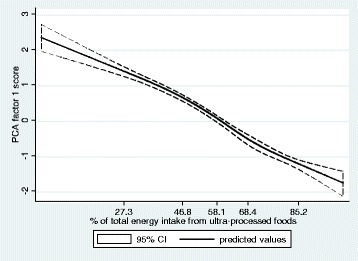
BACKGROUND: Recent population dietary studies indicate that diets rich in ultra-processed foods, increasingly frequent worldwide, are grossly nutritionally unbalanced, suggesting that the dietary contribution of these foods largely determines the overall nutritional quality of contemporaneous diets. Yet, these studies have focused on individual nutrients (one at a time) rather than the overall nutritional quality of the diets. Here we investigate the relationship between the energy contribution of ultra-processed foods in the US diet and its content of critical nutrients, individually and overall. METHODS: We evaluated dietary intakes of 9,317 participants from 2009 to 2010 NHANES aged 1+ years. Food items were classified into unprocessed or minimally processed foods, processed culinary ingredients, processed foods, and ultra-processed foods. First, we examined the average dietary content of macronutrients, micronutrients, and fiber across quintiles of the energy contribution of ultra-processed foods. Then, we used Principal Component Analysis (PCA) to identify a nutrient-balanced dietary pattern to enable the assessment of the overall nutritional quality of the diet. Linear regression was used to explore the association between the dietary share of ultra-processed foods and the balanced-pattern PCA factor score. The scores were thereafter categorized into tertiles, and their distribution was examined across ultra-processed food quintiles. All models incorporated survey sample weights and were adjusted for age, sex, race/ethnicity, family income, and educational attainment. RESULTS: The average content of protein, fiber, vitamins A, C, D, and E, zinc, potassium, phosphorus, magnesium, and calcium in the US diet decreased significantly across quintiles of the energy contribution of ultra-processed foods, while carbohydrate, added sugar, and saturated fat contents increased. An inverse dose-response association was found between ultra-processed food quintiles and overall dietary quality measured through a nutrient-balanced-pattern PCA-derived factor score characterized by being richer in fiber, potassium, magnesium and vitamin C, and having less saturated fat and added sugars. CONCLUSIONS: This study suggests that decreasing the dietary share of ultra-processed foods is a rational and effective way to improve the nutritional quality of US diets.
Overview
The claims and statistics of this paper haven’t been checked yet.
Free: it reads the open-access text and checks the first 5 claims that cite a source we can check. Create a free account to check every claim.
Integrity signals
Registry
Cites
Statistics
Figures
Verification
Claims the paper makes
The claims and statistics of this paper haven’t been checked yet.
Free: it reads the open-access text and checks the first 5 claims that cite a source we can check. Create a free account to check every claim.
Claims other papers make about this one
Each is checked against this paper’s own text: does it say what the citing paper says it does?
The source backs part of the claim, not all of it — or backs it for a different population, condition or comparison.
In the citing paper
“Moreover, refined sugars constitute approximately 20% of caloric intake.”
From The oral microbiome: Role of key organisms and complex networks in oral health and disease (2021) · cites this paper as [252]
Experimental — accuracy not yet measuredIn the citing paper
“In the United States, carbohydrates constitute > 50% of total energy intake, with refined cereal grains representing > 85% of total cereal grains consumed.”
From The oral microbiome: Role of key organisms and complex networks in oral health and disease (2021) · cites this paper as [252]
Self-check
Percentages, sums and reported differences re-computed from the paper’s own numbers.
The self-check needs the paper’s full text.
Citations
Cites
Sontrop, J. M., Dixon, S. N., Garg, A. X., Buendia-Jimenez, I., Dohein, O., Huang, S.-H. S., & Clark, W. F. (2013) · American Journal of Nephrology · doi:10.1159/000350377 · Cited by 5,871
Dietary pattern analysis: a new direction in nutritional epidemiology
Hu, F. B. (2002) · Current Opinion in Lipidology · doi:10.1097/00041433-200202000-00002 · Cited by 4,029 · cited 2×
“linear combinations of them referred to as “components” and which maximize the explained variance [19, 42].”
BackgroundMoshfegh, A. J., Rhodes, D. G., Baer, D. J., Murayi, T., Clemens, J. C., Rumpler, W. V., Paul, D. R., Sebastian, R. S., Kuczynski, K. J., Ingwersen, L. A., et al. (2008) · The American Journal of Clinical Nutrition · doi:10.1093/ajcn/88.2.324 · Cited by 1,982
Ultra‐processed products are becoming dominant in the global food system
Monteiro, C. A., Moubarac, J. ‐., Cannon, G., Ng, S. W., & Popkin, B. (2013) · Obesity Reviews · doi:10.1111/obr.12107 · Cited by 1,827
Self-citationMoodie, R., Stuckler, D., Monteiro, C., Sheron, N., Neal, B., Thamarangsi, T., Lincoln, P., & Casswell, S. (2013) · The Lancet · doi:10.1016/s0140-6736(12)62089-3 · Cited by 1,663
Self-citationNational health and nutrition examination survey: analytic guidelines, 1999-2010.
Cl, J., Paulose‐Ram, R., Ogden, C. L., Carroll, Kruszon‐Moran, D., Dohrmann, S. M., & Curtin, L. R. (2013) · PubMed · Cited by 1,522
USDA National Nutrient Database for Standard Reference, Release 22
(2018) · Cited by 1,285
Monteiro, C. A., Levy, R. B., Claro, R. M., de Castro, I. R. R., & Cannon, G. (2010) · Public Health Nutrition · doi:10.1017/s1368980010003241 · Cited by 1,060 · cited 1×
“Our investigation was based on total effective individual consumption data, rather than on household purchasing data [7, 10, 47], which do not evaluate the fraction of wasted food or purchases at restaurants.”
MethodSelf-citationDietary patterns and health outcomes
Kant, A. K. (2004) · Journal of the American Dietetic Association · doi:10.1016/j.jada.2004.01.010 · Cited by 1,028 · cited 1×
“The PCA method also has limitations such as subjective decisions regarding the number of extracted components, method of rotation, naming of components, and cutoffs for factor loadings [23, 31, 49].”
MethodA new classification of foods based on the extent and purpose of their processing
Monteiro, C. A., Levy, R. B., Claro, R. M., Castro, I. R. R. D., & Cannon, G. (2010) · Cadernos de Saúde Pública · doi:10.1590/s0102-311x2010001100005 · Cited by 991 · cited 2×
“We classified all recorded food items (N = 280,132 Food Codes) according to Nova, a food classification based on the extent and purpose of industrial food processing [4, 17].”
BackgroundMethodSelf-citation
Research works printed but not linked: 3
- FAO. Guidelines on the collection of information on food processing through food consumption surveys. Rome: FAO; 2015.
- Diet and health: implication for reducing chronic disease risk. National Academy Press, Washington, DC; 1989.
- Monteiro CA, Cannon G, Levy RB, Claro R, Moubarac JC, Martins AP, Louzada ML, Baraldi L, Canella D. The Food System. Processing. The big issue for disease, good health, well-being. World Nutr. 2012;3:527–69. www.wphna.org (accessed Jan 2017).
Cited by
Ultra-processed foods: What they are and how to identify them
Monteiro, C. A., Cannon, G., Levy, R. B., Moubarac, J.-C., Louzada, M. L., Rauber, F., Khandpur, N., Cediel, G., Neri, D., Martinez-Steele, E., et al. (2019) · Public Health Nutrition · doi:10.1017/s1368980018003762 · Cited by 2,964
Self-citationThe UN Decade of Nutrition, the NOVA food classification and the trouble with ultra-processing
Monteiro, C. A., Cannon, G., Moubarac, J.-C., Levy, R. B., Louzada, M. L. C., & Jaime, P. C. (2018) · Public Health Nutrition · doi:10.1017/s1368980017000234 · Cited by 2,333
“In the USA, NOVA has been used to describe population dietary patterns and to assess the impact of ultraprocessed products on the overall consumption of added sugar((53)), on the dietary content of other critical macronutrients and micronutrients((54)), and on urinary levels of phyto-oestrogens((55)).”
Self-citationBaker, P., Machado, P., Santos, T., Sievert, K., Backholer, K., Hadjikakou, M., Russell, C., Huse, O., Bell, C., Scrinis, G., et al. (2020) · Obesity Reviews · doi:10.1111/obr.13126 · Cited by 1,194
Consumption of ultra-processed foods and health status: a systematic review and meta-analysis
Pagliai, G., Dinu, M., Madarena, M. P., Bonaccio, M., Iacoviello, L., & Sofi, F. (2021) · British Journal of Nutrition · doi:10.1017/s0007114520002688 · Cited by 918
“Since Monteiro coined the term UPF, there have been an increasing number of studies that have associated UPF consumption with negative health outcomes in adult subjects (3,39) , including cardiometabolic risk factors (40) , CVD (35) , cancer (16) and many other outcomes (15,25,32) .”
BackgroundThe Western Diet–Microbiome-Host Interaction and Its Role in Metabolic Disease
Zinöcker, M. K., & Lindseth, I. A. (2018) · doi:10.20944/preprints201803.0064.v1 · Cited by 776
The oral microbiome: Role of key organisms and complex networks in oral health and disease
Sedghi, L., DiMassa, V., Harrington, A., Lynch, S. V., & Kapila, Y. L. (2021) · Periodontology 2000 · doi:10.1111/prd.12393 · Cited by 755
Ultra-Processed Foods and Health Outcomes: A Narrative Review
Elizabeth, L., Machado, P., Zinöcker, M., Baker, P., & Lawrence, M. (2020) · Nutrients · doi:10.3390/nu12071955 · Cited by 736
“For example, some FFQs do not separate the bread type and in the US and UK it is mainly UPF [60,104], whereas in France and Spain it is mainly artisanal [52,61].”
BackgroundLane, M. M., Davis, J. A., Beattie, S., Gómez‐Donoso, C., Loughman, A., O'Neil, A., Jacka, F., Berk, M., Page, R., Marx, W., et al. (2021) · Obesity Reviews · doi:10.1111/obr.13146 · Cited by 564
Karlsen, T. H., Sheron, N., Zelber-Sagi, S., Carrieri, P., Dusheiko, G., Bugianesi, E., Pryke, R., Hutchinson, S. J., Sangro, B., Martin, N. K., et al. (2022) · The Lancet · doi:10.1016/s0140-6736(21)01701-3 · Cited by 652
Rauber, F., Da Costa Louzada, M. L., Steele, E., Millett, C., Monteiro, C. A., & Levy, R. B. (2018) · Nutrients · doi:10.3390/nu10050587 · Cited by 628
“The negative impact of ultra-processed food consumption on the overall dietary quality observed in our study is consistent with results from the United States [11], Canada [12], and Brazil [13,40].”
BackgroundResultInfluentialSelf-citationGender equality in science, medicine, and global health: where are we at and why does it matter?
Shannon, G., Jansen, M., Williams, K., Cáceres, C., Motta, A., Odhiambo, A., Eleveld, A., & Mannell, J. (2019) · The Lancet · doi:10.1016/s0140-6736(18)33135-0 · Cited by 534
Chen, X., Zhang, Z., Yang, H., Qiu, P., Wang, H., Wang, F., Zhao, Q., Fang, J., & Nie, J. (2020) · Nutrition Journal · doi:10.1186/s12937-020-00604-1 · Cited by 505
Data mining in clinical big data: the frequently used databases, steps, and methodological models
Wu, W.-T., Li, Y.-J., Feng, A.-Z., Li, L., Huang, T., Xu, A.-D., & Lyu, J. (2021) · Military Medical Research · doi:10.1186/s40779-021-00338-z · Cited by 505
“[102] applied PCA for nutritional epidemiological analysis to determine dietary patterns and evaluate the overall nutritional quality of the population based on those patterns.”
MethodBaraldi, L. G., Martinez Steele, E., Canella, D. S., & Monteiro, C. A. (2018) · BMJ Open · doi:10.1136/bmjopen-2017-020574 · Cited by 505
Self-citationPoti, J. M., Braga, B., & Qin, B. (2017) · Current Obesity Reports · doi:10.1007/s13679-017-0285-4 · Cited by 484
Martini, D., Godos, J., Bonaccio, M., Vitaglione, P., & Grosso, G. (2021) · Nutrients · doi:10.3390/nu13103390 · Cited by 481
Ultra-processed food consumption and excess weight among US adults
Juul, F., Martinez-Steele, E., Parekh, N., Monteiro, C. A., & Chang, V. W. (2018) · British Journal Of Nutrition · doi:10.1017/s0007114518001046 · Cited by 475
Self-citationGarcía-Montero, C., Fraile-Martínez, O., Gómez-Lahoz, A. M., Pekarek, L., Castellanos, A. J., Noguerales-Fraguas, F., Coca, S., Guijarro, L. G., García-Honduvilla, N., Asúnsolo, A., et al. (2021) · Nutrients · doi:10.3390/nu13020699 · Cited by 431
Ultra-processed food consumption among US adults from 2001 to 2018
Juul, F., Parekh, N., Martinez-Steele, E., Monteiro, C. A., & Chang, V. W. (2022) · The American Journal of Clinical Nutrition · doi:10.1093/ajcn/nqab305 · Cited by 388
Self-citationLifestyle interventions for the prevention and treatment of hypertension
Valenzuela, P. L., Carrera-Bastos, P., Gálvez, B. G., Ruiz-Hurtado, G., Ordovas, J. M., Ruilope, L. M., & Lucia, A. (2021) · Nature Reviews Cardiology · doi:10.1038/s41569-020-00437-9 · Cited by 354
Vandevijvere, S., Jaacks, L. M., Monteiro, C. A., Moubarac, J., Girling‐Butcher, M., Lee, A. C., Pan, A., Bentham, J., & Swinburn, B. (2019) · Obesity Reviews · doi:10.1111/obr.12860 · Cited by 358
“Accordingly, studies conducted in several countries show that, when compared with people with lower consumption of UPFD, those with higher consumption have a higher risk of having diets that do not comply with one or more dietary goals recommended for the prevention of obesity.(23-30) A diet based on UPFD may promote…”
BackgroundSelf-citationConsumption of ultra-processed foods and obesity in Canada
Nardocci, M., Leclerc, B.-S., Louzada, M.-L., Monteiro, C. A., Batal, M., & Moubarac, J.-C. (2019) · Canadian Journal of Public Health · doi:10.17269/s41997-018-0130-x · Cited by 333
Self-citationUltra-Processed Foods: Definitions and Policy Issues
Gibney, M. J. (2019) · Current Developments in Nutrition · doi:10.1093/cdn/nzy077 · Cited by 320
“Moreover, because such foods constitute more than half of the energy intake in the United States and because the policy of NOVA is to recommend avoidance of this food category in their proposed dietary guidelines, the total elimination of ultra-processed foods from the national diet could have profound and uncertain c…”
BackgroundInfluentialUltra-processed foods and added sugars in the Chilean diet (2010)
Cediel, G., Reyes, M., da Costa Louzada, M. L., Martinez Steele, E., Monteiro, C. A., Corvalán, C., & Uauy, R. (2018) · Public Health Nutrition · doi:10.1017/s1368980017001161 · Cited by 307
Self-citationUltra-processed food consumption and risk of obesity: a prospective cohort study of UK Biobank
Rauber, F., Chang, K., Vamos, E. P., da Costa Louzada, M. L., Monteiro, C. A., Millett, C., & Levy, R. B. (2021) · European Journal of Nutrition · doi:10.1007/s00394-020-02367-1 · Cited by 296
Self-citationUltra-processed foods in human health: a critical appraisal
Gibney, M. J., Forde, C. G., Mullally, D., & Gibney, E. R. (2017) · The American Journal of Clinical Nutrition · doi:10.3945/ajcn.117.160440 · Cited by 287
“For example, in one study (25), across quintiles of UPFD intake (percentage of contribution to energy intake), the percentage of energy from total fat increased from 31.”
BackgroundMethodShams-White, M. M., Brockton, N. T., Mitrou, P., Romaguera, D., Brown, S., Bender, A., Kahle, L. L., & Reedy, J. (2019) · Nutrients · doi:10.3390/nu11071572 · Cited by 286
Buckley, J. P., Kim, H., Wong, E., & Rebholz, C. M. (2019) · Environment International · doi:10.1016/j.envint.2019.105057 · Cited by 262
Food choice motives and the nutritional quality of diet during the COVID-19 lockdown in France
Marty, L., de Lauzon-Guillain, B., Labesse, M., & Nicklaus, S. (2021) · Appetite · doi:10.1016/j.appet.2020.105005 · Cited by 277
Ultra-processed foods: how functional is the NOVA system?
Braesco, V., Souchon, I., Sauvant, P., Haurogné, T., Maillot, M., Féart, C., & Darmon, N. (2022) · European Journal of Clinical Nutrition · doi:10.1038/s41430-022-01099-1 · Cited by 262
Machado, P. P., Steele, E. M., Levy, R. B., Sui, Z., Rangan, A., Woods, J., Gill, T., Scrinis, G., & Monteiro, C. A. (2019) · BMJ Open · doi:10.1136/bmjopen-2019-029544 · Cited by 270
“31–34 37 38 In Australia, the prevalence ratios of non-recommended nutrient intake levels among people in the fifth quintile of ultra-processed food consumption were higher in comparison with the USA (2.9 times more likely to exceed added sugars intake than the first quintile) 31 and the UK (1.1…”
BackgroundInfluentialSelf-citationKim, H., Hu, E. A., & Rebholz, C. M. (2019) · Public Health Nutrition · doi:10.1017/s1368980018003890 · Cited by 262
“As ultra-processed foods contain little or no whole foods, these foods are nutritionally poor, with high amounts of fat, added sugar and energy, and low amounts of micronutrients and fibre((2,3,5,8)).”
BackgroundResultChallenges in the Diagnosis of Magnesium Status
Workinger, J. L., Doyle, R. P., & Bortz, J. (2018) · Nutrients · doi:10.3390/nu10091202 · Cited by 259
Costa, C. S., Rauber, F., Leffa, P. S., Sangalli, C. N., Campagnolo, P. D. B., & Vitolo, M. R. (2019) · Nutrition, Metabolism and Cardiovascular Diseases · doi:10.1016/j.numecd.2018.11.003 · Cited by 254
Rauber, F., Steele, E. M., Louzada, M. L. D. C., Millett, C., Monteiro, C. A., & Levy, R. B. (2020) · PLOS ONE · doi:10.1371/journal.pone.0232676 · Cited by 234
“Cut-offs for quarters of ultra-processed food consumption were 36.3%, 51.0%, 61.1% and 76.2% in men and 35.2%, 50.4%, 60.1% and 73.1% in women. b Adjusted for sex, age, ethnicity, region, survey year, and social class occupation. c Adjusted for Model 1 + physical activity (time spent at moderate or vigorous physical a…”
BackgroundInfluentialSelf-citationDietary share of ultra-processed foods and metabolic syndrome in the US adult population
Martínez Steele, E., Juul, F., Neri, D., Rauber, F., & Monteiro, C. A. (2019) · Preventive Medicine · doi:10.1016/j.ypmed.2019.05.004 · Cited by 231
Self-citationGómez-Donoso, C., Sánchez-Villegas, A., Martínez-González, M. A., Gea, A., Mendonça, R. D. D., Lahortiga-Ramos, F., & Bes-Rastrollo, M. (2020) · European Journal of Nutrition · doi:10.1007/s00394-019-01970-1 · Cited by 229
Characterizing Ultra-Processed Foods by Energy Density, Nutrient Density, and Cost
Gupta, S., Hawk, T., Aggarwal, A., & Drewnowski, A. (2019) · Frontiers in Nutrition · doi:10.3389/fnut.2019.00070 · Cited by 227
Ultra-processed food consumption and type 2 diabetes incidence: A prospective cohort study
Levy, R. B., Rauber, F., Chang, K., Louzada, M. L. D. C., Monteiro, C. A., Millett, C., & Vamos, E. P. (2021) · Clinical Nutrition · doi:10.1016/j.clnu.2020.12.018 · Cited by 223
Self-citationAdjibade, M., Julia, C., Allès, B., Touvier, M., Lemogne, C., Srour, B., Hercberg, S., Galan, P., Assmann, K. E., & Kesse-Guyot, E. (2019) · BMC Medicine · doi:10.1186/s12916-019-1312-y · Cited by 227
Consumption of Ultra-Processed Foods and Mortality: A National Prospective Cohort in Spain
Blanco-Rojo, R., Sandoval-Insausti, H., López-Garcia, E., Graciani, A., Ordovás, J. M., Banegas, J. R., Rodríguez-Artalejo, F., & Guallar-Castillón, P. (2019) · Mayo Clinic Proceedings · doi:10.1016/j.mayocp.2019.03.035 · Cited by 212
Obesity as a risk factor for COVID-19: an overview
Alberca, R. W., Oliveira, L. D. M., Branco, A. C. C. C., Pereira, N. Z., & Sato, M. N. (2021) · Critical Reviews in Food Science and Nutrition · doi:10.1080/10408398.2020.1775546 · Cited by 192
“…U.S. cohort of approximately 9000 individuals showed a decrease in the average consumption of protein; fiber; vitamins A, C, D, and E; zinc; potassium; phosphorus; magnesium; and calcium in processed food, while carbohydrates, sugars, and saturated fat were increased (Mart ınez Steele et al. 2017).”
BackgroundUltra-processed food consumption and obesity in the Australian adult population
Machado, P. P., Steele, E. M., Levy, R. B., da Costa Louzada, M. L., Rangan, A., Woods, J., Gill, T., Scrinis, G., & Monteiro, C. A. (2020) · Nutrition & Diabetes · doi:10.1038/s41387-020-00141-0 · Cited by 183
Self-citationVandevijvere, S., De Ridder, K., Fiolet, T., Bel, S., & Tafforeau, J. (2019) · European Journal of Nutrition · doi:10.1007/s00394-018-1870-3 · Cited by 174
Taillie, L. S. (2018) · Nutrition Journal · doi:10.1186/s12937-018-0347-9 · Cited by 173
Schnabel, L., Buscail, C., Sabate, J.-M., Bouchoucha, M., Kesse-Guyot, E., Allès, B., Touvier, M., Monteiro, C. A., Hercberg, S., Benamouzig, R., et al. (2018) · American Journal of Gastroenterology · doi:10.1038/s41395-018-0137-1 · Cited by 173
“Our results are in line with previous studies, showing that total energy intake, carbohydrate, saturated fat, and sodium content increase in the diet concurrently with the increase of UPFp, whereas protein and fiber intakes decrease [58].”
BackgroundResultSelf-citationNeri, D., Steele, E. M., Khandpur, N., Cediel, G., Zapata, M. E., Rauber, F., Marrón‐Ponce, J. A., Machado, P., da Costa Louzada, M. L., Andrade, G. C., et al. (2022) · Obesity Reviews · doi:10.1111/obr.13387 · Cited by 172
Self-citationMarrón-Ponce, J. A., Flores, M., Cediel, G., Monteiro, C. A., & Batis, C. (2019) · Journal of the Academy of Nutrition and Dietetics · doi:10.1016/j.jand.2019.04.020 · Cited by 166
Self-citationRauber, F., Louzada, M. L. D. C., Martinez Steele, E., Rezende, L. F. M. D., Millett, C., Monteiro, C. A., & Levy, R. B. (2019) · BMJ Open · doi:10.1136/bmjopen-2018-027546 · Cited by 153
Self-citationMachine learning prediction of the degree of food processing
Menichetti, G., Ravandi, B., Mozaffarian, D., & Barabási, A.-L. (2023) · Nature Communications · doi:10.1038/s41467-023-37457-1 · Cited by 150
Wang, L., Du, M., Wang, K., Khandpur, N., Rossato, S. L., Drouin-Chartier, J.-P., Steele, E. M., Giovannucci, E., Song, M., & Zhang, F. F. (2022) · BMJ · doi:10.1136/bmj-2021-068921 · Cited by 147
Steele, E. M., O’Connor, L. E., Juul, F., Khandpur, N., Galastri Baraldi, L., Monteiro, C. A., Parekh, N., & Herrick, K. A. (2023) · The Journal of Nutrition · doi:10.1016/j.tjnut.2022.09.001 · Cited by 144
Self-citationMalnutrition in obesity before and after bariatric surgery
Mohapatra, S., Gangadharan, K., & Pitchumoni, C. S. (2019) · Disease-a-Month · doi:10.1016/j.disamonth.2019.06.008 · Cited by 171
Kopczyńska, J., & Kowalczyk, M. (2024) · Frontiers in Immunology · doi:10.3389/fimmu.2024.1380476 · Cited by 164
Sievert, K., Lawrence, M. A., Naika, A., & Baker, P. (2019) · Nutrients · doi:10.3390/nu11061328 · Cited by 158
Understanding traditional and modern eating: the TEP10 framework
Sproesser, G., Ruby, M. B., Arbit, N., Akotia, C. S., Alvarenga, M. D. S., Bhangaokar, R., Furumitsu, I., Hu, X., Imada, S., Kaptan, G., et al. (2019) · BMC Public Health · doi:10.1186/s12889-019-7844-4 · Cited by 159
Characterization of the Degree of Food Processing in Relation With Its Health Potential and Effects
Fardet, A. (2018) · Advances in Food and Nutrition Research · doi:10.1016/bs.afnr.2018.02.002 · Cited by 93
Trends in Ultra-Processed Food Purchases from 1984 to 2016 in Mexican Households
Marrón-Ponce, J. A., Tolentino-Mayo, L., Hernández-F, M., & Batis, C. (2018) · Nutrients · doi:10.3390/nu11010045 · Cited by 100
Food processing and cancer risk in Europe: results from the prospective EPIC cohort study
Kliemann, N., Rauber, F., Bertazzi Levy, R., Viallon, V., Vamos, E. P., Cordova, R., Freisling, H., Casagrande, C., Nicolas, G., Aune, D., et al. (2023) · The Lancet Planetary Health · doi:10.1016/s2542-5196(23)00021-9 · Cited by 118
Self-citationKhandpur, N., Neri, D. A., Monteiro, C., Mazur, A., Frelut, M.-L., Boyland, E., Weghuber, D., & Thivel, D. (2020) · Annals of Nutrition and Metabolism · doi:10.1159/000507840 · Cited by 119
Self-citationUltra-processed foods: A new holistic paradigm?
Fardet, A., & Rock, E. (2019) · Trends in Food Science & Technology · doi:10.1016/j.tifs.2019.09.016 · Cited by 115
Zhang, S., Gan, S., Zhang, Q., Liu, L., Meng, G., Yao, Z., Wu, H., Gu, Y., Wang, Y., Zhang, T., et al. (2022) · International Journal of Epidemiology · doi:10.1093/ije/dyab174 · Cited by 113
Social, clinical, and policy implications of ultra-processed food addiction
Gearhardt, A. N., Bueno, N. B., DiFeliceantonio, A. G., Roberto, C. A., Jiménez‐Múrcia, S., & Fernández‐Aranda, F. (2023) · BMJ · doi:10.1136/bmj-2023-075354 · Cited by 160
Neri, D. A., Steele, E. M., Monteiro, C. A., & Levy, R. B. (2019) · Pediatric Obesity · doi:10.1111/ijpo.12563 · Cited by 134
Self-citationBiesbroek, S., Kok, F. J., Tufford, A., Bloem, M. W., Darmon, N., Drewnowski, A., Fan, S., Fanzo, J., Gordon, L. J., Hu, F. B., et al. (2023) · Proceedings of the National Academy of Sciences · doi:10.1073/pnas.2219272120 · Cited by 150
Self-citationHerforth, A., Wiesmann, D., Steele, E. M., Andrade, G. C., & Monteiro, C. A. (2020) · Current Developments in Nutrition · doi:10.1093/cdn/nzaa168 · Cited by 123
Self-citationHess, J. M., Comeau, M. E., Casperson, S., Slavin, J. L., Johnson, G. H., Messina, M., Raatz, S., Scheett, A. J., Bodensteiner, A., & Palmer, D. G. (2023) · The Journal of Nutrition · doi:10.1016/j.tjnut.2023.06.028 · Cited by 103
Ultra-processed family foods in Australia: nutrition claims, health claims and marketing techniques
Pulker, C. E., Scott, J. A., & Pollard, C. M. (2018) · Public Health Nutrition · doi:10.1017/s1368980017001148 · Cited by 104
From ultra-processed foods to ultra-processed dietary patterns
Scrinis, G., & Monteiro, C. (2022) · Nature Food · doi:10.1038/s43016-022-00599-4 · Cited by 94
Self-citationShim, J.-S., Shim, S.-Y., Cha, H.-J., Kim, J., & Kim, H. C. (2021) · Nutrients · doi:10.3390/nu13041120 · Cited by 102
“The adverse impacts of ultra-processed foods on human health have been explained by the poor nutrient profile of these foods [3,17], the low dietary quality [3,4,11,33] associated with the consumption of these foods, and the addictive eating behaviors induced by these foods, which may lead to overconsumption [7,64].”
BackgroundReverse thinking: taking a healthy diet perspective towards food systems transformations
Brouwer, I. D., van Liere, M. J., de Brauw, A., Domínguez-Salas, P., Herforth, A., Kennedy, G., Lachat, C. K., Omosa, E., Talsma, E. F., Vandevijvere, S., et al. (2021) · Food Security · doi:10.1007/s12571-021-01204-5 · Cited by 130
Kliemann, N., Nahas, A. A., Vamos, E. P., Touvier, M., Kesse‐Guyot, E., Gunter, M. J., Millett, C. J., & Huybrechts, I. (2022) · British Journal of Cancer · doi:10.1038/s41416-022-01749-y · Cited by 132
Ultra-processed Food Consumption and Incident Frailty: A Prospective Cohort Study of Older Adults
Sandoval-Insausti, H., Blanco-Rojo, R., Graciani, A., López-García, E., Moreno-Franco, B., Laclaustra, M., Donat-Vargas, C., Ordovás, J. M., Rodríguez-Artalejo, F., & Guallar-Castillón, P. (2020) · The Journals of Gerontology Series A · doi:10.1093/gerona/glz140 · Cited by 97
Capozzi, F., Magkos, F., Fava, F., Milani, G. P., Agostoni, C. V., Astrup, A. V., & Saguy, I. S. (2021) · Nutrients · doi:10.3390/nu13113948 · Cited by 112
Ultra-processed foods drive to unhealthy diets: evidence from Chile
Cediel, G., Reyes, M., Corvalán, C., Levy, R. B., Uauy, R., & Monteiro, C. A. (2021) · Public Health Nutrition · doi:10.1017/s1368980019004737 · Cited by 93
Self-citationParents' cooking skills confidence reduce children's consumption of ultra-processed foods
Martins, C. A., Machado, P. P., Louzada, M. L. D. C., Levy, R. B., & Monteiro, C. A. (2019) · Appetite · doi:10.1016/j.appet.2019.104452 · Cited by 115
Self-citationLongitudinal associations between ultra-processed foods and blood lipids in childhood
Leffa, P. S., Hoffman, D. J., Rauber, F., Sangalli, C. N., Valmórbida, J. L., & Vitolo, M. R. (2020) · British Journal of Nutrition · doi:10.1017/s0007114520001233 · Cited by 90
“Several studies have shown that highcontributionofUPFindietarypatternsisassociatedwithdiets of lower nutritional quality (17 – 19) assessed by NOVA, a classification of foods based on their degree and purpose of industrial food processing.”
BackgroundLauria, F., Russo, M. D., Formisano, A., Henauw, S. D., Hebestreit, A., Hunsberger, M. L., Krogh, V., Intemann, T., Lissner, L., Molnár, D., et al. (2021) · Nutrition Metabolism and Cardiovascular Diseases · doi:10.1016/j.numecd.2021.07.019 · Cited by 124
Consumption of Ultra-Processed Foods Increases the Likelihood of Having Obesity in Korean Women
Sung, H., Park, J. M., Oh, S. U., Ha, K., & Joung, H. (2021) · Nutrients · doi:10.3390/nu13020698 · Cited by 99
“However, this result was similar to those conducted in the USA [14] and Portugal [52], which observed that the dietary intake of sodium decreased as ultra-processed food consumption increased.”
BackgroundResultInfluentialCalixto Andrade, G., Julia, C., Deschamps, V., Srour, B., Hercberg, S., Kesse-Guyot, E., Allès, B., Chazelas, E., Deschasaux, M., Touvier, M., et al. (2021) · Nutrients · doi:10.3390/nu13020682 · Cited by 87
Self-citationPublic Health Nutrition special issue on ultra-processed foods
Kelly, B., & Jacoby, E. (2018) · Public Health Nutrition · doi:10.1017/s1368980017002853 · Cited by 86
“that ultra-processed food consumption is associated with poorer diet quality in the USA((13)), Canada((14)) and Brazil((15)); obesity in Brazil((16)), Guatemala((17)), Spain((18)) and Sweden((19)); hypertension in Spain((20)); metabolic syndrome in Brazil((21)); and dyslipidaemia in children in Brazil((22)).”
BackgroundInfluentialFood Waste and Nutrition Quality in the Context of Public Health: A Scoping Review
Brennan, A., & Browne, S. (2021) · International Journal of Environmental Research and Public Health · doi:10.3390/ijerph18105379 · Cited by 110
Nutrition research challenges for processed food and health
Gibney, M. J., & Forde, C. G. (2022) · Nature Food · doi:10.1038/s43016-021-00457-9 · Cited by 91
Martínez Steele, E., & Monteiro, C. (2017) · Nutrients · doi:10.3390/nu9030209 · Cited by 68
“Also, nationally representative studies carried out in the US [37,38] and other countries [39–42] have shown that a high dietary contribution of ultra-processed foods renders grossly nutritionally unbalanced diets.”
BackgroundSelf-citationPost-farmgate food value chains make up most of consumer food expenditures globally
Yi, J., Meemken, E., Mazariegos-Anastassiou, V., Liu, J., Kim, E., Gomez, M. I., Canning, P., & Barrett, C. B. (2021) · Nature Food · doi:10.1038/s43016-021-00279-9 · Cited by 105
Consumption of Ultraprocessed Foods and Diet Quality Among U.S. Children and Adults
Liu, J., Steele, E. M., Li, Y., Karageorgou, D., Micha, R., Monteiro, C. A., & Mozaffarian, D. (2022) · American Journal of Preventive Medicine · doi:10.1016/j.amepre.2021.08.014 · Cited by 82
Self-citationKonieczna, J., Morey, M., Abete, I., Bes-Rastrollo, M., Ruiz-Canela, M., Vioque, J., Gonzalez-Palacios, S., Daimiel, L., Salas-Salvadó, J., Fiol, M., et al. (2021) · Clinical Nutrition · doi:10.1016/j.clnu.2021.01.019 · Cited by 81
Mazloomi, S. N., Talebi, S., Mehrabani, S., Bagheri, R., Ghavami, A., Zarpoosh, M., Mohammadi, H., Wong, A., Nordvall, M., Kermani, M. A. H., et al. (2022) · Nutritional Neuroscience · doi:10.1080/1028415x.2022.2110188 · Cited by 101
Toward a New Common Sense: The Need for New Paradigms of Global Health Beyond the COVID-19 Emergency
Bakker, I., Gill, S. R., & Wamsley, D. (2021) · Cambridge University Press eBooks · doi:10.1017/9781108692137.040 · Cited by 83
Parra, D. C., Da Costa-Louzada, M. L., Moubarac, J.-C., Bertazzi-Levy, R., Khandpur, N., Cediel, G., & Monteiro, C. A. (2019) · Salud Pública de México · doi:10.21149/9038 · Cited by 80
Self-citationIvancovsky‐Wajcman, D., Fliss‐Isakov, N., Webb, M., Bentov, I., Shibolet, O., Kariv, R., & Zelber‐Sagi, S. (2021) · Liver International · doi:10.1111/liv.14996 · Cited by 80
The Healthfulness of the US Packaged Food and Beverage Supply: A Cross-Sectional Study
Baldridge, A. S., Huffman, M. D., Taylor, F., Xavier, D., Bright, B., Horn, L. V., Neal, B. C., & Dunford, E. (2019) · Nutrients · doi:10.3390/nu11081704 · Cited by 85
Wolff, J. (2011) · Cambridge University Press eBooks · doi:10.1017/9781108692137.008 · Cited by 78
Sartorelli, D. S., Crivellenti, L. C., Zuccolotto, D. C. C., & Franco, L. J. (2019) · Cadernos de Saúde Pública · doi:10.1590/0102-311x00049318 · Cited by 112
Costa, C. D. S., Sattamini, I. F., Steele, E. M., Louzada, M. L. D. C., Claro, R. M., & Monteiro, C. A. (2021) · Revista de Saúde Pública · doi:10.11606/s1518-8787.2021055002833 · Cited by 147
Self-citationNutrient density: addressing the challenge of obesity
Drewnowski, A. (2018) · British Journal of Nutrition · doi:10.1017/s0007114517002240 · Cited by 73
“On the basis of current definitions((29,30)), unprocessed or minimally processed foods include fresh, dry and frozen fruit or vegetables, grains, legumes and fresh meat, fish and milk.”
BackgroundMiclotte, L., Callewaert, C., Paepe, K. D., Rymenans, L., Raes, J., Rajković, A., Camp, J. V., & de Wiele, T. V. (2020) · Frontiers in Microbiology · doi:10.3389/fmicb.2020.577474 · Cited by 76
Dixon, K. A., Michelsen, M. K., & Carpenter, C. L. (2023) · Nutrients · doi:10.3390/nu15030692 · Cited by 83
Intake of ultra-processed foods is associated with inflammatory markers in Brazilian adolescents
Martins, G. M. D. S., França, A. K. T. D. C., Viola, P. C. D. A. F., de Carvalho, C. A., Marques, K. D. S., dos Santos, A. M., Batalha, M. A., Alves, J. D. D. A., & Ribeiro, C. C. C. (2021) · Public Health Nutrition · doi:10.1017/s1368980021004523 · Cited by 75
de Miranda, R. C., Rauber, F., de Moraes, M. M., Afonso, C., Santos, C., Rodrigues, S. S. P., & Levy, R. B. (2020) · British Journal Of Nutrition · doi:10.1017/s000711452000344x · Cited by 79
Metadata
- Authors
- Martínez Steele, E., Popkin, B. M., Swinburn, B., & Monteiro, C. A.
- Affiliations
- University of North Carolina at Chapel Hill (US)
- University of Auckland (NZ)
- Universidade de São Paulo (BR)
- Corresponding author
- Swinburn, Boyd
- Venue
- Population Health Metrics
- Published
- 2017-02-14
- Volume
- 15
- Issue
- 1
- Pages
- 6-6
- ISSN
- 1478-7954 (ISSN-L)
- PMC
- PMC5307821
- OpenAlex
- W2588919095
- Cited by
- 585
- References
- 43
- Citations by year
- 2026: 38 · 2025: 59 · 2024: 78 · 2023: 52 · 2022: 78 · 2021: 111 · 2020: 53 · 2019: 65 · 2018: 29 · 2017: 19
- FWCI
- 42.56
- Type
- journal article
- Language
- en
- Open access
- gold
- doi.org
- Licence
- cc-by
- Locations
- Population Health Metrics (publishedVersion, cc-by)
- PubMed Central (publishedVersion, cc-by)
- PubMed (publishedVersion)
- Portuguese National Funding Agency for Science, Research and Technology (RCAAP Project by FCT) (publishedVersion)
- Figshare (submittedVersion, cc-by)
- ResearchSpace (University of Auckland) (submittedVersion, cc-by)
- Funders
- Conselho Nacional de Desenvolvimento Científico e Tecnológico (443477/2014-0)
- Fundação de Amparo à Pesquisa do Estado de São Paulo (2015/14900-9)
- Topics
- Health Sciences › Medicine › Public Health, Environmental and Occupational Health › Consumer Attitudes and Food Labeling
- Health Sciences › Medicine › Public Health, Environmental and Occupational Health › Nutritional Studies and Diet
- Life Sciences › Agricultural and Biological Sciences › Food Science › Food Nutrient Composition and Product Development
- Keywords
- ultra-processed foods, diet quality, energy contribution, nutrient balance, macronutrients, micronutrients, dietary fiber, added sugars, saturated fat, NHANES
- MeSH terms
- Adolescent, Adult, Aged, Energy Intake, Child, Child, Preschool, Cross-Sectional Studies, Diet, Dietary Fiber, Dietary Proteins, Feeding Behavior, Female, Food Handling, Humans, Infant, Male, Middle Aged, Nutrition Surveys, Nutritive Value, Linear Models, Micronutrients, Principal Component Analysis, Young Adult, Fast Foods
About these checks
Registry, retraction, Cites and statistics results are computed, not judged, with one exception: a printed reference that no index lists is read once by a model before it counts as a citation error. Claims are extracted by a model and kept only when their quote appears verbatim in the text; each cited source is then checked, with a model’s help, for whether it says what the claim relies on. Those verdicts can be wrong — read the claim’s quote and the cited source before relying on one.
Statistics and arithmetic are recomputed, not judged.
Confidence bands are shown only for fields calibrated on our annotated test set. None is calibrated yet, so no band is shown.
What counts as a claim ›How we measure confidence ›How we check this ›
Are you an author, or do you see a problem with this page? Request a review
Data sources
Bibliographic data: Semantic Scholar, OpenAlex, Crossref.
Contains information from the Semantic Scholar Academic Graph Datasets, made available under the ODC Attribution License (ODC-BY 1.0).
Semantic Scholar’s data is described in: Kinney, R., et al. (2023). The Semantic Scholar Open Data Platform. arXiv:2301.10140.
