

The share of ultra-processed foods and the overall nutritional quality of diets in the US: evidence from a nationally representative cross-sectional study
Open accessThe DOI matches its Crossref record; 43 of the 43 references it cites were found in a registry or an index.
Abstract
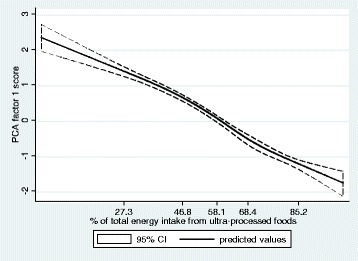
BACKGROUND: Recent population dietary studies indicate that diets rich in ultra-processed foods, increasingly frequent worldwide, are grossly nutritionally unbalanced, suggesting that the dietary contribution of these foods largely determines the overall nutritional quality of contemporaneous diets. Yet, these studies have focused on individual nutrients (one at a time) rather than the overall nutritional quality of the diets. Here we investigate the relationship between the energy contribution of ultra-processed foods in the US diet and its content of critical nutrients, individually and overall. METHODS: We evaluated dietary intakes of 9,317 participants from 2009 to 2010 NHANES aged 1+ years. Food items were classified into unprocessed or minimally processed foods, processed culinary ingredients, processed foods, and ultra-processed foods. First, we examined the average dietary content of macronutrients, micronutrients, and fiber across quintiles of the energy contribution of ultra-processed foods. Then, we used Principal Component Analysis (PCA) to identify a nutrient-balanced dietary pattern to enable the assessment of the overall nutritional quality of the diet. Linear regression was used to explore the association between the dietary share of ultra-processed foods and the balanced-pattern PCA factor score. The scores were thereafter categorized into tertiles, and their distribution was examined across ultra-processed food quintiles. All models incorporated survey sample weights and were adjusted for age, sex, race/ethnicity, family income, and educational attainment. RESULTS: The average content of protein, fiber, vitamins A, C, D, and E, zinc, potassium, phosphorus, magnesium, and calcium in the US diet decreased significantly across quintiles of the energy contribution of ultra-processed foods, while carbohydrate, added sugar, and saturated fat contents increased. An inverse dose-response association was found between ultra-processed food quintiles and overall dietary quality measured through a nutrient-balanced-pattern PCA-derived factor score characterized by being richer in fiber, potassium, magnesium and vitamin C, and having less saturated fat and added sugars. CONCLUSIONS: This study suggests that decreasing the dietary share of ultra-processed foods is a rational and effective way to improve the nutritional quality of US diets.
Overview
The claims and statistics of this paper haven’t been checked yet.
Free: it reads the open-access text and checks the first 5 claims that cite a source we can check. Create a free account to check every claim.
Integrity signals
Registry
Cites
Statistics
Figures
Verification
Claims the paper makes
The claims and statistics of this paper haven’t been checked yet.
Free: it reads the open-access text and checks the first 5 claims that cite a source we can check. Create a free account to check every claim.
Claims other papers make about this one
Each is checked against this paper’s own text: does it say what the citing paper says it does?
The source backs part of the claim, not all of it — or backs it for a different population, condition or comparison.
In the citing paper
“Moreover, refined sugars constitute approximately 20% of caloric intake.”
From The oral microbiome: Role of key organisms and complex networks in oral health and disease (2021) · cites this paper as [252]
Experimental — accuracy not yet measuredIn the citing paper
“In the United States, carbohydrates constitute > 50% of total energy intake, with refined cereal grains representing > 85% of total cereal grains consumed.”
From The oral microbiome: Role of key organisms and complex networks in oral health and disease (2021) · cites this paper as [252]
Self-check
Percentages, sums and reported differences re-computed from the paper’s own numbers.
The self-check needs the paper’s full text.
Citations
Cites
Sontrop, J. M., Dixon, S. N., Garg, A. X., Buendia-Jimenez, I., Dohein, O., Huang, S.-H. S., & Clark, W. F. (2013) · American Journal of Nephrology · doi:10.1159/000350377 · Cited by 5,871
Dietary pattern analysis: a new direction in nutritional epidemiology
Hu, F. B. (2002) · Current Opinion in Lipidology · doi:10.1097/00041433-200202000-00002 · Cited by 4,029 · cited 2×
“linear combinations of them referred to as “components” and which maximize the explained variance [19, 42].”
BackgroundMoshfegh, A. J., Rhodes, D. G., Baer, D. J., Murayi, T., Clemens, J. C., Rumpler, W. V., Paul, D. R., Sebastian, R. S., Kuczynski, K. J., Ingwersen, L. A., et al. (2008) · The American Journal of Clinical Nutrition · doi:10.1093/ajcn/88.2.324 · Cited by 1,982
Ultra‐processed products are becoming dominant in the global food system
Monteiro, C. A., Moubarac, J. ‐., Cannon, G., Ng, S. W., & Popkin, B. (2013) · Obesity Reviews · doi:10.1111/obr.12107 · Cited by 1,827
Self-citationMoodie, R., Stuckler, D., Monteiro, C., Sheron, N., Neal, B., Thamarangsi, T., Lincoln, P., & Casswell, S. (2013) · The Lancet · doi:10.1016/s0140-6736(12)62089-3 · Cited by 1,663
Self-citationNational health and nutrition examination survey: analytic guidelines, 1999-2010.
Cl, J., Paulose‐Ram, R., Ogden, C. L., Carroll, Kruszon‐Moran, D., Dohrmann, S. M., & Curtin, L. R. (2013) · PubMed · Cited by 1,522
USDA National Nutrient Database for Standard Reference, Release 22
(2018) · Cited by 1,285
Monteiro, C. A., Levy, R. B., Claro, R. M., de Castro, I. R. R., & Cannon, G. (2010) · Public Health Nutrition · doi:10.1017/s1368980010003241 · Cited by 1,060 · cited 1×
“Our investigation was based on total effective individual consumption data, rather than on household purchasing data [7, 10, 47], which do not evaluate the fraction of wasted food or purchases at restaurants.”
MethodSelf-citationDietary patterns and health outcomes
Kant, A. K. (2004) · Journal of the American Dietetic Association · doi:10.1016/j.jada.2004.01.010 · Cited by 1,028 · cited 1×
“The PCA method also has limitations such as subjective decisions regarding the number of extracted components, method of rotation, naming of components, and cutoffs for factor loadings [23, 31, 49].”
MethodA new classification of foods based on the extent and purpose of their processing
Monteiro, C. A., Levy, R. B., Claro, R. M., Castro, I. R. R. D., & Cannon, G. (2010) · Cadernos de Saúde Pública · doi:10.1590/s0102-311x2010001100005 · Cited by 991 · cited 2×
“We classified all recorded food items (N = 280,132 Food Codes) according to Nova, a food classification based on the extent and purpose of industrial food processing [4, 17].”
BackgroundMethodSelf-citation
Research works printed but not linked: 3
- FAO. Guidelines on the collection of information on food processing through food consumption surveys. Rome: FAO; 2015.
- Diet and health: implication for reducing chronic disease risk. National Academy Press, Washington, DC; 1989.
- Monteiro CA, Cannon G, Levy RB, Claro R, Moubarac JC, Martins AP, Louzada ML, Baraldi L, Canella D. The Food System. Processing. The big issue for disease, good health, well-being. World Nutr. 2012;3:527–69. www.wphna.org (accessed Jan 2017).
Cited by
Items 101–200 of 582
da Rocha, B. R. S., Rico-Campà, A., Romanos-Nanclares, A., Ciriza, E., Barbosa, K. B. F., Martínez-González, M. Á., & Martín-Calvo, N. (2021) · Public Health Nutrition · doi:10.1017/s1368980020001524 · Cited by 65
Koiwai, K., Takemi, Y., Hayashi, F., Ogata, H., Matsumoto, S., Ozawa, K., Machado, P. P., & Monteiro, C. A. (2019) · Public Health Nutrition · doi:10.1017/s1368980019001514 · Cited by 73
Self-citationUltra-processed foods and the development of obesity in adults
Harb, A. A., Shechter, A., Koch, P. A., & St‐Onge, M. (2022) · European Journal of Clinical Nutrition · doi:10.1038/s41430-022-01225-z · Cited by 82
Monteiro, C. A., & Cannon, G. J. (2019) · World Nutrition · doi:10.26596/wn.201910189-99 · Cited by 63
Self-citationFood inequity and insecurity and MASLD: burden, challenges, and interventions
Zelber‐Sagi, S., Carrieri, P., Pericàs, J. M., Wajcman, D. I., Younossi, Z. M., & Lazarus, J. V. (2024) · Nature Reviews Gastroenterology & Hepatology · doi:10.1038/s41575-024-00959-4 · Cited by 70
“In contrast, the consumption of UPFs has increased dramatically worldwide 121 ; for example, in the USA and the UK, UPFs have been found to account for >50% of daily calorie intake and for most of the dietary added sugars 29,122 .”
Ultra-Processed Food Is Positively Associated With Depressive Symptoms Among United States Adults
Zheng, L., Sun, J., Yu, X., & Zhang, D. (2020) · Frontiers in Nutrition · doi:10.3389/fnut.2020.600449 · Cited by 75
Martines, R. M., Machado, P. P., Neri, D. A., Levy, R. B., & Rauber, F. (2019) · Maternal and Child Nutrition · doi:10.1111/mcn.12819 · Cited by 85
“High energy density and higher total fat, saturated fat, and free sugars, along with lower protein and fibre content are common constituents of dietary patters based on ultraprocessed foods (da Costa Louzada et al., 2018b; Moubarac et al., 2017; Steele et al., 2017; Rauber et al., 2018).”
BackgroundGupta, P., Shah, D., Kumar, P., Bedi, N., Mittal, H. G., Mishra, K., Khalil, S., Elizabeth, K., Dalal, R. M., Harish, R., et al. (2019) · Indian Pediatrics · doi:10.1007/s13312-019-1612-5 · Cited by 75
Ohlau, M., Spiller, A., & Risius, A. (2022) · Frontiers in Nutrition · doi:10.3389/fnut.2022.852936 · Cited by 75
Cross-sectional examination of ultra-processed food consumption and adverse mental health symptoms
Hecht, E. M., Rabil, A. M., Steele, E. M., Abrams, G. A., Ware, D. P., Landy, D. C., & Hennekens, C. H. (2022) · Public Health Nutrition · doi:10.1017/s1368980022001586 · Cited by 75
“The ultra-processing of food depletes its nutritional value and also increases the number of calories, as UPF tend to be high in added sugar, saturated fat and salt, while low in protein, fibre, vitamins, minerals and phytochemicals (17,18) .”
BackgroundMagnesium: A Magic Bullet for Cardiovascular Disease in Chronic Kidney Disease?
Leenders, N. H. J., & Vervloet, M. G. (2019) · Nutrients · doi:10.3390/nu11020455 · Cited by 70
“The increasing predominance of ultra-processed foods can contribute to lower dietary magnesium intake, as dietary magnesium intake is inversely related to dietary share of ultra-processed foods [30].”
BackgroundUltra-processed food intake and all-cause mortality: DRECE cohort study
Romero Ferreiro, C., Martín-Arriscado Arroba, C., Cancelas Navia, P., Lora Pablos, D., & Gómez de la Cámara, A. (2022) · Public Health Nutrition · doi:10.1017/s1368980021003256 · Cited by 59
Inter-Philosophies Dialogue: Creating a Paradigm for Global Health Ethics
Benatar, S. R., Daibes, I., & Tomsons, S. (2016) · Kennedy Institute of Ethics journal · doi:10.1353/ken.2016.0027 · Cited by 69
An Overlap Between “Ultraprocessed” Foods and the Preexisting Nutrient Rich Foods Index?
Drewnowski, A., Gupta, S., & Darmon, N. (2020) · Nutrition Today · doi:10.1097/nt.0000000000000400 · Cited by 58
“The ever-changing NOVA definitions seem to have come full circle.(25) Despite earlier insistence on the harm of food processing, the assignment of foods into the “ultraprocessed” category seems now to be based on fat, sugar, and salt.”
BackgroundAutoimmune Thyroid Disorders: The Mediterranean Diet as a Protective Choice
Ruggeri, R. M., Barbalace, M. C., Croce, L., Malaguti, M., Campennì, A., Rotondi, M., Cannavò, S., & Hrelia, S. (2023) · Nutrients · doi:10.3390/nu15183953 · Cited by 73
R Cardoso, B., Machado, P., & Steele, E. M. (2022) · European Journal of Nutrition · doi:10.1007/s00394-022-02911-1 · Cited by 56
Self-citationHuybrechts, I., Rauber, F., Nicolas, G., Casagrande, C., Kliemann, N., Wedekind, R., Biessy, C., Scalbert, A., Touvier, M., Aleksandrova, K., et al. (2022) · Frontiers in Nutrition · doi:10.3389/fnut.2022.1035580 · Cited by 56
Self-citationGlobal diversity of dietary intakes and standards for zinc, iron, and copper
FREELAND-GRAVES, J. H., Sachdev, P. K., Binderberger, A. Z., & Sosanya, M. E. (2020) · Journal of Trace Elements in Medicine and Biology · doi:10.1016/j.jtemb.2020.126515 · Cited by 64
Marrón-Ponce, J. A., Sánchez-Pimienta, T. G., Rodríguez‐Ramírez, S., Batis, C., & Cediel, G. (2022) · Journal of Human Nutrition and Dietetics · doi:10.1111/jhn.13003 · Cited by 59
Peltner, J., & Thiele, S. (2017) · Public Health Nutrition · doi:10.1017/s1368980017003378 · Cited by 62
Reliability and validity of assigning ultraprocessed food categories to 24-h dietary recall data
Sneed, N. M., Ukwuani, S., Sommer, E. C., Samuels, L. R., Truesdale, K. P., Matheson, D., Noerper, T. E., Barkin, S. L., & Heerman, W. J. (2023) · The American Journal of Clinical Nutrition · doi:10.1016/j.ajcnut.2022.10.016 · Cited by 56
Ayton, A. K., & Ibrahim, A. (2019) · Nutrition Reviews · doi:10.1093/nutrit/nuz089 · Cited by 59
Ultra-processed Foods and Cardiometabolic Health Outcomes: from Evidence to Practice
Juul, F., Deierlein, A. L., Vaidean, G. D., Quatromoni, P. A., & Parekh, N. (2022) · Current Atherosclerosis Reports · doi:10.1007/s11883-022-01061-3 · Cited by 64
Salomé, M., Arrazat, L., Wang, J., Dufour, A., Dubuisson, C., Volatier, J., Huneau, J., & Mariotti, F. (2021) · European Journal of Nutrition · doi:10.1007/s00394-021-02576-2 · Cited by 58
“This association had also been found in the US population where overall dietary quality was measured using a nutrient balanced-pattern PCAderived factor score [59].”
MethodResultLane, M., Howland, G., West, M., Hockey, M., Marx, W., Loughman, A., O’Hely, M., Jacka, F., & Rocks, T. (2020) · Obesity Research & Clinical Practice · doi:10.1016/j.orcp.2020.04.006 · Cited by 50
Analysing the use of the Australian Health Star Rating system by level of food processing
Dickie, S., Woods, J. L., & Lawrence, M. (2018) · International Journal of Behavioral Nutrition and Physical Activity · doi:10.1186/s12966-018-0760-7 · Cited by 50
Godos, J., Giampieri, F., Al-Qahtani, W. H., Scazzina, F., Bonaccio, M., & Grosso, G. (2022) · International Journal of Environmental Research and Public Health · doi:10.3390/ijerph191811360 · Cited by 59
“less than 1% in Italy) among others, is generally higher [53].”
BackgroundEating context and ultraprocessed food consumption among UK adolescents
Rauber, F., Martins, C. A., Azeredo, C. M., Leffa, P. S., Louzada, M. L. D. C., & Levy, R. B. (2021) · British Journal Of Nutrition · doi:10.1017/s0007114521000854 · Cited by 64
Ultra-processed diet, systemic oxidative stress, and breach of immunologic tolerance
Martínez Leo, E. E., Peñafiel, A. M., Hernández Escalante, V. M., & Cabrera Araujo, Z. M. (2021) · Nutrition · doi:10.1016/j.nut.2021.111419 · Cited by 49
How and why ultra-processed foods harm human health
Levy, R. B., Barata, M. F., Leite, M. A., & Andrade, G. C. (2023) · Proceedings of The Nutrition Society · doi:10.1017/s0029665123003567 · Cited by 69
Dinu, M., Bonaccio, M., Martini, D., Madarena, M. P., Vitale, M., Pagliai, G., Esposito, S., Ferraris, C., Guglielmetti, M., Rosi, A., et al. (2021) · International Journal of Food Sciences and Nutrition · doi:10.1080/09637486.2021.1880552 · Cited by 54
“…groups in populations, and to associate them with socio-demographic determinants (Baraldi et al. 2018; Batal et al. 2018), diet quality (Martinez Steele et al. 2017; Vandevijvere et al. 2019), weight gain (Beslay et al. 2020; Juul et al. 2018); de Deus Mendonça et al. 2016), gut microbiota…”
BackgroundMethodLauber, K., Hunt, D., Gilmore, A., & Rutter, H. (2021) · PLoS Medicine · doi:10.1371/journal.pmed.1003695 · Cited by 57
Herforth, A., Ballard, T., & Rzepa, A. (2024) · Current Developments in Nutrition · doi:10.1016/j.cdnut.2024.103798 · Cited by 69
“…indicators [35 – 39, 43, 44 ], but There was discussion about using an indicator of ultra-processed foods (UPF) consumption as a marker of dietary shifts related to the nutrition transition, and as a proxy measure for both lower micronutrient intakes and higher risk of obesity and NCDs [46 – 50].”
BackgroundDown to Earth: Planetary Health and Biophilosophy in the Symbiocene Epoch
Prescott, S., & Logan, A. (2017) · Challenges · doi:10.3390/challe8020019 · Cited by 47
Pomeranz, J. L., Wilde, P., Huang, Y., Micha, R., & Mozaffarian, D. (2018) · American Journal of Public Health · doi:10.2105/ajph.2017.304159 · Cited by 56
García‐Blanco, L., Víctor de la, O., Santiago, S., Pouso, A., Martínez‐González, M. Á., & Martín‐Calvo, N. (2023) · European Journal of Pediatrics · doi:10.1007/s00431-023-05026-9 · Cited by 63
Vellinga, R. E., van Bakel, M., Biesbroek, S., Toxopeus, I. B., de Valk, E., Hollander, A., Veer, P. V. ’., & Temme, E. H. M. (2022) · BMC Public Health · doi:10.1186/s12889-022-13282-x · Cited by 53
Diet quality and micronutrient intake among long-term weight loss maintainers
Pascual, R. W., Phelan, S., La Frano, M. R., Pilolla, K. D., Griffiths, Z., & Foster, G. D. (2019) · Nutrients · doi:10.3390/nu11123046 · Cited by 44
Ultra-processing. An odd ‘appraisal’
Monteiro, C. A., Cannon, G., Moubarac, J.-C., Levy, R. B., Louzada, M. L. C., & Jaime, P. C. (2018) · Public Health Nutrition · doi:10.1017/s1368980017003287 · Cited by 44
“For instance, studies conducted in Brazil(4,5), the USA(6,7) and Canada(8) show that as well as increasing added sugar and decreasing micronutrients, the more ultra-processed foods consumed, the greater the energy density of the overall diet and total energy intake, the greater the content of unhealthy fats, and the l…”
BackgroundSelf-citationEvaluating the Nutritional Properties of Food: A Scoping Review
Wang, P., Huang, J., Sun, J., Liu, R., Jiang, T., & Sun, G. (2022) · Nutrients · doi:10.3390/nu14112352 · Cited by 51
“It is still controversial whether the dietary contribution of ul-traprocessed foods (UPFs) largely determines the overall nutritional quality of contemporary diets [14].”
BackgroundMeine, G. C., Picon, R. V., Santo, P. A. D. E., & Sander, G. B. (2024) · The American Journal of Gastroenterology · doi:10.14309/ajg.0000000000002826 · Cited by 50
Brain Imaging of Taste Perception in Obesity: a Review
Liu, C. K., Joseph, P. V., Feldman, D. E., Kroll, D. S., Burns, J. A., Manza, P., Volkow, N. D., & Wang, G. (2019) · Current Nutrition Reports · doi:10.1007/s13668-019-0269-y · Cited by 55
Ultra-processed foods and risk of all-cause mortality in renal transplant recipients
Osté, M. C. J., Duan, M.-J., Neto, A. W. G., Vinke, P. C., Carrero, J. J., Avesani, C. M., Cai, Q., Dekker, L. H., Navis, G. J., Bakker, S. J. L., et al. (2022) · American Journal of Clinical Nutrition · doi:10.1093/ajcn/nqac053 · Cited by 44
Leenders, N. H. J., van Ittersum, F. J., Hoekstra, T., Hoenderop, J. G. J., & Vervloet, M. G. (2018) · Scientific Reports · doi:10.1038/s41598-018-28629-x · Cited by 45
Jianfeng, H. A. O., Zhou, P., & Qiu, H. (2022) · The journal of nutrition health & aging · doi:10.1007/s12603-022-1824-6 · Cited by 41
Du, S., Sullivan, V. K., Fang, M., Appel, L. J., Selvin, E., & Rebholz, C. M. (2024) · Diabetologia · doi:10.1007/s00125-024-06221-5 · Cited by 52
Designing healthier and more sustainable ultraprocessed foods
McClements, D. J. (2024) · Comprehensive Reviews in Food Science and Food Safety · doi:10.1111/1541-4337.13331 · Cited by 50
Arsenault, B. J., Lamarche, B., & Després, J. (2017) · Nutrients · doi:10.3390/nu9060600 · Cited by 47
“Although cross-sectional studies have suggested that SSB overconsumption is correlated with poor diet quality [35], one argument against SSBs being a marker of nutritional quality is that national SSB sales/consumption appears to be decreasing in the absence of meaningful changes in nutritional quality [36].”
BackgroundMatos, J. D. P., de Lima, M. M., & Horta, P. M. (2019) · Journal of the Academy of Nutrition and Dietetics · doi:10.1016/j.jand.2019.04.014 · Cited by 41
Ultra-processed Food Intake and Risk of Type 2 Diabetes in Korean Adults
Cho, Y., Ryu, S., Kim, R., Shin, M., & Oh, H. (2023) · Journal of Nutrition · doi:10.1016/j.tjnut.2023.11.021 · Cited by 47
Lv, J.-L., Wei, Y., Sun, J., Shi, Y., Liu, F.-H., Sun, M.-H., Chang, Q., Wu, Q., & Zhao, Y. (2024) · Frontiers in Nutrition · doi:10.3389/fnut.2024.1306310 · Cited by 52
Ultra-Processed Foods and Mental Health: Where Do Eating Disorders Fit into the Puzzle?
Wiss, D. A., & LaFata, E. M. (2024) · Nutrients · doi:10.3390/nu16121955 · Cited by 55
“UPFs contribute 90% of added refined sugars [21], contain higher levels of total fat from added saturated fats [32], and are inversely associated with dietary fiber and protein intake [32–34].”
BackgroundMartínez Steele, E., Buckley, J. P., & Monteiro, C. A. (2023) · Preventive Medicine · doi:10.1016/j.ypmed.2023.107598 · Cited by 36
Self-citationUltra-processed food consumption and nutritional frailty in older age
Zupo, R., Donghia, R., Castellana, F., Bortone, I., Nucci, S. D., Sila, A., Tatoli, R., Lampignano, L., Sborgia, G., Panza, F., et al. (2023) · GeroScience · doi:10.1007/s11357-023-00753-1 · Cited by 38
Early consumption of ultra-processed foods among children under 2 years old in Brazil
Spaniol, A. M., da Costa, T. H. M., Souza, A. D. M., & Gubert, M. B. (2020) · Public Health Nutrition · doi:10.1017/s1368980020004759 · Cited by 43
Steele, E. M., Batis, C., Cediel, G., Louzada, M. L. D. C., Khandpur, N., Machado, P. P., Moubarac, J., Rauber, F., Jedlicki, M. R., Levy, R. B., et al. (2021) · Journal of Nutritional Science · doi:10.1017/jns.2021.30 · Cited by 39
“All data used by the present study come from most recently available national dietary surveys carried out in Brazil (2008– 9)((6)), Chile (2010)((7)), Colombia (2005)((8)), Mexico (2012)((9)), Australia (2011–12)((10)), the UK (2008–16)((11)), Canada (2015)((12)) and the US (2015–16)((13)).”
BackgroundSelf-citationJunk Food Intake Among Adults in the United States
Dunford, E., Popkin, B. M., & Ng, S. W. (2021) · Journal of Nutrition · doi:10.1093/jn/nxab205 · Cited by 47
Self-citationNutritional Quality and Degree of Processing of Children’s Foods Assessment on the French Market
Richonnet, C., Mosser, F., Favre, E., Robert, M., Martin, F., & Thiébaut, I. (2021) · Nutrients · doi:10.3390/nu14010171 · Cited by 35
“[57] have shown that there is a strong inverse linear relationship between the nutritional intake of UPFs on the one hand compared to that of protein, fibre, vitamins A, C, D and E, zinc, potassium, phosphorus, magnesium, and calcium, while the proportion of saturated fats and added sugars increases significantly due…”
BackgroundCummings, J. R., Lipsky, L. M., Schwedhelm, C., Liu, A., & Nansel, T. R. (2022) · International Journal of Behavioral Nutrition and Physical Activity · doi:10.1186/s12966-022-01298-w · Cited by 49
Giving voice to African thought in medical research ethics
Tangwa, G. B. (2017) · Metamedicine · doi:10.1007/s11017-017-9402-3 · Cited by 41
Liu, Z., Huang, H., Zeng, Y., Chen, Y., & Xu, C. (2023) · British Journal Of Nutrition · doi:10.1017/s0007114522003956 · Cited by 32
“used principal component analysis and identified that UPF were poorer in fibre, potassium, magnesium and vitamin C and had more saturated fat and added sugars(54).”
MethodMartinez Steele, E., Marrón Ponce, J. A., Cediel, G., Louzada, M. L. C., Khandpur, N., Machado, P., Moubarac, J.-C., Rauber, F., Corvalán, C., Levy, R. B., et al. (2022) · Nutrition, Metabolism and Cardiovascular Diseases · doi:10.1016/j.numecd.2022.08.018 · Cited by 32
Self-citationGlobal Health: Ethical Challenges
Benatar, S. R., & Brock, G. (2020) · Cited by 34
Martins, M. C., Trujillo, J., Vilela, A. A. F., Farias, D. R., Rosado, E. L., Struchiner, C. J., & Kac, G. (2018) · British Journal Of Nutrition · doi:10.1017/s0007114518001423 · Cited by 39
Bleiweiss-Sande, R., Sacheck, J. M., Chui, K. K. H., Goldberg, J. P., Bailey, C. P., & Evans, E. W. (2020) · Appetite · doi:10.1016/j.appet.2020.104696 · Cited by 37
Recent Trends in Junk Food Intake in U.S. Children and Adolescents, 2003–2016
Dunford, E., Popkin, B. M., & Ng, S. W. (2020) · American Journal of Preventive Medicine · doi:10.1016/j.amepre.2020.01.023 · Cited by 40
Self-citationRodríguez-Cano, A. M., González-Ludlow, I., Suárez-Rico, B. V., Montoya-Estrada, A., Piña-Ramírez, O., Parra-Hernández, S., Reyes-Muñoz, E., Estrada‐Gutiérrez, G., Calzada‐Mendoza, C. C., & Perichart‐Perera, O. (2022) · Antioxidants · doi:10.3390/antiox11071415 · Cited by 41
Fangupo, L. J., Haszard, J. J., Leong, C., Heath, A.-L. M., Fleming, E. A., & Taylor, R. W. (2019) · Nutrients · doi:10.3390/nu11061290 · Cited by 31
Ultra-Processed Food Intake and Risk of Colorectal Cancer: A Matched Case-Control Study
Jafari, F., Yarmand, S., Nouri, M., Nejad, E. T., Ramezani, A., Sohrabi, Z., & Rashidkhani, B. (2022) · Nutrition and Cancer · doi:10.1080/01635581.2022.2125990 · Cited by 36
Ultra-processed foods, dietary diversity and micronutrient intakes in the Australian population
Houshialsadat, Z., Cediel, G., Sattamini, I. F., Scrinis, G., & Machado, P. P. (2023) · European Journal of Nutrition · doi:10.1007/s00394-023-03245-2 · Cited by 38
“Our findings are consistent with other population-based studies in the US [16], Canada [5], Brazil [8], and Mexico [17].”
BackgroundResultWolfson, J. A., Steele, E. M., Tucker, A. C., & Leung, C. W. (2024) · Journal of the Academy of Nutrition and Dietetics · doi:10.1016/j.jand.2024.03.005 · Cited by 44
Processing level and diet quality of the US grocery cart: is there an association?
Juul, F., Simões, B. D. S., Litvak, J., Steele, E. M., Deierlein, A. L., Vadiveloo, M. K., & Parekh, N. (2019) · Public Health Nutrition · doi:10.1017/s1368980019001344 · Cited by 36
“Yet, it is worth noting that our results are consistent with previously published NOVA contributions estimated using dietary intake data (21) .”
BackgroundResultInfluentialOliveira, N., Coelho, G. M. D. O., Cabral, M. C., Bezerra, F. F., Faerstein, E., & Canella, D. S. (2019) · Appetite · doi:10.1016/j.appet.2019.104464 · Cited by 39
Associação entre o consumo de alimentos ultraprocessados e parâmetros lipídicos em adolescentes
Lima, L. R., Nascimento, L. M., Gomes, K. R. O., Martins, M. D. C. D. C. E., Rodrigues, M. T. P., & Frota, K. D. M. G. (2020) · Ciência & Saúde Coletiva · doi:10.1590/1413-812320202510.24822018 · Cited by 77
Gilham, B., Hall, R. S., & Woods, J. (2018) · Nutrition Journal · doi:10.1186/s12937-018-0414-2 · Cited by 36
Consumption of Ultra-Processed Food and Cognitive Decline among Older Adults With Type-2 Diabetes
Weinstein, G., Vered, S., Wajcman, D. I., Ravona‐Springer, R., Heymann, A. D., Zelber‐Sagi, S., Shahar, D. R., & Beeri, M. S. (2022) · The Journals of Gerontology Series A · doi:10.1093/gerona/glac070 · Cited by 42
Wang, L., Pan, X., Munro, H. M., Shrubsole, M. J., & Yu, D. (2023) · Clinical Nutrition · doi:10.1016/j.clnu.2023.08.012 · Cited by 33
Vellinga, R. E., van den Boomgaard, I., Boer, J. M. A., van der Schouw, Y. T., Harbers, M. C., Verschuren, W. M. M., Veer, P. V. ’., Temme, E. H. M., & Biesbroek, S. (2023) · American Journal of Clinical Nutrition · doi:10.1016/j.ajcnut.2023.05.021 · Cited by 30
Costa, C. D. S., Steele, E. M., de Faria, F. R., & Monteiro, C. A. (2022) · Cadernos de Saúde Pública · doi:10.1590/0102-311x00119421 · Cited by 66
“In the PNS 2019, respondents answered “yes” or “no” to the following questions: “Yesterday, did you drink or eat: (1) Soft drink?; (2) Fruit juice drink in can or box or prepared from a powdered mix?; (3) Chocolate powder drink or flavored yogurt?; (4) Packaged salty snacks or crackers?; (5) Sandwich cookies or sweet…”
BackgroundSelf-citationAl-Nimr, R. I., Wright, K. C. S., Aquila, C. L., Petersen, C. L., Gooding, T., & Batsis, J. A. (2020) · Clinical Nutrition ESPEN · doi:10.1016/j.clnesp.2020.09.002 · Cited by 34
Development of a Diet Quality Index Adapted for Pregnant Women
Crivellenti, L. C., Zuccolotto, D. C. C., & Sartorelli, D. S. (2018) · Revista de Saúde Pública · doi:10.11606/s1518-8787.2018052000184 · Cited by 35
Ultra-Processed Food Intake and Smoking Interact in Relation with Colorectal Adenomas
Isakov, N. F., Zelber‐Sagi, S., Wajcman, D. I., Shibolet, O., & Kariv, R. (2020) · Nutrients · doi:10.3390/nu12113507 · Cited by 32
“A major component of the western diet is processed and ultra-processed food (UPF), contributing up to 79% of the mean daily calories [11].”
BackgroundPrevalence of processed foods in major US grocery stores
Ravandi, B., Ispirova, G., Sebek, M., Mehler, P., Barabási, A.-Ĺ., & Menichetti, G. (2025) · Nature Food · doi:10.1038/s43016-024-01095-7 · Cited by 48
“The sheer number of peer-reviewed articles investigating the link between the degree of food processing and health embodies a general consensus among independent researchers on the health relevance of UPF, contributing up to 60% of consumed calories in developed nations 6–8 .”
Falcão, R. C. T. M. D. A., Lyra, C. D. O., de Morais, C. M. M., Pinheiro, L. G. B., Pedrosa, L. F. C., Lima, S. C. V. C., & Sena‐Evangelista, K. C. M. (2019) · PLoS ONE · doi:10.1371/journal.pone.0224984 · Cited by 36
“This is consistent with the findings of other studies carried out in Brazil in the pediatric population [5, 10, 15].”
BackgroundResultUltra-Processed Foods and Excess Heart Age Among U.S. Adults
Yang, Q., Zhang, Z., Steele, E. M., Moore, L. V., & Jackson, S. L. (2020) · American Journal of Preventive Medicine · doi:10.1016/j.amepre.2020.06.013 · Cited by 32
Islam, M. R., Rahman, S. M., Rahman, M., Pervin, J., Rahman, A. M., & Ekström, E. (2022) · PLoS ONE · doi:10.1371/journal.pone.0272275 · Cited by 45
“Similarly, contrasting with readyto-eat items’ marked contribution to overall UPF intake in high-income settings [12, 13], we observed low consumption of ready-to-eat preparations.”
ResultZhang, T., Gan, S., Ye, M., Meng, G., Qing, Z., Liu, L., Wu, H., Gu, Y., Zhang, S., Wang, Y., et al. (2021) · Nutrition Metabolism and Cardiovascular Diseases · doi:10.1016/j.numecd.2021.04.001 · Cited by 30
Lifestyle Medicine for Obesity in the Era of Highly Effective Anti-Obesity Treatment
Sannidhi, D., Abeles, R., Andrew, W., Bonnet, J. P., Vitale, K., Niranjan, V., Gulati, M., Pauly, K., Moran, R., Alexander, L., et al. (2025) · Nutrients · doi:10.3390/nu17142382 · Cited by 29
“Diets high in added sugars, artificial sweeteners, and sugar alcohols, often found in ultra-processed products, have been associated with gastrointestinal discomfort—including gas, bloating, and diarrhea—and in some studies, increased hunger and a potential link to obesity [148,169,171,173,175].”
Shim, J. (2025) · Journal of Obesity & Metabolic Syndrome · doi:10.7570/jomes24045 · Cited by 43
Oviedo-Solís, C. I., Monterrubio-Flores, E. A., Cediel, G., Denova-Gutiérrez, E., & Barquera, S. (2022) · Journal of the Academy of Nutrition and Dietetics · doi:10.1016/j.jand.2021.11.002 · Cited by 23
Smit, A. J. P., Hojeij, B., Rousian, M., Schoenmakers, S., Willemsen, S. P., Steegers‐Theunissen, R. P. M., & van Rossem, L. (2022) · Clinical Nutrition · doi:10.1016/j.clnu.2022.06.006 · Cited by 32
Fung, T. T., Rossato, S. L., Chen, Z., Khandpur, N., Rodriguez-Artalejo, F., Willett, W. C., Struijk, E. A., & Lopez-Garcia, E. (2024) · The American Journal of Clinical Nutrition · doi:10.1016/j.ajcnut.2024.05.006 · Cited by 24
Qualls‐Creekmore, E., Marlatt, K. L., Aarts, E., Bruce‐Keller, A. J., Church, T., Clément, K., Fisher, J. O., Gordon‐Larsen, P., Morrison, C. D., Raybould, H. E., et al. (2020) · Obesity · doi:10.1002/oby.22806 · Cited by 28
The Effects of Ultra-Processed Food Consumption—Is There Any Action Needed?
Gramza‐Michałowska, A. (2020) · Nutrients · doi:10.3390/nu12092556 · Cited by 31
Nestares, T., Martín-Masot, R., Flor-Alemany, M., Bonavita, A., Maldonado, J., & Aparicio, V. A. (2021) · Nutrients · doi:10.3390/nu13010156 · Cited by 24
“Ultraprocessed foods (UPF) are products of food technology, formulated from 5 or more industrial ingredients and containing little or no whole food [15].”
BackgroundDietary Treatment for NAFLD: New Clinical and Epidemiological Evidence and Updated Recommendations
Zelber‐Sagi, S. (2021) · Seminars in Liver Disease · doi:10.1055/s-0041-1729971 · Cited by 25
Romero, C., Navia, P. C., Lora, D., & de la Cámara, A. G. (2022) · Nutrients · doi:10.3390/nu14153223 · Cited by 31
Haghighatdoost, F., Hajihashemi, P., Mohammadifard, N., Najafi, F., Farshidi, H., Lotfizadeh, M., Kazemi, T., Karimi, S., Shirani, S., Solati, K., et al. (2022) · Public Health Nutrition · doi:10.1017/s1368980022002038 · Cited by 30
“The contribution of UPF to daily energy intake varies from 10 % in Portugal(11) to around 60 % in the USA(12) and in the UK(13).”
BackgroundResultRecall of government healthy eating campaigns by consumers in five countries
Goodman, S. E., Armendariz, G., Corkum, A., Arellano‐Gómez, L. P., Jáuregui, A., Keeble, M., Marshall, J. M., Sacks, G., Thrasher, J. F., Vanderlee, L., et al. (2021) · Public Health Nutrition · doi:10.1017/s1368980021001415 · Cited by 27
“However, industry-sponsored ads are ultimately designed to create positive associations with a specific brand or product, which more often than not involve pre-packaged or processed foods, which tend to be of poorer nutritional quality (76,77) .”
Beyond Nutrient Intake: Use of Digital Food Photography Methodology to Examine Family Dinnertime
McCloskey, M. L., Johnson, S. L., Bekelman, T. A., Martin, C. K., & Bellows, L. L. (2019) · Journal of Nutrition Education and Behavior · doi:10.1016/j.jneb.2019.01.020 · Cited by 26
Metadata
- Authors
- Martínez Steele, E., Popkin, B. M., Swinburn, B., & Monteiro, C. A.
- Affiliations
- University of North Carolina at Chapel Hill (US)
- University of Auckland (NZ)
- Universidade de São Paulo (BR)
- Corresponding author
- Swinburn, Boyd
- Venue
- Population Health Metrics
- Published
- 2017-02-14
- Volume
- 15
- Issue
- 1
- Pages
- 6-6
- ISSN
- 1478-7954 (ISSN-L)
- PMC
- PMC5307821
- OpenAlex
- W2588919095
- Cited by
- 585
- References
- 43
- Citations by year
- 2026: 38 · 2025: 59 · 2024: 78 · 2023: 52 · 2022: 78 · 2021: 111 · 2020: 53 · 2019: 65 · 2018: 29 · 2017: 19
- FWCI
- 42.56
- Type
- journal article
- Language
- en
- Open access
- gold
- doi.org
- Licence
- cc-by
- Locations
- Population Health Metrics (publishedVersion, cc-by)
- PubMed Central (publishedVersion, cc-by)
- PubMed (publishedVersion)
- Portuguese National Funding Agency for Science, Research and Technology (RCAAP Project by FCT) (publishedVersion)
- Figshare (submittedVersion, cc-by)
- ResearchSpace (University of Auckland) (submittedVersion, cc-by)
- Funders
- Conselho Nacional de Desenvolvimento Científico e Tecnológico (443477/2014-0)
- Fundação de Amparo à Pesquisa do Estado de São Paulo (2015/14900-9)
- Topics
- Health Sciences › Medicine › Public Health, Environmental and Occupational Health › Consumer Attitudes and Food Labeling
- Health Sciences › Medicine › Public Health, Environmental and Occupational Health › Nutritional Studies and Diet
- Life Sciences › Agricultural and Biological Sciences › Food Science › Food Nutrient Composition and Product Development
- Keywords
- ultra-processed foods, diet quality, energy contribution, nutrient balance, macronutrients, micronutrients, dietary fiber, added sugars, saturated fat, NHANES
- MeSH terms
- Adolescent, Adult, Aged, Energy Intake, Child, Child, Preschool, Cross-Sectional Studies, Diet, Dietary Fiber, Dietary Proteins, Feeding Behavior, Female, Food Handling, Humans, Infant, Male, Middle Aged, Nutrition Surveys, Nutritive Value, Linear Models, Micronutrients, Principal Component Analysis, Young Adult, Fast Foods
About these checks
Registry, retraction, Cites and statistics results are computed, not judged, with one exception: a printed reference that no index lists is read once by a model before it counts as a citation error. Claims are extracted by a model and kept only when their quote appears verbatim in the text; each cited source is then checked, with a model’s help, for whether it says what the claim relies on. Those verdicts can be wrong — read the claim’s quote and the cited source before relying on one.
Statistics and arithmetic are recomputed, not judged.
Confidence bands are shown only for fields calibrated on our annotated test set. None is calibrated yet, so no band is shown.
What counts as a claim ›How we measure confidence ›How we check this ›
Are you an author, or do you see a problem with this page? Request a review
Data sources
Bibliographic data: Semantic Scholar, OpenAlex, Crossref.
Contains information from the Semantic Scholar Academic Graph Datasets, made available under the ODC Attribution License (ODC-BY 1.0).
Semantic Scholar’s data is described in: Kinney, R., et al. (2023). The Semantic Scholar Open Data Platform. arXiv:2301.10140.
