

The share of ultra-processed foods and the overall nutritional quality of diets in the US: evidence from a nationally representative cross-sectional study
Open accessThe DOI matches its Crossref record; 43 of the 43 references it cites were found in a registry or an index.
Abstract
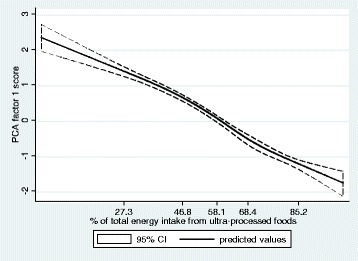
BACKGROUND: Recent population dietary studies indicate that diets rich in ultra-processed foods, increasingly frequent worldwide, are grossly nutritionally unbalanced, suggesting that the dietary contribution of these foods largely determines the overall nutritional quality of contemporaneous diets. Yet, these studies have focused on individual nutrients (one at a time) rather than the overall nutritional quality of the diets. Here we investigate the relationship between the energy contribution of ultra-processed foods in the US diet and its content of critical nutrients, individually and overall. METHODS: We evaluated dietary intakes of 9,317 participants from 2009 to 2010 NHANES aged 1+ years. Food items were classified into unprocessed or minimally processed foods, processed culinary ingredients, processed foods, and ultra-processed foods. First, we examined the average dietary content of macronutrients, micronutrients, and fiber across quintiles of the energy contribution of ultra-processed foods. Then, we used Principal Component Analysis (PCA) to identify a nutrient-balanced dietary pattern to enable the assessment of the overall nutritional quality of the diet. Linear regression was used to explore the association between the dietary share of ultra-processed foods and the balanced-pattern PCA factor score. The scores were thereafter categorized into tertiles, and their distribution was examined across ultra-processed food quintiles. All models incorporated survey sample weights and were adjusted for age, sex, race/ethnicity, family income, and educational attainment. RESULTS: The average content of protein, fiber, vitamins A, C, D, and E, zinc, potassium, phosphorus, magnesium, and calcium in the US diet decreased significantly across quintiles of the energy contribution of ultra-processed foods, while carbohydrate, added sugar, and saturated fat contents increased. An inverse dose-response association was found between ultra-processed food quintiles and overall dietary quality measured through a nutrient-balanced-pattern PCA-derived factor score characterized by being richer in fiber, potassium, magnesium and vitamin C, and having less saturated fat and added sugars. CONCLUSIONS: This study suggests that decreasing the dietary share of ultra-processed foods is a rational and effective way to improve the nutritional quality of US diets.
Overview
The claims and statistics of this paper haven’t been checked yet.
Free: it reads the open-access text and checks the first 5 claims that cite a source we can check. Create a free account to check every claim.
Integrity signals
Registry
Cites
Statistics
Figures
Verification
Claims the paper makes
The claims and statistics of this paper haven’t been checked yet.
Free: it reads the open-access text and checks the first 5 claims that cite a source we can check. Create a free account to check every claim.
Claims other papers make about this one
Each is checked against this paper’s own text: does it say what the citing paper says it does?
The source backs part of the claim, not all of it — or backs it for a different population, condition or comparison.
In the citing paper
“Moreover, refined sugars constitute approximately 20% of caloric intake.”
From The oral microbiome: Role of key organisms and complex networks in oral health and disease (2021) · cites this paper as [252]
Experimental — accuracy not yet measuredIn the citing paper
“In the United States, carbohydrates constitute > 50% of total energy intake, with refined cereal grains representing > 85% of total cereal grains consumed.”
From The oral microbiome: Role of key organisms and complex networks in oral health and disease (2021) · cites this paper as [252]
Self-check
Percentages, sums and reported differences re-computed from the paper’s own numbers.
The self-check needs the paper’s full text.
Citations
Cites
Sontrop, J. M., Dixon, S. N., Garg, A. X., Buendia-Jimenez, I., Dohein, O., Huang, S.-H. S., & Clark, W. F. (2013) · American Journal of Nephrology · doi:10.1159/000350377 · Cited by 5,871
Dietary pattern analysis: a new direction in nutritional epidemiology
Hu, F. B. (2002) · Current Opinion in Lipidology · doi:10.1097/00041433-200202000-00002 · Cited by 4,029 · cited 2×
“linear combinations of them referred to as “components” and which maximize the explained variance [19, 42].”
BackgroundMoshfegh, A. J., Rhodes, D. G., Baer, D. J., Murayi, T., Clemens, J. C., Rumpler, W. V., Paul, D. R., Sebastian, R. S., Kuczynski, K. J., Ingwersen, L. A., et al. (2008) · The American Journal of Clinical Nutrition · doi:10.1093/ajcn/88.2.324 · Cited by 1,982
Ultra‐processed products are becoming dominant in the global food system
Monteiro, C. A., Moubarac, J. ‐., Cannon, G., Ng, S. W., & Popkin, B. (2013) · Obesity Reviews · doi:10.1111/obr.12107 · Cited by 1,827
Self-citationMoodie, R., Stuckler, D., Monteiro, C., Sheron, N., Neal, B., Thamarangsi, T., Lincoln, P., & Casswell, S. (2013) · The Lancet · doi:10.1016/s0140-6736(12)62089-3 · Cited by 1,663
Self-citationNational health and nutrition examination survey: analytic guidelines, 1999-2010.
Cl, J., Paulose‐Ram, R., Ogden, C. L., Carroll, Kruszon‐Moran, D., Dohrmann, S. M., & Curtin, L. R. (2013) · PubMed · Cited by 1,522
USDA National Nutrient Database for Standard Reference, Release 22
(2018) · Cited by 1,285
Monteiro, C. A., Levy, R. B., Claro, R. M., de Castro, I. R. R., & Cannon, G. (2010) · Public Health Nutrition · doi:10.1017/s1368980010003241 · Cited by 1,060 · cited 1×
“Our investigation was based on total effective individual consumption data, rather than on household purchasing data [7, 10, 47], which do not evaluate the fraction of wasted food or purchases at restaurants.”
MethodSelf-citationDietary patterns and health outcomes
Kant, A. K. (2004) · Journal of the American Dietetic Association · doi:10.1016/j.jada.2004.01.010 · Cited by 1,028 · cited 1×
“The PCA method also has limitations such as subjective decisions regarding the number of extracted components, method of rotation, naming of components, and cutoffs for factor loadings [23, 31, 49].”
MethodA new classification of foods based on the extent and purpose of their processing
Monteiro, C. A., Levy, R. B., Claro, R. M., Castro, I. R. R. D., & Cannon, G. (2010) · Cadernos de Saúde Pública · doi:10.1590/s0102-311x2010001100005 · Cited by 991 · cited 2×
“We classified all recorded food items (N = 280,132 Food Codes) according to Nova, a food classification based on the extent and purpose of industrial food processing [4, 17].”
BackgroundMethodSelf-citation
Research works printed but not linked: 3
- FAO. Guidelines on the collection of information on food processing through food consumption surveys. Rome: FAO; 2015.
- Diet and health: implication for reducing chronic disease risk. National Academy Press, Washington, DC; 1989.
- Monteiro CA, Cannon G, Levy RB, Claro R, Moubarac JC, Martins AP, Louzada ML, Baraldi L, Canella D. The Food System. Processing. The big issue for disease, good health, well-being. World Nutr. 2012;3:527–69. www.wphna.org (accessed Jan 2017).
Cited by
Items 201–300 of 582
Affordability of Food and Beverages in Mexico between 1994 and 2016
Colchero, M. A., Guerrero-López, C. M., Molina, M., & Unar‐Munguía, M. (2019) · Nutrients · doi:10.3390/nu11010078 · Cited by 28
Vergeer, L., Veira, P., Bernstein, J. T., Weippert, M. V., & L’Abbé, M. R. (2019) · Nutrients · doi:10.3390/nu11112782 · Cited by 26
Um, C. Y., Hodge, R. A., Tran, H. Q., Campbell, P. T., Gewirtz, A. T., & McCullough, M. L. (2021) · Nutrition and Cancer · doi:10.1080/01635581.2021.1957947 · Cited by 24
“Typically high in sodium, sugar, and/ or saturated fat, these foods have been shown to contribute to nutritionally unbalanced dietary patterns (5) and increased incidence of obesity (6,7).”
BackgroundMagnesium Status and Calcium/Magnesium Ratios in a Series of Cystic Fibrosis Patients
Escobedo-Monge, M. F., Barrado, E., Parodi-Román, J., Escobedo-Monge, M. A., Marcos-Temprano, M., & Marugán‐Miguelsanz, J. M. (2022) · Nutrients · doi:10.3390/nu14091793 · Cited by 24
Maluf, V. A. B., Torre, S. B. D., Chaparro, C. J., Belle, F. N., Khalatbari‐Soltani, S., Kruseman, M., Marques-Vidal, P. M., & Chatelan, A. (2022) · Nutrients · doi:10.3390/nu14214486 · Cited by 27
“In the US diet, the average intake of carbohydrates, added sugars, and SFAs increased significantly with the dietary contribution of UPFs [2].”
BackgroundLi, X., Perelman, D., Leong, A. K., Fragiadakis, G. K., Gardner, C. D., & Snyder, M. P. (2022) · Cell Reports Medicine · doi:10.1016/j.xcrm.2022.100870 · Cited by 25
“Second, highly processed foods tend to be high in added sugars and saturated and trans fats and depleted in most micronutrients and other bioactive compounds and fiber.(32,33) This differential dietary composition might have an impact on the overall metabolism of the food, directing it into different metabolic pathway…”
BackgroundUltra-processed foods – a scoping review for Nordic Nutrition Recommendations 2023
Juul, F., & Bere, E. T. (2024) · Food & Nutrition Research · doi:10.29219/fnr.v68.10616 · Cited by 34
“Epidemiological studies have consistently found that diets with a higher proportion of UPFs have less favorable nutrient profiles than diets containing less UPFs (10, 12–19).”
BackgroundGut microbiota in multiple sclerosis and animal models
Schumacher, S. M., Doyle, W. J., Hill, K., & Ochoa‐Repáraz, J. (2025) · The FEBS Journal · doi:10.1111/febs.17161 · Cited by 21
“[61,64,78].”
Warkentin, S., Stratakis, N., Fabbri, L., Wright, J., Yang, T., Bryant, M., Heude, B., Slama, R., Montazeri, P., Vafeiadi, M., et al. (2024) · International Journal of Obesity · doi:10.1038/s41366-024-01657-6 · Cited by 29
Wood, S. L. R., Alam, M., & Dupras, J. (2019) · Frontiers in Sustainable Food Systems · doi:10.3389/fsufs.2019.00089 · Cited by 27
“However, by using average LCIA values for food groups rather than as-consumed food items we do not distinguish between raw foods and ultra-processed foods, which make up a large component of American diets (Steele et al., 2017).”
BackgroundOviedo-Solís, C. I., Monterrubio-Flores, E. A., Rodríguez-Ramírez, S., Cediel, G., Denova-Gutiérrez, E., & Barquera, S. (2022) · Frontiers in Nutrition · doi:10.3389/fnut.2022.737432 · Cited by 20
Svisco, E., Shanks, C. B., Ahmed, S., & Bark, K. (2019) · Foods · doi:10.3390/foods8020050 · Cited by 28
“The different levels of food processing vary according to the degree of manipulation including the utilization of new technologies and the input of artificial ingredients that take foods further from their natural state [1].”
BackgroundInfluentialIntersection between Obesity, Dietary Selenium, and Statin Therapy in Brazil
Watanabe, L. M., Navarro, A. M., & Seale, L. A. (2021) · Nutrients · doi:10.3390/nu13062027 · Cited by 26
A Cross-Sectional Study of the Street Foods Purchased by Customers in Urban Areas of Central Asia
Sousa, S., de Morais, I. L., Albuquerque, G., Gelormini, M., Casal, S. I. P., Pinho, O., Motta, C., Damasceno, A., Moreira, P. A. M., Breda, J., et al. (2021) · Nutrients · doi:10.3390/nu13103651 · Cited by 21
A Review of Experiential School-Based Culinary Interventions for 5–12-Year-Old Children
Bennett, A. E., Mockler, D., Cunningham, C., Slattery, C. G., & Molloy, C. J. (2021) · Children · doi:10.3390/children8121080 · Cited by 35
Gustafson, D. I., Decker, E. A., Drewnowski, A., Hamm, M. W., Hwang, J., & Merrigan, K. (2022) · Current Developments in Nutrition · doi:10.1093/cdn/nzac136 · Cited by 22
Zapata, M. E., Cediel, G., Arrieta, E. M., Rovirosa, A., Carmuega, E., & Monteiro, C. A. (2022) · Public Health Nutrition · doi:10.1017/s1368980022002543 · Cited by 28
Self-citationRicardo, C. Z., Duran, A. C., Grilo, M. F., Rebolledo, N., Díaz, X., Reyes, M., & Corvalán, C. (2023) · Frontiers in Nutrition · doi:10.3389/fnut.2022.1046463 · Cited by 28
Mesas, A. E., Girotto, E., Rodrigues, R., Martínez‐Vizcaíno, V., Jiménez‐López, E., & López‐Gil, J. F. (2023) · International Journal of Mental Health and Addiction · doi:10.1007/s11469-023-01038-6 · Cited by 27
“…especially protein, unsaturated fats and fiber, and a high density of energy, sugars, fats, salt and food additives, the low diet quality of UPF (Martínez Steele et al., 2017) Table 4 Association between ultra-processed food (UPF) consumption and tobacco smoking in adolescent students aged…”
Zhao, L., Zhang, X., Steele, E. M., Lo, C., Zhang, F. F., & Zhang, X. (2023) · Hepatology Communications · doi:10.1097/hc9.0000000000000240 · Cited by 30
“First, studies have shown that UPF intake is characterized by a poor nutritional profile with higher energy density, added sugar, and saturated fatty acids [30,31] which are potential risk factors (A) (B)”
BackgroundThe design and development of a dashboard for improving sustainable healthy food choices
Agyemang, P., Kwofie, E. M., Baum, J., & Wang, D. (2024) · The Science of The Total Environment · doi:10.1016/j.scitotenv.2024.172726 · Cited by 28
González‐Gil, E. M., Matta, M., Berstein, F. M., Cairat, M., Nicolas, G., Blanco, J., Kliemann, N., Levy, R. B., Rauber, F., Jacobs, I., et al. (2025) · The Lancet Regional Health - Europe · doi:10.1016/j.lanepe.2024.101208 · Cited by 23
Beneath the Surface: The Emerging Role of Ultra-Processed Foods in Obesity-Related Cancer
Anastasiou, I. A., Kounatidis, D. C., Vallianou, N. G., Skourtis, A., Dimitriou, K., Tzivaki, I., Tsioulos, G., Rigatou, A., Karampela, Ι., & Dalamaga, Μ. (2025) · Current Oncology Reports · doi:10.1007/s11912-025-01654-6 · Cited by 29
“Compared to minimally processed foods, UPFs typically offer lower nutritional quality, as demonstrated in multiple studies [5, 116, 117].”
Balanced diets in food systems: Emerging trends and challenges for human health
Sammugam, L., & Pasupuleti, V. R. (2018) · Critical Reviews in Food Science and Nutrition · doi:10.1080/10408398.2018.1468729 · Cited by 26
Contribution of ultra-processed foods to increased obesity and non-communicable diseases
Ahmed, A., Imran, A., Wei, C. R., Nadeem, R., Shankar, A., Balaji, J., Islam, F., & Kinki, A. B. (2024) · Cogent Food & Agriculture · doi:10.1080/23311932.2024.2438405 · Cited by 32
Dieterle, C. (2020) · World Federation of Occupational Therapists Bulletin · doi:10.1080/14473828.2020.1717055 · Cited by 30
Low-Carbohydrate Diets in Children and Adolescents With or at Risk for Diabetes
Neyman, A., Hannon, T. S., Corkins, M. R., Blanco, C. L., Fuchs, G. J., Goday, P. S., Hannon, T. S., Lindsey, C. W., Rome, E. S., Bremer, A. A., et al. (2023) · PEDIATRICS · doi:10.1542/peds.2023-063755 · Cited by 29
Zorbas, C., Eyles, H. C., Orellana, L., Peeters, A., Mhurchú, C. N., Riesenberg, D., & Backholer, K. (2019) · Appetite · doi:10.1016/j.appet.2019.104481 · Cited by 25
Dietary Intake and Sources of Potassium in a Cross-Sectional Study of Australian Adults
Bolton, K. A., Trieu, K., Woodward, M., Nowson, C. A., Webster, J. L., Dunford, E., Bolam, B., & Grimes, C. A. (2019) · Nutrients · doi:10.3390/nu11122996 · Cited by 26
“Decreasing dietary intake of ultraprocessed foods could not only effectively improve diet quality [62] but also reduce risk of diet-induced chronic disease.”
Leitão, A. E., Roschel, H., Oliveira-Júnior, G., Genario, R., Franco, T., Monteiro, C. A., & Martinez-Steele, E. (2024) · British Journal of Nutrition · doi:10.1017/s0007114523002568 · Cited by 18
“As a matter of fact, a previous study carried out in the US population observed that across extreme quintiles of UPF consumption, both unprocessed/minimally processed fruit and vegetable consumption decreased by over 70 % each (30) .”
ResultSelf-citationAljahdali, A., Rossato, S. L., & Baylín, A. (2024) · British Journal Of Nutrition · doi:10.1017/s0007114523003033 · Cited by 17
“UPF account for half or more of the caloric share among USA middle-older adults, consistent with studies conducted in the USA (42 – 44) , UK (28,45) and Canada (46) .”
Pozveh, S. H., Aktary, M. L., Polsky, J. Y., Moubarac, J., Vanderlee, L., & Olstad, D. L. (2024) · Journal of Nutrition · doi:10.1016/j.tjnut.2024.07.029 · Cited by 21
“Conversely, higher MPF intake has been associated with higher diet quality [5,13] and lower risk of obesity [14], metabolic syndrome [15], and mortality [16,17].”
BackgroundDietary Patterns in Portuguese Children and Adolescent Population: The UPPER Project
de Moraes, M. M., Oliveira, B. M. P. M., Afonso, C., Santos, C., Torres, D. P. M., Lopes, C. M. M., de Miranda, R. C., Rauber, F., Antoniazzi, L., Levy, R. B., et al. (2021) · Nutrients · doi:10.3390/nu13113851 · Cited by 28
“All statistical analyses were performed on SPSS statistical software package version 27 (SPSS Inc., Chicago, IL, USA) using complex sample analyses, to consider the study design effect.”
ResultIntake of ultra-processed foods and asthenozoospermia odds: A hospital-based case-control study
Lv, J.-L., Wu, Q., Wang, X., Du, Q., Liu, F.-H., Guo, R.-H., Leng, X., Pan, B., & Zhao, Y. (2022) · Frontiers in Nutrition · doi:10.3389/fnut.2022.941745 · Cited by 22
Martín‐Masot, R., Herrador‐López, M., & Navas‐López, V. M. (2023) · Nutrients · doi:10.3390/nu15030554 · Cited by 19
“UPF are formulated using five or more industrial ingredients that are characterised by a high caloric content and low nutritional density; contain many additives; are rich in sodium, saturated fats, and simple sugars; are low in fibre, protein, and various micronutrients; and are, therefore, considered to be damaging…”
BackgroundRossato, S. L., Oakes, E. G., Barbhaiya, M., Sparks, J. A., Malspeis, S., Willett, W. C., Khandpur, N., & Costenbader, K. H. (2024) · Arthritis Care & Research · doi:10.1002/acr.25395 · Cited by 23
“15,52 Although we have adjusted our analyses for all available known confounders among women in these cohorts, there may in fact be a con fl a-tion or synergy of risk factors in these high-risk populations.”
Irache, A., Anjorin, S., Caleyachetty, R., & Gill, P. S. (2023) · Journal of Nutrition · doi:10.1016/j.tjnut.2023.02.012 · Cited by 22
“Empirical evidence from LMICs and high-income countries also supports an association between the consumption of ultraprocessed foods and risk of over-weight/obesity and nutrition-related noncommunicable diseases (NCDs) [26-28] and inadequate intake of micronutrients [29, 30].”
BackgroundTan, L., Hwang, S. B., & Shin, S. (2023) · Molecular Nutrition & Food Research · doi:10.1002/mnfr.202300003 · Cited by 21
Valizadeh, P., Popkin, B. M., & Ng, S. W. (2021) · American Journal of Clinical Nutrition · doi:10.1093/ajcn/nqab330 · Cited by 20
Self-citationArévalo, M. T. V., Banguero, Á. X. T., & Alarcón, C. D. (2018) · Revista Española de Nutrición Humana y Dietética · doi:10.14306/renhyd.22.3.409 · Cited by 38
Alimentação e saúde: a fundamentação científica do guia alimentar para a população brasileira
Louzada, M. L. D. C., Canella, D. S., Jaime, P. C., & Monteiro, C. A. (2021) · Universidade de São Paulo. Faculdade de Saúde Pública eBooks · doi:10.11606/9788588848344 · Cited by 71
Self-citationPatetta, M. A., Pedraza, L. S., & Popkin, B. M. (2019) · Nutrition Journal · doi:10.1186/s12937-019-0460-4 · Cited by 23
Self-citationPhilanthrocapitalism and Global Health
Wilson, J. (2021) · Cambridge University Press eBooks · doi:10.1017/9781108692137.035 · Cited by 20
Alimentos ultraprocessados e o consumo de fibras alimentares no Brasil
da Cruz, G. L., Machado, P. P., Andrade, G. C., & Louzada, M. L. D. C. (2021) · Ciência & Saúde Coletiva · doi:10.1590/1413-81232021269.15462020 · Cited by 37
Pourafshar, S., Sharma, B., Kranz, S., Mallawaarachchi, I. V., Kurland, E., Ma, J. Z., & Scialla, J. J. (2022) · Journal of Renal Nutrition · doi:10.1053/j.jrn.2022.06.007 · Cited by 16
Schönenberger, K. A., Huwiler, V. V., Reber, E., Mühlebach, S., Stanga, Z. G., Pestoni, G., & Faeh, D. (2024) · BMJ Nutrition Prevention & Health · doi:10.1136/bmjnph-2023-000727 · Cited by 24
Wang, L., Steele, E. M., Du, M., Luo, H., Zhang, X., Mozaffarian, D., & Zhang, F. F. (2025) · Journal of the Academy of Nutrition and Dietetics · doi:10.1016/j.jand.2024.11.014 · Cited by 16
Self-citationLogan, A. C., & Prescott, S. L. (2017) · Challenges · doi:10.3390/challe8020024 · Cited by 16
Dietary intake profile in high-risk pregnant women according to the degree of food processing
Paulino, D. S. M., Pinho‐Pompeu, M., de Assumpção, D., Kasawara, K. T., & Surita, F. G. (2020) · The Journal of Maternal-Fetal & Neonatal Medicine · doi:10.1080/14767058.2020.1818213 · Cited by 20
Mariath, A. B., Machado, A. D., Ferreira, L. D. N. M., & Ribeiro, S. M. L. (2021) · British Journal Of Nutrition · doi:10.1017/s0007114521003470 · Cited by 20
A healthier daily diet is associated with greater immune fitness
van Oostrom, E. C., Mulder, K. E., Verheul, M. C., Hendriksen, P. A., Thijssen, S., Kraneveld, A. D., Vlieg‐Boerstra, B., Garssen, J., & Verster, J. C. (2022) · PharmaNutrition · doi:10.1016/j.phanu.2022.100306 · Cited by 18
Food sources among young people in five major Canadian cities
Wiggers, D., Vanderlee, L., White, C. M., Reid, J. L., Minaker, L. M., & Hammond, D. G. (2018) · Canadian Journal of Public Health · doi:10.17269/s41997-018-0083-0 · Cited by 22
Machine Learning Prediction of Food ProcessingPreprint
Menichetti, G., Ravandi, B., Mozaffarian, D., & Barabási, A.-Ĺ. (2021) · medRxiv · doi:10.1101/2021.05.22.21257615 · Cited by 16
Godsey, T. J., Eden, T., & Emerson, S. R. (2025) · Metabolites · doi:10.3390/metabo15120784 · Cited by 25
Bloom, D. E., & Cadarette, D. (2021) · Cambridge University Press eBooks · doi:10.1017/9781108692137.004 · Cited by 18
Antoniazzi, L., de Miranda, R. C., Rauber, F., de Moraes, M. M., Afonso, C., Santos, C., Lopes, C. M. M., Rodrigues, S. S. P., Levy, R. B., & on behalf of the UPPER Group (2022) · European Journal of Nutrition · doi:10.1007/s00394-022-03057-w · Cited by 22
“Studies conducted in Brazil, USA, and Canada have evaluated the relationship between UPF consumption and micronutrient intake by considering the value of nutrient density, without evaluating the inadequacy of nutritional recommendations [4–6], as it was done herein.”
BackgroundMiguel‐Berges, M. L., Mouratidou, T., Santaliestra-Pasías, A. M., Androutsos, O., Iotova, V., Galcheva, S., Craemer, M. D., Cardon, G., Koletzko, B. V., Kułaga, Z., et al. (2023) · Pediatric Obesity · doi:10.1111/ijpo.13068 · Cited by 23
Mekonnen, T. C., Melaku, Y. A., Shi, Z., & Gill, T. K. (2024) · European Journal of Nutrition · doi:10.1007/s00394-024-03356-4 · Cited by 18
Pourmotabbed, A., Talebi, S., Mehrabani, S., Babaei, A., Khosroshahi, R. A., Bagheri, R., Wong, A., Ghoreishy, S. M., Amirian, P., Zarpoosh, M., et al. (2024) · Nutritional Neuroscience · doi:10.1080/1028415x.2024.2351320 · Cited by 21
“These products are typified as ready-to-eat, ready-to-heat, durable, palatable formulas made from industrially derived ingredients [11].”
The impact of consumption of ultra-processed foods on the nutritional status of adolescents
Nascimento, L. M., Karoline dos Santos, O., Gomes, K. R. O., Malvina Thais Pacheco, R., & Karoline de Macêdo Gonçalves, F. (2019) · Revista chilena de nutrición · doi:10.4067/s0717-75182019000400429 · Cited by 19
Juul, F., Lin, Y., Deierlein, A. L., Vaidean, G. D., & Parekh, N. (2021) · British Journal Of Nutrition · doi:10.1017/s000711452100060x · Cited by 21
“containing less ultra-processed foods (1-4) .”
BackgroundInfluentialRivero‐Mendoza, D., Caldwell, C. L., Cooper, H., Goldberg, J., Lamothe, M., Logan, S., Smith, E. B., Torna, E., Zeldman, J., & Dahl, W. J. (2022) · Nutrition in Clinical Practice · doi:10.1002/ncp.10921 · Cited by 14
Sen, A., Brazeau, A., Deschênes, S. S., Melgar-Quiñonez, H. R., & Schmitz, N. (2022) · Public Health Nutrition · doi:10.1017/s1368980022002373 · Cited by 18
“Studies have linked the cosmetic additives commonly used in UPF, such as flavours, emulsifiers and thickeners, to gut dysbiosis and may initiate inflammation in the gut (41) .”
BackgroundAsh, S. L., Contento, I. R., Olfert, M. D., & Koch, P. A. (2022) · Journal of Nutrition Education and Behavior · doi:10.1016/j.jneb.2022.07.010 · Cited by 20
Paula, W. O., Gonçalves, V. S. S., Patriota, É. S. O., Franceschini, S. D. C. C., & Pizato, N. (2023) · International Journal of Environmental Research and Public Health · doi:10.3390/ijerph20021015 · Cited by 19
Shinozaki, N., Murakami, K., Asakura, K., Masayasu, S., & Sasaki, S. (2023) · Public Health Nutrition · doi:10.1017/s1368980023000721 · Cited by 18
“Consistent with previous studies (5,6,8 – 10, 12 – 18, 23) , the high-energy contribution of HPF was Similar to a previous study (15) , participants with higher energy intake from HPF had unfavourable intakes of dietary fibre, vitamins, minerals and added or free sugars.”
Amorim, N. C. M., da Silva, A. G. C. L., Rebouças, A. S., Bezerra, D. S., Lima, M. S. R., Medeiros, J. F. P., Liberalino, L. C. P., Dimenstein, R., & Ribeiro, K. D. D. S. (2021) · British Journal Of Nutrition · doi:10.1017/s0007114521001963 · Cited by 21
“The findings show that the energy contribution of ultraprocessed foods (16 %) was similar to that found for the Brazilian population (18·4 %)(30) and lower than values reported in the USA(6) (57 %), Canada(7) (47 %) and Chile(31) (28 %), suggesting that the consumption of unprocessed or minimally processed foods and c…”
ResultVadiveloo, M. K., Juul, F., Sotos‐Prieto, M., & Parekh, N. (2022) · Advances in Nutrition · doi:10.1093/advances/nmac007 · Cited by 18
3D Food Printing Technology at Home, Domestic Application
Rubio, E., & Hurtado, S. (2019) · Elsevier eBooks · doi:10.1016/b978-0-12-814564-7.00010-9 · Cited by 17
Are long‐term FAD diets restricting micronutrient intake? A randomized controlled trial
Malik, N., Tonstad, S., Paalani, M., Santos, H. D., & do Prado, W. L. (2020) · Food Science & Nutrition · doi:10.1002/fsn3.1895 · Cited by 20
Alomari, W. D., & Almoraie, N. M. (2025) · Frontiers in Nutrition · doi:10.3389/fnut.2025.1577431 · Cited by 17
Calcaterra, V., Cena, H., Scavone, I. A. M., Zambon, I., Taranto, S., Rizzo, C. R., Ferrara, C., Diotti, M., & Zuccotti, G. (2025) · Nutrients · doi:10.3390/nu17142362 · Cited by 19
“Indeed, UPF-rich diets provide lower contributions of proteins, fiber, vitamins, and minerals [80].”
Harris, R. M., Rose, A., Soares‐Wynter, S., & Unwin, N. C. (2021) · Journal of Nutritional Science · doi:10.1017/jns.2021.21 · Cited by 20
“Increased inclusion of UPF results in nutritionally unbalanced diets((10,12,13)), higher in fat, salt and sugar((14)) with lower dietary fibre and vitamin densities((15,16)).”
BackgroundResultA Comparison of the Nutritional Qualities of Supermarket’s Own and Regular Brands of Bread in Sweden
Lappi, V., Mottas, A., Sundström, J., Neal, B. C., Löf, M., & Rådholm, K. (2020) · Nutrients · doi:10.3390/nu12041162 · Cited by 15
Associations between ultraprocessed food consumption and total water intake in the US population
Baraldi, L. G., Steele, E. M., Louzada, M. L. D. C., & Monteiro, C. A. (2021) · Journal of the Academy of Nutrition and Dietetics · doi:10.1016/j.jand.2021.02.011 · Cited by 19
Self-citationZapata, M. E., Rovirosa, A., & Carmuega, E. (2022) · Cadernos de Saúde Pública · doi:10.1590/0102-311xes252021 · Cited by 25
Rossato, S. L., Khandpur, N., Lo, C., Castro, S. M. D. J., Drouin‐Chartier, J., Sampson, L., Yuan, C., Murta‐Nascimento, C., Carvalhães, M. A. D. B. L., Monteiro, C. A., et al. (2023) · Journal of the Academy of Nutrition and Dietetics · doi:10.1016/j.jand.2023.03.011 · Cited by 15
Self-citationObesogenic Environment Case Study from a Food and Nutrition Security Perspective: Hermosillo City
Navarro, A. C., & Vélez, M. I. O. (2019) · International Journal of Environmental Research and Public Health · doi:10.3390/ijerph16030407 · Cited by 16
da Silva, D. C. G., Ferreira, F. G., PEREIRA, D. L. M., Jorge, E. L. G. D. M., & Longo, G. Z. (2021) · Revista de Nutrição · doi:10.1590/1678-9865202134e200135 · Cited by 21
Wu, S.-Y., Yeh, N.-H., Chang, H., Wang, C.-F., Hung, S.-Y., Wu, S., & Pan, W. (2021) · American Journal of Clinical Nutrition · doi:10.1093/ajcn/nqab070 · Cited by 16
Campos, S. F., dos Santos, L. C., Lopes, M. S., de Freitas, P. P., & Lopes, A. C. S. (2021) · Public Health Nutrition · doi:10.1017/s1368980021002202 · Cited by 15
“21·5 %)(7), but lower than that found in countries such as the USA (57·5 %)(3) and the UK (56·8 %)(4) and in a study of young adults from a Brazilian city (51·2 %)(46).”
BackgroundCacau, L. T., Souza, T. N., Louzada, M. L. D. C., & Marchioni, D. M. L. (2024) · Public Health Nutrition · doi:10.1017/s1368980024001678 · Cited by 13
“Moreover, its consumption has been linked to diminished overall dietary quality, according to findings from nationally representative cross-sectional studies conducted in Brazil (12) , United States (13) and Australia (14) .”
BackgroundLi, Y., Yong-xin, F., Gong, L.-L., Xie, T., Tan, W., Huang, H., Zeng, S., Liu, C., & Ren, Z. (2024) · BMC Medicine · doi:10.1186/s12916-024-03677-5 · Cited by 16
Degree of processing and nutritional value of children’s food products
Araújo, C., Ribeiro, K. D. D. S., de Oliveira, A. F., de Morais, I. L., Breda, J., Padrão, P., & Moreira, P. (2021) · Public Health Nutrition · doi:10.1017/s1368980021003876 · Cited by 16
Assaf, S., Park, J., Chowdhry, N., Ganapuram, M., Mattathil, S., Alakeel, R., & Kelly, O. J. (2024) · Metabolites · doi:10.3390/metabo14070379 · Cited by 14
“14 of 33 humans, where insu ffi cient calcium and phosphorus intakes are present, due to increased UPF consumption, particularly among children [182,183].”
BackgroundResultProcessed and Packed: How Refined Are the Foods That Children Bring to School for Snack and Lunch?
Blondin, S. A., AlSukait, R., Bleiweiss-Sande, R., Economos, C. D., Tanskey, L. A., & Goldberg, J. P. (2021) · Journal of the Academy of Nutrition and Dietetics · doi:10.1016/j.jand.2020.07.017 · Cited by 11
Nutritional Content of Street Food and Takeaway Food Purchased in Urban Bosnia and Herzegovina
Sousa, S., de Morais, I. L., Albuquerque, G., Gelormini, M., Santos, M., Hadžiomeragić, A. F., Stojisavljević, D., Damasceno, A. A. M., Moreira, P. A. M., Breda, J., et al. (2021) · Foods · doi:10.3390/foods10112594 · Cited by 14
Mehrabani, S., Shoaei, N., Shateri, Z., Askarpour, M., Nouri, M., Keshani, P., Honarvar, B., & Homayounfar, R. (2024) · Food Science & Nutrition · doi:10.1002/fsn3.3938 · Cited by 14
Angst, L., Lourenço, P. D. F., & Srinivasan, M. (2024) · SWISS DENTAL JOURNAL SSO – Science and Clinical Topics · doi:10.61872/sdj-2024-02-09 · Cited by 18
“A diet based on ultra-processed foods contains less proteins, fibers, vitamins and microelements and more added sugars than a diet rich in fresh foods (22, 24, 25).”
BackgroundThe Quality of Lunches Brought from Home to School: A Systematic Review and Meta-Analysis
Song, S., Tabares, E., Ishdorj, A., Crews, M. E., & Dave, J. M. (2024) · Advances in Nutrition · doi:10.1016/j.advnut.2024.100255 · Cited by 15
“They emphasize the need for signi fi cant nutritional improvement in LBFH, especially considering the potential adverse health outcomes and academic performance associated with the consumption of less healthy foods [60].”
BackgroundGhernati, L., Tamim, H., Chokor, F. A. Z., Taktouk, M., Assi, B., Nasreddine, L., & Elbejjani, M. (2024) · Nutrition Research · doi:10.1016/j.nutres.2024.11.011 · Cited by 12
Nahas, A. A., Yammine, S. G., Berstein, F. M., Cakmak, E. K., Biessy, C., Nicolas, G., Kliemann, N., Blanco, J., Jacobs, I., González‐Gil, E. M., et al. (2025) · International Journal of Cancer · doi:10.1002/ijc.35361 · Cited by 12
Dioneda, B., Healy, M., Paul, M., Sheridan, C., Mohr, A. E., & Arciero, P. J. (2020) · Nutrients · doi:10.3390/nu12072035 · Cited by 11
Loader, T. B., Zahradka, P. C., Ahmadi, S., & Taylor, C. G. (2020) · Journal of the Science of Food and Agriculture · doi:10.1002/jsfa.10654 · Cited by 11
Kantilafti, M., Magiakou, E., & Chrysostomou, S. (2025) · International Journal of Food Sciences and Nutrition · doi:10.1080/09637486.2025.2585354 · Cited by 10
“Diets high in UPFs replace nutrient-dense foods and become low in fibre, unsaturated fats, micronutrients and phytochemicals, while being high in refined carbohydrates, saturated fats, added sugars and sodium (Martínez Steele et al. 2017; Monteiro et al. 2019).”
Bjøntegaard, M. M., Molin, M., Zinöcker, M. K., & Torheim, L. E. (2023) · Public Health Nutrition · doi:10.1017/s1368980023001192 · Cited by 11
“A high consumption of UPF has been associated with an inferior nutritional quality in several countries, including France(31), Belgium(32) and the USA(33), among others.”
Pries, A. M., Bassetti, E., Badham, J., Baker, P., Blankenship, J. L., Dunford, E., & Kupka, R. (2024) · American Journal of Clinical Nutrition · doi:10.1016/j.ajcnut.2024.04.003 · Cited by 16
“UPF are often high in total sugar, sodium, and un-healthy fats [6,9,10] and can lead to excessive intake of these nutrients.”
RetractedLi, S., Ma, J., Wen, J., Peng, J., Huang, P., Zeng, L., Chen, S., Ji, G., Yang, X., & Wu, W. (2024) · Nutrients · doi:10.3390/nu16234008 · Cited by 13
Baric, A., Malik, V., & Christoforou, A. (2025) · Nutrition & Metabolism · doi:10.1186/s12986-025-00935-y · Cited by 14
Dufault, R., Adler, K. M., Carpenter, D. O., Gilbert, S. G., & Crider, R. A. (2024) · World Journal of Psychiatry · doi:10.5498/wjp.v14.i1.159 · Cited by 11
Metadata
- Authors
- Martínez Steele, E., Popkin, B. M., Swinburn, B., & Monteiro, C. A.
- Affiliations
- University of North Carolina at Chapel Hill (US)
- University of Auckland (NZ)
- Universidade de São Paulo (BR)
- Corresponding author
- Swinburn, Boyd
- Venue
- Population Health Metrics
- Published
- 2017-02-14
- Volume
- 15
- Issue
- 1
- Pages
- 6-6
- ISSN
- 1478-7954 (ISSN-L)
- PMC
- PMC5307821
- OpenAlex
- W2588919095
- Cited by
- 585
- References
- 43
- Citations by year
- 2026: 38 · 2025: 59 · 2024: 78 · 2023: 52 · 2022: 78 · 2021: 111 · 2020: 53 · 2019: 65 · 2018: 29 · 2017: 19
- FWCI
- 42.56
- Type
- journal article
- Language
- en
- Open access
- gold
- doi.org
- Licence
- cc-by
- Locations
- Population Health Metrics (publishedVersion, cc-by)
- PubMed Central (publishedVersion, cc-by)
- PubMed (publishedVersion)
- Portuguese National Funding Agency for Science, Research and Technology (RCAAP Project by FCT) (publishedVersion)
- Figshare (submittedVersion, cc-by)
- ResearchSpace (University of Auckland) (submittedVersion, cc-by)
- Funders
- Conselho Nacional de Desenvolvimento Científico e Tecnológico (443477/2014-0)
- Fundação de Amparo à Pesquisa do Estado de São Paulo (2015/14900-9)
- Topics
- Health Sciences › Medicine › Public Health, Environmental and Occupational Health › Consumer Attitudes and Food Labeling
- Health Sciences › Medicine › Public Health, Environmental and Occupational Health › Nutritional Studies and Diet
- Life Sciences › Agricultural and Biological Sciences › Food Science › Food Nutrient Composition and Product Development
- Keywords
- ultra-processed foods, diet quality, energy contribution, nutrient balance, macronutrients, micronutrients, dietary fiber, added sugars, saturated fat, NHANES
- MeSH terms
- Adolescent, Adult, Aged, Energy Intake, Child, Child, Preschool, Cross-Sectional Studies, Diet, Dietary Fiber, Dietary Proteins, Feeding Behavior, Female, Food Handling, Humans, Infant, Male, Middle Aged, Nutrition Surveys, Nutritive Value, Linear Models, Micronutrients, Principal Component Analysis, Young Adult, Fast Foods
About these checks
Registry, retraction, Cites and statistics results are computed, not judged, with one exception: a printed reference that no index lists is read once by a model before it counts as a citation error. Claims are extracted by a model and kept only when their quote appears verbatim in the text; each cited source is then checked, with a model’s help, for whether it says what the claim relies on. Those verdicts can be wrong — read the claim’s quote and the cited source before relying on one.
Statistics and arithmetic are recomputed, not judged.
Confidence bands are shown only for fields calibrated on our annotated test set. None is calibrated yet, so no band is shown.
What counts as a claim ›How we measure confidence ›How we check this ›
Are you an author, or do you see a problem with this page? Request a review
Data sources
Bibliographic data: Semantic Scholar, OpenAlex, Crossref.
Contains information from the Semantic Scholar Academic Graph Datasets, made available under the ODC Attribution License (ODC-BY 1.0).
Semantic Scholar’s data is described in: Kinney, R., et al. (2023). The Semantic Scholar Open Data Platform. arXiv:2301.10140.
