

The DOI matches its Crossref record; 152 of the 152 references it cites were found in a registry or an index.
Parental correlates in child and adolescent physical activity: a meta-analysis
Open accessAbstract
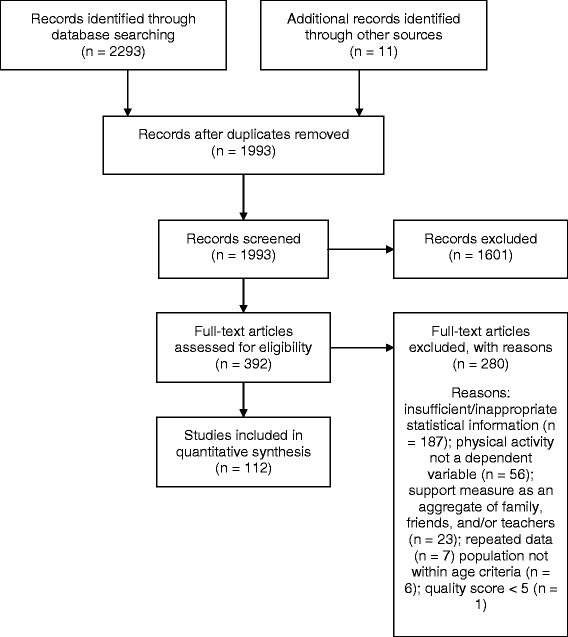
OBJECTIVE: Physical activity (PA) has a profound impact on health and development in children. Parental behaviors (i.e., modeling and support) represent an obvious important factor in child PA. The purpose of this paper was to provide a comprehensive meta-analysis that overcomes the limitations of prior narrative reviews and quantitative reviews with small samples. METHODS: Ten major databases were used in the literature search. One-hundred and fifteen studies passed the eligibility criteria. Both fixed and random effects models with correction for sampling and measurement error were examined in the analysis. Moderator analyses investigating the effects of child's developmental age, study design, parental gender, measurement of child PA, and quality rating were performed. RESULTS: Based on the random effects model, the results showed that parental modeling was weakly associated with child PA (summary r = .16, 95% CI .09-.24) and none of the proposed moderators were significant. Separate analyses examining the moderating effects of parental gender and boys' PA found that that father-son PA modeling (r = .29, 95% CI .21-.36) was significantly higher compared to mother-son PA (r = .19, 95% CI .14-.23; p < .05). However, parental gender did not moderate the relationship between parental modeling and girls' PA (p > .05). The random effects model indicated an overall moderate effect size for the parental support and child PA relationship (summary r = .38, 95% CI .30-.46). Here, the only significant moderating variable was the measurement of child PA (objective: r = .20, 95% CI .13-.26; reported: r = .46, 95% CI .37-.55; p < .01). CONCLUSIONS: Parental support and modeling relate to child PA, yet our results revealed a significant degree of heterogeneity among the studies that could not be explained well by our proposed moderators.
Overview
The claims and statistics of this paper haven’t been checked yet.
Run the check — free, no account needed. It reads the open-access text and checks the sources it cites.
Integrity signals
Registry
Cites
Statistics
Figures
Verification
Claims the paper makes
The claims and statistics of this paper haven’t been checked yet.
Run the check — free, no account needed. It reads the open-access text and checks the sources it cites.
Claims other papers make about this one
Each is checked against this paper’s own text: does it say what the citing paper says it does?
In the citing paper
“Encouragement and modelling by peers, friends and parents are factors that motivate children and adolescents to participate in physical activity or achieve recommended levels of physical activity.97–104”
From Physical activity and health in Chinese children and adolescents: expert consensus statement (2020) (2020) · cites this paper as [98]
Self-check
Percentages, sums and reported differences re-computed from the paper’s own numbers.
The self-check needs the paper’s full text.
Citations
Cites
Preferred Reporting Items for Systematic Reviews and Meta-Analyses: the PRISMA statement
Moher, D., Liberati, A., Tetzlaff, J., Altman, D. G., & for the PRISMA Group (2009) · BMJ · doi:10.1136/bmj.b2535 · Cited by 83,823
Preferred reporting items for systematic reviews and meta-analyses: the PRISMA Statement.
(2009) · PubMed Central · Cited by 44,859
Applied Multiple Regression/Correlation Analysis for the Behavioral Sciences
Cohen, P., Cohen, P., West, S. G., & Aiken, L. S. (2014) · Psychology Press eBooks · doi:10.4324/9781410606266 · Cited by 20,870
Preferred Reporting Items for Systematic Reviews and Meta-Analyses: The PRISMA Statement
Moher, D., Liberati, A., Tetzlaff, J., & Altman, D. G. (2009) · Journal of Clinical Epidemiology · doi:10.1016/j.jclinepi.2009.06.005 · Cited by 19,575
Duval, S., & Tweedie, R. (2000) · Biometrics · doi:10.1111/j.0006-341x.2000.00455.x · Cited by 14,099 · cited 1×
“To assess the extent of publication bias in our samples, Rosenthal’s classic fail-safe N [33] and Duval and Tweedie’s Trim and Fill procedures [34,35] were conducted.”
Method‘Small Changes' to Diet and Physical Activity Behaviors for Weight Management
Hills, A. P., Byrne, N. M., Lindstrom, R. C., & Hill, J. O. (2013) · Obesity Facts · doi:10.1159/000345030 · Cited by 9,526
(1985) · Europe PMC (PubMed Central) · Cited by 9,143
The file drawer problem and tolerance for null results.
Rosenthal, R. (1979) · Psychological Bulletin · doi:10.1037/0033-2909.86.3.638 · Cited by 9,068 · cited 1×
“To assess the extent of publication bias in our samples, Rosenthal’s classic fail-safe N [33] and Duval and Tweedie’s Trim and Fill procedures [34,35] were conducted.”
MethodCohen, J. (1992) · Psychological Bulletin · doi:10.1037//0033-2909.112.1.155 · Cited by 8,771
Downs, S. H., & Black, N. (1998) · Journal of Epidemiology and Community Health · doi:10.1136/jech.52.6.377 · Cited by 8,252 · cited 1×
“To assess the potential risk of bias and methodological quality, each study was critically appraised using an adapted version of Downs and Black’s [28] 22-item assessment tool.”
Method
Research works printed but not linked: 2
- Mota J. Parents’ physical activity behaviors and children's physical activity. J Hum Mov Stud. 1998;35:89–100.
- Klesges RC. The FATS: an observational system for assessing physical activity in children and associated parent behavior. Behav Assess. 1984;6:333–45.
Cited by
Sorted by citations
Physical activity behaviours in adolescence: Current evidence and opportunities for intervention
van Sluijs, E. M. F., Ekelund, U., Crochemore-Silva, I., Guthold, R., Ha, A., Lubans, D., Oyeyemi, A. L., Ding, D., & Katzmarzyk, P. T. (2021) · The Lancet · doi:10.1016/s0140-6736(21)01259-9 · Cited by 919
Barnett, L. M., Lai, S. K., Veldman, S. L. C., Hardy, L. L., Cliff, D. P., Morgan, P. J., Zask, A., Lubans, D. R., Shultz, S. P., Ridgers, N. D., et al. (2016) · Sports Medicine · doi:10.1007/s40279-016-0495-z · Cited by 813
Lounassalo, I., Salin, K., Kankaanpää, A., Hirvensalo, M. H., Palomäki, S. H., Tolvanen, A. J., Yang, X., & Tammelin, T. (2019) · BMC Public Health · doi:10.1186/s12889-019-6513-y · Cited by 249
“Mostly, these findings further supported other findings that have shown how: (1) higher SES is associated with PA in youth [61–63] and in adulthood [55]; (2) having family support [54, 61], active parents [61, 64], and especially an active father [63, 65], is associated with PA in childhood; and (3) males are generall…”
Physical activity and health in Chinese children and adolescents: expert consensus statement (2020)
Chen, P., Wang, D., Shen, H., Yu, L., Gao, Q., Mao, L., Jiang, F., Luo, Y., Xie, M., Zhang, Y., et al. (2020) · British Journal of Sports Medicine · doi:10.1136/bjsports-2020-102261 · Cited by 225
Laird, Y., Fawkner, S., Kelly, P., McNamee, L., & Niven, A. (2016) · International Journal of Behavioral Nutrition and Physical Activity · doi:10.1186/s12966-016-0405-7 · Cited by 210
“Only two reviews considered gender and they found no significant differences between boys and girls, however, analyses only considered overall support [20, 27] and modelling [20] and were presented for both children and adolescents.”
BackgroundResultInfluentialAssociation between parent and child physical activity: a systematic review
Petersen, T. L., Møller, L. B., Brønd, J. C., Jepsen, R., & Grøntved, A. (2020) · International Journal of Behavioral Nutrition and Physical Activity · doi:10.1186/s12966-020-00966-z · Cited by 254
“educational level, employment status, number of parents in the family [10], or parents’ self-reported behavioural and psychosocial support for child PA such as parental style, encouragement, and belief [8, 11, 12] and child PA.”
BackgroundResultLopes, L., Santos, R., Coelho-e-Silva, M. J., Draper, C. E., Mota, J. A. P. S., Jidovtseff, B., Clark, C. C. T., Schmidt, M., Morgan, P. J., Duncan, M. J., et al. (2020) · International Journal of Environmental Research and Public Health · doi:10.3390/ijerph18010018 · Cited by 213
“This lack of participation in physical activities is particularly concerning, given that physically inactive children are more likely to become physically inactive adults [35], and physically inactive parents tend to raise physically inactive children [36,37].”
BackgroundPyper, E., Harrington, D. W., & Manson, H. E. (2016) · BMC Public Health · doi:10.1186/s12889-016-3245-0 · Cited by 193
“Based on indications of its influence on child health behaviours [19], a parent–child gender interaction term was tested.”
BackgroundCortis, C., Puggina, A., Pesce, C., Aleksovska, K., Buck, C., Burns, C., Cardon, G., Carlin, A., Simon, C., Ciarapica, D., et al. (2017) · PLoS ONE · doi:10.1371/journal.pone.0182709 · Cited by 208
Resaland, G. K., Aadland, E., Moe, V. F., Aadland, K. N., Skrede, T., Stavnsbo, M., Suominen, L., Steene-Johannessen, J., Glosvik, Ø., Andersen, J. R., et al. (2016) · Preventive Medicine · doi:10.1016/j.ypmed.2016.09.005 · Cited by 187
Wyszyńska, J., Ring‐Dimitriou, S., Thivel, D., Weghuber, D., Hadjipanayis, A., Grossman, Z., Ross-Russell, R. I., Dereń, K., & Mazur, A. (2020) · Frontiers in Pediatrics · doi:10.3389/fped.2020.535705 · Cited by 205
“Parents can influence children’s PA through encouragement, involvement, and modeling (37, 38) Parental support, including encouragement and engaging with children in PA, is significant in maintaining a higher level of PA in children (39); however, findings indicated that this effect is inconsistent (40).”
BackgroundFamily Processes and Children's and Adolescents' Well‐Being
Buehler, C. A. (2020) · Journal of Marriage and the Family · doi:10.1111/jomf.12637 · Cited by 168
de Oliveira, R. G., & Guedes, D. P. (2016) · PLoS ONE · doi:10.1371/journal.pone.0168503 · Cited by 158
Chen, S., Liu, Y., Tremblay, M. S., Hong, J., Tang, Y., Cao, Z., Zhuang, J., Zhu, Z., Wu, X., Wang, L., et al. (2020) · Journal of sport and health science/Journal of Sport and Health Science · doi:10.1016/j.jshs.2020.07.002 · Cited by 144
Rodrigues, D., Padez, C. M. P., & Machado‐Rodrigues, A. M. (2017) · Journal of Child Health Care · doi:10.1177/1367493517741686 · Cited by 123
“A systematic review found that the majority of studies demonstrate that physically active parents are more likely to have physically active children (Beets et al., 2010), but that is not always the case (Sterdt et al., 2014; Yao and Rhodes, 2015).”
BackgroundResultInfluentialJaeschke, L., Steinbrecher, A., Luzak, A., Puggina, A., Aleksovska, K., Buck, C., Burns, C., Cardon, G., Carlin, A., Chantal, S., et al. (2017) · International Journal of Behavioral Nutrition and Physical Activity · doi:10.1186/s12966-017-0627-3 · Cited by 116
“- Familial interaction and social influences 0, Lnc [32, 37, 46] 0, Ls [48]”
BackgroundMethodInfluentialBerglind, D., & Tynelius, P. (2017) · BMC Public Health · doi:10.1186/s12889-017-4600-5 · Cited by 99
“Substantial evidence indicates that parent to child correlates of PA is stronger within the same sex, that is father’s levels of PA correlate stronger to boy’s activity levels [35], whereas mother’s levels of PA correlate stronger with girls activity levels [36].”
BackgroundA grounded theory of how social support influences physical activity in adolescent girls
Laird, Y., Fawkner, S. G., & Niven, A. G. (2018) · International Journal of Qualitative Studies on Health and Well-Being · doi:10.1080/17482631.2018.1435099 · Cited by 98
“Although several reviews have considered the role of social networks, in particular social support, on PA in children and adolescents (e.g., Beets, Cardinal, & Alderman, 2010; Edwardson & Gorely, 2010; Yao & Rhodes, 2015), only one focused specifically on adolescent girls (Laird et al., 2016).”
BackgroundWilk, P., Clark, A. F., Maltby, A. M., Tucker, P., & Gilliland, J. (2017) · Preventive Medicine · doi:10.1016/j.ypmed.2017.10.018 · Cited by 97
Khan, S. R., Uddin, R., Mandic, S., & Khan, A. (2020) · International Journal of Environmental Research and Public Health · doi:10.3390/ijerph17124435 · Cited by 94
“Of all the individual behaviours constituting parental support, verbal and non-verbal encouragement has the greatest effect on children’s PA [7] and has been positively associated with the intensity of PA in adolescents [8].”
BackgroundHaidar, A., Ranjit, N., Archer, N. P., & Hoelscher, D. M. (2019) · BMC Public Health · doi:10.1186/s12889-019-7001-0 · Cited by 93
Liu, Y., Zhang, Y., Chen, S., Zhang, J., Guo, Z., & Chen, P. (2017) · Journal of Sport and Health Science · doi:10.1016/j.jshs.2017.09.008 · Cited by 91
Correlates of Parental Support of Child and Youth Physical Activity: a Systematic Review
Rhodes, R. E., Perdew, M., & Malli, S. (2020) · International Journal of Behavioral Medicine · doi:10.1007/s12529-020-09909-1 · Cited by 91
Self-citationSchöeppe, S., Vandelanotte, C., Bere, E. T., Lien, N., Verloigne, M., Kovács, É., Μanios, Y., Bjelland, M., Vik, F. N., & Lippevelde, W. V. (2016) · European Journal of Public Health · doi:10.1093/eurpub/ckw182 · Cited by 103
Rhodes, R. E., Spence, J. C., Berry, T. R., Faulkner, G., Latimer‐Cheung, A. E., O’Reilly, N., Tremblay, M. S., & Vanderloo, L. M. (2019) · BMC Public Health · doi:10.1186/s12889-019-7744-7 · Cited by 90
Self-citationClustering and correlates of screen-time and eating behaviours among young adolescents
Pearson, N., Griffiths, P. L., Biddle, S., Johnston, J., McGeorge, S., & Haycraft, E. (2017) · BMC Public Health · doi:10.1186/s12889-017-4441-2 · Cited by 89
Weekday-weekend patterns of physical activity and screen time in parents and their pre-schoolers
Sigmundová, D., Sigmund, E., Baďura, P., Vokáčová, J., Trhlíková, L., & Bucksch, J. (2016) · BMC Public Health · doi:10.1186/s12889-016-3586-8 · Cited by 90
“The relationship between the behaviour (PA and ST) of parents and their preschool children has recently been assessed in the literature [4, 5, 8–10, 19, 21, 22] but there is a need to answer the question whether parents who achieve the recommendations for daily SC also help their preschool children achieve the recomme…”
BackgroundMethodParental Influence on Child and Adolescent Physical Activity Level: A Meta-Analysis
Su, D. L. Y., Tang, T. C. W., Chung, J. S. K., Lee, A., Capio, C. M., & Chan, D. K. C. (2022) · International Journal of Environmental Research and Public Health · doi:10.3390/ijerph192416861 · Cited by 114
“This is consistent with the findings of previous meta-analyses that investigated the support of parents on children’s and adolescents’ PA levels [33,52].”
BackgroundResultSchöeppe, S., Röbl, M., Liersch, S., Krauth, C., & Walter, U. (2016) · Pediatric Exercise Science · doi:10.1123/pes.2015-0236 · Cited by 79
Pate, R. R., Dowda, M. C., Dishman, R. K., Colabianchi, N., Saunders, R. P., & McIver, K. L. (2019) · American Journal of Preventive Medicine · doi:10.1016/j.amepre.2018.10.012 · Cited by 71
Ha, A. S. C., Ng, J. Y. Y., Lonsdale, C., Lubans, D. R., & Ng, F. F. (2019) · BMC Public Health · doi:10.1186/s12889-019-6537-3 · Cited by 75
“Yao CA, Rhodes RE.”
BackgroundClustering and correlates of screen-time and eating behaviours among young children
Pearson, N., Biddle, S., Griffiths, P. L., Johnston, J., & Haycraft, E. (2018) · BMC Public Health · doi:10.1186/s12889-018-5698-9 · Cited by 74
“physical activity [37] and consumption of fruits and vegetables [15]) and unhealthy (e.”
BackgroundChildhood socioeconomic position and adult leisure-time physical activity: a systematic review
Elhakeem, A., Cooper, R., Bann, D., & Hardy, R. (2015) · International Journal of Behavioral Nutrition and Physical Activity · doi:10.1186/s12966-015-0250-0 · Cited by 76
“Since adult LTPA also displays a socioeconomic gradient [8, 9], less socioeconomically advantaged children are likely to have less physically active parents who may in turn unfavourably influence their own children’s involvement in LTPA [71].”
Backgroundthe SOPHYA Study Group, Bringolf‐Isler, B., Schindler, C., Kayser, B., Suggs, L. S., & Probst-Hensch, N. M. (2018) · BMC Public Health · doi:10.1186/s12889-018-5949-9 · Cited by 66
Lin, H. T., Chen, H., Liu, Q., Xu, J., & Li, S. (2024) · Frontiers in Psychology · doi:10.3389/fpsyg.2023.1305425 · Cited by 64
“Previous meta-analysis studies have explored the relationship between parental support and youth PA only from a simple perspective (Yao and Rhodes, 2015) but did not compare social support and its subtypes as a whole.”
BackgroundResultInfluentialBrown, D. M. Y., Arbour‐Nicitopoulos, K. P., Ginis, K. A. M., Latimer‐Cheung, A. E., & Bassett-Gunter, R. L. (2020) · Autism · doi:10.1177/1362361320922658 · Cited by 65
“To examine the relationship between parent PA support behaviour and child PA behaviour, a sample size estimate was computed using G*Power 3.1 (Faul et al., 2009) based on the meta-analysis effect size (r = 0.38) reported by Yao and Rhodes (2015).”
BackgroundMethodResultInfluentialChristófaro, D. G. D., Andersen, L. B., de Andrade, S. M., de Barros, M. V. G., Saraiva, B. T. C., Fernandes, R. A., & Ritti‐Dias, R. M. (2017) · Jornal de Pediatria · doi:10.1016/j.jped.2017.01.007 · Cited by 62
Physical activity and sport participation: A systematic review of the impact of fatherhood
Pot, N., & Keizer, R. (2016) · Preventive Medicine Reports · doi:10.1016/j.pmedr.2016.05.018 · Cited by 60
“Although there are relatively few studies that focussed on the independent roles of fathers and mothers in sport socialisation (Coakley, 2006), there are indications that especially father's MVPA and sport habits influenced theMVPA and sport habits of children (e.g., Isgor et al., 2013; Shropshire and Carroll, 1997; Y…”
BackgroundSocial Support and Physical Activity in College and University Students: A Meta-Analysis
Wang, X., Yang, X., Nasiruddin, N. J. M., Wei, S., Dong, D., & Samsudin, S. (2024) · Health Education & Behavior · doi:10.1177/10901981231216735 · Cited by 68
“On the contrary, the association between parental and student PA bifur-cates as students enter college or university and become more independent from each other, leading to a gradual weakening of the role of parental modeling behaviors (Yao & Rhodes, 2015).”
BackgroundMethodHager, E. R., Gormley, C., Latta, L. W., Treuth, M. S., Caulfield, L. E., & Black, M. M. (2016) · BMC Public Health · doi:10.1186/s12889-016-3569-9 · Cited by 59
“Additionally healthy weight preschoolers (versus overweight/obese) have been shown to engage in more PA [36, 37, 39, 40], PA associations between parents and their preschool-aged children are inconsistent [41, 42], and the parent-toddler PA association is unknown.”
BackgroundA cross-sectional study of the relationship between parents’ and children’s physical activity
Stearns, J. A., Rhodes, R. E., Ball, G. D. C., Boulé, N. G., Veugelers, P. J., Cutumisu, N., & Spence, J. C. (2016) · BMC Public Health · doi:10.1186/s12889-016-3793-3 · Cited by 59
“A recent metaanalysis [3] found that parental support was moderately related to children’s PA (r = .”
BackgroundResultInfluentialSelf-citationHong, J., Chen, S., Tang, Y., Cao, Z., Zhuang, J., Zhu, Z., Chen, P., & Liu, Y. (2020) · BMC Public Health · doi:10.1186/s12889-020-09254-8 · Cited by 57
García, J. E. M., Litago, J. D. U., Ramos‐Morcillo, A. J., & Maneiro, R. (2020) · International Journal of Environmental Research and Public Health · doi:10.3390/ijerph17030882 · Cited by 57
Christian, H. E., Maitland, C., Enkel, S., Trapp, G., Trost, S. G., Schipperijn, J., Boruff, B. J., Lester, L., Rosenberg, M., & Zubrick, S. R. (2016) · BMJ Open · doi:10.1136/bmjopen-2016-014058 · Cited by 61
Doggui, R., Gallant, F., & Bélanger, M. F. (2021) · International Journal of Behavioral Nutrition and Physical Activity · doi:10.1186/s12966-021-01107-w · Cited by 71
Matos, R. M. N., Monteiro, D., Amaro, N., Antunes, R., Coelho, L., Mendes, D., & Arufe-Giráldez, V. (2021) · International Journal of Environmental Research and Public Health · doi:10.3390/ijerph182312651 · Cited by 59
Arts, J., Drotos, E., Singh, A. S., Chinapaw, M. J. M., Altenburg, T. M., & Gubbels, J. S. (2022) · Sports Medicine · doi:10.1007/s40279-022-01761-5 · Cited by 59
“9 years) [19, 32, 34, 38, 39, 41, 44, 49, 50], six included both toddlers and preschoolers [33, 40, 42, 43, 46, 48], four contained samples of only preschoolers [35, 36, 45, 51], one focused exclusively on infants [37], and in one review the age of the participating children was not clearly reported, though all partic…”
BackgroundResultInfluentialParental support for physical activity and children’s physical activities: a cross-sectional study
Hosokawa, R., Fujimoto, M., & Katsura, T. (2023) · BMC Sports Science Medicine and Rehabilitation · doi:10.1186/s13102-023-00700-9 · Cited by 79
“A metaanalysis showed that parental support and modeling behavior are related to children’s PA [28].”
BackgroundLum, M., Wolfenden, L., Jones, J. Z., Grady, A., Christian, H. E., Reilly, K., & Yoong, S. L. (2022) · International Journal of Environmental Research and Public Health · doi:10.3390/ijerph19041963 · Cited by 55
Wilk, P., Clark, A. F., Maltby, A. M., Smith, C., Tucker, P., & Gilliland, J. (2017) · SSM - Population Health · doi:10.1016/j.ssmph.2017.11.004 · Cited by 54
“Moreover, previous research has found parental support for PA to be a strong positive correlate of children’s PA (Beets, Cardinal, & Alderman, 2010; Gustafson & Rhodes, 2006; Trost & Loprinzi, 2011; Yao & Rhodes, 2015).”
BackgroundNiermann, C. Y. N., Spengler, S., & Gubbels, J. S. (2018) · Frontiers in Public Health · doi:10.3389/fpubh.2018.00276 · Cited by 60
Sigmundová, D., Baďura, P., Sigmund, E., & Bucksch, J. (2018) · European Journal of Sport Science · doi:10.1080/17461391.2018.1474951 · Cited by 52
“This is similar to other studies from Europe, Canada, the US, and Australia (Fuemmeler et al., 2011; Jago et al., 2014; Yao & Rhodes, 2015).”
ResultKwon, S., Janz, K. F., Letuchy, E. M., Burns, T. L., & Levy, S. M. (2016) · International Journal of Behavioral Nutrition and Physical Activity · doi:10.1186/s12966-016-0383-9 · Cited by 52
“In terms of a specific family support behavior that is effective, the meta-analysis [4] suggests that encouragement is the strongest predictor of child’s healthier PA behavior.”
BackgroundMethodResultInfluentialLudwig‐Walz, H., Siemens, W., Heinisch, S., Dannheim, I., Loss, J., & Bujard, M. (2023) · International Journal of Behavioral Nutrition and Physical Activity · doi:10.1186/s12966-023-01542-x · Cited by 62
Family Physical Activity Planning and Child Physical Activity Outcomes: A Randomized Trial
Rhodes, R. E., Blanchard, C. M., Quinlan, A., Naylor, P., & Warburton, D. E. R. (2019) · American Journal of Preventive Medicine · doi:10.1016/j.amepre.2019.03.007 · Cited by 54
Self-citationBrouwer, S. I., Küpers, L. K., Kors, L., Sijtsma, A., Sauer, P. J. J., Renders, C. M., & Corpeleijn, E. (2018) · BMC Public Health · doi:10.1186/s12889-018-5883-x · Cited by 46
Dishman, R. K., Dowda, M. C., McIver, K. L., Saunders, R. P., & Pate, R. R. (2017) · PLoS ONE · doi:10.1371/journal.pone.0172040 · Cited by 45
“Less than 20% of about 100 published observational studies on social support by parents or friends of youths’ physical activity used a longitudinal design [58, 59], and just a handful assessed the association of change in support with change in physical activity, measured by self-report or accelerometry [58].”
BackgroundPluta, B., Korcz, A., Krzysztoszek, J., Bronikowski, M., & Bronikowska, M. (2020) · Archives of Public Health · doi:10.1186/s13690-020-00490-3 · Cited by 44
Sigmund, E., Baďura, P., Sigmundová, D., Voráčová, J., Zacpal, J., Kalman, M., Pavelka, J., Vokáčová, J., Hobza, V., & Hamřík, Z. (2018) · BMC Public Health · doi:10.1186/s12889-017-5013-1 · Cited by 42
Predicting parental support and parental perceptions of child and youth movement behaviors
Rhodes, R., Stearns, J., Berry, T., Faulkner, G., Latimer-Cheung, A., O'Reilly, N., Tremblay, M., Vanderloo, L. M., & Spence, J. (2019) · Psychology of Sport And Exercise · doi:10.1016/j.psychsport.2018.11.016 · Cited by 39
Self-citationLawler, M., Heary, C., & Nixon, E. (2020) · Journal of Youth and Adolescence · doi:10.1007/s10964-019-01187-9 · Cited by 42
Sharps, M. A., Fallon, V., Ryan, S., & Coulthard, H. (2021) · Appetite · doi:10.1016/j.appet.2021.105615 · Cited by 42
Genetic Pathways Underlying Individual Differences in Regular Physical Activity
de Geus, E. J. C. (2022) · Exercise and Sport Sciences Reviews · doi:10.1249/jes.0000000000000305 · Cited by 39
“The pattern of parent-offspring correlations from the (extended) family studies in Figure 3 is congruent with the conclusions of systematic meta-analyses (20,21) that used the parent-offspring correlation as evidence for observational learning of the children through “parental modeling.”
ResultLarsen, E. H., Mellblom, A. V., Larsen, M. H., Ruud, E., Thorsen, L., Petersen, N. N., Larsen, H. B., Fridh, M. K., & Lie, H. C. (2022) · Pediatric Blood & Cancer · doi:10.1002/pbc.30056 · Cited by 43
Ruedl, G., Niedermeier, M., Wimmer, L., Ploner, V., Pocecco, E., Cocca, A., & Greier, K. (2021) · International Journal of Environmental Research and Public Health · doi:10.3390/ijerph18168736 · Cited by 49
“In addition to the socio-economic status of parents, children’s PA and physical fitness might also be affected by parental role modelling [7,8].”
BackgroundLarouche, R., Kleinfeld, M., Charles-Rodriguez, U., Hatten, C., Hecker, V., Scott, D. R. M., Brown, L. M., Onyeso, O. K., Sadia, F., & Shimamura, H. (2023) · International Journal of Environmental Research and Public Health · doi:10.3390/ijerph20021328 · Cited by 38
“The important role of parents in supporting their child’s PA is well established [97,98].”
BackgroundPhysical activity behaviors in parents of children with disabilities: A systematic review
Ku, B., & Rhodes, R. E. (2020) · Research in Developmental Disabilities · doi:10.1016/j.ridd.2020.103787 · Cited by 42
Self-citationLisboa, T., da Silva, W. R., Silva, D. A. S., Pereira, É. F., Pelegrini, A., Lopes, J. D. J. D., & Beltrame, T. S. (2021) · Cadernos de Saúde Pública · doi:10.1590/0102-311x00196819 · Cited by 37
Family‐based physical activity interventions and family functioning: A systematic review
Rhodes, R. E., Hollman, H., & Sui, W. (2023) · Family Process · doi:10.1111/famp.12864 · Cited by 37
Self-citationRhodes, R. E., Spence, J. C., Berry, T. R., Deshpande, S., Faulkner, G., Latimer‐Cheung, A. E., O’Reilly, N., & Tremblay, M. S. (2015) · Annals of Behavioral Medicine · doi:10.1007/s12160-015-9721-4 · Cited by 41
Self-citationColabianchi, N., Clennin, M. N., Dowda, M., McIver, K. L., Dishman, R. K., Porter, D. E., & Pate, R. R. (2019) · Journal of Epidemiology and Community Health · doi:10.1136/jech-2018-211456 · Cited by 29
“29 Similarly, D’Haese found no consistent interactions between psychosocial factors (including parental support) and neighbourhood walkability and PA. 17 Our study utilised a comprehensive definition of supportive environments, including availability of PA facilities, presence of social spaces, and…”
Connelly, J.-A., Champagne, M., & Manningham, S. (2018) · Journal of Research in Childhood Education · doi:10.1080/02568543.2018.1464979 · Cited by 39
“Most other elements raised were already known as being factors influencing PA (e.g., affective dimension, family habits, etc.) (Robinson, 2011; Yao & Rhodes, 2015).”
BackgroundPhysical activity in young children and their parents–An Early STOPP Sweden–China comparison study
Johansson, E., Mei, H., Xiu, L., Svensson, V., Xiong, Y., Marcus, C., Zhang, J., & Hagströmer, M. (2016) · Scientific Reports · doi:10.1038/srep29595 · Cited by 35
“High PA (min/day) 73 (29)# 74 (29) 72 (28) 40 (26) 43 (27)* 37 (25)”
Annual Research Review: Social relationships and the immune system during development
Robles, T. F. (2020) · Journal of Child Psychology and Psychiatry · doi:10.1111/jcpp.13350 · Cited by 37
Petersen, T. L., Brønd, J. C., Kristensen, P. L., Aadland, E., Grøntved, A., & Jepsen, R. (2020) · International Journal of Behavioral Nutrition and Physical Activity · doi:10.1186/s12966-020-01067-7 · Cited by 35
Carson, V., Hesketh, K. D., Rhodes, R. E., Rinaldi, C. M., Rodgers, W. M., & Spence, J. C. (2017) · Measurement in Physical Education and Exercise Science · doi:10.1080/1091367x.2017.1322087 · Cited by 34
“In terms of parental support for physical activity, good internal consistency reliability, as observed in this study, has been previously reported for samples with children ranging in age from 2 to 5 years (Yao & Rhodes, 2015).”
BackgroundMethodSelf-citationRüth, M., & Kaspar, K. (2021) · Frontiers in Psychology · doi:10.3389/fpsyg.2021.644036 · Cited by 39
“, 2014), whereas meta-analytic results indicate small effects of parental support on physical activity (Yao and Rhodes, 2015).”
BackgroundEyler, A. A., Schmidt, L., Beck, A. M., Gilbert, A. S., Keeper, M., & Mazzucca, S. (2021) · Health Behavior and Policy Review · doi:10.14485/hbpr.8.3.5 · Cited by 34
Michaud, I., Henderson, M., Legault, L., & Mathieu, M.-E. (2016) · Journal of Diabetes and its Complications · doi:10.1016/j.jdiacomp.2016.11.016 · Cited by 33
“Several previous reports have looked into the association between parental PA behavior and their child's PA level in different populations (Yao & Rhodes, 2015).”
BackgroundJarvis, J. W., Harrington, D. W., & Manson, H. E. (2017) · International Journal of Behavioral Nutrition and Physical Activity · doi:10.1186/s12966-017-0508-9 · Cited by 35
Baig, T., Ganesan, G. S., Ibrahim, H. M., Yousuf, W., & Mahfoud, Z. R. (2021) · BMC Psychology · doi:10.1186/s40359-021-00677-5 · Cited by 42
“While the contribution of parental involvement to social, mental, and physical health may seem intuitive, variation in existing literature suggests that this important variable requires further investigation [23, 48, 51].”
BackgroundEffects of physical exercise on adolescent short video addiction: A moderated mediation model
He, J., Xian, Z., & Ai, Z. (2024) · Heliyon · doi:10.1016/j.heliyon.2024.e29466 · Cited by 37
“Parental support and concern for their children ’ s physical activities will enhance PE behaviour [96].”
BackgroundSocial correlates of sedentary behavior in young people: The UP&DOWN study
Cabanas‐Sánchez, V., García‐Cervantes, L., Esteban‐Gonzalo, L., Girela‐Rejón, M. J., Castro‐Piñero, J., & Veiga, Ó. L. (2019) · Journal of sport and health science/Journal of Sport and Health Science · doi:10.1016/j.jshs.2019.03.005 · Cited by 31
The Association between Parents and Children Meeting Physical Activity Guidelines
Dozier, S. G. H., Schroeder, K., Lee, J., Fulkerson, J. A., & Kubik, M. (2020) · Journal of Pediatric Nursing · doi:10.1016/j.pedn.2020.03.007 · Cited by 35
McMichael, L., Farič, N., Newby, K. V., POTTS, H. W. W., Hon, A., Smith, L., Steptoe, A., & Fisher, A. (2020) · JMIR Serious Games · doi:10.2196/14920 · Cited by 31
“Adolescents have previously raised parental support as being an important factor in the intervention success [41], consistent with findings from a meta-analysis that found parental support correlated with adolescent physical activity [64].”
ResultKu, B., MacDonald, M., Hatfield, B. E., & Gunter, K. B. (2020) · Adapted Physical Activity Quarterly · doi:10.1123/apaq.2019-0120 · Cited by 32
Wattelez, G., Frayon, S., Caillaud, C., & Galy, O. (2021) · Frontiers in Public Health · doi:10.3389/fpubh.2021.623685 · Cited by 35
“For this reason, studies have reported inconsistent associations between PA and parental behavior, modeling, and encouragement, depending on the children’s age (22, 23).”
BackgroundPRALIMAP Trial Group, Langlois, J., Omorou, A. Y., Vuillemin, A., Briançon, S., & Lecomte, E. (2017) · BMC Public Health · doi:10.1186/s12889-017-4070-9 · Cited by 30
“Nonetheless, a recent meta-analysis found a significant degree of heterogeneity among studies on parental correlates in child and adolescent PA, so more investigation may be needed [56].”
BackgroundParent-Child Physical Activity Association in Families with 4- to 16-Year-Old Children
Sigmundová, D., Sigmund, E., Baďura, P., & Hollein, T. (2020) · International Journal of Environmental Research and Public Health · doi:10.3390/ijerph17114015 · Cited by 30
“Even though parental modeling in children [29,30] and adolescents [30] plays an important role in the adoption of healthy and physically active lifestyle behavior, parental support is also linked to children’s and adolescents’ PA, although the results of previous studies showed some inconsistencies in the associations…”
BackgroundResultPetersen, N. N., Larsen, H. B., Pouplier, A., Schmidt‐Andersen, P., Thorsteinsson, T., Schmiegelow, K., & Fridh, M. K. (2022) · Journal of Advanced Nursing · doi:10.1111/jan.15381 · Cited by 30
Walker, R. A. J., House, D., Emm-Collison, L., Salway, R., Tibbitts, B., Sansum, K. M., Reid, T., Breheny, K., Churchward, S., Williams, J. G., et al. (2022) · International Journal of Behavioral Nutrition and Physical Activity · doi:10.1186/s12966-022-01356-3 · Cited by 32
“It is important to note that parental influences [29, 30] and access to facilities [30, 31] have been shown to influence physical activity behaviour among children prior to the COVID19 pandemic.”
BackgroundConsistent participation in organized physical activity predicts emotional adjustment in children
Brière, F. N., Imbeault, A., Goldfield, G. S., & Pagani, L. S. (2019) · Pediatric Research · doi:10.1038/s41390-019-0417-5 · Cited by 29
Loucaides, C. A., & Tsangaridou, N. (2017) · International Journal of Pediatrics · doi:10.1155/2017/7582398 · Cited by 28
“While review studies identified a number of parental influences on children’s PA, they argue that future research needs to also look into other significant people in children’s immediate social network including friends [7, 10, 11].”
BackgroundResultInfluentialCorrelates of physical activity parenting: The Skilled Kids study
Laukkanen, A., Niemistö, D., Finni, T. J., Cantell, M., Korhonen, E., & Sääkslahti, A. (2018) · Scandinavian Journal of Medicine and Science in Sports · doi:10.1111/sms.13287 · Cited by 28
Lau, E. Y., Faulkner, G., & Qian, W. (2016) · Health Promotion and Chronic Disease Prevention in Canada · doi:10.24095/hpcdp.36.11.01 · Cited by 27
Hasan, A. M. R., Rashid, M. H., Smith, G., Selim, M. A., & Rasheed, S. (2020) · PLoS ONE · doi:10.1371/journal.pone.0230321 · Cited by 32
“Researchers have reported that parents positively affect children’s PA by modeling PA themselves [20].”
BackgroundJúdice, P. B., Magalhães, J. P., Rosa, G. B., Henriques‐Neto, D., Hetherington‐Rauth, M., & Sardinha, L. B. (2020) · Journal of sport and health science/Journal of Sport and Health Science · doi:10.1016/j.jshs.2020.03.003 · Cited by 31
Foulkes, J. D., Foweather, L., Fairclough, S. J., & Knowles, Z. R. (2020) · Children · doi:10.3390/children7070076 · Cited by 27
“The finding that parents/carers are important agents in supporting PL is consistent with previous studies reporting that positive parental behaviours can increase children’s FMS competency [36] and PA levels [37] and have been identified as being key to engaging children in PA and development of FMS competency [17].”
Lee, J., Healy, S., & Haegele, J. A. (2022) · Disability and health journal · doi:10.1016/j.dhjo.2022.101340 · Cited by 27
Rhodes, R. E., Quinlan, A., Naylor, P., Warburton, D. E. R., & Blanchard, C. M. (2019) · Journal of Behavioral Medicine · doi:10.1007/s10865-019-00116-2 · Cited by 32
“Furthermore, models that augment traditional social cognitive theories with constructs that purport to determine the intention–behavior gap may be better suited to understanding PA (Rhodes & Yao, 2015; Sheeran & Webb, 2016; Zhang et al., 2019).”
BackgroundResultSelf-citation
Metadata
- Authors
- Yao, C. A., & Rhodes, R. E.
- Affiliations
- University of Victoria (CA)
- Corresponding author
- Yao, Christopher A
- Venue
- International Journal of Behavioral Nutrition and Physical Activity
- Published
- 2015-02-11
- Volume
- 12
- Issue
- 1
- Pages
- 10-10
- ISSN
- 1479-5868 (ISSN-L)
- PMC
- PMC4363182
- OpenAlex
- W2159936916
- Cited by
- 540
- References
- 151
- Citations by year
- 2026: 53 · 2025: 51 · 2024: 48 · 2023: 53 · 2022: 56 · 2021: 47 · 2020: 86 · 2019: 37 · 2018: 37 · 2017: 34 · 2016: 29 · 2015: 7
- FWCI
- 4.39
- Type
- journal article
- Language
- en
- Open access
- gold
- doi.org
- Locations
- International Journal of Behavioral Nutrition and Physical Activity (publishedVersion, cc-by)
- PubMed Central (publishedVersion, cc-by)
- PubMed (publishedVersion)
- UVic’s Research and Learning Repository (University of Victoria) (submittedVersion, public-domain)
- Topics
- Health Sciences › Medicine › Public Health, Environmental and Occupational Health › Physical Activity and Health
- Health Sciences › Medicine › Public Health, Environmental and Occupational Health › Obesity, Physical Activity, Diet
- Social Sciences › Psychology › Developmental and Educational Psychology › Children's Physical and Motor Development
- Keywords
- children's physical activity, adolescent physical activity, parental role modeling, parental support, parental gender
- MeSH terms
- Adolescent, Adolescent Behavior, Child, Child Behavior, Female, Humans, Male, Motor Activity, Parents, Social Support, Health Behavior, Exercise, Parenting
About these checks
Registry, retraction, Cites and statistics results are computed, not judged, with one exception: a printed reference that no index lists is read once by a model before it counts as a citation error. Claims are extracted by a model and kept only when their quote appears verbatim in the text; each cited source is then checked, with a model’s help, for whether it says what the claim relies on. Those verdicts can be wrong — read the claim’s quote and the cited source before relying on one.
Statistics and arithmetic are recomputed, not judged.
Confidence bands are shown only for fields calibrated on our annotated test set. None is calibrated yet, so no band is shown.
What counts as a claim ›How we measure confidence ›How we check this ›
Are you an author, or do you see a problem with this page? Request a review
