

The DOI matches its Crossref record; 152 of the 152 references it cites were found in a registry or an index.
Parental correlates in child and adolescent physical activity: a meta-analysis
Open accessAbstract
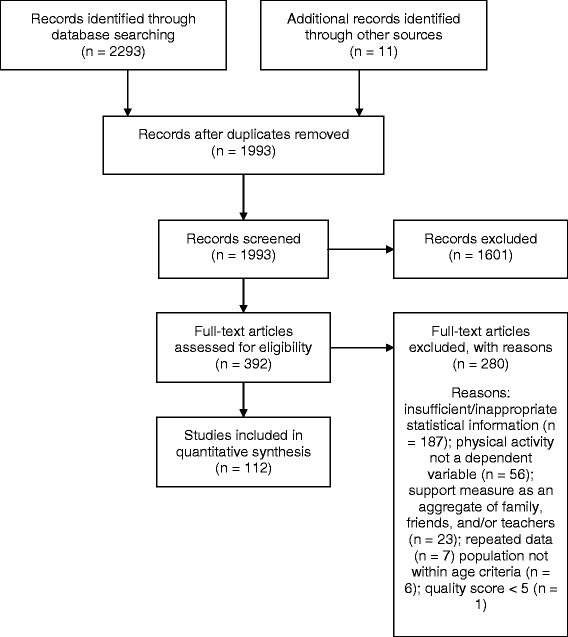
OBJECTIVE: Physical activity (PA) has a profound impact on health and development in children. Parental behaviors (i.e., modeling and support) represent an obvious important factor in child PA. The purpose of this paper was to provide a comprehensive meta-analysis that overcomes the limitations of prior narrative reviews and quantitative reviews with small samples. METHODS: Ten major databases were used in the literature search. One-hundred and fifteen studies passed the eligibility criteria. Both fixed and random effects models with correction for sampling and measurement error were examined in the analysis. Moderator analyses investigating the effects of child's developmental age, study design, parental gender, measurement of child PA, and quality rating were performed. RESULTS: Based on the random effects model, the results showed that parental modeling was weakly associated with child PA (summary r = .16, 95% CI .09-.24) and none of the proposed moderators were significant. Separate analyses examining the moderating effects of parental gender and boys' PA found that that father-son PA modeling (r = .29, 95% CI .21-.36) was significantly higher compared to mother-son PA (r = .19, 95% CI .14-.23; p < .05). However, parental gender did not moderate the relationship between parental modeling and girls' PA (p > .05). The random effects model indicated an overall moderate effect size for the parental support and child PA relationship (summary r = .38, 95% CI .30-.46). Here, the only significant moderating variable was the measurement of child PA (objective: r = .20, 95% CI .13-.26; reported: r = .46, 95% CI .37-.55; p < .01). CONCLUSIONS: Parental support and modeling relate to child PA, yet our results revealed a significant degree of heterogeneity among the studies that could not be explained well by our proposed moderators.
Overview
The claims and statistics of this paper haven’t been checked yet.
Run the check — free, no account needed. It reads the open-access text and checks the sources it cites.
Integrity signals
Registry
Cites
Statistics
Figures
Verification
Claims the paper makes
The claims and statistics of this paper haven’t been checked yet.
Run the check — free, no account needed. It reads the open-access text and checks the sources it cites.
Claims other papers make about this one
Each is checked against this paper’s own text: does it say what the citing paper says it does?
In the citing paper
“Encouragement and modelling by peers, friends and parents are factors that motivate children and adolescents to participate in physical activity or achieve recommended levels of physical activity.97–104”
From Physical activity and health in Chinese children and adolescents: expert consensus statement (2020) (2020) · cites this paper as [98]
Self-check
Percentages, sums and reported differences re-computed from the paper’s own numbers.
The self-check needs the paper’s full text.
Citations
Cites
Preferred Reporting Items for Systematic Reviews and Meta-Analyses: the PRISMA statement
Moher, D., Liberati, A., Tetzlaff, J., Altman, D. G., & for the PRISMA Group (2009) · BMJ · doi:10.1136/bmj.b2535 · Cited by 83,823
Preferred reporting items for systematic reviews and meta-analyses: the PRISMA Statement.
(2009) · PubMed Central · Cited by 44,859
Applied Multiple Regression/Correlation Analysis for the Behavioral Sciences
Cohen, P., Cohen, P., West, S. G., & Aiken, L. S. (2014) · Psychology Press eBooks · doi:10.4324/9781410606266 · Cited by 20,870
Preferred Reporting Items for Systematic Reviews and Meta-Analyses: The PRISMA Statement
Moher, D., Liberati, A., Tetzlaff, J., & Altman, D. G. (2009) · Journal of Clinical Epidemiology · doi:10.1016/j.jclinepi.2009.06.005 · Cited by 19,575
Duval, S., & Tweedie, R. (2000) · Biometrics · doi:10.1111/j.0006-341x.2000.00455.x · Cited by 14,099 · cited 1×
“To assess the extent of publication bias in our samples, Rosenthal’s classic fail-safe N [33] and Duval and Tweedie’s Trim and Fill procedures [34,35] were conducted.”
Method‘Small Changes' to Diet and Physical Activity Behaviors for Weight Management
Hills, A. P., Byrne, N. M., Lindstrom, R. C., & Hill, J. O. (2013) · Obesity Facts · doi:10.1159/000345030 · Cited by 9,526
(1985) · Europe PMC (PubMed Central) · Cited by 9,143
The file drawer problem and tolerance for null results.
Rosenthal, R. (1979) · Psychological Bulletin · doi:10.1037/0033-2909.86.3.638 · Cited by 9,068 · cited 1×
“To assess the extent of publication bias in our samples, Rosenthal’s classic fail-safe N [33] and Duval and Tweedie’s Trim and Fill procedures [34,35] were conducted.”
MethodCohen, J. (1992) · Psychological Bulletin · doi:10.1037//0033-2909.112.1.155 · Cited by 8,771
Downs, S. H., & Black, N. (1998) · Journal of Epidemiology and Community Health · doi:10.1136/jech.52.6.377 · Cited by 8,252 · cited 1×
“To assess the potential risk of bias and methodological quality, each study was critically appraised using an adapted version of Downs and Black’s [28] 22-item assessment tool.”
Method
Research works printed but not linked: 2
- Mota J. Parents’ physical activity behaviors and children's physical activity. J Hum Mov Stud. 1998;35:89–100.
- Klesges RC. The FATS: an observational system for assessing physical activity in children and associated parent behavior. Behav Assess. 1984;6:333–45.
Cited by
Sorted by citations
Items 301–400 of 539
Rancaño, K. M., Skeer, M. R., Puhl, R. M., Eliasziw, M., & Must, A. (2025) · Journal of Adolescent Health · doi:10.1016/j.jadohealth.2024.11.012 · Cited by 4
de Camargo, É. M., López‐Gil, J. F., Piola, T. S., Mota, J. A. P. S., & de Campos, W. (2023) · Revista de Saúde Pública · doi:10.11606/s1518-8787.2023057004362 · Cited by 4
Parental physical activity support for parents of children with disabilities in Saudi Arabia
Alhumaid, M. M. (2024) · Heliyon · doi:10.1016/j.heliyon.2024.e29351 · Cited by 6
“The finding is consistent with the parental role-modeling of PA hypothesis which proposes that children adopt PA behaviors by observing their parents ’ actions and engaging in PA alongside them [39].”
ResultBarry, A., Ku, B., Swarup, G., Christensen, L., & Columna, L. A. (2024) · Disability and Rehabilitation · doi:10.1080/09638288.2024.2399222 · Cited by 4
“Relevant systematic reviews and meta-analyses identified during title/abstract screening were moved to full-text review for further reference scanning [9,29,30].”
Long, B., Chen, S., Long, Y., Liu, Y., Li, Y., Wang, Y., Wang, P., Guo, M., & Yang, Y. (2025) · Scientific Reports · doi:10.1038/s41598-025-09369-1 · Cited by 4
“For example, previous studies have found that parents with higher valuing and better understanding of the principles and benefits of physical activity are more likely to engage in sports and/or physical exercises 14,19 .”
Webber‐Ritchey, K. J., Mueller, M., & Carter, J. S. (2021) · Preventive Medicine · doi:10.1016/j.ypmed.2021.106814 · Cited by 4
Boulley, G. E., & Boiché, J. C. S. (2022) · Movement & Sport Sciences - Science & Motricité · doi:10.1051/sm/2022013 · Cited by 5
Vega-Díaz, M., González‐García, H., & de Labra, C. (2023) · BMC Psychology · doi:10.1186/s40359-023-01239-7 · Cited by 4
“This happens because positive words facilitate the perception of PA competence [66].”
BackgroundBrown, D. M. Y., Summerville, B., Fairclough, S. J., Mielke, G. I., & Tyler, R. (2024) · Journal of Physical Activity and Health · doi:10.1123/jpah.2023-0360 · Cited by 4
Cornelius, C. (2018) · UKnowledge (University of Kentucky) · doi:10.13023/etd.2018.381 · Cited by 4
“This finding aligns with other existing research exploring the role of peers and parents in adolescent physical activity engagement (Beets, Cardinal, & Alderman, 2010; Edwardson & Gorely, 2010; Yao & Rhodes, 2015).”
ResultElhakeem, A., Cooper, R., Bann, D., & Hardy, R. (2014) · Systematic Reviews · doi:10.1186/2046-4053-3-141 · Cited by 4
“Since adult LTPA also displays a socioeconomic gradient [8, 9], less socioeconomically advantaged children are likely to have less physically active parents who may in turn unfavourably influence their own children’s involvement in LTPA [71].”
BackgroundMcCullough, A. K., Keller, B., Qiu, S., & Garber, C. E. (2018) · Measurement in Physical Education and Exercise Science · doi:10.1080/1091367x.2018.1437039 · Cited by 4
“Physical activity (PA) behaviors appear to be interdependent among children and their parents (Barkin et al., 2017; Yao & Rhodes, 2015).”
BackgroundThe role of parents in youth sport values
Goggins, L. (2015) · Open Research Exeter (University of Exeter) · Cited by 4
Meklin, E., Laukkanen, A., Niemistö, D., Kotkajuuri, J., Luukkainen, N., & Sääkslahti, A. (2024) · Physical Education and Sport Pedagogy · doi:10.1080/17408989.2024.2352823 · Cited by 3
“Although scholars have found that fathers’ PA modelling is associated with boys’ PA significantly more strongly than mothers’ PA modelling, parental gender does not moderate the relationship between parental modelling and girls’ PA (Yao and Rhodes 2015).”
Lee, A., Blanchard, C. M., Beauchamp, M. R., Carson, V., Madigan, S. L., Strachan, S. M., Vanderloo, L. M., Streight, E., Courtnall, S., & Rhodes, R. E. (2025) · Trials · doi:10.1186/s13063-025-08977-6 · Cited by 4
“This improvement is thought to occur by fostering structured routines and shared goals, which enhance organization while promoting collaborative and enjoyable activities that strengthen family cohesion [7, 10].”
Self-citationPhillips, S. M., Bourke, M., Inniss, B., Ahluwalia, M., & Tucker, P. (2026) · PLoS ONE · doi:10.1371/journal.pone.0340687 · Cited by 3
“Consistent with social learning theories, parents may encourage PA in their children through parental modelling of PA behaviours [9], as well as through activity encouragement and support [10].”
Influence of the Home Environment on Physical Activity Behaviors in African American Youth
Bahl, S., Allport, L., Song, M., McGlumphy, K. C., Gill, A. K., & Hasson, R. E. (2021) · Childhood Obesity · doi:10.1089/chi.2021.0147 · Cited by 3
“…decreases with age, hence parent PA participation may be less important at this age compared with parenting behaviors that promote adolescent PA. 47 Additionally, due to insufficient power, we were unable to test effect modifi-cation; sex and age could be effect modifiers in the relationship…”
Fothergill, M. A., Gill, G., & Graham, P. (2023) · Health Promotion International · doi:10.1093/heapro/daad183 · Cited by 4
“While logistic support in the form of parents providing transport has been reported as one of the strongest social determinants (Hoefer et al. , 2001), the impact of parental modelling on children’s behaviour remains inconclusive (Sterdt et al. , 2014; Yao and Rhodes, 2015).”
BackgroundDonnelly, S., Buchan, D. S., Gibson, A., McLellan, G., & Arthur, R. (2019) · Health Education & Behavior · doi:10.1177/1090198119871329 · Cited by 6
“For example, research has indicated that changes to dietary and PA behaviors of parents can influence such behaviors in their children (Blaine, Kachurak, Davison, Klabunde, & Fisher, 2017; Yao & Rhodes, 2015).”
Backgroundla Torre‐Cruz, M. J. D., Suárez-Manzano, S., López-Serrano, S., & Ruiz‐Ariza, A. (2020) · Health Education Research · doi:10.1093/her/cyaa024 · Cited by 3
Bernal, C. M. M., Lhuisset, L., Fabre, N., & Bois, J. E. (2020) · Movement & Sport Sciences - Science & Motricité · doi:10.1051/sm/2020022 · Cited by 4
Dennis, C., Birken, C. S., Brennenstuhl, S., Wrottesley, S. V., Marini, F. C., Bell, R. C., Tremblay, M. S., & Prioreschi, A. (2021) · Behavioral Medicine · doi:10.1080/08964289.2021.1987854 · Cited by 4
Kwon, S., Mason, M., Wang‐Schweig, M., Morrissey, J. L., Bartell, T. R., & Kandula, N. R. (2022) · American Journal of Health Promotion · doi:10.1177/08901171221099271 · Cited by 3
“It has been well recognized that parent health behaviors, such as PA behavior, influence children’s health behaviors, by setting cultural attitudes and norms and by role-modeling.(21,35,36) The present study found that parent walking activity was positively associated with adolescent ACS.”
BackgroundStiller, A., & Stiller, C. (2022) · International Journal of Developmental Disabilities · doi:10.1080/20473869.2022.2092935 · Cited by 6
“Focusing on physical activity, Yao and Rhodes (2015) meta-analysis found an overall moderate effect size for the association between parental support for physical activity and children ’ s physical activity (see also the review from Trost and Loprinzi 2011).”
BackgroundZhang, Y., Cao, R., Cheng, L., Shi, Z., Sheng, H., & Xu, Y. (2023) · Journal of Physical Activity and Health · doi:10.1123/jpah.2022-0433 · Cited by 3
James, M. E., Rhodes, R. E., Cairney, J., Sabiston, C. M., Finlay-Watson, T., & Arbour‐Nicitopoulos, K. P. (2024) · Annals of Behavioral Medicine · doi:10.1093/abm/kaae004 · Cited by 3
Self-citationZhou, H., Hui, B. P. H., Yang, H. M., & Wu, A. M. S. (2024) · BMC Psychology · doi:10.1186/s40359-024-01861-z · Cited by 3
“Taking into account the positive relation between parental support and participant involvement in physical activities among teenagers [48], parents are suggested to enroll their children in sports clubs of their interests, co-participate in physical activities, and encourage their children to use…”
BackgroundPaudel, S., Veitch, J., Mishra, G. D., Tooth, L. R., & Hesketh, K. D. (2024) · Child Care Health and Development · doi:10.1111/cch.70007 · Cited by 3
Song, C., & Ge, S. (2025) · Frontiers in Psychology · doi:10.3389/fpsyg.2025.1407090 · Cited by 3
“Studies highlighted the influencing effects of age on the relationship between parental physical activity and the support and encouragement provided to children, which positively affected their engagement in sports and overall physical activity (Jago et al., 2014; Yao and Rhodes, 2015).”
Lundh, H., Arvidsson, D., Greven, C., Fridolfsson, J., Börjesson, M., Boman, C., Lauruschkus, K., Lundqvist, S., Melin, K., & Bernhardsson, S. (2025) · Journal of Activity Sedentary and Sleep Behaviors · doi:10.1186/s44167-025-00072-0 · Cited by 3
Social modeling of exercise inventory: A measure of exercise‐specific social influence
Morton, L. C., Layton, R. L., & Muraven, M. (2019) · Journal of Applied Social Psychology · doi:10.1111/jasp.12575 · Cited by 3
Queiroz, D. D. R., Guimarães, T. G. M., Campos, C. M. C., Feitoza, A. H. P., Henrique, R. D. S., dos Santos, M. A. M., & Cattuzzo, M. T. (2020) · journal of physical education · doi:10.4025/jphyseduc.v31i1.3118 · Cited by 3
Johnson, J. L., Coleman, A., Kwarteng, J. L., Holmes, A. U., Kermah, D., Bruce, M. A., & Beech, B. M. (2023) · International Journal of Environmental Research and Public Health · doi:10.3390/ijerph20115942 · Cited by 2
“This review left us with a lingering question: what has been done to support parents with more than one young child? Parental role modeling of PA has consistently been associated with young children’s PA [8,9,11], which implies that targeting these parents and including multiple children in these interventions may be…”
BackgroundKaštovská, B., Sindler, D., Skýpala, J., & Elavsky, S. (2024) · Journal of Intergenerational Relationships · doi:10.1080/15350770.2024.2309500 · Cited by 2
“Overall, the evidence from three-generational family studies supports the role of family influences on PA/SB, similar to the conclusions from studies on parental influences (Rhodes et al., 2020; Yao & Rhodes, 2015), although the evidence base involving grandparents in particular is much smaller.”
Matteucci, I., & Corsi, M. (2024) · Scientific Reports · doi:10.1038/s41598-024-60548-y · Cited by 2
Parental influence on Chinese childhood cancer survivors’ physical activity: a mixed methods study
Xu, F., Lv, D., Zhou, J., Guan, Z., Xiong, J., Yun, J., Xu, X., Mao, J., Shen, Z., Jin, L., et al. (2025) · Scientific Reports · doi:10.1038/s41598-025-87037-0 · Cited by 2
“Many studies on children without cancer have shown that parental support is positively correlated with children’s participation in and maintenance of PA 31,32 .”
Kasman, M., Sedlak, A. B., Reader, L., Heerman, W. J., PATE, R. R., Ramírez, A. G., Sommer, E. C., Barkin, S. L., & Hammond, R. A. (2025) · PLoS ONE · doi:10.1371/journal.pone.0321301 · Cited by 3
Kwon, S., Bai, Y., Kim, Y., Burns, R. D., Brusseau, T. A., & Byun, W. (2025) · Preventive Medicine Reports · doi:10.1016/j.pmedr.2025.103095 · Cited by 3
“Parental support has been recognized as an important factor in promoting PA, particularly through emotional and informational support (e.g., encouragement, role modeling, and discussing PA behavior) (Yao and Rhodes, 2015).”
Autistic young adults’ experiences in physical activity: A phenomenological study
Barry, A., Haegele, J. A., Pickett, K. A., Schaefer, D. A., & Columna, L. A. (2025) · Autism · doi:10.1177/13623613251338377 · Cited by 2
“In childhood, parental support played a key role in facilitating PA participation, primarily through organized sports, consistent with studies emphasizing the importance of parental influence (Barry et al., 2024; Ku & Rhodes, 2020; Yao & Rhodes, 2015).”
González, O. D.-J., Fan, J., Marc, I., Jiang, H., Hulst, A. V., Tugault-Lafleur, C. N., Wu, Y., Hao, Y., Wang, L., Hu, X.-Y., et al. (2025) · MethodsX · doi:10.1016/j.mex.2025.103493 · Cited by 3
“These parenting practices have been associated with healthier lifestyle habits and lower obesity risk in children[23,43 – 48].”
Rodríguez‐Rodríguez, F., Hernández-Jaña, S., Castro‐Piñero, J., Brazo‐Sayavera, J., Cárcamo-Oyarzún, J., & Rhodes, R. E. (2025) · BMC Pediatrics · doi:10.1186/s12887-025-06014-8 · Cited by 2
“A meta-analysis concluded that the strength and nature of father–son and mother–daughter relationships vary widely across different countries and contexts [34].”
Self-citationParental modelling has a sustainable effect on offspring’s physical activity: the SOPHYA cohort
Bringolf‐Isler, B., Hänggi, J., Kayser, B., Suggs, L. S., Dössegger, A., & Probst-Hensch, N. M. (2025) · BMC Public Health · doi:10.1186/s12889-025-24527-w · Cited by 2
“Systematic reviews [10, 11] and meta-analyses [12] testing associations between parents and children PA support this theory, although the observed effects varied depending on the methodological approaches used.”
Batra, A., & Gentzler, A. L. (2025) · Journal of Child and Family Studies · doi:10.1007/s10826-025-03200-1 · Cited by 2
“…to being the bread winner of the family but rather extends across a variety of domains (e.g., shared physical activities, involvement in teens’ academics, mediating internet usage; Chung et al., 2020; Jeynes, 2015; Kim et al., 2015; Su et al., 2022; Symons et al., 2020; Yao et al., 2015 ).”
Lu, M.-H., Duan, T., Zou, Q.-Q., Xu, J., & Pang, F.-F. (2025) · Journal of Autism and Developmental Disorders · doi:10.1007/s10803-025-07134-x · Cited by 2
Stravování a vztah k jídlu u českých adolescentů ve 21. století
Pipová, H., Dolejš, M., Suchá, J., Kostková, M., & Urešová, A. (2020) · doi:10.5507/ff.20.24458212 · Cited by 3
Perceived Role of Asian Indian Fathers in Florida During Mealtimes
Krishnakumar, P., & Coccia, C. C. (2022) · Family & Community Health · doi:10.1097/fch.0000000000000342 · Cited by 2
Motivational and self-regulatory processes associated with weight-related parenting behaviors
Do, B., Lopez, N. V., Dunton, G. F., & Mason, T. B. (2022) · Obesity Pillars · doi:10.1016/j.obpill.2022.100049 · Cited by 2
Huang, J., Cheung, C. K. M., Chan, S. C., Pang, W. S., Chow, S. H., Li, Q. H., Lo, A. S. C., Keung, V. M. W., Mui, L. W. H., Lee, A., et al. (2023) · Journal of Paediatrics and Child Health · doi:10.1111/jpc.16473 · Cited by 2
Children’s Attraction to Physical Activity and Its Relation to Physical Activity Level
Wu, S. K., Eiin, W. J., & Poh, B. K. (2023) · Malaysian Journal of Medical Sciences · doi:10.21315/mjms2023.30.6.11 · Cited by 2
“Furthermore, parenting style, parental role modelling and encouragement have also been reported to influence children’s attraction to PA (14).”
BackgroundThe Role of Grandparents in Facilitating Children’s Physical Activity
Jongenelis, M. I., Budden, T., Christian, H. E., Coall, D. A., Jackson, B., Nathan, A., & Glassenbury, E. (2024) · Journal of Physical Activity and Health · doi:10.1123/jpah.2024-0066 · Cited by 5
Mannion, E., Bihrmann, K., Plachta‐Danielzik, S., Müller, M. J., Bosy‐Westphal, A., & Ritz, C. (2024) · Nutrients · doi:10.3390/nu16183220 · Cited by 2
“However, research suggests that the relationship between parents’ physical activity as a modeling behavior and levels of children’s physical activity is weak and somewhat inconsistent [26].”
BackgroundGagulic, S., Bártolo, A., & Marques, A. S. P. D. D. (2024) · Healthcare · doi:10.3390/healthcare13010004 · Cited by 2
Allisse, M., Thibault, I., Gagnon, D., Kalinova, É., Larivière, G., & Leone, M. (2025) · International Journal of Environmental Research and Public Health · doi:10.3390/ijerph22030417 · Cited by 2
“The lack of participation in physical activities is concerning because inactive children are more likely to remain inactive as adults [8], and inactive parents tend to raise their children in similar environments [9,10].”
Ziegeldorf, A., Niermann, C. Y. N., Speer, A., Streicher, H., Wagner, P., & Wulff, H. (2025) · Frontiers in Sports and Active Living · doi:10.3389/fspor.2025.1537854 · Cited by 2
“Previous research highlighted the role of the family environment as a key source of in fl uence on children ’ s and adolescents ’ PA (21, 71).”
Factors affecting first-grade pupils' physical activity during the school day: A pilot study
Culková, D., & Dušková, V. (2025) · Journal of Childhood Education & Society · doi:10.37291/2717638x.202562495 · Cited by 3
Rola rodziców we wspieraniu nastoletnich dzieci w podejmowaniu aktywności fizycznej
Tabak, I. (2015) · Pediatria Polska · doi:10.1016/j.pepo.2015.11.002 · Cited by 2
Social and Economic Factors of Sports Activity in Russian Regions
Крамин, Т. В., Ринадович, М. М., Andreff, W., & Борисовна, Е. С. (2019) · SHS Web of Conferences · doi:10.1051/shsconf/20197104009 · Cited by 2
“The social-psychological factors of sport activity are: 1) the social-economic status of a person, which determines the degree of sport infrastructure accessibility; this is especially important for low income groups [6,7]; 2) the family traditions, the social environment, support of colleagues and friends [8, 9, 10];…”
BackgroundCai, Z., Zhang, Z., Zeng, M., Xian, J., Lei, X., & Zhao, Y. (2020) · International Journal of Environmental Research and Public Health · doi:10.3390/ijerph17072282 · Cited by 2
“Previous studies reported that a strong link was found between parental support and the level of children’s physical activity, and physical activity in parents was associated with greater physical activity in children [52].”
BackgroundGodoy-Cumillaf, A. E. R., Bruneau-Chávez, J., Fuentes-Merino, P., & Santana, D. O. (2020) · Retos · doi:10.47197/retos.v38i38.74004 · Cited by 2
Pohybová aktivita, sedavé chování a obezita rodičů a jejich dětí
Sigmund, E., & Sigmundová, D. (2021) · doi:10.5507/ftk.21.24458472 · Cited by 2
Guex, K., Serain, É., Etter, F., & Bize, R. (2019) · Swiss Sports & Exercise Medicine · doi:10.34045/ssem/2019/27 · Cited by 1
Rutkauskaitė, R., Daniusevičiūtė-Brazaitė, L., & Jaruševičiūtė, E. (2021) · Baltic Journal of Sport and Health Sciences · doi:10.33607/bjshs.v3i122.1106 · Cited by 2
Physical Activity of Middle School Students from Cluj-Napoca during the Covid-19 Pandemic
Pop, R.-M., & Grosu, E. F. (2022) · Revista Romaneasca pentru Educatie Multidimensionala · doi:10.18662/rrem/14.4/655 · Cited by 2
“According to Yao and Rhodes (2015), parental support through encouragement is moderately associated with child and adolescent physical activity; furthermore, even though specific parent behaviours like praising, watching the child participate in physical activity, engaging in physical activity with…”
BackgroundPhysical fitness levels and trends of kindergarteners in Hong Kong during the COVID-19 pandemic
Wong, M. Y. C., Ou, K.-L., Wong, W. S., Hon, S. S., & Chung, P. (2024) · Journal of Exercise Science & Fitness · doi:10.1016/j.jesf.2024.03.003 · Cited by 2
Gosadi, I. M., Aloraini, N. M., Zuair, A. B., AlRusaies, A. A., Alrasheed, N., Ajlan, R. A. A., & Tharkar, S. (2018) · International Journal of Community Medicine and Public Health · doi:10.18203/2394-6040.ijcmph20181679 · Cited by 2
“A meta analysis of 112 studies investigating the association between parents and children’s Physical activity by Yao and Rhodes, yielded a medium size effect suggesting the importance of parents role in determining the children’s activity.(28) But these studies do not specify and distinguish”
BackgroundPerspectives on High School “Pay to Play” Sports Fee Policies: A Qualitative Study
Eyler, A. A., Valko, C., & SERRANO, N. H. (2018) · Translational Journal of the American College of Sports Medicine · doi:10.1249/tjx.0000000000000070 · Cited by 2
“Research shows that parental support positively impacts sustained organized sports involvement for adolescence (34,35).”
BackgroundOrientación familiar y hábitos saludables en estudiantes de Educación Primaria
Galiano, I. M. M., Díaz, C. P., & Torres‐Luque, G. (2021) · REOP - Revista Española de Orientación y Psicopedagogía · doi:10.5944/reop.vol.32.num.3.2021.32556 · Cited by 2
García, I. A. (2021) · UVaDOC UVaDOC University of Valladolid Documentary Repository (University of Valladolid) · doi:10.35376/10324/51836 · Cited by 2
Perfiles de orientación hacia la meta y su relación con indicadores de actividad físico-deportiva
la Torre‐Cruz, M. J. D., Ruiz‐Ariza, A., Ocaña-Expósito, S., & López, E. J. M. (2017) · Universitas Psychologica · doi:10.11144/javeriana.upsy16-3.pohm · Cited by 1
Parental Impact on Child Physical Activity and Sedentary Time in Appalachian North Carolina
Farrell, A., Christiana, R. W., Battista, R. A., & James, J. J. (2020) · PubMed Central · doi:10.13023/jah.0203.05 · Cited by 1
“4,29 Thus, there may be a complicated relationship between parental beliefs and child physical activity and parents must take an active role in their child’s phys ical activity through supporting and motivating physical activity behavior.”
Oguntuase, S. B., Sun, Y., Apata, T. C., & Ogunsanya, J. O. (2021) · European Journal of Physical Education and Sport Science · doi:10.46827/ejpe.v7i4.3985 · Cited by 1
Zorlu, S., & Alemdaroğlu-Gürbüz, İ. (2023) · Journal of Child and Family Studies · doi:10.1007/s10826-023-02634-9 · Cited by 1
“…children ’ s physical activities, as well as being role models in physical activities and their participation in physical activities with children, affect their children ’ s behaviors towards PA which could be carried over to the post-adolescent period (Norton et al., 2003; Yao & Rhodes, 2015).”
BackgroundInfluentialGalán-Arroyo, C., Gómez-Paniagua, S., Castillo-Paredes, A., & Rojo-Ramos, J. (2024) · Retos · doi:10.47197/retos.v55.103739 · Cited by 1
“Asimismo, los investigadores de la salud han reconocido ampliamente que la participación de actividad física regular está vinculada a varios beneficios para la salud y prevención de enfermedades crónicas (Yao y Rhodes, 2015).”
BackgroundJia, J., Ng, J. Y. Y., Wang, M. H., & Ha, A. S. C. (2024) · Leisure Sciences · doi:10.1080/01490400.2024.2383369 · Cited by 1
“Scholars have found the positive effect of parental modeling and support in improving children’s PA behavior (Ha et al., 2009; Trost & Loprinzi, 2011; Yao & Rhodes, 2015).”
Physical activity of children transitioning from kindegarten to primary school: A pilot study
Culková, D., & Dušková, V. (2024) · journal of physical education · doi:10.4025/jphyseduc.v35i1.3547 · Cited by 1
“Studies by Yao and Rhodes 26 and Pugliese and Tinsley 25 further confirm the importance of temperament and individual differences in PA levels.”
BackgroundPalmer, S. A., Scott-Andrews, K. Q., Ramirez, N. G., McKheen, A., & Robinson, L. E. (2024) · Journal of Motor Learning and Development · doi:10.1123/jmld.2024-0016 · Cited by 1
Cerrahoğlu, E., Ünver, B., & Ülkümen, İ. (2025) · Journal of Basic and Clinical Health Sciences · doi:10.30621/jbachs.1393097 · Cited by 2
Wilhite, B. C., Hennessy, E., Economos, C. D., Sacheck, J. M., Zive, R., Odalen, C., Herrick, S., & Hatfield, D. P. (2025) · JMIR Pediatrics and Parenting · doi:10.2196/73510 · Cited by 1
“…identify priority PA parenting behaviors and the After reviewing 423 abstracts and 27 full-text papers, 3 categories of parental behaviors emerged as being supportive of children’s PA behavior change: modeling of PA, parental support of child PA, and parental encouragement for child PA [50,62-64].”
Gao, Y., Li, Y., Zhao, H., Wang, D., Sääkslahti, A., Aunola, K., Korhonen, E., & Laukkanen, A. (2025) · European Journal of Pediatrics · doi:10.1007/s00431-025-06413-0 · Cited by 1
“Physical activity parenting (PAP), defined as specific behavioral strategies parents employ to foster active lifestyles in their children, has emerged as one of the few consistently identified correlates [7] and determinants of children’s PA levels [8].”
Pan, S., Lin, Y., Chen, Y., Cao, R., & Zhang, Y. (2025) · International Journal of Sport and Exercise Psychology · doi:10.1080/1612197x.2025.2547366 · Cited by 1
“Comprehensive reviews provide evidence to support the positive influence of parental support, monitoring, and encouragement on children and adolescents’ PA level (Hutch-ens & Lee, 2018; Yao & Rhodes, 2015).”
Paudel, S., Hesketh, K. R., Guagliano, J. M., Coombes, E. G., Brown, H. E., Jones, A., Hughes, C. H., Veitch, J., & van Sluijs, E. M. F. (2025) · Journal of Physical Activity and Health · doi:10.1123/jpah.2025-0049 · Cited by 3
Wang, X., & Jiang, Y. H. (2025) · PLoS ONE · doi:10.1371/journal.pone.0332997 · Cited by 1
“A meta-analysis by Yao and Rhodes also confirmed that parental support and role modeling are strongly linked to children’s physical activity [75].”
Schwartz, A. E., Lewis, H., Gagliardi, L. J., Martin, S., Jaskiw, N., Jaskiw, N. J., & Hasson, R. E. (2025) · Frontiers in Psychology · doi:10.3389/fpsyg.2025.1559497 · Cited by 1
Watkins, J. M., Goss, J. M., Mehls, K. D., Dlugonski, D., & Downs, D. S. (2025) · Healthcare · doi:10.3390/healthcare13233127 · Cited by 1
“This inactivity heightens children’s risk for low activity levels, as maternal PA strongly predicts child PA through modeling and co-participation [17–19].”
Zhou, X., Zhang, X., Yang, Z., Ma, Y., Chen, Y., & Li, K. (2026) · BMC Public Health · doi:10.1186/s12889-026-26327-2 · Cited by 1
“Family economic capital (FES) provides instrumental support for realizing this behavior [12, 36].”
Ocampo-Plazas, M. L., Alvarez, C. E., Williams, J., Kao, Y., & Tamplain, P. M. (2026) · Journal of Motor Learning and Development · doi:10.1123/jmld.2025-0072 · Cited by 1
Fundamental Motor Skills in 6- to 8-Year-Old Children: A School-Based Movement Skill Intervention
Africa, E. K., van Stryp, O., & Vermaak, C. (2026) · Journal of Physical Activity and Health · doi:10.1123/jpah.2024-0826 · Cited by 2
Suárez‐Reyes, M., Button, A. M., Beyl, R. A., Katzmarzyk, P. T., & Staiano, A. E. (2026) · Frontiers in Sports and Active Living · doi:10.3389/fspor.2026.1709140 · Cited by 2
“A meta-analysis by Yao et al. (12) reported that parental support was positively associated with child PA, with a medium effect size highlighting its importance as a correlate of child PA (11, 12).”
Sözen, H. G., Tabak, S., & Sözen, H. (2026) · ODÜ Sosyal Bilimler Araştırmaları Dergisi (ODÜSOBİAD) · doi:10.48146/odusobiad.1812649 · Cited by 1
Future Directions in the Science and Practice of Parental Monitoring
Pelham, W. E., Chitty, T. C., Dontha, M., Aks, I. R., Racz, S. J., Schulze, E. M., & Kemp, E. C. (2026) · Journal of Clinical Child & Adolescent Psychology · doi:10.1080/15374416.2026.2640951 · Cited by 1
“…2009), criminal offending (Flanagan et al., 2019), alcohol use (Yap et al., 2017), cannabis use (Lac & Crano, 2009), cigarette smoking (Wellman et al., 2016), risky sex (Dittus et al., 2015), depression (Yap & Jorm, 2015), sleep (Khor et al., 2021), physical activity (Yao & Rhodes, 2015), academic”
Rodríguez-Rodríguez, F., Mota, J. A. P. S., Aguilar-Farías, N., & MArtins, C. M. M. (2026) · BMC Pediatrics · doi:10.1186/s12887-026-06976-3 · Cited by 1
“This association is not merely defined by the presence of an active parent model [58], but rather by a sophisticated interplay of direct strategies, such as providing transportation and financial resources, and indirect strategies, including behavioural modelling and emotional encouragement [59].”
Screen time and physical activity in schoolchildren
Feu, S., García-Ceberino, J. M., la Cruz, M. L.-D., & López-Pérez, M. (2026) · Cogent Education · doi:10.1080/2331186x.2026.2682595
Murcia, J. A. M., Gea-Escámez, A., & Santamaría, M. C. (2018) · Hispana · Cited by 3
Lithopoulos, A., Dacin, P. A., Tremblay, M. S., & Latimer‐Cheung, A. E. (2021) · Journal of Social Marketing · doi:10.1108/jsocm-12-2019-0215 · Cited by 1
Stearns, J. A., Bélanger, M. F., O’Loughlin, J. L., & Brunet, J. (2022) · Psychology of sport and exercise · doi:10.1016/j.psychsport.2022.102170 · Cited by 1
Parent- and Family-Level Factors Associated with Childhood Obesity
Goran, M. I. (2016) · CRC Press eBooks · doi:10.1201/9781315370958-16 · Cited by 1
Ho, R. S. T., Huang, Y., Lo, H.-Y., Liu, K. K., & Wong, S. H. (2022) · Asia Pacific Journal of Public Health · doi:10.1177/10105395221103377 · Cited by 2
Internal versus External Predictors of Physical Activity in Youth
Ryan, P. M., & Kaskas, M. M. (2022) · Journal of Child and Family Studies · doi:10.1007/s10826-022-02382-2 · Cited by 1
“However, as the child matures, the in fl uence of peers becomes more salient (Yao & Rhodes, 2015).”
BackgroundYalçın, U. Y. A. R. (2023) · Akademisyen Kitabevi eBooks · doi:10.37609/akya.2456 · Cited by 1
Rojo-Ramos, J., Castillo-Paredes, A., Mendoza-Muñoz, M., Adsuar, J. C., Polo-Campos, I., Gómez-Paniagua, S., & Galán-Arroyo, C. (2023) · International Journal of Environmental Research and Public Health · doi:10.3390/ijerph20065093 · Cited by 1
“In general, there is no difference between parents’ satisfaction with PA and the gender of their children, as highlighted by another study, since this association is relative [57].”
BackgroundResult
Metadata
- Authors
- Yao, C. A., & Rhodes, R. E.
- Affiliations
- University of Victoria (CA)
- Corresponding author
- Yao, Christopher A
- Venue
- International Journal of Behavioral Nutrition and Physical Activity
- Published
- 2015-02-11
- Volume
- 12
- Issue
- 1
- Pages
- 10-10
- ISSN
- 1479-5868 (ISSN-L)
- PMC
- PMC4363182
- OpenAlex
- W2159936916
- Cited by
- 540
- References
- 151
- Citations by year
- 2026: 53 · 2025: 51 · 2024: 48 · 2023: 53 · 2022: 56 · 2021: 47 · 2020: 86 · 2019: 37 · 2018: 37 · 2017: 34 · 2016: 29 · 2015: 7
- FWCI
- 4.39
- Type
- journal article
- Language
- en
- Open access
- gold
- doi.org
- Locations
- International Journal of Behavioral Nutrition and Physical Activity (publishedVersion, cc-by)
- PubMed Central (publishedVersion, cc-by)
- PubMed (publishedVersion)
- UVic’s Research and Learning Repository (University of Victoria) (submittedVersion, public-domain)
- Topics
- Health Sciences › Medicine › Public Health, Environmental and Occupational Health › Physical Activity and Health
- Health Sciences › Medicine › Public Health, Environmental and Occupational Health › Obesity, Physical Activity, Diet
- Social Sciences › Psychology › Developmental and Educational Psychology › Children's Physical and Motor Development
- Keywords
- children's physical activity, adolescent physical activity, parental role modeling, parental support, parental gender
- MeSH terms
- Adolescent, Adolescent Behavior, Child, Child Behavior, Female, Humans, Male, Motor Activity, Parents, Social Support, Health Behavior, Exercise, Parenting
About these checks
Registry, retraction, Cites and statistics results are computed, not judged, with one exception: a printed reference that no index lists is read once by a model before it counts as a citation error. Claims are extracted by a model and kept only when their quote appears verbatim in the text; each cited source is then checked, with a model’s help, for whether it says what the claim relies on. Those verdicts can be wrong — read the claim’s quote and the cited source before relying on one.
Statistics and arithmetic are recomputed, not judged.
Confidence bands are shown only for fields calibrated on our annotated test set. None is calibrated yet, so no band is shown.
What counts as a claim ›How we measure confidence ›How we check this ›
Are you an author, or do you see a problem with this page? Request a review
