

The DOI matches its Crossref record; 152 of the 152 references it cites were found in a registry or an index.
Parental correlates in child and adolescent physical activity: a meta-analysis
Open accessAbstract
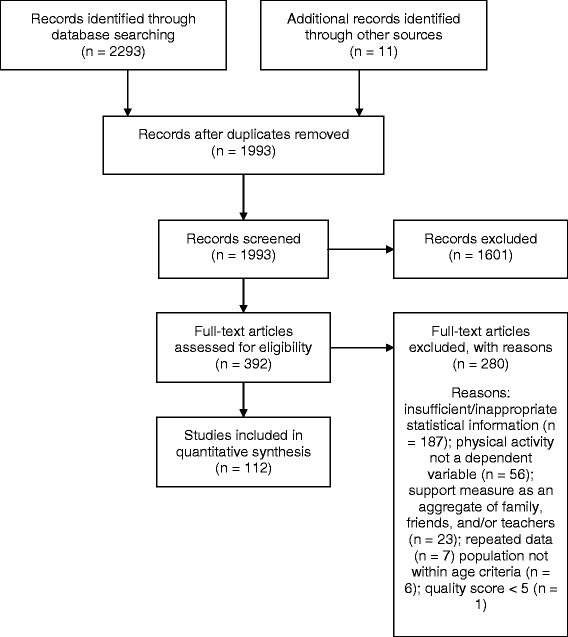
OBJECTIVE: Physical activity (PA) has a profound impact on health and development in children. Parental behaviors (i.e., modeling and support) represent an obvious important factor in child PA. The purpose of this paper was to provide a comprehensive meta-analysis that overcomes the limitations of prior narrative reviews and quantitative reviews with small samples. METHODS: Ten major databases were used in the literature search. One-hundred and fifteen studies passed the eligibility criteria. Both fixed and random effects models with correction for sampling and measurement error were examined in the analysis. Moderator analyses investigating the effects of child's developmental age, study design, parental gender, measurement of child PA, and quality rating were performed. RESULTS: Based on the random effects model, the results showed that parental modeling was weakly associated with child PA (summary r = .16, 95% CI .09-.24) and none of the proposed moderators were significant. Separate analyses examining the moderating effects of parental gender and boys' PA found that that father-son PA modeling (r = .29, 95% CI .21-.36) was significantly higher compared to mother-son PA (r = .19, 95% CI .14-.23; p < .05). However, parental gender did not moderate the relationship between parental modeling and girls' PA (p > .05). The random effects model indicated an overall moderate effect size for the parental support and child PA relationship (summary r = .38, 95% CI .30-.46). Here, the only significant moderating variable was the measurement of child PA (objective: r = .20, 95% CI .13-.26; reported: r = .46, 95% CI .37-.55; p < .01). CONCLUSIONS: Parental support and modeling relate to child PA, yet our results revealed a significant degree of heterogeneity among the studies that could not be explained well by our proposed moderators.
Overview
The claims and statistics of this paper haven’t been checked yet.
Run the check — free, no account needed. It reads the open-access text and checks the sources it cites.
Integrity signals
Registry
Cites
Statistics
Figures
Verification
Claims the paper makes
The claims and statistics of this paper haven’t been checked yet.
Run the check — free, no account needed. It reads the open-access text and checks the sources it cites.
Claims other papers make about this one
Each is checked against this paper’s own text: does it say what the citing paper says it does?
In the citing paper
“Encouragement and modelling by peers, friends and parents are factors that motivate children and adolescents to participate in physical activity or achieve recommended levels of physical activity.97–104”
From Physical activity and health in Chinese children and adolescents: expert consensus statement (2020) (2020) · cites this paper as [98]
Self-check
Percentages, sums and reported differences re-computed from the paper’s own numbers.
The self-check needs the paper’s full text.
Citations
Cites
Preferred Reporting Items for Systematic Reviews and Meta-Analyses: the PRISMA statement
Moher, D., Liberati, A., Tetzlaff, J., Altman, D. G., & for the PRISMA Group (2009) · BMJ · doi:10.1136/bmj.b2535 · Cited by 83,823
Preferred reporting items for systematic reviews and meta-analyses: the PRISMA Statement.
(2009) · PubMed Central · Cited by 44,859
Applied Multiple Regression/Correlation Analysis for the Behavioral Sciences
Cohen, P., Cohen, P., West, S. G., & Aiken, L. S. (2014) · Psychology Press eBooks · doi:10.4324/9781410606266 · Cited by 20,870
Preferred Reporting Items for Systematic Reviews and Meta-Analyses: The PRISMA Statement
Moher, D., Liberati, A., Tetzlaff, J., & Altman, D. G. (2009) · Journal of Clinical Epidemiology · doi:10.1016/j.jclinepi.2009.06.005 · Cited by 19,575
Duval, S., & Tweedie, R. (2000) · Biometrics · doi:10.1111/j.0006-341x.2000.00455.x · Cited by 14,099 · cited 1×
“To assess the extent of publication bias in our samples, Rosenthal’s classic fail-safe N [33] and Duval and Tweedie’s Trim and Fill procedures [34,35] were conducted.”
Method‘Small Changes' to Diet and Physical Activity Behaviors for Weight Management
Hills, A. P., Byrne, N. M., Lindstrom, R. C., & Hill, J. O. (2013) · Obesity Facts · doi:10.1159/000345030 · Cited by 9,526
(1985) · Europe PMC (PubMed Central) · Cited by 9,143
The file drawer problem and tolerance for null results.
Rosenthal, R. (1979) · Psychological Bulletin · doi:10.1037/0033-2909.86.3.638 · Cited by 9,068 · cited 1×
“To assess the extent of publication bias in our samples, Rosenthal’s classic fail-safe N [33] and Duval and Tweedie’s Trim and Fill procedures [34,35] were conducted.”
MethodCohen, J. (1992) · Psychological Bulletin · doi:10.1037//0033-2909.112.1.155 · Cited by 8,771
Downs, S. H., & Black, N. (1998) · Journal of Epidemiology and Community Health · doi:10.1136/jech.52.6.377 · Cited by 8,252 · cited 1×
“To assess the potential risk of bias and methodological quality, each study was critically appraised using an adapted version of Downs and Black’s [28] 22-item assessment tool.”
Method
Research works printed but not linked: 2
- Mota J. Parents’ physical activity behaviors and children's physical activity. J Hum Mov Stud. 1998;35:89–100.
- Klesges RC. The FATS: an observational system for assessing physical activity in children and associated parent behavior. Behav Assess. 1984;6:333–45.
Cited by
Sorted by citations
Items 201–300 of 539
Beck, F., Marzi, I., Renninger, D., Demetriou, Y., Engels, E. S., Niermann, C. Y. N., & Reimers, A. K. (2023) · BMC Public Health · doi:10.1186/s12889-023-15428-x · Cited by 12
“Yao CA, Rhodes RE.”
ResultBrown, D., Abrams, B. F., Cohen, A. K., & Rehkopf, D. H. (2017) · SSM - Population Health · doi:10.1016/j.ssmph.2017.06.004 · Cited by 10
“…a substantial number of studies of the effects of parental physical activity and diet on children’s diet and physical activity (Moore et al., 1991; Yao & Rhodes, 2015; Patrick & Nicklas, 2005), we identified few studies examining how the number of children impacts the physical activity and diet…”
BackgroundPereira, S., Katzmarzyk, P. T., Gomes, T. N., de Souza, M. C., de Chaves, R. N., dos Santos, F. K., Santos, D., Bustamante, A., Barreira, T. V., Hedeker, D., et al. (2017) · American Journal of Human Biology · doi:10.1002/ajhb.23061 · Cited by 10
“In the present study, parental support for PA was positively associated with TPAI which was consistent with previous research (Yao & Rhodes (2015).”
ResultSources and Types of Social Support for Physical Activity Perceived by Fifth to Eighth Grade Girls
Robbins, L. B., Ling, J., Dalimonte‐Merckling, D. M., Sharma, D. B., Bakhoya, M., & Pfeiffer, K. A. (2017) · Journal of Nursing Scholarship · doi:10.1111/jnu.12369 · Cited by 10
Gubelmann, C., Marques-Vidal, P. M., Bringolf‐Isler, B., Suggs, L. S., Vollenweider, P., & Kayser, B. (2017) · Preventive Medicine Reports · doi:10.1016/j.pmedr.2017.12.004 · Cited by 10
“This finding might be partly explained by parental modeling (Yao and Rhodes, 2015), in which youth tend to imitate their parents' behavior, but also genetic and environmental factors (Seabra et al., 2008).”
BackgroundExploring cross-generational physical activity: who are the gate-keepers?
Freire, K., Coyle, J. A., & Pope, R. (2018) · Journal of Public Health · doi:10.1007/s10389-018-0927-3 · Cited by 10
“…has been examined in terms of the role played by various parental support behaviours, including cross-gen PA, and recent meta-analyses have found a small to moderate positive association between parental support behaviour and child and adolescent PA (Pugliese and Tinsley 2007; Yao and Rhodes 2015).”
BackgroundParental Support and Children’s Body Weight: Mediating Effects of Health Behaviors
Park, S. H., & Park, H. (2020) · Western Journal of Nursing Research · doi:10.1177/0193945919897540 · Cited by 10
Lithopoulos, A., Liu, S., Rhodes, R. E., & Naylor, P. (2020) · Health Psychology and Behavioral Medicine · doi:10.1080/21642850.2020.1750959 · Cited by 9
“Parental support behaviors for a healthy lifestyle are established key predictors of child physical activity and healthy eating (Scaglioni et al., 2018; Yao & Rhodes, 2015).”
BackgroundSelf-citationBerger, N., Lewis, D. J., Quartagno, M., Njagi, E. N., & Cummins, S. (2020) · Journal of Epidemiology & Community Health · doi:10.1136/jech-2019-213412 · Cited by 10
Sawa, S., Sekine, M., Yamada, M., Fukazawa, Y., & Hiraku, Y. (2020) · Environmental Health and Preventive Medicine · doi:10.1186/s12199-020-00892-3 · Cited by 10
“, parent–child co-activity, praising the child for being active) received from fathers [39].”
BackgroundRoss, A., & Wilson, K. (2021) · Journal of Transport & Health · doi:10.1016/j.jth.2021.101236 · Cited by 10
Páez‐Herrera, J., Hurtado, J., Reyes, T., Allimant, R. A., Arroyo-Jofré, P., & Navarrete, C. J. O. (2022) · International Journal of Environmental Research and Public Health · doi:10.3390/ijerph19159145 · Cited by 10
“The time that parents spend with their children, as well as what they do with this time, is significantly associated with the children’s body mass index [21], parental practices, parenting styles, and the promotion and limitation of habits [5] Whether they perform physical activity together during the early years of c…”
BackgroundZeng, J., Nan, Q., Leitzelar, B. N., Fu, J., Wang, Y., Liang, F., Ding, K., Moore, J. B., Zou, Y., & Li, R. (2022) · Children · doi:10.3390/children9091309 · Cited by 14
“Youths who engage in regular MVPA are more likely to display favorable body composition, cardiorespiratory and musculoskeletal fitness, academic achievement, and cognitive abilities [2,3].”
BackgroundPhysical Activity and Mental Health of Parents of Children With Autism Spectrum Disorder
Zhang, X., Kern, Z. G., & Yun, J. (2023) · Adapted Physical Activity Quarterly · doi:10.1123/apaq.2022-0175 · Cited by 13
Saunders, R. P., Dowda, M. C., Dishman, R. K., & Pate, R. R. (2024) · Journal of Child and Family Studies · doi:10.1007/s10826-024-02830-1 · Cited by 9
“…reviews have consistently found associations between parent support and child physical activity (Edwardson & Gorely, 2010; Gustafson & Rhodes, 2006; Yao & Rhodes, 2015), and these associations hold for assessments of in fl uences on child physical activity around the globe (Harrington et al., 2016).”
InfluentialFreire, K., Pope, R., & Coyle, J. A. (2018) · Journal of Public Health · doi:10.1007/s10389-018-0979-4 · Cited by 9
Sigmundová, D., Baďura, P., & Sigmund, E. (2020) · European Journal of Sport Science · doi:10.1080/17461391.2020.1833086 · Cited by 9
“E-mail: dagmar.sigmundova@upol.cz the PA of their daughters (Bringolf-Isler et al., 2018; Yao & Rhodes, 2015).”
BackgroundLaukkanen, A., Aunola, K., Korhonen, E., Barnett, L. M., & Sääkslahti, A. (2021) · International Journal of Behavioral Nutrition and Physical Activity · doi:10.1186/s12966-021-01128-5 · Cited by 12
“behavioural strategies employed by parents to socialise children into a physically active lifestyle, is a consistent correlate [9] and determinant of children’s PA [10].”
BackgroundCarter, J. S., DeCator, D. D., Patterson, C. J., McNair, G., & Schneider, K. L. (2022) · Journal of Child and Family Studies · doi:10.1007/s10826-021-02203-y · Cited by 9
Youth and Caregiver Physical Activity and Sedentary Time: HCHS/SOL Youth
Gallo, L. C., Roesch, S., McCurley, J. L., Isasi, C. R., Sotres‐Alvarez, D., Delamater, A. M., Horn, L. V., Arredondo, E. M., Perreira, K. M., Buelna, C., et al. (2016) · American Journal of Health Behavior · doi:10.5993/ajhb.41.1.7 · Cited by 11
Family and individual predictors and mediators of adolescent physical activity
Tabak, I., Mazur, J., & Nałęcz, H. (2017) · Health Psychology Report · doi:10.5114/hpr.2017.67522 · Cited by 9
“The most recent meta-analyses conducted by Yao and Rhodes (2015) included results of 115 studies from the years 1970 to 2014 and summarised seventeen review papers. Three out of 12 reviews examining the relationship between parent and child physical activity confirmed the correlation between them, whereas the remainin…”
BackgroundInfluentialBakalár, P., Kopčáková, J., & Gecková, A. M. (2018) · Acta Gymnica · doi:10.5507/ag.2018.027 · Cited by 11
Routh, B., Hurt, T. R., Winham, D. M., & Lanningham‐Foster, L. (2019) · Global Qualitative Nursing Research · doi:10.1177/2333393619852343 · Cited by 12
“Although Yao and Rhodes (2015) found no differences in communication behaviors among mother–child dyads regardless of the sex of the child, the current findings suggested influences of gender roles and norms may influences support behaviors.”
BackgroundSchmid, J., Gut, V., Yanagida, T., & Conzelmann, A. (2019) · Applied Psychology Health and Well-Being · doi:10.1111/aphw.12186 · Cited by 9
Bulten, R., Brown, D. M. Y., Rodriguez, C., & Cairney, J. (2020) · Mental health and physical activity · doi:10.1016/j.mhpa.2020.100325 · Cited by 10
Wu, W., Chang, L., Luh, D., Wu, C.-C., Stanaway, F., Yen, L.-L., & Chang, H. (2020) · BMC Public Health · doi:10.1186/s12889-020-09745-8 · Cited by 10
The Effects of Branding on Physical Activity: A Systematic Review
Lithopoulos, A., & Rhodes, R. E. (2020) · Journal of Health Communication · doi:10.1080/10810730.2020.1749734 · Cited by 9
“Key antecedent variables were chosen based on available information and established behavioral theories and current evidence suggesting the importance of certain variables (Rhodes, McEwan, & Rebar, 2018; Yao & Rhodes, 2015).”
BackgroundMethodSelf-citationAmes, M. E., Robillard, C. L., Turner, B. J., García-Barrera, M. A., Rush, J., & Craig, S. G. (2022) · Psychology and Health · doi:10.1080/08870446.2022.2127718 · Cited by 8
“For example, parental modeling and support of physical activity are both related to child and adolescent physical activity (yao & Rhodes, 2015), suggesting these behaviors may be key intervention targets to promote youths’ physical activity.”
Bruijns, B. A., Bourke, M., Saravanamuttoo, K., & Tucker, P. (2024) · Journal of Activity Sedentary and Sleep Behaviors · doi:10.1186/s44167-024-00051-x · Cited by 8
“…role in supporting children’s health is imperative, as they are often considered facilitators for their children’s movement behaviours through mechanisms including encouragement, support, role modelling, and their perceived confidence and self-efficacy to promote these behaviours [13, 14].”
BackgroundKu, B. (2020) · International Journal of Disability Development and Education · doi:10.1080/1034912x.2020.1849576 · Cited by 8
“…is important not only for parents’ health but also for their children’s physical activity participation because parents’ physical activity behaviors influence physical activity behaviors in their children with or without disabilities (Ku, MacDonald, Hatfield, & Gunter, 2020; Yao & Rhodes, 2015).”
BackgroundJarvis, J. W., Berry, T. R., Carson, V., Rhodes, R. E., Lithopoulos, A., & Latimer‐Cheung, A. E. (2021) · Journal of Paediatrics and Child Health · doi:10.1111/jpc.15518 · Cited by 8
Self-citationJaeger, M. M., Vieth, G., Rothman, A. J., & Simpson, J. (2021) · Journal of Social and Personal Relationships · doi:10.1177/02654075211020136 · Cited by 6
“…their adolescent’s behavior, which usually limits their autonomy, and intentional modeling, in which parents deliberately enact behaviors in front of their adolescents that they 2 Journal of Social and Personal Relationships XX(X) want to see them adopt (Yao & Rhodes, 2015; Zhang et al., 2019).”
BackgroundKu, B., & Haegele, J. A. (2022) · Journal of Intellectual & Developmental Disability · doi:10.3109/13668250.2022.2104448 · Cited by 8
“Among factors associated with child’s PA, their parents’ PA has been identified as one positively influencing factor (Ku et al., 2020; Yao & Rhodes, 2015).”
BackgroundChan, S., Melnyk, B. M., & Chen, A. C. (2016) · Journal of Pediatric Nursing · doi:10.1016/j.pedn.2016.10.003 · Cited by 8
Sex Differences in Birth Weight and Physical Activity in Japanese Schoolchildren
Yamakita, M., Sato, M., Suzuki, K., Ando, D., & Yamagata, Z. (2018) · Journal of Epidemiology · doi:10.2188/jea.je20170078 · Cited by 8
Tomayko, E. J., Thompson, P. N., Smith, M. C., Gunter, K. B., & Schuna, J. M. (2021) · Journal of School Health · doi:10.1111/josh.13095 · Cited by 8
Harakeh, Z., Otten, W., & van Empelen, P. (2025) · Journal of Obesity · doi:10.1155/jobe/4992624 · Cited by 9
“…in PA is important, parents’ positive attitudes toward PA, parent’s encouraging PA, parents’ setting rules, parents providing transportation, paying fees and tuition, parents’ engaging in PA activities with children [11, 47], parent’s PA (i.e., modeling [11, 47, 48]), and parental support [47, 48].”
Malek, M. E., Norman, Å., Elinder, L. S., Patterson, E., & Nyberg, G. (2022) · Children · doi:10.3390/children9020248 · Cited by 7
Yang, C., Wang, S. D., Wang, W., Belcher, B. R., & Dunton, G. F. (2022) · Journal of Behavioral Medicine · doi:10.1007/s10865-022-00335-0 · Cited by 7
“One meta-analysis included 31 studies (out of 112) with device-based PA measures and reported a small effect size (r = 0.16, 95% CI 0.09–0.24) between parents’ and children’s (2–18 years) PA levels across all studies (Yao & Rhodes, 2015).”
BackgroundInfluentialFolgar, M. I., Albaladejo-Saura, M., Boubeta, A. R., & Vaquero‐Cristóbal, R. (2022) · Global Health Promotion · doi:10.1177/17579759221113267 · Cited by 7
“Por otra parte, entre las distintas formas en las que padres/ madres pueden promover la realización de actividad física y deportiva de sus hijos/as se encuentran principalmente la co-participación y el modelado, resultados que van en la línea de lo reflejado en los estudios previos (31).”
BackgroundRhodes, R. E., Blanchard, C. M., Hartson, K. R., Downs, D. S., Warburton, D. E. R., & Beauchamp, M. R. (2023) · Annals of Behavioral Medicine · doi:10.1093/abm/kaac067 · Cited by 8
Self-citationParent-child physical activity, sedentary behaviour, and obesity
Sigmund, E., & Sigmundová, D. (2017) · doi:10.5507/ftk.17.24451824 · Cited by 7
Guntzviller, L. M., Wang, N., Gonzalez, A. M., & Ratcliff, C. L. (2019) · Communication Research · doi:10.1177/0093650219830269 · Cited by 7
“Parental encouragement is particularly effective for fostering exercise intentions among Hispanic individuals (de la Haye, de Heer, Wilkinson, & Koehly, 2014), and parental support is associated with higher levels of youth PA (Mendonca, Cheng, Melo, & de Farias Junior, 2014; Yao & Rhodes, 2015).”
BackgroundZhang, Y., Baltaci, A., Overcash, F. M., Druziako, S., Peralta, A. R., Hurtado, G. A., & Reicks, M. M. (2020) · BMC Public Health · doi:10.1186/s12889-020-8199-6 · Cited by 7
Outdoor Recreation as an Asset for Youth Development in the Context of the COVID-19 Pandemic
Reed, K. B., Hanna, S. R., Bai, S., & Agans, J. P. (2022) · Journal of Outdoor Recreation Education and Leadership · doi:10.18666/jorel-2022-v14-i1-11167 · Cited by 7
Yan, G., Yu, J., Li, L., Pan, L., Ma, D., Cui, L., Cui, C., & Guo, F. (2025) · Frontiers in Pediatrics · doi:10.3389/fped.2025.1402516 · Cited by 6
“Unsurprisingly, parental support and encouragement are important factors in improving PA in children and adolescents (12).”
An, M., Chen, T., Zhou, Q., & Ma, J. (2021) · BMC Public Health · doi:10.1186/s12889-021-11730-8 · Cited by 7
“The meta-analysis included studies using accelerometers, activity monitors, children’s self-report data, and parents’ reported data in minutes, hours, or days per week to measure MVPA [19].”
BackgroundMethodResultInfluentialXu, F., Jin, X., Chen, Y., Guan, Z., Zhou, R., Xu, X., Mao, J., Shen, Z., Jin, L., Liu, Y., et al. (2022) · Supportive Care in Cancer · doi:10.1007/s00520-022-07324-8 · Cited by 6
“This effect has been widely demonstrated in the PA participation of ordinary children [52].”
BackgroundLaukkanen, A., Niemistö, D., Aunola, K., Barnett, L. M., & Sääkslahti, A. (2023) · Psychology of sport and exercise · doi:10.1016/j.psychsport.2023.102444 · Cited by 6
Physical activity among adolescent girls and the factors linked to it: a scoping review
Novella, A. R., Consuegra, M. P., Guix‐Comellas, E. M., Font‐Cabrera, C., Pola, M. S., & Fraile, V. M. (2023) · Journal of Sport and Health Research · doi:10.58727/jshr.94166 · Cited by 6
Using Non-Violent Discipline Tools: Evidence Suggesting the Importance of Attunement
Quail, K. R., & Ward, C. L. (2023) · International Journal of Environmental Research and Public Health · doi:10.3390/ijerph20247187 · Cited by 9
Hasson, R. E., Xie, M., Tadikamalla, D., & Beemer, L. R. (2024) · JMIR Human Factors · doi:10.2196/52496 · Cited by 6
“Families play a crucial role in shaping a child’s activity levels by providing various forms of social support [19,20].”
BackgroundStreight, E., Beauchamp, M. R., Smith, K. J., Blanchard, C. M., Carson, V., Strachan, S. M., Vanderloo, L. M., Courtnall, S., & Rhodes, R. E. (2024) · BMC Public Health · doi:10.1186/s12889-024-20024-8 · Cited by 7
“This effect size is consistent with previous studies examining physical activity interventions [46, 47].”
ResultSelf-citationWilk, P., Maltby, A. M., Cooke, M. J., & Forsyth, J. M. (2019) · International Journal of Indigenous Health · doi:10.32799/ijih.v14i2.31929 · Cited by 9
“For Indigenous youth, parental support has been found to be an important predictor of PA (Biddle et al., 2011; Wilk et al., 2018; Yao & Rhodes, 2015).”
BackgroundBurgueño, R., Morales-Ortíz, E., Macarro-Moreno, J., Medina-Casaubón, J., & Cueto-Martín, B. (2020) · Sustainability · doi:10.3390/su12187477 · Cited by 7
Nakabazzi, B., Wachira, L.-J. M., Oyeyemi, A. L., Ssenyonga, R., & Onywera, V. O. (2021) · PLOS Global Public Health · doi:10.1371/journal.pgph.0000089 · Cited by 6
Gonçalves, W. S. F., Byrne, R., de Lira, P. I. C., Viana, M. T., & Trost, S. G. (2022) · Childhood Obesity · doi:10.1089/chi.2021.0305 · Cited by 6
“17,18 Furthermore, the cultural context, in which families reside, also take an important place in establishing the relationships between parenting and children’s obesity-related behaviors.”
Su, D. L. Y., Lee, A., Chung, J. S. K., Tang, T. C. W., Capio, C. M., Zhang, L., & Chan, D. K. C. (2023) · Journal of Exercise Science & Fitness · doi:10.1016/j.jesf.2023.04.002 · Cited by 6
Sharman, M. J., Nash, M., Moore, R., Waddingham, S., Oakley, A. L., Langenberg, H., & Cleland, V. J. (2023) · Health Promotion Journal of Australia · doi:10.1002/hpja.771 · Cited by 6
Zhang, X., Yan, J., Zhu, W., & Fu, X. (2024) · Frontiers in Psychology · doi:10.3389/fpsyg.2023.1243658 · Cited by 6
“For instance, research have delved into the impact of parental behaviors, such as role modeling (Madsen et al., 2009; Yao and Rhodes, 2015) and parental support (Edwardson et al., 2013; Langer et al., 2014) on youth activity levels.”
López-Serrano, S., Loureiro, N., Suárez-Manzano, S., & la Torre‐Cruz, M. J. D. (2020) · Retos · doi:10.47197/retos.v37i37.71599 · Cited by 6
Walters, K., Chard, C. A., & Anderson, D. M. (2020) · Journal of Adolescent Research · doi:10.1177/0743558420920550 · Cited by 7
“…a mother’s personal relationship with physical activity can be (via parental support of physical activity and physical activity modeling) on her daughter’s physical activity behaviors, particularly as the daughter transitions into adolescence (Gustafson & Rhodes, 2006; Yao & Rhodes, 2015).”
BackgroundScott-Andrews, K. Q., Wengrovius, C., & Robinson, L. E. (2020) · Eating and Weight Disorders - Studies on Anorexia Bulimia and Obesity · doi:10.1007/s40519-020-00926-3 · Cited by 6
“Parents’ have the most control over their child’s physical activity behaviors [16] and eating behaviors [17].”
BackgroundResultInfluentialParnell, M., Gee, I. L., Foweather, L., Whyte, G. P., & Knowles, Z. R. (2021) · Children · doi:10.3390/children8070552 · Cited by 6
van Sluijs, E. M. F., Brown, H. E., Coombes, E. G., Hughes, C. H., Jones, A., Morton, K., & Guagliano, J. M. (2021) · Public Health Research · doi:10.3310/phr09090 · Cited by 6
He, Q., Ha, A. S. C., Ng, J. Y. Y., Cairney, J., & Bedard, C. (2022) · Psychology of sport and exercise · doi:10.1016/j.psychsport.2022.102200 · Cited by 6
Associations Between Physical Activity and Gross Motor Skills in Parent–Child Dyads
Scott-Andrews, K. Q., Hasson, R. E., Miller, A. L., Templin, T. J., & Robinson, L. E. (2022) · Journal of Motor Learning and Development · doi:10.1123/jmld.2022-0030 · Cited by 6
Quick, V., Martin‐Biggers, J. T., Alleman, G. P., Worobey, J., Hongu, N. K., & Byrd‐Bredbenner, C. (2018) · Contemporary Clinical Trials · doi:10.1016/j.cct.2018.03.006 · Cited by 6
Mendonça, G., Mendes, J. D. O., de Lucena, J. M. S., & Júnior, J. C. D. F. (2020) · Revista Brasileira de Atividade Física & Saúde · doi:10.12820/rbafs.24e0092 · Cited by 6
Parents’ and Teachers’ Perceptions of Physical Activity in Schools: A Meta-Ethnography
Porcuna, V. A., & Rodríguez‐Martin, B. (2020) · The Journal of School Nursing · doi:10.1177/1059840520972005 · Cited by 6
Biopsychosocial and Environmental Correlates of Children’s Motor Competence: An Exploratory Study
Algurén, B., Tang, Y., Pelletier, C., Naylor, P., & Faulkner, G. (2024) · Sports Medicine - Open · doi:10.1186/s40798-024-00763-z · Cited by 5
“In the latest meta-analysis conducted by Yao and Rhodes, encompassing 112 studies, a medium effect size was found for the relationship between overall parental support and child’s PA [66].”
BackgroundMethodMotivation and physical activity across Chinese adolescents: Based on latent profile analysis
Zhao, Y., Wu, Q., & Zheng, W. (2025) · PLoS ONE · doi:10.1371/journal.pone.0328383 · Cited by 8
“Moreover, in addition to peers, their parents influence teenagers’ behavior [63].”
Social exercise interventions for children who have complex developmental needs: A systematic review
Freire, K., Pope, R., Size, I., Andrews, K., Fitz-Gerald, E., & Bowman, T. (2023) · Journal of Child Health Care · doi:10.1177/13674935231190984 · Cited by 5
“…of children who are TD have found that doing exercise together with their parents provides opportunities for parental role modelling of exercise (Yao and Rhodes, 2015), bonding and connecting experiences, and opportunities for children to practice their developing skills in a safe environment…”
Brennan, C., O’Donoghue, G., Keogh, A., Rhodes, R. E., & Matthews, J. J. (2024) · PLoS ONE · doi:10.1371/journal.pone.0299260 · Cited by 5
Self-citationLiu, X., Tang, J., Long, W., Zou, Y., & Tan, J. (2024) · Frontiers in Public Health · doi:10.3389/fpubh.2024.1392803 · Cited by 5
Liu, X., Wen, Y., & Zhou, Q. (2024) · European Journal of Nutrition · doi:10.1007/s00394-024-03450-7 · Cited by 5
Liu, Z., Chen, Y., Herold, F., Cheval, B., Falck, R. S., Kramer, A. F., Gerber, M., Werneck, A. O., An, R., Teychenne, M. J., et al. (2024) · Mental health and physical activity · doi:10.1016/j.mhpa.2024.100639 · Cited by 6
Parent–child Movement Behaviors and Bluetooth Proximity in Preschool-aged Children
Kuzik, N., Naylor, P., Spence, J. C., & Carson, V. (2021) · Measurement in Physical Education and Exercise Science · doi:10.1080/1091367x.2021.1914051 · Cited by 5
“Parental modeling of physical activity and sedentary behavior is thought to be one explanation for this association (Davison et al., 2013; Taylor et al., 1994; Trost & Loprinzi, 2011; Webber & Loescher, 2013; Yao & Rhodes, 2015).”
BackgroundWhat research evidence exists about physical activity in parents? A systematic scoping review
Simpson, R. F., Hesketh, K. R., Ellis, K., & van Sluijs, E. M. F. (2022) · BMJ Open · doi:10.1136/bmjopen-2021-054429 · Cited by 5
Haapala, E. A., Widlund, A., Poikkeus, A., Lima, R. A., Brage, S., Pirjo Aunio, A., & Lakka, T. A. (2023) · Medicine & Science in Sports & Exercise · doi:10.1249/mss.0000000000003163 · Cited by 6
“Because school beginners’ awareness of habits promoting health may be limited, it can be expected that the level of early stages of very fundamental academic skills, such as arithmetic fluency and reading comprehension, reflecting the ability for understanding verbal language and being fast and accurate in addition an…”
BackgroundColumna, L. A., Meera, B., Prieto, L. A., & Haegele, J. A. (2024) · Disability and health journal · doi:10.1016/j.dhjo.2024.101637 · Cited by 5
James, M. E., Arbour‐Nicitopoulos, K. P., KWAN, M. Y. W., King‐Dowling, S., & Cairney, J. (2024) · Pediatric Exercise Science · doi:10.1123/pes.2023-0074 · Cited by 5
Howard, M., & Akhund, S. A. (2024) · International journal of child care and education policy/International journal of child care and education · doi:10.1186/s40723-024-00129-8 · Cited by 5
“…of MVPA when: enrolled in physical activities such as sports (Garriguet et al., 2017); they receive transportation from their parent(s) to engage in physical activity (Pyper et al., 2016; Yao & Rho-des, 2015); and/or are provided with equipment to use in physical activities (Yao & Rhodes, 2015).”
BackgroundInfluentialKakia, L., Popov, H. N., & Arani, A. M. (2016) · International journal of comparative education and development · doi:10.1108/ijced-10-2015-0006 · Cited by 5
Aggio et al. Respond to “Lessons for Research on Cognitive Aging”
Aggio, D., Smith, L., Fisher, A., & Hamer, M. (2016) · American Journal of Epidemiology · doi:10.1093/aje/kww030 · Cited by 5
“Physical activity at this age is predominantly influenced by parents and the school environment (6, 7).”
BackgroundParental Correlates of Body Weight Status Among High School Students in Tehran
Jalali‐Farahani, S., Chin, Y. S., Taib, M. N. M., & Amiri, P. (2017) · Intern J Endocrinol Metab · doi:10.5812/ijem.42701 · Cited by 5
“and role-modeling may have an influence on adolescents’ food choices, eating behaviors, and physical activity (18-21); hence, how parents perceive adolescents’ body weight status and its related behaviors may contribute to weight gain and consequently obesity among adolescents.”
BackgroundAssociação entre apoio social e nível de atividade física em adolescentes
Piola, T. S., Bacil, E. D. A., da Silva, M. P., Pacífico, A. B., & de Campos, W. (2018) · Revista Brasileira de Atividade Física & Saúde · doi:10.12820/rbafs.23e0021 · Cited by 4
Tennant, E. M., Tremblay, M. S., Faulkner, G., Gainforth, H. L., & Latimer‐Cheung, A. E. (2019) · Journal of Health Communication · doi:10.1080/10810730.2019.1651429 · Cited by 5
“In a health behaviour context, parents play a critical supporting role (Craggs, Corder, van Sluijs, & Griffin, 2011; Yao & Rhodes, 2015).”
BackgroundActive commuting to school by Chinese school-age children
Lin, L., & He, L. (2019) · Elsevier eBooks · doi:10.1016/b978-0-12-814694-1.00018-x · Cited by 5
Social Support for Physical Activity for High Schoolers in Rural Southern Appalachia
Shah, P., Southerland, J. L., & SLAWSON, D. L. (2019) · Southern Medical Journal · doi:10.14423/smj.0000000000001047 · Cited by 5
Saunders, R. P., Dishman, R. K., Dowda, M. C., & Pate, R. R. (2020) · Journal of Physical Activity and Health · doi:10.1123/jpah.2020-0159 · Cited by 5
Tuominen, P. P. A., Raitanen, J. A., Husu, P., Luoto, R. M., & Kujala, U. M. (2020) · BMC Public Health · doi:10.1186/s12889-020-09773-4 · Cited by 6
Ricardo, L. I. C., Hallal, P. R. C., Domingues, M. R., Oliveira, R. S., Blumenberg, C., Tornquist, D., Tornquist, L., Barros, F. C., & Crochemore‐Silva, I. (2022) · Scandinavian Journal of Medicine and Science in Sports · doi:10.1111/sms.14177 · Cited by 5
Ku, B., Healy, S., & Yun, J. (2022) · Disability and Rehabilitation · doi:10.1080/09638288.2022.2089921 · Cited by 6
Heikkilä, E. A., Pokka, T. M.-L., Korpelainen, R., & Tossavainen, P. H. (2023) · Diabetic Medicine · doi:10.1111/dme.15149 · Cited by 5
“16 In a pedometer-and questionnaire-based study by Stearns et al., 24 there was a significant relationship between parents' and children's PA when using pedometers, while a weaker relationship was noted between the PA of parent– child dyads in the questionnaire-driven results.”
BackgroundResultInfluentialMunasinghe, L. L., Yuan, Y., Faught, E. L., Willows, N. D., & Veugelers, P. J. (2016) · Nutrients · doi:10.3390/nu8100596 · Cited by 5
“The inconsistent results showed the parental influence on children’s physical activity would vary with the gender of the child and the parent [12,13].”
BackgroundPelegrín, A., González‐García, H., & Fayos, E. J. G. D. L. (2019) · Retos · doi:10.47197/retos.v36i36.64592 · Cited by 5
“…educativo/socioeconómico de los padres, nivel de actividad física de los padres y apoyo a la actividad físico-deportiva (Hennessy, Hughes, Goldberg, Hyatt & Economos, 2010; Jago, Davison, Brockman, Page, Thompson & Fox, 2011; Kimiecik & Horn, 2012; Sanz-Arazuri et al., 2012; Yao & Rhodes, 2015).”
BackgroundAn Experimental Application of the Brand Equity Pyramid Using a Healthy Movement Product Brand
Lithopoulos, A., & Latimer‐Cheung, A. E. (2020) · Social Marketing Quarterly · doi:10.1177/1524500420923352 · Cited by 5
“Parents may be a particularly important audience in which to build brand equity because their behavioral beliefs are associated with child and youth movement behaviors (Pyper et al., 2017; Wang et al., 2015; Yao & Rhodes, 2015).”
BackgroundTheory for how parental monitoring changes youth behaviorPreprint
Pelham, W. E. (2023) · doi:10.31234/osf.io/e63mb · Cited by 5
Noordstar, J. J., Sprong, M. C. A., Lenderink, F. C., Slieker, M. G., Hulzebos, E. H. J., & Takken, T. (2025) · Early Human Development · doi:10.1016/j.earlhumdev.2025.106397 · Cited by 4
Metadata
- Authors
- Yao, C. A., & Rhodes, R. E.
- Affiliations
- University of Victoria (CA)
- Corresponding author
- Yao, Christopher A
- Venue
- International Journal of Behavioral Nutrition and Physical Activity
- Published
- 2015-02-11
- Volume
- 12
- Issue
- 1
- Pages
- 10-10
- ISSN
- 1479-5868 (ISSN-L)
- PMC
- PMC4363182
- OpenAlex
- W2159936916
- Cited by
- 540
- References
- 151
- Citations by year
- 2026: 53 · 2025: 51 · 2024: 48 · 2023: 53 · 2022: 56 · 2021: 47 · 2020: 86 · 2019: 37 · 2018: 37 · 2017: 34 · 2016: 29 · 2015: 7
- FWCI
- 4.39
- Type
- journal article
- Language
- en
- Open access
- gold
- doi.org
- Locations
- International Journal of Behavioral Nutrition and Physical Activity (publishedVersion, cc-by)
- PubMed Central (publishedVersion, cc-by)
- PubMed (publishedVersion)
- UVic’s Research and Learning Repository (University of Victoria) (submittedVersion, public-domain)
- Topics
- Health Sciences › Medicine › Public Health, Environmental and Occupational Health › Physical Activity and Health
- Health Sciences › Medicine › Public Health, Environmental and Occupational Health › Obesity, Physical Activity, Diet
- Social Sciences › Psychology › Developmental and Educational Psychology › Children's Physical and Motor Development
- Keywords
- children's physical activity, adolescent physical activity, parental role modeling, parental support, parental gender
- MeSH terms
- Adolescent, Adolescent Behavior, Child, Child Behavior, Female, Humans, Male, Motor Activity, Parents, Social Support, Health Behavior, Exercise, Parenting
About these checks
Registry, retraction, Cites and statistics results are computed, not judged, with one exception: a printed reference that no index lists is read once by a model before it counts as a citation error. Claims are extracted by a model and kept only when their quote appears verbatim in the text; each cited source is then checked, with a model’s help, for whether it says what the claim relies on. Those verdicts can be wrong — read the claim’s quote and the cited source before relying on one.
Statistics and arithmetic are recomputed, not judged.
Confidence bands are shown only for fields calibrated on our annotated test set. None is calibrated yet, so no band is shown.
What counts as a claim ›How we measure confidence ›How we check this ›
Are you an author, or do you see a problem with this page? Request a review
