

A review and content analysis of engagement, functionality, aesthetics, information quality, and change techniques in the most popular commercial apps for weight management
Open accessThe DOI matches its Crossref record; 43 of the 43 references it cites were found in a registry or an index.
Abstract
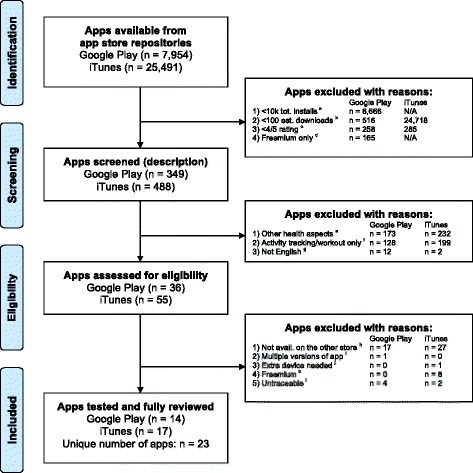
BACKGROUND: There are thousands of apps promoting dietary improvement, increased physical activity (PA) and weight management. Despite a growing number of reviews in this area, popular apps have not been comprehensively analysed in terms of features related to engagement, functionality, aesthetics, information quality, and content, including the types of change techniques employed. METHODS: The databases containing information about all Health and Fitness apps on GP and iTunes (7,954 and 25,491 apps) were downloaded in April 2015. Database filters were applied to select the most popular apps available in both stores. Two researchers screened the descriptions selecting only weight management apps. Features, app quality and content were independently assessed using the Mobile App Rating Scale (MARS) and previously-defined categories of techniques relevant to behaviour change. Inter-coder reliabilities were calculated, and correlations between features explored. RESULTS: Of the 23 popular apps included in the review 16 were free (70%), 15 (65%) addressed weight control, diet and PA combined; 19 (83%) allowed behavioural tracking. On 5-point MARS scales, apps were of average quality (Md = 3.2, IQR = 1.4); "functionality" (Md = 4.0, IQR = 1.1) was the highest and "information quality" (Md = 2.0, IQR = 1.1) was the lowest domain. On average, 10 techniques were identified per app (range: 1-17) and of the 34 categories applied, goal setting and self-monitoring techniques were most frequently identified. App quality was positively correlated with number of techniques included (rho = .58, p < .01) and number of "technical" features (rho = .48, p < .05), which was also associated with the number of techniques included (rho = .61, p < .01). Apps that provided tracking used significantly more techniques than those that did not. Apps with automated tracking scored significantly higher in engagement, aesthetics, and overall MARS scores. Those that used change techniques previously associated with effectiveness (i.e., goal setting, self-monitoring and feedback) also had better "information quality". CONCLUSIONS: Popular apps assessed have overall moderate quality and include behavioural tracking features and a range of change techniques associated with behaviour change. These apps may influence behaviour, although more attention to information quality and evidence-based content are warranted to improve their quality.
Overview
The claims and statistics of this paper haven’t been checked yet.
Free: it reads the open-access text and checks the first 5 claims that cite a source we can check. Create a free account to check every claim.
Integrity signals
Registry
Cites
Statistics
Figures
Verification
Claims the paper makes
The claims and statistics of this paper haven’t been checked yet.
Free: it reads the open-access text and checks the first 5 claims that cite a source we can check. Create a free account to check every claim.
Claims other papers make about this one
Each is checked against this paper’s own text: does it say what the citing paper says it does?
The source backs part of the claim, not all of it — or backs it for a different population, condition or comparison.
In the citing paper
“most commercial mobile apps for weight loss/management seem suboptimal in quality: inadequate scientific coverage, inaccurate weight-related information, lack important evidence-based features, do not involve health-care experts in their development process, overlook behavior change techniques, and have not undergone rigorous scientific testing [29–32]”
From Mobile Apps for the Management of Comorbid Overweight/Obesity and Depression/Anxiety: A Systematic Review (2020) · cites this paper as [31]
Experimental — accuracy not yet measuredThe cited source says what the claim attributes to it.
In the citing paper
“In addition, MARS has been diversely and widely used in evaluating smartphone-based health apps, for instance, pain management apps [31], weight management apps [32], diabetes management apps [33], and rheumatology apps [34,35].”
From Smartphone and mobile health apps for tinnitus: Systematic identification, analysis, and assessment (2020) · cites this paper as [32]
Self-check
Percentages, sums and reported differences re-computed from the paper’s own numbers.
The self-check needs the paper’s full text.
Citations
Cites
Michie, S., Richardson, M., Johnston, M., Abraham, C., Francis, J., Hardeman, W., Eccles, M. P., Cane, J., & Wood, C. E. (2013) · Annals of Behavioral Medicine · doi:10.1007/s12160-013-9486-6 · Cited by 7,629 · cited 1×
“Several systematic reviews of weight loss interventions in general have identified various techniques, which were associated with greater effectiveness [35].”
BackgroundSelf-citationNielsen, J. (1994) · Conference companion on Human factors in computing systems - CHI '94 · doi:10.1145/259963.260531 · Cited by 2,759
Carver, C. S., & Scheier, M. F. (1982) · Psychological Bulletin · doi:10.1037//0033-2909.92.1.111 · Cited by 2,650 · cited 1×
“From a psychological perspective, then, these apps generally target change mechanisms specified by Control Theory [47].”
BackgroundNielsen, J. (1995) · Conference companion on Human factors in computing systems - CHI '95 · doi:10.1145/223355.223730 · Cited by 2,620
A taxonomy of behavior change techniques used in interventions
Abraham, C., & Michie, S. (2008) · Health Psychology · doi:10.1037/0278-6133.27.3.379 · Cited by 2,525 · cited 3×
“, goal setting, self-monitoring, feedback [33, 37, 43]) were included in the analyses.”
BackgroundMethodSelf-citationMobile app rating scale: a new tool for assessing the quality of health mobile apps
Stoyanov, S. R., Hides, L., Kavanagh, D. J., Zelenko, O., Tjondronegoro, D., & Mani, M. (2015) · JMIR mHealth and uHealth · doi:10.2196/mhealth.3422 · Cited by 2,233 · cited 5×
“This instrument has been validated with mental health apps [40] but has not been applied to weight management apps.”
BackgroundMethodInfluentialMichie, S., Ashford, S., Sniehotta, F. F., Dombrowski, S. U., Bishop, A., & French, D. P. (2011) · Psychology & Health · doi:10.1080/08870446.2010.540664 · Cited by 1,756 · cited 2×
“Definitions were derived from taxonomies presenting definitions of technique types [33, 34] and 34 relevant categories were applied.”
BackgroundMethodFinding usability problems through heuristic evaluation
Nielsen, J. (1992) · Proceedings of the SIGCHI conference on Human factors in computing systems - CHI '92 · doi:10.1145/142750.142834 · Cited by 1,060 · cited 1×
“Additionally, the reviews assessing “usability” of apps provide evaluations based on heuristics for general user interfaces developed by Jacob Nielsen almost 20 years ago [38, 39], or use inductively-developed approaches [12, 17].”
BackgroundThe role of exercise and physical activity in weight loss and maintenance
Swift, D. L., Johannsen, N. M., Lavie, C. J., Earnest, C. P., & Church, T. S. (2014) · Progress in Cardiovascular Diseases · doi:10.1016/j.pcad.2013.09.012 · Cited by 855 · cited 1×
“Apps were included if they addressed “weight management”, which consists of both PA and dietary behavioural strategies [28], considering the limited role of PA and the predominant role of dietary strategies for effective weight loss [25, 27], and the importance of the combination of PA and diet for long-term effects o…”
BackgroundComputing Krippendorff's Alpha-Reliability
Krippendorff, K. (2011) · ScholarlyCommons (University of Pennsylvania) · Cited by 809
Research works printed but not linked: 1
- 44. Gwet KL. Handbook of inter-rater reliability: the definitive guide to measuring the extent of agreement among multiple raters, 3rd edition. 3rd ed. Gaithersburg: Advanced Analytics, LLC; 2012.
Cited by
Items 101–200 of 349
Doherty, C., Lambe, R., O’Grady, B., O’Reilly-Morgan, D., Smyth, B., Lawlor, A., Hurley, N., & Τράγος, Η. (2024) · JMIR mhealth and uhealth · doi:10.2196/49443 · Cited by 37
Dallinga, J. M., Janssen, M., van der Werf, J., Walravens, R., Vos, S. B., & Deutekom, M. D. L. F. (2018) · JMIR mhealth and uhealth · doi:10.2196/mhealth.9459 · Cited by 39
“In general, moderate quality scores were found for mental health and wellbeing apps and weight management apps [35,37].”
A Review of Mindfulness-Based Apps for Children
Nunes, A., Castro, S. L., & Limpo, T. (2020) · Mindfulness · doi:10.1007/s12671-020-01410-w · Cited by 37
Ko, K. K. H., Kim, S. K., Lee, Y., Lee, J. Y., & Stoyanov, S. R. (2022) · Health Informatics Journal · doi:10.1177/14604582221091975 · Cited by 32
“…criteria: Phase two Since there are no strict regulations for developers when putting apps on the market concerning the safety and relevancy of the health apps in Korea, 32 three criteria from previous studies were applied 6,23,33 to access the current availability and adequacy of health apps.”
BackgroundStec, M. A., Arbour, M. W., & Hines, H. F. (2019) · Journal of Midwifery & Women s Health · doi:10.1111/jmwh.12941 · Cited by 38
Content and Usability Evaluation of Medication Adherence Mobile Applications for Use in Pediatrics
Carmody, J. K., Denson, L. A., & Hommel, K. A. (2018) · Journal of Pediatric Psychology · doi:10.1093/jpepsy/jsy086 · Cited by 29
Kalhori, S. R. N., Hemmat, M., Noori, T., Heydarian, S., & Katigari, M. R. (2020) · Current Diabetes Reviews · doi:10.2174/1573399816666200703181438 · Cited by 37
Hendrie, G. A., Hussain, M. S., Brindal, E., James‐Martin, G., Williams, G., & Crook, A. (2019) · JMIR mhealth and uhealth · doi:10.2196/14726 · Cited by 28
“To maximize the likelihood of success, digital interventions should be based on behavior change theories and utilize evidence-based content [18,19].”
Hoevenaars, D., Holla, J., Loo, L. T., Koedijker, J. M., Dankers, S., Houdijk, H., Visser, B., Janssen, T. W. J., de Groot, S., Deutekom, M. D. L. F., et al. (2021) · JMIR Formative Research · doi:10.2196/24909 · Cited by 31
“An intervention targeting the combination of physical activity and dietary behavior seems to be superior to an intervention targeting physical activity or diet alone in weight management and improving health [31,32].”
BackgroundSticky apps, not sticky hands: A systematic review and content synthesis of hand hygiene mobile apps
Gasteiger, N., Dowding, D., Ali, S. M., Scott, A. J. S., Wilson, P., & van der Veer, S. N. (2021) · Journal of the American Medical Informatics Association · doi:10.1093/jamia/ocab094 · Cited by 26
Choi, J., Chung, C., & Woo, H. (2021) · International Journal of Environmental Research and Public Health · doi:10.3390/ijerph18073496 · Cited by 33
“This finding is consistent with previous research in which apps focused on improving user motivation, self-efficacy, knowledge, and goal setting were associated with higher app quality [26,27].”
BackgroundResultMonitoring Symptoms of COVID-19: Review of Mobile Apps
Schmeelk, S., Davis, A., Li, Q., Shippey, C., Utah, M., Myers, A., Turchioe, M. R., & Creber, R. M. (2022) · JMIR mhealth and uhealth · doi:10.2196/36065 · Cited by 30
“To mitigate the limitation of subjectivity of reviewing apps, we applied a rigorous multistep methodology including using the MARS [13,28,29] and IQVIA for Healthcare Informatics [15] functionality scoring system and mapping all the apps to the CDC and WHO COVID-19 health topic guidelines for symptom monitoring.”
MethodFord, K., Bellis, M. A., Judd, N., Griffith, N., & Hughes, K. E. (2022) · BMC Public Health · doi:10.1186/s12889-022-13551-9 · Cited by 39
“…with prior investigations focusing on smartphone app use in relation to lifestyle-associated behaviour change such as smoking cessation and weight management [41, 42], physical activity [43] and the management of chronic health conditions (e.g., hypertension, heart disease and diabetes [44–46]).”
Backgroundvan Beurden, S. B., Smith, J. R., Lawrence, N., Abraham, C., & Greaves, C. J. (2019) · JMIR Formative Research · doi:10.2196/11586 · Cited by 28
“However, reviews of weight loss mHealth apps show that such apps incorporate few theory- and evidence-based features, primarily relying on reflective behavior change techniques such as goal setting and self-monitoring [21,22], rather than techniques specifically supporting impulse management [13].”
Self-citationWit, R. F., Lucassen, D. A., Beulen, Y. H., Faessen, J. P. M., Vos, M. B.-D., van Dongen, J. M., Feskens, E. J. M., Wagemakers, A., & Brouwer-Brolsma, E. M. (2021) · International Journal of Environmental Research and Public Health · doi:10.3390/ijerph18136733 · Cited by 26
“In addition, to provide personalised nutritional counselling, it is eminent to adopt behaviour change theory to identify and influence key constructs related to behaviour change [40].”
BackgroundSander, L., Lemor, M.-L., der Sloot, R. J. A. V., Jaegere, E. D., Büscher, R., Meßner, E.-M., Baumeister, H., & Terhorst, Y. (2021) · Frontiers in Digital Health · doi:10.3389/fdgth.2021.689692 · Cited by 25
“In addition, user ratings displayed in app store descriptions showed no significant correlation with the overall quality rating scores, which is consistent with previous findings showing that user ratings are not an appropriate indicator to guide users (29, 30, 44– 47).”
ResultDraughon, J. E., Todd, A., Rose, L., Pollitt, E., & Anderson, J. (2022) · JMIR Formative Research · doi:10.2196/28959 · Cited by 29
“These include health promotion topics, such as fitness [33], nutrition and weight management [34-36], mental health [37], and mindfulness [38], as well as self-management of medical conditions, such as diabetes [39], sleep disorders [40], pain management [41], heart failure [42], and asthma [43].”
Hales, S. B., Dunn, C. G., Wilcox, S., & Turner‐McGrievy, G. M. (2016) · Journal of Diabetes Science and Technology · doi:10.1177/1932296816651451 · Cited by 27
Maringer, M., Wisse-Voorwinden, N., Veer, P. V. ’., & Geelen, A. (2018) · Public Health Nutrition · doi:10.1017/s136898001800157x · Cited by 36
“The technical capabilities of smartphones offer the potential to increase the accuracy and effectiveness of diet monitoring((1,2)).”
BackgroundBehavior Change Techniques in Popular Mobile Apps for Smoking Cessation in France: Content Analysis
Perez, L. A. B., Ménard, C. G., Sweerts, S. J., & Romo, L. (2021) · JMIR mhealth and uhealth · doi:10.2196/26082 · Cited by 26
“This scale has been used to assess the quality of various mobile health (mHealth) apps in diverse health fields from weight management [21] and drug interaction [22] to smoking cessation [15].”
BackgroundMethodMeßner, E.-M., Sturm, N., Terhorst, Y., Sander, L., Schultchen, D., Portenhauser, A. A., Schmidbaur, S., Stach, M., Klaus, J., Baumeister, H., et al. (2022) · Journal of Medical Internet Research · doi:10.2196/37497 · Cited by 27
“The MARS was widely used to assess app quality systematically (eg, weight management, rheumatoid arthritis, chronic back pain, mindfulness, heart failure, chronic pain, posttraumatic stress disorder, medication adherence, depression, and smoking cessation, etc) [43,53-59].”
Gür, F., Gür, G. C., & Ayan, V. (2020) · European Journal of Integrative Medicine · doi:10.1016/j.eujim.2020.101198 · Cited by 32
Nicholas, J., Ntoumanis, N., Smith, B. J., Quested, E., Stamatakis, E., & Thøgersen‐Ntoumani, C. (2021) · BMC Medical Informatics and Decision Making · doi:10.1186/s12911-021-01391-3 · Cited by 29
Mobile apps for detecting falsified and substandard drugs: A systematic review
Ciapponi, A., Donato, M., Gülmezoglu, A. M., Alconada, T., & Bardach, A. (2021) · PLoS ONE · doi:10.1371/journal.pone.0246061 · Cited by 27
“Of the 25 apps, eight were from Apple’s App Store, eight from Google Play, eight were listed in both stores and one (MedSnap) on none of the platforms, but was identified through Google Scholar and MedRxiv.”
ResultInfluentialBarzegari, S., Kia, A. S., Bardus, M., Stoyanov, S. R., Ghazisaeedi, M., & Rafizadeh, M. (2022) · JMIR Formative Research · doi:10.2196/42225 · Cited by 28
“The MARS has been used to evaluate apps in user-based heuristic evaluations [30] and expert-driven content analyses of apps [31-33].”
BackgroundMethodSelf-citationChapman, C., Champion, K. E., Birrell, L., Deen, H., Brierley, M., Stapinski, L. A., KAY‐LAMBKIN, F. J., Newton, N. C., & Teesson, M. (2018) · JMIR mhealth and uhealth · doi:10.2196/10442 · Cited by 23
“0 is commensurate with other apps of this scale in the health field [35,38,39].”
BackgroundMethodResultInfluentialAtrial fibrillation self-management: a mobile telephone app scoping review and content analysis
Pearsons, A., Hanson, C. L., Gallagher, R. D., O’Carroll, R. E., Khonsari, S., Hanley, J., Strachan, F. E., Mills, N. L., Quinn, T. J., McKinstry, B., et al. (2020) · European Journal of Cardiovascular Nursing · doi:10.1093/eurjcn/zvaa014 · Cited by 24
Thompson, D., & Baranowski, T. (2019) · Translational Behavioral Medicine · doi:10.1093/tbm/ibz065 · Cited by 22
Yang, S., Cha, M.-J., van Kessel, R., Warrier, G., Thrul, J., Lee, M., Yoon, J., Kang, D., & Cho, J. (2025) · Journal of Medical Internet Research · doi:10.2196/71349 · Cited by 31
Pope, L., Garnett, B. R., & Dibble, M. (2018) · Games for Health Journal · doi:10.1089/g4h.2017.0164 · Cited by 27
Characteristics and quality of genetics and genomics mobile apps: a systematic review
Talwar, D., Yeh, Y.-L., Chen, W., & Chen, L. (2019) · European Journal of Human Genetics · doi:10.1038/s41431-019-0360-2 · Cited by 24
Evaluation of M-Health Applications Use in Epilepsy: A Systematic Review
Mohammadzadeh, N., Khenarinezhad, S., GhazanfariSavadkoohi, E., Safari, M. S., & Pahlevanynejad, S. (2021) · Iranian Journal of Public Health · doi:10.18502/ijph.v50i3.5586 · Cited by 26
“MARS has been used in previous studies to evaluate various mobile health programs such as sleep self-care control (14), health behavior change (15), diabetes (16), pregnancy (17), weight management (18) and pain management (19).”
MethodRemotely Delivered Interventions for Obesity Treatment
Bradley, L. E., Smith-Mason, C. E., Corsica, J. A., Kelly, M. C., & Hood, M. M. (2019) · Current Obesity Reports · doi:10.1007/s13679-019-00356-y · Cited by 23
Jacobsen, L., Stancu, V., Wang, Q. J., Aschemann‐Witzel, J., & Lähteenmäki, L. (2021) · Trends in Food Science & Technology · doi:10.1016/j.tifs.2021.01.063 · Cited by 32
Xie, B., Su, Z., Zhang, W., & Cai, R. (2017) · JMIR mhealth and uhealth · doi:10.2196/mhealth.8549 · Cited by 22
“Information quality is important to users of electronic health (eHealth) and mHealth products or services [23,24].”
BackgroundWilde, L., Ward, G., Sewell, L., Müller, A. M., & Wark, P. A. (2018) · Digital Health · doi:10.1177/2055207618776454 · Cited by 29
“Participants are children and/or adolescents (under 18 years old) as children have very different motivations for using technology and apps are made to appeal very differently to them.(34)”
BackgroundIdentifying Evidence-Informed Physical Activity Apps: Content Analysis
Kebede, M. M., Steenbock, B., Helmer, S. M., Sill, J., Möllers, T., & Pischke, C. R. (2018) · JMIR mhealth and uhealth · doi:10.2196/10314 · Cited by 21
“In another review of weight management apps, Bardus et al rated the app quality and content of the most popular health and fitness apps on Google Play and iTunes to determine the number of BCTs included [26].”
BackgroundGómez-de-Regil, L., Avila-Nava, A., Gutierrez-Solis, A. L., & Lugo, R. (2020) · Journal of Healthcare Engineering · doi:10.1155/2020/9317179 · Cited by 20
Tinius, R. A., Polston, M., Bradshaw, H., Ashley, P., Greene, A., & Parker, A. N. (2021) · International journal of exercise science · doi:10.70252/aqig9215 · Cited by 26
“, the subscale with the highest rating was Functionality, which is also in line with several reviews that determined Functionality to be the highest scoring subcategory among health-related mobile apps (11, 30).”
BackgroundResultInfluentialBrown, J. M., Franco‐Arellano, B., Froome, H. M., Siddiqi, A., Mahmood, A., & Arcand, J. (2022) · JMIR mhealth and uhealth · doi:10.2196/31537 · Cited by 26
“This finding concurs with other studies that have found that the food content in apps may not align with dietary recommendations and lack evidence-based health information [40,44,58,59].”
ResultThomas, J. G., Goldstein, C. M., Bond, D. S., Hadley, W. S., & Tuerk, P. W. (2020) · Obesity Science & Practice · doi:10.1002/osp4.451 · Cited by 21
“cial online programmes have emerged as a potentially cost-effective alternative; however, they vary widely in the degree to which they incorporate evidence-based strategies and skills for weight loss.(3)”
BackgroundTechnology Interventions to Manage Food Intake: Where Are We Now?
Allman-Farinelli, M. A., & Gemming, L. (2017) · Current Diabetes Reports · doi:10.1007/s11892-017-0937-5 · Cited by 23
Engagement Features in Physical Activity Smartphone Apps: Focus Group Study With Sedentary People
D’Αddario, M., Baretta, D., Zanatta, F., Greco, A., & Steca, P. (2020) · JMIR mhealth and uhealth · doi:10.2196/20460 · Cited by 26
“Furthermore, they deserve to be considered as the core component of physical activity apps, as they have already been expected to increase engagement [17,18], be appreciated by users [37], and be associated with physical activity intervention effectiveness [5,38].”
BackgroundSinclair, R., Nodi, S. S., & Kabir, M. A. (2023) · Computers and Electronics in Agriculture · doi:10.1016/j.compag.2023.108527 · Cited by 27
Mobile Apps for the Dietary Approaches to Stop Hypertension (DASH): App Quality Evaluation
DiFilippo, K. N., Huang, W. D., & Chapman‐Novakofski, K. (2018) · Journal of Nutrition Education and Behavior · doi:10.1016/j.jneb.2018.02.002 · Cited by 21
Psychometric evaluation of the Mobile Application Rating Scale (MARS) (Preprint)Preprint
Terhorst, Y., Philippi, P., Sander, L., Schultchen, D., Paganini, S., Bardus, M., Santo, K., Knitza, J., Machado, G. C., Schöeppe, S., et al. (2020) · doi:10.2196/preprints.17689 · Cited by 21
Self-citationMeddar, J. M., Ponnapalli, A., Azhar, R., Turchioe, M. R., Duran, A. T., & Creber, R. M. (2022) · Journal of Cardiopulmonary Rehabilitation and Prevention · doi:10.1097/hcr.0000000000000667 · Cited by 21
Bardus, M., Borgi, C., El-Harakeh, M., Gherbal, T., Kharroubi, S. A., & Fares, E.-J. (2021) · Sensors · doi:10.3390/s21134472 · Cited by 27
“Similarly, mobile apps, which usually go together with wearable devices, have been found to embed persuasive features or behavior change techniques capable of triggering mechanisms of change in users [37].”
BackgroundResultInfluentialSelf-citationBaptista, S. N., Oldenburg, B. F., & O'Neil, A. E. (2017) · JMIR mhealth and uhealth · doi:10.2196/mhealth.6419 · Cited by 20
Bardus, M., Hamadeh, G. N., Hayek, B., & Kherfan, R. A. (2018) · JMIR Research Protocols · doi:10.2196/resprot.9793 · Cited by 20
“The content is based on several behavior change techniques, such as goal setting, reviewing behavioral goals, feedback, and social support [46].”
BackgroundMethodSelf-citationBurgermaster, M., Desai, P. M., Heitkemper, E., Juul, F., Mitchell, E. G., Turchioe, M. R., Albers, D. J., Levine, M. E., Larson, D. N., & Mamykina, L. (2023) · Journal of Biomedical Informatics · doi:10.1016/j.jbi.2023.104419 · Cited by 19
Salgado, T. M., Fedrigon, A., Omichinski, D. R., Meade, M. A., & Farris, K. B. (2018) · JMIR mhealth and uhealth · doi:10.2196/mhealth.9527 · Cited by 23
“At present, there are hundreds of medication management apps in the market, some designed to manage all medications [26] and others targeting specific disease states [27-32].”
BackgroundGasteiger, N., Vercell, A., Davies, A., Dowding, D., Khan, N., & Davies, A. (2022) · Journal of Community Genetics · doi:10.1007/s12687-022-00579-y · Cited by 16
“As in previous app reviews, the optional subscale for subjective quality was omitted to ensure that quality assessments were only objective (Ali et al. 2020; Bardus et al. 2016; Gasteiger et al. 2021; Kim et al. 2018).”
Bondaronek, P., Slee, A. E., Hamilton, F. L., & Murray, E. (2019) · BMJ Open · doi:10.1136/bmjopen-2018-027536 · Cited by 17
van Velthoven, M. H., & powell, J. A. (2017) · Digital Health · doi:10.1177/2055207617701342 · Cited by 16
Zhang, H., Gil, T. S., & Kang, E. (2018) · 보건교육·건강증진학회지 · doi:10.14367/kjhep.2018.35.3.41 · Cited by 16
McAleese, D., Linardakis, M. K., & Papadaki, A. (2022) · Nutrients · doi:10.3390/nu14061290 · Cited by 17
“It is noteworthy that these studies analysed the most popular apps in their respective field [20,21], or apps with high user ratings [34], measures which, in practice, are often used as a proxy for app quality [23].”
BackgroundResultInfluentialQuality evaluation of smartphone applications for laboratory medicine
Jovičić, S. Ž., Siódmiak, J., & Watson, I. D. (2018) · Clinical Chemistry and Laboratory Medicine (CCLM) · doi:10.1515/cclm-2018-0710 · Cited by 17
Wang, Y., Wang, Y., Greene, B. W., & Sun, L. (2019) · International Journal of Medical Informatics · doi:10.1016/j.ijmedinf.2019.104029 · Cited by 16
Lim, J.-H., Lim, C.-K.-M., İbrahim, I., Syahrul, J., Zabil, M. H. M., Zakaria, N. F., & Daud, Z. A. M. (2020) · JMIR mhealth and uhealth · doi:10.2196/13808 · Cited by 17
“Similar to previous studies [15,57], the constructs of social cognitive theory (ie, knowledge, goal setting, and self-efficacy) were the most common theoretical constructs found in commercial dialysis diet apps.”
ResultKeaver, L., Loftus, A., & Quinn, L. (2021) · Journal of Human Nutrition and Dietetics · doi:10.1111/jhn.12857 · Cited by 15
Ding, E., Pathiravasan, C. H., Schramm, E., Borrelli, B., Liu, C., Trinquart, L., Kornej, J., Benjamin, E. J., Murabito, J. M., & McManus, D. D. (2021) · Cardiovascular Digital Health Journal · doi:10.1016/j.cvdhj.2021.04.001 · Cited by 16
“Given the significant heterogeneity in scope and quality of commercially available health apps, previous work has unsurprisingly found that BP and physical activity monitoring apps encompass a wide range of MARS scores.(12,13) Interestingly, studies utilizing theMARS for BP and physical activity monitoring apps have a…”
BackgroundRanjani, H., Sharma, N., Hariharan, R., Charumeena, H., Oliver, N. S., Pradeepa, R., Chambers, J. C., Unnikrishnan, R., Mohan, V., Avari, P., et al. (2021) · Journal of Diabetology · doi:10.4103/jod.jod_68_21 · Cited by 17
Bordo, S., Costanzo, G., & Villani, D. (2025) · BMC Psychology · doi:10.1186/s40359-025-02824-8 · Cited by 25
“Finally, considering the Perform-UP Ten-nis total score in user experience assessment and taking into account previous research conclusions obtained by accessing multiple mHealth apps with the original MARS [53], we can consider Perform-UP Tennis as a high-quality app.”
Smyth, A., de Bloom, J., Syrek, C. J., Domin, M., Janneck, M., Reins, J. A., & Lehr, D. (2020) · BMC Public Health · doi:10.1186/s12889-020-09354-5 · Cited by 16
eHealth for the prevention of healthcare-associated infections: a scoping review
Bentvelsen, R. G., Holten, E., Chavannes, N. H., & Veldkamp, K. E. (2021) · Journal of Hospital Infection · doi:10.1016/j.jhin.2021.04.029 · Cited by 18
What affects consumer behavior in mobile health professional diagnosis applications
Galetsi, P., Katsaliaki, K., Kumar, S., & Ferguson, M. E. (2021) · Decision Sciences · doi:10.1111/deci.12550 · Cited by 15
Long-term usage of a commercial mHealth app: A “multiple-lives” perspective
Lau, E. Y., Mitchell, M., & Faulkner, G. (2022) · Frontiers in Public Health · doi:10.3389/fpubh.2022.914433 · Cited by 20
Hietbrink, E. A. G., Middelweerd, A., van Empelen, P., Preuhs, K., Konijnendijk, A., Nijeweme-d’Hollosy, W. O., Schrijver, L. K., Laverman, G. D., & Vollenbroek-Hutten, M. M. R. (2023) · JMIR Human Factors · doi:10.2196/40017 · Cited by 17
“One source of variability in eHealth effectiveness is differences in the use of behavior change theory [54-56].”
BackgroundSingla, S. K. (2020) · Springer eBooks · doi:10.1007/978-3-030-37526-3_1 · Cited by 18
Shen, C., Jiang, B., Yang, Q., Wang, C., Lu, K., Gu, M., & Yuan, J. (2021) · JMIR mhealth and uhealth · doi:10.2196/26262 · Cited by 14
Alnooh, G., Alessa, T., Noorwali, E. A., Albar, S. A., Williams, E. A., de Witte, L., & Hawley, M. (2023) · Nutrients · doi:10.3390/nu15153476 · Cited by 22
Negreiros, A., Maciel, R. R. B. T., de Barros, B. C., & Padula, R. S. (2022) · Digital Health · doi:10.1177/20552076221138305 · Cited by 18
“Regarding the level of physical activity, the following information was considered relevant: duration of physical activity programs; frequency (weeks, days, hours, and minutes); metabolic equivalent of task, to measure the caloric expenditure during the exercises; and a number of daily steps, which may have been asses…”
MethodIncorporating Consumers’ Needs in Nutrition Apps to Promote and Maintain Use: Mixed Methods Study
van der Haar, S., Raaijmakers, I., Verain, M. C. D., & Meijboom, S. (2023) · JMIR mhealth and uhealth · doi:10.2196/39515 · Cited by 21
Boulton, K., Hilton, M., Sutton, E., & Guastella, A. J. (2025) · Journal of Medical Internet Research · doi:10.2196/58693 · Cited by 16
“While the evaluation tool we selected, the A-MARS, has sound reliability [53], has been used across disciplines [54,55], and has been adapted for use specifically with digital resources [40], we note that there are challenges common across evaluation tools [50].”
Systematic Evaluation of Smartphone Applications for the Medical Management of Nephrolithiasis
Winoker, J. S., Koo, K., Huang, M. M., Bhanji, Y., & Matlaga, B. R. (2021) · Journal of Endourology · doi:10.1089/end.2020.1005 · Cited by 15
van Beurden, S. B., Greaves, C. J., Abraham, C., Lawrence, N., & Smith, J. R. (2021) · Digital Health · doi:10.1177/20552076211057667 · Cited by 17
Self-citationBreast cancer-related apps in Google Play and App store: evaluate their functionality and quality
Aydın, A., & Gürsoy, A. (2022) · Journal of Cancer Survivorship · doi:10.1007/s11764-022-01290-0 · Cited by 15
“The lowest score of the information quality among other sub-categories of the MARS measurement tool is also similar to other studies [20, 25].”
BackgroundResultSmartphone Apps for Food Purchase Choices: Scoping Review of Designs, Opportunities, and Challenges
de Grave, R. B., Bull, C., Monteiro, D. M. S., Margariti, E., McMurchy, G., Hutchinson, J. W., & Smeddinck, J. D. (2024) · Journal of Medical Internet Research · doi:10.2196/45904 · Cited by 15
Altmannshofer, S., Flaucher, M., Beierlein, M., Eskofier, B. M., Beckmann, M. W., Fasching, P. A., & Huebner, H. (2024) · Digital Health · doi:10.1177/20552076241234627 · Cited by 19
“39 Technical subgroup de fi nition was inspired by Bardus et al. 40 Technical and prevention-related implemented features were captured and displayed as tables.”
BackgroundMethodPaglialonga, A., Pinciroli, F., & Tognola, G. (2017) · American Journal of Audiology · doi:10.1044/2017_aja-16-0132 · Cited by 14
Toward a Unified mHealth Platform: A Survey of Current User Challenges and Expectations
Philip, B. J., Abdelrazek, M., Barnett, S., Bonti, A., & Grundy, J. (2023) · IEEE Access · doi:10.1109/access.2023.3249786 · Cited by 15
“The scale has been widely used for evaluating the quality of a wide range of health apps, from drug reference to apps for cancer patients to weight management [39], [40], [41].”
MethodMcLaughlin, M. J., Duff, J. S., McKenzie, T., Campbell, E. M., Sutherland, R., Wiggers, J., & Wolfenden, L. (2021) · JMIR Pediatrics and Parenting · doi:10.2196/26690 · Cited by 11
“Other features that may improve engagement include social networking platforms [60], social support, and behavioral prompts [61].”
BackgroundEbrahimi, N., Mohammadzadeh, N., & Ayyoubzadeh, S. M. (2023) · Health Science Reports · doi:10.1002/hsr2.1157 · Cited by 14
Faessen, J. P. M., Lucassen, D. A., Buso, M. E. C., Camps, G., Feskens, E. J. M., & Brouwer-Brolsma, E. M. (2022) · Current Developments in Nutrition · doi:10.1093/cdn/nzac087 · Cited by 11
“Vitamin D 27 (47) 6 (60) 21 (45) 18 (67) 1 (17) 17 (81) 9 (33) 5 (83) 4 (19)”
DIETOS: A Recommender System for Health Profiling and Diet Management in Chronic Diseases.
Agapito, G., Simeoni, M., Calabrese, B., Guzzi, P. H., Fuíano, G., & Cannataro, M. (2017) · ACM Conference on Recommender Systems (RecSys) · Cited by 24
Foster, K. R., & Callans, D. J. (2017) · IEEE Pulse · doi:10.1109/mpul.2017.2750783 · Cited by 11
Gosetto, L., Falquet, G., & Ehrler, F. (2025) · PLOS Digital Health · doi:10.1371/journal.pdig.0000978 · Cited by 14
Nguyen, M. E., Hossain, N., Tangri, R., Shah, J. B., Agarwal, P., Thompson-Hutchison, F., & Halperin, I. J. (2020) · Canadian Journal of Diabetes · doi:10.1016/j.jcjd.2020.07.005 · Cited by 8
Weight Management Apps in Saudi Arabia: Evaluation of Features and Quality
Alshathri, D., Al-Humaimeedy, A. S., Al-Hudhud, G., AlSaleh, A. F. F., Al-Musharaf, S., & Aljuraiban, G. S. (2020) · JMIR mhealth and uhealth · doi:10.2196/19844 · Cited by 12
“These findings are similar to that of a previous study that examined 23 weight management apps available in the App Store and Google Play [28].”
BackgroundResultInfluentialLucassen, D. A., Lasschuijt, M. P., Camps, G., Loo, E. J. V., Fischer, A. R. H., de Vries, R. A. J., Haarman, J. A. M., Simons, M., de Vet, E., Vos, M. B.-D., et al. (2021) · International Journal of Environmental Research and Public Health · doi:10.3390/ijerph18157877 · Cited by 13
“However, these techniques all relate to behavioral control and do not focus on other constructs such as development of essential behavioral skills [24].”
BackgroundBriggs, T., Quick, V., & Hallman, W. K. (2021) · Journal of Nutrition Education and Behavior · doi:10.1016/j.jneb.2021.05.010 · Cited by 10
“However, other attributes not assessed, such as user interface, aesthetics, usability, and user experience, are known to affect user engagement with apps and exert a strong influence on app ratings as well.(22) Therefore, it is unlikely that macronutrient tracking is the only significant driver of app ratings.”
BackgroundFeasibility of RESP-FIT: Technology-Enhanced Self-Management Intervention for Adults with COPD
Miller, S., Teufel, R. J., Nichols, M. G., Davenport, P. W., Mueller, M., Silverman, E., Madisetti, M., Pittman, M., Kelechi, T. J., & Strange, C. (2021) · International Journal of COPD · doi:10.2147/copd.s326675 · Cited by 10
“Goal-setting measures are frequently utilized change techniques in health apps, 33 and this should be included in future revisions of the app.”
Paglialonga, A., Mastropietro, A., Scalco, E., & Rizzo, G. (2019) · EAI/Springer Innovations in Communication and Computing · doi:10.1007/978-3-030-02182-5_2 · Cited by 15
Towards better mHealth apps: understanding current challenges and user expectations
Philip, B. J., Abdelrazek, M., Barnett, S., Bonti, A., & Grundy, J. (2022) · IEEE/ACM International Conference on Mobile Software Engineering and Systems (MOBILESoft) · doi:10.1145/3524613.3527804 · Cited by 13
“The frameworks were chosen because of their extensive use in evaluating and understanding user experience and adoption of mHealth applications [19, 22, 23], evaluating app quality [1, 3, 9] and value proposition in eHealth apps [13].”
Iskandarsyah, A., Shabrina, A., & Siswadi, A. G. P. (2022) · Journal of Multidisciplinary Healthcare · doi:10.2147/jmdh.s342913 · Cited by 13
“mHealth apps that provided additional interactive features such as behavior tracking and health status monitoring scored significantly higher in engagement, aesthetics, and overall app quality and can deliver information through interactive and custom-fit content.(47,48) Because the app only contained a voice from eac…”
BackgroundMobile health applications for pregnancy in Iran: Current state investigation
Shirvanian-Dehkordi, M., Zare‐Farashbandi, F., Samouei, R., & Nouri, R. (2022) · Journal of Education and Health Promotion · doi:10.4103/jehp.jehp_1126_21 · Cited by 10
“[11] Furthermore, there are the reviews of mobile health apps on other topics such as obesity management,[12] pain management,[13] chronic kidney disease care management,[14] iPhone pregnancy apps[15] and Google Play,[16] physical activity in people with rheumatoid arthritis,[17] postpartum care, contraception, health…”
BackgroundGeng, L., Jiang, G., Yu, L., Xu, Y., Huang, W., Chen, Z., Qi, X., Zhang, T., & Zhao, M. (2023) · JMIR mhealth and uhealth · doi:10.2196/50226 · Cited by 10
“…unrelated to weight management or related behaviors [28], such as smoking or sleeping; (2) they were purely focused on sports and fitness [28]; (3) they had a user rating below 4 on a scale ranging from 1 (inadequate) to 5 (excellent) [28]; and (4) they had accumulated less than 10,000 downloads.”
BackgroundMethodInfluentialMånsson, A. L., Meijer‐Boekel, C., & Mårild, K. (2022) · Journal of Pediatric Gastroenterology and Nutrition · doi:10.1097/mpg.0000000000003423 · Cited by 11
“Finally, there is a paucity of research analyzing the contents andquality ofhealth-promoting applications (49,50).”
BackgroundmHealth technologies in the management of obesity: a narrative review
Allman-Farinelli, M. A., & Chen, J. (2017) · Smart Homecare Technology and TeleHealth · doi:10.2147/shtt.s115249 · Cited by 10
“The app or device likely needs to include some of the behavior change techniques demonstrated to alter eating and physical activity behaviors.(49) Timeliness of intervention messages is also important, such that they prompt or cue a behavior appropriately, for example, reminders to go for that early morning walk, avoi…”
Background
Metadata
- Authors
- Bardus, M., van Beurden, S. B., Smith, J. R., & Abraham, C.
- Affiliations
- University of Exeter (GB)
- Corresponding author
- Bardus, Marco
- Venue
- International Journal of Behavioral Nutrition and Physical Activity
- Published
- 2016-03-10
- Volume
- 13
- Issue
- 1
- Pages
- 35-35
- ISSN
- 1479-5868 (ISSN-L)
- PMC
- PMC4785735
- OpenAlex
- W2296522110
- Cited by
- 350
- References
- 43
- Citations by year
- 2026: 10 · 2025: 33 · 2024: 23 · 2023: 30 · 2022: 38 · 2021: 52 · 2020: 39 · 2019: 36 · 2018: 44 · 2017: 36 · 2016: 9
- FWCI
- 7.95
- Type
- journal article
- Language
- en
- Open access
- gold
- doi.org
- Licence
- cc-by
- Locations
- International Journal of Behavioral Nutrition and Physical Activity (publishedVersion, cc-by)
- Europe PMC (PubMed Central) (publishedVersion, cc-by)
- PubMed Central (publishedVersion, cc-by)
- PubMed (publishedVersion)
- Open Research Exeter (University of Exeter) (publishedVersion, cc-by)
- University of Birmingham Research Portal (University of Birmingham) (publishedVersion, other-oa)
- Minerva Access (University of Melbourne) (submittedVersion, cc-by)
- Own your potential (DEAKIN) (submittedVersion)
- Figshare (submittedVersion, cc-by)
- Figshare (submittedVersion)
- Funders
- Schweizerischer Nationalfonds zur Förderung der Wissenschaftlichen Forschung (CH) (152290)
- Topics
- Health Sciences › Health Professions › General Health Professions › Mobile Health and mHealth Applications
- Social Sciences › Psychology › Applied Psychology › Digital Mental Health Interventions
- Physical Sciences › Computer Science › Human-Computer Interaction › Innovative Human-Technology Interaction
- Keywords
- mobile health apps, app quality, behaviour change techniques, self-monitoring, goal setting, feedback, information quality, app functionality, app aesthetics, user engagement, dietary improvement, physical activity, behavioral tracking, Mobile App Rating Scale, evidence-based content, health information quality, fitness apps, diet apps, exercise apps
- MeSH terms
- Body Weight Maintenance, Commerce, Diet, Esthetics, Humans, Obesity, Health Behavior, Exercise, Mobile Applications
About these checks
Registry, retraction, Cites and statistics results are computed, not judged, with one exception: a printed reference that no index lists is read once by a model before it counts as a citation error. Claims are extracted by a model and kept only when their quote appears verbatim in the text; each cited source is then checked, with a model’s help, for whether it says what the claim relies on. Those verdicts can be wrong — read the claim’s quote and the cited source before relying on one.
Statistics and arithmetic are recomputed, not judged.
Confidence bands are shown only for fields calibrated on our annotated test set. None is calibrated yet, so no band is shown.
What counts as a claim ›How we measure confidence ›How we check this ›
Are you an author, or do you see a problem with this page? Request a review
Data sources
Bibliographic data: Semantic Scholar, OpenAlex, Crossref.
Contains information from the Semantic Scholar Academic Graph Datasets, made available under the ODC Attribution License (ODC-BY 1.0).
Semantic Scholar’s data is described in: Kinney, R., et al. (2023). The Semantic Scholar Open Data Platform. arXiv:2301.10140.
