

A review and content analysis of engagement, functionality, aesthetics, information quality, and change techniques in the most popular commercial apps for weight management
Open accessThe DOI matches its Crossref record; 43 of the 43 references it cites were found in a registry or an index.
Abstract
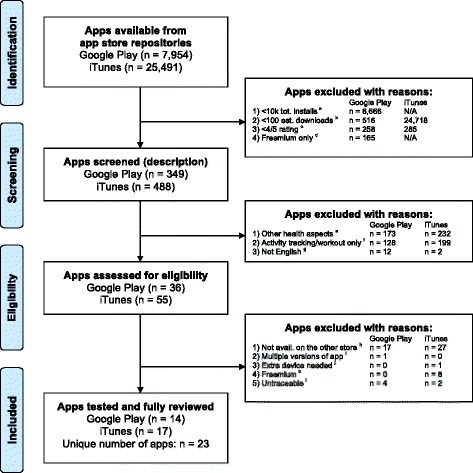
BACKGROUND: There are thousands of apps promoting dietary improvement, increased physical activity (PA) and weight management. Despite a growing number of reviews in this area, popular apps have not been comprehensively analysed in terms of features related to engagement, functionality, aesthetics, information quality, and content, including the types of change techniques employed. METHODS: The databases containing information about all Health and Fitness apps on GP and iTunes (7,954 and 25,491 apps) were downloaded in April 2015. Database filters were applied to select the most popular apps available in both stores. Two researchers screened the descriptions selecting only weight management apps. Features, app quality and content were independently assessed using the Mobile App Rating Scale (MARS) and previously-defined categories of techniques relevant to behaviour change. Inter-coder reliabilities were calculated, and correlations between features explored. RESULTS: Of the 23 popular apps included in the review 16 were free (70%), 15 (65%) addressed weight control, diet and PA combined; 19 (83%) allowed behavioural tracking. On 5-point MARS scales, apps were of average quality (Md = 3.2, IQR = 1.4); "functionality" (Md = 4.0, IQR = 1.1) was the highest and "information quality" (Md = 2.0, IQR = 1.1) was the lowest domain. On average, 10 techniques were identified per app (range: 1-17) and of the 34 categories applied, goal setting and self-monitoring techniques were most frequently identified. App quality was positively correlated with number of techniques included (rho = .58, p < .01) and number of "technical" features (rho = .48, p < .05), which was also associated with the number of techniques included (rho = .61, p < .01). Apps that provided tracking used significantly more techniques than those that did not. Apps with automated tracking scored significantly higher in engagement, aesthetics, and overall MARS scores. Those that used change techniques previously associated with effectiveness (i.e., goal setting, self-monitoring and feedback) also had better "information quality". CONCLUSIONS: Popular apps assessed have overall moderate quality and include behavioural tracking features and a range of change techniques associated with behaviour change. These apps may influence behaviour, although more attention to information quality and evidence-based content are warranted to improve their quality.
Overview
The claims and statistics of this paper haven’t been checked yet.
Free: it reads the open-access text and checks the first 5 claims that cite a source we can check. Create a free account to check every claim.
Integrity signals
Registry
Cites
Statistics
Figures
Verification
Claims the paper makes
The claims and statistics of this paper haven’t been checked yet.
Free: it reads the open-access text and checks the first 5 claims that cite a source we can check. Create a free account to check every claim.
Claims other papers make about this one
Each is checked against this paper’s own text: does it say what the citing paper says it does?
The source backs part of the claim, not all of it — or backs it for a different population, condition or comparison.
In the citing paper
“most commercial mobile apps for weight loss/management seem suboptimal in quality: inadequate scientific coverage, inaccurate weight-related information, lack important evidence-based features, do not involve health-care experts in their development process, overlook behavior change techniques, and have not undergone rigorous scientific testing [29–32]”
From Mobile Apps for the Management of Comorbid Overweight/Obesity and Depression/Anxiety: A Systematic Review (2020) · cites this paper as [31]
Experimental — accuracy not yet measuredThe cited source says what the claim attributes to it.
In the citing paper
“In addition, MARS has been diversely and widely used in evaluating smartphone-based health apps, for instance, pain management apps [31], weight management apps [32], diabetes management apps [33], and rheumatology apps [34,35].”
From Smartphone and mobile health apps for tinnitus: Systematic identification, analysis, and assessment (2020) · cites this paper as [32]
Self-check
Percentages, sums and reported differences re-computed from the paper’s own numbers.
The self-check needs the paper’s full text.
Citations
Cites
Michie, S., Richardson, M., Johnston, M., Abraham, C., Francis, J., Hardeman, W., Eccles, M. P., Cane, J., & Wood, C. E. (2013) · Annals of Behavioral Medicine · doi:10.1007/s12160-013-9486-6 · Cited by 7,629 · cited 1×
“Several systematic reviews of weight loss interventions in general have identified various techniques, which were associated with greater effectiveness [35].”
BackgroundSelf-citationNielsen, J. (1994) · Conference companion on Human factors in computing systems - CHI '94 · doi:10.1145/259963.260531 · Cited by 2,759
Carver, C. S., & Scheier, M. F. (1982) · Psychological Bulletin · doi:10.1037//0033-2909.92.1.111 · Cited by 2,650 · cited 1×
“From a psychological perspective, then, these apps generally target change mechanisms specified by Control Theory [47].”
BackgroundNielsen, J. (1995) · Conference companion on Human factors in computing systems - CHI '95 · doi:10.1145/223355.223730 · Cited by 2,620
A taxonomy of behavior change techniques used in interventions
Abraham, C., & Michie, S. (2008) · Health Psychology · doi:10.1037/0278-6133.27.3.379 · Cited by 2,525 · cited 3×
“, goal setting, self-monitoring, feedback [33, 37, 43]) were included in the analyses.”
BackgroundMethodSelf-citationMobile app rating scale: a new tool for assessing the quality of health mobile apps
Stoyanov, S. R., Hides, L., Kavanagh, D. J., Zelenko, O., Tjondronegoro, D., & Mani, M. (2015) · JMIR mHealth and uHealth · doi:10.2196/mhealth.3422 · Cited by 2,233 · cited 5×
“This instrument has been validated with mental health apps [40] but has not been applied to weight management apps.”
BackgroundMethodInfluentialMichie, S., Ashford, S., Sniehotta, F. F., Dombrowski, S. U., Bishop, A., & French, D. P. (2011) · Psychology & Health · doi:10.1080/08870446.2010.540664 · Cited by 1,756 · cited 2×
“Definitions were derived from taxonomies presenting definitions of technique types [33, 34] and 34 relevant categories were applied.”
BackgroundMethodFinding usability problems through heuristic evaluation
Nielsen, J. (1992) · Proceedings of the SIGCHI conference on Human factors in computing systems - CHI '92 · doi:10.1145/142750.142834 · Cited by 1,060 · cited 1×
“Additionally, the reviews assessing “usability” of apps provide evaluations based on heuristics for general user interfaces developed by Jacob Nielsen almost 20 years ago [38, 39], or use inductively-developed approaches [12, 17].”
BackgroundThe role of exercise and physical activity in weight loss and maintenance
Swift, D. L., Johannsen, N. M., Lavie, C. J., Earnest, C. P., & Church, T. S. (2014) · Progress in Cardiovascular Diseases · doi:10.1016/j.pcad.2013.09.012 · Cited by 855 · cited 1×
“Apps were included if they addressed “weight management”, which consists of both PA and dietary behavioural strategies [28], considering the limited role of PA and the predominant role of dietary strategies for effective weight loss [25, 27], and the importance of the combination of PA and diet for long-term effects o…”
BackgroundComputing Krippendorff's Alpha-Reliability
Krippendorff, K. (2011) · ScholarlyCommons (University of Pennsylvania) · Cited by 809
Research works printed but not linked: 1
- 44. Gwet KL. Handbook of inter-rater reliability: the definitive guide to measuring the extent of agreement among multiple raters, 3rd edition. 3rd ed. Gaithersburg: Advanced Analytics, LLC; 2012.
Cited by
Schoeppe, S., Alley, S., Van Lippevelde, W., Bray, N. A., Williams, S. L., Duncan, M. J., & Vandelanotte, C. (2016) · International Journal of Behavioral Nutrition and Physical Activity · doi:10.1186/s12966-016-0454-y · Cited by 949
“determine user engagement, retention and ultimately intervention efficacy [22].”
BackgroundAdams, J., Hillier-Brown, F. C., Moore, H. J., Lake, A. A., Araujo-Soares, V., White, M., & Summerbell, C. (2016) · Systematic Reviews · doi:10.1186/s13643-016-0337-y · Cited by 486
“Similar to other reviews [21], our synthesis focused on categorising interventions according to delivery setting and training model and summarising the training delivered, throughput, setup and running costs, funding, and behaviour change techniques used [22].”
ResultEvaluating mobile phone applications for health behaviour change: A systematic review
McKay, F. H., Cheng, C., Wright, A., Shill, J., Stephens, H., & Uccellini, M. (2018) · Journal of Telemedicine and Telecare · doi:10.1177/1357633x16673538 · Cited by 364
Villinger, K., Wahl, D. R., Boeing, H., Schupp, H. T., & Renner, B. (2019) · Obesity Reviews · doi:10.1111/obr.12903 · Cited by 292
“So far, however, most users and patients have relied on commercially available app‐based mobile health interventions that have not been empirically evaluated and rarely include evidence‐based strategies for behaviour change.(16,17) The effectiveness of app‐based mobile health interventions must be determined to enable…”
BackgroundSzinay, D., Jones, A., Chadborn, T., Brown, J., & Naughton, F. (2020) · Journal of Medical Internet Research · doi:10.2196/17572 · Cited by 289
“For example, there have been promising studies of apps, including (1) delivering health prevention messages for men who have sex with men [3], (2) self-managing diabetes [4] and cardiovascular diseases [5], (3) weight management [6-8], (4) alcohol reduction [9-11], (5) mental health interventions [12], and (6) managin…”
BackgroundValidation of the Mobile Application Rating Scale (MARS)
Terhorst, Y., Philippi, P., Sander, L. B., Schultchen, D., Paganini, S., Bardus, M., Santo, K., Knitza, J., Machado, G. C., Schoeppe, S., et al. (2020) · PLOS ONE · doi:10.1371/journal.pone.0241480 · Cited by 276
“In total, 15 of the 18 contacted research groups responded and agreed to share their data [3, 10, 12, 14, 15, 18, 19, 22, 24, 49–54].”
BackgroundSelf-citationSchoeppe, S., Alley, S., Rebar, A. L., Hayman, M., Bray, N. A., Van Lippevelde, W., Gnam, J.-P., Bachert, P., Direito, A., & Vandelanotte, C. (2017) · International Journal of Behavioral Nutrition and Physical Activity · doi:10.1186/s12966-017-0538-3 · Cited by 277
“(scale range: 1–5) based on at least 20 ratings in either the iTunes or Google Play store (as done elsewhere [22]).”
BackgroundMethodResultInfluentialMasterson Creber, R. M., Maurer, M. S., Reading, M., Hiraldo, G., Hickey, K. T., & Iribarren, S. (2016) · JMIR mHealth and uHealth · doi:10.2196/mhealth.5882 · Cited by 249
“The use of the MARS was a strength because it was rigorously developed [26] and has been used to evaluate apps related to mindfulness [34] and weight management [35].”
Mobile apps for healthy living: Factors influencing continuance intention for health apps
Yan, M., Filieri, R., Raguseo, E., & Gorton, M. (2021) · Technological Forecasting and Social Change · doi:10.1016/j.techfore.2021.120644 · Cited by 182
Using Health and Well-Being Apps for Behavior Change: A Systematic Search and Rating of Apps
McKay, F. H., Wright, A., Shill, J., Stephens, H., & Uccellini, M. (2019) · JMIR mHealth and uHealth · doi:10.2196/11926 · Cited by 182
“Using smartphone apps for healthy behavior change is an emerging area of investigation, and as a result, much of the current research is focused on the evaluation of single apps [14] and apps that have been purposely designed for a research project [6], or a small number of top-rated apps [15,16], rather than focusing…”
BackgroundFerrara, G., Kim, J., Lin, S., Hua, J., & Seto, E. (2019) · JMIR mHealth and uHealth · doi:10.2196/mhealth.9232 · Cited by 179
“In past reviews of diet-related health apps, it was found that adoption of behavior change theory tended to be quite poor [7-11].”
Knitza, J., Tascilar, K., Messner, E.-M., Meyer, M., Vossen, D., Pulla, A., Bosch, P., Kittler, J., Kleyer, A., Sewerin, P., et al. (2019) · JMIR mHealth and uHealth · doi:10.2196/14991 · Cited by 169
“We chose not to discuss and adapt conflicting results like others [11,14] because we believe this results in a falsification of data.”
BackgroundLentferink, A. J., Oldenhuis, H. K., de Groot, M., Polstra, L., Velthuijsen, H., & van Gemert-Pijnen, J. E. (2017) · Journal of Medical Internet Research · doi:10.2196/jmir.7288 · Cited by 162
“Similar to this scoping review’s results, other recent reviews on eHealth also observed the contribution to effectiveness of reminders [68,69], personalization [70], and integration of self-tracking and persuasive eCoaching [68,71].”
Quality of Publicly Available Physical Activity Apps: Review and Content Analysis
Bondaronek, P., Alkhaldi, G., Slee, A., Hamilton, F. L., & Murray, E. (2018) · JMIR mHealth and uHealth · doi:10.2196/mhealth.9069 · Cited by 156
“The coding manual provides guidelines to investigate the presence of 93 BCTs in behavior change interventions and has been used in previous studies that aimed to characterize BCTs in health apps [16,28,39-41].”
MethodThe German Version of the Mobile App Rating Scale (MARS-G): Development and Validation Study
Messner, E.-M., Terhorst, Y., Barke, A., Baumeister, H., Stoyanov, S., Hides, L., Kavanagh, D., Pryss, R., Sander, L., & Probst, T. (2020) · JMIR mHealth and uHealth · doi:10.2196/14479 · Cited by 156
“The MARS has been used to scientifically assess app quality in the following fields: weight management, physical activity, heart failure, diet in children and adolescents, medication adherence, mindfulness, back pain, chronic pain, smoking cessation, and depression [8,17-24].”
MethodInfluentialChallenges in Assessing Mobile Health App Quality
Grundy, Q. H., Wang, Z., & Bero, L. A. (2016) · American Journal of Preventive Medicine · doi:10.1016/j.amepre.2016.07.009 · Cited by 154
Leung, L., & Chen, C. (2019) · Telecommunications Policy · doi:10.1016/j.telpol.2019.01.005 · Cited by 151
Asbjørnsen, R. A., Smedsrød, M. L., Solberg Nes, L., Wentzel, J., Varsi, C., Hjelmesæth, J., & van Gemert-Pijnen, J. E. (2019) · Journal of Medical Internet Research · doi:10.2196/14265 · Cited by 150
“Finding the right mix of technological features to stimulate the motivation and adherence needed to support long-term weight loss maintenance is, therefore, still a conundrum [7].”
BackgroundGrainger, R., Townsley, H., White, B., Langlotz, T., & Taylor, W. J. (2017) · JMIR mHealth and uHealth · doi:10.2196/mhealth.6956 · Cited by 145
Chen, J., Lieffers, J., Bauman, A., Hanning, R., & Allman‐Farinelli, M. (2017) · Journal of Human Nutrition and Dietetics · doi:10.1111/jhn.12446 · Cited by 143
Patel, M. L., Hopkins, C. M., Brooks, T. L., & Bennett, G. G. (2019) · JMIR mHealth and uHealth · doi:10.2196/12209 · Cited by 129
“This app has high acceptability [36].”
Mobile Apps for Weight Management: A Review of the Latest Evidence to Inform Practice
Ghelani, D. P., Moran, L. J., Johnson, C., Mousa, A., & Naderpoor, N. (2020) · Frontiers in Endocrinology · doi:10.3389/fendo.2020.00412 · Cited by 128
“This then can lead to inaccurate and unreliable information (25, 26).”
BackgroundDIETOS: A dietary recommender system for chronic diseases monitoring and management
Agapito, G., Simeoni, M., Calabrese, B., Carè, I., Lamprinoudi, T., Guzzi, P. H., Pujia, A., Fuíano, G., & Cannataro, M. (2017) · Computer Methods and Programs in Biomedicine · doi:10.1016/j.cmpb.2017.10.014 · Cited by 139
McKay, F. H., Slykerman, S., & Dunn, M. (2019) · JMIR mHealth and uHealth · doi:10.2196/11130 · Cited by 118
“ReferenceHealth conditionLocationMethod Attwood et al [52]AlcoholUnited KingdomData usage and user feedback Direito et al [21]Physical activity and dietaryNew ZealandEstablished evaluation checklist (Abraham and Michie 2008) [33] Middelweerd et al [20]Health and FitnessThe NetherlandsEstablished evaluation checklist (…”
InfluentialSmartphone apps and the nutrition care process: Current perspectives and future considerations
Chen, J., Gemming, L., Hanning, R. M., & Allman-Farinelli, M. A. (2017) · Patient Education and Counseling · doi:10.1016/j.pec.2017.11.011 · Cited by 126
Mobile health app usability and quality rating scales: a systematic review
Azad-Khaneghah, P., Neubauer, N., Miguel Cruz, A., & Liu, L. (2021) · Disability and Rehabilitation: Assistive Technology · doi:10.1080/17483107.2019.1701103 · Cited by 115
Sander, L. B., Schorndanner, J., Terhorst, Y., Spanhel, K., Pryss, R., Baumeister, H., & Messner, E.-M. (2020) · European Journal of Psychotraumatology · doi:10.1080/20008198.2019.1701788 · Cited by 102
“Fifth, the MARS was chosen for the ratings because it is a currently widespread tool for classifying and evaluating the quality of apps for a variety of health conditions (Bardus et al., 2016; Chavez et al., 2017; Mani, Kavanagh, Hides, & Stoyanov, 2015; Santo et al., 2016).”
MethodKim, B. Y., Sharafoddini, A., Tran, N., Wen, E. Y., & Lee, J. (2018) · JMIR mhealth and uhealth · doi:10.2196/mhealth.8613 · Cited by 125
“This expert rating scale has been increasingly adopted in recent years for evaluating mHealth apps such as mindfulness [29], weight loss [25,30], smoking cessation [30], self-care [31], online well-being [32], and medication adherence [24].”
MethodResultInfluentialTurner‐McGrievy, G. M., Wilcox, S., Boutté, A., Hutto, B. E., Singletary, C., Muth, E. R., & Hoover, A. W. (2017) · Obesity · doi:10.1002/oby.21889 · Cited by 93
“Mobile health approaches to obesity treatment have the potential to reach a larger population than traditional face-to-face approaches (4), so it is important to include dietary self-monitoring approaches that are evidence-based, easy to use, and engaging (28,29).”
BackgroundImproving the public health impact of eHealth and mHealth interventions
Grady, A., Yoong, S., Sutherland, R., Lee, H., Nathan, N., & Wolfenden, L. (2018) · Australian and New Zealand Journal of Public Health · doi:10.1111/1753-6405.12771 · Cited by 79
Nutrition Concepts for the Treatment of Obesity in Adults
Wiechert, M., & Holzapfel, C. (2021) · Nutrients · doi:10.3390/nu14010169 · Cited by 136
“Although many apps are available for weight loss, digital offerings for weight management rarely include evidence-based strategies for behaviour change [92,93].”
BackgroundSolbrig, L., Jones, R., Kavanagh, D., May, J., Parkin, T., & Andrade, J. (2017) · Internet Interventions · doi:10.1016/j.invent.2016.12.003 · Cited by 86
“Apps with the most behaviour change techniques and userfriendliest design were rated highest in quality by two independent coders (Bardus et al., 2016; Tang et al., 2015).”
BackgroundMethodInfluentialTerhorst, Y., Rathner, E.-M., Baumeister, H., & Sander, L. (2018) · Verhaltenstherapie · doi:10.1159/000481692 · Cited by 84
“Nutzerratings sind irreführend, da sie von der Benutzerfreundlichkeit und der Funktionalität stärker beeinflusst werden als von der inhaltlichen Qualität [Armstrong, 2015; Bardus et al., 2016; Nicholas et al., 2015].”
BackgroundBrown, H. M., Bucher, T., Collins, C. E., & Rollo, M. E. (2019) · Maternal & Child Nutrition · doi:10.1111/mcn.12768 · Cited by 81
“Information was the second lowest scoring subcategory in this review, and this low score is in line with other reviews on app quality as Bardus et al. (2016), and Schoeppe et al. (2017) also found information to score poorly.”
BackgroundResultInfluentialMandracchia, F., Llauradó, E., Tarro, L., Valls, R. M., & Solà, R. (2020) · JMIR mhealth and uhealth · doi:10.2196/18339 · Cited by 87
“Specific inclusion and exclusion criteria were applied to limit the search to the most relevant and reliable apps, in line with previous studies [35,38,41,42].”
MethodResultFlore, G., Preti, A., Carta, M. G., Deledda, A., Fosci, M., Nardi, A. E., Loviselli, A., & Velluzzi, F. (2022) · Nutrients · doi:10.3390/nu14061259 · Cited by 80
“This shows that offering features to support specific technologies could improve the perceived functionality, aesthetics, and engagement of the app and lead to repeated use [26].”
BackgroundStatus of the research in fitness apps: A bibliometric analysis
Liu, Y., & Avelló, M. (2020) · Telematics and Informatics · doi:10.1016/j.tele.2020.101506 · Cited by 116
Winter, N., Russell, L., Ugalde, A., WHITE, V. M., & Livingston, P. M. (2022) · Journal of Medical Internet Research · doi:10.2196/30026 · Cited by 99
“Behavior change techniques, such as notifications and semiautomated tracking, have previously been adopted in app-based interventions and have shown a positive impact on improving engagement [22].”
BackgroundBidargaddi, N., Pituch, T., Maaieh, H., Short, C., & Strecher, V. (2018) · Preventive Medicine Reports · doi:10.1016/j.pmedr.2018.07.004 · Cited by 77
“There is a proliferation of mobile health apps using monitoring and feedback approaches to promote healthy behaviors (activity, healthy eating, sleep and mental wellbeing) with a large number of users (Abroms et al., 2011; Middelweerd et al., 2014; Bardus et al., 2016).”
BackgroundMobile Apps for Blood Pressure Monitoring: Systematic Search in App Stores and Content Analysis
Jamaladin, H., van de Belt, T. H., Luijpers, L. C., de Graaff, F. R., Bredie, S. J. H., Roeleveld, N., & van Gelder, M. M. H. J. (2018) · JMIR mhealth and uhealth · doi:10.2196/mhealth.9888 · Cited by 93
“In addition, we assessed the quality of the apps objectively using MARS [29], which has previously been used to evaluate app quality in several app reviews [35,47,48].”
BackgroundMethodResultInfluentialFlaherty, S. J., McCarthy, M. B., Collins, A., & McAuliffe, F. M. (2017) · Public Health Nutrition · doi:10.1017/s1368980017002889 · Cited by 92
“Integration of user quality components The selected mobile apps were of good user quality, in line with similar reviews((66,68)), although there are still areas for improvement especially in relation to engagement and”
MethodResultMobile Apps for Older Adults: Systematic Search and Evaluation Within Online Stores
Portenhauser, A. A., Terhorst, Y., Schultchen, D., Sander, L., Denkinger, M. D., Stach, M., Waldherr, N., Dallmeier, D., Baumeister, H., & Meßner, E.-M. (2021) · JMIR Aging · doi:10.2196/23313 · Cited by 90
“Other studies could also not find an association between the obligation to pay fees and mobile app quality [32,69].”
BackgroundResultThe fitness of apps: a theory-based examination of mobile fitness app usage over 5 months
Herrmann, L. K., & Kim, J. (2017) · mHealth · doi:10.21037/mhealth.2017.01.03 · Cited by 71
“Prior research suggests the necessity of theory-based apps for long-term adherence to health behavior change (7,8,10) or app developers use evidenced-based content in app development (10,29).”
BackgroundEdney, S. M., Bogomolova, S., Ryan, J. C., Olds, T., Sanders, I., & Maher, C. A. (2018) · Journal of Medical Internet Research · doi:10.2196/10911 · Cited by 81
“Wearables typically contain features that are found in health behavior interventions, for example, self-monitoring capabilities, which are well-established to have a potent influence on changing health behavior [18,19] are often a key feature.”
Edney, S., Plotnikoff, R., Vandelanotte, C., Olds, T., De Bourdeaudhuij, I., Ryan, J., & Maher, C. (2017) · BMC Public Health · doi:10.1186/s12889-017-4882-7 · Cited by 67
“A recent systematic review suggests that gamification is effective in increasing engagement with online programs [33] and two reviews of commercially available health and fitness apps suggested that gamification has the potential to enhance positive behaviour change [34, 35].”
BackgroundSocial Comparison Features in Physical Activity Promotion Apps: Scoping Meta-Review
Arigo, D., Brown, M. M., Pasko, K., & Suls, J. (2020) · Journal of Medical Internet Research · doi:10.2196/15642 · Cited by 66
“Although many of these apps are user-friendly and elicit high user engagement [4], most are designed without input from behavioral scientists or other health professionals and reach the market without rigorous scientific evaluation [5,6].”
BackgroundInfluentialAlyami, M., Giri, B., Alyami, H., & Sundram, F. (2017) · Evidence Based Mental Health · doi:10.1136/eb-2017-102664 · Cited by 66
“16 18–20 28–30 Included apps were available across the three main mobile platforms, which is unsurprising given the popularity of these platforms.”
BackgroundSiddique, A. B., Krebs, M., Alvarez, S., Greenspan, I., Patel, A., Kinsolving, J., & Koizumi, N. (2019) · JMIR mHealth and uHealth · doi:10.2196/12604 · Cited by 65
“MARS has been successfully applied in recent years to evaluate apps that assist mindfulness development [22], heart failure symptom monitoring and self-management [23], weight management [24], palliative care among pediatric patients [25], epilepsy self-management [26], and drug-drug interaction checking [27].”
BackgroundResultCovolo, L., Ceretti, E., Moneda, M., Castaldi, S., & Gelatti, U. (2017) · Patient Education and Counseling · doi:10.1016/j.pec.2017.07.032 · Cited by 75
Wang, J.-W., Zhu, Z., Shuling, Z., Fan, J., Yu, J., Gao, Z.-L., Chen, W.-D., & Li, X. (2024) · JMIR mhealth and uhealth · doi:10.2196/51478 · Cited by 100
“A previous study [70] focusing on app interventions targeting PA and SB in adults also identified feedback and monitoring as well as goals and planning as the most commonly used BCT clusters.”
MethodChen, J., Lieffers, J. R. L., Bauman, A. E., Hanning, R. M., & Allman-Farinelli, M. A. (2017) · JMIR mhealth and uhealth · doi:10.2196/mhealth.6945 · Cited by 71
Fawcett, E., van Velthoven, M. H., & Meinert, E. (2020) · JMIR mhealth and uhealth · doi:10.2196/13461 · Cited by 69
Robert, C., Erdt, M., Lee, J., Cao, Y., Naharudin, N. B., & Theng, Y.-L. (2021) · Journal of Medical Internet Research · doi:10.2196/15649 · Cited by 57
Dunn, C. G., Turner-McGrievy, G. M., Wilcox, S., & Hutto, B. (2019) · Journal of the Academy of Nutrition and Dietetics · doi:10.1016/j.jand.2019.03.013 · Cited by 57
Simons, D., De Bourdeaudhuij, I., Clarys, P., De Cocker, K., Vandelanotte, C., & Deforche, B. (2018) · JMIR mHealth and uHealth · doi:10.2196/10003 · Cited by 56
“Interactive app features such as notifications have been found to be essential for app engagement [72,73]; they are important as prompts for reuse of the app [74-76], and qualitative data also indicate that young adults want apps that include positively framed alerts or reminders (but not too frequently) [22,77].”
Mobile Apps for Dental Caries Prevention: Systematic Search and Quality Evaluation
Chen, R., Santo, K., Wong, G. K. M., Sohn, W., Spallek, H., Chow, C. K., & Irving, M. J. (2021) · JMIR mhealth and uhealth · doi:10.2196/19958 · Cited by 72
Gong, E., Zhang, Z., Jin, X., Liu, Y., Zhong, L., Wu, Y., Zhong, X., Yan, L. L., & Oldenburg, B. (2020) · JMIR mHealth and uHealth · doi:10.2196/14836 · Cited by 55
“We observed a consistent pattern with previous reviews showing that most of the apps performed better in the domains of functionality and aesthetics but poorly in information and engagement [18,27,32].”
MethodResultInfluentialBahadori, S., Wainwright, T. W., & Ahmed, O. H. (2018) · Disability and Rehabilitation · doi:10.1080/09638288.2018.1514661 · Cited by 56
“The quality assessment of each app was derived from the MARS, with this approach being similar to that used in similar app review [33,34].”
MethodEscriche-Escuder, A., De-Torres, I., Roldán‐Jiménez, C., Martín‐Martín, J., Muro-Culebras, A., González‐Sánchez, M., Ruiz‐Muñoz, M., Mayoral, F., Biró, A., Tang, W. J., et al. (2020) · International Journal of Environmental Research and Public Health · doi:10.3390/ijerph17249209 · Cited by 55
Baretta, D., Perski, O., & Steca, P. (2019) · JMIR mHealth and uHealth · doi:10.2196/11636 · Cited by 52
“For example, a review of health and fitness apps found a positive association between engagement and the inclusion of interactive features such as behavioral tracking and semi-automated options [16].”
BackgroundResultMobile Apps for Management of Tinnitus: Users’ Survey, Quality Assessment, and Content Analysis
Sereda, M., Smith, S., Newton, K., & Stockdale, D. (2019) · JMIR mHealth and uHealth · doi:10.2196/10353 · Cited by 52
“This is in line with the results of previous studies using MARS for quality assessment of weight management apps [18], prevention of driving after drinking alcohol apps [19], and mindfulness-based apps [20], where functionality scores were also the highest.”
ResultPersonalizing Mobile Fitness Apps using Reinforcement Learning.
Zhou, M., Mintz, Y. D., Fukuoka, Y., Goldberg, K. Y., Flowers, E., Kaminsky, P., Castillejo, A., & Aswani, A. J. (2018) · PubMed · Cited by 90
A review of pregnancy apps freely available in the Google Play Store
Brown, H., Bucher, T., Collins, C. E., & Rollo, M. E. (2019) · Health Promotion Journal of Australia · doi:10.1002/hpja.270 · Cited by 62
Behavior Change Techniques Incorporated in Fitness Trackers: Content Analysis
Chia, G. L. C., Anderson, A., & McLean, L. A. (2019) · JMIR mHealth and uHealth · doi:10.2196/12768 · Cited by 50
“This finding is similar to those from previous studies of fitness trackers [52-54] and apps [56,58] targeting physical activity, and they also overlap with reviews of BCTs that were rated as important by users of fitness trackers [55].”
Nutrition-Related Mobile Apps in the China App Store: Assessment of Functionality and Quality
Li, Y., Ding, J., Wang, Y., Tang, C., & Zhang, P. (2019) · JMIR mhealth and uhealth · doi:10.2196/13261 · Cited by 56
“We selected which technological features and market-related functionalities to study based on previous analyses and tailored this to the characteristics of our downloaded apps [17,18].”
MethodDomhardt, M., Messner, E.-M., Eder, A.-S., Engler, S., Sander, L. B., Baumeister, H., & Terhorst, Y. (2021) · Child and Adolescent Psychiatry and Mental Health · doi:10.1186/s13034-021-00401-6 · Cited by 43
Maringer, M., Veer, P. V., Klepacz, N. A., Verain, M. C. D., Normann, A., Ekman, S., Timotijević, L., Raats, M. M., & Geelen, A. (2018) · Nutrition Journal · doi:10.1186/s12937-018-0366-6 · Cited by 57
Bogaerts, A., Ameye, L., Bijlholt, M., Amuli, K., Heynickx, D., & Devlieger, R. (2017) · BMC Pregnancy and Childbirth · doi:10.1186/s12884-017-1336-2 · Cited by 46
“Mobile applications are excellent tools to incorporate such behavioural change techniques for intervention efforts promoting a healthy lifestyle [32] that have been found effective in health behaviour change and weight loss [33].”
BackgroundThe Arabic Version of the Mobile App Rating Scale: Development and Validation Study
Bardus, M., Awada, N., Ghandour, L. A., Fares, E.-J., Gherbal, T., Al-Zanati, T., & Stoyanov, S. R. (2020) · JMIR mhealth and uhealth · doi:10.2196/16956 · Cited by 52
“Although there might be slight differences in the apps across iOS and Android operating systems, we have already established that these differences are not substantial [38].”
BackgroundResultSelf-citationRethinking the Use of Mobile Apps for Dietary Assessment in Medical Research
Khazen, W., Jeanne, J.-F., Demaretz, L., Schäfer, F., & Fagherazzi, G. (2020) · Journal of Medical Internet Research · doi:10.2196/15619 · Cited by 50
“Some of the reviews evaluate functionality, information quality, esthetics, and engagement [22]; others evaluate the accountability, usability, scientific coverage, and technology-enhanced features based on the opinions of nutrition experts who had tested different apps for 5 days [23].”
BackgroundUser Perspectives of Diet-Tracking Apps: Reviews Content Analysis and Topic Modeling
Zečević, M., Mijatović, D., Koklič, M. K., Žabkar, V., & Gidaković, P. (2021) · Journal of Medical Internet Research · doi:10.2196/25160 · Cited by 57
“These aspects require more academic research into user reviews [22], especially as functionality and appearance often have greater contributions to the popularity of dieting apps than the quality of the information provided by the app [28].”
BackgroundUse of artificial intelligence in precision nutrition and fitness
Lopes, M. H. B. D. M., Ferreira, D. D., Ferreira, A. C. B. H., da Silva, G. R., Caetano, A. S., & Braz, V. N. (2020) · Elsevier eBooks · doi:10.1016/b978-0-12-817133-2.00020-3 · Cited by 66
Bardus, M., Ali, A., Demachkieh, F., & Hamadeh, G. (2019) · JMIR mHealth and uHealth · doi:10.2196/mhealth.9836 · Cited by 44
“According to several app audits or reviews, mobile phone apps include features that can trigger cognitive processes underpinning effective behavior change strategies or techniques [30-35], combining principles derived from self-determination theory [22,23] and persuasive technology [36,37].”
InfluentialSelf-citationSystematic evaluation of content and quality of English and German pain apps in European app stores
Terhorst, Y., Meßner, E.-M., Schultchen, D., Paganini, S., Portenhauser, A. A., Eder, A.-S., Bauer, M., Papenhoff, M. C., Baumeister, H., & Sander, L. (2021) · Internet Interventions · doi:10.1016/j.invent.2021.100376 · Cited by 47
DiFilippo, K. N., Huang, W. D., & Chapman‐Novakofski, K. (2017) · JMIR mhealth and uhealth · doi:10.2196/mhealth.7441 · Cited by 52
“Although not originally designed for nutrition apps, one recent study used the first four MARS categories to evaluate weight loss apps, finding that IRR between 2 raters was good, with median Krippendorf alpha=.80 and interquartile range=.14 [31].”
Shinozaki, N., & Murakami, K. (2020) · Nutrients · doi:10.3390/nu12113327 · Cited by 52
“Since there are a substantial number of apps available, selecting a high-quality, fit-for-purpose tool is a major challenge [2,17].”
BackgroundLau, N., O’Daffer, A., Yi‐Frazier, J. P., & Rosenberg, A. R. (2021) · JMIR mhealth and uhealth · doi:10.2196/29689 · Cited by 57
“We observed overall MARS scores that were comparable to other reviews of self-management apps [12,19,20].”
ResultLambert, K., Mullan, J., Mansfield, K. J., & Owen, P. (2017) · Journal of Renal Nutrition · doi:10.1053/j.jrn.2017.06.007 · Cited by 45
Quality of Physical Activity Apps: Systematic Search in App Stores and Content Analysis
Paganini, S., Terhorst, Y., Sander, L., Catic, S., Balci, S., Küchler, A., Schultchen, D., Plaumann, K., Sturmbauer, S. C., Krämer, L. V., et al. (2021) · JMIR mhealth and uhealth · doi:10.2196/22587 · Cited by 51
“The only relevant predictor for overall app quality was the number of functions, which is in line with previous results for apps reviews aiming at weight management, diet, physical activity, and sedentary behavior [16,22,29].”
BackgroundResultInfluentialBasen‐Engquist, K., Alfano, C. M., Maitin‐Shepard, M., Thomson, C. A., Schmitz, K. H., Pinto, B. M., Stein, K., Zucker, D. S., Syrjala, K. L., Fallon, E. A., et al. (2017) · Obesity · doi:10.1002/oby.22031 · Cited by 50
Smartphone and mobile health apps for tinnitus: Systematic identification, analysis, and assessment
Mehdi, M., Stach, M., Riha, C., Neff, P., Dode, A., Pryss, R., Schlee, W., Reichert, M., & Hauck, F. J. (2020) · JMIR mHealth and uHealth · doi:10.2196/21767 · Cited by 40
“In addition, MARS has been diversely and widely used in evaluating smartphone-based health apps, for instance, pain management apps [31], weight management apps [32], diabetes management apps [33], and rheumatology apps [34,35].”
BackgroundHayman, M., Alfrey, K.-L., Cannon, S., Alley, S., Rebar, A. L., Williams, S., Short, C. E., Altazan, A., Comardelle, N., Currie, S., et al. (2021) · JMIR mHealth and uHealth · doi:10.2196/23649 · Cited by 39
“Our study found an association between the number of BCTs and improved MARS engagement and aesthetics scores, which is consistent with the findings from a review investigating apps for weight management in adults [22].”
BackgroundMethodResultInfluentialSimões, P., Silva, A. G., Amaral, J., Queirós, A., Rocha, N. P., & Rodrigues, M. J. F. (2018) · JMIR mhealth and uhealth · doi:10.2196/11281 · Cited by 40
“For subscale A, the reliability for the MARS ICC was 0.83 (95% CI 0.63-0.92); for subscale B, it was 0.88 (95% CI 0.78-0.93); for subscale C, it was 0.90 (95% CI 0.78-0.95); and for subscale D, it was 0.93 (95% CI 0.70-0.97).”
BackgroundMethodResultInfluentialHolzmann, S. L., & Holzapfel, C. (2019) · Journal of Personalized Medicine · doi:10.3390/jpm9020031 · Cited by 48
Tonkin, E., Brimblecombe, J. K., & Wycherley, T. P. (2017) · Advances in Nutrition · doi:10.3945/an.116.013748 · Cited by 45
“Similarly, the use of a strategic approach for application design, whether it be an interactive user-centered approach or mapping features to behavioral change theory, is known to be a critical step toward ensuring application effectiveness, engagement (21, 27), and quality (22).”
BackgroundEk, A. E., Alexandrou, C., Nyström, C. D., Direito, A., Eriksson, U., Hammar, U., Henriksson, P., Maddison, R., Lagerros, Y. T., & Löf, M. (2018) · BMC Public Health · doi:10.1186/s12889-018-5658-4 · Cited by 41
Li, X., Yin, A., Choi, H. Y., Chan, V., Allman-Farinelli, M. A., & Chen, J. (2024) · Nutrients · doi:10.3390/nu16152573 · Cited by 62
“These findings align with other studies using the MARS tool to assess weight management and food or nutrition app quality [30–32].”
ResultVirtual Reality in the Treatment of Patients with Overweight and Obesity: A Systematic Review
Al‐Rasheed, A., Alabdulkreem, E. A., Alduailij, M. A., Alduailij, M. A., Alhalabi, W., Alharbi, S., & Lytras, M. D. (2022) · Sustainability · doi:10.3390/su14063324 · Cited by 40
“Finally, commercial online weight loss programs have emerged as a potentially cost-effective alternative to standard empirically validated behavioral weight-loss programs, which differ greatly in terms of the extent to which they combine evidence-based weight loss methods and skills [60].”
BackgroundBehavior change techniques in mobile applications for sedentary behavior
Dunn, E. E., Gainforth, H. L., & Robertson-Wilson, J. E. (2018) · DIGITAL HEALTH · doi:10.1177/2055207618785798 · Cited by 35
“28 Thus, incorporating BCT features could lead to better engagement and long-term use.”
BackgroundMauch, C. E., Wycherley, T. P., Laws, R., Johnson, B. J., Bell, L., & Golley, R. K. (2018) · JMIR mhealth and uhealth · doi:10.2196/11867 · Cited by 40
“Apps were included if they were applicable to parents with children, written in the English language, and had a user rating of at least four stars in the Google Play Store (to ensure that only popular, functional apps were reviewed) [31].”
BackgroundMethodResultInfluentialFrie, K., Hartmann‐Boyce, J., Jebb, S. A., Albury, C., Nourse, R., & Aveyard, P. N. (2017) · JMIR mhealth and uhealth · doi:10.2196/mhealth.8791 · Cited by 44
“For instance, Bardus and colleagues assessed behavior change techniques (BCTs) of weight management apps in 2015 and found that the most prominent ones were based on self-monitoring, goal setting, and feedback [16].”
BackgroundSmartphone Applications to Perform Body Balance Assessment: a Standardized Review
Moral-Muñoz, J. A., Esteban-Moreno, B., Herrera‐Viedma, E., Cobo, M. J., & Pérez, I. J. (2018) · Journal of Medical Systems · doi:10.1007/s10916-018-0970-1 · Cited by 37
Patient focused oral hygiene apps: an assessment of quality (using MARS) and knowledge content
Sharif, M. O., & Alkadhimi, A. F. (2019) · BDJ · doi:10.1038/s41415-019-0665-0 · Cited by 41
Radcliffe, E. M., Lippincott, B., Anderson, R. K., & Jones, M. (2021) · International Journal of Environmental Research and Public Health · doi:10.3390/ijerph18073669 · Cited by 40
“We identified the three top-rated, commercially available weight management apps, based on subject-matter-expert recommendations [15,16] and comprehensive reviews evaluating popular mHealth apps for general usability and effectiveness [13,14,17,18].”
BackgroundMethodSharpe, J. D., & Kamara, M. T. B. (2018) · Sexual Health · doi:10.1071/sh18120 · Cited by 34
Motivating consumers for health and fitness: The role of app features
Stancu, V., Frank, D., Lähteenmäki, L., & Grunert, K. G. (2022) · Journal of Consumer Behaviour · doi:10.1002/cb.2108 · Cited by 42
Bao, H., & Lee, E. W. J. (2023) · Behaviour and Information Technology · doi:10.1080/0144929x.2023.2183062 · Cited by 38
“Bardus et al. (2016) reviewed 23 popular weight control apps and found that the popularity of apps was closely related to design aesthetics.”
BackgroundStance4Health Nutritional APP: A Path to Personalized Smart Nutrition
Hinojosa-Nogueira, D., Ortiz-Viso, B., Navajas-Porras, B., Pérez-Burillo, S., González-Vigil, V., Pastoriza, S., & Rufián‐Henares, J. Á. (2023) · Nutrients · doi:10.3390/nu15020276 · Cited by 35
“However, there are some limitations, mostly concerning data accuracy, limited nutrient or food data, subjectivity in the scales provided or in estimating portion sizes and digital illiteracy [21,22].”
BackgroundMethodPatel, M. L., Brooks, T. L., & Bennett, G. G. (2019) · Journal of Behavioral Medicine · doi:10.1007/s10865-019-00091-8 · Cited by 31
Bardus, M., Daccache, M. A., Maalouf, N., Sarih, R. A., & Elhajj, I. H. (2022) · JMIR mhealth and uhealth · doi:10.2196/35195 · Cited by 32
“We adopted a systematic search, selection, and identification process using different sources [62].”
MethodSelf-citation
Metadata
- Authors
- Bardus, M., van Beurden, S. B., Smith, J. R., & Abraham, C.
- Affiliations
- University of Exeter (GB)
- Corresponding author
- Bardus, Marco
- Venue
- International Journal of Behavioral Nutrition and Physical Activity
- Published
- 2016-03-10
- Volume
- 13
- Issue
- 1
- Pages
- 35-35
- ISSN
- 1479-5868 (ISSN-L)
- PMC
- PMC4785735
- OpenAlex
- W2296522110
- Cited by
- 350
- References
- 43
- Citations by year
- 2026: 10 · 2025: 33 · 2024: 23 · 2023: 30 · 2022: 38 · 2021: 52 · 2020: 39 · 2019: 36 · 2018: 44 · 2017: 36 · 2016: 9
- FWCI
- 7.95
- Type
- journal article
- Language
- en
- Open access
- gold
- doi.org
- Licence
- cc-by
- Locations
- International Journal of Behavioral Nutrition and Physical Activity (publishedVersion, cc-by)
- Europe PMC (PubMed Central) (publishedVersion, cc-by)
- PubMed Central (publishedVersion, cc-by)
- PubMed (publishedVersion)
- Open Research Exeter (University of Exeter) (publishedVersion, cc-by)
- University of Birmingham Research Portal (University of Birmingham) (publishedVersion, other-oa)
- Minerva Access (University of Melbourne) (submittedVersion, cc-by)
- Own your potential (DEAKIN) (submittedVersion)
- Figshare (submittedVersion, cc-by)
- Figshare (submittedVersion)
- Funders
- Schweizerischer Nationalfonds zur Förderung der Wissenschaftlichen Forschung (CH) (152290)
- Topics
- Health Sciences › Health Professions › General Health Professions › Mobile Health and mHealth Applications
- Social Sciences › Psychology › Applied Psychology › Digital Mental Health Interventions
- Physical Sciences › Computer Science › Human-Computer Interaction › Innovative Human-Technology Interaction
- Keywords
- mobile health apps, app quality, behaviour change techniques, self-monitoring, goal setting, feedback, information quality, app functionality, app aesthetics, user engagement, dietary improvement, physical activity, behavioral tracking, Mobile App Rating Scale, evidence-based content, health information quality, fitness apps, diet apps, exercise apps
- MeSH terms
- Body Weight Maintenance, Commerce, Diet, Esthetics, Humans, Obesity, Health Behavior, Exercise, Mobile Applications
About these checks
Registry, retraction, Cites and statistics results are computed, not judged, with one exception: a printed reference that no index lists is read once by a model before it counts as a citation error. Claims are extracted by a model and kept only when their quote appears verbatim in the text; each cited source is then checked, with a model’s help, for whether it says what the claim relies on. Those verdicts can be wrong — read the claim’s quote and the cited source before relying on one.
Statistics and arithmetic are recomputed, not judged.
Confidence bands are shown only for fields calibrated on our annotated test set. None is calibrated yet, so no band is shown.
What counts as a claim ›How we measure confidence ›How we check this ›
Are you an author, or do you see a problem with this page? Request a review
Data sources
Bibliographic data: Semantic Scholar, OpenAlex, Crossref.
Contains information from the Semantic Scholar Academic Graph Datasets, made available under the ODC Attribution License (ODC-BY 1.0).
Semantic Scholar’s data is described in: Kinney, R., et al. (2023). The Semantic Scholar Open Data Platform. arXiv:2301.10140.
