

A review and content analysis of engagement, functionality, aesthetics, information quality, and change techniques in the most popular commercial apps for weight management
Open accessThe DOI matches its Crossref record; 43 of the 43 references it cites were found in a registry or an index.
Abstract
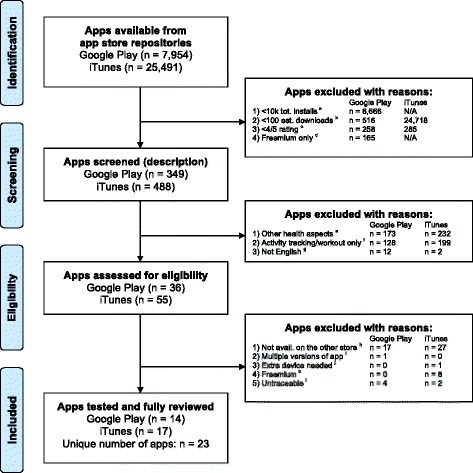
BACKGROUND: There are thousands of apps promoting dietary improvement, increased physical activity (PA) and weight management. Despite a growing number of reviews in this area, popular apps have not been comprehensively analysed in terms of features related to engagement, functionality, aesthetics, information quality, and content, including the types of change techniques employed. METHODS: The databases containing information about all Health and Fitness apps on GP and iTunes (7,954 and 25,491 apps) were downloaded in April 2015. Database filters were applied to select the most popular apps available in both stores. Two researchers screened the descriptions selecting only weight management apps. Features, app quality and content were independently assessed using the Mobile App Rating Scale (MARS) and previously-defined categories of techniques relevant to behaviour change. Inter-coder reliabilities were calculated, and correlations between features explored. RESULTS: Of the 23 popular apps included in the review 16 were free (70%), 15 (65%) addressed weight control, diet and PA combined; 19 (83%) allowed behavioural tracking. On 5-point MARS scales, apps were of average quality (Md = 3.2, IQR = 1.4); "functionality" (Md = 4.0, IQR = 1.1) was the highest and "information quality" (Md = 2.0, IQR = 1.1) was the lowest domain. On average, 10 techniques were identified per app (range: 1-17) and of the 34 categories applied, goal setting and self-monitoring techniques were most frequently identified. App quality was positively correlated with number of techniques included (rho = .58, p < .01) and number of "technical" features (rho = .48, p < .05), which was also associated with the number of techniques included (rho = .61, p < .01). Apps that provided tracking used significantly more techniques than those that did not. Apps with automated tracking scored significantly higher in engagement, aesthetics, and overall MARS scores. Those that used change techniques previously associated with effectiveness (i.e., goal setting, self-monitoring and feedback) also had better "information quality". CONCLUSIONS: Popular apps assessed have overall moderate quality and include behavioural tracking features and a range of change techniques associated with behaviour change. These apps may influence behaviour, although more attention to information quality and evidence-based content are warranted to improve their quality.
Overview
The claims and statistics of this paper haven’t been checked yet.
Free: it reads the open-access text and checks the first 5 claims that cite a source we can check. Create a free account to check every claim.
Integrity signals
Registry
Cites
Statistics
Figures
Verification
Claims the paper makes
The claims and statistics of this paper haven’t been checked yet.
Free: it reads the open-access text and checks the first 5 claims that cite a source we can check. Create a free account to check every claim.
Claims other papers make about this one
Each is checked against this paper’s own text: does it say what the citing paper says it does?
The source backs part of the claim, not all of it — or backs it for a different population, condition or comparison.
In the citing paper
“most commercial mobile apps for weight loss/management seem suboptimal in quality: inadequate scientific coverage, inaccurate weight-related information, lack important evidence-based features, do not involve health-care experts in their development process, overlook behavior change techniques, and have not undergone rigorous scientific testing [29–32]”
From Mobile Apps for the Management of Comorbid Overweight/Obesity and Depression/Anxiety: A Systematic Review (2020) · cites this paper as [31]
Experimental — accuracy not yet measuredThe cited source says what the claim attributes to it.
In the citing paper
“In addition, MARS has been diversely and widely used in evaluating smartphone-based health apps, for instance, pain management apps [31], weight management apps [32], diabetes management apps [33], and rheumatology apps [34,35].”
From Smartphone and mobile health apps for tinnitus: Systematic identification, analysis, and assessment (2020) · cites this paper as [32]
Self-check
Percentages, sums and reported differences re-computed from the paper’s own numbers.
The self-check needs the paper’s full text.
Citations
Cites
Michie, S., Richardson, M., Johnston, M., Abraham, C., Francis, J., Hardeman, W., Eccles, M. P., Cane, J., & Wood, C. E. (2013) · Annals of Behavioral Medicine · doi:10.1007/s12160-013-9486-6 · Cited by 7,629 · cited 1×
“Several systematic reviews of weight loss interventions in general have identified various techniques, which were associated with greater effectiveness [35].”
BackgroundSelf-citationNielsen, J. (1994) · Conference companion on Human factors in computing systems - CHI '94 · doi:10.1145/259963.260531 · Cited by 2,759
Carver, C. S., & Scheier, M. F. (1982) · Psychological Bulletin · doi:10.1037//0033-2909.92.1.111 · Cited by 2,650 · cited 1×
“From a psychological perspective, then, these apps generally target change mechanisms specified by Control Theory [47].”
BackgroundNielsen, J. (1995) · Conference companion on Human factors in computing systems - CHI '95 · doi:10.1145/223355.223730 · Cited by 2,620
A taxonomy of behavior change techniques used in interventions
Abraham, C., & Michie, S. (2008) · Health Psychology · doi:10.1037/0278-6133.27.3.379 · Cited by 2,525 · cited 3×
“, goal setting, self-monitoring, feedback [33, 37, 43]) were included in the analyses.”
BackgroundMethodSelf-citationMobile app rating scale: a new tool for assessing the quality of health mobile apps
Stoyanov, S. R., Hides, L., Kavanagh, D. J., Zelenko, O., Tjondronegoro, D., & Mani, M. (2015) · JMIR mHealth and uHealth · doi:10.2196/mhealth.3422 · Cited by 2,233 · cited 5×
“This instrument has been validated with mental health apps [40] but has not been applied to weight management apps.”
BackgroundMethodInfluentialMichie, S., Ashford, S., Sniehotta, F. F., Dombrowski, S. U., Bishop, A., & French, D. P. (2011) · Psychology & Health · doi:10.1080/08870446.2010.540664 · Cited by 1,756 · cited 2×
“Definitions were derived from taxonomies presenting definitions of technique types [33, 34] and 34 relevant categories were applied.”
BackgroundMethodFinding usability problems through heuristic evaluation
Nielsen, J. (1992) · Proceedings of the SIGCHI conference on Human factors in computing systems - CHI '92 · doi:10.1145/142750.142834 · Cited by 1,060 · cited 1×
“Additionally, the reviews assessing “usability” of apps provide evaluations based on heuristics for general user interfaces developed by Jacob Nielsen almost 20 years ago [38, 39], or use inductively-developed approaches [12, 17].”
BackgroundThe role of exercise and physical activity in weight loss and maintenance
Swift, D. L., Johannsen, N. M., Lavie, C. J., Earnest, C. P., & Church, T. S. (2014) · Progress in Cardiovascular Diseases · doi:10.1016/j.pcad.2013.09.012 · Cited by 855 · cited 1×
“Apps were included if they addressed “weight management”, which consists of both PA and dietary behavioural strategies [28], considering the limited role of PA and the predominant role of dietary strategies for effective weight loss [25, 27], and the importance of the combination of PA and diet for long-term effects o…”
BackgroundComputing Krippendorff's Alpha-Reliability
Krippendorff, K. (2011) · ScholarlyCommons (University of Pennsylvania) · Cited by 809
Research works printed but not linked: 1
- 44. Gwet KL. Handbook of inter-rater reliability: the definitive guide to measuring the extent of agreement among multiple raters, 3rd edition. 3rd ed. Gaithersburg: Advanced Analytics, LLC; 2012.
Cited by
Items 201–300 of 349
Simón-Grima, J., Martín-Salvador, A. S., Marcén, N. C. E., & Seral, J. C. (2020) · Retos · doi:10.47197/retos.v0i39.80078 · Cited by 14
PSIXPORT: Mobile App for Ecological Momentary Assessment of Psychological Dimensions in Sport Injury
González-Barato, L. J., Rubio, V. J., Hernández, J. M., & Sánchez‐Iglesias, I. (2021) · Frontiers in Psychology · doi:10.3389/fpsyg.2021.697293 · Cited by 11
Gupta, K., Roy, S., Altameem, A., Kumar, R., Saudagar, A. K. J., & Poonia, R. C. (2022) · International Journal of Environmental Research and Public Health · doi:10.3390/ijerph19126999 · Cited by 11
“[23] analyzed the efficiency and information related to the prominent weight management applications on iTunes and Google Play and subsequently described their features.”
BackgroundThe need for a personalized, core digital resource to facilitate health self-management
Abraham, C., Borland, R., & McNeill, I. M. (2023) · Preventive Medicine · doi:10.1016/j.ypmed.2023.107569 · Cited by 12
Self-citationmHealth 101: an Introductory Guide for Mobile Apps in Clinical Practice
Perry, K., Shearer, E. M., Sylvers, P. D., Carlile, J. A., & Felker, B. L. (2019) · Journal of Technology in Behavioral Science · doi:10.1007/s41347-019-00108-8 · Cited by 8
Miller, K., & Jerome, G. J. (2022) · JMIR Rehabilitation and Assistive Technologies · doi:10.2196/42923 · Cited by 9
“A large number of smartphone apps and technologies are designed to help individuals adopt and adhere to weight loss–related behaviors [9-11].”
BackgroundUribe, A. L. M., DiFilippo, K. N., Jarnell, K., & Patterson, J. A. (2023) · Journal of Nutrition Education and Behavior · doi:10.1016/j.jneb.2023.05.249 · Cited by 6
Han, Y., Tian, Q., Xu, M., Zhao, W., Wang, Z., & Zhang, W. (2024) · Journal of Clinical Nursing · doi:10.1111/jocn.17560 · Cited by 12
The role of artificial intelligence in precision exercise nutrition: a shift from data to diets
Nasb, M., Zhang, Y., & Chen, N. (2025) · Food Science and Human Wellness · doi:10.26599/fshw.2025.9250623 · Cited by 10
Banal, M. G., Bongga, D. C., Angbengco, J. M., Amarra, S., & Panlasigui, L. N. (2024) · BMJ Nutrition Prevention & Health · doi:10.1136/bmjnph-2023-000770 · Cited by 9
“1 3–5 In this study, however, Bland-Altman plots showed overall weak agreement between MyFitnessPal and FCT in estimating the energy and macronutrient intakes of Filipino adults with obesity.”
BackgroundMethodEvaluating mobile mental health apps using the mobile application rating scale (MARS) in the U.S.
Ki, E., Jang, J., & Kang, D.-Y. (2024) · Advances in Mental Health · doi:10.1080/18387357.2024.2388680 · Cited by 8
“Bardus et al. (2016) evaluated weight management apps with the MARS.”
Apps for Hearing Healthcare: Trends, Challenges, and Potential Opportunities
Paglialonga, A., Pinciroli, F., & Tognola, G. (2018) · Advances in medical technologies and clinical practice book series · doi:10.4018/978-1-5225-8191-8.ch007 · Cited by 9
An Evaluation of Free Medical Applications for Android Smartphones
Capraș, R. D., & Bolboaca, S. D. (2016) · Applied Medical Informaticvs · Cited by 13
Scaling Science-Based Approaches Beyond the Clinic
Wojtanowski, A. C., & Foster, G. D. (2019) · Springer eBooks · doi:10.1007/978-3-030-25173-4_13 · Cited by 7
Mien, T. Y. S., Perialathan, K., Ahmad, M., Juatan, N., Majid, N. L. A., & Johari, M. Z. (2021) · JMIR Pediatrics and Parenting · doi:10.2196/24156 · Cited by 9
“Concerning the evaluation of mHealth app (design quality and packaging) quality criteria using the Mobile App Rating Scale (MARS) as proposed by Stoyanov et al [34,35], users relayed their satisfaction with the ChildSafe app.”
MethodSharma, V., Payal, R., Dutta, K., Poulose, J., & Kapse, M. (2024) · Cogent Business & Management · doi:10.1080/23311975.2024.2391124 · Cited by 18
“…application provides, encompassing dimensions such as personalization, usefulness, completeness, ease of understanding, timeliness, and relevance (Bardus et al., 2016; elsotouhy et al., 2022; stoyanov et al., 2015; Urbach & Müller, 2012; Zhou, 2011). high iQ ensures that users receive accurate,…”
Elliott, L. R., White, M. P., Fleming, L. E., Abraham, C., & Taylor, A. H. (2020) · Health Promotion International · doi:10.1093/heapro/daaa150 · Cited by 10
Self-citationMolina‐Luque, R., Molina‐Recio, G., & Romero‐Saldaña, M. (2021) · Nutrición Hospitalaria · doi:10.20960/nh.03385 · Cited by 5
“For the end user, functionalities and ease of use (especially in data entry), free-of-charge downloading, and to a lesser extent privacy are usually the most critical variables for selecting and using a health app (14,23, 25,30,39,40,45,48,51,52).”
InfluentialStiles‐Shields, C., Garcia, B., Villota, K., Wartman, E. C., Winning, A. M., & Holmbeck, G. N. (2019) · JMIR Pediatrics and Parenting · doi:10.2196/15153 · Cited by 9
“Learnability, or how well a user can complete tasks during the first interaction(s) on an app [18], was the usability attribute of interest.”
BackgroundMethodInfluentialMobile Fitness and Weight Management Apps: Protocol for a Quality Evaluation
Milne‐Ives, M., Lam, C., van Velthoven, M. H., & Meinert, E. (2020) · JMIR Research Protocols · doi:10.2196/17685 · Cited by 8
“However, testing for these evaluations was conducted in August 2014 [12] and the beginning of 2015 [11].”
BackgroundMethodResultInfluentialRyan, K., Murphy, L. E., Linehan, C., & Dockray, S. (2020) · Psychology and Health · doi:10.1080/08870446.2020.1748629 · Cited by 6
Turner‐McGrievy, G. M., Wilcox, S., Boutté, A. K., Hutto, B., Singletary, C. R., Muth, E. R., & Hoover, A. W. (2017) · Obesity · doi:10.1002/oby.22076 · Cited by 6
Owrangi, S., Zarifsanaiey, N., & Rezaei, M. S. (2025) · Computers in Biology and Medicine · doi:10.1016/j.compbiomed.2025.110740 · Cited by 7
Zeiler, M., Chmelirsch, C., Dietzel, N., & Kolominsky‐Rabas, P. L. (2023) · Zeitschrift für Evidenz Fortbildung und Qualität im Gesundheitswesen · doi:10.1016/j.zefq.2023.01.003 · Cited by 8
Ma, N., Li, Y., Li, Y., Chen, Y., & Guo, L. (2025) · International Journal of Human-Computer Interaction · doi:10.1080/10447318.2025.2477747 · Cited by 6
“…factor loadings for each item were calculated, and construct reliability was evaluated using composite reliability (CR), average variance extracted (AVE), and Cronbach’s a : According to the data displayed in Table 4, all factor loadings are higher than the threshold of 0.7 (Bardus et al., 2016).”
InfluentialO’Connor, S. R., Kee, F., Thompson, D. R., Cupples, M., Donnelly, M., & Heron, N. (2020) · Digital Health · doi:10.1177/20552076211065271 · Cited by 10
“31–33 Although mHealth interventions can provide access to evidence-based health information, delivery of information by itself without further behaviour support might not be sufficient to initiate behavioural changes.(34,35) Both of the better quality apps in this review included BCTs such as self-monitoring which ma…”
Lee, H. J., Seong, S. H., Chung, H., Lee, Y. J., & Kim, J. (2023) · Korean Journal of Clinical Pharmacy · doi:10.24304/kjcp.2023.33.1.51 · Cited by 6
Kheirmandparizi, M., Gouin, J., Bouchaud, C. C., Kebbe, M., Bergeron, C., Civi, R. M., Rhodes, R. E., Farnesi, B., Bouguila, N., Conklin, A., et al. (2023) · PLoS ONE · doi:10.1371/journal.pone.0294652 · Cited by 9
“As reported in a qualitative study, weight management app users generally disliked applications that emphasize calorie counting rather than motivational methods to modify eating behaviours [19, 49, 50].”
BackgroundQuality evaluation of smartphone applications for physical activity promotion
Lee, J. B., & Woo, H. (2019) · 보건교육·건강증진학회지 · doi:10.14367/kjhep.2019.36.4.67 · Cited by 5
MacPherson, M., Merry, K. J., Locke, S., & Jung, M. E. (2022) · Journal of Technology in Behavioral Science · doi:10.1007/s41347-022-00253-7 · Cited by 4
“Self-monitoring is a commonly used feature in mHealth fitness apps (Bardus et al., 2016; Middelweerd et al., 2014) and is a behavior change technique in which a person monitors and records their behaviors (Michie et al.”
MethodTamagotchi++: A Serious, Personalized Game to Encourage Healthy Behavior.
Ferwerda, B., & Lee, M. J. (2019) · Jonkoping University Library (Jönköping University) · Cited by 5
Leppin, C., Okpako, T., Garnett, C. V., Perski, O., & Brown, J. (2025) · PLOS Digital Health · doi:10.1371/journal.pdig.0000705 · Cited by 7
“This approach is also supported by quantitative research, which found that commercial weight management apps with more features and, to a lesser extent, more behaviour change techniques had higher user ratings [65].”
Gao, E., Liu, Y., Zhou, Y., Guo, J., & Chen, Z. (2025) · International Journal of Human-Computer Studies · doi:10.1016/j.ijhcs.2025.103551 · Cited by 5
Mattila, E., Hansen, S., Bundgaard, L., Ramsey, L., Dunning, A., Silva, M. N., Harjumaa, M., Ermes, M., Marques, M. M., Matos, M., et al. (2022) · Journal of Medical Internet Research · doi:10.2196/29302 · Cited by 6
“Self-monitoring is one of the key behavior change techniques in weight management and is pervasive in both weight management treatments and commercial weight management apps [30,31].”
Alberta Rating Index for Apps: Study of Reliability and Validity
Azad‐Khaneghah, P., Roberts, M. R., & Liu, L. (2022) · Canadian Journal of Occupational Therapy · doi:10.1177/00084174221085451 · Cited by 7
“For example, the Mobile Applications Rating Scale (MARS) (Stoyanov et al., 2015) is a relatively new scale that has been widely used in several app review studies (e.g., Adam et al., 2018; Bardus et al., 2016; Grainger et al., 2017; Mani et al., 2015; O’Reilly et al., 2018).”
MethodHo, D. K. N., Chiu, W., Kao, J.-W., Tseng, H.-T., Yao, C., Su, H.-Y., Wei, P.-H., Le, N. Q. K., Nguyen, H. T., & Chang, J. (2023) · Nutrition · doi:10.1016/j.nut.2023.112212 · Cited by 7
Weight Loss App Descriptors in App Stores: A Qualitative Analysis of the Spanish Market
Martín-Vicario, L., Díaz, J. B., & Nicolás-Sans, R. (2023) · Human Behavior and Emerging Technologies · doi:10.1155/2023/4104229 · Cited by 4
Kang, Y.-M., Yeo, A., & Lee, S. (2025) · International Journal of Clinical Pediatric Dentistry · doi:10.5005/jp-journals-10005-2992 · Cited by 6
Sop, D. M., Crouch, T. B., Zhang, Y., Lipato, T., Wilson, J. D., & Smith, W. R. (2022) · Healthcare · doi:10.3390/healthcare10081506 · Cited by 4
PREventive Care Infrastructure based On Ubiquitous Sensing (PRECIOUS): A Study Protocol
Castellano‐Tejedor, C., Moreno, J., Ciudin, A., Parramón, G., & Lusilla, P. (2017) · JMIR Research Protocols · doi:10.2196/resprot.6973 · Cited by 4
“However, ensuring adherence and sustained motivation among users is still a complicated and unresolved problem as users have been frequently shown to lose interest in mHealth solutions resulting in decreased compliance of recommendations in the long run [9].”
InfluentialMobile applications for weight-loss in the Spanish-speaking market: Usability and engagement
Martín-Vicario, L., Díaz, J. B., Martínez‐Sánchez, M. E., & Nicolás-Sans, R. (2023) · Obesity Medicine · doi:10.1016/j.obmed.2023.100499 · Cited by 4
Empowering Personal Safety Through Mobile Apps
Banerjee, S., Maiti, P., & Biswas, S. (2024) · Advances in computational intelligence and robotics book series · doi:10.4018/979-8-3693-1435-7.ch006 · Cited by 3
Mobile Apps for Patients with Peritoneal Dialysis: Systematic App Search and Evaluation
Chao, S.-M., Wang, M., Fang, Y.-W., Lin, M.-L., & Chen, S. (2024) · Healthcare · doi:10.3390/healthcare12070719 · Cited by 7
“The MARS was developed by Stoyanov et al. (2015) and has been widely used to assess the design and usability of mHealth apps for different applications [44], such as gastrointestinal diseases [45], weight management [46], and chronic dialysis monitoring [20], to evaluate app quality.”
MethodAssessment of online pharmacy applications in India by employing the mobile application rating scale
Sattar, A., Naveed, S., Rehman, H., Usman, S., & Jamshed, S. Q. (2024) · Frontiers in Public Health · doi:10.3389/fpubh.2024.1486990 · Cited by 11
Thompson, J. R., Weber, S. J., Mulvaney, S. A., Goggans, S. L., Brown, M., Faiola, A. J., Maamari, L., & Hull, P. C. (2024) · JMIR Pediatrics and Parenting · doi:10.2196/65451 · Cited by 3
McNeill, I. M., Borland, R., & Abraham, C. (2025) · Journal of Medical Internet Research · doi:10.2196/68112 · Cited by 3
Self-citationSmart Healthcare with Fitness Application
Lodha, C., Dhingra, K., Mondal, R., & Goyal, S. R. (2022) · Smart innovation, systems and technologies · doi:10.1007/978-981-16-9705-0_39 · Cited by 4
Hoevenaars, D., Holla, J., de Groot, S., Weijs, P. J. M., Kraaij, W., & Janssen, T. W. J. (2022) · Disability and Rehabilitation Assistive Technology · doi:10.1080/17483107.2022.2115563 · Cited by 6
Mohamed, N. A., Alanzi, A. R. A., Azizan, N. A., Azizan, S. A., Samsudin, N., & Jenatabadi, H. S. (2023) · Frontiers in Psychology · doi:10.3389/fpsyg.2023.1060963 · Cited by 5
“Moreover, inadequate scientific coverage, inaccurate weightrelated information, lack of important evidence-based features, lack of involvement of health-care experts in the development process, overlooking behavior change techniques, and not undergoing rigorous scientific testing are some of the issues that plague the…”
BackgroundIqbal, M. N., Nurrahmawati, E. D., & Husin, H. (2023) · JTIM Jurnal Teknologi Informasi dan Multimedia · doi:10.35746/jtim.v5i1.330 · Cited by 4
Is there any Correlation between Users' Star Ratings and Usability?
Al-Jeri, S. K., & Albesher, A. S. (2022) · International Informatics and Software Engineering Conference (IISEC) · doi:10.1109/iisec56263.2022.9998274 · Cited by 3
“However, no evidence to support this claim [27].”
BackgroundMining User Experience Dimensions from Mental Illness Apps
Hussain, J., & Lee, S. (2017) · Lecture notes in computer science · doi:10.1007/978-3-319-66188-9_2 · Cited by 3
“For mining the user experience (UX) dimension, we made the selection of applications in 4 steps using systematic review [12].”
MethodKuru, H. (2018) · Springer eBooks · doi:10.1007/978-3-319-73135-3_3 · Cited by 6
Ostojic, M., Chung, J., Mattia, M. D., Furlonger, B., Busacca, M. L., & Chittleborough, P. (2018) · Journal of Psychologists and Counsellors in Schools · doi:10.1017/jgc.2018.4 · Cited by 3
“…2014; Morrissey et al., 2016; Payne et al., 2016; Yang et al., 2015), six studies explored the inclusion of technical features and their relationships with other variables (Bardus et al., 2016; Cowan et al., 2013; Pagoto et al., 2013; Schoffman et al., 2013; Ubhi et al., 2016; Ubhi et al., 2015).”
BackgroundMethodInfluentialDabbagh, Z., Najjar, R., Kamberi, A., Gerber, B. S., Singh, A., Soni, A., Cutrona, S. L., McManus, D. D., & Faro, J. M. (2024) · JMIR Cancer · doi:10.2196/60034 · Cited by 2
“The MARS app ratings were similar to other physical activity monitoring app studies in that functionality components were rated higher than aesthetic components [24,31].”
Sattar, A., Rehman, H., Naveed, S., Khadim, S., Khan, N., Kazi, A. F., Syed, W., Al-Rawi, M. B. A., & Jamshed, S. Q. (2025) · JMIR mhealth and uhealth · doi:10.2196/59884 · Cited by 11
Weight Stigma and Fat‐Shaming in Weight Loss Apps: An Analysis of App Store Discourses
Martín-Vicario, L., & Puertas, L. G. (2025) · Sociology Compass · doi:10.1111/soc4.70066 · Cited by 2
Jin, Y., Firdaus, A. S. B., & Zhang, H. (2025) · Journal of Education and Health Promotion · doi:10.4103/jehp.jehp_2046_24 · Cited by 2
“[32] This suggests the importance of considering app store variations when evaluating mobile apps.”
Baggio, É., Maia, M. C. W., Santos, B. D. S., McCabe, C., Neill, F., & Valim, M. D. (2021) · CIN Computers Informatics Nursing · doi:10.1097/cin.0000000000000822 · Cited by 7
“Similarly, they have also shown that few applications present consistent scores in all dimensions.(32,33,37,38) It should be noted that only the two applications (SureWash Pocket and Give Me 5) were classified as good in terms of the quality of information.”
BackgroundSmith, L., & Volkwyn, C.-A. (2022) · Central European Journal of Sport Sciences and Medicine · doi:10.18276/cej.2022.2-01 · Cited by 2
Weber, S. J., Mulvaney, S. A., Faiola, A. J., Brown, M., Koyama, T., Sun, L., Goggans, S. L., & Hull, P. C. (2023) · JMIR Pediatrics and Parenting · doi:10.2196/41779 · Cited by 3
“This finding of a low information domain score driven by low ratings on the credibility and evidence base items is also consistent with reviews of commercially available apps for adults that focus on nutrition, physical activity, and other health promotion behaviors [20,29].”
BackgroundMethodResultA content and quality analysis of free, popular mHealth apps supporting ‘plant-based’ diets
Lee, J. J., Ahmed, M., Mouhaffel, R., & L’Abbé, M. R. (2023) · PLOS Digital Health · doi:10.1371/journal.pdig.0000360 · Cited by 4
Becoming Kinder to Yourself: Evaluating a 91-Day Self-Compassion Journal
McKay, R. C., Zottl, L., Jung, M. E., & Locke, S. (2024) · Mindfulness · doi:10.1007/s12671-024-02484-6 · Cited by 2
“Thus, desirable aesthetics may enhance the credibility and value of delivered information, improving engagement with the intervention (Bardus et al., 2016).”
Quality evaluation and functional classification of Arabic health apps: A systematic review
Abahussin, A. A., Alnakhibi, A. A., & Alfulaij, B. M. (2025) · Digital Health · doi:10.1177/20552076251326234 · Cited by 2
Shrivastava, T. P., Wagdhare, S., Saboo, B., & Goyal, R. K. (2025) · Digital Health · doi:10.1177/20552076251343700 · Cited by 3
“36,37 All the 11 apps which were selected through our search strategy, were also carrying above 4 -star-rating on the Google Play Store.”
InfluentialSheen, F., Porter, L., Papakonstantinou, T., Ceka, M., & Bondaronek, P. (2025) · British Journal of Health Psychology · doi:10.1111/bjhp.70026 · Cited by 7
“A previous review of apps for physical activity and diet change found that the majority centred around behavioural tracking (Bardus et al., 2016).”
Buis, L. R., Roberson, D. N., Kadri, R., Rockey, N. G., Plegue, M. A., Choe, H. M., & Richardson, C. R. (2017) · JMIR Research Protocols · doi:10.2196/resprot.8059 · Cited by 3
“Moreover, mHealth interventions often contain other features that have been linked to chronic disease self-management, including data tracking, general/tailored education, and reminders, all of which may contribute to improved HTN control [16,17].”
Furlonger, B., Chung, J., Ostojic, M., Busacca, M. L., Moore, D. W., Anderson, A., Phillips, K. J., & D’Souza, L. (2020) · The Educational and Developmental Psychologist · doi:10.1017/edp.2020.3 · Cited by 2
Ruangvanich, S., & Piriyasurawong, P. (2021) · International Conference on Information Technology: IoT and Smart City (ICIT) · doi:10.1145/3512576.3512621 · Cited by 3
“[22]”
BackgroundAydoğdu, Y. Ö., Somyürek, S., & Durak, H. Y. (2024) · Buca eğitim fakültesi dergisi (Online)/Buca Eğitim Fakültesi dergisi · doi:10.53444/deubefd.1388335 · Cited by 2
Li, S., Du, Y. N., Meireles, C. L., Song, D., Sharma, K., Yin, Z., Brimhall, B. B., & Wang, J. (2024) · BMC Digital Health · doi:10.1186/s44247-024-00115-7 · Cited by 3
“Given that these SM technologies shared similar characteristics (e.g., SM, positive feedback, goal setting), future study should investigate the potential moderating role of SM technology brands on SM adherence [28].”
Backgroundvan Beurden, S. V., Greaves, C., Lawrence, N., Abraham, C., & Smith, J. (2018) · doi:10.2196/preprints.11585 · Cited by 3
Self-citationLiu, B. M., Beheshti, M., Naeimi, T., Zhu, Z., Vedanthan, R., Seiple, W., & Rizzo, J. (2023) · Disability and Rehabilitation Assistive Technology · doi:10.1080/17483107.2023.2187094 · Cited by 4
Factors Related to mHealth App Use Among Japanese Workers: Cross-Sectional Survey
Ozaki, I., Nishijima, M., Shibata, E., Zako, Y., & Chiang, C. (2024) · JMIR Human Factors · doi:10.2196/54673 · Cited by 3
“Therefore, ensuring quality in the theoretical basis of the app and the safety of the information is crucial [2].”
BackgroundInfluentialPsychological drivers of the intention to continue using health apps amongst young users
Stocchi, L., Michaelidou, N., Pourazad, N., Alevizou, P., & Appiah-Campbell, R. (2025) · European Journal of Marketing · doi:10.1108/ejm-07-2024-0580 · Cited by 3
Awad, C., Martinek, A. J., Zou, C., Byrd, R. N., Ooi, J. H., Do, K., Young, H., Adhyaru, B. B., Idris, M. Y., & Arriaga, R. I. (2026) · JMIR Human Factors · doi:10.2196/75496 · Cited by 2
“However, it remains unclear what factors make these digital tools superior to human health navigators or resources available through simple internet searches [19], particularly in postoperative settings [20].”
Bayram, H. M., & Öztürkcan, A. (2026) · Nutrition and Health · doi:10.1177/02601060261469016 · Cited by 1
Potential of Mobile Applications in Prevention and Management of Cardio-Metabolic Diseases
Ramadas, A., & Fatt, Q. K. (2017) · Public Health - Open Journal · doi:10.17140/phoj-2-114
Health Promotion and Chronic Disease Prevention with eHealth Technology in the General Population
Paige, S. R. (2020) · Springer eBooks · doi:10.1007/978-3-030-30892-6_16 · Cited by 4
Implementation of nutrition care process in nephrology practice: A mini review
Ookalkar, D. S., Saxena, A., Puri, H., Ookalkar, A., & Fulzade, S. (2020) · Journal of Renal Nutrition and Metabolism · doi:10.4103/jrnm.jrnm_28_20 · Cited by 1
Mobile Engagement Behaviors Associated with Sustained 15% Weight Loss
Lih, A., Safavi, R., Isaq, Z., Haller, S., & Bailony, M. R. (2020) · Journal of Obesity and Chronic Diseases · doi:10.17756/jocd.2020-035 · Cited by 1
“Current mobile health studies on weight loss have not taken this into consideration and as a result we do not have a good understanding on which features are most effective and in which settings [18, 19] Without a more nuanced examination, decision makers and developers lack information on how to improve mobile weight…”
BackgroundBregenzer, A., & Jiménez, P. (2018) · Springer Reference Wirtschaft · doi:10.1007/978-3-658-17975-5_30-1 · Cited by 2
Bregenzer, A., & Jiménez, P. (2021) · Springer eBooks · doi:10.1007/978-3-658-17782-9_30 · Cited by 1
do Monte, W. S., Viana, M. C. B., Kirst, F. V., & De-Bortoli, R. (2021) · Acta Scientiarum. Technology/Acta scientiarum. Technology · doi:10.4025/actascitechnol.v43i1.50109 · Cited by 1
“…is a need for a more detailed assessment of the security of the prescriptions of such applications, as well as of the responsibility towards the protection of the user, since, most of these applications are developed by professionals who are in the area of physical education (Bardus et al., 2016).”
BackgroundMartínez, M. C., Franco‐Paredes, K., Díaz-Reséndiz, F. D. J., & Ruíz, E. J. C. (2022) · Clinical Obesity · doi:10.1111/cob.12530 · Cited by 3
“In recent years, emphasis has been placed on developing interventions based on guidelines that have a scientific foundation, adhere to theoretical and empirical evidence and go beyond the quality of the technological design.(19) However, there has been little research that systematically analyses content validity, whi…”
BackgroundAsadollahi, F., Ebrahimzade, S., & Roudsari, R. L. (2023) · Research Square · doi:10.21203/rs.3.rs-3562989/v1 · Cited by 2
Paving the way for SMART weight loss in college students
Monroe, C. M., & Turner‐McGrievy, G. M. (2016) · The Lancet Diabetes & Endocrinology · doi:10.1016/s2213-8587(16)30146-2
Milk, Cheese, and Other Food Intake as Measured by Mobile Apps and How That Changes Consumption
Galhotra, R. (2017) · Elsevier eBooks · doi:10.1016/b978-0-12-809762-5.00003-6
Feldman, K., Duarte, M., Mikels-Carrasco, W., & Chawla, N. V. (2018) · IEEE-EMBS International Conference on Biomedical and Health Informatics (BHI ...) · doi:10.1109/bhi.2018.8333457
“Finally, we would be remiss in failing to note a number of commercial fitness and nutrition tracking tools such as LiveStrong and MyFitnessPal [18].”
MethodImproving Global Health With Smartphone Technology: A Decade in Review of mHealth Initiatives
Nimkar, S., & Gilles, E. E. (2018) · International Journal of E-Health and Medical Communications · doi:10.4018/ijehmc.2018070101 · Cited by 3
An augmented reality app for lower limb exercise- A focus group study
Sampath, S. A. C. M., Ho, H., & Wang, M.-L. (2018) · EPiC series in health sciences · doi:10.29007/tb82
“This is consistent with other studies of gamefied exercises (Bardus et al, 2016).”
ResultEskilsson, M. (2020) · Lund University Publications Student Papers (Lund University)
Edited by: Maria Renza Guelfi, M. M., Guelfi, M. R., Masoni, M., Formiconi, A. R., & Shtylla, J. (2019) · Strumenti per la didattica e la ricerca · doi:10.36253/978-88-6453-890-7 · Cited by 8
Fortin-Vidah, G. (2021) · Psycause revue scientifique étudiante de l École de psychologie de l Université Laval · doi:10.51656/psycause.v11i1.40865
“À l’inverse, les solutions commerciales les plus populaires s’appuient rarement sur les synthèses de connaissances les plus récentes et rigoureuses (Bardus et al., 2016).”
BackgroundWeiß, T., & Strahringer, S. (2021) · Complex Systems Informatics and Modeling Quarterly · doi:10.7250/csimq.2021-28.02
“Five of these publications use the standard for coding the identified apps, called MARS (Mobile App Rating Scale), developed by [16]; for instance, MARS is used by [30], [31].”
MethodNegreiros, A., Maciel, R. R. B. T., de Barros, B. C., & Padula, R. S. (2021) · doi:10.2196/preprints.34247
Mobile Health Application in China: Cross-sectional Study (Preprint)Preprint
Yang, L., Wu, J., Mo, X., Chen, Y., Huang, S., Zhou, L., Dai, J., Xie, L., Chen, S., Shang, H., et al. (2020) · doi:10.2196/preprints.21826
Metadata
- Authors
- Bardus, M., van Beurden, S. B., Smith, J. R., & Abraham, C.
- Affiliations
- University of Exeter (GB)
- Corresponding author
- Bardus, Marco
- Venue
- International Journal of Behavioral Nutrition and Physical Activity
- Published
- 2016-03-10
- Volume
- 13
- Issue
- 1
- Pages
- 35-35
- ISSN
- 1479-5868 (ISSN-L)
- PMC
- PMC4785735
- OpenAlex
- W2296522110
- Cited by
- 350
- References
- 43
- Citations by year
- 2026: 10 · 2025: 33 · 2024: 23 · 2023: 30 · 2022: 38 · 2021: 52 · 2020: 39 · 2019: 36 · 2018: 44 · 2017: 36 · 2016: 9
- FWCI
- 7.95
- Type
- journal article
- Language
- en
- Open access
- gold
- doi.org
- Licence
- cc-by
- Locations
- International Journal of Behavioral Nutrition and Physical Activity (publishedVersion, cc-by)
- Europe PMC (PubMed Central) (publishedVersion, cc-by)
- PubMed Central (publishedVersion, cc-by)
- PubMed (publishedVersion)
- Open Research Exeter (University of Exeter) (publishedVersion, cc-by)
- University of Birmingham Research Portal (University of Birmingham) (publishedVersion, other-oa)
- Minerva Access (University of Melbourne) (submittedVersion, cc-by)
- Own your potential (DEAKIN) (submittedVersion)
- Figshare (submittedVersion, cc-by)
- Figshare (submittedVersion)
- Funders
- Schweizerischer Nationalfonds zur Förderung der Wissenschaftlichen Forschung (CH) (152290)
- Topics
- Health Sciences › Health Professions › General Health Professions › Mobile Health and mHealth Applications
- Social Sciences › Psychology › Applied Psychology › Digital Mental Health Interventions
- Physical Sciences › Computer Science › Human-Computer Interaction › Innovative Human-Technology Interaction
- Keywords
- mobile health apps, app quality, behaviour change techniques, self-monitoring, goal setting, feedback, information quality, app functionality, app aesthetics, user engagement, dietary improvement, physical activity, behavioral tracking, Mobile App Rating Scale, evidence-based content, health information quality, fitness apps, diet apps, exercise apps
- MeSH terms
- Body Weight Maintenance, Commerce, Diet, Esthetics, Humans, Obesity, Health Behavior, Exercise, Mobile Applications
About these checks
Registry, retraction, Cites and statistics results are computed, not judged, with one exception: a printed reference that no index lists is read once by a model before it counts as a citation error. Claims are extracted by a model and kept only when their quote appears verbatim in the text; each cited source is then checked, with a model’s help, for whether it says what the claim relies on. Those verdicts can be wrong — read the claim’s quote and the cited source before relying on one.
Statistics and arithmetic are recomputed, not judged.
Confidence bands are shown only for fields calibrated on our annotated test set. None is calibrated yet, so no band is shown.
What counts as a claim ›How we measure confidence ›How we check this ›
Are you an author, or do you see a problem with this page? Request a review
Data sources
Bibliographic data: Semantic Scholar, OpenAlex, Crossref.
Contains information from the Semantic Scholar Academic Graph Datasets, made available under the ODC Attribution License (ODC-BY 1.0).
Semantic Scholar’s data is described in: Kinney, R., et al. (2023). The Semantic Scholar Open Data Platform. arXiv:2301.10140.
