

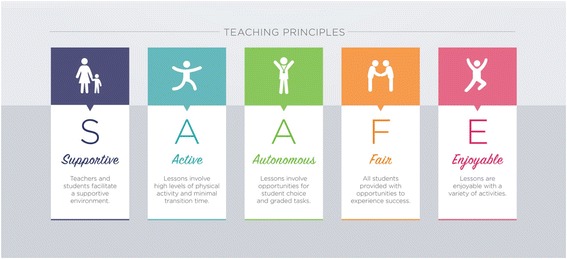
Framework for the design and delivery of organized physical activity sessions for children and adolescents: rationale and description of the ‘SAAFE’ teaching principles
Open accessThe DOI matches its Crossref record; 135 of the 142 references it cites were found in a registry or an index, and 1 are not checked yet; 32 of the 158 sources its claims cite were checked for support.
Abstract
This review/framework argues that organized youth sport and school sport often fail to reach their potential because session quality, motivation, autonomy, fairness, and enjoyment are weak, not simply because of facilities or equipment.
Verified 2026-11-25 · 1 reference not checked yet
Overview
CoChat Summary
## TL;DR
This paper proposes the SAAFE framework—Supportive, Active, Autonomous, Fair, and Enjoyable—as an evidence-based set of principles for planning, delivering, and evaluating organized physical activity sessions for children and adolescents. It is a narrative and integrative review, not a systematic evidence synthesis, drawing on theory, prior research, and the authors’ intervention experience.
## Key findings
- The paper argues that organized physical activity sessions in PE, sport, and after-school programs are often too inactive: PE lessons typically involve about 40% of lesson time in activity, and one review of 25 after-school programs found only 16.5% of daily observations met the physical activity target of at least 4600 steps.
- Previous interventions to increase MVPA in PE produced, on average, a 24% relative increase in lesson time spent in MVPA; the most effective strategy was fitness infusion, with 61% more MVPA time compared with 14% increases associated with other interventions.
- The framework’s five principles are intended to address both physical activity volume and motivational climate, with specific attention to autonomy, competence, relatedness, fairness, and enjoyment.
- The authors state the SAAFE principles were designed to support a psychologically supportive environment, mastery climate, and autonomous motivation, and note that their earlier SCORES intervention showed positive effects on students’ physical activity levels, cardiorespiratory fitness, and fundamental movement skills.
## Methods
- The paper is a narrative and integrative review describing the rationale and practical recommendations behind the SAAFE principles.
- It synthesizes evidence from self-determination theory, achievement goal theory, competence motivation theory, and Epstein’s TARGET framework, along with prior interventions and observational findings in PE, sport, and after-school settings.
- The paper also draws on the authors’ prior intervention work, including SCORES, iPLAY, ATLAS, and HIIT for Teens, and summarizes practical examples in tables.
## Limitations
- The authors explicitly state that the SAAFE framework is not the result of a systematic process of evidence synthesis; it is instead based on a large body of empirical evidence plus the authors’ collective experience.
- The paper is a framework/review paper, so it does not report a new primary study sample or new outcome evaluation of SAAFE in this article itself. *(evident from the text)*
- Several recommendations are broad and context-dependent, and the paper notes that some strategies may require professional learning or additional support staff for implementation, especially for adapting activities for students with disabilities. *(evident from the text)*
Model-written summary. Check it against the paper before relying on it.
Integrity signals
Registry
Cites
Statistics
Figures
Verification
Claims the paper makes
26 Valid · 2 Not valid · 61 Not checked · 7 Own results and interpretations
Every source the paper cites for this claim was checked and supports it.
In the paper
“Each of these settings are important for providing young people with opportunities to experience a routine ‘dose’ of physical activity [15].”
§ Framework for the design and delivery of organized physical activity sessions for children and adolescents: rationale and description of the ‘SAAFE’ teaching principles > Background
What the sources say
- Supportedcites [15] Beets MW Okely A Weaver RG The theory of expanded, extended, and enhanced opportunities for youth physical activity promotion Int J Behav Nutr Phys Act 2016 13 1 120 10.1186/s12966-016-0442-2 27852272 PMC5112641 source
The Definitions of expansion, extension, and enhancement section identifies PE lessons, sport practices, and afterschool programs as existing opportunities for youth physical activity. It describes enhancing those settings to increase activity above routine practice, supporting the claim that each can provide a routine opportunity for activity. The paper does not say participation is guaranteed. (LLM, conf=0.88)
plainstates a cause- Asserted: passes — The authors put it forward as true.
- Checkable: passes — It can be checked against evidence.
- Load-bearing: passes — The paper’s conclusions depend on it.
- Based: passes — The paper gives a reason why it holds.
- Supported
The cited sources support only part of this claim — read each source’s verdict below.
In the paper
“Common features of PE teacher practice, such as using controlling language (e.g., terms like ‘must’, ‘should’ or ‘have to’ that convey pressure and/or coerce individuals to act in ways that are inconsistent with their sense of self), or using exercise as punishment, can have immediate and long-term impacts on students’ motivation to be active [25–29].”
§ Framework for the design and delivery of organized physical activity sessions for children and adolescents: rationale and description of the ‘SAAFE’ teaching principles > Background
What the sources say
- Not checked — no full text of the sourcecites [25] Cox AE Smith AL Williams L Change in physical education motivation and physical activity behavior during middle school J Adolesc Health 2008 43 5 506 513 10.1016/j.jadohealth.2008.04.020 18848680 source
- Not checked — no full text of the sourcecites [26] De Meyer J Tallir IB Soenens B Does observed controlling teaching behavior relate to students’ motivation in physical education? J Educ Psychol 2014 106 2 541 10.1037/a0034399 source
- Partly supportedcites [27] Haerens L Aelterman N Vansteenkiste M Soenens B Van Petegem S Do perceived autonomy-supportive and controlling teaching relate to physical education students’ motivational experiences through unique pathways? distinguishing between the bright and dark side of motivation Psychol Sport Exerc 2015 16 26 36 10.1016/j.psychsport.2014.08.013 sourceExperimental — accuracy not yet measured
The ‘Autonomy-supportive and controlling teaching’ section identifies controlling language (‘you have to’) and punishments as controlling tactics. The Discussion links perceived controlling teaching to students’ motivation in a PE lesson, but the paper does not specifically examine exercise used as punishment or establish long-term effects; it describes the study as cross-sectional. (LLM, conf=0.88)
- Not checked — no full text of the sourcecites [28] Hagger MS Chatzisarantis NL Culverhouse T Biddle SJ The processes by which perceived autonomy support in physical education promotes leisure-time physical activity intentions and behavior: a trans-contextual model J Educ Psychol 2003 95 4 784 795 10.1037/0022-0663.95.4.784 source
- Not checked — no full text of the sourcecites [29] Ntoumanis N Pensgaard A-M Martin C Pipe K An idiographic analysis of amotivation in compulsory school physical education J Sport Exerc Psychol 2004 26 2 197 214 10.1123/jsep.26.2.197 source
plainstates a cause- Asserted: passes — The authors put it forward as true.
- Checkable: passes — It can be checked against evidence.
- Load-bearing: passes — The paper’s conclusions depend on it.
- Based: passes — The paper gives a reason why it holds.
The cited sources support only part of this claim — read each source’s verdict below.
In the paper
“The SAAFE principles have also since evolved to support the delivery of school-based physical activity interventions targeting adolescents [54–56].”
§ Framework for the design and delivery of organized physical activity sessions for children and adolescents: rationale and description of the ‘SAAFE’ teaching principles > Background
What the sources say
- Partly supportedcites [54] Costigan SA Eather N Plotnikoff RC Preliminary efficacy and feasibility of embedding high intensity interval training into the school day: a pilot randomized controlled trial Prev Med Rep 2015 2 973 979 10.1016/j.pmedr.2015.11.001 26844177 PMC4733031 sourceExperimental — accuracy not yet measured
The Methods (Study design) describe an adolescent school-based physical activity intervention with enjoyable sessions, peer support and participant choice; the Conclusions connect its delivery to autonomy-supportive principles. However, the paper does not name the SAAFE principles or say that they evolved to support these interventions. No page numbers are available in our copy. (LLM, conf=0.78)
- Not checked yetcites [55] Smith JJ Morgan PJ Plotnikoff RC Smart-phone obesity prevention trial for adolescent boys in low-income communities: the ATLAS RCT Pediatrics 2014 134 3 e723 e731 10.1542/peds.2014-1012 25157000 source
Checked before — its earlier verdict is held back until a new check runs.
- Could not verifycites [56] Sutherland R Campbell E Lubans DR Two year outcomes of a multi-component school-based physical activity intervention among adolescents: the ‘Physical Activity 4 Everyone’ cluster randomised trial Am J Prev Med 2016 51 2 195 205 10.1016/j.amepre.2016.02.020 27103495 sourceExperimental — accuracy not yet measured
Our copy of the PA4E1 cluster RCT (Sutherland et al., 2016) contains no mention of the SAAFE principles: searches for 'SAAFE', 'SAAFE principles design delivery', and 'principles to guide the design and delivery of school-based physical activity interventions' returned only Intervention-section passages stating the intervention 'was guided by social cognitive and socio-ecologic theories and utilized the WHO's Health Promoting Schools framework' (Intervention, p. n/a) plus reference lists. The paper does report a multicomponent school-based physical activity intervention delivered to secondary-school adolescents (Abstract; Conclusions), but it neither states nor discusses SAAFE or their evolution, so this source cannot confirm or contradict the attributed point. (LLM, conf=0.70)
plainstates a cause- Asserted: passes — The authors put it forward as true.
- Checkable: passes — It can be checked against evidence.
- Load-bearing: unclear — It is unclear whether the paper’s conclusions depend on it.
- Based: passes — The paper gives a reason why it holds.
- Partly supported
The cited sources that could be checked couldn’t confirm or dispute this claim.
In the paper
“However, these guidelines do not address issues related to motivational climates embedded within sessions.”
§ Framework for the design and delivery of organized physical activity sessions for children and adolescents: rationale and description of the ‘SAAFE’ teaching principles > Background
What the sources say
- Could not verifycites [49] Powell E Woodfield LA Nevill AM Increasing physical activity levels in primary school physical education: the SHARP principles model Prev Med Rep 2016 3 7 13 10.1016/j.pmedr.2015.11.007 26844179 PMC4733067 sourceExperimental — accuracy not yet measured
The Introduction describes a recommendation that children spend more than 50% of PE time in moderate-to-vigorous physical activity, and the Methods discuss self-determination theory in the SHARP intervention. Neither passage says whether the existing guidelines address motivational climates within sessions (searched: motivational climate and guideline limitations). (LLM, conf=0.72)
- Not checked — no full text of the sourcecites [50] Weaver RG Webster C Beets MW Let us play: maximizing physical activity in physical education Strategies 2013 26 6 33 37 10.1080/08924562.2013.839518 source
plain- Asserted: passes — The authors put it forward as true.
- Checkable: passes — It can be checked against evidence.
- Load-bearing: passes — The paper’s conclusions depend on it.
- Based: passes — The paper gives a reason why it holds.
- Could not verify
The sources with a verdict support this claim; the rest weren’t checked yet, have no full text we could read, or their verdicts aren’t rated yet.
In the paper
“The contribution of youth sports to habitual physical activity may also not be as large as commonly thought [22–24].”
§ Framework for the design and delivery of organized physical activity sessions for children and adolescents: rationale and description of the ‘SAAFE’ teaching principles > Background
What the sources say
- Supportedcites [22] Hebert JJ Møller NC Andersen LB Wedderkopp N Organized sport participation is associated with higher levels of overall health-related physical activity in children (CHAMPS Study-DK) Plos One 2015 10 8 e0134621 10.1371/journal.pone.0134621 26262678 PMC4532417 source
The Introduction (page not provided) says that much of organized sport involves sedentary or light activity and that participation alone does not ensure children meet physical activity guidelines. The Discussion (page not provided) reports benefits for some sports but not others. Together, these passages support the claim’s cautious wording, although this study did not find evidence that children compensated for sport activity by being less active at other times. (LLM, conf=0.86)
- Not checked — no full text of the sourcecites [23] Leek D Carlson JA Cain KL Physical activity during youth sports practices Arch Pediatr Adolesc Med 2011 165 4 294 299 10.1001/archpediatrics.2010.252 21135319 source
- Not checked — no full text of the sourcecites [24] Sacheck JM Nelson T Ficker L Kafka T Kuder J Economos CD Physical activity during soccer and its contribution to physical activity recommendations in normal weight and overweight children Pediatr Exerc Sci 2011 23 2 281 10.1123/pes.23.2.281 21633140 source
hedged- Asserted: passes — The authors put it forward as true.
- Checkable: passes — It can be checked against evidence.
- Load-bearing: unclear — It is unclear whether the paper’s conclusions depend on it.
- Based: passes — The paper gives a reason why it holds.
- Supported
45 more claims · 7 with their cited sources checked
Create a free account to see all 96 claims and to verify the 10 references still open.
- Probably not a substantial claim. 18
- It may state two separate claims as one. 32
Citations
Cites
Ryan, R. M., & Deci, E. L. (2000) · American Psychologist · doi:10.1037//0003-066x.55.1.68 · Cited by 54,599 · cited 1×
“influencing motivation, behavior, and wellbeing [97].”
The "what" and "why" of goal pursuits: Human needs and the self-determination of behavior
Deci, E. L., & Ryan, R. M. (2000) · Psychological Inquiry · doi:10.1207/s15327965pli1104_01 · Cited by 34,210 · cited 2×
“From a self-determination theory perspective, teachers can influence their students’ motivation by supporting or thwarting basic psychological needs for: (i) Autonomy, the need to experience one’s behavior as self-endorsed or volitional; (ii) Competence, the need to effectively interact with one’s environment and achi…”
BackgroundMethodIntrinsic Motivation and Self-Determination in Human Behavior
Deci, E. L., & Ryan, R. M. (1985) · doi:10.1007/978-1-4899-2271-7 · Cited by 26,772 · cited 2×
“From a self-determination theory perspective, teachers can influence their students’ motivation by supporting or thwarting basic psychological needs for: (i) Autonomy, the need to experience one’s behavior as self-endorsed or volitional; (ii) Competence, the need to effectively interact with one’s environment and achi…”
BackgroundMethodThe need to belong: Desire for interpersonal attachments as a fundamental human motivation.
Baumeister, R. F., & Leary, M. R. (1995) · Psychological Bulletin · doi:10.1037//0033-2909.117.3.497 · Cited by 23,245
Intrinsic Motivation and Self-Determination in Human Behavior
Miller, K. A., Deci, E. L., & Ryan, R. M. (1988) · Contemporary Sociology · doi:10.2307/2070638 · Cited by 15,312
Classrooms: Goals, structures, and student motivation.
Ames, C. (1992) · Journal of Educational Psychology · doi:10.1037/0022-0663.84.3.261 · Cited by 6,468 · cited 1×
“From a self-determination theory perspective, teachers can influence their students’ motivation by supporting or thwarting basic psychological needs for: (i) Autonomy, the need to experience one’s behavior as self-endorsed or volitional; (ii) Competence, the need to effectively interact with one’s environment and achi…”
BackgroundGlobal physical activity levels: surveillance progress, pitfalls, and prospects
Hallal, P. C., Andersen, L. B., Bull, F. C., Guthold, R., Haskell, W., & Ekelund, U. (2012) · The Lancet · doi:10.1016/s0140-6736(12)60646-1 · Cited by 5,711 · cited 1×
“However, global prevalence data suggest few children and adolescents accrue enough physical activity required to obtain these benefits [3], which may have both immediate and long-term public health consequences [4–6].”
Background-Handbook of Self-Determination Research by Edward L. Deci and Richard M. Ryan (Editors)
Paulson, D. S. (2002) · The Journal of mind and behavior · Cited by 5,169
Janssen, I., & LeBlanc, A. G. (2010) · International Journal of Behavioral Nutrition and Physical Activity · doi:10.1186/1479-5868-7-40 · Cited by 4,829 · cited 1×
“Regular physical activity provides numerous physical and mental health benefits [1, 2].”
BackgroundAchievement motivation: Conceptions of ability, subjective experience, task choice, and performance.
Nicholls, J. G. (1984) · Psychological Review · doi:10.1037/0033-295x.91.3.328 · Cited by 4,161 · cited 1×
“The SAAFE principles were informed by self-determination theory [39, 40], achievement goal theory [41], competence motivation theory [42, 43] and Epstein’s TARGET framework [Task (design of activities), Authority (distribution of decision-making and student autonomy), Recognition (use of incentives, rewards and feedba…”
MethodMoral Identity and Developmental Theory
Lapsley, D. (2015) · Human Development · doi:10.1159/000435926 · Cited by 3,819
Skinner, E. A., & Belmont, M. J. (1993) · Journal of Educational Psychology · doi:10.1037/0022-0663.85.4.571 · Cited by 3,428 · cited 1×
“They may even try to build extrinsic motivation by offering incentives or threatening consequences, using authoritarian language or neglecting students who demonstrate negative affect [66, 74].”
BackgroundThe pandemic of physical inactivity: global action for public health
Kohl, H. W., Craig, C. L., Lambert, E. V., Inoue, S., Alkandari, J. R., Leetongin, G., & Kahlmeier, S. (2012) · The Lancet · doi:10.1016/s0140-6736(12)60898-8 · Cited by 2,985 · cited 1×
“In light of the global reach and potential health impacts, physical inactivity has been appropriately described as ‘pandemic’ [8].”
BackgroundExercise, physical activity, and self-determination theory: A systematic review
Teixeira, P. J., Carraça, E. V., Markland, D., Silva, M. N., & Ryan, R. M. (2012) · International Journal of Behavioral Nutrition and Physical Activity · doi:10.1186/1479-5868-9-78 · Cited by 2,963 · cited 1×
“When people pursue physical activities (or indeed any other activity) for the inherent joy and pleasure, they are said to be intrinsically motivated which, in turn, tends to result in greater adherence to and pursuit of those behaviors [123, 124].”
BackgroundEime, R. M., Young, J. A., Harvey, J. T., Charity, M. J., & Payne, W. R. (2013) · International Journal of Behavioral Nutrition and Physical Activity · doi:10.1186/1479-5868-10-98 · Cited by 2,366 · cited 1×
“Similarly, sports participation can be instrumental in the physical, social and emotional development of children and adolescents [30].”
BackgroundThe economic burden of physical inactivity: a global analysis of major non-communicable diseases
Ding, D., Lawson, K. D., Kolbe-Alexander, T. L., Finkelstein, E. A., Katzmarzyk, P. T., van Mechelen, W., & Pratt, M. (2016) · The Lancet · doi:10.1016/s0140-6736(16)30383-x · Cited by 2,201
Self-Determination Theory Applied to Health Contexts: A Meta-Analysis
Ng, J. Y. Y., Ntoumanis, N., Thøgersen-Ntoumani, C., Deci, E. L., Ryan, R. M., Duda, J. L., & Williams, G. C. (2012) · Perspectives on Psychological Science · doi:10.1177/1745691612447309 · Cited by 1,959
Enhancing Students' Engagement by Increasing Teachers' Autonomy Support
Reeve, J., Jang, H., Carrell, D., Jeon, S., & Barch, J. (2004) · Motivation and Emotion · doi:10.1023/b:moem.0000032312.95499.6f · Cited by 1,594 · cited 3×
“An unsupportive or controlling physical activity environment undermines positive functioning because it elicits feelings of pressure, judgement, and threat among students [63, 66, 73].”
BackgroundPhysical Activity for Cognitive and Mental Health in Youth: A Systematic Review of Mechanisms
Lubans, D., Richards, J., Hillman, C., Faulkner, G., Beauchamp, M., Nilsson, M., Kelly, P., Smith, J., Raine, L., & Biddle, S. (2016) · Pediatrics · doi:10.1542/peds.2016-1642 · Cited by 1,548 · cited 1×
“Regular physical activity provides numerous physical and mental health benefits [1, 2].”
BackgroundSelf-citationThe coach–athlete relationship: a motivational model
Mageau, G. A., & Vallerand, R. J. (2003) · Journal of Sports Sciences · doi:10.1080/0264041031000140374 · Cited by 1,405
Ryan, A. M., & Patrick, H. (2001) · American Educational Research Journal · doi:10.3102/00028312038002437 · Cited by 1,315
Motor coordination in autism spectrum disorders: A synthesis and meta-analysis
Fournier, K. A., Hass, C. J., Naik, S. K., Lodha, N., & Cauraugh, J. H. (2010) · Journal of Autism and Developmental Disorders · doi:10.1007/s10803-010-0981-3 · Cited by 1,271 · cited 1×
“In addition, motor coordination deficits are a hallmark feature of intellectual and developmental disabilities such as autism spectrum disorder and dyspraxia [120].”
BackgroundEvidence-based intervention in physical activity: lessons from around the world
Heath, G. W., Parra, D. C., Sarmiento, O. L., Andersen, L. B., Owen, N., Goenka, S., Montes, F., & Brownson, R. C. (2012) · The Lancet · doi:10.1016/s0140-6736(12)60816-2 · Cited by 1,199
Patall, E. A., Cooper, H., & Robinson, J. C. (2008) · Psychological Bulletin · doi:10.1037/0033-2909.134.2.270 · Cited by 1,101 · cited 2×
“Consistent evidence across many life contexts indicates that people who perceive they can make meaningful choices are likely to be intrinsically motivated, meaning that they are more likely to find activities enjoyable and interesting [99].”
BackgroundPhysical Education and Sport in Schools: A Review of Benefits and Outcomes
Bailey, R. (2006) · Journal of School Health · doi:10.1111/j.1746-1561.2006.00132.x · Cited by 1,080 · cited 1×
“ational, psychosocial and movement skill outcomes [16].”
Adolescent Physical Activity and Health: A Systematic Review
Hallal, P. C., Victora, C. G., Azevedo, M. R., & Wells, J. C. K. (2006) · Sports Medicine · doi:10.2165/00007256-200636120-00003 · Cited by 986
Pelletier, L. G., Fortier, M. S., Vallerand, R. J., & Brière, N. M. (2001) · Motivation and Emotion · doi:10.1023/a:1014805132406 · Cited by 958 · cited 1×
“In the context of youth sport [126] and PE [46, 127], when children and adolescents are provided with the opportunity to exercise some choice, they Lubans et al.”
BackgroundStandage, M., Duda, J. L., & Ntoumanis, N. (2003) · Journal of Educational Psychology · doi:10.1037/0022-0663.95.1.97 · Cited by 927 · cited 2×
“From the perspective of self-determination theory [122], and as highlighted under the Supportive principle, when children and adolescents feel autonomous, socially connected to others, and competent they are more likely to enjoy the activity [100].”
BackgroundSelf-determination: The tyranny of freedom.
Schwartz, B. (2000) · American Psychologist · doi:10.1037/0003-066x.55.1.79 · Cited by 875 · cited 1×
“For example, we recommend that teachers avoid providing too many options, as students may find this burdensome and demotivating [105].”
BackgroundMusch, J., & Grondin, S. (2001) · Developmental Review · doi:10.1006/drev.2000.0516 · Cited by 874
Haerens, L., Aelterman, N., Vansteenkiste, M., Soenens, B., & Van Petegem, S. (2015) · Psychology of Sport and Exercise · doi:10.1016/j.psychsport.2014.08.013 · Cited by 747
Reis, R. S., Salvo, D., Ogilvie, D., Lambert, E. V., Goenka, S., & Brownson, R. C. (2016) · The Lancet · doi:10.1016/s0140-6736(16)30728-0 · Cited by 719 · cited 1×
“As identified in recent reviews [141], there is a clear need”
BackgroundHills, A. P., Dengel, D. R., & Lubans, D. R. (2015) · Progress in Cardiovascular Diseases · doi:10.1016/j.pcad.2014.09.010 · Cited by 705 · cited 2×
“This is likely exacerbated by the fact that many of those charged with delivering PE, sports practice, or ASPs have not received the training needed to confidently deliver active, engaging and educative physical activity experiences [11].”
BackgroundSelf-citationA motivational model of rural students' intentions to persist in, versus drop out of, high school.
Hardre, P. L., & Reeve, J. (2003) · Journal of Educational Psychology · doi:10.1037/0022-0663.95.2.347 · Cited by 669
Emotional Effects Of Music: Production Rules
Scherer, K. R., & Zentner, M. R. (2001) · Music And Emotion · doi:10.1093/oso/9780192631886.003.0016 · Cited by 662
Sierens, E., Vansteenkiste, M., Goossens, L., Soenens, B., & Dochy, F. (2009) · British Journal of Educational Psychology · doi:10.1348/000709908x304398 · Cited by 618
The relative age effect in youth soccer across Europe
Helsen, W. F., van Winckel, J., & Williams, A. M. (2005) · Journal of Sports Sciences · doi:10.1080/02640410400021310 · Cited by 585 · cited 1×
“whereby children born early in the competition year have a competitive advantage over their younger peers [113, 114].”
BackgroundHagger, M. S., Chatzisarantis, N. L. D., Culverhouse, T., & Biddle, S. J. H. (2003) · Journal of Educational Psychology · doi:10.1037/0022-0663.95.4.784 · Cited by 570
Reinboth, M., Duda, J. L., & Ntoumanis, N. (2004) · Motivation and Emotion · doi:10.1023/b:moem.0000040156.81924.b8 · Cited by 546
Music in the exercise domain: a review and synthesis (Part I)
Karageorghis, C. I., & Priest, D.-L. (2012) · International Review of Sport and Exercise Psychology · doi:10.1080/1750984x.2011.631026 · Cited by 546 · cited 1×
“When coupled with repetitive and aerobic (endurance-type) physical activities, the use of self-selected and motivational music has been found to result in improvements in affective responses [138].”
BackgroundReeve, J., Nix, G., & Hamm, D. (2003) · Journal of Educational Psychology · doi:10.1037/0022-0663.95.2.375 · Cited by 520 · cited 1×
“Although option choice might be easier to plan and deliver, previous research suggests action choice is more effective for enhancing intrinsic motivation [107].”
BackgroundJanney, C. A., & Jakicic, J. M. (2010) · International Journal of Behavioral Nutrition and Physical Activity · doi:10.1186/1479-5868-7-1 · Cited by 504
Interrupting long periods of sitting: good STUFF
Rutten, G. M., Savelberg, H. H., Biddle, S. J., & Kremers, S. P. (2013) · International Journal of Behavioral Nutrition and Physical Activity · doi:10.1186/1479-5868-10-1 · Cited by 499
Cheon, S. H., Reeve, J., & Moon, I. S. (2012) · Journal of Sport and Exercise Psychology · doi:10.1123/jsep.34.3.365 · Cited by 492 · cited 1×
“In the context of youth sport [126] and PE [46, 127], when children and adolescents are provided with the opportunity to exercise some choice, they Lubans et al.”
BackgroundLonsdale, C., Rosenkranz, R. R., Peralta, L. R., Bennie, A., Fahey, P., & Lubans, D. R. (2013) · Preventive Medicine · doi:10.1016/j.ypmed.2012.12.004 · Cited by 451 · cited 2×
“Recently, Lonsdale and colleagues [89] published a systematic review and meta-analysis of interventions aimed at increasing MVPA during PE lessons.”
BackgroundSelf-citationB. Owen, K., Smith, J., Lubans, D. R., Ng, J. Y. Y., & Lonsdale, C. (2014) · Preventive Medicine · doi:10.1016/j.ypmed.2014.07.033 · Cited by 434 · cited 1×
“activity behavior than controlled forms [98].”
Self-citationHealth-related knowledge and preferences in low socio-economic kindergarteners
Nemet, D., Geva, D., Meckel, Y., & Eliakim, A. (2012) · International Journal of Behavioral Nutrition and Physical Activity · doi:10.1186/1479-5868-9-1 · Cited by 412
Youth sport: positive and negative impact on young athletes
Merkel, D. (2013) · Open Access Journal of Sports Medicine · doi:10.2147/oajsm.s33556 · Cited by 408
Chronological Age vs. Biological Maturation: Implications for Exercise Programming in Youth
Lloyd, R. S., Oliver, J. L., Faigenbaum, A. D., Myer, G. D., & De Ste Croix, M. B. A. (2014) · Journal of Strength and Conditioning Research · doi:10.1519/jsc.0000000000000391 · Cited by 401 · cited 1×
“young people of the same chronological age [112], which has important implications for mastery experiences during”
BackgroundAmorose, A. J., & Horn, T. S. (2000) · Journal of Sport and Exercise Psychology · doi:10.1123/jsep.22.1.63 · Cited by 388
Mouratidis, A., Vansteenkiste, M., Lens, W., & Sideridis, G. (2008) · Journal of Sport and Exercise Psychology · doi:10.1123/jsep.30.2.240 · Cited by 382 · cited 1×
“Positive feedback is considered to be most effective when: (i) it is perceived by the learner as honest, (ii) success is attributed to effort and strategy rather than innate ability, (iii) it reinforces improvement and learning rather than social comparison, (iv) is delivered privately rather than publicly (where poss…”
BackgroundReeve, J., Jang, H., Hardre, P., & Omura, M. (2002) · Motivation and Emotion · doi:10.1023/a:1021711629417 · Cited by 342
Cairney, J., Kwan, M. Y., Velduizen, S., Hay, J., Bray, S. R., & Faught, B. E. (2012) · International Journal of Behavioral Nutrition and Physical Activity · doi:10.1186/1479-5868-9-26 · Cited by 308 · cited 1×
“Such differences may be one factor explaining why girls typically enjoy PE less and experience greater declines in PE enjoyment over time, compared with boys [117].”
BackgroundMorgan, P. J., & Hansen, V. (2008) · Research Quarterly for Exercise and Sport · doi:10.1080/02701367.2008.10599517 · Cited by 305 · cited 1×
“Evidently, there is scope to improve the quality of instruction across each of these organized physical activity settings [23, 38].”
BackgroundSelf-citationSmart-Phone Obesity Prevention Trial for Adolescent Boys in Low-Income Communities: The ATLAS RCT
Smith, J. J., Morgan, P. J., Plotnikoff, R. C., Dally, K. A., Salmon, J., Okely, A. D., Finn, T. L., & Lubans, D. R. (2014) · Pediatrics · doi:10.1542/peds.2014-1012 · Cited by 302 · cited 1×
“Finally, Table 2 outlines how the SAAFE principles have been applied in three recent school-based physical activity interventions: (i) the SCORES physical activity and movement skills intervention for primary school children [51, 52], (ii) the ATLAS (Active Teen Leaders Avoiding Screen-time) physical activity program…”
MethodSelf-citationUnderstanding the need for novelty from the perspective of self-determination theory
González-Cutre, D., Sicilia, Á., Sierra, A. C., Ferriz, R., & Hagger, M. S. (2016) · Personality and Individual Differences · doi:10.1016/j.paid.2016.06.036 · Cited by 301 · cited 1×
“Other (non-experimental) work has similarly examined the role of novelty in PE settings, and found that novelty is associated with intrinsic motivation [136].”
BackgroundCox, A., & Williams, L. (2008) · Journal of Sport and Exercise Psychology · doi:10.1123/jsep.30.2.222 · Cited by 297
Lonsdale, C., Sanders, T., Cohen, K. E., Parker, P., Noetel, M., Hartwig, T., Vasconcellos, D., Kirwan, M., Morgan, P., Salmon, J., et al. (2016) · BMC Public Health · doi:10.1186/s12889-016-3243-2 · Cited by 287
Self-citationChory‐Assad, R. M. (2002) · Communication Quarterly · doi:10.1080/01463370209385646 · Cited by 286 · cited 1×
“Perceptions of fairness have been shown to influence motivation and affective learning [108], enjoyment [109] and intentions to continue participating in sports [109, 110].”
BackgroundChange in Physical Education Motivation and Physical Activity Behavior during Middle School
Cox, A. E., Smith, A. L., & Williams, L. (2008) · Journal of Adolescent Health · doi:10.1016/j.jadohealth.2008.04.020 · Cited by 272 · cited 1×
“Indeed, enjoyment has been a consistently reported mediator/mechanism of the effects of efficacious physical activity interventions among youth [25, 125].”
BackgroundDoes observed controlling teaching behavior relate to students’ motivation in physical education?
De Meyer, J., Tallir, I. B., Soenens, B., Vansteenkiste, M., Aelterman, N., Van den Berghe, L., Speleers, L., & Haerens, L. (2014) · Journal of Educational Psychology · doi:10.1037/a0034399 · Cited by 261
Hollis, J. L., Williams, A. J., Sutherland, R., Campbell, E., Nathan, N., Wolfenden, L., Morgan, P. J., Lubans, D. R., & Wiggers, J. (2016) · Preventive Medicine · doi:10.1016/j.ypmed.2015.11.018 · Cited by 260 · cited 1×
“For example, recent systematic reviews of studies examining activity levels in PE have found that students engage in activity for approximately 40% of lesson time in primary [87] and secondary [88] school lessons (ranging from 57.”
BackgroundSelf-citationon behalf of the ToyBox-study group, De Craemer, M., De Decker, E., Verloigne, M., De Bourdeaudhuij, I., Manios, Y., & Cardon, G. (2016) · International Journal of Behavioral Nutrition and Physical Activity · doi:10.1186/s12966-015-0325-y · Cited by 258
Cheon, S. H., & Reeve, J. (2013) · Psychology of Sport and Exercise · doi:10.1016/j.psychsport.2013.02.002 · Cited by 243
Hollis, J. L., Sutherland, R., Williams, A. J., Campbell, E., Nathan, N., Wolfenden, L., Morgan, P. J., Lubans, D. R., Gillham, K., & Wiggers, J. (2017) · International Journal of Behavioral Nutrition and Physical Activity · doi:10.1186/s12966-017-0504-0 · Cited by 240 · cited 1×
“For example, recent systematic reviews of studies examining activity levels in PE have found that students engage in activity for approximately 40% of lesson time in primary [87] and secondary [88] school lessons (ranging from 57.”
BackgroundSelf-citationHigh-Intensity Interval Training for Cognitive and Mental Health in Adolescents
(2016) · doi:10.1249/mss.0000000000000993 · Cited by 236
Self-citationLim, B. S. C., & Wang, C. K. J. (2009) · Psychology of Sport and Exercise · doi:10.1016/j.psychsport.2008.06.003 · Cited by 229
Thirteen-Year Trends in Child and Adolescent Fundamental Movement Skills: 1997–2010
HARDY, L. L., BARNETT, L., ESPINEL, P., & OKELY, A. D. (2013) · Medicine & Science in Sports & Exercise · doi:10.1249/mss.0b013e318295a9fc · Cited by 224 · cited 1×
“For example, physical activity levels in these settings are typically much lower than recommended [18–20], and a considerable proportion of students leave school without having mastered basic fundamental movement skills [21].”
BackgroundAn Idiographic Analysis of Amotivation in Compulsory School Physical Education
Ntoumanis, N., Pensgaard, A.-M., Martin, C., & Pipe, K. (2004) · Journal of Sport and Exercise Psychology · doi:10.1123/jsep.26.2.197 · Cited by 222
Motivating Kids in Physical Activity: (603522007-001)
Weiss, M. R., Corbin, C., & Pangrazi, B. (2000) · PsycEXTRA Dataset · doi:10.1037/e603522007-001 · Cited by 210 · cited 2×
“volvement, and commitment to the activity [43].”
MethodThe theory of expanded, extended, and enhanced opportunities for youth physical activity promotion
Beets, M. W., Okely, A., Weaver, R. G., Webster, C., Lubans, D., Brusseau, T., Carson, R., & Cliff, D. P. (2016) · International Journal of Behavioral Nutrition and Physical Activity · doi:10.1186/s12966-016-0442-2 · Cited by 205 · cited 1×
“young people with opportunities to experience a routine ‘dose’ of physical activity [15].”
BackgroundLonsdale, C., Sabiston, C. M., Raedeke, T. D., Ha, A. S. C., & Sum, R. K. W. (2009) · Preventive Medicine · doi:10.1016/j.ypmed.2008.09.013 · Cited by 201 · cited 2×
“Furthermore, providing students with brief periods of complete free choice increases their MVPA compared with a lesson led by the teacher [101, 102].”
BackgroundSelf-citationSchool Physical Education: The Pill Not Taken
McKenzie, T. L., & Lounsbery, M. A. F. (2009) · American Journal of Lifestyle Medicine · doi:10.1177/1559827609331562 · Cited by 196
Cumming, S. P., Smoll, F. L., Smith, R. E., & Grossbard, J. R. (2007) · Journal of Applied Sport Psychology · doi:10.1080/10413200701342640 · Cited by 196
Blanchard, C. M., Amiot, C. E., Perreault, S., Vallerand, R. J., & Provencher, P. (2009) · Psychology of Sport and Exercise · doi:10.1016/j.psychsport.2009.02.005 · Cited by 195 · cited 1×
“coach or other children in a class or sports team [129] they tend to have greater satisfaction and positive emotions.”
BackgroundKoka, A., & Hein, V (2003) · Psychology of Sport and Exercise · doi:10.1016/s1469-0292(02)00012-2 · Cited by 195 · cited 1×
“An unsupportive or controlling physical activity environment undermines positive functioning because it elicits feelings of pressure, judgement, and threat among students [63, 66, 73].”
BackgroundPhysical Activity During Youth Sports Practices
Leek, D., Carlson, J. A., Cain, K. L., Henrichon, S., Rosenberg, D., Patrick, K., & Sallis, J. F. (2011) · Archives of Pediatrics & Adolescent Medicine · doi:10.1001/archpediatrics.2010.252 · Cited by 192 · cited 1×
“Evidently, there is scope to improve the quality of instruction across each of these organized physical activity settings [23, 38].”
BackgroundLonsdale, C., Rosenkranz, R. R., Sanders, T., Peralta, L. R., Bennie, A., Jackson, B., Taylor, I. M., & Lubans, D. R. (2013) · Preventive Medicine · doi:10.1016/j.ypmed.2013.09.003 · Cited by 186 · cited 2×
“Furthermore, providing students with brief periods of complete free choice increases their MVPA compared with a lesson led by the teacher [101, 102].”
BackgroundSelf-citationWitten, K., KEARNS, R. A., Carroll, P., Asiasiga, L., & Tava’e, N. (2013) · Children s Geographies · doi:10.1080/14733285.2013.779839 · Cited by 181 · cited 1×
“Promoting free play is perhaps even more valuable in an era of increasing urbanization and fearful parenting practices [103, 104].”
BackgroundAllen, J. B., & Howe, B. L. (1998) · Journal of Sport and Exercise Psychology · doi:10.1123/jsep.20.3.280 · Cited by 168
Autonomy Support in the Classroom: A Review From Self-Determination Theory
Núñez, J. L., & León, J. (2015) · European Psychologist · doi:10.1027/1016-9040/a000234 · Cited by 159
Cardinal, B. J., Yan, Z., & Cardinal, M. K. (2013) · Journal of Physical Education, Recreation & Dance · doi:10.1080/07303084.2013.767736 · Cited by 157 · cited 1×
“However, the experience of being selected last can be traumatizing for students, and these experiences may have prolonged adverse impacts on physical activity participation [106].”
BackgroundHebert, J. J., Møller, N. C., Andersen, L. B., & Wedderkopp, N. (2015) · PLOS ONE · doi:10.1371/journal.pone.0134621 · Cited by 151 · cited 2×
“However, participation in basketball, volleyball and gymnastics contributed little to overall physical activity levels, and students participating in these sports were no more likely to meet physical activity guidelines than nonsporting youth [22].”
BackgroundPhysical Activity and Skills Intervention: SCORES Cluster Randomized Controlled Trial
COHEN, K. E., MORGAN, P. J., PLOTNIKOFF, R. C., CALLISTER, R., & LUBANS, D. R. (2015) · Medicine & Science in Sports & Exercise · doi:10.1249/mss.0000000000000452 · Cited by 150 · cited 3×
“The SAAFE principles were originally designed to promote a psychologically supportive environment, foster a mastery climate and enhance young people’s autonomous motivation in the Supporting Children’s Outcomes using Rewards, Exercise and Skills (SCORES) primary school physical activity intervention [51, 52].”
BackgroundMethodSelf-citationListening to Girls and Boys Talk About Girls’ Physical Activity Behaviors
Vu, M. B., Murrie, D., Gonzalez, V., & Jobe, J. B. (2006) · Health Education & Behavior · doi:10.1177/1090198105282443 · Cited by 135 · cited 2×
“Of note, fear of negative social evaluation and teasing from boys commonly discourages girls from participating in coeducational PE lessons [116].”
BackgroundLubans, D. R., Smith, J. J., Plotnikoff, R. C., Dally, K. A., Okely, A. D., Salmon, J., & Morgan, P. J. (2016) · International Journal of Behavioral Nutrition and Physical Activity · doi:10.1186/s12966-016-0420-8 · Cited by 135 · cited 1×
“Finally, Table 2 outlines how the SAAFE principles have been applied in three recent school-based physical activity interventions: (i) the SCORES physical activity and movement skills intervention for primary school children [51, 52], (ii) the ATLAS (Active Teen Leaders Avoiding Screen-time) physical activity program…”
MethodSelf-citationFrom Environmental Factors to Outcomes: A Test of an Integrated Motivational Sequence
Grouzet, F. M. E., Vallerand, R. J., Thill, E. E., & Provencher, P. J. (2004) · Motivation and Emotion · doi:10.1007/s11031-004-2387-z · Cited by 124
Langan, E., Blake, C., & Lonsdale, C. (2013) · Psychology of Sport and Exercise · doi:10.1016/j.psychsport.2012.06.007 · Cited by 122
Self-citationYouth Fitness Testing: The Effect of Percentile-Based Evaluative Feedback on Intrinsic Motivation
Whitehead, J. R., & Corbin, C. B. (1991) · Research Quarterly for Exercise and Sport · doi:10.1080/02701367.1991.10608714 · Cited by 120
The Physical Activity 4 Everyone Cluster Randomized Trial
Sutherland, R. L., Campbell, E. M., Lubans, D. R., Morgan, P. J., Nathan, N. K., Wolfenden, L., Okely, A. D., Gillham, K. E., Hollis, J. L., Oldmeadow, C. J., et al. (2016) · American Journal of Preventive Medicine · doi:10.1016/j.amepre.2016.02.020 · Cited by 118
Self-citationOrganized Sport Trajectories from Childhood to Adolescence and Health Associations
HOWIE, E. K., MCVEIGH, J. A., SMITH, A. J., & STRAKER, L. M. (2016) · Medicine & Science in Sports & Exercise · doi:10.1249/mss.0000000000000894 · Cited by 108 · cited 1×
“Indeed, attrition rates for sports participation are substantial [35], particularly during the teenage years, and ‘lack of enjoyment’ and ‘problems with the coach’ are commonly cited reasons for drop-out [36, 37].”
BackgroundRangul, V., Bauman, A., Holmen, T. L., & Midthjell, K. (2012) · International Journal of Behavioral Nutrition and Physical Activity · doi:10.1186/1479-5868-9-144 · Cited by 107
Costigan, S. A., Eather, N., Plotnikoff, R. C., Taaffe, D. R., Pollock, E., Kennedy, S. G., & Lubans, D. R. (2015) · Preventive Medicine Reports · doi:10.1016/j.pmedr.2015.11.001 · Cited by 107 · cited 1×
“Finally, Table 2 outlines how the SAAFE principles have been applied in three recent school-based physical activity interventions: (i) the SCORES physical activity and movement skills intervention for primary school children [51, 52], (ii) the ATLAS (Active Teen Leaders Avoiding Screen-time) physical activity program…”
MethodSelf-citationInvestments that Work for Physical Activity
(2012) · British Journal of Sports Medicine · doi:10.1136/bjsm.2012.091485 · Cited by 104
Girls’ Physical Activity Levels during Organized Sports in Australia
GUAGLIANO, J. M., ROSENKRANZ, R. R., & KOLT, G. S. (2013) · Medicine & Science in Sports & Exercise · doi:10.1249/mss.0b013e31826a0a73 · Cited by 103
Wilson, D. K., Van Horn, M. L., Kitzman-Ulrich, H., Saunders, R., Pate, R., Lawman, H. G., Hutto, B., Griffin, S., Zarrett, N., Addy, C. L., et al. (2011) · Health Psychology · doi:10.1037/a0023390 · Cited by 103
Rosenkranz, R. R., Lubans, D. R., Peralta, L. R., Bennie, A., Sanders, T., & Lonsdale, C. (2012) · BMC Public Health · doi:10.1186/1471-2458-12-834 · Cited by 102
Self-citationPapaioannou, A. (1998) · Research Quarterly for Exercise and Sport · doi:10.1080/02701367.1998.10607693 · Cited by 101 · cited 1×
“There is evidence to suggest that reinforcing a mastery climate in PE is a useful way for teachers to enhance students’ experiences and perceptions of equity, regardless of biological sex [118].”
BackgroundJago, R., Edwards, M. J., Sebire, S. J., Tomkinson, K., Bird, E. L., Banfield, K., May, T., Kesten, J. M., Cooper, A. R., Powell, J. E., et al. (2015) · International Journal of Behavioral Nutrition and Physical Activity · doi:10.1186/s12966-015-0289-y · Cited by 94
'They Ought to Enjoy Physical Activity, You Know?': Struggling with Fun in Physical Education
O'Reilly, E., Tompkins, J., & Gallant, M. (2001) · Sport, Education and Society · doi:10.1080/13573320120084281 · Cited by 88 · cited 1×
“), students typically equate competition purely with winning and losing [111].”
BackgroundPhysical Activity of Children Attending Afterschool Programs
Beets, M. W., Huberty, J., & Beighle, A. (2012) · American Journal of Preventive Medicine · doi:10.1016/j.amepre.2011.10.007 · Cited by 76
Variety support and exercise adherence behavior: experimental and mediating effects
Sylvester, B. D., Standage, M., McEwan, D., Wolf, S. A., Lubans, D. R., Eather, N., Kaulius, M., Ruissen, G. R., Crocker, P. R. E., Zumbo, B. D., et al. (2016) · Journal of Behavioral Medicine · doi:10.1007/s10865-015-9688-4 · Cited by 75 · cited 1×
“Furthermore, using an experimental design, Sylvester and colleagues found that when a 6-week exercise program was structured to involve greater variety (otherwise known as variety support), participants subsequently experienced greater adherence [133], as well as improved psychological well-being (greater positive aff…”
MethodSelf-citationSacheck, J. M., Nelson, T., Ficker, L., Kafka, T., Kuder, J., & Economos, C. D. (2011) · Pediatric Exercise Science · doi:10.1123/pes.23.2.281 · Cited by 73
Perceived Feedback and Motivation in Physical Education and Physical Activity
Hein, V., & Koka, A. (2007) · Human Kinetics eBooks · doi:10.5040/9781718206632.ch-008 · Cited by 71
Modifying Middle School Physical Education: Piloting Strategies to Increase Physical Activity
Jago, R., McMurray, R. G., Bassin, S., Pyle, L., Bruecker, S., Jakicic, J. M., Moe, E., Murray, T., & Volpe, S. L. (2009) · Pediatric Exercise Science · doi:10.1123/pes.21.2.171 · Cited by 67 · cited 1×
“Similar instructional practices formed a key part of the HEALTHY school-based intervention [94].”
BackgroundBlinde, E. M., & McCallister, S. G. (1998) · Journal of Physical Education, Recreation & Dance · doi:10.1080/07303084.1998.10605578 · Cited by 65 · cited 1×
“, role as line judge or score keeper), and unfair performance expectations [121].”
BackgroundSmith, J. J., Morgan, P. J., Plotnikoff, R. C., Dally, K. A., Salmon, J., Okely, A. D., Finn, T. L., Babic, M. J., Skinner, G., & Lubans, D. R. (2014) · Contemporary Clinical Trials · doi:10.1016/j.cct.2013.11.008 · Cited by 64 · cited 1×
“Finally, Table 2 outlines how the SAAFE principles have been applied in three recent school-based physical activity interventions: (i) the SCORES physical activity and movement skills intervention for primary school children [51, 52], (ii) the ATLAS (Active Teen Leaders Avoiding Screen-time) physical activity program…”
MethodSelf-citationEffects of strategies to promote children's physical activity on potential mediators
Salmon, J., Brown, H., & Hume, C. (2009) · International Journal of Obesity · doi:10.1038/ijo.2009.21 · Cited by 61 · cited 1×
“Indeed, enjoyment has been a consistently reported mediator/mechanism of the effects of efficacious physical activity interventions among youth [25, 125].”
BackgroundIncreasing physical activity levels in primary school physical education: The SHARP Principles Model
Powell, E., Woodfield, L. A., & Nevill, A. M. (2016) · Preventive Medicine Reports · doi:10.1016/j.pmedr.2015.11.007 · Cited by 58 · cited 2×
“We acknowledge that self-determination theory in particular is being used by researchers and teachers around the world to guide the delivery of organized physical activity sessions [46–48], and guidelines for increasing physical activity in such sessions have emerged in the literature [49, 50].”
BackgroundMethodLangan, E., Toner, J., Blake, C., & Lonsdale, C. (2015) · The Sport Psychologist · doi:10.1123/tsp.2013-0107 · Cited by 57
Self-citationAmorose, A. J., & Smith, P. J. K. (2003) · Journal of Sport and Exercise Psychology · doi:10.1123/jsep.25.3.341 · Cited by 53 · cited 1×
“, novice learners will typically require more frequent feedback and encouragement) [84].”
BackgroundFrom Policy to Practice: Strategies to Meet Physical Activity Standards in YMCA Afterschool Programs
Beets, M. W., Weaver, R. G., Moore, J. B., Turner-McGrievy, G., Pate, R. R., Webster, C., & Beighle, A. (2014) · American Journal of Preventive Medicine · doi:10.1016/j.amepre.2013.10.012 · Cited by 53 · cited 1×
“Activity-promoting instructional strategies have also been implemented within organized sport [90] and ASP settings [91].”
BackgroundLubans, D. R., Morgan, P. J., Weaver, K., Callister, R., Dewar, D. L., Costigan, S. A., Finn, T. L., Smith, J., Upton, L., & Plotnikoff, R. C. (2012) · BMC Public Health · doi:10.1186/1471-2458-12-427 · Cited by 48 · cited 2×
“The SAAFE principles were originally designed to promote a psychologically supportive environment, foster a mastery climate and enhance young people’s autonomous motivation in the Supporting Children’s Outcomes using Rewards, Exercise and Skills (SCORES) primary school physical activity intervention [51, 52].”
BackgroundMethodSelf-citationGuagliano, J. M., Lonsdale, C., Kolt, G. S., Rosenkranz, R. R., & George, E. S. (2015) · Journal of Science and Medicine in Sport · doi:10.1016/j.jsams.2015.01.014 · Cited by 48 · cited 1×
“Activity-promoting instructional strategies have also been implemented within organized sport [90] and ASP settings [91].”
BackgroundSelf-citationThe Influence of the Social Context on Students In-Class Physical Activity
Perlman, D. (2013) · Journal of Teaching in Physical Education · doi:10.1123/jtpe.32.1.46 · Cited by 47 · cited 1×
“Social context is integral to learning and motivation in educational settings [60] and is largely shaped by teachers’ language, behaviors and expectations.”
BackgroundSylvester, B. D., Standage, M., Ark, T. K., Sweet, S. N., Crocker, P. R. E., Zumbo, B. D., & Beauchamp, M. R. (2014) · Journal of Sport and Exercise Psychology · doi:10.1123/jsep.2014-0102 · Cited by 47 · cited 1×
“autonomous, competent, and socially connected to those within their social milieu, recent research has sought to examine the efficacy of other strategies and psychological experiences that might translate into people enjoying physical activity to a greater extent [130].”
BackgroundSelf-citationRied-Larsen, M., Grøntved, A., Kristensen, P. L., Froberg, K., & Andersen, L. B. (2015) · British Journal of Sports Medicine · doi:10.1136/bjsports-2013-092409 · Cited by 47
The Effect of Variety on Physical Activity: A Cross-Sectional Study
Juvancic-Heltzel, J. A., Glickman, E. L., & Barkley, J. E. (2013) · Journal of Strength and Conditioning Research · doi:10.1519/jsc.0b013e3182518010 · Cited by 46 · cited 1×
“For example, when children are provided with a greater variety of exercise equipment (compared to less variety) in a single bout of exercise, they report greater enjoyment of that exercise, and participate in more exercise behavior [131, 132].”
BackgroundJago, R., Sebire, S. J., Davies, B., Wood, L., Edwards, M. J., Banfield, K., Fox, K. R., Thompson, J. L., Powell, J. E., & Montgomery, A. A. (2014) · International Journal of Behavioral Nutrition and Physical Activity · doi:10.1186/s12966-014-0114-z · Cited by 44 · cited 1×
“and duration of school- and community-based ASPs varies considerably within and between countries, from an hour once or twice per week to five afternoons per week for 2– 3 h at a time [13, 14].”
Background(2007) · The Physical Educator · Cited by 43
LET US Play: Maximizing Physical Activity in Physical Education
Weaver, R. G., Webster, C., & Beets, M. W. (2013) · Strategies · doi:10.1080/08924562.2013.839518 · Cited by 43 · cited 3×
“We acknowledge that self-determination theory in particular is being used by researchers and teachers around the world to guide the delivery of organized physical activity sessions [46–48], and guidelines for increasing physical activity in such sessions have emerged in the literature [49, 50].”
BackgroundMethodRationale, design and methods of the HEALTHY study physical education intervention component
for the HEALTHY Study Group, McMurray, R. G., Bassin, S., Jago, R., Bruecker, S., Moe, E. L., Murray, T., Mazzuto, S. L., & Volpe, S. L. (2009) · International Journal of Obesity · doi:10.1038/ijo.2009.115 · Cited by 41 · cited 1×
“As part of the PE-based component of HEALTHY, teachers were provided with an activity promoting lesson plan, and simple instructional strategies to maximize active time during lessons [95].”
MethodMaximizing children's physical activity using the LET US Play principles
Brazendale, K., Chandler, J. L., Beets, M. W., Weaver, R. G., Beighle, A., Huberty, J. L., & Moore, J. B. (2015) · Preventive Medicine · doi:10.1016/j.ypmed.2015.03.012 · Cited by 40 · cited 1×
“LET US Play is a useful framework for planning and conducting physical activity sessions, and previous research has shown significant improvements in children’s physical activity in programs when these principles have been applied [92, 93].”
MethodSchool-Based Programs for Obesity Prevention: What Do Adolescents Recommend?
Neumark-Sztainer, D., Martin, S. L., & Story, M. (2000) · American Journal of Health Promotion · doi:10.4278/0890-1171-14.4.232 · Cited by 39 · cited 1×
“As a final note, when asked what they want from a physical activity intervention, youth emphasize the critical importance of ‘fun’ [139, 140].”
BackgroundOrganizational justice and commitment in interscholastic sports
Whisenant, W. (2005) · Sport, Education and Society · doi:10.1080/13573320500155041 · Cited by 39 · cited 1×
“Perceptions of fairness have been shown to influence motivation and affective learning [108], enjoyment [109] and intentions to continue participating in sports [109, 110].”
Background(2009) · PsycEXTRA Dataset · doi:10.1037/e525292010-001 · Cited by 39
Langan, E., Hodge, K., McGowan, S., Carney, S., Saunders, V., & Lonsdale, C. (2016) · International Journal of Sport and Exercise Psychology · doi:10.1080/1612197x.2015.1016084 · Cited by 37
Self-citationCecchini, J. A., Fernandez-Rio, J., & Mendez-Gimenez, A. (2014) · Health Education Research · doi:10.1093/her/cyu007 · Cited by 37 · cited 1×
“The SAAFE principles were informed by self-determination theory [39, 40], achievement goal theory [41], competence motivation theory [42, 43] and Epstein’s TARGET framework [Task (design of activities), Authority (distribution of decision-making and student autonomy), Recognition (use of incentives, rewards and feedba…”
MethodThe Pyramid of Teaching Success in Sport: Lessons from Applied Science and Effective Coaches
Gilbert, W., Nater, S., Siwik, M., & Gallimore, R. (2010) · Journal of Sport Psychology in Action · doi:10.1080/21520704.2010.528172 · Cited by 34
Effects of Variety Support on Exercise‐Related Well‐Being
Sylvester, B. D., Lubans, D. R., Eather, N., Standage, M., Wolf, S. A., McEwan, D., Ruissen, G. R., Kaulius, M., Crocker, P. R. E., & Beauchamp, M. R. (2016) · Applied Psychology: Health and Well-Being · doi:10.1111/aphw.12069 · Cited by 32
Self-citationPhysical activity outcomes in afterschool programs: A group randomized controlled trial
Beets, M. W., Weaver, R. G., Turner-McGrievy, G., Huberty, J., Ward, D. S., Pate, R. R., Freedman, D., Hutto, B., Moore, J. B., Bottai, M., et al. (2016) · Preventive Medicine · doi:10.1016/j.ypmed.2016.07.002 · Cited by 28 · cited 1×
“LET US Play is a useful framework for planning and conducting physical activity sessions, and previous research has shown significant improvements in children’s physical activity in programs when these principles have been applied [92, 93].”
MethodPromoting PHYSICAL ACTIVITY in Teen Girls: Insight From Focus Groups
Loman, D. G. (2008) · MCN: The American Journal of Maternal/Child Nursing · doi:10.1097/01.nmc.0000334896.91720.86 · Cited by 27 · cited 1×
“As a final note, when asked what they want from a physical activity intervention, youth emphasize the critical importance of ‘fun’ [139, 140].”
BackgroundPokémon Go: mobile app user guides
Anderson, N., Steele, J., O'Neill, L.-A., & Harden, L. A. (2017) · British Journal of Sports Medicine · doi:10.1136/bjsports-2016-096762 · Cited by 27 · cited 1×
“In addition to lab-based studies, recent examination of the Pokemon Go phenomenon (the most downloaded game in US history) has pointed to the provision of variety within its platform that fosters such high usage of this exergame [135].”
BackgroundEvaluating afterschool programs
Little, P. M. D. (2014) · New Directions for Youth Development · doi:10.1002/yd.20117 · Cited by 24
Avoidance of Burnout in the Young Athlete
Breuner, C. C. (2012) · Pediatric Annals · doi:10.3928/00904481-20120727-14 · Cited by 22 · cited 1×
“Indeed, attrition rates for sports participation are substantial [35], particularly during the teenage years, and ‘lack of enjoyment’ and ‘problems with the coach’ are commonly cited reasons for drop-out [36, 37].”
BackgroundFairness and Enjoyment in School Sponsored Youth Sports
Whisenant, W., & Jordan, J. S. (2008) · International Review for the Sociology of Sport · doi:10.1177/1012690208093470 · Cited by 18 · cited 1×
“Perceptions of fairness have been shown to influence motivation and affective learning [108], enjoyment [109] and intentions to continue participating in sports [109, 110].”
BackgroundThe Effect of Increasing Autonomy Through Choice on Young Children’s Physical Activity Behavior
Sanders, G. J., Juvancic-Heltzel, J., Williamson, M. L., Roemmich, J. N., Feda, D. M., & Barkley, J. E. (2016) · Journal of Physical Activity and Health · doi:10.1123/jpah.2015-0171 · Cited by 12 · cited 1×
“tend to report greater engagement, greater future intentions for physical activity, and greater persistence in the activity [128].”
Background(2004)
Research works printed but not linked: 9
- Lopez R Physical literacy for educators Phys Health Educ J 2009 75 3 27
- Butcher J Lindner KJ Johns DP Withdrawal from competitive youth sport: a retrospective 10-year study J Sport Behav 2002 25 2 145
- Harter S Kolligian J Strenberg R Competence as a dimension of self-evaluation: toward a comprehensive model of self-worth Perceptions of competence and incompetence across the lifespan 1985 New Haven Yale University Press
- Weiss MR Motivating kids in physical activity President’s Council on Physical Fitness and Sports Research Digest 2000 3 11 1 8 PMC3022443 21253445
- Epstein JL Family structures and student motivation: a developmental perspective, in research on motivation in education: Vol. 3. Goals and cognitions C. Ames and R. Ames, Editors 1989 San Diego Academic Press 259 295
- Wrisberg CA Sports skill instruction for coaches 2007 USA Human Kinetics
- Centers for Disease Control and Prevention Comprehensive School Physical Activity Programs: a Guide for Schools., U.S. Department of Health and Human Services, Editor 2013 Atlanta U.S. Department of Health and Human Services 1 65
- Reeve J Nix G Hamm D Testing models of the experience of self-determination in intrinsic motivation and the conundrum of choice J Educ Psychol 2003 95 2 375 10.1037/0022-0663.95.2.375 · DOI · Paper page
- Barkley JE Ryan EJ Bellar D Bliss MV Roemmich JN The variety of exercise equipment and physical activity participation in children J Sport Behav 2011 34 2 137
Cited by
Rodriguez-Ayllon, M., Cadenas-Sánchez, C., Estévez-López, F., Muñoz, N. E., Mora-Gonzalez, J., Migueles, J. H., Molina-García, P., Henriksson, H., Mena-Molina, A., Martínez-Vizcaíno, V., et al. (2019) · Sports Medicine · doi:10.1007/s40279-019-01099-5 · Cited by 1,360
Self-citationPhysical activity behaviours in adolescence: Current evidence and opportunities for intervention
van Sluijs, E. M. F., Ekelund, U., Crochemore-Silva, I., Guthold, R., Ha, A., Lubans, D., Oyeyemi, A. L., Ding, D., & Katzmarzyk, P. T. (2021) · The Lancet · doi:10.1016/s0140-6736(21)01259-9 · Cited by 919
Self-citationTheories of physical activity behaviour change: A history and synthesis of approaches
Rhodes, R. E., McEwan, D., & Rebar, A. L. (2019) · Psychology of Sport and Exercise · doi:10.1016/j.psychsport.2018.11.010 · Cited by 476
Human needs in COVID-19 isolation
Matias, T., Dominski, F. H., & Marks, D. F. (2020) · Journal of Health Psychology · doi:10.1177/1359105320925149 · Cited by 367
“People can feel more deeply satisfied through the experience of choice and volition, reinforce their sense of autonomy and competence, and renew a sense of joy (Lubans et al., 2017; Ryan and Deci, 2017; Standage and Ryan, 2012).”
BackgroundOwen, M. B., Curry, W. B., Kerner, C., Newson, L., & Fairclough, S. J. (2017) · Preventive Medicine · doi:10.1016/j.ypmed.2017.09.018 · Cited by 280
“Additionally, accelerometers have been found to have poor wear compliance in PA studies with adolescents (Borde, Smith, Sutherland, Nathan, & Lubans, 2017).”
Background
Metadata
- Authors
- Lubans, D. R., Lonsdale, C., Cohen, K., Eather, N., Beauchamp, M. R., Morgan, P. J., Sylvester, B. D., & Smith, J. J.
- Affiliations
- University of Newcastle Australia (AU)
- Australian Catholic University (AU)
- University of British Columbia (CA)
- University of Toronto (CA)
- Corresponding author
- Lubans, David R.
- ORCID
- Venue
- International Journal of Behavioral Nutrition and Physical Activity
- Published
- 2017-02-23
- Volume
- 14
- Issue
- 1
- Pages
- 24-24
- ISSN
- 1479-5868 (ISSN-L)
- PMC
- PMC5324233
- OpenAlex
- W2589229055
- Cited by
- 180
- References
- 142
- Citations by year
- 2026: 16 · 2025: 24 · 2024: 27 · 2023: 17 · 2022: 15 · 2021: 19 · 2020: 24 · 2019: 17 · 2018: 13 · 2017: 7
- FWCI
- 2.05
- Type
- journal article
- Language
- en
- Open access
- gold
- doi.org
- Licence
- cc-by
- Locations
- International Journal of Behavioral Nutrition and Physical Activity (publishedVersion, cc-by)
- PubMed Central (publishedVersion, cc-by)
- PubMed (publishedVersion)
- TSpace (University of Toronto) (submittedVersion, other-oa)
- EPubDev Repository (submittedVersion)
- Research Bank (Australian Catholic University) (submittedVersion)
- cIRcle (University of British Columbia) (submittedVersion, cc-by)
- Figshare (submittedVersion, cc-by)
- RUNE (Research UNE) (submittedVersion)
- NOVA (University of Newcastle Australia) (submittedVersion, cc-by)
- Open Collections
- Topics
- Health Sciences › Medicine › Public Health, Environmental and Occupational Health › Physical Activity and Health
- Social Sciences › Education › Physical Education and Pedagogy
- Social Sciences › Life-span and Life-course Studies › Recreational Sport and Physical Activity
- Keywords
- children and adolescents, physical inactivity, school-based physical activity intervention, after-school programs, physical education, physical literacy, physical activity participation
- MeSH terms
- Adolescent, Child, Humans, Motivation, Physical Education and Training, Residence Characteristics, Schools, Sports, Exercise, Models, Educational, Personal Autonomy
About these checks
Registry, retraction, Cites and statistics results are computed, not judged, with one exception: a printed reference that no index lists is read once by a model before it counts as a citation error. Claims are extracted by a model and kept only when their quote appears verbatim in the text; each cited source is then checked, with a model’s help, for whether it says what the claim relies on. Those verdicts can be wrong — read the claim’s quote and the cited source before relying on one.
The claim verdicts this report counts are experimental: their accuracy is not yet measured.
A language model drew the claims from the paper on 2026-10-10, under version 3 of the claim definition (model deepseek-v4.1-flash, prompt extract-v3).
A second model labelled each claim on 2026-10-10 (model jev-1.13-20260917, definition revision gold-guideline-v0.2).
Cited sources are checked with a language model’s help (gpt-6-sol and qwen3.8-omni-flash).
Statistics and arithmetic are recomputed, not judged.
Confidence bands are shown only for fields calibrated on our annotated test set. None is calibrated yet, so no band is shown.
What counts as a claim ›How we measure confidence ›How we check this ›
Are you an author, or do you see a problem with this page? Request a review
Data sources
Bibliographic data: Semantic Scholar, OpenAlex, Crossref.
Contains information from the Semantic Scholar Academic Graph Datasets, made available under the ODC Attribution License (ODC-BY 1.0).
Semantic Scholar’s data is described in: Kinney, R., et al. (2023). The Semantic Scholar Open Data Platform. arXiv:2301.10140.
