

The DOI matches its Crossref record; 80 of the 80 references it cites were found in a registry or an index.
Sedentary Behavior Research Network (SBRN)—Terminology Consensus Project process and outcome
Open accessAbstract
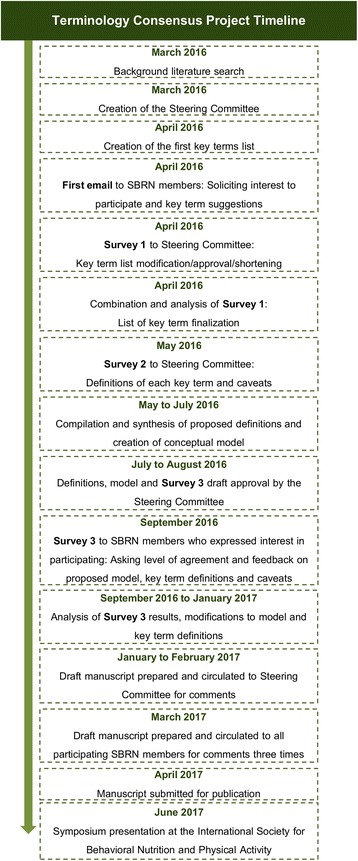
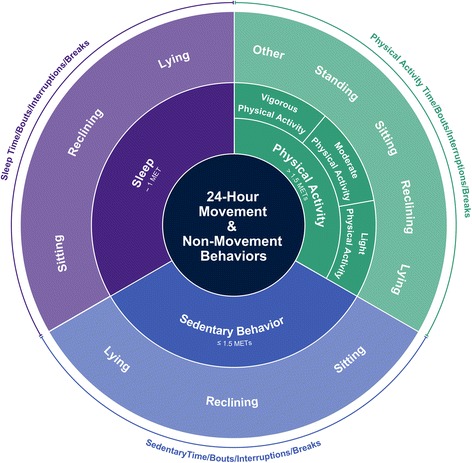
BACKGROUND: The prominence of sedentary behavior research in health science has grown rapidly. With this growth there is increasing urgency for clear, common and accepted terminology and definitions. Such standardization is difficult to achieve, especially across multi-disciplinary researchers, practitioners, and industries. The Sedentary Behavior Research Network (SBRN) undertook a Terminology Consensus Project to address this need. METHOD: First, a literature review was completed to identify key terms in sedentary behavior research. These key terms were then reviewed and modified by a Steering Committee formed by SBRN. Next, SBRN members were invited to contribute to this project and interested participants reviewed and provided feedback on the proposed list of terms and draft definitions through an online survey. Finally, a conceptual model and consensus definitions (including caveats and examples for all age groups and functional abilities) were finalized based on the feedback received from the 87 SBRN member participants who responded to the original invitation and survey. RESULTS: Consensus definitions for the terms physical inactivity, stationary behavior, sedentary behavior, standing, screen time, non-screen-based sedentary time, sitting, reclining, lying, sedentary behavior pattern, as well as how the terms bouts, breaks, and interruptions should be used in this context are provided. CONCLUSION: It is hoped that the definitions resulting from this comprehensive, transparent, and broad-based participatory process will result in standardized terminology that is widely supported and adopted, thereby advancing future research, interventions, policies, and practices related to sedentary behaviors.
Overview
The claims and statistics of this paper haven’t been checked yet.
Run the check — free, no account needed. It reads the open-access text and checks the sources it cites.
Integrity signals
Registry
Cites
Statistics
Figures
Verification
Claims the paper makes
The claims and statistics of this paper haven’t been checked yet.
Run the check — free, no account needed. It reads the open-access text and checks the sources it cites.
Claims other papers make about this one
Each is checked against this paper’s own text: does it say what the citing paper says it does?
The source backs part of the claim, not all of it — or backs it for a different population, condition or comparison.
In the citing paper
“Sedentary behavior, characterized by wakefulness with low energy expenditure (≤ 1.5 METs), is closely associated with various adverse health outcomes [1]. It increases the risk of chronic non-communicable diseases and all-cause mortality, diminishes positive affect, and increases susceptibility to depression and anxiety [2, 3].”
From Effect of classroom physical activity breaks on learning behaviors and academic achievements in university students: a systematic review (2026) · cites this paper as [1]
Experimental — accuracy not yet measuredIn the citing paper
“A specific policy in Japan (limiting the distance between the children and youth homes and the public elementary and junior high schools) 77 and the high density of Hong Kong, Japanese, and South Korean cities, allow children and youth to live a short trip away from their school, which can minimize the use of cars or other forms of motorized vehicles, and promote active travel.25,78,79”
From Global Matrix 3.0 Physical Activity Report Card Grades for Children and Youth: Results and Analysis From 49 Countries (2018) · cites this paper as [77]
Self-check
Percentages, sums and reported differences re-computed from the paper’s own numbers.
The self-check needs the paper’s full text.
Citations
Cites
Compendium of physical activities: an update of activity codes and MET intensities
AINSWORTH, B. E., HASKELL, W. L., WHITT, M. C., IRWIN, M. L., SWARTZ, A. M., STRATH, S. J., O???BRIEN, W. L., BASSETT, D. R., SCHMITZ, K. H., EMPLAINCOURT, P. O., et al. (2000) · Medicine & Science in Sports & Exercise · doi:10.1097/00005768-200009001-00009 · Cited by 8,497
Lee, I.-M., Shiroma, E. J., Lobelo, F., Puska, P., Blair, S. N., & Katzmarzyk, P. T. (2012) · The Lancet · doi:10.1016/s0140-6736(12)61031-9 · Cited by 8,215
Fit Yourself and Take Your Lungs to Heart
Palange, P., & Bonini, M. (2013) · Respiration · doi:10.1159/000350831 · Cited by 2,780
Biswas, A., Oh, P. I., Faulkner, G. E., Bajaj, R. R., Silver, M. A., Mitchell, M. S., & Alter, D. A. (2015) · Annals of Internal Medicine · doi:10.7326/m14-1651 · Cited by 2,726
Ekelund, U., Steene-Johannessen, J., Brown, W. J., Fagerland, M. W., Owen, N., Powell, K. E., Bauman, A., & Lee, I.-M. (2016) · The Lancet · doi:10.1016/s0140-6736(16)30370-1 · Cited by 2,648
Too Much Sitting: The Population Health Science of Sedentary Behavior
Owen, N., Healy, G. N., Matthews, C. E., & Dunstan, D. W. (2010) · Exercise and Sport Sciences Reviews · doi:10.1097/jes.0b013e3181e373a2 · Cited by 2,202
Systematic review of sedentary behaviour and health indicators in school-aged children and youth.
Tremblay, M. S., LeBlanc, A. G., Kho, M. E., Saunders, T. J., Larouche, R., Colley, R. C., Goldfield, G., & Gorber, S. (2011) · International Journal of Behavioral Nutrition and Physical Activity · doi:10.1186/1479-5868-8-98 · Cited by 2,085
Self-citationTremblay, M. S., Carson, V., Chaput, J.-P., Connor Gorber, S., Dinh, T., Duggan, M., Faulkner, G., Gray, C. E., Gruber, R., Janson, K., et al. (2016) · Applied Physiology, Nutrition, and Metabolism · doi:10.1139/apnm-2016-0151 · Cited by 2,024
Self-citationLetter to the Editor: Standardized use of the terms “sedentary” and “sedentary behaviours”
Networ, S. B. R. (2012) · Applied Physiology, Nutrition, and Metabolism · doi:10.1139/h2012-024 · Cited by 1,873
Sitting time and mortality from all causes, cardiovascular disease, and cancer
KATZMARZYK, P. T., CHURCH, T. S., CRAIG, C. L., & BOUCHARD, C. (2009) · Medicine & Science in Sports & Exercise · doi:10.1249/mss.0b013e3181930355 · Cited by 1,611
Physiological and health implications of a sedentary lifestyle
Tremblay, M. S., Colley, R. C., Saunders, T. J., Healy, G. N., & Owen, N. G. (2010) · Applied Physiology, Nutrition, and Metabolism · doi:10.1139/h10-079 · Cited by 1,572
Self-citationSedentary Behaviors and Subsequent Health Outcomes in Adults
Thorp, A. A., Owen, N., Neuhaus, M., & Dunstan, D. W. (2011) · American Journal of Preventive Medicine · doi:10.1016/j.amepre.2011.05.004 · Cited by 1,455
Carson, V., Hunter, S., Kuzik, N., Gray, C. E., Poitras, V. J., Chaput, J.-P., Saunders, T. J., Katzmarzyk, P. T., Okely, A. D., Connor Gorber, S., et al. (2016) · Applied Physiology, Nutrition, and Metabolism · doi:10.1139/apnm-2015-0630 · Cited by 1,380
Self-citationThe evolving definition of “sedentary.”
Pate, R. R., O'Neill, J. R., & Lobelo, F. (2008) · Exercise and Sport Sciences Reviews · doi:10.1097/jes.0b013e3181877d1a · Cited by 1,280
Evolution of accelerometer methods for physical activity research
Troiano, R. P., McClain, J. J., Brychta, R. J., & Chen, K. Y. (2014) · British Journal of Sports Medicine · doi:10.1136/bjsports-2014-093546 · Cited by 968
Owen, N. G., Sugiyama, T., Eakin, E., Gardiner, P. A., Tremblay, M. S., & Sallis, J. F. (2011) · American Journal of Preventive Medicine · doi:10.1016/j.amepre.2011.05.013 · Cited by 942
Self-citationSalmon, J., Owen, N., Crawford, D., Bauman, A., & Sallis, J. F. (2003) · Health Psychology · doi:10.1037/0278-6133.22.2.178 · Cited by 915
Daily Sitting Time and All-Cause Mortality: A Meta-Analysis
Chau, J. Y., Grunseit, A. C., Chey, T., Stamatakis, E., Brown, W. J., Matthews, C. E., Bauman, A. E., & van der Ploeg, H. P. (2013) · PLoS ONE · doi:10.1371/journal.pone.0080000 · Cited by 876
Sedentary Behavior: Emerging Evidence for a New Health Risk
Owen, N., Sparling, P. B., Healy, G. N., Dunstan, D. W., & Matthews, C. E. (2010) · Mayo Clinic Proceedings · doi:10.4065/mcp.2010.0444 · Cited by 842
Young, D. R., Hivert, M.-F., Alhassan, S., Camhi, S. M., Ferguson, J. F., Katzmarzyk, P. T., Lewis, C. E., Owen, N., Perry, C. K., Siddique, J., et al. (2016) · Circulation · doi:10.1161/cir.0000000000000440 · Cited by 791
Ekelund, U., Brage, S., Froberg, K., Harro, M., Anderssen, S. A., Sardinha, L. B., Riddoch, C., & Andersen, L. B. (2006) · PLoS Medicine · doi:10.1371/journal.pmed.0030488 · Cited by 667
Development of a Compendium of Energy Expenditures for Youth.
Ridley, K., Ainsworth, B. E., & Olds, T. (2008) · International Journal of Behavioral Nutrition and Physical Activity · doi:10.1186/1479-5868-5-45 · Cited by 622
Concise Oxford English dictionary
(2012) · Choice Reviews Online · doi:10.5860/choice.49-2393 · Cited by 608
Environmental determinants of physical activity and sedentary behavior.
Owen, N. G., Leslie, E. R., Salmon, J., & Fotheringham, M. J. (2000) · PubMed · Cited by 515
Importance of All Movement Behaviors in a 24 Hour Period for Overall Health
Chaput, J.-P., Carson, V., Gray, C., & Tremblay, M. (2014) · International Journal of Environmental Research and Public Health · doi:10.3390/ijerph111212575 · Cited by 444
Self-citationScreen-Based Entertainment Time, All-Cause Mortality, and Cardiovascular Events
Stamatakis, E., Hamer, M., & Dunstan, D. W. (2011) · Journal of the American College of Cardiology · doi:10.1016/j.jacc.2010.05.065 · Cited by 387
Physical activity and sedentary behaviours in youth: issues and controversies
Biddle, S., Gorely, T., Marshall, S. J., Murdey, I. D., & Cameron, N. (2004) · The Journal of the Royal Society for the Promotion of Health · doi:10.1177/146642400312400110 · Cited by 359
Bailey, D. P., & Locke, C. D. (2014) · Journal of science and medicine in sport · doi:10.1016/j.jsams.2014.03.008 · Cited by 358
Tremblay, M. S., Carson, V., & Chaput, J. (2016) · Applied Physiology, Nutrition, and Metabolism · doi:10.1139/apnm-2016-0203 · Cited by 358
Self-citationHealth Risks, Correlates, and Interventions to Reduce Sedentary Behavior in Young People
Salmon, J., Tremblay, M. S., Marshall, S. J., & Hume, C. (2011) · American Journal of Preventive Medicine · doi:10.1016/j.amepre.2011.05.001 · Cited by 332
Self-citationMethods for objective measure, quantification and analysis of sedentary behaviour and inactivity
Chastin, S. F. M., & Granat, M. H. (2010) · Gait & Posture · doi:10.1016/j.gaitpost.2009.09.002 · Cited by 323
Self-citationAnderson, S. E., Economos, C. D., & Must, A. (2008) · BMC Public Health · doi:10.1186/1471-2458-8-366 · Cited by 317
Utilization and Harmonization of Adult Accelerometry Data
Wijndaele, K., Westgate, K. L., Stephens, S., Blair, S. N., Bull, F., CHASTIN, S. F. M., Dunstan, D. W., Ekelund, U., Esliger, D., Freedson, P. S., et al. (2015) · Medicine & Science in Sports & Exercise · doi:10.1249/mss.0000000000000661 · Cited by 304
Self-citationCanadian Physical Activity Guidelines for the Early Years (aged 0–4 years)
Tremblay, M. S., LeBlanc, A. G., Carson, V., Choquette, L., Gorber, S. C., Dillman, C. J., Duggan, M., Gordon, M. J., Hicks, A. L., Janssen, I., et al. (2012) · Applied Physiology, Nutrition, and Metabolism · doi:10.1139/h2012-018 · Cited by 292
Self-citationSedentary Behavior in Dutch Workers
Jans, M. P., Proper, K. I., & Hildebrandt, V. H. (2007) · American Journal of Preventive Medicine · doi:10.1016/j.amepre.2007.07.033 · Cited by 285
Definition, Measurement, and Health Risks Associated with Sedentary Behavior
Gibbs, B. B., Hergenroeder, A. L., Katzmarzyk, P. T., Lee, I.-M. M., & Jakicic, J. M. (2014) · Medicine & Science in Sports & Exercise · doi:10.1249/mss.0000000000000517 · Cited by 275
Henson, J., Davies, M. J., Bodicoat, D. H., Edwardson, C. L., Gill, J. M. R., Stensel, D. J., Tolfrey, K., Dunstan, D. W., Khunti, K., & Yates, T. (2016) · Diabetes Care · doi:10.2337/dc15-1240 · Cited by 270
Mansoubi, M., Pearson, N., Clemes, S. A., Biddle, S., Bodicoat, D. H., Tolfrey, K., Edwardson, C. L., & Yates, T. E. (2015) · BMC Public Health · doi:10.1186/s12889-015-1851-x · Cited by 242
van Ekris, E., Altenburg, T. M., Singh, A. S., Proper, K. I., Heymans, M. W., & Chinapaw, M. J. M. (2016) · Obesity Reviews · doi:10.1111/obr.12426 · Cited by 191
Self-citationChanging the way we work: elevating energy expenditure with workstation alternatives
Tudor-Locke, C. E., Schuna, J. M., Frensham, L. J., & Proença, M. (2013) · International Journal of Obesity · doi:10.1038/ijo.2013.223 · Cited by 189
CHASTIN, S. F. M., Craemer, M. D., Lien, N., Bernaards, C. M., Buck, C., Oppert, J., Nazare, J., Lakerveld, J., O’Donoghue, G., Holdsworth, M., et al. (2016) · International Journal of Behavioral Nutrition and Physical Activity · doi:10.1186/s12966-016-0409-3 · Cited by 166
Self-citationKeadle, S. K., Shiroma, E. J., Freedson, P. S., & Lee, I.-M. M. (2014) · BMC Public Health · doi:10.1186/1471-2458-14-1210 · Cited by 162
CHASTIN, S. F. M., Ferriolli, E., Stephens, N. A., Fearon, K., & Greig, C. A. (2011) · Age and Ageing · doi:10.1093/ageing/afr075 · Cited by 152
Self-citationStanding and Mortality in a Prospective Cohort of Canadian Adults
Katzmarzyk, P. T. (2013) · Medicine & Science in Sports & Exercise · doi:10.1249/mss.0000000000000198 · Cited by 135
Development of a Consensus Taxonomy of Sedentary Behaviors (SIT): Report of Delphi Round 1
CHASTIN, S. F. M., Schwarz, U., & Skelton, D. A. (2013) · PLoS ONE · doi:10.1371/journal.pone.0082313 · Cited by 113
Self-citationWhat is the metabolic and energy cost of sitting, standing and sit/stand transitions?
Júdice, P. B., Hamilton, M. T., Sardinha, L. B., Zderic, T. W., & Silva, A. M. (2015) · European Journal of Applied Physiology · doi:10.1007/s00421-015-3279-5 · Cited by 108
Systematic Review of Childhood Sedentary Behavior Questionnaires: What do We Know and What is Next?
Hidding, L. M., Altenburg, T. M., Mokkink, L. B., Terwee, C. B., & Chinapaw, M. J. M. (2016) · Sports Medicine · doi:10.1007/s40279-016-0610-1 · Cited by 104
Self-citationFrom Sedentary Time to Sedentary Patterns: Accelerometer Data Reduction Decisions in Youth
Chinapaw, M. J. M., de Niet, M., Verloigne, M., Bourdeaudhuij, I. D., Brug, J., & Altenburg, T. M. (2014) · PLoS ONE · doi:10.1371/journal.pone.0111205 · Cited by 100
Self-citationAccelerometer Adherence and Performance in a Cohort Study of US Hispanic Adults
Evenson, K. R., Sotres‐Alvarez, D., Deng, Y., Marshall, S. J., Isasi, C. R., Esliger, D., & Thomas, S. (2014) · Medicine & Science in Sports & Exercise · doi:10.1249/mss.0000000000000478 · Cited by 95
Kim, Y., Welk, G. J., Braun, S. I., & Kang, M. (2015) · PLoS ONE · doi:10.1371/journal.pone.0118078 · Cited by 94
Effects of Standing and Light-Intensity Activity on Ambulatory Blood Pressure
Zeigler, Z., Mullane, S. L., Crespo, N. C., Buman, M. P., & Gaesser, G. A. (2015) · Medicine & Science in Sports & Exercise · doi:10.1249/mss.0000000000000754 · Cited by 90
Kids are not little adults: what MET threshold captures sedentary behavior in children?
Saint‐Maurice, P. F., Kim, Y., Welk, G. J., & Gaesser, G. A. (2015) · European Journal of Applied Physiology · doi:10.1007/s00421-015-3238-1 · Cited by 88
Manns, P. J., Ezeugwu, V. E., Armijo-Olivo, S. L., Vallance, J. K., & Healy, G. N. (2015) · Journal of the American Geriatrics Society · doi:10.1111/jgs.13490 · Cited by 88
Sedentary behaviour in people with multiple sclerosis: Is it time to stand up against MS?
Zanten, J. V., Pilutti, L. A., Duda, J. L., & Motl, R. W. (2016) · Multiple Sclerosis Journal · doi:10.1177/1352458516644340 · Cited by 82
Peterson, N. E., Sirard, J. R., Kulbok, P. A., DeBoer, M. D., & Erickson, J. M. (2015) · Research in Nursing & Health · doi:10.1002/nur.21694 · Cited by 80
Ezeugwu, V. E., Klaren, R. E., Hubbard, E. A., Manns, P. J., & Motl, R. W. (2015) · Preventive Medicine Reports · doi:10.1016/j.pmedr.2015.03.007 · Cited by 75
Altenburg, T. M., & Chinapaw, M. J. M. (2015) · Preventive Medicine · doi:10.1016/j.ypmed.2015.04.019 · Cited by 73
Self-citationStanding time and all-cause mortality in a large cohort of Australian adults
van der Ploeg, H. P., Chey, T., Ding, D., Chau, J. Y., Stamatakis, E., & Bauman, A. E. (2014) · Preventive Medicine · doi:10.1016/j.ypmed.2014.10.004 · Cited by 61
Hislop, J. F., Law, J., Rush, R., Grainger, A., Bulley, C., Reilly, J. J., & Mercer, T. H. (2014) · Physiological Measurement · doi:10.1088/0967-3334/35/11/2213 · Cited by 54
‘Too Much Sitting’ and Metabolic Risk – Has Modern Technology Caught Up with Us?
Dunstan, D. W., Healy, G. N., Sugiyama, T., & Owen, N. G. (2010) · touchREVIEWS in Endocrinology · doi:10.17925/ee.2010.06.00.19 · Cited by 53
Altenburg, T. M., de Niet, M., Verloigne, M., Bourdeaudhuij, I. D., Androutsos, O., Μanios, Y., Kovacs, E., Bringolf‐Isler, B., Brug, J., & Chinapaw, M. J. M. (2014) · Preventive Medicine · doi:10.1016/j.ypmed.2014.12.015 · Cited by 49
Self-citationAtkin, A. J., Ekelund, U., Møller, N. C., Froberg, K., Sardinha, L. B., Andersen, L. B., & Brage, S. (2013) · Medicine & Science in Sports & Exercise · doi:10.1249/mss.0b013e318282190e · Cited by 48
Challenging the Dual-Hinge Approach to Intervening on Sedentary Behavior
Spence, J. C., Rhodes, R. E., & Carson, V. (2016) · American Journal of Preventive Medicine · doi:10.1016/j.amepre.2016.10.019 · Cited by 46
Self-citationKlaren, R. E., Hubbard, E. A., Zhu, W., & Motl, R. W. (2016) · Adapted Physical Activity Quarterly · doi:10.1123/apaq.2015-0007 · Cited by 34
Alternating Sitting and Standing Increases the Workplace Energy Expenditure of Overweight Adults
Thorp, A. A., Kingwell, B. A., English, C., Hammond, L. J., Sethi, P., Owen, N. G., & Dunstan, D. W. (2015) · Journal of Physical Activity and Health · doi:10.1123/jpah.2014-0420 · Cited by 28
Janssen, X., Cliff, D. P., Reilly, J. J., Hinkley, T., Jones, R. A., Batterham, M. J., Ekelund, U., Brage, S., & Okely, T. (2014) · Journal of Sports Sciences · doi:10.1080/02640414.2014.949826 · Cited by 28
Characterizing Energy Expenditure During Sedentary Behavior After Stroke
Verschuren, O. W., de Haan, F., Mead, G. E., Fengler, B., & Visser‐Meily, A. (2015) · Archives of Physical Medicine and Rehabilitation · doi:10.1016/j.apmr.2015.09.006 · Cited by 27
Heterogeneity of muscle activity during sedentary behavior
Pesola, A. J., Laukkanen, A., Tikkanen, O., & Finni, T. J. (2016) · Applied Physiology, Nutrition, and Metabolism · doi:10.1139/apnm-2016-0170 · Cited by 24
van Ekris, E., Altenburg, T. M., Vos, E. E., & Chinapaw, M. J. M. (2016) · PubMed · Cited by 22
Self-citationFountaine, C. J., Johann, J., Skalko, C., & Liguori, G. A. (2016) · International journal of exercise science · doi:10.70252/whar7442 · Cited by 19
Youth Energy Expenditure During Common Free-Living Activities and Treadmill Walking
Schuna, J. M., Barreira, T. V., Hsia, D. S., Johnson, W. D., & Tudor-Locke, C. E. (2016) · Journal of Physical Activity and Health · doi:10.1123/jpah.2015-0728 · Cited by 19
Energy Cost of Activities in Preschool-Aged Children
Puyau, M. R., Adolph, A. L., Liu, Y., Wilson, T. A., Zakeri, I., & Butte, N. F. (2016) · Journal of Physical Activity and Health · doi:10.1123/jpah.2015-0711 · Cited by 16
Appropriateness of the definition of ‘sedentary’ in young children: Whole-room calorimetry study
Reilly, J. J., Janssen, X., Cliff, D. P., & Okely, A. D. (2014) · Journal of science and medicine in sport · doi:10.1016/j.jsams.2014.07.013 · Cited by 11
The Energy Expenditure of Free-Living Physical Activities in Primary Schoolchildren
Innerd, A. L., & Azevedo, L. B. (2016) · Journal of Physical Activity and Health · doi:10.1123/jpah.2015-0724 · Cited by 8
Energy Expenditure of Common Sedentary Activities in Youth
Lau, M., Wang, L., Acra, S. A., & Buchowski, M. S. (2016) · Journal of Physical Activity and Health · doi:10.1123/jpah.2015-0727 · Cited by 8
Advances in Long Term Physical Behaviour Monitoring
Helbostad, J. L., Chiari, L., CHASTIN, S. F. M., & Aminian, K. (2016) · BioMed Research International · doi:10.1155/2016/6745760 · Cited by 5
Self-citationMetabolic Equivalents of Selected Sedentary and Physical Activities in Chinese Youth
Gao, Y., Sun, H., Zhuang, J., Zhang, J., Ransdell, L. B., Zhu, Z., & Wang, S. (2016) · Journal of Physical Activity and Health · doi:10.1123/jpah.2015-0742 · Cited by 5
Energy Cost of Physical Activities and Sedentary Behaviors in Young Children
Groβek, A., van Loo, C. M. T., Peoples, G. E., Hagenbuchner, M., Jones, R. A., & Cliff, D. P. (2016) · Journal of Physical Activity and Health · doi:10.1123/jpah.2015-0720 · Cited by 5
Energy Expenditure of Daily Living Activities in 3- to 6-Year-Old Children
Byun, W., Barry, A. M., & Lee, J. M. (2016) · Journal of Physical Activity and Health · doi:10.1123/jpah.2015-0715 · Cited by 5
AlPHABET: Development of A Physical Behaviour Taxonomy with an international open consensusPreprint
CHASTIN, S. F. M., Helbostad, J. L., Tremblay, M. S., Ainsworth, B., Mork, P. J., Rochester, L., Schwarz, U., Bussmann, J. B. J., Hausdorff, J. M., & Granat, M. H. (2016) · Cited by 3
Self-citation
Research works printed but not linked: 4
- Tremblay MS, et al. and Sedentary Behaviour Research Network. Afr J Phys Health Ed Rec Dance. 2012;18(1):200–4.
- Tremblay MS, et al. and Sedentary Behaviour Research Network. Standardized use of the terms “sedentary” and “sedentary behaviours”. Movement Sport Sci. 2012;77:73–6.
- International Society for the Measurement of Physical Behaviour. Pre-Conference-Event-Sunday- June16. 2016. In: Moving Towards Development of Shared Database Resources in Ambulatory Monitoring Research www.ismpb.org/wp-content/uploads/2016/11/Pre-Conference-Event-Sunday-June16.pdf . Accessed 31 Mar 2017.
- WHO. Global Recommendations on Physical Activity for Health. Geneva: World Health Organization; 2010.
Cited by
Sorted by citations
Heart Disease and Stroke Statistics—2023 Update: A Report From the American Heart Association
Tsao, C. W., Aday, A. W., Almarzooq, Z. I., Anderson, C. A. M., Arora, P., Avery, C. L., Baker-Smith, C. M., Beaton, A. Z., Boehme, A. K., Buxton, A. E., et al. (2023) · Circulation · doi:10.1161/cir.0000000000001123 · Cited by 8,300
Heart Disease and Stroke Statistics—2022 Update: A Report From the American Heart Association
Tsao, C. W., Aday, A. W., Almarzooq, Z. I., Alonso, A., Beaton, A. Z., Bittencourt, M. S., Boehme, A. K., Buxton, A. E., Carson, A. P., Commodore-Mensah, Y., et al. (2022) · Circulation · doi:10.1161/cir.0000000000001052 · Cited by 5,987
Heart Disease and Stroke Statistics—2021 Update: A Report From the American Heart Association
Virani, S. S., Alonso, A., Aparicio, H. J., Benjamin, E. J., Bittencourt, M. S., Callaway, C. W., Carson, A. P., Chamberlain, A. M., Cheng, S., Delling, F. N., et al. (2021) · Circulation · doi:10.1161/cir.0000000000000950 · Cited by 5,784
Martin, S. S., Aday, A. W., Almarzooq, Z. I., Anderson, C. A. M., Arora, P., Avery, C. L., Baker-Smith, C. M., Barone Gibbs, B., Beaton, A. Z., Boehme, A. K., et al. (2024) · Circulation · doi:10.1161/cir.0000000000001209 · Cited by 2,800
Sedentary Behavior, Exercise, and Cardiovascular Health
Lavie, C. J., Ozemek, C., Carbone, S., Katzmarzyk, P. T., & Blair, S. N. (2019) · Circulation Research · doi:10.1161/circresaha.118.312669 · Cited by 1,735
Metadata
- Authors
- on behalf of SBRN Terminology Consensus Project Participants, Tremblay, M. S., Aubert, S., Barnes, J. D., Saunders, T. J., Carson, V., Latimer-Cheung, A. E., Chastin, S. F. M., Altenburg, T. M., & Chinapaw, M. J. M.
- Affiliations
- Children's Hospital of Eastern Ontario (CA)
- University of Prince Edward Island (CA)
- University of Alberta (CA)
- Glasgow Caledonian University (GB)
- Amsterdam UMC Location Vrije Universiteit Amsterdam (NL)
- Corresponding author
- Tremblay, Mark S.
- ORCID
- Venue
- International Journal of Behavioral Nutrition and Physical Activity
- Published
- 2017-06-10
- Volume
- 14
- Issue
- 1
- Pages
- 75-75
- ISSN
- 1479-5868 (ISSN-L)
- PMC
- PMC5466781
- OpenAlex
- W2618096841
- Cited by
- 3,793
- References
- 80
- Citations by year
- 2026: 359 · 2025: 410 · 2024: 506 · 2023: 481 · 2022: 489 · 2021: 494 · 2020: 430 · 2019: 311 · 2018: 253 · 2017: 50
- FWCI
- 211.17
- Type
- journal article
- Language
- en
- Open access
- gold
- doi.org
- Licence
- cc-by
- Locations
- International Journal of Behavioral Nutrition and Physical Activity (publishedVersion, cc-by)
- Europe PMC (PubMed Central) (publishedVersion, other-oa)
- PubMed Central (publishedVersion, cc-by)
- PubMed (publishedVersion)
- Pure Amsterdam UMC (publishedVersion, other-oa)
- Amsterdam UMC (VU Amsterdam) - Institutional Repository (publishedVersion)
- University of Southern Queensland ePrints (University of Southern Queensland) (acceptedVersion)
- Plymouth Marjon University Repository (Plymouth Marjon University) (acceptedVersion)
- UEA Digital Repository (University of East Anglia) (acceptedVersion)
- UniSA Research Outputs Repository (University of South Australia) (acceptedVersion, cc-by)
- ResearchOnline (Glasgow Caledonian University) (acceptedVersion, cc-by)
- SHURA (Sheffield Hallam University Research Archive) (Sheffield Hallam University) (acceptedVersion)
- PolyU Institutional Research Archive (Hong Kong Polytechnic University) (submittedVersion, cc-by)
- Ghent University Academic Bibliography (Ghent University) (submittedVersion, cc-by)
- Apollo (University of Cambridge) (submittedVersion, cc-by)
- ScholarsArchive (Brigham Young University) (submittedVersion)
- Research Publications (Maastricht University) (submittedVersion, cc-by)
- Adelaide Research & Scholarship (AR&S) (University of Adelaide) (submittedVersion, cc-by)
- DOAJ (DOAJ: Directory of Open Access Journals) (submittedVersion, cc-by-sa)
- ePrints Soton (University of Southampton) (submittedVersion)
- UCL Discovery (University College London) (submittedVersion)
- eSpace (Curtin University) (submittedVersion, cc-by)
- Figshare (submittedVersion)
- Durham Research Online (Durham University) (submittedVersion, cc-by)
- PolyU Institutional Research Archive (Hong Kong Polytechnic University) (submittedVersion, other-oa)
- IslandScholar (University of Prince Edward Island) (submittedVersion, cc-by)
- Edinburgh Research Explorer (University of Edinburgh) (submittedVersion, cc-by)
- QSpace (Queen's University Library) (submittedVersion)
- Griffith Research Online (submittedVersion, cc-by)
- Research Publications (Maastricht University) (submittedVersion, other-oa)
- Data Archiving and Networked Services (DANS) (submittedVersion)
- Apollo (cc-by)
- Funders
- British Heart Foundation (FS/12/58/29709)
- Cambridge University Hospitals (146281)
- Medical Research Council (MR/P020372/1, MC_UU_12015/3)
- National Institute of General Medical Sciences (P20GM113125)
- Topics
- Health Sciences › Medicine › Public Health, Environmental and Occupational Health › Physical Activity and Health
- Social Sciences › Human Factors and Ergonomics › Ergonomics and Musculoskeletal Disorders
- Physical Sciences › Computer Science › Computer Vision and Pattern Recognition › Context-Aware Activity Recognition Systems
- Keywords
- sedentary behavior, terminology standardization, definitions, physical inactivity, screen time, sitting, standing
- MeSH terms
- Consensus Statements as Topic, Female, Humans, Male, Terminology as Topic, Posture, Research Design, Exercise, Consensus, Sedentary Behavior
About these checks
Registry, retraction, Cites and statistics results are computed, not judged, with one exception: a printed reference that no index lists is read once by a model before it counts as a citation error. Claims are extracted by a model and kept only when their quote appears verbatim in the text; each cited source is then checked, with a model’s help, for whether it says what the claim relies on. Those verdicts can be wrong — read the claim’s quote and the cited source before relying on one.
Statistics and arithmetic are recomputed, not judged.
Confidence bands are shown only for fields calibrated on our annotated test set. None is calibrated yet, so no band is shown.
What counts as a claim ›How we measure confidence ›How we check this ›
Are you an author, or do you see a problem with this page? Request a review
