

Effect of classroom-based physical activity interventions on academic and physical activity outcomes: a systematic review and meta-analysis
Open accessThe DOI matches its Crossref record; 74 of the 74 references it cites were found in a registry or an index.
Abstract
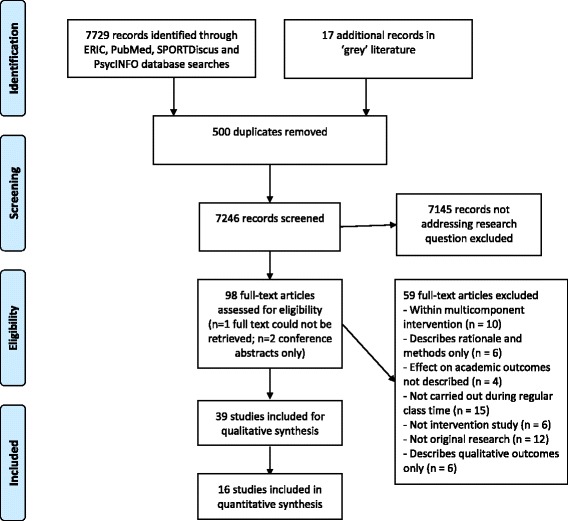
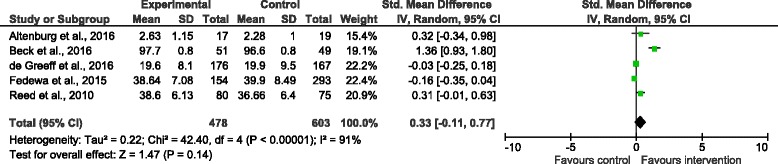
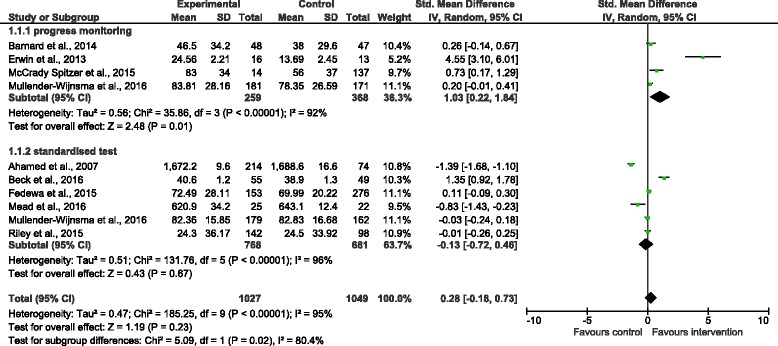
BACKGROUND: Physical activity is associated with many physical and mental health benefits, however many children do not meet the national physical activity guidelines. While schools provide an ideal setting to promote children's physical activity, adding physical activity to the school day can be difficult given time constraints often imposed by competing key learning areas. Classroom-based physical activity may provide an opportunity to increase school-based physical activity while concurrently improving academic-related outcomes. The primary aim of this systematic review and meta-analysis was to evaluate the impact of classroom-based physical activity interventions on academic-related outcomes. A secondary aim was to evaluate the impact of these lessons on physical activity levels over the study duration. METHODS: A systematic search of electronic databases (PubMed, ERIC, SPORTDiscus, PsycINFO) was performed in January 2016 and updated in January 2017. Studies that investigated the association between classroom-based physical activity interventions and academic-related outcomes in primary (elementary) school-aged children were included. Meta-analyses were conducted in Review Manager, with effect sizes calculated separately for each outcome assessed. RESULTS: Thirty-nine articles met the inclusion criteria for the review, and 16 provided sufficient data and appropriate design for inclusion in the meta-analyses. Studies investigated a range of academic-related outcomes including classroom behaviour (e.g. on-task behaviour), cognitive functions (e.g. executive function), and academic achievement (e.g. standardised test scores). Results of the meta-analyses showed classroom-based physical activity had a positive effect on improving on-task and reducing off-task classroom behaviour (standardised mean difference = 0.60 (95% CI: 0.20,1.00)), and led to improvements in academic achievement when a progress monitoring tool was used (standardised mean difference = 1.03 (95% CI: 0.22,1.84)). However, no effect was found for cognitive functions (standardised mean difference = 0.33 (95% CI: -0.11,0.77)) or physical activity (standardised mean difference = 0.40 (95% CI: -1.15,0.95)). CONCLUSIONS: Results suggest classroom-based physical activity may have a positive impact on academic-related outcomes. However, it is not possible to draw definitive conclusions due to the level of heterogeneity in intervention components and academic-related outcomes assessed. Future studies should consider the intervention period when selecting academic-related outcome measures, and use an objective measure of physical activity to determine intervention fidelity and effects on overall physical activity levels.
Overview
The claims and statistics of this paper haven’t been checked yet.
Free: it reads the open-access text and checks the first 5 claims that cite a source we can check. Create a free account to check every claim.
Integrity signals
Registry
Cites
Statistics
Figures


Verification
Claims the paper makes
The claims and statistics of this paper haven’t been checked yet.
Free: it reads the open-access text and checks the first 5 claims that cite a source we can check. Create a free account to check every claim.
Claims other papers make about this one
Each is checked against this paper’s own text: does it say what the citing paper says it does?
The source backs part of the claim, not all of it — or backs it for a different population, condition or comparison.
In the citing paper
“active classrooms, compared with traditional sedentary classrooms, had null [32] or medium [35] effects.”
From Physical Activity and Academic Achievement: An Umbrella Review (2020) · cites this paper as [32]
Experimental — accuracy not yet measuredThe source backs part of the claim, not all of it — or backs it for a different population, condition or comparison.
In the citing paper
“These improvements are relatively strong when considered in the broader field of physical activity interventions.”
From Effectiveness of wearable activity trackers to increase physical activity and improve health: a systematic review of systematic reviews and meta-analyses. (2022) · cites this paper as [69]
Experimental — accuracy not yet measured
Self-check
Percentages, sums and reported differences re-computed from the paper’s own numbers.
The self-check needs the paper’s full text.
Citations
Cites
‘Small Changes' to Diet and Physical Activity Behaviors for Weight Management
Hills, A. P., Byrne, N. M., Lindstrom, R., & Hill, J. O. (2013) · Obesity Facts · doi:10.1159/000345030 · Cited by 9,493
Physical Activity in the United States Measured by Accelerometer
TROIANO, R. P., BERRIGAN, D., DODD, K. W., MÂSSE, L. C., TILERT, T., & MCDOWELL, M. (2008) · Medicine & Science in Sports & Exercise · doi:10.1249/mss.0b013e31815a51b3 · Cited by 7,638
Janssen, I., & LeBlanc, A. G. (2010) · International Journal of Behavioral Nutrition and Physical Activity · doi:10.1186/1479-5868-7-40 · Cited by 4,829
Physical Activity for Cognitive and Mental Health in Youth: A Systematic Review of Mechanisms
Lubans, D., Richards, J., Hillman, C., Faulkner, G., Beauchamp, M., Nilsson, M., Kelly, P., Smith, J., Raine, L., & Biddle, S. (2016) · Pediatrics · doi:10.1542/peds.2016-1642 · Cited by 1,548
The relationship between physical activity and cognition in children: a meta-analysis
Sibley, B. A., & Etnier, J. L. (2003) · Pediatric Exercise Science · doi:10.1123/pes.15.3.243 · Cited by 1,308
Best, J. R., Miller, P. H., & Naglieri, J. A. (2011) · Learning and Individual Differences · doi:10.1016/j.lindif.2011.01.007 · Cited by 1,294 · cited 1×
“Executive functions, inhibition in particular, have been shown to be consistently related to academic achievement [34] and therefore were considered salient to teachers.”
BackgroundThe effect of exercise-induced arousal on cognitive task performance: a meta-regression analysis
Lambourne, K., & Tomporowski, P. (2010) · Brain Research · doi:10.1016/j.brainres.2010.03.091 · Cited by 1,105
Sallis, J. F., McKenzie, T. L., Alcaraz, J. E., Kolody, B., Faucette, N., & Hovell, M. F. (1997) · American Journal of Public Health · doi:10.2105/ajph.87.8.1328 · Cited by 914 · cited 1×
“Studies have shown interventions targeting these discrete periods may be effective in increasing children’s physical activity levels [7, 8], with the potential to contribute to up to 50% of the physical activity required to meet physical activity guidelines [9].”
BackgroundPhysical education, school physical activity, school sports and academic performance
Trudeau, F., & Shephard, R. J. (2008) · International Journal of Behavioral Nutrition and Physical Activity · doi:10.1186/1479-5868-5-10 · Cited by 879
Rasberry, C. N., Lee, S. M., Robin, L., Laris, B. A., Russell, L. A., Coyle, K. K., & Nihiser, A. J. (2011) · Preventive Medicine · doi:10.1016/j.ypmed.2011.01.027 · Cited by 709
Research works printed but not linked: 3
- Okely T Salmon J Vella S Cliff D Timperio A Tremblay M Trost S Shilton T Hinkley T Ridgers N Phillipson L Hesketh K Parrish A Janssen X Brown M Emmel J Marino N A systematic review to update the Australian physical activity guidelines for children and young people., Report prepared for the Australian Government Department of Health, Editor Canberra 2012 Australia Commonwealth of Australia
- Brickenkamp R Zillmer E d2 Test of Attention, in d2 Test 1998 Clark, Editors P.L. Ackerman and E
- Nunnally, J.C., Psychometric theory. McGraw-Hill series in psychology. 1967: New York, McGraw-Hill [1967].
Cited by
Items 201–300 of 689
Merchán-Sanmartín, B., Brocel-Bajaña, M., Pambabay-Calero, J. J., Bauz-Olvera, S. A., Montalván-Burbano, N., Aguilar-Aguilar, M., & Carrión-Mero, P. (2022) · International Journal of Environmental Research and Public Health · doi:10.3390/ijerph191711016 · Cited by 19
Complementary and Integrative Treatments for Attention-Deficit/Hyperactivity Disorder in Youth
Russell, D., & Arnold, L. E. (2023) · Child and Adolescent Psychiatric Clinics of North America · doi:10.1016/j.chc.2022.08.005 · Cited by 15
MURPHY, M. H., O’Kane, S. M., Carlin, A., Lahart, I. M., Doherty, L. C., Jago, R., McDermott, G., Faulkner, M., & Gallagher, A. M. (2024) · International Journal of Behavioral Nutrition and Physical Activity · doi:10.1186/s12966-024-01563-0 · Cited by 19
“There are several opportunities for children to be physically active across the school day including, during breaktimes, active travel to and from school, classroom-based physical activity, and Physical Education (PE) classes [21].”
BackgroundBarriers to Implementation of Physical Activity in Danish Public Schools
Koch, S., Troelsen, J., Cassar, S., & Pawlowski, C. S. (2020) · Journal of Teaching in Physical Education · doi:10.1123/jtpe.2019-0158 · Cited by 15
García-Baños, C., Rubio‐Arias, J. Á., Martínez-Aranda, L. M., & Ramos‐Campo, D. J. (2020) · Sustainability · doi:10.3390/su12176814 · Cited by 22
“In fact, there is evidence that implementing intervention programs in Physical Education increases cardiorespiratory fitness [20], improves cardiometabolic risk factors [16], develops motor skills [21], and improves cognitive skills such as memory or problem-solving [22].”
BackgroundUse of Wearable Devices to Study Physical Activity in Early Childhood Education
Díaz-Quesada, G., Bahamonde, C., Giménez‐Egido, J. M., & Torres‐Luque, G. (2021) · Sustainability · doi:10.3390/su132413998 · Cited by 19
Jiménez-Parra, J. F., Belando‐Pedreño, N., Fernández, J. L., Vélez, A. J. G., & Valenzuela, A. V. (2022) · Applied Sciences · doi:10.3390/app12168073 · Cited by 20
Ruiz‐Ariza, A., Suárez-Manzano, S., Mezcua-Hidalgo, A., & López, E. J. M. (2022) · Educational Studies · doi:10.1080/03055698.2022.2128992 · Cited by 22
“Although many researchers have suggested the use of 10–15-minute active breaks (Watson et al. 2017), teachers have indicated that they prefer short active pauses (≤5 min) (Howie, Newman-Norlund, and Pate 2014b).”
Influentialvan den Berg, V., Vos, E., de Groot, R. H. M., Singh, A. S., & Chinapaw, M. J. M. (2018) · International Journal of Environmental Research and Public Health · doi:10.3390/ijerph15122713 · Cited by 22
“However, compelling evidence shows that spending additional time on PA at the cost of time for learning has no adverse effects on children’s academic performance [69,74,75].”
BackgroundWawrzyniak, S., Korbecki, M., Cichy, I., Kruszwicka, A., Przybyła, T., Klichowski, M., & Rokita, A. (2022) · International Journal of Environmental Research and Public Health · doi:10.3390/ijerph19031275 · Cited by 25
González-Pérez, M., Sánchez‐Oliva, D., Martín‐Acosta, F., Hermosa, A. R., Camiletti‐Moirón, D., & Grao‐Cruces, A. (2025) · Learning and Instruction · doi:10.1016/j.learninstruc.2025.102091 · Cited by 21
Results of the Italian project ‘GiochiAMO’ to improve nutrition and PA among children
D’Egidio, V., Lia, L., Sinopoli, A., Backhaus, I., Mannocci, A., Saulle, R., Sestili, C., Cocchiara, R. A., Bella, O. D., Yordanov, T., et al. (2019) · Journal of Public Health · doi:10.1093/pubmed/fdz129 · Cited by 14
Classroom Teacher Efficacy Toward Implementation of Physical Activity in the D‐SHINES Intervention
Barcelona, J., Centeio, E. E., Hijazi, K. A., & Pedder, C. (2022) · Journal of School Health · doi:10.1111/josh.13163 · Cited by 17
Chen, F., Wang, J., Gao, H., Zeng, Y., Li, Z., & Zou, H. (2024) · Frontiers in Psychology · doi:10.3389/fpsyg.2024.1332351 · Cited by 15
Tenorio, S. E., Clemente, J. A. J., Solana, A. A., Martín-Albó, J., & Casterad, J. Z. (2020) · Journal of Physical Activity and Health · doi:10.1123/jpah.2019-0320 · Cited by 18
Thompson, H. R., Hewawitharana, S. C., Kao, J., Rider, C. D., Talmage, E., Gosliner, W. A., Whetstone, L. M., & Woodward-Lopez, G. M. (2020) · Preventive Medicine Reports · doi:10.1016/j.pmedr.2020.101222 · Cited by 13
Wearable Artificial Intelligence for Assessing Physical Activity in High School Children
Ahmed, A., Aziz, S., Qidwai, U. A., Farooq, F., Shan, J., Subramanian, M., Chouchane, L., EINatour, R., Abd-Alrazaq, A. A., Pandas, S., et al. (2022) · Sustainability · doi:10.3390/su15010638 · Cited by 21
The Impact of Physically Active Brain Breaks on College Students’ Activity Levels and Perceptions
Stapp, A. C., & Prior, L. F. (2018) · Journal of Physical Activity Research · doi:10.12691/jpar-3-1-10 · Cited by 14
“Short bouts of PA have been shown to benefit academics, focus in class, enjoyment in class, and increased PA [22,23,24].”
Kleszczewska, D. W., Mazur, J., & Siedlecka, J. (2019) · International Journal of Occupational Medicine and Environmental Health · doi:10.13075/ijomeh.1896.01389 · Cited by 21
Physical Activity With Eduball Stimulates Graphomotor Skills in Primary School Students
Wawrzyniak, S., Cichy, I., Matías, A. R., Pawlik, D., Kruszwicka, A., Klichowski, M., & Rokita, A. (2021) · Frontiers in Psychology · doi:10.3389/fpsyg.2021.614138 · Cited by 25
Online physically active academic lessons in COVID-19 times: A pilot study
Beserra, V., Nussbaum, M., Navarrete, M., & Cabezas, N. G. (2022) · Teaching and Teacher Education · doi:10.1016/j.tate.2022.103750 · Cited by 17
“Such lessons allow to strike a balance between learning outcomes and time spent in physical activity (Watson et al., 2017), thus counteracting sedentarism among students (McGowan, Ferguson, Gerde, Pfeiffer, & Pontifex, 2020), while managing to align with teachers and school leaders’ needs (Skage, Ertesvåg, Roland, & D…”
Teuber, M., Leyhr, D., Moll, J., & Sudeck, G. (2022) · Frontiers in Sports and Active Living · doi:10.3389/fspor.2022.1024996 · Cited by 12
Active Learning: A Review of European Studies of Active Lessons
Bailey, R. P., Ríes, F., Heck, S., & Scheuer, C. (2023) · Sustainability · doi:10.3390/su15043413 · Cited by 35
“Unlike previous reviews [15,17,18,30,31], in this review we did not consider non-curricular forms of PA, as discussed previously.”
ResultJussila, J. J., Pulakka, A., Halonen, J. I., Salo, P., Allaouat, S., Mikkonen, S. J., & Lanki, T. (2023) · European Journal of Public Health · doi:10.1093/eurpub/ckad128 · Cited by 28
Yu, J., Xu, T., Kelley, C., Ruppert, J., & Roque, R. V. (2024) · Review of Educational Research · doi:10.3102/00346543241248464 · Cited by 12
“…2020; Yuliono & Rintayati, 2018), embodied learning environments (Duijzer, van den Heuvel-Panhuizen, Veldhuis, Doorman, et al., 2019), exergames and outdoor education (Becker et al., 2017; López-Serrano et al., 2021), and physically active classrooms (Bedard et al., 2018; A. Watson et al., 2017).”
Exercise stress testing: A valuable tool to predict risk and prognosis
Edelson, J. B., Burstein, D. S., Paridon, S. M., & Stephens, P. (2019) · Progress in Pediatric Cardiology · doi:10.1016/j.ppedcard.2019.101130 · Cited by 14
Vazou, S., Long, K., Lakes, K. D., & Whalen, N. L. (2020) · Child & Youth Care Forum · doi:10.1007/s10566-020-09563-4 · Cited by 18
Bommasamudram, T., & Chandrasekaran, B. (2021) · Muscles Ligaments and Tendons Journal · doi:10.32098/mltj.01.2021.10 · Cited by 12
“When compared to adults, the prevalence of physical inactivity is higher in adolescents with a drop in the activity level during the transition from school to college (2, 3).”
BackgroundBarboza, L. L. S., Schmitz, H., Tejada, J., Silva, E. C. M., de Oliveira, A. S. S., Sardinha, L. B., & da Silva, D. R. P. (2021) · Journal of Physical Activity and Health · doi:10.1123/jpah.2020-0604 · Cited by 17
Hartikainen, J., Haapala, E. A., Poikkeus, A., Lapinkero, E., Pesola, A. J., Rantalainen, T., Sääkslahti, A., Gao, Y., & Finni, T. J. (2021) · Frontiers in Sports and Active Living · doi:10.3389/fspor.2021.626282 · Cited by 18
McLellan, G., Arthur, R., Donnelly, S., Bakhshi, A., Fairclough, S. J., Taylor, S. L., & Buchan, D. S. (2021) · Research Quarterly for Exercise and Sport · doi:10.1080/02701367.2021.1923627 · Cited by 28
“Recent findings from systematic reviews and meta-analysis evidence suggests that classroom-based PA interventions could increase activity levels of children within schools (Norris et al., 2020; A Watson et al., 2017).”
Crooks, N., Alston, L. V., Nichols, M. S., Bolton, K. A., Allender, S. E., Fraser, P., Le, H., Bliss, J., Rennie, C., Orellana, L., et al. (2021) · International Journal of Behavioral Nutrition and Physical Activity · doi:10.1186/s12966-021-01151-6 · Cited by 14
Hall, A. E., Wolfenden, L., Shoesmith, A., McCarthy, N., Wiggers, J. H., Bauman, A. E., Rissel, C. E., Sutherland, R., Lecathelinais, C., Brown, H., et al. (2021) · Journal of science and medicine in sport · doi:10.1016/j.jsams.2021.12.005 · Cited by 14
Self-citationHeemskerk, C. H. H. M., Strand, S., & Malmberg, L. (2022) · British Journal of Educational Psychology · doi:10.1111/bjep.12523 · Cited by 19
“Although results are heterogeneous, the majority of studies investigating on-task behaviour in primary school classrooms have found positive effects of PA on on-task behaviour (De Greeff et al., 2018; Watson et al., 2017).”
BackgroundElish, P. N., Bryan, C. S., Boedeker, P., Calvert, H. G., Kay, C. M., Meyer, A. M., & Gazmararian, J. A. (2022) · International Journal of Behavioral Nutrition and Physical Activity · doi:10.1186/s12966-022-01328-7 · Cited by 21
Al‐Barakat, A. A., AlAli, R. M., Al-Hassan, M. M., & Al-Hassan, O. M. (2022) · International Journal of Learning Teaching and Educational Research · doi:10.26803/ijlter.21.8.24 · Cited by 31
“As per previous report by educational researchers (Al Mamun et al., 2020; Iqbal et al., 2021; Keiler, 2018; Watson et al., 2017), this confirms lack of attention from cooperative teachers in providing student teachers with feedback related to their teaching performance.”
BackgroundLi, Y., Wang, S., Yu, Y., Wu, L., Shi, Y., Zhang, M. H., Wu, X., & Ma, X. (2019) · Research Quarterly for Exercise and Sport · doi:10.1080/02701367.2019.1603772 · Cited by 14
“© 2019 SHAPE America recess resulted in an improvement in obesity-related indices (Calvert et al., 2017), the overall health of students (Coledam & Ferraiol, 2017), and learning outcomes and classroom behaviors (Watson et al., 2017).”
BackgroundHowells, K. (2019) · Cited by 34
Mendez‐Giménez, A. (2020) · SPORT TK-Revista EuroAmericana de Ciencias del Deporte · doi:10.6018/sportk.412531 · Cited by 45
“No obstante, a menudo puede ser difícil implementar intervenciones de AF en los colegios debido a la falta de tiempo asociada y a las demandas de materias curriculares que entran en competencia (Watson et al., 2017).”
BackgroundPreservice secondary subject teachers incorporating movement integration into classroom practice
Romar, J., Björkgren, M., Snellman, J. E., Ruostekoski, A., Harjunpää, P., & Juslenius, V. (2020) · Teaching and Teacher Education · doi:10.1016/j.tate.2020.103119 · Cited by 19
Latino, F., Romano, G., & Tafuri, F. (2024) · Education Sciences · doi:10.3390/educsci14111199 · Cited by 36
The Effects of Bike Desks in Formal Education Classroom-Based Physical Activity: A Systematic Review
Polo-Recuero, B., Rojo-Tirado, M. Á., Ordóñez-Dios, A., Breitkreuz, D., & Lorenzo, A. (2021) · Sustainability · doi:10.3390/su13137326 · Cited by 9
“In addition, benefits have been found in learning mathematical cont nt [21], concentration and attention [22], fluid intelligence [23], academic performance [24,25], behavior [26,27], cardior spiratory fitness [28] a e joyment [29].”
BackgroundA Classroom-Based Intervention to Promote Physical Literacy in Children: ALPHYL Study Protocol
Estevan, I., García‐Massó, X., Menescardi, C., Ortega-Benavent, N., Montalt-García, S., Romero-Martínez, J., Castillo, I., Álvarez, O., Queralt, A., & Molina‐García, J. (2023) · Behavioral Sciences · doi:10.3390/bs13070609 · Cited by 21
“, physically active learning) may well be an ideal and low-cost method to improve students’ health and academic achievement [16].”
MethodAhsan, M., & Abualait, T. (2025) · Frontiers in Psychology · doi:10.3389/fpsyg.2024.1546002 · Cited by 24
Chin, M.-K., Anderson, E., de Ridder, J. H., Uvinha, R. R., & Durstine, J. L. (2019) · Journal of sport and health science/Journal of Sport and Health Science · doi:10.1016/j.jshs.2019.07.008 · Cited by 13
Erwin, H. E., Weight, E. A., & Harry, M. P. (2021) · Journal of School Health · doi:10.1111/josh.12990 · Cited by 18
Papasideris, M., Ayaz, H., Safati, A. B., Morita, P. P., & Hall, P. A. (2021) · Developmental Cognitive Neuroscience · doi:10.1016/j.dcn.2021.100983 · Cited by 18
“However, among the studies reviewed there is a large degree of heterogeneity in intervention components assessed, a high degree of variability in the quality of the study designs, and a limited number of studies with sufficient power (41,49,50).”
BackgroundElumalai, G., Chinanapan, K., Choeibuakaew, W., Doewes, R. I., & Abadi, F. H. (2022) · International journal of human movement and sports sciences · doi:10.13189/saj.2022.101304 · Cited by 21
Martyn, L., Bigelow, H., Graham, J. D., Ogrodnik, M., Chiodo, D., & Fenesi, B. (2022) · BMC Public Health · doi:10.1186/s12889-022-14359-3 · Cited by 17
Integrating analytical thinking skills into physical education to improve student learning outcomes
Blegur, J., Yustiana, Y. R., Taufik, A., Ilham, M., & Hardiansyah, S. (2023) · Jurnal Keolahragaan · doi:10.21831/jk.v11i2.61176 · Cited by 23
“At the opposite time, there are also not a few studies reporting the contribution of physical activity to student learning outcomes (Bedard et al., 2019; Daly-Smith et al., 2018; Pulido-Gil et al., 2022; Watson et al., 2017).”
BackgroundThe History of Physical Activity Promotion in Physical Education and Suggestions for Moving Forward
Centeio, E. E., & Brusseau, T. A. (2024) · Kinesiology Review · doi:10.1123/kr.2024-0010 · Cited by 13
Allison, K. R., Philipneri, A., Vu‐Nguyen, K., Manson, H. E., Dwyer, J. J. M., Hobin, E. P., Ng, B., & Li, Y. (2018) · BMC Public Health · doi:10.1186/s12889-018-5720-2 · Cited by 17
Taylor, S. L., Noonan, R. J., Knowles, Z. R., McGrane, B., Curry, W. B., & Fairclough, S. J. (2018) · Children · doi:10.3390/children5120171 · Cited by 14
“A recent review of classroom-based PA interventions has reported small increases in PA through the use of ABs, as well as positive impacts on academic outcomes [32].”
BackgroundMethodLander, N., Salmon, J., Morgan, P. J., Symington, N., & Barnett, L. M. (2020) · Journal of Sports Sciences · doi:10.1080/02640414.2020.1763059 · Cited by 15
del Castillo, J. G., & Alcocer, I. B. (2025) · Frontiers in Psychology · doi:10.3389/fpsyg.2025.1658101 · Cited by 29
Development of Step-Count Cut Points for School-Day Vigorous Physical Activity
Burns, R. D., Brusseau, T. A., Fu, Y., & Zhang, P. (2018) · BioMed Research International · doi:10.1155/2018/9717848 · Cited by 10
“Because children spend a majority of their waking hours in school, physical activity surveillance and physical activity promotion in primary and secondary school settings have been an increasingly popular line of research [13, 14].”
BackgroundMelguizo-Ibáñez, E., Ortega, F. Z., González-Valero, G., Puertas-Molero, P., Tadeu, P. J. A., Ubago-Jiménez, J. L., & Alonso-Vargas, J. M. (2024) · Revista de Psicodidáctica (English ed ) · doi:10.1016/j.psicoe.2024.02.003 · Cited by 21
Melguizo-Ibáñez, E., Ortega, F. Z., González-Valero, G., Puertas-Molero, P., Tadeu, P. J. A., Ubago-Jiménez, J. L., & Alonso-Vargas, J. M. (2024) · Revista de Psicodidáctica · doi:10.1016/j.psicod.2024.01.002 · Cited by 24
Whole-of-School Physical Activity Promotion: Findings From Elementary Schools in the United States
Craig, D. W., Pfledderer, C. D., Heredia, N. I., Lanza, K., Onadeko, K., Pavlovic, A., Injil, J., DeFina, L. F., & Walker, T. J. (2024) · American Journal of Preventive Medicine · doi:10.1016/j.amepre.2024.08.003 · Cited by 10
Larose, D., Massie, C.-L., St-Aubin, A., Boulay-Pelletier, V., Boulanger, E., Lavoie, M. D., Yessis, J. L., Tremblay, A., & Drapeau, V. (2024) · Journal of Activity Sedentary and Sleep Behaviors · doi:10.1186/s44167-024-00068-2 · Cited by 21
Behringer, H. K., Saksvig, E. R., Boedeker, P., Elish, P. N., Kay, C. M., Calvert, H. G., Meyer, A. M., & Gazmararian, J. A. (2022) · International Journal of Behavioral Nutrition and Physical Activity · doi:10.1186/s12966-022-01348-3 · Cited by 20
Frömel, K., Groffik, D., & Mitáš, J. (2023) · Education Sciences · doi:10.3390/educsci13030304 · Cited by 10
Integrate Classroom Physical Activity in Schools
Chen, B. H., Michael, S. L., Borgogna, B., Holmes, K. G., Hughes, K., Jew, L., & Juergens, M. (2019) · Journal of Physical Education Recreation & Dance · doi:10.1080/07303084.2019.1649577 · Cited by 11
Pre-service teachers’ gendered attitudes towards role modelling in health and physical education
Yager, Z., Gray, T. L., Curry, C., & McLean, S. A. (2019) · Physical Education and Sport Pedagogy · doi:10.1080/17408989.2019.1688774 · Cited by 14
“Engaging young people in physical activity and healthy lifestyles is an important public health goal that results in multiple positive physical and mental health outcomes as well as increased academic performance (Watson et al. 2017).”
BackgroundMiežienė, B., Emeljanovas, A., Česnaitienė, V. J., Vizbaraitė, D., & Žumbakytė-Šermukšnienė, R. (2020) · International Journal of Environmental Research and Public Health · doi:10.3390/ijerph17030783 · Cited by 15
“Previous studies have shown that physical activity can help prevent 26 different chronic diseases [17] and is related to a lower incidence of metabolic syndrome, lower rates of stress, and better mental health and cognitive functions [17,32,33], all of which are important to being able to serve in the military.”
BackgroundMasini, A., Lanari, M., Marini, S., Tessari, A., Toselli, S., Stagni, R., Bisi, M. C., Bragonzoni, L., Gori, D., Sansavini, A., et al. (2020) · International Journal of Environmental Research and Public Health · doi:10.3390/ijerph17176123 · Cited by 13
“However, these interventions appear to benefit the classroom behavior by improving children’s attention and making teachers easier to do their jobs [22,23].”
BackgroundMigueles, J. H., Martínez-Nicolás, A., Cadenas‐Sánchez, C., Esteban‐Cornejo, I., Muntaner‐Mas, A., Mora-González, J., Rodríguez‐Ayllón, M., Madrid, J. A., Rol, M. A., Hillman, C. H., et al. (2020) · Scandinavian Journal of Medicine and Science in Sports · doi:10.1111/sms.13862 · Cited by 11
Physically active learning in preschoolers: Improved self-regulation, comparable quantity estimation
McGowan, A. L., Gerde, H. K., Pfeiffer, K. A., & Pontifex, M. B. (2021) · Trends in Neuroscience and Education · doi:10.1016/j.tine.2021.100150 · Cited by 15
“Additionally, the adoption of these classification systems may conflate measurement of off-task behavior, failing to capture when off-task behavior is on-task [18,22,47] (e.”
BackgroundLebron, C. N., Agosto, Y., Guzman, T., Sutton, D., Stoutenberg, M., Messiah, S. E., & George, S. M. S. (2021) · Appetite · doi:10.1016/j.appet.2021.105268 · Cited by 11
Schönbach, D. M. I., Chillón, P., Marques, A., Peralta, M., & Demetriou, Y. (2021) · Frontiers in Public Health · doi:10.3389/fpubh.2021.661119 · Cited by 11
Physical Education with Eduball Stimulates Non-Native Language Learning in Primary School Students
Cichy, I., Kruszwicka, A., Palus, P., Przybyła, T., Schliermann, R., Wawrzyniak, S., Klichowski, M., & Rokita, A. (2022) · International Journal of Environmental Research and Public Health · doi:10.3390/ijerph19138192 · Cited by 17
Student Engagement as Influenced by Physical Activity and Student Motivation Among College Students
Suguis, J. E., & Belleza, S. (2022) · International Journal of Sports Science and Physical Education · doi:10.11648/j.ijsspe.20220701.15 · Cited by 22
González-Pérez, M., Sánchez‐Oliva, D., Grao‐Cruces, A., Cano-Cañada, E., Martín‐Acosta, F., Muñoz-González, R., Bandera-Campos, F. J., Hermosa, A. R., Vaquero‐Solís, M., Moledo, C. P., et al. (2024) · Frontiers in Public Health · doi:10.3389/fpubh.2023.1329245 · Cited by 20
Herold, F., Ludyga, S., Mavilidi, M. F., Benzing, V., Vazou, S., Tomporowski, P. D., & Pesce, C. (2025) · Educational Psychology Review · doi:10.1007/s10648-025-10031-5 · Cited by 15
“…interrupting periods of (prolonged) sitting with short bouts of physical activity (Daly-Smith et al., 2018; Peiris et al., 2022; Vazou et al., 2020; Watson et al., 2017; Webster et al., 2015) that are not meaningfully related to and occur independently of the learning task (Mavilidi et al., 2018,…”
Rosi, E., Bianchi, V., Baù, I., Nuzzo, R., Valsecchi, S., Molteni, M., & Colombo, P. (2025) · JMIR Pediatrics and Parenting · doi:10.2196/71416 · Cited by 20
“There are multiple opportunities for exercise in the context of school, such as during recess, sports, physical education (PE) lessons, and active movement to and from school [11].”
Caracuel-Cáliz, R. F., Ubago-Jiménez, J. L., Alonso-Vargas, J. M., & Melguizo-Ibáñez, E. (2025) · Sports · doi:10.3390/sports13100358 · Cited by 24
Efecto de los descansos activos en la atención y concentración de los alumnos de Educación Primaria
Jordán, O. R. C., León, M. P., Infantes‐Paniagua, Á., & Prieto-Ayuso, A. (2020) · Revista Interuniversitaria de Formación del Profesorado Continuación de la antigua Revista de Escuelas Normales · doi:10.47553/rifop.v34i1.77723 · Cited by 42
Kaloka, P. T., Nopembri, S., Yudanto, Y., & Elumalai, G. (2023) · Retos · doi:10.47197/retos.v51.101024 · Cited by 20
“Long-term or acute physical activity can improve executive skills, according to a significant finding in this field of study (Padial-Ruz et al., 2022; Watson et al., 2017).”
BackgroundBourke, M., Hilland, T. A., & Craike, M. J. (2019) · Translational Behavioral Medicine · doi:10.1093/tbm/ibz126 · Cited by 10
Delaney, T. M., Jackson, J. K., Jones, J. Z., Hall, A. E., Dives, A., Wedesweiler, T., Campbell, L., Nathan, N., Romiti, M., Trost, S. G., et al. (2019) · International Journal of Environmental Research and Public Health · doi:10.3390/ijerph16214275 · Cited by 9
“Furthermore, five minute Energisers, three times daily, of moderate intensity activity, are considered to be acceptable and feasible to teachers [14].”
BackgroundMethodInfluentialLessons Learned from a Physically Active Learning Intervention: Texas I-CAN!
Bartholomew, J. B., Jowers, E. M., & Golaszewski, N. M. (2019) · Translational Journal of the American College of Sports Medicine · doi:10.1249/tjx.0000000000000095 · Cited by 9
Burns, R. D., Bai, Y., & Brusseau, T. A. (2020) · Journal of Physical Activity and Health · doi:10.1123/jpah.2020-0148 · Cited by 14
Hartikainen, J., Poikkeus, A., Haapala, E. A., Sääkslahti, A., & Finni, T. J. (2021) · Sustainability · doi:10.3390/su13148116 · Cited by 28
“As behavioral engagement and emotional engagement have been shown to be related bidirectionally and behavioral engagement to influence cognitive engagement [9], while classroom-based physical activity seems to be associated with mainly behavioral and emotional engagement [32,35], the associations of accelerometer-asse…”
BackgroundMethodResultInfluentialZhu, Y., Sun, F., Chow, G. C.-C., Tao, S., Cooper, S. B., Zhang, B., & Wong, T. W. L. (2022) · Pediatric Exercise Science · doi:10.1123/pes.2022-0016 · Cited by 11
Pre-Service Teachers’ Perceptions of and Experiences with Classroom Physical Activity
Bigelow, H., & Fenesi, B. (2023) · International Journal of Environmental Research and Public Health · doi:10.3390/ijerph20021049 · Cited by 12
“Children who participate in classroom-based physical activity are more likely to meet the World Health Organization’s (WHO) recommendation of 60 min of daily physical activity [32] are better able to concentrate and remain on-task during lessons [33–35], have fewer disruptive behaviours such as fidgeting [35,36], have…”
BackgroundBurt, L. D., Riley, N., & Eather, N. (2023) · Health Science Reports · doi:10.1002/hsr2.1351 · Cited by 9
“Australia is also under‐performing in relation to physical activity, ranking at a tied 32nd place out of 49 countries for their “Overall Physical Activity” grade.16 A systematic review by Watson et al.17 concluded that classroom‐based physical activity interventions may offer practical, cost‐effective, strategies to i…”
BackgroundInfluentialPapasideris, M., Leatherdale, S. T., Battista, K., & Hall, P. A. (2021) · PLoS ONE · doi:10.1371/journal.pone.0253142 · Cited by 15
“However, among the studies reviewed there is a high degree of variability in the quality of the study designs, a limited number of studies with sufficient power, as well as a large degree of heterogeneity in the intervention components and academic outcomes assessed [19, 22, 23].”
BackgroundThe effect of low-intensity exercise on emotional and cognitive engagement in the classroom
Tamura, A., Murayama, K., Ishii, R., Sakaki, M., & Tanaka, A. (2022) · npj Science of Learning · doi:10.1038/s41539-022-00125-y · Cited by 12
Peiris, D. L. I. H. K., Duan, Y., Vandelanotte, C., Liang, W., & Baker, J. S. (2023) · PLoS ONE · doi:10.1371/journal.pone.0288916 · Cited by 14
Pupils’ experiences of affordances in school-based physical activity in Norway and Estonia
Pardali, E., Koni, I., Säre, E., Lemberg, G. M., Mäestu, E., Kull, M., Mandelid, M. B., Trangsrud, L. K. J., Bratland‐Sanda, S., & Kjønniksen, L. (2024) · Teaching and Teacher Education · doi:10.1016/j.tate.2024.104500 · Cited by 17
Halepoto, D. M., Elamin, N. E., Alhowikan, A. M., Halepota, A. T., & AL-Ayadhi, L. Y. (2024) · Pedagogy of Physical Culture and Sports · doi:10.15561/26649837.2024.0309 · Cited by 10
“…a multitude of review articles has emerged, examining the impact of exercise on various aspects, including social communication [21], the immune, musculoskeletal, and gut systems [22], stereotyped behaviors [23, 24], as well as academic and physical activity outcomes [25] in subjects with ASD.”
BackgroundZask, A., Pattinson, M., Ashton, D., Ahmadi, M. N., Trost, S. G., Irvine, S., Stafford, L., Delbaere, K., & Adams, J. (2023) · Health Promotion Journal of Australia · doi:10.1002/hpja.688 · Cited by 20
Robles, A., Zapata‐Lamana, R., Gutierrez, M. A., Cigarroa, I., Nazar, G., Salas-Bravo, C., Sánchez‐López, M., & Reyes‐Molina, D. (2023) · Retos · doi:10.47197/retos.v48.96211 · Cited by 22
Mandelid, M. B., Thurston, M. N., Reinboth, M. S., Resaland, G. K., & Tjomsland, H. E. (2023) · Teaching and Teacher Education · doi:10.1016/j.tate.2023.104297 · Cited by 19
Jarnig, G., Kerbl, R., Jaunig, J., & van Poppel, M. N. M. (2023) · Journal of Sports Sciences · doi:10.1080/02640414.2023.2259210 · Cited by 13
“The intervention goal was certainly not new; different strategies have been used around the world to increase the amount of PA in school settings (García-Hermoso et al., 2020) and different types of interventions have been used to achieve this goal (Watson et al., 2017).”
Heller, S., Reichel, J. L., Mülder, L. M., Schäfer, M., Schwab, L., Werner, A. M., Letzel, S., Rigotti, T., & Dietz, P. (2024) · Frontiers in Public Health · doi:10.3389/fpubh.2024.1340235 · Cited by 12
Sacheck, J. M., Wright, C. M., Amin, S. A., Anzman‐Frasca, S., Chomitz, V. R., Chui, K. K. H., Duquesnay, P. J., Nelson, M. E., & Economos, C. D. (2021) · American Journal of Preventive Medicine · doi:10.1016/j.amepre.2021.01.002 · Cited by 9
Critical Evaluation of the Case for Pausing California’s School-based Fitness Testing
Woodworth, A., & Schneider, M. L. (2021) · Health Behavior and Policy Review · doi:10.14485/hbpr.8.2.7 · Cited by 9
Swierad, E., Benson, L. R., & Williams, O. A. (2021) · Health Promotion Practice · doi:10.1177/1524839921996348 · Cited by 8
“102S HEALTH PROMOTION PRACTICE / May 2021 Moreover, mounting evidence suggests that integrating these activity breaks into the school day improves children’s classroom behavior, fitness, and cognitive functions (Erwin, Beighle, et al., 2013; Watson et al., 2017).”
BackgroundWang, H., Blake, H., & Chattopadhyay, K. (2021) · BMJ Open · doi:10.1136/bmjopen-2021-052659 · Cited by 10
Metadata
- Authors
- Watson, A., Timperio, A., Brown, H., Best, K., & Hesketh, K. D.
- Affiliations
- Deakin University (AU)
- Corresponding author
- Hesketh, Kylie D.
- Venue
- International Journal of Behavioral Nutrition and Physical Activity
- Published
- 2017-08-25
- Volume
- 14
- Issue
- 1
- Pages
- 114-114
- ISSN
- 1479-5868 (ISSN-L)
- PMC
- PMC5574081
- OpenAlex
- W2750279836
- Cited by
- 689
- References
- 74
- Citations by year
- 2026: 60 · 2025: 76 · 2024: 97 · 2023: 86 · 2022: 96 · 2021: 97 · 2020: 81 · 2019: 59 · 2018: 34 · 2017: 1
- FWCI
- 5.87
- Type
- journal article
- Language
- en
- Open access
- gold
- doi.org
- Licence
- cc-by
- Locations
- International Journal of Behavioral Nutrition and Physical Activity (publishedVersion, cc-by)
- Europe PMC (PubMed Central) (publishedVersion, cc-by)
- PubMed Central (publishedVersion, cc-by)
- PubMed (publishedVersion)
- Adelaide Research & Scholarship (AR&S) (University of Adelaide) (submittedVersion, cc-by)
- DOAJ (DOAJ: Directory of Open Access Journals) (submittedVersion)
- Figshare (submittedVersion, cc-by)
- Funders
- National Heart Foundation of Australia (FT130100637, 100370, 100046)
- Deakin University
- Topics
- Health Sciences › Medicine › Public Health, Environmental and Occupational Health › Physical Activity and Health
- Health Sciences › Medicine › Public Health, Environmental and Occupational Health › School Health and Nursing Education
- Social Sciences › Psychology › Developmental and Educational Psychology › Children's Physical and Motor Development
- Keywords
- classroom physical activity, school-based physical activity intervention, academic performance, on-task behavior, off-task behavior, executive function, cognitive function, elementary school students, children's physical activity, intervention fidelity, progress monitoring, physical education classes, intervention intensity, intervention dosage, intervention heterogeneity
- MeSH terms
- Academic Success, Child, Cognition, Curriculum, Humans, Learning, Physical Education and Training, Schools, Students, Health Behavior, Exercise, Databases, Factual
About these checks
Registry, retraction, Cites and statistics results are computed, not judged, with one exception: a printed reference that no index lists is read once by a model before it counts as a citation error. Claims are extracted by a model and kept only when their quote appears verbatim in the text; each cited source is then checked, with a model’s help, for whether it says what the claim relies on. Those verdicts can be wrong — read the claim’s quote and the cited source before relying on one.
Statistics and arithmetic are recomputed, not judged.
Confidence bands are shown only for fields calibrated on our annotated test set. None is calibrated yet, so no band is shown.
What counts as a claim ›How we measure confidence ›How we check this ›
Are you an author, or do you see a problem with this page? Request a review
Data sources
Bibliographic data: Semantic Scholar, OpenAlex, Crossref.
Contains information from the Semantic Scholar Academic Graph Datasets, made available under the ODC Attribution License (ODC-BY 1.0).
Semantic Scholar’s data is described in: Kinney, R., et al. (2023). The Semantic Scholar Open Data Platform. arXiv:2301.10140.
