

International society of sports nutrition position stand: Beta-Alanine
Open accessThe DOI matches its Crossref record; 115 of the 115 references it cites were found in a registry or an index.
Abstract
The International Society of Sports Nutrition (ISSN) provides an objective and critical review of the mechanisms and use of beta-alanine supplementation. Based on the current available literature, the conclusions of the ISSN are as follows: 1) Four weeks of beta-alanine supplementation (4-6 g daily) significantly augments muscle carnosine concentrations, thereby acting as an intracellular pH buffer; 2) Beta-alanine supplementation currently appears to be safe in healthy populations at recommended doses; 3) The only reported side effect is paraesthesia (tingling), but studies indicate this can be attenuated by using divided lower doses (1.6 g) or using a sustained-release formula; 4) Daily supplementation with 4 to 6 g of beta-alanine for at least 2 to 4 weeks has been shown to improve exercise performance, with more pronounced effects in open end-point tasks/time trials lasting 1 to 4 min in duration; 5) Beta-alanine attenuates neuromuscular fatigue, particularly in older subjects, and preliminary evidence indicates that beta-alanine may improve tactical performance; 6) Combining beta-alanine with other single or multi-ingredient supplements may be advantageous when supplementation of beta-alanine is high enough (4-6 g daily) and long enough (minimum 4 weeks); 7) More research is needed to determine the effects of beta-alanine on strength, endurance performance beyond 25 min in duration, and other health-related benefits associated with carnosine.
Overview
The claims and statistics of this paper haven’t been checked yet.
Free: it reads the open-access text and checks the first 5 claims that cite a source we can check. Create a free account to check every claim.
Integrity signals
Registry
Cites
Statistics
Figures
Verification
Claims the paper makes
The claims and statistics of this paper haven’t been checked yet.
Free: it reads the open-access text and checks the first 5 claims that cite a source we can check. Create a free account to check every claim.
Claims other papers make about this one
Each is checked against this paper’s own text: does it say what the citing paper says it does?
The cited source says what the claim attributes to it.
In the citing paper
“although the greatest performance benefits of ingredients such as beta-alanine and L-citrulline require habitual supplementation due to their primary mechanism(s) of action (e.g. augmenting carnosine [ 14 ] and endothelial nitric oxide bioavailability [ 15 , 16 ])”
The cited source says what the claim attributes to it.
In the citing paper
“the ISSN has published position statement on topics related to creatine [10], protein [11], beta-alanine [12], nutrient timing [13], caffeine [14], HMB [15], meal frequency [16], energy drinks [17], and diets and body composition [18].”
From ISSN exercise & sports nutrition review update: research & recommendations (2018) · cites this paper as [12]
The cited source says what the claim attributes to it.
In the citing paper
“According to the ISSN position statement, evaluating the existing body of ß-alanine research suggests improvements in exercise performance with more pronounced effects on activities lasting one to 4 min; improvements in neuromuscular fatigue, particularly in older subjects, and lastly; potential benefits in tactical personnel [12].”
From ISSN exercise & sports nutrition review update: research & recommendations (2018) · cites this paper as [12]
The cited source says what the claim attributes to it.
In the citing paper
“The ISSN highlights its benefit in anaerobic activities of 2–4 min, where acidosis is a limiting factor [104].”
From Use of Nutritional Strategies, Bioactive Compounds, and Dietary Supplements in Young Athletes: From Evidence to Potential Risks—A Narrative Review (2025) · cites this paper as [104]
In the citing paper
“It may be beneficial in elite young athletes under medical supervision, but paresthesia could negatively impact performance by causing discomfort [104].”
From Use of Nutritional Strategies, Bioactive Compounds, and Dietary Supplements in Young Athletes: From Evidence to Potential Risks—A Narrative Review (2025) · cites this paper as [104]
3 more claims about this paper
Create a free account to see every claim other papers make about this one.
Self-check
Percentages, sums and reported differences re-computed from the paper’s own numbers.
The self-check needs the paper’s full text.
Citations
Cites
(1992) · Applied Ergonomics · doi:10.1016/0003-6870(92)90318-p · Cited by 5,737
Exercise-Induced Oxidative Stress: Cellular Mechanisms and Impact on Muscle Force Production
Powers, S. K., & Jackson, M. J. (2008) · Physiological Reviews · doi:10.1152/physrev.00031.2007 · Cited by 2,459 · cited 1×
“Previous research has suggested that reactive oxygen species (ROS), which are produced at an elevated rate during exercise [33], may contribute to muscle fatigue and exercise-induced muscle damage under certain circumstances [34, 35].”
BackgroundPhysiology and Pathophysiology of Carnosine
Boldyrev, A. A., Aldini, G., & Derave, W. (2013) · Physiological Reviews · doi:10.1152/physrev.00039.2012 · Cited by 1,114 · cited 1×
“In humans, muscle carnosine contents generally range from 10 – 40 mmol/kg dry weight [5, 6, 12] with average values around 20–30 mmol/kg dry weight [5, 13–15], although these contents can be influenced by a number of factors.”
BackgroundAntioxidant activity of carnosine, homocarnosine, and anserine present in muscle and brain.
Kohen, R., Yamamoto, Y., Cundy, K. C., & Ames, B. N. (1988) · Proceedings of the National Academy of Sciences · doi:10.1073/pnas.85.9.3175 · Cited by 794 · cited 5×
“The combination of histidine-containing compounds, such as carnosine, at near physiological concentrations, have resulted in synergistic antioxidant activity [37].”
BackgroundInfluentialHarris, R. C., Tallon, M. J., Dunnett, M., Boobis, L., Coakley, J., Kim, H. J., Fallowfield, J. L., Hill, C. A., Sale, C., & Wise, J. A. (2006) · Amino Acids · doi:10.1007/s00726-006-0299-9 · Cited by 534 · cited 5×
“By itself, the ergogenic properties of beta-alanine are limited; however, beta-alanine has been identified as the rate-limiting precursor to carnosine synthesis [1, 2], and has been consistently shown to increase levels of carnosine in human skeletal muscle.”
BackgroundInfluentialSelf-citationHill, C. A., Harris, R. C., Kim, H. J., Harris, B. D., Sale, C., Boobis, L. H., Kim, C. K., & Wise, J. A. (2007) · Amino Acids · doi:10.1007/s00726-006-0364-4 · Cited by 445 · cited 3×
“Nonetheless, beta-alanine supplementation has been shown to increase muscle carnosine concentrations [1, 3] and attenuate exerciseinduced reductions in pH [32], supporting the concept that carnosine plays a significant role in buffering exercise-induced acidosis.”
BackgroundSelf-citationDoes Stretching Improve Performance?: A Systematic and Critical Review of the Literature
Shrier, I. (2004) · Clinical Journal of Sport Medicine · doi:10.1097/00042752-200409000-00004 · Cited by 402 · cited 1×
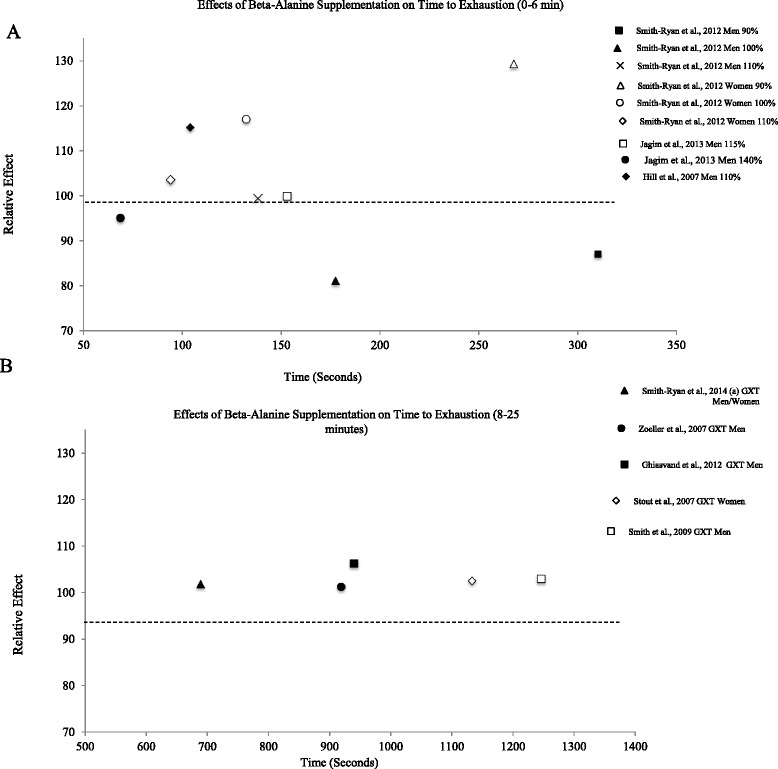
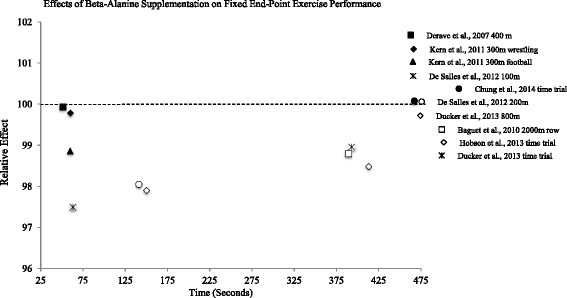
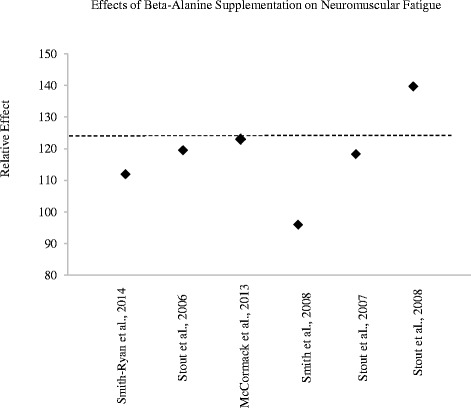
“To graphically depict the RE of beta-alanine in in comparison to placebo, RE was calculated using the following equation [48, 49]:”
MethodAbe, H. (2000) · PubMed · Cited by 353
Derave, W., Özdemir, M. S., Harris, R. C., Pottier, A., Reyngoudt, H., Koppo, K., Wise, J. A., & Achten, E. (2007) · Journal of Applied Physiology · doi:10.1152/japplphysiol.00397.2007 · Cited by 324 · cited 4×
“[6] versus their untrained counterparts, beta-alanine supplementation has also been shown to increase muscle carnosine in both trained [20] and untrained”
BackgroundInfluentialEffect of creatine supplementation on body composition and performance: a meta-analysis
Branch, J. D. (2003) · International Journal of Sport Nutrition and Exercise Metabolism · doi:10.1123/ijsnem.13.2.198 · Cited by 309 · cited 1×
“Creatine supplementation has been consistently shown to improve high-intensity exercise performance, primarily by increasing phosphorylcreatine and adenosine triphosphate (ATP) availability [88].”
Background
Research works printed but not linked: 1
- Harris RC Jones GA Kim HJ Kim CK Price KA Wise JA Changes in muscle carnosine of subjects with 4 weeks of supplementation with a controlled relase formulation of beta-alanine (CarnoSyn), and for 6 weeks post (Abstract) FASEB J 2009 23 599.4
Cited by
Items 301–313 of 313
Potential Health Risks Associated with Sports Supplementation Use in Athletes
Cai, J., Wang, T., & Li, S. (2026) · Nutrients · doi:10.3390/nu18152490
“High-dose supplementation was defined as an intake exceeding one or more established reference thresholds, including recommended daily intake levels, tolerable upper intake levels (ULs), evidence-based ergogenic doses, or manufacturer-recommended dosages [23,24].”
Jiannine, L., Holen, C., Silver, T. A., Evans, C., & António, J. (2026) · Journal of Nutritional Science · doi:10.1017/jns.2026.10122
“It improves anaerobic performance by delaying fatigue and enhancing the ability to sustain high-intensity exercise, particularly in efforts lasting longer than 60 s. (10) Betaine is a trimethylglycine naturally occurring in foods such as spinach and beets.”
de Souza, E. B., de Souza, L., & Gomes, D. V. (2026) · Jornal de Investigação Médica · doi:10.29073/jim.v5i2.1009
Mancin, L., Close, G. L., Jeukendrup, A. E., Freschi, M., Pugh, J. N., Sala, M., Baioccato, V., Vecchiato, M., D’Antona, G., & Palermi, S. (2026) · Translational Sports Medicine · doi:10.1155/tsm2/5919439 · Cited by 2
“Benefts are most plausible for efforts of approximately 1–4 min and repeated high-intensity exercise but require chronic loading and are not universal [43–45].”
Common Supplements in Plant-Based Nutrition: Dosing, Formulations, and Safety
Srivastava, S. B. (2026) · American Journal of Lifestyle Medicine · doi:10.1177/15598276261478041
Antonio, B. B., Shannon, E. S., Candow, D. G., Gough, L. A., Grgić, J., Gurton, W. H., McNaughton, L. R., Roberts, J., Saunders, B., Schwarz, A. V., et al. (2026) · Journal of the International Society of Sports Nutrition · doi:10.1080/15502783.2026.2724103
“Currently, there is no evidence to suggest that side-effects are harmful at the aforementioned doses administered [165,170,171].”
InfluentialSelf-citationJasińska, J., Iskrzyński, D., Bułat, A., Gródek, A., Iglantowicz, J., Sanakiewicz, S., Obajtek, P., Dubiel, W., & Dubiel, M. (2026) · International Journal of Innovative Technologies in Social Science · doi:10.31435/ijitss.3(51).2026.6024
Mănescu, D. C., Casals, C., Piotrowska, A., de Carvalho, T. S., Petcu, C., Băltarețu, C., Bidiugan, R., Dragomir, A., Amzulescu, O., Bidiugan, S., et al. (2026) · Nutrients · doi:10.3390/nu18203337
“Window assignment concerns the intended function and timing of an effect, not necessarily clock time of ingestion [6,7,9,50].”
InfluentialStafuzza, N. B., Pereira, L. S., Mioto, M. B., Benfica, L. F., de Freitas, L. A., Freitas, A. C. L., Epifanio, B. R., Netto, M. R., Lourenco, D. A. L., & de Paz, C. C. P. (2026) · Veterinary Parasitology · doi:10.1016/j.vetpar.2026.110930 · Cited by 1
Sporcu Beslenmesinde Kanıt Düzeyi Yüksek ve Gelişmekte Olan Ergojenik Destekler
Efe, B., & İnaç, M. R. (2026) · Özgür Yayınları eBooks · doi:10.58830/ozgur.pub1419.c5732
Trexler, E. T., & Pontzer, H. (2026) · Journal of Nutrition · doi:10.1016/j.tjnut.2026.101884
Self-citationRibeiro, F. A. H., Forbes, S. C., Candow, D. G., Caperuto, É. C., Kerksick, C. M., Lira, F. S., Lancha, A. H., & Neto, J. C. R. (2026) · Translational Sports Medicine · doi:10.1155/tsm2/8504414
Xiang, Y., Wu, J., & Wu, J. (2026) · Nutrients · doi:10.3390/nu18213581
Metadata
- Authors
- Trexler, E. T., Smith-Ryan, A. E., Stout, J. R., Hoffman, J. R., Wilborn, C. D., Sale, C., Kreider, R. B., Jäger, R., Earnest, C. P., Bannock, L., Campbell, B., Kalman, D., Ziegenfuss, T. N., & Antonio, J.
- Affiliations
- University of North Carolina at Chapel Hill (US)
- Applied Physiology Laboratory, Department of Exercise and Sport ScienceUniversity of North Carolina Chapel Hill NC USA
- University of Central Florida (US)
- University of Mary Hardin–Baylor (US)
- Nottingham Trent University (GB)
- Texas A&M University (US)
- Increnovo LLC (United States) (US)
- Guru Performance (United Kingdom) (GB)
- University of South Florida (US)
- Department of Nutrition & EndocrinologyMiami Research Associates, QPS-MRA Miami FL USA
- The Center for Applied Health Sciences 4302 Allen Rd STE 120 Stow OH USA
- Exercise and Sports ScienceNova Southeastern University Davie FL USA
- ORCID
- Venue
- Journal of the International Society of Sports Nutrition
- Publisher
- Informa UK Limited
- Published
- 2015-10-20
- Volume
- 12
- Issue
- 1
- Pages
- 30-30
- ISSN
- 1550-2783 (ISSN-L)
- PMC
- PMC4501114
- OpenAlex
- W1915320120
- Cited by
- 315
- References
- 115
- Citations by year
- 2026: 49 · 2025: 32 · 2024: 34 · 2023: 33 · 2022: 43 · 2021: 24 · 2020: 24 · 2019: 25 · 2018: 18 · 2017: 18 · 2016: 10 · 2015: 4
- FWCI
- 2.04
- Type
- journal article
- Language
- en
- Open access
- gold
- doi.org
- Licence
- Locations
- Journal of the International Society of Sports Nutrition (publishedVersion, cc-by)
- Europe PMC (PubMed Central) (publishedVersion, cc-by)
- PubMed Central (publishedVersion, cc-by)
- PubMed (publishedVersion)
- Nottingham Trent University's Institutional Repository (Nottingham Trent Repository) (acceptedVersion)
- Carolina Digital Repository (University of North Carolina at Chapel Hill) (submittedVersion)
- Journal of International Crisis and Risk Communication Research (submittedVersion)
- OakTrust (Texas A&M University Libraries) (submittedVersion)
- UNC Libraries
- Topics
- Health Sciences › Medicine › Physiology (medical) › Biochemical effects in animals
- Health Sciences › Nursing › Nutrition and Dietetics › Muscle metabolism and nutrition
- Health Sciences › Medicine › Orthopedics and Sports Medicine › Sports Performance and Training
- Keywords
- beta-alanine, carnosine, muscle carnosine, exercise performance, neuromuscular fatigue, paresthesia, supplement safety, sustained-release formulation, older adults, tactical performance, endurance performance
- MeSH terms
- Carnosine, Dose-Response Relationship, Drug, Fatigue, Humans, Hydrogen-Ion Concentration, Neuromuscular Agents, beta-Alanine, Exercise, Muscle, Skeletal, Toxicity Tests, Dietary Supplements, Sports Nutritional Physiological Phenomena, Recommended Dietary Allowances
About these checks
Registry, retraction, Cites and statistics results are computed, not judged, with one exception: a printed reference that no index lists is read once by a model before it counts as a citation error. Claims are extracted by a model and kept only when their quote appears verbatim in the text; each cited source is then checked, with a model’s help, for whether it says what the claim relies on. Those verdicts can be wrong — read the claim’s quote and the cited source before relying on one.
Statistics and arithmetic are recomputed, not judged.
Confidence bands are shown only for fields calibrated on our annotated test set. None is calibrated yet, so no band is shown.
What counts as a claim ›How we measure confidence ›How we check this ›
Are you an author, or do you see a problem with this page? Request a review
Data sources
Bibliographic data: Semantic Scholar, OpenAlex, Crossref.
Contains information from the Semantic Scholar Academic Graph Datasets, made available under the ODC Attribution License (ODC-BY 1.0).
Semantic Scholar’s data is described in: Kinney, R., et al. (2023). The Semantic Scholar Open Data Platform. arXiv:2301.10140.
