

Efforts of the human immune system to maintain the peripheral CD8+ T cell compartment after childhood thymectomy
Open accessThe DOI matches its Crossref record; 83 of the 84 references it cites were found in a registry or an index.
Abstract
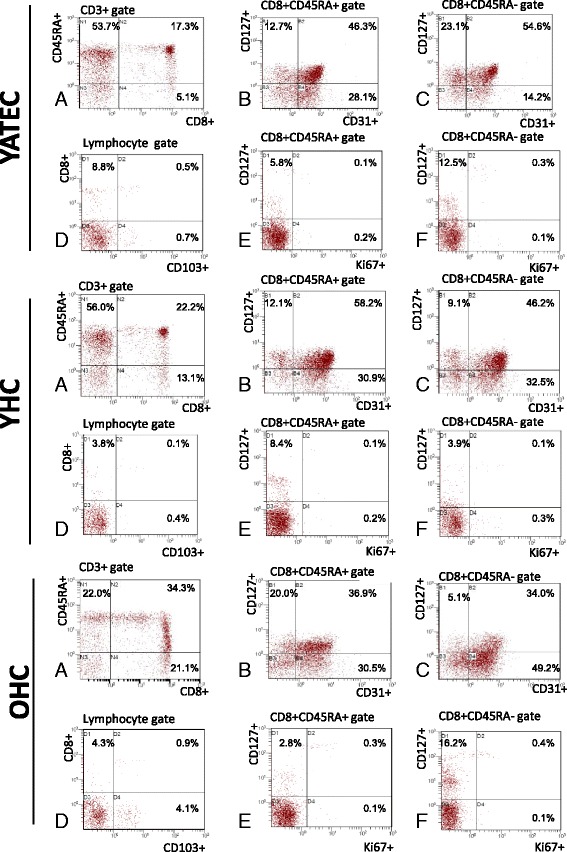
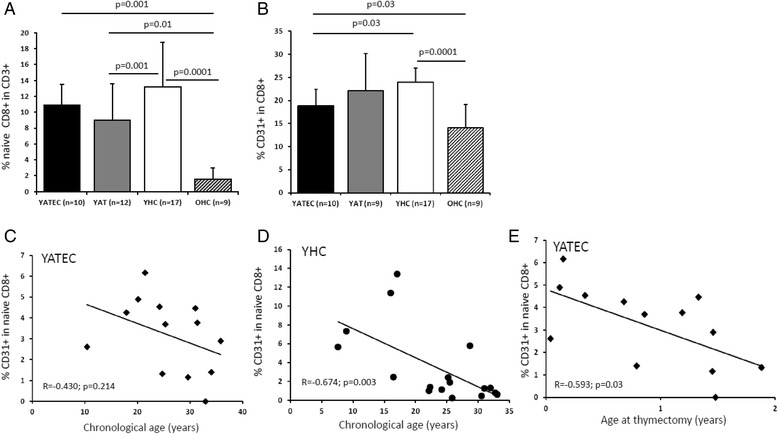
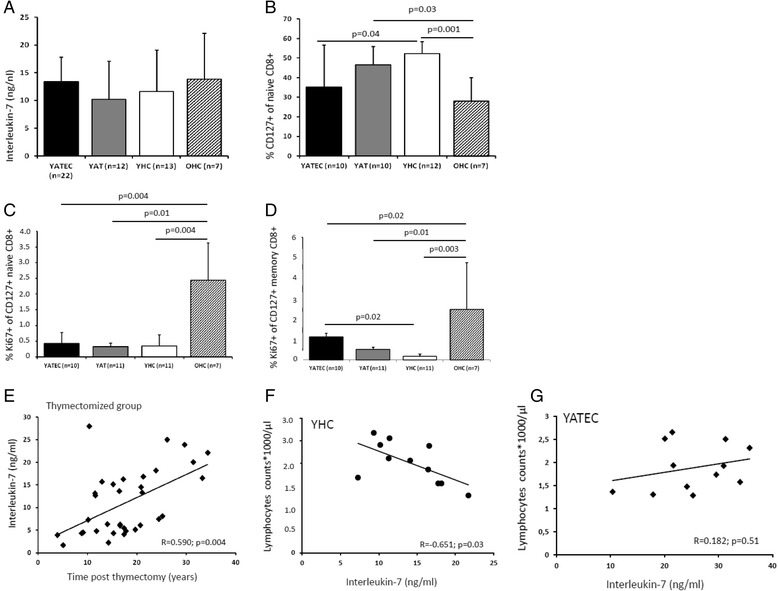
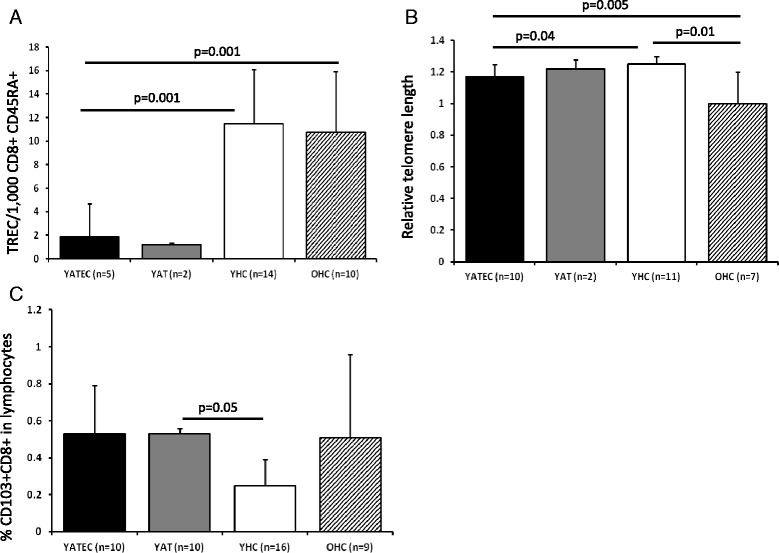
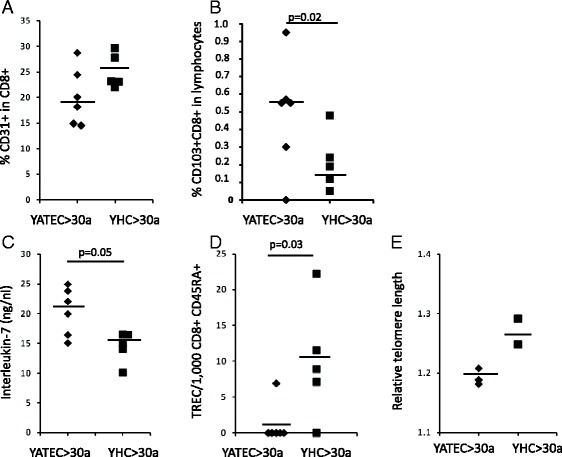
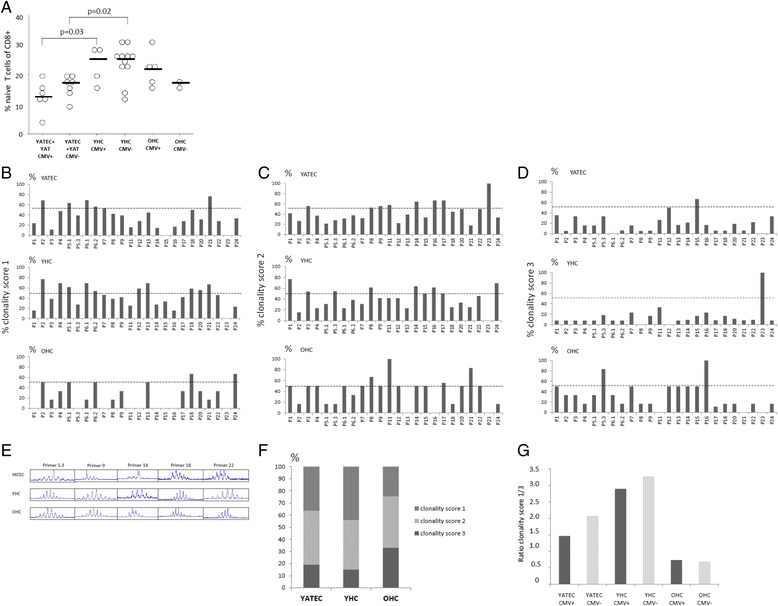
BACKGROUND: Homeostatic mechanisms to maintain the T cell compartment diversity indicate an ongoing process of thymic activity and peripheral T cell renewal during human life. These processes are expected to be accelerated after childhood thymectomy and by the influence of cytomegalovirus (CMV) inducing a prematurely aged immune system. The study aimed to investigate proportional changes and replicative history of CD8+ T cells, of recent thymic emigrants (RTEs) and CD103+ T cells (mostly gut-experienced) and the role of Interleukin-(IL)-7 and IL-7 receptor (CD127)-expressing T cells in thymectomized patients compared to young and old healthy controls. RESULTS: Decreased proportions of naive and CD31 + CD8+ T cells were demonstrated after thymectomy, with higher proliferative activity of CD127-expressing T cells and significantly shorter relative telomere lengths (RTLs) and lower T cell receptor excision circles (TRECs). Increased circulating CD103+ T cells and a skewed T cell receptor (TCR) repertoire were found after thymectomy similar to elderly persons. Naive T cells were influenced by age at thymectomy and further decreased by CMV. CONCLUSIONS: After childhood thymectomy, the immune system demonstrated constant efforts of the peripheral CD8+ T cell compartment to maintain homeostasis. Supposedly it tries to fill the void of RTEs by peripheral T cell proliferation, by at least partly IL-7-mediated mechanisms and by proportional increase of circulating CD103+ T cells, reminiscent of immune aging in elderly. Although other findings were less significant compared to healthy elderly, early thymectomy demonstrated immunological alterations of CD8+ T cells which mimic features of premature immunosenescence in humans.
Overview
The claims and statistics of this paper haven’t been checked yet.
Free: it reads the open-access text and checks the first 5 claims that cite a source we can check. Create a free account to check every claim.
Integrity signals
Registry
Cites
Statistics
Figures
Verification
Claims the paper makes
The claims and statistics of this paper haven’t been checked yet.
Free: it reads the open-access text and checks the first 5 claims that cite a source we can check. Create a free account to check every claim.
Claims other papers make about this one
Each is checked against this paper’s own text: does it say what the citing paper says it does?
The source backs part of the claim, not all of it — or backs it for a different population, condition or comparison.
In the citing paper
“These studies showed that, independently from age, reduced thymic function and lower production of naïve T cells, together with the consumption of these cells (e.g., upon activation and differentiation during a viral infection), lead to reduced numbers of naïve T cells [75,76].”
From Aging of the immune system: Focus on inflammation and vaccination (2016) · cites this paper as [76]
Experimental — accuracy not yet measuredThe source backs part of the claim, not all of it — or backs it for a different population, condition or comparison.
In the citing paper
“and leads to reduced number of T cells [330].”
From Guidelines for the use of flow cytometry and cell sorting in immunological studies (third edition) (2021) · cites this paper as [330]
Experimental — accuracy not yet measured
Self-check
Percentages, sums and reported differences re-computed from the paper’s own numbers.
The self-check needs the paper’s full text.
Citations
Cites
Structure and function of telomeres
Blackburn, E. H. (1991) · Nature · doi:10.1038/350569a0 · Cited by 3,596
Telomere measurement by quantitative PCR
Cawthon, R. M. (2002) · Nucleic Acids Research · doi:10.1093/nar/30.10.e47 · Cited by 3,487 · cited 1×
“Determination of relative telomere length (RTL) was performed by calculating the ratio of a quantitative PCR reaction product from the same sample using specific primers for telomeres and a single copy gene as described previously [35–37].”
MethodChanges in thymic function with age and during the treatment of HIV infection
Douek, D. C., McFarland, R. D., Keiser, P. H., Gage, E. A., Massey, J. M., Haynes, B. F., Polis, M. A., Haase, A. T., Feinberg, M. B., Sullivan#, J. L., et al. (1998) · Nature · doi:10.1038/25374 · Cited by 1,893 · cited 1×
“Although proportionally declining with age, the number of naive T cells is maintained by peripheral proliferation of pre-existing naive T cells which results in a dilution of T cell receptor excision circles (TRECs) within thymusderived naive T cells [2–4] and in shortening of the relative telomere lengths (RTLs) by i…”
BackgroundInterleukin-7 mediates the homeostasis of naïve and memory CD8 T cells in vivo
Schluns, K. S., Kieper, W. C., Jameson, S. C., & Lefrançois, L. (2000) · Nature Immunology · doi:10.1038/80868 · Cited by 1,618 · cited 1×
“This is in agreement with findings, that IL-7 signaling is not only exclusively responsible for the homeostatic proliferation of naive T cells but also of CD8+ memory T cells [53–55], with CD127+ T cells being the population to survive and to develop into longlived CD8+ memory T cells [55].”
ResultSeddiki, N., Santner-Nanan, B., Martinson, J., Zaunders, J., Sasson, S., Landay, A., Solomon, M., Selby, W., Alexander, S. I., Nanan, R., et al. (2006) · The Journal of Experimental Medicine · doi:10.1084/jem.20060468 · Cited by 1,512 · cited 1×
“On separated subsets of human peripheral CD8+ T cells, almost 100 % of naive (CD45RA + CCR7+) and central memory (CD45R0 + CCR7+) T cells and 60–70 % of effector memory (CD45R0 + CCR7-), but only <20 % of terminally differentiated (CD45RA + CCR7-) T cells express CD127 [50–52] which agrees with our results.”
ResultCCR7 and its ligands: balancing immunity and tolerance
Förster, R., Davalos-Misslitz, A. C., & Rot, A. (2008) · Nature Reviews Immunology · doi:10.1038/nri2297 · Cited by 1,410 · cited 2×
“Peripheral CD8 + CD103+ memory T cells have been described as nonmigratory T cell subpopulations that are maintained as tissue-resident memory T cells without replenishment from the circulating memory T cell pool [29, 70, 71], but CD103+ T cells also contribute to T cells with effector functions [38, 69, 72].”
BackgroundHomeostasis of Naive and Memory T Cells
Surh, C. D., & Sprent, J. (2008) · Immunity · doi:10.1016/j.immuni.2008.11.002 · Cited by 1,193 · cited 1×
“overexpression of CD127 in lymphoreplete or lymphopenic conditions [20, 49, 60–67].”
BackgroundPhenotype and function of human T lymphocyte subsets: Consensus and issues
Appay, V., van Lier, R. A. W., Sallusto, F., & Roederer, M. (2008) · Cytometry Part A · doi:10.1002/cyto.a.20643 · Cited by 729 · cited 14×
“CD127, the IL-7 receptor α chain, is generally expressed on T cells susceptible to auto-proliferative mechanisms by IL-7, and, thus, was used mainly in combination with naive T cell markers [28].”
BackgroundMethodInfluentialCasey, K. A., Fraser, K. A., Schenkel, J. M., Moran, A., Abt, M. C., Beura, L. K., Lucas, P. J., Artis, D., Wherry, E. J., Hogquist, K., et al. (2012) · The Journal of Immunology · doi:10.4049/jimmunol.1200402 · Cited by 639 · cited 1×
“CD103, an α E integrin, necessary for T cell homing and retention in the gut or other epithelia, is highly expressed in gut-derived or mucosa-experienced T cells, particularly in CD8+ T cells [29, 40].”
BackgroundMaintenance of peripheral naive T cells is sustained by thymus output in mice but not humans
den Braber, I., Mugwagwa, T., Vrisekoop, N., Westera, L., Mögling, R., Bregje de Boer, A., Willems, N., Schrijver, E. H. R., Spierenburg, G., Gaiser, K., et al. (2012) · Immunity · doi:10.1016/j.immuni.2012.02.006 · Cited by 572 · cited 1×
“Homeostatic proliferation of naive T cells is closely related to IL-7 concentrations, with CD127 expression being critical in regulating IL-7 functions [20, 45–49].”
BackgroundHarnessing the biology of IL-7 for therapeutic application
Mackall, C. L., Fry, T. J., & Gress, R. E. (2011) · Nature Reviews Immunology · doi:10.1038/nri2970 · Cited by 571 · cited 1×
“overexpression of CD127 in lymphoreplete or lymphopenic conditions [20, 49, 60–67].”
BackgroundDifferent patterns of peripheral migration by memory CD4+ and CD8+ T cells
Gebhardt, T., Whitney, P. G., Zaid, A., Mackay, L. K., Brooks, A. G., Heath, W. R., Carbone, F. R., & Mueller, S. N. (2011) · Nature · doi:10.1038/nature10339 · Cited by 529 · cited 1×
“Peripheral CD8 + CD103+ memory T cells have been described as nonmigratory T cell subpopulations that are maintained as tissue-resident memory T cells without replenishment from the circulating memory T cell pool [29, 70, 71], but CD103+ T cells also contribute to T cells with effector functions [38, 69, 72].”
BackgroundThymic involution and immune reconstitution.
Lynch, H. E., Goldberg, G. L., Chidgey, A., Van den Brink, M. R. M., Boyd, R., & Sempowski, G. D. (2009) · Trends in Immunology · doi:10.1016/j.it.2009.04.003 · Cited by 522 · cited 1×
“CD127 expression was lower in OHC and a great variability was found for IL-7 concentrations in OHC, suggesting an inverse relationship between IL-7 receptor signaling function and age [77] with ongoing controversy as to whether IL-7 concentrations are altered with age [77–80].”
BackgroundSuppression of IL7Rα Transcription by IL-7 and Other Prosurvival Cytokines
Park, J.-H., Yu, Q., Erman, B., Appelbaum, J. S., Montoya-Durango, D., Grimes, H. L., & Singer, A. (2004) · Immunity · doi:10.1016/j.immuni.2004.07.016 · Cited by 487 · cited 1×
“The lack of any correlation between serum IL-7 concentrations, CD127 expression and proliferative activity of peripheral T cells in our cohort may be explained by the findings described by others that responsiveness to IL-7 and IL-7-induced down-regulation of CD127 depends very much on cellular activation and addition…”
BackgroundInterleukin 7 and T cell receptor signals regulate homeostasis of CD4 memory cells
Seddon, B., Tomlinson, P., & Zamoyska, R. (2003) · Nature Immunology · doi:10.1038/ni946 · Cited by 456 · cited 1×
“overexpression of CD127 in lymphoreplete or lymphopenic conditions [20, 49, 60–67].”
BackgroundKimmig, S., Przybylski, G. K., Schmidt, C. A., Laurisch, K., Möwes, B., Radbruch, A., & Thiel, A. (2002) · The Journal of Experimental Medicine · doi:10.1084/jem.20011756 · Cited by 439 · cited 12×
“To guarantee renewal of the pre-existing naive T cells, the human immune system seems to struggle in order to fill the void of RTEs after childhood thymectomy by peripheral T cell proliferation, IL-7-mediated mechanisms, and release of CD103+ T cells into circulation.”
BackgroundMethodInfluentialSelf-citationHazenberg, M. D., Otto, S. A., Stuart, J. W. T. C., Verschuren, M. C. M., Borleffs, J. C. C., Boucher, C. A. B., Coutinho, R. A., Lange, J. M. A., de Wit, T. F. R., Tsegaye, A., et al. (2000) · Nature Medicine · doi:10.1038/79549 · Cited by 394 · cited 1×
“Homeostatic proliferation of naive T cells is closely related to IL-7 concentrations, with CD127 expression being critical in regulating IL-7 functions [20, 45–49].”
BackgroundAlmanzar, G., Schwaiger, S., Jenewein, B., Keller, M., Herndler-Brandstetter, D., Würzner, R., Schönitzer, D., & Grubeck-Loebenstein, B. (2005) · Journal of Virology · doi:10.1128/jvi.79.6.3675-3683.2005 · Cited by 357 · cited 3×
“CMV was suggested as a chronic stimulating factor for peripheral T cells [24, 41] and was therefore investigated in thymectomized patients.”
BackgroundResultSelf-citationHazenberg, M. D., Verschuren, M. C., Hamann, D., Miedema, F., & Dongen, J. J. (2001) · Journal of Molecular Medicine · doi:10.1007/s001090100271 · Cited by 336 · cited 1×
“Although proportionally declining with age, the number of naive T cells is maintained by peripheral proliferation of pre-existing naive T cells which results in a dilution of T cell receptor excision circles (TRECs) within thymusderived naive T cells [2–4] and in shortening of the relative telomere lengths (RTLs) by i…”
BackgroundLife after the thymus: CD31+ and CD31− human naive CD4+ T-cell subsets
Kohler, S., & Thiel, A. (2009) · Blood · doi:10.1182/blood-2008-02-139154 · Cited by 307 · cited 2×
“CD31 has been reported as characteristic marker of RTE decreasing with age [26, 39].”
BackgroundKieper, W. C., Tan, J. T., Bondi-Boyd, B., Gapin, L., Sprent, J., Ceredig, R., & Surh, C. D. (2002) · The Journal of Experimental Medicine · doi:10.1084/jem.20020067 · Cited by 285 · cited 1×
“This is in agreement with findings, that IL-7 signaling is not only exclusively responsible for the homeostatic proliferation of naive T cells but also of CD8+ memory T cells [53–55], with CD127+ T cells being the population to survive and to develop into longlived CD8+ memory T cells [55].”
ResultEvidence of premature immune aging in patients thymectomized during early childhood
Sauce, D., Larsen, M., Fastenackels, S., Duperrier, A., Keller, M., Grubeck-Loebenstein, B., Ferrand, C., Debré, P., Sidi, D., & Appay, V. (2009) · Journal of Clinical Investigation · doi:10.1172/jci39269 · Cited by 278 · cited 7×
“A potential risk of early thymectomy was seen for the development of premature immunosenescence and of an immune-risk-phenotype [1, 17, 23] which is defined as a cluster of immune features (e.”
BackgroundResultInfluentialIL-7: maintaining T-cell memory and achieving homeostasis
Bradley, L. M., Haynes, L., & Swain, S. L. (2005) · Trends in Immunology · doi:10.1016/j.it.2005.01.004 · Cited by 270 · cited 1×
“IL-7 is known as an essential factor involved in maintenance of the peripheral naive T cell pool, in regulation of T cell homeostasis and in preservation of the TCR repertoire [6].”
BackgroundWikby, A., Månsson, I. A., Johansson, B., Strindhall, J., & Nilsson, S. E. (2008) · Biogerontology · doi:10.1007/s10522-008-9138-6 · Cited by 259 · cited 1×
“All alterations expected in the elderly [26, 42, 44], were found in our OHC control group, such as low proportions of CD31-expressing RTE, increased Ki67 expression of peripheral T cells and higher proportions of CD103-expressing circulating T cells.”
BackgroundRegional and mucosal memory T cells
Sheridan, B. S., & Lefrançois, L. (2011) · Nature Immunology · doi:10.1038/ni.2029 · Cited by 257 · cited 3×
“CD103 has been described as a marker of mucosa-derived T cells [19, 27] and of CD8+ T cells which have entered the gut [29].”
BackgroundLoss of CD127 Expression Defines an Expansion of Effector CD8+ T Cells in HIV-Infected Individuals
Paiardini, M., Cervasi, B., Albrecht, H., Muthukumar, A., Dunham, R., Gordon, S., Radziewicz, H., Piedimonte, G., Magnani, M., Montroni, M., et al. (2005) · The Journal of Immunology · doi:10.4049/jimmunol.174.5.2900 · Cited by 233 · cited 1×
“On separated subsets of human peripheral CD8+ T cells, almost 100 % of naive (CD45RA + CCR7+) and central memory (CD45R0 + CCR7+) T cells and 60–70 % of effector memory (CD45R0 + CCR7-), but only <20 % of terminally differentiated (CD45RA + CCR7-) T cells express CD127 [50–52] which agrees with our results.”
ResultHomeostasis of the naive CD4+ T cell compartment during aging
Kilpatrick, R. D., Rickabaugh, T., Hultin, L. E., Hultin, P., Hausner, M. A., Detels, R., Phair, J., & Jamieson, B. D. (2008) · The Journal of Immunology · doi:10.4049/jimmunol.180.3.1499 · Cited by 213
Homeostatic control of T-cell generation in neonates
Schönland, S. O., Zimmer, J. K., Lopez-Benitez, C. M., Widmann, T., Ramin, K. D., Goronzy, J. J., & Weyand, C. M. (2003) · Blood · doi:10.1182/blood-2002-11-3591 · Cited by 178 · cited 1×
“Despite decreased proportions of CD127-expressing T cells with age [65], higher proliferative activity in CD127+ T cells of OHC was found in our study.”
BackgroundThe Biology of Recent Thymic Emigrants
Fink, P. J. (2013) · Annual Review of Immunology · doi:10.1146/annurev-immunol-032712-100010 · Cited by 174 · cited 10×
“To guarantee renewal of the pre-existing naive T cells, the human immune system seems to struggle in order to fill the void of RTEs after childhood thymectomy by peripheral T cell proliferation, IL-7-mediated mechanisms, and release of CD103+ T cells into circulation.”
MethodInfluentialvan Leeuwen, E. M. M., de Bree, G. J., Remmerswaal, E. B. M., Yong, S.-L., Tesselaar, K., Berge, I. J. M. T., & van Lier, R. A. W. (2005) · Blood · doi:10.1182/blood-2005-02-0449 · Cited by 166 · cited 1×
“This is in agreement with findings, that IL-7 signaling is not only exclusively responsible for the homeostatic proliferation of naive T cells but also of CD8+ memory T cells [53–55], with CD127+ T cells being the population to survive and to develop into longlived CD8+ memory T cells [55].”
ResultBromley, S. K., Yan, S., Tomura, M., Kanagawa, O., & Luster, A. D. (2013) · The Journal of Immunology · doi:10.4049/jimmunol.1202805 · Cited by 166 · cited 1×
“Peripheral CD8 + CD103+ memory T cells have been described as nonmigratory T cell subpopulations that are maintained as tissue-resident memory T cells without replenishment from the circulating memory T cell pool [29, 70, 71], but CD103+ T cells also contribute to T cells with effector functions [38, 69, 72].”
BackgroundHuman cytomegalovirus infection and T cell immunosenescence: A mini review
Koch, S. D., Solana, R., Rosa, O. D., & Pawelec, G. (2006) · Mechanisms of Ageing and Development · doi:10.1016/j.mad.2006.01.011 · Cited by 164
Quantifying the development of the peripheral naive CD4+ T-cell pool in humans
Bains, I., Antia, R., Callard, R., & Yates, A. J. (2009) · Blood · doi:10.1182/blood-2008-10-184184 · Cited by 153 · cited 1×
“Homeostatic proliferation of naive T cells is closely related to IL-7 concentrations, with CD127 expression being critical in regulating IL-7 functions [20, 45–49].”
BackgroundDay, E. K., Carmichael, A. J., ten Berge, I. J. M., Waller, E. C. P., Sissons, J. G. P., & Wills, M. R. (2007) · The Journal of Immunology · doi:10.4049/jimmunol.179.5.3203 · Cited by 153 · cited 2×
“Clonality score 1 was used for peaks showing Gaussian distribution, 2 for several peaks and 3 for one peak, as described previously [32, 33].”
BackgroundMethodKohler, S., Wagner, U., Pierer, M., Kimmig, S., Oppmann, B., Möwes, B., Jülke, K., Romagnani, C., & Thiel, A. (2005) · European Journal of Immunology · doi:10.1002/eji.200526181 · Cited by 146 · cited 1×
“The well known almost linearly decrease of CD31+ naive T cells with age was confirmed only in YHC [26, 28, 39, 42–44].”
BackgroundKimura, M. Y., Pobezinsky, L. A., Guinter, T. I., Thomas, J., Adams, A., Park, J.-H., Tai, X., & Singer, A. (2013) · Nature Immunology · doi:10.1038/ni.2494 · Cited by 143 · cited 1×
“overexpression of CD127 in lymphoreplete or lymphopenic conditions [20, 49, 60–67].”
BackgroundGamadia, L. E., van Leeuwen, E. M. M., Remmerswaal, E. B. M., Yong, S.-L., Surachno, S., Wertheim-van Dillen, P. M. E., ten Berge, I. J. M., & van Lier, R. A. W. (2004) · The Journal of Immunology · doi:10.4049/jimmunol.172.10.6107 · Cited by 122 · cited 1×
“The lack of any correlation between serum IL-7 concentrations, CD127 expression and proliferative activity of peripheral T cells in our cohort may be explained by the findings described by others that responsiveness to IL-7 and IL-7-induced down-regulation of CD127 depends very much on cellular activation and addition…”
BackgroundAge-related deregulation of naive T cell homeostasis in elderly humans
Ferrando‐Martínez, S., Ruíz-Mateos, E., Hernández, A., Gutiérrez, E., Rodríguez-Méndez, M. M., Ordóñez, A., & Leal, M. (2010) · AGE · doi:10.1007/s11357-010-9170-8 · Cited by 121 · cited 1×
“CD127 expression was lower in OHC and a great variability was found for IL-7 concentrations in OHC, suggesting an inverse relationship between IL-7 receptor signaling function and age [77] with ongoing controversy as to whether IL-7 concentrations are altered with age [77–80].”
BackgroundPrelog, M., Keller, M., Geiger, R., Kloss‐Brandstätter, A., Würzner, R., Schweigmann, U., Zlamy, M., Zimmerhackl, L. B., & Grubeck‐Loebenstein, B. (2008) · Clinical Immunology · doi:10.1016/j.clim.2008.08.023 · Cited by 120 · cited 7×
“of T cell receptor excision circles [16], age at acquiring chronic viral infections, such as CMV, and age at thymectomy.”
BackgroundMethodResultInfluentialSelf-citationNaïve T Cells in the Elderly: Are They Still There?
PFISTER, G., WEISKOPF, D., LAZUARDI, L., KOVAIOU, R. D., CIOCA, D. P., KELLER, M., LORBEG, B., PARSON, W., & GRUBECK‐LOEBENSTEIN, B. (2006) · Annals of the New York Academy of Sciences · doi:10.1196/annals.1354.018 · Cited by 118
Self-citationLibri, V., Azevedo, R. I., Jackson, S. E., Di Mitri, D., Lachmann, R., Fuhrmann, S., Vukmanovic-Stejic, M., Yong, K., Battistini, L., Kern, F., et al. (2011) · Immunology · doi:10.1111/j.1365-2567.2010.03386.x · Cited by 111 · cited 1×
“overexpression of CD127 in lymphoreplete or lymphopenic conditions [20, 49, 60–67].”
BackgroundEYSTEINSDOTTIR, J. H., FREYSDOTTIR, J., HARALDSSON, A., STEFANSDOTTIR, J., SKAFTADOTTIR, I., HELGASON, H., & OGMUNDSDOTTIR, H. M. (2004) · Clinical and Experimental Immunology · doi:10.1111/j.1365-2249.2004.02437.x · Cited by 110 · cited 1×
“numbers were also found in one study investigating children who had thymectomy at least 5 years ago [11] suggesting extra-thymic T cell maturation [27].”
BackgroundHalnon, N. J., Jamieson, B. D., PLUNKETT, M. D., Kitchen, C. M. R., Pham, T. T. N., & Krogstad, P. A. (2004) · Pediatric Research · doi:10.1203/01.pdr.0000147735.19342.de · Cited by 105 · cited 4×
“Naive T cells seem to be greatly afflicted by childhood thymectomy, as demonstrated by the present study and shown by our previous studies [16, 22] and others [12, 19].”
BackgroundResultInfluentialPost-thymic maturation: young T cells assert their individuality
Fink, P. J., & Hendricks, D. W. (2011) · Nature Reviews Immunology · doi:10.1038/nri3028 · Cited by 102 · cited 1×
“In order to assess a possible role of gut-derived or even mucosa-experienced T cells [68], CD103, which is necessary for T cell homing and retention in the gut and other epithelia [69] was included into the analysis.”
BackgroundNeonatal thymectomy: Does it affect immune function?
Wells, W. J., Parkman, R., Smogorzewska, E., & Barr, M. L. (1998) · Journal of Thoracic and Cardiovascular Surgery · doi:10.1016/s0022-5223(98)70403-9 · Cited by 97 · cited 1×
“In patients who were partly or totally thymectomized in early childhood due to surgery for congenital heart defects [1, 9, 10], several studies have revealed multiple immune alterations within the peripheral T cell compartments [11–21] and a delayed humoral immune response to new antigens later in life [22, 23].”
BackgroundExtrathymic T Cell Differentiation in the Human Intestine Early in Life
Howie, D., Spencer, J., DeLord, D., Pitzalis, C., Wathen, N. C., Doǧan, A., Akbar, A. N., & MacDonald, T. T. (1998) · The Journal of Immunology · doi:10.4049/jimmunol.161.11.5862 · Cited by 96 · cited 4×
“CD103 has been described as a marker of mucosa-derived T cells [19, 27] and of CD8+ T cells which have entered the gut [29].”
BackgroundMethodInfluentialHuman Immunosenescence: Does It Have an Infectious Component?
PAWELEC, G., KOCH, S., FRANCESCHI, C., & WIKBY, A. (2006) · Annals of the New York Academy of Sciences · doi:10.1196/annals.1354.009 · Cited by 94
CD25-Expressing CD8+ T Cells Are Potent Memory Cells in Old Age
Herndler-Brandstetter, D., Schwaiger, S., Veel, E., Fehrer, C., Cioca, D. P., Almanzar, G., Keller, M., Pfister, G., Parson, W., Würzner, R., et al. (2005) · The Journal of Immunology · doi:10.4049/jimmunol.175.3.1566 · Cited by 87
Self-citationDifferential Regulation of Human IL-7 Receptor α Expression by IL-7 and TCR Signaling
Alves, N. L., van Leeuwen, E. M. M., Derks, I. A. M., & van Lier, R. A. W. (2008) · The Journal of Immunology · doi:10.4049/jimmunol.180.8.5201 · Cited by 86 · cited 1×
“The lack of any correlation between serum IL-7 concentrations, CD127 expression and proliferative activity of peripheral T cells in our cohort may be explained by the findings described by others that responsiveness to IL-7 and IL-7-induced down-regulation of CD127 depends very much on cellular activation and addition…”
BackgroundMultiparameter evaluation of human thymic function: interpretations and caveats
Harris, J. M., Hazenberg, M. D., Poulin, J., Higuera‐Alhino, D., Schmidt, D. K., Gotway, M. B., & McCune, J. M. (2005) · Clinical Immunology · doi:10.1016/j.clim.2004.12.008 · Cited by 83 · cited 1×
“To avoid bias by different numbers of naive T cells, TRECs were calculated in relation to CD8 + CD45RA+ T cell numbers [3].”
MethodLymphopenia-driven homeostatic regulation of naive T cells in elderly and thymectomized young adults
Sauce, D., Larsen, M., Fastenackels, S., Roux, A., Gorochov, G., Katlama, C., Sidi, D., Sibony-Prat, J., & Appay, V. (2012) · The Journal of Immunology · doi:10.4049/jimmunol.1201235 · Cited by 82 · cited 1×
“Ki67 was used to label the proportion of cells that are outside the G0 stage of their existence [16, 18], reflecting the immune activation status of the individuals at the time point of blood withdrawal.”
MethodMancebo, E., Clemente, J., Sanchez, J., Ruiz-Contreras, J., De Pablos, P., Cortezon, S., Romo, E., Paz-Artal, E., & Allende, L. M. (2008) · Clinical and Experimental Immunology · doi:10.1111/j.1365-2249.2008.03771.x · Cited by 79 · cited 1×
“In patients who were partly or totally thymectomized in early childhood due to surgery for congenital heart defects [1, 9, 10], several studies have revealed multiple immune alterations within the peripheral T cell compartments [11–21] and a delayed humoral immune response to new antigens later in life [22, 23].”
BackgroundAltered thymic activity in early life: how does it affect the immune system in young adults?
Sauce, D., & Appay, V. (2011) · Current Opinion in Immunology · doi:10.1016/j.coi.2011.05.001 · Cited by 79 · cited 5×
“A potential risk of early thymectomy was seen for the development of premature immunosenescence and of an immune-risk-phenotype [1, 17, 23] which is defined as a cluster of immune features (e.”
BackgroundInfluentialvan Gent, R., Schadenberg, A. W. L., Otto, S. A., Nievelstein, R. A. J., Sieswerda, G. T., Haas, F., Miedema, F., Tesselaar, K., Jansen, N. J. G., & Borghans, J. A. M. (2011) · Blood · doi:10.1182/blood-2011-03-341396 · Cited by 67 · cited 5×
“overexpression of CD127 in lymphoreplete or lymphopenic conditions [20, 49, 60–67].”
BackgroundInfluentialThymopoiesis in elderly human is associated with systemic inflammatory status
Ferrando‐Martínez, S., Franco, J. M., Hernández, A., Ordóñez, A., Gutiérrez, E. A., Abad, A., & Leal, M. (2009) · AGE · doi:10.1007/s11357-008-9084-x · Cited by 66 · cited 1×
“CD127 expression was lower in OHC and a great variability was found for IL-7 concentrations in OHC, suggesting an inverse relationship between IL-7 receptor signaling function and age [77] with ongoing controversy as to whether IL-7 concentrations are altered with age [77–80].”
BackgroundThe role of the thymus in immunosenescence: lessons from the study of thymectomized individuals
Appay, V., Sauce, D., & Prelog, M. (2010) · Aging · doi:10.18632/aging.100122 · Cited by 65 · cited 3×
“However, as many of these findings in adolescents and young adults were reminiscent of immune alterations after thymic involution in the elderly, thymectomized patients may mimic premature immunosenescence [1, 9, 23].”
BackgroundResultSelf-citationBourgeois, C., Hao, Z., Rajewsky, K., Potocnik, A. J., & Stockinger, B. (2008) · Proceedings of the National Academy of Sciences · doi:10.1073/pnas.0803732105 · Cited by 64 · cited 1×
“Additionally, CMV may also not be the sole factor influencing the TCR repertoire in our thymectomized patients [17, 74–76].”
BackgroundEstablishment of the CD4+ T-cell pool in healthy children and untreated children infected with HIV-1
Hazenberg, M. D. (2004) · Blood · doi:10.1182/blood-2004-03-0805 · Cited by 61 · cited 1×
“Homeostatic proliferation of naive T cells is closely related to IL-7 concentrations, with CD127 expression being critical in regulating IL-7 functions [20, 45–49].”
BackgroundEffacing of the T Cell Compartment by Cardiac Transplantation in Infancy
Ogle, B. M., West, L. J., Driscoll, D. J. O., Strome, S. E., Razonable, R. R., Payá, C. V., Cascalho, M., & Platt, J. L. (2006) · The Journal of Immunology · doi:10.4049/jimmunol.176.3.1962 · Cited by 58 · cited 1×
“Higher Ki67 expression was measured in CD127+ memory CD8+ T cells in YATEC patients, indicating also compensatory expansion of CD45R0+ memory phenotype T cells probably to fill the void of CD45RA+ naive T cells, as observed previously by our group [16] and by others [12, 15].”
BackgroundBehavior and Function of Tissue-Resident Memory T cells
Ariotti, S., Haanen, J. B. A. G., & Schumacher, T. N. (2012) · Advances in immunology · doi:10.1016/b978-0-12-396548-6.00008-1 · Cited by 55
Bazdar, D. A., Kalinowska, M., & Sieg, S. F. (2009) · The Journal of Infectious Diseases · doi:10.1086/597210 · Cited by 55 · cited 1×
“CD127 expression was lower in OHC and a great variability was found for IL-7 concentrations in OHC, suggesting an inverse relationship between IL-7 receptor signaling function and age [77] with ongoing controversy as to whether IL-7 concentrations are altered with age [77–80].”
BackgroundEvidence for extrathymic T cell maturation after thymectomy in infancy
Torfadottir, H., Freysdottir, J., Skaftadottir, I., Haraldsson, A., Sigfusson, G., & Ogmundsdottir, H. M. (2006) · Clinical and Experimental Immunology · doi:10.1111/j.1365-2249.2006.03139.x · Cited by 53 · cited 2×
“Naive T cells seem to be greatly afflicted by childhood thymectomy, as demonstrated by the present study and shown by our previous studies [16, 22] and others [12, 19].”
BackgroundResultMadhok, A. B., Chandrasekran, A., Parnell, V. A., Gandhi, M., Chowdhury, D., & Pahwa, S. G. (2005) · Clinical and Vaccine Immunology · doi:10.1128/cdli.12.5.563-565.2005 · Cited by 53 · cited 1×
“In patients who were partly or totally thymectomized in early childhood due to surgery for congenital heart defects [1, 9, 10], several studies have revealed multiple immune alterations within the peripheral T cell compartments [11–21] and a delayed humoral immune response to new antigens later in life [22, 23].”
BackgroundMorre, M., & Beq, S. (2012) · Targeted Oncology · doi:10.1007/s11523-012-0210-4 · Cited by 51 · cited 2×
“reconstitution of peripheral T cell subpopulations in conditions of low thymic output [7, 8].”
BackgroundThe influence of HIV on CD127 expression and its potential implications for IL-7 therapy
Crawley, A. M., & Angel, J. B. (2012) · Seminars in Immunology · doi:10.1016/j.smim.2012.02.006 · Cited by 50 · cited 2×
“reconstitution of peripheral T cell subpopulations in conditions of low thymic output [7, 8].”
BackgroundDiminished response to tick-borne encephalitis vaccination in thymectomized children
Prelog, M., Wilk, C., Keller, M., Karall, T., Orth‐Höller, D., Geiger, R., Walder, G., Laufer, G., Cottogni, M., Lothar, B. Z., et al. (2007) · Vaccine · doi:10.1016/j.vaccine.2007.11.074 · Cited by 50 · cited 5×
“Delayed antibody responses to new antigens, such as tick-borne-encephalitis vaccination [22], have suggested that an intact thymus is also necessary for antibody production and affinity maturation [81].”
BackgroundMethodResultInfluentialSelf-citationLaakso, S. M., Kekäläinen, E., Rossi, L. H., Laurinolli, T.-T., Mannerström, H., Heikkilä, N., Lehtoviita, A., Perheentupa, J., Jarva, H., & Arstila, T. P. (2011) · The Journal of Immunology · doi:10.4049/jimmunol.1100212 · Cited by 47
Campion, A. L., Pommier, A., Delpoux, A., Stouvenel, L., Auffray, C., Martin, B., & Lucas, B. (2012) · The Journal of Immunology · doi:10.4049/jimmunol.1103152 · Cited by 44 · cited 2×
“overexpression of CD127 in lymphoreplete or lymphopenic conditions [20, 49, 60–67].”
BackgroundSchwanninger, A., Weinberger, B., Weiskopf, D., Herndler-Brandstetter, D., Reitinger, S., Gassner, C., Schennach, H., Parson, W., Würzner, R., & Grubeck-Loebenstein, B. (2008) · Immunity & Ageing · doi:10.1186/1742-4933-5-14 · Cited by 42
Self-citationRole of Thymic Output in Regulating CD8 T-Cell Homeostasis during Acute and Chronic Viral Infection
Miller, N. E., Bonczyk, J. R., Nakayama, Y., & Suresh, M. (2005) · Journal of Virology · doi:10.1128/jvi.79.15.9419-9429.2005 · Cited by 41 · cited 1×
“Additionally, CMV may also not be the sole factor influencing the TCR repertoire in our thymectomized patients [17, 74–76].”
BackgroundDirect Assessment of Thymic Reactivation after Autologous Stem Cell Transplantation
Thiel, A., Alexander, T., Schmidt, C. A., Przybylski, G. K., Kimmig, S., Köhler, S., Radtke, H., Gromnica‐Ihle, E., Massenkeil, G., Radbruch, A., et al. (2008) · Acta Haematologica · doi:10.1159/000117824 · Cited by 39 · cited 1×
“Signal-joint TREC concentrations were determined by real-time PCR as described in detail previously [26, 34].”
MethodSelf-citationEffect of tissue fixatives on telomere length determination by quantitative PCR
Koppelstaetter, C., Jennings, P., Hochegger, K., Perco, P., Ischia, R., Karkoszka, H., & Mayer, G. J. (2005) · Mechanisms of Ageing and Development · doi:10.1016/j.mad.2005.08.003 · Cited by 38 · cited 1×
“Determination of relative telomere length (RTL) was performed by calculating the ratio of a quantitative PCR reaction product from the same sample using specific primers for telomeres and a single copy gene as described previously [35–37].”
MethodSauce, D., Larsen, M., Leese, A. M., Millar, D. G., Khan, N., Hislop, A. D., & Rickinson, A. B. (2006) · The Journal of Infectious Diseases · doi:10.1086/510248 · Cited by 34 · cited 1×
“On separated subsets of human peripheral CD8+ T cells, almost 100 % of naive (CD45RA + CCR7+) and central memory (CD45R0 + CCR7+) T cells and 60–70 % of effector memory (CD45R0 + CCR7-), but only <20 % of terminally differentiated (CD45RA + CCR7-) T cells express CD127 [50–52] which agrees with our results.”
ResultZlamy, M., Würzner, R., Holzmann, H., Kloss‐Brandstätter, A., Jeller, V., Zimmerhackl, L. B., & Prelog, M. (2010) · Vaccine · doi:10.1016/j.vaccine.2010.10.002 · Cited by 32
Self-citationHomeostatic signals do not drive post-thymic T cell maturation
Houston, E. G., Boursalian, T. E., & Fink, P. J. (2012) · Cellular Immunology · doi:10.1016/j.cellimm.2012.02.005 · Cited by 30 · cited 1×
“overexpression of CD127 in lymphoreplete or lymphopenic conditions [20, 49, 60–67].”
BackgroundMaternal cigarette smoking and its effect on neonatal lymphocyte subpopulations and replication
Almanzar, G., Eberle, G., Lassacher, A., Specht, C., Koppelstaetter, C., Heinz-Erian, P., Trawöger, R., Bernhard, D., & Prelog, M. (2013) · BMC Pediatrics · doi:10.1186/1471-2431-13-57 · Cited by 24 · cited 1×
“Determination of relative telomere length (RTL) was performed by calculating the ratio of a quantitative PCR reaction product from the same sample using specific primers for telomeres and a single copy gene as described previously [35–37].”
MethodSelf-citationThymectomy in Early Childhood: A Model for Premature T Cell Immunosenscence?
Zlamy, M., & Prelog, M. (2009) · Rejuvenation Research · doi:10.1089/rej.2009.0864 · Cited by 23
Self-citationLee, W., Shin, M. S., Kang, Y., Lee, N., Jeon, S., & Kang, I. (2012) · Cytokine · doi:10.1016/j.cyto.2012.03.013 · Cited by 17 · cited 1×
“Additionally, CMV may also not be the sole factor influencing the TCR repertoire in our thymectomized patients [17, 74–76].”
BackgroundPearson, C. F., SILVA, A. C. F. D., Saini, M. K., & Seddon, B. P. (2011) · European Journal of Immunology · doi:10.1002/eji.201141514 · Cited by 17 · cited 2×
“The lack of any correlation between serum IL-7 concentrations, CD127 expression and proliferative activity of peripheral T cells in our cohort may be explained by the findings described by others that responsiveness to IL-7 and IL-7-induced down-regulation of CD127 depends very much on cellular activation and addition…”
BackgroundAffinity maturation of antibodies requires integrity of the adult thymus
AbuAttieh, M., Bender, D. E., Liu, E., Wettstein, P. J., Platt, J. L., & Cascalho, M. (2011) · European Journal of Immunology · doi:10.1002/eji.201141889 · Cited by 12 · cited 1×
“Delayed antibody responses to new antigens, such as tick-borne-encephalitis vaccination [22], have suggested that an intact thymus is also necessary for antibody production and affinity maturation [81].”
BackgroundMinimal Effect of CD103 Expression on the Control of a Chronic Antiviral Immune Response
Fousteri, G., Dave, A., Juntti, T., Morin, B., McClure, M., & von Herrath, M. (2010) · Viral Immunology · doi:10.1089/vim.2009.0110 · Cited by 4 · cited 2×
“In order to assess a possible role of gut-derived or even mucosa-experienced T cells [68], CD103, which is necessary for T cell homing and retention in the gut and other epithelia [69] was included into the analysis.”
BackgroundLi, X., Johnson, S., Ling, W., Khan, S., John, L. S., Barlogie, B., Shaughnessy, J. D., & Yaccoby, S. (2011) · Blood · doi:10.1182/blood.v118.21.627.627 · Cited by 4
Balzarotti, M., Spina, M., Magagnoli, M., Chisesi, T., Pinto, A., Castagna, L., Demarco, M., Michieli, M., Nozza, A., Tirelli, U., et al. (2005) · Blood · doi:10.1182/blood.v106.11.2091.2091 · Cited by 2
Cited by
Guidelines for the use of flow cytometry and cell sorting in immunological studies (third edition)
Cossarizza, A., Chang, H., Radbruch, A., Abrignani, S., Addo, R., Akdis, M., Andrä, I., Andreata, F., Annunziato, F., Arranz, E., et al. (2021) · European Journal of Immunology · doi:10.1002/eji.202170126 · Cited by 531
Aging of the immune system: Focus on inflammation and vaccination
Pinti, M., Appay, V., Campisi, J., Frasca, D., Fülöp, T., Sauce, D., Larbi, A., Weinberger, B., & Cossarizza, A. (2016) · European Journal of Immunology · doi:10.1002/eji.201546178 · Cited by 439
Self-citationMyasthenia gravis and infectious disease
Gilhus, N. E., Romi, F. R., Hong, Y., & SKEIE, G. O. (2018) · Journal of Neurology · doi:10.1007/s00415-018-8751-9 · Cited by 149
Why COVID-19 is less frequent and severe in children: a narrative review
Sinaei, R., Pezeshki, S., Parvaresh, S., & Sinaei, R. (2020) · World Journal of Pediatrics · doi:10.1007/s12519-020-00392-y · Cited by 99
Elrashdy, F., Redwan, E. M. M. M., & Uversky, V. N. (2020) · Biomolecules · doi:10.3390/biom10091312 · Cited by 74
Metadata
- Authors
- Zlamy, M., Almanzar, G., Parson, W., Schmidt, C., Leierer, J., Weinberger, B., Jeller, V., Unsinn, K., Eyrich, M., Würzner, R., & Prelog, M.
- Affiliations
- Innsbruck Medical University (AT)
- University of Würzburg (DE)
- Pennsylvania State University (US)
- Universität Greifswald (DE)
- Universität Innsbruck (AT)
- Corresponding author
- Prelog, Martina
- ORCID
- Venue
- Immunity & Ageing
- Published
- 2016-02-02
- Volume
- 13
- Issue
- 1
- Pages
- 3-3
- ISSN
- 1742-4933 (ISSN-L)
- PMC
- PMC4736487
- OpenAlex
- W2290328465
- Cited by
- 29
- References
- 84
- Citations by year
- 2026: 2 · 2025: 3 · 2024: 2 · 2022: 3 · 2021: 3 · 2020: 7 · 2019: 1 · 2018: 4 · 2017: 3 · 2016: 1
- FWCI
- 1.82
- Type
- journal article
- Language
- en
- Open access
- gold
- doi.org
- Licence
- cc-by
- Locations
- Immunity & Ageing (publishedVersion, cc-by)
- PubMed Central (publishedVersion, cc-by)
- PubMed (publishedVersion)
- Online Publication Service of Würzburg University (Würzburg University) (submittedVersion, cc-by)
- Funders
- Medical Science Fund Innsbruck (6168)
- Topics
- Life Sciences › Immunology and Microbiology › Immunology › T-cell and B-cell Immunology
- Health Sciences › Medicine › Hematology › Hematopoietic Stem Cell Transplantation
- Life Sciences › Immunology and Microbiology › Immunology › Immunodeficiency and Autoimmune Disorders
- Keywords
- CD8+ T cells, T cell homeostasis, recent thymic emigrants, CD103+ T cells, IL-7, CD127, telomere length, TREC, cytomegalovirus, immunosenescence, naive T cells, T cell receptor repertoire
About these checks
Registry, retraction, Cites and statistics results are computed, not judged, with one exception: a printed reference that no index lists is read once by a model before it counts as a citation error. Claims are extracted by a model and kept only when their quote appears verbatim in the text; each cited source is then checked, with a model’s help, for whether it says what the claim relies on. Those verdicts can be wrong — read the claim’s quote and the cited source before relying on one.
Statistics and arithmetic are recomputed, not judged.
Confidence bands are shown only for fields calibrated on our annotated test set. None is calibrated yet, so no band is shown.
What counts as a claim ›How we measure confidence ›How we check this ›
Are you an author, or do you see a problem with this page? Request a review
Data sources
Bibliographic data: Semantic Scholar, OpenAlex, Crossref.
Contains information from the Semantic Scholar Academic Graph Datasets, made available under the ODC Attribution License (ODC-BY 1.0).
Semantic Scholar’s data is described in: Kinney, R., et al. (2023). The Semantic Scholar Open Data Platform. arXiv:2301.10140.
