

Ageing: from inflammation to cancer
Open accessThe DOI matches its Crossref record; 94 of the 94 references it cites were found in a registry or an index.
Abstract
Ageing is the major risk factor for cancer development. Hallmark of the ageing process is represented by inflammaging, which is a chronic and systemic low-grade inflammatory process. Inflammation is also a hallmark of cancer and is widely recognized to influence all cancer stages from cell transformation to metastasis. Therefore, inflammaging may represent the biological phenomena able to couple ageing process with cancer development. Here we review the molecular and cellular pathway involved in age-related chronic inflammation along with its potential triggers and their connection with cancer development.
Overview
The claims and statistics of this paper haven’t been checked yet.
Free: it reads the open-access text and checks the first 5 claims that cite a source we can check. Create a free account to check every claim.
Integrity signals
Registry
Cites
Statistics
Figures
Verification
Claims the paper makes
The claims and statistics of this paper haven’t been checked yet.
Free: it reads the open-access text and checks the first 5 claims that cite a source we can check. Create a free account to check every claim.
Claims other papers make about this one
Each is checked against this paper’s own text: does it say what the citing paper says it does?
The source backs part of the claim, not all of it — or backs it for a different population, condition or comparison.
In the citing paper
“Inflammageing is a risk factor for cardiovascular diseases (CVDs), and clinical trials suggest that this association is causal.”
From Inflammageing: chronic inflammation in ageing, cardiovascular disease, and frailty (2018) · cites this paper as [10]
Experimental — accuracy not yet measuredThe source backs part of the claim, not all of it — or backs it for a different population, condition or comparison.
In the citing paper
“Inflammageing is also a risk factor for chronic kidney disease, diabetes mellitus, cancer, depression, dementia, and sarcopenia, but whether modulating inflammation beneficially affects the clinical course of non-CVD health problems is controversial.”
From Inflammageing: chronic inflammation in ageing, cardiovascular disease, and frailty (2018) · cites this paper as [10]
Experimental — accuracy not yet measuredThe source backs part of the claim, not all of it — or backs it for a different population, condition or comparison.
In the citing paper
“Epidemiological studies have found that inflammageing is a risk factor for CVD, cancer, chronic kidney disease, dementia, and depression as well for global indicators of poor health status, such as multimorbidity, mobility disability and disability in activities of daily living, sarcopenia, frailty, and premature death9–19.”
From Inflammageing: chronic inflammation in ageing, cardiovascular disease, and frailty (2018) · cites this paper as [10]
Experimental — accuracy not yet measuredThe source backs part of the claim, not all of it — or backs it for a different population, condition or comparison.
In the citing paper
“inflammation also contributes to the pathogenesis of other chronic non-CVDs — such as anaemia, cancer, type 2 diabetes, dementia, osteoporosis, sarcopenia, chronic kidney disease, and depression”
From Inflammageing: chronic inflammation in ageing, cardiovascular disease, and frailty (2018) · cites this paper as [10]
Experimental — accuracy not yet measuredThe source backs part of the claim, not all of it — or backs it for a different population, condition or comparison.
In the citing paper
“This term defines the systemic state of chronic low-grade inflammation considered a central biological pillar of the aging process and a common pathogenetic mechanism of age-related diseases, as well as a worse prognostic factor for all causes of death (9, 57–59).”
From Immunosenescence and Its Hallmarks: How to Oppose Aging Strategically? A Review of Potential Options for Therapeutic Intervention (2019) · cites this paper as [58]
Experimental — accuracy not yet measured
1 more claim about this paper
Create a free account to see every claim other papers make about this one.
Self-check
Percentages, sums and reported differences re-computed from the paper’s own numbers.
The self-check needs the paper’s full text.
Citations
Cites
Hallmarks of Cancer: The Next Generation
Hanahan, D., & Weinberg, R. A. (2011) · Cell · doi:10.1016/j.cell.2011.02.013 · Cited by 66,590
Coussens, L. M., & Werb, Z. (2002) · Nature · doi:10.1038/nature01322 · Cited by 15,111
López-Otín, C., Blasco, M. A., Partridge, L., Serrano, M., & Kroemer, G. (2013) · Cell · doi:10.1016/j.cell.2013.05.039 · Cited by 14,982
Mantovani, A., Allavena, P., Sica, A., & Balkwill, F. (2008) · Nature · doi:10.1038/nature07205 · Cited by 11,399 · cited 1×
“In the nineteenth century Rudolph Virchow was the first to hypothesize a connection between inflammation and cancer, but only in the last two decades researchers have produced striking evidences on the role played by the inflammatory process in promoting cancer [13, 14].”
BackgroundInflammation and metabolic disorders
Hotamisligil, G. S. (2006) · Nature · doi:10.1038/nature05485 · Cited by 9,199 · cited 1×
“Even though the molecular links between obesity and cancer are not yet completely elucidated, it is now widely accepted that obesity itself is responsible for a chronic inflammatory state [61].”
BackgroundInflammation and cancer: back to Virchow?
Balkwill, F., & Mantovani, A. (2001) · The Lancet · doi:10.1016/s0140-6736(00)04046-0 · Cited by 7,746
Changes of Intestinal Functions in Liver Cirrhosis
Fukui, H., & Wiest, R. (2016) · Inflammatory Intestinal Diseases · doi:10.1159/000444436 · Cited by 6,808
Origin and physiological roles of inflammation
Medzhitov, R. (2008) · Nature · doi:10.1038/nature07201 · Cited by 6,618 · cited 2×
“Indeed, inflammation is a beneficial process as an acute, transient immune response to harmful conditions but with ageing there is a reduction in the capability to endure with antigenic, chemical, physical and nutritional triggers and it becomes chronic and of low grade, leading to tissues dysfunction and degeneration…”
BackgroundInflamm‐aging: An Evolutionary Perspective on Immunosenescence
FRANCESCHI, C., BONAFÈ, M., VALENSIN, S., OLIVIERI, F., DE LUCA, M., OTTAVIANI, E., & DE BENEDICTIS, G. (2000) · Annals of the New York Academy of Sciences · doi:10.1111/j.1749-6632.2000.tb06651.x · Cited by 5,358 · cited 1×
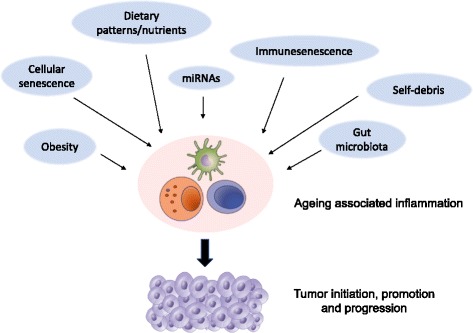
“The term “inflammaging” is used to define the systemic and sterile (in the absence of infection) low-grade chronic inflammation status that is nowadays considered a central biological mainstay of the ageing process [3, 4].”
BackgroundRenehan, A. G., Tyson, M., Egger, M., Heller, R. F., & Zwahlen, M. (2008) · The Lancet · doi:10.1016/s0140-6736(08)60269-x · Cited by 5,219 · cited 1×
“demiological data suggest a significant association between increased body mass index and several types of cancer, such us pancreatic cancer, prostate cancer, colon cancer, post-menopausal breast cancer and many others [59, 60].”
BackgroundThe senescence-associated secretory phenotype: the dark side of tumor suppression
Coppé, J.-P., Desprez, P.-Y., Krtolica, A., & Campisi, J. (2010) · Annual Review of Pathology: Mechanisms of Disease · doi:10.1146/annurev-pathol-121808-102144 · Cited by 5,206 · cited 2×
“stimulating factor (GM-CSF)] and matrix-remodelling enzymes [37, 38].”
BackgroundCellular senescence: when bad things happen to good cells
Campisi, J., & d'Adda di Fagagna, F. (2007) · Nature Reviews Molecular Cell Biology · doi:10.1038/nrm2233 · Cited by 4,441 · cited 1×
“However, it has been demonstrated that senescent cells increase with age, and this can be interpreted either as an effect of reduced clearance ability (and so senescent cells gradually accumulate) and/or because aged individuals generate senescent cells faster than their immune system can handle [23].”
BackgroundGut microbiota in health and disease
Sekirov, I., Russell, S. L., Antunes, L. C. M., & Finlay, B. B. (2010) · Physiological Reviews · doi:10.1152/physrev.00045.2009 · Cited by 4,182 · cited 3×
“The bacterial population of the gut microbiota (GM) represents the largest number and concentration of microbes of the human body and it has been demonstrated to take part in many physiological and pathological processes [48, 49].”
BackgroundChronic Inflammation (Inflammaging) and Its Potential Contribution to Age-Associated Diseases
Franceschi, C., & Campisi, J. (2014) · The Journals of Gerontology Series A: Biological Sciences and Medical Sciences · doi:10.1093/gerona/glu057 · Cited by 3,891 · cited 1×
“As self-debris accumulates, the innate immune response to DAMPs become chronic and maladaptive leading to inflammaging [47].”
BackgroundInflammatory Mechanisms in Obesity
Gregor, M. F., & Hotamisligil, G. S. (2011) · Annual Review of Immunology · doi:10.1146/annurev-immunol-031210-101322 · Cited by 3,754 · cited 9×
“The Western-type diet, which is high in red meat, highfat dairy products, refined grains, and simple carbohydrates, has been associated with higher levels of CRP and IL-6.”
BackgroundInfluentialNuclear factor-κB in cancer development and progression
Karin, M. (2006) · Nature · doi:10.1038/nature04870 · Cited by 3,519 · cited 1×
“Chronic inflammation is, thus, associated with all stages of cancer development increasing its risk, supporting cancer initiation, promoting cancer progression, and supporting metastatic diffusion [10].”
BackgroundGut microbiota composition correlates with diet and health in the elderly
Claesson, M. J., Jeffery, I. B., Conde, S., Power, S. E., O’Connor, E. M., Cusack, S., Harris, H. M. B., Coakley, M., Lakshminarayanan, B., O’Sullivan, O., et al. (2012) · Nature · doi:10.1038/nature11319 · Cited by 3,314
A DNA damage checkpoint response in telomere-initiated senescence
Fagagna, F. D. D., Reaper, P. M., Clay-Farrace, L., Fiegler, H., Carr, P., von Zglinicki, T., Saretzki, G., Carter, N. P., & Jackson, S. P. (2003) · Nature · doi:10.1038/nature02118 · Cited by 2,917 · cited 1×
“Replicative senescence in normal cell is due to critical telomere erosion that activates DNA damage response and persistent p53 activation with cell cycle arrest [28, 29].”
BackgroundCellular senescence: from physiology to pathology
Muñoz-Espín, D., & Serrano, M. (2014) · Nature Reviews Molecular Cell Biology · doi:10.1038/nrm3823 · Cited by 2,818 · cited 1×
“such as telomere erosion, oncogene activation, oxygen free radicals (ROS), chemicals and ionizing radiation [22] Therefore, cellular senescence is widely considered a”
BackgroundThe gut flora as a forgotten organ
O'Hara, A. M., & Shanahan, F. (2006) · The EMBO Reports · doi:10.1038/sj.embor.7400731 · Cited by 2,791 · cited 1×
“The bacterial population of the gut microbiota (GM) represents the largest number and concentration of microbes of the human body and it has been demonstrated to take part in many physiological and pathological processes [48, 49].”
BackgroundDesigning and developing a literature-derived, population-based dietary inflammatory index
Shivappa, N., Steck, S. E., Hurley, T. G., Hussey, J. R., & Hébert, J. R. (2014) · Public Health Nutrition · doi:10.1017/s1368980013002115 · Cited by 2,731 · cited 3×
“Beyond the undeniable links among quantitative overnutrition, obesity, inflammation and elevated cancer risk, epidemiological studies have linked cancer to qualitative disequilibria in food composition [63].”
BackgroundInfluentialSenescence and tumour clearance is triggered by p53 restoration in murine liver carcinomas
Xue, W., Zender, L., Miething, C., Dickins, R. A., Hernando, E., Krizhanovsky, V., Cordon-Cardo, C., & Lowe, S. W. (2007) · Nature · doi:10.1038/nature05529 · Cited by 2,473 · cited 1×
“with the immune cells infiltration surrounding senescent cells removes the damaged and transformed cells [42].”
BackgroundSenescent cells, tumor suppression, and organismal aging: good citizens, bad neighbors
Campisi, J. (2005) · Cell · doi:10.1016/j.cell.2005.02.003 · Cited by 2,379
A complex secretory program orchestrated by the inflammasome controls paracrine senescence
Acosta, J. C., Banito, A., Wuestefeld, T., Georgilis, A., Janich, P., Morton, J. P., Athineos, D., Kang, T.-W., Lasitschka, F., Andrulis, M., et al. (2013) · Nature Cell Biology · doi:10.1038/ncb2784 · Cited by 2,278
Persistent DNA damage signalling triggers senescence-associated inflammatory cytokine secretion
Rodier, F., Coppé, J.-P., Patil, C. K., Hoeijmakers, W. A. M., Muñoz, D. P., Raza, S. R., Freund, A., Campeau, E., Davalos, A. R., & Campisi, J. (2009) · Nature Cell Biology · doi:10.1038/ncb1909 · Cited by 2,232
BRAFE600-associated senescence-like cell cycle arrest of human naevi
Michaloglou, C., Vredeveld, L. C. W., Soengas, M. S., Denoyelle, C., Kuilman, T., van der Horst, C. M. A. M., Majoor, D. M., Shay, J. W., Mooi, W. J., & Peeper, D. S. (2005) · Nature · doi:10.1038/nature03890 · Cited by 2,160
Esposito, K., Marfella, R., Ciotola, M., Di Palo, C., Giugliano, F., Giugliano, G., D'Armiento, M., D'Andrea, F., & Giugliano, D. (2004) · JAMA · doi:10.1001/jama.292.12.1440 · Cited by 2,126
Franceschi, C., Capri, M., Monti, D., Giunta, S., Olivieri, F., Sevini, F., Panourgia, M. P., Invidia, L., Celani, L., Scurti, M., et al. (2007) · Mechanisms of Ageing and Development · doi:10.1016/j.mad.2006.11.016 · Cited by 2,087
Chemokine signaling via the CXCR2 receptor reinforces senescence
Acosta, J. C., O'Loghlen, A., Banito, A., Guijarro, M. V., Augert, A., Raguz, S., Fumagalli, M., Da Costa, M., Brown, C., Popov, N., et al. (2008) · Cell · doi:10.1016/j.cell.2008.03.038 · Cited by 1,801 · cited 2×
“stimulating factor (GM-CSF)] and matrix-remodelling enzymes [37, 38].”
BackgroundKrtolica, A., Parrinello, S., Lockett, S., Desprez, P.-Y., & Campisi, J. (2001) · Proceedings of the National Academy of Sciences · doi:10.1073/pnas.211053698 · Cited by 1,730 · cited 2×
“In vitro and in vivo studies have demonstrated that this process not only alters the normal tissue and structure function but, importantly, can stimulate the growth of nearby malignant cells exerting a positive selection on cancer-initiating cells and stimulating cancer progression [24, 43, 44].”
BackgroundHerbig, U., Jobling, W. A., Chen, B. P. C., Chen, D. J., & Sedivy, J. M. (2004) · Molecular Cell · doi:10.1016/s1097-2765(04)00256-4 · Cited by 1,344 · cited 1×
“Replicative senescence in normal cell is due to critical telomere erosion that activates DNA damage response and persistent p53 activation with cell cycle arrest [28, 29].”
BackgroundChronic stress and age-related increases in the proinflammatory cytokine IL-6.
Kiecolt-Glaser, J. K., Preacher, K. J., MacCallum, R. C., Atkinson, C., Malarkey, W. B., & Glaser, R. (2003) · Proceedings of the National Academy of Sciences · doi:10.1073/pnas.1531903100 · Cited by 1,267 · cited 1×
“Epidemiological studies demonstrate the relationship between increased levels of inflammatory mediators like Interleukin(IL)-6 or C-reactive protein (CRP) to multiple age-related diseases [9].”
BackgroundDi Leonardo, A., Linke, S. P., Clarkin, K., & Wahl, G. M. (1994) · Genes & Development · doi:10.1101/gad.8.21.2540 · Cited by 1,215
O’Toole, P. W., & Jeffery, I. B. (2015) · Science · doi:10.1126/science.aac8469 · Cited by 1,202
Chien, Y., Scuoppo, C., Wang, X., Fang, X., Balgley, B., Bolden, J. E., Premsrirut, P., Luo, W., Chicas, A., Lee, C. S., et al. (2011) · Genes & Development · doi:10.1101/gad.17276711 · Cited by 1,046
Clinical relevance of circulating cell-free microRNAs in cancer
Schwarzenbach, H., Nishida, N., Calin, G. A., & Pantel, K. (2014) · Nature Reviews Clinical Oncology · doi:10.1038/nrclinonc.2014.5 · Cited by 969 · cited 1×
“by acting in a coordinated fashion on pathways of functionally related genes [85, 86].”
BackgroundLin, A. W., Barradas, M., Stone, J. C., van Aelst, L., Serrano, M., & Lowe, S. W. (1998) · Genes & Development · doi:10.1101/gad.12.19.3008 · Cited by 945
Senescence-messaging secretome: SMS-ing cellular stress
Kuilman, T., & Peeper, D. S. (2009) · Nature Reviews Cancer · doi:10.1038/nrc2560 · Cited by 909
Molecular mechanisms of cancer development in obesity
Khandekar, M. J., Cohen, P., & Spiegelman, B. M. (2011) · Nature Reviews Cancer · doi:10.1038/nrc3174 · Cited by 907 · cited 9×
“Over time, this low-grade inflammation may induce the recruitment and activation of many immune cells, such as macrophages, mast cells, and various T cell populations, driving the adipose tissue toward a modified environment resulting in a stronger pro-inflammatory response [59].”
BackgroundInfluentialSjöström, L., Gummesson, A., Sjöström, C. D., Narbro, K., Peltonen, M., Wedel, H., Bengtsson, C., Bouchard, C., Carlsson, B., Dahlgren, S., et al. (2009) · The Lancet Oncology · doi:10.1016/s1470-2045(09)70159-7 · Cited by 770 · cited 1×
“The reduction of obesity through bariatric surgery is associated with a decrease in cancer mortality [76].”
BackgroundChrysohoou, C., Panagiotakos, D. B., Pitsavos, C., Das, U. N., & Stefanadis, C. (2004) · Journal of the American College of Cardiology · doi:10.1016/j.jacc.2004.03.039 · Cited by 769
Salminen, A., Kauppinen, A., & Kaarniranta, K. (2012) · Cellular Signalling · doi:10.1016/j.cellsig.2011.12.006 · Cited by 763
Relationship of plasma polyunsaturated fatty acids to circulating inflammatory markers.
Ferrucci, L., Cherubini, A., Bandinelli, S., Bartali, B., Corsi, A., Lauretani, F., Martin, A., Andres-Lacueva, C., Senin, U., & Guralnik, J. M. (2006) · The Journal of Clinical Endocrinology & Metabolism · doi:10.1210/jc.2005-1303 · Cited by 696
Secretion of vascular endothelial growth factor by primary human fibroblasts at senescence
Coppé, J.-P., Kauser, K., Campisi, J., & Beauséjour, C. M. (2006) · Journal of Biological Chemistry · doi:10.1074/jbc.m603307200 · Cited by 604 · cited 1×
“In vitro and in vivo studies have demonstrated that this process not only alters the normal tissue and structure function but, importantly, can stimulate the growth of nearby malignant cells exerting a positive selection on cancer-initiating cells and stimulating cancer progression [24, 43, 44].”
BackgroundSalminen, A., Huuskonen, J., Ojala, J., Kauppinen, A., Kaarniranta, K., & Suuronen, T. (2008) · Ageing Research Reviews · doi:10.1016/j.arr.2007.09.002 · Cited by 581
Rodier, F., Muñoz, D. P., Teachenor, R., Chu, V., Le, O., Bhaumik, D., Coppé, J.-P., Campeau, E., Beauséjour, C. M., Kim, S.-H., et al. (2011) · Journal of Cell Science · doi:10.1242/jcs.071340 · Cited by 535
Fruit and vegetable intakes, C-reactive protein, and the metabolic syndrome
Esmaillzadeh, A., Kimiagar, M., Mehrabi, Y., Azadbakht, L., Hu, F. B., & Willett, W. C. (2006) · The American Journal of Clinical Nutrition · doi:10.1093/ajcn/84.6.1489 · Cited by 524
Does the microbiota regulate immune responses outside the gut?
Noverr, M. C., & Huffnagle, G. B. (2004) · Trends in Microbiology · doi:10.1016/j.tim.2004.10.008 · Cited by 499
Inflammatory networks in ageing, age-related diseases and longevity
Vasto, S., Candore, G., Balistreri, C. R., Caruso, M., Colonna-Romano, G., Grimaldi, M. P., Listi, F., Nuzzo, D., Lio, D., & Caruso, C. (2007) · Mechanisms of Ageing and Development · doi:10.1016/j.mad.2006.11.015 · Cited by 482 · cited 2×
“This leads to an increased production of inflammatory mediators associated with the presence of chronic infections [8, 20, 21].”
BackgroundBavik, C., Coleman, I., Dean, J. P., Knudsen, B., Plymate, S., & Nelson, P. S. (2006) · Cancer Research · doi:10.1158/0008-5472.can-05-1716 · Cited by 453 · cited 1×
“In vitro and in vivo studies have demonstrated that this process not only alters the normal tissue and structure function but, importantly, can stimulate the growth of nearby malignant cells exerting a positive selection on cancer-initiating cells and stimulating cancer progression [24, 43, 44].”
BackgroundNutrition, inflammation and cancer
Zitvogel, L., Pietrocola, F., & Kroemer, G. (2017) · Nature Immunology · doi:10.1038/ni.3754 · Cited by 446 · cited 1×
“Several animal cancer models have shown a significant impact of the fasting and feeding cycles in cancer growth and in particular starvation and low caloric diets seem to play the greater role through immunomodulation and anti-inflammatory effects [64].”
BackgroundInflammaging as a Major Characteristic of Old People: Can It Be Prevented or Cured?
Franceschi, C. (2008) · Nutrition Reviews · doi:10.1111/j.1753-4887.2007.tb00358.x · Cited by 342 · cited 1×
“The term “inflammaging” is used to define the systemic and sterile (in the absence of infection) low-grade chronic inflammation status that is nowadays considered a central biological mainstay of the ageing process [3, 4].”
BackgroundCevenini, E., Monti, D., & Franceschi, C. (2013) · Current Opinion in Clinical Nutrition and Metabolic Care · doi:10.1097/mco.0b013e32835ada13 · Cited by 317
Inflammaging as a Major Characteristic of Old People: Can It Be Prevented or Cured?
Franceschi, C. (2007) · Nutrition Reviews · doi:10.1301/nr.2007.dec.s173-s176 · Cited by 308
MicroRNAs as Potential Signatures of Environmental Exposure or Effect: A Systematic Review
Vrijens, K., Bollati, V., & Nawrot, T. S. (2015) · Environmental Health Perspectives · doi:10.1289/ehp.1408459 · Cited by 304 · cited 1×
“Thus, miRs are able to couple environmental exposure to specific human phenotype and disease through gene expression modulation [87, 88].”
BackgroundDAMPs as mediators of sterile inflammation in aging-related pathologies
Feldman, N., Rotter-Maskowitz, A., & Okun, E. (2015) · Ageing Research Reviews · doi:10.1016/j.arr.2015.01.003 · Cited by 283 · cited 1×
“recognized by innate immunity receptors [45, 46].”
Hubackova, S., Krejcikova, K., Bartek, J., & Hodny, Z. (2012) · Aging · doi:10.18632/aging.100520 · Cited by 272
Connecting obesity, aging and diabetes
Ahima, R. S. (2009) · Nature Medicine · doi:10.1038/nm0909-996 · Cited by 264 · cited 1×
“Ageing is associated in many people, particularly in Western countries, with an increase in visceral fat that leads to obesity along with insulin resistance [58].”
BackgroundOlivieri, F., Spazzafumo, L., Santini, G., Lazzarini, R., Albertini, M. C., Rippo, M. R., Galeazzi, R., Abbatecola, A. M., Marcheselli, F., Monti, D., et al. (2012) · Mechanisms of Ageing and Development · doi:10.1016/j.mad.2012.09.004 · Cited by 248 · cited 1×
“Moreover, an interesting aspect emerging from microRNAs studies is that centenarians may have a different miRs profile [90].”
BackgroundThe complexities of microRNA regulation: mirandering around the rules
Breving, K., & Esquela-Kerscher, A. (2010) · The International Journal of Biochemistry & Cell Biology · doi:10.1016/j.biocel.2009.09.016 · Cited by 244 · cited 1×
“by interacting with complementary sequences in coding and non-coding regions of their mRNA targets [84].”
BackgroundA Senescence-Inflammatory Switch from Cancer-Inhibitory to Cancer-Promoting Mechanism
Pribluda, A., Elyada, E., Wiener, Z., Hamza, H., Goldstein, R. E., Biton, M., Burstain, I., Morgenstern, Y., Brachya, G., Billauer, H., et al. (2013) · Cancer Cell · doi:10.1016/j.ccr.2013.06.005 · Cited by 239 · cited 10×
“Moreover, the paracrine signalling operated through SASP has been demonstrated to induce senescence in surrounding cells therefore propagating this process throughout the tissue [39–41].”
BackgroundInfluentialSignificant Role for p16INK4a in p53-Independent Telomere-Directed Senescence
Jacobs, J. J. L., & de Lange, T. (2004) · Current Biology · doi:10.1016/j.cub.2004.12.025 · Cited by 237 · cited 1×
“DNA damage can also activate p16, which is a second barrier to prevent growth of transformed cells through senescence [33].”
BackgroundN-glycomic biomarkers of biological aging and longevity: A link with inflammaging
Dall’Olio, F., Vanhooren, V., Chen, C. C., Slagboom, P. E., Wuhrer, M., & Franceschi, C. (2013) · Ageing Research Reviews · doi:10.1016/j.arr.2012.02.002 · Cited by 231
Gut microbiota composition is associated with polypharmacy in elderly hospitalized patients
Ticinesi, A., Milani, C., Lauretani, F., Nouvenne, A., Mancabelli, L., Lugli, G. A., Turroni, F., Duranti, S., Mangifesta, M., Viappiani, A., et al. (2017) · Scientific Reports · doi:10.1038/s41598-017-10734-y · Cited by 211
Gut microbiota accelerate tumor growth via c-jun and STAT3 phosphorylation in APC Min/+ mice
Li, Y., Kundu, P., Seow, S. W., de Matos, C. T., Aronsson, L., Chin, K. C., Kärre, K., Pettersson, S., & Greicius, G. (2012) · Carcinogenesis · doi:10.1093/carcin/bgs137 · Cited by 206 · cited 1×
“The association between gut dysbiosis and cancer is, therefore, not only limited to a direct pathogenic role exerted by specific bacteria on the intestinal epithelium but it is also linked to an overall derangement of this ecosystem that has systemic consequences through inflammatory pathways [49, 55].”
BackgroundMicroRNAs linking inflamm-aging, cellular senescence and cancer
Olivieri, F., Rippo, M. R., Monsurrò, V., Salvioli, S., Capri, M., Procopio, A. D., & Franceschi, C. (2013) · Ageing Research Reviews · doi:10.1016/j.arr.2013.05.001 · Cited by 205 · cited 1×
“In particular, mir-21, mir-146a and mir-126 participate in the regulation of the NF-kB activated pathways that is central in cellular senescence, inflammaging and cancer development [89].”
BackgroundCevenini, E., Caruso, C., Candore, G., Capri, M., Nuzzo, D., Duro, G., Rizzo, C., Colonna-Romano, G., Lio, D., Carlo, D., et al. (2010) · Current Pharmaceutical Design · doi:10.2174/138161210790883840 · Cited by 167 · cited 1×
“This leads to an increased production of inflammatory mediators associated with the presence of chronic infections [8, 20, 21].”
BackgroundInflammation, ageing and cancer
Vasto, S., Carruba, G., Lio, D., Colonna‐Romano, G., Bona, D. D., Candore, G., & Caruso, C. (2008) · Mechanisms of Ageing and Development · doi:10.1016/j.mad.2008.06.003 · Cited by 159
Lactobacillus rhamnosus GG: An Overview to Explore the Rationale of Its Use in Cancer
Banna, G. L., Torino, F., Marletta, F., Santagati, M., Salemi, R., Cannarozzo, E., Falzone, L., Ferraù, F., & Libra, M. (2017) · Frontiers in Pharmacology · doi:10.3389/fphar.2017.00603 · Cited by 150
Self-citationAge related changes in gut physiology and nutritional status.
Lovat, L. B. (1996) · Gut · doi:10.1136/gut.38.3.306 · Cited by 136 · cited 1×
“reduction of intestinal motility, poor dentition, modification of salivary characteristics) [54].”
The Dietary Inflammatory Index Is Associated with Colorectal Cancer Risk in the Multiethnic Cohort
Harmon, B. E., Wirth, M. D., Boushey, C. J., Wilkens, L. R., Draluck, E., Shivappa, N., Steck, S. E., Hofseth, L. J., Haiman, C. A., Marchand, L. L., et al. (2017) · Journal of Nutrition · doi:10.3945/jn.116.242529 · Cited by 133
microRNA-based diagnostics and therapy in cardiovascular disease-Summing up the facts.
Schulte, C., & Zeller, T. (2015) · PubMed · doi:10.3978/j.issn.2223-3652.2014.12.03 · Cited by 130 · cited 1×
“Several preclinical and clinical studies in different age-associated disease, including cancer, show that miRs can represent not only an early diagnostic markers but also an important tool for risk-based patients’ stratification [91, 92].”
BackgroundDietary inflammatory index, Mediterranean diet score, and lung cancer: a prospective study
Hodge, A. M., Bassett, J. K., Shivappa, N., Hébert, J. R., English, D. R., Giles, G. G., & Severi, G. (2016) · Cancer Causes & Control · doi:10.1007/s10552-016-0770-1 · Cited by 128
Dietary phytochemicals and neuro-inflammaging: from mechanistic insights to translational challenges
Davinelli, S., Maes, M., Corbi, G., Zarrelli, A., Willcox, D. C., & Scapagnini, G. (2016) · Immunity & Ageing · doi:10.1186/s12979-016-0070-3 · Cited by 122
Aspirin as adjuvant therapy for colorectal cancer—reinterpreting paradigms
Chia, W. K., Ali, R., & Toh, H. C. (2012) · Nature Reviews Clinical Oncology · doi:10.1038/nrclinonc.2012.137 · Cited by 109 · cited 1×
“Recently, it has been demonstrated that preventive treatment with anti-inflammatory drugs like aspirin reduce the incidence and mortality for colorectal cancer [18].”
BackgroundTargeting miRNAs by polyphenols: Novel therapeutic strategy for cancer
Devi, K. P., Rajavel, T., Daglia, M., Nabavi, S. F., Bishayee, A., & Nabavi, S. M. (2017) · Seminars in Cancer Biology · doi:10.1016/j.semcancer.2017.02.001 · Cited by 97
Schroen, B., & Heymans, S. (2012) · Cardiovascular Research · doi:10.1093/cvr/cvr268 · Cited by 93 · cited 1×
“by acting in a coordinated fashion on pathways of functionally related genes [85, 86].”
BackgroundSex, gender and immunosenescence: a key to understand the different lifespan between men and women?
Caruso, C., Accardi, G., Virruso, C., & Candore, G. (2013) · Immunity & Ageing · doi:10.1186/1742-4933-10-20 · Cited by 92 · cited 1×
“This leads to an increased production of inflammatory mediators associated with the presence of chronic infections [8, 20, 21].”
BackgroundSelf-citationQiu, C., Chen, G., & Cui, Q. (2012) · Scientific Reports · doi:10.1038/srep00318 · Cited by 85 · cited 1×
“Thus, miRs are able to couple environmental exposure to specific human phenotype and disease through gene expression modulation [87, 88].”
BackgroundExtending healthy ageing: nutrient sensitive pathway and centenarian population
Davinelli, S., Willcox, D. C., & Scapagnini, G. (2012) · Immunity & Ageing · doi:10.1186/1742-4933-9-9 · Cited by 83 · cited 1×
“Moreover, specific dietary patterns, all sharing a prevalent plant-based diet, seem to greatly impact longevity in different population through the interaction between nutrients and nutrient-sensing pathways such as those regulated by IGF1 [77, 78].”
BackgroundFalzone, L., Candido, S., Salemi, R., Basile, M. S., Scalisi, A., McCubrey, J. A., Torino, F., Signorelli, S. S., Montella, M., & Libra, M. (2016) · Oncotarget · doi:10.18632/oncotarget.11805 · Cited by 83 · cited 1×
“Several preclinical and clinical studies in different age-associated disease, including cancer, show that miRs can represent not only an early diagnostic markers but also an important tool for risk-based patients’ stratification [91, 92].”
BackgroundSelf-citationCharting the NF-κB Pathway Interactome Map
Tieri, P., Termanini, A., Bellavista, E., Salvioli, S., Capri, M., & Franceschi, C. (2012) · PLoS ONE · doi:10.1371/journal.pone.0032678 · Cited by 73
Shivappa, N., Blair, C. K., Prizment, A. E., Jacobs, D. R., & Hébert, J. R. (2017) · Molecular Nutrition & Food Research · doi:10.1002/mnfr.201600592 · Cited by 69
Beta-glucans and cancer: The influence of inflammation and gut peptide
Baldassano, S., Accardi, G., & Vasto, S. (2017) · European Journal of Medicinal Chemistry · doi:10.1016/j.ejmech.2017.09.013 · Cited by 61 · cited 1×
“This leads the way to the potential preventive and therapeutic role of the modulation of cancer-associated inflammatory microenvironment [19].”
BackgroundSelf-citationAugustin, L. S. A., Libra, M., Crispo, A., Grimaldi, M., Laurentiis, M. D., Rinaldo, M., D’Aiuto, M., Catalano, F., Banna, G. L., Ferraù, F., et al. (2017) · BMC Cancer · doi:10.1186/s12885-017-3064-4 · Cited by 54 · cited 1×
“Given the evidence discussed above it appears plausible to attempt dietary interventions or to provide food supplements to promote long-term and systemic modulation of chronic low-grade inflammation process (in the form of inflammageing and metaflammation), in an anticancer perspective strategies and towards the enhan…”
BackgroundSelf-citationDietary Inflammatory Index and Risk of Bladder Cancer in a Large Italian Case-control Study
Shivappa, N., Hébert, J. R., Rosato, V., Rossi, M., Libra, M., Montella, M., Serraino, D., & Vecchia, C. L. (2016) · Urology · doi:10.1016/j.urology.2016.09.026 · Cited by 52
Self-citationNutrient sensing pathways as therapeutic targets for healthy ageing
Aiello, A., Accardi, G., Candore, G., Gambino, C. M., Mirisola, M., Taormina, G., Virruso, C., & Caruso, C. (2017) · Expert Opinion on Therapeutic Targets · doi:10.1080/14728222.2017.1294684 · Cited by 52 · cited 1×
“Moreover, specific dietary patterns, all sharing a prevalent plant-based diet, seem to greatly impact longevity in different population through the interaction between nutrients and nutrient-sensing pathways such as those regulated by IGF1 [77, 78].”
BackgroundSelf-citationmiRTar Hunter: A Prediction System for Identifying Human microRNA Target Sites
Park, K., & Kim, K. (2013) · Molecules and Cells · doi:10.1007/s10059-013-2165-4 · Cited by 43 · cited 1×
“and translational processes and represent one of the most abundant classes of regulatory molecules [83].”
BackgroundNutrition, aging and cancer: lessons from dietary intervention studies
Carruba, G., Cocciadiferro, L., Di Cristina, A., Granata, O. M., Dolcemascolo, C., Campisi, I., Zarcone, M., Cinquegrani, M., & Traina, A. (2016) · Immunity & Ageing · doi:10.1186/s12979-016-0069-9 · Cited by 43
Przemska-Kosicka, A., Childs, C. E., Enani, S., Maidens, C., Dong, H., Dayel, I. B., Tuohy, K., Todd, S., Gosney, M. A., & Yaqoob, P. (2016) · Immunity & Ageing · doi:10.1186/s12979-016-0061-4 · Cited by 37
Dose response biology of resveratrol in obesity
Scapagnini, G., Davinelli, S., Kaneko, T., Koverech, G., Koverech, A., Calabrese, E. J., & Calabrese, V. (2014) · Journal of Cell Communication and Signaling · doi:10.1007/s12079-014-0257-3 · Cited by 31
Shivappa, N., Hébert, J. R., Zucchetto, A., Montella, M., Libra, M., Garavello, W., Rossi, M., Vecchia, C. L., & Serraino, D. (2016) · Nutrition and Cancer · doi:10.1080/01635581.2016.1216137 · Cited by 30
Self-citationDietary inflammatory index and non-Hodgkin lymphoma risk in an Italian case–control study
Shivappa, N., Hébert, J. R., Taborelli, M., Montella, M., Libra, M., Zucchetto, A., Crispo, A., Grimaldi, M., Vecchia, C. L., Serraino, D., et al. (2017) · Cancer Causes & Control · doi:10.1007/s10552-017-0905-z · Cited by 20
Self-citationUpdates in Pathobiology: Causality and Chance in Ageing,Age-Related Diseases and Longevity
Caruso, C., & Accardi, G. (2017) · Cited by 13
Self-citation
Cited by
Inflammageing: chronic inflammation in ageing, cardiovascular disease, and frailty
Ferrucci, L., & Fabbri, E. (2018) · Nature Reviews Cardiology · doi:10.1038/s41569-018-0064-2 · Cited by 3,690
Diversity and biology of cancer-associated fibroblasts
Biffi, G., & Tuveson, D. A. (2021) · Physiological Reviews · doi:10.1152/physrev.00048.2019 · Cited by 1,265
How the ageing microenvironment influences tumour progression
Fane, M., & Weeraratna, A. T. (2020) · Nature Reviews Cancer · doi:10.1038/s41568-019-0222-9 · Cited by 849
Aiello, A., Farzaneh, F., Candore, G., Caruso, C., Davinelli, S., Gambino, C. M., Ligotti, M. E., Zareian, N., & Accardi, G. (2019) · Frontiers in Immunology · doi:10.3389/fimmu.2019.02247 · Cited by 693
Self-citationCutaneous melanoma: From pathogenesis to therapy (Review)
Leonardi, G., Falzone, L., Salemi, R., Zangh�, A., Spandidos, D., Mccubrey, J., Candido, S., & Libra, M. (2018) · International Journal of Oncology · doi:10.3892/ijo.2018.4287 · Cited by 588
“An interesting finding is that BRAF is mutated in up to 80% of benign nevi, resulting in limited melanocyte proliferation through the oncogene-mediated activation of cell senescence (34,35).”
Self-citation
Metadata
- Authors
- Leonardi, G. C., Accardi, G., Monastero, R., Nicoletti, F., & Libra, M.
- Affiliations
- University of Catania (IT)
- University of Palermo (IT)
- Corresponding author
- Libra, Massimo
- Venue
- Immunity & Ageing
- Published
- 2018-01-19
- Volume
- 15
- Issue
- 1
- Pages
- 1-1
- ISSN
- 1742-4933 (ISSN-L)
- PMC
- PMC5775596
- OpenAlex
- W2788953364
- Cited by
- 241
- References
- 94
- Citations by year
- 2026: 21 · 2025: 27 · 2024: 33 · 2023: 28 · 2022: 35 · 2021: 42 · 2020: 22 · 2019: 22 · 2018: 11
- FWCI
- 1.62
- Type
- journal article
- Language
- en
- Open access
- gold
- doi.org
- Licence
- cc-by
- Locations
- Immunity & Ageing (publishedVersion, cc-by)
- Europe PMC (PubMed Central) (publishedVersion, cc-by)
- PubMed Central (publishedVersion, cc-by)
- PubMed (publishedVersion)
- DOAJ (DOAJ: Directory of Open Access Journals) (submittedVersion, cc-by-sa)
- Nova Science Publishers (Nova Science Publishers, Inc.) (submittedVersion, other-oa)
- Topics
- Life Sciences › Biochemistry, Genetics and Molecular Biology › Aging › Genetics, Aging, and Longevity in Model Organisms
- Life Sciences › Immunology and Microbiology › Immunology › Immune cells in cancer
- Life Sciences › Biochemistry, Genetics and Molecular Biology › Clinical Biochemistry › Advanced Glycation End Products research
- Keywords
- aging, inflammaging, low-grade inflammation, carcinogenesis, age-related cancer risk
About these checks
Registry, retraction, Cites and statistics results are computed, not judged, with one exception: a printed reference that no index lists is read once by a model before it counts as a citation error. Claims are extracted by a model and kept only when their quote appears verbatim in the text; each cited source is then checked, with a model’s help, for whether it says what the claim relies on. Those verdicts can be wrong — read the claim’s quote and the cited source before relying on one.
Statistics and arithmetic are recomputed, not judged.
Confidence bands are shown only for fields calibrated on our annotated test set. None is calibrated yet, so no band is shown.
What counts as a claim ›How we measure confidence ›How we check this ›
Are you an author, or do you see a problem with this page? Request a review
Data sources
Bibliographic data: Semantic Scholar, OpenAlex, Crossref.
Contains information from the Semantic Scholar Academic Graph Datasets, made available under the ODC Attribution License (ODC-BY 1.0).
Semantic Scholar’s data is described in: Kinney, R., et al. (2023). The Semantic Scholar Open Data Platform. arXiv:2301.10140.
