

The Society for Implementation Research Collaboration Instrument Review Project: A methodology to promote rigorous evaluation
Open accessThe DOI matches its Crossref record; 31 of the 32 references it cites were found in a registry or an index; 16 of the 42 sources its claims cite were checked for support.
Abstract
BACKGROUND: Identification of psychometrically strong instruments for the field of implementation science is a high priority underscored in a recent National Institutes of Health working meeting (October 2013). Existing instrument reviews are limited in scope, methods, and findings. The Society for Implementation Research Collaboration Instrument Review Project's objectives address these limitations by identifying and applying a unique methodology to conduct a systematic and comprehensive review of quantitative instruments assessing constructs delineated in two of the field's most widely used frameworks, adopt a systematic search process (using standard search strings), and engage an international team of experts to assess the full range of psychometric criteria (reliability, construct and criterion validity). Although this work focuses on implementation of psychosocial interventions in mental health and health-care settings, the methodology and results will likely be useful across a broad spectrum of settings. This effort has culminated in a centralized online open-access repository of instruments depicting graphical head-to-head comparisons of their psychometric properties. This article describes the methodology and preliminary outcomes. METHODS: The seven stages of the review, synthesis, and evaluation methodology include (1) setting the scope for the review, (2) identifying frameworks to organize and complete the review, (3) generating a search protocol for the literature review of constructs, (4) literature review of specific instruments, (5) development of an evidence-based assessment rating criteria, (6) data extraction and rating instrument quality by a task force of implementation experts to inform knowledge synthesis, and (7) the creation of a website repository. RESULTS: To date, this multi-faceted and collaborative search and synthesis methodology has identified over 420 instruments related to 34 constructs (total 48 including subconstructs) that are relevant to implementation science. Despite numerous constructs having greater than 20 available instruments, which implies saturation, preliminary results suggest that few instruments stem from gold standard development procedures. We anticipate identifying few high-quality, psychometrically sound instruments once our evidence-based assessment rating criteria have been applied. CONCLUSIONS: The results of this methodology may enhance the rigor of implementation science evaluations by systematically facilitating access to psychometrically validated instruments and identifying where further instrument development is needed.
Overview
CoChat Summary
## TL;DR
This paper describes the Society for Implementation Research Collaboration (SIRC) Instrument Review Project, a multi-stage methodology for systematically finding, rating, and organizing implementation science instruments into an open-access repository. The preliminary search identified over 420 instruments across 48 constructs, but the authors report that many constructs are sparsely measured and that the overall body of instruments appears weakly developed.
## Key findings
- The review methodology had identified over 420 instruments relevant to implementation science across 34 constructs (48 including subconstructs).
- The scoping review of PsycINFO and Web of Science initially identified 105 instruments for the 48 constructs.
- Preliminary results found no instruments for several constructs, including complexity of the intervention, intervention design quality and packaging, intervention source, external policies and incentives, peer pressure, tension for change, goals and feedback, formally appointed internal implementation leaders, and engaging champions.
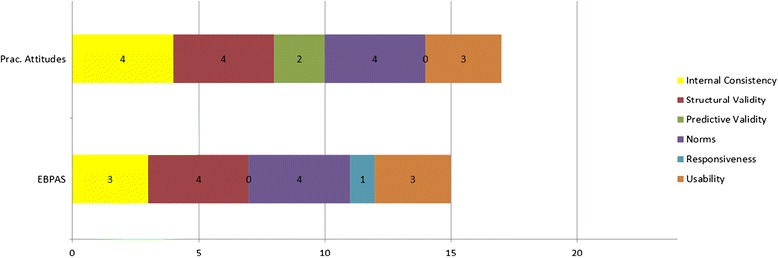
- Across the 48 constructs/subconstructs, an average of 71% included explicit construct definitions, and the instruments on average did not even pass through three of eight stages of “proper” instrument development.
## Methods
- The project used a seven-stage methodology: scope definition, framework selection, search protocol development, instrument literature review, evidence-based assessment (EBA) criteria development, data extraction/rating by implementation experts, and creation of a website repository.
- The review focused on quantitative instruments used in implementation of evidence-based practices/innovations in mental health, health care, and school settings, guided by the CFIR and IOF frameworks.
- Searches used PsycINFO and Web of Science, standard search strings, title/abstract screening, reference checks, snowball sampling via email LISTSERVs and contacts, and expert verification/rating using a “worst score counts” approach with Cohen’s kappa for inter-rater reliability.
## Limitations
- The paper states the method is meticulous, time-consuming, and resource-intensive, requiring replication by a second party; the authors note that the preliminary results took roughly 2 years to achieve.
- The authors state that the chosen frameworks, CFIR and IOF, are comprehensive but do not include all constructs used by DIS investigators, so some relevant instruments may be missed.
- Evident from the text: psychometric ratings were ongoing and the findings are explicitly described as preliminary, so the results are not yet a complete final assessment of instrument quality.
Model-written summary. Check it against the paper before relying on it.
Integrity signals
Registry
Cites
Statistics
Figures
Verification
Claims the paper makes
12 Valid · 2 Not valid · 14 Not checked · 43 Own results and interpretations
At least one cited source doesn’t support this claim or points to a different paper, and none confirmed it — see the verdicts below.
In the paper
“Rather, the GEM approach encourages website users to provide their own ratings regardless of user knowledge of the extant literature.”
§ The Society for Implementation Research Collaboration Instrument Review Project: A methodology to promote rigorous evaluation > Methods > A comparison of SIRC’s methodology to existing reviews and repositories
What the sources say
- Disputedcites [6] Rabin BA Purcell P Naveed S Moser RP Henton MD Proctor EK Brownson RC Glasgow RE Advancing the application, quality and harmonization of implementation science measures Implement Sci 2012 7 119 10.1186/1748-5908-7-119 23231885 PMC3541131 sourceExperimental — accuracy not yet measured
The Methods (Phase 3, the rate phase) states the opposite of the claim's qualifier: 'Users are encouraged to enter both quantitative ratings and qualitative comments at any time during the campaign IF THEY ARE FAMILIAR WITH THE MEASURE,' so familiarity with the measure is an explicit condition on rating rather than irrelevant to it. The same section's 'Gold Standard' rating is defined by knowledge of the literature (published reliability, validity, breadth of application, sensitivity to longitudinal change), and the Background frames the crowd-sourced approach as taking advantage of 'the collective wisdom of those who have the expertise.' The paper does de-emphasize expert-based curation (Discussion: the wiki-based method 'does not meet or seek to meet the criteria for a systematic, expert-based approach'; the Practicality rating is meant to serve 'those not familiar with measurement options' and to engage non-research stakeholders), but those passages concern the database's completeness and intended audience, not an invitation to rate irrespective of literature knowledge. (LLM, conf=0.70)
Checked by a reasoning model — may be wrong.
plainstates a cause- Asserted: passes — The authors put it forward as true.
- Checkable: passes — It can be checked against evidence.
- Load-bearing: unclear — It is unclear whether the paper’s conclusions depend on it.
- Based: passes — The paper gives a reason why it holds.
- Disputed
The cited sources support only part of this claim — read each source’s verdict below.
In the paper
“Existing instrument reviews are limited in scope, methods, and findings.”
§ The Society for Implementation Research Collaboration Instrument Review Project: A methodology to promote rigorous evaluation > Abstract > Background
What the sources say
- Not checked yetcites [3] Weiner B Amick H Lee S-Y Conceptualization and measurement of organizational readiness for change: a review of the literature in health services research and other fields Med Care Res Rev 2008 65 4 379 436 10.1177/1077558708317802 18511812 source
- Not checked yetcites [4] Chor KHB Wisdom JP Olin S-CS Hoagwood KE Horwitz SM Measures for predictors of innovation adoption Adm Policy Ment Health Ment Health Serv Res 2014 1–29. PMC4201641 24740175
- Partly supportedcites [5] Chaudoir SR Dugan AG Barr CH Measuring factors affecting implementation of health innovations: a systematic review of structural, organizational, provider, patient, and innovation level measures Implement Sci 2013 8 22 10.1186/1748-5908-8-22 23414420 PMC3598720 sourceExperimental — accuracy not yet measured
The Background > Available measures section supports only the 'scope' part of the claim: it states that 'a number of researchers have also provided reviews of limited portions of this literature [38-41]' (French et al. on organizational-level measures only, others on provider-level constructs or research-utilization measures) and that 'to date... no systematic reviews have examined measures designed to assess constructs representing the five types of factors'. Our copy contains no assessment of prior reviews' methods or of the adequacy of their findings; the passages that discuss restricted search strategies, keyword/database limits and non-exhaustive criterion-validity searches (Discussion > Limitations and future directions; Results > Literature search results) refer to the authors' own review, not to existing instrument reviews. So attributing limitations in 'methods and findings' to this source goes beyond what it says. (LLM, conf=0.72)
plain- Asserted: passes — The authors put it forward as true.
- Checkable: passes — It can be checked against evidence.
- Load-bearing: passes — The paper’s conclusions depend on it.
- Based: passes — The paper gives a reason why it holds.
Every source the paper cites for this claim was checked and supports it.
In the paper
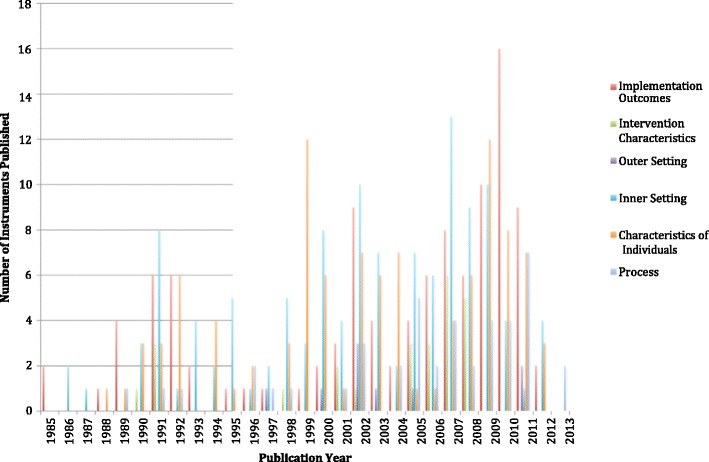
“over one third (34.90%) of instruments for implementation outcomes have been developed since the seminal paper by Proctor et al. was published [8].”
§ The Society for Implementation Research Collaboration Instrument Review Project: A methodology to promote rigorous evaluation > Methods > Preliminary results and discussion
What the sources say
- Supportedcites [8] Proctor EK Landsverk J Aarons G Chambers D Glisson C Mittman B Implementation research in mental health services: an emerging science with conceptual, methodological, and training challenges Adm Policy Ment Health Ment Health Serv Res 2009 36 24 34 10.1007/s10488-008-0197-4 PMC3808121 19104929 source
The citation identifies the Proctor et al. paper as the publication used to mark a point in time; it is not offered as the source of the citing authors’ 34.90% calculation. In “The Challenge of Implementation Research Methods” (page unavailable), the paper discusses measuring implementation outcomes, confirming that it is the relevant work. Our copy does not itself report the percentage. (LLM, conf=0.84)
plain- Asserted: passes — The authors put it forward as true.
- Checkable: passes — It can be checked against evidence.
- Load-bearing: unclear — It is unclear whether the paper’s conclusions depend on it.
- Based: passes — The paper gives a reason why it holds.
- Supported
The cited sources support only part of this claim — read each source’s verdict below.
In the paper
“Proctor et al. articulated a research agenda for DIS outcome evaluations that appears to have positively influenced instrument development.”
§ The Society for Implementation Research Collaboration Instrument Review Project: A methodology to promote rigorous evaluation > Methods > Preliminary results and discussion
What the sources say
- Partly supportedcites [8] Proctor EK Landsverk J Aarons G Chambers D Glisson C Mittman B Implementation research in mental health services: an emerging science with conceptual, methodological, and training challenges Adm Policy Ment Health Ment Health Serv Res 2009 36 24 34 10.1007/s10488-008-0197-4 PMC3808121 19104929 sourceExperimental — accuracy not yet measured
Our copy supports the first half of the claim: in 'The Challenge of Implementation Research Methods' Proctor et al. (2009) lay out a measurement agenda, insisting that researchers 'conceptualize and measure the distinct intervention outcomes and implementation outcomes' (penetration, acceptability/adoption, feasibility, sustainability) and that efficacy-trial measures be adapted, shortened and recalibrated for ongoing service systems; the Abstract and 'A Draft Conceptual Model' section likewise frame an agenda for construct clarification, measurement and design. However, no passage in our copy addresses the second half — that this agenda 'appears to have positively influenced instrument development' — which is a claim about downstream effects after 2009 that the paper itself neither reports nor could. Searched: research agenda for implementation outcome measurement, instrument/measurement development. (LLM, conf=0.72)
hedgedstates a possible cause- Asserted: passes — The authors put it forward as true.
- Checkable: passes — It can be checked against evidence.
- Load-bearing: unclear — It is unclear whether the paper’s conclusions depend on it.
- Based: passes — The paper gives a reason why it holds.
- Partly supported
The sources with a verdict support this claim; the rest weren’t checked yet, have no full text we could read, or their verdicts aren’t rated yet.
In the paper
“First, no existing instrument reviews include a comprehensive array of constructs relevant for DIS.”
§ The Society for Implementation Research Collaboration Instrument Review Project: A methodology to promote rigorous evaluation > Background
What the sources say
- Not checked yetcites [3] Weiner B Amick H Lee S-Y Conceptualization and measurement of organizational readiness for change: a review of the literature in health services research and other fields Med Care Res Rev 2008 65 4 379 436 10.1177/1077558708317802 18511812 source
- Not checked yetcites [4] Chor KHB Wisdom JP Olin S-CS Hoagwood KE Horwitz SM Measures for predictors of innovation adoption Adm Policy Ment Health Ment Health Serv Res 2014 1–29. PMC4201641 24740175
- Supportedcites [5] Chaudoir SR Dugan AG Barr CH Measuring factors affecting implementation of health innovations: a systematic review of structural, organizational, provider, patient, and innovation level measures Implement Sci 2013 8 22 10.1186/1748-5908-8-22 23414420 PMC3598720 source
The Background > Available measures section states that 'A number of researchers have also provided reviews of limited portions of this literature [38-41]', then enumerates them as narrow in scope (French et al. on organizational-context measures only; others on provider-level constructs such as behavioral intentions and research-related attitudes; others on conceptualization/evaluation of implementation outcomes). The Discussion opens by noting 'Existing gaps in measurement present a formidable barrier' and frames the current review as addressing those gaps with 'a comprehensive, five-factor multi-level framework' covering structural, organizational, provider, patient and innovation levels — i.e., prior instrument reviews were not comprehensive across these constructs. The only shift is terminological: the source speaks of implementation science and health-related innovations rather than 'DIS' as a combined field, which does not change the attributed content. (LLM, conf=0.82)
plain- Asserted: passes — The authors put it forward as true.
- Checkable: passes — It can be checked against evidence.
- Load-bearing: passes — The paper’s conclusions depend on it.
- Based: passes — The paper gives a reason why it holds.
31 more claims · 2 with their cited sources checked
Create a free account to see all 71 claims and to verify the 26 references still open.
- It may state two separate claims as one. 24
- Probably not a substantial claim. 18
Claims other papers make about this one
Each is checked against this paper’s own text: does it say what the citing paper says it does?
The cited source says what the claim attributes to it.
In the citing paper
“As with implementation science more generally (74), research on EBIs has been hampered by the lack of valid and reliable measures.”
From The Sustainability of Evidence-Based Interventions and Practices in Public Health and Health Care (2018) · cites this paper as [74]
Citations
Cites
Rogers, E. M., Singhal, A., & Quinlan, M. M. (2019) · An Integrated Approach to Communication Theory and Research · doi:10.4324/9780203710753-35 · Cited by 37,322
Scoping studies: towards a methodological framework
Arksey, H., & O'Malley, L. (2005) · International Journal of Social Research Methodology · doi:10.1080/1364557032000119616 · Cited by 36,742
Damschroder, L. J., Aron, D. C., Keith, R. E., Kirsh, S. R., Alexander, J. A., & Lowery, J. C. (2009) · Implementation Science · doi:10.1186/1748-5908-4-50 · Cited by 14,496 · cited 12×
“Step 3: generating a search protocol for the literature review of constructs Utilizing the CFIR and IOF, a scoping review of the DIS literature was conducted, broadly, in search of instruments and related articles that purportedly measured each of the 48 constructs (including subconstructs).”
MethodInfluentialValente, T. W. (2003) · Genetics in Medicine · doi:10.1097/01.gim.0000061743.67794.c4 · Cited by 13,723
Quality criteria were proposed for measurement properties of health status questionnaires
Terwee, C. B., Bot, S. D. M., de Boer, M. R., van der Windt, D. A. W. M., Knol, D. L., Dekker, J., Bouter, L. M., & de Vet, H. C. W. (2007) · Journal of Clinical Epidemiology · doi:10.1016/j.jclinepi.2006.03.012 · Cited by 10,764 · cited 1×
“[19], we employed a “worst score counts” methodology.”
MethodWelcome to Implementation Science
Eccles, M. P., & Mittman, B. S. (2006) · Implementation Science · doi:10.1186/1748-5908-1-1 · Cited by 2,254 · cited 1×
“Endnotes Implementation science refers to the scientific study of strategies used to integrate evidence into real-world settings [27].”
BackgroundProctor, E. K., Landsverk, J., Aarons, G., Chambers, D., Glisson, C., & Mittman, B. (2009) · Administration and Policy in Mental Health and Mental Health Services Research · doi:10.1007/s10488-008-0197-4 · Cited by 1,894 · cited 7×
“Basing our work on the CFIR [7] and Implementation Outcomes Framework [8] provides a comprehensive conceptual framework, yet it is clear that DIS investigators employ diverse frameworks delineating unique constructs not included in the SIRC IRP [2].”
BackgroundMethodInfluentialCurrent Concepts in Validity and Reliability for Psychometric Instruments: Theory and Application
Cook, D. A., & Beckman, T. J. (2006) · The American Journal of Medicine · doi:10.1016/j.amjmed.2005.10.036 · Cited by 1,745 · cited 1×
“Reliable and valid instruments are critical to scientific advancement as they allow for careful collection, expression, and comparison of results of observation and experimentation [1].”
BackgroundBridging Research and Practice
Tabak, R. G., Khoong, E. C., Chambers, D. A., & Brownson, R. C. (2012) · American Journal of Preventive Medicine · doi:10.1016/j.amepre.2012.05.024 · Cited by 1,386 · cited 2×
“A detailed review of the theories and frameworks summarized here can be found elsewhere [9].”
BackgroundAarons, G. A. (2004) · Mental Health Services Research · doi:10.1023/b:mhsr.0000024351.12294.65 · Cited by 1,272 · cited 2×
“Total possible score eq 3 = “good”, and 4 = “excellent” [20,21].”
Method
Cited by
Psychometric assessment of three newly developed implementation outcome measures
Weiner, B. J., Lewis, C. C., Stanick, C., Powell, B. J., Dorsey, C. N., Clary, A. S., Boynton, M. H., & Halko, H. (2017) · Implementation Science · doi:10.1186/s13012-017-0635-3 · Cited by 2,819
Self-citationSystematic review of the Exploration, Preparation, Implementation, Sustainment (EPIS) framework
Moullin, J. C., Dickson, K. S., Stadnick, N. A., Rabin, B., & Aarons, G. A. (2019) · Implementation Science · doi:10.1186/s13012-018-0842-6 · Cited by 1,223
The Sustainability of Evidence-Based Interventions and Practices in Public Health and Health Care
Shelton, R. C., Cooper, B. R., & Stirman, S. W. (2018) · Annual Review of Public Health · doi:10.1146/annurev-publhealth-040617-014731 · Cited by 806
Inside help: An integrative review of champions in healthcare-related implementation
Miech, E. J., Rattray, N. A., Flanagan, M. E., Damschroder, L., Schmid, A. A., & Damush, T. M. (2018) · SAGE Open Medicine · doi:10.1177/2050312118773261 · Cited by 508
“6,7 Methods Conceptual framework and the “champion” construct In this integrative review, we define the construct of “champion” as an implementation-related role occupied by people who (1) are internal to an organization; (2) generally have an intrinsic interest and commitment to implementing a change; (3) work dilige…”
BackgroundUser‐centered design for psychosocial intervention development and implementation.
Lyon, A. R., & Koerner, K. (2016) · Clinical Psychology: Science and Practice · doi:10.1111/cpsp.12154 · Cited by 478
“Once established, a measure of EBT usability may also be used to explore the statistical relationship between usability and the growing number of measures evaluating implementation constructs (Lewis et al., 2015).”
Lewis, C. C., Fischer, S., Weiner, B. J., Stanick, C., Kim, M., & Martinez, R. G. (2015) · Implementation Science · doi:10.1186/s13012-015-0342-x · Cited by 430
“1 % of extant implementation outcome instruments developed since 2009 [7].”
InfluentialSelf-citationDesigning and undertaking randomised implementation trials: guide for researchers
Wolfenden, L., Foy, R., Presseau, J., Grimshaw, J. M., Ivers, N. M., Powell, B. J., Taljaard, M., Wiggers, J., Sutherland, R., Nathan, N., et al. (2021) · BMJ · doi:10.1136/bmj.m3721 · Cited by 270
Instrumentation issues in implementation science
Martinez, R. G., Lewis, C. C., & Weiner, B. J. (2014) · Implementation Science · doi:10.1186/s13012-014-0118-8 · Cited by 243
Self-citationLyon, A. R., & Bruns, E. J. (2019) · JAMA Psychiatry · doi:10.1001/jamapsychiatry.2018.3060 · Cited by 178
Lyon, A. R., Brewer, S. K., & Areán, P. A. (2020) · American Psychologist · doi:10.1037/amp0000652 · Cited by 152
“Along with organizational determinants, variables at the level of the individuals involved in implementation—most often individual service providers, but also including service recipients—are among the most commonly studied in implementation research (Lewis et al., 2015).”
BackgroundPsychometric and Pragmatic Properties of Social Risk Screening Tools: A Systematic Review
Henrikson, N. B., Blasi, P. R., Dorsey, C. N., Mettert, K. D., Nguyen, M. B., Walsh-Bailey, C., Macuiba, J., Gottlieb, L. M., & Lewis, C. C. (2019) · American Journal of Preventive Medicine · doi:10.1016/j.amepre.2019.07.012 · Cited by 165
Self-citationDefining and assessing context in healthcare implementation studies: a systematic review
Rogers, L., De Brún, A., & McAuliffe, E. (2020) · BMC Health Services Research · doi:10.1186/s12913-020-05212-7 · Cited by 158
Systematic, Multimethod Assessment of Adaptations Across Four Diverse Health Systems Interventions
Rabin, B. A., McCreight, M., Battaglia, C., Ayele, R., Burke, R. E., Hess, P. L., Frank, J. W., & Glasgow, R. E. (2018) · Frontiers in Public Health · doi:10.3389/fpubh.2018.00102 · Cited by 147
Powell, B. J., Stanick, C. F., Halko, H. M., Dorsey, C. N., Weiner, B. J., Barwick, M. A., Damschroder, L. J., Wensing, M., Wolfenden, L., & Lewis, C. C. (2017) · Implementation Science · doi:10.1186/s13012-017-0649-x · Cited by 144
“Longer-term objectives are to combine the pragmatic rating criteria with evidence-based rating criteria and apply both to a repository of over 450 measures to assess their psychometric and pragmatic strength [3, 19].”
BackgroundSelf-citationLewis, C. C., Klasnja, P., Lyon, A. R., Powell, B. J., Lengnick-Hall, R., Buchanan, G., Meza, R. D., Chan, M. C., Boynton, M. H., & Weiner, B. J. (2022) · Implementation Science Communications · doi:10.1186/s43058-022-00358-3 · Cited by 132
Self-citationRye, M., Torres, E. M., Friborg, O., Skre, I., & Aarons, G. A. (2017) · Implementation Science · doi:10.1186/s13012-017-0573-0 · Cited by 133
“The Society for Implementation Research Collaboration (SIRC) Instrument Review Project [3] recently identified over 420 instruments covering 48 different implementation constructs: “factors inside domains (characteristics of the intervention, characteristics of individuals involved in the implementation, outer setting…”
BackgroundMethodInfluentialHagermoser Sanetti, L. M., & Collier-Meek, M. A. (2019) · Journal of School Psychology · doi:10.1016/j.jsp.2019.07.008 · Cited by 129
Birken, S. A., Haines, E. R., Hwang, S., Chambers, D. A., Bunger, A. C., & Nilsen, P. (2020) · Implementation Science · doi:10.1186/s13012-020-01040-9 · Cited by 122
An updated protocol for a systematic review of implementation-related measures
Lewis, C. C., Mettert, K. D., Dorsey, C. N., Martinez, R. G., Weiner, B. J., Nolen, E., Stanick, C., Halko, H., & Powell, B. J. (2018) · Systematic Reviews · doi:10.1186/s13643-018-0728-3 · Cited by 118
“Although development of the pragmatic construct and its associated rating criteria is currently underway [20, 21], we have made substantial revisions to the SIRC-established systematic review methodology and the approach to psychometric evaluation [3].”
BackgroundMethodInfluentialSelf-citationStanick, C. F., Halko, H. M., Nolen, E. A., Powell, B. J., Dorsey, C. N., Mettert, K. D., Weiner, B. J., Barwick, M., Wolfenden, L., Damschroder, L. J., et al. (2021) · Translational Behavioral Medicine · doi:10.1093/tbm/ibz164 · Cited by 117
“The pragmatic rating scale will be combined with the psychometric rating scale from previous published work to form the Psychometric and Pragmatic Evidence Rating Scale (PAPERS) [4,6].”
BackgroundMethodInfluentialSelf-citationClinton-McHarg, T., Yoong, S. L., Tzelepis, F., Regan, T., Fielding, A., Skelton, E., Kingsland, M., Ooi, J. Y., & Wolfenden, L. (2016) · Implementation Science · doi:10.1186/s13012-016-0512-5 · Cited by 116
“To date, the SIRC review has uncovered 420 instru- ments related to 34 of the CFIR constructs and 104 instruments related to Proctor and colleagues’ IOF [16, 17].”
BackgroundMethodInfluentialAdvancing implementation science through measure development and evaluation: a study protocol
Lewis, C. C., Weiner, B. J., Stanick, C., & Fischer, S. M. (2015) · Implementation Science · doi:10.1186/s13012-015-0287-0 · Cited by 115
Self-citationBruns, E. J., Parker, E. M. L., Hensley, S., Pullmann, M. D., Benjamin, P. H., Lyon, A. R., & Hoagwood, K. (2019) · Implementation Science · doi:10.1186/s13012-019-0944-9 · Cited by 125
Quantitative approaches for the evaluation of implementation research studies
Smith, J. D., & Hasan, M. M. (2019) · Psychiatry Research · doi:10.1016/j.psychres.2019.112521 · Cited by 174
Implementation outcome instruments for use in physical healthcare settings: a systematic review
Khadjesari, Z., Boufkhed, S., Vitoratou, S., Schatte, L., Ziemann, A., Daskalopoulou, C., Uglik-Marucha, E., Sevdalis, N., & Hull, L. (2020) · Implementation Science · doi:10.1186/s13012-020-01027-6 · Cited by 92
Measurement resources for dissemination and implementation research in health
Rabin, B. A., Lewis, C. C., Norton, W. E., Neta, G., Chambers, D., Tobin, J. N., Brownson, R. C., & Glasgow, R. E. (2015) · Implementation Science · doi:10.1186/s13012-016-0401-y · Cited by 92
Self-citationAllen, J. D., Towne, S. D., Maxwell, A. E., DiMartino, L., Leyva, B., Bowen, D. J., Linnan, L., & Weiner, B. J. (2017) · BMC Health Services Research · doi:10.1186/s12913-017-2459-x · Cited by 91
Self-citationDefining the external implementation context: an integrative systematic literature review
Watson, D. P., Adams, E. L., Shue, S., Coates, H., McGuire, A., Chesher, J., Jackson, J., & Omenka, O. I. (2018) · BMC Health Services Research · doi:10.1186/s12913-018-3046-5 · Cited by 92
A conceptual model to guide research on the activities and effects of innovation champions
Shea, C. M. (2021) · Implementation Research and Practice · doi:10.1177/2633489521990443 · Cited by 113
Measuring implementation fidelity of school-based obesity prevention programmes: a systematic review
Schaap, R., Bessems, K. M. H. H., Otten, R. H. J., Kremers, S., & van Nassau, F. (2018) · International Journal of Behavioral Nutrition and Physical Activity · doi:10.1186/s12966-018-0709-x · Cited by 113
Assessing the usability of complex psychosocial interventions: The Intervention Usability Scale
Lyon, A. R., Pullmann, M. D., Jacobson, J., Osterhage, K. P., Achkar, M. A., Renn, B. N., Munson, S. A., & Areán, P. A. (2021) · Implementation Research and Practice · doi:10.1177/2633489520987828 · Cited by 101
Model for the evaluation of implementation programs and professional pharmacy services
Moullin, J. C., Sabater‐Hernández, D., & Benrimoj, S. I. (2015) · Research in Social and Administrative Pharmacy · doi:10.1016/j.sapharm.2015.08.003 · Cited by 100
Organizational Readiness for Change: What We Know, What We Think We Know, and What We Need to Know
Weiner, B. J., Clary, A., Klaman, S. L., Turner, K. L., & Alishahi-Tabriz, A. (2020) · Springer eBooks · doi:10.1007/978-3-030-03874-8_5 · Cited by 114
Self-citationPancreatitis quality of life instrument: A psychometric evaluation
Wassef, W., DeWitt, J., McGreevy, K., Wilcox, M., Whitcomb, D., Yadav, D., Amann, S., Mishra, G., Alkaade, S., Romagnuolo, J., et al. (2016) · American Journal of Gastroenterology · doi:10.1038/ajg.2016.225 · Cited by 73
Schrader, J., Hasselhorn, M., Hetfleisch, P., & Goeze, A. (2020) · Zeitschrift für Erziehungswissenschaft · doi:10.1007/s11618-020-00927-z · Cited by 111
Haroz, E. E., Bolton, P., Nguyen, A. J., Lee, C., Bogdanov, S., Bass, J., Singh, N. S., Doty, B., & Murray, L. (2019) · BMC Health Services Research · doi:10.1186/s12913-019-4097-y · Cited by 70
“leadership, [27] organizational readiness for change [28], and compendiums of implementation measures [24, 25].”
BackgroundLyon, A. R., Koerner, K., & Chung, J. (2020) · Implementation Research and Practice · doi:10.1177/2633489520932924 · Cited by 73
Aarons, G. A., Ehrhart, M. G., Torres, E. M., Finn, N. K., & Roesch, S. C. (2016) · Journal of Substance Abuse Treatment · doi:10.1016/j.jsat.2016.05.004 · Cited by 57
“, brief, reliable, valid) measures which help to capture implementation constructs (Aarons, Hurlburt, et al., 2011; Damschroder & Hagedorn, 2011; Lewis et al., 2015), Aarons and colleagues (2014) developed the Implementation Leadership Scale (ILS) to deepen our understanding of the specific leadership behaviors that a…”
BackgroundStanick, C. F., Halko, H. M., Dorsey, C. N., Weiner, B. J., Powell, B. J., Palinkas, L. A., & Lewis, C. C. (2018) · BMC Health Services Research · doi:10.1186/s12913-018-3709-2 · Cited by 54
Self-citationAssessing Implementation Strategy Reporting in the Mental Health Literature: A Narrative Review
Hooley, C., Amano, T., Markovitz, L., Yaeger, L., & Proctor, E. (2020) · Administration and Policy in Mental Health and Mental Health Services Research · doi:10.1007/s10488-019-00965-8 · Cited by 42
Measuring quality of life in opioid-dependent people: a systematic review of assessment instruments
Strada, L., Vanderplasschen, W., Buchholz, A., Schulte, B., Muller, A. E., Verthein, U., & Reimer, J. (2017) · Quality of Life Research · doi:10.1007/s11136-017-1674-6 · Cited by 59
Mielke, J., Leppla, L., Valenta, S., Zullig, L. L., Zúñiga, F., Staudacher, S., Teynor, A., & Geest, S. D. (2022) · Implementation Science Communications · doi:10.1186/s43058-022-00354-7 · Cited by 56
A mixed-methods process evaluation of Family Navigation implementation for autism spectrum disorder
Broder‐Fingert, S., Qin, S., Goupil, J., Rosenberg, J., Augustyn, M. C., Blum, N., Bennett, A. E., Weitzman, C. C., Guevara, J. P., Fenick, A. M., et al. (2018) · Autism · doi:10.1177/1362361318808460 · Cited by 61
Weller, C. D., Richards, C., Turnour, L., Patey, A. M., Russell, G. M., & Victoria Team (2019) · International Journal of Nursing Studies · doi:10.1016/j.ijnurstu.2019.103503 · Cited by 57
Lewis, C. C., Darnell, D. A., Kerns, S. E. U., Monroe‐DeVita, M., Landes, S. J., Lyon, A. R., Stanick, C., Dorsey, S., Locke, J. J., Marriott, B. R., et al. (2016) · Implementation Science · doi:10.1186/s13012-016-0428-0 · Cited by 49
Self-citationHodge, L. M., Turner, K. M. T., Sanders, M. R., & Filus, A. (2017) · The Journal of Behavioral Health Services & Research · doi:10.1007/s11414-016-9505-z · Cited by 38
“The most comprehensive review of dissemination and implementation science (DIS) instruments (n=420) and constructs (n=48) found a vast contribution of measures (n=391) emerging from the field of psychology.(66) A measurement evaluation system was developed within this study, and, using this system, a preliminary analy…”
MethodLewis, C. C., Mettert, K., & Lyon, A. R. (2021) · Implementation Research and Practice · doi:10.1177/2633489521994197 · Cited by 38
“Consistent with findings from our team’s other systematic reviews across the CFIR domains (Lewis et al., 2016), the most common psychometric properties reported across all identified measures were internal consistency and norms.”
ResultSelf-citationAdvancing implementation frameworks with a mixed methods case study in child behavioral health
Barwick, M., Barac, R., Kimber, M., Akrong, L., Johnson, S. N., Cunningham, C. E., Bennett, K., Ashbourne, G., & Godden, T. (2020) · Translational Behavioral Medicine · doi:10.1093/tbm/ibz005 · Cited by 33
Self-citationLyon, A. R., Connors, E. H., Jensen‐Doss, A., Landes, S. J., Lewis, C. C., McLeod, B. D., Rutt, C., Stanick, C., & Weiner, B. J. (2017) · Translational Behavioral Medicine · doi:10.1007/s13142-017-0464-6 · Cited by 45
Self-citationKien, C., Schultes, M.-T., Szeląg, M., Schoberberger, R., & Gartlehner, G. (2018) · Implementation Science · doi:10.1186/s13012-018-0837-3 · Cited by 40
Hull, L., Boulton, R., Jones, F., Boaz, A., & Sevdalis, N. (2022) · Translational Behavioral Medicine · doi:10.1093/tbm/ibac064 · Cited by 38
Preparing Nursing Contexts for Evidence‐Based Practice Implementation: Where Should We Go From Here?
Cassidy, C. E., Flynn, R., & Shuman, C. J. (2021) · Worldviews on Evidence-Based Nursing · doi:10.1111/wvn.12487 · Cited by 40
Training transfer: a systematic review of the impact of inner setting factors
Jackson, C. B., Brabson, L. A., Quetsch, L. B., & Herschell, A. D. (2018) · Advances in Health Sciences Education · doi:10.1007/s10459-018-9837-y · Cited by 45
Rye, M., Rognmo, K., Aarons, G. A., & Skre, I. (2019) · Administration and Policy in Mental Health and Mental Health Services Research · doi:10.1007/s10488-019-00968-5 · Cited by 40
Lyon, A. R., Bruns, E. J., Ludwig, K. A., Stoep, A. V., Pullmann, M. D., Dorsey, S., Eaton, J., Hendrix, E., & McCauley, E. (2015) · School Mental Health · doi:10.1007/s12310-015-9153-0 · Cited by 32
van der Kleij, R., Coster, N., Verbiest, M. E. A., van Assema, P., Paulussen, T. G., Reis, R., & Crone, M. R. (2015) · Obesity Reviews · doi:10.1111/obr.12273 · Cited by 40
Variability in clinician intentions to implement specific cognitive-behavioral therapy components
Wolk, C. B., Becker‐Haimes, E. M., Fishman, J., Affrunti, N. W., Mandell, D. S., & Creed, T. A. (2019) · BMC Psychiatry · doi:10.1186/s12888-019-2394-y · Cited by 31
Hospitals implementing changes in law to protect children of ill parents: a cross-sectional study
Skogøy, B. E., Sørgaard, K. W., Maybery, D. J., Ruud, T., Stavnes, K. A., Kufås, E., Peck, G. C., Thorsen, E., Lindstrøm, J. C., & Ogden, T. (2018) · BMC Health Services Research · doi:10.1186/s12913-018-3393-2 · Cited by 32
Strategies for Developing Intermediary Organizations: Considerations for Practice
Franks, R. P., & Bory, C. T. (2017) · Families in Society The Journal of Contemporary Social Services · doi:10.1606/1044-3894.2017.6 · Cited by 33
Khadjesari, Z., Vitoratou, S., Sevdalis, N., & Hull, L. (2017) · BMJ Open · doi:10.1136/bmjopen-2017-017972 · Cited by 32
Starks, T. J., Skeen, S. J., Jones, S. S., Gurung, S., Millar, B. M., Ferraris, C. M., Ventuneac, A., Parsons, J. T., & Sparks, M. A. (2021) · AIDS and Behavior · doi:10.1007/s10461-021-03467-7 · Cited by 26
Factors Associated with Effective Implementation: Research and Practical Implications
Barwick, M. A., Dubrowski, R., & Damschroder, L. J. (2020) · Springer eBooks · doi:10.1007/978-3-030-03874-8_4 · Cited by 36
Self-citationWalker, T. J., Rodriguez, S. A., Vernon, S. W., Savas, L. S., Frost, E. L., & Fernández, M. E. (2019) · BMC Health Services Research · doi:10.1186/s12913-019-4021-5 · Cited by 25
Santesson, A. H. E., Bäckström, M., Holmberg, R. G., Perrin, S. G., & Jarbin, H. (2020) · BMC Medical Research Methodology · doi:10.1186/s12874-020-01126-4 · Cited by 30
Howarth, E., Vainre, M., Humphrey, A., Lombardo, C., Hanafiah, A. N., Anderson, J., & Jones, P. B. (2019) · BMJ Open · doi:10.1136/bmjopen-2018-022936 · Cited by 29
Advancing Implementation Science Measurement
Lewis, C. C., & Dorsey, C. N. (2020) · Springer eBooks · doi:10.1007/978-3-030-03874-8_9 · Cited by 27
Self-citationThe Pursuit of Quality for Social Work Practice: Three Generations and Counting
Proctor, E. K. (2017) · Journal of the Society for Social Work and Research · doi:10.1086/693431 · Cited by 35
The Cost to Successfully Apply for Level 3 Medical Home Recognition
Halladay, J. R., MOTTUS, K. M., Reiter, K. L., Mitchell, C. M., Donahue, K. E., Gabbard, W. M., & Gush, K. A. (2016) · The Journal of the American Board of Family Medicine · doi:10.3122/jabfm.2016.01.150211 · Cited by 19
Jun, S., Plint, A. C., Campbell, S., Curtis, S. J., Sabir, K., & Newton, A. S. (2017) · Academic Emergency Medicine · doi:10.1111/acem.13325 · Cited by 25
Rasmussen, L. P., Patras, J., Neumer, S., Adolfsen, F., Martinsen, K. D., Holen, S., Sund, A. M., & Martinussen, M. (2019) · Scandinavian Journal of Educational Research · doi:10.1080/00313831.2019.1596976 · Cited by 23
Bear, H. A., Dalzell, K., Edbrooke-Childs, J. H., & Wolpert, M. (2021) · British Journal of Clinical Psychology · doi:10.1111/bjc.12322 · Cited by 25
Cho, E., Lyon, A. R., Tugendrajch, S. K., Marriott, B. R., & Hawley, K. M. (2022) · Implementation Research and Practice · doi:10.1177/26334895221086269 · Cited by 26
International Experience of Implementing Cognitive Remediation for People With Psychotic Disorders
Dark, F. L., Amado, I., Erlich, M. D., & Ikezawa, S. (2024) · Schizophrenia Bulletin · doi:10.1093/schbul/sbae071 · Cited by 18
En Route to Implementation Science 3.0
Albers, B., Shlonsky, A., & Mildon, R. L. (2020) · Springer eBooks · doi:10.1007/978-3-030-03874-8_1 · Cited by 30
Jones, J. Z., Yoong, S. L., Wyse, R., Ward, D. S., & Wolfenden, L. (2017) · Journal of Paediatrics and Child Health · doi:10.1111/jpc.13464 · Cited by 15
Parolini, A., Tan, W. W., & Shlonsky, A. (2019) · PLoS ONE · doi:10.1371/journal.pone.0223129 · Cited by 15
Research and scholarly methods: Implementation science studies
Kuo, G. M., Trinkley, K. E., & Rabin, B. A. (2022) · JACCP JOURNAL OF THE AMERICAN COLLEGE OF CLINICAL PHARMACY · doi:10.1002/jac5.1673 · Cited by 20
Meiksin, R., Bonell, C. P., Bhatia, A., Meléndez‐Torres, G. J., Kyegombe, N., & Kohli, A. (2023) · Trauma Violence & Abuse · doi:10.1177/15248380231155526 · Cited by 26
Lewis, C. C., Lyon, A. R., McBain, S. A., & Landes, S. J. (2019) · The Journal of Primary Prevention · doi:10.1007/s10935-019-00539-2 · Cited by 14
Self-citationSmith, J. D., Rafferty, M. R., Heinemann, A. W., Meachum, M. K., Villamar, J. A., Lieber, R. L., & Brown, C. H. (2020) · BMC Health Services Research · doi:10.1186/s12913-020-05118-4 · Cited by 18
Marsch, L. A., Gómez–Restrepo, C., Bartels, S. M., Bell, K. R., Martínez‐Camblor, P., Castro, S., Charry, M. P. C., Cepeda, M., Cubillos, L., John, D. T., et al. (2021) · Psychiatric Services · doi:10.1176/appi.ps.202000041 · Cited by 14
Harker, A., Cordoba, N., Moya, A., & Piñeros-Leaño, M. (2023) · Frontiers in Psychology · doi:10.3389/fpsyg.2023.1134094 · Cited by 15
Classifying Changes to Preventive Interventions: Applying Adaptation Taxonomies
Roscoe, J. N., Shapiro, V. B., Whitaker, K., & Kim, B. K. E. (2019) · The Journal of Primary Prevention · doi:10.1007/s10935-018-00531-2 · Cited by 12
Consolidated Framework for Implementation Research (CFIR)
Drake, C. D., Lewinski, A. A., & Zullig, L. L. (2022) · Wiley eBooks · doi:10.1002/9781119678816.iehc0944 · Cited by 18
Yoder, J. R., Williford, A., Ortega, L., Espelage, D. L., LoMurray, S., Ruiz, D. C., & Kennedy, N. (2020) · Prevention Science · doi:10.1007/s11121-020-01163-x · Cited by 13
Sickle cell disease and implementation science: A partnership to accelerate advances
King, A. A., & Baumann, A. A. (2017) · Pediatric Blood & Cancer · doi:10.1002/pbc.26649 · Cited by 11
Neher, M., Nygårdh, A., Nilsén, P., Broström, A., & Johansson, P. (2019) · European Journal of Cardiovascular Nursing · doi:10.1177/1474515119833251 · Cited by 13
Escoffery, C., Sekar, S., Allen, C. G., Madrigal, L., Haardöerfer, R., & Mertens, A. C. (2023) · Translational Behavioral Medicine · doi:10.1093/tbm/ibac115 · Cited by 13
Implementing Effective Policy in a National Mental Health Reengagement Program for Veterans
Smith, S. N., Lai, Z., Almirall, D., Goodrich, D. E., Abraham, K. M., Nord, K. M., & Kilbourne, A. M. (2016) · The Journal of Nervous and Mental Disease · doi:10.1097/nmd.0000000000000592 · Cited by 12
Allen, J. D., Shelton, R. C., Kephart, L., Jandorf, L. H., Folta, S. C., & Knott, C. L. (2020) · Implementation Science Communications · doi:10.1186/s43058-020-00052-2 · Cited by 8
Batterham, P. J., Allenhof, C., Pashoja, A. C., Etzelmueller, A., Fanaj, N., Finch, T. L., Freund, J., Hanssen, D. J. C., Mathiasen, K., Piera-Jiménez, J., et al. (2024) · Implementation Research and Practice · doi:10.1177/26334895241245448 · Cited by 15
Implementing the START:AV in a Dutch residential youth facility: Outcomes of success.
Beuf, T. L. F. D., de Vogel, V., & de Ruiter, C. (2019) · Translational Issues in Psychological Science · doi:10.1037/tps0000193 · Cited by 11
The Cognitive Behavioral Therapy Competence Scale (CCS): initial development and validation
Rodríguez‐Quintana, N., Choi, S. Y., Bilek, E. L., Koschmann, E., Albrecht, J. R., Prisbe, M., & Smith, S. N. (2021) · The Cognitive Behaviour Therapist · doi:10.1017/s1754470x21000362 · Cited by 12
Chicoine, G., & Straus, S. E. (2025) · International Journal of Evidence-Based Healthcare · doi:10.1097/xeb.0000000000000496 · Cited by 8
Gassas, R. S., & Ahmed, M. E. (2022) · Nursing Open · doi:10.1002/nop2.1174 · Cited by 7
Paynter, J. M., Sulek, R., Trembath, D. L., & Keen, D. (2022) · Research in Autism · doi:10.1016/j.rasd.2022.101932 · Cited by 12
O’Brien, A., Panayiotou, M., Santos, J., Hamilton, S., & Humphrey, N. (2025) · Social and Emotional Learning Research Practice and Policy · doi:10.1016/j.sel.2025.100112 · Cited by 20
Hennein, R., Nanziri, L., Musinguzi, J., Ggita, J. M., Turimumahoro, P., Ochom, E., Gupta, A. J., Halder, A., Katamba, A., White, M. A., et al. (2022) · Global Implementation Research and Applications · doi:10.1007/s43477-022-00064-1 · Cited by 9
Development and validation of the Readiness to Train Assessment Tool (RTAT)
Zlateva, I., Schiessl, A., Khalid, N., Bamrick, K., & Flinter, M. (2021) · BMC Health Services Research · doi:10.1186/s12913-021-06406-3 · Cited by 7
Vargas, B., Martínez, P., Mac‐Ginty, S., Hoffmann, T., & Martínez, V. (2023) · PLoS ONE · doi:10.1371/journal.pone.0284431 · Cited by 9
Metadata
- Authors
- Lewis, C. C., Stanick, C. F., Martinez, R. G., Weiner, B. J., Kim, M., Barwick, M., & Comtois, K. A.
- Affiliations
- University of Washington (US)
- University of Montana (US)
- Virginia Commonwealth University (US)
- University of North Carolina at Chapel Hill (US)
- Hospital for Sick Children (CA)
- Corresponding author
- Lewis, Cara C
- Stanick, Cameo F
- ORCID
- Venue
- Implementation Science
- Published
- 2015-01-08
- Volume
- 10
- Issue
- 1
- Pages
- 2-2
- ISSN
- 1748-5908 (ISSN-L)
- PMC
- PMC4308900
- OpenAlex
- W2134025113
- Cited by
- 155
- References
- 32
- Citations by year
- 2026: 2 · 2025: 5 · 2024: 5 · 2023: 13 · 2022: 14 · 2021: 14 · 2020: 28 · 2019: 31 · 2018: 13 · 2017: 13 · 2016: 10 · 2015: 6
- FWCI
- 25.60
- Type
- journal article
- Language
- en
- Update notices
- correction (2020-01-03)
- Open access
- gold
- doi.org
- Licence
- cc-by
- creativecommons.org/licenses/by/4.0 (tdm)
- Locations
- Implementation Science (publishedVersion, cc-by)
- Europe PMC (PubMed Central) (publishedVersion, cc-by)
- PubMed Central (publishedVersion, cc-by)
- PubMed (publishedVersion)
- Carolina Digital Repository (University of North Carolina at Chapel Hill) (submittedVersion)
- UNC Libraries
- Funders
- University of Montana
- Georgia Clinical and Translational Science Alliance
- National Institutes of Health (UL1TR000083)
- National Center for Advancing Translational Sciences (UL1TR00083)
- Topics
- Health Sciences › Health Professions › General Health Professions › Health Policy Implementation Science
- Health Sciences › Nursing › Research and Theory › Health Education and Validation
- Social Sciences › Decision Sciences › Statistics, Probability and Uncertainty › Meta-analysis and systematic reviews
- Keywords
- psychometric properties, psychosocial interventions, mental health, healthcare settings, construct validity, criterion validity, reliability statistics
- MeSH terms
- Cooperative Behavior, Humans, Psychometrics, Research Design, Program Evaluation, Evidence-Based Medicine, Translational Research, Biomedical
About these checks
Registry, retraction, Cites and statistics results are computed, not judged, with one exception: a printed reference that no index lists is read once by a model before it counts as a citation error. Claims are extracted by a model and kept only when their quote appears verbatim in the text; each cited source is then checked, with a model’s help, for whether it says what the claim relies on. Those verdicts can be wrong — read the claim’s quote and the cited source before relying on one.
The claim verdicts this report counts are experimental: their accuracy is not yet measured.
A language model drew the claims from the paper on 2026-10-11, under version 3 of the claim definition (model deepseek-v4.1-flash, prompt extract-v3).
A second model labelled each claim on 2026-10-11 (model jev-1.13-20260917, definition revision gold-guideline-v0.2).
Cited sources are checked with a language model’s help (qwen3.8-omni-flash and gpt-6-sol).
Statistics and arithmetic are recomputed, not judged.
Confidence bands are shown only for fields calibrated on our annotated test set. None is calibrated yet, so no band is shown.
What counts as a claim ›How we measure confidence ›How we check this ›
Are you an author, or do you see a problem with this page? Request a review
Data sources
Bibliographic data: Semantic Scholar, OpenAlex, Crossref.
Contains information from the Semantic Scholar Academic Graph Datasets, made available under the ODC Attribution License (ODC-BY 1.0).
Semantic Scholar’s data is described in: Kinney, R., et al. (2023). The Semantic Scholar Open Data Platform. arXiv:2301.10140.
