

Conceptualizing outcomes for use with the Consolidated Framework for Implementation Research (CFIR): the CFIR Outcomes Addendum
Open accessThe DOI matches its Crossref record; 61 of the 61 references it cites were found in a registry or an index.
Abstract
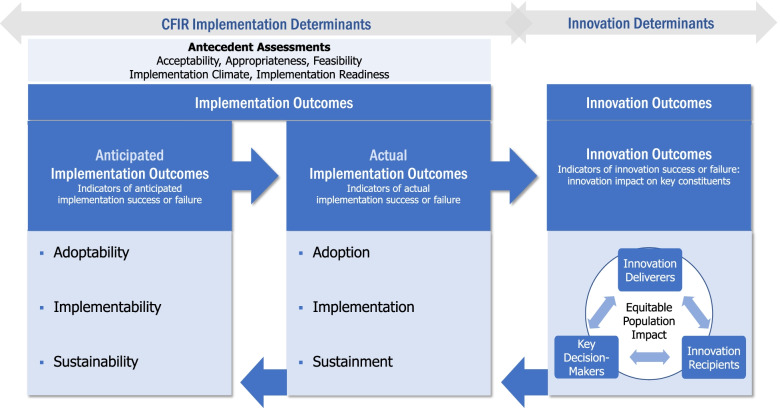
Background: The challenges of implementing evidence-based innovations (EBIs) are widely recognized among practitioners and researchers. Context, broadly defined as everything outside the EBI, includes the dynamic and diverse array of forces working for or against implementation efforts. The Consolidated Framework for Implementation Research (CFIR) is one of the most widely used frameworks to guide assessment of contextual determinants of implementation. The original 2009 article invited critique in recognition for the need for the framework to evolve. As implementation science has matured, gaps in the CFIR have been identified and updates are needed. Our team is developing the CFIR 2.0 based on a literature review and follow-up survey with authors. We propose an Outcomes Addendum to the CFIR to address recommendations from these sources to include outcomes in the framework. Main text: We conducted a literature review and surveyed corresponding authors of included articles to identify recommendations for the CFIR. There were recommendations to add both implementation and innovation outcomes from these sources. Based on these recommendations, we make conceptual distinctions between (1) anticipated implementation outcomes and actual implementation outcomes, (2) implementation outcomes and innovation outcomes, and (3) CFIR-based implementation determinants and innovation determinants. Conclusion: An Outcomes Addendum to the CFIR is proposed. Our goal is to offer clear conceptual distinctions between types of outcomes for use with the CFIR, and perhaps other determinant implementation frameworks as well. These distinctions can help bring clarity as researchers consider which outcomes are most appropriate to evaluate in their research. We hope that sharing this in advance will generate feedback and debate about the merits of our proposed addendum.
Overview
The claims and statistics of this paper haven’t been checked yet.
Free: it reads the open-access text and checks the first 5 claims that cite a source we can check. Create a free account to check every claim.
Integrity signals
Registry
Cites
Statistics
Figures
Verification
Claims the paper makes
The claims and statistics of this paper haven’t been checked yet.
Free: it reads the open-access text and checks the first 5 claims that cite a source we can check. Create a free account to check every claim.
Claims other papers make about this one
Each is checked against this paper’s own text: does it say what the citing paper says it does?
The cited source says what the claim attributes to it.
In the citing paper
“An updated Consolidated Framework for Implementation Research (CFIR) distinguished between anticipated (forward-looking) and actual (backward-looking) implementation outcomes [8].”
From Ten years of implementation outcomes research: a scoping review (2023) · cites this paper as [8]
The cited source says what the claim attributes to it.
In the citing paper
“we have reclassified these constructs to more appropriately position them as antecedent assessments [55], on the pathway between implementation determinants and outcomes in the CFIR Outcomes Addendum [19].”
From The updated consolidated framework for implementation research based on user feedback (2022) · cites this paper as [19]
The cited source says what the claim attributes to it.
In the citing paper
“several users suggested that the CFIR be expanded to include (1) implementation and innovation outcomes and (2) determinants to innovation outcomes collected from recipients [19].”
From The updated consolidated framework for implementation research based on user feedback (2022) · cites this paper as [19]
Self-check
Percentages, sums and reported differences re-computed from the paper’s own numbers.
The self-check needs the paper’s full text.
Citations
Cites
Damschroder, L. J., Aron, D. C., Keith, R. E., Kirsh, S. R., Alexander, J. A., & Lowery, J. C. (2009) · Implementation Science · doi:10.1186/1748-5908-4-50 · Cited by 14,496 · cited 2×
“The original 2009 article invited critique in recognition of the need for the framework to evolve [2].”
BackgroundSelf-citationValente, T. W. (2003) · Genetics in Medicine · doi:10.1097/01.gim.0000061743.67794.c4 · Cited by 13,723
Proctor, E., Silmere, H., Raghavan, R., Hovmand, P., Aarons, G., Bunger, A., Griffey, R., & Hensley, M. (2011) · Administration and Policy in Mental Health and Mental Health Services Research · doi:10.1007/s10488-010-0319-7 · Cited by 8,721 · cited 11×
“Proctor et al.’s Implementation Outcomes Framework (IOF) defines Adoption as “the intention, initial decision, or action to try or employ an innovation” [13].”
BackgroundMethodInfluentialThe Triple Aim: Care, Health, And Cost
Berwick, D. M., Nolan, T. W., & Whittington, J. (2008) · Health Affairs · doi:10.1377/hlthaff.27.3.759 · Cited by 5,136 · cited 1×
“Consideration of clinicians (and other employees) motivated evolution of the “Triple Aim” (enhancing patient experience, improving population health, and reducing costs) [35] to the “Quadruple Aim,” which added an aim of improving the work-life and well-being of clinicians and staff [36].”
BackgroundMaking sense of implementation theories, models and frameworks
Nilsen, P. (2015) · Implementation Science · doi:10.1186/s13012-015-0242-0 · Cited by 4,447 · cited 1×
“Theories that guide conceptualization of context abound and are often encapsulated within determinant frameworks [4, 5]; these frameworks delineate determinants (i.”
BackgroundCurran, G. M., Bauer, M., Mittman, B., Pyne, J. M., & Stetler, C. (2012) · Medical Care · doi:10.1097/mlr.0b013e3182408812 · Cited by 4,058 · cited 1×
“, clinical trialists versus implementation scientists) to translate innovations more quickly into practice [49].”
BackgroundFrom Triple to Quadruple Aim: Care of the Patient Requires Care of the Provider
Bodenheimer, T., & Sinsky, C. (2014) · The Annals of Family Medicine · doi:10.1370/afm.1713 · Cited by 3,462 · cited 1×
“Consideration of clinicians (and other employees) motivated evolution of the “Triple Aim” (enhancing patient experience, improving population health, and reducing costs) [35] to the “Quadruple Aim,” which added an aim of improving the work-life and well-being of clinicians and staff [36].”
BackgroundPsychometric assessment of three newly developed implementation outcome measures
Weiner, B. J., Lewis, C. C., Stanick, C., Powell, B. J., Dorsey, C. N., Clary, A. S., Boynton, M. H., & Halko, H. (2017) · Implementation Science · doi:10.1186/s13012-017-0635-3 · Cited by 2,819 · cited 1×
“developed measures for acceptability, appropriateness, and feasibility of an innovation and highlighted their role as potential predictors of adoption or implementation [27].”
BackgroundRE-AIM Planning and Evaluation Framework: Adapting to New Science and Practice With a 20-Year Review
Glasgow, R. E., Harden, S. M., Gaglio, B., Rabin, B., Smith, M. L., Porter, G. C., Ory, M. G., & Estabrooks, P. A. (2019) · Frontiers in Public Health · doi:10.3389/fpubh.2019.00064 · Cited by 2,528
The sociology of expectations in science and technology
Borup, M., Brown, N., Konrad, K., & Van Lente, H. (2006) · Technology Analysis & Strategic Management · doi:10.1080/09537320600777002 · Cited by 1,902 · cited 2×
“They give definition to role, clarify duties, offer some shape of what to expect and how to prepare for opportunities and risks” [17].”
Background
Research works printed but not linked: 1
- 46. Petit-McClure SH, Stinson C. Disrupting dis/abilization: a critical explora- tion of research methods to combat white supremacy and ableism in education. Intersect Cri Issues Educ. 2019;3:4.
Cited by
Items 101–200 of 941
Reardon, C. M., Damschroder, L. J., Widerquist, M. A. O., Arasim, M. E., Jackson, G. L., White, B. S., Cutrona, S. L., Fix, G. M., Gifford, A. L., DeLaughter, K. L., et al. (2023) · Implementation Science Communications · doi:10.1186/s43058-022-00386-z · Cited by 13
“, factors which decisively affect the nature or outcome of something) [5].”
BackgroundMethodSelf-citationZapata, J. P., Zamantakis, A., & Queiroz, A. A. F. L. N. (2023) · Journal of Racial and Ethnic Health Disparities · doi:10.1007/s40615-023-01678-3 · Cited by 13
“We organized the findings using the Updated Consolidated Framework for Implementation Research (CFIR) [28].”
Starr, L. T., Washington, K. T., Jabbari, J., Benson, J. J., Oliver, D. P., Demiris, G., & Cagle, J. G. (2023) · American Journal of Hospice and Palliative Medicine® · doi:10.1177/10499091231191114 · Cited by 13
“24 Proctor ’ s model of implementation research links intervention and implementation strategies with 3 types of outcomes, including implementation outcomes (e.g., feasibility, acceptability), service outcomes (e.g., effectiveness, person-centeredness), and client outcomes (e.g., satisfaction,…”
BackgroundMethodAllen, C. G., Sterba, K. R., Norman, S., Jackson, A., Hunt, K. J., McMahon, L. L., & Judge, D. P. (2023) · Implementation Science Communications · doi:10.1186/s43058-023-00500-9 · Cited by 13
Minteer, S. A., Cheville, A. L., Tesch, N. K., Griffin, J. M., Austin, J. D., Mitchell, S. A., Leppin, A. L., & Ridgeway, J. L. (2023) · Supportive Care in Cancer · doi:10.1007/s00520-023-08114-6 · Cited by 13
Kamran, R., Jackman, L., Goodwin, C., Laws, A., Stepney, M., Harrison, C. J., Jain, A., & Rodrigues, J. N. (2024) · BMJ Open Quality · doi:10.1136/bmjoq-2024-002777 · Cited by 13
“See: https://creativecommons.org/ licenses/by/4.0/.”
InfluentialBuilding an implementation strategy for community-based rehabilitation for mental health in Colombia
Agudelo‐Hernández, F., Andrade, R. M. R., & Giraldo-Álvarez, A. B. (2024) · International Journal of Evidence-Based Healthcare · doi:10.1097/xeb.0000000000000431 · Cited by 13
Primary care perspectives on prescribing anti‐obesity medication for adolescents
Chivate, R., Schoemer, P. L., Ragavan, M. I., Ray, K. N., Bensignor, M. O., Goldschmidt, A. B., & Vajravelu, M. E. (2024) · Pediatric Obesity · doi:10.1111/ijpo.13146 · Cited by 13
“15 Our use of clinical vignettes provides insights into factors driving clinical decision-making about AOM.”
State Policies that Impact the Design of Children’s Mental Health Services: A Modified Delphi Study
Nelson, K. L., Powell, B. J., Langellier, B. A., Lê‐Scherban, F., Shattuck, P. T., Hoagwood, K., & Purtle, J. (2022) · Administration and Policy in Mental Health and Mental Health Services Research · doi:10.1007/s10488-022-01201-6 · Cited by 13
“, service policies, funding constraints, social policies) on the receipt and the sustainability of evidence-based practices (Aarons et al., 2011; Damschroder et al., 2022; Raghavan et al., 2008).”
BackgroundSmith, J. A., Braithwaite, J., O'Brien, T. A., Smith, S., Tyrrell, V. J., Mould, E. V. A., Long, J. C., & Rapport, F. (2022) · Qualitative Health Research · doi:10.1177/10497323221120501 · Cited by 13
“RHIP should now be added to the repertoire of readily measurable, qualitative indicators helping to mature implementation science frameworks (Damschroder et al., 2022; Nevedal et al., 2021) and enhance our ability to rapidly understand both implementation and trial outcomes (Anderson et al.”
BackgroundInfluentialJonnergård, A., Björkman, I., Forsgren, E., Feldthusen, C., Lundberg, M., & Wallengren, C. (2024) · BMC Medical Education · doi:10.1186/s12909-024-05885-2 · Cited by 12
“In HEI, programme directors are engaged in leadership as academic leaders and key decisions makers in the implementation of change [27].”
BackgroundMethodCrawshaw, J., Callum, J. L., CHARGÉ, S. B. P., Lorencatto, F., Presseau, J., Raza, S., Relke, N., Wolfe, A., & Stanworth, S. J. (2025) · Transfusion · doi:10.1111/trf.18234 · Cited by 12
“29 For this step, we can once again leverage existing frameworks from implementation science such as the Consolidated Framework for Implementation Outcomes Addendum 66 or the Reach, Effectiveness, Adoption, Implementation, and Maintenance framework 67,68 to guide the selection of key implementation outcomes.”
Chang, J., Chen, S., Li, A., Yang, X., Luo, H., Yilamu, M., Fu, B., Xu, N., Liu, J., & Tian, H. (2025) · Frontiers in Public Health · doi:10.3389/fpubh.2025.1569855 · Cited by 12
“Compared to frameworks such as RE-AIM or PARIHS, CFIR provides a more structured approach to assessing the contextual, behavioral, and organizational dynamics that influence implementation outcomes (22, 27).”
Wideman, T. H., Bostick, G. P., Miller, J., Thomas, A., Bussières, A., Walton, D. M., Tousignant‐Laflamme, Y., Carlesso, L. C., Hunter, J. P., Perreault, K., et al. (2022) · Canadian Journal of Pain · doi:10.1080/24740527.2022.2056006 · Cited by 12
Cole, A., Adams, D. R., Ben‐David, S., Sapiro, B., Villodas, M. L., Stanhope, V., Jaccard, J. J., & Munson, M. R. (2023) · Administration and Policy in Mental Health and Mental Health Services Research · doi:10.1007/s10488-023-01254-1 · Cited by 12
Albers, B., Auer, R., Caci, L., Nyantakyi, E., Plys, E., Podmore, C., Riegel, F., Selby, K. J., Walder, J., & Clack, L. (2023) · Systematic Reviews · doi:10.1186/s13643-023-02193-6 · Cited by 12
“Implementation determinants are the barriers and facilitators that, at different levels of an implementing system, can influence the outcomes of an implementation [25, 26].”
BackgroundGlobal use of electronic patient-reported outcome systems in nephrology: a mixed methods study
Anderson, N. E., Kyte, D. G., McMullan, C., Cockwell, P., Aiyegbusi, O. L., Verdi, R., & Calvert, M. (2023) · BMJ Open · doi:10.1136/bmjopen-2022-070927 · Cited by 12
Cardona, M. I., Monsees, J., Schmachtenberg, T., Grünewald, A., & Thyrian, J. R. (2023) · PLoS ONE · doi:10.1371/journal.pone.0289737 · Cited by 12
“Thus, care practice and future PA initiatives for PwD should capture and incorporate strategies to enhance PA provider’s motivation, knowledge and beliefs about the intervention and self-efficacy as determinants for successful implementation, as mentioned in the literature [48].”
The sustainability of two departmental health insurance units in Senegal: A qualitative study
Ridde, V., Kane, B., Mbow, N. B., Senghor, I., & Faye, A. (2023) · SSM - Health Systems · doi:10.1016/j.ssmhs.2023.100006 · Cited by 12
Oche, O., Murry, L. T., Keller, M. S., Pevnick, J. M., Schnipper, J. L., Nguyen, A., Ko, E. M., & Kennelty, K. A. (2024) · Research in Social and Administrative Pharmacy · doi:10.1016/j.sapharm.2024.04.009 · Cited by 12
Improving Nursing Home Disaster Readiness Through Implementation Science
Bell, S. A., Inloes, J. B., Donnelly, J., Wasserman, M., & Wyte‐Lake, T. (2023) · Journal of the American Medical Directors Association · doi:10.1016/j.jamda.2023.02.004 · Cited by 11
Valentine, S. E., Fuchs, C. H., Olesinski, E. A., Sarkisova, N., Godfrey, L. B., & Elwy, A. R. (2023) · Implementation Science Communications · doi:10.1186/s43058-023-00426-2 · Cited by 11
“, predictors of future implementation success/failure), which would inform adaptations prior to trial start that would maximize actual implementation success [48].”
BackgroundInterventions for improving critical care in low- and middle-income countries: a systematic review
Wagstaff, D., Arfin, S., Korver, A., Chappel, P., Rashan, A., Haniffa, R., & Beane, A. (2024) · Intensive Care Medicine · doi:10.1007/s00134-024-07377-9 · Cited by 11
Merle, J. L., Sloss, E. A., Sanuade, O. A., Lengnick‐Hall, R., Meza, R. D., Golden, C. A., Simmons, R. G., Velazquez, A. I., Hill, J. L., Estabrooks, P. A., et al. (2024) · Frontiers in Health Services · doi:10.3389/frhs.2024.1490764 · Cited by 11
Implementing the Eat, Sleep, Console Model of Care: A Scoping Review
Gallant, S. M., DeCoste, K. L., Norris, N., McConnell, E., Al-Rassi, J., Churchill, M., Higgins, A., Rothfus, M. A., Mann, C., Benoit, B., et al. (2025) · Hospital Pediatrics · doi:10.1542/hpeds.2024-008078 · Cited by 11
Korfmacher, M., Hartwell, C., Hill, K., Matthews-Trigg, N., Hess, J. J., Nori‐Sarma, A., Wellenius, G. A., & Errett, N. A. (2025) · BMJ Open · doi:10.1136/bmjopen-2024-089093 · Cited by 11
Wu, E., Lee, Y. G., Vinogradov, V., Kali, S., Yelkeyev, A., Goddard‐Eckrich, D., Dasgupta, A., & Hess, L. (2022) · Research on Social Work Practice · doi:10.1177/10497315221120605 · Cited by 11
“…that cut across prominent implementation science frameworks, such as the Consolidated Framework for Implementation Research (CFIR) (Damschroder et al., 2009, 2022; Kirk et al., 2015); Integrated-Promoting Action on Research Implementation in Health Services (i-PARIHS) (Harvey &…”
BackgroundKaitz, J. E., DeLaughter, K. L., Deeney, C., Cutrona, S. L., Hogan, T. P., Gifford, A. L., Jackson, G. L., White, B. S., King, H. A., Reardon, C. M., et al. (2023) · The Permanente Journal · doi:10.7812/tpp/22.154 · Cited by 11
“Improved innovation can have broad direct impacts on the quadruple aim: enhancing patient experience, improving population health, reducing costs, and improving staff experiences.(7,8) Barriers to innovation include limited resources, insufficient leadership involvement or support,(6) and limited knowledge and trainin…”
BackgroundSelf-citationMiddleton, J. W., Arora, M., Sinnott, K. A., Bourke, J., McCormick, M., O’Leary, D., Weber, G., Lembke, T., & Craig, A. R. (2024) · Topics in Spinal Cord Injury Rehabilitation · doi:10.46292/sci23-00042 · Cited by 11
Implementing a Clinical Pathway for Needs Assessment and Supportive Care Interventions
Stout, N. L., Alfano, C. M., Liu, R., Dixit, N., & Jefford, M. (2024) · JCO Oncology Practice · doi:10.1200/op.23.00482 · Cited by 11
Sexual and reproductive health implementation research in humanitarian contexts: a scoping review
Norton, A., & Tappis, H. (2024) · Reproductive Health · doi:10.1186/s12978-024-01793-2 · Cited by 11
“A CFIR Outcomes Addendum was also published in 2022, based on recommendations for the CFIR to add outcomes and intended to be used as a complement to the CFIR determinants framework [91].”
MethodComber, E. R., Keogh, S. J., Nguyen, L. N., Byrnes, J., & Ullman, A. J. (2024) · Journal of Advanced Nursing · doi:10.1111/jan.16268 · Cited by 11
“A key consideration for generating positive outcomes is also the idea of ‘innovation outcomes', as proposed by Damschroder et al. ( 2022 ) as an addition to the widely used Consolidated Framework for Implementation Research (Damschroder et al., 2022 ).”
Zamantakis, A., Merle, J. L., Queiroz, A. A. F. L. N., Zapata, J. P., Deskins, J. S., Pachicano, A. M., Mongrella, M. C., Li, D. H., Benbow, N., Gallo, C. G., et al. (2024) · Implementation Science Communications · doi:10.1186/s43058-024-00638-0 · Cited by 11
Nnodu, O. E., Munung, N. S., Chirande, L., Chunda-Liyoka, C. M., Kiguli, S., Sarfo, F. S., Touré, B. A., Balandya, E., Guindo, A., Kuona, P., et al. (2024) · BMJ Open · doi:10.1136/bmjopen-2024-089056 · Cited by 11
“In addition to drawing on the CFIR, this study will use the implementation outcome model 26 27 to inform data analysis and interpretation.”
Morrow, A., Baffsky, R., Tucker, K., Parkinson, B., Steinberg, J., Chan, P., Kennedy, E., Debono, D. S., Hogden, E., & Taylor, N. J. (2024) · BMC Health Services Research · doi:10.1186/s12913-024-11857-5 · Cited by 11
Glasgow, R. E., Brtnikova, M., Dickinson, L. M., Carroll, J. K., & Studts, J. L. (2023) · Journal of Behavioral Medicine · doi:10.1007/s10865-023-00400-2 · Cited by 11
“Other steps could include (1) evaluating if actual ‘observed feasibility’ (implementation consistency) and impact (effectiveness) are similar to these clinician ratings of projected impact and feasibility (Damschroder et al., 2022; Reilly et al., 2020) and (2) investigating additional ERIC strategies (Powell et al.”
BackgroundSHARING Choices: Lessons Learned from a Primary-Care Focused Advance Care Planning Intervention
Colburn, J. L., Scerpella, D. L., Chapin, M., Walker, K. A., Dy, S. M., Saylor, M. A., Sharma, N., Rebala, S., Anderson, R. E., McGuire, M., et al. (2023) · Journal of Pain and Symptom Management · doi:10.1016/j.jpainsymman.2023.04.014 · Cited by 11
Hübsch, C., Clarenbach, C. F., Chadwick, P., Peterer, M., Beckmann, S., Naef, R., & Schmid‐Mohler, G. (2023) · International Journal of COPD · doi:10.2147/copd.s404712 · Cited by 11
“The literature on outcomes in implementation research continues to develop and recent publications describe acceptability, appropriateness, and feasibility as possible predictors or determinants of implementation, classified as “antecedent assessments” rather than as direct implementation outcomes.(34,35) Our work is…”
Programs to Address Violence for Military Families: a Systematic Review
Dodge, J., Wortham, W. K., Kale, C., Williamson, V., Ross, A. M., Maher, S., Kononowech, J., Winters, J. J., & Sullivan, K. (2023) · Journal of Family Violence · doi:10.1007/s10896-023-00586-8 · Cited by 10
Moore, T. R., Hennessy, E., Chusan, Y. A. C., Ashcraft, L. E., & Economos, C. D. (2024) · Annals of Epidemiology · doi:10.1016/j.annepidem.2024.12.002 · Cited by 10
Bian, D., Zhang, W., Yu, C., Han, X. J., Zhao, B., Abulikemu, P., Shi, C., Wang, Y., & Li, G. (2025) · BMC Geriatrics · doi:10.1186/s12877-025-05867-z · Cited by 10
Häfner, J., Tokgöz, P., & Dockweiler, C. (2025) · Healthcare · doi:10.3390/healthcare13212717 · Cited by 10
“These domains interact dynamically throughout the stages of the implementation process itself (domain 5: Process), which includes planning, execution, reflection, and evaluation [26,27].”
Navigating qualitative methods choices in dissemination and implementation research
Holtrop, J. S., Holliman, B. D., & Hamilton, A. B. (2025) · Implementation Science · doi:10.1186/s13012-025-01476-x · Cited by 11
“…the Exploration, Preparation, Implementation, Sustainment (EPIS) Framework, [24] and still others focus on determinants influencing outcomes such as the Practical Robust Implementation and Sustainability Model (PRISM) [13, 25] or Consolidated Framework for Implementation Research (CFIR) [26, 27].”
Gordon, E. J., Uriarte, J. J., Anderson, N., Smith, J. D., Caicedo, J. C., & Shumate, M. (2022) · Journal of Clinical and Translational Science · doi:10.1017/cts.2022.378 · Cited by 10
“Sustainment – the continued delivery of implementation strategies over time while continuing to produce intended outcomes despite planned or unplanned intervention adaptations [4] – is an important facet of translational science aimed at preventing the decline and termination of EBIs [5,6].”
BackgroundA Perspective on Implementation Outcomes and Strategies to Promote the Uptake of COVID-19 Vaccines
Pilar, M. R., Elwy, A. R., Lushniak, L. M., Huang, G. C., McLoughlin, G. M., Hooley, C., Nadesan-Reddy, N., Sandler, B., Moshabela, M., Alonge, O., et al. (2022) · Frontiers in Health Services · doi:10.3389/frhs.2022.897227 · Cited by 10
Memmini, A. K., Kinnett-Hopkins, D., Hasson, R. E., Rifat, S. F., & Broglio, S. P. (2023) · Journal of Head Trauma Rehabilitation · doi:10.1097/htr.0000000000000862 · Cited by 10
Lâm, S., Dodd, W., Nguyen‐Viet, H., Unger, F., Le, T. T.-H., Dang-Xuan, S., Skinner, K. A., Papadopoulos, A., & Harper, S. L. (2023) · Evaluation · doi:10.1177/13563890231156954 · Cited by 10
“…Institute for Health Research, Consolidated Framework for Implementation Research, Context and Implementation of Complex Interventions framework) (Damschroder et al., 2009, 2022; Moore et al., 2014; Pfadenhauer et al., 2017; Skivington et al., 2021) currently do not explicitly name climate…”
BackgroundInfluentialDodge, J., Youles, B., Caldararo, J., Sears, E. D., Caverly, T. J., Ho, P. M., Shimada, S. L., Kaboli, P. J., ALBRIGHT, K. J., Robinson, S. A., et al. (2023) · Journal of General Internal Medicine · doi:10.1007/s11606-023-08115-5 · Cited by 10
Self-citationRosenberg, J., Ryan, P. M., Brown, C., Schaffer, R., O’Brien, C., Ganjavi, F., & Sharifi, M. (2023) · Health Education Research · doi:10.1093/her/cyad034 · Cited by 10
Rommerskirch‐Manietta, M., Manietta, C., Purwins, D., Braunwarth, J. I., Quasdorf, T., & Roes, M. (2023) · Implementation Science Communications · doi:10.1186/s43058-023-00486-4 · Cited by 10
“Third, we need to point out that an update of the CFIR [104] and the CFIR Outcomes Addendum [110] were published after the completion of our review (2021).”
BackgroundOpare‐Addo, P. A., Oppong, C., Gyamfi, R. A., Aikins, M., Nsoh, L. N., Bediako, S. A., Attafuah, E., Sarfo, K., Sampah, A. K., Boakye-Yiadom, J., et al. (2023) · Journal of Stroke and Cerebrovascular Diseases · doi:10.1016/j.jstrokecerebrovasdis.2023.107394 · Cited by 10
Strid, E. N., Wallin, L., & Nilsagård, Y. E. (2024) · Scandinavian Journal of Primary Health Care · doi:10.1080/02813432.2023.2301556 · Cited by 10
“…practice were primarily coded into the cFiR constructs: Readiness for implementation and implementation climate within the inner setting. these constructs have been removed in the updated cFiR and reclassified as antecedent assessments between implementation determinants and outcomes [58,59].”
MethodFrank, H. E., Guzman, L. E., Ayalasomayajula, S., Albanese, A. M., Dunklee, B., Harvey, M., Bouchard, K. L., Vadiveloo, M. K., Yaroch, A. L., Scott, K., et al. (2024) · Pilot and Feasibility Studies · doi:10.1186/s40814-024-01467-7 · Cited by 10
“Study measurement will be guided by the CFIR 2.0 Outcomes Addendum [51], which delineates both implementation and innovation (effectiveness) outcomes.”
MethodInfluentialOrchowski, L. M., Paszek, C., Lopez, R. J. M., Oesterle, D. W., Pearlman, D. N., Rizzo, C. J., Elwy, A. R., Berkowitz, A. D., Malone, S., & Fortson, B. L. (2023) · Journal of Community Psychology · doi:10.1002/jcop.23050 · Cited by 11
Bershteyn, A., Resar, D., Kim, H., Platais, I., & Mullick, S. (2023) · Frontiers in Reproductive Health · doi:10.3389/frph.2023.1169110 · Cited by 10
Obiezu‐Umeh, C., Ogbenna, A. A., Johnson, L. S., Caputo, M., Hirschhorn, L. R., Onyeka, T. C., Akinwale, M. O., Ndukwu, G. U., Kolawole, I. K., Alao, A. S., et al. (2025) · BMC Health Services Research · doi:10.1186/s12913-025-13138-1 · Cited by 9
“The Consolidated Framework for Implementation Research (CFIR) provides a robust theoretical framework to systematically explore and understand these determinants across five key domains [20, 21].”
Community-Based Efforts to Reduce Violence: A Scoping Review on the Implementation of Cure Violence
Solomon, S. R., Roman, C. G., Davey-Rothwell, M. A., Abaya, R., Webster, D. W., & Frattorolli, S. (2025) · INQUIRY The Journal of Health Care Organization Provision and Financing · doi:10.1177/00469580251360956 · Cited by 9
“26 40-42 The publications examining implementation strategies focused explicitly on conflict mediation and street outreach, and no studies tested strategies against each other.”
Chen, K., Rogers, K., Haberkorn, W. J., Lew, M., Kanegan, J., Nam, H., Chantra, J., Asch, S. M., & Lee, G. M. (2026) · BMJ Quality & Safety · doi:10.1136/bmjqs-2025-019495 · Cited by 9
“30 32 Unlike many AI evaluations that primarily evaluate its technical performance, this project also assessed integration and adoption in a real-world healthcare setting by engaging frontline stakeholders and designing outputs to support existing workflows.”
Kegler, M. C., Rana, S., Vandenberg, A. E., Hastings, S. N., Hwang, U., Eucker, S. A., & Vaughan, C. P. (2022) · Frontiers in Health Services · doi:10.3389/frhs.2022.1053489 · Cited by 9
Piotrowski, A., Coenen, J., Rupietta, C., Basten, J., Muth, C., Söling, S., Zimmer, V., Karbach, U., Kellermann-Mühlhoff, P., Köberlein–Neu, J., et al. (2023) · BMC Health Services Research · doi:10.1186/s12913-023-10156-9 · Cited by 10
“The primary strength of the CFIR is its integration of the inner and outer settings, as well as, in the newest version, implementation and innovation factors [55].”
BackgroundMethodMinian, N., Gayapersad, A., Coroiu, A., Dragonetti, R., Zawertailo, L. A., Zaheer, J., O’Neill, B. G., Lange, S., Thomson, N., Crawford, A. S., et al. (2024) · Frontiers in Psychiatry · doi:10.3389/fpsyt.2024.1286078 · Cited by 10
MacKenzie, N. E., Chambers, C. T., Cassidy, C. E., Corkum, P. V., McGrady, M. E., Parker, J. A., & Birnie, K. A. (2024) · BMC Health Services Research · doi:10.1186/s12913-024-10782-x · Cited by 9
“The findings relate to many of the CFIR constructs [25], supporting the relevance of this framework to understand KM efforts within pediatric pain.”
BackgroundMethodBourke, J., Sinnott, K. A., Arora, M., Craig, A. R., & Middleton, J. W. (2024) · BMC Health Services Research · doi:10.1186/s12913-024-10847-x · Cited by 9
“Indeed, the recently updated CFIR has called for innovation recipient perspectives to be a priority when considering contextual factors [10, 11].”
BackgroundXiao, J., Huang, S., Wáng, Q., Tan, S., Chen, L., Yuan, H., Xiang, D., Zhang, B., Li, X., Guo, Y. J., et al. (2024) · Journal of Epidemiology and Global Health · doi:10.1007/s44197-024-00244-2 · Cited by 9
“Consolidated Framework for Implementation Research (CFIR), integrating extensive implementation models and frameworks, is a popular and practical determinant framework [13].”
A formative evaluation to inform integration of psychiatric care with other gender-affirming care
Goetz, T. G., & Wolk, C. B. (2024) · BMC Family Practice · doi:10.1186/s12875-024-02472-8 · Cited by 9
“Qualitative themes were organized by CFIR domains [28, 29]: (1) Outer setting: the broader context in which the inner setting exists, including systems-level factors and the socio-political environment; (2) Inner Setting: where the intervention is implemented, in this case clinics providing…”
MethodBiliūnaitė, I., van Gestel, L. C., Hoogendoorn, P., & Adriaanse, M. A. (2024) · Journal of Health Psychology · doi:10.1177/13591053241258205 · Cited by 9
“Yet, studying implementation factors early on is necessary for successful implementation of innovations (Damschroder et al., 2022) making the use of hypothetical situations with will-ingness as main dependent variable an inevitable and important step.”
Arrossi, S., Straw, C., Antelo, V. S., Paolino, M., Baena, A., Forestier, M., Rol, M., & Almonte, M. (2024) · BMC Cancer · doi:10.1186/s12885-024-12650-7 · Cited by 9
“The themes explored were selected and analyzed using the domains and constructs of the Consolidated Framework for Implementation Research (CFIR) [17], which offers analytical tools appropriated to understand contextual factors working for or against implementation efforts.”
MethodReal-world public health interventions demonstrate how research evidence informs program scale-up
Crane, M. A., Lee, K., Wolfenden, L., Phongsavan, P., & Bauman, A. E. (2024) · Health Promotion International · doi:10.1093/heapro/daae111 · Cited by 9
“Outcome variables included information on (i) the population impact of the intervention; (ii) the intervention’s sustainment; and (iii) the implementation impact—as described by the CFIR outcomes framework (Damschroder et al ., 2022).”
BackgroundMethodInfluentialVidic, N., McGlynn, A., Abdi, F., Tam, C. W. M., Crampton, R. M., Lim, K.-S., Palmer, E. E., Taylor, N. J., & Harris‐Roxas, B. (2025) · Journal of Primary Care & Community Health · doi:10.1177/21501319241311567 · Cited by 9
Chays‐Amania, A., Schwingrouber, J., Melnyk, B. M., Haller, P. H., Soler, J., & Colson, S. (2025) · Worldviews on Evidence-Based Nursing · doi:10.1111/wvn.70050 · Cited by 10
Ridgeway, J. L., Gerdes, E. O. W., Dodge, A., Liedl, C. P., Juntunen, M. B., Sundt, W. J. S., Glasgow, A. E., Lampman, M. A., Fink, A. L., Severson, S. B., et al. (2023) · Trials · doi:10.1186/s13063-022-07034-w · Cited by 9
“A coding framework will be developed, starting with a priori topics in the interview guide and constructs from theoretical frameworks like CFIR.”
MethodInfluentialMing, D. Y., Wong, W., Jones, K. A., Antonelli, R. C., Gujral, N., Gonzales, S. E., Rogers, U. A., Ratliff, W., Shah, N., & King, H. A. (2023) · JMIR Research Protocols · doi:10.2196/46847 · Cited by 9
Economidis, G., Eades, A., Shakeshaft, A. P., & Farnbach, S. (2023) · PLoS ONE · doi:10.1371/journal.pone.0295204 · Cited by 10
Patwari, S. Q. (2022) · Cuestiones de Fisioterapia · doi:10.48047/4feprv91 · Cited by 9
A Positive Distress Screen…Now What? An Updated Call for Integrated Psychosocial Care
Tsao, P. A., Fann, J. R., Nevedal, A., Bloor, L. E., Krein, S. L., & Caram, M. E. V. (2023) · Journal of Clinical Oncology · doi:10.1200/jco.22.02719 · Cited by 9
Implementation-minded policy making
Baan, A.-M., Lewis, J., Wills, E., Ott, E., Lloyd, A., & Bristow, D. (2023) · ORCA Online Research @Cardiff (Cardiff University) · doi:10.54454/26021601 · Cited by 9
Pol, B. J. V. D. (2025) · Expert Review of Molecular Diagnostics · doi:10.1080/14737159.2025.2453505 · Cited by 8
“Barriers to adoption and utilization must be considered, preferably prior to choosing the testing strategy [53].”
Edmunds, S. R., Renaud, M., Goodrum, N. M., Bradshaw, J. L., Cooper, D. K., & Ingersoll, B. R. (2025) · Behavioral Sciences · doi:10.3390/bs15101336 · Cited by 8
“Further, CFIR 2.0 makes the distinction that client factors are innovation determinants, while deliverer factors are implementation determinants (Damschroder et al., 2022).”
InfluentialKafyra, M., Kalafati, I. P., Bruins, S., Episkopou, C., Gryspeerdt, D., Heggie, L., Kaltenbrunner, S., Kampshoff, S., Karaglani, E., Prändl, H. Ö., et al. (2026) · Obesity Reviews · doi:10.1111/obr.70083 · Cited by 8
Chamberlain, S. A., Warner, G., Andrew, M. K., Hande, M. J., Hubley, E., Weeks, L. E., & Keefe, J. M. (2022) · The Gerontologist · doi:10.1093/geront/gnac175 · Cited by 8
“Recent research extending the CFIR aimed to elaborate and clarify the types of outcomes used with the CFIR, specifically distinguishing implementation and innovation outcomes (Damschroder et al., 2022).”
Higashi, R. T., Kruse, G. R., Richards, J. A., Sood, A., Chen, P. M., Quirk, L., Kramer, J., Tiro, J. A., Tuzzio, L., Haas, J. S., et al. (2023) · International Journal of Qualitative Methods · doi:10.1177/16094069231157345 · Cited by 8
“Few have qualitatively studied clinical care delivery processes across diverse organizational settings, (Burau et al., 2018; Damschroder et al., 2009, 2022; Freeman et al., 2019) or across the cancer care continuum (Anhang Price et al., 2010; Scott, 2012).”
Implementation costs of sugary drink policies in the United States
Smith, N., Lich, K. H., Ng, S. W., Hall, M. G., Trogdon, J. G., & Frerichs, L. (2023) · Journal of Public Health Policy · doi:10.1057/s41271-023-00435-4 · Cited by 8
“Other implementation science frameworks provide alternative ways to conceptualize the stages of implementation [67] or determinants of successful implementation, and thus what sorts of costs should be considered [68].”
BackgroundSunguya, B. F., Ngowi, J. E., Njiro, B. J., Munishi, C. G., Ndumwa, H. P., Kengia, J. T., Kapologwe, N., Deng, L., Timbrell, A., Kitinya, W. J., et al. (2024) · BMJ Open · doi:10.1136/bmjopen-2023-073859 · Cited by 8
Mazariego, C. G., McKay, S., Tyedmers, E., Kelada, L., McGill, B. C., Daly, R., Wakefield, C. E., Ziegler, D. S., & Taylor, N. J. (2024) · Frontiers in Medicine · doi:10.3389/fmed.2024.1332434 · Cited by 8
Rudrabhatla, A., Flowers, S. N., Becker‐Haimes, E. M., & Sanchez, A. L. (2024) · Current Developmental Disorders Reports · doi:10.1007/s40474-024-00306-x · Cited by 8
“Innovation characteristics posited to influence equitable care delivery within the HEIF include usability, clarity, underlying knowledge sources, degree of fit with existing practices, and evidence for the innovation [25, 31].”
Dawson, S., Oster, C., Page, M. L., & George, S. (2024) · Health Expectations · doi:10.1111/hex.70037 · Cited by 8
“The CFIR is a determinant framework that seeks to understand what influences implementation outcomes [31, 42, 43].”
BackgroundMethodInfluentialLogie, C. H., Loutet, M. G., Okumu, M., MacKenzie, F., Coelho, M., Lukone, S. O., Kisubi, N., Malhi, A., Kyambadde, P., & Mbuagbaw, L. (2024) · Journal of the International Association of Providers of AIDS Care (JIAPAC) · doi:10.1177/23259582241307057 · Cited by 7
Jeppesen, L. S., Melcher, J. N. S., Smedegaard, S., Nielsen, G., Mandelid, M. B., Stolpe, M. N., Wienecke, J., & Bugge, A. (2025) · International Journal of Environmental Research and Public Health · doi:10.3390/ijerph22010067 · Cited by 8
“Antecedent assessments of implementation can work as a preliminary evaluation of the actual implementation and may predict if an intervention will be adopted and implemented with fidelity [44].”
InfluentialWagstaff, D., Amuasi, J., Arfin, S., Aryal, D., Nor, M. B. M., Bonney, J., Dondorp, A. M., Dongelmans, D. A., Dullawe, L., Fazla, F., et al. (2025) · Implementation Science · doi:10.1186/s13012-024-01413-4 · Cited by 8
Vurrabindi, D., Hilderley, A. J., Kirton, A., Andersen, J. C., Cassidy, C. E., Kingsnorth, S., Munce, S., Agnew, B., Cambridge, L., Herrero, M., et al. (2025) · BMC Health Services Research · doi:10.1186/s12913-025-12621-z · Cited by 8
“Previous implementation science literature outlines that when staff members value and cater to the caregiver’s needs, implementation is supported [28, 32, 45].”
InfluentialZielinski, M. J., Allison, M. K., Smith, M. K. S., Curran, G. M., Kaysen, D. L., & Kirchner, J. E. (2022) · Journal of Traumatic Stress · doi:10.1002/jts.22898 · Cited by 8
Contextual and Policy Influences on the Implementation of Prenatal Care Coordination
Greene, M. Z., Gillespie, K. H., & Dyer, R. L. (2023) · Policy Politics & Nursing Practice · doi:10.1177/15271544231159655 · Cited by 8
“Our findings lend evidence to support the need for developing the science of dissemination and implementation in public health policies and programs (Damschroder et al., 2022; Scheirer & Dearing, 2011), and specifically in public health nursing interventions.”
ResultKuske, S., Willmeroth, T., Schneider, J., Belibasakis, S., Roes, M., Borgmann, S. O., & Febrero, M. I. C. (2022) · BMJ Open Quality · doi:10.1136/bmjoq-2021-001741 · Cited by 8
“…adverse events and showed that ‘perceived usefulness’ (acceptability or acceptance) is significantly associated with the reporting rate and that ‘perceived ease of use’ (feasibility) is associated with both ‘behavioural intention’ (adoption) and ‘perceived usefulness’ (acceptability or acceptance).”
Clark, J. D., Bair, M. J., Belitskaya‐Lévy, I., Fitzsimmons, C., Zehm, L., Dougherty, P. E., Giannitrapani, K. F., Groessl, E. J., Higgins, D. M., Murphy, J. L., et al. (2022) · Contemporary Clinical Trials · doi:10.1016/j.cct.2022.107041 · Cited by 8
Sivakumar, B., Mak, J., Bafagih, S., & Arcand, J. (2025) · Nutrition in Clinical Practice · doi:10.1002/ncp.70020 · Cited by 7
“11 The CFIR framework can be applied at all stages of the implementation process to guide decision ‐ making to maximize implementation of an innovation.”
van der Spek, L., Breunis, L. J., Schayck, T. S.-V., Bauld, L., Ista, E., & Been, J. V. (2025) · Tobacco Control · doi:10.1136/tc-2024-059198 · Cited by 7
“111 Additionally, prospective studies are needed to investigate how the findings from this study can support the implementation of interventions.”
Bana, M., Riedo, S., & Ribi, K. (2025) · Current Oncology · doi:10.3390/curroncol32060326 · Cited by 7
“Evidence suggests that the work environment should be considered as an important factor for successful implementation [10,17,18].”
Mazariego, C. G., Gul, H., Liang, S., Kelly‐Hanku, A., Brady, B., Allida, S. M., Baffsky, R., McErlean, G., Crespo-González, C., Hodgins, M., et al. (2025) · International Journal of Evidence-Based Healthcare · doi:10.1097/xeb.0000000000000518 · Cited by 7
O'Mahony, B., Kerins, C., Barrett, C. K., Murrin, C. M., & Kelly, C. N. M. (2025) · Journal of School Health · doi:10.1111/josh.70078 · Cited by 7
“The Consolidated Framework for Implementation Research (CFIR) [37] provides a comprehensive framework for analyzing factors that influence the translation of nutrition standards into practice.”
Hung, S., Ackerley, S., Connell, L., Bayley, M. T., Best, K. L., Donkers, S. J., Dukelow, S. P., Ezeugwu, V. E., Milot, M.-H., Peters, S., et al. (2025) · Physical Therapy · doi:10.1093/ptj/pzaf111 · Cited by 7
Metadata
- Authors
- Damschroder, L. J., Reardon, C. M., Opra Widerquist, M. A., & Lowery, J.
- Affiliations
- VA Ann Arbor Healthcare System (US)
- Corresponding author
- Damschroder, Laura J.
- Venue
- Implementation Science
- Published
- 2022-01-22
- Volume
- 17
- Issue
- 1
- Pages
- 7-7
- ISSN
- 1748-5908 (ISSN-L)
- PMC
- PMC8783408
- OpenAlex
- W4206949803
- Semantic Scholar
- 08521891e3bcd553697352db930b1de39027da07
- Cited by
- 784
- References
- 61
- Citations by year
- 2026: 227 · 2025: 177 · 2024: 218 · 2023: 117 · 2022: 45
- FWCI
- 27.08
- Type
- journal article
- Language
- en
- Open access
- gold
- doi.org
- Licence
- cc-by
- creativecommons.org/licenses/by/4.0 (tdm)
- creativecommons.org/licenses/by/4.0 (vor)
- Locations
- Implementation Science (publishedVersion, cc-by)
- PubMed Central (publishedVersion, cc-by)
- PubMed (publishedVersion)
- DOAJ (DOAJ: Directory of Open Access Journals) (submittedVersion, cc-by-sa)
- Funders
- Quality Enhancement Research Initiative (QUE 15-286)
- Health Services Research and Development (LIP 20-116)
- Topics
- Health Sciences › Health Professions › General Health Professions › Health Policy Implementation Science
- Health Sciences › Health Professions › General Health Professions › Health Sciences Research and Education
- Health Sciences › Medicine › Public Health, Environmental and Occupational Health › Clinical practice guidelines implementation
- Keywords
- Consolidated Framework for Implementation Research, implementation outcomes, innovation outcomes, implementation factors, innovation determinants, evidence-based innovation, implementation context, framework evolution
- MeSH terms
- Implementation Science, Humans, Motivation
About these checks
Registry, retraction, Cites and statistics results are computed, not judged, with one exception: a printed reference that no index lists is read once by a model before it counts as a citation error. Claims are extracted by a model and kept only when their quote appears verbatim in the text; each cited source is then checked, with a model’s help, for whether it says what the claim relies on. Those verdicts can be wrong — read the claim’s quote and the cited source before relying on one.
Statistics and arithmetic are recomputed, not judged.
Confidence bands are shown only for fields calibrated on our annotated test set. None is calibrated yet, so no band is shown.
What counts as a claim ›How we measure confidence ›How we check this ›
Are you an author, or do you see a problem with this page? Request a review
Data sources
Bibliographic data: Semantic Scholar, OpenAlex, Crossref.
Contains information from the Semantic Scholar Academic Graph Datasets, made available under the ODC Attribution License (ODC-BY 1.0).
Semantic Scholar’s data is described in: Kinney, R., et al. (2023). The Semantic Scholar Open Data Platform. arXiv:2301.10140.
