

Conceptualizing outcomes for use with the Consolidated Framework for Implementation Research (CFIR): the CFIR Outcomes Addendum
Open accessThe DOI matches its Crossref record; 61 of the 61 references it cites were found in a registry or an index.
Abstract
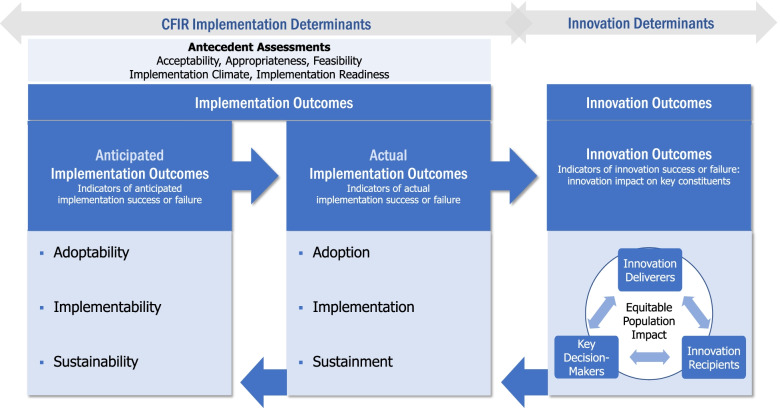
Background: The challenges of implementing evidence-based innovations (EBIs) are widely recognized among practitioners and researchers. Context, broadly defined as everything outside the EBI, includes the dynamic and diverse array of forces working for or against implementation efforts. The Consolidated Framework for Implementation Research (CFIR) is one of the most widely used frameworks to guide assessment of contextual determinants of implementation. The original 2009 article invited critique in recognition for the need for the framework to evolve. As implementation science has matured, gaps in the CFIR have been identified and updates are needed. Our team is developing the CFIR 2.0 based on a literature review and follow-up survey with authors. We propose an Outcomes Addendum to the CFIR to address recommendations from these sources to include outcomes in the framework. Main text: We conducted a literature review and surveyed corresponding authors of included articles to identify recommendations for the CFIR. There were recommendations to add both implementation and innovation outcomes from these sources. Based on these recommendations, we make conceptual distinctions between (1) anticipated implementation outcomes and actual implementation outcomes, (2) implementation outcomes and innovation outcomes, and (3) CFIR-based implementation determinants and innovation determinants. Conclusion: An Outcomes Addendum to the CFIR is proposed. Our goal is to offer clear conceptual distinctions between types of outcomes for use with the CFIR, and perhaps other determinant implementation frameworks as well. These distinctions can help bring clarity as researchers consider which outcomes are most appropriate to evaluate in their research. We hope that sharing this in advance will generate feedback and debate about the merits of our proposed addendum.
Overview
The claims and statistics of this paper haven’t been checked yet.
Free: it reads the open-access text and checks the first 5 claims that cite a source we can check. Create a free account to check every claim.
Integrity signals
Registry
Cites
Statistics
Figures
Verification
Claims the paper makes
The claims and statistics of this paper haven’t been checked yet.
Free: it reads the open-access text and checks the first 5 claims that cite a source we can check. Create a free account to check every claim.
Claims other papers make about this one
Each is checked against this paper’s own text: does it say what the citing paper says it does?
The cited source says what the claim attributes to it.
In the citing paper
“An updated Consolidated Framework for Implementation Research (CFIR) distinguished between anticipated (forward-looking) and actual (backward-looking) implementation outcomes [8].”
From Ten years of implementation outcomes research: a scoping review (2023) · cites this paper as [8]
The cited source says what the claim attributes to it.
In the citing paper
“we have reclassified these constructs to more appropriately position them as antecedent assessments [55], on the pathway between implementation determinants and outcomes in the CFIR Outcomes Addendum [19].”
From The updated consolidated framework for implementation research based on user feedback (2022) · cites this paper as [19]
The cited source says what the claim attributes to it.
In the citing paper
“several users suggested that the CFIR be expanded to include (1) implementation and innovation outcomes and (2) determinants to innovation outcomes collected from recipients [19].”
From The updated consolidated framework for implementation research based on user feedback (2022) · cites this paper as [19]
Self-check
Percentages, sums and reported differences re-computed from the paper’s own numbers.
The self-check needs the paper’s full text.
Citations
Cites
Damschroder, L. J., Aron, D. C., Keith, R. E., Kirsh, S. R., Alexander, J. A., & Lowery, J. C. (2009) · Implementation Science · doi:10.1186/1748-5908-4-50 · Cited by 14,496 · cited 2×
“The original 2009 article invited critique in recognition of the need for the framework to evolve [2].”
BackgroundSelf-citationValente, T. W. (2003) · Genetics in Medicine · doi:10.1097/01.gim.0000061743.67794.c4 · Cited by 13,723
Proctor, E., Silmere, H., Raghavan, R., Hovmand, P., Aarons, G., Bunger, A., Griffey, R., & Hensley, M. (2011) · Administration and Policy in Mental Health and Mental Health Services Research · doi:10.1007/s10488-010-0319-7 · Cited by 8,721 · cited 11×
“Proctor et al.’s Implementation Outcomes Framework (IOF) defines Adoption as “the intention, initial decision, or action to try or employ an innovation” [13].”
BackgroundMethodInfluentialThe Triple Aim: Care, Health, And Cost
Berwick, D. M., Nolan, T. W., & Whittington, J. (2008) · Health Affairs · doi:10.1377/hlthaff.27.3.759 · Cited by 5,136 · cited 1×
“Consideration of clinicians (and other employees) motivated evolution of the “Triple Aim” (enhancing patient experience, improving population health, and reducing costs) [35] to the “Quadruple Aim,” which added an aim of improving the work-life and well-being of clinicians and staff [36].”
BackgroundMaking sense of implementation theories, models and frameworks
Nilsen, P. (2015) · Implementation Science · doi:10.1186/s13012-015-0242-0 · Cited by 4,447 · cited 1×
“Theories that guide conceptualization of context abound and are often encapsulated within determinant frameworks [4, 5]; these frameworks delineate determinants (i.”
BackgroundCurran, G. M., Bauer, M., Mittman, B., Pyne, J. M., & Stetler, C. (2012) · Medical Care · doi:10.1097/mlr.0b013e3182408812 · Cited by 4,058 · cited 1×
“, clinical trialists versus implementation scientists) to translate innovations more quickly into practice [49].”
BackgroundFrom Triple to Quadruple Aim: Care of the Patient Requires Care of the Provider
Bodenheimer, T., & Sinsky, C. (2014) · The Annals of Family Medicine · doi:10.1370/afm.1713 · Cited by 3,462 · cited 1×
“Consideration of clinicians (and other employees) motivated evolution of the “Triple Aim” (enhancing patient experience, improving population health, and reducing costs) [35] to the “Quadruple Aim,” which added an aim of improving the work-life and well-being of clinicians and staff [36].”
BackgroundPsychometric assessment of three newly developed implementation outcome measures
Weiner, B. J., Lewis, C. C., Stanick, C., Powell, B. J., Dorsey, C. N., Clary, A. S., Boynton, M. H., & Halko, H. (2017) · Implementation Science · doi:10.1186/s13012-017-0635-3 · Cited by 2,819 · cited 1×
“developed measures for acceptability, appropriateness, and feasibility of an innovation and highlighted their role as potential predictors of adoption or implementation [27].”
BackgroundRE-AIM Planning and Evaluation Framework: Adapting to New Science and Practice With a 20-Year Review
Glasgow, R. E., Harden, S. M., Gaglio, B., Rabin, B., Smith, M. L., Porter, G. C., Ory, M. G., & Estabrooks, P. A. (2019) · Frontiers in Public Health · doi:10.3389/fpubh.2019.00064 · Cited by 2,528
The sociology of expectations in science and technology
Borup, M., Brown, N., Konrad, K., & Van Lente, H. (2006) · Technology Analysis & Strategic Management · doi:10.1080/09537320600777002 · Cited by 1,902 · cited 2×
“They give definition to role, clarify duties, offer some shape of what to expect and how to prepare for opportunities and risks” [17].”
Background
Research works printed but not linked: 1
- 46. Petit-McClure SH, Stinson C. Disrupting dis/abilization: a critical explora- tion of research methods to combat white supremacy and ableism in education. Intersect Cri Issues Educ. 2019;3:4.
Cited by
Items 301–400 of 941
Graves, E., Brooks, H. L., Schacht, C. D., Emílio, A. M., Matino, A., Aboobacar, A., & Audet, C. M. (2023) · AIDS and Behavior · doi:10.1007/s10461-023-04224-8 · Cited by 4
“We utilized domains from the Consolidated Framework for Implementation Research (CFIR) analytical framework which offered us an organized and validated taxonomy for data coding, analysis, and interpretation of findings [30, 31].”
Wende, M. E., Meyer, M. R. U., Perry, C. K., Prochnow, T. M., Hamilton, C. N. B., Abildso, C. G., & Porter, K. M. P. (2024) · Implementation Science Communications · doi:10.1186/s43058-024-00571-2 · Cited by 4
“Both the CFIR and Public Health Program Capacity for Sustainability Framework highlight themes that are internal or external to the program under study [24, 25, 36].”
BackgroundMethodInfluentialStache, E., Hinterleitner, J., Ottelé, M., & Jonkers, H. M. (2024) · Urban Climate · doi:10.1016/j.uclim.2024.101956 · Cited by 4
Mukumbya, B., Kitya, D., Trillo-Ordonez, Y., Sun, K., Obiga, O., Deng, D. D., Stewart, K. A., Ukachukwu, A.-E. K., Haglund, M. M., & Fuller, A. T. (2024) · PLoS ONE · doi:10.1371/journal.pone.0305382 · Cited by 4
“High-level Leaders were defined as important decision-makers, executive leaders, directors, or government figures who have the power to influence the adoption of innovations [33, 34, 46–50].”
BackgroundMethodInfluentialSundararajan, R. L., Hooda, M., Lai, Y., Nansera, D., Audet, C. M., Downs, J. A., Lee, M. H., McNairy, M. L., Muyindike, W. R., & Mwanga‐Amumpaire, J. (2024) · Trials · doi:10.1186/s13063-024-08286-4 · Cited by 4
“The interviews will be guided by CFIR as a framework (Table 2), conducted in private locations for ~ 60 min, and based on an interview guide to allow for the exploration of novel topics and the elicitation of information-rich data [28–31].”
MethodAgeberg, E., Donaldson, A., Ström, A., Lucander, K., Moesch, K., Bunke, S., Linnéll, J., Wedberg, R., Ekberg, P., & Nilsén, P. (2024) · BMJ Public Health · doi:10.1136/bmjph-2024-000991 · Cited by 4
Agudelo‐Hernández, F., Giraldo-Álvarez, A. B., & López, J. E. M. (2024) · Community Development Journal · doi:10.1093/cdj/bsae041 · Cited by 4
Portnoy, G. A., Relyea, M., Dichter, M. E., Iverson, K. M., Presseau, C., Brandt, C., Skanderson, M., Bruce, L. E., & Martino, S. (2024) · JMIR Research Protocols · doi:10.2196/59918 · Cited by 5
Platt, R. E., Polk, S., Barrera, A. Z., Lara-Cinisomo, S., Hirschhorn, L. R., Graham, A. K., Musci, R. J., Hamil, J. L., Echavarria, D. M., Cooper, L., et al. (2024) · Trials · doi:10.1186/s13063-024-08423-z · Cited by 4
“Guided by the Consolidated Framework for Implementation Research (CFIR) [49], we will measure contextual factors at the outer, inner, actors, intervention, and implementation process (virtual) levels via mixed methods.”
MethodNurjono, M., Ho, E., Lee, J. Y., Petcu, R., & Sim, C. P. C. (2025) · Digital Health · doi:10.1177/20552076241312562 · Cited by 4
Titov, N., Dear, B. F., Staples, L., Fisher, A. C., Hadjistavropoulos, H. D., & Nielssen, O. B. (2025) · Internet Interventions · doi:10.1016/j.invent.2025.100857 · Cited by 4
“…to facilitate the implementation of interventions into health services (e.g., the Consolidated Framework for Implementation Research: CFIR; Damschroder et al., 2022), to support the assessment of the suitability of telemedicine applications for specific settings (for example, the Model…”
Lévesque, M., Delli-Colli, N., Couturier, Y., Larivière, N., Filiatrault, J., Poulin, V., Provencher, V., Giroux, D., Lagueux, É., & Levasseur, M. (2025) · Canadian Journal of Occupational Therapy · doi:10.1177/00084174251381405 · Cited by 4
“Participants ’ sociodemographic data was analyzed descrip-tively; focus groups transcripts underwent a two-cycle coding process using a mixed extraction grid (Miles et al., 2020) where verbatim were fi rst revised, segmented into units of meaning and organized according to the CFIR domains and constructs that best re fl…”
InfluentialImad, N., Pearson, N., Hall, A. E., Shoesmith, A., Nathan, N., Giles, L., Grady, A., & Yoong, S. (2023) · International Journal of Environmental Research and Public Health · doi:10.3390/ijerph20065043 · Cited by 4
“Sustainment as an outcome is defined as: “The extent the innovation is in place or being delivered over the long-term” [76].”
BackgroundCampbell, L. A., Clark, S. E., Chorney, J. M. L., Emberly, D. J., CARREY, N. J., Bagnell, A. L., Blenus, J., Daneff, M., & Campbell, J. C. (2023) · BMJ Open · doi:10.1136/bmjopen-2023-074803 · Cited by 4
Drew, N. M., McAllister, M., Coffin, J., Robinson, M., Katzenellenbogen, J. M., & Armstrong, E. (2024) · Brain Impairment · doi:10.1071/ib23109 · Cited by 4
Martens, N., Haverkate, T. M. I., Hindori‐Mohangoo, A. D., Hindori, M. P., Aantjes, C., Beeckman, K., Damme, A. V., Reis, R., Rijnders, M. E. B., van der Kleij, R., et al. (2024) · BMC Pregnancy and Childbirth · doi:10.1186/s12884-024-06720-8 · Cited by 5
“We also recognise that actual barriers and facilitators may differ from anticipated determinants [18].”
BackgroundMethodInfluentialScantlebury, A., & Adamson, J. (2024) · International Journal of Qualitative Methods · doi:10.1177/16094069241261880 · Cited by 3
“This narrative description of each hub will be presented under the broad domains of the CFIR (hub characteristics, outer setting (wider context), inner setting (local context), characteristics of the individuals involved, and the process of implementation).”
InfluentialEmergency department buprenorphine program: staff concerns and recommended implementation strategies
Ajumobi, O. O., Friedman, S. A., Granner, M. L., Lucero, J. E., Westhoff, J., Koch, B., & Wagner, K. D. (2024) · Implementation Science Communications · doi:10.1186/s43058-024-00649-x · Cited by 3
McSweeney, L., Rothwell, C., Adamson, A., Barrett, S., Mathews, C., Lloyd, S., & Fong, M. (2024) · Clinical Obesity · doi:10.1111/cob.12723 · Cited by 3
“14 The CFIR provides a practical structure and an organisational framework for exploring implementation of innovations (i.e., AWMS) in complex and transient contexts.”
Rabin, B. A., Ford, B. S., Tabak, R. G., Gomes, R., Mallard, K., Malone, S. M., Padek, M. M., Brownson, R. C., & Glasgow, R. E. (2025) · Journal of Clinical and Translational Science · doi:10.1017/cts.2025.10128 · Cited by 5
“Additionally, combining a general D&I TMF – such as PRISM [25,26], EPIS [16,17], or CFIR [21 – 23] – with a health equity framework [27] can help integrate equity considerations across the implementation process.”
InfluentialNorman, M. Z., Torres, K. A., Saldana, L., Spiro, K., Naranjo, D. M., Wong, J. C., Reed, A., Bensen, R., Barry, S., Harris, M. A., et al. (2025) · Global Implementation Research and Applications · doi:10.1007/s43477-025-00182-6 · Cited by 3
“…discussion of the impact of local attitudes , or the sociocultural values and beliefs that support the implementation and delivery of an intervention, and financing , or external funding available to implement and deliver intervention (Damschroder et al., 2022), were common throughout interviews.”
InfluentialKasdorf, A., Werner, B., Grimm, J. S., Dust, G., Simon, S. T., Voltz, R., & Strupp, J. (2025) · Healthcare · doi:10.3390/healthcare13212784 · Cited by 3
Cazes, C., Goni, B. W., Muhammad, N., Gabillard, D., Balonda, P. K., Feuzeu, L., Atanga, I., Yapi, B., Habiyambere, G. G., Danho, S., et al. (2025) · Trials · doi:10.1186/s13063-025-09243-5 · Cited by 3
“Interview guides will be developed using established frameworks (e.g., Consolidated Framework for Implementation Research (CFIR) [37], Andersen’s model [38], Levesque framework [39]) as well as including a gender-related barriers approach.”
Dopp, A. R., Bongard, M., Han, B., Hindmarch, G., Shiferaw, M., Mendon, S. J., Tumendemberel, B., Timmins, G. T., Reeder, K., Pantoja, P. M., et al. (2025) · Implementation Science · doi:10.1186/s13012-025-01471-2 · Cited by 3
“The replicated findings help to confirm established theory and empirical work on sustainment drivers [4–8].”
López, J. D., Aifah, A. A., Nartey, C., Ripiye, N. R., Shedul, G. L., Okpetu, E. I., Nwaozuru, U., Omitiran, K., Onwu, N., Obiezu‐Umeh, C., et al. (2025) · Implementation Science Communications · doi:10.1186/s43058-025-00816-8 · Cited by 3
“Using the updated Consolidated Framework for Implementation Research (CFIR 2.0) [17, 18], we present pre-implementation qualitative findings on stakeholder-identified contextual factors relevant to adapting and implementing the PAT + HEALTH intervention in the Federal Capital Territory, Nigeria.”
InfluentialSterr, K., Cragun, D. L., Mess, F., Butscher, F., Singer, M., & Blaschke, S. (2026) · Implementation Science Communications · doi:10.1186/s43058-026-00861-x · Cited by 3
“The framework comprises five domains (Innovation, Inner Setting, Outer Setting, Individual, and Process) with a total of 39 constructs as well as implementation outcomes [43].”
Schaefers, A., Beattie, C. M., de Mello, G. T., George, A., Marstall, K., Gardner, J., & Szeszulski, J. (2026) · Implementation Science · doi:10.1186/s13012-026-01487-2 · Cited by 3
“…– individual characteristics, innovation characteristics (e.g., the HSRC initiative), inner setting (e.g., school characteristics), outer setting (e.g., the community), and implementation process – to determine how the school-to-school mentoring strategy affected each of these domains [59, 60].”
Stübi, M. (2026) · Yearbook of Swiss Administrative Sciences · doi:10.5334/ssas.239 · Cited by 3
Kokorelias, K. M., Sheppard, C. L., Eaton, A. W., Wasilewski, M. B., Hitzig, S. L., Valentine, D., Earle, M., Navas, C., Gerstle, D. S., Harris, M. T., et al. (2026) · HIV Medicine · doi:10.1111/hiv.70194 · Cited by 3
Schultes, M.-T., Baenziger, J., Nyantakyi, E., Wu, C. X., Ferrari, G., Sieswerda, E., van Werkhoven, C. H., Minotti, C., Wolfensberger, A., Tediosi, F., et al. (2026) · Implementation Science · doi:10.1186/s13012-026-01488-1 · Cited by 3
“Sustainability concerns the potential continuation of implemented changes (e.g. behaviors, available resources) over an extended period of time, while sustainment refers to “the extent the innovation is in place or being delivered over the long-term” [54].”
Hybrid type 1 effectiveness-implementation studies: why and how to do them
Baloh, J., Landes, S. J., Smith, J. L., & Curran, G. M. (2026) · Frontiers in Health Services · doi:10.3389/frhs.2026.1678257 · Cited by 4
Alexander, S. P., Shelton, E., Lee, M., Tharp, G., McNeil, M. P., Bernitz, M., Graves, K., Metsch, L. R., & Shelton, R. C. (2026) · Harm Reduction Journal · doi:10.1186/s12954-025-01379-6 · Cited by 3
Agarwal, A., Valente, J., Buenrostro, K., Macholl, K., Mehta, J., Reddy, K., Manayan, K., Parang, K., Sparks, A., Li, K., et al. (2026) · Journal of Medical Internet Research · doi:10.2196/75867 · Cited by 3
“We selected BCW over alternative frameworks (eg, Inter-vention mapping or the Consolidated Framework for Implementation Research) [51,52] because it provides flexible, evidence-based guidance for digital behavior change interventions without being overly prescriptive [25,53].”
Clarifying dissemination outcomes: a taxonomy to advance dissemination science
Gamarel, K. E., Merrill, K. G., Hosek, S., & Hightow‐Weidman, L. (2026) · Implementation Science · doi:10.1186/s13012-026-01520-4 · Cited by 3
“The CFIR Outcomes Addendum [45] and the RE-AIM outcomes cascade [46] also present their outcomes in sequence.”
Barro, A., Ngangue, P., Bationo, N., Soubeiga, D., Pafadnam, Y., Kaboré, S. S., Pilabré, A. H., & Traoré, D. (2022) · International Journal of Healthcare · doi:10.5430/ijh.v8n2p39 · Cited by 3
Le, P. D., Agrest, M., Kankan, T., Dev, S., Mascayano, F., Dahl, C. M., de Souza, F. M., Schilling, S., Conover, S., Fernández, A. R., et al. (2023) · Global Implementation Research and Applications · doi:10.1007/s43477-023-00090-7 · Cited by 3
“These were created by combining domains from ecological systems theory (Bronfenbrenner, 2005) and the Consolidated Framework for Implementation Research [CFIR] (Damschroder et al., 2009, 2022).”
Factors Related to Burnout Among Perinatal Home Visiting Nurses
Greene, M. Z., & Gillespie, K. H. (2023) · The Journal of Perinatal & Neonatal Nursing · doi:10.1097/jpn.0000000000000748 · Cited by 3
“A larger parent study aimed to describe the overall implementation of PNCC using the Consolidated Framework for Implementation Research (CFIR).(27) This article describes themes that emerged from CFIR constructs in the domains of “Characteristics of Individuals” and “Outer Setting.”
MethodParks, R., & Ramly, E. (2023) · Proceedings of the Human Factors and Ergonomics Society Annual Meeting · doi:10.1177/21695067231192253 · Cited by 3
“…(Damschroder et al., 2009; Flottorp et al., 2013; Michie et al., 2005), planning and tailoring implementations (Fernandez et al., 2019; Michie et al., 2013; Powell et al., 2015; Waltz et al., 2019), and defining outcomes (Damschroder et al., 2022; Glasgow et al., 1999, 2019; Proctor et al., 2011).”
BackgroundRodwin, A. H., Moore, K. L., Baslock, D. M., Shimizu, R., & Munson, M. R. (2023) · Psychiatric Rehabilitation Journal · doi:10.1037/prj0000586 · Cited by 3
Morley, K. I., Hocking, L., Saunders, C. L., Bousfield, J., Bostock, J., Brimicombe, J. D., Burgoine, T., Dawney, J., Hofman, J., Lee, D., et al. (2024) · PLoS ONE · doi:10.1371/journal.pone.0298701 · Cited by 3
Okamoto, S. K., Okamura, K. H., Marshall, S. M., Chin, S. K., Carson, A. B., An, K. J., Song, S. D., Saladino, P. A., Prado, G. J., & Kulis, S. (2024) · Implementation Research and Practice · doi:10.1177/26334895241262823 · Cited by 3
“These interviews were conducted as part of an implementation, adoption, and sustainability pilot study for HP (Okamoto et al., 2020), in which participants were asked questions that re fl ected CFIR domains speci fi c to the HIDOE educational setting (see Table 1 for sample questions).”
BackgroundMethodInfluentialImplementation of a Fracture Liaison Service in a tertiary hospital in Malaysia: a feasibility study
Cheah, M. H., Lai, P. S. M., & Ong, T. I. W. (2024) · Archives of Osteoporosis · doi:10.1007/s11657-024-01427-x · Cited by 3
“Feasibility is one of the antecedent assessments for implementation research [15].”
Volpp, K. G. M., Mahraj, K., Norton, L., Asch, D. A., Glanz, K., Mehta, S. J., Balasta, M. A., Kellum, W. E., Wood, J. C., Russell, L., et al. (2024) · American Heart Journal · doi:10.1016/j.ahj.2024.09.029 · Cited by 3
Halliday, S., Dombrowski, J. C., Emerson, R., Beima‐Sofie, K., Chwastiak, L., Sherr, K., Tsui, J. I., Wagenaar, B. H., & Rao, D. (2024) · AIDS Care · doi:10.1080/09540121.2024.2411296 · Cited by 3
“The Conso-lidated Framework for Implementation Research is frequently used in formative studies where the stakeholder participants have (or will have) a direct role in implementation (Damschroder et al., 2022).”
Odendaal, W., Tomlinson, M., Goga, A. E., Singh, Y., Kauchali, S., Marshall, C., Pillay, Y. G., Makua, M., Chetty, T., & Hunt, X. (2024) · PLoS ONE · doi:10.1371/journal.pone.0314024 · Cited by 3
“In 2022 Damschroder and her colleagues added a sixth domain, Outcomes [41].”
Mitchell, R., O’Grady, K.-A. F., Brain, D., Lim, M. H. A., Bohorquez, N. G., Halahakone, U., Braithwaite, S., Isbel, J., Peardon-Freeman, S., Kennedy, M., et al. (2025) · Frontiers in Public Health · doi:10.3389/fpubh.2024.1495151 · Cited by 3
Fisher, K., Carusone, S. C., Ganann, R., Markle‐Reid, M., Northwood, M., & Sherifali, D. (2025) · Trials · doi:10.1186/s13063-025-08839-1 · Cited by 3
“1 of the CFIR Outcomes Addendum diagram [36] to refer to the CFIR determinants we captured, the implementation outcomes, and the intervention outcomes of interest in our study.”
InfluentialSchøler, P. N., Søndergaard, J., Rasmussen, S., Volke, K. H., Nilsén, P., & Nielsen, A. S. (2025) · Addiction Science & Clinical Practice · doi:10.1186/s13722-025-00571-0 · Cited by 3
“The CFIR has been comprehensively detailed in previous literature [29, 45].”
Implementation evaluation of a community‐based youth participatory action research program
Szoko, N., Slade, E., Fields, A. D., Blankenship, K., Miller, E. B., & Culyba, A. J. (2025) · American Journal of Community Psychology · doi:10.1002/ajcp.12815 · Cited by 3
Barriers and facilitators to implementation of interventions to mitigate moral injury among nurses
Godzik, C. M., DiBenedetto, J. K., Usset, T. J., Stiles, H., Klein, H., Fortuna, K. L., Pepin, R. L., Wright, H., Locke, A., Thomason, H., et al. (2025) · Frontiers in Health Services · doi:10.3389/frhs.2025.1582700 · Cited by 3
Calcaterra, S. L., Lockhart, S., Natvig, C. L., & Mikulich‐Gilbertson, S. K. (2025) · Journal of General Internal Medicine · doi:10.1007/s11606-025-09728-8 · Cited by 3
Alvarado, B., Kuforiji, O. A., Cofie, N., Nagy, E., Guan, H., Stoner, B. P., Dalgarno, N., Martínez-Cajas, J., & Plazas, P. C. (2025) · Journal of HIV & Social Services · doi:10.1080/15381501.2025.2572602 · Cited by 4
“The CFIR is a widely used implementation science framework that facilitates the examination of determinants of innovation adoption, such as PrEP delivery (Li et al., 2022).”
InfluentialAddanki, S., Macedo, L., MacDermid, J. C., & Moll, S. E. (2026) · JMIR mhealth and uhealth · doi:10.2196/57046 · Cited by 3
“These constructs can help identify and explain the facilitators and barriers to the uptake and impact of the intervention [87].”
Smith, N., Charles, A., Abrahamson, V., Mikelyte, R., Trapp, O., Zhang, W., Hashem, F., Potts, J., Walton, G., & Towers, A. (2026) · Health Research Policy and Systems · doi:10.1186/s12961-026-01447-8 · Cited by 3
“The framework was updated in 2022 to increase applicability to different innovations and settings and now offers 84 behaviour-change theoretical constructs [44], following the addition of an Outcomes Addendum [52].”
Unlocking What Makes Military Behavioral Health Interventions Work, Stumble, or Fade Away
Slep, A. M. S., Rhoades, K. A., & Heyman, R. E. (2024) · Military Medicine · doi:10.1093/milmed/usae038 · Cited by 3
Evans, S. K., Dopp, A. R., Meredith, L. S., Ober, A. J., Osilla, K. C., Komaromy, M. S., & Watkins, K. E. (2023) · The Journal of Behavioral Health Services & Research · doi:10.1007/s11414-023-09851-6 · Cited by 3
“Additionally, given the pre-implementation timing of the survey, the constructs chosen reflected the types of antecedent constructs that Damschroder et al. 22 later identified; for example, items that were evaluative or retrospective were not included (e.g., items like, the intervention was “used…”
InfluentialIngemann, C. (2023) · International Journal of Circumpolar Health · doi:10.1080/22423982.2023.2281754 · Cited by 3
Brekelmans, M., Hopmans, T. E. M., van Mourik, M. S. M., de Greeff, S. C., Swillens, J. E. M., & van Rooden, S. M. (2024) · Antimicrobial Resistance and Infection Control · doi:10.1186/s13756-024-01418-0 · Cited by 3
“Based on the Consolidated Framework of Implementation Research (CFIR) Outcomes Addendum [21], con-cretised for development and implementation of an AS system, the effect of the implementation strategy was determined for each frontrunner hospital at the end of the study period in terms of achieved…”
BackgroundMethodScheckel, B., Naumann, M., Simić, D., Stock, S., Loose, O., Breig, M., Albrecht, K., Braun, K., Kucher, R., Deininger, S. O., et al. (2023) · BMC Musculoskeletal Disorders · doi:10.1186/s12891-023-07023-3 · Cited by 3
Larsen, M. N., Koch, S., Prisak, C., Meiner, C. B., Cimenti, C., Eckert, C., Christensen, M. G., Christiansen, L. B., Thøgersen‐Ntoumani, C., Ntoumanis, N., et al. (2025) · medRxiv · doi:10.1101/2025.08.01.25332617 · Cited by 3
Herranz, C. (2023) · Dipòsit Digital de la Universitat de Barcelona (Universitat de Barcelona) · Cited by 3
Balayah, Z., Stavropoulou, C., Scarbrough, H., Nigam, A., & Ziemann, A. (2025) · Frontiers in Health Services · doi:10.3389/frhs.2025.1373429 · Cited by 2
“…donor agency is terminated (Chambers 2013) (58) Sustainability: Likelihood that the innovation will be put in place or delivered over the long term (Damschroder 2022) (7) Sustainability: Continued capacity to deliver innovation (Urquhart 2020) (57) Sustainability failure Performance is returning…”
Lessons learned from the Alberta Border Testing Pilot Program
Kersen, J., Scory, T. D., Akeju, O., Weaver, R. G., Barnieh, L., Ronksley, P. E., Leal, J. R., Blue, D., O’Neill, E., Campbell, D. J. T., et al. (2023) · Frontiers in Health Services · doi:10.3389/frhs.2023.1220027 · Cited by 2
Implementing Stay Strong AIMhi for Youth: Protocol for Evaluation
Nagel, T. M. (2024) · doi:10.53902/jpssr.2024.04.000564 · Cited by 2
Rocque, G. B., Dent, D., Waugh, C., Hill, E. K., Federman, N. C., Bostock, I. C., Morris, B. B., & Kamal, A. H. (2025) · BMJ Open · doi:10.1136/bmjopen-2024-088047 · Cited by 2
Dancey, J., Reeve, B., Jones, A., & Brimblecombe, J. K. (2025) · Journal of Nutritional Science · doi:10.1017/jns.2025.12 · Cited by 2
“…health initiatives and therefore, our interviewees, perhaps rightly, assessed that avoiding accusations of ‘ nanny state ’ behaviour and reframing the initiative within the language of ‘ choice ’ was important to the implementation and sustainment of the healthy vending initiative (44 – 46) .”
You, H., Kimpel, C. C., & Boehm, L. M. (2025) · Journal of Nursing Care Quality · doi:10.1097/ncq.0000000000000865 · Cited by 2
What We Wish We Knew: Getting Started in the Science of Scale-Up
Tancred, T., Alemi, S., Hemat, S., Hiltensperger, R., Maharani, A., Yadav, U. N., Nwankwo, B. B., & Schouw, D. D. (2025) · Global Implementation Research and Applications · doi:10.1007/s43477-025-00161-x · Cited by 2
Nguyen, L., Bellefeuille, S., Davis, H., Gorter, J. W., Ketelaar, M., Zwicker, J. D., & Shikako‐Thomas, K. (2025) · Research Involvement and Engagement · doi:10.1186/s40900-025-00731-1 · Cited by 2
Williams, F. S., Lárez, N. A., Mondesir, L., Curtis, K., Valdivia, S., Becker, S. J., Papineau, K., & Hogue, A. (2025) · Frontiers in Health Services · doi:10.3389/frhs.2025.1469198 · Cited by 2
Rakers, M. M., van Hattem, N. E., Hiddink, E., van Peet, P. G., Vos, R. C., Chavannes, N. H., Atsma, D. E., Bonten, T. N., & van Os, H. J. A. (2025) · BMC Family Practice · doi:10.1186/s12875-025-02906-x · Cited by 2
Purvis, R., Taylor, N., Young, M., James, P. A., & Forrest, L. E. (2025) · Journal of Genetic Counseling · doi:10.1002/jgc4.70084 · Cited by 2
Dong, X., Guan, H., Liu, W., Zhao, J., Wang, H., Shi, Y., & Ma, X. (2025) · BMJ Open · doi:10.1136/bmjopen-2024-097809 · Cited by 2
“17 20 22 This study focuses on Smart Focus , a social franchising model designed to address critical gaps in eye care services for children in rural China.”
Rutstein, S. E., Lucas, V. A., Hosseinipour, M. C., Herce, M. E., Edwards, J. K., Cassidy, C. A., Villiera, J., Kamanga, F., Chagomerana, M., van Oosterhout, J. J., et al. (2025) · BMC Health Services Research · doi:10.1186/s12913-025-13133-6 · Cited by 2
“Description: IDIs will explore factors affecting PrEP uptake, persistence, and adherence among postpartum women, guided by key constructs and domains within the Consolidated Framework for Implementation Research [71].”
Xu, X., Chen, Y., Zhou, J., Li, S., Dong, X., & Shen, Z. (2025) · Healthcare · doi:10.3390/healthcare13182353 · Cited by 2
“…by enabling evaluation through specific constructs such as “adaptability” in the innovation domain, which assesses the individualized appropriateness of interventions, and “available resources” in the inner setting domain, which helps deconstruct the effectiveness of the support system [19,22].”
Bridging mental health research and practice: the role of human-centered design in fidelity
Coetzer-Liversage, A., & Stein, L. A. R. (2025) · Academia Mental Health and Well-Being · doi:10.20935/mhealthwellb7918 · Cited by 2
Martin, C. R., Wittkowski, A., Agass, R., Camacho, E. M., Falana, A., Hale, R., Hann, M., Ifezue, A., Lemetyinen, H., Lewis, S. W., et al. (2025) · SSM - Mental Health · doi:10.1016/j.ssmmh.2025.100549 · Cited by 2
MacDermid, J. C., Killip, S. C., Brazil, A., Lomotan, M., Fraser, S., Bryant, D., Cramm, H. A., & Carleton, R. N. (2025) · Comprehensive Psychiatry · doi:10.1016/j.comppsych.2025.152643 · Cited by 3
Broden, E. G., Ouyang, N., Wawrzynski, S. E., Eche, I. J., Batten, J., Costa, D. K., Feder, S. L., & Snaman, J. M. (2025) · Children · doi:10.3390/children12111485 · Cited by 2
“…generated descriptive categories from extracted free text about intervention elements and implementation barriers and facilitators from the CFIR [26,27,31], then collaboratively coded 10% of articles in Dedoose [32] before proceeding independently with all coding verified by the first author…”
Hamilton, C., Hudson, A., Borate, S. N., Zissette, S., Chandra, C., Nicholas, A., Young, H. N., & Crawford, N. D. (2025) · Journal of the American Pharmacists Association · doi:10.1016/j.japh.2025.102969 · Cited by 2
Bamgboje‐Ayodele, A., Paonne, A., Evans, E., Ly, M., So, A., Solanki, H., So, S., Nixon, N., Dunn, A. G., Howell, M., et al. (2025) · Journal of Medical Internet Research · doi:10.2196/78979 · Cited by 2
“…in technology implementation and evaluation, implementation science, and human factors (AS, MB, and AB-A) and were broadly guided by the Consolidated Framework for Implementation Research (CFIR), an implementation science framework guiding the successful implementation of innovations [23].”
Vullings, N., Maas, M. J. M., Adriaansen, M. J. M., Vermeulen, H., van der Wees, P. J., & Heinen, M. M. (2025) · BMJ Open · doi:10.1136/bmjopen-2024-097103 · Cited by 2
Lim, C., Ginting, M. L., Subramaniam, A., Tang, J. Y., Rodrigues, E. E., Chia, J. Q., Chua, S. Y., Tan, W. S., Lim, W. S., Ding, Y. Y., et al. (2025) · BMC Geriatrics · doi:10.1186/s12877-025-06861-1 · Cited by 2
Rasmussen, H. M., Dalsgaard, J. L., Hoffmann, E., Moos, C. M., Bauer, E. H., Hansen, K. K., Abrahamsen, C. S., & Elkjær, M. (2025) · Implementation Science Communications · doi:10.1186/s43058-025-00848-0 · Cited by 2
“Moreover, the use of quantitative data collection, such as the AIM, IAM, and FIM, can provide input to the refinement of an innovation [26], optimize implementation success, and ultimately, lead to improved innovation outcomes [8].”
Freibott, C. E., Hicks, A., Vest, N. A., Stein, M. D., Shelton, R. C., & Lipson, S. K. (2026) · American Journal of Health Education · doi:10.1080/19325037.2025.2603199 · Cited by 2
“A semi-structured interview guide was developed (Table A1) and informed by CFIR implementation determinants (Damschroder et al., 2009; Damschroder, Reardon, Opra Widerquist, et al., 2022; Damschroder, Reardon, Widerquist, et al., 2022).”
InfluentialLuis, U. M. U., Montefusco‐Siegmund, R., Santiesteban, C. S., & Correa, M. S. M. (2026) · Health Policy and Technology · doi:10.1016/j.hlpt.2026.101166 · Cited by 2
Cervantes, L., Rizzolo, K. M., Ram, A., Glasgow, R. E., & Earnest, M. (2026) · Journal of General Internal Medicine · doi:10.1007/s11606-026-10169-0 · Cited by 2
Understanding digital navigators in health care: a scoping review protocol
Strudwick, G., Shin, H. D., Kassam, I., Pape, C., Rodak, T., Torous, J. B., Bhat, V., Kemp, J., Rosen, B., & Kidd, S. A. (2026) · JBI Evidence Synthesis · doi:10.11124/jbies-25-00167 · Cited by 2
Zwischen Hoffnung, Hype und Hürden: Digitale Gesundheitsanwendungen für psychische Störungen
Stalujanis, E., Kemmerer, P., Engesser, D., Dotzauer, L., der Salm, S. M. A. V., Scheibe, S., Mergenthal, K., Voigt, K., & Singer, S. (2026) · Die Psychotherapie · doi:10.1007/s00278-026-00836-2 · Cited by 2
Donnelly, M. R., Liew, S., & Jolles, M. P. (2026) · Journal of Occupational Science · doi:10.1080/14427591.2026.2615275 · Cited by 2
“…for context tailoring include Exploration, Preparation, Implementation, Sustainment (EPIS) (Aarons et al., 2011); Practical Robust Implementation and Sustainability Model (PRISM) (Rabin et al., 2022); and Consolidated Framework for Implementation Research (CFIR) (Damschroder et al., 2022).”
Mazariego, C. G., Williamson, K., McCarthy, K., Gazzard, A., Stuart, K. E., León, S., Taylor, N., Rushton, S. A., & O'Brien, T. A. (2026) · International Journal of Evidence-Based Healthcare · doi:10.1097/xeb.0000000000000559 · Cited by 2
Tabak, R. G., Schwarz, C. D., Haire-Joshu, D. L., Wang, J., Gilbert, A. S., & Steger-May, K. (2026) · Frontiers in Health Services · doi:10.3389/frhs.2026.1637060 · Cited by 2
Arzika, A. M., Amza, A., Ousmane, S., Maliki, R., Ibrahim, A., Galo, N., Harouna, N., Mankara, A., Aichatou, B., Boubacar, O., et al. (2026) · Trials · doi:10.1186/s13063-026-09561-2 · Cited by 2
“…of strategies measured on survey using locally adapted version of AIM instrument [16] and on interviews guided by CFIR outcomes addendum [17] • Appropriateness of strategies measured on survey using locally adapted version of IAM instrument [16] and on interviews guided by CFIR outcomes…”
InfluentialDavidson, T. M., Skojec, T., Li, P., Ridings, L. E., Espeleta, H. C., German, S., Mueller, M., Gates, R., Mooney, D., Russell, R., et al. (2026) · Contemporary Clinical Trials Communications · doi:10.1016/j.conctc.2026.101622 · Cited by 2
Montaña, I. C. J., Álvarez, C. V., & Robledo, M. C. G. (2026) · Inge CUC · doi:10.17981/ingecuc.22.1.2026.01 · Cited by 2
“For example, the Consolidated Framework for Implementation Research (CFIR) has evolved with the introduction of the CFIR Outcomes Addendum, which enhances conceptual clarity by distinguishing anticipated and actual outcomes and aligning them with implementation and innovation determinants (49).”
Eisner, E., Ball, H., Ainsworth, J. D., Cella, M., Drake, R., Elton, D., Faulkner, S., Greenwood, K., Gumley, A. I., Haddock, G., et al. (2026) · Journal of Medical Internet Research · doi:10.2196/86753 · Cited by 2
“Implementation science frameworks (eg, Consolidated Framework for Implementation Research) [53] echo this, highlighting that compatibility with existing workflows is a prerequisite for successful implementation [16].”
Burton, K. L., Best, J., DeCoster, J., & Ritchwood, T. D. (2026) · BMC Public Health · doi:10.1186/s12889-026-27090-0 · Cited by 2
“The Consolidated Framework for Implementation Research (CFIR) [13] guided our analysis.”
Evaluating Effectiveness of an HIV Stigma Reduction Intervention for Racialized Immigrants in Canada
Saaka, S. A., Wong, J., Ezezika, O., & Luginaah, I. (2026) · Global Implementation Research and Applications · doi:10.1007/s43477-026-00230-9 · Cited by 2
Murphy, D., Philpot, S. P., Bushby, B., Cornelisse, V. J., Grulich, A. E., Wright, E., & Bavinton, B. R. (2026) · Journal of the Association of Nurses in AIDS Care · doi:10.1097/jnc.0000000000000642 · Cited by 2
Preussler, J. M., Randall, J., Meyer, C. L., Wadsworth, K., Frederick, K., Sutter, T. W., McGhee, P. M., Denzen, E. M., & DeSalvo, A. M. (2026) · Transplantation and Cellular Therapy · doi:10.1016/j.jtct.2026.04.029 · Cited by 2
Metadata
- Authors
- Damschroder, L. J., Reardon, C. M., Opra Widerquist, M. A., & Lowery, J.
- Affiliations
- VA Ann Arbor Healthcare System (US)
- Corresponding author
- Damschroder, Laura J.
- Venue
- Implementation Science
- Published
- 2022-01-22
- Volume
- 17
- Issue
- 1
- Pages
- 7-7
- ISSN
- 1748-5908 (ISSN-L)
- PMC
- PMC8783408
- OpenAlex
- W4206949803
- Semantic Scholar
- 08521891e3bcd553697352db930b1de39027da07
- Cited by
- 784
- References
- 61
- Citations by year
- 2026: 227 · 2025: 177 · 2024: 218 · 2023: 117 · 2022: 45
- FWCI
- 27.08
- Type
- journal article
- Language
- en
- Open access
- gold
- doi.org
- Licence
- cc-by
- creativecommons.org/licenses/by/4.0 (tdm)
- creativecommons.org/licenses/by/4.0 (vor)
- Locations
- Implementation Science (publishedVersion, cc-by)
- PubMed Central (publishedVersion, cc-by)
- PubMed (publishedVersion)
- DOAJ (DOAJ: Directory of Open Access Journals) (submittedVersion, cc-by-sa)
- Funders
- Quality Enhancement Research Initiative (QUE 15-286)
- Health Services Research and Development (LIP 20-116)
- Topics
- Health Sciences › Health Professions › General Health Professions › Health Policy Implementation Science
- Health Sciences › Health Professions › General Health Professions › Health Sciences Research and Education
- Health Sciences › Medicine › Public Health, Environmental and Occupational Health › Clinical practice guidelines implementation
- Keywords
- Consolidated Framework for Implementation Research, implementation outcomes, innovation outcomes, implementation factors, innovation determinants, evidence-based innovation, implementation context, framework evolution
- MeSH terms
- Implementation Science, Humans, Motivation
About these checks
Registry, retraction, Cites and statistics results are computed, not judged, with one exception: a printed reference that no index lists is read once by a model before it counts as a citation error. Claims are extracted by a model and kept only when their quote appears verbatim in the text; each cited source is then checked, with a model’s help, for whether it says what the claim relies on. Those verdicts can be wrong — read the claim’s quote and the cited source before relying on one.
Statistics and arithmetic are recomputed, not judged.
Confidence bands are shown only for fields calibrated on our annotated test set. None is calibrated yet, so no band is shown.
What counts as a claim ›How we measure confidence ›How we check this ›
Are you an author, or do you see a problem with this page? Request a review
Data sources
Bibliographic data: Semantic Scholar, OpenAlex, Crossref.
Contains information from the Semantic Scholar Academic Graph Datasets, made available under the ODC Attribution License (ODC-BY 1.0).
Semantic Scholar’s data is described in: Kinney, R., et al. (2023). The Semantic Scholar Open Data Platform. arXiv:2301.10140.
