

Conceptualizing outcomes for use with the Consolidated Framework for Implementation Research (CFIR): the CFIR Outcomes Addendum
Open accessThe DOI matches its Crossref record; 61 of the 61 references it cites were found in a registry or an index.
Abstract
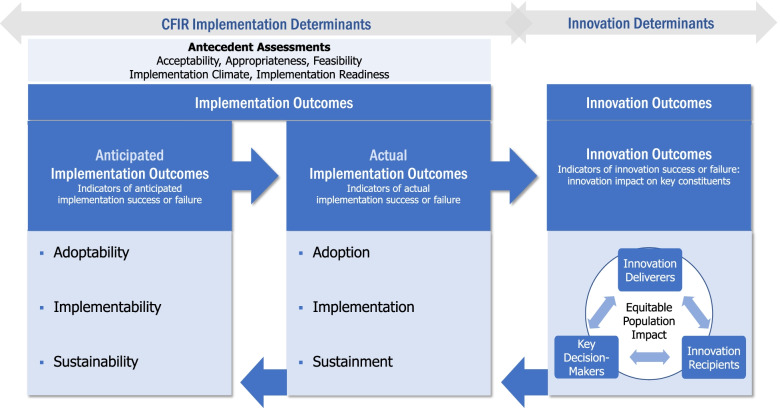
Background: The challenges of implementing evidence-based innovations (EBIs) are widely recognized among practitioners and researchers. Context, broadly defined as everything outside the EBI, includes the dynamic and diverse array of forces working for or against implementation efforts. The Consolidated Framework for Implementation Research (CFIR) is one of the most widely used frameworks to guide assessment of contextual determinants of implementation. The original 2009 article invited critique in recognition for the need for the framework to evolve. As implementation science has matured, gaps in the CFIR have been identified and updates are needed. Our team is developing the CFIR 2.0 based on a literature review and follow-up survey with authors. We propose an Outcomes Addendum to the CFIR to address recommendations from these sources to include outcomes in the framework. Main text: We conducted a literature review and surveyed corresponding authors of included articles to identify recommendations for the CFIR. There were recommendations to add both implementation and innovation outcomes from these sources. Based on these recommendations, we make conceptual distinctions between (1) anticipated implementation outcomes and actual implementation outcomes, (2) implementation outcomes and innovation outcomes, and (3) CFIR-based implementation determinants and innovation determinants. Conclusion: An Outcomes Addendum to the CFIR is proposed. Our goal is to offer clear conceptual distinctions between types of outcomes for use with the CFIR, and perhaps other determinant implementation frameworks as well. These distinctions can help bring clarity as researchers consider which outcomes are most appropriate to evaluate in their research. We hope that sharing this in advance will generate feedback and debate about the merits of our proposed addendum.
Overview
The claims and statistics of this paper haven’t been checked yet.
Free: it reads the open-access text and checks the first 5 claims that cite a source we can check. Create a free account to check every claim.
Integrity signals
Registry
Cites
Statistics
Figures
Verification
Claims the paper makes
The claims and statistics of this paper haven’t been checked yet.
Free: it reads the open-access text and checks the first 5 claims that cite a source we can check. Create a free account to check every claim.
Claims other papers make about this one
Each is checked against this paper’s own text: does it say what the citing paper says it does?
The cited source says what the claim attributes to it.
In the citing paper
“An updated Consolidated Framework for Implementation Research (CFIR) distinguished between anticipated (forward-looking) and actual (backward-looking) implementation outcomes [8].”
From Ten years of implementation outcomes research: a scoping review (2023) · cites this paper as [8]
The cited source says what the claim attributes to it.
In the citing paper
“we have reclassified these constructs to more appropriately position them as antecedent assessments [55], on the pathway between implementation determinants and outcomes in the CFIR Outcomes Addendum [19].”
From The updated consolidated framework for implementation research based on user feedback (2022) · cites this paper as [19]
The cited source says what the claim attributes to it.
In the citing paper
“several users suggested that the CFIR be expanded to include (1) implementation and innovation outcomes and (2) determinants to innovation outcomes collected from recipients [19].”
From The updated consolidated framework for implementation research based on user feedback (2022) · cites this paper as [19]
Self-check
Percentages, sums and reported differences re-computed from the paper’s own numbers.
The self-check needs the paper’s full text.
Citations
Cites
Damschroder, L. J., Aron, D. C., Keith, R. E., Kirsh, S. R., Alexander, J. A., & Lowery, J. C. (2009) · Implementation Science · doi:10.1186/1748-5908-4-50 · Cited by 14,496 · cited 2×
“The original 2009 article invited critique in recognition of the need for the framework to evolve [2].”
BackgroundSelf-citationValente, T. W. (2003) · Genetics in Medicine · doi:10.1097/01.gim.0000061743.67794.c4 · Cited by 13,723
Proctor, E., Silmere, H., Raghavan, R., Hovmand, P., Aarons, G., Bunger, A., Griffey, R., & Hensley, M. (2011) · Administration and Policy in Mental Health and Mental Health Services Research · doi:10.1007/s10488-010-0319-7 · Cited by 8,721 · cited 11×
“Proctor et al.’s Implementation Outcomes Framework (IOF) defines Adoption as “the intention, initial decision, or action to try or employ an innovation” [13].”
BackgroundMethodInfluentialThe Triple Aim: Care, Health, And Cost
Berwick, D. M., Nolan, T. W., & Whittington, J. (2008) · Health Affairs · doi:10.1377/hlthaff.27.3.759 · Cited by 5,136 · cited 1×
“Consideration of clinicians (and other employees) motivated evolution of the “Triple Aim” (enhancing patient experience, improving population health, and reducing costs) [35] to the “Quadruple Aim,” which added an aim of improving the work-life and well-being of clinicians and staff [36].”
BackgroundMaking sense of implementation theories, models and frameworks
Nilsen, P. (2015) · Implementation Science · doi:10.1186/s13012-015-0242-0 · Cited by 4,447 · cited 1×
“Theories that guide conceptualization of context abound and are often encapsulated within determinant frameworks [4, 5]; these frameworks delineate determinants (i.”
BackgroundCurran, G. M., Bauer, M., Mittman, B., Pyne, J. M., & Stetler, C. (2012) · Medical Care · doi:10.1097/mlr.0b013e3182408812 · Cited by 4,058 · cited 1×
“, clinical trialists versus implementation scientists) to translate innovations more quickly into practice [49].”
BackgroundFrom Triple to Quadruple Aim: Care of the Patient Requires Care of the Provider
Bodenheimer, T., & Sinsky, C. (2014) · The Annals of Family Medicine · doi:10.1370/afm.1713 · Cited by 3,462 · cited 1×
“Consideration of clinicians (and other employees) motivated evolution of the “Triple Aim” (enhancing patient experience, improving population health, and reducing costs) [35] to the “Quadruple Aim,” which added an aim of improving the work-life and well-being of clinicians and staff [36].”
BackgroundPsychometric assessment of three newly developed implementation outcome measures
Weiner, B. J., Lewis, C. C., Stanick, C., Powell, B. J., Dorsey, C. N., Clary, A. S., Boynton, M. H., & Halko, H. (2017) · Implementation Science · doi:10.1186/s13012-017-0635-3 · Cited by 2,819 · cited 1×
“developed measures for acceptability, appropriateness, and feasibility of an innovation and highlighted their role as potential predictors of adoption or implementation [27].”
BackgroundRE-AIM Planning and Evaluation Framework: Adapting to New Science and Practice With a 20-Year Review
Glasgow, R. E., Harden, S. M., Gaglio, B., Rabin, B., Smith, M. L., Porter, G. C., Ory, M. G., & Estabrooks, P. A. (2019) · Frontiers in Public Health · doi:10.3389/fpubh.2019.00064 · Cited by 2,528
The sociology of expectations in science and technology
Borup, M., Brown, N., Konrad, K., & Van Lente, H. (2006) · Technology Analysis & Strategic Management · doi:10.1080/09537320600777002 · Cited by 1,902 · cited 2×
“They give definition to role, clarify duties, offer some shape of what to expect and how to prepare for opportunities and risks” [17].”
Background
Research works printed but not linked: 1
- 46. Petit-McClure SH, Stinson C. Disrupting dis/abilization: a critical explora- tion of research methods to combat white supremacy and ableism in education. Intersect Cri Issues Educ. 2019;3:4.
Cited by
Items 201–300 of 941
Fontaine, G., Michie, S., Beidas, R. S., Geng, E. H., Fahim, C., Powell, B. J., Welch, V. N., Thomas, J., Chan, J., Abbasgholizadeh-Rahimi, S., et al. (2026) · Implementation Science · doi:10.1186/s13012-026-01503-5 · Cited by 7
Implementing Sexual Violence Primary Prevention Programs: A Case Study of Implementer Perspectives
Jackson‐Gordon, R., Dariotis, J. K., Fisher, B. S., & Dickman-Burnett, V. L. (2022) · Journal of Youth Development · doi:10.5195/jyd.2022.1272 · Cited by 7
“Intervention characteristics, including adaptability, also constitute an important element of the CFIR (Damschroder et al., 2009).”
BackgroundMethodInfluentialScantlebury, A., Sivey, P. M., Anteneh, Z. F., Ayres, B. E., Bloor, K. E., Castelli, A., Castro-Ávila, A. C., Davies, F., Davies, S., Glerum–Brooks, K., et al. (2024) · BMJ Open · doi:10.1136/bmjopen-2024-086338 · Cited by 7
“14 Secondary data sources for quantitative analysis Our quantitative analyses (WPs 1, 2, 4, 5, 6) will use NHS England Hospital Episode Statistics data and the National Joint Registry (NJR) in conjunction with various other additional data sources.”
MethodSang, E., Quinn, R., Stawnychy, M. A., Song, J., Hirschman, K. B., You, S. B., Pitcher, K. S., Hodgson, N. A., Garren, P. A., O’Connor, M. L., et al. (2024) · Frontiers in Health Services · doi:10.3389/frhs.2024.1436375 · Cited by 7
Implementation of evidence-based foot screening in people with diabetes: A scoping review
HOUGHTON, J., Hynes, M. C., Roberts, N. W., van der Westhuizen, H., Dave, J. A., & Farmer, A. A. (2025) · Journal of Diabetes and its Complications · doi:10.1016/j.jdiacomp.2025.108972 · Cited by 7
Munday, J., Duff, J. S., Wood, F. M., Sturgess, D. J., Keogh, S. J., Ralph, N., White, N. M., Carter, H. E., & Graham, I. D. (2025) · BMJ Open · doi:10.1136/bmjopen-2024-091577 · Cited by 7
“18 Implementability (appropriateness, feasibility and acceptability 32 ) of the simple principles and recommendations will be assessed during and post-implementation via these surveys using Weiner’s validated tools.”
Spaan, J., van der Geest, B. A. M., Been, J. V., Hulzebos, C. V., & Ista, E. (2025) · Midwifery · doi:10.1016/j.midw.2025.104356 · Cited by 7
Dineen, T. E., Bean, C. N., Bohlouli, A., Percival, S. L., Vis‐Dunbar, M., & Jung, M. E. (2025) · Implementation Science Communications · doi:10.1186/s43058-025-00757-2 · Cited by 7
“Research conducted in clinical practice and community settings, and specifically implementation research, must consider a broader interpretation of ‘participants’ [18].”
Perioperative Medicine for Older People Undergoing Surgery Scale Up (POPS-SUp): study protocol
Dhesi, J. K., Partridge, J. S. L., Strasser, B. C., Bearne, L., Hall, N., Healey, A., Houghton, J. S. M., Magill, L., Modarai, B., Moppett, I. K., et al. (2025) · BJS Open · doi:10.1093/bjsopen/zraf063 · Cited by 7
“The framework will be informed by the Consolidated Framework for Implementation Research, but the researchers will also be sensitive to new topics generated from the data 40 .”
Escoffery, C., Ogutu, E. A., Sakas, Z., Hester, K. A., Ellis, A. S., Rodriguez, K., Jaishwal, C., Yang, C., Dixit, S. M., Bose, A. S., et al. (2023) · Implementation Science Communications · doi:10.1186/s43058-023-00489-1 · Cited by 7
“, critical incidents and local conditions) may contribute to successful immunization programs and outcomes such as sustainment of effective intervention strategies employed by these countries [38].”
BackgroundRotering, T. L., Hysong, S. J., Williams, K. E., Raitt, M. H., Whooley, M. A., & Dhruva, S. S. (2023) · Heart Rhythm O2 · doi:10.1016/j.hroo.2023.11.002 · Cited by 7
“21,22 CFIR proposes 5”
Gago, C. M., León, E. D., Mandal, S., Calle, F. D. L., Garcia, M., Colella, D., Dapkins, I. P., & Schoenthaler, A. (2024) · Implementation Science Communications · doi:10.1186/s43058-024-00587-8 · Cited by 7
“Grounded in the Consolidated Framework for Implementation Science (CFIR) [25], the current paper presents findings of a rigorous, pre-implementation evaluation, aimed at identifying FQHC staff-anticipated facilitators and barriers to ALTA implementation.”
MethodSchaefers, A., Xin, L., Butler, P. W., Gardner, J., Uribe, A. L. M., Rethorst, C. D., Rolke, L. J., Seguin‐Fowler, R. A., & Szeszulski, J. (2024) · Implementation Science Communications · doi:10.1186/s43058-024-00627-3 · Cited by 7
“The Consolidated Framework for Implementation Research (CFIR) examines five domains that affect implementation: intervention characteristics, outer setting, inner setting, characteristics of individuals, and implementation processes [16–19].”
Methodvan der Weegen, S., van der Poel, A., Kagenaar, E., Bierhoff, I., & Boon, B. J. F. (2024) · Journal of Applied Research in Intellectual Disabilities · doi:10.1111/jar.13298 · Cited by 7
Powell, N., Upton, M., Kent, B., Sandoe, J. A. T., & Tonkin-Crine, S. K. (2025) · BMJ Open · doi:10.1136/bmjopen-2024-096452 · Cited by 7
“34 The implementation intervention outcomes (online supplemental appendix E) will provide information about whether the intervention changes HCW and patient behaviours and which determinants within the implementation intervention are successfully delivered and which were not and why they were a…”
Implementation and modification of an organizational-level intervention: a prospective analysis
Gordon, E. J., Uriarte, J. J., Anderson, N., Romo, E., Caicedo, J. C., & Shumate, M. (2022) · Implementation Science Communications · doi:10.1186/s43058-022-00296-0 · Cited by 7
“This study is among the first to identify the CFIR factors that influence implementation outcomes, a new area of CFIR research [16].”
BackgroundMethodInfluentialHowe, C. J., Lewis, B., & Edmondson, S. N. (2023) · Journal of Nursing Care Quality · doi:10.1097/ncq.0000000000000744 · Cited by 7
Loneliness as a Vital Sign: Toward a Biopsychosocial Reframing of Social Disconnection
Warren, A. (2026) · Journal of Primary Care & Community Health · doi:10.1177/21501319261426724 · Cited by 7
“31 In the context of loneliness screening, CFIR is particularly well suited to capturing the interaction between clinic culture, workflow compatibility, leadership engagement, and provider readiness, which are factors repeatedly identified as barriers to psychosocial screening in primary care.”
Lee, S. M., Harwell, O. R. J., Sliwa, S. A., Hawkins, G. T., Michael, S. L., Merlo, C. L., Barnes, S. P., Chung, C. S., Cornett, K. A., & Hunt, H. (2023) · Journal of School Health · doi:10.1111/josh.13373 · Cited by 6
“7,45 Potential actions include: • Building a diverse team for action planning and prioritizing PA and nutrition programs, policies, and practices.”
BackgroundTelehealth Research and Innovation for Veterans with Cancer: the THRIVE Center
Zullig, L. L., Makarov, D. V., Becker, D. J., Dardashti, N., Guzman, I., Kelley, M. J., Melnic, I., Padilla, J. J., Rojas, S., Thomas, J. R., et al. (2024) · JNCI Monographs · doi:10.1093/jncimonographs/lgae019 · Cited by 6
Raiisi, F. A., Cunningham, S., & Stewart, D. C. (2024) · International Journal of Clinical Pharmacy · doi:10.1007/s11096-024-01794-y · Cited by 6
Zapata, J. P., Zamantakis, A., Queiroz, A. A. F. L. N., Merle, J. L., Benbow, N., & Mustanski, B. S. (2024) · Implementation Science Communications · doi:10.1186/s43058-024-00645-1 · Cited by 6
“…country of origin, length of time in the U.S., or language preferences among Latino MSM. CFIR was not designed to capture innovation determinants [11], and we were unable to find a framework that adequately captured recipient-level factors, which accounted for many determinants in our review due…”
BackgroundMethodInfluentialCanfield, S. M., & Koopman, R. J. (2024) · Applied Clinical Informatics · doi:10.1055/s-0044-1790554 · Cited by 6
Gartner, J., Lemaire, C., & Côté, A. (2025) · International Journal of Health Policy and Management · doi:10.34172/ijhpm.8517 · Cited by 7
“104-106 The CFIR is one of the most cited determinant frameworks that aim to predict or explain barriers and facilitators (determinants) to implementation effectiveness (the outcome).”
Ventre, J. P., Manning, F., Mahmoud, A., Brough, G., Timmons, S., Hawley-Hague, H., Skelton, D. A., Goodwin, V. A., Todd, C. J., Kendrick, D., et al. (2025) · Age and Ageing · doi:10.1093/ageing/afaf083 · Cited by 6
“Codes and themes were then ‘deductively’ mapped and assigned as constructs and domains using the updated 2022 Consolidated Framework for Implementation Research (CFIR) [30].”
Ginting, M. L., Sum, G., Wang, S. Z., Ding, Y. Y., & Tay, L. B. G. (2025) · Frontiers in Health Services · doi:10.3389/frhs.2025.1563686 · Cited by 6
“…its Outcome Addendum (CFIR-OA) to guide the assessment of anticipated contextual barriers and enablers, framed as CFIR determinants (across fi ve domains: innovation, outer setting, inner setting, individuals, implementation process) that potentially in fl uence implementation effectiveness (9, 10).”
InfluentialA 5-year examination of CAPABLE implementation using RE-AIM and CFIR frameworks
Paone, D. L., Schuller, J. W., Smith, M. L., Gitlin, L. N., & Szanton, S. L. (2025) · Frontiers in Public Health · doi:10.3389/fpubh.2025.1569320 · Cited by 6
Jassemi, S., Sparkes, D., Delgado, M., Harwood, L., Bello, A. K., Beanlands, H. J., Elliott, M. J., McBrien, K., Gil, S., Straus, S. E., et al. (2025) · Journal of Medical Internet Research · doi:10.2196/71832 · Cited by 6
“The codebook was based on the Capability Opportunity Motivation Behavior System Framework (COM-B) [33], which was further framed by the Consolidated Framework for Implementation Research (CFIR) [34,35] and the Theoretical Domains Framework (TDF) [36].”
InfluentialJenkinson, J., Moro, D., Dada, O. O., Pridham, K. F., Cygler, J., & Hwang, S. W. (2025) · BMC Health Services Research · doi:10.1186/s12913-025-13170-1 · Cited by 6
“…is implemented, such as the hospital), Outer Setting (the setting in which the Inner Setting exists, such as the healthcare system), Individuals (the roles and characteristics of individuals), and Implementation Process (the activities and strategies used to implement the innovation) [35, 44].”
Knudsen, H. K., Havens, J. R., & Young, A. M. (2025) · Journal of Studies on Alcohol and Drugs · doi:10.15288/jsad.25-00120 · Cited by 6
Schol, C. M. A., van Mol, M. M. C., & Ista, E. (2025) · Implementation Science Communications · doi:10.1186/s43058-025-00767-0 · Cited by 6
“In step two, we defined desired implementation outcomes using Proctor et al.’s taxonomy [19] and Dam-schroder et al.’s application of CFIR outcomes [20].”
Barkley, C., Nyakonda, C. N., Kuthyola, K., Ndlovu, P., Lee, D., Dallos, A., Kofi-Armah, D., Obeng, P., & Merrill, K. G. (2025) · International Journal of Environmental Research and Public Health · doi:10.3390/ijerph22081281 · Cited by 6
“Drop-off rates (i.e., call but do not listen to a voice recording) ranged from 34% to 69% across countries, underscoring the need for further investigation into user expectations, onboarding processes, and early-stage intervention design [25,49,56].”
Sannes, A., Rognli, E. W., Hanssen‐Bauer, K., Torp, N. C., Storfossen, S. K., Høstaker, M. N., & Aalberg, M. (2025) · Journal of Medical Internet Research · doi:10.2196/83543 · Cited by 6
“To better aggregate primary studies on barriers to and facilitators of e-therapy implementation in a systematic and comprehensive manner, this review applied the updated CFIR theoretical model [20].”
InfluentialGermans, M. R., Rohr, J., Globas, C., Schubert, T. B., Kaserer, A., Brandi, G., Studt, J., Greutmann, M., Geiling, K., Verweij, L., et al. (2023) · Journal of Clinical Medicine · doi:10.3390/jcm12206637 · Cited by 6
“For instance, an implementation science framework such as the updated Consolidated Framework for Implementation Research (CFIR) or the Tailored Implementation of Chronic Diseases (TICD) checklist may be relevant to guide the implementation study within this research project [54,55].”
MethodMadrigal, L., Haardörfer, R., Kegler, M. C., Piper, S., Blais, L. M., Weber, M. B., & Escoffery, C. (2023) · Implementation Science Communications · doi:10.1186/s43058-023-00522-3 · Cited by 6
“CFIR constructs have been useful in understanding implementation in a wide range of interventions, settings, and research designs [8– 10].”
BackgroundIngemann, C., Tjørnhøj‐Thomsen, T., Kvernmo, S. E., Berthelsen, D., Biilman, V., Kvist, B., Lorentzen, J., Nemming, V. K., Sarkov, R. M., Willesen, A., et al. (2023) · Global Implementation Research and Applications · doi:10.1007/s43477-023-00107-1 · Cited by 6
“In the final stages of this manuscript, the author learned about the update CFIR (Damschroder et al., 2022a, b) and the CFIR Outcomes Addendum (Damschroder et al., 2022a, b).”
InfluentialDopp, A. R., Hindmarch, G., Osilla, K. C., Meredith, L. S., Manuel, J. K., Becker, K. M., Tarhuni, L., Schoenbaum, M., Komaromy, M. S., Cassells, A. N., et al. (2024) · Evidence & Policy · doi:10.1332/17442648y2023d000000016 · Cited by 6
Herranz, C., Gómez-López, A., Hernández, C., González, R., Contel, J. C., Cano, I., Piera-Jiménez, J., & Roca, J. (2024) · International Journal of Integrated Care · doi:10.5334/ijic.7724 · Cited by 6
Jackman, M., Thorley, M., Toovey, R. A. M., Burgess, A., Blatch-Williams, R., Sakzewski, L., Boyd, R. N., & Novak, I. (2024) · Pediatric Physical Therapy · doi:10.1097/pep.0000000000001155 · Cited by 6
“27 , 28 Ultimately, clinicians and organizations working with children and young people with cerebral palsy want to support clients to the best of their ability.”
Dodds, E., Redsell, S. A., Timmons, S., & Manning, J. C. (2024) · Implementation Science · doi:10.1186/s13012-024-01378-4 · Cited by 6
“A CFIR outcomes addendum is in the process of being developed [26] but the SR predates this.”
BackgroundMajjouti, K., Küppers, L., Thielmann, A., Redaèlli, M., Vitinius, F., Funke, C., van der Arend, I., Pilic, L., Heßbrügge, M., Stock, S., et al. (2022) · BMC Family Practice · doi:10.1186/s12875-022-01827-3 · Cited by 6
“In addition to barriers on the individual level, organisational barriers are an important moderator of implementation outcomes [31].”
BackgroundChallenges and strategies for implementers and evaluators working in conflict settings
Bond, L., Klein, E. K., & Gates, E. (2023) · Evaluation · doi:10.1177/13563890231171608 · Cited by 6
“Implementation scientists employing CFIR during intervention evaluation have been able to develop methods that enable the understanding and measuring of contextual factors (Damschroder et al., 2022).”
BackgroundInfluentialMartens, N., Hindori‐Mohangoo, A. D., Hindori, M. P., Damme, A. V., Beeckman, K., Reis, R., Crone, M. R., & van der Kleij, R. (2023) · BMC Pregnancy and Childbirth · doi:10.1186/s12884-023-05904-y · Cited by 6
“For instance, implementation delivery can be evaluated afte r the innovation is put into practice, whereas contextual factors can be explored to assess implementability— the likelihood that an innovation will be delivered— before introducing it in a new context [11].”
BackgroundInfluentialPerception of nudge interventions to mitigate medication errors risk in healthcare service delivery
Chew, K. S., Ooi, S. K., Rahim, N. F. A., Wong, S. S.-L., Kandasamy, V., & Teo, S.-S. (2023) · BMC Health Services Research · doi:10.1186/s12913-023-10247-7 · Cited by 6
“…external environmental factors or the outer setting, internal organizational characteristics or the inner setting, individual attributes of those involved in the implementation, and a variety of implementation processes ranging from planning and engagement to execution and ongoing evaluation [13].”
BackgroundInfluentialKey Principles Underlying a Research-Practice Alignment in a Federally Qualified Health Center
Schoenthaler, A., Colella, D., Calle, F. D. L., Bueno, G., Nay, J., Garcia, M., Shahin, G., Gago, C. M., & Dapkins, I. P. (2023) · Ethnicity & Disease · doi:10.18865/ed.decipher.6 · Cited by 6
Kabukye, J. K., Namagembe, R., Nakku, J. E. M., Kiberu, V. M., Sjölinder, M., Nilsson, S., & Wamala-Larsson, C. (2024) · JMIR Human Factors · doi:10.2196/53976 · Cited by 6
“The Consolidated Framework for Implementation Research (CFIR) used in this study [26,29,32].”
MethodInfluentialCo-design knowledge mobilization tools for universal accessibility in municipalities
Corcuff, M., Lamontagne, M., Routhier, F., & Morales, E. (2024) · Frontiers in Rehabilitation Sciences · doi:10.3389/fresc.2024.1331728 · Cited by 6
Monitoring implementation in routine immunisation
Adamu, A. A., Karamagi, H. C., & Wiysonge, C. S. (2024) · The Lancet · doi:10.1016/s0140-6736(24)01601-5 · Cited by 6
Zulauf-McCurdy, C. A., Johansson, M., Hashimoto, J. R., & Meza, R. D. (2024) · Prevention Science · doi:10.1007/s11121-024-01742-2 · Cited by 5
“Determinant frameworks, such as the CFIR described above, can guide a comprehensive approach to exploring those social processes and contexts, such as social interactions, communication, and collaboration (Damschroder et al., 2022).”
Hampole, S. R., Becket-Davenport, C., McCaslin, S. E., Bosch, J. O., Jamison, A. L., Mackintosh, M., Avery, T. J., Juhasz, K. M., Tang, C. G., & McGee-Vincent, P. A. (2025) · Psychological Services · doi:10.1037/ser0000934 · Cited by 5
Song, J., Qin, C., Su, S., Wei, R., Zhang, T., Deng, Y., Liang, J., & Lin, H. (2025) · Geriatric Nursing · doi:10.1016/j.gerinurse.2025.01.005 · Cited by 5
Promoting mental health equality by investing in organizations: lessons from implementation science
Stanhope, V., Choy-Brown, M., Doherty, M. J., Cohen-Serrins, J., Baslock, D. M., & Raghavan, R. (2025) · Journal of Public Mental Health · doi:10.1108/jpmh-09-2024-0113 · Cited by 5
Gillespie, K. H., Nkhoma, Y. B., Resnik, F., Halderson, N., Borbely, C., Zapata, J. Y., & Greene, M. Z. (2025) · Public Health · doi:10.1016/j.puhe.2025.105743 · Cited by 5
Rutstein, S. E., Limarzi-Klyn, L., Chen, J. S., Agyei, Y., Ahmed, S., Bell, I., Cohen, M. S., Fogel, J. M., Go, V. F.-L., Haines, D., et al. (2025) · JMIR Research Protocols · doi:10.2196/72981 · Cited by 5
“Interview guides have been developed to capture key implementation outcomes, using the Consolidated Framework for Implementation Research (CFIR) as a foundation [51,52].”
Grogan, C., Harriman, S., Martin, E. K., Waite, R., & Fisher, O. J. (2025) · Frontiers in Health Services · doi:10.3389/frhs.2025.1550729 · Cited by 5
Zhang, L., Chen, Y., Yang, Q., Lu, L., Cui, Y., Zhou, M., Jin, X., Zhang, S., & He, X. (2025) · Digital Health · doi:10.1177/20552076251360858 · Cited by 5
Rungta, A., Kapoor, A., Redkar, G., Kapoor, A. R., Mishra, B. K., Gupta, A., Sansar, B., Kumar, A., Chowdhury, Z., Patne, S., et al. (2025) · Journal of Community Genetics · doi:10.1007/s12687-025-00849-5 · Cited by 5
“CFIR encompasses five major domains: intervention characteristics, outer setting, inner setting, characteristics of individuals, and process, which collectively inform the contextual determinants of implementation success (Damschroder et al. 2022).”
Augeard, N., Longtin, C., Bussières, A., Bostick, G. P., Thomas, A., Miller, J., Tousignant‐Laflamme, Y., Walton, D. M., Hudon, A., Cooper, L., et al. (2025) · Canadian Journal of Pain · doi:10.1080/24740527.2025.2574969 · Cited by 5
“56 Given the participatory approach used in developing the PEP competency profile, many individuals involved in its creation had already begun informal implementation.”
van der Schoot, L. S., Janssen, J., Bastiaens, M. T., de Boer-Brand, A., Christiaansen-Smit, C., Enomoto, D. N. H., Hovingh, R., Tupker, R. A., Seyger, M. M. B., Verhoef, L. M., et al. (2023) · Journal of Dermatological Treatment · doi:10.1080/09546634.2023.2186728 · Cited by 5
“These implementation outcomes were drawn from different implementation theories (11,16,21,22).”
MethodAbutineh, F., Graetz, D. E., Muñiz‐Talavera, H., Ferrara, G., Puerto‐Torres, M., Chen, Y., Gillipelli, S. R., Elish, P. N., Gonzalez‐Ruiz, A., Carreras, Y. A., et al. (2023) · Frontiers in Oncology · doi:10.3389/fonc.2023.1122355 · Cited by 5
“CFIR constructs like culture (23), individual need (23), and teaming (23) characterize different aspects of the implementation process and their impact on its outcomes, e.”
BackgroundMutsekwa, R. N., Campbell, K. L., Canavan, R., Angus, R. L., McBride, L., & Byrnes, J. (2024) · Implementation Science Communications · doi:10.1186/s43058-024-00611-x · Cited by 5
Finn, E. B., Keller, C. V., Gowey, M. A., Savoye, M., Samuels, S. L., Fleisch, A. F., Rogers, V. W., Grey, M. J., Damschroder, L. J., Beck, A. L., et al. (2024) · Obesity · doi:10.1002/oby.24107 · Cited by 6
Self-citationLeeman, J., Rohweder, C. L., Lin, F., Lightfoot, A. F., Costello, J. M., Farahi, N., Harper, K., Quist‐Nelson, J., Teal, E. N., Vu, M. B., et al. (2024) · BMC Health Services Research · doi:10.1186/s12913-024-11579-8 · Cited by 5
“Although many scholars classify acceptability and feasibility as implementation outcomes, we follow the recommendation of Damschroder et al. (2022) and view them as antecedent to actual implementation [30].”
BackgroundErnstmann, N., Nakata, H., Heier, L., Heuser, C., Dohmen, M., Bremen, R., Geiser, F., Holsteg, S., Karger, A., Viehmann, A., et al. (2024) · Journal of Cancer Research and Clinical Oncology · doi:10.1007/s00432-024-05946-5 · Cited by 5
“We focused on adopt-ability and implementability as anticipated implementation outcomes (Damschroder et al. 2022).”
BackgroundMethodEnhancing vaccine delivery in Africa with implementation science
Adamu, A. A., Ndiaye, S. M., Jalo, R. I., Karamagi, H. C., Ngwakum, P., Ndwandwe, D. E., & Wiysonge, C. S. (2024) · Discover Public Health · doi:10.1186/s12982-024-00321-8 · Cited by 5
Nowak, J., Hughes, T. D., Sottung, E., & Ferreri, S. P. (2025) · Journal of the American Pharmacists Association · doi:10.1016/j.japh.2025.102425 · Cited by 5
Chan, J. W. S., Hyde‐Page, A., Phongsavan, P., Raubenheimer, D., & Allman-Farinelli, M. A. (2025) · Nutrients · doi:10.3390/nu17162661 · Cited by 5
“The CFIR proposes a set of specific and detailed constructs in the inner setting domain to explain organisational factors and outer setting domain to explain the broader factors influenced by where the organisation is placed in the community, political, and economic environments [33].”
Shaw, L., Freeman, S., Aranha, S., Boulton, A., Capurro, D., Chapman, W. W., Fazio, T. N., Gazarek, J., Layton, M. J., Lyons, K., et al. (2025) · BMC Health Services Research · doi:10.1186/s12913-025-13343-y · Cited by 5
Development of an Augmented Reality-Based Digital Module For Islamic Religious Education Subjects
Supriadi, Djusmin, V. B., & Zahir, A. (2024) · Didaktika Jurnal Kependidikan · doi:10.58230/27454312.1205 · Cited by 5
“The product trial aims to evaluate the response of teachers and students after using the learning media, as well as to test the feasibility of the media based on the assessment of the teachers (Damschroder et al., 2022; Fatima & Elbanna, 2023; Fernandez et al., 2019)”
Implementation mapping for tobacco cessation in a federally qualified health center
Domlyn, A. M., Crowder, C., Eisenson, H., Pollak, K. I., Davis, J. M., Calhoun, P. S., & Wilson, S. M. (2022) · Frontiers in Public Health · doi:10.3389/fpubh.2022.908646 · Cited by 5
Michail, M., Robinson, J., Witt, K., Occhipinti, J., Skinner, A., Lamblin, M., Veresova, M., Kartal, D., & Waring, J. J. (2023) · BMJ Open · doi:10.1136/bmjopen-2022-071111 · Cited by 5
Harkko, J., Nordquist, H., & Kouvonen, A. M. (2024) · Social Policy and Administration · doi:10.1111/spol.13056 · Cited by 5
Marchak, J. G., Beauchemin, M., Broglie, L. A., Kelly, K. P., Seelisch, J., Dupuis, L. L., & the Children's Oncology Group Supportive Care Guidelines Task Force (2024) · Pediatric Blood & Cancer · doi:10.1002/pbc.31178 · Cited by 5
Zbukvic, I., Fisher, E., Stainton, A., Bryce, S., Kartal, D., Kunin, M., Nicholas, J., Hamilton, C., Smith, D., Murphy, M., et al. (2025) · Early Intervention in Psychiatry · doi:10.1111/eip.70004 · Cited by 4
Ren, L. H., Wong, K. L. Y., Soni, A., Lee, K., Arora, S., Banco, J., Jankovic, M., & Hung, L. (2025) · Electronics · doi:10.3390/electronics14071247 · Cited by 4
Anttilainen, J., Haukka, E., Järnefelt, H., & Pehkonen, I. (2025) · Ergonomics · doi:10.1080/00140139.2025.2509610 · Cited by 4
Thermaenius, I., Holm, M., Årestedt, K., Udo, C., Alvariza, A., Lundberg, T., Wallin, L., & Lövgren, M. (2025) · Frontiers in Health Services · doi:10.3389/frhs.2025.1527431 · Cited by 4
Li, M., Zhang, J., Zheng, J., Wu, C., Shao, Z., Cheng, L., Yu, H., Xu, L., Zhang, Y., Wang, X., et al. (2025) · Journal of Medical Internet Research · doi:10.2196/78333 · Cited by 4
“We applied the Consolidated Framework for Implementation Research (CFIR) 2.0 to guide study analysis and the Expert Recommendations for Implementing Change (ERIC) to generate strategies [29,30].”
InfluentialIntegrating Decision Science and Implementation Science to Inform Policy Decision Making
Smith, N., Doan, T. T., Yuan, C. T., & Cruden, G. (2025) · MDM Policy & Practice · doi:10.1177/23814683251386876 · Cited by 4
Is it time for a paradigm shift to complexity-informed implementation fidelity?
Wiedenman, E. M., Campbell-Scherer, D. L., Iqbal, A., Ofosu, N. N., Hyde, A. M., McKay, R. C., Hunter, K. H., Castillo, E., & Tandon, P. (2025) · npj Complexity · doi:10.1038/s44260-025-00057-9 · Cited by 4
“In an attempt to account for these contextual characteristics, researchers have integrated methods from systems science 16 and scienti fi c realism 15 into implementation models and frameworks 14,17 .”
Barriers and Facilitators of Advance Care Planning in Patients With Cancer: A Qualitative Study
Yang, Y., Jingling, L., Huang, M., Wang, T., Yang, K., Deng, B., Wu, L., Liu, M., & Liu, N. (2025) · Journal of Clinical Nursing · doi:10.1111/jocn.70158 · Cited by 4
Facilitators to the implementation of exercise into cancer care: a systematic review
White, G. L., Kennedy, M. A., Cunningham, B. J., Dunn, R. M., Martin, J. A., Walker, M. A., Wallington-Beddoe, C. T., Wright, H. H., Chan, B. A., & Rose, G. L. (2026) · Journal of Cancer Survivorship · doi:10.1007/s11764-025-01948-5 · Cited by 4
Miller, J., Donnelly, C. A., McClintock, C., Varette, K., Camargo, Y., Marsh, J. D., Taljaard, M., Mamun, M. S. A., Bacchus, G., Barber, D., et al. (2026) · JMIR Research Protocols · doi:10.2196/89004 · Cited by 4
“…a mixed methods process evaluation informed by United Kingdom Medical Research Council guidance for developing and evaluating complex interventions [48,49], the Consolidated Framework for Implementation Research (CFIR) [50,51], and findings from the process evaluation from our pilot trial [52].”
Digital health technologies for adults with ADHD: a scoping review
Schofield, F. J., Wilkie, S., Nielsen, E. E., Brigden, A., Jones, M. W., & Isotalus, H. (2026) · Frontiers in Digital Health · doi:10.3389/fdgth.2026.1746732 · Cited by 4
“Additionally, Patrickson et al. (171), highlighted their intention to adhere to the Consolidated Framework for Implementation Research (206), which again emphasizes understanding integration alongside efficacy.”
Arazi, M., Puri, L. R., Kiaraho, M., Buchan, J., Spicer, N., & Foster, A. (2026) · BMJ Global Health · doi:10.1136/bmjgh-2025-023025 · Cited by 4
Zhu, H., Yan, H. K., Ye, J., Li, Y., Xiao, L., Yu, Z., Wang, X., & Li, X. (2026) · Pediatric Research · doi:10.1038/s41390-026-04843-6 · Cited by 4
Elkefi, S., Scheinmann, R., Matthews, A. K., & Phillips, E. (2026) · International Journal of Environmental Research and Public Health · doi:10.3390/ijerph23040465 · Cited by 4
“Our results align with implementation science literature emphasizing that program performance and implementation outcomes are shaped not only by clinical content, but also by delivery context and operational de-sign [77].”
Chew, H. S. J., Ang, W. W., Tan, X. S., Vashishtha, R., Chan, S. L., & Sevdalis, N. (2026) · International Journal of Nursing Sciences · doi:10.1016/j.ijnss.2026.04.013 · Cited by 4
“Hence, we have adopted updated CFIR as the guiding framework to code barriers and facilitators that may have been mentioned in the implementer’s workshops [14].”
Milton, A. C., Brown, E., Arnautovska, U., Vaughan, P., Gao, C. X., Chatterton, M. L., Stratton, E., Hancock, N., Chapman, J., Iyer, R., et al. (2026) · BJPsych Open · doi:10.1192/bjo.2026.12056 · Cited by 4
Brown, J. R., Rewa, O. G., Rabin, B. A., Akcan‐Arikan, A., Awdishu, L., Bagshaw, S. M., Brookman-Frazee, L. I., Cerdá, J., Granado, R. C., Ghazi, L., et al. (2026) · Clinical Journal of the American Society of Nephrology · doi:10.2215/cjn.0000001205 · Cited by 4
Knepper, A. K., Feinstein, R. T., Sanchez-Flack, J., Fitzgibbon, M., Lefaiver, C. A., McHugh, A., Gladstone, T. R. G., & Voorhees, B. W. V. (2024) · Implementation Research and Practice · doi:10.1177/26334895241246203 · Cited by 4
“We applied the CFIR as an organizing framework to facilitate the description of implementation determinants of primary care-based recruitment for P2P at the mid-point of the trial, from the perspectives of implementers.”
BackgroundMethodInfluentialHaverfield, M. C., Ma, J. E., Walling, A., Bekelman, D. B., Brown‐Johnson, C. G., Lo, N. K., Lorenz, K., & Giannitrapani, K. F. (2024) · Palliative Medicine · doi:10.1177/02692163241277394 · Cited by 4
“13 Studies are needed that explore multi-layered communication processes in system-wide advance care planning initiatives.”
Leveraging implementation science for secondary prevention of cervical cancer in South Africa
Kawonga, M. (2024) · South African Health Review · doi:10.61473/001c.120636 · Cited by 4
Huffhines, L. P., Ramirez, I., Silver, R. B., Low, C. M., Parade, S. H., & Elwy, A. R. (2024) · Prevention Science · doi:10.1007/s11121-024-01744-0 · Cited by 4
“The CFIR Outcomes Addendum describes how antecedents (e.g., feasibility, acceptability, appropriateness) and contextual factors (e.g., facilitators and barriers) influence eventual implementation outcomes, like adoption and sustainability (Damschroder et al., 2022b).”
InfluentialPérez‐Matus, S., Hernández-Ramírez, R. U., González‐Forteza, C., Benjet, C. L., & Villalobos-Gallegos, L. (2024) · Psychological Services · doi:10.1037/ser0000914 · Cited by 4
Nawaz, S., Bee, P., & Faija, C. (2024) · Journal of Affective Disorders · doi:10.1016/j.jad.2024.12.054 · Cited by 4
Two Studies Assessing Early Intervention Fit of Independent Living Services in Sweden
Karlsson, M., Skoog, T., Bergström, M., Kajic, D., & Olsson, T. M. (2025) · Research on Social Work Practice · doi:10.1177/10497315251379394 · Cited by 4
“Flexibility and adaptability (i.e., degree to which a program can be tailored to local contexts or needs) tend to be intervention characteristics that are bene fi cial to uptake (Damschroder et al., 2022b).”
InfluentialCanfield, S. M., Rolbiecki, A. J., Ghosh, P., Martínez, W., Shaffer, V. A., Montgomery, E. E., Dorr, D. A., & Koopman, R. J. (2025) · Applied Clinical Informatics · doi:10.1055/a-2606-9326 · Cited by 4
Day, J., O’Rourke, S., Lang, I., Wyatt, K. M., & Stabler, L. (2025) · The British Journal of Social Work · doi:10.1093/bjsw/bcaf232 · Cited by 4
De-implementation of Low-Value Practices for Autism Spectrum Disorder
Friedman, N. R., Watkins, L., Barnard-Brak, L. M., Barber, A. B., & White, S. W. (2023) · Clinical Child and Family Psychology Review · doi:10.1007/s10567-023-00447-2 · Cited by 4
“Additionally, we utilize the Consolidated Framework for Implementation Research (CFIR; Damschroder et al., 2022) to outline facilitators of LVP, including barriers to de-implementation, and ultimately propose targeted recommendations to support the de-implementation of LVP for ASD treatment (see Fig.”
Influential
Metadata
- Authors
- Damschroder, L. J., Reardon, C. M., Opra Widerquist, M. A., & Lowery, J.
- Affiliations
- VA Ann Arbor Healthcare System (US)
- Corresponding author
- Damschroder, Laura J.
- Venue
- Implementation Science
- Published
- 2022-01-22
- Volume
- 17
- Issue
- 1
- Pages
- 7-7
- ISSN
- 1748-5908 (ISSN-L)
- PMC
- PMC8783408
- OpenAlex
- W4206949803
- Semantic Scholar
- 08521891e3bcd553697352db930b1de39027da07
- Cited by
- 784
- References
- 61
- Citations by year
- 2026: 227 · 2025: 177 · 2024: 218 · 2023: 117 · 2022: 45
- FWCI
- 27.08
- Type
- journal article
- Language
- en
- Open access
- gold
- doi.org
- Licence
- cc-by
- creativecommons.org/licenses/by/4.0 (tdm)
- creativecommons.org/licenses/by/4.0 (vor)
- Locations
- Implementation Science (publishedVersion, cc-by)
- PubMed Central (publishedVersion, cc-by)
- PubMed (publishedVersion)
- DOAJ (DOAJ: Directory of Open Access Journals) (submittedVersion, cc-by-sa)
- Funders
- Quality Enhancement Research Initiative (QUE 15-286)
- Health Services Research and Development (LIP 20-116)
- Topics
- Health Sciences › Health Professions › General Health Professions › Health Policy Implementation Science
- Health Sciences › Health Professions › General Health Professions › Health Sciences Research and Education
- Health Sciences › Medicine › Public Health, Environmental and Occupational Health › Clinical practice guidelines implementation
- Keywords
- Consolidated Framework for Implementation Research, implementation outcomes, innovation outcomes, implementation factors, innovation determinants, evidence-based innovation, implementation context, framework evolution
- MeSH terms
- Implementation Science, Humans, Motivation
About these checks
Registry, retraction, Cites and statistics results are computed, not judged, with one exception: a printed reference that no index lists is read once by a model before it counts as a citation error. Claims are extracted by a model and kept only when their quote appears verbatim in the text; each cited source is then checked, with a model’s help, for whether it says what the claim relies on. Those verdicts can be wrong — read the claim’s quote and the cited source before relying on one.
Statistics and arithmetic are recomputed, not judged.
Confidence bands are shown only for fields calibrated on our annotated test set. None is calibrated yet, so no band is shown.
What counts as a claim ›How we measure confidence ›How we check this ›
Are you an author, or do you see a problem with this page? Request a review
Data sources
Bibliographic data: Semantic Scholar, OpenAlex, Crossref.
Contains information from the Semantic Scholar Academic Graph Datasets, made available under the ODC Attribution License (ODC-BY 1.0).
Semantic Scholar’s data is described in: Kinney, R., et al. (2023). The Semantic Scholar Open Data Platform. arXiv:2301.10140.
