

Conceptualizing outcomes for use with the Consolidated Framework for Implementation Research (CFIR): the CFIR Outcomes Addendum
Open accessThe DOI matches its Crossref record; 61 of the 61 references it cites were found in a registry or an index.
Abstract
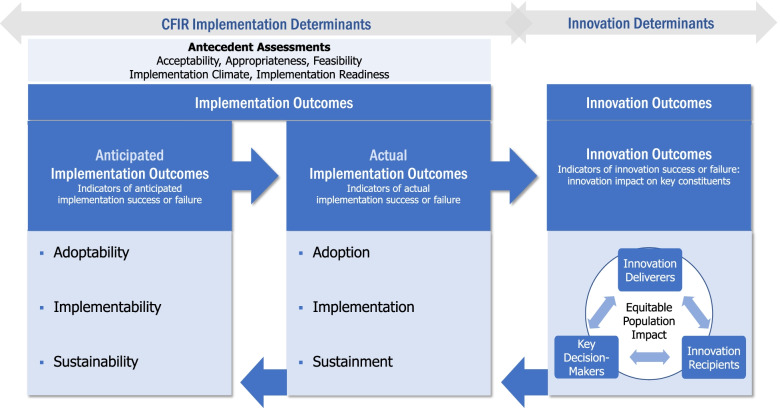
Background: The challenges of implementing evidence-based innovations (EBIs) are widely recognized among practitioners and researchers. Context, broadly defined as everything outside the EBI, includes the dynamic and diverse array of forces working for or against implementation efforts. The Consolidated Framework for Implementation Research (CFIR) is one of the most widely used frameworks to guide assessment of contextual determinants of implementation. The original 2009 article invited critique in recognition for the need for the framework to evolve. As implementation science has matured, gaps in the CFIR have been identified and updates are needed. Our team is developing the CFIR 2.0 based on a literature review and follow-up survey with authors. We propose an Outcomes Addendum to the CFIR to address recommendations from these sources to include outcomes in the framework. Main text: We conducted a literature review and surveyed corresponding authors of included articles to identify recommendations for the CFIR. There were recommendations to add both implementation and innovation outcomes from these sources. Based on these recommendations, we make conceptual distinctions between (1) anticipated implementation outcomes and actual implementation outcomes, (2) implementation outcomes and innovation outcomes, and (3) CFIR-based implementation determinants and innovation determinants. Conclusion: An Outcomes Addendum to the CFIR is proposed. Our goal is to offer clear conceptual distinctions between types of outcomes for use with the CFIR, and perhaps other determinant implementation frameworks as well. These distinctions can help bring clarity as researchers consider which outcomes are most appropriate to evaluate in their research. We hope that sharing this in advance will generate feedback and debate about the merits of our proposed addendum.
Overview
The claims and statistics of this paper haven’t been checked yet.
Free: it reads the open-access text and checks the first 5 claims that cite a source we can check. Create a free account to check every claim.
Integrity signals
Registry
Cites
Statistics
Figures
Verification
Claims the paper makes
The claims and statistics of this paper haven’t been checked yet.
Free: it reads the open-access text and checks the first 5 claims that cite a source we can check. Create a free account to check every claim.
Claims other papers make about this one
Each is checked against this paper’s own text: does it say what the citing paper says it does?
The cited source says what the claim attributes to it.
In the citing paper
“An updated Consolidated Framework for Implementation Research (CFIR) distinguished between anticipated (forward-looking) and actual (backward-looking) implementation outcomes [8].”
From Ten years of implementation outcomes research: a scoping review (2023) · cites this paper as [8]
The cited source says what the claim attributes to it.
In the citing paper
“we have reclassified these constructs to more appropriately position them as antecedent assessments [55], on the pathway between implementation determinants and outcomes in the CFIR Outcomes Addendum [19].”
From The updated consolidated framework for implementation research based on user feedback (2022) · cites this paper as [19]
The cited source says what the claim attributes to it.
In the citing paper
“several users suggested that the CFIR be expanded to include (1) implementation and innovation outcomes and (2) determinants to innovation outcomes collected from recipients [19].”
From The updated consolidated framework for implementation research based on user feedback (2022) · cites this paper as [19]
Self-check
Percentages, sums and reported differences re-computed from the paper’s own numbers.
The self-check needs the paper’s full text.
Citations
Cites
Damschroder, L. J., Aron, D. C., Keith, R. E., Kirsh, S. R., Alexander, J. A., & Lowery, J. C. (2009) · Implementation Science · doi:10.1186/1748-5908-4-50 · Cited by 14,496 · cited 2×
“The original 2009 article invited critique in recognition of the need for the framework to evolve [2].”
BackgroundSelf-citationValente, T. W. (2003) · Genetics in Medicine · doi:10.1097/01.gim.0000061743.67794.c4 · Cited by 13,723
Proctor, E., Silmere, H., Raghavan, R., Hovmand, P., Aarons, G., Bunger, A., Griffey, R., & Hensley, M. (2011) · Administration and Policy in Mental Health and Mental Health Services Research · doi:10.1007/s10488-010-0319-7 · Cited by 8,721 · cited 11×
“Proctor et al.’s Implementation Outcomes Framework (IOF) defines Adoption as “the intention, initial decision, or action to try or employ an innovation” [13].”
BackgroundMethodInfluentialThe Triple Aim: Care, Health, And Cost
Berwick, D. M., Nolan, T. W., & Whittington, J. (2008) · Health Affairs · doi:10.1377/hlthaff.27.3.759 · Cited by 5,136 · cited 1×
“Consideration of clinicians (and other employees) motivated evolution of the “Triple Aim” (enhancing patient experience, improving population health, and reducing costs) [35] to the “Quadruple Aim,” which added an aim of improving the work-life and well-being of clinicians and staff [36].”
BackgroundMaking sense of implementation theories, models and frameworks
Nilsen, P. (2015) · Implementation Science · doi:10.1186/s13012-015-0242-0 · Cited by 4,447 · cited 1×
“Theories that guide conceptualization of context abound and are often encapsulated within determinant frameworks [4, 5]; these frameworks delineate determinants (i.”
BackgroundCurran, G. M., Bauer, M., Mittman, B., Pyne, J. M., & Stetler, C. (2012) · Medical Care · doi:10.1097/mlr.0b013e3182408812 · Cited by 4,058 · cited 1×
“, clinical trialists versus implementation scientists) to translate innovations more quickly into practice [49].”
BackgroundFrom Triple to Quadruple Aim: Care of the Patient Requires Care of the Provider
Bodenheimer, T., & Sinsky, C. (2014) · The Annals of Family Medicine · doi:10.1370/afm.1713 · Cited by 3,462 · cited 1×
“Consideration of clinicians (and other employees) motivated evolution of the “Triple Aim” (enhancing patient experience, improving population health, and reducing costs) [35] to the “Quadruple Aim,” which added an aim of improving the work-life and well-being of clinicians and staff [36].”
BackgroundPsychometric assessment of three newly developed implementation outcome measures
Weiner, B. J., Lewis, C. C., Stanick, C., Powell, B. J., Dorsey, C. N., Clary, A. S., Boynton, M. H., & Halko, H. (2017) · Implementation Science · doi:10.1186/s13012-017-0635-3 · Cited by 2,819 · cited 1×
“developed measures for acceptability, appropriateness, and feasibility of an innovation and highlighted their role as potential predictors of adoption or implementation [27].”
BackgroundRE-AIM Planning and Evaluation Framework: Adapting to New Science and Practice With a 20-Year Review
Glasgow, R. E., Harden, S. M., Gaglio, B., Rabin, B., Smith, M. L., Porter, G. C., Ory, M. G., & Estabrooks, P. A. (2019) · Frontiers in Public Health · doi:10.3389/fpubh.2019.00064 · Cited by 2,528
The sociology of expectations in science and technology
Borup, M., Brown, N., Konrad, K., & Van Lente, H. (2006) · Technology Analysis & Strategic Management · doi:10.1080/09537320600777002 · Cited by 1,902 · cited 2×
“They give definition to role, clarify duties, offer some shape of what to expect and how to prepare for opportunities and risks” [17].”
Background
Research works printed but not linked: 1
- 46. Petit-McClure SH, Stinson C. Disrupting dis/abilization: a critical explora- tion of research methods to combat white supremacy and ableism in education. Intersect Cri Issues Educ. 2019;3:4.
Cited by
Items 401–500 of 941
Calac, A. J., McMann, T., Yracheta, J., & Mackey, T. K. (2026) · Frontiers in Health Services · doi:10.3389/frhs.2026.1731352 · Cited by 2
Merle, J. L., & Smith, J. D. (2026) · Frontiers in Health Services · doi:10.3389/frhs.2026.1837215 · Cited by 2
Beyond Time Saved: Implementation, Equity, and the Utility Threshold for Nursing AI Scribes
Ronquillo, C. (2026) · Journal of Medical Internet Research · doi:10.2196/101190 · Cited by 2
“While the 8-week pilot is relatively brief, it offers important insight into implementation factors that determine sustained use, including workflow fit, staffing stability, and organizational readiness [8].”
Krahe, M. A., Baker, S., Anderson, E., Strivens, E., & Larkins, S. (2026) · International Journal of Environmental Research and Public Health · doi:10.3390/ijerph23060713 · Cited by 2
Huang, Z., Qiu, G., Shi, C., Chen, R., Xue, E., Wang, Z., Xu, D. R., Ao, X., & Wang, Y. (2026) · Alzheimer s & Dementia · doi:10.1002/alz.71560 · Cited by 2
“Acomposite score was then computed by summing these ratings across constructs (range − 119 to + 134), and communities were classified as “presumed successful” or “presumed failed” using a median split of the composite scores (scoring approach adapted from Reardon et al., 2025 31 ).”
Powell, N., Hearsey, D., West, R., Upton, M., Kent, B., Tonkin-Crine, S. K., & Sandoe, J. (2026) · Implementation Science Communications · doi:10.1186/s43058-026-01008-8 · Cited by 2
“The CFIR outcome addendum was used to identify implementation intervention and PADL intervention outcomes [14, 15].”
Aleem, S., Afaq, S., Gill, S., Khan, B. A., Michael, Z. L., Zarkaish, R., & Khan, Z. (2026) · International Journal of Integrated Care · doi:10.5334/ijic.9882 · Cited by 2
Sanseau, E., Cochran, C., Meah, I., Montgomery, E. E., Michaels, B., Mollen, C. J., & Auerbach, M. A. (2026) · Pediatric Emergency Care · doi:10.1097/pec.0000000000003643 · Cited by 2
Adoption and utility of digital scribes in clinical practice – A scoping review
Yu, S. H. T., Li, J., Carland, J. E., Ritchie, A., Dunn, A., & Baysari, M. T. (2026) · International Journal of Medical Informatics · doi:10.1016/j.ijmedinf.2026.106630 · Cited by 2
Tomlin, L., Budden, T., Simpson, A., Kingdon, T., Gucciardi, D. F., Jeftic, I., Dimmock, J. A., Norsworthy, C., Borelli, J. L., Brophy‐Herb, H. E., et al. (2026) · Teaching and Teacher Education · doi:10.1016/j.tate.2026.105810 · Cited by 2
Rehabilitación basada en comunidad para la salud mental: rutas para la implementación en Colombia
López, J. E. M., Agudelo‐Hernández, F., & Giraldo-Álvarez, A. B. (2024) · Revista Salud Bosque · doi:10.18270/rsb.v13i2.4461 · Cited by 2
Motsieloa, L., Phalane, E., & Phaswana-Mafuya, N. R. (2024) · Methods and Protocols · doi:10.3390/mps7060089 · Cited by 2
Diango, K., Pigoga, J. L., Mafuta, E. M., Yangongo, J., Wallis, L. A., Cunningham, C., & Hodkinson, P. W. (2025) · African Journal of Emergency Medicine · doi:10.1016/j.afjem.2024.12.003 · Cited by 2
Medlock, R., Boulton, A. P. R., & Venkatesan, P. (2025) · BMJ Paediatrics Open · doi:10.1136/bmjpo-2025-gosh.70 · Cited by 2
Gestion informatisée des lits : état des lieux et analyse a priori des impacts multicritères
Rakotondranaivo, A., POTTIER, S., & Husson, J. (2024) · Revue Française de Gestion Industrielle · doi:10.53102/2024.38.01.1039 · Cited by 2
Improve-mentation for Faster Testing and Spread of Health Service Delivery Innovations
Øvretveit, J. (2022) · Emerald Group Publishing Limited eBooks · doi:10.1108/s1474-823120220000021003 · Cited by 2
Gittins, R., Teck, J. T. W., Knowles, R., Clarke, N., & Baldacchino, A. (2023) · Frontiers in Psychiatry · doi:10.3389/fpsyt.2023.1224376 · Cited by 2
“Despite this challenging context this innovation was pursued as sex-workers were at a substantially greater risk of direct and indirect pandemic-related harms (37, 38).”
BackgroundSakowski, J. A., Parks, A., Nunnery, D. L., & Wear, A. (2023) · Telemedicine Reports · doi:10.1089/tmr.2023.0029 · Cited by 2
“and outcomes achieved by implementing any intervention.(17) The CFIR, widely used in implementation studies, consists of a list of contextual constructs grouped into five domains.”
MethodMaiga, A. W., Snyder, R. A., Kao, L. S., Raval, M. V., Patel, M. B., & Blakely, M. L. (2024) · Journal of Surgical Research · doi:10.1016/j.jss.2024.03.048 · Cited by 2
Miyamoto, Κ., Okamoto, R., Koide, K., & Shimodawa, M. (2024) · BMC Nursing · doi:10.1186/s12912-024-02287-z · Cited by 2
Solomon, D. B., Moon, J., Parmasad, V., Hernandez, S. E., Wiegmann, D. A., & Safdar, N. (2024) · Applied Ergonomics · doi:10.1016/j.apergo.2024.104419 · Cited by 2
Grodensky, C. A., Comfort, M. L., Trudeau, J. V., Tibaduiza, E., & DeMichele, M. T. (2024) · Criminal Justice and Behavior · doi:10.1177/00938548241307236 · Cited by 2
“…Framework for Implementation Research (CFIR) was first published in 2009 to synthesize constructs from multiple theories of innovation and organizational change and has since been widely used and refined to incorporate more recent literature and feedback from users (Damschroder et al., 2015, 2022).”
Kamarajah, S. K., Lampridou, S., Soysa, N. D., Glasbey, J. C., Nepogodiev, D., Blackwell, S. E., Yeung, J., Pinkney, T. D., Nirantharakumar, K., Dhesi, J. K., et al. (2025) · BMC Health Services Research · doi:10.1186/s12913-025-12424-2 · Cited by 2
Gago, C. M., Aftosmes‐Tobio, A., Grafft, N., & Davison, K. K. (2025) · Nutrients · doi:10.3390/nu17061063 · Cited by 2
Sweeney, W. A., Hernandez, M., Burnside, E. S., Hintzke, J., Lemmon, K. K., & Brasier, A. R. (2025) · Journal of Clinical and Translational Science · doi:10.1017/cts.2025.64 · Cited by 2
“To effectively implement tailored project management that can accommodate the unique challenges faced by TTs, it is imperative to understand the key determinants that either facilitate or act as a barrier [20].”
Pilime, S., Ratshikana-Moloko, M., Ojifinni, O. O., & Ibisomi, L. (2025) · BMC Palliative Care · doi:10.1186/s12904-025-01778-3 · Cited by 2
Evaluating Equity in Usage and Effectiveness of the CONCERN Early Warning System
Lee, R. Y., Cato, K., Dykes, P. C., Lowenthal, G., Jia, H., Daramola, T., & Rossetti, S. C. (2025) · Applied Clinical Informatics · doi:10.1055/a-2630-4192 · Cited by 2
Chan, J. W. S., Hyde‐Page, A., Phongsavan, P., Raubenheimer, D., & Allman-Farinelli, M. A. (2025) · Health Promotion Journal of Australia · doi:10.1002/hpja.70098 · Cited by 2
“The CFIR describes factors influencing implementation across five domains: Innovation, Outer Setting, Inner Setting, Individuals and Implementation Process [29].”
Ko, C. Y., Giusti, A., Martin, G. P., & Dixon‐Woods, M. (2025) · Journal of the American College of Surgeons · doi:10.1097/xcs.0000000000001656 · Cited by 2
Gamble, A. R., Maher, C. G., McKay, M. J., Anderson, D. B., Needs, C., Harvey, L. A., Hutton, J. M., de Campos, T. F., Macpherson, S., Foster, N. E., et al. (2026) · Musculoskeletal Science and Practice · doi:10.1016/j.msksp.2026.103560 · Cited by 2
McKay, S., Elias, J., Mazariego, C. G., Tyedmers, E., Morrow, A., Wakefield, C. E., Ziegler, D. S., Smith, J. D., & Taylor, N. (2026) · International Journal of Evidence-Based Healthcare · doi:10.1097/xeb.0000000000000600 · Cited by 2
Design considerations for preparation, optimization, and evaluation of digital therapeutics
Smith, S. N., Seewald, N. J., & Klasnja, P. (2022) · Elsevier eBooks · doi:10.1016/b978-0-323-90045-4.00015-0 · Cited by 2
Warner, G., Weeks, L. E., Chen, Y., Hiebert, B., Ledoux, K., & Donelle, L. (2023) · Gerontechnology · doi:10.4017/gt.2023.22.1.834.09 · Cited by 2
Rosenthal, J. L., Ketchersid, A., Horath, E. T., Sanders, A., Harper, T. A., Hoyt-Austin, A. E., & Haynes, S. C. (2023) · Digital Health · doi:10.1177/20552076231219123 · Cited by 2
“22 The CFIR is a widely used determinant framework to assess contextual factors that can in fl uence the outcome of implementation efforts.”
MethodDeveloping ACTIVE SCHOOL—The Design Process for Two School-Based Physical Activity Interventions
Jeppesen, L. S., Bugge, A., Smedegaard, S., Wienecke, J., & Melcher, J. N. S. (2024) · Translational Journal of the American College of Sports Medicine · doi:10.1249/tjx.0000000000000251 · Cited by 2
Connors, E. H., Selino, S., Almirall, D., Fusco, N., & Tebes, J. K. (2025) · Implementation Research and Practice · doi:10.1177/26334895251363416 · Cited by 2
Hurlocker, M. C., Kirouac, M., Gillezeau, C. N., Hijaz, D., Moniz-Lewis, D. I. K., Carlon, H. A., Coleman, C., Ilgen, M. A., Pearson, M. R., Vowles, K. E., et al. (2024) · Substance Use & Addiction Journal · doi:10.1177/29767342241228126 · Cited by 2
“In accordance with recommendations by the CFIR 14 and other implementation models (eg, Health Equity Implementation Framework 15 ), significant time and effort was devoted to the pre-implementation phase of the HOPE Trial to maximize the reach, suitability, and translatability of ACT + MBRP in…”
InfluentialMaking, helping, or letting it happen: defining pragmatism in implementation trials
Duff, J. S. (2025) · International Journal of Evidence-Based Healthcare · doi:10.1097/xeb.0000000000000582 · Cited by 2
Kautz, S. V., Bosk, E. A., Mendez, A., & Pomales, H. (2023) · Administration and Policy in Mental Health and Mental Health Services Research · doi:10.1007/s10488-023-01300-y · Cited by 1
“Therefore, CFIR provides a robust framework to consider the implementation and adaptation of the IHRP during Covid-19.”
InfluentialEvaluation Approaches for Dissemination and Implementation Research
Gaglio, B., & Glasgow, R. E. (2023) · Oxford University Press eBooks · doi:10.1093/oso/9780197660690.003.0017 · Cited by 2
Jones, S. M. W., & Weiner, B. J. (2024) · Translational Behavioral Medicine · doi:10.1093/tbm/ibae013 · Cited by 1
Gamarel, K. E., Rodriguez-Bañuelos, A., Ubong, I.-A., Best, J. N., Jadwin-Cakmak, L. A., & Mitchell, J. W. (2024) · mHealth · doi:10.21037/mhealth-23-57 · Cited by 1
“The interview items and follow-up questions were guided by the Consolidated Framework for Implementation Research (CFIR), which explore determinants of the implementation of innovations (25,26).”
Patel, A. D., Stiehl, E., Siegel, N., Panzer, J., Edmiston, C., Deis, E., & Cliff, B. Q. (2024) · Preventive Medicine · doi:10.1016/j.ypmed.2024.108044 · Cited by 1
Fat, G. L., Kokorelias, K. M., Foronda, E., Sadasivan, B., & Romanovsky, L. (2024) · Health Services Insights · doi:10.1177/11786329241274482 · Cited by 1
Espeleta, H. C., Witcraft, S. M., Raffa, T., Kartiko, S., Dawson, D. N., Becerra, G., Roisman, H., Halbert, C. H., Mueller, M., Powell, E., et al. (2024) · Contemporary Clinical Trials · doi:10.1016/j.cct.2024.107694 · Cited by 1
Arkell, P., Ketklao, S., Songjaeng, A., Mairiang, D., Rodríguez-Manzano, J., Georgiou, P., Holmes, A. H., Ahmad, R., Malasit, P., Avirutnan, P., et al. (2024) · BMJ Open · doi:10.1136/bmjopen-2024-085946 · Cited by 1
Zupanec, S., Hamilton, R., Petropolous, A., Campbell, C., Punnett, A., Riggs, C., Rahim, M., Landier, W., & Mills, D. (2024) · Journal of Pediatric Hematology/Oncology Nursing · doi:10.1177/27527530241300092 · Cited by 1
“…for use in evaluating implementation of a health care delivery intervention, as it promotes embracing adaptive, pragmatic implementation strategies to fi t the rapidly changing health care environment by analyzing contextual barriers and facilitators (Damschroder et al., 2022a; Keith et al., 2017).”
InfluentialGrønlie, A. A., Backer‐Grøndahl, A., Nes, R. B., Gomez, M. B., & Tømmerås, T. (2024) · Trials · doi:10.1186/s13063-024-08704-7 · Cited by 1
Ross, W. T., Buday, S. K., Yakel, E., Khabele, D., Balls‐Berry, J. E., As‐Sanie, S., Colditz, G. A., & Baumann, A. A. (2025) · BMJ Open · doi:10.1136/bmjopen-2024-097372 · Cited by 1
Tabak, R. G., Schwarz, C. D., Kemner, A. L., & Haire-Joshu, D. L. (2025) · International Journal of Behavioral Nutrition and Physical Activity · doi:10.1186/s12966-025-01736-5 · Cited by 1
Lopez, J. C. F., Allgood, S. D., Sheahan, K. L., White, B. S., Kirshner, M., Shirley, S., Coffey, M., Milo, A., Cutrona, S. L., Damschroder, L. J., et al. (2025) · Learning Health Systems · doi:10.1002/lrh2.70012 · Cited by 1
“39 Among the emerging constructs, navigation of organizational requirements was a recurrent theme in responses related to supporting innovation.”
Self-citationGartner, J., Landa, P., Haren, M. T., Lemaire, C., Tànfani, E., Paquet, C., Bergeron, F., & Côté, A. (2026) · Journal of Medical Internet Research · doi:10.2196/78506 · Cited by 1
Lethal means management innovations in community pharmacies: A preimplementation study in 6 states
Lavigne, J. E., West, J., & Carpenter, D. M. (2025) · Journal of the American Pharmacists Association · doi:10.1016/j.japh.2025.102458 · Cited by 1
Chavez, M. G., Parsons, H., Gutner, C. A., Asnaani, A., & Baucom, K. J. W. (2025) · Translational Behavioral Medicine · doi:10.1093/tbm/ibaf024 · Cited by 1
“Differences between CFIR 2.0 and the original model include reorganized domains, refined construct definitions, and a start at integrating health equity into inquiry; please see Damschroder et al. for a more detailed description of differences between CFIR versions [22].”
InfluentialKatzmarzyk, D., Holle, D., & Roes, M. (2025) · BMC Health Services Research · doi:10.1186/s12913-025-13005-z · Cited by 1
Shrestha, A. P., Shrestha, R., Risal, A., Shakya, R., Sigdel, K., Bajracharya, R., Paudel, P., Gumudavelly, D., Egger, E. E., Zhuang, S. T., et al. (2025) · Implementation Research and Practice · doi:10.1177/26334895251343644 · Cited by 1
“The Consolidated Framework for Implementation Research 2.0 (CFIR) is an implementation determinant framework used in LMICs with an important additional domain focused on health system resources (Damschroder et al., 2022).”
Influentialvan Schothorst, M. M. E., den Bleijker, N. M., van Harten, P. N., de Vries, N. K., & Deenik, J. (2025) · Implementation Research and Practice · doi:10.1177/26334895251351663 · Cited by 2
“Patients are typically considered recipients (i.e., those who bene fi t from the intervention), while healthcare professionals are regarded as deliverers (i.e., those directly involved in delivering the intervention; Damschroder et al., 2022a, 2022b).”
Younès, N., Touitou-Burckard, E., Ros, E., Clerc, P., Passerieux, C., Mousquès, J., & Gandré, C. (2026) · BMC Health Services Research · doi:10.1186/s12913-026-14568-1 · Cited by 1
“The broader research program assessed standard implementation outcomes in line with existing conceptual frameworks [31–33].”
Auaboonkanok, P., Songtaweesin, W. N., Anugulruengkitt, S., Saisaengjan, C., Seesuksai, J., Teeraananchai, S., & Puthanakit, T. (2025) · AIDS Research and Therapy · doi:10.1186/s12981-025-00771-3 · Cited by 1
“Responses to the open-ended question at the end of the 23-item questionnaire were reviewed by 2 authors, PA and CS, and categorized into five domains guided by the Consolidated Framework for Implementation Research (CFIR) [31].”
Fedor, N., Abrahamson, E., & Weygand, J. (2025) · Frontiers in Medicine · doi:10.3389/fmed.2025.1625455 · Cited by 1
Roberts, M. C., Marable, J., Foss, K., Whitcomb, C., Cragun, D. L., Buchanan, A. H., Hallquist, M. L. G., Baker, N. L., Bosch, R., Craig, D. W., et al. (2025) · JMIR Research Protocols · doi:10.2196/73718 · Cited by 1
“Consolida-ted Framework for Implementation Research integrated with health equity includes multilevel determinants of implementation and factors that inform differences in individuals’ access to health services, including key factors at the patient, provider, and system levels [21,22].”
Iwai, Y., Campbell, C., Boddapati, S., Rosencrans, M. E., Dillon, C., Evans, S. W., Thomas, G. V., & Owens, J. S. (2025) · School Mental Health · doi:10.1007/s12310-025-09785-8 · Cited by 1
“…outcomes, albeit not specific to PAX GBG, are implementer perception of acceptability, appropriateness, and feasibility; adoption, cost, fidelity indicators (e.g., dose, adherence, participant engagement, quality), penetration, and sustainment (Damschroder et al., 2022; Proctor et al., 2023).”
Goodman, D. J., Lamadriz, L., Stokes, K., Adams, M., Martell, H., Robie, K., Morgan, A., & Saunders, E. C. (2025) · Frontiers in Health Services · doi:10.3389/frhs.2025.1640311 · Cited by 1
Cosby, Z. N., Langston, A. H., Doruk, R. N., Sasnal, M., Giannitrapani, K. F., Harris, A. H. S., Morris, A. M., & Arya, S. (2025) · Surgery · doi:10.1016/j.surg.2025.109676 · Cited by 1
Chaparro, E. A., & McIntosh, K. (2025) · Issues in clinical child psychology · doi:10.1007/978-3-031-96102-1_4 · Cited by 1
Lowe, A. A., Ravi, P., Hudson, B., Begay, E., Tso, B., Liu, A. H., Bender, B. G., Gerald, L. B., & King, D. K. (2025) · Translational Behavioral Medicine · doi:10.1093/tbm/ibaf056 · Cited by 1
Lee, B. D., Davis, L., Bailliard, A., Gori, Y., Gertsch, W., Comulada, W. S., Cuddeback, G. S., Resnick, J., Bennett, J., Jackson, L. T., et al. (2025) · Community Mental Health Journal · doi:10.1007/s10597-025-01520-6 · Cited by 1
“Our integration of CFIR with participatory research practices enhanced the translation of research to practice by leveraging the exper - tise of the research team and outreach workers in knowledge production, ensuring the end product was reflective of the stakeholders’ experiences and perspectives.”
InfluentialZombré, D., Kiendrébéogo, J. A., Kaboré, I., Tiendrébéogo, S., Kafando, Y., Chaitkin, M., Kaboré, R., Tapsoba, C., Sory, O., Nacanabo, R., et al. (2026) · JMIR Research Protocols · doi:10.2196/86135 · Cited by 1
“The strength of CFIR 2.0 lies in its ability to concurrently evaluate the degree of implementation and its determinants, which helps to clarify the relationships between them [12].”
InfluentialYu, X., Jia, P., Tong, H., Rao, K., Cai, M., Thusini, S., Meng, Y., & Yan, X. (2025) · mHealth · doi:10.21037/mhealth-25-20 · Cited by 1
Lee, M., Alexander, S. P., Shelton, E., Tharp, G., Li, W., Bernitz, M., McNeil, M., Rosen-Metsch, L., & Shelton, R. C. (2025) · Translational Behavioral Medicine · doi:10.1093/tbm/ibaf054 · Cited by 1
Academic Detailing to Advance Naloxone Prescribing in Rural Primary Care: A 2-Year Pilot Study
Tobey-Moore, L., Breckling, M. N., Ali, M., Karr, M., Massey, S., & Hudson, T. J. (2025) · Journal of Primary Care & Community Health · doi:10.1177/21501319251391284 · Cited by 1
Tomayko, E. J., Adams, A., Warne, T., Merle, J. L., & Estabrooks, P. A. (2025) · Implementation Science Communications · doi:10.1186/s43058-025-00803-z · Cited by 1
“To guide evaluation and implementation, the project applies the Consolidated Framework for Implementation Research (CFIR) [19] and the Reach, Effectiveness, Adoption, Implementation, and Maintenance (RE-AIM) framework [20] to increase the likelihood that culturally tailored interventions are…”
A Measurement Roadmap to Guide Implementation Practitioners in Selecting Implementation Measures
Martinez, R. G., Antonaccio, C. M., Crane, M. E., Cramer, E. R., Fu, E. S., Arnold, T. L., Frank, H. E., Littlewood, A., Guzman, L. E., Hoyos, C. C.-D., et al. (2025) · Global Implementation Research and Applications · doi:10.1007/s43477-025-00189-z · Cited by 1
“Determinant frameworks, such as the Consolidated Framework for Implementation Research (CFIR; Damschroder et al., 2022), help users identify the constellation of barriers and facilitators involved in the implementation of evidence-based practices.”
Zolfaghari, M., Lien, N., Brandvik, C. L., Klepp, K.-I., Kopainsky, B., Lie, H. C., & Meshkovska, B. (2025) · Implementation Science Communications · doi:10.1186/s43058-025-00834-6 · Cited by 1
Harris, J. E. (2025) · DigitalCommons@UNMC · Cited by 1
Nemorin, A., Norton, D. T., Green, C. V., Jerry, M. S., Wurcel, A. G., & Blumenthal, K. G. (2025) · Journal of Allergy and Clinical Immunology Global · doi:10.1016/j.jacig.2025.100636 · Cited by 1
“…CDS tools, we used the Consolidated Framework for Implementation Research (CFIR) 2.0 domains as a scaffold for development of our interview guide, 11 defining the evidence-based intervention within the CFIR framework as vaccines, and the implementation strategy as support for increased access to…”
InfluentialBraspenning, A. M., Stutvoet, M. D., Nijhof, S. L., van de Putte, E. M., Veltkamp, R. C., Brankaert, R., Bongers, I. M. B., & Wouters, E. (2026) · Frontiers in Digital Health · doi:10.3389/fdgth.2025.1628823 · Cited by 1
Block, H., Oster, C., Dawson, S., Gough, C., Crawford, G. B., Boylan, A., Angelo, J., Freeman, M., Milte, R., Exley, H., et al. (2026) · Health Expectations · doi:10.1111/hex.70506 · Cited by 1
“CFIR is a determinant framework that explores factors that influence implementation outcomes [37, 40, 41].”
InfluentialAnnerstedt, K. S., Kwak, L., Andermo, S., Patterson, E., Norman, Å., Raposo, S., Stattin, N. S., & Elinder, L. S. (2026) · BMC Public Health · doi:10.1186/s12889-026-29302-z · Cited by 1
“…analyses could examine how readiness is associated with more distal implementation outcomes such as fidelity, consistent with the CFIR Outcomes Addendum, which positions readiness, ACC, APP, and FEAS as antecedent assessments on the pathway between implementation determinants and outcomes [36].”
Karakoyun, Ö. F., Gölcük, Y., Türkiş, F. C., ŞAHİN, M. D., Koyuncuoğlu, H. E., & Sağnıç, Ö. H. (2026) · Psychiatry Research · doi:10.1016/j.psychres.2026.116958 · Cited by 1
Kaur, M. N., Higgins, A., Edelen, M. O., Aschbrenner, K. A., Garstka, M., Throckmorton, A. D., Bea, V. J., & Pusic, A. L. (2026) · Implementation Science Communications · doi:10.1186/s43058-026-00859-5 · Cited by 1
“…as the Consolidated Framework for Implementation Research (CFIR), field observations can systematically document organizational structures, leadership engagement, culture and workflow dynamics – core components of the individuals and inner setting domain that influence PRO adoption and use [6, 7].”
Wells, S. Y., Kehle-Forbes, S. M., Shapiro, A. S., Murray, R., Dedert, E. A., Woolson, S., Calhoun, P. S., & Jackson, G. L. (2026) · Psychological Services · doi:10.1037/ser0001018 · Cited by 1
Sterr, K., Bachner, J., Scheller, D. A., Mess, F., Blaschke, S., Mühlberg, T., Butscher, F., & Ellinger, J. (2026) · BMC Public Health · doi:10.1186/s12889-026-26589-w · Cited by 1
Wong, K. L. Y., Hung, L., Wong, J. O. Y., Zhao, Y., Adekoya, A., Chan, I., Wong, J., Berndt, A., Mann, J. I., Yuen, K., et al. (2026) · BMC Geriatrics · doi:10.1186/s12877-026-07263-7 · Cited by 1
“The CFIR provides a structured approach to identifying and analyzing contextual factors that affect the implementation of interventions within clinical and organizational settings [29].”
Fernando, M., Naicker, S., Abell, B., McPhail, S., & Tyack, Z. F. (2026) · International Journal of Evidence-Based Healthcare · doi:10.1097/xeb.0000000000000561 · Cited by 1
Integrating theory and practice: the core components guide for rigorous quality improvement design
Howard, P. D., Arrieta, J., Leruth, C., Bones, K., Steinfield, R., Figueroa, J. C., Panjwani, S., & Barker, P. (2026) · Frontiers in Health Services · doi:10.3389/frhs.2026.1751580 · Cited by 1
“The remaining components should then be developed in alignment with that understanding and with one another, ensuring that interventions are context-sensitive and aligned with organizational priorities (see Table 1) (11, 52, 53).”
Rivas-García, M., Vidal-Ramírez, C., Mora‐Traverso, M., Toledano-González, A., Rodríguez-Martínez, M. D. C., Molina-Torres, E., Marín-Marín, J.-A., Triviño-Juárez, J. M., Gea, M., & Ayuso, D. M. R. (2026) · Disability and Rehabilitation Assistive Technology · doi:10.1080/17483107.2026.2648864 · Cited by 1
“We first identified cross-cutting themes relevant across stakeholder groups primarily experiences with technology and digital therapeutic tools [34] to ensure conceptual coherence and facilitate comparison across stakeholder perspectives.”
Influential“It gave me a voice”: Pre-pilot qualitative evaluation of a co-designed maternity planning guide
Pidd, D., Adams, C., Newton, M., & East, C. E. (2026) · Women and Birth · doi:10.1016/j.wombi.2026.102195 · Cited by 1
Boiko, O. V., Barnard-Kelly, K. D., Vercauteren, J., Greenfield, S. M., Dias, R. P., Quinn, L. M., Litchfield, I. J., Papanikolaou, T., Dunne, J. L., Perego, G., et al. (2026) · Diabetic Medicine · doi:10.1111/dme.70297 · Cited by 1
“32 The ‘final workshop’ conducted online will aim to synthe-sise learning and will last 90 min.”
Aleem, S., Afaq, S., Khan, B. A., Zala, Z., Khan, H. L., & Khan, Z. (2026) · Primary Health Care Research & Development · doi:10.1017/s146342362610111x · Cited by 1
“We selected the CFIR to guide the mapping of implementation determinants identified through the consultative meetings, with a particular focus on the Inner Setting domain (Damschroder et al., 2022).”
Suo, L., Dong, X., Zhang, L., Su, C., Zhao, J., Zhao, Z., Liu, Y., Zhang, W., Li, P., Xu, J., et al. (2026) · BMC Family Practice · doi:10.1186/s12875-026-03310-9 · Cited by 1
“Beyond PEC, our findings contribute to the broader implementation science discourse on how innovations are successfully adopted within complex health systems [56, 57].”
Shaw, J., Medlock, S., Singh, R. S., Piromalli, C. S., Trainor, J. K., Johnson, R., Rollolazo, S., Fieldhouse, C., Mortenson, R., & Landes, S. J. (2026) · Contemporary Clinical Trials · doi:10.1016/j.cct.2026.108305 · Cited by 1
Pinheiro, E. L., Cruz, P. V., de Oliveira, R. M., de Oliveira, C. A. S., Santos, M. E., Senna, M. I. B., Gomes, V. E., do Amaral, J. H. L., & Ferreira, R. C. (2026) · BMC Health Services Research · doi:10.1186/s12913-026-14458-6 · Cited by 1
“Adoption is defined as the initial decision or action to implement an innovation within a health service [13, 17, 18].”
Tay, L., Sum, G., Wang, S. Z., Ginting, M. L., Ng, Y. S., Ka, C. M. H., Chua, D. Q. L., Subramaniam, A., Chan, C., Seow, D. C. C., et al. (2026) · BMC Health Services Research · doi:10.1186/s12913-026-14510-5 · Cited by 1
D’Andrea, F., Bartels, S. L., Markaryan, M., Masterson‐Algar, P., Bernal, A. N., de Bruin, S. R., Chirico, I., Flynn, A., Garcia, L., Gebhard, D., et al. (2026) · BMJ Open · doi:10.1136/bmjopen-2025-114584 · Cited by 1
Holm, L. B., Hussain, S., Gazerani, P., & Krogstad, T. (2026) · The Journal of Headache and Pain · doi:10.1186/s10194-026-02374-3 · Cited by 1
Oviedo, D. R., Wilches-Mogollon, M. A., Arbelaez, M. J., Duarte, N. V., Sarmiento, O. L., Marquez, S., Dávila, J. D., de Tejada, J. R., Durán, D., Flórez, J., et al. (2026) · African Transport Studies · doi:10.1016/j.aftran.2026.100095 · Cited by 1
Söderhielm, K., Hawkins, J. L., Ytterberg, C., Tistad, M., & Guidetti, S. G. E. (2026) · BMC Health Services Research · doi:10.1186/s12913-026-14628-6 · Cited by 1
“According to CFIR “Context, broadly defined as everything outside the EBI [Evidence Based Intervention, authors comment ], includes the dynamic and diverse array of forces working for or against implementation efforts” [21].”
InfluentialAldawood, A., Field, B., Rushton, S., & Hind, D. (2026) · Disability and Rehabilitation Assistive Technology · doi:10.1080/17483107.2026.2671843 · Cited by 1
Vos, K., van Essen, J. T., Ista, E., Staals, L. M., & Hinrichs, S. (2026) · Health Systems · doi:10.1080/20476965.2026.2664207 · Cited by 1
Metadata
- Authors
- Damschroder, L. J., Reardon, C. M., Opra Widerquist, M. A., & Lowery, J.
- Affiliations
- VA Ann Arbor Healthcare System (US)
- Corresponding author
- Damschroder, Laura J.
- Venue
- Implementation Science
- Published
- 2022-01-22
- Volume
- 17
- Issue
- 1
- Pages
- 7-7
- ISSN
- 1748-5908 (ISSN-L)
- PMC
- PMC8783408
- OpenAlex
- W4206949803
- Semantic Scholar
- 08521891e3bcd553697352db930b1de39027da07
- Cited by
- 784
- References
- 61
- Citations by year
- 2026: 227 · 2025: 177 · 2024: 218 · 2023: 117 · 2022: 45
- FWCI
- 27.08
- Type
- journal article
- Language
- en
- Open access
- gold
- doi.org
- Licence
- cc-by
- creativecommons.org/licenses/by/4.0 (tdm)
- creativecommons.org/licenses/by/4.0 (vor)
- Locations
- Implementation Science (publishedVersion, cc-by)
- PubMed Central (publishedVersion, cc-by)
- PubMed (publishedVersion)
- DOAJ (DOAJ: Directory of Open Access Journals) (submittedVersion, cc-by-sa)
- Funders
- Quality Enhancement Research Initiative (QUE 15-286)
- Health Services Research and Development (LIP 20-116)
- Topics
- Health Sciences › Health Professions › General Health Professions › Health Policy Implementation Science
- Health Sciences › Health Professions › General Health Professions › Health Sciences Research and Education
- Health Sciences › Medicine › Public Health, Environmental and Occupational Health › Clinical practice guidelines implementation
- Keywords
- Consolidated Framework for Implementation Research, implementation outcomes, innovation outcomes, implementation factors, innovation determinants, evidence-based innovation, implementation context, framework evolution
- MeSH terms
- Implementation Science, Humans, Motivation
About these checks
Registry, retraction, Cites and statistics results are computed, not judged, with one exception: a printed reference that no index lists is read once by a model before it counts as a citation error. Claims are extracted by a model and kept only when their quote appears verbatim in the text; each cited source is then checked, with a model’s help, for whether it says what the claim relies on. Those verdicts can be wrong — read the claim’s quote and the cited source before relying on one.
Statistics and arithmetic are recomputed, not judged.
Confidence bands are shown only for fields calibrated on our annotated test set. None is calibrated yet, so no band is shown.
What counts as a claim ›How we measure confidence ›How we check this ›
Are you an author, or do you see a problem with this page? Request a review
Data sources
Bibliographic data: Semantic Scholar, OpenAlex, Crossref.
Contains information from the Semantic Scholar Academic Graph Datasets, made available under the ODC Attribution License (ODC-BY 1.0).
Semantic Scholar’s data is described in: Kinney, R., et al. (2023). The Semantic Scholar Open Data Platform. arXiv:2301.10140.
