

The DOI matches its Crossref record; 150 of the 151 references it cites were found in a registry or an index.
Genetics ignite focus on microglial inflammation in Alzheimer’s disease
Open accessAbstract
In the past five years, a series of large-scale genetic studies have revealed novel risk factors for Alzheimer's disease (AD). Analyses of these risk factors have focused attention upon the role of immune processes in AD, specifically microglial function. In this review, we discuss interpretation of genetic studies. We then focus upon six genes implicated by AD genetics that impact microglial function: TREM2, CD33, CR1, ABCA7, SHIP1, and APOE. We review the literature regarding the biological functions of these six proteins and their putative role in AD pathogenesis. We then present a model for how these factors may interact to modulate microglial function in AD.
Overview
The claims and statistics of this paper haven’t been checked yet.
Run the check — free, no account needed. It reads the open-access text and checks the sources it cites.
Integrity signals
Registry
Cites
Statistics
Figures
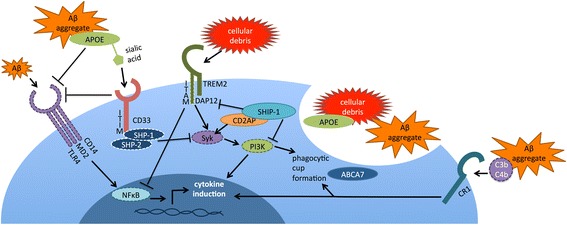
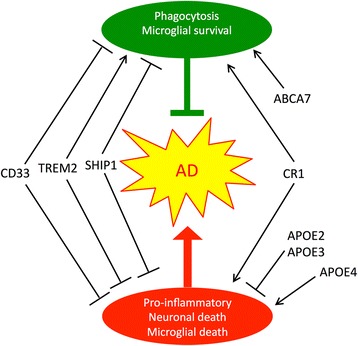
Verification
Claims the paper makes
The claims and statistics of this paper haven’t been checked yet.
Run the check — free, no account needed. It reads the open-access text and checks the sources it cites.
Claims other papers make about this one
Each is checked against this paper’s own text: does it say what the citing paper says it does?
The source backs part of the claim, not all of it — or backs it for a different population, condition or comparison.
In the citing paper
“supports the idea of microglia playing a key role driving the pathogenesis in these diseases (Malik et al., 2015).”
From TET2 Regulates the Neuroinflammatory Response in Microglia (2019) · cites this paper as Malik et al., 2015
Experimental — accuracy not yet measuredThe cited source says what the claim attributes to it.
In the citing paper
“The identification of mutations in innate immunity-related genes that confer higher risk of developing neurodegenerative diseases ( TREM2 , CD33 , CR1 , etc.), supports the idea of microglia playing a key role driving the pathogenesis in these diseases (Malik et al., 2015).”
From TET2 Regulates the Neuroinflammatory Response in Microglia (2019) · cites this paper as Malik et al., 2015
Self-check
Percentages, sums and reported differences re-computed from the paper’s own numbers.
The self-check needs the paper’s full text.
Citations
Cites
Corder, E. H., Saunders, A. M., Strittmatter, W. J., Schmechel, D. E., Gaskell, P. C., Small, G. W., Roses, A. D., Haines, J. L., & Pericak-Vance, M. A. (1993) · Science · doi:10.1126/science.8346443 · Cited by 9,429
Neuroinflammation in Alzheimer's disease
Heneka, M. T., Carson, M. J., Khoury, J. E., Landreth, G. E., Brosseron, F., Feinstein, D. L., Jacobs, A. H., Wyss-Coray, T., Vitorica, J., Ransohoff, R. M., et al. (2015) · The Lancet Neurology · doi:10.1016/s1474-4422(15)70016-5 · Cited by 6,226
The M1 and M2 paradigm of macrophage activation: Time for reassessment
Martinez, F. O., & Gordon, S. (2014) · F1000Prime Reports · doi:10.12703/p6-13 · Cited by 4,689
Inflammation and Alzheimer’s disease
Akiyama, H. (2000) · Neurobiology of Aging · doi:10.1016/s0197-4580(00)00124-x · Cited by 4,514
Meta-Analysis of 74,046 Individuals Identifies 11 New Susceptibility Loci for Alzheimer’s Disease
(EADI), E. A. D. I., Lambert, J.-C., (GERAD), G. A. E. R. I. A. D., Alzheimer's Disease Genetic Consortium (ADGC), (CHARGE), C. F. H. A. A. R. I. G. E., Ibrahim-Verbaas, C. A., Harold, D., Naj, A. C., Sims, R., Bellenguez, C., et al. (2013) · Nature Genetics · doi:10.1038/ng.2802 · Cited by 4,336
Apolipoprotein E and Alzheimer disease: risk, mechanisms and therapy
Liu, C.-C., Kanekiyo, T., Xu, H., & Bu, G. (2013) · Nature Reviews Neurology · doi:10.1038/nrneurol.2012.263 · Cited by 3,459
Self-citationHarold, D., Abraham, R., Hollingworth, P., Sims, R., Gerrish, A., Hamshere, M. L., Pahwa, J. S., Moskvina, V., Dowzell, K., Williams, A., et al. (2009) · Nature Genetics · doi:10.1038/ng.440 · Cited by 3,326
TREM2 Variants in Alzheimer's Disease
Guerreiro, R., Wojtas, A., Bras, J., Carrasquillo, M., Rogaeva, E., Majounie, E., Cruchaga, C., Sassi, C., Kauwe, J. S. K., Younkin, S., et al. (2013) · New England Journal of Medicine · doi:10.1056/nejmoa1211851 · Cited by 3,020
Variant of TREM2 Associated with the Risk of Alzheimer's Disease
Jonsson, T., Stefansson, H., Steinberg, S., Jonsdottir, I., Jonsson, P. V., Snaedal, J., Bjornsson, S., Huttenlocher, J., Levey, A. I., Lah, J. J., et al. (2013) · New England Journal of Medicine · doi:10.1056/nejmoa1211103 · Cited by 2,558
Genome-wide association study identifies variants at CLU and CR1 associated with Alzheimer's disease
the European Alzheimer's Disease Initiative Investigators, Lambert, J.-C., Heath, S., Even, G., Campion, D., Sleegers, K., Hiltunen, M., Combarros, O., Zelenika, D., Bullido, M. J., et al. (2009) · Nature Genetics · doi:10.1038/ng.439 · Cited by 2,234
Initiative, T. A. D. N., Hollingworth, P., CHARGE consortium, EADI1 consortium, Harold, D., Sims, R., Gerrish, A., Lambert, J.-C., Carrasquillo, M. M., Abraham, R., et al. (2011) · Nature Genetics · doi:10.1038/ng.803 · Cited by 1,997
Naj, A. C., Jun, G., Beecham, G. W., Wang, L.-S., Vardarajan, B. N., Buros, J., Gallins, P. J., Buxbaum, J. D., Jarvik, G. P., Crane, P. K., et al. (2011) · Nature Genetics · doi:10.1038/ng.801 · Cited by 1,901
Self-citationReplication validity of genetic association studies
Ioannidis, J. P. A., Ntzani, E., Trikalinos, T. A., & Contopoulos‐Ioannidis, D. G. (2001) · Nature Genetics · doi:10.1038/ng749 · Cited by 1,834
TREM2 Lipid Sensing Sustains the Microglial Response in an Alzheimer’s Disease Model
Wang, Y., Cella, M., Mallinson, K., Ulrich, J. D., Young, K. L., Robinette, M. L., Gilfillan, S., Krishnan, G. M., Sudhakar, S., Zinselmeyer, B. H., et al. (2015) · Cell · doi:10.1016/j.cell.2015.01.049 · Cited by 1,736
Bouchon, A., Dietrich, J., & Colonna, M. (2000) · The Journal of Immunology · doi:10.4049/jimmunol.164.10.4991 · Cited by 1,284 · cited 11×
“The R47H variant blunts the TREM2-DAP12 response to anionic lipids [29]; therefore, the mutation may reflect a stage of TREM2 function intermediate between full function and the complete loss of function that is associated with the recessive Nasu-Hakola disease.”
InfluentialWyss-Coray (2006) · doi:10.1038/nm1484 · Cited by 1,284
Takahashi, K., Rochford, C. D. P., & Neumann, H. (2005) · The Journal of Experimental Medicine · doi:10.1084/jem.20041611 · Cited by 1,124
Cunningham, F., Amode, M. R., Barrell, D., Beal, K., Billis, K., Brent, S., Carvalho-Silva, D., Clapham, P., Coates, G., Fitzgerald, S., et al. (2015) · Nucleic Acids Research · doi:10.1093/nar/gku1010 · Cited by 1,115
Alzheimer’s Disease Risk Gene CD33 Inhibits Microglial Uptake of Amyloid Beta
Griciuc, A., Serrano-Pozo, A., Parrado, A. R., Lesinski, A. N., Asselin, C. N., Mullin, K., Hooli, B., Choi, S. H., Hyman, B. T., & Tanzi, R. E. (2013) · Neuron · doi:10.1016/j.neuron.2013.04.014 · Cited by 1,004
Inflammation in Alzheimer Disease--A Brief Review of the Basic Science and Clinical Literature
Wyss-Coray, T., & Rogers, J. (2012) · Cold Spring Harbor Perspectives in Medicine · doi:10.1101/cshperspect.a006346 · Cited by 975
Complement activation by beta-amyloid in Alzheimer disease.
Rogers, J., Cooper, N. R., Webster, S., Schultz, J., McGeer, P. L., Styren, S. D., Civin, W. H., Brachova, L., Bradt, B., & Ward, P. (1992) · Proceedings of the National Academy of Sciences · doi:10.1073/pnas.89.21.10016 · Cited by 817
Ono, M., Bolland, S. M., Tempst, P., & Ravetch, J. V. (1996) · Nature · doi:10.1038/383263a0 · Cited by 773
Astrocytes synthesize apolipoprotein E and metabolize apolipoprotein E-containing lipoproteins
Pitas, R. E., Boyles, J. K., Lee, S. H., Foss, D., & Mahley, R. W. (1987) · Biochimica et Biophysica Acta (BBA) - Lipids and Lipid Metabolism · doi:10.1016/0005-2760(87)90295-5 · Cited by 693
Cutting Edge: TREM-2 Attenuates Macrophage Activation
Turnbull, I. R., Gilfillan, S., Cella, M., Aoshi, T., Miller, M., Piccio, L., Hernandez, M., & Colonna, M. (2006) · The Journal of Immunology · doi:10.4049/jimmunol.177.6.3520 · Cited by 688
Paloneva, J., Manninen, T., Christman, G., Hovanes, K., Mandelin, J., Adolfsson, R., Bianchin, M., Bird, T., Miranda, R., Salmaggi, A., et al. (2002) · The American Journal of Human Genetics · doi:10.1086/342259 · Cited by 683
Jay, T. R., Miller, C. M., Cheng, P. J., Graham, L. C., Bemiller, S., Broihier, M. L., Xu, G., Margevicius, D., Karlo, J. C., Sousa, G. L., et al. (2015) · Journal of Experimental Medicine · doi:10.1084/jem.20142322 · Cited by 682 · cited 4×
“We hypothesize that enhanced TREM2 function reduces AD risk, although as discussed above, this hypothesis is not supported by all current data [29, 57, 58].”
BackgroundResultInfluentialDamen, J. E., Liu, L., Rosten, P., Humphries, R. K., Jefferson, A. B., Majerus, P. W., & Krystal, G. (1996) · Proceedings of the National Academy of Sciences · doi:10.1073/pnas.93.4.1689 · Cited by 633
CD14 and Toll-Like Receptors 2 and 4 Are Required for Fibrillar Aβ-Stimulated Microglial Activation
Reed-Geaghan, E. G., Savage, J. C., Hise, A. G., & Landreth, G. E. (2009) · The Journal of Neuroscience · doi:10.1523/jneurosci.3158-09.2009 · Cited by 591
CD33 Alzheimer's disease locus: altered monocyte function and amyloid biology
Initiative, T. A. D. N., Bradshaw, E. M., Chibnik, L. B., Keenan, B. T., Ottoboni, L., Raj, T., Tang, A., Rosenkrantz, L. L., Imboywa, S., Lee, M., et al. (2013) · Nature Neuroscience · doi:10.1038/nn.3435 · Cited by 570
Siglecs—the major subfamily of I-type lectins
Varki, A. P., & Angata, T. (2005) · Glycobiology · doi:10.1093/glycob/cwj008 · Cited by 527
Xu, Q., Bernardo, A., Walker, D., Kanegawa, T., Mahley, R. W., & Huang, Y. (2006) · The Journal of Neuroscience · doi:10.1523/jneurosci.5476-05.2006 · Cited by 524
Deletion of SHIP or SHP-1 Reveals Two Distinct Pathways for Inhibitory Signaling
Ono, M., Okada, H., Bolland, S. M., Yanagi, S., Kurosaki, T., & Ravetch, J. V. (1997) · Cell · doi:10.1016/s0092-8674(00)80337-2 · Cited by 490
A role for TREM2 ligands in the phagocytosis of apoptotic neuronal cells by microglia
Hsieh, C. L., Koike, M., Spusta, S. C., Niemi, E. C., Yenari, M., Nakamura, M. C., & Seaman, W. E. (2009) · Journal of Neurochemistry · doi:10.1111/j.1471-4159.2009.06042.x · Cited by 475
Loss-of-function mutations in TYROBP (DAP12) result in a presenile dementia with bone cysts
Paloneva, J., Kestilä, M., Wu, J., Salminen, A., Böhling, T., Ruotsalainen, V., Hakola, P., Bakker, A. B. H., Phillips, J. H., Pekkarinen, P., et al. (2000) · Nature Genetics · doi:10.1038/77153 · Cited by 460
Bouchon, A., Hernández-Munain, C., Cella, M., & Colonna, M. (2001) · The Journal of Experimental Medicine · doi:10.1084/jem.194.8.1111 · Cited by 460
Immunoglobulins and complement factors in senile plaques: An immunoperoxidase study
Eikelenboom, P., & Stam, F. C. (1982) · Acta Neuropathologica · doi:10.1007/bf00685397 · Cited by 454
Hamerman, J. A., Jarjoura, J. R., Humphrey, M. B., Nakamura, M. C., Seaman, W. E., & Lanier, L. L. (2006) · The Journal of Immunology · doi:10.4049/jimmunol.177.4.2051 · Cited by 440
Jun, G. (2010) · Archives of Neurology · doi:10.1001/archneurol.2010.201 · Cited by 422
p150Ship, a signal transduction molecule with inositol polyphosphate-5-phosphatase activity.
Lioubin, M. N., Algate, P. A., Tsai, S., Carlberg, K., Aebersold, A., & Rohrschneider, L. R. (1996) · Genes & Development · doi:10.1101/gad.10.9.1084 · Cited by 418
Takahashi, K., Prinz, M., Stagi, M., Chechneva, O., & Neumann, H. (2007) · PLoS Medicine · doi:10.1371/journal.pmed.0040124 · Cited by 414
TREM2- and DAP12-dependent activation of PI3K requires DAP10 and is inhibited by SHIP1
Peng, Q., Malhotra, S., Torchia, J. A., Kerr, W. G., Coggeshall, K. M., & Humphrey, M. B. (2010) · Science Signaling · doi:10.1126/scisignal.2000500 · Cited by 413
Rayaprolu, S., Mullen, B., Baker, M., Lynch, T., Finger, E., Seeley, W. W., Hatanpaa, K. J., Lomen-Hoerth, C., Kertesz, A., Bigio, E. H., et al. (2013) · Molecular Neurodegeneration · doi:10.1186/1750-1326-8-19 · Cited by 404
Lynch, J. R., Tang, W., Wang, H., Vitek, M. P., Bennett, E. R., Sullivan, P. M., Warner, D. S., & Laskowitz, D. T. (2003) · Journal of Biological Chemistry · doi:10.1074/jbc.m306923200 · Cited by 394
APOE genotype-specific differences in the innate immune response
Vitek, M. P., Brown, C. M., & Colton, C. A. (2009) · Neurobiology of Aging · doi:10.1016/j.neurobiolaging.2007.11.014 · Cited by 362
LPS receptor (CD14): a receptor for phagocytosis of Alzheimer's amyloid peptide
Liu, Y., Walter, S., Stagi, M., Cherny, D., Letièmbre, M., Schulz‐Schaeffer, W., Heine, H., Penke, B., Neumann, H., & Fassbender, K. C. (2005) · Brain · doi:10.1093/brain/awh531 · Cited by 349
Up-Regulated Production and Activation of the Complement System in Alzheimer's Disease Brain
Yasojima, K., Schwab, C., McGeer, E. G., & McGeer, P. L. (1999) · American Journal Of Pathology · doi:10.1016/s0002-9440(10)65340-0 · Cited by 328
Loss-of-function variants in ABCA7 confer risk of Alzheimer's disease
DemGene, Steinberg, S., Stefansson, H., Jonsson, T., Johannsdottir, H., Ingason, A., Helgason, H., Sulem, P., Magnusson, O. T., Gudjonsson, S. A., et al. (2015) · Nature Genetics · doi:10.1038/ng.3246 · Cited by 324
Rong, X., Albert, C. J., Hong, C., Duerr, M. A., Chamberlain, B. T., Tarling, E. J., Ito, A., Gao, J., Wang, B., Edwards, P. A., et al. (2013) · Cell Metabolism · doi:10.1016/j.cmet.2013.10.002 · Cited by 323
Altered microglial response to Aβ plaques in APPPS1-21 mice heterozygous for TREM2
Ulrich, J. D., Finn, M. B., Wang, Y., Shen, A., Mahan, T. E., Jiang, H., Stewart, F. R., Piccio, L., Colonna, M., & Holtzman, D. M. (2014) · Molecular Neurodegeneration · doi:10.1186/1750-1326-9-20 · Cited by 302
APOE4-specific Changes in Aβ Accumulation in a New Transgenic Mouse Model of Alzheimer Disease
Youmans, K. L., Tai, L. M., Nwabuisi-Heath, E., Jungbauer, L., Kanekiyo, T., Gan, M., Kim, J., Eimer, W. A., Estus, S., Rebeck, G. W., et al. (2012) · Journal of Biological Chemistry · doi:10.1074/jbc.m112.407957 · Cited by 268
Self-citationCD33 Alzheimer’s risk-altering polymorphism, CD33 expression, and exon 2 splicing
Malik, M., Simpson, J. F., Parikh, I., Wilfred, B. R., Fardo, D. W., Nelson, P. T., & Estus, S. (2013) · The Journal of Neuroscience · doi:10.1523/jneurosci.1224-13.2013 · Cited by 262
Self-citationTREM2and Neurodegenerative Disease
Reitz, C., & Mayeux, R. P. (2013) · New England Journal of Medicine · doi:10.1056/nejmc1306509 · Cited by 258
TREM2 is upregulated in amyloid plaque-associated microglia in aged APP23 transgenic mice
Frank, S., Burbach, G. J., Bonin, M., Walter, M., Streit, W., Bechmann, I., & Deller, T. (2008) · Glia · doi:10.1002/glia.20710 · Cited by 247
Interaction of SLP adaptors with the SH2 domain of Tec family kinases
Su, Y., Zhang, Y., Schweikert, J., Koretzky, G. A., Reth, M. G., & Wienands, J. (1999) · European Journal of Immunology · doi:10.1002/(sici)1521-4141(199911)29:11 · Cited by 242
Rougerie, P., Miskolci, V., & Cox, D. (2013) · Immunological Reviews · doi:10.1111/imr.12118 · Cited by 237
Brouwers, N., Van Cauwenberghe, C., Engelborghs, S., Lambert, J.-C., Bettens, K., Le Bastard, N., Pasquier, F., Montoya, A. G., Peeters, K., Mattheijssens, M., et al. (2012) · Molecular Psychiatry · doi:10.1038/mp.2011.24 · Cited by 227
APOE genotype alters glial activation and loss of synaptic markers in mice
Zhu, Y., Nwabuisi‐Heath, E., Dumanis, S. B., Tai, L. M., Yu, C., Rebeck, G. W., & Ladu, M. J. (2012) · Glia · doi:10.1002/glia.22289 · Cited by 224
Self-citationCurses—Winner's and Otherwise—in Genetic Epidemiology
Kraft, P. L. (2008) · Epidemiology · doi:10.1097/ede.0b013e318181b865 · Cited by 222
Multiple forms of an inositol polyphosphate 5-phosphatase form signaling complexes with Shc and Grb2
Kavanaugh, W. M., Pot, D. A., Chin, S. M., Deuter-Reinhard, M., Jefferson, A. B., Norris, F. A., Masiarz, F. R., Cousens, L. S., Majerus, P. W., & Williams, L. T. (1996) · Current Biology · doi:10.1016/s0960-9822(02)00511-0 · Cited by 217
Kim, W. S., Li, H., Ruberu, K. R., Chan, S. L., Elliott, D. A., Low, J. K., Cheng, D., Karl, T., & Garner, B. (2013) · Journal of Neuroscience · doi:10.1523/jneurosci.4165-12.2013 · Cited by 216
Complement Receptor 1: Disease associations and therapeutic implications
Khera, R., & Das, N. (2008) · Molecular Immunology · doi:10.1016/j.molimm.2008.09.026 · Cited by 213
Jehle, A. W., Gardai, S. J., Li, S., Linsel‐Nitschke, P., Morimoto, K., Janssen, W. J., Vandivier, R. W., Wang, N., Greenberg, S., Dale, B. M., et al. (2006) · The Journal of Cell Biology · doi:10.1083/jcb.200601030 · Cited by 213
TLR Signaling: An Emerging Bridge from Innate Immunity to Atherogenesis
Michelsen, K. S., Doherty, T. M., Shah, P. K., & Arditi, M. (2004) · The Journal of Immunology · doi:10.4049/jimmunol.173.10.5901 · Cited by 211
Bakker, A. B. H., Baker, E. G., Sutherland, G. R., Phillips, J. H., & Lanier, L. L. (1999) · Proceedings of the National Academy of Sciences · doi:10.1073/pnas.96.17.9792 · Cited by 210
CNS manifestations of Nasu–Hakola disease
Bm, J., Autti, T., Raininko, R., Partanen, J., Salonen, O., Puranen, M., Hakola, P., & Haltia, M. (2001) · Neurology · doi:10.1212/wnl.56.11.1552 · Cited by 205
Wang, N., Lan, D., Gerbod-Giannone, M. C., Linsel‐Nitschke, P., Jehle, A. W., Chen, W., Martinez, L. O., & Tall, A. R. (2003) · Journal of Biological Chemistry · doi:10.1074/jbc.m307831200 · Cited by 205
Paul, S. P., Taylor, L. S., Stansbury, E. K., & McVicar, D. W. (2000) · Blood · doi:10.1182/blood.v96.2.483 · Cited by 204
APOE2 enhances neuroprotection against Alzheimer’s disease through multiple molecular mechanisms
Conejero-Goldberg, C., Gomar, J. J., Bobes-Bascaran, T., Hyde, T. M., Kleinman, J. E., Herman, M. M., Chen, S., Davies, P., & Goldberg, T. E. (2014) · Molecular Psychiatry · doi:10.1038/mp.2013.194 · Cited by 199
Human APOE4 increases microglia reactivity at Aβ plaques in a mouse model of Aβ deposition
Rodriguez, G. A., Tai, L. M., LaDu, M. J., & Rebeck, G. W. (2014) · Journal of Neuroinflammation · doi:10.1186/1742-2094-11-111 · Cited by 193
Self-citationQuantifying and correcting for the winner's curse in genetic association studies
Xiao, R., & Boehnke, M. (2009) · Genetic Epidemiology · doi:10.1002/gepi.20398 · Cited by 192
Abe-Dohmae, S., Ikeda, Y., Matsuo, M., Hayashi, M., Okuhira, K., Ueda, K., & Yokoyama, S. (2003) · Journal of Biological Chemistry · doi:10.1074/jbc.m309888200 · Cited by 191
Lynch, J., Morgan, D., Mance, J., Matthew, W. D., & Laskowitz, D. T. (2001) · Journal of Neuroimmunology · doi:10.1016/s0165-5728(00)00459-8 · Cited by 189
Bourne, K. Z., Ferrari, D. C., Lange‐Dohna, C., Roßner, S., Wood, T. G., & Perez-Polo, J. R. (2007) · Journal of Neuroscience Research · doi:10.1002/jnr.21252 · Cited by 188
Taylor, V., Buckley, C. D., Douglas, M., Cody, A. J., Simmons, D. L., & Freeman, S. D. (1999) · Journal of Biological Chemistry · doi:10.1074/jbc.274.17.11505 · Cited by 186
Systemic Inflammation, Infection, ApoE Alleles, and Alzheimer Disease: A Position Paper
Finch, C. E., & Morgan, T. E. (2007) · Current Alzheimer Research · doi:10.2174/156720507780362254 · Cited by 180
Osborne, M. A., Zenner, G., Lubinus, M., Zhang, X., Songyang, Z., Cantley, L. C., Majerus, P. W., Burn, P., & Kochan, J. P. (1996) · Journal of Biological Chemistry · doi:10.1074/jbc.271.46.29271 · Cited by 174
Identification of a Novel Human Sterol-Sensitive ATP-Binding Cassette Transporter (ABCA7)
Kaminski, W. E., Orsó, E., Diederich, W., Klucken, J., Drobnik, W., & Schmitz, G. (2000) · Biochemical and Biophysical Research Communications · doi:10.1006/bbrc.2000.2954 · Cited by 166
Specific lipid recognition is a general feature of CD300 and TREM molecules
Cannon, J. P., O’Driscoll, M., & Litman, G. W. (2011) · Immunogenetics · doi:10.1007/s00251-011-0562-4 · Cited by 165
Tai, L. M., Ghura, S., Koster, K. P., Liakaite, V., Maienschein‐Cline, M., Kanabar, P., Collins, N., Ben‐Aissa, M., Lei, A. Z., Bahroos, N., et al. (2015) · Journal of Neurochemistry · doi:10.1111/jnc.13072 · Cited by 165
Self-citationSessa, G., Podini, P., Mariani, M., Meroni, A., Spreafico, R., Sinigaglia, F., Colonna, M., Panina, P., & Meldolesi, J. (2004) · European Journal of Neuroscience · doi:10.1111/j.1460-9568.2004.03729.x · Cited by 165
Kim, W. S., Guillemin, G. J., Glaros, E. N., Lim, C. K., & Garner, B. (2006) · Neuroreport · doi:10.1097/01.wnr.0000221833.41340.cd · Cited by 158
Cox, D., Dale, B. M., Kashiwada, M., Helgason, C. D., & Greenberg, S. (2001) · The Journal of Experimental Medicine · doi:10.1084/jem.193.1.61 · Cited by 158
Nuclear Receptors License Phagocytosis by Trem2+Myeloid Cells in Mouse Models of Alzheimer's Disease
Savage, J. C., Jay, T., Goduni, E., Quigley, C., Mariani, M. M., Malm, T., Ransohoff, R. M., Lamb, B. T., & Landreth, G. E. (2015) · The Journal of Neuroscience · doi:10.1523/jneurosci.4586-14.2015 · Cited by 154 · cited 1×
“While the role of TREM2 in phagocytosis may have important implications for Aβ clearance in AD [53], the R47H variant has also been implicated in Parkinson’s disease and frontotemporal dementia (FTD), neither of which centrally involves amyloid [54].”
BackgroundGonzález, Y., Herrera, M. T., Soldevila, G., García‐García, L., Fabián, G., Pérez-Armendáriz, E. M., Bobadilla, K., Guzmán‐Beltrán, S., Sada, E., & Torres, M. (2012) · BMC Immunology · doi:10.1186/1471-2172-13-19 · Cited by 149
Raj, T., Ryan, K. J., Replogle, J. M., Chibnik, L. B., Rosenkrantz, L., Tang, A., Rothamel, K., Stranger, B. E., Bennett, D. A., Evans, D. A., et al. (2014) · Human Molecular Genetics · doi:10.1093/hmg/ddt666 · Cited by 144
Lajaunias, F., Dayer, J., & Chizzolini, C. (2004) · European Journal of Immunology · doi:10.1002/eji.200425273 · Cited by 143
LRP in Amyloid‐β Production and Metabolism
Bu, G., Cam, J. A., & Zerbinatti, C. (2006) · Annals of the New York Academy of Sciences · doi:10.1196/annals.1377.005 · Cited by 141
Self-citationAn, H., Xu, H., Zhang, M., Zhou, J., Feng, T., Qian, C., Qi, R., & Cao, X. (2005) · Blood · doi:10.1182/blood-2005-01-0191 · Cited by 140
Melchior, B., Garcia, A., Hsiung, B., Lo, K. M., Doose, J. M., Thrash, J. C., Stalder, A. K., Staufenbiel, M., Neumann, H., & Carson, M. J. (2010) · ASN NEURO · doi:10.1042/an20100010 · Cited by 134
Hernández‐Caselles, T., Martinez‐Esparza, M., Pérez‐Oliva, A. B., Quintanilla-Cecconi, A. M., García-Alonso, A. M., Álvarez‐López, D. M. R., & García–Peñarrubia, P. (2005) · Journal of Leukocyte Biology · doi:10.1189/jlb.0205096 · Cited by 133
CD33/Siglec-3 Binding Specificity, Expression Pattern, and Consequences of Gene Deletion in Mice
der Linden, E. C. M. B.-V., Angata, T., Reynolds, S. A., Powell, L. D., Hedrick, S. Μ., & Varki, A. P. (2003) · Molecular and Cellular Biology · doi:10.1128/mcb.23.12.4199-4206.2003 · Cited by 133
Inflammation, Apoptosis, and Alzheimer's Disease
Bamberger, M. E., & Landreth, G. E. (2002) · The Neuroscientist · doi:10.1177/1073858402008003013 · Cited by 129
Brioni, J. D., Esbenshade, T. A., Garrison, T. R., Bitner, S. R., & Cowart, M. (2010) · Cited by 125
The three new pathways leading to Alzheimer's disease
Morgan, K. (2011) · Neuropathology and Applied Neurobiology · doi:10.1111/j.1365-2990.2011.01181.x · Cited by 122
Apolipoprotein E Deficiency Worsens Outcome From Global Cerebral Ischemia in the Mouse
Sheng, H., Laskowitz, D. T., Mackensen, G. B., Kudo, M., Pearlstein, R. D., & Warner, D. S. (1999) · Stroke · doi:10.1161/01.str.30.5.1118 · Cited by 118
Ruiz, A., Dols-Icardo, O., Bullido, M. J., Pastor, P., Rodríguez-Rodríguez, E., López de Munain, A., de Pancorbo, M. M., Pérez-Tur, J., Álvarez, V., Antonell, A., et al. (2014) · Neurobiology of Aging · doi:10.1016/j.neurobiolaging.2013.08.011 · Cited by 118
Linnartz‐Gerlach, B., & Neumann, H. (2012) · Glia · doi:10.1002/glia.22359 · Cited by 117
Fagan, A. M., Murphy, B. A., Patel, S. N., Kilbridge, J. F., Mobley, W. C., Bu, G., & Holtzman, D. M. (1998) · Experimental Neurology · doi:10.1006/exnr.1998.6818 · Cited by 116
Self-citationEvidence of the association of BIN1 and PICALM with the AD risk in contrasting European populations
Lambert, J., Zélénika, D., Hiltunen, M., Chouraki, V. A., Combarros, O., Bullido, M. J., Tognoni, G., Fiévet, N., Boland, A., Arosio, B., et al. (2011) · Neurobiology of Aging · doi:10.1016/j.neurobiolaging.2010.11.022 · Cited by 111
Lynch, J. R., Pineda, J. A., Morgan, D., Zhang, L., Warner, D. S., Benveniste, H., & Laskowitz, D. T. (2002) · Annals of Neurology · doi:10.1002/ana.10098 · Cited by 111
Effects of apoE genotype on macrophage inflammation and heme oxygenase-1 expression
Jofre‐Monseny, L., Łoboda, A., Wagner, A. E., Huebbe, P., Boesch, C., Józkowicz, A., Minihane, A. M., Dulak, J., & Rimbach, G. H. (2007) · Biochemical and Biophysical Research Communications · doi:10.1016/j.bbrc.2007.03.150 · Cited by 108
Heterogeneity of presenile dementia with bone cysts (Nasu–Hakola disease)
Kondo, T., Takahashi, K., Kohara, N., Takahashi, Y., Hayashi, S., Takahashi, H., Matsuo, H., Yamazaki, M., Inoue, K., Miyamoto, K., et al. (2002) · Neurology · doi:10.1212/wnl.59.7.1105 · Cited by 106
Huang, Z.-Y., Hunter, S., Kim, M.-K., Indik, Z. K., & Schreiber, A. D. (2003) · Journal of Leukocyte Biology · doi:10.1189/jlb.0902454 · Cited by 105
Neuroinflammation in the Aging Down Syndrome Brain; Lessons from Alzheimer's Disease
Wilcock, D. M. (2012) · Current Gerontology and Geriatrics Research · doi:10.1155/2012/170276 · Cited by 104
ABCA7 expression is associated with Alzheimer's disease polymorphism and disease status
Vasquez, J. B., Fardo, D. W., & Estus, S. (2013) · Neuroscience Letters · doi:10.1016/j.neulet.2013.09.058 · Cited by 101
Self-citationBlockage of CR1 prevents activation of rodent microglia
Crehan, H., Hardy, J., & Pocock, J. (2013) · Neurobiology of Disease · doi:10.1016/j.nbd.2013.02.003 · Cited by 98
A coding variant in CR1 interacts with APOE-ɛ4 to influence cognitive decline
Keenan, B. T., Shulman, J. M., Chibnik, L. B., Raj, T., Tran, D., Sabuncu, M. R., Initiative, T. A. D. N., Allen, A. N., Corneveaux, J. J., Hardy, J., et al. (2012) · Human Molecular Genetics · doi:10.1093/hmg/dds054 · Cited by 97
Low‐density lipoprotein receptors regulate microglial inflammation through c‐Jun N‐terminal kinase
Pocivavsek, A., Burns, M. P., & Rebeck, G. W. (2009) · Glia · doi:10.1002/glia.20772 · Cited by 96
Self-citationFeedback regulation of lymphocyte signalling
Reth, M. G., & Brummer, T. (2004) · Nature reviews. Immunology · doi:10.1038/nri1335 · Cited by 92
Barber, D. L., Mason, J. M., Fukazawa, T., Reedquist, K. A., Druker, B. J., Band, H., & D’Andrea, A. D. (1997) · Blood · doi:10.1182/blood.v89.9.3166 · Cited by 92
Laskowitz, D. T., Song, P., Wang, H., Mace, B. E., Sullivan, P. M., Vitek, M. P., & Dawson, H. N. (2010) · Journal of Neurotrauma · doi:10.1089/neu.2010.1396 · Cited by 91
Linnartz, B., Wang, Y., & Neumann, H. (2010) · International Journal of Alzheimer's Disease · doi:10.4061/2010/587463 · Cited by 87
Genetic association of CR1 with Alzheimer's disease: A tentative disease mechanism
Hazrati, L., Cauwenberghe, C. V., Brooks, P. L., Brouwers, N., Ghani, M., Sato, C., Cruts, M., Sleegers, K., George‐Hyslop, P. S., Broeckhoven, C. V., et al. (2012) · Neurobiology of Aging · doi:10.1016/j.neurobiolaging.2012.07.001 · Cited by 86
Li, F., Fowler, K. A., Neil, J. E., Colton, C. A., & Vitek, M. P. (2010) · Journal of Pharmacology and Experimental Therapeutics · doi:10.1124/jpet.110.167882 · Cited by 85
Endogenous apolipoprotein E suppresses LPS-stimulated microglial nitric oxide production
Laskowitz, D. T., Matthew, W. D., Bennett, E. R., Schmechel, D. E., Herbstreith, M. H., Goel, S., & McMillian, M. (1998) · Neuroreport · doi:10.1097/00001756-199803090-00010 · Cited by 84
Genetics of CD33 in Alzheimer's disease and acute myeloid leukemia
Malik, M., Chiles, J. W., Xi, H. S., Medway, C., Simpson, J. F., Potluri, S., Howard, D. S., Yu, L., Paumi, C. M., Mukherjee, S., et al. (2015) · Human Molecular Genetics · doi:10.1093/hmg/ddv092 · Cited by 84
Self-citationWalter, R. B., Raden, B. W., Zeng, R., Häusermann, P., Bernstein, I. D., & Cooper, J. A. (2007) · Journal of Leukocyte Biology · doi:10.1189/jlb.0607388 · Cited by 80
Differential Association of Phosphatidylinositol 3-Kinase, SHIP-1, and PTEN with Forming Phagosomes
Kamen, L. A., Levinsohn, J. L., & Swanson, J. A. (2007) · Molecular Biology of the Cell · doi:10.1091/mbc.e07-01-0061 · Cited by 79
Implication of Complement System and its Regulators in Alzheimers Disease
Kolev, M. V., Ruseva, M. M., Harris, C. L., Morgan, B. P., & Donev, R. (2009) · Current Neuropharmacology · doi:10.2174/157015909787602805 · Cited by 78
Pérez‐Oliva, A. B., Martinez‐Esparza, M., Vicente-Fernandez, J. J., Corral-San-Miguel, R., García–Peñarrubia, P., & Hernández‐Caselles, T. (2011) · Glycobiology · doi:10.1093/glycob/cwq220 · Cited by 77
Siglec receptors and hiding plaques in Alzheimer's disease
Salminen, A., & Kaarniranta, K. (2009) · Journal of Molecular Medicine · doi:10.1007/s00109-009-0472-1 · Cited by 73
Ikeda, Y., Abe-Dohmae, S., Munehira, Y., Aoki, R., Kawamoto, S., Furuya, A., Shitara, K., Amachi, T., Kioka, N., Matsuo, M., et al. (2003) · Biochemical and Biophysical Research Communications · doi:10.1016/j.bbrc.2003.10.002 · Cited by 72
Benítez, B. A., & Cruchaga, C. (2013) · PubMed Central · doi:10.1056/nejmc1306509#sa4 · Cited by 64
Pocivavsek, A., MIKHAILENKO, I. A., Strickland, D. K., & Rebeck, G. W. (2009) · Journal of Neuroimmunology · doi:10.1016/j.jneuroim.2009.06.010 · Cited by 63
Self-citationNasu-Hakola disease with a splicing mutation of TREM2 in a Japanese family
Numasawa, Y., Yamaura, C., Ishihara, S., Shintani, S., Yamazaki, M., Tabunoki, H., & Satoh, J. (2010) · European Journal of Neurology · doi:10.1111/j.1468-1331.2010.03311.x · Cited by 58
Amyloid beta-protein and lipid metabolism
Zinser, E. G., Hartmann, T., & Grimm, M. O. W. (2007) · Biochimica et Biophysica Acta (BBA) - Biomembranes · doi:10.1016/j.bbamem.2007.02.014 · Cited by 55
Goldklang, M. P., Golovatch, P., Zelonina, T., Trischler, J., Rabinowitz, D., Lemaître, V., & D'Armiento, J. M. (2012) · American Journal of Physiology-Lung Cellular and Molecular Physiology · doi:10.1152/ajplung.00454.2010 · Cited by 54
Maresco-Pennisi, D. L., Osborne, J. M., Cooney, D. S., Coggeshall, K. M., & Anderson, C. L. (1999) · The Journal of Immunology · doi:10.4049/jimmunol.162.11.6458 · Cited by 53
Maresco-Pennisi, D. L., Osborne, J. M., Cooney, D. S., Coggeshall, K. M., & Anderson, C. L. (1999) · PubMed · Cited by 52
de Azevedo, O. G. R., Bolick, D. T., Roche, J. K., Pinkerton, R., Lima, A. Â. M., Vitek, M. P., Warren, C. A., Oriá, R. B., & Guerrant, R. L. (2014) · PLoS ONE · doi:10.1371/journal.pone.0089562 · Cited by 51
Mason, J. M., Beattie, B. K., Liu, Q., Dumont, D., & Barber, D. L. (2000) · Journal of Biological Chemistry · doi:10.1074/jbc.275.6.4398 · Cited by 50
Ishida, A., Akita, K., Mori, Y., Tanida, S., Toda, M., Inoue, M., & Nakada, H. (2014) · Journal of Biological Chemistry · doi:10.1074/jbc.m113.523480 · Cited by 49
Xu, P., Schmechel, D. E., Qiu, H.-L., Herbstreith, M. H., Rothrock‐Christian, T., Eyster, M. V., Roses, A. D., & Gilbert, J. R. (1999) · Neurobiology of Disease · doi:10.1006/nbdi.1998.0213 · Cited by 49
Bao, M., Hanabuchi, S., Facchinetti, V., Du, Q., Bover, L., Plumas, J., Chaperot, L., Cao, W., Qin, J., Sun, S.-C., et al. (2012) · The Journal of Immunology · doi:10.4049/jimmunol.1200887 · Cited by 49
Tsoi, L.-M., Wong, K., Liu, Y.-M., & Ho, Y.-Y. (2007) · Archives of Biochemistry and Biophysics · doi:10.1016/j.abb.2007.01.019 · Cited by 46
Tukhovskaya, E. A., Yukin, A. Y., Khokhlova, O. N., Murashev, A. N., & Vitek, M. P. (2008) · Journal of Neuroscience Research · doi:10.1002/jnr.21874 · Cited by 44
Alzheimer's disease is associated with low density of the long CR1 isoform
Mahmoudi, R., Kisserli, A., Novella, J., Donvito, B., Dramé, M., Réveil, B., Duret, V., Jolly, D., Pham, B., & Cohen, J. H. M. (2015) · Neurobiology of Aging · doi:10.1016/j.neurobiolaging.2015.01.006 · Cited by 42
Deschamps, C., Échard, A., & Niedergang, F. (2013) · Traffic · doi:10.1111/tra.12045 · Cited by 41
Human-Specific Evolutionary Changes in the Biology of Siglecs
Schwarz, F., Fong, J. J., & Varki, A. P. (2014) · Advances in experimental medicine and biology · doi:10.1007/978-3-319-11280-0_1 · Cited by 41
Lack of apolipoprotein-E exacerbates experimental allergic encephalomyelitis
Karussis, D. M., Michaelson, D. M., Grigoriadis, N., Korezyn, A. D., Mizrachi-Koll, R., Chapman, S., Abramsky, O., & Chapman, J. (2003) · Multiple Sclerosis Journal · doi:10.1191/1352458503ms950oa · Cited by 36
Condé, C., Rambout, X., Lebrun, M., Lecat, A., Di Valentin, E., Dequiedt, F., Piette, J., Gloire, G., & Legrand, S. (2012) · PLoS ONE · doi:10.1371/journal.pone.0041005 · Cited by 33
Amyloid metabolism and secretases in Alzheimer’s disease
Xia, W. (2001) · Current Neurology and Neuroscience Reports · doi:10.1007/s11910-001-0101-z · Cited by 27
Complement receptor 1 coding variant p.Ser1610Thr in Alzheimer's disease and related endophenotypes
Cauwenberghe, C. V., Bettens, K., Engelborghs, S., Vandenbulcke, M., Dongen, J. V., Vermeulen, S., Vandenberghe, R. R., Deyn, P. P. D., Broeckhoven, C. V., & Sleegers, K. (2013) · Neurobiology of Aging · doi:10.1016/j.neurobiolaging.2013.03.008 · Cited by 26
Satoh, J., Kawana, N., Yamamoto, Y., Ishida, T., Saito, Y., & Arima, K. (2013) · Alzheimer s Research & Therapy · doi:10.1186/alzrt184 · Cited by 21
Thinakaran, G. (2001) · Journal of Molecular Neuroscience · doi:10.1385/jmn:17:2:183 · Cited by 16
Starey, C. J. H. (1966) · BMJ · doi:10.1136/bmj.2.5514.646-f · Cited by 14
A novel compound heterozygous mutation in the DAP12 gene in a patient with Nasu-Hakola disease
Kuroda, R., Satoh, J., Yamamura, T., Anezaki, T., Terada, T., Yamazaki, K., Obi, T., & Mizoguchi, K. (2006) · Journal of the Neurological Sciences · doi:10.1016/j.jns.2006.09.019 · Cited by 13
Ruiz, A., Hernández, I., Rosende‐Roca, M., González‐Pérez, A., Rodríguez‐Noriega, E., Ramírez‐Lorca, R., Mauleón, A., Moreno‐Rey, C., Boswell, L., Tune, L. E., et al. (2014) · Neurobiology of Aging · doi:10.1016/j.neurobiolaging.2014.06.016 · Cited by 5
Daws (2001) · doi:10.1002/1521-4141(200103)31:3
Webster (1996) · doi:10.1002/(sici)1097-4547(19961001)46:1
Research works printed but not linked: 6
- Guerreiro R, Hardy J. TREM2 and neurodegenerative disease. N Engl J Med. 2013;369:1569–70.
- Bird TD. TREM2 and neurodegenerative disease. N Engl J Med. 2013;369:1568.
- Rajagopalan P, Hibar DP, Thompson PM. TREM2 and neurodegenerative disease. N Engl J Med. 2013;369:1565–7.
- Bertram L, Parrado AR, Tanzi RE. TREM2 and neurodegenerative disease. N Engl J Med. 2013;369:1565.
- Jonsson T, Stefansson K. TREM2 and neurodegenerative disease. N Engl J Med. 2013;369:1568–9.
- Guerreiro R, Wojtas A, Bras J, Carrasquillo M, Rogaeva E, Majounie E, et al. TREM2 variants in Alzheimer’s disease. N Engl J Med. 2013;368:117–27. · DOI · Paper page
Cited by
Sorted by citations
Microglia in physiology and disease
Wolf, S. A., Boddeke, H. W. G. M., & Kettenmann, H. (2017) · Annual Review of Physiology · doi:10.1146/annurev-physiol-022516-034406 · Cited by 1,426
Molecular and cellular mechanisms underlying the pathogenesis of Alzheimer’s disease
Guo, T., Zhang, D., Zeng, Y., Huang, T. Y., Xu, H., & Zhao, Y. (2020) · Molecular Neurodegeneration · doi:10.1186/s13024-020-00391-7 · Cited by 994
New insights into the role of TREM2 in Alzheimer’s disease
Gratuze, M., Leyns, C. E. G., & Holtzman, D. M. (2018) · Molecular Neurodegeneration · doi:10.1186/s13024-018-0298-9 · Cited by 489
The role of astrocytes in amyloid production and Alzheimer's disease
Frost, G. R., & Li, Y. (2017) · Open Biology · doi:10.1098/rsob.170228 · Cited by 448
TREM2 in Neurodegenerative Diseases
Jay, T. R., von Saucken, V. E., & Landreth, G. E. (2017) · Molecular Neurodegeneration · doi:10.1186/s13024-017-0197-5 · Cited by 427
Metadata
- Authors
- Malik, M., Parikh, I., Vasquez, J. B., Smith, C., Tai, L., Bu, G., LaDu, M. J., Fardo, D. W., Rebeck, G. W., & Estus, S.
- Affiliations
- University of Kentucky (US)
- University of Illinois Chicago (US)
- Mayo Clinic (US)
- Georgetown University Medical Center (US)
- Corresponding author
- Estus, Steven
- ORCID
- Venue
- Molecular Neurodegeneration
- Published
- 2015-10-05
- Volume
- 10
- Issue
- 1
- Pages
- 52-52
- ISSN
- 1750-1326 (ISSN-L)
- PMC
- PMC4595327
- OpenAlex
- W2119581346
- Cited by
- 161
- References
- 151
- Citations by year
- 2026: 6 · 2025: 14 · 2024: 11 · 2023: 19 · 2022: 16 · 2021: 18 · 2020: 21 · 2019: 15 · 2018: 12 · 2017: 18 · 2016: 10 · 2015: 1
- FWCI
- 1.09
- Type
- journal article
- Language
- en
- Open access
- gold
- doi.org
- Locations
- Molecular Neurodegeneration (publishedVersion, cc-by)
- Europe PMC (PubMed Central) (publishedVersion, cc-by)
- PubMed Central (publishedVersion, cc-by)
- PubMed (publishedVersion)
- Rare & Special e-Zone (The Hong Kong University of Science and Technology) (submittedVersion)
- UKnowledge (University of Kentucky) (submittedVersion, cc-by)
- Funders
- National Institute on Aging (R01AG045775, K25AG043546, P01AG030128, R21AG048498, R21 AG044682, R21AG051233)
- BrightFocus Foundation (A2014210S)
- Topics
- Life Sciences › Neuroscience › Neurology › Neuroinflammation and Neurodegeneration Mechanisms
- Life Sciences › Neuroscience › Cellular and Molecular Neuroscience › Alzheimer's disease research and treatments
- Health Sciences › Medicine › Psychiatry and Mental health › Dementia and Cognitive Impairment Research
- Keywords
- Alzheimer's disease, microglial inflammation, genetic risk factors, TREM2, CD33, complement receptor 1, ABCA7, SHIP1, apolipoprotein E, microglial function, neuroinflammation, pathogenesis
- MeSH terms
- Alzheimer Disease, Animals, Humans, Inflammation, Risk Factors, Microglia, Genetic Predisposition to Disease, Polymorphism, Single Nucleotide
About these checks
Registry, retraction, Cites and statistics results are computed, not judged, with one exception: a printed reference that no index lists is read once by a model before it counts as a citation error. Claims are extracted by a model and kept only when their quote appears verbatim in the text; each cited source is then checked, with a model’s help, for whether it says what the claim relies on. Those verdicts can be wrong — read the claim’s quote and the cited source before relying on one.
Statistics and arithmetic are recomputed, not judged.
Confidence bands are shown only for fields calibrated on our annotated test set. None is calibrated yet, so no band is shown.
What counts as a claim ›How we measure confidence ›How we check this ›
Are you an author, or do you see a problem with this page? Request a review
