

The DOI matches its Crossref record; 150 of the 151 references it cites were found in a registry or an index.
Genetics ignite focus on microglial inflammation in Alzheimer’s disease
Open accessAbstract
In the past five years, a series of large-scale genetic studies have revealed novel risk factors for Alzheimer's disease (AD). Analyses of these risk factors have focused attention upon the role of immune processes in AD, specifically microglial function. In this review, we discuss interpretation of genetic studies. We then focus upon six genes implicated by AD genetics that impact microglial function: TREM2, CD33, CR1, ABCA7, SHIP1, and APOE. We review the literature regarding the biological functions of these six proteins and their putative role in AD pathogenesis. We then present a model for how these factors may interact to modulate microglial function in AD.
Overview
The claims and statistics of this paper haven’t been checked yet.
Run the check — free, no account needed. It reads the open-access text and checks the sources it cites.
Integrity signals
Registry
Cites
Statistics
Figures
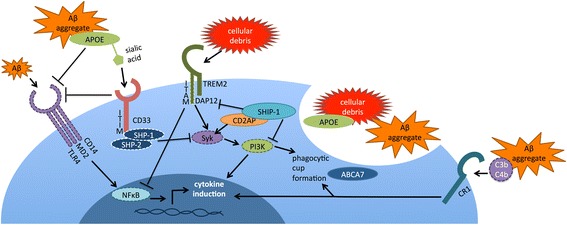
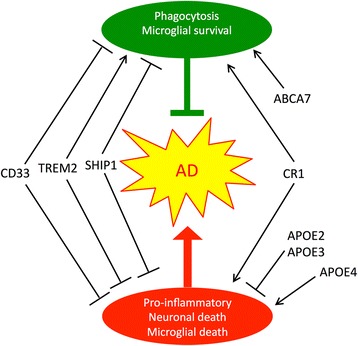
Verification
Claims the paper makes
The claims and statistics of this paper haven’t been checked yet.
Run the check — free, no account needed. It reads the open-access text and checks the sources it cites.
Claims other papers make about this one
Each is checked against this paper’s own text: does it say what the citing paper says it does?
The source backs part of the claim, not all of it — or backs it for a different population, condition or comparison.
In the citing paper
“supports the idea of microglia playing a key role driving the pathogenesis in these diseases (Malik et al., 2015).”
From TET2 Regulates the Neuroinflammatory Response in Microglia (2019) · cites this paper as Malik et al., 2015
Experimental — accuracy not yet measuredThe cited source says what the claim attributes to it.
In the citing paper
“The identification of mutations in innate immunity-related genes that confer higher risk of developing neurodegenerative diseases ( TREM2 , CD33 , CR1 , etc.), supports the idea of microglia playing a key role driving the pathogenesis in these diseases (Malik et al., 2015).”
From TET2 Regulates the Neuroinflammatory Response in Microglia (2019) · cites this paper as Malik et al., 2015
Self-check
Percentages, sums and reported differences re-computed from the paper’s own numbers.
The self-check needs the paper’s full text.
Citations
Cites
Corder, E. H., Saunders, A. M., Strittmatter, W. J., Schmechel, D. E., Gaskell, P. C., Small, G. W., Roses, A. D., Haines, J. L., & Pericak-Vance, M. A. (1993) · Science · doi:10.1126/science.8346443 · Cited by 9,429
Neuroinflammation in Alzheimer's disease
Heneka, M. T., Carson, M. J., Khoury, J. E., Landreth, G. E., Brosseron, F., Feinstein, D. L., Jacobs, A. H., Wyss-Coray, T., Vitorica, J., Ransohoff, R. M., et al. (2015) · The Lancet Neurology · doi:10.1016/s1474-4422(15)70016-5 · Cited by 6,226
The M1 and M2 paradigm of macrophage activation: Time for reassessment
Martinez, F. O., & Gordon, S. (2014) · F1000Prime Reports · doi:10.12703/p6-13 · Cited by 4,689
Inflammation and Alzheimer’s disease
Akiyama, H. (2000) · Neurobiology of Aging · doi:10.1016/s0197-4580(00)00124-x · Cited by 4,514
Meta-Analysis of 74,046 Individuals Identifies 11 New Susceptibility Loci for Alzheimer’s Disease
(EADI), E. A. D. I., Lambert, J.-C., (GERAD), G. A. E. R. I. A. D., Alzheimer's Disease Genetic Consortium (ADGC), (CHARGE), C. F. H. A. A. R. I. G. E., Ibrahim-Verbaas, C. A., Harold, D., Naj, A. C., Sims, R., Bellenguez, C., et al. (2013) · Nature Genetics · doi:10.1038/ng.2802 · Cited by 4,336
Apolipoprotein E and Alzheimer disease: risk, mechanisms and therapy
Liu, C.-C., Kanekiyo, T., Xu, H., & Bu, G. (2013) · Nature Reviews Neurology · doi:10.1038/nrneurol.2012.263 · Cited by 3,459
Self-citationHarold, D., Abraham, R., Hollingworth, P., Sims, R., Gerrish, A., Hamshere, M. L., Pahwa, J. S., Moskvina, V., Dowzell, K., Williams, A., et al. (2009) · Nature Genetics · doi:10.1038/ng.440 · Cited by 3,326
TREM2 Variants in Alzheimer's Disease
Guerreiro, R., Wojtas, A., Bras, J., Carrasquillo, M., Rogaeva, E., Majounie, E., Cruchaga, C., Sassi, C., Kauwe, J. S. K., Younkin, S., et al. (2013) · New England Journal of Medicine · doi:10.1056/nejmoa1211851 · Cited by 3,020
Variant of TREM2 Associated with the Risk of Alzheimer's Disease
Jonsson, T., Stefansson, H., Steinberg, S., Jonsdottir, I., Jonsson, P. V., Snaedal, J., Bjornsson, S., Huttenlocher, J., Levey, A. I., Lah, J. J., et al. (2013) · New England Journal of Medicine · doi:10.1056/nejmoa1211103 · Cited by 2,558
Genome-wide association study identifies variants at CLU and CR1 associated with Alzheimer's disease
the European Alzheimer's Disease Initiative Investigators, Lambert, J.-C., Heath, S., Even, G., Campion, D., Sleegers, K., Hiltunen, M., Combarros, O., Zelenika, D., Bullido, M. J., et al. (2009) · Nature Genetics · doi:10.1038/ng.439 · Cited by 2,234
Research works printed but not linked: 6
- Guerreiro R, Hardy J. TREM2 and neurodegenerative disease. N Engl J Med. 2013;369:1569–70.
- Bird TD. TREM2 and neurodegenerative disease. N Engl J Med. 2013;369:1568.
- Rajagopalan P, Hibar DP, Thompson PM. TREM2 and neurodegenerative disease. N Engl J Med. 2013;369:1565–7.
- Bertram L, Parrado AR, Tanzi RE. TREM2 and neurodegenerative disease. N Engl J Med. 2013;369:1565.
- Jonsson T, Stefansson K. TREM2 and neurodegenerative disease. N Engl J Med. 2013;369:1568–9.
- Guerreiro R, Wojtas A, Bras J, Carrasquillo M, Rogaeva E, Majounie E, et al. TREM2 variants in Alzheimer’s disease. N Engl J Med. 2013;368:117–27. · DOI · Paper page
Cited by
Sorted by citations
Microglia in physiology and disease
Wolf, S. A., Boddeke, H. W. G. M., & Kettenmann, H. (2017) · Annual Review of Physiology · doi:10.1146/annurev-physiol-022516-034406 · Cited by 1,426
Molecular and cellular mechanisms underlying the pathogenesis of Alzheimer’s disease
Guo, T., Zhang, D., Zeng, Y., Huang, T. Y., Xu, H., & Zhao, Y. (2020) · Molecular Neurodegeneration · doi:10.1186/s13024-020-00391-7 · Cited by 994
New insights into the role of TREM2 in Alzheimer’s disease
Gratuze, M., Leyns, C. E. G., & Holtzman, D. M. (2018) · Molecular Neurodegeneration · doi:10.1186/s13024-018-0298-9 · Cited by 489
The role of astrocytes in amyloid production and Alzheimer's disease
Frost, G. R., & Li, Y. (2017) · Open Biology · doi:10.1098/rsob.170228 · Cited by 448
TREM2 in Neurodegenerative Diseases
Jay, T. R., von Saucken, V. E., & Landreth, G. E. (2017) · Molecular Neurodegeneration · doi:10.1186/s13024-017-0197-5 · Cited by 427
Glial contributions to neurodegeneration in tauopathies
Leyns, C. E. G., & Holtzman, D. M. (2017) · Molecular Neurodegeneration · doi:10.1186/s13024-017-0192-x · Cited by 409
Bisht, K., Sharma, K. P., & Tremblay, M. (2018) · Neurobiology of Stress · doi:10.1016/j.ynstr.2018.05.003 · Cited by 366
Inflammation in Alzheimer’s disease: Lessons learned from microglia-depletion models
Spangenberg, E. E., & Green, K. N. (2017) · Brain, Behavior, and Immunity · doi:10.1016/j.bbi.2016.07.003 · Cited by 352
TREM2 Promotes Microglial Survival by Activating Wnt/β-Catenin Pathway
Zheng, H., Jia, L., Liu, C.-C., Rong, Z., Zhong, L., Yang, L., Chen, X.-F., Fryer, J. D., Wang, X., Zhang, Y.-W., et al. (2017) · The Journal of Neuroscience · doi:10.1523/jneurosci.2459-16.2017 · Cited by 317
Self-citation16S rRNA Next Generation Sequencing Analysis Shows Bacteria in Alzheimer’s Post-Mortem Brain
Emery, D. C., Shoemark, D. K., Batstone, T. E., Waterfall, C. M., Coghill, J. A., Cerajewska, T. L., Davies, M., West, N. X., & Allen, S. J. (2017) · Frontiers in Aging Neuroscience · doi:10.3389/fnagi.2017.00195 · Cited by 317
Shinohara, M., Tachibana, M., Kanekiyo, T., & Bu, G. (2017) · Journal of Lipid Research · doi:10.1194/jlr.r075796 · Cited by 297
Self-citationTREM2-Ligand Interactions in Health and Disease
Kober, D. L., & Brett, T. J. (2017) · Journal of Molecular Biology · doi:10.1016/j.jmb.2017.04.004 · Cited by 284
“Indeed, TLRs and many other inflammatory receptors are stimulated directly by Aβ, causing the production of inflammatory cytokines which create a cytotoxic, inflammatory environment [63].”
BackgroundClearance of cerebral Aβ in Alzheimer’s disease: reassessing the role of microglia and monocytes
Zuroff, L. R., Daley, D. A., Black, K. L., & Koronyo‐Hamaoui, M. (2017) · Cellular and Molecular Life Sciences · doi:10.1007/s00018-017-2463-7 · Cited by 292
Shaping Neuronal Fate: Functional Heterogeneity of Direct Microglia-Neuron Interactions
Cserép, C., Pósfai, B., & Dénes, Á. (2021) · Neuron · doi:10.1016/j.neuron.2020.11.007 · Cited by 256
Emerging Microglia Biology Defines Novel Therapeutic Approaches for Alzheimer’s Disease
Lewcock, J. W., Schlepckow, K., Di Paolo, G., Tahirovic, S., Monroe, K. M., & Haass, C. (2020) · Neuron · doi:10.1016/j.neuron.2020.09.029 · Cited by 221
Zhong, L., Wang, Z., Wang, D., Wang, Z., Martens, Y. A., Wu, L., Xu, Y., Wang, K., Li, J., Huang, R., et al. (2018) · Molecular Neurodegeneration · doi:10.1186/s13024-018-0247-7 · Cited by 222
Self-citationLee, S., Devanney, N. A., Golden, L. R., Smith, C. T., Schwartz, J. L., Walsh, A. E., Clarke, H. A., Goulding, D. S., Allenger, E. J., Morillo-Segovia, G., et al. (2023) · Cell Reports · doi:10.1016/j.celrep.2023.112196 · Cited by 203
Self-citationFunctional Studies of Missense TREM2 Mutations in Human Stem Cell-Derived Microglia
Brownjohn, P. W., Smith, J., Solanki, R., Lohmann, E., Houlden, H., Hardy, J., Dietmann, S., & Livesey, F. J. (2018) · Stem Cell Reports · doi:10.1016/j.stemcr.2018.03.003 · Cited by 193
Microglia and C9orf72 in neuroinflammation and ALS and frontotemporal dementia
Lall, D., & Baloh, R. H. (2017) · Journal of Clinical Investigation · doi:10.1172/jci90607 · Cited by 175
Microglia and Astrocyte Function and Communication: What Do We Know in Humans?
Garland, E. F., Hartnell, I. J., & Boche, D. (2022) · Frontiers in Neuroscience · doi:10.3389/fnins.2022.824888 · Cited by 165
Yamazaki, Y., Painter, M. M., Bu, G., & Kanekiyo, T. (2016) · CNS Drugs · doi:10.1007/s40263-016-0361-4 · Cited by 173
Self-citationThe role of APOE on lipid homeostasis and inflammation in normal brains
Rebeck, G. W. (2017) · Journal of Lipid Research · doi:10.1194/jlr.r075408 · Cited by 160
Self-citationLRP1 modulates the microglial immune response via regulation of JNK and NF‐ΚB signaling pathways
Yang, L., Liu, C.-C., Zheng, H., Kanekiyo, T., Atagi, Y., Jia, L., Wang, D., N’songo, A., Can, D., Xu, H., et al. (2016) · Journal of Neuroinflammation · doi:10.1186/s12974-016-0772-7 · Cited by 129
Self-citationFlowers, S. A., & Rebeck, G. W. (2020) · Neurobiology of Disease · doi:10.1016/j.nbd.2019.104724 · Cited by 149
Self-citationMicroglial inflammation and phagocytosis in Alzheimer's disease: Potential therapeutic targets
Nizami, S., Hall‐Roberts, H., Warrier, S., Cowley, S. A., & Di Daniel, E. (2019) · British Journal of Pharmacology · doi:10.1111/bph.14618 · Cited by 147
Hoeijmakers, L., Ruigrok, S. R., Amelianchik, A., Ivan, D., van Dam, A.-M., Lucassen, P. J., & Korosi, A. (2017) · Brain, Behavior, and Immunity · doi:10.1016/j.bbi.2016.12.023 · Cited by 138
Heat-Shock Proteins in Neuroinflammation
Dukay, B., Csoboz, B., & Tóth, M. E. (2019) · Frontiers in Pharmacology · doi:10.3389/fphar.2019.00920 · Cited by 139
Microglia in Alzheimer’s Disease: A Target for Therapeutic Intervention
Zhang, G., Wang, Z., Hu, H., Zhao, M., & Sun, L. (2021) · Frontiers in Cellular Neuroscience · doi:10.3389/fncel.2021.749587 · Cited by 137
Rangaraju, S., Raza, S. A., Li, N. X., Betarbet, R., Dammer, E. B., Duong, D., Lah, J. J., Seyfried, N. T., & Levey, A. I. (2018) · Frontiers in Immunology · doi:10.3389/fimmu.2018.00405 · Cited by 126
Teter, B., Morihara, T., Lim, G. P., Chu, T., Jones, M. R., Zuo, X., Paul, R. M., Frautschy, S. A., & Cole, G. M. (2019) · Neurobiology of Disease · doi:10.1016/j.nbd.2019.02.015 · Cited by 127
Paasila, P. J., Davies, D., Kril, J. J., Goldsbury, C. S., & Sutherland, G. T. (2019) · Brain Pathology · doi:10.1111/bpa.12717 · Cited by 120
Mitochondrial Regulation of Microglial Immunometabolism in Alzheimer’s Disease
Fairley, L. H., Wong, J. H., & Barron, A. M. (2021) · Frontiers in Immunology · doi:10.3389/fimmu.2021.624538 · Cited by 120
TREM2 ectodomain and its soluble form in Alzheimer’s disease
Yang, J., Fu, Z., Zhang, X., Xiong, M., Meng, L., & Zhang, Z. (2020) · Journal of Neuroinflammation · doi:10.1186/s12974-020-01878-2 · Cited by 113
TET2 Regulates the Neuroinflammatory Response in Microglia
Carrillo-Jimenez, A., Deniz, Ö., Niklison-Chirou, M. V., Ruiz, R., Bezerra-Salomão, K., Stratoulias, V., Amouroux, R., Yip, P. K., Vilalta, A., Cheray, M., et al. (2019) · Cell Reports · doi:10.1016/j.celrep.2019.09.013 · Cited by 104
Heterogeneity of microglia and their differential roles in white matter pathology
Lee, J. C. L., Hamanaka, G., Lo, E. H., & Arai, K. (2019) · CNS Neuroscience & Therapeutics · doi:10.1111/cns.13266 · Cited by 105
TYROBP genetic variants in early-onset Alzheimer's disease
Pottier, C., Ravenscroft, T. A., Brown, P. H., Finch, N. A., Baker, M., Parsons, M., Asmann, Y. W., Ren, Y., Christopher, E., Levitch, D., et al. (2016) · Neurobiology of Aging · doi:10.1016/j.neurobiolaging.2016.07.028 · Cited by 94
Self-citationTREM2 in Alzheimer’s Disease: Microglial Survival and Energy Metabolism
Zheng, H., Cheng, B., Li, Y., Li, X., Chen, X., & Zhang, Y.-W. (2018) · Frontiers in Aging Neuroscience · doi:10.3389/fnagi.2018.00395 · Cited by 94
Evaluation of CD33 as a genetic risk factor for Alzheimer’s disease
Estus, S., Shaw, B. C., Devanney, N. A., Katsumata, Y., Press, E., & Fardo, D. W. (2019) · Acta Neuropathologica · doi:10.1007/s00401-019-02000-4 · Cited by 98
Self-citationThe informed road map to prevention of Alzheimer Disease: a call to arms
McDade, E., Llibre-Guerra, J. J., Holtzman, D. M., Morris, J. C., & Bateman, R. J. (2021) · Molecular Neurodegeneration · doi:10.1186/s13024-021-00467-y · Cited by 89
Liu, T., Zhu, B., Liu, Y., Zhang, X., Yin, J., Li, X., Jiang, L., Hodges, A. P., Rosenthal, S. B., Zhou, L., et al. (2020) · Journal of Experimental Medicine · doi:10.1084/jem.20200474 · Cited by 64
Rangan, P., Lobo, F., Parrella, E., Rochette, N. C., Morselli, M., Stephen, T., Cremonini, A. L., Tagliafico, L., Persia, A., Caffa, I., et al. (2022) · Cell Reports · doi:10.1016/j.celrep.2022.111417 · Cited by 73
Self-citationDelizannis, A. T., Nonneman, A., Tsering, W., Bondt, A. D., den Wyngaert, I. V., Zhang, B., Meymand, E. S., Olufemi, M. F., Koivula, P. P., Maimaiti, S., et al. (2021) · Acta Neuropathologica Communications · doi:10.1186/s40478-021-01251-1 · Cited by 71
Murine Gut Microbiome Association With APOE Alleles
Parikh, I. J., Estus, J. L., Zajac, D. J., Malik, M., Weng, J. M., Tai, L. M., Chlipala, G. E., LaDu, M. J., Green, S. J., & Estus, S. (2020) · Frontiers in Immunology · doi:10.3389/fimmu.2020.00200 · Cited by 64
Self-citationAlzheimer’s Disease: Exploring the Role of Inflammation and Implications for Treatment
McCaulley, M. E., & Grush, K. A. (2015) · International Journal of Alzheimer s Disease · doi:10.1155/2015/515248 · Cited by 62
Jasiecki, J., Targońska, M., & Wasąg, B. (2021) · International Journal of Molecular Sciences · doi:10.3390/ijms22042033 · Cited by 67
Hamilton, L. K., Moquin‐Beaudry, G., Mangahas, C. L., Pratesi, F., Aubin, M., Aumont, A., Joppé, S. E., Légiot, A., Vachon, A., Plourde, M., et al. (2022) · Nature Communications · doi:10.1038/s41467-022-29506-y · Cited by 66
Fernandez, H. R., Varma, A., Flowers, S. A., & Rebeck, G. W. (2020) · Cancers · doi:10.3390/cancers12123842 · Cited by 65
Self-citationPromoting Alzheimer’s disease research and therapy with stem cell technology
Cao, Z., Kong, F., Ding, J., Chen, C., He, F., & Deng, W. (2024) · Stem Cell Research & Therapy · doi:10.1186/s13287-024-03737-w · Cited by 60
Buechler, J., & Salinas, P. C. (2018) · Frontiers in Synaptic Neuroscience · doi:10.3389/fnsyn.2018.00038 · Cited by 53
Boyko, A., Troyanova, N. I., Kovalenko, E. I., & Sapozhnikov, A. M. (2017) · International Journal of Molecular Sciences · doi:10.3390/ijms18122633 · Cited by 54
Non-productive angiogenesis disassembles Aß plaque-associated blood vessels
Álvarez-Vergara, M. I., Rosales‐Nieves, A. E., March‐Díaz, R., Rodríguez-Periñán, G., Lara-Ureña, N., Luis, C. O. S., Sánchez-García, M. A., Martín‐Bórnez, M., Gómez‐Gálvez, P., Vicente‐Munuera, P., et al. (2021) · Nature Communications · doi:10.1038/s41467-021-23337-z · Cited by 49
Karami, H., Derakhshani, A., GhasemiGol, M., Fereidouni, M., Miri‐Moghaddam, E., Baradaran, B., Tabrizi, N. J., Najafi, S., Solimando, A. G., Marsh, L. M., et al. (2021) · Journal of Clinical Medicine · doi:10.3390/jcm10163567 · Cited by 48
From beta amyloid to altered proteostasis in Alzheimer’s disease
Bruni, A. C., Bernardi, L., & Gabelli, C. (2020) · Ageing Research Reviews · doi:10.1016/j.arr.2020.101126 · Cited by 47
Yang, J., Malone, F., Go, M., Kou, J., Lim, J.-E., Caughey, R. C., & Fukuchi, K.-I. (2020) · Journal of Molecular Neuroscience · doi:10.1007/s12031-020-01750-1 · Cited by 46
APOE genetics influence murine gut microbiome
Zajac, D. J., Green, S. J., Johnson, L. A., & Estus, S. (2022) · Scientific Reports · doi:10.1038/s41598-022-05763-1 · Cited by 41
Self-citationAgostini, A., Ding, Y., Bai, L., Kendall, D. A., & Pardon, M. (2019) · Brain Behavior and Immunity · doi:10.1016/j.bbi.2019.09.019 · Cited by 43
Targeted genetic analysis of cerebral blood flow imaging phenotypes implicates the INPP5D gene
Yao, X., Risacher, S. L., Nho, K., Saykin, A. J., Wang, Z., & Shen, L. (2019) · Neurobiology of Aging · doi:10.1016/j.neurobiolaging.2019.06.003 · Cited by 40
The Emerging Roles and Therapeutic Potential of Soluble TREM2 in Alzheimer’s Disease
Zhong, L., & Chen, X. (2019) · Frontiers in Aging Neuroscience · doi:10.3389/fnagi.2019.00328 · Cited by 40
Presenilin 1 phosphorylation regulates amyloid-β degradation by microglia
Ledo, J. H., Liebmann, T., Zhang, R., Chang, J. C., Azevedo, E. P., Wong, E., Silva, H. M., Troyanskaya, O. G., Bustos, V., & Greengard, P. (2020) · Molecular Psychiatry · doi:10.1038/s41380-020-0856-8 · Cited by 41
Panitch, R., Hu, J., Xia, W., Bennett, D. A., Stein, T. D., Farrer, L. A., & Jun, G. (2022) · Alzheimer s Research & Therapy · doi:10.1186/s13195-022-00975-z · Cited by 39
INPP5D modulates TREM2 loss-of-function phenotypes in a β-amyloidosis mouse model
Iguchi, A., Takatori, S., Kimura, S., Muneto, H., Wang, K., Etani, H., Ito, G., Sato, H., Hori, Y., Sasaki, J., et al. (2023) · iScience · doi:10.1016/j.isci.2023.106375 · Cited by 37
Role of Microglia in Regulating Cholesterol and Tau Pathology in Alzheimer’s Disease
Nanjundaiah, S., Chidambaram, H., Chandrashekar, M., & Chinnathambi, S. (2021) · Cellular and Molecular Neurobiology · doi:10.1007/s10571-020-00883-6 · Cited by 36
APOE and immunity: Research highlights
Kloske, C. M., Barnum, C. J., Batista, A. F., Bradshaw, E. M., Brickman, A. M., Bu, G., Dennison, J. L., Gearon, M. D., Goate, A., Haass, C., et al. (2023) · Alzheimer s & Dementia · doi:10.1002/alz.13020 · Cited by 38
Self-citationModulating Neuroinflammation as a Prospective Therapeutic Target in Alzheimer’s Disease
Lee, E., & Chang, Y. (2025) · Cells · doi:10.3390/cells14030168 · Cited by 39
van Bergeijk, P., Seneviratne, U. I., Aparicio-Prat, E., Stanton, R. V., & Hasson, S. A. (2019) · Molecular and Cellular Biology · doi:10.1128/mcb.00568-18 · Cited by 37
The Ambiguous Role of Microglia in Aβ Toxicity: Chances for Therapeutic Intervention
Merlo, S., Spampinato, S. F., Caruso, G. I., & Sortino, M. A. (2020) · Current Neuropharmacology · doi:10.2174/1570159x18666200131105418 · Cited by 35
Speidell, A. P., Demby, T. C., Lee, Y., Rodriguez, O. C., Albanese, C., Mandelblatt, J. S., & Rebeck, G. W. (2018) · Neurotoxicity Research · doi:10.1007/s12640-018-9954-7 · Cited by 36
Self-citationHe, C., Chen, B., Yang, H., & Zhou, X. (2025) · Frontiers in Aging Neuroscience · doi:10.3389/fnagi.2025.1554398 · Cited by 40
TMEM59 interacts with TREM2 and modulates TREM2-dependent microglial activities
Liu, Z., Ning, J., Zheng, X., Meng, J., Han, L., Zheng, H., Zhong, L., Chen, X., Zhang, X., Luo, H., et al. (2020) · Cell Death and Disease · doi:10.1038/s41419-020-02874-3 · Cited by 35
Kumaran, K. R., Yunusa, S., Perimal, E. K., Wahab, H. A., Müller, C. P., & Hassan, Z. (2022) · Journal of Alzheimer s Disease · doi:10.3233/jad-220666 · Cited by 39
Tang, Y., Zhang, Y., Li, X., Xu, R., Ji, Y., Liu, J., Liu, J., Zhuang, Q., & Zhang, H. (2023) · Clinical and Translational Medicine · doi:10.1002/ctm2.1237 · Cited by 35
Xue, F., Tian, J., Yu, C., Du, H., & Guo, L. (2021) · Neurobiology of Disease · doi:10.1016/j.nbd.2021.105272 · Cited by 32
A Therapeutic Strategy for Alzheimer's Disease Focused on Immune-inflammatory Modulation
Kim, S. H., Noh, M., Kim, H.-J., Oh, K., Park, J., Lee, S.-G., Moon, Y., Kim, Y.-E., Bae, J. S., Jin, H. K., et al. (2019) · Dementia and Neurocognitive Disorders · doi:10.12779/dnd.2019.18.2.33 · Cited by 30
TREMs in Alzheimer's disease: Genetic and clinical investigations
Cheng, J. R., Guo, X., Zhang, T., Zhong, L., Bu, G., & Chen, X. (2016) · Clinica Chimica Acta · doi:10.1016/j.cca.2016.10.022 · Cited by 29
Self-citationDemby, T. C., Rodriguez, O. C., McCarthy, C. W., Lee, Y., Albanese, C., Mandelblatt, J. S., & Rebeck, G. W. (2020) · Behavioural Brain Research · doi:10.1016/j.bbr.2020.112534 · Cited by 26
Self-citationMahmoudi, R., Feldman, S. F., Kisserli, A., Duret, V., Tabary, T., Bertholon, L.-A., Badr, S., Nonnonhou, V., Cesar, A., Neuraz, A., et al. (2018) · International Journal of Molecular Sciences · doi:10.3390/ijms19082175 · Cited by 26
Intracellular trafficking of TREM2 is regulated by presenilin 1
Zhao, Y., Li, X., Huang, T. Y., Jiang, L.-L., Tan, Z., Zhang, M., Cheng, I. H.-J., Wang, X., Bu, G., Zhang, Y., et al. (2017) · Experimental & Molecular Medicine · doi:10.1038/emm.2017.200 · Cited by 26
Self-citationCombination of ginsenoside Rb1 and Rd protects the retina against bright light-induced degeneration
Bian, M., Du, X., Wang, P., Cui, J., Xu, J., Gu, J., Zhang, T., & Chen, Y. (2017) · Scientific Reports · doi:10.1038/s41598-017-06471-x · Cited by 23
Singh, A., Chokriwal, A., Sharma, M. M., Jain, D., Saxena, J., & Stephen, B. J. (2017) · ACS Chemical Neuroscience · doi:10.1021/acschemneuro.7b00144 · Cited by 24
γ‐Secretase in microglia – implications for neurodegeneration and neuroinflammation
Walter, J., Kemmerling, N., Wunderlich, P., & Glebov, K. (2017) · Journal of Neurochemistry · doi:10.1111/jnc.14224 · Cited by 21
Huang, J., Tao, Q., Ang, T. F. A., Farrell, J. J., Zhu, C., Wang, Y., Stein, T. D., Lunetta, K. L., Massaro, J. M., Mez, J., et al. (2022) · Translational Psychiatry · doi:10.1038/s41398-022-02281-6 · Cited by 21
INPP5D/SHIP1: Expression, Regulation and Roles in Alzheimer’s Disease Pathophysiology
Olufunmilayo, E. O., & Holsinger, R. M. D. (2023) · Genes · doi:10.3390/genes14101845 · Cited by 19
Zajac, D. J., Simpson, J., Zhang, E., Parikh, I., & Estus, S. (2023) · Genes · doi:10.3390/genes14030763 · Cited by 18
Self-citationBhardwaj, V., Kumari, S., Dhapola, R., Sharma, P., Beura, S. K., Singh, S. K., Vellingiri, B., & HariKrishnaReddy, D. (2024) · Inflammopharmacology · doi:10.1007/s10787-024-01598-6 · Cited by 18
The role of inhibitory immune checkpoint receptors in the pathogenesis of Alzheimer’s disease
Salminen, A. (2024) · Journal of Molecular Medicine · doi:10.1007/s00109-024-02504-x · Cited by 16
dos Santos, C. G., Sousa, M. F., Vieira, J. I. G., de Morais, L. R., Fernandes, A. A. S., Littiere, T. D. O., Otto, P. I., Machado, M. A., da Silva, M. V. G. B., Bonafé, C. M., et al. (2022) · Journal of Applied Animal Research · doi:10.1080/09712119.2022.2096035 · Cited by 16
Lyn Kinase Structure, Regulation, and Involvement in Neurodegenerative Diseases: A Mini Review
Weerawarna, P. M., & Richardson, T. I. (2023) · Kinases and Phosphatases · doi:10.3390/kinasesphosphatases1010004 · Cited by 16
Rodent Models of Alzheimer’s Disease: Past Misconceptions and Future Prospects
Collins, H. M., & Greenfield, S. A. (2024) · International Journal of Molecular Sciences · doi:10.3390/ijms25116222 · Cited by 21
Strafella, C., Caputo, V., Termine, A., Fabrizio, C., Ruffo, P., Potenza, S., Cusumano, A., Ricci, F., Caltagirone, C., Giardina, E., et al. (2021) · Frontiers in Neurology · doi:10.3389/fneur.2021.626066 · Cited by 16
APP in the Neuromuscular Junction for the Development of Sarcopenia and Alzheimer’s Disease
Wu, M., Zou, W.-J., Lee, D., Mei, L., & Xiong, W. (2023) · International Journal of Molecular Sciences · doi:10.3390/ijms24097809 · Cited by 17
Strafella, C., Caputo, V., Termine, A., Assogna, F., Pellicano, C., Pontieri, F. E., Macchiusi, L., Minozzi, G., Gambardella, S., Centonze, D., et al. (2021) · Frontiers in Genetics · doi:10.3389/fgene.2021.651971 · Cited by 14
A review of imaging genetics in Alzheimer's disease
Yu, X., Sheng, J., Miao, M., Wang, L., Yang, Z. X., & Huang, H. (2022) · Journal of Clinical Neuroscience · doi:10.1016/j.jocn.2022.04.017 · Cited by 15
Wang, T., Liu, X., Wang, X., Hua, F., & Yan, L. (2026) · Frontiers in Immunology · doi:10.3389/fimmu.2026.1739875 · Cited by 14
Huang, J., Stein, T. D., Wang, Y., Ang, T. F. A., Tao, Q., Lunetta, K. L., Massaro, J., Akhter‐Khan, S. C., Mez, J., Au, R., et al. (2023) · Alzheimer's & Dementia · doi:10.1002/alz.12851 · Cited by 14
Wu, Y., Libby, J. B., Dumitrescu, L. C., Jager, P. L. D., Menon, V., Schneider, J. A., Bennett, D. A., & Hohman, T. J. (2024) · Alzheimer s & Dementia · doi:10.1002/alz.14419 · Cited by 15
Janssen, L., Dubbelaar, M. L., Holtman, I. R., de Boer-Bergsma, J. J., Eggen, B. J. L., Boddeke, H. W. G. M., Deyn, P. P. D., & Dam, D. V. (2016) · Biochimica et Biophysica Acta (BBA) - Molecular Basis of Disease · doi:10.1016/j.bbadis.2016.11.014 · Cited by 13
Sarker, B., Rahaman, M. M., Islam, M. A., Alamin, M. H., Husain, M. M., Ferdousi, F., Ahsan, M. A., & Mollah, M. N. H. (2023) · PLoS ONE · doi:10.1371/journal.pone.0281981 · Cited by 13
Samuels, J. D., Lukens, J. R., & Price, R. J. (2023) · Journal of Neurochemistry · doi:10.1111/jnc.15981 · Cited by 13
Nwidu, L. L., Airhihen, B., & Ahmadu, A. A. (2016) · Journal of Basic and Clinical Pharmacy · doi:10.4103/0976-0105.195097 · Cited by 13
Geiszler, P. C., Ugun‐Klusek, A., Lawler, K., Pardon, M., Ding, Y., Bai, L., Daykin, C. A., Auer, D. P., & Bedford, L. (2018) · Scientific Reports · doi:10.1038/s41598-018-23155-2 · Cited by 14
Metadata
- Authors
- Malik, M., Parikh, I., Vasquez, J. B., Smith, C., Tai, L., Bu, G., LaDu, M. J., Fardo, D. W., Rebeck, G. W., & Estus, S.
- Affiliations
- University of Kentucky (US)
- University of Illinois Chicago (US)
- Mayo Clinic (US)
- Georgetown University Medical Center (US)
- Corresponding author
- Estus, Steven
- ORCID
- Venue
- Molecular Neurodegeneration
- Published
- 2015-10-05
- Volume
- 10
- Issue
- 1
- Pages
- 52-52
- ISSN
- 1750-1326 (ISSN-L)
- PMC
- PMC4595327
- OpenAlex
- W2119581346
- Cited by
- 161
- References
- 151
- Citations by year
- 2026: 6 · 2025: 14 · 2024: 11 · 2023: 19 · 2022: 16 · 2021: 18 · 2020: 21 · 2019: 15 · 2018: 12 · 2017: 18 · 2016: 10 · 2015: 1
- FWCI
- 1.09
- Type
- journal article
- Language
- en
- Open access
- gold
- doi.org
- Locations
- Molecular Neurodegeneration (publishedVersion, cc-by)
- Europe PMC (PubMed Central) (publishedVersion, cc-by)
- PubMed Central (publishedVersion, cc-by)
- PubMed (publishedVersion)
- Rare & Special e-Zone (The Hong Kong University of Science and Technology) (submittedVersion)
- UKnowledge (University of Kentucky) (submittedVersion, cc-by)
- Funders
- National Institute on Aging (R01AG045775, K25AG043546, P01AG030128, R21AG048498, R21 AG044682, R21AG051233)
- BrightFocus Foundation (A2014210S)
- Topics
- Life Sciences › Neuroscience › Neurology › Neuroinflammation and Neurodegeneration Mechanisms
- Life Sciences › Neuroscience › Cellular and Molecular Neuroscience › Alzheimer's disease research and treatments
- Health Sciences › Medicine › Psychiatry and Mental health › Dementia and Cognitive Impairment Research
- Keywords
- Alzheimer's disease, microglial inflammation, genetic risk factors, TREM2, CD33, complement receptor 1, ABCA7, SHIP1, apolipoprotein E, microglial function, neuroinflammation, pathogenesis
- MeSH terms
- Alzheimer Disease, Animals, Humans, Inflammation, Risk Factors, Microglia, Genetic Predisposition to Disease, Polymorphism, Single Nucleotide
About these checks
Registry, retraction, Cites and statistics results are computed, not judged, with one exception: a printed reference that no index lists is read once by a model before it counts as a citation error. Claims are extracted by a model and kept only when their quote appears verbatim in the text; each cited source is then checked, with a model’s help, for whether it says what the claim relies on. Those verdicts can be wrong — read the claim’s quote and the cited source before relying on one.
Statistics and arithmetic are recomputed, not judged.
Confidence bands are shown only for fields calibrated on our annotated test set. None is calibrated yet, so no band is shown.
What counts as a claim ›How we measure confidence ›How we check this ›
Are you an author, or do you see a problem with this page? Request a review
