

The DOI matches its Crossref record; 78 of the 78 references it cites were found in a registry or an index.
Molecular and functional signatures in a novel Alzheimer’s disease mouse model assessed by quantitative proteomics
Open accessAbstract
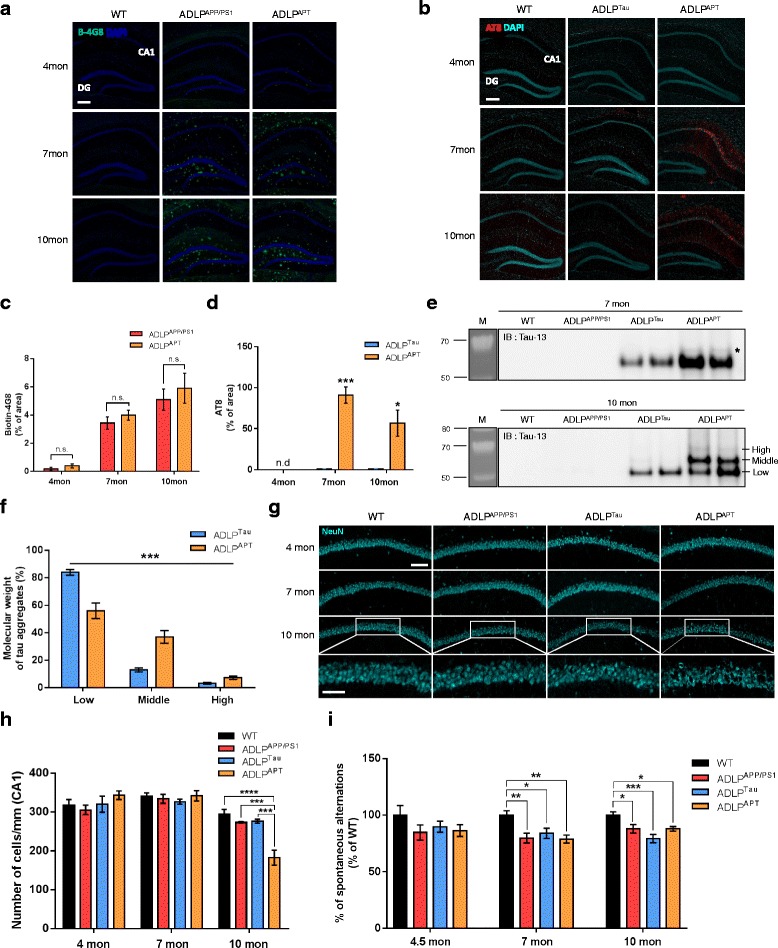
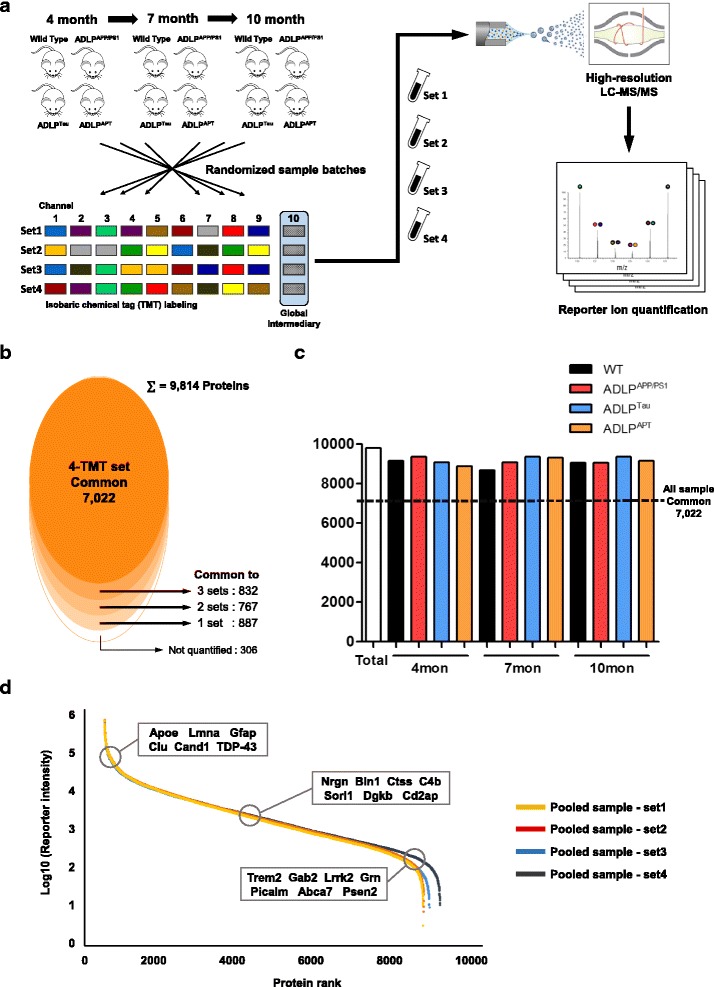
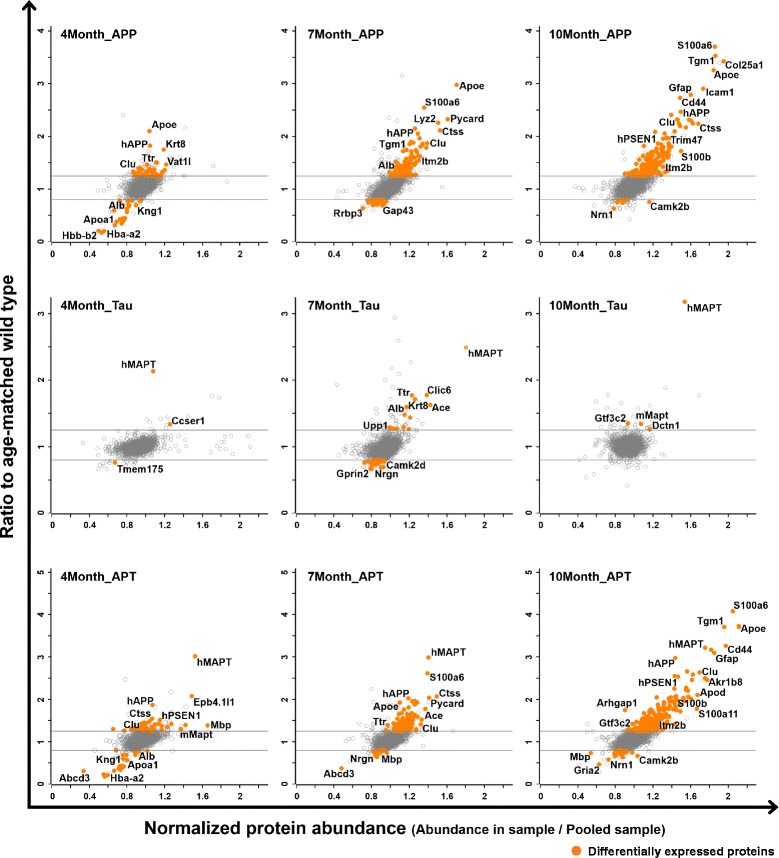
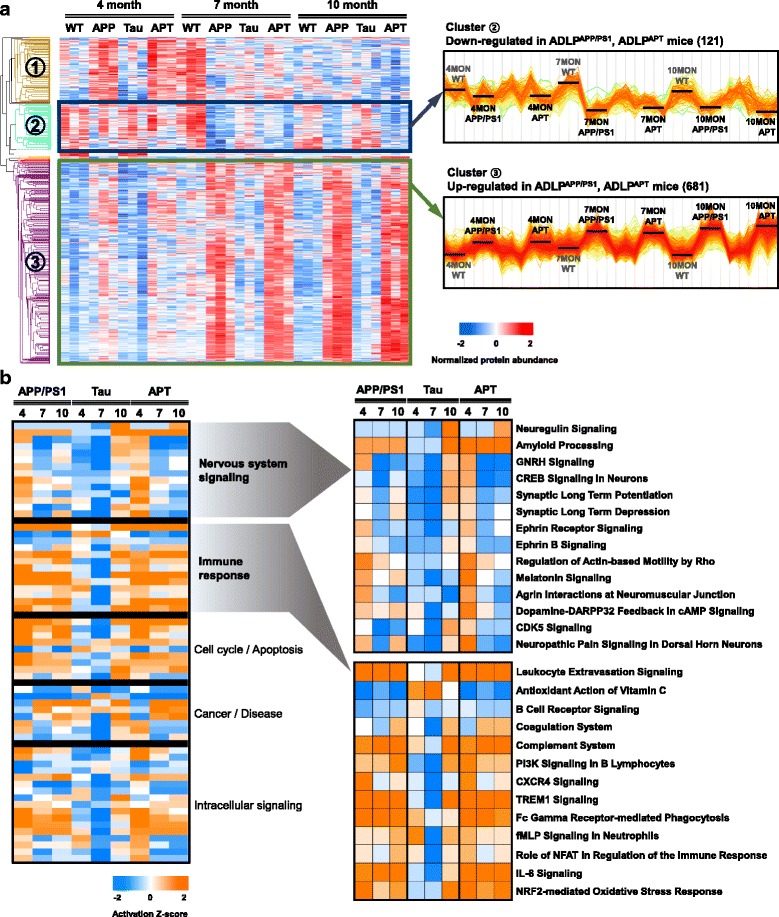
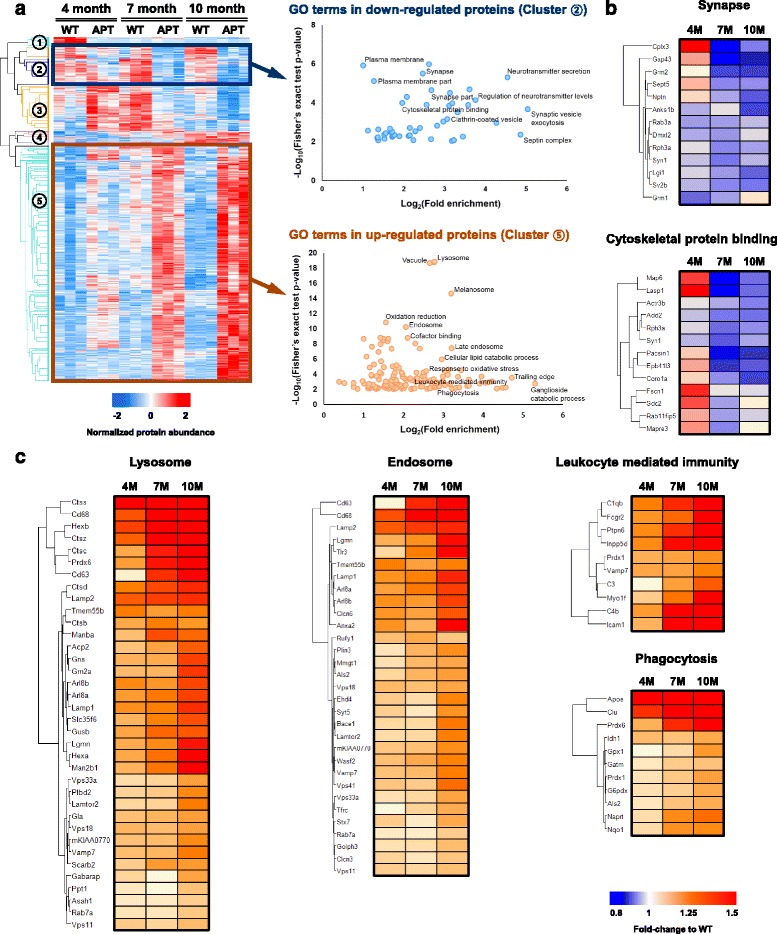
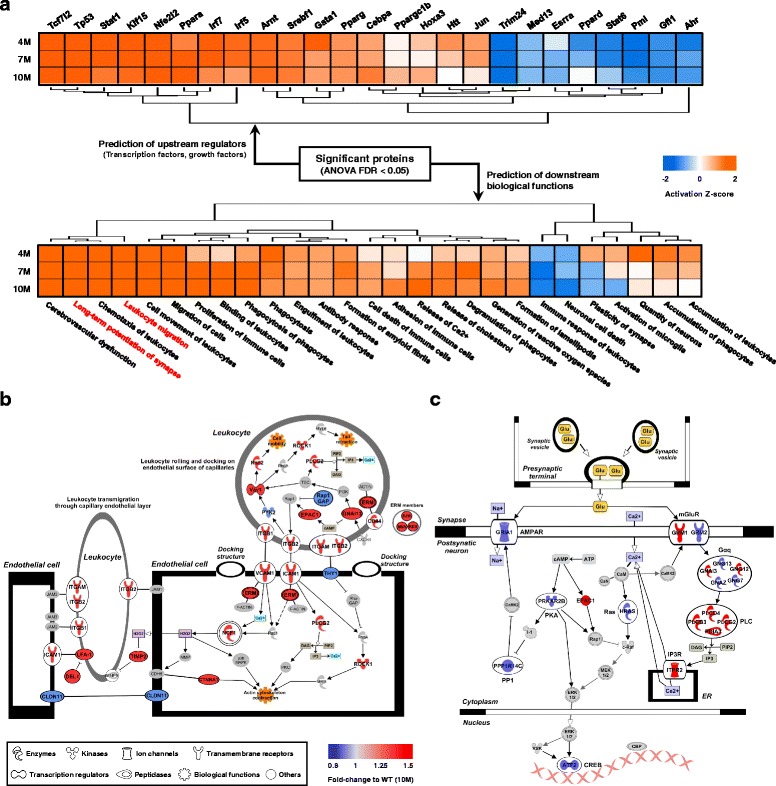
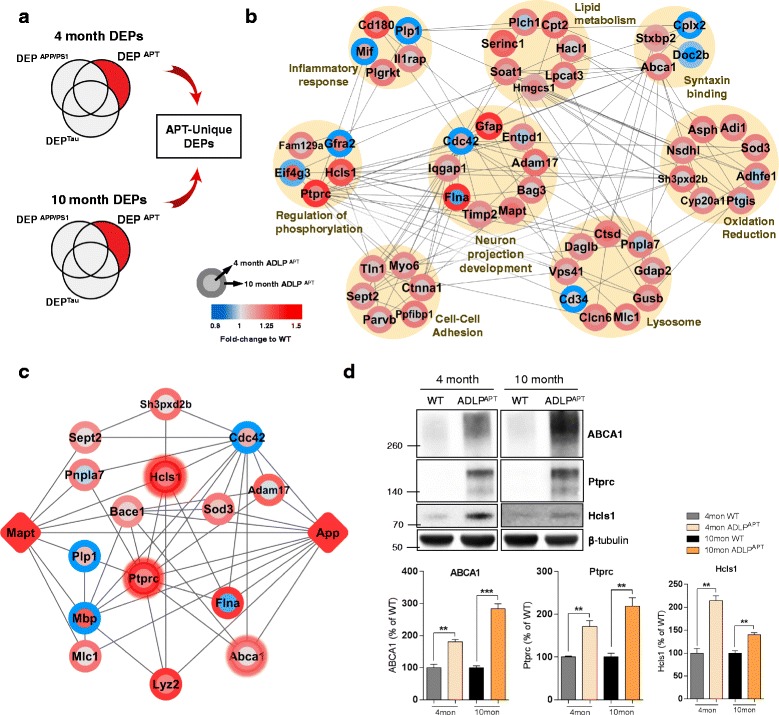
Alzheimer’s disease (AD), the most common neurodegenerative disorder, is characterized by the deposition of extracellular amyloid plaques and intracellular neurofibrillary tangles. To understand the pathological mechanisms underlying AD, developing animal models that completely encompass the main features of AD pathologies is indispensable. Although mouse models that display pathological hallmarks of AD (amyloid plaques, neurofibrillary tangles, or both) have been developed and investigated, a systematic approach for understanding the molecular characteristics of AD mouse models is lacking. To elucidate the mechanisms underlying the contribution of amyloid beta (Aβ) and tau in AD pathogenesis, we herein generated a novel animal model of AD, namely the AD-like pathology with amyloid and neurofibrillary tangles (ADLP APT ) mice. The ADLP APT mice carry three human transgenes, including amyloid precursor protein, presenilin-1, and tau, with six mutations. To characterize the molecular and functional signatures of AD in ADLP APT mice, we analyzed the hippocampal proteome and performed comparisons with individual-pathology transgenic mice (i.e., amyloid or neurofibrillary tangles) and wild-type mice using quantitative proteomics with 10-plex tandem mass tag. The ADLP APT mice exhibited accelerated neurofibrillary tangle formation in addition to amyloid plaques, neuronal loss in the CA1 area, and memory deficit at an early age. In addition, our proteomic analysis identified nearly 10,000 protein groups, which enabled the identification of hundreds of differentially expressed proteins (DEPs) in ADLP APT mice. Bioinformatics analysis of DEPs revealed that ADLP APT mice experienced age-dependent active immune responses and synaptic dysfunctions. Our study is the first to compare and describe the proteomic characteristics in amyloid and neurofibrillary tangle pathologies using isobaric label-based quantitative proteomics. Furthermore, we analyzed the hippocampal proteome of the newly developed ADLP APT model mice to investigate how both Aβ and tau pathologies regulate the hippocampal proteome. Because the ADLP APT mouse model recapitulates the main features of AD pathogenesis, the proteomic data derived from its hippocampus has significant utility as a novel resource for the research on the Aβ-tau axis and pathophysiological changes in vivo.
Overview
The claims and statistics of this paper haven’t been checked yet.
Run the check — free, no account needed. It reads the open-access text and checks the sources it cites.
Integrity signals
Registry
Cites
Statistics
Figures
Verification
Claims the paper makes
The claims and statistics of this paper haven’t been checked yet.
Run the check — free, no account needed. It reads the open-access text and checks the sources it cites.
Claims other papers make about this one
Each is checked against this paper’s own text: does it say what the citing paper says it does?
The cited source says what the claim attributes to it.
In the citing paper
“The ADLPAPT mice carry six human mutations affecting amyloid precursor protein, presenilin-1, and tau protein, and develop an AD-like pathology with amyloid and neurofibrillary tangles (167).”
From The gut-brain axis: how microbiota and host inflammasome influence brain physiology and pathology (2020) · cites this paper as [167]
Self-check
Percentages, sums and reported differences re-computed from the paper’s own numbers.
The self-check needs the paper’s full text.
Citations
Cites
Controlling the False Discovery Rate: A Practical and Powerful Approach to Multiple Testing
Benjamini, Y., & Hochberg, Y. (1995) · Journal of the Royal Statistical Society Series B: Statistical Methodology · doi:10.1111/j.2517-6161.1995.tb02031.x · Cited by 109,482
Cytoscape: A software Environment for integrated models of biomolecular interaction networks
Shannon, P., Markiel, A., Ozier, O., Baliga, N. S., Wang, J. T., Ramage, D., Amin, N., Schwikowski, B., & Ideker, T. (2003) · Genome Research · doi:10.1101/gr.1239303 · Cited by 51,888
Systematic and integrative analysis of large gene lists using DAVID bioinformatics resources
Huang, D. W., Sherman, B. T., & Lempicki, R. A. (2009) · Nature Protocols · doi:10.1038/nprot.2008.211 · Cited by 35,890
The Amyloid Hypothesis of Alzheimer’s Disease: Progress and Problems on the Road to Therapeutics
Hardy, J., & Selkoe, D. J. (2002) · Science · doi:10.1126/science.1072994 · Cited by 13,864
STRING v10: protein–protein interaction networks, integrated over the tree of life
Szklarczyk, D., Franceschini, A., Wyder, S., Forslund, K., Heller, D., Huerta-Cepas, J., Simonovic, M., Roth, A., Santos, A., Tsafou, K. P., et al. (2015) · Nucleic Acids Research · doi:10.1093/nar/gku1003 · Cited by 10,436
Amyloid oligomers exacerbate tau pathology in a mouse model of tauopathy
Selenica, M.-L. B., Brownlow, M., Jimenez, J. P., Lee, D. C., Pena, G., Dickey, C. A., Gordon, M. N., & Morgan, D. (2013) · Neurodegenerative Diseases · doi:10.1159/000337230 · Cited by 10,359
The Perseus computational platform for comprehensive analysis of (prote)omics data
Tyanova, S., Temu, T., Sinitcyn, P., Carlson, A., Hein, M. Y., Geiger, T., Mann, M., & Cox, J. (2016) · Nature Methods · doi:10.1038/nmeth.3901 · Cited by 8,803
Universal sample preparation method for proteome analysis
Wiśniewski, J. R., Zougman, A., Nagaraj, N., & Mann, M. (2009) · Nature Methods · doi:10.1038/nmeth.1322 · Cited by 8,352
Causal analysis approaches in Ingenuity Pathway Analysis
Krämer, A., Green, J., Pollard, J., & Tugendreich, S. (2014) · Bioinformatics · doi:10.1093/bioinformatics/btt703 · Cited by 5,724
Triple-Transgenic Model of Alzheimer’s Disease with Plaques and Tangles
Oddo, S., Caccamo, A., Shepherd, J. D., Murphy, M. P., Golde, T. E., Kayed, R., Metherate, R., Mattson, M. P., Akbari, Y., & LaFerla, F. M. (2003) · Neuron · doi:10.1016/s0896-6273(03)00434-3 · Cited by 4,126
Oakley, H., Cole, S. L., Logan, S., Maus, E., Shao, P., Craft, J., Guillozet-Bongaarts, A., Ohno, M., Disterhoft, J., Van Eldik, L., et al. (2006) · The Journal of Neuroscience · doi:10.1523/jneurosci.1202-06.2006 · Cited by 3,530 · cited 1×
“The 5xFAD model is considered to be an effective AD model because of the rapid progression of the amyloid pathology [4].”
MethodProteomeXchange provides globally coordinated proteomics data submission and dissemination
Vizcaíno, J. A., Deutsch, E. W., Wang, R., Csordás, A., Reisinger, F., Ríos, D., Dianes, J. A., Sun, Z., Farrah, T., Bandeira, N., et al. (2014) · Nature Biotechnology · doi:10.1038/nbt.2839 · Cited by 2,735
Thompson, A., Schäfer, J., Kuhn, K., Kienle, S., Schwarz, J., Schmidt, G., Neumann, T., & Hamon, C. (2003) · Analytical Chemistry · doi:10.1021/ac0262560 · Cited by 2,425
Staging of alzheimer's disease-related neurofibrillary changes
Braak, H., & Braak, E. (1995) · Neurobiology of Aging · doi:10.1016/0197-4580(95)00021-6 · Cited by 2,357
Mass-spectrometric exploration of proteome structure and function
Aebersold, R., & Mann, M. (2016) · Nature · doi:10.1038/nature19949 · Cited by 2,334
Karran, E., Mercken, M., & Strooper, B. D. (2011) · Nature Reviews Drug Discovery · doi:10.1038/nrd3505 · Cited by 2,188 · cited 1×
“The amyloid cascade hypothesis claims that Aβ is the initial trigger for further pathological changes, including tau hyper-phosphorylation and NFT formation, which accelerate AD progression [51].”
BackgroundNaj, A. C., Jun, G., Beecham, G. W., Wang, L.-S., Vardarajan, B. N., Buros, J., Gallins, P. J., Buxbaum, J. D., Jarvik, G. P., Crane, P. K., et al. (2011) · Nature Genetics · doi:10.1038/ng.801 · Cited by 1,901
Kulak, N. A., Pichler, G., Paron, I., Nagaraj, N., & Mann, M. (2014) · Nature Methods · doi:10.1038/nmeth.2834 · Cited by 1,719
Protein Analysis by Shotgun/Bottom-up Proteomics
Zhang, Y., Fonslow, B. R., Shan, B., Baek, M.-C., & Yates, J. R. (2013) · Chemical Reviews · doi:10.1021/cr3003533 · Cited by 1,491
MAPK cascade signalling and synaptic plasticity
Thomas, G. M., & Huganir, R. L. (2004) · Nature Reviews Neuroscience · doi:10.1038/nrn1346 · Cited by 1,454
Lewis, J., McGowan, E., Rockwood, J., Melrose, H., Nacharaju, P., Van Slegtenhorst, M., Gwinn-Hardy, K., Murphy, M. P., Baker, M., Yu, X., et al. (2000) · Nature Genetics · doi:10.1038/78078 · Cited by 1,371
The hippocampus and memory: insights from spatial processing
Bird, C. M., & Burgess, N. (2008) · Nature Reviews Neuroscience · doi:10.1038/nrn2335 · Cited by 1,313
Neutrophils promote Alzheimer's disease–like pathology and cognitive decline via LFA-1 integrin
Zenaro, E., Pietronigro, E., Bianca, V. D., Piacentino, G., Marongiu, L., Budui, S., Turano, E., Rossi, B., Angiari, S., Dusi, S., et al. (2015) · Nature Medicine · doi:10.1038/nm.3913 · Cited by 865
Apolipoprotein E in Alzheimer’s disease and other neurological disorders
Verghese, P. B., Castellano, J. M., & Holtzman, D. M. (2011) · The Lancet Neurology · doi:10.1016/s1474-4422(10)70325-2 · Cited by 857 · cited 2×
“This comprehensive dataset included a number of well-known risk factors of AD (http://www.alzgene.org), such as Apoe [29], Clu [30], and TDP-43 (Tardbp) [31, 32], which were quantified in all samples.”
BackgroundCell type- and brain region-resolved mouse brain proteome
Sharma, K., Schmitt, S., Bergner, C. G., Tyanova, S., Kannaiyan, N., Manrique-Hoyos, N., Kongi, K., Cantuti, L., Hanisch, U.-K., Philips, M.-A., et al. (2015) · Nature Neuroscience · doi:10.1038/nn.4160 · Cited by 785
Animal models of Alzheimer's disease and frontotemporal dementia
Götz, J., & Ittner, L. M. (2008) · Nature Reviews Neuroscience · doi:10.1038/nrn2420 · Cited by 676
Rhein, V., Song, X., Wiesner, A., Ittner, L. M., Baysang, G., Meier, F., Ozmen, L., Bluethmann, H., Dröse, S., Brandt, U., et al. (2009) · Proceedings of the National Academy of Sciences · doi:10.1073/pnas.0905529106 · Cited by 655
Tau protein kinases: Involvement in Alzheimer's disease
Martin, L., Latypova, X., Wilson, C. M., Magnaudeix, A., Perrin, M.-L., Yardin, C., & Terro, F. (2013) · Ageing Research Reviews · doi:10.1016/j.arr.2012.06.003 · Cited by 631
Increasing the Multiplexing Capacity of TMTs Using Reporter Ion Isotopologues with Isobaric Masses
McAlister, G. C., Huttlin, E. L., Haas, W., Ting, L., Jedrychowski, M. P., Rogers, J. C., Kuhn, K., Pike, I., Grothe, R. A., Blethrow, J. D., et al. (2012) · Analytical Chemistry · doi:10.1021/ac301572t · Cited by 605
Decoding signalling networks by mass spectrometry-based proteomics
Choudhary, C., & Mann, M. (2010) · Nature Reviews Molecular Cell Biology · doi:10.1038/nrm2900 · Cited by 594
Alzheimer's disease: Aβ, tau and synaptic dysfunction
LaFerla, F. M., & Oddo, S. (2005) · Trends in Molecular Medicine · doi:10.1016/j.molmed.2005.02.009 · Cited by 477
Seyfried, N. T., Dammer, E. B., Swarup, V., Nandakumar, D., Duong, D. M., Yin, L., Deng, Q., Nguyen, T., Hales, C. M., Wingo, T., et al. (2017) · Cell Systems · doi:10.1016/j.cels.2016.11.006 · Cited by 477
Quantitative Temporal Viromics: An Approach to Investigate Host-Pathogen Interaction
Weekes, M. P., Tomašec, P., Huttlin, E. L., Fielding, C. A., Nusinow, D. P., Stanton, R. J., Wang, E. C. Y., Aicheler, R., Murrell, I., Wilkinson, G. W. G., et al. (2014) · Cell · doi:10.1016/j.cell.2014.04.028 · Cited by 436
Rayaprolu, S., Mullen, B., Baker, M., Lynch, T., Finger, E., Seeley, W. W., Hatanpaa, K. J., Lomen-Hoerth, C., Kertesz, A., Bigio, E. H., et al. (2013) · Molecular Neurodegeneration · doi:10.1186/1750-1326-8-19 · Cited by 404
Tau protein kinase I is essential for amyloid beta-protein-induced neurotoxicity.
Takashima, A., Noguchi, K., Sato, K., Hoshino, T., & Imahori, K. (1993) · Proceedings of the National Academy of Sciences · doi:10.1073/pnas.90.16.7789 · Cited by 385
Potkin, S. G., Guffanti, G., Lakatos, A., Turner, J. A., Kruggel, F., Fallon, J. H., Saykin, A. J., Orro, A., Lupoli, S., Salvi, E., et al. (2009) · PLoS ONE · doi:10.1371/journal.pone.0006501 · Cited by 376
Defining the consequences of genetic variation on a proteome-wide scale
Chick, J. M., Munger, S. C., Simecek, P., Huttlin, E. L., Choi, K., Gatti, D. M., Raghupathy, N., Svenson, K. L., Churchill, G. A., & Gygi, S. P. (2016) · Nature · doi:10.1038/nature18270 · Cited by 361
The role of CREB signaling in Alzheimer’s disease and other cognitive disorders
Saura, C. A., & Valero, J. (2011) · revneuro · doi:10.1515/rns.2011.018 · Cited by 312
Laurent, C., Dorothée, G., Hunot, S., Martin, E., Monnet, Y., Duchamp, M., Dong, Y., Légeron, F.-P., Leboucher, A., Burnouf, S., et al. (2017) · Brain · doi:10.1093/brain/aww270 · Cited by 303
Grupe, A., Abraham, R., Li, Y., Rowland, C., Hollingworth, P., Morgan, A., Jehu, L., Segurado, R., Stone, D., Schadt, E., et al. (2007) · Human Molecular Genetics · doi:10.1093/hmg/ddm031 · Cited by 289
Blood–brain-barriers in aging and in Alzheimer’s disease
Marques, F., Sousa, J. C., Sousa, N., & Palha, J. A. (2013) · Molecular Neurodegeneration · doi:10.1186/1750-1326-8-38 · Cited by 285
Wagner, U., Utton, M. A., Gallo, J., & Miller, C. C. J. (1996) · Journal of Cell Science · doi:10.1242/jcs.109.6.1537 · Cited by 258
Alzheimer’s disease phenotypes and genotypes associated with mutations in presenilin 2
Jayadev, S., Leverenz, J. B., Steinbart, E. J., Stahl, J. H., Klunk, W. E., Yu, C.-E., & Bird, T. D. (2010) · Brain · doi:10.1093/brain/awq033 · Cited by 255
Role of ATP‐binding cassette transporters in brain lipid transport and neurological disease
Kim, W. S., Weickert, C. S., & Garner, B. (2007) · Journal of Neurochemistry · doi:10.1111/j.1471-4159.2007.05099.x · Cited by 252
Genetically engineered mouse models of neurodegenerative diseases
Wong, P. C., Cai, H., Borchelt, D., & Price, D. L. (2002) · Nature Neuroscience · doi:10.1038/nn0702-633 · Cited by 239
Amyloid accelerates tau propagation and toxicity in a model of early Alzheimer’s disease
Pooler, A. M., Polydoro, M., Maury, E. A., Nicholls, S. B., Reddy, S. M., Wegmann, S., William, C., Saqran, L., Cagsal-Getkin, O., Pitstick, R., et al. (2015) · Acta Neuropathologica Communications · doi:10.1186/s40478-015-0199-x · Cited by 236
Diagnostic and Prognostic Utility of the Synaptic Marker Neurogranin in Alzheimer Disease
Tarawneh, R. M., D’Angelo, G., Crimmins, D. L., Herries, E. M., Griest, T. A., Fagan, A. M., Zipfel, G. J., Ladenson, J. H., Morris, J. C., & Holtzman, D. M. (2016) · JAMA Neurology · doi:10.1001/jamaneurol.2016.0086 · Cited by 228
Tau clearance mechanisms and their possible role in the pathogenesis of Alzheimer disease.
Chesser, A. S., Pritchard, S. M., & Johnson, G. V. W. (2013) · Frontiers in Neurology · doi:10.3389/fneur.2013.00122 · Cited by 219
A draft map of the mouse pluripotent stem cell spatial proteome
Christoforou, A., Mulvey, C. M., Breckels, L. M., Geladaki, A., Hurrell, T., Hayward, P. C., Naake, T., Gatto, L., Viner, R., Arias, A. M., et al. (2016) · Nature Communications · doi:10.1038/ncomms9992 · Cited by 213
Lee, J. H., Cheng, R., Barral, S., Reitz, C., Medrano, M., Lantigua, R., Jiménez-Velazquez, I. Z., Rogaeva, E., St. George-Hyslop, P. H., & Mayeux, R. (2011) · Archives of Neurology · doi:10.1001/archneurol.2010.292 · Cited by 190
Migration of neutrophils targeting amyloid plaques in Alzheimer's disease mouse model
Baik, S. H., Cha, M.-Y., Hyun, Y.-M., Cho, H., Hamza, B., Kim, D. K., Han, S.-H., Choi, H., Kim, K. H., Moon, M., et al. (2014) · Neurobiology of Aging · doi:10.1016/j.neurobiolaging.2014.01.003 · Cited by 181 · cited 1×
“In the brain parenchyma, the neutrophils adhere to amyloid plaques and phagocyte them [62].”
BackgroundThe Role of Clusterin in Alzheimer’s Disease: Pathways, Pathogenesis, and Therapy
Yu, J.-T., & Tan, L. (2012) · Molecular Neurobiology · doi:10.1007/s12035-012-8237-1 · Cited by 174
Hol, E. M., Roelofs, R. F., Moraal, E., Sonnemans, M. A. F., Sluijs, J. A., Proper, E. A., Graan, P. N. E. D., Fischer, D. F., & van Leeuwen, F. W. (2003) · Molecular Psychiatry · doi:10.1038/sj.mp.4001379 · Cited by 165
Genetic variability in progranulin contributes to risk for clinically diagnosed Alzheimer disease
Brouwers, N., Sleegers, K., Engelborghs, S., Maurer‐Stroh, S., Gijselinck, I., van der Zee, J., Pickut, B. A., den Broeck, M. V., Mattheijssens, M., Peeters, K., et al. (2008) · Neurology · doi:10.1212/01.wnl.0000319688.89790.7a · Cited by 162
Casein Kinase 1 Delta Phosphorylates Tau and Disrupts Its Binding to Microtubules
Li, G., Yin, H., & Kuret, J. (2004) · Journal of Biological Chemistry · doi:10.1074/jbc.m314116200 · Cited by 162
Examination of the current top candidate genes for AD in a genome-wide association study
Feulner, T. M., Laws, S. M., Friedrich, P., Wagenpfeil, S., Wurst, S. H. R., Riehle, C., Kuhn, K. A., Krawczak, M., Schreiber, S., Nikolaus, S., et al. (2010) · Molecular Psychiatry · doi:10.1038/mp.2008.141 · Cited by 128
ElAli, A., & Rivest, S. (2013) · Frontiers in Physiology · doi:10.3389/fphys.2013.00045 · Cited by 115
Martin, B., Brenneman, R., Becker, K. G., Guček, M., Cole, R. N., & Maudsley, S. R. (2008) · PLoS ONE · doi:10.1371/journal.pone.0002750 · Cited by 113
Hughes, C. S., McConechy, M. K., Cochrane, D. R., Nazeran, T. M., Karnezis, A. N., Huntsman, D. D., & Morin, G. B. (2016) · Scientific Reports · doi:10.1038/srep34949 · Cited by 111
Disruption of blood-brain barrier in Alzheimer disease pathogenesis
Kook, S. Y., Hong, H., Moon, M., & Mook‐Jung, I. (2013) · Tissue Barriers · doi:10.4161/tisb.23993 · Cited by 101
A Temporal Proteomic Map of Epstein-Barr Virus Lytic Replication in B Cells
Ersing, I., Nobre, L., Wang, L. W., Soday, L., Ma, Y., Paulo, J. A., Narita, Y., Ashbaugh, C. W., Jiang, C., Grayson, N. E., et al. (2017) · Cell Reports · doi:10.1016/j.celrep.2017.04.062 · Cited by 97
Comprehensive Temporal Protein Dynamics during the Diauxic Shift in Saccharomyces cerevisiae
Murphy, J. P., Stepanova, E., Everley, R. A., Paulo, J. A., & Gygi, S. P. (2015) · Molecular & Cellular Proteomics · doi:10.1074/mcp.m114.045849 · Cited by 94
The Deacetylase HDAC6 Mediates Endogenous Neuritic Tau Pathology
Tseng, J.-H., Xie, L., Song, S., Xie, Y., Allen, L., Ajit, D., Hong, J.-S., Chen, X., Meeker, R. B., & Cohen, T. J. (2017) · Cell Reports · doi:10.1016/j.celrep.2017.07.082 · Cited by 93
CD45 Deficiency Drives Amyloid-β Peptide Oligomers and Neuronal Loss in Alzheimer's Disease Mice
Zhu, Y., Hou, H., Rezai-Zadeh, K. P., Giunta, B. N., Ruscin, A., Gemma, C., Jin, J., Dragicevic, N., Bradshaw, P. C., Rasool, S., et al. (2011) · Journal of Neuroscience · doi:10.1523/jneurosci.3268-10.2011 · Cited by 90
Han, D., Jin, J., Woo, J., Min, H., & Kim, Y. (2014) · Proteomics · doi:10.1002/pmic.201300495 · Cited by 87
Migration of blood cells to β-amyloid plaques in Alzheimer's disease
Hohsfield, L. A., & Humpel, C. (2015) · Experimental Gerontology · doi:10.1016/j.exger.2015.03.002 · Cited by 79
Ciavardelli, D., Silvestri, E., Viscovo, A. D., Bomba, M., Gregorio, D. D., Moreno, M., Ilio, C. D., Goglia, F., Canzoniero, L. M. T., & Sensi, S. L. (2010) · Cell Death and Disease · doi:10.1038/cddis.2010.68 · Cited by 58
Alzheimer's disease and other neurological disorders
Henderson, V. W. (2007) · Climacteric · doi:10.1080/13697130701534097 · Cited by 55
Complement C4A and C4B Gene Copy Number Study in Alzheimer's Disease Patients
Zorzetto, M., Datturi, F., Divizia, L., Pistono, C., Campo, I., Silvestri, A. D., Cuccia, M., & Ricevuti, G. (2016) · Current Alzheimer Research · doi:10.2174/1567205013666161013091934 · Cited by 45
GAB2 as an Alzheimer Disease Susceptibility Gene
Schjeide, B. M., Hooli, B. V., Parkinson, M., Hogan, M. F., DiVito, J. R., Mullin, K., Blacker, D., Tanzi, R. E., & Bertram, L. (2009) · Archives of Neurology · doi:10.1001/archneurol.2008.552 · Cited by 41
Han, D., Moon, S., Kim, Y., Kim, J., Jin, J., & Kim, Y. (2013) · PROTEOMICS · doi:10.1002/pmic.201300091 · Cited by 37
Common variation inGRB-associated Binding Protein 2 (GAB2)and increased risk for Alzheimer dementia
Sleegers, K., Bettens, K., Brouwers, N., Engelborghs, S., Miegroet, H. V., Deyn, P. P. D., & Broeckhoven, C. V. (2008) · Human Mutation · doi:10.1002/humu.20909 · Cited by 36
LRRK2 variant associated with Alzheimer's disease
Zhao, Y., Ho, P., Yih, Y., Chen, C., Lee, W. L., & Tan, E. (2009) · Neurobiology of Aging · doi:10.1016/j.neurobiolaging.2009.11.019 · Cited by 34
Phosphorylation of human microtubule‐associated protein tau by protein kinases of the AGC subfamily
Virdee, K., Yoshida, H., Peak‐Chew, S., & Goedert, M. (2007) · FEBS Letters · doi:10.1016/j.febslet.2007.05.009 · Cited by 27
Kim, Y., Kim, C., Son, S. M., Song, H., Hong, H., Han, S.-H., & Mook‐Jung, I. (2016) · Molecular Neurodegeneration · doi:10.1186/s13024-016-0068-5 · Cited by 25
Contribution of TARDBP to Alzheimer's Disease Genetic Etiology
Brouwers, N., Bettens, K., Gijselinck, I., Engelborghs, S., Pickut, B. A., Miegroet, H. V., Montoya, A. G., Mattheijssens, M., Peeters, K., Deyn, P. P. D., et al. (2010) · Journal of Alzheimer s Disease · doi:10.3233/jad-2010-100198 · Cited by 24
Latasiewicz, J., Artz, A., Jing, D., Pacheco‐Blanco, M., Currie, S. M., Velázquez-Avila, M., Schnoor, M., & Vestweber, D. (2017) · Journal of Leukocyte Biology · doi:10.1189/jlb.1a0416-195r · Cited by 20
Shibata, N., Ohnuma, T., Baba, H., & Arai, H. (2009) · Dementia and Geriatric Cognitive Disorders · doi:10.1159/000251194 · Cited by 8
Research works printed but not linked: 1
- Han D, Moon S, Kim Y, Kim J, Jin J, Kim Y. In-depth proteomic analysis of mouse microglia using a combination of FASP and StageTip-based, high pH, reversed-phase fractionation. Proteomics. 2013;13:2984–8.
Cited by
Sorted by citations
The gut-brain axis: how microbiota and host inflammasome influence brain physiology and pathology
Rutsch, A., Kantsjö, J. B., & Ronchi, F. (2020) · Frontiers in Immunology · doi:10.3389/fimmu.2020.604179 · Cited by 821
Kim, M.-S., Kim, Y., Choi, H., Kim, W., Park, S., Lee, D., Kim, D. K., Kim, H. J., Choi, H., Hyun, D.-W., et al. (2020) · Gut · doi:10.1136/gutjnl-2018-317431 · Cited by 614
Fang, J., Zhang, P., Zhou, Y., Chiang, C.-W., Tan, J., Hou, Y., Stauffer, S., Li, L., Pieper, A. A., Cummings, J., et al. (2021) · Nature Aging · doi:10.1038/s43587-021-00138-z · Cited by 206
Fang, J., Zhang, P., Wang, Q., Chiang, C.-W., Zhou, Y., Hou, Y., Xu, J., Chen, R., Zhang, B., Lewis, S. J., et al. (2022) · Alzheimer's Research & Therapy · doi:10.1186/s13195-021-00951-z · Cited by 140
Transgenic Mouse Models of Alzheimer’s Disease: An Integrative Analysis
Sanchez-Varo, R. M., Mejias‐Ortega, M., Fernandez-Valenzuela, J. J., Nuñez‐Diaz, C., Cáceres-Palomo, L., Vegas‐Gomez, L., Sánchez‐Mejías, E., Trujillo‐Estrada, L., García‐León, J. A., Moreno‐González, I., et al. (2022) · International Journal of Molecular Sciences · doi:10.3390/ijms23105404 · Cited by 136
Metadata
- Authors
- Kim, D. K., Park, J., Han, D., Yang, J., Kim, A., Woo, J., Kim, Y., & Mook-Jung, I.
- Affiliations
- Seoul National University (KR)
- Corresponding author
- Kim, Youngsoo
- Venue
- Molecular Neurodegeneration
- Published
- 2018-01-16
- Volume
- 13
- Issue
- 1
- Pages
- 2-2
- ISSN
- 1750-1326 (ISSN-L)
- PMC
- PMC5771139
- OpenAlex
- W2782632913
- Cited by
- 95
- References
- 78
- Citations by year
- 2026: 2 · 2025: 11 · 2024: 11 · 2023: 10 · 2022: 19 · 2021: 14 · 2020: 16 · 2019: 9 · 2018: 3
- FWCI
- 7.20
- Type
- journal article
- Language
- en
- Open access
- gold
- doi.org
- Licence
- cc-by
- Locations
- Molecular Neurodegeneration (publishedVersion, cc-by)
- PubMed Central (publishedVersion, cc-by)
- PubMed (publishedVersion)
- DOAJ (DOAJ: Directory of Open Access Journals) (submittedVersion, cc-by-sa)
- Seoul National University Open Repository (Seoul National University) (submittedVersion)
- Funders
- National Research Foundation of Korea (2011-0030738, 2017M3C9A5031597, 2011-0030740, 2015R1A2A1A05001794, 2014M3C7A1046047, 2015M3C7A1028790)
- Topics
- Life Sciences › Neuroscience › Cellular and Molecular Neuroscience › Alzheimer's disease research and treatments
- Health Sciences › Medicine › Psychiatry and Mental health › Dementia and Cognitive Impairment Research
- Life Sciences › Neuroscience › Neurology › Neuroinflammation and Neurodegeneration Mechanisms
- Keywords
- Alzheimer's disease, amyloid plaques, neurofibrillary tangles, amyloid-beta, tau protein, hippocampal proteome, differentially expressed proteins, synaptic dysfunction, neuroinflammation, memory impairment, transgenic mouse model
- MeSH terms
- Alzheimer Disease, Animals, Disease Models, Animal, Hippocampus, Humans, Mice, Transgenic, Mutation, Amyloid beta-Protein Precursor, tau Proteins, Transgenes, Proteomics, Mice, Presenilin-1
About these checks
Registry, retraction, Cites and statistics results are computed, not judged, with one exception: a printed reference that no index lists is read once by a model before it counts as a citation error. Claims are extracted by a model and kept only when their quote appears verbatim in the text; each cited source is then checked, with a model’s help, for whether it says what the claim relies on. Those verdicts can be wrong — read the claim’s quote and the cited source before relying on one.
Statistics and arithmetic are recomputed, not judged.
Confidence bands are shown only for fields calibrated on our annotated test set. None is calibrated yet, so no band is shown.
What counts as a claim ›How we measure confidence ›How we check this ›
Are you an author, or do you see a problem with this page? Request a review
