

DT2216—a Bcl-xL-specific degrader is highly active against Bcl-xL-dependent T cell lymphomas
Open accessThe DOI matches its Crossref record; 43 of the 43 references it cites were found in a registry or an index.
Abstract
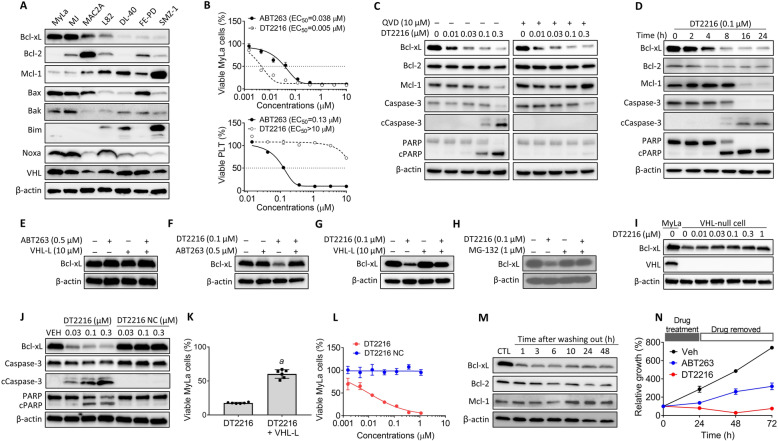
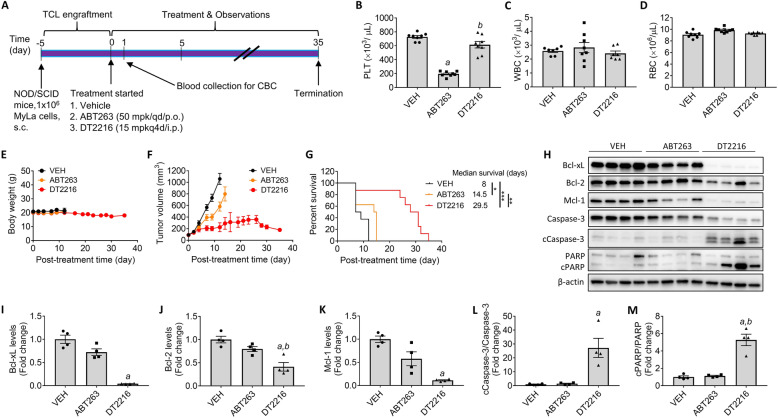
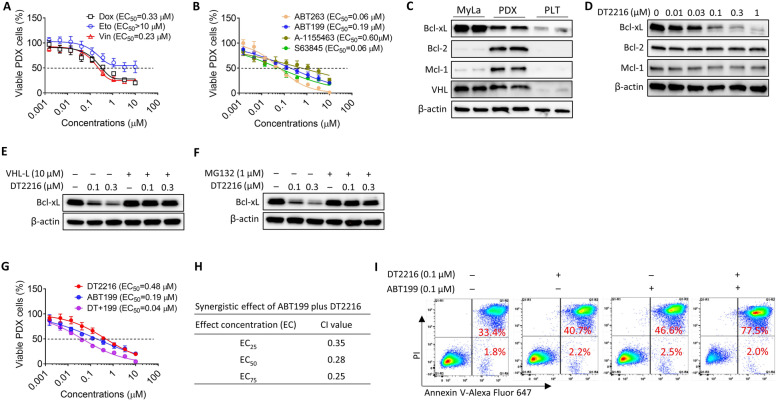
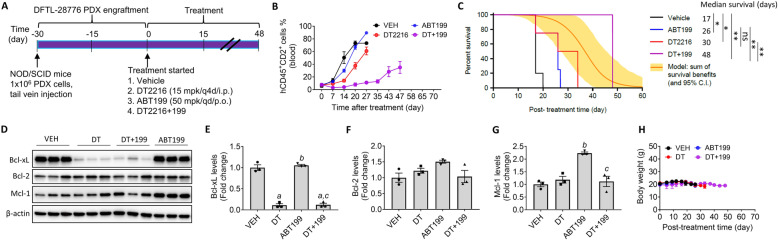
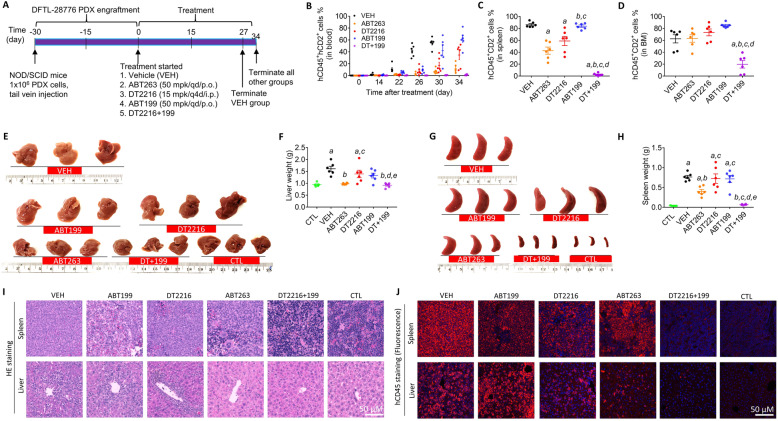
Background: Patients with advanced T cell lymphomas (TCLs) have limited therapeutic options and poor outcomes in part because their TCLs evade apoptosis through upregulation of anti-apoptotic Bcl-2 proteins. Subsets of TCL cell lines, patient-derived xenografts (PDXs), and primary patient samples depend on Bcl-xL for survival. However, small molecule Bcl-xL inhibitors such as ABT263 have failed during clinical development due to on-target and dose-limiting thrombocytopenia. Methods: We have developed DT2216, a proteolysis targeting chimera (PROTAC) targeting Bcl-xL for degradation via Von Hippel-Lindau (VHL) E3 ligase, and shown that it has better anti-tumor activity but is less toxic to platelets compared to ABT263. Here, we examined the therapeutic potential of DT2216 for TCLs via testing its anti-TCL activity in vitro using MTS assay, immunoblotting, and flow cytometry and anti-TCL activity in vivo using TCL cell xenograft and PDX model in mice. Results: The results showed that DT2216 selectively killed various Bcl-xL-dependent TCL cells including MyLa cells in vitro. In vivo, DT2216 alone was highly effective against MyLa TCL xenografts in mice without causing significant thrombocytopenia or other toxicity. Furthermore, DT2216 combined with ABT199 (a selective Bcl-2 inhibitor) synergistically reduced disease burden and improved survival in a TCL PDX mouse model dependent on both Bcl-2 and Bcl-xL. Conclusions: These findings support the clinical testing of DT2216 in patients with Bcl-xL-dependent TCLs, both as a single agent and in rational combinations.
Overview
The claims and statistics of this paper haven’t been checked yet.
Free: it reads the open-access text and checks the first 5 claims that cite a source we can check. Create a free account to check every claim.
Integrity signals
Registry
Cites
Statistics
Figures
Verification
Claims the paper makes
The claims and statistics of this paper haven’t been checked yet.
Free: it reads the open-access text and checks the first 5 claims that cite a source we can check. Create a free account to check every claim.
Claims other papers make about this one
Each is checked against this paper’s own text: does it say what the citing paper says it does?
The source backs part of the claim, not all of it — or backs it for a different population, condition or comparison.
In the citing paper
“DT2216 has shown promising antitumor activities in BCL-XL-dependent hematologic cancers as a single agent therapy and in multiple solid tumors when combined with conventional chemotherapy [8–10].”
From BCL-XL PROTAC degrader DT2216 synergizes with sotorasib in preclinical models of KRASG12C-mutated cancers (2022) · cites this paper as [9]
Experimental — accuracy not yet measuredThe cited source says what the claim attributes to it.
In the citing paper
“Recently, our group has reported platelet-sparing targeting of BCL-XL by proteolysis targeting chimeras (PROTACs) exemplified by DT2216.”
From BCL-XL PROTAC degrader DT2216 synergizes with sotorasib in preclinical models of KRASG12C-mutated cancers (2022) · cites this paper as [9]
In the citing paper
“A notable exception is a BCL-xL degrader known as DT2216 developed by Dialectic Therapeutics that uses VHL as the recruiting ligase77,78, which is in phase I trials (Table 1).”
From PROTAC targeted protein degraders: the past is prologue (2022) · cites this paper as [77]
Self-check
Percentages, sums and reported differences re-computed from the paper’s own numbers.
The self-check needs the paper’s full text.
Citations
Cites
Analysis of Relative Gene Expression Data Using Real-Time Quantitative PCR and the 2−ΔΔCT Method
Livak, K. J., & Schmittgen, T. D. (2001) · Methods · doi:10.1006/meth.2001.1262 · Cited by 180,860
Mutation of the mouse klotho gene leads to a syndrome resembling ageing
Kuro-o, M., Matsumura, Y., Aizawa, H., Kawaguchi, H., Suga, T., Utsugi, T., Ohyama, Y., Kurabayashi, M., Kaname, T., Kume, E., et al. (1997) · Nature · doi:10.1038/36285 · Cited by 3,837
THE TOXICITY OF POISONS APPLIED JOINTLY1
BLISS, C. I. (1939) · Annals of Applied Biology · doi:10.1111/j.1744-7348.1939.tb06990.x · Cited by 2,419
Regulation of apoptosis in health and disease: the balancing act of BCL-2 family proteins
Singh, R., Letai, A., & Sarosiek, K. (2019) · Nature Reviews Molecular Cell Biology · doi:10.1038/s41580-018-0089-8 · Cited by 2,111
Death and anti-death: tumour resistance to apoptosis
Igney, F. H., & Krammer, P. H. (2002) · Nature Reviews Cancer · doi:10.1038/nrc776 · Cited by 2,075
ABT-263: A Potent and Orally Bioavailable Bcl-2 Family Inhibitor
Tse, C., Shoemaker, A. R., Adickes, J., Anderson, M. G., Chen, J., Jin, S., Johnson, E. F., Marsh, K. C., Mitten, M. J., Nimmer, P., et al. (2008) · Cancer Research · doi:10.1158/0008-5472.can-07-5836 · Cited by 1,992
Phthalimide conjugation as a strategy for in vivo target protein degradation
Winter, G. E., Buckley, D. L., Paulk, J., Roberts, J. M., Souza, A., Dhe-Paganon, S., & Bradner, J. E. (2015) · Science · doi:10.1126/science.aab1433 · Cited by 1,760
Induced protein degradation: an emerging drug discovery paradigm
Lai, A. C., & Crews, C. M. (2017) · Nature Reviews Drug Discovery · doi:10.1038/nrd.2016.211 · Cited by 1,486
Catalytic in vivo protein knockdown by small-molecule PROTACs
Bondeson, D. P., Mares, A., Smith, I. E. D., Ko, E., Campos, S., Miah, A. H., Mulholland, K. E., Routly, N., Buckley, D. L., Gustafson, J. L., et al. (2015) · Nature Chemical Biology · doi:10.1038/nchembio.1858 · Cited by 1,356
Hijacking the E3 Ubiquitin Ligase Cereblon to Efficiently Target BRD4
Lu, J., Qian, Y., Altieri, M., Dong, H., Wang, J., Raina, K., Hines, J., Winkler, J. D., Crew, A. P., Coleman, K., et al. (2015) · Chemistry & Biology · doi:10.1016/j.chembiol.2015.05.009 · Cited by 1,140
Cited by
PROTAC targeted protein degraders: the past is prologue
Békés, M., Langley, D. R., & Crews, C. M. (2022) · Nature Reviews Drug Discovery · doi:10.1038/s41573-021-00371-6 · Cited by 3,395
Protein degraders enter the clinic — a new approach to cancer therapy
Chirnomas, D., Hornberger, K. R., & Crews, C. M. (2023) · Nature Reviews Clinical Oncology · doi:10.1038/s41571-023-00736-3 · Cited by 658
The BCL2 family: from apoptosis mechanisms to new advances in targeted therapy
Vogler, M., Braun, Y., Smith, V. M., Westhoff, M.-A., Pereira, R. S., Pieper, N. M., Anders, M., Callens, M., Vervliet, T., Abbas, M., et al. (2025) · Signal Transduction and Targeted Therapy · doi:10.1038/s41392-025-02176-0 · Cited by 462
The manipulation of apoptosis for cancer therapy using BH3-mimetic drugs
Diepstraten, S. T., Anderson, M. A., Czabotar, P. E., Lessene, G., Strasser, A., & Kelly, G. L. (2022) · Nature Reviews Cancer · doi:10.1038/s41568-021-00407-4 · Cited by 346
An overview of PROTACs: a promising drug discovery paradigm
Liu, Z., Hu, M., Yang, Y., Du, C., Zhou, H., Liu, C., Chen, Y., Fan, L., Ma, H., Gong, Y., et al. (2022) · Molecular Biomedicine · doi:10.1186/s43556-022-00112-0 · Cited by 344
Targeted protein degradation: advances in drug discovery and clinical practice
Zhong, G., Chang, X., Xie, W., & Zhou, X. (2024) · Signal Transduction and Targeted Therapy · doi:10.1038/s41392-024-02004-x · Cited by 326
Targeted protein degradation: A promise for undruggable proteins
Samarasinghe, K. T. G., & Crews, C. M. (2021) · Cell Chemical Biology · doi:10.1016/j.chembiol.2021.04.011 · Cited by 271
Major advances in targeted protein degradation: PROTACs, LYTACs, and MADTACs
Alabi, S. B., & Crews, C. M. (2021) · Journal of Biological Chemistry · doi:10.1016/j.jbc.2021.100647 · Cited by 261
A selective and orally bioavailable VHL-recruiting PROTAC achieves SMARCA2 degradation in vivo
Kofink, C., Trainor, N., Mair, B., Wöhrle, S., Wurm, M., Mischerikow, N., Roy, M. J., Bader, G., Greb, P., Garavel, G., et al. (2022) · Nature Communications · doi:10.1038/s41467-022-33430-6 · Cited by 216
Basu, A. (2022) · Pharmacology & Therapeutics · doi:10.1016/j.pharmthera.2021.107943 · Cited by 171
Bioorthogonal PROTAC Prodrugs Enabled by On-Target Activation
Chang, M., Gao, F., Pontigon, D., Gnawali, G. R., Xu, H., & Wang, W. (2023) · Journal of the American Chemical Society · doi:10.1021/jacs.3c05159 · Cited by 161
Cowan, A. D., & Ciulli, A. (2022) · Annual Review of Biochemistry · doi:10.1146/annurev-biochem-032620-104421 · Cited by 130
Strategies for designing proteolysis targeting chimaeras (PROTACs)
He, S., Dong, G., Cheng, J., Wu, Y., & Sheng, C. (2022) · Medicinal Research Reviews · doi:10.1002/med.21877 · Cited by 108
Targeted protein degrader development for cancer: advances, challenges, and opportunities
Fang, Y., Wang, S., Han, S., Zhao, Y., Yu, C., Liu, H., & Li, N. (2023) · Trends in Pharmacological Sciences · doi:10.1016/j.tips.2023.03.003 · Cited by 116
Full Spectrum Flow Cytometry as a Powerful Technology for Cancer Immunotherapy Research
Bonilla, D. L., Reinin, G., & Chua, E. (2021) · Frontiers in Molecular Biosciences · doi:10.3389/fmolb.2020.612801 · Cited by 108
Price, E., Weinheimer, M., Rivkin, A., Jenkins, G. J., Nijsen, M., Cox, P. B., & DeGoey, D. A. (2024) · Journal of Medicinal Chemistry · doi:10.1021/acs.jmedchem.3c02332 · Cited by 106
Killing by Degradation: Regulation of Apoptosis by the Ubiquitin-Proteasome-System
Abbas, R., & Larisch, S. (2021) · Cells · doi:10.3390/cells10123465 · Cited by 95
The rise and rise of protein degradation: Opportunities and challenges ahead
Hughes, S. J., Testa, A., Thompson, N., & Churcher, I. (2021) · Drug Discovery Today · doi:10.1016/j.drudis.2021.08.006 · Cited by 76
Overcoming Gemcitabine Resistance in Pancreatic Cancer Using the BCL-XL–Specific Degrader DT2216
Thummuri, D., Khan, S. U., Underwood, P. W., Zhang, P., Wiegand, J. S., Zhang, X., Budamagunta, V., Sobh, A., Tagmount, A., Loguinov, A., et al. (2021) · Molecular Cancer Therapeutics · doi:10.1158/1535-7163.mct-21-0474 · Cited by 75
Self-citationA beginner’s guide to current synthetic linker strategies towards VHL-recruiting PROTACs
Zografou-Barredo, N. A., Hallatt, A. J., Goujon-Ricci, J., & Cano, C. (2023) · Bioorganic & Medicinal Chemistry · doi:10.1016/j.bmc.2023.117334 · Cited by 74
Targeting the Intrinsic Apoptosis Pathway: A Window of Opportunity for Prostate Cancer
Westaby, D., Jiménez‐Vacas, J. M., Padilha, A., Varkaris, A. S., Balk, S. P., Bono, J. S. D., & Sharp, A. (2021) · Cancers · doi:10.3390/cancers14010051 · Cited by 67
Targeting ubiquitination in disease and therapy
Yang, X., Lan, T., Zhang, B., Tao, X., Qi, W., Xie, K., Cai, Y., Liu, C., Han, J., & Wu, H. M. (2025) · Signal Transduction and Targeted Therapy · doi:10.1038/s41392-025-02392-8 · Cited by 70
Proteolysis-targeting chimera against BCL-XL destroys tumor-infiltrating regulatory T cells
Kolb, R., De, U., Khan, S., Luo, Y., Kim, M.-C., Yu, H., Wu, C., Mo, J., Zhang, X., Zhang, P., et al. (2021) · Nature Communications · doi:10.1038/s41467-021-21573-x · Cited by 55
Self-citationKhan, S., Wiegand, J., Zhang, P., Hu, W., Thummuri, D., Budamagunta, V., Hua, N., Jin, L., Allegra, C. J., Kopetz, S. E., et al. (2022) · Journal of Hematology & Oncology · doi:10.1186/s13045-022-01241-3 · Cited by 62
Self-citationDiscovery of a Novel BCL-XL PROTAC Degrader with Enhanced BCL-2 Inhibition
Pal, P., Thummuri, D., Lv, D., Liu, X., Zhang, P., Hu, W., Poddar, S. K., Hua, N., Khan, S., Yuan, Y., et al. (2021) · Journal of Medicinal Chemistry · doi:10.1021/acs.jmedchem.1c00517 · Cited by 60
Self-citationProteolysis‐Targeting Chimera (PROTAC): Current Applications and Future Directions
Fan, G., Chen, S., Zhang, Q., Yu, N., Shen, Z., Liu, Z., Guo, W., Tang, Z., Yang, J., & Liu, M. (2025) · MedComm · doi:10.1002/mco2.70401 · Cited by 62
Senolytic-Mediated Elimination of Head and Neck Tumor Cells Induced Into Senescence by Cisplatin
Ahmadinejad, F., Bos, T., Hu, B., Britt, E., Koblinski, J. E., Souers, A. J., Leverson, J. D., Faber, A. C., Gewirtz, D. A., & Harada, H. (2021) · Molecular Pharmacology · doi:10.1124/molpharm.121.000354 · Cited by 57
PROTACs: Novel tools for improving immunotherapy in cancer
Li, S., Chen, T., Liu, J., Zhang, H., Li, J., Wang, Z. P., & Shang, G. (2023) · Cancer Letters · doi:10.1016/j.canlet.2023.216128 · Cited by 58
Cheng, J., He, S., Xu, J., Huang, M., Dong, G., & Sheng, C. (2022) · Journal of Medicinal Chemistry · doi:10.1021/acs.jmedchem.2c01243 · Cited by 53
Degraders upgraded: the rise of PROTACs in hematological malignancies
Casan, J. M. L., & Seymour, J. F. (2024) · Blood · doi:10.1182/blood.2023022993 · Cited by 53
Zhang, W., Roy Burman, S. S., Chen, J., Donovan, K. A., Cao, Y., Shu, C., Zhang, B., Zeng, Z., Gu, S., Zhang, Y., et al. (2022) · Genomics, Proteomics & Bioinformatics · doi:10.1016/j.gpb.2022.11.008 · Cited by 51
Zhang, W., Roy Burman, S. S., Chen, J., Donovan, K. A., Cao, Y., Zhang, B., Zeng, Z., Zhang, Y., Li, D., Fischer, E. S., et al. (2021) · doi:10.1101/2021.09.27.462040 · Cited by 51
The path to venetoclax resistance is paved with mutations, metabolism, and more
Sullivan, G. P., Flanagan, L., Rodrigues, D. A., & Chonghaile, T. N. (2022) · Science Translational Medicine · doi:10.1126/scitranslmed.abo6891 · Cited by 50
Khan, S., Kellish, P., Connis, N., Thummuri, D., Wiegand, J., Zhang, P., Zhang, X., Budamagunta, V., Hua, N., Yang, Y., et al. (2023) · Cell Death Discovery · doi:10.1038/s41420-022-01296-8 · Cited by 43
Self-citationAdvances and perspectives of proteolysis targeting chimeras (PROTACs) in drug discovery
Xi, J., Zhang, R., Chen, K., Yao, L., Li, M., Jiang, R., Li, X., & Fan, L. (2022) · Bioorganic Chemistry · doi:10.1016/j.bioorg.2022.105848 · Cited by 47
Co-delivery of PROTAC and siRNA via novel liposomes for the treatment of malignant tumors
Zhang, W., Jin, Y., Wang, J., Gu, M., Wang, Y., Zhang, X., Zhang, Y., Yu, W., Liu, Y., Yuan, W., et al. (2024) · Journal of Colloid and Interface Science · doi:10.1016/j.jcis.2024.08.185 · Cited by 46
Self-citationThe clinical advances of proteolysis targeting chimeras in oncology
Xie, H., Liu, J., Alem, D., & Fleming, J. B. (2021) · Exploration of Targeted Anti-tumor Therapy · doi:10.37349/etat.2021.00061 · Cited by 40
Targeted Protein Degradation: Clinical Advances in the Field of Oncology
Salama, A. K. A. A., Trkulja, M. V., Casanova, E., & Uras, I. Z. (2022) · International Journal of Molecular Sciences · doi:10.3390/ijms232315440 · Cited by 40
Senescence in cancer: Advances in detection and treatment modalities
Billimoria, R., & Bhatt, P. (2023) · Biochemical Pharmacology · doi:10.1016/j.bcp.2023.115739 · Cited by 38
Key Considerations in Targeted Protein Degradation Drug Discovery and Development
Qin, L., Dai, H., & Wang, J. (2022) · Frontiers in Chemistry · doi:10.3389/fchem.2022.934337 · Cited by 37
PROTAC Technology as a New Tool for Modern Pharmacotherapy
Kubryń, N., Fijałkowski, Ł., Nowaczyk, J., Jamil, A., & Nowaczyk, A. (2025) · Molecules · doi:10.3390/molecules30102123 · Cited by 36
Khan, S., Cao, L., Wiegand, J., Zhang, P., Zajac-Kaye, M., Kaye, F. J., Zheng, G., & Zhou, D. (2024) · Cells · doi:10.3390/cells13060528 · Cited by 34
Self-citationUnleashing the Power of Covalent Drugs for Protein Degradation
Fu, M., Jin, H., Wang, S., Shen, L., Liu, H., Liu, Y., Zheng, Y., & Dai, X. (2025) · Medicinal Research Reviews · doi:10.1002/med.22101 · Cited by 34
Kaushik, A., Parashar, S., Ambasta, R. K., & Kumar, P. (2024) · Ageing Research Reviews · doi:10.1016/j.arr.2024.102279 · Cited by 34
El‐Hajjar, L., Ahmad, F. A., & Nasr, R. (2023) · Current Protocols · doi:10.1002/cpz1.721 · Cited by 32
Small-Molecule PROTACs for Cancer Immunotherapy
Liu, Z., Zhang, Y., Xiang, Y., & Kang, X. (2022) · Molecules · doi:10.3390/molecules27175439 · Cited by 31
Caron, G., Jiménez, D. G., Vallaro, M., Vitagliano, L., Lopez, L. L., Apprato, G., & Ermondi, G. (2024) · ADMET & DMPK · doi:10.5599/admet.2334 · Cited by 30
Targeting BCL-XL in fibrolamellar hepatocellular carcinoma
Shebl, B., Ng, D., Lalazar, G., Rosemore, C., Finkelstein, T. M., Migler, R. D., Zheng, G., Zhang, P., Jiang, C. S., Qureshi, A., et al. (2022) · JCI Insight · doi:10.1172/jci.insight.161820 · Cited by 30
Self-citationPROTACs in gastrointestinal cancers
Chen, Y., Yang, Q., Xu, J., Tang, L., Zhang, Y., Du, F., Zhao, Y., Wu, X., Li, M., Shen, J., et al. (2022) · Molecular Therapy — Oncolytics · doi:10.1016/j.omto.2022.10.012 · Cited by 30
Self-citationTargeting the apoptosis pathway to treat tumours of the paediatric nervous system
Fitzgerald, M.-C., O’Halloran, P. J., Connolly, N. M. C., & Murphy, B. M. (2022) · Cell Death and Disease · doi:10.1038/s41419-022-04900-y · Cited by 30
Photopharmacology of Proteolysis-Targeting Chimeras: A New Frontier for Drug Discovery
Zeng, S., Zhang, H., Shen, Z., & Huang, W. (2021) · Frontiers in Chemistry · doi:10.3389/fchem.2021.639176 · Cited by 28
Therapeutics Targeting the Core Apoptotic Machinery
Hamilton, C., Fox, J. P., Longley, D. B., & Higgins, C. A. (2021) · Cancers · doi:10.3390/cancers13112618 · Cited by 26
“DT2216, a first-in-class selective BCL-XL degrader, is reported to target tumor cells more selectively as it targets BCL-XL to the Von Hippel-Lindau (VHL) E3 ligase for proteasomal degradation; platelets have minimal expression of VHL [47,49].”
BackgroundBayesian optimization for ternary complex prediction (BOTCP)
Rao, A., Tunjic, T. M., Brunsteiner, M., Müller, M., Fooladi, H., Gasbarri, C., & Weber, N. (2023) · Artificial Intelligence in the Life Sciences · doi:10.1016/j.ailsci.2023.100072 · Cited by 25
State of the art and perspectives in pediatric hepatocellular carcinoma
Digiacomo, G., Serra, R. P., Turrini, E., Tiri, A., Cavazzoni, A., Alfieri, R. R., & Bertolini, P. (2022) · Biochemical Pharmacology · doi:10.1016/j.bcp.2022.115373 · Cited by 25
Ubiquitination Enzymes in Cancer, Cancer Immune Evasion, and Potential Therapeutic Opportunities
Awan, A. B., Osman, M. J. A., & Khan, O. M. (2025) · Cells · doi:10.3390/cells14020069 · Cited by 25
Jaiswal, A., Jaiswal, A. S., Williamson, E. A., Gelfond, J. A. L., Zheng, G., Zhou, D., & Hromas, R. (2022) · Cancer Chemotherapy and Pharmacology · doi:10.1007/s00280-022-04490-8 · Cited by 25
Self-citationMüller, D., Mazzeo, P., Koch, R., Bösherz, M.-S., Welter, S., von Hammerstein-Equord, A. F., Hinterthaner, M., Cordes, L., Belharazem, D., Marx, A., et al. (2021) · BMC Medicine · doi:10.1186/s12916-021-02158-3 · Cited by 24
Self-citationPemmaraju, N., Garcia, J. S., Perkins, A. C., Harb, J. G., Souers, A. J., Werner, M. E., Brown, C. M., & Passamonti, F. (2023) · Cancer · doi:10.1002/cncr.34986 · Cited by 23
Wolska, A., & Smolewski, P. (2022) · Cancers · doi:10.3390/cancers14153778 · Cited by 22
Ferrarini, I., Rigo, A., & Visco, C. (2022) · Haematologica · doi:10.3324/haematol.2021.280201 · Cited by 21
Mitochondrial priming and response to BH3 mimetics in “one-two punch” senogenic-senolytic strategies
López, J., Llop‐Hernández, À., Verdura, S., Serrano‐Hervás, E., Martinez‐Balibrea, E., Bosch‐Barrera, J., Teixidor, E., López‐Bonet, E., Martín-Castillo, B., Sardanyés, J., et al. (2025) · Cell Death Discovery · doi:10.1038/s41420-025-02379-y · Cited by 22
Anti‐apoptotic protein BCL‐XL as a therapeutic vulnerability in gastric cancer
Wei, Y., Zhang, L., Wang, C., Li, Z., Luo, M., Xie, G., Yang, X., Li, M., Ren, S., Zhao, D., et al. (2023) · Animal Models and Experimental Medicine · doi:10.1002/ame2.12330 · Cited by 20
Discovery, development and application of drugs targeting BCL-2 pro-survival proteins in cancer
Lee, E. F., & Fairlie, W. D. (2021) · Biochemical Society Transactions · doi:10.1042/bst20210749 · Cited by 18
Nie, X., Zhao, Y. Q., Tang, H., Zhang, Z., Liao, J., Almodóvar‐Rivera, C. M., Sundaresan, R., Xie, H., Guo, L., Wang, B., et al. (2024) · ChemBioChem · doi:10.1002/cbic.202300685 · Cited by 17
Mu, X., Mu, C., Wang, M., Meng, C., Liu, H., & Lu, H. (2025) · International Journal of Nanomedicine · doi:10.2147/ijn.s552644 · Cited by 16
Targeted protein degradation with small molecules for cancer immunotherapy
Yang, Z., Xu, J., Yang, X., & Chen, J. (2025) · Asian Journal of Pharmaceutical Sciences · doi:10.1016/j.ajps.2025.101058 · Cited by 16
Qin, X., Presser, A. G., Johnson, L., Matoba, Y., Shay, B., Xu, W., Choiniere, J., Fraser, C., Garbicz, F., Spetz, J. K. E., et al. (2025) · bioRxiv (Cold Spring Harbor Laboratory) · doi:10.1101/2025.06.24.661170 · Cited by 16
Self-citationKannan, S., Li, Y., Baran, N., Yang, X., Ghotbaldini, S., Tatarata, Q. Z., Yoshimura, S., Li, Z., Hsiao, Y.-C., Balachander, S. B., et al. (2025) · Blood Advances · doi:10.1182/bloodadvances.2024013423 · Cited by 14
Conquering PROTAC molecular design and drugability
Bhole, R. P., Labhade, S., & Gurav, S. S. (2025) · Bioanalysis · doi:10.1080/17576180.2025.2481021 · Cited by 14
Design, Synthesis, and Evaluation of BCL‐2 Targeting PROTACs
Bricelj, A., Ng, Y. L. D., Gobec, M., Kuchta, R. D., Hu, W., Javornik, Š., Rožič, M., Gütschow, M., Zheng, G., Krönke, J., et al. (2024) · Chemistry - A European Journal · doi:10.1002/chem.202400430 · Cited by 13
Self-citationTargeting the ubiquitin pathway in lymphoid malignancies
Li, B., Eichhorn, P. J. A., & Chng, W. J. (2024) · Cancer Letters · doi:10.1016/j.canlet.2024.216978 · Cited by 13
Castellani, B., Eleuteri, M., Bona, S. D., Cruciani, G., Desantis, J., & Goracci, L. (2023) · Journal of Medicinal Chemistry · doi:10.1021/acs.jmedchem.3c01144 · Cited by 11
BCLXL PROTAC degrader DT2216 targets secondary plasma cell leukemia addicted to BCLXL for survival
Champion, O., Soler, A. N., Maïga, S., Bellanger, C., Pellat‐Deceunynck, C., Talbot, A., Touzeau, C., Amiot, M., & Gomez‐Bougie, P. (2023) · Frontiers in Oncology · doi:10.3389/fonc.2023.1196005 · Cited by 11
Ion channel inhibition by targeted recruitment of NEDD4-2 with divalent nanobodies
Darko-Boateng, A., Afriyie, E., Morgenstern, T. J., Shanmugam, S. K., Zou, X., Laloudakis, Y. D., Choudhury, P., Desai, M., Kass, R. S., Vallese, F., et al. (2025) · Nature Communications · doi:10.1038/s41467-025-67068-x · Cited by 10
Nafie, M. S., Diab, M. K., Yassen, A. S. A., Elshamy, A. M., Tohamy, M. R. E., Tawfik, H. O., & Fahmy, S. A. (2025) · Drug Development Research · doi:10.1002/ddr.70192 · Cited by 10
A novel regimen for pancreatic ductal adenocarcinoma targeting MEK, BCL-xL, and EGFR
Han, S., Tushoski-Alemán, G. W., Zhang, P., Zheng, G., Zhou, D., Huo, Z., Licht, J. D., George, T. J., Allegra, C. J., Trevino, J. G., et al. (2024) · Neoplasia · doi:10.1016/j.neo.2024.101070 · Cited by 10
Self-citationMartín, F., Alcon, C., Marín, E., Morales-Sánchez, P., Manzano-Muñoz, A., Díaz, S., García, M. L. P., Samitier, J., Lu, A., Villanueva, A., et al. (2025) · Cell Death and Disease · doi:10.1038/s41419-025-07513-3 · Cited by 10
Context matters: E3 ligase–ligand pairing strategies for optimized PROTAC performance
Yin, L., Shu, P., & Peng, X. (2025) · Protein & Cell · doi:10.1093/procel/pwaf107 · Cited by 9
Zhao, C., Wang, H., Zhan, W., Lv, X., & Ma, X. (2023) · Journal of Medicinal Chemistry · doi:10.1021/acs.jmedchem.3c00079 · Cited by 9
Developing PROteolysis TArgeting Chimeras (PROTACs) for hematologic malignancies
Wu, Y., Zhang, J., Zhu, X., & Zhang, Y. (2022) · Cancer Letters · doi:10.1016/j.canlet.2022.215808 · Cited by 9
Beltrán‐Visiedo, M., Jiménez‐Alduán, N., Díez, R., Cuenca, M., Benedi, A., del Valle, A. S., Azaceta, G., Palomera, L., Peperzak, V., Anel, A., et al. (2023) · Molecular Oncology · doi:10.1002/1878-0261.13522 · Cited by 8
BCL-XL Protects ASS1-Deficient Cancers from Arginine Starvation–Induced Apoptosis
Panda, P. K., Mafra, A. C. P., Bastos, A. C. S., Cao, L., Bonet, M. S., Brashears, C. B., Chen, E. Y., Benedict-Hamilton, H. M., Ehrhardt, W. R., Bomalaski, J. S., et al. (2025) · Clinical Cancer Research · doi:10.1158/1078-0432.ccr-24-2548 · Cited by 8
Reviewing the toolbox for degrader development in oncology
Cresser-Brown, J. O., Marsh, G. P., & Maple, H. J. (2021) · Current Opinion in Pharmacology · doi:10.1016/j.coph.2021.04.009 · Cited by 8
Wu, T., Pelus, L. M., Plett, P. A., Sampson, C. H., Chua, H. L., Fisher, A., Feng, H., Liu, L., Li, H., Ortíz, M. A., et al. (2023) · Radiation Research · doi:10.1667/rade-22-00208.1 · Cited by 8
Self-citationMenéndez, J. A., Lupu, R., Martín-Castillo, B., Sardanyés, J., Alarcón, T., Verdura, S., & Cuyàs, E. (2025) · Frontiers in Immunology · doi:10.3389/fimmu.2025.1695244 · Cited by 7
PROTACs in targeted protein degradation: Advances in development and AI-enhanced drug discovery
Du, M., Liu, T., Wang, W., Fan, S., Tian, M., Du, Q., Wang, Z., Li, X., Liu, X., Xia, Q., et al. (2026) · European Journal of Medicinal Chemistry Reports · doi:10.1016/j.ejmcr.2026.100332 · Cited by 8
Zhang, X., Tao, Y., Xu, Z., Jiang, B., Yang, X., Huang, T., & Tan, W. (2024) · Biochemical Pharmacology · doi:10.1016/j.bcp.2024.116542 · Cited by 7
Self-citationTargeted Degradation of Receptor-Interacting Protein Kinase 1 to Modulate the Necroptosis Pathway
Inuzuka, H., Qian, C., Qi, Y., Xiong, Y., Wang, C., Wang, Z., Zhang, D., Zhang, C. M., Jin, J. J., & Wei, W. (2024) · ACS Pharmacology & Translational Science · doi:10.1021/acsptsci.4c00421 · Cited by 7
Discovery of XZ338, a highly potent BCL-XL degrader
Zhang, X., Thummuri, D., Hu, W., Liu, X., Zhang, P., Zhou, S., Zhou, D., & Zheng, G. (2025) · European Journal of Medicinal Chemistry · doi:10.1016/j.ejmech.2025.117624 · Cited by 7
Self-citationOlejarz, W., Sadowski, K. A., Roszkowski, P., Bielenica, A., Wiśniewski, M., Struga, M., & Szulczyk, D. (2025) · Scientific Reports · doi:10.1038/s41598-025-02781-7 · Cited by 7
Targeting apoptosis dysregulation in myeloid malignancies - The promise of a therapeutic revolution
Santinelli, E., Pascale, M. R., Xie, Z., Badar, T., Stahl, M. F., Bewersdorf, J. P., Gurnari, C., & Zeidan, A. M. (2023) · Blood Reviews · doi:10.1016/j.blre.2023.101130 · Cited by 7
Bcl-2 inhibition in the treatment of hematologic malignancies
Wei, J. X., & Konopleva, M. Y. (2023) · Frontiers in Hematology · doi:10.3389/frhem.2023.1307661 · Cited by 7
Andrzejewski, S., Winter, M., Garcia, L. E., Akinrinmade, O. A., Marques, F. M., Zacharioudakis, E., Skwarska, A., Aguirre‐Ghiso, J. A., Konopleva, M. Y., Zheng, G., et al. (2025) · Cells · doi:10.3390/cells14191557 · Cited by 6
Self-citationSung, J., Seo, Y., & Lee, J.-Y. (2026) · Molecular Therapy · doi:10.1016/j.ymthe.2026.05.031 · Cited by 6
PROTAC-mediated degradation of Bcl-xL potentiates target therapy in preclinical melanoma models
Valentini, E., Gentile, G., Martile, M. D., D’Aguanno, S., Brignone, M., Stefano, A. M. D., Caprio, M. D., Melucci, E., Botti, C., Pelle, F., et al. (2026) · Journal of Experimental & Clinical Cancer Research · doi:10.1186/s13046-025-03635-w · Cited by 5
PROTACs in platelets: emerging antithrombotic strategies and future perspectives
Trory, J. S., Vautrinot, J., May, C., & Hers, I. (2024) · Current Opinion in Hematology · doi:10.1097/moh.0000000000000846 · Cited by 5
Non-enzymatic protein targeting agents as a promising strategy for cancer treatment
Ambrose, M., Lee, J., Syed, A., Ahmed, Z., & Peng, G. (2025) · Frontiers in Drug Discovery · doi:10.3389/fddsv.2025.1520734 · Cited by 4
Advantages and Disadvantages of PROTACs
Pujari, R., Bhatt, S., Soni, U., Sharma, S., & Patil, S. (2024) · Springer eBooks · doi:10.1007/978-981-97-5077-1_4 · Cited by 4
Chang, L.-C., Yin, M. T., Laird, G. M., Ritter, K. D., Shah, J. G., & Debnath, A. K. (2025) · International Journal of Molecular Sciences · doi:10.3390/ijms26062772 · Cited by 3
Targeted protein degradation: therapeutic potential and challenges of PROTACs and molecular glues
Kim, S., & Jeung, E. (2025) · Journal of Biomedical Translational Research · doi:10.12729/jbtr.2025.26.2.21 · Cited by 3
Metadata
- Authors
- He, Y., Koch, R., Budamagunta, V., Zhang, P., Zhang, X., Khan, S., Thummuri, D., Ortiz, Y. T., Zhang, X., Lv, D., Wiegand, J. S., Li, W., Palmer, A. C., Zheng, G., Weinstock, D. M., & Zhou, D.
- Affiliations
- University of Florida (US)
- Universitätsmedizin Göttingen (DE)
- University of North Carolina at Chapel Hill (US)
- Harvard University (US)
- Corresponding author
- Weinstock, David M.
- Zhou, Daohong
- ORCID
- Venue
- Journal of Hematology & Oncology
- Published
- 2020-07-16
- Volume
- 13
- Issue
- 1
- Pages
- 95-95
- ISSN
- 1756-8722 (ISSN-L)
- PMC
- PMC7364785
- OpenAlex
- W3043399847
- Cited by
- 139
- References
- 43
- Citations by year
- 2026: 24 · 2025: 28 · 2024: 22 · 2023: 21 · 2022: 23 · 2021: 21
- FWCI
- 5.43
- Type
- journal article
- Language
- en
- Open access
- gold
- doi.org
- Licence
- cc-by
- creativecommons.org/licenses/by/4.0 (tdm)
- creativecommons.org/licenses/by/4.0 (vor)
- Locations
- Journal of Hematology & Oncology (publishedVersion, cc-by)
- PubMed Central (publishedVersion, cc-by)
- PubMed (publishedVersion)
- DOAJ (DOAJ: Directory of Open Access Journals) (submittedVersion, cc-by-sa)
- GoeScholar The Publication Server of the Georg-August-Universität Göttingen (Georg-August-Universität Göttingen) (submittedVersion, cc-by)
- Funders
- National Institutes of Health (R01CA211963, R01CA219836, R01CA242003, R21CA223371, R35CA239158, R01CA241191)
- Deutsche Forschungsgemeinschaft (KO 4627/2-1)
- Leukemia and Lymphoma Society (#7011-16)
- Topics
- Life Sciences › Biochemistry, Genetics and Molecular Biology › Molecular Biology › Protein Degradation and Inhibitors
- Life Sciences › Biochemistry, Genetics and Molecular Biology › Molecular Biology › Cell death mechanisms and regulation
- Health Sciences › Medicine › Pathology and Forensic Medicine › Lymphoma Diagnosis and Treatment
- Keywords
- Bcl-xL, PROTACs, T-cell lymphoma, Bcl-2, navitoclax, thrombocytopenia, apoptosis evasion, combination therapy, patient-derived xenografts
- MeSH terms
- Aniline Compounds, Animals, Antineoplastic Agents, Antineoplastic Combined Chemotherapy Protocols, Blood Platelets, Drug Screening Assays, Antitumor, Drug Synergism, Female, Graft Survival, Humans, Liver, Neoplasm Proteins, Neoplasm Transplantation, Piperazines, Random Allocation, Spleen, Sulfonamides, Drug Design, Lymphoma, T-Cell, Mice, SCID, Mice, Inbred NOD, Bridged Bicyclo Compounds, Heterocyclic, Proto-Oncogene Proteins c-bcl-2, Xenograft Model Antitumor Assays, Ubiquitin-Protein Ligases, Cell Line, Tumor, bcl-X Protein, Mice
About these checks
Registry, retraction, Cites and statistics results are computed, not judged, with one exception: a printed reference that no index lists is read once by a model before it counts as a citation error. Claims are extracted by a model and kept only when their quote appears verbatim in the text; each cited source is then checked, with a model’s help, for whether it says what the claim relies on. Those verdicts can be wrong — read the claim’s quote and the cited source before relying on one.
Statistics and arithmetic are recomputed, not judged.
Confidence bands are shown only for fields calibrated on our annotated test set. None is calibrated yet, so no band is shown.
What counts as a claim ›How we measure confidence ›How we check this ›
Are you an author, or do you see a problem with this page? Request a review
Data sources
Bibliographic data: Semantic Scholar, OpenAlex, Crossref.
Contains information from the Semantic Scholar Academic Graph Datasets, made available under the ODC Attribution License (ODC-BY 1.0).
Semantic Scholar’s data is described in: Kinney, R., et al. (2023). The Semantic Scholar Open Data Platform. arXiv:2301.10140.
