

The global prevalence of autism spectrum disorder: a comprehensive systematic review and meta-analysis.
Open accessThe DOI matches its Crossref record; 121 of the 122 references it cites were found in a registry or an index; 3 of the 4 sources its claims cite were checked for support.
Abstract
BACKGROUND: Autism spectrum disorder (ASD) is one of the serious developmental disorders that is usually diagnosed below the age of three years. Although the severity of the disease's symptoms varies from patient to patient, the ability to communicate with others is affected in all forms of ASD. This study aimed to determine the prevalence of ASD in high-risk groups by continent. METHODS: The present study was conducted by systematic review and meta-analysis from 2008 to July 2021. Databases such as Science Direct, PubMed, Scopus, SID, Magiran, Web of Science (WoS), and Google Scholar from 2008 to July 2021 were searched to find related studies. Data were analysed using Comprehensive Meta-Analysis software (Version 2). RESULTS: A total of 74 studies with 30,212,757 participants were included in this study. The prevalence of ASD in the world was 0.6% (95% confidence interval: 0.4-1%). Subgroup analyses indicated that the prevalence of ASD in Asia, America, Europe, Africa and Australia was 0.4% (95% CI: 0.1-1), 1% (95% CI: 0.8-1.1), 0.5% (95% CI: 0.2-1), 1% (95% CI: 0.3-3.1), 1.7% (95% CI: 0.5-6.1) respectively. CONCLUSION: ASD imposes a heavy health burden on communities around the world. Early detection of ASD can reduce the incidence of developmental disorders and improve patients' communication skills. Therefore, health policymakers need to be aware of the prevalence and increasing trend of ASD to implement appropriate planning and interventions to reduce its consequences.
Overview
CoChat Summary
TL;DR
This systematic review and meta-analysis estimated the global prevalence of autism spectrum disorder (ASD) at 0.6% (95% CI: 0.4–1%) based on 74 studies and 30,212,757 participants. Prevalence varied by continent, from 0.4% in Asia to 1.7% in Australia.
Key findings
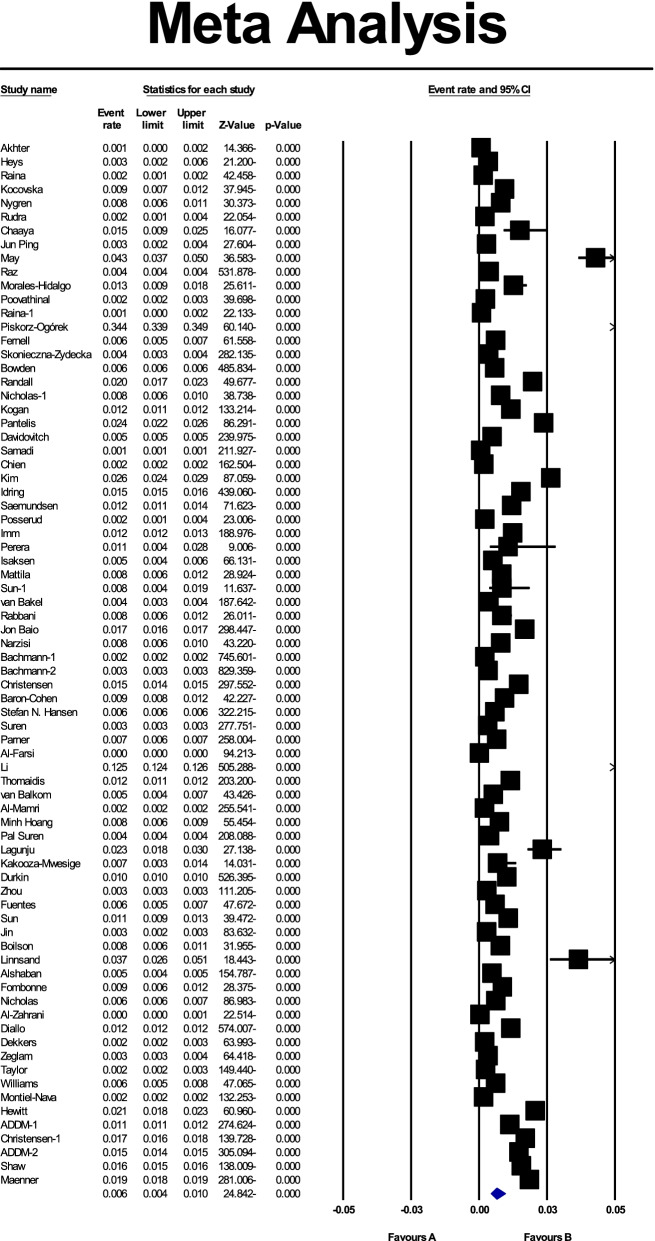
- The global prevalence of ASD was 0.6% (95% CI: 0.4–1%), or 0.006 (95% CI: 0.004–0.01).
- Subgroup prevalence by continent was: Asia 0.4% (95% CI: 0.1–1), America 1% (95% CI: 0.8–1.1), Europe 0.5% (95% CI: 0.2–1), Africa 1% (95% CI: 0.3–3.1), and Australia 1.7% (95% CI: 0.5–6.1).
- Across included studies, prevalence ranged from 0.02% in China to 3.66% in Sweden.
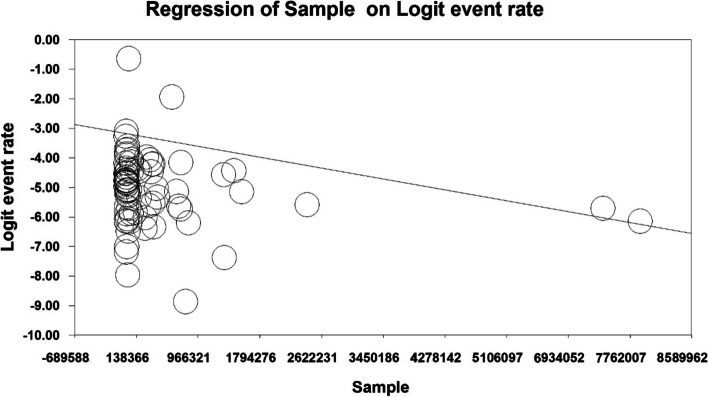
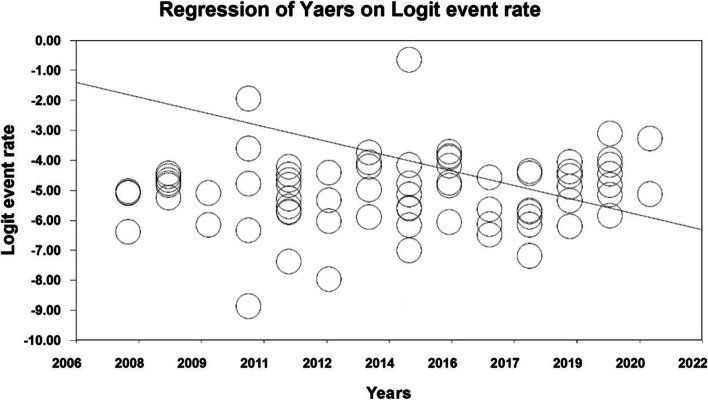
- Meta-regression found that global ASD prevalence decreased with increasing sample size and with increasing study year, both statistically significant (P < 0.05).
Methods
- Systematic review and meta-analysis following PRISMA 2020, searching Science Direct, PubMed, Scopus, SID, Magiran, Web of Science, and Google Scholar from 2008 to July 2021.
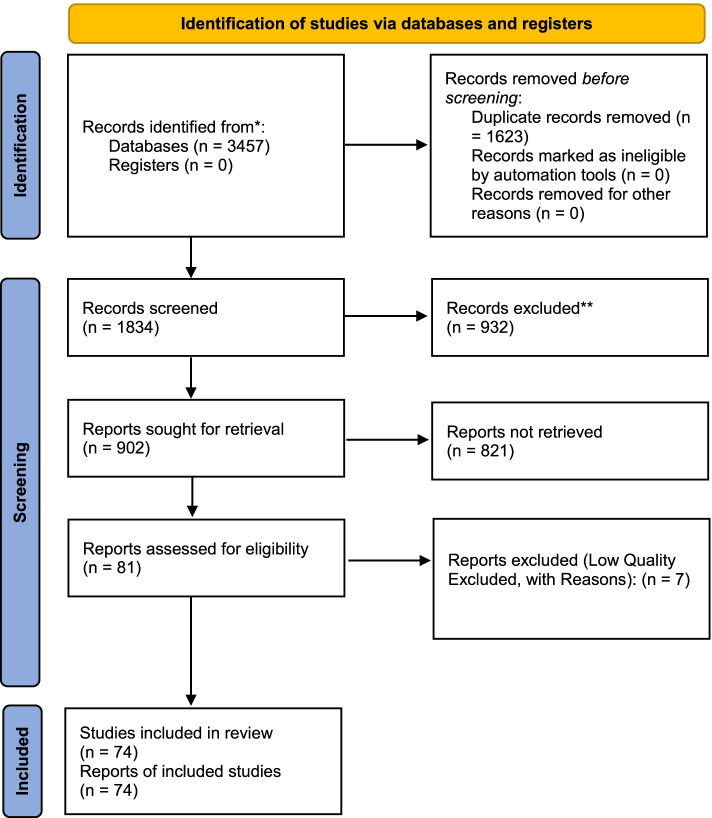
- Included cross-sectional or cohort studies published in English or Persian that used valid ASD diagnostic tools/criteria and reported detailed prevalence data; 74 studies were included after screening and quality assessment.
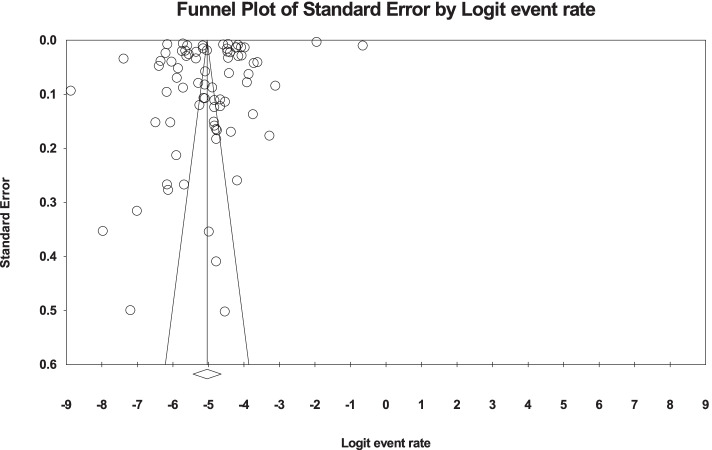
- Data were analyzed with Comprehensive Meta-Analysis software (Version 2); heterogeneity was assessed with I², publication bias with Begg and Mazumdar/Egger tests, and a random-effects model was used because I² was 99.9%.
Limitations
- The paper states that different diagnostic tools and techniques in included studies may lead to selection bias; sample size was variable, making comparison difficult; and some studies were unavailable due to language limitations.
- The paper also notes that differences in methods, ASD definition, screening tools, and diagnostic criteria between countries made comparison very difficult, and that there is very limited data on ASD prevalence in Africa compared with other regions.
- Evident from the text: heterogeneity was extremely high (I² = 99.9%), and the authors state they cannot draw a definite conclusion whether the increasing trend of ASD is real or due to altered diagnostic criteria and tools.
Model-written summary. Check it against the paper before relying on it.
Integrity signals
Registry
Cites
Statistics
Figures
Verification
Claims the paper makes
1 Valid · 2 Not valid · 0 Not checked · 26 Own results and interpretations
The cited sources support only part of this claim — read each source’s verdict below.
In the paper
“The prevalence of ASD worldwide has increased in recent decades [71, 78, 92].”
- Also stated in: § Background · plain
“Epidemiological surveys show an increasing trend in the annual prevalence of ASD.”
§ The global prevalence of autism spectrum disorder: a comprehensive systematic review and meta-analysis > Discussion
What the sources say
- Not checked — no full text of the sourcecites [71] Idring S Lundberg M Sturm H Dalman C Gumpert C Rai D Changes in prevalence of autism spectrum disorders in 2001–2011: findings from the Stockholm youth cohort J Autism Dev Disord 2015 45 6 1766 1773 10.1007/s10803-014-2336-y 25475364 source
- Partly supportedcites [78] Baron-Cohen S Scott FJ Allison C Williams J Bolton P Matthews FE Prevalence of autism-spectrum conditions: UK school-based population study Br J Psychiatry 2009 194 6 500 509 10.1192/bjp.bp.108.059345 19478287 sourceExperimental — accuracy not yet measured
The opening prevalence discussion (page not provided) says estimates for autism-spectrum conditions rose over four decades. It attributes much of the rise to changes in detection, methodology and diagnostic criteria, and cautions that studies cannot be directly compared; it does not establish that actual ASD prevalence increased worldwide. (LLM, conf=0.86)
- Supportedcites [92] Elsabbagh M Divan G Koh YJ Kim YS Kauchali S Marcín C Global prevalence of autism and other pervasive developmental disorders Autism Res 2012 5 3 160 179 10.1002/aur.239 22495912 PMC3763210 source
The Abstract states that prevalence estimates have increased over time. The “Phenotypic presentation of PDD” section likewise reports a rise in prevalence across studies from several world regions, while cautioning that this does not establish a rise in incidence. (LLM, conf=0.90)
plainstates a cause- Asserted: passes — The authors put it forward as true.
- Checkable: passes — It can be checked against evidence.
- Load-bearing: unclear — It is unclear whether the paper’s conclusions depend on it.
- Based: passes — The paper gives a reason why it holds.
- Also stated in: § Background · plain
A result the paper reports from its own data — it cites no other source for it, so there is none to check. The quote shows it is in the paper.
In the paper
“Results suggested no publication bias in the present study (P = 0.109) (Fig. 2).”
§ The global prevalence of autism spectrum disorder: a comprehensive systematic review and meta-analysis > Result > Heterogeneity and publication bias
hedged- Asserted: passes — The authors put it forward as true.
- Checkable: passes — It can be checked against evidence.
- Load-bearing: unclear — It is unclear whether the paper’s conclusions depend on it.
- Based: passes — The paper gives a reason why it holds.
A result the paper states — it cites no source for it, so there is none to check. The quote shows it is in the paper.
In the paper
“There is no information on ASD prevalence in some countries, so more research is required to obtain such data for better global management of ASD.”
§ The global prevalence of autism spectrum disorder: a comprehensive systematic review and meta-analysis > Conclusion
plain- Asserted: passes — The authors put it forward as true.
- Checkable: passes — It can be checked against evidence.
- Load-bearing: passes — The paper’s conclusions depend on it.
- Based: passes — The paper gives a reason why it holds.
A result the paper reports from its own data — it cites no other source for it, so there is none to check. The quote shows it is in the paper.
In the paper
“Subgroup analyses indicated that the prevalence of ASD in Asia, America, Europe, Africa and Australia was 0.4% (95% CI: 0.1–1), 1% (95% CI: 0.8–1.1), 0.5% (95% CI: 0.2–1), 1% (95% CI: 0.3–3.1), 1.7% (95% CI: 0.5–6.1) respectively.”
- Also stated in: § Results · plain
“the prevalence of ASD in Asia, America, Europe, Africa and Australia was 0.4% (95% CI: 0.1–1), 1% (95% CI: 0.8–1.1), 0.5% (95% CI: 0.2–1), 1% (95% CI: 0.3–3.1), 1.7% (95% CI: 0.5–6.1) respectively”
§ The global prevalence of autism spectrum disorder: a comprehensive systematic review and meta-analysis > Abstract > Results
plain- Asserted: passes — The authors put it forward as true.
- Checkable: passes — It can be checked against evidence.
- Load-bearing: unclear — It is unclear whether the paper’s conclusions depend on it.
- Based: passes — The paper gives a reason why it holds.
- Rests on an assumption not shown here.
- Also stated in: § Results · plain
A result the paper reports from its own data — it cites no other source for it, so there is none to check. The quote shows it is in the paper.
In the paper
“We found that the prevalence of ASD varies from 0.02% in China to 3.66% in Sweden.”
§ The global prevalence of autism spectrum disorder: a comprehensive systematic review and meta-analysis > Discussion
plainn = 30,212,757- Asserted: passes — The authors put it forward as true.
- Checkable: passes — It can be checked against evidence.
- Load-bearing: unclear — It is unclear whether the paper’s conclusions depend on it.
- Based: passes — The paper gives a reason why it holds.
- Rests on an assumption not shown here.
10 more claims
Create a free account to see all 29 claims and every source verdict.
- Probably not a substantial claim. 11
- It may state two separate claims as one. 6
Claims other papers make about this one
Each is checked against this paper’s own text: does it say what the citing paper says it does?
The source backs part of the claim, not all of it — or backs it for a different population, condition or comparison.
In the citing paper
“In addition to time trends, there are other sources of heterogeneity, such as geographical region, country income, implemented study design, diagnostic criteria used, age of the studied population, and other socio-demographic factors (18–20).”
From The global prevalence of autism spectrum disorder: A three-level meta-analysis (2023) · cites this paper as [19]
Experimental — accuracy not yet measuredThe source backs part of the claim, not all of it — or backs it for a different population, condition or comparison.
In the citing paper
“The prevalence of autism spectrum disorder (ASD) has surged, with an estimated 1 in 36 eight-year-olds in the United States meeting criteria for ASD in 2020.”
From Pharmacological treatment in autism: a proposal for guidelines on common co-occurring psychiatric symptoms (2025) · cites this paper as [4]
Experimental — accuracy not yet measuredThe cited source says what the claim attributes to it.
In the citing paper
“in the meta-analysis of Salari et al. (19) showed that 74 studies, published from 2008 to 2021 the pooled prevalence comprised 60 per 10,000.”
From The global prevalence of autism spectrum disorder: A three-level meta-analysis (2023) · cites this paper as [19]
The cited source says what the claim attributes to it.
In the citing paper
“A worldwide prevalence rate of ASD has been reported to be 0.6% [54].”
From The Mental Health of Children with Cerebral Palsy: A Review of the Last Five Years of Research (2025) · cites this paper as [54]
Self-check
Percentages, sums and reported differences re-computed from the paper’s own numbers.
Each contradiction between two passages listed here was confirmed by an independent check.
Rated minor: it would not touch a result — a value no result rests on, a p-value that stays on the same side of the significance level, or a conflict that is clerical, resolved elsewhere in the paper, or outside its own findings.
In the paper
“| 2011 | Li | China | Mixed | 616,940 | – | 0–17 | – | ICD-10 | 77,301 (0.0238) | 54,937 | [42] |”
§ The global prevalence of autism spectrum disorder: a comprehensive systematic review and meta-analysis > Result > Search results and study characteristics
Reported 0.0238 · recomputed 12.529744
Rated minor: it would not touch a result — a value no result rests on, a p-value that stays on the same side of the significance level, or a conflict that is clerical, resolved elsewhere in the paper, or outside its own findings.
In the paper
“| 2016 | Pantelis | Korean | – | 23,234 | – | 7–12 | ASSQ | – | 553 (2.64) | | [33] |”
§ The global prevalence of autism spectrum disorder: a comprehensive systematic review and meta-analysis > Result > Search results and study characteristics
Reported 2.64 · recomputed 2.380133
Rated minor: it would not touch a result — a value no result rests on, a p-value that stays on the same side of the significance level, or a conflict that is clerical, resolved elsewhere in the paper, or outside its own findings.
In the paper
§ The global prevalence of autism spectrum disorder: a comprehensive systematic review and meta-analysis > Discussion
“We found that the prevalence of ASD varies from 0.02% in China to 3.66% in Sweden.”
§ The global prevalence of autism spectrum disorder: a comprehensive systematic review and meta-analysis > Result > Search results and study characteristics
“| 2020 | May | Australia | Mixed | 3381 | 1690 | 12–13 | SDQ | – | 145 (4.36) | 111 | [89] |”
Rated minor: it would not touch a result — a value no result rests on, a p-value that stays on the same side of the significance level, or a conflict that is clerical, resolved elsewhere in the paper, or outside its own findings.
In the paper
“| 2009 | van Balkom | Island | – | 13,109 | – | 0–9 | ADOS | DSM-IV | 69 (5.3) | – | [82] |”
§ The global prevalence of autism spectrum disorder: a comprehensive systematic review and meta-analysis > Result > Search results and study characteristics
Reported 5.3 · recomputed 0.526356
Rated minor: it would not touch a result — a value no result rests on, a p-value that stays on the same side of the significance level, or a conflict that is clerical, resolved elsewhere in the paper, or outside its own findings.
In the paper
§ The global prevalence of autism spectrum disorder: a comprehensive systematic review and meta-analysis > Result > Subgroup analysis
“Among the 74 studies, 26 were reviewed in Asia, 4 in Africa, 25 in Europe, 16 in the United States and 3 in Australia.”
§ The global prevalence of autism spectrum disorder: a comprehensive systematic review and meta-analysis > Result > Search results and study characteristics
“| 2018 | Diallo | Canada | – | 1,447,660 | – | 1–17 | – | ICD-10ICD-9 | 16,940 (1.2) | – | [54] |”
6 more findings
Create a free account to see every finding of this check.
Cited works that were retracted
Works this paper cites that were later retracted, from the retraction notices publishers deposit. Major when the notice came out before this paper was published.
Rated major: it would touch a result — a value a result rests on, reported and recomputed p-values on opposite sides of the significance level, two passages that conflict with no sign which is right, or a cited work retracted before this paper was published.
In the paper
“Christensen D, Braun K, Baio J, Bilder D, Charles J, Constantino J, et al. Prevalence and characteristics of autism spectrum disorder among children aged 8 years—autism and developmental disabilities monitoring network, 11 sites, United States, 2012. MMWR Surveillance Summaries. 2016;65(13):1.”
Cited work 10.15585/mmwr.ss6513a1 · retracted 2018-11-16 · notice 10.15585/mmwr.mm6745a7 · this paper published 2022-07-08
A note, not an issue: for example, a cited work that was retracted only after this paper was published, which its authors could not have known.
Cited work 10.15585/mmwr.ss6503a1 · retraction date not known · this paper published 2022-07-08
Citations
Cites
2 retracted
Christensen, D. L., Baio, J., Braun, K. V. N., Bilder, D., Charles, J., Constantino, J. N., Daniels, J., Durkin, M. S., Fitzgerald, R. T., Kurzius-Spencer, M., et al. (2016) · MMWR. Surveillance Summaries · doi:10.15585/mmwr.ss6503a1 · Cited by 1,964
RetractedChristensen, D. L., Braun, K. V. N., Baio, J., Bilder, D., Charles, J., Constantino, J. N., Daniels, J., Durkin, M. S., Fitzgerald, R. T., Kurzius-Spencer, M., et al. (2018) · MMWR. Surveillance Summaries · doi:10.15585/mmwr.ss6513a1 · Cited by 587
RetractedDiagnostic and Statistical Manual of Mental Disorders
American Psychiatric Association (2013) · doi:10.1176/appi.books.9780890425596 · Cited by 116,369
PRISMA-P Group, Moher, D., Shamseer, L., Clarke, M., Ghersi, D., Liberati, A., Petticrew, M., Shekelle, P., & Stewart, L. A. (2015) · Systematic Reviews · doi:10.1186/2046-4053-4-1 · Cited by 26,223 · cited 1×
“Search strategy This study was performed according to the Preferred Reporting Items for Systematic Reviews and Meta-Analyses (PRISMA 2020) guidelines [23].”
MethodBaio, J., Wiggins, L., Christensen, D. L., Maenner, M. J., Daniels, J., Warren, Z., Kurzius-Spencer, M., Zahorodny, W., Robinson, C., Rosenberg, et al. (2018) · MMWR. Surveillance Summaries · doi:10.15585/mmwr.ss6706a1 · Cited by 6,078
Maenner, M. J., Shaw, K. A., Baio, J., EdS1, Washington, A., Patrick, M., DiRienzo, M., Christensen, D. L., Wiggins, L. D., Pettygrove, S., et al. (2020) · MMWR. Surveillance Summaries · doi:10.15585/mmwr.ss6904a1 · Cited by 3,780 · cited 1×
“5/1000 in the latest estimate in 2016 [15, 61, 103].”
BackgroundLord, C., Elsabbagh, M., Baird, G., & Veenstra-Vanderweele, J. (2018) · The Lancet · doi:10.1016/s0140-6736(18)31129-2 · Cited by 2,819
What Is the Male-to-Female Ratio in Autism Spectrum Disorder? A Systematic Review and Meta-Analysis
Loomes, R., Hull, L., & Mandy, W. P. L. (2017) · Journal of the American Academy of Child & Adolescent Psychiatry · doi:10.1016/j.jaac.2017.03.013 · Cited by 2,804 · cited 1×
“Based on a comprehensive systematic review, the male to female ratio in children with ASD has been described as three to one [106], indicating a higher prevalence of ASD in males [92, 107, 108].”
BackgroundGlobal Prevalence of Autism and Other Pervasive Developmental Disorders
Elsabbagh, M., Divan, G., Koh, Y., Kim, Y. S., Kauchali, S., Marcín, C., Montiel‐Nava, C., Patel, V., Paula, C. S., Wang, C., et al. (2012) · Autism Research · doi:10.1002/aur.239 · Cited by 2,636 · cited 3×
“, general population-based or hospital-based sampling) [37, 92].”
Background
Research works printed but not linked: 4
- Jahan N Rahman A Choudhury S Chowdhury K Wahab M Rahman F Prevalence of mental disorders, mental retardation, epilepsy and substance abuse in children 2009
- American Psychiatric Association A Diagnostic and statistical manual of mental disorders: American Psychiatric Association Washington, DC 1980
- Taiwo T Organophosphate Exposures, Financial Hardship and Child Neurodevelopmental Outcomes in the CHARGE study Environ Epidemiolo 2019 3 196 197
- Investigators P, Control CfD, Prevention Prevalence of autism spectrum disorder among children aged 8 years-autism and developmental disabilities monitoring network, 11 sites, United States, 2010 MMWR Surveill Summ (Washington, DC: 2002) 2014 63 2 1 21 24670961
Cited by
Items 301–400 of 552
Guo, J., Chen, M., Zhou, Y., Wang, J., Huang, Q., Ding, J., & Li, M. (2026) · Psychiatry Research · doi:10.1016/j.psychres.2026.117181 · Cited by 2
Ma, Y., Ma, C., Yang, A., Chen, Y., Gao, J., Wang, Q., Wei, Z., Gao, M., Xing, X., & Liu, W. (2026) · Cell Communication and Signaling · doi:10.1186/s12964-026-02924-x · Cited by 2
“Autism spectrum disorder (ASD) is a neurodevelopmental condition characterized by social communication deficits and repetitive behaviors with heterogeneous genetic origins [259, 260].”
Kiani, A., & Ebrahimi, F. (2026) · Iranian Journal of Psychiatry and Behavioral Sciences · doi:10.5812/ijpbs-158044 · Cited by 1
“The prevalence of autism has significantly increased over the past two decades, with current estimates ranging from 0.8 to 23.6 per 1,000 individuals in developed countries (2).”
InfluentialZhang, L., Luo, L., Xia, Q., & Li, F. (2026) · Frontiers in Psychiatry · doi:10.3389/fpsyt.2026.1757575 · Cited by 1
Verma, J., Singh, R. K., Paul, S., Gupta, S., Gupta, A. K., Sharma, A. K., Kumar, M., Mehan, S., Samant, R., & Tongra, M. (2026) · Metabolic Brain Disease · doi:10.1007/s11011-026-01866-0 · Cited by 1
Lei, Z., Jia, L., Tan, Q., Xie, T., Teo, E. W., Duyan, M., Ilkım, M., Özoğlu, F., & Chang, J. (2026) · Journal of Autism and Developmental Disorders · doi:10.1007/s10803-026-07403-3 · Cited by 1
Montalva-Valenzuela, F., Guzmán-Muñoz, E., García-Carrillo, E., Farías‐Valenzuela, C., Aroca, J. G., Concha‐Cisternas, Y., Molina-Márquez, I., Sepulveda, R. A. Y., & Castillo-Paredes, A. (2026) · Journal of Clinical Medicine · doi:10.3390/jcm15145334 · Cited by 1
“ASD is a neurodevelopmental disorder that has shown an increase in prevalence over recent years [13].”
Artificial intelligence, autism care, and health equity: a public health narrative review
Han, X., Weng, L., & Xu, H. (2026) · Frontiers in Public Health · doi:10.3389/fpubh.2026.1898818 · Cited by 1
“A comprehensive systematic review and meta-analysis similarly documented substantial and rising recorded prevalence, with regional variation reflecting differences in ascertainment as well as possible differences in occurrence (2).”
Autism Spectrum Disorder (ASD): A Nursing Imperative
Sampayan, E. L., Pavuthakursar, K. D., & Bhagavathy, M. G. (2023) · International Journal of Science and Healthcare Research · doi:10.52403/ijshr.20230124 · Cited by 6
Optimizing Sensory Loads Using a Sensory Processing Skills Therapy among Autistic Spectrum Disorder
Khan, N. W., Saghir, U., Ali, S. A., & Mursaleen, M. H. (2023) · Allied Medical Research Journal · doi:10.59564/amrj/01.01/005 · Cited by 2
Caffarelli, C., Santamaria, F., Piro, E., Basilicata, S., D’Antonio, L., Tchana, B., Bernasconi, S., & Corsello, G. (2023) · The Italian Journal of Pediatrics/Italian journal of pediatrics · doi:10.1186/s13052-023-01522-8 · Cited by 2
“In this scenario, Salari et al. [167] conducted a systematic review and meta-analysis from 2008 to July 2021 finalized to clarify the global prevalence of autism spectrum disorder [159] The results show that the world prevalence of autism spectrum disorder is 0.6% (95% confidence interval: 0.4;1%),…”
BackgroundInfluentialStojanovska, I., Chatterjee, A., Syed, Y. A., & Trajkovski, V. (2024) · Research in Autism · doi:10.1016/j.rasd.2024.102329 · Cited by 3
Varlas, V. N. (2023) · FARMACIA · doi:10.31925/farmacia.2023.6.1 · Cited by 3
Jakobsen, K. D., Callesen, K., Larsen, E. B., Pedersen, O. B., Didriksen, M., Ostrowski, S. R., & Christensen, K. B. (2024) · Journal of Autism and Developmental Disorders · doi:10.1007/s10803-024-06511-2 · Cited by 1
“…(ASD), Attention-Deficit-Dis - order (ADD), and Attention-Deficit-Hyper-Activity-Disor - der (ADHD) are conditions that affect between 1 and 7% of the world population (Cortese et al., 2023; Salari et al., 2022; Song et al., 2021; Talantseva et al., 2023; Zeidan et al., 2022).”
Olsson, I., & Slewa, R. A. (2024) · European Journal of Special Needs Education · doi:10.1080/08856257.2024.2400773 · Cited by 7
“The prevalence of autism diagnosis is around 0.6%, but this varies between countries and over time (Salari et al. 2022) and autistic persons differ much from one another.”
InfluentialReed, P., Mustary, K., Kiari, I., Nyoni, J., & Osborne, L. A. (2024) · Neurodiversity · doi:10.1177/27546330241278601 · Cited by 2
“Although there is a developing literature in some of the countries included (e.g. Kamau, 2017; Masaba et al., 2021; Nyoni, 2022; Rahman et al., 2019; Washington-Nortey & Serpell, 2021), most data come from higher-income countries (Chiarotti & Venerosi, 2020; Salari et al., 2022).”
Yanga, R. Z., Underwood, L., Schoeps, A., Waldie, K. E., Morton, S., & Peterson, E. R. (2024) · Advances in Autism · doi:10.1108/aia-02-2024-0012 · Cited by 2
Lundqvist, L., Sjödin, L., Karvonen, E., & Arnell, S. (2024) · BMJ Open · doi:10.1136/bmjopen-2024-089135 · Cited by 1
Wei, X., Jiawei, Z., Maoyuan, N., Yu, W., Zhenbo, C., Hongwei, B., Liu, J., Liu, Q., Xinyu, D., Jiaerheng, B., et al. (2025) · Journal of Autism and Developmental Disorders · doi:10.1007/s10803-025-06742-x · Cited by 1
“The prevalence of ASD in the world is about 0.6% and varies by regions (Salari et al., 2022).”
InfluentialParticipação de enfermeiros na detecção de sinais de autismo infantil na Atenção Primária à Saúde
de Oliveira, A. R. P., da Silva, L. F., de Souza, T. V., Góes, F. G. B., & de Moraes, J. R. M. M. (2025) · Revista Brasileira de Enfermagem · doi:10.1590/0034-7167-2023-0530pt · Cited by 31
Electroencephalographic aspects and phenotypic characteristics in children with autism
Capisizu, A., Zăgrean, L., & Capisizu, A. S. (2025) · Journal of Medicine and Life · doi:10.25122/jml-2025-0053 · Cited by 1
Mustary, K., & Reed, P. (2025) · Social Sciences & Humanities Open · doi:10.1016/j.ssaho.2025.101564 · Cited by 3
Socio-medical factors associated with neurodevelopmental disorders on the Kenyan coast
Kipkemoi, P., Savage, J. E., Gona, J., Rimba, K., Kombe, M. Z., Mwangi, P. M., Kipkoech, C., Chepkemoi, E., Ngombo, A., Mkubwa, B., et al. (2025) · PLOS Global Public Health · doi:10.1371/journal.pgph.0003806 · Cited by 3
“Most NDD studies have been carried out in high-income settings, with a recent review of global autism prevalence only including data from three African countries and other Africa-based studies being smaller-scale case-control studies [2].”
Rahaidi Bamboo Music Therapy For Concentration In Adults with Autism
Hasan, F. H., Nalan, A. S., & Budi, D. S. U. (2025) · PANTUN Jurnal Ilmiah Seni Budaya · doi:10.26742/pantun.v10i1.3806 · Cited by 1
Quantifying Autism Spectrum Disorder Severity Through Multi-channel EEG-Based Entropy Analysis
Al-Qazzaz, N. K., Ali, S. H. M., & Ahmad, S. A. (2025) · World Congress on Medical Physics and Biomedical Engineering, September 7 - 12, 2009, Munich, Germany · doi:10.1007/978-3-031-97374-1_16 · Cited by 2
Abed, W. J., & Nasir, N. A. (2025) · International Journal of Research in Medical Sciences · doi:10.18203/2320-6012.ijrms20252773 · Cited by 1
Rafiee, S. (2025) · Physical Activity in Children · doi:10.61882/pach.2025.514405.1046 · Cited by 2
Antipsychotic Medication Adverse Effect on Autistic Patients among Saudi Papulation
Almufarej, S. (2023) · International Journal of Current Science Research and Review · doi:10.47191/ijcsrr/v6-i6-58
“36 % [3] with male to female ration of 4 :1 and high prevalence of total children who have an intellectual disability ([4,5]).”
BackgroundBibliometric analysis of the scientific output on autism spectrum disorders
Gallardo-Pons, G., Torres, O. C., Gallardo, M. A. C., et al. (2022) · Data & Metadata · doi:10.56294/dm202218 · Cited by 1
Hai, Y., Muhammad, S., Ain, Q. U., Zou, M., Liu, D., & Wu, L. (2023) · Research Square · doi:10.21203/rs.3.rs-3012853/v1 · Cited by 1
Arasu, R., Das, S., & Thomas, N. (2023) · Preprints.org · doi:10.20944/preprints202310.0961.v1 · Cited by 2
El-Sukkari, D., Sharma, K., Fleiss, B., Braganza, D. L., Crichton, A. J., & Fahey, M. C. (2025) · Advances in Complementary & Alternative Medicine · doi:10.1101/2023.12.05.23299505 · Cited by 6
Ross-Munro, E., Isikgel, E., & Fleiss, B. (2024) · bioRxiv (Cold Spring Harbor Laboratory) · doi:10.1101/2024.01.10.575133 · Cited by 1
Lacroix, A., Tzang, C.-C., Yu, J. X., Jacob, B., Alexandrovsky, M., Winge-Breen, A., Rodak, T., & Lai, M.-C. (2025) · medRxiv · doi:10.1101/2025.09.12.25335643 · Cited by 9
Muthuka, J. K., Onyango, C., Nzioki, J., Chebungei, L., Zimunya, R., Simengwa, A., Kim, S., & Nabaweesi, R. (2025) · medRxiv · doi:10.64898/2025.12.06.25341750 · Cited by 4
Baig, T. I., Wu, H., Li, X., Jing, J., Biswal, B. B., & Klugah‐Brown, B. (2026) · medRxiv · doi:10.64898/2026.01.27.26344914 · Cited by 3
Oewen, R. R., Latifa, W., Triani, R., Anisyah, I., & Syahrir, S. (2022) · Journal of Dentomaxillofacial Science · doi:10.15562/jdmfs.v7i3.1428
“Food Neophobia (FN) is a tendency to refuse or try unknown foods.(2) FN is a component of food selectivity caused by withdrawal syndrome or addiction to certain foods due to the non-optimal role of enzymes in digesting specific polypeptides such as gluten and casein.”
InfluentialHerman, A. M., Park, A. L., Lee, C. C., et al. (2023) · doi:10.31234/osf.io/t5pkx
Dispositivos móviles y niños con trastorno del espectro autista: ¿qué dice la literatura?
Espinosa, K. C. S., & Rubio, J. L. S. (2022) · Revista Salud y Desarrollo · doi:10.55717/rvwz7255
Autism Spectrum Disorder: general aspects and concerns about Brazilian politics
Freire, M. A. M., & Bittar, S. (2023) · REVISTA CIÊNCIAS EM SAÚDE · doi:10.21876/rcshci.v13i2.1441
Muldianah, D., Hilmi, I. L., & Salman, S. (2023) · Journal of Pharmaceutical And Sciences · doi:10.36490/journal-jps.com.v6i2.45
Perspectives on children’s autistic traits in UK-based British and Egyptian/Sudanese communities
Genovesi, E., Ullmer, P., Bhatti, L., Meyer, P., Memon, P., Panchani, D., Rafla, M., Welford, M., & Hoekstra, R. A. (2023) · Research in Developmental Disabilities · doi:10.1016/j.ridd.2023.104576 · Cited by 2
Yuwono, A. T., Putri, Y. S. E., & Susanti, H. (2023) · Jurnal Keperawatan Silampari · doi:10.31539/jks.v6i2.5625
Heady, N., Watkins, A. J., John, A. M., & Hutchings, H. A. (2023) · Research Square · doi:10.21203/rs.3.rs-3344908/v1 · Cited by 2
Papaleontiou–Louca, E., & Gena, A. (2023) · Advances in psychology, mental health, and behavioral studies (APMHBS) book series · doi:10.4018/979-8-3693-0644-4.ch004
Mirzaei, V., Wolstencroft, J., Estrin, G. L., Buckley, E., Sayani, S., Katakis, P., Anand, R., Squire, T., Short, E., Frankson, P., et al. (2023) · doi:10.2196/preprints.55741
Lobato, M. E. S. C., Martins, S., Gouveia, P. A. R., et al. (2023) · Revista Portuguesa de Psiquiatria e Saúde Mental · doi:10.51338/rppsm.459
Park, S. (2023) · Public Health Affairs · doi:10.29339/pha.23.7
Amraoui, N., Dennouni-Medjati, N., Dali-Sahi, M., Harek, Y., Guermouche, B., & Benosman, C. (2024) · Nutrition Clinique et Métabolisme · doi:10.1016/j.nupar.2023.09.005
Analysis of the burden of autism spectrum disorders in adolescent’s worldwide from 1990 to 2019Preprint
Liu, Z., Liu, Y., Yang, J., Yan, L., Li, Q., & Gao, Y. (2024) · Research Square · doi:10.21203/rs.3.rs-3934160/v1
Policarpo, B. B., Silva, F. D. F., de Albuquerque, M. E. O., Aguiar, H., Távora, R. C. D. O., Neto, A. V. D. L., & Dantas, B. A. D. S. (2024) · Journal Archives of Health · doi:10.46919/archv5n1-017
Autismo: uma abordagem multiprofissional
Almeida, F. A. D. (2024) · Editora Científica Digital eBooks · doi:10.37885/978-65-5360-541-1
AUTISMO E PSICOSE: UMA INTERSECÇÃO PSICOPATOLÓGICA
Alves, L. M., & Ribeiro, L. M. (2024) · Revista Contemporânea · doi:10.56083/rcv4n3-130
Wang, Q., Jia, S., Cai, Z., Jiang, W., Wang, X., & Wang, J. (2024) · Research Square · doi:10.21203/rs.3.rs-4090247/v1
A case of neurodivergence – the basics of autism spectrum disorder
Brand, S. J. (2023) · South African General Practitioner · doi:10.36303/sagp.0090
Tsegaye, M., Menbere, F., Godie, Y., et al. (2024) · Research Square · doi:10.21203/rs.3.rs-4258035/v1
Villalta, T. D. C. V., & Granda, Z. D. Q. (2024) · Revista Científica Arbitrada Multidisciplinaria PENTACIENCIAS · doi:10.59169/pentaciencias.v6i3.1091 · Cited by 3
Možná, T., & Válková, H. (2024) · Listy klinické logopedie · doi:10.36833/lkl.2024.013
“Podle aktuálních dat se totiž může jednat až o 1 % z celosvětové populace (Salari et al., 2022), přesněji o 1/100 v celkové po-pulaci dětí (Zeidan et. al., 2022).”
Relação entre Icterícia Neonatal e o Transtorno do Espectro Autista
da Silva, U. P., de Farias, W. S., da Silveira, F. M., Vieira, F. D. S. F., & Rodrigues, M. A. C. (2024) · COGNITIONIS Scientific Journal · doi:10.38087/2595.8801.412
Rasheeka, S. M., Karuppali, S., Bhat, J. S., Mohan, M., & Varghese, A. L. (2024) · F1000Research · doi:10.12688/f1000research.154514.1 · Cited by 1
Assistência de enfermagem para indivíduos com Transtorno do Espectro Autista: uma scoping review
Alves, G. J., Chagas, A. L. C. D. C. D. A., Silva, F. A., Bezerra, K. A., Barbosa, I. M. N., Cavalcante, D. R. Q. P., & Rocha, M. A. (2024) · Contribuciones a las Ciencias Sociales · doi:10.55905/revconv.17n.8-003
Clinical Case of Successful Therapy for the Patient with Autism by use of Fetal Stem Cells
Sinelnyk, A., Shmyh, S. G., Matiyashchuk, I. G., Klunnyk, M. O., Demchuk, M., Ivankova, O. V., Honza, O. O., Susak, I. A., Skalozub, M., Vatlitsov, D. V., et al. (2024) · Journal of Stem Cell Therapy and Transplantation · doi:10.29328/journal.jsctt.1001043 · Cited by 1
Domingues, G. P. C., Egidio, B. C. G., Valandro, B. F., Sznajder, L. B., Rosa, L. D. O. M., Galvão, L. C., Campos, L. G. G., Maciel, M. P., Martins, N. D. C., & Dorneles, S. G. S. V. D. M. (2024) · Brazilian Journal of Health Review · doi:10.34119/bjhrv7n4-483 · Cited by 1
Autism or Sukhareva's syndrome?
Skjeldal, O. H., & Posserud, M.-B. R. (2024) · Tidsskrift for Den norske legeforening · doi:10.4045/tidsskr.24.0310
Hou, Y., Wang, Y., Deng, J., & Song, X. (2024) · Heliyon · doi:10.1016/j.heliyon.2024.e38622 · Cited by 1
RetractedNovel treatment in managing autism
Pramanik, S. D., Dey, Y. N., Kumar, D., Singh, M. R., & Singh, D. (2024) · Elsevier eBooks · doi:10.1016/b978-0-443-13474-6.00015-9
Etiological and Co-etiological Factors of Autism
Salvo, M. D. (2024) · Springer eBooks · doi:10.1007/978-3-031-68338-1_11
Quesada, J. A., Sánchez-Ferrer, F., & López‐Pineda, A. (2024) · Maternal and Child Health Journal · doi:10.1007/s10995-024-04007-0
“These data are consistent with Salari’s meta-analysis showing a worldwide prevalence of 0.6% (Salari et al., 2022) and slightly lower than the meta-analysis conducted in China which had 0.7% (Jiang et al., 2024).”
InfluentialMukherjee, R., & Halder, S. (2024) · Journal of Autism and Developmental Disorders · doi:10.1007/s10803-024-06581-2
“Autism spectrum disorder is currently the fastest-growing neurodevelopmental disorder with its high prevalence rates in the United States, the U.K., Australia, Japan, and other places (Chiarotti & Venerosi, 2020; Salari et al., 2022; Zeidan et al., 2022).”
Early diagnosis of autism spectrum disorders in children: what pediatricians should know
Курмаева, Е. А., Solovyeva, N. A., Kulakova, G. A., Volgina, S. Y., Rudnitskaya, A. A., & Mukhametshina, A. A. (2024) · Rossiyskiy Vestnik Perinatologii i Pediatrii (Russian Bulletin of Perinatology and Pediatrics) · doi:10.21508/1027-4065-2024-69-5-119-125 · Cited by 1
Yamasaki, S., & Kawasaki, H. (2024) · Cureus · doi:10.7759/cureus.74369
An Overview of Recent Developments in Treatment for Children with Autism Spectrum Disorder
Matson, J. L., & Sturmey, P. (2024) · Autism and child psychopathology series · doi:10.1007/978-3-031-64499-3_1
Mainstream Education for Children with Autism Spectrum Disorder
Reed, P., & Osborne, L. A. (2024) · Autism and child psychopathology series · doi:10.1007/978-3-031-64499-3_22 · Cited by 1
Making a Case for an Autism-Specific Multimorbidity Index: A Comparative Cohort StudyPreprint
Sosenko, F., Nijhof, D., Ward, L. M., Cairns, D., Hughes, L., & Rydzeswka, E. (2024) · medRxiv · doi:10.1101/2024.02.23.24303273
Lestari, A. F., Sitaresmi, M. N., Wibowo, A. S., Sari, S. K., & Ridhayanti, F. (2024) · Academic Hospital Journal · doi:10.22146/ahj.v6i2.98785 · Cited by 2
“The risk determinants encompass heritability, genetic changes, gender, immune dysfunction, prenatal and perinatal conditions, socioeconomic status, as well as exposure to pharmaceuticals and harmful substances, with gender emerging as the primary factor influencing ASD prevalence 5.”
ATENDIMENTO AMBULATORIAL DE AUTISMO INFANTIL NO BRASIL EM 2022
Munhoz, A. P., Cordeiro, A. L. A., Andrade, D. A. C., et al. (2024) · COORTE - Revista Científica do Hospital Santa Rosa · doi:10.52908/coorte.v18i18.386
Phase Synchronization-based Topological Features for Autism and ADHD Classification
Kaur, K., Chawla, V., & Rana, B. (2024) · Indian Conference on Computer Vision, Graphics and Image Processing · doi:10.1145/3702250.3702295 · Cited by 1
Improving neurodiversity awareness in school students: a scoping review protocol
Hiremath, M., Freeman, N. C., Alshawsh, M. A., & Ure, A. M. (2025) · JBI Evidence Synthesis · doi:10.11124/jbies-24-00315 · Cited by 4
A Compound Nutritional Supplement Relieving the Core Symptoms of Autism Rats
Xinrong, P. A. N., Yaoyao, X. I. U., HUANG, S., Jinjie, L. A. I., Xiaoxue, W. A. N. G., Xinhui, C. A. O., & Jiang, L. (2025) · Journal of Nutritional Science and Vitaminology · doi:10.3177/jnsv.71.34 · Cited by 1
Akşit, S., Yılmaz, E. B., Eskicioğlu, Y. E., & DAĞ, R. (2025) · Spor Bilimleri Araştırmaları Dergisi · doi:10.25307/jssr.1577685
Vplyv hiporehabilitácie na žiakov s poruchou autistického spektra
Švidrnochová, P., & Viktorin, J. (2025) · Disputationes Scientificae Universitatis Catholicae in Ružomberok · doi:10.54937/dspt.2025.25.1.48-66
Parents’ attitudes towards using assistive technologies for children with ASD in Jordan
Bsharat, B. A., Al-Duhoun, A. H., Ghanouni, P., Alhusban, R. Y., & Begeske, J. (2025) · Disability and Rehabilitation Assistive Technology · doi:10.1080/17483107.2025.2472268 · Cited by 4
“…children with asD show less cognitive, motor and functional abilities than children with typical development [2,3]. in 2022, the prevalence of asD in asia was 0.4% (95% ci: 0.1–1) [4]. the burden of asD was the seventh of the mental disorders in terms of disability-adjusted life years (DalYs) [5].”
InfluentialUnderstanding the link between autism and self‐harm from a forensic lens
Abder-Rahman, H. A., Al-Abdallat, I. M., Qaqish, L. N., Elqasass, A., Alshaeb, A., Abuzaid, L., & Samara, Y. F. (2025) · Journal of Forensic Sciences · doi:10.1111/1556-4029.70026
“[4 ] The prevalence is notably higher in males; certain stud - ies have suggested that sex differences in diagnoses may be due to ‘boy-centric’ diagnostic criteria, noting that girls often display restricted interests that are more socially acceptable than those of boys and tend to generally have…”
Larashati, T. M., & Paramita, P. P. (2025) · KnE Social Sciences · doi:10.18502/kss.v10i7.18301
Lorenzo, G., Meliá, S., & Gadzhimusieva, D. (2025) · Studies in computational intelligence · doi:10.1007/978-3-031-82915-4_13
Phu, T. X., Loi, N. H., Hao, T. K., et al. (2025) · Tạp chí Y học lâm sàng Bệnh viện Trung Ương Huế · doi:10.38103/jcmhch.17.2.7
Alashban, Y. I. (2025) · Acta Radiologica · doi:10.1177/02841851251333974 · Cited by 1
“ASD symptoms can range from mild to extreme de fi cits in communication in social interactions and restricted repetitive behaviors (2).”
Wu, G., Song, L., Xu, Y., Zhang, G., Fang, J., Xiong, S., Yang, W., & Jiang, L. (2025) · Cerebral Cortex · doi:10.1093/cercor/bhaf098
Empowering Dental Professionals in South Asia to Manage Patients With Autism Spectrum Disorder
Jahan, S. S., Hasan, M. T., Gupta, R. D., Islam, S. S., Hawlader, M. D. H., Siddika, N., Shaikh, M. H., & Apu, E. H. (2025) · Special Care in Dentistry · doi:10.1111/scd.70044
Związki cech autystycznych z wczesnymi nieadaptacyjnymi schematami J. Younga
Borycka, A., Bielawska‐Batorowicz, E., & Talarowska, M. E. (2025) · Current Problems of Psychiatry · doi:10.12923/2353-8627/2025-0005
Individualized Disability Support Schemes and Their Impact on Autism DiagnosesPreprint
Ranjan, M., & Breunig, R. V. (2025) · SSRN Electronic Journal · doi:10.2139/ssrn.5243076 · Cited by 1
Vasilyeva, K. S., Гузельбаева, Г. Я., & Boltushkin, A. A. (2025) · International Russian Smart Industry Conference (SmartIndustryCon) · doi:10.1109/smartindustrycon65166.2025.10986081 · Cited by 3
“Currently, according to the 2022 study [2], autism affects about 1 child in 100 and affects boys 4-5 times more often than girls.”
Multi-level treatment outcome evaluation in adolescents with autism spectrum disorder
Auer, G. A., Plener, P. L., Poustka, L., & Konicar, L. (2025) · Child and Adolescent Psychiatry and Mental Health · doi:10.1186/s13034-025-00909-1 · Cited by 1
“Interestingly, the prevalence of ASD has increased significantly across various countries over the past few decades [2, 3] placing a substantial health and economic burden on communities worldwide.”
FASD a ASD. Podobieństwa i różnice
Buchnat, M., & Wojciechowska, A. (2024) · Studia Edukacyjne · doi:10.14746/se.2024.75.2
Socialization of children with autism spectrum disorder complicated by concomitant disorders
Rymbekovna, R. A., Turebayeva, K., Muratovna, R. A., Olexyuk, Z., Valeryevna, Y. I., & Жусупбекова, З. Д. (2025) · Journal Of Advanced Pharmacy Education And Research · doi:10.51847/8cqntpyjyg
Justus, S. A., Hutson, E., Summe, J., & Duarte, A. (2025) · Autism Research · doi:10.1002/aur.70083
(2025) · Wiley eBooks · doi:10.1002/9781118941430.refs
Raj, V. K., & Thomas, A. J. (2025) · Communications in computer and information science · doi:10.1007/978-3-031-93691-3_8
Metadata
- Authors
- Salari, N., Rasoulpoor, S., Rasoulpoor, S., Shohaimi, S., Jafarpour, S., Abdoli, N., Khaledi-Paveh, B., & Mohammadi, M.
- Affiliations
- Kermanshah University of Medical Sciences (IR)
- Universiti Putra Malaysia (MY)
- Isfahan University of Medical Sciences (IR)
- Gerash University of Medical Sciences (IR)
- Corresponding author
- Mohammadi, Masoud
- ORCID
- Venue
- Italian Journal of Pediatrics
- Published
- 2022-07-08
- Volume
- 48
- Issue
- 1
- Pages
- 112-112
- ISSN
- 1720-8424 (ISSN-L)
- 1824-7288
- PMC
- PMC9270782
- OpenAlex
- W4284962360
- Cited by
- 571
- References
- 122
- Citations by year
- 2026: 163 · 2025: 169 · 2024: 155 · 2023: 76 · 2022: 8
- FWCI
- 14.26
- Type
- journal article
- Language
- en
- Open access
- gold
- doi.org
- Licence
- cc-by
- creativecommons.org/licenses/by/4.0 (tdm)
- creativecommons.org/licenses/by/4.0 (vor)
- Locations
- The Italian Journal of Pediatrics/Italian journal of pediatrics (publishedVersion, cc-by)
- PubMed Central (publishedVersion, cc-by)
- PubMed (publishedVersion)
- DOAJ (DOAJ: Directory of Open Access Journals) (submittedVersion, cc-by-sa)
- Funders
- Kermanshah University of Medical Sciences
- Student Research Committee, Tabriz University of Medical Sciences
- Topics
- Life Sciences › Neuroscience › Cognitive Neuroscience › Autism Spectrum Disorder Research
- Health Sciences › Medicine › Psychiatry and Mental health › Child Nutrition and Feeding Issues
- Social Sciences › Psychology › Clinical Psychology › Family and Disability Support Research
- Keywords
- autism spectrum disorder, prevalence, global prevalence, high-risk groups, developmental disorders, early detection, health burden, regional variation in prevalence
- MeSH terms
- Autism Spectrum Disorder, Child, Preschool, Europe, Humans, Prevalence
About these checks
Registry, retraction, Cites and statistics results are computed, not judged, with one exception: a printed reference that no index lists is read once by a model before it counts as a citation error. Claims are extracted by a model and kept only when their quote appears verbatim in the text; each cited source is then checked, with a model’s help, for whether it says what the claim relies on. Those verdicts can be wrong — read the claim’s quote and the cited source before relying on one.
The claim verdicts this report counts are experimental: their accuracy is not yet measured.
A language model drew the claims from the paper on 2026-10-10, under version 3 of the claim definition (model deepseek-v4.1-flash, prompt extract-v3).
A second model labelled each claim on 2026-10-10 (model jev-1.13-20260917, definition revision gold-guideline-v0.2).
Cited sources are checked with a language model’s help (gpt-6-sol).
Statistics and arithmetic are recomputed, not judged.
Confidence bands are shown only for fields calibrated on our annotated test set. None is calibrated yet, so no band is shown.
What counts as a claim ›How we measure confidence ›How we check this ›
Are you an author, or do you see a problem with this page? Request a review
Data sources
Bibliographic data: Semantic Scholar, OpenAlex, Crossref.
Contains information from the Semantic Scholar Academic Graph Datasets, made available under the ODC Attribution License (ODC-BY 1.0).
Semantic Scholar’s data is described in: Kinney, R., et al. (2023). The Semantic Scholar Open Data Platform. arXiv:2301.10140.
