

The global prevalence of autism spectrum disorder: a comprehensive systematic review and meta-analysis.
Open accessThe DOI matches its Crossref record; 121 of the 122 references it cites were found in a registry or an index; 3 of the 4 sources its claims cite were checked for support.
Abstract
BACKGROUND: Autism spectrum disorder (ASD) is one of the serious developmental disorders that is usually diagnosed below the age of three years. Although the severity of the disease's symptoms varies from patient to patient, the ability to communicate with others is affected in all forms of ASD. This study aimed to determine the prevalence of ASD in high-risk groups by continent. METHODS: The present study was conducted by systematic review and meta-analysis from 2008 to July 2021. Databases such as Science Direct, PubMed, Scopus, SID, Magiran, Web of Science (WoS), and Google Scholar from 2008 to July 2021 were searched to find related studies. Data were analysed using Comprehensive Meta-Analysis software (Version 2). RESULTS: A total of 74 studies with 30,212,757 participants were included in this study. The prevalence of ASD in the world was 0.6% (95% confidence interval: 0.4-1%). Subgroup analyses indicated that the prevalence of ASD in Asia, America, Europe, Africa and Australia was 0.4% (95% CI: 0.1-1), 1% (95% CI: 0.8-1.1), 0.5% (95% CI: 0.2-1), 1% (95% CI: 0.3-3.1), 1.7% (95% CI: 0.5-6.1) respectively. CONCLUSION: ASD imposes a heavy health burden on communities around the world. Early detection of ASD can reduce the incidence of developmental disorders and improve patients' communication skills. Therefore, health policymakers need to be aware of the prevalence and increasing trend of ASD to implement appropriate planning and interventions to reduce its consequences.
Overview
CoChat Summary
TL;DR
This systematic review and meta-analysis estimated the global prevalence of autism spectrum disorder (ASD) at 0.6% (95% CI: 0.4–1%) based on 74 studies and 30,212,757 participants. Prevalence varied by continent, from 0.4% in Asia to 1.7% in Australia.
Key findings
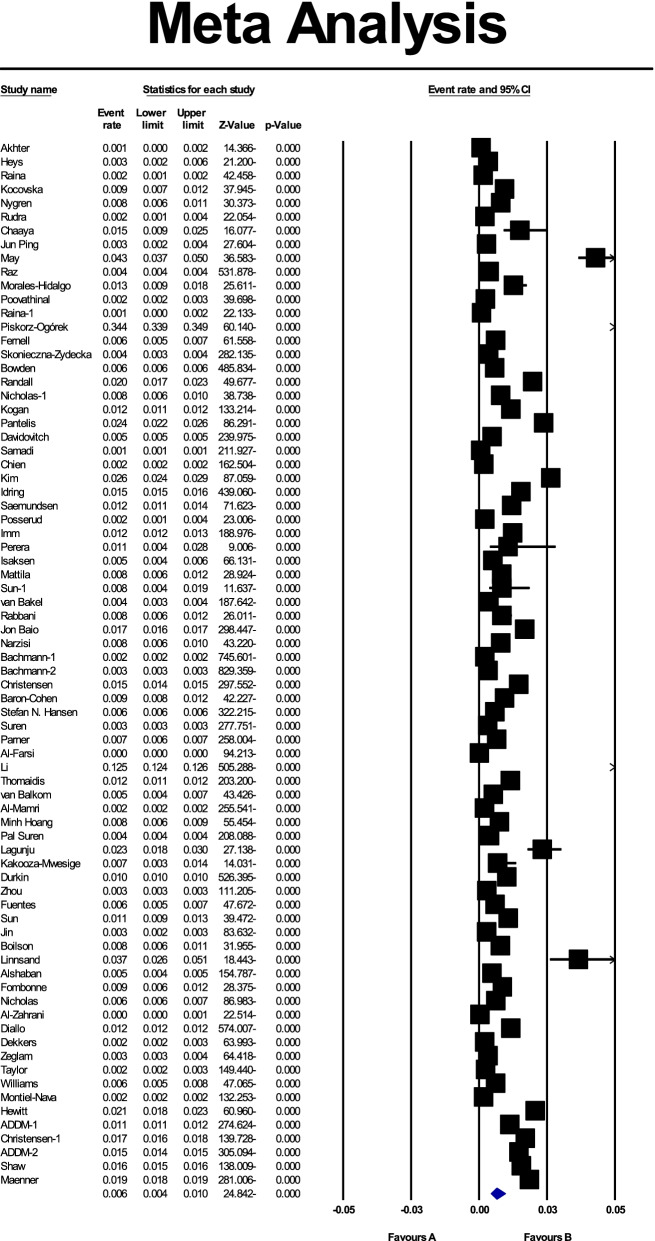
- The global prevalence of ASD was 0.6% (95% CI: 0.4–1%), or 0.006 (95% CI: 0.004–0.01).
- Subgroup prevalence by continent was: Asia 0.4% (95% CI: 0.1–1), America 1% (95% CI: 0.8–1.1), Europe 0.5% (95% CI: 0.2–1), Africa 1% (95% CI: 0.3–3.1), and Australia 1.7% (95% CI: 0.5–6.1).
- Across included studies, prevalence ranged from 0.02% in China to 3.66% in Sweden.
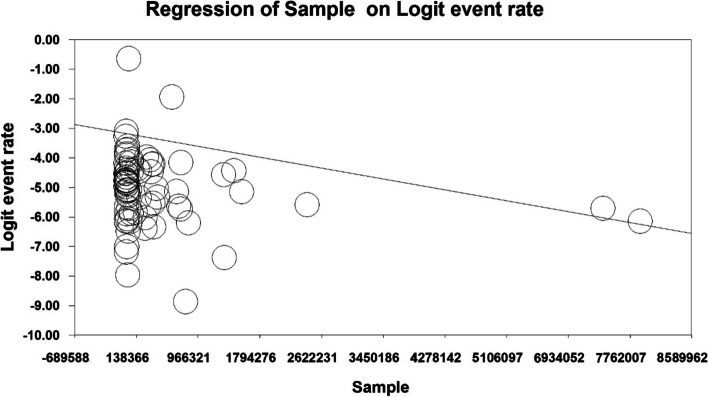
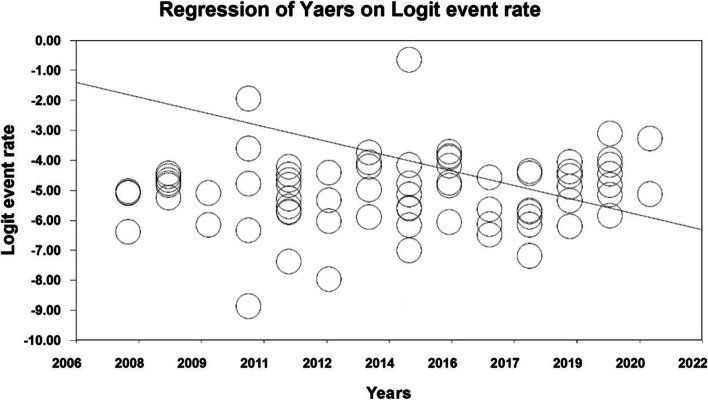
- Meta-regression found that global ASD prevalence decreased with increasing sample size and with increasing study year, both statistically significant (P < 0.05).
Methods
- Systematic review and meta-analysis following PRISMA 2020, searching Science Direct, PubMed, Scopus, SID, Magiran, Web of Science, and Google Scholar from 2008 to July 2021.
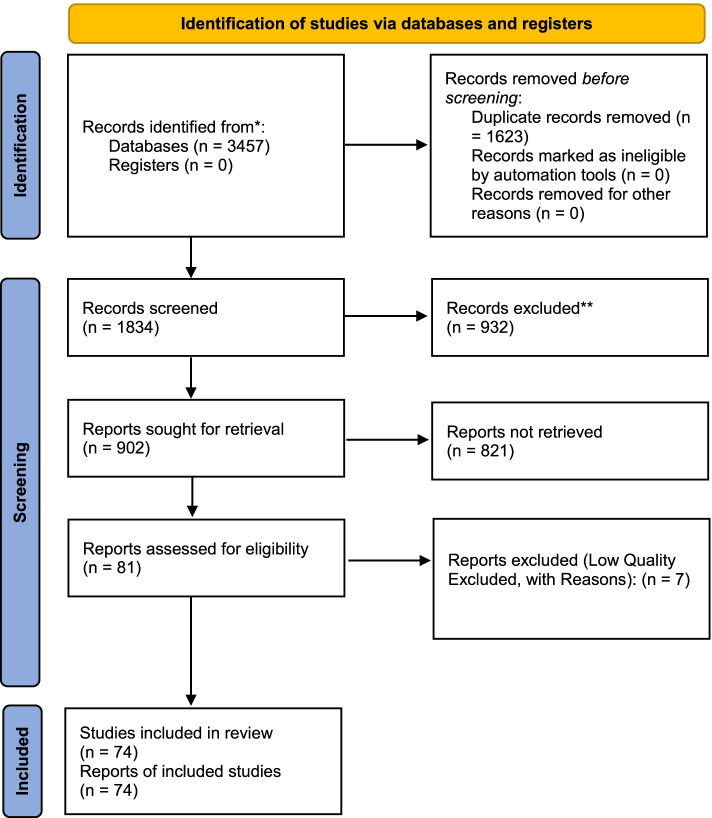
- Included cross-sectional or cohort studies published in English or Persian that used valid ASD diagnostic tools/criteria and reported detailed prevalence data; 74 studies were included after screening and quality assessment.
- Data were analyzed with Comprehensive Meta-Analysis software (Version 2); heterogeneity was assessed with I², publication bias with Begg and Mazumdar/Egger tests, and a random-effects model was used because I² was 99.9%.
Limitations
- The paper states that different diagnostic tools and techniques in included studies may lead to selection bias; sample size was variable, making comparison difficult; and some studies were unavailable due to language limitations.
- The paper also notes that differences in methods, ASD definition, screening tools, and diagnostic criteria between countries made comparison very difficult, and that there is very limited data on ASD prevalence in Africa compared with other regions.
- Evident from the text: heterogeneity was extremely high (I² = 99.9%), and the authors state they cannot draw a definite conclusion whether the increasing trend of ASD is real or due to altered diagnostic criteria and tools.
Model-written summary. Check it against the paper before relying on it.
Integrity signals
Registry
Cites
Statistics
Figures
Verification
Claims the paper makes
1 Valid · 2 Not valid · 0 Not checked · 26 Own results and interpretations
The cited sources support only part of this claim — read each source’s verdict below.
In the paper
“The prevalence of ASD worldwide has increased in recent decades [71, 78, 92].”
- Also stated in: § Background · plain
“Epidemiological surveys show an increasing trend in the annual prevalence of ASD.”
§ The global prevalence of autism spectrum disorder: a comprehensive systematic review and meta-analysis > Discussion
What the sources say
- Not checked — no full text of the sourcecites [71] Idring S Lundberg M Sturm H Dalman C Gumpert C Rai D Changes in prevalence of autism spectrum disorders in 2001–2011: findings from the Stockholm youth cohort J Autism Dev Disord 2015 45 6 1766 1773 10.1007/s10803-014-2336-y 25475364 source
- Partly supportedcites [78] Baron-Cohen S Scott FJ Allison C Williams J Bolton P Matthews FE Prevalence of autism-spectrum conditions: UK school-based population study Br J Psychiatry 2009 194 6 500 509 10.1192/bjp.bp.108.059345 19478287 sourceExperimental — accuracy not yet measured
The opening prevalence discussion (page not provided) says estimates for autism-spectrum conditions rose over four decades. It attributes much of the rise to changes in detection, methodology and diagnostic criteria, and cautions that studies cannot be directly compared; it does not establish that actual ASD prevalence increased worldwide. (LLM, conf=0.86)
- Supportedcites [92] Elsabbagh M Divan G Koh YJ Kim YS Kauchali S Marcín C Global prevalence of autism and other pervasive developmental disorders Autism Res 2012 5 3 160 179 10.1002/aur.239 22495912 PMC3763210 source
The Abstract states that prevalence estimates have increased over time. The “Phenotypic presentation of PDD” section likewise reports a rise in prevalence across studies from several world regions, while cautioning that this does not establish a rise in incidence. (LLM, conf=0.90)
plainstates a cause- Asserted: passes — The authors put it forward as true.
- Checkable: passes — It can be checked against evidence.
- Load-bearing: unclear — It is unclear whether the paper’s conclusions depend on it.
- Based: passes — The paper gives a reason why it holds.
- Also stated in: § Background · plain
A result the paper reports from its own data — it cites no other source for it, so there is none to check. The quote shows it is in the paper.
In the paper
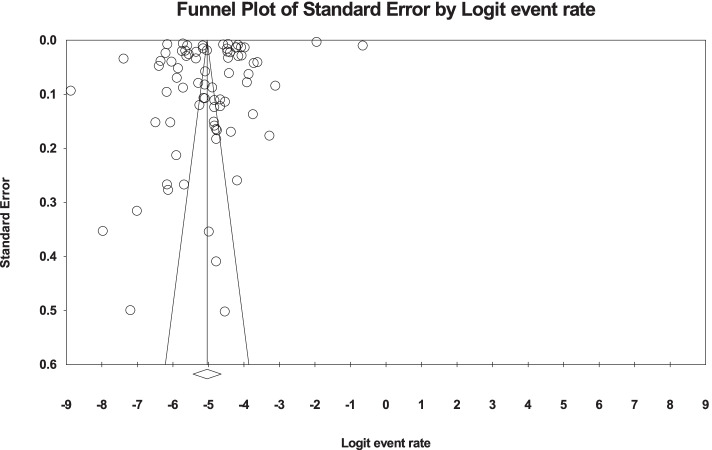
“Results suggested no publication bias in the present study (P = 0.109) (Fig. 2).”
§ The global prevalence of autism spectrum disorder: a comprehensive systematic review and meta-analysis > Result > Heterogeneity and publication bias
hedged- Asserted: passes — The authors put it forward as true.
- Checkable: passes — It can be checked against evidence.
- Load-bearing: unclear — It is unclear whether the paper’s conclusions depend on it.
- Based: passes — The paper gives a reason why it holds.
A result the paper states — it cites no source for it, so there is none to check. The quote shows it is in the paper.
In the paper
“There is no information on ASD prevalence in some countries, so more research is required to obtain such data for better global management of ASD.”
§ The global prevalence of autism spectrum disorder: a comprehensive systematic review and meta-analysis > Conclusion
plain- Asserted: passes — The authors put it forward as true.
- Checkable: passes — It can be checked against evidence.
- Load-bearing: passes — The paper’s conclusions depend on it.
- Based: passes — The paper gives a reason why it holds.
A result the paper reports from its own data — it cites no other source for it, so there is none to check. The quote shows it is in the paper.
In the paper
“Subgroup analyses indicated that the prevalence of ASD in Asia, America, Europe, Africa and Australia was 0.4% (95% CI: 0.1–1), 1% (95% CI: 0.8–1.1), 0.5% (95% CI: 0.2–1), 1% (95% CI: 0.3–3.1), 1.7% (95% CI: 0.5–6.1) respectively.”
- Also stated in: § Results · plain
“the prevalence of ASD in Asia, America, Europe, Africa and Australia was 0.4% (95% CI: 0.1–1), 1% (95% CI: 0.8–1.1), 0.5% (95% CI: 0.2–1), 1% (95% CI: 0.3–3.1), 1.7% (95% CI: 0.5–6.1) respectively”
§ The global prevalence of autism spectrum disorder: a comprehensive systematic review and meta-analysis > Abstract > Results
plain- Asserted: passes — The authors put it forward as true.
- Checkable: passes — It can be checked against evidence.
- Load-bearing: unclear — It is unclear whether the paper’s conclusions depend on it.
- Based: passes — The paper gives a reason why it holds.
- Rests on an assumption not shown here.
- Also stated in: § Results · plain
A result the paper reports from its own data — it cites no other source for it, so there is none to check. The quote shows it is in the paper.
In the paper
“We found that the prevalence of ASD varies from 0.02% in China to 3.66% in Sweden.”
§ The global prevalence of autism spectrum disorder: a comprehensive systematic review and meta-analysis > Discussion
plainn = 30,212,757- Asserted: passes — The authors put it forward as true.
- Checkable: passes — It can be checked against evidence.
- Load-bearing: unclear — It is unclear whether the paper’s conclusions depend on it.
- Based: passes — The paper gives a reason why it holds.
- Rests on an assumption not shown here.
10 more claims
Create a free account to see all 29 claims and every source verdict.
- Probably not a substantial claim. 11
- It may state two separate claims as one. 6
Claims other papers make about this one
Each is checked against this paper’s own text: does it say what the citing paper says it does?
The source backs part of the claim, not all of it — or backs it for a different population, condition or comparison.
In the citing paper
“In addition to time trends, there are other sources of heterogeneity, such as geographical region, country income, implemented study design, diagnostic criteria used, age of the studied population, and other socio-demographic factors (18–20).”
From The global prevalence of autism spectrum disorder: A three-level meta-analysis (2023) · cites this paper as [19]
Experimental — accuracy not yet measuredThe source backs part of the claim, not all of it — or backs it for a different population, condition or comparison.
In the citing paper
“The prevalence of autism spectrum disorder (ASD) has surged, with an estimated 1 in 36 eight-year-olds in the United States meeting criteria for ASD in 2020.”
From Pharmacological treatment in autism: a proposal for guidelines on common co-occurring psychiatric symptoms (2025) · cites this paper as [4]
Experimental — accuracy not yet measuredThe cited source says what the claim attributes to it.
In the citing paper
“in the meta-analysis of Salari et al. (19) showed that 74 studies, published from 2008 to 2021 the pooled prevalence comprised 60 per 10,000.”
From The global prevalence of autism spectrum disorder: A three-level meta-analysis (2023) · cites this paper as [19]
The cited source says what the claim attributes to it.
In the citing paper
“A worldwide prevalence rate of ASD has been reported to be 0.6% [54].”
From The Mental Health of Children with Cerebral Palsy: A Review of the Last Five Years of Research (2025) · cites this paper as [54]
Self-check
Percentages, sums and reported differences re-computed from the paper’s own numbers.
Each contradiction between two passages listed here was confirmed by an independent check.
Rated minor: it would not touch a result — a value no result rests on, a p-value that stays on the same side of the significance level, or a conflict that is clerical, resolved elsewhere in the paper, or outside its own findings.
In the paper
“| 2011 | Li | China | Mixed | 616,940 | – | 0–17 | – | ICD-10 | 77,301 (0.0238) | 54,937 | [42] |”
§ The global prevalence of autism spectrum disorder: a comprehensive systematic review and meta-analysis > Result > Search results and study characteristics
Reported 0.0238 · recomputed 12.529744
Rated minor: it would not touch a result — a value no result rests on, a p-value that stays on the same side of the significance level, or a conflict that is clerical, resolved elsewhere in the paper, or outside its own findings.
In the paper
“| 2016 | Pantelis | Korean | – | 23,234 | – | 7–12 | ASSQ | – | 553 (2.64) | | [33] |”
§ The global prevalence of autism spectrum disorder: a comprehensive systematic review and meta-analysis > Result > Search results and study characteristics
Reported 2.64 · recomputed 2.380133
Rated minor: it would not touch a result — a value no result rests on, a p-value that stays on the same side of the significance level, or a conflict that is clerical, resolved elsewhere in the paper, or outside its own findings.
In the paper
§ The global prevalence of autism spectrum disorder: a comprehensive systematic review and meta-analysis > Discussion
“We found that the prevalence of ASD varies from 0.02% in China to 3.66% in Sweden.”
§ The global prevalence of autism spectrum disorder: a comprehensive systematic review and meta-analysis > Result > Search results and study characteristics
“| 2020 | May | Australia | Mixed | 3381 | 1690 | 12–13 | SDQ | – | 145 (4.36) | 111 | [89] |”
Rated minor: it would not touch a result — a value no result rests on, a p-value that stays on the same side of the significance level, or a conflict that is clerical, resolved elsewhere in the paper, or outside its own findings.
In the paper
“| 2009 | van Balkom | Island | – | 13,109 | – | 0–9 | ADOS | DSM-IV | 69 (5.3) | – | [82] |”
§ The global prevalence of autism spectrum disorder: a comprehensive systematic review and meta-analysis > Result > Search results and study characteristics
Reported 5.3 · recomputed 0.526356
Rated minor: it would not touch a result — a value no result rests on, a p-value that stays on the same side of the significance level, or a conflict that is clerical, resolved elsewhere in the paper, or outside its own findings.
In the paper
§ The global prevalence of autism spectrum disorder: a comprehensive systematic review and meta-analysis > Result > Subgroup analysis
“Among the 74 studies, 26 were reviewed in Asia, 4 in Africa, 25 in Europe, 16 in the United States and 3 in Australia.”
§ The global prevalence of autism spectrum disorder: a comprehensive systematic review and meta-analysis > Result > Search results and study characteristics
“| 2018 | Diallo | Canada | – | 1,447,660 | – | 1–17 | – | ICD-10ICD-9 | 16,940 (1.2) | – | [54] |”
6 more findings
Create a free account to see every finding of this check.
Cited works that were retracted
Works this paper cites that were later retracted, from the retraction notices publishers deposit. Major when the notice came out before this paper was published.
Rated major: it would touch a result — a value a result rests on, reported and recomputed p-values on opposite sides of the significance level, two passages that conflict with no sign which is right, or a cited work retracted before this paper was published.
In the paper
“Christensen D, Braun K, Baio J, Bilder D, Charles J, Constantino J, et al. Prevalence and characteristics of autism spectrum disorder among children aged 8 years—autism and developmental disabilities monitoring network, 11 sites, United States, 2012. MMWR Surveillance Summaries. 2016;65(13):1.”
Cited work 10.15585/mmwr.ss6513a1 · retracted 2018-11-16 · notice 10.15585/mmwr.mm6745a7 · this paper published 2022-07-08
A note, not an issue: for example, a cited work that was retracted only after this paper was published, which its authors could not have known.
Cited work 10.15585/mmwr.ss6503a1 · retraction date not known · this paper published 2022-07-08
Citations
Cites
2 retracted
Christensen, D. L., Baio, J., Braun, K. V. N., Bilder, D., Charles, J., Constantino, J. N., Daniels, J., Durkin, M. S., Fitzgerald, R. T., Kurzius-Spencer, M., et al. (2016) · MMWR. Surveillance Summaries · doi:10.15585/mmwr.ss6503a1 · Cited by 1,964
RetractedChristensen, D. L., Braun, K. V. N., Baio, J., Bilder, D., Charles, J., Constantino, J. N., Daniels, J., Durkin, M. S., Fitzgerald, R. T., Kurzius-Spencer, M., et al. (2018) · MMWR. Surveillance Summaries · doi:10.15585/mmwr.ss6513a1 · Cited by 587
RetractedDiagnostic and Statistical Manual of Mental Disorders
American Psychiatric Association (2013) · doi:10.1176/appi.books.9780890425596 · Cited by 116,369
PRISMA-P Group, Moher, D., Shamseer, L., Clarke, M., Ghersi, D., Liberati, A., Petticrew, M., Shekelle, P., & Stewart, L. A. (2015) · Systematic Reviews · doi:10.1186/2046-4053-4-1 · Cited by 26,223 · cited 1×
“Search strategy This study was performed according to the Preferred Reporting Items for Systematic Reviews and Meta-Analyses (PRISMA 2020) guidelines [23].”
MethodBaio, J., Wiggins, L., Christensen, D. L., Maenner, M. J., Daniels, J., Warren, Z., Kurzius-Spencer, M., Zahorodny, W., Robinson, C., Rosenberg, et al. (2018) · MMWR. Surveillance Summaries · doi:10.15585/mmwr.ss6706a1 · Cited by 6,078
Maenner, M. J., Shaw, K. A., Baio, J., EdS1, Washington, A., Patrick, M., DiRienzo, M., Christensen, D. L., Wiggins, L. D., Pettygrove, S., et al. (2020) · MMWR. Surveillance Summaries · doi:10.15585/mmwr.ss6904a1 · Cited by 3,780 · cited 1×
“5/1000 in the latest estimate in 2016 [15, 61, 103].”
BackgroundLord, C., Elsabbagh, M., Baird, G., & Veenstra-Vanderweele, J. (2018) · The Lancet · doi:10.1016/s0140-6736(18)31129-2 · Cited by 2,819
What Is the Male-to-Female Ratio in Autism Spectrum Disorder? A Systematic Review and Meta-Analysis
Loomes, R., Hull, L., & Mandy, W. P. L. (2017) · Journal of the American Academy of Child & Adolescent Psychiatry · doi:10.1016/j.jaac.2017.03.013 · Cited by 2,804 · cited 1×
“Based on a comprehensive systematic review, the male to female ratio in children with ASD has been described as three to one [106], indicating a higher prevalence of ASD in males [92, 107, 108].”
BackgroundGlobal Prevalence of Autism and Other Pervasive Developmental Disorders
Elsabbagh, M., Divan, G., Koh, Y., Kim, Y. S., Kauchali, S., Marcín, C., Montiel‐Nava, C., Patel, V., Paula, C. S., Wang, C., et al. (2012) · Autism Research · doi:10.1002/aur.239 · Cited by 2,636 · cited 3×
“, general population-based or hospital-based sampling) [37, 92].”
Background
Research works printed but not linked: 4
- Jahan N Rahman A Choudhury S Chowdhury K Wahab M Rahman F Prevalence of mental disorders, mental retardation, epilepsy and substance abuse in children 2009
- American Psychiatric Association A Diagnostic and statistical manual of mental disorders: American Psychiatric Association Washington, DC 1980
- Taiwo T Organophosphate Exposures, Financial Hardship and Child Neurodevelopmental Outcomes in the CHARGE study Environ Epidemiolo 2019 3 196 197
- Investigators P, Control CfD, Prevention Prevalence of autism spectrum disorder among children aged 8 years-autism and developmental disabilities monitoring network, 11 sites, United States, 2010 MMWR Surveill Summ (Washington, DC: 2002) 2014 63 2 1 21 24670961
Cited by
Items 501–552 of 552
Sarhangi, H. A., Keyvanpour, M. R., & Shojaedini, S. V. (2026) · International Biennial Conference on Advances in Artificial Intelligence and Data Science (IBAAIDS) · doi:10.1109/ibaaids66771.2026.11567410
“ASD has been observed in all racial, ethnic, and socioeconomic groups, and numerous studies have reported an increase in its prevalence [3].”
Hayat, M. T., Shahid, Z., & Qazi, J. (2026) · Spectroscopy Letters · doi:10.1080/00387010.2026.2694447
Motor differences in jumping among children with and without autism spectrum disorder
Arachchige, R. S. S. S., Huang, P.-C., Chen, P.-T., Chen, C., Chen, C.-L., Cheng, C., & Cheung, R. T. H. (2026) · Clinical Biomechanics · doi:10.1016/j.clinbiomech.2026.106911
Li, Z., 刘晓霞, Chen, T., Yang, Y., Liu, X., Lv, Y., Zhao, Z., Li, X., Yin, X., Feng, Z., et al. (2026) · Journal of Medical Systems · doi:10.1007/s10916-026-02433-x
“The global prevalence of ASD is on a significant upward trend, creating enduring caregiving demands for tens of millions of families worldwide [5–7].”
EEG-Based Analysis of Hemispheric Lateralisation for Autism Screening Using Machine Learning
Huang, Y., Nguyen, N., Sharghilavan, S., et al. (2026) · doi:10.3390/engproc2026148006
Bertuccioli, A., Belli, A., Palazzi, C. M., Pierro, F. D., Cavecchia, I., & Matera, M. (2026) · Cureus · doi:10.7759/cureus.112205
Neurodivergent Researchers in Autism Research: A Survey within the AIMS-2-TRIALS Consortium
Bianco, T. D., Estrin, G. L., Lautarescu, A., Oakley, B. F. M., Eaton, E., Terčon, J., Douglas, S., Plas, J. R. D., Belton, D., Loth, E., et al. (2026) · Open Research Europe · doi:10.12688/openreseurope.19394.2 · Cited by 4
Alexander, A. G., Mbughuni, C., Theonest, N. O., Mpepo, A., Njau, R., Uggh, I. H. P., Tibenderana, J. R., Kabwe, T., Swai, E. A., Mmbaga, B. T., et al. (2026) · medRxiv · doi:10.64898/2026.07.12.26357871
Design of a Mobile Stress Assessment and Management System for Neurodivergent Individuals
Kroll, L.-N., Resch, A., & Wohofsky, L. (2026) · Lecture notes in computer science · doi:10.1007/978-3-032-31285-3_41
Salarfard, M., Khadivzadeh, T., Moghri, J., & Mirzakhani, K. (2026) · BMC Psychology · doi:10.1186/s40359-026-05190-1 · Cited by 1
“The cause of autism is still unknown; however, extensive research indicates that its development is attributed to a complex combination of characterized genetic and non-genetic risk factors, including environmental, immunological, perinatal, neuroanatomical, and biochemical elements [5, 6].”
Qiao, J., Zhou, Z., Zhu, H., Szigeti, K., Kellermayer, M., & Sun, J. (2026) · Neuroscience · doi:10.1016/j.neuroscience.2026.07.029
Analysis of intervention effects of three different models on children with autism spectrum disorder
Lv, L., Xu, L., Sun, J., Hu, Y., Yue, Z., Lv, Y., & Ke, X. (2026) · Frontiers in Psychiatry · doi:10.3389/fpsyt.2026.1856696 · Cited by 1
“With appropriate training, some individuals can achieve the ability to live, learn, and work independently in adulthood, thereby optimizing long-term outcomes for individuals and their families (8, 9).”
Hennepe, S. J. T., Voorendonk, E. M., & de Jongh, A. (2026) · European Journal of Psychotraumatology · doi:10.1080/20008066.2026.2696633 · Cited by 2
“The worldwide population prevalence of individuals diagnosed with ASD is estimated at 0.6% with variation between regions, such as 1% in America and 0.5% in Europe (Salari et al., 2022).”
InfluentialNaveed, F., Islam, D. K., & Nayaab*, B. (2026) · Qlantic journal of social sciences. · doi:10.55737/qjss.vii-ii.26532
Yu, B., He, X.-N., Zhang, X.-H., Lei, G., Song, X.-Y., Wu, J.-L., Li, D.-X., Cheng, S.-N., Zhang, Y., & Lv, J. (2026) · Frontiers in Human Neuroscience · doi:10.3389/fnhum.2026.1810519
“The rising prevalence of ASD in recent years exerts a substantial impact on families and society, profoundly affecting the mental health and developmental trajectories of diagnosed individuals (Salari et al., 2022; Wang et al., 2023).”
Acceso a medicina de precisión en TEA en Panamá
Gómez, L. J. H. (2026) · Espila · doi:10.61454/ty1cgt90
Cano‐Villagrasa, A., Viqueira-Gutiérrez, L., Hoyos, S., & García-Rubio, M. J. (2026) · International Journal of Developmental Disabilities · doi:10.1080/20473869.2026.2699868
van Erp, M. L., Yuwattana, W., Poolcharoen, C., Saeliw, T., Roytrakul, S., Vanwong, N., Hu, V. W., Trairatvorakul, P., Chonchaiya, W., & Sarachana, T. (2026) · Brain Behavior & Immunity - Health · doi:10.1016/j.bbih.2026.101319
“Approximately 0.6 – 1% of the global population is diagnosed with ASD (Salari et al., 2022; Zeidan et al., 2022), with U.S. rates as high as 1 in 36 children (Maenner et al., 2023).”
InfluentialNiazi, Y., Farooq, S. M. Y., Moazzam, M., Yousaf, S., Bilal, S., Asif, M. F., & Arshad, S. (2026) · Health Policy in Asia · doi:10.1016/j.hpasia.2026.100002
Onyishi, C. N., & Sefotho, M. M. (2026) · Frontiers in Education · doi:10.3389/feduc.2026.1845940
Martínez-García, J. J., Pérez-Parra, J. E., Vega-Castro, R. D. J., Robledo-Conde, E. M., Martínez-Félix, A., León-Sicairos, N. M., Zamudio, U. A. A., & Canizalez‐Román, A. (2026) · Journal of Autism and Developmental Disorders · doi:10.1007/s10803-026-07471-5
Ticona, J. P. A., Ferreira-Stagliorio, A. F., Costa, G. N. D. O., Moreira, L., Dias, A. S. B., Costa, C., Santos, A. O., de Queiroz, A. A., Pacheco, R. R. D. O., Montaño-Castellón, I., et al. (2026) · medRxiv · doi:10.64898/2026.08.04.26359668
dos Santos, L. V., Zuanetti, P. A., Pimenta, L. M. D. V., Pontes-Fernandes, Â. C., & Hamad, A. P. A. (2026) · Audiology - Communication Research · doi:10.1590/2317-6431-2025-3048pt
dos Santos, L. V., Zuanetti, P. A., Pimenta, L. M. D. V., Pontes-Fernandes, Â. C., & Hamad, A. P. A. (2026) · Audiology - Communication Research · doi:10.1590/2317-6431-2025-3048en
Xin, X., Guo, Y., Qi, Z., Liu, Q., Liu, L., & Ma, X. (2026) · Frontiers in Behavioral Neuroscience · doi:10.3389/fnbeh.2026.1927011 · Cited by 2
“…core symptoms and often require long-term, interdisciplinary, and family-centered support (Lord et al., 2018; Lai et al., 2019; Hyman et al., 2020; Lane et al., 2022; Salari et al., 2022; Zeidan et al., 2022; Hirota and King, 2023; Micai et al., 2023; Sidhu et al., 2024; Santomauro et al., 2025).”
Research progress on the microbiota-gut-brain axis in autism spectrum disorder: a narrative review
Qin, S., Lin, Y., Chen, Y., Yao, S., Zhou, D., Zhang, C., Yan, J., He, Y., & Zhou, Y. (2026) · Frontiers in Microbiology · doi:10.3389/fmicb.2026.1824546
“Related research indicates that the prevalence of ASD has increased rapidly in recent years (Salari et al., 2022).”
Fauntleroy-Love, K., Saina, C., Oyungu, E., Nafiseh, A. A., Rutto, A., Amondi, R., McHenry, M. S., & Keehn, R. M. (2026) · Frontiers in Psychiatry · doi:10.3389/fpsyt.2026.1840667
“Culturally appropriate, feasible open-source assessment tools are fundamental to advancing this goal in LMICs.”
InfluentialGraca, L. B. L., Strehlau, R., & Bezuidenhout, J. K. (2026) · South African Journal of Communication Disorders · doi:10.4102/sajcd.v73i1.1153
Zhu, Y., & Su, X. (2026) · Education Sciences · doi:10.3390/educsci16081340
“It is characterized by persistent difficulties in initiating and maintaining social interactions, accompanied by restricted interests, repetitive and stereotyped behaviors, and atypical sensory processing (American Psychiatric Association, 2013; Salari et al., 2022).”
Singh, K., Mogha, K., & Moctar, S. M. S. (2026) · Neurological Sciences · doi:10.1007/s10072-026-09334-4 · Cited by 1
“As dis - parities in ASD are an international problem, it is critical to enhance international collaboration to provide timely sup - port to individuals with ASD [63].”
Rahimi, M., Sadeghi, S., Kiani, M., & Pouretemad, H. (2026) · Applied Neuropsychology Child · doi:10.1080/21622965.2026.2719663
Hasanain, R. S., Al-Kuraishy, H. M., Shokr, M. M., Kafy, S., Alshaikh, A. B. A., Mogharbel, H., Kashgari, F. A., Sebghatallah, A., & Batiha, G. E. (2026) · NeuroToxicology · doi:10.1016/j.neuro.2026.103555 · Cited by 1
Breunig, S., Schäffer, L., Lawrence, J. M., Sheppard, A., & Grotzinger, A. D. (2026) · Behavior Genetics · doi:10.1007/s10519-026-10281-1
Adisu, M. A., Derso, Y. A., Gessesse, Z. A., Gessesse, A. D., Molla, B., Zemariam, A. B., & Habtie, T. E. (2026) · BJPsych Open · doi:10.1192/bjo.2026.12076
“Similar results regarding male predominance have been reported in global studies 3,17 although contrasting findings have been described in Southeast Asia.”
Osorio, N. C., Quiñonez, T. I. S., Morales, N. I. R., & Verduzco, G. R. F. (2026) · ISEO Journal · doi:10.63344/pghrss26
“Existe una considerable variación en las estimaciones de prevalencia entre países y regiones, lo que dificulta determinar la magnitud epidemiológica del TEA de manera uniforme y restringe la comparabilidad de los datos disponibles 10,11 .”
Eating disorders and the incel community
Murphy, S., & Roddy, D. W. (2026) · Frontiers in Psychology · doi:10.3389/fpsyg.2026.1940859
Wang, F., Zou, E., Yin, P., Liang, F., Xing, Y., Xing, Y.-P., Wang, Y., Zou, X., & Cen, C. (2026) · Journal of Autism and Developmental Disorders · doi:10.1007/s10803-026-07505-y · Cited by 1
EFEITOS DO USO EXCESSIVO DE TELAS NO DESENVOLVIMENTO COGNITIVO DE CRIANÇAS COM AUTISMO
de Ávila, T. M., Fernandes, A. J. N., Figueiredo, S. R. N., & Ángel, D. J. (2026) · Revista Foco · doi:10.54751/revistafoco.v19n8-083
Liang, X., Jin, W., Bu, X., Yuan, M., Zheng, M., Feng, S., Zhu, L., Lu, Y., Zhou, J.-X., Hamdy, N. Μ., et al. (2026) · Frontiers in Public Health · doi:10.3389/fpubh.2026.1930391
Gad, N., Mirghani, H. O., Abdalla, A. A., Ghmaird, A. S., Baattiah, R., Sindi, M. T., & Albalawi, M. (2026) · Frontiers in Public Health · doi:10.3389/fpubh.2026.1833825
Myagkova, M. А., Мосейкин, И. А., & Bobrova, Z. V. (2026) · Human Physiology · doi:10.1134/s0362119726700623
“According to data from the World Health Organization (WHO), ASDs are diagnosed in approximately 1 in every 100 children worldwide and occurs across all racial, ethnic, and socioeconomic groups, with boys being approximately five times more likely to be affected than girls [6].”
Zhao, H., Niu, H., Jiang, Y., Li, X., Han, W., Yang, X., & Pang, W. (2026) · Journal of Psychiatric Research · doi:10.1016/j.jpsychires.2026.09.019
Nkgaphela, M. R., Sumbane, G. O., Hlahla, L. S., et al. (2026) · Psychiatry International · doi:10.3390/psychiatryint7050209
Training Police Officers in Suicide Risk Assessment and Intervention
Tejera, T., Hubbard, J., & Poland, S. (2026) · Springer eBooks · doi:10.1007/978-3-032-27978-1_12
Gürlek, S., Öztürk, L. K., & Gözlet, T. (2026) · Ergoterapi ve Rehabilitasyon Dergisi · doi:10.30720/ered.1885955
Alabdulaziz, H., Alghamdi, S., Alharbi, K. S., Alrashdi, H. R. M., Al-mutairi, J. S., & Aljuhani, F. H. (2026) · Frontiers in Psychiatry · doi:10.3389/fpsyt.2026.1971477
Gu, Y., & Fox, M. (2026) · Review Journal of Autism and Developmental Disorders · doi:10.1007/s40489-026-00594-6
Glycosylation in neurological disorders: Mechanisms, crosstalk, and therapeutic implications
Wu, W., Wang, W., Xu, L., Yao, Y., Zhao, X., Zhong, J., Hu, J., Wang, L., Zhu, Y., & Wang, J. (2026) · Brain Research Bulletin · doi:10.1016/j.brainresbull.2026.112144
Chiara, S. D., Somma, A. D., Mazziotti, V., Coppola, S., Oglio, F., Tammaro, L., Riccio, M. P., Bravaccio, C., Molinaro, A., Canani, R. B., et al. (2026) · ChemBioChem · doi:10.1002/cbic.70557
Dental care proposal for a patient within the autism spectrum through a case report
Paredes, S., & de Camargo, M. G. A. (2026) · Revista Facultad de Odontología Universidad de Antioquia · doi:10.17533/udea.rfo.v38n2e362215
Sikora, V., Bové, M., Agosti, L. P., Palmieri, R. P., Zafar, M., Tucci, P., Morgese, M. G., Schiavone, S., & Trabace, L. (2026) · British Journal of Pharmacology · doi:10.1111/bph.70693
Mbonigaba, J., & Assenga, S. S. (2026) · Research in Developmental Disabilities · doi:10.1016/j.ridd.2026.105399 · Cited by 1
Metadata
- Authors
- Salari, N., Rasoulpoor, S., Rasoulpoor, S., Shohaimi, S., Jafarpour, S., Abdoli, N., Khaledi-Paveh, B., & Mohammadi, M.
- Affiliations
- Kermanshah University of Medical Sciences (IR)
- Universiti Putra Malaysia (MY)
- Isfahan University of Medical Sciences (IR)
- Gerash University of Medical Sciences (IR)
- Corresponding author
- Mohammadi, Masoud
- ORCID
- Venue
- Italian Journal of Pediatrics
- Published
- 2022-07-08
- Volume
- 48
- Issue
- 1
- Pages
- 112-112
- ISSN
- 1720-8424 (ISSN-L)
- 1824-7288
- PMC
- PMC9270782
- OpenAlex
- W4284962360
- Cited by
- 571
- References
- 122
- Citations by year
- 2026: 163 · 2025: 169 · 2024: 155 · 2023: 76 · 2022: 8
- FWCI
- 14.26
- Type
- journal article
- Language
- en
- Open access
- gold
- doi.org
- Licence
- cc-by
- creativecommons.org/licenses/by/4.0 (tdm)
- creativecommons.org/licenses/by/4.0 (vor)
- Locations
- The Italian Journal of Pediatrics/Italian journal of pediatrics (publishedVersion, cc-by)
- PubMed Central (publishedVersion, cc-by)
- PubMed (publishedVersion)
- DOAJ (DOAJ: Directory of Open Access Journals) (submittedVersion, cc-by-sa)
- Funders
- Kermanshah University of Medical Sciences
- Student Research Committee, Tabriz University of Medical Sciences
- Topics
- Life Sciences › Neuroscience › Cognitive Neuroscience › Autism Spectrum Disorder Research
- Health Sciences › Medicine › Psychiatry and Mental health › Child Nutrition and Feeding Issues
- Social Sciences › Psychology › Clinical Psychology › Family and Disability Support Research
- Keywords
- autism spectrum disorder, prevalence, global prevalence, high-risk groups, developmental disorders, early detection, health burden, regional variation in prevalence
- MeSH terms
- Autism Spectrum Disorder, Child, Preschool, Europe, Humans, Prevalence
About these checks
Registry, retraction, Cites and statistics results are computed, not judged, with one exception: a printed reference that no index lists is read once by a model before it counts as a citation error. Claims are extracted by a model and kept only when their quote appears verbatim in the text; each cited source is then checked, with a model’s help, for whether it says what the claim relies on. Those verdicts can be wrong — read the claim’s quote and the cited source before relying on one.
The claim verdicts this report counts are experimental: their accuracy is not yet measured.
A language model drew the claims from the paper on 2026-10-10, under version 3 of the claim definition (model deepseek-v4.1-flash, prompt extract-v3).
A second model labelled each claim on 2026-10-10 (model jev-1.13-20260917, definition revision gold-guideline-v0.2).
Cited sources are checked with a language model’s help (gpt-6-sol).
Statistics and arithmetic are recomputed, not judged.
Confidence bands are shown only for fields calibrated on our annotated test set. None is calibrated yet, so no band is shown.
What counts as a claim ›How we measure confidence ›How we check this ›
Are you an author, or do you see a problem with this page? Request a review
Data sources
Bibliographic data: Semantic Scholar, OpenAlex, Crossref.
Contains information from the Semantic Scholar Academic Graph Datasets, made available under the ODC Attribution License (ODC-BY 1.0).
Semantic Scholar’s data is described in: Kinney, R., et al. (2023). The Semantic Scholar Open Data Platform. arXiv:2301.10140.
