

The global prevalence of autism spectrum disorder: a comprehensive systematic review and meta-analysis.
Open accessThe DOI matches its Crossref record; 121 of the 122 references it cites were found in a registry or an index; 3 of the 4 sources its claims cite were checked for support.
Abstract
BACKGROUND: Autism spectrum disorder (ASD) is one of the serious developmental disorders that is usually diagnosed below the age of three years. Although the severity of the disease's symptoms varies from patient to patient, the ability to communicate with others is affected in all forms of ASD. This study aimed to determine the prevalence of ASD in high-risk groups by continent. METHODS: The present study was conducted by systematic review and meta-analysis from 2008 to July 2021. Databases such as Science Direct, PubMed, Scopus, SID, Magiran, Web of Science (WoS), and Google Scholar from 2008 to July 2021 were searched to find related studies. Data were analysed using Comprehensive Meta-Analysis software (Version 2). RESULTS: A total of 74 studies with 30,212,757 participants were included in this study. The prevalence of ASD in the world was 0.6% (95% confidence interval: 0.4-1%). Subgroup analyses indicated that the prevalence of ASD in Asia, America, Europe, Africa and Australia was 0.4% (95% CI: 0.1-1), 1% (95% CI: 0.8-1.1), 0.5% (95% CI: 0.2-1), 1% (95% CI: 0.3-3.1), 1.7% (95% CI: 0.5-6.1) respectively. CONCLUSION: ASD imposes a heavy health burden on communities around the world. Early detection of ASD can reduce the incidence of developmental disorders and improve patients' communication skills. Therefore, health policymakers need to be aware of the prevalence and increasing trend of ASD to implement appropriate planning and interventions to reduce its consequences.
Overview
CoChat Summary
TL;DR
This systematic review and meta-analysis estimated the global prevalence of autism spectrum disorder (ASD) at 0.6% (95% CI: 0.4–1%) based on 74 studies and 30,212,757 participants. Prevalence varied by continent, from 0.4% in Asia to 1.7% in Australia.
Key findings
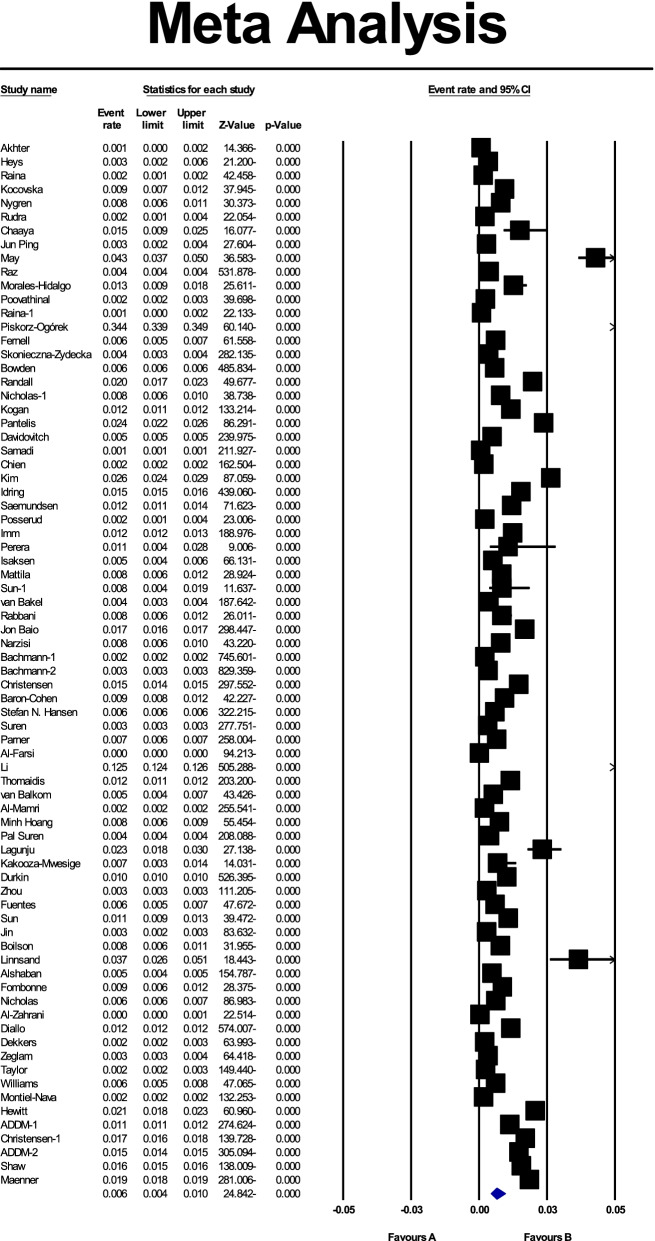
- The global prevalence of ASD was 0.6% (95% CI: 0.4–1%), or 0.006 (95% CI: 0.004–0.01).
- Subgroup prevalence by continent was: Asia 0.4% (95% CI: 0.1–1), America 1% (95% CI: 0.8–1.1), Europe 0.5% (95% CI: 0.2–1), Africa 1% (95% CI: 0.3–3.1), and Australia 1.7% (95% CI: 0.5–6.1).
- Across included studies, prevalence ranged from 0.02% in China to 3.66% in Sweden.
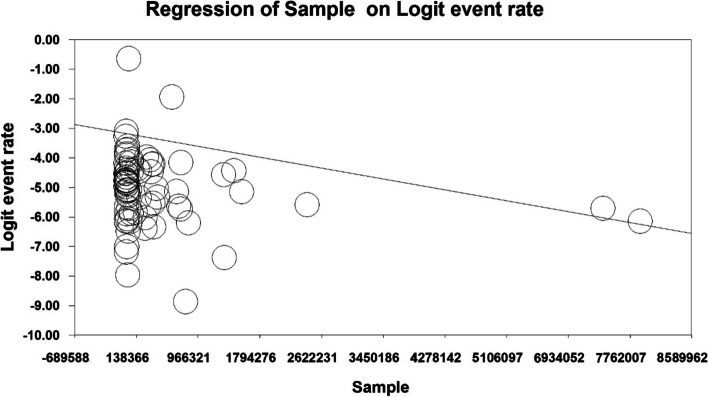
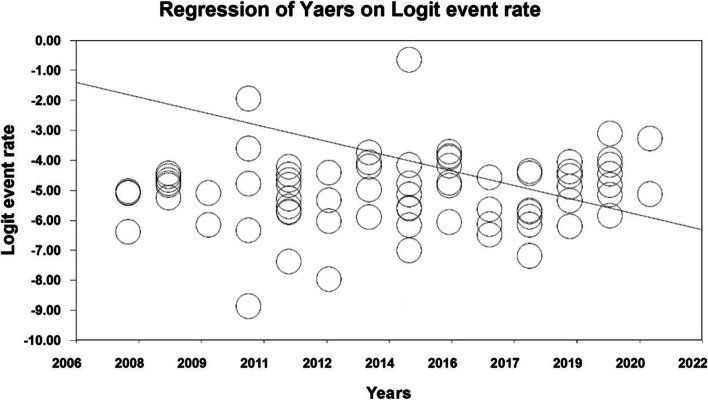
- Meta-regression found that global ASD prevalence decreased with increasing sample size and with increasing study year, both statistically significant (P < 0.05).
Methods
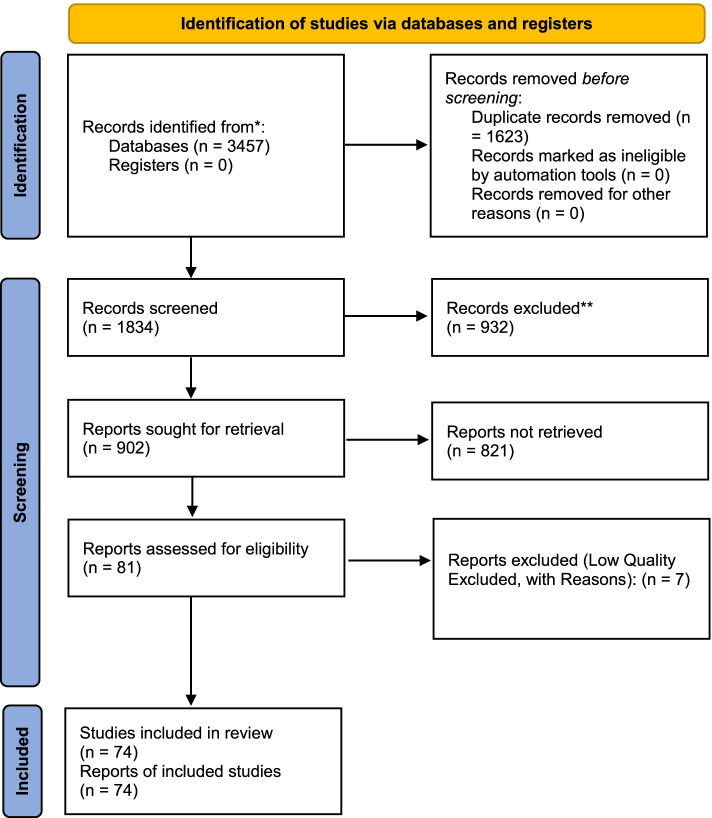
- Systematic review and meta-analysis following PRISMA 2020, searching Science Direct, PubMed, Scopus, SID, Magiran, Web of Science, and Google Scholar from 2008 to July 2021.
- Included cross-sectional or cohort studies published in English or Persian that used valid ASD diagnostic tools/criteria and reported detailed prevalence data; 74 studies were included after screening and quality assessment.
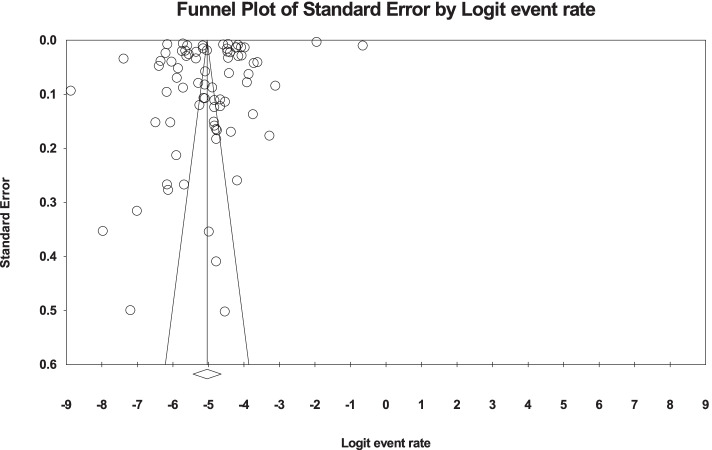
- Data were analyzed with Comprehensive Meta-Analysis software (Version 2); heterogeneity was assessed with I², publication bias with Begg and Mazumdar/Egger tests, and a random-effects model was used because I² was 99.9%.
Limitations
- The paper states that different diagnostic tools and techniques in included studies may lead to selection bias; sample size was variable, making comparison difficult; and some studies were unavailable due to language limitations.
- The paper also notes that differences in methods, ASD definition, screening tools, and diagnostic criteria between countries made comparison very difficult, and that there is very limited data on ASD prevalence in Africa compared with other regions.
- Evident from the text: heterogeneity was extremely high (I² = 99.9%), and the authors state they cannot draw a definite conclusion whether the increasing trend of ASD is real or due to altered diagnostic criteria and tools.
Model-written summary. Check it against the paper before relying on it.
Integrity signals
Registry
Cites
Statistics
Figures
Verification
Claims the paper makes
1 Valid · 2 Not valid · 0 Not checked · 26 Own results and interpretations
The cited sources support only part of this claim — read each source’s verdict below.
In the paper
“The prevalence of ASD worldwide has increased in recent decades [71, 78, 92].”
- Also stated in: § Background · plain
“Epidemiological surveys show an increasing trend in the annual prevalence of ASD.”
§ The global prevalence of autism spectrum disorder: a comprehensive systematic review and meta-analysis > Discussion
What the sources say
- Not checked — no full text of the sourcecites [71] Idring S, Lundberg M, Sturm H, Dalman C, Gumpert C, Rai D, et al. Changes in prevalence of autism spectrum disorders in 2001–2011: findings from the Stockholm youth cohort. J Autism Dev Disord. 2015;45(6):1766–73. source
- Partly supportedcites [78] Baron-Cohen S, Scott FJ, Allison C, Williams J, Bolton P, Matthews FE, et al. Prevalence of autism-spectrum conditions: UK school-based population study. Br J Psychiatry. 2009;194(6):500–9. sourceExperimental — accuracy not yet measured
The opening prevalence discussion (page not provided) says estimates for autism-spectrum conditions rose over four decades. It attributes much of the rise to changes in detection, methodology and diagnostic criteria, and cautions that studies cannot be directly compared; it does not establish that actual ASD prevalence increased worldwide. (LLM, conf=0.86)
- Supportedcites [92] Elsabbagh M, Divan G, Koh YJ, Kim YS, Kauchali S, Marcín C, et al. Global prevalence of autism and other pervasive developmental disorders. Autism Res. 2012;5(3):160–79. source
The Abstract states that prevalence estimates have increased over time. The “Phenotypic presentation of PDD” section likewise reports a rise in prevalence across studies from several world regions, while cautioning that this does not establish a rise in incidence. (LLM, conf=0.90)
plainstates a cause- Asserted: passes — The authors put it forward as true.
- Checkable: passes — It can be checked against evidence.
- Load-bearing: unclear — It is unclear whether the paper’s conclusions depend on it.
- Based: passes — The paper gives a reason why it holds.
- Also stated in: § Background · plain
A result the paper reports from its own data — it cites no other source for it, so there is none to check. The quote shows it is in the paper.
In the paper
“Results suggested no publication bias in the present study (P = 0.109) (Fig. 2).”
§ The global prevalence of autism spectrum disorder: a comprehensive systematic review and meta-analysis > Result > Heterogeneity and publication bias
hedged- Asserted: passes — The authors put it forward as true.
- Checkable: passes — It can be checked against evidence.
- Load-bearing: unclear — It is unclear whether the paper’s conclusions depend on it.
- Based: passes — The paper gives a reason why it holds.
A result the paper states — it cites no source for it, so there is none to check. The quote shows it is in the paper.
In the paper
“There is no information on ASD prevalence in some countries, so more research is required to obtain such data for better global management of ASD.”
§ The global prevalence of autism spectrum disorder: a comprehensive systematic review and meta-analysis > Conclusion
plain- Asserted: passes — The authors put it forward as true.
- Checkable: passes — It can be checked against evidence.
- Load-bearing: passes — The paper’s conclusions depend on it.
- Based: passes — The paper gives a reason why it holds.
A result the paper reports from its own data — it cites no other source for it, so there is none to check. The quote shows it is in the paper.
In the paper
“Subgroup analyses indicated that the prevalence of ASD in Asia, America, Europe, Africa and Australia was 0.4% (95% CI: 0.1–1), 1% (95% CI: 0.8–1.1), 0.5% (95% CI: 0.2–1), 1% (95% CI: 0.3–3.1), 1.7% (95% CI: 0.5–6.1) respectively.”
- Also stated in: § Results · plain
“the prevalence of ASD in Asia, America, Europe, Africa and Australia was 0.4% (95% CI: 0.1–1), 1% (95% CI: 0.8–1.1), 0.5% (95% CI: 0.2–1), 1% (95% CI: 0.3–3.1), 1.7% (95% CI: 0.5–6.1) respectively”
§ The global prevalence of autism spectrum disorder: a comprehensive systematic review and meta-analysis > Abstract > Results
plain- Asserted: passes — The authors put it forward as true.
- Checkable: passes — It can be checked against evidence.
- Load-bearing: unclear — It is unclear whether the paper’s conclusions depend on it.
- Based: passes — The paper gives a reason why it holds.
- Rests on an assumption not shown here.
- Also stated in: § Results · plain
A result the paper reports from its own data — it cites no other source for it, so there is none to check. The quote shows it is in the paper.
In the paper
“We found that the prevalence of ASD varies from 0.02% in China to 3.66% in Sweden.”
§ The global prevalence of autism spectrum disorder: a comprehensive systematic review and meta-analysis > Discussion
plainn = 30,212,757- Asserted: passes — The authors put it forward as true.
- Checkable: passes — It can be checked against evidence.
- Load-bearing: unclear — It is unclear whether the paper’s conclusions depend on it.
- Based: passes — The paper gives a reason why it holds.
- Rests on an assumption not shown here.
10 more claims
Create a free account to see all 29 claims and every source verdict.
- Probably not a substantial claim. 11
- It may state two separate claims as one. 6
Claims other papers make about this one
Each is checked against this paper’s own text: does it say what the citing paper says it does?
The source backs part of the claim, not all of it — or backs it for a different population, condition or comparison.
In the citing paper
“In addition to time trends, there are other sources of heterogeneity, such as geographical region, country income, implemented study design, diagnostic criteria used, age of the studied population, and other socio-demographic factors (18–20).”
From The global prevalence of autism spectrum disorder: A three-level meta-analysis (2023) · cites this paper as [19]
Experimental — accuracy not yet measuredThe source backs part of the claim, not all of it — or backs it for a different population, condition or comparison.
In the citing paper
“The prevalence of autism spectrum disorder (ASD) has surged, with an estimated 1 in 36 eight-year-olds in the United States meeting criteria for ASD in 2020.”
From Pharmacological treatment in autism: a proposal for guidelines on common co-occurring psychiatric symptoms (2025) · cites this paper as [4]
Experimental — accuracy not yet measuredThe cited source says what the claim attributes to it.
In the citing paper
“in the meta-analysis of Salari et al. (19) showed that 74 studies, published from 2008 to 2021 the pooled prevalence comprised 60 per 10,000.”
From The global prevalence of autism spectrum disorder: A three-level meta-analysis (2023) · cites this paper as [19]
The cited source says what the claim attributes to it.
In the citing paper
“A worldwide prevalence rate of ASD has been reported to be 0.6% [54].”
From The Mental Health of Children with Cerebral Palsy: A Review of the Last Five Years of Research (2025) · cites this paper as [54]
Self-check
Percentages, sums and reported differences re-computed from the paper’s own numbers.
Each contradiction between two passages listed here was confirmed by an independent check.
Rated minor: it would not touch a result — a value no result rests on, a p-value that stays on the same side of the significance level, or a conflict that is clerical, resolved elsewhere in the paper, or outside its own findings.
In the paper
“| 2011 | Li | China | Mixed | 616,940 | – | 0–17 | – | ICD-10 | 77,301 (0.0238) | 54,937 | [42] |”
§ The global prevalence of autism spectrum disorder: a comprehensive systematic review and meta-analysis > Result > Search results and study characteristics
Reported 0.0238 · recomputed 12.529744
Rated minor: it would not touch a result — a value no result rests on, a p-value that stays on the same side of the significance level, or a conflict that is clerical, resolved elsewhere in the paper, or outside its own findings.
In the paper
“| 2016 | Pantelis | Korean | – | 23,234 | – | 7–12 | ASSQ | – | 553 (2.64) | | [33] |”
§ The global prevalence of autism spectrum disorder: a comprehensive systematic review and meta-analysis > Result > Search results and study characteristics
Reported 2.64 · recomputed 2.380133
Rated minor: it would not touch a result — a value no result rests on, a p-value that stays on the same side of the significance level, or a conflict that is clerical, resolved elsewhere in the paper, or outside its own findings.
In the paper
§ The global prevalence of autism spectrum disorder: a comprehensive systematic review and meta-analysis > Discussion
“We found that the prevalence of ASD varies from 0.02% in China to 3.66% in Sweden.”
§ The global prevalence of autism spectrum disorder: a comprehensive systematic review and meta-analysis > Result > Search results and study characteristics
“| 2020 | May | Australia | Mixed | 3381 | 1690 | 12–13 | SDQ | – | 145 (4.36) | 111 | [89] |”
Rated minor: it would not touch a result — a value no result rests on, a p-value that stays on the same side of the significance level, or a conflict that is clerical, resolved elsewhere in the paper, or outside its own findings.
In the paper
“| 2009 | van Balkom | Island | – | 13,109 | – | 0–9 | ADOS | DSM-IV | 69 (5.3) | – | [82] |”
§ The global prevalence of autism spectrum disorder: a comprehensive systematic review and meta-analysis > Result > Search results and study characteristics
Reported 5.3 · recomputed 0.526356
Rated minor: it would not touch a result — a value no result rests on, a p-value that stays on the same side of the significance level, or a conflict that is clerical, resolved elsewhere in the paper, or outside its own findings.
In the paper
§ The global prevalence of autism spectrum disorder: a comprehensive systematic review and meta-analysis > Result > Subgroup analysis
“Among the 74 studies, 26 were reviewed in Asia, 4 in Africa, 25 in Europe, 16 in the United States and 3 in Australia.”
§ The global prevalence of autism spectrum disorder: a comprehensive systematic review and meta-analysis > Result > Search results and study characteristics
“| 2018 | Diallo | Canada | – | 1,447,660 | – | 1–17 | – | ICD-10ICD-9 | 16,940 (1.2) | – | [54] |”
6 more findings
Create a free account to see every finding of this check.
Cited works that were retracted
Works this paper cites that were later retracted, from the retraction notices publishers deposit. Major when the notice came out before this paper was published.
Rated major: it would touch a result — a value a result rests on, reported and recomputed p-values on opposite sides of the significance level, two passages that conflict with no sign which is right, or a cited work retracted before this paper was published.
In the paper
“Christensen D, Braun K, Baio J, Bilder D, Charles J, Constantino J, et al. Prevalence and characteristics of autism spectrum disorder among children aged 8 years—autism and developmental disabilities monitoring network, 11 sites, United States, 2012. MMWR Surveillance Summaries. 2016;65(13):1.”
Cited work 10.15585/mmwr.ss6513a1 · retracted 2018-11-16 · notice 10.15585/mmwr.mm6745a7 · this paper published 2022-07-08
A note, not an issue: for example, a cited work that was retracted only after this paper was published, which its authors could not have known.
Cited work 10.15585/mmwr.ss6503a1 · retraction date not known · this paper published 2022-07-08
Citations
Cites
2 retracted
Christensen, D. L., Baio, J., Braun, K. V. N., Bilder, D., Charles, J., Constantino, J. N., Daniels, J., Durkin, M. S., Fitzgerald, R. T., Kurzius-Spencer, M., et al. (2016) · MMWR. Surveillance Summaries · doi:10.15585/mmwr.ss6503a1 · Cited by 1,964
RetractedChristensen, D. L., Braun, K. V. N., Baio, J., Bilder, D., Charles, J., Constantino, J. N., Daniels, J., Durkin, M. S., Fitzgerald, R. T., Kurzius-Spencer, M., et al. (2018) · MMWR. Surveillance Summaries · doi:10.15585/mmwr.ss6513a1 · Cited by 587
RetractedDiagnostic and Statistical Manual of Mental Disorders
American Psychiatric Association (2013) · doi:10.1176/appi.books.9780890425596 · Cited by 116,369
PRISMA-P Group, Moher, D., Shamseer, L., Clarke, M., Ghersi, D., Liberati, A., Petticrew, M., Shekelle, P., & Stewart, L. A. (2015) · Systematic Reviews · doi:10.1186/2046-4053-4-1 · Cited by 26,223 · cited 1×
“Search strategy This study was performed according to the Preferred Reporting Items for Systematic Reviews and Meta-Analyses (PRISMA 2020) guidelines [23].”
MethodBaio, J., Wiggins, L., Christensen, D. L., Maenner, M. J., Daniels, J., Warren, Z., Kurzius-Spencer, M., Zahorodny, W., Robinson, C., Rosenberg, et al. (2018) · MMWR. Surveillance Summaries · doi:10.15585/mmwr.ss6706a1 · Cited by 6,078
Maenner, M. J., Shaw, K. A., Baio, J., EdS1, Washington, A., Patrick, M., DiRienzo, M., Christensen, D. L., Wiggins, L. D., Pettygrove, S., et al. (2020) · MMWR. Surveillance Summaries · doi:10.15585/mmwr.ss6904a1 · Cited by 3,780 · cited 1×
“5/1000 in the latest estimate in 2016 [15, 61, 103].”
BackgroundLord, C., Elsabbagh, M., Baird, G., & Veenstra-Vanderweele, J. (2018) · The Lancet · doi:10.1016/s0140-6736(18)31129-2 · Cited by 2,819
What Is the Male-to-Female Ratio in Autism Spectrum Disorder? A Systematic Review and Meta-Analysis
Loomes, R., Hull, L., & Mandy, W. P. L. (2017) · Journal of the American Academy of Child & Adolescent Psychiatry · doi:10.1016/j.jaac.2017.03.013 · Cited by 2,804 · cited 1×
“Based on a comprehensive systematic review, the male to female ratio in children with ASD has been described as three to one [106], indicating a higher prevalence of ASD in males [92, 107, 108].”
BackgroundGlobal Prevalence of Autism and Other Pervasive Developmental Disorders
Elsabbagh, M., Divan, G., Koh, Y., Kim, Y. S., Kauchali, S., Marcín, C., Montiel‐Nava, C., Patel, V., Paula, C. S., Wang, C., et al. (2012) · Autism Research · doi:10.1002/aur.239 · Cited by 2,636 · cited 3×
“, general population-based or hospital-based sampling) [37, 92].”
BackgroundEpidemiology of Pervasive Developmental Disorders
Fombonne, E. (2009) · Pediatric Research · doi:10.1203/pdr.0b013e31819e7203 · Cited by 1,971 · cited 1×
“Differences in study designs and protocols can affect the prevalence of ASD estimations, limiting the comparability of recent estimates [94].”
BackgroundPrevalence of Autism Spectrum Disorders in a Total Population Sample
Kim, Y. S., Leventhal, B. L., Koh, Y.-J., Fombonne, E., Laska, E., Lim, E.-C., Cheon, K.-A., Kim, S.-J., Kim, Y.-K., Lee, H., et al. (2011) · American Journal of Psychiatry · doi:10.1176/appi.ajp.2011.10101532 · Cited by 1,524 · cited 1×
“, general population-based or hospital-based sampling) [37, 92].”
Sex differences in autism spectrum disorders
Werling, D. M., & Geschwind, D. H. (2013) · Current Opinion in Neurology · doi:10.1097/wco.0b013e32835ee548 · Cited by 1,245 · cited 1×
“Several studies based on clinical observations have shown that girls and women with ASD perform better in social communications and display fewer social and communication disorders than boys and men with ASD [114, 115].”
BackgroundSex/Gender Differences and Autism: Setting the Scene for Future Research
Lai, M.-C., Lombardo, M. V., Auyeung, B., Chakrabarti, B., & Baron-Cohen, S. (2015) · Journal of the American Academy of Child & Adolescent Psychiatry · doi:10.1016/j.jaac.2014.10.003 · Cited by 1,120 · cited 1×
“Girls with ASD represent better speech behaviour and fewer abnormalities in communicational and social skills or show different repetitive and stereotyped activities than boys [116, 117].”
BackgroundPrevalence of autism-spectrum conditions: UK school-based population study
Baron-Cohen, S., Scott, F. J., Allison, C., Williams, J., Bolton, P., Matthews, F. E., & Brayne, C. (2009) · British Journal of Psychiatry · doi:10.1192/bjp.bp.108.059345 · Cited by 918 · cited 1×
“The prevalence of ASD worldwide has increased in recent decades [71, 78, 92].”
BackgroundPrevalence of Parent-Reported Diagnosis of Autism Spectrum Disorder Among Children in the US, 2007
Kogan, M. D., Blumberg, S. J., Schieve, L. A., Boyle, C. A., Perrin, J. M., Ghandour, R. M., Singh, G. K., Strickland, B. B., Trevathan, E., & van Dyck, P. C. (2009) · Pediatrics · doi:10.1542/peds.2009-1522 · Cited by 892
(2009) · PubMed · Cited by 787
Rice, C. (2009) · PsycEXTRA Dataset · doi:10.1037/e562722010-001 · Cited by 759
Explaining differences in age at autism spectrum disorder diagnosis: A critical review
Daniels, A. M., & Mandell, D. S. (2014) · Autism · doi:10.1177/1362361313480277 · Cited by 669 · cited 1×
“While ASD can be diagnosed at 24 months [120], various studies show that the age of diagnosis is from 36 to 120 months [121, 122].”
BackgroundDworzynski, K., Ronald, A., Bolton, P., & Happé, F. (2012) · Journal of the American Academy of Child & Adolescent Psychiatry · doi:10.1016/j.jaac.2012.05.018 · Cited by 633 · cited 1×
“These social and communication capabilities, which are related to a feature of the female phenotype, can help women adapt to social situations, masking some of the main symptoms of ASD and leading to either misdiagnosis or late diagnosis of ASD in girls [118, 119].”
BackgroundEpidemiology of autism spectrum disorders: a review of worldwide prevalence estimates since 2014
Chiarotti, F., & Venerosi, A. (2020) · Brain Sciences · doi:10.3390/brainsci10050274 · Cited by 580
The contribution of environmental exposure to the etiology of autism spectrum disorder
Bölte, S., Girdler, S., & Marschik, P. B. (2019) · Cellular and Molecular Life Sciences · doi:10.1007/s00018-018-2988-4 · Cited by 509 · cited 1×
“The autism spectrum encompasses a range of disorders, including Autistic disorder, Rett disorder, Asperger syndrome, and pervasive developmental disorder [3, 4].”
BackgroundZhou, H., Xu, X., Yan, W., Zou, X., Wu, L., Luo, X., Li, T., Huang, Y., Guan, H., Chen, X., et al. (2020) · Neuroscience Bulletin · doi:10.1007/s12264-020-00530-6 · Cited by 464
Hansen, S. N., Schendel, D. E., & Parner, E. T. (2015) · JAMA Pediatrics · doi:10.1001/jamapediatrics.2014.1893 · Cited by 461 · cited 1×
“attributed 60% of the rising trend of ASD during recent years to alterations in diagnostic criteria and the incorporation of outpatients in the ASD registry [79].”
BackgroundBrief Report: Forecasting the Economic Burden of Autism in 2015 and 2025 in the United States
Leigh, J. P., & Du, J. (2015) · Journal of Autism and Developmental Disorders · doi:10.1007/s10803-015-2521-7 · Cited by 422
WIGGINS, L. D., BAIO, J., & RICE, C. (2006) · Journal of Developmental & Behavioral Pediatrics · doi:10.1097/00004703-200604002-00005 · Cited by 411 · cited 1×
“Nonetheless, severe ASD is usually diagnosed in the preschool years [123].”
BackgroundMattila, M.-L., Kielinen, M., Linna, S.-L., Jussila, K., Ebeling, H., Bloigu, R., Joseph, R. M., & Moilanen, I. (2011) · Journal of the American Academy of Child & Adolescent Psychiatry · doi:10.1016/j.jaac.2011.04.001 · Cited by 373
Early identification of autism spectrum disorders
Zwaigenbaum, L., Bryson, S., & Garon, N. (2013) · Behavioural Brain Research · doi:10.1016/j.bbr.2013.04.004 · Cited by 370 · cited 1×
“While ASD can be diagnosed at 24 months [120], various studies show that the age of diagnosis is from 36 to 120 months [121, 122].”
BackgroundHiller, R. M., Young, R. L., & Weber, N. (2014) · Journal of Abnormal Child Psychology · doi:10.1007/s10802-014-9881-x · Cited by 364 · cited 1×
“Based on a comprehensive systematic review, the male to female ratio in children with ASD has been described as three to one [106], indicating a higher prevalence of ASD in males [92, 107, 108].”
BackgroundDurkin, M. S., Maenner, M. J., Baio, J., Christensen, D., Daniels, J., Fitzgerald, R., Imm, P., Lee, L.-C., Schieve, L. A., Van Naarden Braun, K., et al. (2017) · American Journal of Public Health · doi:10.2105/ajph.2017.304032 · Cited by 347
Christensen, D. L., Maenner, M. J., Bilder, D., Constantino, J. N., Daniels, J., Durkin, M. S., Fitzgerald, R. T., Kurzius-Spencer, M., Pettygrove, S. D., Robinson, C., et al. (2019) · MMWR. Surveillance Summaries · doi:10.15585/mmwr.ss6802a1 · Cited by 344
Prevalence of Autism Spectrum Disorder Among US Children and Adolescents, 2014-2016
Xu, G., Strathearn, L., Liu, B., & Bao, W. (2018) · JAMA · doi:10.1001/jama.2017.17812 · Cited by 333
Gender differences in emotionality and sociability in children with autism spectrum disorders
Head, A. M., McGillivray, J. A., & Stokes, M. A. (2014) · Molecular Autism · doi:10.1186/2040-2392-5-19 · Cited by 315 · cited 1×
“Girls with ASD represent better speech behaviour and fewer abnormalities in communicational and social skills or show different repetitive and stereotyped activities than boys [116, 117].”
BackgroundIdring, S., Lundberg, M., Sturm, H., Dalman, C., Gumpert, C., Rai, D., Lee, B. K., & Magnusson, C. (2015) · Journal of Autism and Developmental Disorders · doi:10.1007/s10803-014-2336-y · Cited by 296 · cited 1×
“The prevalence of ASD worldwide has increased in recent decades [71, 78, 92].”
Backgroundde Leeuw, A., Happé, F., & Hoekstra, R. A. (2020) · Autism Research · doi:10.1002/aur.2276 · Cited by 295
Shaw, K. A., Maenner, M. J., Baio, J., EdS1, Washington, A., Christensen, D. L., Wiggins, L. D., Pettygrove, S., Andrews, J. G., White, T., et al. (2020) · MMWR. Surveillance Summaries · doi:10.15585/mmwr.ss6903a1 · Cited by 286
Autism prevalence in China is comparable to Western prevalence
Sun, X., Allison, C., Wei, L., Matthews, F. E., Auyeung, B., Wu, Y. Y., Griffiths, S., Zhang, J., Baron-Cohen, S., & Brayne, C. (2019) · Molecular Autism · doi:10.1186/s13229-018-0246-0 · Cited by 266
Review of gender differences in core symptomatology in autism spectrum disorders
Rivet, T. T., & Matson, J. L. (2011) · Research in Autism Spectrum Disorders · doi:10.1016/j.rasd.2010.12.003 · Cited by 258 · cited 1×
“Several studies based on clinical observations have shown that girls and women with ASD perform better in social communications and display fewer social and communication disorders than boys and men with ASD [114, 115].”
BackgroundBarbaro, J., & Dissanayake, C. (2009) · Journal of Developmental & Behavioral Pediatrics · doi:10.1097/dbp.0b013e3181ba0f9f · Cited by 257
Autism Spectrum Disorder, ADHD, Epilepsy, and Cerebral Palsy in Norwegian Children
Surén, P., Bakken, I. J., Aase, H., Chin, R., Gunnes, N., Lie, K. K., Magnus, P., Reichborn-Kjennerud, T., Schjølberg, S., Øyen, A.-S., et al. (2012) · Pediatrics · doi:10.1542/peds.2011-3217 · Cited by 248
Prevalence and Characteristics of Children With Autism-Spectrum Disorders
Nicholas, J. S., Charles, J. M., Carpenter, L. A., King, L. B., Jenner, W., & Spratt, E. G. (2008) · Annals of Epidemiology · doi:10.1016/j.annepidem.2007.10.013 · Cited by 237
Brett, D., Warnell, F., McConachie, H., & Parr, J. R. (2016) · Journal of Autism and Developmental Disorders · doi:10.1007/s10803-016-2716-6 · Cited by 214 · cited 2×
“While ASD can be diagnosed at 24 months [120], various studies show that the age of diagnosis is from 36 to 120 months [121, 122].”
BackgroundPrevalence of autism spectrum disorder in Asia: A systematic review and meta-analysis
Qiu, S., Lu, Y., Li, Y., Shi, J., Cui, H., Gu, Y., Li, Y., Zhong, W., Zhu, X., Liu, Y., et al. (2020) · Psychiatry Research · doi:10.1016/j.psychres.2019.112679 · Cited by 213 · cited 3×
“9% in the Arab countries around the Persian Gulf [18, 19].”
BackgroundInfluentialLundstrom, S., Reichenberg, A., Anckarsater, H., Lichtenstein, P., & Gillberg, C. (2015) · BMJ · doi:10.1136/bmj.h1961 · Cited by 212 · cited 1×
“changes in diagnostic tools may be responsible for the increased prevalence [96].”
BackgroundEvaluating changes in the prevalence of the autism spectrum disorders (ASDs).
Rice, C. E., Rosanoff, M., Dawson, G., Durkin, M. S., Croen, L. A., Singer, A., & Yeargin-Allsopp, M. (2012) · Public health reviews · doi:10.1007/bf03391685 · Cited by 210 · cited 1×
“In addition, by accurately determining the prevalence of ASD, vulnerable groups and geographical and environmental risk factors can be identified [21, 22].”
BackgroundEarly sex differences are not autism-specific: A Baby Siblings Research Consortium (BSRC) study
Messinger, D. S., Young, G. S., Webb, S. J., Ozonoff, S., Bryson, S. E., Carter, A., Carver, L., Charman, T., Chawarska, K., Curtin, S., et al. (2015) · Molecular Autism · doi:10.1186/s13229-015-0027-y · Cited by 207
Prevalence of Autism Spectrum Disorders in Guanajuato, Mexico: The Leon survey
Fombonne, E. J., Marcín, C., Manero, A. C., Bruno, R., Diaz, C., Villalobos, M., Ramsay, K., & Nealy, B. (2016) · Journal of Autism and Developmental Disorders · doi:10.1007/s10803-016-2696-6 · Cited by 201
Prevalence and characteristics of autistic spectrum disorders in the ALSPAC cohort
Williams, E., Thomas, K., Sidebotham, H., & Emond, A. (2008) · Developmental Medicine & Child Neurology · doi:10.1111/j.1469-8749.2008.03042.x · Cited by 196 · cited 1×
“and in milder forms such as Asperger syndrome, the diagnosis may be delayed until nine or even 11 years of age [88].”
BackgroundEtiology of Autism Spectrum Disorders and Autistic Traits Over Time
Taylor, M. J., Rosenqvist, M. A., Larsson, H., Gillberg, C., D’Onofrio, B. M., Lichtenstein, P., & Lundström, S. (2020) · JAMA Psychiatry · doi:10.1001/jamapsychiatry.2020.0680 · Cited by 191 · cited 1×
“The autism spectrum encompasses a range of disorders, including Autistic disorder, Rett disorder, Asperger syndrome, and pervasive developmental disorder [3, 4].”
BackgroundDepression in Parents of Children Diagnosed with Autism Spectrum Disorder: A Claims-Based Analysis
Cohrs, A. C., & Leslie, D. L. (2017) · Journal of Autism and Developmental Disorders · doi:10.1007/s10803-017-3063-y · Cited by 180 · cited 1×
“stress, and isolation in patients’ families [6, 7].”
Taylor, B., Jick, H., & MacLaughlin, D. (2013) · BMJ Open · doi:10.1136/bmjopen-2013-003219 · Cited by 176
Narzisi, A., Posada, M., Barbieri, F., Chericoni, N., Ciuffolini, D., Pinzino, M., Romano, R., Scattoni, M. L., Tancredi, R., Calderoni, S., et al. (2020) · Epidemiology and Psychiatric Sciences · doi:10.1017/s2045796018000483 · Cited by 175
Brief report: prevalence of autistic spectrum disorders in the sultanate of Oman.
Al-Farsi, Y. M., Al-Sharbati, M. M., Al-Farsi, O. A., Al-Shafaee, M. S., Brooks, D. R., & Waly, M. I. (2011) · Journal of Autism and Developmental Disorders · doi:10.1007/s10803-010-1094-8 · Cited by 171 · cited 1×
“The low prevalence of ASD in Oman is probably due to underreporting and missed diagnoses [41].”
BackgroundA national study of the prevalence of autism among five-year-old children in Iran
Samadi, S. A., Mahmoodizadeh, A., & McConkey, R. (2012) · Autism · doi:10.1177/1362361311407091 · Cited by 161
Sex differences in pre-diagnosis concerns for children later diagnosed with autism spectrum disorder
Hiller, R. M., Young, R. L., & Weber, N. (2016) · Autism · doi:10.1177/1362361314568899 · Cited by 153 · cited 1×
“These social and communication capabilities, which are related to a feature of the female phenotype, can help women adapt to social situations, masking some of the main symptoms of ASD and leading to either misdiagnosis or late diagnosis of ASD in girls [118, 119].”
BackgroundBozkurt, G., Uysal, G., & Düzkaya, D. S. (2019) · Journal of Pediatric Nursing · doi:10.1016/j.pedn.2019.05.005 · Cited by 134 · cited 1×
“stress, and isolation in patients’ families [6, 7].”
Nygren, G., Cederlund, M., Sandberg, E., Gillstedt, F., Arvidsson, T., Gillberg, I. C., Andersson, G. W., & Gillberg, C. (2011) · Journal of Autism and Developmental Disorders · doi:10.1007/s10803-011-1391-x · Cited by 133
Autism spectrum disorder diagnoses in Stockholm preschoolers
Fernell, E., & Gillberg, C. (2010) · Research in Developmental Disabilities · doi:10.1016/j.ridd.2010.01.007 · Cited by 129
The prevalence of autism spectrum disorders: impact of diagnostic instrument and non-response bias
Posserud, M.-B. R., Lundervold, A. J., Lie, S. A., & Gillberg, C. (2009) · Social Psychiatry and Psychiatric Epidemiology · doi:10.1007/s00127-009-0087-4 · Cited by 128
Prevalence of autism spectrum disorders in an Icelandic birth cohort
Saemundsen, E., Magnússon, P., Georgsdóttir, I., Egilsson, E., & Rafnsson, V. (2013) · BMJ Open · doi:10.1136/bmjopen-2013-002748 · Cited by 125
Prevalence and correlates of autism spectrum disorder in Qatar: a national study
Alshaban, F., Aldosari, M., Al‐Shammari, H., El‐Hag, S., Ghazal, I., Tolefat, M., Ali, M., Kamal, M., Abdel Aati, N., Abeidah, M., et al. (2019) · Journal of Child Psychology and Psychiatry · doi:10.1111/jcpp.13066 · Cited by 122
Autism Prevalence Trends Over Time in Denmark: Changes in Prevalence and Age at Diagnosis
Parner, E. T., Schendel, D. E., & Thorsen, P. (2008) · Archives of Pediatrics & Adolescent Medicine · doi:10.1001/archpedi.162.12.1150 · Cited by 121
A Systematic Review of Research on Autism Spectrum Disorders in Sub-Saharan Africa
Abubakar, A., Ssewanyana, D., & Newton, C. R. (2016) · Behavioural Neurology · doi:10.1155/2016/3501910 · Cited by 121 · cited 1×
“A shortage in studies on ASD in African countries compared to other regions of the world may be explained by factors such as insufficient psychologists and psychiatrists and a lack of resources for and low interest in researching in this field [104, 105].”
BackgroundAnxiety and Mood Disorder in Children With Autism Spectrum Disorder and ADHD
Gordon-Lipkin, E., Marvin, A. R., Law, J. K., & Lipkin, P. H. (2018) · Pediatrics · doi:10.1542/peds.2017-1377 · Cited by 121 · cited 1×
“Also, ASD imposes a heavy economic burden on society and the patients’ families [8].”
BackgroundPrevalence and Incidence of Autism Spectrum Disorder in an Israeli Population
Davidovitch, M., Hemo, B., Manning-Courtney, P., & Fombonne, E. (2013) · Journal of Autism and Developmental Disorders · doi:10.1007/s10803-012-1611-z · Cited by 120
Pennington, M. L., Cullinan, D., & Southern, L. B. (2014) · Autism Research and Treatment · doi:10.1155/2014/327271 · Cited by 116 · cited 1×
“Numerous studies have been conducted on ASD, attributing the etiology of ASD to genetic, environmental, immunological, perinatal, neuroanatomical, and biochemical factors [2].”
BackgroundRuparelia, K., Abubakar, A., Badoe, E., Bakare, M., Visser, K., Chugani, D. C., Chugani, H. T., Donald, K. A., Wilmshurst, J. M., Shih, A., et al. (2016) · Journal of Child Neurology · doi:10.1177/0883073816635748 · Cited by 110
Randall, M., Sciberras, E., Brignell, A., Ihsen, E., Efron, D., Dissanayake, C., & Williams, K. (2016) · Australian & New Zealand Journal of Psychiatry · doi:10.1177/0004867415595287 · Cited by 109 · cited 1×
“2/1000 in 2010–2011 [91], both of which were higher compared to a previously reported estimate (3.”
ResultScreening of 18-24-Month-Old Children for Autism in a Semi-Urban Community in Sri Lanka
Perera, H., Wijewardena, K., & Aluthwelage, R. (2009) · Journal of Tropical Pediatrics · doi:10.1093/tropej/fmp031 · Cited by 109
Prevalence of Autism Spectrum Disorder among Rural, Urban, and Tribal Children (1–10 Years of Age)
Raina, S. K., Chander, V., Bhardwaj, A. K., Kumar, D., Sharma, S., Kashyap, V., Singh, M., & Bhardwaj, A. (2017) · Journal of Neurosciences in Rural Practice · doi:10.4103/jnrp.jnrp_329_16 · Cited by 108
Rudra, A., Belmonte, M. K., Soni, P. K., Banerjee, S., Mukerji, S., & Chakrabarti, B. (2017) · Autism Research · doi:10.1002/aur.1812 · Cited by 104
Epidemiological controversies in autism
Fombonne, E. (2020) · Swiss Archives of Neurology, Psychiatry and Psychotherapy · doi:10.4414/sanp.2020.03084 · Cited by 101
Prevalence and Characteristics of Autism Spectrum Disorder Among Spanish School-Age Children
Morales-Hidalgo, P., Roigé-Castellví, J., Hernández-Martínez, C., Voltas, N., & Canals, J. (2018) · Journal of Autism and Developmental Disorders · doi:10.1007/s10803-018-3581-2 · Cited by 98
Stigmatization among parents of autism spectrum disorder children in Riyadh, Saudi Arabia
Alshaigi, K., Albraheem, R., Alsaleem, K., Zakaria, M., Jobeir, A., & Aldhalaan, H. (2020) · International Journal of Pediatrics and Adolescent Medicine · doi:10.1016/j.ijpam.2019.06.003 · Cited by 91 · cited 2×
“9% in the Arab countries around the Persian Gulf [18, 19].”
BackgroundInfluentialBachmann, C. J., Gerste, B., & Hoffmann, F. (2018) · Autism · doi:10.1177/1362361316673977 · Cited by 90
Bowden, N., Thabrew, H., Kokaua, J., Audas, R. P., Milne, B. J., Smiler, K., Stace, H., Taylor, B. J., & Gibb, S. (2020) · Autism · doi:10.1177/1362361320939329 · Cited by 88
Parent-reported differences between school-aged girls and boys on the autism spectrum
Sutherland, R., Hodge, A., Bruck, S., Costley, D., & Klieve, H. (2017) · Autism · doi:10.1177/1362361316668653 · Cited by 87
Raz, R., Weisskopf, M. G., Davidovitch, M., Pinto, O., & Levine, H. (2015) · Journal of Autism and Developmental Disorders · doi:10.1007/s10803-014-2262-z · Cited by 84
Childhood autism spectrum disorder in the Barwon region: A community based study
Icasiano, F., Hewson, P., Machet, P., Cooper, C., & Marshall, A. (2004) · Journal of Paediatrics and Child Health · doi:10.1111/j.1440-1754.2004.00513.x · Cited by 82
Observed prevalence of autism spectrum disorders in two Norwegian counties
Isaksen, J., Diseth, T. H., Schjølberg, S., & Skjeldal, O. H. (2012) · European Journal of Paediatric Neurology · doi:10.1016/j.ejpn.2012.01.014 · Cited by 81
Autistic disorder in Nigeria: Profile and challenges to management
Lagunju, I. A., Bella-Awusah, T. T., & Omigbodun, O. O. (2014) · Epilepsy & Behavior · doi:10.1016/j.yebeh.2014.08.020 · Cited by 80
May, T., Brignell, A., & Williams, K. (2020) · Autism Research · doi:10.1002/aur.2286 · Cited by 79
Kakooza-Mwesige, A., Ssebyala, K., Karamagi, C., Kiguli, S., Smith, K., Anderson, M. C., Croen, L. A., Trevathan, E., Hansen, R., Smith, D., et al. (2014) · Autism · doi:10.1177/1362361313475848 · Cited by 78
Epidemiological findings of pervasive developmental disorders in a Venezuelan study
Montiel-Nava, C., & Peña, J. A. (2008) · Autism · doi:10.1177/1362361307086663 · Cited by 75
Akhter, S., Hussain, A. H. M. E., Shefa, J., Kundu, G. K., Rahman, F., & Biswas, A. (2018) · F1000Research · doi:10.12688/f1000research.13563.1 · Cited by 73
Raina, S., Kashyap, V, Bhardwaj, A., Kumar, D., & Chander, V (2015) · Journal of Postgraduate Medicine · doi:10.4103/0022-3859.166512 · Cited by 72
Diallo, F. B., Fombonne, É., Kisely, S., Rochette, L., Vasiliadis, H.-M., Vanasse, A., Noiseux, M., Pelletier, É., Renaud, J., St-Laurent, D., et al. (2018) · The Canadian Journal of Psychiatry · doi:10.1177/0706743717737031 · Cited by 72
Prevalence of autism-caused disability among Chinese children: A national population-based survey
Li, N., Gong, C., Song, X., Du, W., & Zheng, X. (2011) · Epilepsy & Behavior · doi:10.1016/j.yebeh.2011.10.002 · Cited by 68
Prevalence of Autism Spectrum Disorder in Nurseries in Lebanon: A Cross Sectional Study
Chaaya, M., Saab, D., Maalouf, F. T., & Boustany, R. (2015) · Journal of Autism and Developmental Disorders · doi:10.1007/s10803-015-2590-7 · Cited by 67
Revisiting the Prevalence of Autism Spectrum Disorder among Omani Children: A multicentre study
Al-Mamari, W., Idris, A. B., Dakak, S., Al-Shekaili, M., Al-Harthi, Z., Alnaamani, A. M., Alhinai, F. I., Jalees, S., Hatmi, M. A., El-Naggari, M. A., et al. (2019) · Sultan Qaboos University Medical Journal · doi:10.18295/squmj.2019.19.04.005 · Cited by 67 · cited 1×
“Even if it is almost 15 times higher than the previous study, it is still very low according to many estimates worldwide [43].”
ResultBoilson, A. M., Staines, A. S., Ramirez, A., de la Paz, M. P., & Sweeney, M. R. (2016) · Journal of Autism and Developmental Disorders · doi:10.1007/s10803-016-2837-y · Cited by 66
Nicholas, J. S., Carpenter, L. A., King, L., Jenner, W., & Charles, J. M. (2009) · Annals of Epidemiology · doi:10.1016/j.annepidem.2009.04.005 · Cited by 65
Prevalence of autism spectrum disorders in a semiurban community in south India
Poovathinal, S. A., Anitha, A., Thomas, R., Kaniamattam, M., Melempatt, N., Anilkumar, A., & Meena, M. (2016) · Annals of Epidemiology · doi:10.1016/j.annepidem.2016.07.003 · Cited by 65
Chien, I.-C., Lin, C.-H., Chou, Y.-J., & Chou, P. (2011) · Journal of Child Neurology · doi:10.1177/0883073810393964 · Cited by 63
Autism Spectrum Disorder (ASD) Prevalence in Somali and Non-Somali Children
Hewitt, A. S., Hall‐Lande, J., Hamre, K., Esler, A., Punyko, J. A., Reichle, J. E., & Gulaid, A. A. (2016) · Journal of Autism and Developmental Disorders · doi:10.1007/s10803-016-2793-6 · Cited by 63
The Prevalence of Autism Spectrum Disorders in West Pomeranian and Pomeranian Regions of Poland
Skonieczna‐Żydecka, K., Gorzkowska, I., Pierzak‐Sominka, J., & Adler, G. (2017) · Journal of Applied Research in Intellectual Disabilities · doi:10.1111/jar.12238 · Cited by 58
The ASDEU autism prevalence study in northern Spain
Fuentes, J., Basurko, A., Isasa, I., Galende, I., Muguerza, M. D., Primo, P. G., García, J., Fernández-Álvarez, C. J., Canal‐Bedia, R., & de la Paz, M. P. (2020) · European Child & Adolescent Psychiatry · doi:10.1007/s00787-020-01539-y · Cited by 57
Thomaidis, L., Mavroeidi, N., Richardson, C., Choleva, A., Damianos, G., Bolias, K., & Tsolia, M. (2020) · Journal of Clinical Medicine · doi:10.3390/jcm9072163 · Cited by 57
Low but Increasing Prevalence of Autism Spectrum Disorders in a French Area from Register-Based Data
van Bakel, M. M. E., Delobel-Ayoub, M., Cans, C., Assouline, B., Jouk, P.-S., Raynaud, J.-P., & Arnaud, C. (2015) · Journal of Autism and Developmental Disorders · doi:10.1007/s10803-015-2486-6 · Cited by 56
Prevalence of Autism Spectrum Disorders in Ecuador: A Pilot Study in Quito
Dekkers, L. M. S., Groot, N. A., Díaz-Mosquera, E., Zúñiga, I. A., & Delfos, M. F. (2015) · Journal of Autism and Developmental Disorders · doi:10.1007/s10803-015-2559-6 · Cited by 54
Exploring the Underdiagnosis and Prevalence of Autism Spectrum Conditions in Beijing
Sun, X., Allison, C., Matthews, F. E., Zhang, Z., Auyeung, B., Baron‐Cohen, S., & Brayne, C. (2015) · Autism Research · doi:10.1002/aur.1441 · Cited by 53
Jin, Z., Yang, Y., Liu, S., Huang, H., & Jin, X. (2018) · Journal of Autism and Developmental Disorders · doi:10.1007/s10803-018-3507-z · Cited by 52
Alzahrani, A. (2013) · International Journal of Medical Science and Public Health · doi:10.5455/ijmsph.2013.160420133 · Cited by 49
Changes in diagnosis rates and behavioural traits of autism spectrum disorder over time
Russell, G., Collishaw, S., Golding, J., Kelly, S. E., & Ford, T. (2015) · BJPsych Open · doi:10.1192/bjpo.bp.115.000976 · Cited by 48 · cited 1×
“emphasized the importance of improving diagnostic methods, increasing social awareness, and improving ASD-related behaviours by parents and teachers in the timely diagnosis and management of this condition [95].”
BackgroundThe Rising Prevalence of Autism: A Prospective Longitudinal Study in the Faroe Islands
Kočovská, E., Biskupstø, R., Carina Gillberg, I., Ellefsen, A., Kampmann, H., Stórá, T., Billstedt, E., & Gillberg, C. (2012) · Journal of Autism and Developmental Disorders · doi:10.1007/s10803-012-1444-9 · Cited by 47
Are males and females with autism spectrum disorder more similar than we thought?
Mussey, J. L., Ginn, N. C., & Klinger, L. G. (2017) · Autism · doi:10.1177/1362361316682621 · Cited by 47
The assessment and treatment of autism spectrum disorder: A cultural examination.
La Roche, M. J., Bush, H. H., & D'Angelo, E. (2018) · Practice Innovations · doi:10.1037/pri0000067 · Cited by 46
Harrop, C., Gulsrud, A., & Kasari, C. (2015) · Journal of Autism and Developmental Disorders · doi:10.1007/s10803-015-2511-9 · Cited by 39
Zeglam, A. M., & Maouna, A. (2012) · Eastern Mediterranean Health Journal · doi:10.26719/2012.18.2.184 · Cited by 37
Linnsand, P., Gillberg, C., Nilses, Å., Hagberg, B. S., & Nygren, G. (2020) · Journal of Autism and Developmental Disorders · doi:10.1007/s10803-020-04563-8 · Cited by 36
Huang, J. P., Cui, S. S., Han, Y., Hertz‐Picciotto, I., Qi, L., & Zhang, X. (2014) · PubMed · doi:10.3967/bes2014.008 · Cited by 35
Imm, P., White, T., & Durkin, M. S. (2019) · Autism · doi:10.1177/1362361319827510 · Cited by 35
Estimation of the prevalence of autism spectrum disorder in South Korea, revisited
Pantelis, P. C., & Kennedy, D. P. (2016) · Autism · doi:10.1177/1362361315592378 · Cited by 32
Prevalence of treated autism spectrum disorders in Aruba
van Balkom, I. D. C., Bresnahan, M., Vogtländer, M. F., van Hoeken, D., Minderaa, R. B., Susser, E., & Hoek, H. W. (2009) · Journal of Neurodevelopmental Disorders · doi:10.1007/s11689-009-9011-1 · Cited by 31
Heys, M., Gibbons, F., Haworth, E., Medeiros, E., Tumbahangphe, K. M., Wickenden, M., Shrestha, M., Costello, A. M. D. L., Manandhar, D. S., & Pellicano, E. (2018) · Journal of Autism and Developmental Disorders · doi:10.1007/s10803-018-3610-1 · Cited by 30
Diagnostic Substitution for Intellectual Disability: A Flawed Explanation for the Rise in Autism
Nevison, C. D., & Blaxill, M. F. (2017) · Journal of Autism and Developmental Disorders · doi:10.1007/s10803-017-3187-0 · Cited by 23
Predictors of Autism Enrollment in Public School Systems
Boswell, K., Zablotsky, B., & Smith, C. J. (2014) · Exceptional Children · doi:10.1177/0014402914532230 · Cited by 21 · cited 1×
“It is important to obtain an accurate estimation of the prevalence of autism to determine the economic burden and health services and allocate sufficient budget and services to autistic children or adults and their families [20].”
BackgroundTrends in Autism Prevalence in the U.S.: A Lagging Economic Indicator?
Durkin, M. S., & Wolfe, B. L. (2019) · Journal of Autism and Developmental Disorders · doi:10.1007/s10803-019-04322-4 · Cited by 17
Sex Differences in Body Ownership in Adults With Autism Spectrum Disorder
Guerra, S., Spoto, A., Castiello, U., & Parma, V. (2019) · Frontiers in Psychology · doi:10.3389/fpsyg.2019.00168 · Cited by 8 · cited 1×
“Generally, girls with ASD show fewer unusual behaviours and are less likely to be diagnosed with ASD [113].”
Background
Research works printed but not linked: 3
- Jahan N, Rahman A, Choudhury S, Chowdhury K, Wahab M, Rahman F. Prevalence of mental disorders, mental retardation, epilepsy and substance abuse in children; 2009.
- American Psychiatric Association A. Diagnostic and statistical manual of mental disorders: American Psychiatric Association Washington, DC; 1980.
- Taiwo T. Organophosphate Exposures, Financial Hardship and Child Neurodevelopmental Outcomes in the CHARGE study. Environ Epidemiolo. 2019;3:196–7.
Cited by
The global prevalence of autism spectrum disorder: A three-level meta-analysis
Talantseva, O. I., Romanova, R. S., Shurdova, E. M., Dolgorukova, T. A., Sologub, P. S., Titova, O. S., Kleeva, D. F., & Grigorenko, E. L. (2023) · Frontiers in Psychiatry · doi:10.3389/fpsyt.2023.1071181 · Cited by 318
Yen, C., Lin, C.-L., & Chiang, M.-C. (2023) · Life · doi:10.3390/life13071472 · Cited by 281
“common in boys than girls, affecting about 1 in 54 children in the United States [70].”
BackgroundNew advances in the diagnosis and treatment of autism spectrum disorders
Qin, L., Wang, H., Ning, W., Cui, M., & Wang, Q. (2024) · European journal of medical research · doi:10.1186/s40001-024-01916-2 · Cited by 205
“According to the World Health Organization (WHO), the average prevalence of ASD among children globally is approximately 1% [9].”
BackgroundOlusanya, B. O., Smythe, T., Ogbo, F. A., Nair, M. K. C., Scher, M. S., & Davis, A. C. (2023) · Frontiers in Public Health · doi:10.3389/fpubh.2023.1122009 · Cited by 153
The experiences of autistic doctors: a cross-sectional study
Shaw, S. C. K., Fossi, A., Carravallah, L. A., Rabenstein, K., Ross, W., & Doherty, M. (2023) · Frontiers in Psychiatry · doi:10.3389/fpsyt.2023.1160994 · Cited by 102
Metadata
- Authors
- Salari, N., Rasoulpoor, S., Rasoulpoor, S., Shohaimi, S., Jafarpour, S., Abdoli, N., Khaledi-Paveh, B., & Mohammadi, M.
- Affiliations
- Kermanshah University of Medical Sciences (IR)
- Universiti Putra Malaysia (MY)
- Isfahan University of Medical Sciences (IR)
- Gerash University of Medical Sciences (IR)
- Corresponding author
- Mohammadi, Masoud
- ORCID
- Venue
- Italian Journal of Pediatrics
- Published
- 2022-07-08
- Volume
- 48
- Issue
- 1
- Pages
- 112-112
- ISSN
- 1720-8424 (ISSN-L)
- 1824-7288
- PMC
- PMC9270782
- OpenAlex
- W4284962360
- Cited by
- 571
- References
- 122
- Citations by year
- 2026: 163 · 2025: 169 · 2024: 155 · 2023: 76 · 2022: 8
- FWCI
- 14.26
- Type
- journal article
- Language
- en
- Open access
- gold
- doi.org
- Licence
- cc-by
- creativecommons.org/licenses/by/4.0 (tdm)
- creativecommons.org/licenses/by/4.0 (vor)
- Locations
- The Italian Journal of Pediatrics/Italian journal of pediatrics (publishedVersion, cc-by)
- PubMed Central (publishedVersion, cc-by)
- PubMed (publishedVersion)
- DOAJ (DOAJ: Directory of Open Access Journals) (submittedVersion, cc-by-sa)
- Funders
- Kermanshah University of Medical Sciences
- Student Research Committee, Tabriz University of Medical Sciences
- Topics
- Life Sciences › Neuroscience › Cognitive Neuroscience › Autism Spectrum Disorder Research
- Health Sciences › Medicine › Psychiatry and Mental health › Child Nutrition and Feeding Issues
- Social Sciences › Psychology › Clinical Psychology › Family and Disability Support Research
- Keywords
- autism spectrum disorder, prevalence, global prevalence, high-risk groups, developmental disorders, early detection, health burden, regional variation in prevalence
- MeSH terms
- Autism Spectrum Disorder, Child, Preschool, Europe, Humans, Prevalence
About these checks
Registry, retraction, Cites and statistics results are computed, not judged, with one exception: a printed reference that no index lists is read once by a model before it counts as a citation error. Claims are extracted by a model and kept only when their quote appears verbatim in the text; each cited source is then checked, with a model’s help, for whether it says what the claim relies on. Those verdicts can be wrong — read the claim’s quote and the cited source before relying on one.
The claim verdicts this report counts are experimental: their accuracy is not yet measured.
A language model drew the claims from the paper on 2026-10-10, under version 3 of the claim definition (model deepseek-v4.1-flash, prompt extract-v3).
A second model labelled each claim on 2026-10-10 (model jev-1.13-20260917, definition revision gold-guideline-v0.2).
Cited sources are checked with a language model’s help (gpt-6-sol).
Statistics and arithmetic are recomputed, not judged.
Confidence bands are shown only for fields calibrated on our annotated test set. None is calibrated yet, so no band is shown.
What counts as a claim ›How we measure confidence ›How we check this ›
Are you an author, or do you see a problem with this page? Request a review
Data sources
Bibliographic data: Semantic Scholar, OpenAlex, Crossref.
Contains information from the Semantic Scholar Academic Graph Datasets, made available under the ODC Attribution License (ODC-BY 1.0).
Semantic Scholar’s data is described in: Kinney, R., et al. (2023). The Semantic Scholar Open Data Platform. arXiv:2301.10140.
