

The DOI matches its Crossref record; 39 of the 40 references it cites were found in a registry or an index.
Methylomic profiling of human brain tissue supports a neurodevelopmental origin for schizophrenia
Open accessAbstract
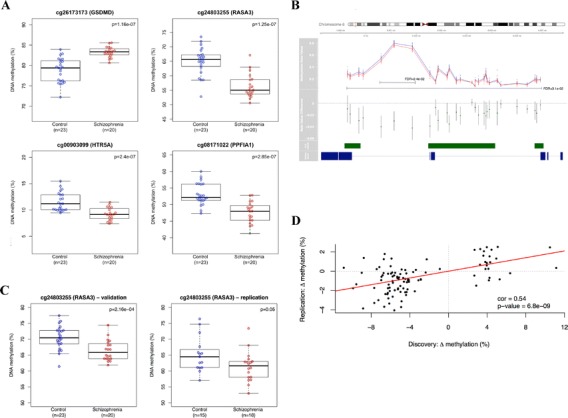
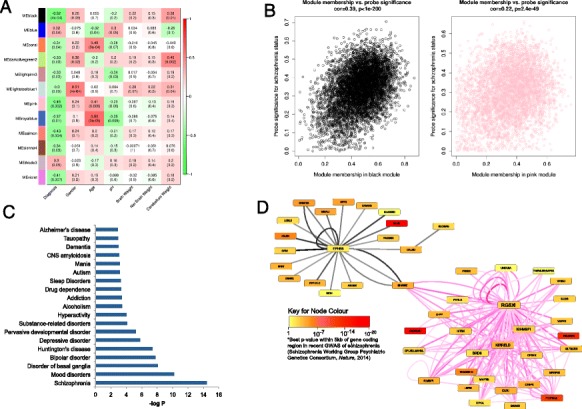
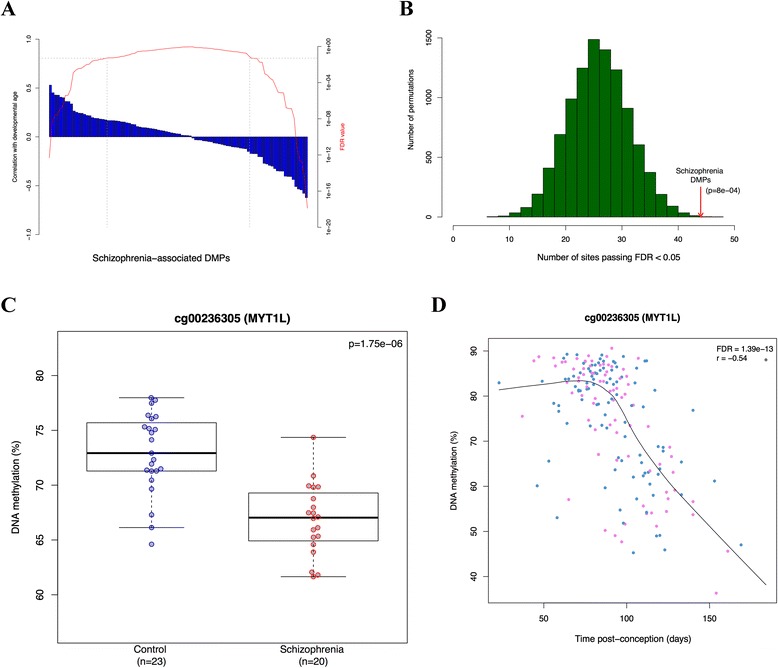
BACKGROUND: Schizophrenia is a severe neuropsychiatric disorder that is hypothesized to result from disturbances ine arly brain development. There is mounting evidence to support a role for developmentally regulated epigenetic variation in the molecular etiology of the disorder. Here, we describe a systematic study of schizophrenia-associated methylomic variation in the adult brain and its relationship to changes in DNA methylation across human fetal brain development. RESULTS: We profile methylomic variation in matched prefrontal cortex and cerebellum brain tissue from schizophrenia patients and controls, identifying disease-associated differential DNA methylation at multiple loci,particularly in the prefrontal cortex, and confirming these differences in an independent set of adult brain samples.Our data reveal discrete modules of co-methylated loci associated with schizophrenia that are enriched for genes involved in neurodevelopmental processes and include loci implicated by genetic studies of the disorder. Methylomic data from human fetal cortex samples, spanning 23 to 184 days post-conception, indicates that schizophrenia-associated differentially methylated positions are significantly enriched for loci at which DNA methylation is dynamically altered during human fetal brain development. CONCLUSIONS: Our data support the hypothesis that schizophrenia has an important early neurodevelopmental component, and suggest that epigenetic mechanisms may mediate these effects.
Overview
The claims and statistics of this paper haven’t been checked yet.
Run the check — free, no account needed. It reads the open-access text and checks the sources it cites.
Integrity signals
Registry
Cites
Statistics
Figures
Verification
Claims the paper makes
The claims and statistics of this paper haven’t been checked yet.
Run the check — free, no account needed. It reads the open-access text and checks the sources it cites.
Claims other papers make about this one
Each is checked against this paper’s own text: does it say what the citing paper says it does?
The source backs part of the claim, not all of it — or backs it for a different population, condition or comparison.
In the citing paper
“Further, EWAS studies have identified differential DNAm in HTR2A (Numata, Ye, Herman, & Lipska, 2014), HTR5A and HTR1E (Nishioka et al., 2013; Pidsley et al., 2014) genes in those with psychosis.”
From Can epigenetics shine a light on the biological pathways underlying major mental disorders? (2022) · cites this paper as Pidsley et al., 2014
Experimental — accuracy not yet measured
Self-check
Percentages, sums and reported differences re-computed from the paper’s own numbers.
The self-check needs the paper’s full text.
Citations
Cites
WGCNA: an R package for weighted correlation network analysis
Langfelder, P., & Horvath, S. (2008) · BMC Bioinformatics · doi:10.1186/1471-2105-9-559 · Cited by 27,252
Smyth, G. K. (2004) · Statistical Applications in Genetics and Molecular Biology · doi:10.2202/1544-6115.1027 · Cited by 11,829
Biological insights from 108 schizophrenia-associated genetic loci
Schizophrenia Working Group of the Psychiatric Genomics Consortium (2014) · Nature · doi:10.1038/nature13595 · Cited by 7,577
A General Framework for Weighted Gene Co-Expression Network Analysis
Zhang, B., & Horvath, S. (2005) · Statistical Applications in Genetics and Molecular Biology · doi:10.2202/1544-6115.1128 · Cited by 5,684
Common polygenic variation contributes to risk of schizophrenia and bipolar disorder
The International Schizophrenia Consortium (2009) · Nature · doi:10.1038/nature08185 · Cited by 4,821
Identifying biological themes within lists of genes with EASE
Hosack, D. A., Dennis, G., Sherman, B. T., Lane, H. C., & Lempicki, R. A. (2003) · Genome biology · doi:10.1186/gb-2003-4-10-r70 · Cited by 1,961
Chen, Y. A., Lemire, M., Choufani, S., Butcher, D. T., Grafodatskaya, D., Zanke, B. W., Gallinger, S., Hudson, T. J., & Weksberg, R. (2013) · Epigenetics · doi:10.4161/epi.23470 · Cited by 1,547
Rare chromosomal deletions and duplications increase risk of schizophrenia
The International Schizophrenia Consortium (2008) · Nature · doi:10.1038/nature07239 · Cited by 1,475
A polygenic burden of rare disruptive mutations in schizophrenia
Purcell, S. M., Moran, J. L., Fromer, M., Ruderfer, D., Solovieff, N., Roussos, P., O’Dushlaine, C., Chambert, K., Bergen, S. E., Kähler, A., et al. (2014) · Nature · doi:10.1038/nature12975 · Cited by 1,385
DNA methylation profiling of human chromosomes 6, 20 and 22
Eckhardt, F., Lewin, J., Cortese, R., Rakyan, V. K., Attwood, J., Burger, M., Burton, J. H., Cox, T. V., Davies, R., Down, T. A., et al. (2006) · Nature Genetics · doi:10.1038/ng1909 · Cited by 1,378
Prenatal Infection and Schizophrenia: A Review of Epidemiologic and Translational Studies
Brown, A. S., & Derkits, E. J. (2010) · American Journal of Psychiatry · doi:10.1176/appi.ajp.2009.09030361 · Cited by 1,269
Obstetric Complications and Schizophrenia: Historical and Meta-Analytic Review
Cannon, M. D., Jones, P. B., & Murray, R. M. (2002) · American Journal of Psychiatry · doi:10.1176/appi.ajp.159.7.1080 · Cited by 1,190
A data-driven approach to preprocessing Illumina 450K methylation array data
Pidsley, R., Y Wong, C. C., Volta, M., Lunnon, K., Mill, J., & Schalkwyk, L. C. (2013) · BMC Genomics · doi:10.1186/1471-2164-14-293 · Cited by 1,143 · cited 3×
“, San Diego, CA, USA), performing pre-processing, normalization and stringent quality control as previously described [16] (see Materials and methods; Table S3 in Additional file 1).”
MethodInfluentialTargeted and genome-scale strategies reveal gene-body methylation signatures in human cells
Ball, M. P., Li, J. B., Gao, Y., Lee, J., LeProust, E. M., Park, I., Xie, B., Daley, G. Q., & Church, G. M. (2009) · Nature Biotechnology · doi:10.1038/nbt.1533 · Cited by 1,087
Accounting for cellular heterogeneity is critical in epigenome-wide association studies
Jaffe, A. E., & Irizarry, R. A. (2014) · Genome Biology · doi:10.1186/gb-2014-15-2-r31 · Cited by 1,067
RCircos: an R package for Circos 2D track plots
Zhang, H., Meltzer, P. S., & Davis, S. R. (2013) · BMC Bioinformatics · doi:10.1186/1471-2105-14-244 · Cited by 995
The Neurodevelopmental Hypothesis of Schizophrenia, Revisited
Fatemi, S. H., & Folsom, T. D. (2009) · Schizophrenia Bulletin · doi:10.1093/schbul/sbn187 · Cited by 860
Epigenomic Profiling Reveals DNA-Methylation Changes Associated with Major Psychosis
Mill, J., Tang, T., Kaminsky, Z., Khare, T., Yazdanpanah, S., Bouchard, L., Jia, P., Assadzadeh, A., Flanagan, J., Schumacher, A., et al. (2008) · The American Journal of Human Genetics · doi:10.1016/j.ajhg.2008.01.008 · Cited by 773
Schizophrenia After Prenatal Famine
Susser, E. (1996) · Archives of General Psychiatry · doi:10.1001/archpsyc.1996.01830010027005 · Cited by 741
Davies, M. N., Volta, M., Pidsley, R., Lunnon, K., Dixit, A., Lovestone, S., Coarfa, C., Harris, R. A., Milosavljevic, A., Troakes, C., et al. (2012) · Genome Biology · doi:10.1186/gb-2012-13-6-r43 · Cited by 630
Khashan, A. S., Abel, K. M., McNamee, R., Pedersen, M. G., Webb, R. T., Baker, P. N., Kenny, L. C., & Mortensen, P. B. (2008) · Archives of General Psychiatry · doi:10.1001/archgenpsychiatry.2007.20 · Cited by 576
Bebbington, P. (2001) · Social Psychiatry and Psychiatric Epidemiology · doi:10.1007/s001270170010 · Cited by 515
Direct Reprogramming of Adult Human Fibroblasts to Functional Neurons under Defined Conditions
Ambasudhan, R., Talantova, M. V., Coleman, R., Xu, Y., Zhu, S., Lipton, S. A., & Ding, S. (2011) · Cell stem cell · doi:10.1016/j.stem.2011.07.002 · Cited by 480
Dempster, E. L., Pidsley, R., Schalkwyk, L. C., Owens, S., Georgiades, A., Kane, F., Kalidindi, S., Picchioni, M., Kravariti, E., Toulopoulou, T., et al. (2011) · Human Molecular Genetics · doi:10.1093/hmg/ddr416 · Cited by 460
Guintivano, J., Aryee, M. J., & Kaminsky, Z. A. (2013) · Epigenetics · doi:10.4161/epi.23924 · Cited by 384
From promises to practical strategies in epigenetic epidemiology
Mill, J. S., & Heijmans, B. T. (2013) · Nature Reviews Genetics · doi:10.1038/nrg3405 · Cited by 356
IMA: an R package for high-throughput analysis of Illumina's 450K Infinium methylation data
Wang, D., Yan, L., Hu, Q., Sucheston, L. E., Higgins, M. J., Ambrosone, C. B., Johnson, C. S., Smiraglia, D. J., & Liu, S. (2012) · Bioinformatics · doi:10.1093/bioinformatics/bts013 · Cited by 309
Schizophrenia After Prenatal Famine
van Os, J. (1997) · Archives of General Psychiatry · doi:10.1001/archpsyc.1997.01830180095015 · Cited by 264
Aberg, K. A., McClay, J. L., Nerella, S., Clark, S., Kumar, G., Chen, W., Khachane, A. N., Xie, L., Hudson, A., Gao, G., et al. (2014) · JAMA Psychiatry · doi:10.1001/jamapsychiatry.2013.3730 · Cited by 248
The emerging role of SHANK genes in neuropsychiatric disorders
Guilmatre, A., Huguet, G., Delorme, R., & Bourgeron, T. (2014) · Developmental Neurobiology · doi:10.1002/dneu.22128 · Cited by 237
Neurexin 1 (NRXN1) Deletions in Schizophrenia
Kirov, G., Rujescu, D., Ingason, A., Collier, D. A., O'Donovan, M. C., & Owen, M. J. (2009) · Schizophrenia Bulletin · doi:10.1093/schbul/sbp079 · Cited by 235
McGirr, A., Tousignant, M., Routhier, D., Pouliot, L., Chawky, N., Margolese, H. C., & Turecki, G. (2006) · Schizophrenia Research · doi:10.1016/j.schres.2006.02.025 · Cited by 110
CPG15 regulates synapse stability in the developing and adult brainPreprint
Fujino, T., Leslie, J. H., Eavri, R., Chen, J. L., Lin, W. C., Flanders, G. H., Borók, E., Horváth, T. L., & Nedivi, E. (2011) · Genes & Development · doi:10.1101/gad.176172.111 · Cited by 84
Hill, M., & Bray, N. J. (2012) · American Journal of Psychiatry · doi:10.1176/appi.ajp.2012.11121845 · Cited by 81
Epigenetic Studies of Schizophrenia: Progress, Predicaments, and Promises for the Future
Dempster, E. L., Viana, J. F., Pidsley, R., & Mill, J. S. (2012) · Schizophrenia Bulletin · doi:10.1093/schbul/sbs139 · Cited by 78
Spadaro, P. A., & Bredy, T. W. (2012) · Frontiers in Genetics · doi:10.3389/fgene.2012.00132 · Cited by 72
Why schizophrenia genetics needs epigenetics: a review.
Thibaut, F. (2012) · PubMed · Cited by 66
Epigenomic and transcriptomic signatures of a Klinefelter syndrome (47,XXY) karyotype in the brain
Viana, J. F., Pidsley, R., Troakes, C., Spiers, H., Wong, C. C. Y., Al‐Sarraj, S., Craig, I., Schalkwyk, L. C., & Mill, J. S. (2014) · Epigenetics · doi:10.4161/epi.27806 · Cited by 50
Impact of Neuritin 1 ( NRN1 ) polymorphisms on fluid intelligence in schizophrenia
Chandler, D., Dragović, M., Cooper, M. N., Badcock, J. C., Mullin, B. H., Faulkner, D., Wilson, S. G., Hallmayer, J. F., Howell, S., Rock, D. J., et al. (2009) · American Journal of Medical Genetics Part B Neuropsychiatric Genetics · doi:10.1002/ajmg.b.30996 · Cited by 36
Cited by
Sorted by citations
Pidsley, R., Zotenko, E., Peters, T. J., Lawrence, M. G., Risbridger, G. P., Molloy, P., Van Djik, S., Muhlhausler, B., Stirzaker, C., & Clark, S. J. (2016) · Genome biology · doi:10.1186/s13059-016-1066-1 · Cited by 1,480
An epigenetic clock analysis of race/ethnicity, sex, and coronary heart disease
Horvath, S., Gurven, M., Levine, M. E., Trumble, B. C., Kaplan, H. S., Allayee, H., Ritz, B. R., Chen, B. H., Lu, A. T.-H., Rickabaugh, T. M., et al. (2016) · Genome biology · doi:10.1186/s13059-016-1030-0 · Cited by 749
Mapping DNA methylation across development, genotype and schizophrenia in the human frontal cortex
Jaffe, A. E., Gao, Y., Deep-Soboslay, A., Tao, R., Hyde, T. M., Weinberger, D. R., & Kleinman, J. E. (2016) · Nature Neuroscience · doi:10.1038/nn.4181 · Cited by 511
Hannon, E., Lunnon, K., Schalkwyk, L., & Mill, J. (2015) · Epigenetics · doi:10.1080/15592294.2015.1100786 · Cited by 455
Self-citationHannon, E., Dempster, E., Viana, J., Burrage, J., Smith, A. R., Macdonald, R., St Clair, D., Mustard, C., Breen, G., Therman, S., et al. (2016) · Genome Biology · doi:10.1186/s13059-016-1041-x · Cited by 349
Self-citation
Metadata
- Authors
- Pidsley, R., Viana, J., Hannon, E., Spiers, H., Troakes, C., Al-Saraj, S., Mechawar, N., Turecki, G., Schalkwyk, L. C., Bray, N. J., & Mill, J.
- Affiliations
- Garvan Institute of Medical Research (AU)
- University of Exeter (GB)
- King's College London (GB)
- Douglas Mental Health University Institute (CA)
- University of Essex (GB)
- Corresponding author
- Mill, Jonathan
- ORCID
- Venue
- Genome biology
- Published
- 2014-10-28
- Volume
- 15
- Issue
- 10
- Pages
- 483-483
- ISSN
- 1465-6906 (ISSN-L)
- 1474-760X
- PMC
- PMC4262979
- OpenAlex
- W1980511338
- Cited by
- 157
- References
- 40
- Citations by year
- 2026: 2 · 2025: 2 · 2024: 11 · 2023: 6 · 2022: 10 · 2021: 15 · 2020: 11 · 2019: 15 · 2018: 15 · 2017: 25 · 2016: 24 · 2015: 18 · 2014: 2
- FWCI
- 9.42
- Type
- journal article
- Language
- en
- Open access
- gold
- doi.org
- Locations
- Genome biology (publishedVersion, cc-by)
- PubMed Central (publishedVersion, cc-by)
- PubMed (publishedVersion)
- ORCA Online Research @Cardiff (Cardiff University) (acceptedVersion)
- Open Access at Essex (University of Essex) (acceptedVersion)
- Figshare (submittedVersion)
- Research Portal (King's College London) (submittedVersion, cc-by)
- Open Research Exeter (University of Exeter) (submittedVersion, cc-by)
- Funders
- Wellcome Trust (G0700089, GR082557)
- National Institutes of Health
- Medical Research Council (MC_PC_15004, MR/K013807/1, K013807)
- National Institute on Aging (R01AG036039, AG036039)
- Topics
- Life Sciences › Biochemistry, Genetics and Molecular Biology › Molecular Biology › Epigenetics and DNA Methylation
- Health Sciences › Medicine › Psychiatry and Mental health › Schizophrenia research and treatment
- Life Sciences › Biochemistry, Genetics and Molecular Biology › Molecular Biology › Genomics and Chromatin Dynamics
- Keywords
- schizophrenia, DNA methylation, epigenetics, brain development, prefrontal cortex, cerebellum, fetal brain development, differentially methylated positions
- MeSH terms
- Brain, Cerebellum, Humans, Schizophrenia, Prefrontal Cortex, DNA Methylation, Epigenesis, Genetic, Fetal Development
About these checks
Registry, retraction, Cites and statistics results are computed, not judged, with one exception: a printed reference that no index lists is read once by a model before it counts as a citation error. Claims are extracted by a model and kept only when their quote appears verbatim in the text; each cited source is then checked, with a model’s help, for whether it says what the claim relies on. Those verdicts can be wrong — read the claim’s quote and the cited source before relying on one.
Statistics and arithmetic are recomputed, not judged.
Confidence bands are shown only for fields calibrated on our annotated test set. None is calibrated yet, so no band is shown.
What counts as a claim ›How we measure confidence ›How we check this ›
Are you an author, or do you see a problem with this page? Request a review
