

Ancient DNA and the rewriting of human history: be sparing with Occam’s razor
Open accessThe DOI matches its Crossref record; 48 of the 50 references it cites were found in a registry or an index, and 1 are not checked yet; 17 of the 64 sources its claims cite were checked for support.
Abstract
Ancient DNA research is revealing a human history far more complex than that inferred from parsimonious models based on modern DNA. Here, we review some of the key events in the peopling of the world in the light of the findings of work on ancient DNA.
Verified 2026-10-05 · 1 reference not checked yet
Overview
CoChat Summary
TL;DR
This review argues that ancient DNA is revealing a human history far more complex than parsimonious models based on modern DNA alone, using examples from archaic admixture, the peopling of Europe and the Americas, and recent selection. It concludes that human evolutionary genetics is moving toward first looking for aDNA evidence and interpreting present-day variation in its light, while noting major preservation and methodological limits.
Key findings
- aDNA supports a “leaky replacement” model: Neanderthal ancestry is estimated at 1.5–2.1% in all present-day non-Africans, with gene flow likely around 47,000–65,000 ya; Ust’-Ishim suggests 50,000–60,000 ya, and the Oase individual had 6–9% Neanderthal-derived alleles. Denisovan ancestry is 4–6% in New Guineans, Aboriginal Australians and Bougainville Islanders, with ~0.2% across Eastern Eurasia and Native American populations.
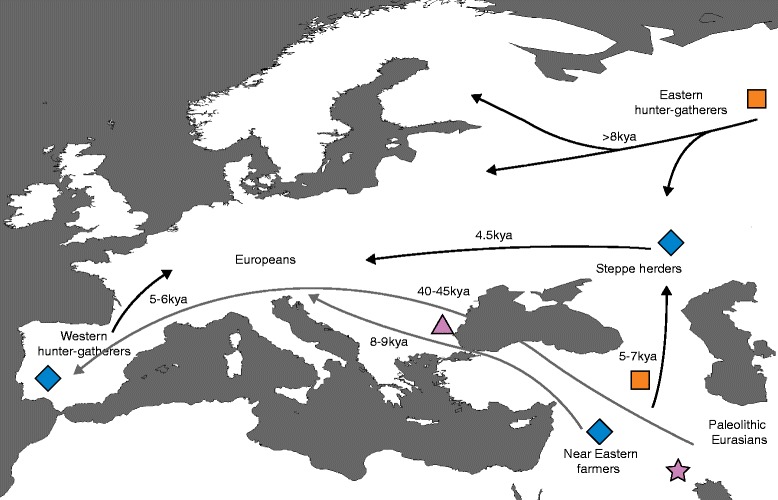
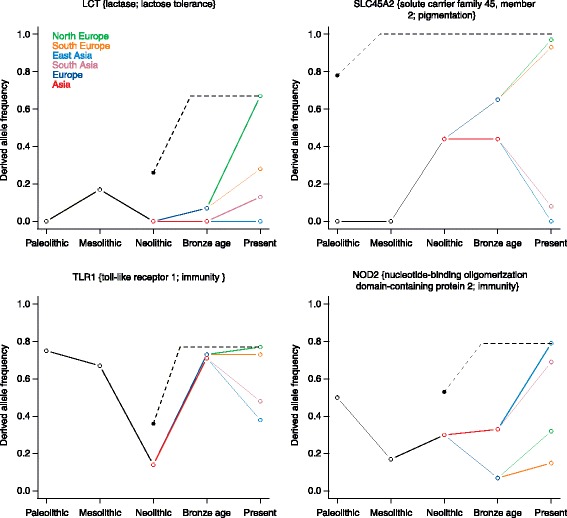
- European population history is more complex than simple demic diffusion: present-day Europeans derive from at least three ancient populations, with a massive migration from the Eurasian Steppe ~4500 ya involving Yamnaya culture people; Y-chromosomal haplogroups shifted from predominantly G2a beforehand to R1a and R1b afterwards. Lactose tolerance was absent in early European farmers, found in only 10% of Bronze Age Europeans, and increased dramatically in just the past 3000 years.
- Native American origins are refined by aDNA: Kennewick Man was genetically closer to modern Native Americans than to any other population; the 24,000-year-old Mal’ta boy linked Upper Paleolithic West Eurasians to Native Americans; Anzick-1 (~12,500 years old) belonged to a meta-population related to many contemporary Native Americans. Native Americans appear to have diverged from Siberian ancestors ~20,000 ya, with another diversification ~13,000 ya in the Americas.
- aDNA is transforming understanding of selection and introgression: the Tibetan EPAS1 advantageous allele is best explained by Denisovan introgression; testes-expressed genes show reduced Neanderthal ancestry, while Neanderthal alleles are enriched in keratin filament genes; adaptive immune variants were already present in Mesolithic hunter-gatherers before agriculture.
Methods
- Narrative review of ancient DNA research and its implications for human population history, not a primary research study.
- Synthesizes published findings from ancient genomes and population-genetic studies, including Neanderthal, Denisovan, European, Native American, and selection examples.
- Main analysis is qualitative and interpretive, discussing how aDNA supports, refines, or overturns models previously inferred from present-day DNA.
Limitations
- The authors state that samples more than 100,000 years old and regions such as the Near East and Africa remain challenging for aDNA research because of time and poor DNA preservation in hot wet climates; sequences below 25 base pairs often do not map uniquely to the human genome, and extraction, library construction, and molecule repair/reconstruction need improvement.
- The paper identifies unresolved questions, including the frequency and number of Neanderthal–modern human mixture events, the source of non-Neanderthal/non-Denisovan archaic admixture, what Denisovans looked like, and the number, timing, and routes of major out-of-Africa expansions.
- As a review, no systematic search strategy or quantitative meta-analysis is described; the synthesis is selective and depends on the cited studies (evident from the text).
Model-written summary. Check it against the paper before relying on it.
Integrity signals
Registry
Cites
Statistics
Figures
Verification
Claims the paper makes
16 Valid · 4 Not valid · 40 Not checked · 23 Own results and interpretations
Every source the paper cites for this claim was checked and supports it.
In the paper
“whereas present-day humans carry, on average, introgressed haplotypes of ~57 kb in length [16].”
§ Ancient DNA and the rewriting of human history: be sparing with Occam’s razor > Origin and expansion of modern humans and admixture with archaic species
What the sources say
- Supportedcites [16] Vernot B Akey JM Resurrecting surviving Neandertal lineages from modern human genomes Science 2014 343 1017 21 10.1126/science.1245938 24476670 source
The Reports section (p. 1) explicitly states that the average length of introgressed haplotypes was approximately 57 kb. The paper identifies these as Neandertal lineages recovered from modern human genomes. (LLM, conf=0.94)
plain- Asserted: passes — The authors put it forward as true.
- Checkable: passes — It can be checked against evidence.
- Load-bearing: unclear — It is unclear whether the paper’s conclusions depend on it.
- Based: passes — The paper gives a reason why it holds.
- Supported
Every source the paper cites for this claim was checked and supports it.
In the paper
“Neanderthal ancestry in all present-day non-Africans is estimated to be 1.5–2.1 % [14].”
§ Ancient DNA and the rewriting of human history: be sparing with Occam’s razor > Origin and expansion of modern humans and admixture with archaic species
What the sources say
- Supportedcites [14] Prufer K Racimo F Patterson N Jay F Sankararaman S Sawyer S The complete genome sequence of a Neanderthal from the Altai Mountains Nature 2014 505 43 9 10.1038/nature12886 24352235 PMC4031459 source
The section “Neandertal gene flow into modern humans” explicitly estimates that 1.5–2.1% of the DNA in people outside Africa is Neandertal-derived. This matches the cited claim. (LLM, conf=0.95)
hedged- Asserted: passes — The authors put it forward as true.
- Checkable: passes — It can be checked against evidence.
- Load-bearing: unclear — It is unclear whether the paper’s conclusions depend on it.
- Based: passes — The paper gives a reason why it holds.
- Supported
Every source the paper cites for this claim was checked and supports it.
In the paper
“Denisovans themselves appear to have received gene flow from other archaic humans.”
§ Ancient DNA and the rewriting of human history: be sparing with Occam’s razor > Origin and expansion of modern humans and admixture with archaic species
What the sources say
- Supportedcites [14] Prufer K Racimo F Patterson N Jay F Sankararaman S Sawyer S The complete genome sequence of a Neanderthal from the Altai Mountains Nature 2014 505 43 9 10.1038/nature12886 24352235 PMC4031459 source
The “Neandertal gene flow into Denisovans” section states that gene flow from Neandertals into Denisovans occurred. The “Unknown archaic gene flow into Denisovan” section also finds gene flow from a deeply diverged hominin consistent with the data, while noting that ancient population structure remains an alternative explanation for that component. (LLM, conf=0.94)
hedgedstates a cause- Asserted: passes — The authors put it forward as true.
- Checkable: passes — It can be checked against evidence.
- Load-bearing: unclear — It is unclear whether the paper’s conclusions depend on it.
- Based: passes — The paper gives a reason why it holds.
- Supported
The cited sources support only part of this claim — read each source’s verdict below.
In the paper
“providing more evidence that archaic admixture occurred in West Asia early during modern humans’ exit from Africa.”
§ Ancient DNA and the rewriting of human history: be sparing with Occam’s razor > Origin and expansion of modern humans and admixture with archaic species
What the sources say
- Partly supportedcites [14] Prufer K Racimo F Patterson N Jay F Sankararaman S Sawyer S The complete genome sequence of a Neanderthal from the Altai Mountains Nature 2014 505 43 9 10.1038/nature12886 24352235 PMC4031459 sourceExperimental — accuracy not yet measured
The Discussion (page not provided) says that allele sharing between Neandertals and non-Africans reflects admixture, and the ‘Neandertal gene flow into modern humans’ section finds their Neandertal-derived DNA closer to a Neandertal from the Caucasus. The copy does not establish that admixture occurred in West Asia or date it to early in modern humans’ exit from Africa; the 77,000–114,000-year estimate is a population split time, not the date of admixture. (LLM, conf=0.82)
hedgedstates a cause- Asserted: passes — The authors put it forward as true.
- Checkable: passes — It can be checked against evidence.
- Load-bearing: passes — The paper’s conclusions depend on it.
- Based: passes — The paper gives a reason why it holds.
- Partly supported
Every source the paper cites for this claim was checked and supports it.
In the paper
“but the Oase genome provides direct evidence that multiple mixture events between modern humans and Neanderthals have occurred.”
§ Ancient DNA and the rewriting of human history: be sparing with Occam’s razor > Origin and expansion of modern humans and admixture with archaic species
What the sources say
- Supportedcites [20] Fu Q Hajdinjak M Moldovan OT Constantin S Mallick S Skoglund P An early modern human from Romania with a recent Neanderthal ancestor Nature 2015 524 216 9 10.1038/nature14558 26098372 PMC4537386 source
The Abstract's concluding paragraph states directly that 'the Oase 1 genome shows that mixture between modern humans and Neanderthals was not limited to the first ancestors of present-day people to leave Africa, nor to the Near East; it occurred later as well and probably in Europe' — i.e. more than one mixture event, with the recent one dated to less than 200 years before Oase 1 lived. The Introduction frames this as direct evidence from a genome of a modern human who could have met Neanderthals ('More direct insight into the interactions between modern and archaic humans...'), against a background where 'where and how often this occurred is not understood'. The Fig. 2/results discussion adds a possible older Neanderthal admixture in Oase 1's ancestors beyond the recent one, reinforcing multiplicity (hedged there, but the Abstract's 'not limited to' claim is stated without hedge). (LLM, conf=0.85)
boostedstates a causeSingle case- Asserted: passes — The authors put it forward as true.
- Checkable: passes — It can be checked against evidence.
- Load-bearing: passes — The paper’s conclusions depend on it.
- Based: passes — The paper gives a reason why it holds.
- Supported
38 more claims · 7 with their cited sources checked
Create a free account to see all 83 claims and to verify the 47 references still open.
- It may state two separate claims as one. 27
- Probably not a substantial claim. 14
Claims other papers make about this one
Each is checked against this paper’s own text: does it say what the citing paper says it does?
The check wasn’t confident either way, so it gives no verdict — never disputed.
In the citing paper
“To address this gap, computational methods for protein function prediction have been developed and significantly advanced over the past 15 years as demonstrated by the recent Critical Assessment of Functional Annotation (CAFA) challenges7,8.”
From Environmental conditions shape the nature of a minimal bacterial genome (2019) · cites this paper as [8]
Experimental — accuracy not yet measured
Citations
Cites
A draft sequence of the Neandertal genome
Green, R. E., Krause, J., Briggs, A. W., Maricic, T., Stenzel, U., Kircher, M., Patterson, N., Li, H., Zhai, W., Fritz, M. H.-Y., et al. (2010) · Science · doi:10.1126/science.1188021 · Cited by 4,318 · cited 2×
“Moreover, the Neanderthal-derived DNA in all non-Africans is more closely related to a Neanderthal from the Caucasus than it is to either the Neanderthal from Siberia or the Neanderthal from Croatia [14], providing more evidence that archaic admixture occurred in West Asia early during modern humans’ exit from Africa.”
BackgroundMitochondrial DNA and human evolution
Cann, R. L., Stoneking, M., & Wilson, A. C. (1987) · Nature · doi:10.1038/325031a0 · Cited by 3,100 · cited 1×
“in Africa around 200,000 years ago (ya) [3], followed by”
BackgroundThe complete genome sequence of a Neanderthal from the Altai Mountains
Prüfer, K., Racimo, F., Patterson, N., Jay, F., Sankararaman, S., Sawyer, S., Heinze, A., Renaud, G., Sudmant, P. H., de Filippo, C., et al. (2014) · Nature · doi:10.1038/nature12886 · Cited by 2,254 · cited 4×
“2 %) of Denisovan ancestry is also found across Eastern Eurasia and in Native American populations [14], but it is unclear whether this originated via gene flow from the same mixture event or through a second one.”
BackgroundInfluentialGenetic history of an archaic hominin group from Denisova Cave in Siberia
Reich, D., Green, R. E., Kircher, M., Krause, J., Patterson, N., Durand, E. Y., Viola, B., Briggs, A. W., Stenzel, U., Johnson, P. L. F., et al. (2010) · Nature · doi:10.1038/nature09710 · Cited by 1,991 · cited 12×
“A more substantial revision of the demic diffusion model was introduced when several 7000–8000-year-old individuals from Western Europe [29] and a 24,000-yearold individual from Siberia [30] were sequenced.”
BackgroundInfluentialMassive migration from the steppe was a source for Indo-European languages in Europe
Haak, W., Lazaridis, I., Patterson, N., Rohland, N., Mallick, S., Llamas, B., Brandt, G., Nordenfelt, S., Harney, E., Stewardson, K., et al. (2015) · Nature · doi:10.1038/nature14317 · Cited by 1,940 · cited 3×
“Controversially, these people were suggested to have also brought Indo-European languages into Europe [31].”
BackgroundOn the genealogy of large populations
Kingmán, J. F. C. (1982) · Journal of Applied Probability · doi:10.1017/s0021900200034446 · Cited by 1,628 · cited 1×
“Kingman in 1982 [49], provided an unprecedented understanding of the genetic relationships among human populations, as well as”
BackgroundSequencing of 50 Human Exomes Reveals Adaptation to High Altitude
Yi, X., Liang, Y., Huerta-Sanchez, E., Jin, X., Cuo, Z. X. P., Pool, J. E., Xu, X., Jiang, H., Vinckenbosch, N., Korneliussen, T. S., et al. (2010) · Science · doi:10.1126/science.1190371 · Cited by 1,611 · cited 1×
“For example, by studying genes that show population-specific allele-frequency differences between Tibetans and Han Chinese, a signal of positive natural selection was detected in EPAS1, a transcription factor involved in the response to hypoxia, which most probably helps the Tibetans to live at high altitudes [40].”
BackgroundPopulation genomics of Bronze Age Eurasia
Allentoft, M. E., Sikora, M., Sjögren, K.-G., Rasmussen, S., Rasmussen, M., Stenderup, J., Damgaard, P. B., Schroeder, H., Ahlström, T., Vinner, L., et al. (2015) · Nature · doi:10.1038/nature14507 · Cited by 1,550 · cited 15×
“In particular, selection on immune genes was believed to have been increased by the spread of diseases after the Neolithic due to dense settlements and proximity to domesticated animals. aDNA from Mesolithic Europeans shows, however, that adaptive variants associated with pathogen resistance in modern populations were…”
BackgroundInfluentialGenome-wide patterns of selection in 230 ancient Eurasians
Mathieson, I., Lazaridis, I., Rohland, N., Mallick, S., Patterson, N., Roodenberg, S. A., Harney, E., Stewardson, K., Fernandes, D., Novak, M., et al. (2015) · Nature · doi:10.1038/nature16152 · Cited by 1,515 · cited 4×
“Even lactose tolerance, assumed to be associated with pastoralism, appears to have been absent in early European farmers, being found in only 10 % of Bronze Age Europeans and increasing dramatically in just the past 3000 years [32, 44] (Fig.”
BackgroundResultInfluentialAncient human genomes suggest three ancestral populations for present-day Europeans
Lazaridis, I., Patterson, N., Mittnik, A., Renaud, G., Mallick, S., Kirsanow, K., Sudmant, P. H., Schraiber, J. G., Castellano, S., Lipson, M., et al. (2014) · Nature · doi:10.1038/nature13673 · Cited by 1,357 · cited 2×
“A more substantial revision of the demic diffusion model was introduced when several 7000–8000-year-old individuals from Western Europe [29] and a 24,000-yearold individual from Siberia [30] were sequenced.”
Background
Cited by
Items 301–400 of 1,019
RNA-QC-chain: comprehensive and fast quality control for RNA-Seq data
Zhou, Q., Su, X., Jing, G., Chen, S., & Ning, K. (2018) · BMC Genomics · doi:10.1186/s12864-018-4503-6 · Cited by 63
Hoffman, G. E., Bendl, J. M., Girdhar, K., Schadt, E. E., & Roussos, P. (2019) · Nucleic Acids Research · doi:10.1093/nar/gkz808 · Cited by 78
Japan considered from the hypothesis of farmer/language spread
de Boer, E. M., Yang, M. A., Kawagoe, A., & Barnes, G. L. (2020) · Evolutionary Human Sciences · doi:10.1017/ehs.2020.7 · Cited by 64
Region-level epimutation rates in Arabidopsis thaliana
Denkena, J., Johannes, F. M., & Colomé‐Tatché, M. (2021) · Heredity · doi:10.1038/s41437-021-00441-w · Cited by 88
Evaluating DNA methylation age on the Illumina MethylationEPIC Bead Chip
Dhingra, R., Kwee, L. C., Diaz-Sanchez, D., Devlin, R. B., Cascio, W., Hauser, E. R., Gregory, S., Shah, S., Kraus, W. E., Olden, K., et al. (2019) · PLOS ONE · doi:10.1371/journal.pone.0207834 · Cited by 60
Induction of Synthetic Polyploids and Assessment of Genomic Stability in Lippia alba
Julião, S. A., Ribeiro, C. D. V., Lopes, J. M. L., de Matos, E. M., Reis, A. C., Peixoto, P. H. P., Machado, M. A., Azevedo, A. L. S., Grazul, R. M., de Campos, J. M. S., et al. (2020) · Frontiers in Plant Science · doi:10.3389/fpls.2020.00292 · Cited by 72
Integrative Pan-Cancer Genomic and Transcriptomic Analyses of Refractory Metastatic Cancer
Pradat, Y., Viot, J., Владимирович, Г. К., Yurchenko, A. A., Cerbone, L., Deloger, M., Grisay, G., Verlingue, L., Scott, V., Padioleau, I., et al. (2023) · Cancer Discovery · doi:10.1158/2159-8290.cd-22-0966 · Cited by 64
Zhao, Y., Chukanova, M., Kentistou, K. A., Fairhurst-Hunter, Z., Siegert, A. M., Jia, R., Dowsett, G. K. C., Gardner, E. J., Lawler, K., Day, F. R., et al. (2024) · Nature Genetics · doi:10.1038/s41588-024-01694-x · Cited by 65
Salehi, S., Steif, A., Roth, A. J. L., Aparicio, S. A. J. R., Bouchard‐Côté, A., & Shah, S. P. (2017) · Genome biology · doi:10.1186/s13059-017-1169-3 · Cited by 66
Gerring, Z. F., McRae, A. F., Montgomery, G. W., & Nyholt, D. R. (2018) · BMC Genomics · doi:10.1186/s12864-018-4450-2 · Cited by 65
Liu, M., Zhang, C., Duan, L., Luan, Q., Li, J., Yang, A., Qi, X., & Ren, Z. (2018) · Journal of Experimental Botany · doi:10.1093/jxb/ery336 · Cited by 63
Li, Y., Dong, Y., Liu, Y., Yu, X., Yang, M., & Huang, Y. (2021) · Frontiers in Plant Science · doi:10.3389/fpls.2020.593984 · Cited by 81
Vorsteveld, E. E., Hoischen, A., & van der Made, C. I. (2021) · Clinical Reviews in Allergy & Immunology · doi:10.1007/s12016-021-08838-5 · Cited by 69
Placental genomics mediates genetic associations with complex health traits and disease
Bhattacharya, A., Freedman, A. N., Avula, V. R., Harris, R., Liu, W., Pan, C., Lusis, A. J., Joseph, R. M., Smeester, L., Hartwell, H. J., et al. (2022) · Nature Communications · doi:10.1038/s41467-022-28365-x · Cited by 61
ReadBouncer: precise and scalable adaptive sampling for nanopore sequencing
Ulrich, J.-U., Lutfi, A., Rutzen, K., & Renard, B. Y. (2022) · Bioinformatics · doi:10.1093/bioinformatics/btac223 · Cited by 66
CRISPR-DIPOFF: an interpretable deep learning approach for CRISPR Cas-9 off-target prediction
Toufikuzzaman, M., Samee, M. A. H., & Rahman, M. S. (2024) · Briefings in Bioinformatics · doi:10.1093/bib/bbad530 · Cited by 63
Liu, Y. H., Luo, C., Golding, S. G. H., Ioffe, J. B., & Zhou, X. (2024) · Nature Communications · doi:10.1038/s41467-024-46614-z · Cited by 65
Landen, S., Jacques, M., Hiam, D., Alvarez-Romero, J., Harvey, N. R., Haupt, L. M., Griffiths, L. R., Ashton, K. J., Lamon, S., Voisin, S., et al. (2021) · Clinical Epigenetics · doi:10.1186/s13148-021-01188-1 · Cited by 57
Predicting candidate genes from phenotypes, functions and anatomical site of expression
Chen, J., Althagafi, A., & Hoehndorf, R. (2020) · Bioinformatics · doi:10.1093/bioinformatics/btaa879 · Cited by 64
The control of transcriptional memory by stable mitotic bookmarking
Bellec, M., Dufourt, J., Hunt, G., Hasse, H. L., Trullo, A., Aabidine, A. Z. E., Lamarque, M., Gaskill, M. M., Faure-Gautron, H., Mannervik, M., et al. (2022) · Nature Communications · doi:10.1038/s41467-022-28855-y · Cited by 61
Origin and evolution of the metazoan non-coding regulatory genome
Gaiti, F., Calcino, A., Tanurdžić, M., & Degnan, B. M. (2016) · Developmental Biology · doi:10.1016/j.ydbio.2016.11.013 · Cited by 62
Epigenetic regulation – contribution to herbicide resistance in weeds?
Markus, C., Pečinka, A., Karan, R., Barney, J. N., & Merotto, A. (2017) · Pest Management Science · doi:10.1002/ps.4727 · Cited by 63
The success of failed Homo sapiens dispersals out of Africa and into Asia
Rabett, R. (2018) · Nature Ecology & Evolution · doi:10.1038/s41559-017-0436-8 · Cited by 66
y Terán, J. C. B. M., Konzen, E. R., Medina, V., Palkovic, A., Ariani, A., Tsai, S. M., Gilbert, M. E., & Gepts, P. (2018) · Annals of Botany · doi:10.1093/aob/mcy221 · Cited by 63
Gioia, T., Logozzo, G., Marzario, S., Zeuli, P. S., & Gepts, P. (2019) · PLoS ONE · doi:10.1371/journal.pone.0211342 · Cited by 59
Warm nights disrupt transcriptome rhythms in field-grown rice panicles
Desai, J. S., Lawas, L. M. F., Valente, A. M., Leman, A. R., Grinevich, D. O., Jagadish, S. V. K., & Doherty, C. J. (2021) · Proceedings of the National Academy of Sciences · doi:10.1073/pnas.2025899118 · Cited by 60
Mushtaq, N., Munir, F., Gul, A., Amir, R., & Paracha, R. Z. (2021) · PeerJ · doi:10.7717/peerj.11647 · Cited by 63
Mishra, B., Ulaszewski, B., Meger, J., Aury, J., Bodénès, C., Lesur, I., Pfenninger, M., Silva, C. D., Gupta, D. K., Guichoux, E., et al. (2022) · Frontiers in Genetics · doi:10.3389/fgene.2021.691058 · Cited by 59
A composite window into human history
Johannsen, N. N., Larson, G., Meltzer, D. J., & Vander Linden, M. (2017) · Science · doi:10.1126/science.aan0737 · Cited by 58
In vivo dynamics of human hematopoietic stem cells: novel concepts and future directions
Scala, S., & Aiuti, A. (2019) · Blood Advances · doi:10.1182/bloodadvances.2019000039 · Cited by 48
An overview of technologies for MS-based proteomics-centric multi-omics
Rajczewski, A. T., Jagtap, P. D., & Griffin, T. J. (2022) · Expert Review of Proteomics · doi:10.1080/14789450.2022.2070476 · Cited by 60
Crawford, E. D., Quan, J., Horst, J. A., Ebert, D., Wu, W. C. H., & DeRisi, J. L. (2017) · PLoS ONE · doi:10.1371/journal.pone.0178163 · Cited by 65
Vitamin D supplementation is associated with slower epigenetic aging
Vetter, V. M., Sommerer, Y., Kalies, C. H., Spira, D., Bertram, L., & Demuth, I. (2022) · GeroScience · doi:10.1007/s11357-022-00581-9 · Cited by 63
Yang, M., Huang, L., Huang, H., Tang, H., Zhang, N., Yang, H., Wu, J., & Mu, F. (2022) · Nucleic Acids Research · doi:10.1093/nar/gkac326 · Cited by 67
A systematic analysis of splicing variants identifies new diagnoses in the 100,000 Genomes Project
Blakes, A. J. M., Wai, H. A., Davies, I., Moledina, H. E., Ruiz, A., Thomas, T., Bunyan, D. J., Thomas, N. S., Burren, C. P., Greenhalgh, L., et al. (2022) · Genome Medicine · doi:10.1186/s13073-022-01087-x · Cited by 58
Hypergraph geometry reflects higher-order dynamics in protein interaction networks
Murgas, K. A., Saucan, E., & Sandhu, R. (2022) · Scientific Reports · doi:10.1038/s41598-022-24584-w · Cited by 73
Boyeau, P., Regier, J., Gayoso, A., Jordan, M. I., Lopez, R., & Yosef, N. (2023) · Proceedings of the National Academy of Sciences · doi:10.1073/pnas.2209124120 · Cited by 60
Gene transcription repression in Clostridium beijerinckii using CRISPR‐dCas9
Wang, Y., Zhang, Z., Seo, S., Lynn, P., Lu, T., Jin, Y., & Blaschek, H. P. (2016) · Biotechnology and Bioengineering · doi:10.1002/bit.26020 · Cited by 53
Chen, M., Wu, J., Wang, L., Mantri, N. L., Zhang, X., Zhu, Z., & Wang, S. (2017) · PLoS ONE · doi:10.1371/journal.pone.0169954 · Cited by 66
Environmental conditions shape the nature of a minimal bacterial genome
Antczak, M., Michaelis, M., & Wass, M. N. (2019) · Nature Communications · doi:10.1038/s41467-019-10837-2 · Cited by 55
Single-cell expression profiling of islets generated by the Human Pancreas Analysis Program
Patil, A. R., Schug, J., Naji, A., Kaestner, K. H., Faryabi, R. B., & Vahedi, G. (2023) · Nature Metabolism · doi:10.1038/s42255-023-00806-x · Cited by 57
Reference-free assembly of long-read transcriptome sequencing data with RNA-Bloom2
Nip, K. M., Hafezqorani, S., Gagalova, K., Chiu, R., Yang, C., Warren, R. L., & Birol, İ. (2023) · Nature Communications · doi:10.1038/s41467-023-38553-y · Cited by 66
Lee, E., Carreras-Gallo, N., Lopez, L., Turner, L., Lin, A., Mendez, T. L., Went, H., Tomusiak, A., Verdin, E. M., Corley, M. J., et al. (2024) · Aging · doi:10.18632/aging.205581 · Cited by 59
Specificity, length and luck drive gene rankings in association studies
Spence, J. P., Mostafavi, H., Ota, M., Milind, N., Gjorgjieva, T., Smith, C. J., Simons, Y. B., Sella, G., & Pritchard, J. K. (2025) · Nature · doi:10.1038/s41586-025-09703-7 · Cited by 61
Zhang, W., Zhang, X., Li, K., Wang, C., Cai, L., Zhuang, W.-Y., Xiang, M., & Liu, X. (2018) · Mycology: An International Journal on Fungal Biology · doi:10.1080/21501203.2018.1478333 · Cited by 57
Huggett, S. B., & Stallings, M. C. (2019) · Addiction Biology · doi:10.1111/adb.12719 · Cited by 59
Rennie, S., Dalby, M., van Duin, L., & Andersson, R. (2018) · Nature Communications · doi:10.1038/s41467-017-02798-1 · Cited by 52
Genes mirror migrations and cultures in prehistoric Europe — a population genomic perspective
Günther, T., & Jakobsson, M. (2016) · Current Opinion in Genetics & Development · doi:10.1016/j.gde.2016.09.004 · Cited by 65
He, X., Zeng, Q., Puthiyakunnon, S., Zeng, Z., Yang, W., Qiu, J., Du, L., Boddu, S., Wu, T., Cai, D., et al. (2017) · Scientific Reports · doi:10.1038/srep43305 · Cited by 55
Benoit‐Pilven, C., Marchet, C., Chautard, É., Lima, L., Lambert, M.-P., Sacomoto, G., Rey, A., Cologne, A., Terrone, S., Dulaurier, L., et al. (2018) · Scientific Reports · doi:10.1038/s41598-018-21770-7 · Cited by 58
DNA Barcoding of Nematodes Using the MinION
Knot, I. E., Zouganelis, G. D., Weedall, G. D., Wich, S. A., & Rae, R. G. (2020) · Frontiers in Ecology and Evolution · doi:10.3389/fevo.2020.00100 · Cited by 60
Kolberg, L., Kerimov, N., Peterson, H., & Alasoo, K. (2020) · eLife · doi:10.7554/elife.58705 · Cited by 56
Scalable, ultra-fast, and low-memory construction of compacted de Bruijn graphs with Cuttlefish 2
Khan, J., Kokot, M., Deorowicz, S., & Patro, R. (2022) · Genome biology · doi:10.1186/s13059-022-02743-6 · Cited by 64
Whole-genome analysis of papillary kidney cancer finds significant noncoding alterations
Li, S., Shuch, B. M., & Gerstein, M. (2017) · PLoS Genetics · doi:10.1371/journal.pgen.1006685 · Cited by 62
Palma‐Gudiel, H., Eixarch, E., Crispi, F., Morán, S., Zannas, A. S., & Fañanás, L. (2019) · Clinical Epigenetics · doi:10.1186/s13148-019-0674-5 · Cited by 58
DNA methylation in relation to gestational age and brain dysmaturation in preterm infants
Wheater, E., Galdi, P., McCartney, D. L., Blesa, M., Sullivan, G., Stoye, D. Q., Lamb, G. J., Sparrow, S. A., Murphy, L., Wrobel, N., et al. (2022) · Brain Communications · doi:10.1093/braincomms/fcac056 · Cited by 57
Imanian, B., Donaghy, J., Jackson, T. C., Gummalla, S., Ganesan, B., Baker, R. C., Henderson, M., Butler, E. K., Hong, Y., Ring, B., et al. (2022) · npj Science of Food · doi:10.1038/s41538-022-00150-6 · Cited by 58
Altered DNA methylation underlies monocyte dysregulation and immune exhaustion memory in sepsis
Caldwell, B. A., Wu, Y., Wang, J., & Li, L. (2024) · Cell Reports · doi:10.1016/j.celrep.2024.113894 · Cited by 54
Human aneuploid cells depend on the RAF/MEK/ERK pathway for overcoming increased DNA damage
Zerbib, J., Ippolito, M. R., Eliezer, Y., Feudis, G. D., Reuveni, E., Kadmon, A. S., Martin, S., Viganò, S., Leor, G., Berstler, J., et al. (2024) · Nature Communications · doi:10.1038/s41467-024-52176-x · Cited by 54
Detecting the epitranscriptome
Sarkar, A., Gasperi, W., Begley, U., Nevins, S., Huber, S. M., Dedon, P. C., & Begley, T. J. (2021) · Wiley Interdisciplinary Reviews - RNA · doi:10.1002/wrna.1663 · Cited by 54
Kannan, S., Farid, M., Lin, B. L., Miyamoto, M., & Kwon, C. (2021) · PLOS Computational Biology · doi:10.1371/journal.pcbi.1009305 · Cited by 52
Sensory coding mechanisms revealed by optical tagging of physiologically defined neuronal types
Lee, D., Kume, M., & Holy, T. E. (2019) · Science · doi:10.1126/science.aax8055 · Cited by 58
Ma, W., Su, K., & Wu, H. (2021) · Genome biology · doi:10.1186/s13059-021-02480-2 · Cited by 53
Tissue-specific multi-omics analysis of atrial fibrillation
Assum, I., Krause, J., Scheinhardt, M. O., Müller, C., Hammer, E., Börschel, C. S., Völker, U., Conradi, L., Geelhoed, B., Zeller, T., et al. (2022) · Nature Communications · doi:10.1038/s41467-022-27953-1 · Cited by 55
Sharo, A. G., Zou, Y., Adhikari, A. N., & Brenner, S. E. (2023) · Genome Medicine · doi:10.1186/s13073-023-01199-y · Cited by 50
TFvelo: gene regulation inspired RNA velocity estimation
Li, J., Pan, X., Yuan, Y., & Shen, H. (2024) · Nature Communications · doi:10.1038/s41467-024-45661-w · Cited by 60
Pre- and postantibiotic epoch: The historical spread of antimicrobial resistance
Cazares, A., Figueroa, W., Cazares, D., Lima, L., Turnbull, J. D., McGregor, H., Dicks, J. L., Alexander, S., Iqbal, Z., & Thomson, N. R. (2025) · Science · doi:10.1126/science.adr1522 · Cited by 56
Skin Pigmentation Genetics for the Clinic
Ainger, S. A., Jagirdar, K., Lee, K., Soyer, H. P., & Sturm, R. A. (2017) · Dermatology · doi:10.1159/000468538 · Cited by 57
Performance Comparison of Reverse Transcriptases for Single-Cell Studies
Žucha, D., Androvic, P., Kubista, M., & Valihrach, L. (2019) · Clinical Chemistry · doi:10.1373/clinchem.2019.307835 · Cited by 56
PIDDosome‐induced p53‐dependent ploidy restriction facilitates hepatocarcinogenesis
Sladky, V. C., Knapp, K., Szabó, T. G., Braun, V. Z., Bongiovanni, L., van den Bos, H., Spierings, D. C. J., Westendorp, B., Curinha, A., Stojaković, T., et al. (2020) · EMBO Reports · doi:10.15252/embr.202050893 · Cited by 53
Yang, B., Shen, C., Zhang, D., Zhang, T., Shi, X., Yang, J., Yu, H., Zhao, D., Cui, H., Yuan, X., et al. (2021) · Virology Journal · doi:10.1186/s12985-021-01637-6 · Cited by 52
Ahmad, D., & Afzal, M. (2021) · Environmental Science and Pollution Research · doi:10.1007/s11356-021-16443-4 · Cited by 51
Quantifying the impact of ecological memory on the dynamics of interacting communities
Khalighi, M., Sommeria‐Klein, G., Gonze, D., Faust, K., & Lahti, L. (2022) · PLoS Computational Biology · doi:10.1371/journal.pcbi.1009396 · Cited by 58
FastANI, Mash and Dashing equally differentiate between Klebsiella species
Hernández-Salmerón, J. E., & Moreno‐Hagelsieb, G. (2022) · PeerJ · doi:10.7717/peerj.13784 · Cited by 52
Golkaram, M., Kuo, F., Gupta, S., Carlo, M. I., Salmans, M., Vijayaraghavan, R., Tang, C., Makarov, V., Rappold, P. M., Blum, K. A., et al. (2022) · Genome Medicine · doi:10.1186/s13073-022-01146-3 · Cited by 51
Reconstructing the Genetic Relationship between Ancient and Present-Day Siberian Populations
Gill, H., Lee, J., & Jeong, C. (2024) · Genome Biology and Evolution · doi:10.1093/gbe/evae063 · Cited by 52
Uncovering Gene Regulatory Networks Controlling Plant Cell Differentiation
Drapek, C., Sparks, E. E., & Benfey, P. N. (2017) · Trends in Genetics · doi:10.1016/j.tig.2017.05.002 · Cited by 55
Gonçalves‐Vidigal, M. C., Gílio, T. A. S., Valentini, G., Bisneta, M. V., Filho, P. S. V., Song, Q., Oblessuc, P. R., & Melotto, M. (2020) · PLoS ONE · doi:10.1371/journal.pone.0235215 · Cited by 51
Béchon, N., Mihajlovic, J., Lopes, A., Vendrell-Fernández, S., Deschamps, J., Briandet, R., Sismeiro, O., Martin‐Verstraete, I., Dupuy, B., & Ghigo, J. (2022) · Proceedings of the National Academy of Sciences · doi:10.1073/pnas.2111228119 · Cited by 59
Chen, Y., Pal, B., Lindeman, G. J., Visvader, J. E., & Smyth, G. K. (2022) · Scientific Data · doi:10.1038/s41597-022-01236-2 · Cited by 53
Opening the Effector Protein Toolbox for Plant–Parasitic Cyst Nematode Interactions
den Akker, S. E., & Birch, P. R. J. (2016) · Molecular Plant · doi:10.1016/j.molp.2016.09.008 · Cited by 50
Yin, D., Wang, Y., Zhang, X., Ma, X., He, X., & Zhang, J. (2017) · Scientific Reports · doi:10.1038/s41598-017-12026-x · Cited by 50
Clonal Heterogeneity Influences the Fate of New Adaptive Mutations
Vázquez-García, I., Salinas, F., Li, J., Fischer, A., Barré, B., Hallin, J., Bergström, A., Alonso-Perez, E., Warringer, J., Mustonen, V., et al. (2017) · Cell Reports · doi:10.1016/j.celrep.2017.09.046 · Cited by 50
Haber, M., Doumet‐Serhal, C., Scheib, C. L., Xue, Y., Mikulski, R., Martiniano, R., Fischer‐Genz, B., Schutkowski, H., Kivisild, T., & Tyler‐Smith, C. (2019) · The American Journal of Human Genetics · doi:10.1016/j.ajhg.2019.03.015 · Cited by 55
Self-citationBayesian Estimation of Three-Dimensional Chromosomal Structure from Single-Cell Hi-C Data
Rosenthal, M., Bryner, D., Huffer, F., Evans, S. A., Srivastava, A., & Neretti, N. (2019) · Journal of Computational Biology · doi:10.1089/cmb.2019.0100 · Cited by 52
DNA Sequencing Technologies: Sequencing Data Protocols and Bioinformatics Tools
Wong, K., Zhang, J., Yan, S., Li, X., Lin, Q., Kwong, S., & Liang, C. (2019) · ACM Computing Surveys · doi:10.1145/3340286 · Cited by 54
Graf, J., Ledala, N., Caimano, M. J., Jackson, E., Gratalo, D., Fasulo, D., Driscoll, M. D., Coleman, S., & Matson, A. P. (2021) · mBio · doi:10.1128/mbio.03656-20 · Cited by 61
Shoot and root single cell sequencing reveals tissue- and daytime-specific transcriptome profiles
Apelt, F., Mavrothalassiti, E., Gupta, S., Machin, F. Q., Olas, J. J., Annunziata, M. G., Schindelasch, D., & Kragler, F. (2021) · PLANT PHYSIOLOGY · doi:10.1093/plphys/kiab537 · Cited by 50
Szałaj, P., Tang, Z., Michalski, P. J., Pietal, M. J., Luo, O. J., Sadowski, M., Li, X., Radew, K., Ruan, Y., & Plewczyński, D. (2016) · Genome Research · doi:10.1101/gr.205062.116 · Cited by 52
Development of Chloroplast Genomic Resources in Chinese Yam (Dioscorea polystachya)
Cao, J., Jiang, D., Zhao, Z., Yuan, S., Zhang, Y., Zhang, T., Zhong, W., Yuan, Q., & Huang, L. (2018) · BioMed Research International · doi:10.1155/2018/6293847 · Cited by 49
Genomic insights into rapid speciation within the world’s largest tree genus Syzygium
Low, Y. W., Rajaraman, S., Tomlin, C., Ahmad, J. A., Ardi, W. H., Armstrong, K. E., Athen, P., Ahmad, B., Bone, R. E., Cheek, M., et al. (2022) · Nature Communications · doi:10.1038/s41467-022-32637-x · Cited by 57
Kopajtich, R., Smirnov, D., Stenton, S. L., Loipfinger, S., Meng, C., Scheller, I. F., Freisinger, P., Baski, R., Berutti, R., Behr, J., et al. (2021) · medRxiv · doi:10.1101/2021.03.09.21253187 · Cited by 55
ntSynt: multi-genome synteny detection using minimizer graph mappings
Coombe, L., Kazemi, P., Wong, J., Birol, İ., & Warren, R. L. (2025) · BMC Biology · doi:10.1186/s12915-025-02455-w · Cited by 51
Xiang, R., Hayes, B. J., Jagt, C. J. V., MacLeod, I. M., Khansefid, M., Bowman, P. J., Yuan, Z., Prowse-Wilkins, C., Reich, C. M., Mason, B., et al. (2018) · BMC Genomics · doi:10.1186/s12864-018-4902-8 · Cited by 53
The Genome of Drosophila innubila Reveals Lineage-Specific Patterns of Selection in Immune Genes
Hill, T., Koseva, B. S., & Unckless, R. L. (2019) · Molecular Biology and Evolution · doi:10.1093/molbev/msz059 · Cited by 50
Bomkamp, C., Tripathy, S. J., Gonzales, C. B., Hjerling‐Leffler, J., Craig, A. M., & Pavlidis, P. (2019) · PLoS Computational Biology · doi:10.1371/journal.pcbi.1007113 · Cited by 50
A benchmark of computational CRISPR-Cas9 guide design methods
Bradford, J., & Perrin, D. (2019) · PLoS Computational Biology · doi:10.1371/journal.pcbi.1007274 · Cited by 52
Tewari, A. K., Cheung, A. T. M., Crowdis, J. P., Conway, J. R., Camp, S. Y., Wankowicz, S. A. M., Livitz, D. G., Park, J., Lis, R. T., Bosma-Moody, A., et al. (2021) · Cell Reports · doi:10.1016/j.celrep.2021.109665 · Cited by 50
Genome editing in animals with minimal PAM CRISPR-Cas9 enzymes
Vicencio, J., Sánchez-Bolaños, C., Moreno-Sánchez, I., Brena, D., Vejnar, C. E., Kukhtar, D., Ruiz-López, M., Cots-Ponjoan, M., Rubio, A., Melero, N. R., et al. (2022) · Nature Communications · doi:10.1038/s41467-022-30228-4 · Cited by 51
Jagoda, E., Xue, J. R., Reilly, S. K., Dannemann, M., Racimo, F., Huerta-Sanchez, E., Sankararaman, S., Kelso, J., Pagani, L., Sabeti, P. C., et al. (2022) · Molecular Biology and Evolution · doi:10.1093/molbev/msab304 · Cited by 47
Metadata
- Authors
- Haber, M., Mezzavilla, M., Xue, Y., & Tyler-Smith, C.
- Affiliations
- Wellcome Sanger Institute (GB)
- University of Trieste (IT)
- Venue
- Genome Biology
- Published
- 2016-01-11
- Volume
- 17
- Issue
- 1
- Pages
- 1-1
- ISSN
- 1465-6906 (ISSN-L)
- 1474-760X
- PMC
- PMC4707776
- OpenAlex
- W2233603983
- Semantic Scholar
- c387b4a2b9f15441325a0d52ddc1d3fa20513dd8
- Cited by
- 1,924
- References
- 50
- Citations by year
- 2026: 86 · 2025: 226 · 2024: 204 · 2023: 226 · 2022: 197 · 2021: 404 · 2020: 175 · 2019: 133 · 2018: 92 · 2017: 122 · 2016: 57
- FWCI
- 18.02
- Type
- journal article
- Language
- en
- Open access
- gold
- doi.org
- Licence
- cc-by
- creativecommons.org/licenses/by/4.0/ (tdm)
- Locations
- Genome biology (publishedVersion, cc-by)
- Europe PMC (PubMed Central) (publishedVersion, cc-by)
- PubMed Central (publishedVersion, cc-by)
- PubMed (publishedVersion)
- University of Birmingham Research Portal (University of Birmingham) (submittedVersion)
- Padua Research Archive (University of Padova) (submittedVersion, cc-by)
- Funders
- Wellcome Trust (098051)
- Topics
- Life Sciences › Biochemistry, Genetics and Molecular Biology › Genetics › Forensic and Genetic Research
- Social Sciences › Anthropology › Pleistocene-Era Hominins and Archaeology
- Life Sciences › Biochemistry, Genetics and Molecular Biology › Genetics › Genetic diversity and population structure
- Keywords
- ancient DNA, human migration, human history, population genetics, history of human evolution
- MeSH terms
- DNA, Humans, Selection, Genetic, History, Ancient, Human Migration
About these checks
Registry, retraction, Cites and statistics results are computed, not judged, with one exception: a printed reference that no index lists is read once by a model before it counts as a citation error. Claims are extracted by a model and kept only when their quote appears verbatim in the text; each cited source is then checked, with a model’s help, for whether it says what the claim relies on. Those verdicts can be wrong — read the claim’s quote and the cited source before relying on one.
The claim verdicts this report counts are experimental: their accuracy is not yet measured.
A language model drew the claims from the paper on 2026-10-05, under version 3 of the claim definition (model deepseek-v4.1-flash, prompt extract-v3).
A second model labelled each claim on 2026-10-05 (model jev-1.13-20260917, definition revision gold-guideline-v0.2).
Cited sources are checked with a language model’s help (gpt-6-sol and qwen3.8-omni-flash).
Statistics and arithmetic are recomputed, not judged.
Confidence bands are shown only for fields calibrated on our annotated test set. None is calibrated yet, so no band is shown.
What counts as a claim ›How we measure confidence ›How we check this ›
Are you an author, or do you see a problem with this page? Request a review
Data sources
Bibliographic data: Semantic Scholar, OpenAlex, Crossref.
Contains information from the Semantic Scholar Academic Graph Datasets, made available under the ODC Attribution License (ODC-BY 1.0).
Semantic Scholar’s data is described in: Kinney, R., et al. (2023). The Semantic Scholar Open Data Platform. arXiv:2301.10140.
