

Ancient DNA and the rewriting of human history: be sparing with Occam’s razor
Open accessThe DOI matches its Crossref record; 48 of the 50 references it cites were found in a registry or an index, and 1 are not checked yet; 17 of the 64 sources its claims cite were checked for support.
Abstract
Ancient DNA research is revealing a human history far more complex than that inferred from parsimonious models based on modern DNA. Here, we review some of the key events in the peopling of the world in the light of the findings of work on ancient DNA.
Verified 2026-10-05 · 1 reference not checked yet
Overview
CoChat Summary
TL;DR
This review argues that ancient DNA is revealing a human history far more complex than parsimonious models based on modern DNA alone, using examples from archaic admixture, the peopling of Europe and the Americas, and recent selection. It concludes that human evolutionary genetics is moving toward first looking for aDNA evidence and interpreting present-day variation in its light, while noting major preservation and methodological limits.
Key findings
- aDNA supports a “leaky replacement” model: Neanderthal ancestry is estimated at 1.5–2.1% in all present-day non-Africans, with gene flow likely around 47,000–65,000 ya; Ust’-Ishim suggests 50,000–60,000 ya, and the Oase individual had 6–9% Neanderthal-derived alleles. Denisovan ancestry is 4–6% in New Guineans, Aboriginal Australians and Bougainville Islanders, with ~0.2% across Eastern Eurasia and Native American populations.
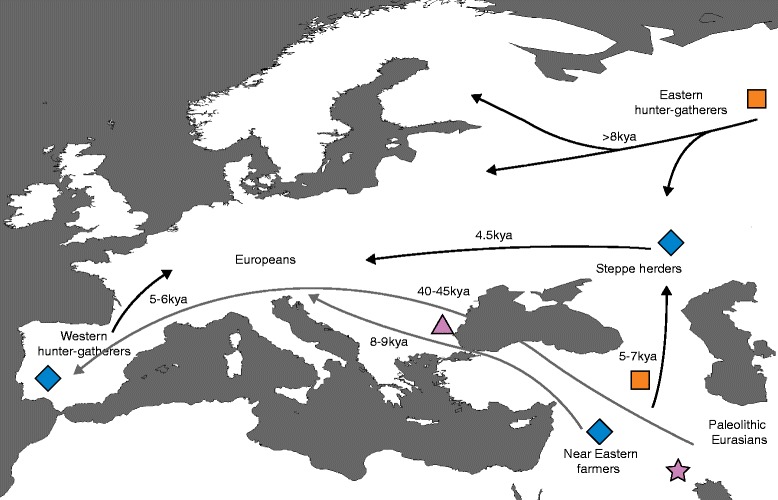
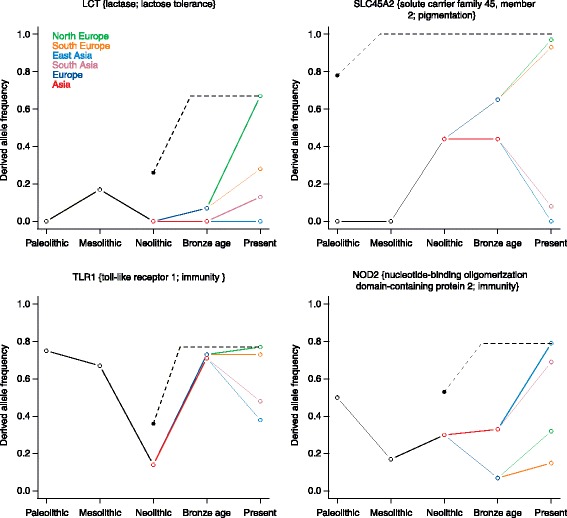
- European population history is more complex than simple demic diffusion: present-day Europeans derive from at least three ancient populations, with a massive migration from the Eurasian Steppe ~4500 ya involving Yamnaya culture people; Y-chromosomal haplogroups shifted from predominantly G2a beforehand to R1a and R1b afterwards. Lactose tolerance was absent in early European farmers, found in only 10% of Bronze Age Europeans, and increased dramatically in just the past 3000 years.
- Native American origins are refined by aDNA: Kennewick Man was genetically closer to modern Native Americans than to any other population; the 24,000-year-old Mal’ta boy linked Upper Paleolithic West Eurasians to Native Americans; Anzick-1 (~12,500 years old) belonged to a meta-population related to many contemporary Native Americans. Native Americans appear to have diverged from Siberian ancestors ~20,000 ya, with another diversification ~13,000 ya in the Americas.
- aDNA is transforming understanding of selection and introgression: the Tibetan EPAS1 advantageous allele is best explained by Denisovan introgression; testes-expressed genes show reduced Neanderthal ancestry, while Neanderthal alleles are enriched in keratin filament genes; adaptive immune variants were already present in Mesolithic hunter-gatherers before agriculture.
Methods
- Narrative review of ancient DNA research and its implications for human population history, not a primary research study.
- Synthesizes published findings from ancient genomes and population-genetic studies, including Neanderthal, Denisovan, European, Native American, and selection examples.
- Main analysis is qualitative and interpretive, discussing how aDNA supports, refines, or overturns models previously inferred from present-day DNA.
Limitations
- The authors state that samples more than 100,000 years old and regions such as the Near East and Africa remain challenging for aDNA research because of time and poor DNA preservation in hot wet climates; sequences below 25 base pairs often do not map uniquely to the human genome, and extraction, library construction, and molecule repair/reconstruction need improvement.
- The paper identifies unresolved questions, including the frequency and number of Neanderthal–modern human mixture events, the source of non-Neanderthal/non-Denisovan archaic admixture, what Denisovans looked like, and the number, timing, and routes of major out-of-Africa expansions.
- As a review, no systematic search strategy or quantitative meta-analysis is described; the synthesis is selective and depends on the cited studies (evident from the text).
Model-written summary. Check it against the paper before relying on it.
Integrity signals
Registry
Cites
Statistics
Figures
Verification
Claims the paper makes
16 Valid · 4 Not valid · 40 Not checked · 23 Own results and interpretations
Every source the paper cites for this claim was checked and supports it.
In the paper
“whereas present-day humans carry, on average, introgressed haplotypes of ~57 kb in length [16].”
§ Ancient DNA and the rewriting of human history: be sparing with Occam’s razor > Origin and expansion of modern humans and admixture with archaic species
What the sources say
- Supportedcites [16] Vernot B Akey JM Resurrecting surviving Neandertal lineages from modern human genomes Science 2014 343 1017 21 10.1126/science.1245938 24476670 source
The Reports section (p. 1) explicitly states that the average length of introgressed haplotypes was approximately 57 kb. The paper identifies these as Neandertal lineages recovered from modern human genomes. (LLM, conf=0.94)
plain- Asserted: passes — The authors put it forward as true.
- Checkable: passes — It can be checked against evidence.
- Load-bearing: unclear — It is unclear whether the paper’s conclusions depend on it.
- Based: passes — The paper gives a reason why it holds.
- Supported
Every source the paper cites for this claim was checked and supports it.
In the paper
“Neanderthal ancestry in all present-day non-Africans is estimated to be 1.5–2.1 % [14].”
§ Ancient DNA and the rewriting of human history: be sparing with Occam’s razor > Origin and expansion of modern humans and admixture with archaic species
What the sources say
- Supportedcites [14] Prufer K Racimo F Patterson N Jay F Sankararaman S Sawyer S The complete genome sequence of a Neanderthal from the Altai Mountains Nature 2014 505 43 9 10.1038/nature12886 24352235 PMC4031459 source
The section “Neandertal gene flow into modern humans” explicitly estimates that 1.5–2.1% of the DNA in people outside Africa is Neandertal-derived. This matches the cited claim. (LLM, conf=0.95)
hedged- Asserted: passes — The authors put it forward as true.
- Checkable: passes — It can be checked against evidence.
- Load-bearing: unclear — It is unclear whether the paper’s conclusions depend on it.
- Based: passes — The paper gives a reason why it holds.
- Supported
Every source the paper cites for this claim was checked and supports it.
In the paper
“Denisovans themselves appear to have received gene flow from other archaic humans.”
§ Ancient DNA and the rewriting of human history: be sparing with Occam’s razor > Origin and expansion of modern humans and admixture with archaic species
What the sources say
- Supportedcites [14] Prufer K Racimo F Patterson N Jay F Sankararaman S Sawyer S The complete genome sequence of a Neanderthal from the Altai Mountains Nature 2014 505 43 9 10.1038/nature12886 24352235 PMC4031459 source
The “Neandertal gene flow into Denisovans” section states that gene flow from Neandertals into Denisovans occurred. The “Unknown archaic gene flow into Denisovan” section also finds gene flow from a deeply diverged hominin consistent with the data, while noting that ancient population structure remains an alternative explanation for that component. (LLM, conf=0.94)
hedgedstates a cause- Asserted: passes — The authors put it forward as true.
- Checkable: passes — It can be checked against evidence.
- Load-bearing: unclear — It is unclear whether the paper’s conclusions depend on it.
- Based: passes — The paper gives a reason why it holds.
- Supported
The cited sources support only part of this claim — read each source’s verdict below.
In the paper
“providing more evidence that archaic admixture occurred in West Asia early during modern humans’ exit from Africa.”
§ Ancient DNA and the rewriting of human history: be sparing with Occam’s razor > Origin and expansion of modern humans and admixture with archaic species
What the sources say
- Partly supportedcites [14] Prufer K Racimo F Patterson N Jay F Sankararaman S Sawyer S The complete genome sequence of a Neanderthal from the Altai Mountains Nature 2014 505 43 9 10.1038/nature12886 24352235 PMC4031459 sourceExperimental — accuracy not yet measured
The Discussion (page not provided) says that allele sharing between Neandertals and non-Africans reflects admixture, and the ‘Neandertal gene flow into modern humans’ section finds their Neandertal-derived DNA closer to a Neandertal from the Caucasus. The copy does not establish that admixture occurred in West Asia or date it to early in modern humans’ exit from Africa; the 77,000–114,000-year estimate is a population split time, not the date of admixture. (LLM, conf=0.82)
hedgedstates a cause- Asserted: passes — The authors put it forward as true.
- Checkable: passes — It can be checked against evidence.
- Load-bearing: passes — The paper’s conclusions depend on it.
- Based: passes — The paper gives a reason why it holds.
- Partly supported
Every source the paper cites for this claim was checked and supports it.
In the paper
“but the Oase genome provides direct evidence that multiple mixture events between modern humans and Neanderthals have occurred.”
§ Ancient DNA and the rewriting of human history: be sparing with Occam’s razor > Origin and expansion of modern humans and admixture with archaic species
What the sources say
- Supportedcites [20] Fu Q Hajdinjak M Moldovan OT Constantin S Mallick S Skoglund P An early modern human from Romania with a recent Neanderthal ancestor Nature 2015 524 216 9 10.1038/nature14558 26098372 PMC4537386 source
The Abstract's concluding paragraph states directly that 'the Oase 1 genome shows that mixture between modern humans and Neanderthals was not limited to the first ancestors of present-day people to leave Africa, nor to the Near East; it occurred later as well and probably in Europe' — i.e. more than one mixture event, with the recent one dated to less than 200 years before Oase 1 lived. The Introduction frames this as direct evidence from a genome of a modern human who could have met Neanderthals ('More direct insight into the interactions between modern and archaic humans...'), against a background where 'where and how often this occurred is not understood'. The Fig. 2/results discussion adds a possible older Neanderthal admixture in Oase 1's ancestors beyond the recent one, reinforcing multiplicity (hedged there, but the Abstract's 'not limited to' claim is stated without hedge). (LLM, conf=0.85)
boostedstates a causeSingle case- Asserted: passes — The authors put it forward as true.
- Checkable: passes — It can be checked against evidence.
- Load-bearing: passes — The paper’s conclusions depend on it.
- Based: passes — The paper gives a reason why it holds.
- Supported
38 more claims · 7 with their cited sources checked
Create a free account to see all 83 claims and to verify the 47 references still open.
- It may state two separate claims as one. 27
- Probably not a substantial claim. 14
Claims other papers make about this one
Each is checked against this paper’s own text: does it say what the citing paper says it does?
The check wasn’t confident either way, so it gives no verdict — never disputed.
In the citing paper
“To address this gap, computational methods for protein function prediction have been developed and significantly advanced over the past 15 years as demonstrated by the recent Critical Assessment of Functional Annotation (CAFA) challenges7,8.”
From Environmental conditions shape the nature of a minimal bacterial genome (2019) · cites this paper as [8]
Experimental — accuracy not yet measured
Citations
Cites
A draft sequence of the Neandertal genome
Green, R. E., Krause, J., Briggs, A. W., Maricic, T., Stenzel, U., Kircher, M., Patterson, N., Li, H., Zhai, W., Fritz, M. H.-Y., et al. (2010) · Science · doi:10.1126/science.1188021 · Cited by 4,318 · cited 2×
“Moreover, the Neanderthal-derived DNA in all non-Africans is more closely related to a Neanderthal from the Caucasus than it is to either the Neanderthal from Siberia or the Neanderthal from Croatia [14], providing more evidence that archaic admixture occurred in West Asia early during modern humans’ exit from Africa.”
BackgroundMitochondrial DNA and human evolution
Cann, R. L., Stoneking, M., & Wilson, A. C. (1987) · Nature · doi:10.1038/325031a0 · Cited by 3,100 · cited 1×
“in Africa around 200,000 years ago (ya) [3], followed by”
BackgroundThe complete genome sequence of a Neanderthal from the Altai Mountains
Prüfer, K., Racimo, F., Patterson, N., Jay, F., Sankararaman, S., Sawyer, S., Heinze, A., Renaud, G., Sudmant, P. H., de Filippo, C., et al. (2014) · Nature · doi:10.1038/nature12886 · Cited by 2,254 · cited 4×
“2 %) of Denisovan ancestry is also found across Eastern Eurasia and in Native American populations [14], but it is unclear whether this originated via gene flow from the same mixture event or through a second one.”
BackgroundInfluentialGenetic history of an archaic hominin group from Denisova Cave in Siberia
Reich, D., Green, R. E., Kircher, M., Krause, J., Patterson, N., Durand, E. Y., Viola, B., Briggs, A. W., Stenzel, U., Johnson, P. L. F., et al. (2010) · Nature · doi:10.1038/nature09710 · Cited by 1,991 · cited 12×
“A more substantial revision of the demic diffusion model was introduced when several 7000–8000-year-old individuals from Western Europe [29] and a 24,000-yearold individual from Siberia [30] were sequenced.”
BackgroundInfluentialMassive migration from the steppe was a source for Indo-European languages in Europe
Haak, W., Lazaridis, I., Patterson, N., Rohland, N., Mallick, S., Llamas, B., Brandt, G., Nordenfelt, S., Harney, E., Stewardson, K., et al. (2015) · Nature · doi:10.1038/nature14317 · Cited by 1,940 · cited 3×
“Controversially, these people were suggested to have also brought Indo-European languages into Europe [31].”
BackgroundOn the genealogy of large populations
Kingmán, J. F. C. (1982) · Journal of Applied Probability · doi:10.1017/s0021900200034446 · Cited by 1,628 · cited 1×
“Kingman in 1982 [49], provided an unprecedented understanding of the genetic relationships among human populations, as well as”
BackgroundSequencing of 50 Human Exomes Reveals Adaptation to High Altitude
Yi, X., Liang, Y., Huerta-Sanchez, E., Jin, X., Cuo, Z. X. P., Pool, J. E., Xu, X., Jiang, H., Vinckenbosch, N., Korneliussen, T. S., et al. (2010) · Science · doi:10.1126/science.1190371 · Cited by 1,611 · cited 1×
“For example, by studying genes that show population-specific allele-frequency differences between Tibetans and Han Chinese, a signal of positive natural selection was detected in EPAS1, a transcription factor involved in the response to hypoxia, which most probably helps the Tibetans to live at high altitudes [40].”
BackgroundPopulation genomics of Bronze Age Eurasia
Allentoft, M. E., Sikora, M., Sjögren, K.-G., Rasmussen, S., Rasmussen, M., Stenderup, J., Damgaard, P. B., Schroeder, H., Ahlström, T., Vinner, L., et al. (2015) · Nature · doi:10.1038/nature14507 · Cited by 1,550 · cited 15×
“In particular, selection on immune genes was believed to have been increased by the spread of diseases after the Neolithic due to dense settlements and proximity to domesticated animals. aDNA from Mesolithic Europeans shows, however, that adaptive variants associated with pathogen resistance in modern populations were…”
BackgroundInfluentialGenome-wide patterns of selection in 230 ancient Eurasians
Mathieson, I., Lazaridis, I., Rohland, N., Mallick, S., Patterson, N., Roodenberg, S. A., Harney, E., Stewardson, K., Fernandes, D., Novak, M., et al. (2015) · Nature · doi:10.1038/nature16152 · Cited by 1,515 · cited 4×
“Even lactose tolerance, assumed to be associated with pastoralism, appears to have been absent in early European farmers, being found in only 10 % of Bronze Age Europeans and increasing dramatically in just the past 3000 years [32, 44] (Fig.”
BackgroundResultInfluentialAncient human genomes suggest three ancestral populations for present-day Europeans
Lazaridis, I., Patterson, N., Mittnik, A., Renaud, G., Mallick, S., Kirsanow, K., Sudmant, P. H., Schraiber, J. G., Castellano, S., Lipson, M., et al. (2014) · Nature · doi:10.1038/nature13673 · Cited by 1,357 · cited 2×
“A more substantial revision of the demic diffusion model was introduced when several 7000–8000-year-old individuals from Western Europe [29] and a 24,000-yearold individual from Siberia [30] were sequenced.”
Background
Cited by
Items 601–700 of 1,019
Archaic admixture in human history
Wall, J. D., & Brandt, D. Y. C. (2016) · Current Opinion in Genetics & Development · doi:10.1016/j.gde.2016.07.002 · Cited by 35
Llopis‐Giménez, Á., González, R. M. D., Millán‐Leiva, A., Catalá, M., Llácer, E., Urbaneja, A., & Herrero, S. (2016) · Journal of Invertebrate Pathology · doi:10.1016/j.jip.2016.11.014 · Cited by 29
Connected Gene Communities Underlie Transcriptional Changes in Cornelia de Lange Syndrome
Boudaoud, I., Fournier, É., Baguette, A., Vallée, M., Lamaze, F. C., Droit, A., & Bilodeau, S. (2017) · Genetics · doi:10.1534/genetics.117.202291 · Cited by 31
Yang, L., Wang, Z., & Hua, J. (2021) · Frontiers in Plant Science · doi:10.3389/fpls.2021.625729 · Cited by 29
Hevroni, G., Vincent, F., Ku, C., Sheyn, U., & Vardi, A. (2023) · Science Advances · doi:10.1126/sciadv.adf7971 · Cited by 28
Lim, B., Kim, S.-C., Kim, H.-J., Kim, J.-H., Seo, Y.-J., Lim, C., Park, Y., Sheet, S., Kim, D., Lim, D., et al. (2025) · Nature Communications · doi:10.1038/s41467-024-54676-2 · Cited by 30
Schmunk, L. J., Call, T. P., McCartney, D. L., Javaid, H., Hastings, W. J., Jovičević, V., Kojadinović, D., Tomkinson, N., Zlamalova, E., McGee, K. C., et al. (2025) · Aging Cell · doi:10.1111/acel.14444 · Cited by 29
Ex Situ Wildlife Conservation in the Age of Population Genomics
Russello, M. A., & Jensen, E. L. (2018) · Population genomics · doi:10.1007/13836_2018_44 · Cited by 32
Applications of Next-Generation Sequencing for Large-Scale Pathogen Diagnoses in Soybean
Díaz-Cruz, G. A., Smith, C. M., Wiebe, K. F., Villanueva, S. M. P., Klonowski, A. R., & Cassone, B. J. (2019) · Plant Disease · doi:10.1094/pdis-05-18-0905-re · Cited by 28
Araujo, N. D. S., & Arias, M. C. (2021) · Scientific Reports · doi:10.1038/s41598-020-75432-8 · Cited by 32
Hardware acceleration of genomics data analysis: challenges and opportunities
Robinson, T., Harkin, J., & Shukla, P. (2021) · Bioinformatics · doi:10.1093/bioinformatics/btab017 · Cited by 37
Non-coding RNAs in cardiac regeneration: Mechanism of action and therapeutic potential
Wang, Y., Chen, J., Cowan, D. B., & Wang, D. (2021) · Seminars in Cell and Developmental Biology · doi:10.1016/j.semcdb.2021.07.007 · Cited by 29
CRISPR-Cas9 sgRNA design and outcome assessment: Bioinformatics tools and aquaculture applications
Luo, M., Wang, J., Dong, Z., Wang, C., & Lu, G. (2021) · Aquaculture and Fisheries · doi:10.1016/j.aaf.2021.10.002 · Cited by 32
A parameter-free deep embedded clustering method for single-cell RNA-seq data
Zeng, Y., Wei, Z., Zhong, F., Pan, Z., Lu, Y., & Yang, Y. (2022) · Briefings in Bioinformatics · doi:10.1093/bib/bbac172 · Cited by 29
Arsenic is a potent co-mutagen of ultraviolet light
Speer, R. M., Nandi, S. P., Cooper, K. L., Zhou, X., Yu, H., Guo, Y., Hudson, L. G., Alexandrov, L. B., & Liu, K. J. (2023) · Communications Biology · doi:10.1038/s42003-023-05659-4 · Cited by 29
Parry, T. L., & Willis, M. S. (2016) · Biochimica et Biophysica Acta (BBA) - Molecular Basis of Disease · doi:10.1016/j.bbadis.2016.07.002 · Cited by 28
Xiao, S., Wang, P., Dong, L., Zhang, Y., Han, Z., Wang, Q., & Wang, Z. (2016) · PeerJ · doi:10.7717/peerj.2664 · Cited by 29
CellFishing.jl: an ultrafast and scalable cell search method for single-cell RNA sequencing
Sato, K., Tsuyuzaki, K., Shimizu, K., & Nikaido, I. (2019) · Genome biology · doi:10.1186/s13059-019-1639-x · Cited by 30
Extending the dynamic range of biomarker quantification through molecular equalization
Newman, S. S., Wilson, B. D., Mamerow, D., Wollant, B. C., Nyein, H. Y. Y., Rosenberg‐Hasson, Y., Maecker, H. T., Eisenstein, M. S., & Soh, H. T. (2023) · Nature Communications · doi:10.1038/s41467-023-39772-z · Cited by 30
Srinivasan, K., Virdee, S. K., & McArthur, A. G. (2020) · Briefings in Functional Genomics · doi:10.1093/bfgp/elaa010 · Cited by 28
Tuerk, A., Wiktorin, G., & Güler, S. (2017) · PLoS Computational Biology · doi:10.1371/journal.pcbi.1005515 · Cited by 30
Middelkamp, S., Vlaar, J. M., Giltay, J. C., Korzelius, J., Besselink, N. J. M., Boymans, S., Janssen, R., de la Fonteijne, L., van Binsbergen, E., van Roosmalen, M. J., et al. (2019) · Genome Medicine · doi:10.1186/s13073-019-0692-0 · Cited by 27
Data Without Software Are Just Numbers
Davenport, J. H., Grant, J., & Jones, C. M. (2020) · Data Science Journal · doi:10.5334/dsj-2020-003 · Cited by 30
Childhood DNA methylation as a marker of early life rapid weight gain and subsequent overweight
Robinson, N., Brown, H., Antoun, E., Godfrey, K. M., Hanson, M. A., Lillycrop, K. A., Crozier, S., Murray, R. J. S., Pearce, M. S., Relton, C. L., et al. (2021) · Clinical Epigenetics · doi:10.1186/s13148-020-00952-z · Cited by 31
Coexistence holes characterize the assembly and disassembly of multispecies systems
Angulo, M. T., Kelley, A., Montejano, L., Song, C., & Saavedra, S. (2021) · Nature Ecology & Evolution · doi:10.1038/s41559-021-01462-8 · Cited by 29
Meta-analysis of epigenome-wide association studies of carotid intima-media thickness
Portilla-Fernández, E., Hwang, S., Wilson, R., Maddock, J., Hill, W. D., Teumer, A., Mishra, P. P., Brody, J. A., Joehanes, R., Ligthart, S., et al. (2021) · European Journal of Epidemiology · doi:10.1007/s10654-021-00759-z · Cited by 30
Wu, X., Zhang, H., Zhang, B., Zhang, Y., Wang, Q., Shen, W., Wu, X., Li, L., Xia, W., Nakamura, R., et al. (2021) · Science Advances · doi:10.1126/sciadv.abl3858 · Cited by 28
Thorstensen, M. J., Turko, A. J., Heath, D. D., Jeffries, K. M., & Pitcher, T. E. (2022) · Journal of Experimental Biology · doi:10.1242/jeb.244162 · Cited by 28
Multivalent binding proteins can drive collapse and reswelling of chromatin in confinement
Guha, S., & Mitra, M. K. (2023) · Soft Matter · doi:10.1039/d2sm00612j · Cited by 27
distinct: A novel approach to differential distribution analyses
Tiberi, S., Crowell, H. L., Samartsidis, P., Weber, L. M., & Robinson, M. D. (2023) · The Annals of Applied Statistics · doi:10.1214/22-aoas1689 · Cited by 29
Rong, S., Neil, C. R., Welch, A., Duan, C., Maguire, S., Meremikwu, I. C., Meyerson, M., Evans, B. J., & Fairbrother, W. G. (2023) · Proceedings of the National Academy of Sciences · doi:10.1073/pnas.2218308120 · Cited by 27
Hubers, N., Hagenbeek, F. A., Pool, R., Dejean, S., Harms, A. C., Roetman, P. J., van Beijsterveldt, C. E. M., Fanos, V., Ehli, E. A., Vermeiren, R. R. J. M., et al. (2023) · American Journal of Medical Genetics Part B Neuropsychiatric Genetics · doi:10.1002/ajmg.b.32955 · Cited by 29
Saldana-Guerrero, I. M., Montano-Gutierrez, L. F., Boswell, K., Hafemeister, C., Poon, E., Shaw, L. E., Stavish, D., Lea, R. A., Wernig-Zorc, S., Bozsaky, E., et al. (2024) · Nature Communications · doi:10.1038/s41467-024-47945-7 · Cited by 27
β-lactamase expression induces collateral sensitivity in Escherichia coli
Herencias, C., Álvaro-Llorente, L., Ramiro-Martínez, P., Fernández-Calvet, A., Muñoz‐Cazalla, A., DelaFuente, J., Graf, F. E., Jaraba-Soto, L., Castillo-Polo, J. A., Cantón, R., et al. (2024) · Nature Communications · doi:10.1038/s41467-024-49122-2 · Cited by 28
Single-cell multi-omics sequencing: application trends, COVID-19, data analysis issues and prospects
Huo, L., Li, J. J., Chen, L., Yu, Z., Hutvágner, G., & Li, J. (2021) · Briefings in Bioinformatics · doi:10.1093/bib/bbab229 · Cited by 30
Gene regulatory network inference from single-cell data using multivariate information measuresPreprint
Chan, T. E., Stumpf, M. P. H., & Babtie, A. C. (2016) · bioRxiv (Cold Spring Harbor Laboratory) · doi:10.1101/082099 · Cited by 28
Jeon, S., Choi, H., Jeon, Y., Choi, W.-H., Choi, H., An, K., Ryu, H., Bhak, J., Lee, H., Kwon, Y., et al. (2024) · GigaScience · doi:10.1093/gigascience/giae014 · Cited by 28
Płatek, T., Polus, A., Góralska, J., Raźny, U., Gruca, A., Kieć‐Wilk, B., Zabielski, P., Kapusta, M., Słowińska-Solnica, K., Solnica, B., et al. (2020) · Molecular Medicine · doi:10.1186/s10020-020-00220-z · Cited by 29
Epigenome-wide study of brain DNA methylation following acute opioid intoxication
Shu, C., Sosnowski, D. W., Tao, R., Deep‐Soboslay, A., Kleinman, J. E., Hyde, T. M., Jaffe, A. E., Sabunciyan, S., & Maher, B. S. (2021) · Drug and Alcohol Dependence · doi:10.1016/j.drugalcdep.2021.108658 · Cited by 27
DNA methylation architecture of the ACE2 gene in nasal cells of children
Cárdenas, A., Rifas‐Shiman, S. L., Sordillo, J. E., DeMeo, D. L., Baccarelli, A., Hivert, M., Gold, D. R., & Oken, E. (2021) · Scientific Reports · doi:10.1038/s41598-021-86494-7 · Cited by 27
Rapid Acquisition of High-Quality SARS-CoV-2 Genome via Amplicon-Oxford Nanopore Sequencing
Yan, Y., Wu, K., Chen, J., Liu, H., Huang, Y. P., Zhang, Y., Xiong, J., Quan, W., Wu, X., Liang, Y., et al. (2021) · Virologica Sinica · doi:10.1007/s12250-021-00378-8 · Cited by 28
Huo, J., Wu, L., & Zang, Y. (2021) · Frontiers in Oncology · doi:10.3389/fonc.2021.635324 · Cited by 28
Long non-coding RNAs and their involvement in bipolar disorders
Bella, F., & Campo, S. (2021) · Gene · doi:10.1016/j.gene.2021.145803 · Cited by 27
doubletD: detecting doublets in single-cell DNA sequencing data
Weber, L. L., Sashittal, P., & El-Kebir, M. (2021) · Bioinformatics · doi:10.1093/bioinformatics/btab266 · Cited by 30
Wöhner, T., Emeriewen, O. F., Wittenberg, A. H. J., Schneiders, H., Vrijenhoek, I., Halász, J., Hrotkó, K., Hoff, K. J., Gabriel, L., Lempe, J., et al. (2021) · Genomics · doi:10.1016/j.ygeno.2021.11.002 · Cited by 29
A gastruloid model of the interaction between embryonic and extra-embryonic cell types
Bérenger-Currias, N. M. L. P., Mircea, M., Adegeest, E., van den Berg, P. R., Feliksik, M., Hochane, M., Idema, T., Tans, S. J., & Semrau, S. (2022) · Journal of Tissue Engineering · doi:10.1177/20417314221103042 · Cited by 28
MinION Whole-Genome Sequencing in Resource-Limited Settings: Challenges and Opportunities
Wasswa, F. B., Kassaza, K., Nielsen, K., & Bazira, J. (2022) · Current Clinical Microbiology Reports · doi:10.1007/s40588-022-00183-1 · Cited by 29
Pan-cancer clinical impact of latent drivers from double mutations
Yavuz, B. R., Tsai, C., Nussinov, R., & Tunçbağ, N. (2023) · Communications Biology · doi:10.1038/s42003-023-04519-5 · Cited by 28
Lopes, E. C., Sawant, A., Moore, D. F., Ke, H., Shi, F., Laddha, S. V., Chen, Y., Sharma, A., Naumann, J., Guo, J. Y., et al. (2023) · Clinical and Translational Medicine · doi:10.1002/ctm2.1298 · Cited by 26
Toward the introgression of PvPdh1 for increased resistance to pod shattering in common bean
Parker, T. A., de Sousa, L. L., Floriani, T. D. O., Palkovic, A., & Gepts, P. (2020) · Theoretical and Applied Genetics · doi:10.1007/s00122-020-03698-7 · Cited by 26
Performance Evaluation of ANOVA and RFE Algorithms for Classifying Microarray Dataset Using SVM
Abdulsalam, S. O., Mohammed, A. A., Ajao, J. F., Babatunde, R. S., Ogundokun, R. O., Nnodim, C. T., & Arowolo, M. O. (2020) · Lecture notes in business information processing · doi:10.1007/978-3-030-63396-7_32 · Cited by 31
Gall, C. M. L., van der Schoot, J. M. S., Ramos‐Tomillero, I., Khalily, M. P., van Dalen, F. J., Wijfjes, Z., Smeding, L. Y., van Dalen, D., Cammarata, A., Bonger, K. M., et al. (2021) · Bioconjugate Chemistry · doi:10.1021/acs.bioconjchem.0c00673 · Cited by 27
Mitochondrial state determines functionally divergent stem cell population in planaria
Haroon, M. M., Lakshmanan, V., Sarkar, S. R., Lei, K., Vemula, P. K., & Palakodeti, D. (2021) · Stem Cell Reports · doi:10.1016/j.stemcr.2021.03.022 · Cited by 28
Yoo, H., Shrivastava, S., Lynch, J. H., Huang, X., Widhalm, J. R., Guo, L., Carter, B. C., Qian, Y., Maeda, H. A., Ogas, J., et al. (2021) · The Plant Journal · doi:10.1111/tpj.15467 · Cited by 27
Shell, W. A., & Rehan, S. M. (2017) · Apidologie · doi:10.1007/s13592-017-0544-0 · Cited by 26
Alloza, I., Goikuria, H., Idro, J. L., Triviño, J. C., Fernández Velasco, J. M., Elizagaray, E., García-Barcina, M., Montoya-Murillo, G., Sarasola, E., Vega Manrique, R., et al. (2017) · Scientific Reports · doi:10.1038/s41598-017-03687-9 · Cited by 25
A general model-based causal inference method overcomes the curse of synchrony and indirect effect
Park, S. H., Ha, S., & Kim, J. K. (2023) · Nature Communications · doi:10.1038/s41467-023-39983-4 · Cited by 27
Holtgrefe, N., Huber, K. T., van Iersel, L. J. J., Jones, M., Martin, S., & Moulton, V. (2025) · Molecular Biology and Evolution · doi:10.1093/molbev/msaf067 · Cited by 26
Chopyk, J., Nasko, D. J., Allard, S. M., Callahan, M. T., Bui, A. Q., Ferelli, A. M. C., Chattopadhyay, S., Mongodin, E. F., Pop, M., Micallef, S. A., et al. (2019) · The Science of The Total Environment · doi:10.1016/j.scitotenv.2019.135395 · Cited by 26
Mata‐Sucre, Y., Sader, M., Van-Lume, B., Gagnon, E., Pedrosa‐Harand, A., Leitch, I. J., Lewis, G. P., & Souza, G. (2020) · Planta · doi:10.1007/s00425-020-03453-8 · Cited by 25
Characterising Foot-and-Mouth Disease Virus in Clinical Samples Using Nanopore Sequencing
Brown, E., Freimanis, G., Shaw, A. E., Horton, D. L., Gubbins, S., & King, D. G. (2021) · Frontiers in Veterinary Science · doi:10.3389/fvets.2021.656256 · Cited by 29
Sandoval-Powers, M., Králová, S., Nguyen, G., Fawwal, D. V., Degnes, K. F., Lewin, A. S., Klinkenberg, G., Wentzel, A., & Liles, M. R. (2021) · Systematic and Applied Microbiology · doi:10.1016/j.syapm.2021.126244 · Cited by 27
CMash: fast, multi-resolution estimation of k-mer-based Jaccard and containment indices
Liu, S., & Koslicki, D. (2022) · Bioinformatics · doi:10.1093/bioinformatics/btac237 · Cited by 25
Gut microbiota composition in colorectal cancer patients is genetically regulated
Colombo, F., Illescas, O., Noci, S., Minnai, F., Pintarelli, G., Pettinicchio, A., Vannelli, A., Sorrentino, L., Battaglia, L., Cosimelli, M., et al. (2022) · Scientific Reports · doi:10.1038/s41598-022-15230-6 · Cited by 25
Daware, A., Malik, A., Srivastava, R., Das, D., Ellur, R. K., SINGH, A. K., Tyagi, A. K., & Parida, S. K. (2022) · The Plant Journal · doi:10.1111/tpj.16028 · Cited by 27
Lall, A., & Tallur, S. G. (2023) · Scientific Reports · doi:10.1038/s41598-023-29277-6 · Cited by 26
Su, J., Yuan, J., Xu, L., Xing, S., Sun, M., Yao, Y., Ma, Y., Chen, F., Jiang, L., Li, K., et al. (2023) · Cell Reports · doi:10.1016/j.celrep.2023.112510 · Cited by 26
Self-citationPathway centric analysis for single-cell RNA-seq and spatial transcriptomics data with GSDensity
Liang, Q., Huang, Y., He, S., & Chen, K. (2023) · Nature Communications · doi:10.1038/s41467-023-44206-x · Cited by 28
Miki, M., Oono, T., Fujimori, N., Takaoka, T., Kawabe, K., Miyasaka, Y., Ohtsuka, T., Saito, D., Nakamura, M., Ohkawa, Y., et al. (2019) · Cancer Medicine · doi:10.1002/cam4.2232 · Cited by 28
Lu, L., Loker, E. S., Adema, C. M., Zhang, S.-M., & Bu, L. (2020) · PLoS neglected tropical diseases · doi:10.1371/journal.pntd.0008780 · Cited by 29
Data integration for prediction of weight loss in randomized controlled dietary trials
Nielsen, R. L., Helenius, M., García, S. L., Roager, H. M., Aytan-Aktug, D., Hansen, L. B. S., Lind, M. V., Vogt, J. K., Dalgaard, M., Bahl, M. I., et al. (2020) · Scientific Reports · doi:10.1038/s41598-020-76097-z · Cited by 27
Interspecies chimeric conditions affect the developmental rate of human pluripotent stem cells
Brown, J., Barry, C., Schmitz, M. T., Argus, C., Bolin, J. M., Schwartz, M. P., Aartsen, A. V., Steill, J., Swanson, S. A., Stewart, R. M., et al. (2021) · PLoS Computational Biology · doi:10.1371/journal.pcbi.1008778 · Cited by 28
Knowledge bases and software support for variant interpretation in precision oncology
Borchert, F., Möck, A., Tomczak, A., Hügel, J., Alkarkoukly, S., Knurr, A., Volckmar, A., Stenzinger, A., Schirmacher, P., Debus, J., et al. (2021) · Briefings in Bioinformatics · doi:10.1093/bib/bbab134 · Cited by 30
Genomic selection for crop improvement in fruits and vegetables: a systematic scoping review
Lee, A. M. J., Foong, M. Y. M., Song, B. K., & Chew, F. T. (2024) · Molecular Breeding · doi:10.1007/s11032-024-01497-2 · Cited by 30
Draft genome of Santalum album L. provides genomic resources for accelerated trait improvement
Dasgupta, M. G., Ulaganathan, K., Dev, S. A., & Balakrishnan, S. (2019) · Tree Genetics & Genomes · doi:10.1007/s11295-019-1334-9 · Cited by 25
Intertwined evolution of plant epigenomes and genomes
Ritter, E. J., & Niederhuth, C. E. (2021) · Current Opinion in Plant Biology · doi:10.1016/j.pbi.2020.101990 · Cited by 24
Rondoni, G., Roman, A., Meslin, C., Montagné, N., Conti, E., & Jacquin‐Joly, E. (2021) · Insects · doi:10.3390/insects12030209 · Cited by 24
Su, C., Pahl, M. C., Grant, S. F. A., & Wells, A. D. (2021) · Human Genetics · doi:10.1007/s00439-021-02326-8 · Cited by 24
Xie, P., An, R. F., Yu, S., He, J., & Zhang, H. (2021) · Journal of Translational Medicine · doi:10.1186/s12967-021-03076-x · Cited by 28
Positive Selection and Horizontal Gene Transfer in the Genome of a Male-Killing Wolbachia
Hill, T., Unckless, R. L., & Perlmutter, J. I. (2021) · Molecular Biology and Evolution · doi:10.1093/molbev/msab303 · Cited by 25
Ruang‐areerate, P., Kongkachana, W., Naktang, C., Sonthirod, C., Narong, N., Jomchai, N., Maprasop, P., Maknual, C., Phormsin, N., Shearman, J. R., et al. (2021) · PeerJ · doi:10.7717/peerj.12268 · Cited by 26
T cell subtype profiling measures exhaustion and predicts anti-PD-1 response
Schillebeeckx, I., Earls, J., Flanagan, K. C., Hiken, J., Bode, A., Armstrong, J. R., Messina, D. N., Adkins, D. R., Ley, J. C., Alborelli, I., et al. (2022) · Scientific Reports · doi:10.1038/s41598-022-05474-7 · Cited by 25
Transcriptome diversity is a systematic source of variation in RNA-sequencing data
García-Nieto, P. E., Wang, B., & Fraser, H. B. (2022) · PLoS Computational Biology · doi:10.1371/journal.pcbi.1009939 · Cited by 27
Systematic evaluation of cell-type deconvolution pipelines for sequencing-based bulk DNA methylomes
Jeong, Y., Sousa, L. B. D. A. E., Thalmeier, D., Tóth, R., Ganslmeier, M., Breuer, K., Plass, C., & Lutsik, P. (2022) · Briefings in Bioinformatics · doi:10.1093/bib/bbac248 · Cited by 28
Comparative genomics of Staphylococcus capitis reveals species determinants
Chong, C. E., Bengtsson, R. J., & Horsburgh, M. J. (2022) · Frontiers in Microbiology · doi:10.3389/fmicb.2022.1005949 · Cited by 25
Moen, M. T., & Johnston, I. G. (2022) · Bioinformatics · doi:10.1093/bioinformatics/btac803 · Cited by 27
Batjargal, T., Zappa, F., Grant, R. J., Piscopio, R. A., Chialastri, A., Dey, S. S., Acosta‐Alvear, D., & Wilson, M. Z. (2023) · Cell Systems · doi:10.1016/j.cels.2023.06.001 · Cited by 25
Qiu, Z. G., Zhu, Y., Zhang, Q., Qiao, X., Mu, R., Xu, Z., Yan, Y., Wang, F., Zhang, T., Zhuang, W., et al. (2023) · Environmental Science and Ecotechnology · doi:10.1016/j.ese.2023.100359 · Cited by 24
Pena, M. M., Bhandari, R., Bowers, R. M., Weis, K., Newberry, E. A., Wagner, N., Pupko, T., Jones, J. B., Woyke, T., Vinatzer, B. A., et al. (2024) · Genome Biology and Evolution · doi:10.1093/gbe/evae074 · Cited by 25
Larsson, M. N. A., Miranda, P. M., Pan, L., Vural, K. B., Kaptan, D., Soares, A. E. R., Kivikero, H., Kantanen, J., Somel, M., Özer, F., et al. (2024) · Genome Biology and Evolution · doi:10.1093/gbe/evae114 · Cited by 29
Saux, O. L., Ardin, M., Berthet, J., Ghamry-Barrin, S., Bourhis, M., Cinier, J., Lounici, Y., Treilleux, I., Just, P., Bataillon, G., et al. (2024) · Nature Communications · doi:10.1038/s41467-024-47000-5 · Cited by 24
Morphological Evolution Repeatedly Caused by Mutations in Signaling Ligand Genes
Martin, A., & Courtier‐Orgogozo, V. (2017) · Springer eBooks · doi:10.1007/978-981-10-4956-9_4 · Cited by 27
Cytonuclear Variation of Rubisco in Synthesized Rice Hybrids and Allotetraploids
Wang, X., Dong, Q., Li, X., Yuliang, A., Yu, Y., Li, N., Liu, B., & Gong, L. (2017) · The Plant Genome · doi:10.3835/plantgenome2017.05.0041 · Cited by 24
Acosta, J. J., Fahrenkrog, A. M., Neves, L. G., Resende, M. F. R., Dervinis, C., Davis, J. M., Holliday, J. A., & Kirst, M. (2019) · Genome Biology and Evolution · doi:10.1093/gbe/evz016 · Cited by 24
Alonso, A., Lasseigne, B. N., Williams, K., Nielsen, J., Ramaker, R. C., Hardigan, A. A., Johnston, B. E., Roberts, B. S., Cooper, S. J., Marsal, S., et al. (2017) · Bioinformatics · doi:10.1093/bioinformatics/btx023 · Cited by 24
NITUMID: Nonnegative matrix factorization-based Immune-TUmor MIcroenvironment Deconvolution
Tang, D., Park, S., & Zhao, H. (2019) · Bioinformatics · doi:10.1093/bioinformatics/btz748 · Cited by 26
Suárez‐Esquivel, M., Hernández-Mora, G., Ruiz‐Villalobos, N., Calvo, E. B., Chacón‐Díaz, C., Ladner, J. T., Oviedo-Sánchez, G., Foster, J. T., Rojas‐Campos, N., Chaves‐Olarte, E., et al. (2020) · PLoS neglected tropical diseases · doi:10.1371/journal.pntd.0008235 · Cited by 31
The Role of RNA-Sequencing as a New Genetic Diagnosis Tool
Curry, P. D. K., Broda, K. L., & Carroll, C. J. (2021) · Current Genetic Medicine Reports · doi:10.1007/s40142-021-00199-x · Cited by 24
Recombination and selection against introgressed DNAPreprint
Veller, C., Edelman, N. B., Muralidhar, P., & Nowak, M. A. (2019) · bioRxiv (Cold Spring Harbor Laboratory) · doi:10.1101/846147 · Cited by 29
Transcription Factor Dynamics in Cross-Regulation of Plant Hormone Signaling PathwaysPreprint
Yin, L., Zander, M., Huang, S. C., Xie, M., Song, L., Guzmán, J. P. S., Hann, E. C., Shanbhag, B. K., Ng, S., Jain, S., et al. (2023) · bioRxiv (Cold Spring Harbor Laboratory) · doi:10.1101/2023.03.07.531630 · Cited by 27
Metadata
- Authors
- Haber, M., Mezzavilla, M., Xue, Y., & Tyler-Smith, C.
- Affiliations
- Wellcome Sanger Institute (GB)
- University of Trieste (IT)
- Venue
- Genome Biology
- Published
- 2016-01-11
- Volume
- 17
- Issue
- 1
- Pages
- 1-1
- ISSN
- 1465-6906 (ISSN-L)
- 1474-760X
- PMC
- PMC4707776
- OpenAlex
- W2233603983
- Semantic Scholar
- c387b4a2b9f15441325a0d52ddc1d3fa20513dd8
- Cited by
- 1,924
- References
- 50
- Citations by year
- 2026: 86 · 2025: 226 · 2024: 204 · 2023: 226 · 2022: 197 · 2021: 404 · 2020: 175 · 2019: 133 · 2018: 92 · 2017: 122 · 2016: 57
- FWCI
- 18.02
- Type
- journal article
- Language
- en
- Open access
- gold
- doi.org
- Licence
- cc-by
- creativecommons.org/licenses/by/4.0/ (tdm)
- Locations
- Genome biology (publishedVersion, cc-by)
- Europe PMC (PubMed Central) (publishedVersion, cc-by)
- PubMed Central (publishedVersion, cc-by)
- PubMed (publishedVersion)
- University of Birmingham Research Portal (University of Birmingham) (submittedVersion)
- Padua Research Archive (University of Padova) (submittedVersion, cc-by)
- Funders
- Wellcome Trust (098051)
- Topics
- Life Sciences › Biochemistry, Genetics and Molecular Biology › Genetics › Forensic and Genetic Research
- Social Sciences › Anthropology › Pleistocene-Era Hominins and Archaeology
- Life Sciences › Biochemistry, Genetics and Molecular Biology › Genetics › Genetic diversity and population structure
- Keywords
- ancient DNA, human migration, human history, population genetics, history of human evolution
- MeSH terms
- DNA, Humans, Selection, Genetic, History, Ancient, Human Migration
About these checks
Registry, retraction, Cites and statistics results are computed, not judged, with one exception: a printed reference that no index lists is read once by a model before it counts as a citation error. Claims are extracted by a model and kept only when their quote appears verbatim in the text; each cited source is then checked, with a model’s help, for whether it says what the claim relies on. Those verdicts can be wrong — read the claim’s quote and the cited source before relying on one.
The claim verdicts this report counts are experimental: their accuracy is not yet measured.
A language model drew the claims from the paper on 2026-10-05, under version 3 of the claim definition (model deepseek-v4.1-flash, prompt extract-v3).
A second model labelled each claim on 2026-10-05 (model jev-1.13-20260917, definition revision gold-guideline-v0.2).
Cited sources are checked with a language model’s help (gpt-6-sol and qwen3.8-omni-flash).
Statistics and arithmetic are recomputed, not judged.
Confidence bands are shown only for fields calibrated on our annotated test set. None is calibrated yet, so no band is shown.
What counts as a claim ›How we measure confidence ›How we check this ›
Are you an author, or do you see a problem with this page? Request a review
Data sources
Bibliographic data: Semantic Scholar, OpenAlex, Crossref.
Contains information from the Semantic Scholar Academic Graph Datasets, made available under the ODC Attribution License (ODC-BY 1.0).
Semantic Scholar’s data is described in: Kinney, R., et al. (2023). The Semantic Scholar Open Data Platform. arXiv:2301.10140.
