

Ancient DNA and the rewriting of human history: be sparing with Occam’s razor
Open accessThe DOI matches its Crossref record; 48 of the 50 references it cites were found in a registry or an index, and 1 are not checked yet; 17 of the 64 sources its claims cite were checked for support.
Abstract
Ancient DNA research is revealing a human history far more complex than that inferred from parsimonious models based on modern DNA. Here, we review some of the key events in the peopling of the world in the light of the findings of work on ancient DNA.
Verified 2026-10-05 · 1 reference not checked yet
Overview
CoChat Summary
TL;DR
This review argues that ancient DNA is revealing a human history far more complex than parsimonious models based on modern DNA alone, using examples from archaic admixture, the peopling of Europe and the Americas, and recent selection. It concludes that human evolutionary genetics is moving toward first looking for aDNA evidence and interpreting present-day variation in its light, while noting major preservation and methodological limits.
Key findings
- aDNA supports a “leaky replacement” model: Neanderthal ancestry is estimated at 1.5–2.1% in all present-day non-Africans, with gene flow likely around 47,000–65,000 ya; Ust’-Ishim suggests 50,000–60,000 ya, and the Oase individual had 6–9% Neanderthal-derived alleles. Denisovan ancestry is 4–6% in New Guineans, Aboriginal Australians and Bougainville Islanders, with ~0.2% across Eastern Eurasia and Native American populations.
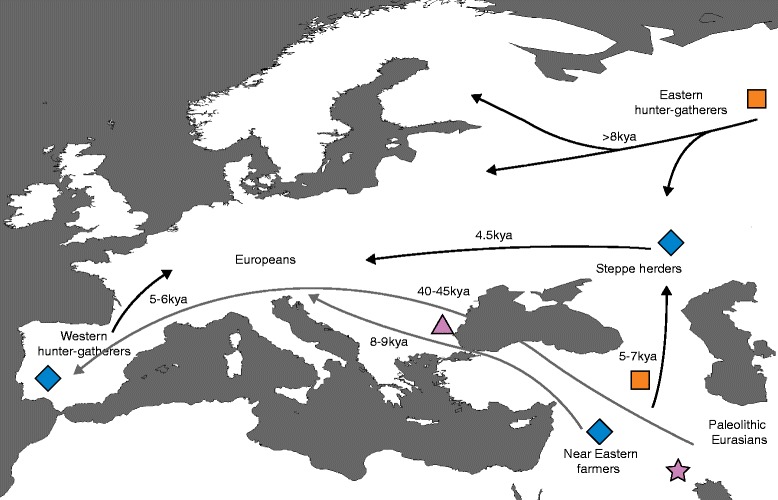
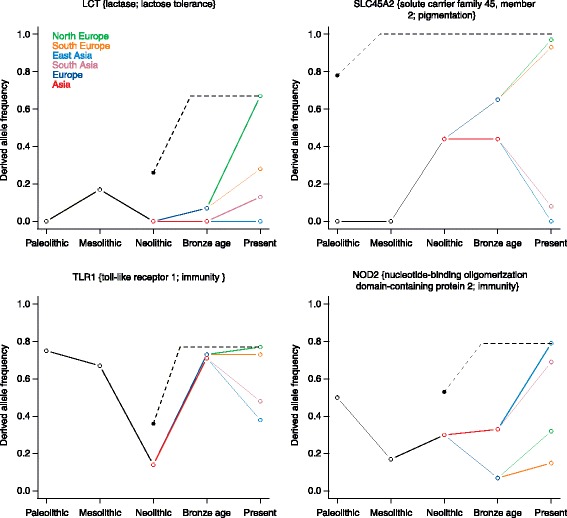
- European population history is more complex than simple demic diffusion: present-day Europeans derive from at least three ancient populations, with a massive migration from the Eurasian Steppe ~4500 ya involving Yamnaya culture people; Y-chromosomal haplogroups shifted from predominantly G2a beforehand to R1a and R1b afterwards. Lactose tolerance was absent in early European farmers, found in only 10% of Bronze Age Europeans, and increased dramatically in just the past 3000 years.
- Native American origins are refined by aDNA: Kennewick Man was genetically closer to modern Native Americans than to any other population; the 24,000-year-old Mal’ta boy linked Upper Paleolithic West Eurasians to Native Americans; Anzick-1 (~12,500 years old) belonged to a meta-population related to many contemporary Native Americans. Native Americans appear to have diverged from Siberian ancestors ~20,000 ya, with another diversification ~13,000 ya in the Americas.
- aDNA is transforming understanding of selection and introgression: the Tibetan EPAS1 advantageous allele is best explained by Denisovan introgression; testes-expressed genes show reduced Neanderthal ancestry, while Neanderthal alleles are enriched in keratin filament genes; adaptive immune variants were already present in Mesolithic hunter-gatherers before agriculture.
Methods
- Narrative review of ancient DNA research and its implications for human population history, not a primary research study.
- Synthesizes published findings from ancient genomes and population-genetic studies, including Neanderthal, Denisovan, European, Native American, and selection examples.
- Main analysis is qualitative and interpretive, discussing how aDNA supports, refines, or overturns models previously inferred from present-day DNA.
Limitations
- The authors state that samples more than 100,000 years old and regions such as the Near East and Africa remain challenging for aDNA research because of time and poor DNA preservation in hot wet climates; sequences below 25 base pairs often do not map uniquely to the human genome, and extraction, library construction, and molecule repair/reconstruction need improvement.
- The paper identifies unresolved questions, including the frequency and number of Neanderthal–modern human mixture events, the source of non-Neanderthal/non-Denisovan archaic admixture, what Denisovans looked like, and the number, timing, and routes of major out-of-Africa expansions.
- As a review, no systematic search strategy or quantitative meta-analysis is described; the synthesis is selective and depends on the cited studies (evident from the text).
Model-written summary. Check it against the paper before relying on it.
Integrity signals
Registry
Cites
Statistics
Figures
Verification
Claims the paper makes
16 Valid · 4 Not valid · 40 Not checked · 23 Own results and interpretations
Every source the paper cites for this claim was checked and supports it.
In the paper
“whereas present-day humans carry, on average, introgressed haplotypes of ~57 kb in length [16].”
§ Ancient DNA and the rewriting of human history: be sparing with Occam’s razor > Origin and expansion of modern humans and admixture with archaic species
What the sources say
- Supportedcites [16] Vernot B Akey JM Resurrecting surviving Neandertal lineages from modern human genomes Science 2014 343 1017 21 10.1126/science.1245938 24476670 source
The Reports section (p. 1) explicitly states that the average length of introgressed haplotypes was approximately 57 kb. The paper identifies these as Neandertal lineages recovered from modern human genomes. (LLM, conf=0.94)
plain- Asserted: passes — The authors put it forward as true.
- Checkable: passes — It can be checked against evidence.
- Load-bearing: unclear — It is unclear whether the paper’s conclusions depend on it.
- Based: passes — The paper gives a reason why it holds.
- Supported
Every source the paper cites for this claim was checked and supports it.
In the paper
“Neanderthal ancestry in all present-day non-Africans is estimated to be 1.5–2.1 % [14].”
§ Ancient DNA and the rewriting of human history: be sparing with Occam’s razor > Origin and expansion of modern humans and admixture with archaic species
What the sources say
- Supportedcites [14] Prufer K Racimo F Patterson N Jay F Sankararaman S Sawyer S The complete genome sequence of a Neanderthal from the Altai Mountains Nature 2014 505 43 9 10.1038/nature12886 24352235 PMC4031459 source
The section “Neandertal gene flow into modern humans” explicitly estimates that 1.5–2.1% of the DNA in people outside Africa is Neandertal-derived. This matches the cited claim. (LLM, conf=0.95)
hedged- Asserted: passes — The authors put it forward as true.
- Checkable: passes — It can be checked against evidence.
- Load-bearing: unclear — It is unclear whether the paper’s conclusions depend on it.
- Based: passes — The paper gives a reason why it holds.
- Supported
Every source the paper cites for this claim was checked and supports it.
In the paper
“Denisovans themselves appear to have received gene flow from other archaic humans.”
§ Ancient DNA and the rewriting of human history: be sparing with Occam’s razor > Origin and expansion of modern humans and admixture with archaic species
What the sources say
- Supportedcites [14] Prufer K Racimo F Patterson N Jay F Sankararaman S Sawyer S The complete genome sequence of a Neanderthal from the Altai Mountains Nature 2014 505 43 9 10.1038/nature12886 24352235 PMC4031459 source
The “Neandertal gene flow into Denisovans” section states that gene flow from Neandertals into Denisovans occurred. The “Unknown archaic gene flow into Denisovan” section also finds gene flow from a deeply diverged hominin consistent with the data, while noting that ancient population structure remains an alternative explanation for that component. (LLM, conf=0.94)
hedgedstates a cause- Asserted: passes — The authors put it forward as true.
- Checkable: passes — It can be checked against evidence.
- Load-bearing: unclear — It is unclear whether the paper’s conclusions depend on it.
- Based: passes — The paper gives a reason why it holds.
- Supported
The cited sources support only part of this claim — read each source’s verdict below.
In the paper
“providing more evidence that archaic admixture occurred in West Asia early during modern humans’ exit from Africa.”
§ Ancient DNA and the rewriting of human history: be sparing with Occam’s razor > Origin and expansion of modern humans and admixture with archaic species
What the sources say
- Partly supportedcites [14] Prufer K Racimo F Patterson N Jay F Sankararaman S Sawyer S The complete genome sequence of a Neanderthal from the Altai Mountains Nature 2014 505 43 9 10.1038/nature12886 24352235 PMC4031459 sourceExperimental — accuracy not yet measured
The Discussion (page not provided) says that allele sharing between Neandertals and non-Africans reflects admixture, and the ‘Neandertal gene flow into modern humans’ section finds their Neandertal-derived DNA closer to a Neandertal from the Caucasus. The copy does not establish that admixture occurred in West Asia or date it to early in modern humans’ exit from Africa; the 77,000–114,000-year estimate is a population split time, not the date of admixture. (LLM, conf=0.82)
hedgedstates a cause- Asserted: passes — The authors put it forward as true.
- Checkable: passes — It can be checked against evidence.
- Load-bearing: passes — The paper’s conclusions depend on it.
- Based: passes — The paper gives a reason why it holds.
- Partly supported
Every source the paper cites for this claim was checked and supports it.
In the paper
“but the Oase genome provides direct evidence that multiple mixture events between modern humans and Neanderthals have occurred.”
§ Ancient DNA and the rewriting of human history: be sparing with Occam’s razor > Origin and expansion of modern humans and admixture with archaic species
What the sources say
- Supportedcites [20] Fu Q Hajdinjak M Moldovan OT Constantin S Mallick S Skoglund P An early modern human from Romania with a recent Neanderthal ancestor Nature 2015 524 216 9 10.1038/nature14558 26098372 PMC4537386 source
The Abstract's concluding paragraph states directly that 'the Oase 1 genome shows that mixture between modern humans and Neanderthals was not limited to the first ancestors of present-day people to leave Africa, nor to the Near East; it occurred later as well and probably in Europe' — i.e. more than one mixture event, with the recent one dated to less than 200 years before Oase 1 lived. The Introduction frames this as direct evidence from a genome of a modern human who could have met Neanderthals ('More direct insight into the interactions between modern and archaic humans...'), against a background where 'where and how often this occurred is not understood'. The Fig. 2/results discussion adds a possible older Neanderthal admixture in Oase 1's ancestors beyond the recent one, reinforcing multiplicity (hedged there, but the Abstract's 'not limited to' claim is stated without hedge). (LLM, conf=0.85)
boostedstates a causeSingle case- Asserted: passes — The authors put it forward as true.
- Checkable: passes — It can be checked against evidence.
- Load-bearing: passes — The paper’s conclusions depend on it.
- Based: passes — The paper gives a reason why it holds.
- Supported
38 more claims · 7 with their cited sources checked
Create a free account to see all 83 claims and to verify the 47 references still open.
- It may state two separate claims as one. 27
- Probably not a substantial claim. 14
Claims other papers make about this one
Each is checked against this paper’s own text: does it say what the citing paper says it does?
The check wasn’t confident either way, so it gives no verdict — never disputed.
In the citing paper
“To address this gap, computational methods for protein function prediction have been developed and significantly advanced over the past 15 years as demonstrated by the recent Critical Assessment of Functional Annotation (CAFA) challenges7,8.”
From Environmental conditions shape the nature of a minimal bacterial genome (2019) · cites this paper as [8]
Experimental — accuracy not yet measured
Citations
Cites
A draft sequence of the Neandertal genome
Green, R. E., Krause, J., Briggs, A. W., Maricic, T., Stenzel, U., Kircher, M., Patterson, N., Li, H., Zhai, W., Fritz, M. H.-Y., et al. (2010) · Science · doi:10.1126/science.1188021 · Cited by 4,318 · cited 2×
“Moreover, the Neanderthal-derived DNA in all non-Africans is more closely related to a Neanderthal from the Caucasus than it is to either the Neanderthal from Siberia or the Neanderthal from Croatia [14], providing more evidence that archaic admixture occurred in West Asia early during modern humans’ exit from Africa.”
BackgroundMitochondrial DNA and human evolution
Cann, R. L., Stoneking, M., & Wilson, A. C. (1987) · Nature · doi:10.1038/325031a0 · Cited by 3,100 · cited 1×
“in Africa around 200,000 years ago (ya) [3], followed by”
BackgroundThe complete genome sequence of a Neanderthal from the Altai Mountains
Prüfer, K., Racimo, F., Patterson, N., Jay, F., Sankararaman, S., Sawyer, S., Heinze, A., Renaud, G., Sudmant, P. H., de Filippo, C., et al. (2014) · Nature · doi:10.1038/nature12886 · Cited by 2,254 · cited 4×
“2 %) of Denisovan ancestry is also found across Eastern Eurasia and in Native American populations [14], but it is unclear whether this originated via gene flow from the same mixture event or through a second one.”
BackgroundInfluentialGenetic history of an archaic hominin group from Denisova Cave in Siberia
Reich, D., Green, R. E., Kircher, M., Krause, J., Patterson, N., Durand, E. Y., Viola, B., Briggs, A. W., Stenzel, U., Johnson, P. L. F., et al. (2010) · Nature · doi:10.1038/nature09710 · Cited by 1,991 · cited 12×
“A more substantial revision of the demic diffusion model was introduced when several 7000–8000-year-old individuals from Western Europe [29] and a 24,000-yearold individual from Siberia [30] were sequenced.”
BackgroundInfluentialMassive migration from the steppe was a source for Indo-European languages in Europe
Haak, W., Lazaridis, I., Patterson, N., Rohland, N., Mallick, S., Llamas, B., Brandt, G., Nordenfelt, S., Harney, E., Stewardson, K., et al. (2015) · Nature · doi:10.1038/nature14317 · Cited by 1,940 · cited 3×
“Controversially, these people were suggested to have also brought Indo-European languages into Europe [31].”
BackgroundOn the genealogy of large populations
Kingmán, J. F. C. (1982) · Journal of Applied Probability · doi:10.1017/s0021900200034446 · Cited by 1,628 · cited 1×
“Kingman in 1982 [49], provided an unprecedented understanding of the genetic relationships among human populations, as well as”
BackgroundSequencing of 50 Human Exomes Reveals Adaptation to High Altitude
Yi, X., Liang, Y., Huerta-Sanchez, E., Jin, X., Cuo, Z. X. P., Pool, J. E., Xu, X., Jiang, H., Vinckenbosch, N., Korneliussen, T. S., et al. (2010) · Science · doi:10.1126/science.1190371 · Cited by 1,611 · cited 1×
“For example, by studying genes that show population-specific allele-frequency differences between Tibetans and Han Chinese, a signal of positive natural selection was detected in EPAS1, a transcription factor involved in the response to hypoxia, which most probably helps the Tibetans to live at high altitudes [40].”
BackgroundPopulation genomics of Bronze Age Eurasia
Allentoft, M. E., Sikora, M., Sjögren, K.-G., Rasmussen, S., Rasmussen, M., Stenderup, J., Damgaard, P. B., Schroeder, H., Ahlström, T., Vinner, L., et al. (2015) · Nature · doi:10.1038/nature14507 · Cited by 1,550 · cited 15×
“In particular, selection on immune genes was believed to have been increased by the spread of diseases after the Neolithic due to dense settlements and proximity to domesticated animals. aDNA from Mesolithic Europeans shows, however, that adaptive variants associated with pathogen resistance in modern populations were…”
BackgroundInfluentialGenome-wide patterns of selection in 230 ancient Eurasians
Mathieson, I., Lazaridis, I., Rohland, N., Mallick, S., Patterson, N., Roodenberg, S. A., Harney, E., Stewardson, K., Fernandes, D., Novak, M., et al. (2015) · Nature · doi:10.1038/nature16152 · Cited by 1,515 · cited 4×
“Even lactose tolerance, assumed to be associated with pastoralism, appears to have been absent in early European farmers, being found in only 10 % of Bronze Age Europeans and increasing dramatically in just the past 3000 years [32, 44] (Fig.”
BackgroundResultInfluentialAncient human genomes suggest three ancestral populations for present-day Europeans
Lazaridis, I., Patterson, N., Mittnik, A., Renaud, G., Mallick, S., Kirsanow, K., Sudmant, P. H., Schraiber, J. G., Castellano, S., Lipson, M., et al. (2014) · Nature · doi:10.1038/nature13673 · Cited by 1,357 · cited 2×
“A more substantial revision of the demic diffusion model was introduced when several 7000–8000-year-old individuals from Western Europe [29] and a 24,000-yearold individual from Siberia [30] were sequenced.”
Background
Cited by
Items 101–200 of 1,019
A benchmark for RNA-seq deconvolution analysis under dynamic testing environments
Jin, H., & Liu, Z. (2021) · Genome biology · doi:10.1186/s13059-021-02290-6 · Cited by 185
A DNA language model based on multispecies alignment predicts the effects of genome-wide variants
Benegas, G., Albors, C., Aw, A. J., Ye, C., & Song, Y. S. (2025) · Nature Biotechnology · doi:10.1038/s41587-024-02511-w · Cited by 115
Meyer, K., Köster, T., Nolte, C., Weinholdt, C., Lewinski, M., Große, I., & Staiger, D. (2017) · Genome biology · doi:10.1186/s13059-017-1332-x · Cited by 166
Fostering Responsible Research on Ancient DNA
Wagner, J. K., Colwell, C., Claw, K. G., Stone, A. C., Bolnick, D. A., Hawks, J., Brothers, K. B., & Garrison, N. A. (2020) · The American Journal of Human Genetics · doi:10.1016/j.ajhg.2020.06.017 · Cited by 135
Graf, G. H., Crowe, C. L., Kothari, M., Kwon, D., Manly, J. J., Turney, I. C., Valeri, L., & Belsky, D. W. (2022) · American Journal of Epidemiology · doi:10.1093/aje/kwab281 · Cited by 150
Genome-wide profiling of Sus scrofa circular RNAs across nine organs and three developmental stages
Liang, G., Yang, Y., Niu, G., Tang, Z., & Li, K. (2017) · DNA Research · doi:10.1093/dnares/dsx022 · Cited by 191
Multi-purpose RNA language modelling with motif-aware pretraining and type-guided fine-tuning
Wang, N., Bian, J., Li, Y., Li, X., Mumtaz, S., Kong, L., & Xiong, H. (2024) · Nature Machine Intelligence · doi:10.1038/s42256-024-00836-4 · Cited by 132
DeepGraphGO: graph neural network for large-scale, multispecies protein function prediction
You, R., Yao, S., Mamitsuka, H., & Zhu, S. (2021) · Bioinformatics · doi:10.1093/bioinformatics/btab270 · Cited by 141
Yang, X., Liu, G., Feng, G., Bu, D., Wang, P., Jiang, J., Chen, S., Yang, Q., Zhang, Y., Man, Z., et al. (2023) · doi:10.1101/2023.09.26.559542 · Cited by 148
Comparison of Transformations for Single-Cell RNA-Seq Data
Ahlmann-Eltze, C., & Huber, W. (2021) · doi:10.1101/2021.06.24.449781 · Cited by 148
Yang, X., Liu, G., Feng, G., Bu, D., Wang, P., Jiang, J., Chen, S., Yang, Q., Miao, H., Zhang, Y., et al. (2024) · Cell Research · doi:10.1038/s41422-024-01034-y · Cited by 148
Song, J., Hegge, J. W., Mauk, M. G., Chen, J., Till, J. E., Bhagwat, N., Azink, L. T., Peng, J. Y., Sen, M., Mays, J. J., et al. (2019) · Nucleic Acids Research · doi:10.1093/nar/gkz1165 · Cited by 149
Methods for copy number aberration detection from single-cell DNA-sequencing data
Mallory, X., Edrisi, M., Navin, N. E., & Nakhleh, L. K. (2020) · Genome biology · doi:10.1186/s13059-020-02119-8 · Cited by 163
Genetic instability from a single S phase after whole-genome duplication
Gemble, S., Wardenaar, R., Keuper, K., Srivastava, N., Nano, M., Macé, A., Tijhuis, A. E., Bernhard, S. V., Spierings, D. C. J., Simon, A., et al. (2022) · Nature · doi:10.1038/s41586-022-04578-4 · Cited by 159
Efficient and accurate detection of splice junctions from RNA-seq with Portcullis
Mapleson, D., Venturini, L., Kaithakottil, G., & Swarbreck, D. (2018) · GigaScience · doi:10.1093/gigascience/giy131 · Cited by 146
Lai, B., & Xu, J. (2022) · Briefings in Bioinformatics · doi:10.1093/bib/bbab502 · Cited by 130
RaFAH: Host prediction for viruses of Bacteria and Archaea based on protein content
Coutinho, F. H., Zaragoza-Solas, A., López-Pérez, M., Barylski, J., Zielezinski, A., Dutilh, B. E., Edwards, R., & Rodriguez-Valera, F. (2021) · Patterns · doi:10.1016/j.patter.2021.100274 · Cited by 133
Single-Cell Transcriptomics: Current Methods and Challenges in Data Acquisition and Analysis
Adil, A., Kumar, V., Jan, A. T., & Asger, M. (2021) · Frontiers in Neuroscience · doi:10.3389/fnins.2021.591122 · Cited by 132
Is There an Upper Limit to Genome Size?
Hidalgo, O., Pellicer, J., Christenhusz, M. J. M., Schneider, H., Leitch, A. R., & Leitch, I. J. (2017) · Trends in Plant Science · doi:10.1016/j.tplants.2017.04.005 · Cited by 159
The Chromatin Landscape of Cellular Senescence
Criscione, S. W., Teo, Y. V., & Neretti, N. (2016) · Trends in Genetics · doi:10.1016/j.tig.2016.09.005 · Cited by 137
Detection and visualization of differential splicing in RNA-Seq data with JunctionSeq
Hartley, S. W., & Mullikin, J. C. (2016) · Nucleic Acids Research · doi:10.1093/nar/gkw501 · Cited by 132
Refining epigenetic prediction of chronological and biological age
Bernabeu, E., McCartney, D. L., Gadd, D. A., Hillary, R. F., Lu, A. T., Murphy, L., Wrobel, N., Campbell, A., Harris, S. E., Liewald, D., et al. (2023) · Genome Medicine · doi:10.1186/s13073-023-01161-y · Cited by 121
Genetic tracing of market wildlife and viruses at the epicenter of the COVID-19 pandemic
Crits‐Christoph, A., Levy, J. I., Pekar, J. E., Goldstein, S. A., Singh, R., Hensel, Z., Gangavarapu, K., Rogers, M. B., Moshiri, N., Garry, R. F., et al. (2024) · Cell · doi:10.1016/j.cell.2024.08.010 · Cited by 147
Creation and judicious application of a wheat resistance gene atlas
Hafeez, A. N., Arora, S., Ghosh, S., Gilbert, D., Bowden, R. L., & Wulff, B. B. H. (2021) · Molecular Plant · doi:10.1016/j.molp.2021.05.014 · Cited by 130
Klughammer, J., Romanovskaia, D., Nemc, A., Posautz, A., Seid, C. A., Schuster, L. C., Keinath, M. C., Ramos, J. S. L., Kosack, L., Evankow, A. M., et al. (2023) · Nature Communications · doi:10.1038/s41467-022-34828-y · Cited by 142
Thind, A. S., Monga, I., Thakur, P. K., Kumari, P., Dindhoria, K., Krzak, M., Ranson, M., & Ashford, B. (2021) · Briefings in Bioinformatics · doi:10.1093/bib/bbab259 · Cited by 129
Genome-wide detection of cytosine methylations in plant from Nanopore data using deep learning
Ni, P., Huang, N., Nie, F., Zhang, J., Zhang, Z., Wu, B. M., Bai, L., Liu, W., Xiao, C., Luo, F., et al. (2021) · Nature Communications · doi:10.1038/s41467-021-26278-9 · Cited by 158
Predicting three-dimensional genome organization with chromatin states
Qi, Y., & Zhang, B. (2019) · PLoS Computational Biology · doi:10.1371/journal.pcbi.1007024 · Cited by 130
The Evolutionary Origins of Recurrent Pancreatic Cancer
Sakamoto, H., Attiyeh, M. A., Gerold, J. M., Makohon-Moore, A. P., Hayashi, A., Hong, J., Kappagantula, R., Zhang, L., Melchor, J. P., Reiter, J. G., et al. (2020) · Cancer Discovery · doi:10.1158/2159-8290.cd-19-1508 · Cited by 119
Cancer-specific CTCF binding facilitates oncogenic transcriptional dysregulation
Fang, C., Wang, Z., Han, C., Safgren, S. L., Helmin, K. A., Adelman, E. R., Serafin, V., Basso, G., Eagen, K. P., Gaspar‐Maia, A., et al. (2020) · Genome biology · doi:10.1186/s13059-020-02152-7 · Cited by 133
Huang, A., Zhao, X., Yang, X., Li, F., Zhou, X., Wu, K., Zhang, X., Sun, Q., Cao, Y., Zhu, H., et al. (2017) · Journal of Hepatology · doi:10.1016/j.jhep.2017.03.005 · Cited by 133
The Effect of F877L and T878A Mutations on Androgen Receptor Response to Enzalutamide
Preković, S., van Royen, M. E., Voet, A. R. D., Geverts, B., Houtman, R., Melchers, D., Zhang, K. Y. J., den Broeck, T. V., Smeets, E., Spans, L., et al. (2016) · Molecular Cancer Therapeutics · doi:10.1158/1535-7163.mct-15-0892 · Cited by 129
Linnorm: improved statistical analysis for single cell RNA-seq expression data
Yip, S. H., Wang, P., Kocher, J.-P. A., Sham, P. C., & Wang, J. (2017) · Nucleic Acids Research · doi:10.1093/nar/gkx828 · Cited by 121
Tu, J., Hong, W., Zhang, P., Wang, X., Körner, H., & Wei, W. (2018) · Frontiers in Immunology · doi:10.3389/fimmu.2018.01467 · Cited by 127
GPN-MSA: an alignment-based DNA language model for genome-wide variant effect prediction
Benegas, G., Albors, C., Aw, A. J., Ye, C., & Song, Y. S. (2023) · doi:10.1101/2023.10.10.561776 · Cited by 118
Epigenetic differences between naïve and primed pluripotent stem cells
Takahashi, S., Kobayashi, S., & Hiratani, I. (2017) · Cellular and Molecular Life Sciences · doi:10.1007/s00018-017-2703-x · Cited by 130
Haber, M., Doumet-Serhal, C., Scheib, C., Xue, Y., Danecek, P., Mezzavilla, M., Youhanna, S., Martiniano, R., Prado-Martinez, J., Szpak, M., et al. (2017) · The American Journal of Human Genetics · doi:10.1016/j.ajhg.2017.06.013 · Cited by 117
“Aspects of the genetic history of the Levant have been inferred from present-day DNA,(4,5) but the more comprehensive analyses performed in Europe have shown the limitations of relying on present-day information alone and highlighted the power of ancient DNA (aDNA) for addressing questions about population histories.(…”
BackgroundSelf-citationUnderstanding development and stem cells using single cell-based analyses of gene expression
Kumar, P., Tan, Y., & Cahan, P. (2017) · Development · doi:10.1242/dev.133058 · Cited by 125
Thieme, M., Lanciano, S., Balzergue, S., Daccord, N., Mirouze, M., & Bucher, E. (2017) · Genome biology · doi:10.1186/s13059-017-1265-4 · Cited by 118
Single-cell transcriptomes of developing and adult olfactory receptor neurons in Drosophila
McLaughlin, C. N., Brbić, M., Xie, Q., Li, T., Horns, F., Kolluru, S. S., Kebschull, J. M., Vacek, D., Xie, A., Li, J., et al. (2021) · eLife · doi:10.7554/elife.63856 · Cited by 150
Unboxing the molecular modalities of mutagens in cancer
Kumari, S., Sharma, S., Advani, D., Khosla, A., Kumar, P., & Ambasta, R. K. (2021) · Environmental Science and Pollution Research · doi:10.1007/s11356-021-16726-w · Cited by 124
Epigenetic programming—The important first 1000 days
Linnér, A., & Almgren, M. (2019) · Acta Paediatrica · doi:10.1111/apa.15050 · Cited by 130
The Tug1 lncRNA locus is essential for male fertility
Lewandowski, J. P., Dumbović, G., Watson, A. R., Hwang, T., Jacobs-Palmer, E., Chang, N. P., Much, C., Turner, K. M., Kirby, C., Schulz, J. F., et al. (2020) · Genome biology · doi:10.1186/s13059-020-02081-5 · Cited by 120
Oka, M., Xu, L., Suzuki, T., Yoshikawa, T., Sakamoto, H., Uemura, H., Yoshizawa, A. C., Suzuki, Y., Nakatsura, T., Ishihama, Y., et al. (2021) · Genome Biology · doi:10.1186/s13059-020-02240-8 · Cited by 108
Wei, C., Liang, Q., Li, X., Li, H., Liu, Y., Huang, X., Chen, X., Guo, Y., & Li, J. (2019) · Journal of Cellular Biochemistry · doi:10.1002/jcb.28754 · Cited by 128
Genome-wide stability of the DNA replication program in single mammalian cells
Takahashi, S., Miura, H., Shibata, T., Nagao, K., Okumura, K., Ogata, M., Obuse, C., Takebayashi, S., & Hiratani, I. (2019) · Nature Genetics · doi:10.1038/s41588-019-0347-5 · Cited by 123
Singhal, R. K., Saha, D., Skalický, M., Mishra, U. N., Chauhan, J., Behera, L., Lenka, D., Chand, S., Kumar, V., Dey, P., et al. (2021) · Frontiers in Plant Science · doi:10.3389/fpls.2021.670369 · Cited by 124
Identifying keystone species in microbial communities using deep learning
Wang, X., Sun, Z., Jia, H., Michel-Mata, S., Angulo, M. T., Dai, L., He, X., Weiss, S. T., & Liu, Y. (2023) · Nature Ecology & Evolution · doi:10.1038/s41559-023-02250-2 · Cited by 122
Zapata, L., Pich, O., Serrano, L., Kondrashov, F. A., Ossowski, S., & Schaefer, M. H. (2018) · Genome biology · doi:10.1186/s13059-018-1434-0 · Cited by 135
How good are pathogenicity predictors in detecting benign variants?
Niroula, A., & Vihinen, M. (2019) · PLOS Computational Biology · doi:10.1371/journal.pcbi.1006481 · Cited by 107
Nadeem, M. A., Yeken, M. Z., Shahid, M. Q., Habyarimana, E., Yılmaz, H., Alsaleh, A., Hatipoğlu, R., Çilesiz, Y., Khawar, K. M., Ludidi, N., et al. (2021) · Biotechnology & Biotechnological Equipment · doi:10.1080/13102818.2021.1920462 · Cited by 111
CyanoBase: a large-scale update on its 20th anniversary
Fujisawa, T., Narikawa, R., Maeda, S.-I., Watanabe, S., Kanesaki, Y., Kobayashi, K., Nomata, J., Hanaoka, M., Watanabe, M., Ehira, S., et al. (2017) · Nucleic Acids Research · doi:10.1093/nar/gkw1131 · Cited by 107
An AI Agent for Fully Automated Multi‐Omic Analyses
Zhou, J., Zhang, B., Li, G., Chen, X., Li, H., Xu, X., Chen, S., He, W., Xu, C., Liu, L., et al. (2024) · Advanced Science · doi:10.1002/advs.202407094 · Cited by 138
Tulstrup, M., Soerensen, M., Hansen, J. W., Gillberg, L., Needhamsen, M., Kaastrup, K., Helin, K., Christensen, K., Weischenfeldt, J., & Grønbæk, K. (2021) · Nature Communications · doi:10.1038/s41467-021-26093-2 · Cited by 108
Portrait of a cancer: mutational signature analyses for cancer diagnostics
Van Hoeck, A., Tjoonk, N. H., van Boxtel, R., & Cuppen, E. (2019) · BMC Cancer · doi:10.1186/s12885-019-5677-2 · Cited by 107
An evaluation of RNA-seq differential analysis methods
Li, D., Zand, M. S., Dye, T., Goniewicz, M. L., Rahman, I., & Xie, Z. (2022) · PLoS ONE · doi:10.1371/journal.pone.0264246 · Cited by 121
Supervised discovery of interpretable gene programs from single-cell data
Kunes, R., Walle, T., Land, M., Nawy, T., & Pe’er, D. (2023) · Nature Biotechnology · doi:10.1038/s41587-023-01940-3 · Cited by 116
Understanding rare and common diseases in the context of human evolution
Quintana‐Murci, L. (2016) · Genome biology · doi:10.1186/s13059-016-1093-y · Cited by 125
Grant, O. A., Wang, Y., Kumari, M., Zabet, N. R., & Schalkwyk, L. C. (2022) · Clinical Epigenetics · doi:10.1186/s13148-022-01279-7 · Cited by 120
Chang, W. H., & Lai, A. G. (2019) · British Journal of Cancer · doi:10.1038/s41416-019-0572-9 · Cited by 112
Current RNA-seq methodology reporting limits reproducibility
Simoneau, J., Dumontier, S., Gosselin, R., & Scott, M. S. (2019) · Briefings in Bioinformatics · doi:10.1093/bib/bbz124 · Cited by 119
Degree and site of chromosomal instability define its oncogenic potential
Hoevenaar, W. H. M., Janssen, A., Quirindongo, A. I., Ma, H., Klaasen, S. J., Teixeira, A., van Gerwen, B., Lansu, N. R., Morsink, F. H. M., Offerhaus, G. J. A., et al. (2020) · Nature Communications · doi:10.1038/s41467-020-15279-9 · Cited by 111
Zhang, B. C., Biddanda, A., Gunnarsson, Á. F., Cooper, F., & Palamara, P. F. (2023) · Nature Genetics · doi:10.1038/s41588-023-01379-x · Cited by 112
Unlocking the origins and biology of domestic animals using ancient DNA and paleogenomics
McHugo, G. P., Dover, M. J., & MacHugh, D. E. (2019) · BMC Biology · doi:10.1186/s12915-019-0724-7 · Cited by 123
Niche-directed evolution modulates genome architecture in freshwater Planctomycetes
Andrei, A., Salcher, M. M., Mehrshad, M., Rychtecký, P., Znachor, P., & Ghai, R. (2019) · The ISME Journal · doi:10.1038/s41396-018-0332-5 · Cited by 110
A limited number of double-strand DNA breaks is sufficient to delay cell cycle progression
van den Berg, J., G. Manjón, A., Kielbassa, K., Feringa, F. M., Freire, R., & Medema, R. H. (2018) · Nucleic Acids Research · doi:10.1093/nar/gky786 · Cited by 98
Le, T., Aronow, R. A., Kirshtein, A., & Shahriyari, L. (2020) · Briefings in Bioinformatics · doi:10.1093/bib/bbaa219 · Cited by 109
Linderholm, A. E., Kılınç, G. M., Szczepanek, A., Włodarczak, P., Jarosz, P., Bełka, Z., Dopieralska, J., Werens, K., Górski, J., Mazurek, M., et al. (2020) · Scientific Reports · doi:10.1038/s41598-020-63138-w · Cited by 103
Cecil, C. A. M., Walton, E., Smith, R. G., Viding, E., McCrory, E. J., Relton, C. L., Suderman, M., Pingault, J.-B., McArdle, W., Gaunt, T. R., et al. (2016) · Translational Psychiatry · doi:10.1038/tp.2016.247 · Cited by 101
Fava, A., Buyon, J. P., Mohan, C., Zhang, T., Belmont, H. M., Izmirly, P., Clancy, R. M., Trujillo, J. M. M., Fine, D. M., Zhang, Y., et al. (2020) · JCI Insight · doi:10.1172/jci.insight.138345 · Cited by 110
The pathogenic, therapeutic and diagnostic role of exosomal microRNA in the autoimmune diseases
Mirzaei, R., Zamani, F., Hajibaba, M., Rasouli‐Saravani, A., Noroozbeygi, M., Gorgani, M., Hosseini‐Fard, S. R., Jalalifar, S., Ajdarkosh, H., Abedi, S. H., et al. (2021) · Journal of Neuroimmunology · doi:10.1016/j.jneuroim.2021.577640 · Cited by 103
Complexity–stability trade-off in empirical microbial ecosystems
Yonatan, Y., Amit, G., Friedman, J., & Bashan, A. (2022) · Nature Ecology & Evolution · doi:10.1038/s41559-022-01745-8 · Cited by 105
Weisman, C. M., Murray, A. W., & Eddy, S. R. (2022) · Current Biology · doi:10.1016/j.cub.2022.04.085 · Cited by 101
Trembinski, D. J., Bink, D. I., Theodorou, K., Sommer, J., Fischer, A., van Bergen, A. S., Kuo, C., Costa, I. G., Schürmann, C., Leisegang, M. S., et al. (2020) · Nature Communications · doi:10.1038/s41467-020-15995-2 · Cited by 103
Genomics pipelines and data integration: challenges and opportunities in the research setting
Davis‐Turak, J., Courtney, S. M., Hazard, E. S., Glen, W. B., da Silveira, W. A., Wesselman, T., Harbin, L. P., Wolf, B. J., Chung, D., & Hardiman, G. (2017) · Expert Review of Molecular Diagnostics · doi:10.1080/14737159.2017.1282822 · Cited by 117
Hierarchical analysis of RNA-seq reads improves the accuracy of allele-specific expression
Raghupathy, N., Choi, K., Vincent, M. J., Beane, G. L., Sheppard, K. S., Munger, S. C., Korstanje, R., Pardo-Manual de Villena, F., & Churchill, G. A. (2018) · Bioinformatics · doi:10.1093/bioinformatics/bty078 · Cited by 97
Valdisser, P. A. M. R., Pereira, W. J., Filho, J. E. A., Müller, B. S. F., Coelho, G., de Menezes, I. P. P., Viana, J. P. G., Zucchi, M. I., Lanna, A. C., Coelho, A. S. G., et al. (2017) · BMC Genomics · doi:10.1186/s12864-017-3805-4 · Cited by 111
Nguyen, C., Perfus‐Barbeoch, L., Quentin, M., Zhao, J., Magliano, M., Marteu, N., Rocha, M. D., Nottet, N., Abad, P., & Favery, B. (2017) · New Phytologist · doi:10.1111/nph.14837 · Cited by 107
Cell-type-specific co-expression inference from single cell RNA-sequencing data
Su, C., Xu, Z., Shan, X., Cai, B., Zhao, H., & Zhang, J. (2023) · Nature Communications · doi:10.1038/s41467-023-40503-7 · Cited by 105
Population history in third-millennium-BC Europe: assessing the contribution of genetics
Vander Linden, M. (2016) · World Archaeology · doi:10.1080/00438243.2016.1209124 · Cited by 90
“This paper does not aim either to introduce the technical complexities of aDNA, nor to discuss all facets of the increasingly complicated emerging genetic pattern (see Haber et al. 2016).”
BackgroundChad Genetic Diversity Reveals an African History Marked by Multiple Holocene Eurasian Migrations
Haber, M., Mezzavilla, M., Bergström, A., Prado-Martinez, J., Hallast, P., Saif-Ali, R., Al‐Habori, M., Dedoussis, G. V., Zeggini, E., Blue-Smith, J., et al. (2016) · The American Journal of Human Genetics · doi:10.1016/j.ajhg.2016.10.012 · Cited by 101
“aDNA from Chad and neighboring regions remains a challenge given the poor DNA preservation in hot climates, but future successful efforts in aDNA research could provide additional insights and reveal additional complexities not considered by the modern-DNA-based models favored here.(43) Our study has shown that human…”
BackgroundSelf-citationDing, W., Shangguan, Y., Zhu, Y., Sultan, Y. Y., Feng, Y., Zhang, B., Liu, Y., Ma, J., & Li, X. (2021) · Environmental Pollution · doi:10.1016/j.envpol.2021.117685 · Cited by 99
Liu, W., Liao, X., Yang, Y., Lin, H., Yeong, J. P.-S., Zhou, X., Shi, X., & Liu, J. (2022) · Nucleic Acids Research · doi:10.1093/nar/gkac219 · Cited by 109
Epigenetic dynamics of monocyte-to-macrophage differentiation
Wallner, S., Schröder, C., Leitão, E., Berulava, T., Haak, C., Beißer, D., Rahmann, S., Richter, A. S., Manke, T., Bönisch, U., et al. (2016) · Epigenetics & Chromatin · doi:10.1186/s13072-016-0079-z · Cited by 86
The transcriptional landscape of Shh medulloblastoma
Skowron, P., Farooq, H., Cavalli, F. M. G., Morrissy, A. S., Ly, M., Hendrikse, L. D., Wang, E. Y., Djambazian, H. H. V., Zhu, H., Mungall, K. L., et al. (2021) · Nature Communications · doi:10.1038/s41467-021-21883-0 · Cited by 104
Pan, M., Wright, W. C., Chapple, R. H., Zubair, A., Sandhu, M., Batchelder, J. E., Huddle, B. C., Low, J. A., Blankenship, K., Wang, Y., et al. (2021) · Nature Communications · doi:10.1038/s41467-021-26640-x · Cited by 102
Göke, J., & Ng, H. (2016) · EMBO Reports · doi:10.15252/embr.201642743 · Cited by 104
Dynamic evolution and phylogenomic analysis of the chloroplast genome in Schisandraceae
Li, B., & Zheng, Y. (2018) · Scientific Reports · doi:10.1038/s41598-018-27453-7 · Cited by 109
Body Mass Index Drives Changes in DNA Methylation: A Longitudinal Study
Sun, D., Zhang, T., Su, S., Hao, G., Chen, T., Li, Q., Bazzano, L., He, J., Wang, X., Li, S., et al. (2019) · Circulation Research · doi:10.1161/circresaha.119.315397 · Cited by 112
Gaitán‐Espitía, J. D., & Hobday, A. J. (2020) · Global Change Biology · doi:10.1111/gcb.15359 · Cited by 103
Sex-stratified genome-wide association study of multisite chronic pain in UK Biobank
Johnston, K. J. A., Ward, J., Ray, P. R., Adams, M. J., McIntosh, A. M., Smith, B. H., Strawbridge, R. J., Price, T. J., Smıth, D. J., Nicholl, B. I., et al. (2021) · PLoS Genetics · doi:10.1371/journal.pgen.1009428 · Cited by 98
Yuan, Q., Xie, J., Xie, J., Zhao, H., & Yang, Y. (2023) · Briefings in Bioinformatics · doi:10.1093/bib/bbad117 · Cited by 95
Metagenomic next-generation sequencing of samples from pediatric febrile illness in Tororo, Uganda
Ramesh, A., Nakielny, S., Hsu, J. L., Kyohere, M., Byaruhanga, O., de Bourcy, C. F. A., Egger, R., Dimitrov, B., Juan, Y.-F., Sheu, J., et al. (2019) · PLoS ONE · doi:10.1371/journal.pone.0218318 · Cited by 101
A Target Capture-Based Method to Estimate Ploidy From Herbarium Specimens
Viruel, J., Conejero, M., Hidalgo, O., Pokorny, L., Powell, R. F., Forest, F., Kantar, M. B., Gomez, M. S., Graham, S. W., Gravendeel, B., et al. (2019) · Frontiers in Plant Science · doi:10.3389/fpls.2019.00937 · Cited by 107
Neutral genetic diversity as a useful tool for conservation biology
García‐Dorado, A., & Caballero, A. (2021) · Conservation Genetics · doi:10.1007/s10592-021-01384-9 · Cited by 97
Ksouri, N., Jiménez, S., Wells, C. E., Contreras‐Moreira, B., & Aoiz, Y. G. (2016) · Frontiers in Plant Science · doi:10.3389/fpls.2016.01715 · Cited by 130
Selection-driven trait loss in independently evolved cavefish populations
Moran, R. L., Richards, E. J., Ornelas‐García, C. P., Gross, J. B., Donny, A. E., Wiese, J., Keene, A. C., Kowalko, J. E., Rohner, N., & McGaugh, S. E. (2023) · Nature Communications · doi:10.1038/s41467-023-37909-8 · Cited by 97
Delfini, J., Moda‐Cirino, V., Neto, J. D. S., Ruas, P. M., Sant’Ana, G. C., Gepts, P., & Gonçalves, L. S. A. (2021) · Scientific Reports · doi:10.1038/s41598-021-82437-4 · Cited by 97
Multi-Omics Approaches in Immunological Research
Chu, X., Zhang, B., Koeken, V. A. C. M., Gupta, M. K., & Li, Y. (2021) · Frontiers in Immunology · doi:10.3389/fimmu.2021.668045 · Cited by 102
Yildirir, G., Sperschneider, J., Mathu Malar, C., Chen, E. C., Iwasaki, W., Cornell, C., & Corradi, N. (2021) · New Phytologist · doi:10.1111/nph.17842 · Cited by 96
Metadata
- Authors
- Haber, M., Mezzavilla, M., Xue, Y., & Tyler-Smith, C.
- Affiliations
- Wellcome Sanger Institute (GB)
- University of Trieste (IT)
- Venue
- Genome Biology
- Published
- 2016-01-11
- Volume
- 17
- Issue
- 1
- Pages
- 1-1
- ISSN
- 1465-6906 (ISSN-L)
- 1474-760X
- PMC
- PMC4707776
- OpenAlex
- W2233603983
- Semantic Scholar
- c387b4a2b9f15441325a0d52ddc1d3fa20513dd8
- Cited by
- 1,924
- References
- 50
- Citations by year
- 2026: 86 · 2025: 226 · 2024: 204 · 2023: 226 · 2022: 197 · 2021: 404 · 2020: 175 · 2019: 133 · 2018: 92 · 2017: 122 · 2016: 57
- FWCI
- 18.02
- Type
- journal article
- Language
- en
- Open access
- gold
- doi.org
- Licence
- cc-by
- creativecommons.org/licenses/by/4.0/ (tdm)
- Locations
- Genome biology (publishedVersion, cc-by)
- Europe PMC (PubMed Central) (publishedVersion, cc-by)
- PubMed Central (publishedVersion, cc-by)
- PubMed (publishedVersion)
- University of Birmingham Research Portal (University of Birmingham) (submittedVersion)
- Padua Research Archive (University of Padova) (submittedVersion, cc-by)
- Funders
- Wellcome Trust (098051)
- Topics
- Life Sciences › Biochemistry, Genetics and Molecular Biology › Genetics › Forensic and Genetic Research
- Social Sciences › Anthropology › Pleistocene-Era Hominins and Archaeology
- Life Sciences › Biochemistry, Genetics and Molecular Biology › Genetics › Genetic diversity and population structure
- Keywords
- ancient DNA, human migration, human history, population genetics, history of human evolution
- MeSH terms
- DNA, Humans, Selection, Genetic, History, Ancient, Human Migration
About these checks
Registry, retraction, Cites and statistics results are computed, not judged, with one exception: a printed reference that no index lists is read once by a model before it counts as a citation error. Claims are extracted by a model and kept only when their quote appears verbatim in the text; each cited source is then checked, with a model’s help, for whether it says what the claim relies on. Those verdicts can be wrong — read the claim’s quote and the cited source before relying on one.
The claim verdicts this report counts are experimental: their accuracy is not yet measured.
A language model drew the claims from the paper on 2026-10-05, under version 3 of the claim definition (model deepseek-v4.1-flash, prompt extract-v3).
A second model labelled each claim on 2026-10-05 (model jev-1.13-20260917, definition revision gold-guideline-v0.2).
Cited sources are checked with a language model’s help (gpt-6-sol and qwen3.8-omni-flash).
Statistics and arithmetic are recomputed, not judged.
Confidence bands are shown only for fields calibrated on our annotated test set. None is calibrated yet, so no band is shown.
What counts as a claim ›How we measure confidence ›How we check this ›
Are you an author, or do you see a problem with this page? Request a review
Data sources
Bibliographic data: Semantic Scholar, OpenAlex, Crossref.
Contains information from the Semantic Scholar Academic Graph Datasets, made available under the ODC Attribution License (ODC-BY 1.0).
Semantic Scholar’s data is described in: Kinney, R., et al. (2023). The Semantic Scholar Open Data Platform. arXiv:2301.10140.
