

Ancient DNA and the rewriting of human history: be sparing with Occam’s razor
Open accessThe DOI matches its Crossref record; 48 of the 50 references it cites were found in a registry or an index, and 1 are not checked yet; 17 of the 64 sources its claims cite were checked for support.
Abstract
Ancient DNA research is revealing a human history far more complex than that inferred from parsimonious models based on modern DNA. Here, we review some of the key events in the peopling of the world in the light of the findings of work on ancient DNA.
Verified 2026-10-05 · 1 reference not checked yet
Overview
CoChat Summary
TL;DR
This review argues that ancient DNA is revealing a human history far more complex than parsimonious models based on modern DNA alone, using examples from archaic admixture, the peopling of Europe and the Americas, and recent selection. It concludes that human evolutionary genetics is moving toward first looking for aDNA evidence and interpreting present-day variation in its light, while noting major preservation and methodological limits.
Key findings
- aDNA supports a “leaky replacement” model: Neanderthal ancestry is estimated at 1.5–2.1% in all present-day non-Africans, with gene flow likely around 47,000–65,000 ya; Ust’-Ishim suggests 50,000–60,000 ya, and the Oase individual had 6–9% Neanderthal-derived alleles. Denisovan ancestry is 4–6% in New Guineans, Aboriginal Australians and Bougainville Islanders, with ~0.2% across Eastern Eurasia and Native American populations.
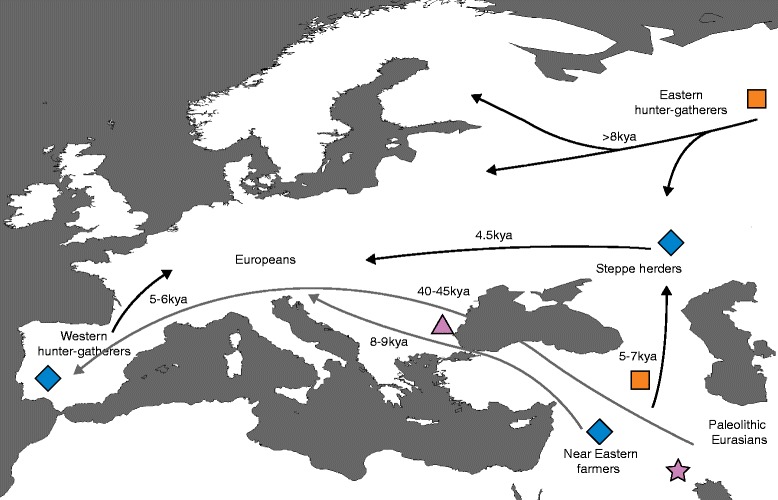
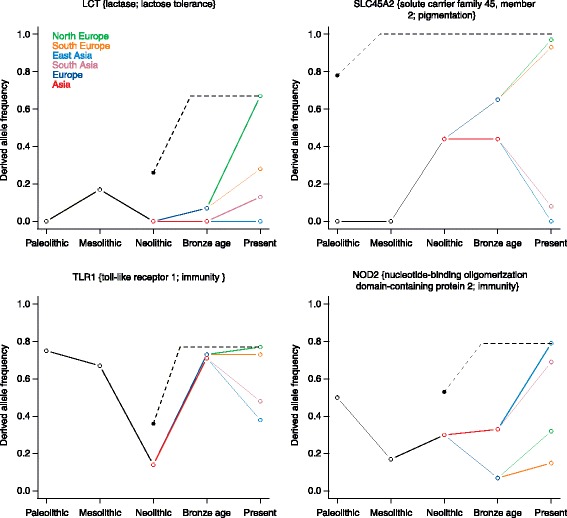
- European population history is more complex than simple demic diffusion: present-day Europeans derive from at least three ancient populations, with a massive migration from the Eurasian Steppe ~4500 ya involving Yamnaya culture people; Y-chromosomal haplogroups shifted from predominantly G2a beforehand to R1a and R1b afterwards. Lactose tolerance was absent in early European farmers, found in only 10% of Bronze Age Europeans, and increased dramatically in just the past 3000 years.
- Native American origins are refined by aDNA: Kennewick Man was genetically closer to modern Native Americans than to any other population; the 24,000-year-old Mal’ta boy linked Upper Paleolithic West Eurasians to Native Americans; Anzick-1 (~12,500 years old) belonged to a meta-population related to many contemporary Native Americans. Native Americans appear to have diverged from Siberian ancestors ~20,000 ya, with another diversification ~13,000 ya in the Americas.
- aDNA is transforming understanding of selection and introgression: the Tibetan EPAS1 advantageous allele is best explained by Denisovan introgression; testes-expressed genes show reduced Neanderthal ancestry, while Neanderthal alleles are enriched in keratin filament genes; adaptive immune variants were already present in Mesolithic hunter-gatherers before agriculture.
Methods
- Narrative review of ancient DNA research and its implications for human population history, not a primary research study.
- Synthesizes published findings from ancient genomes and population-genetic studies, including Neanderthal, Denisovan, European, Native American, and selection examples.
- Main analysis is qualitative and interpretive, discussing how aDNA supports, refines, or overturns models previously inferred from present-day DNA.
Limitations
- The authors state that samples more than 100,000 years old and regions such as the Near East and Africa remain challenging for aDNA research because of time and poor DNA preservation in hot wet climates; sequences below 25 base pairs often do not map uniquely to the human genome, and extraction, library construction, and molecule repair/reconstruction need improvement.
- The paper identifies unresolved questions, including the frequency and number of Neanderthal–modern human mixture events, the source of non-Neanderthal/non-Denisovan archaic admixture, what Denisovans looked like, and the number, timing, and routes of major out-of-Africa expansions.
- As a review, no systematic search strategy or quantitative meta-analysis is described; the synthesis is selective and depends on the cited studies (evident from the text).
Model-written summary. Check it against the paper before relying on it.
Integrity signals
Registry
Cites
Statistics
Figures
Verification
Claims the paper makes
16 Valid · 4 Not valid · 40 Not checked · 23 Own results and interpretations
Every source the paper cites for this claim was checked and supports it.
In the paper
“whereas present-day humans carry, on average, introgressed haplotypes of ~57 kb in length [16].”
§ Ancient DNA and the rewriting of human history: be sparing with Occam’s razor > Origin and expansion of modern humans and admixture with archaic species
What the sources say
- Supportedcites [16] Vernot B Akey JM Resurrecting surviving Neandertal lineages from modern human genomes Science 2014 343 1017 21 10.1126/science.1245938 24476670 source
The Reports section (p. 1) explicitly states that the average length of introgressed haplotypes was approximately 57 kb. The paper identifies these as Neandertal lineages recovered from modern human genomes. (LLM, conf=0.94)
plain- Asserted: passes — The authors put it forward as true.
- Checkable: passes — It can be checked against evidence.
- Load-bearing: unclear — It is unclear whether the paper’s conclusions depend on it.
- Based: passes — The paper gives a reason why it holds.
- Supported
Every source the paper cites for this claim was checked and supports it.
In the paper
“Neanderthal ancestry in all present-day non-Africans is estimated to be 1.5–2.1 % [14].”
§ Ancient DNA and the rewriting of human history: be sparing with Occam’s razor > Origin and expansion of modern humans and admixture with archaic species
What the sources say
- Supportedcites [14] Prufer K Racimo F Patterson N Jay F Sankararaman S Sawyer S The complete genome sequence of a Neanderthal from the Altai Mountains Nature 2014 505 43 9 10.1038/nature12886 24352235 PMC4031459 source
The section “Neandertal gene flow into modern humans” explicitly estimates that 1.5–2.1% of the DNA in people outside Africa is Neandertal-derived. This matches the cited claim. (LLM, conf=0.95)
hedged- Asserted: passes — The authors put it forward as true.
- Checkable: passes — It can be checked against evidence.
- Load-bearing: unclear — It is unclear whether the paper’s conclusions depend on it.
- Based: passes — The paper gives a reason why it holds.
- Supported
Every source the paper cites for this claim was checked and supports it.
In the paper
“Denisovans themselves appear to have received gene flow from other archaic humans.”
§ Ancient DNA and the rewriting of human history: be sparing with Occam’s razor > Origin and expansion of modern humans and admixture with archaic species
What the sources say
- Supportedcites [14] Prufer K Racimo F Patterson N Jay F Sankararaman S Sawyer S The complete genome sequence of a Neanderthal from the Altai Mountains Nature 2014 505 43 9 10.1038/nature12886 24352235 PMC4031459 source
The “Neandertal gene flow into Denisovans” section states that gene flow from Neandertals into Denisovans occurred. The “Unknown archaic gene flow into Denisovan” section also finds gene flow from a deeply diverged hominin consistent with the data, while noting that ancient population structure remains an alternative explanation for that component. (LLM, conf=0.94)
hedgedstates a cause- Asserted: passes — The authors put it forward as true.
- Checkable: passes — It can be checked against evidence.
- Load-bearing: unclear — It is unclear whether the paper’s conclusions depend on it.
- Based: passes — The paper gives a reason why it holds.
- Supported
The cited sources support only part of this claim — read each source’s verdict below.
In the paper
“providing more evidence that archaic admixture occurred in West Asia early during modern humans’ exit from Africa.”
§ Ancient DNA and the rewriting of human history: be sparing with Occam’s razor > Origin and expansion of modern humans and admixture with archaic species
What the sources say
- Partly supportedcites [14] Prufer K Racimo F Patterson N Jay F Sankararaman S Sawyer S The complete genome sequence of a Neanderthal from the Altai Mountains Nature 2014 505 43 9 10.1038/nature12886 24352235 PMC4031459 sourceExperimental — accuracy not yet measured
The Discussion (page not provided) says that allele sharing between Neandertals and non-Africans reflects admixture, and the ‘Neandertal gene flow into modern humans’ section finds their Neandertal-derived DNA closer to a Neandertal from the Caucasus. The copy does not establish that admixture occurred in West Asia or date it to early in modern humans’ exit from Africa; the 77,000–114,000-year estimate is a population split time, not the date of admixture. (LLM, conf=0.82)
hedgedstates a cause- Asserted: passes — The authors put it forward as true.
- Checkable: passes — It can be checked against evidence.
- Load-bearing: passes — The paper’s conclusions depend on it.
- Based: passes — The paper gives a reason why it holds.
- Partly supported
Every source the paper cites for this claim was checked and supports it.
In the paper
“but the Oase genome provides direct evidence that multiple mixture events between modern humans and Neanderthals have occurred.”
§ Ancient DNA and the rewriting of human history: be sparing with Occam’s razor > Origin and expansion of modern humans and admixture with archaic species
What the sources say
- Supportedcites [20] Fu Q Hajdinjak M Moldovan OT Constantin S Mallick S Skoglund P An early modern human from Romania with a recent Neanderthal ancestor Nature 2015 524 216 9 10.1038/nature14558 26098372 PMC4537386 source
The Abstract's concluding paragraph states directly that 'the Oase 1 genome shows that mixture between modern humans and Neanderthals was not limited to the first ancestors of present-day people to leave Africa, nor to the Near East; it occurred later as well and probably in Europe' — i.e. more than one mixture event, with the recent one dated to less than 200 years before Oase 1 lived. The Introduction frames this as direct evidence from a genome of a modern human who could have met Neanderthals ('More direct insight into the interactions between modern and archaic humans...'), against a background where 'where and how often this occurred is not understood'. The Fig. 2/results discussion adds a possible older Neanderthal admixture in Oase 1's ancestors beyond the recent one, reinforcing multiplicity (hedged there, but the Abstract's 'not limited to' claim is stated without hedge). (LLM, conf=0.85)
boostedstates a causeSingle case- Asserted: passes — The authors put it forward as true.
- Checkable: passes — It can be checked against evidence.
- Load-bearing: passes — The paper’s conclusions depend on it.
- Based: passes — The paper gives a reason why it holds.
- Supported
38 more claims · 7 with their cited sources checked
Create a free account to see all 83 claims and to verify the 47 references still open.
- It may state two separate claims as one. 27
- Probably not a substantial claim. 14
Claims other papers make about this one
Each is checked against this paper’s own text: does it say what the citing paper says it does?
The check wasn’t confident either way, so it gives no verdict — never disputed.
In the citing paper
“To address this gap, computational methods for protein function prediction have been developed and significantly advanced over the past 15 years as demonstrated by the recent Critical Assessment of Functional Annotation (CAFA) challenges7,8.”
From Environmental conditions shape the nature of a minimal bacterial genome (2019) · cites this paper as [8]
Experimental — accuracy not yet measured
Citations
Cites
A draft sequence of the Neandertal genome
Green, R. E., Krause, J., Briggs, A. W., Maricic, T., Stenzel, U., Kircher, M., Patterson, N., Li, H., Zhai, W., Fritz, M. H.-Y., et al. (2010) · Science · doi:10.1126/science.1188021 · Cited by 4,318 · cited 2×
“Moreover, the Neanderthal-derived DNA in all non-Africans is more closely related to a Neanderthal from the Caucasus than it is to either the Neanderthal from Siberia or the Neanderthal from Croatia [14], providing more evidence that archaic admixture occurred in West Asia early during modern humans’ exit from Africa.”
BackgroundMitochondrial DNA and human evolution
Cann, R. L., Stoneking, M., & Wilson, A. C. (1987) · Nature · doi:10.1038/325031a0 · Cited by 3,100 · cited 1×
“in Africa around 200,000 years ago (ya) [3], followed by”
BackgroundThe complete genome sequence of a Neanderthal from the Altai Mountains
Prüfer, K., Racimo, F., Patterson, N., Jay, F., Sankararaman, S., Sawyer, S., Heinze, A., Renaud, G., Sudmant, P. H., de Filippo, C., et al. (2014) · Nature · doi:10.1038/nature12886 · Cited by 2,254 · cited 4×
“2 %) of Denisovan ancestry is also found across Eastern Eurasia and in Native American populations [14], but it is unclear whether this originated via gene flow from the same mixture event or through a second one.”
BackgroundInfluentialGenetic history of an archaic hominin group from Denisova Cave in Siberia
Reich, D., Green, R. E., Kircher, M., Krause, J., Patterson, N., Durand, E. Y., Viola, B., Briggs, A. W., Stenzel, U., Johnson, P. L. F., et al. (2010) · Nature · doi:10.1038/nature09710 · Cited by 1,991 · cited 12×
“A more substantial revision of the demic diffusion model was introduced when several 7000–8000-year-old individuals from Western Europe [29] and a 24,000-yearold individual from Siberia [30] were sequenced.”
BackgroundInfluentialMassive migration from the steppe was a source for Indo-European languages in Europe
Haak, W., Lazaridis, I., Patterson, N., Rohland, N., Mallick, S., Llamas, B., Brandt, G., Nordenfelt, S., Harney, E., Stewardson, K., et al. (2015) · Nature · doi:10.1038/nature14317 · Cited by 1,940 · cited 3×
“Controversially, these people were suggested to have also brought Indo-European languages into Europe [31].”
BackgroundOn the genealogy of large populations
Kingmán, J. F. C. (1982) · Journal of Applied Probability · doi:10.1017/s0021900200034446 · Cited by 1,628 · cited 1×
“Kingman in 1982 [49], provided an unprecedented understanding of the genetic relationships among human populations, as well as”
BackgroundSequencing of 50 Human Exomes Reveals Adaptation to High Altitude
Yi, X., Liang, Y., Huerta-Sanchez, E., Jin, X., Cuo, Z. X. P., Pool, J. E., Xu, X., Jiang, H., Vinckenbosch, N., Korneliussen, T. S., et al. (2010) · Science · doi:10.1126/science.1190371 · Cited by 1,611 · cited 1×
“For example, by studying genes that show population-specific allele-frequency differences between Tibetans and Han Chinese, a signal of positive natural selection was detected in EPAS1, a transcription factor involved in the response to hypoxia, which most probably helps the Tibetans to live at high altitudes [40].”
BackgroundPopulation genomics of Bronze Age Eurasia
Allentoft, M. E., Sikora, M., Sjögren, K.-G., Rasmussen, S., Rasmussen, M., Stenderup, J., Damgaard, P. B., Schroeder, H., Ahlström, T., Vinner, L., et al. (2015) · Nature · doi:10.1038/nature14507 · Cited by 1,550 · cited 15×
“In particular, selection on immune genes was believed to have been increased by the spread of diseases after the Neolithic due to dense settlements and proximity to domesticated animals. aDNA from Mesolithic Europeans shows, however, that adaptive variants associated with pathogen resistance in modern populations were…”
BackgroundInfluentialGenome-wide patterns of selection in 230 ancient Eurasians
Mathieson, I., Lazaridis, I., Rohland, N., Mallick, S., Patterson, N., Roodenberg, S. A., Harney, E., Stewardson, K., Fernandes, D., Novak, M., et al. (2015) · Nature · doi:10.1038/nature16152 · Cited by 1,515 · cited 4×
“Even lactose tolerance, assumed to be associated with pastoralism, appears to have been absent in early European farmers, being found in only 10 % of Bronze Age Europeans and increasing dramatically in just the past 3000 years [32, 44] (Fig.”
BackgroundResultInfluentialAncient human genomes suggest three ancestral populations for present-day Europeans
Lazaridis, I., Patterson, N., Mittnik, A., Renaud, G., Mallick, S., Kirsanow, K., Sudmant, P. H., Schraiber, J. G., Castellano, S., Lipson, M., et al. (2014) · Nature · doi:10.1038/nature13673 · Cited by 1,357 · cited 2×
“A more substantial revision of the demic diffusion model was introduced when several 7000–8000-year-old individuals from Western Europe [29] and a 24,000-yearold individual from Siberia [30] were sequenced.”
Background
Cited by
Items 801–900 of 1,019
Agrawal, N., Lawler, K., Davidson, C. M., Keogh, J. M., Legg, R. G., INTERVAL, Barroso, I., Farooqi, I. S., & Brand, A. H. (2021) · PLoS Biology · doi:10.1371/journal.pbio.3001255 · Cited by 20
Integration of single-cell multi-omics data by regression analysis on unpaired observations
Yuan, Q., & Duren, Z. (2022) · Genome biology · doi:10.1186/s13059-022-02726-7 · Cited by 22
Benchmarking datasets for assembly-based variant calling using high-fidelity long reads
Lee, H., Kim, J., & Lee, J. (2023) · BMC Genomics · doi:10.1186/s12864-023-09255-y · Cited by 22
Evolutionary signatures of human cancers revealed via genomic analysis of over 35,000 patients
Fontana, D., Crespiatico, I., Crippa, V., Malighetti, F., Villa, M., Angaroni, F., Luca, D., Aroldi, A., Antoniotti, M., Caravagna, G., et al. (2023) · Nature Communications · doi:10.1038/s41467-023-41670-3 · Cited by 26
Phertilizer: Growing a clonal tree from ultra-low coverage single-cell DNA sequencing of tumors
Weber, L. L., Zhang, C., Ochoa, I., & El-Kebir, M. (2023) · PLoS Computational Biology · doi:10.1371/journal.pcbi.1011544 · Cited by 20
Ferrena, A., Wang, J., Zhang, R., Karadal-Ferrena, B., Al-Hardan, W., Singh, S., Borjihan, H., Schwartz, E. L., Zhao, H., Oktay, M. H., et al. (2023) · Molecular Cancer Therapeutics · doi:10.1158/1535-7163.mct-23-0173 · Cited by 20
Aga, O. N. L., Brun, M., Dauda, K. A., Díaz‐Uriarte, R., Giannakis, K., & Johnston, I. G. (2024) · PLoS Computational Biology · doi:10.1371/journal.pcbi.1012393 · Cited by 22
Pleguezuelos-Manzano, C., Beenker, W. A. G., van Son, G. J. F., Begthel, H., Amatngalim, G. D., Beekman, J. M., Clevers, H., & den Hertog, J. (2025) · Scientific Reports · doi:10.1038/s41598-024-82500-w · Cited by 17
A CRISPR/Cas9-based enhancement of high-throughput single-cell transcriptomics
Pandey, A. C., Bezney, J., DeAscanis, D., Kirsch, E., Ahmed, F., Crinklaw, A., Choudhary, K. S., Mandala, T., Deason, J., Hamidi, J., et al. (2025) · Nature Communications · doi:10.1038/s41467-025-59880-2 · Cited by 19
Identification of the RNA polymerase I-RNA interactome
Piñeiro, D., Stoneley, M., Ramakrishna, M., Alexandrova, J., Dezi, V., Juke-Jones, R., Lilley, K. S., Cain, K., & Willis, A. E. (2018) · Nucleic Acids Research · doi:10.1093/nar/gky779 · Cited by 20
Xia, W., Hu, J., Ma, J., Huang, J., Jing, T., Deng, L., Zhang, J., Jiang, N., Ma, D., & Ma, Z. (2019) · FEBS Letters · doi:10.1002/1873-3468.13482 · Cited by 19
Altering microtubule dynamics is synergistically toxic with spindle assembly checkpoint inhibition
Schukken, K. M., Lin, Y., Bakker, P. L., Schubert, M., Preuß, S. F., Simon, J. E., van den Bos, H., Štorchová, Z., Colomé‐Tatché, M., Bastians, H., et al. (2020) · Life Science Alliance · doi:10.26508/lsa.201900499 · Cited by 19
Fang, S., Zhong, L., Wang, A.-Q., Zhang, H., & Yin, Z. (2021) · Molecular Neurobiology · doi:10.1007/s12035-021-02289-x · Cited by 21
The timing of human adaptation from Neanderthal introgression
Yair, S., Lee, K. M., & Coop, G. (2021) · Genetics · doi:10.1093/genetics/iyab052 · Cited by 21
HPOFiller: identifying missing protein–phenotype associations by graph convolutional network
Liu, L., Mamitsuka, H., & Zhu, S. (2021) · Bioinformatics · doi:10.1093/bioinformatics/btab224 · Cited by 23
Culture‐enriched community profiling improves resolution of the vertebrate gut microbiota
Goldman, S. L., Sanders, J. G., Yan, W., Denice, A., Cornwall, M., Ivey, K. N., Taylor, E. N., Gunderson, A. R., Sheehan, M. J., Mjungu, D. C., et al. (2021) · Molecular Ecology Resources · doi:10.1111/1755-0998.13456 · Cited by 20
scSGL: kernelized signed graph learning for single-cell gene regulatory network inference
Karaaslanli, A., Saha, S., Aviyente, S., & Maiti, T. (2022) · Bioinformatics · doi:10.1093/bioinformatics/btac288 · Cited by 22
Lai, C., Lee, Y., Ke, H., Lu, M., Liu, W., Lee, H., Liu, Y., Yoshiga, T., Kikuchi, T., Chen, P., et al. (2023) · Molecular Ecology Resources · doi:10.1111/1755-0998.13752 · Cited by 29
DANCE: a deep learning library and benchmark platform for single-cell analysis
Ding, J., Liu, R., Wen, H., Tang, W., Li, Z., Venegas, J., Su, R., Molho, D., Jin, W., Wang, Y., et al. (2024) · Genome biology · doi:10.1186/s13059-024-03211-z · Cited by 19
Liu, L., Chen, H., Sun, C., Zhang, J., Wang, J., Du, M., Li, J., Di, L., Shen, J., Geng, S., et al. (2021) · Genome Research · doi:10.1101/gr.275453.121 · Cited by 19
BioMaster: Multi-agent System for Automated Bioinformatics Analysis Workflow
Su, H., Long, W., & Zhang, Y. (2025) · doi:10.1101/2025.01.23.634608 · Cited by 18
Campbell, A. M., Gavilán, R. G., Marin, M. F. A., Yang, C., Hauton, C., van Aerle, R., & Martínez-Urtaza, J. (2024) · Nature Communications · doi:10.1038/s41467-024-52159-y · Cited by 19
Powles, R. L., Wali, V. B., Li, X., Barlow, W. E., Nahleh, Z. A., Thompson, A. M., Godwin, A. K., Hatzis, C., & Pusztai, L. (2020) · Clinical Cancer Research · doi:10.1158/1078-0432.ccr-19-2405 · Cited by 20
Kathirvel, K., Rudhra, O., Karthikeyan, R. S. G., Prajna, N. V., Lalitha, P., & Devarajan, B. (2021) · Experimental Eye Research · doi:10.1016/j.exer.2021.108764 · Cited by 19
Improved quantitative microbiome profiling for environmental antibiotic resistance surveillance
Ott, A., Quintela‐Baluja, M., Zealand, A. M., O’Donnell, G., Haniffah, M. R. M., & Graham, D. W. (2021) · Environmental Microbiome · doi:10.1186/s40793-021-00391-0 · Cited by 19
Leigh, R. J., McKenna, C., McWade, R., Lynch, B., & Walsh, F. (2022) · Journal of Medical Microbiology · doi:10.1099/jmm.0.001590 · Cited by 18
Whole-Exome Sequencing Among School-Aged Children With High Myopia
Yu, X., Yuan, J., Chen, Z. J., Li, K., Yao, Y., Xing, S., Xue, Z., Zhang, Y., Peng, H., An, G., et al. (2023) · JAMA Network Open · doi:10.1001/jamanetworkopen.2023.45821 · Cited by 19
Roy, S. S., Bagri, S., Vinayagamurthy, S., Sengupta, A., Then, C. R., Kumar, R., Sridharan, S., & Chowdhury, S. (2024) · eLife · doi:10.7554/elife.96216 · Cited by 19
HyperGen: compact and efficient genome sketching using hyperdimensional vectors
Xu, W., Hsu, P.-K., Moshiri, N., Yu, S., & Rosing, T. (2024) · Bioinformatics · doi:10.1093/bioinformatics/btae452 · Cited by 19
Light and dopamine impact two circadian neurons to promote morning wakefulness
Le, J. Q., Ma, D., Dai, X., & Rosbash, M. (2024) · Current Biology · doi:10.1016/j.cub.2024.07.056 · Cited by 18
Boadu, F., & Cheng, J. (2024) · Bioinformatics Advances · doi:10.1093/bioadv/vbae120 · Cited by 20
Blood‐based multivariate methylation risk score for cognitive impairment and dementia
Koetsier, J., Cavill, R., Reijnders, R. A., Harvey, J., Homann, J., Kouhsar, M. P., Deckers, K., Köhler, S., Eijssen, L., van den Hove, D., et al. (2024) · Alzheimer s & Dementia · doi:10.1002/alz.14061 · Cited by 19
Zhao, B., Song, K., Wei, D., Xiong, Y., & Ding, J. (2025) · Communications Biology · doi:10.1038/s42003-025-07692-x · Cited by 19
Mapping MAVE data for use in human genomics applications
Arbesfeld, J. A., Da, E. Y., Stevenson, J., Kuzma, K., Paul, A., Farris, T. R., Capodanno, B. J., Grindstaff, S. B., Riehle, K. P., Saraiva-Agostinho, N., et al. (2025) · Genome biology · doi:10.1186/s13059-025-03647-x · Cited by 18
Reconstructing high-resolution chromosome three-dimensional structures by Hi-C complex networks
Liu, T., & Wang, Z. (2018) · BMC Bioinformatics · doi:10.1186/s12859-018-2464-z · Cited by 18
Identification of conserved evolutionary trajectories in tumors
Hodzic, E., Shrestha, R., Malikić, S., Collins, C. C., Litchfield, K., Turajlic, S., & Şahinalp, S. C. (2020) · Bioinformatics · doi:10.1093/bioinformatics/btaa453 · Cited by 19
Understanding the Adult Mammalian Heart at Single-Cell RNA-Seq Resolution
Marín‐Sedeño, E., de Morentin, X. M., Pérez-Pomares, J. M., Gómez-Cabrero, D., & Ruiz‐Villalba, A. (2021) · Frontiers in Cell and Developmental Biology · doi:10.3389/fcell.2021.645276 · Cited by 19
Kim, H.-R., Jung, S.-H., Kim, J., Jang, H., Kang, S. H., Hwangbo, S., Kim, J. P., Kim, S. Y., Kim, B., Kim, S., et al. (2021) · Alzheimer s Research & Therapy · doi:10.1186/s13195-021-00854-z · Cited by 20
Ren, S., Lyu, G., Irwin, D. M., Liu, X., Feng, C., Luo, R., Zhang, J., Sun, Y., Shang, S., Zhang, S., et al. (2021) · Frontiers in Genetics · doi:10.3389/fgene.2021.650013 · Cited by 20
Response to sulfur in Schizosaccharomyces pombe
Ohtsuka, H., Shimasaki, T., & Aiba, H. (2021) · FEMS Yeast Research · doi:10.1093/femsyr/foab041 · Cited by 18
DMIL-IsoFun: predicting isoform function using deep multi-instance learning
Yu, G., Zhou, G., Zhang, X., Domeniconi, C., & Guo, M. (2021) · Bioinformatics · doi:10.1093/bioinformatics/btab532 · Cited by 19
Zhang, S., Wan, J., Chen, M., Cai, D., Xu, J., & Chen, Q. (2021) · Frontiers in Oncology · doi:10.3389/fonc.2021.720447 · Cited by 18
Non-additive QTL mapping of lactation traits in 124,000 cattle reveals novel recessive loci
Reynolds, E., Lopdell, T., Wang, Y., Tiplady, K., Harland, C., Johnson, T., Neeley, C., Carnie, K., Sherlock, R. G., Couldrey, C., et al. (2022) · Genetics Selection Evolution · doi:10.1186/s12711-021-00694-3 · Cited by 19
Ferguson, A., Thrippleton, S., Henshall, D. E., Whittaker, E., Conway, B. R., Macleod, M. R., Malik, R., Rawlik, K., Tenesa, A., Sudlow, C. L. M., et al. (2022) · Neurology Genetics · doi:10.1212/nxg.0000000000200015 · Cited by 20
Wang, Y., & Chen, L. (2022) · Bioinformatics · doi:10.1093/bioinformatics/btac696 · Cited by 20
Wang, Z., Jin, S., Liu, G., Zhang, X., Wang, N., Wu, D., Hu, Y., Zhang, C., Jiang, Q., Xu, L., et al. (2017) · BMC Bioinformatics · doi:10.1186/s12859-017-1647-3 · Cited by 20
Wragg, D., Techer, M. A., Canale‐Tabet, K., Basso, B., Bidanel, J. P., Labarthe, E., Bouchez, O., Conte, Y. L., Clémencet, J., Delatte, H., et al. (2017) · Genome Biology and Evolution · doi:10.1093/gbe/evx247 · Cited by 18
Romanowska, J., Haaland, Ø. A., Jugessur, A., Gjerdevik, M., Xu, Z., Taylor, J. A., Wilcox, A. J., Jonassen, I., Lie, R. T., & Gjessing, H. K. (2020) · Clinical Epigenetics · doi:10.1186/s13148-020-00881-x · Cited by 19
Hu, Z., Zu, S., & Liu, J. S. (2020) · NAR Genomics and Bioinformatics · doi:10.1093/nargab/lqaa077 · Cited by 18
The Counteracting Effects of Demography on Functional Genomic Variation: The Roma Paradigm
Font‐Porterias, N., Caro-Consuegra, R., Lucas-Sánchez, M., Lopez, M., Giménez, A., Carballo-Mesa, A., Bosch, E., Calafell, F., Quintana‐Murci, L., & Comas, D. (2021) · Molecular Biology and Evolution · doi:10.1093/molbev/msab070 · Cited by 21
Meta-analysis of exome array data identifies six novel genetic loci for lung function
Jackson, V. E., Latourelle, J. C., Wain, L. V., Smith, A. V., Grove, M. L., Bartz, T. M., Obeidat, M., Province, M. A., Gao, W. D., Qaiser, B., et al. (2018) · Wellcome Open Research · doi:10.12688/wellcomeopenres.12583.1 · Cited by 21
Challenges and considerations for reproducibility of STARR-seq assays
Das, M., Hossain, A., Banerjee, D., Praul, C. A., & Girirajan, S. (2023) · Genome Research · doi:10.1101/gr.277204.122 · Cited by 19
Yacawych, W. T., Wang, Y., Zhou, G., Hassan, S., Bodur, Ç., Walters, E., Santinga, J. G., Sass, F., DeVaux, M., Kernodle, S., et al. (2026) · Journal of Clinical Investigation · doi:10.1172/jci193743 · Cited by 19
Petrović, D., Carmeli, C., Sandoval, J. L., Bodinier, B., Chadeau‐Hyam, M., Schrempft, S., Ehret, G., Dhayat, N. A., Ponte, B., Pruijm, M. T., et al. (2022) · Psychoneuroendocrinology · doi:10.1016/j.psyneuen.2022.105976 · Cited by 23
Princová, J., Salat-Canela, C., Daněk, P., Marešová, A., de Cubas, L., Bähler, J., Ayté, J., Hidalgo, E., & Převorovský, M. (2023) · PLoS Genetics · doi:10.1371/journal.pgen.1010582 · Cited by 17
The Detection of Urinary Exosomal miRNAs for Cancer Diagnostics and Prognostics
Kim, J., Kim, M., Kang, J. Y., Bong, K. W., & Choi, N. (2023) · BioChip Journal · doi:10.1007/s13206-023-00108-0 · Cited by 18
Applicability of epigenetic age models to next-generation methylation arrays
Garma, L. D., & Quintela-Fandiño, M. (2024) · Genome Medicine · doi:10.1186/s13073-024-01387-4 · Cited by 17
Inferring gene regulatory networks by hypergraph generative model
Su, G., Wang, H., Zhang, Y., Coster, A. C., Wilkins, M. R., Cañete, P. F., Yu, D., Yang, Y., & Zhang, W. (2025) · Cell Reports Methods · doi:10.1016/j.crmeth.2025.101026 · Cited by 20
Preković, S., den Broeck, T. V., Moris, L., Smeets, E., Claessens, F., Joniau, S., Helsen, C., & Attard, G. (2017) · Molecular and Cellular Endocrinology · doi:10.1016/j.mce.2017.08.020 · Cited by 18
Functional Transcriptomics for Bacterial Gene Detectives
Perez-Sepulveda, B. M., & Hinton, J. C. D. (2018) · Microbiology Spectrum · doi:10.1128/microbiolspec.rwr-0033-2018 · Cited by 18
Liu, C., Liu, Y., Huang, H., & Wang, W. (2019) · Bioinformatics · doi:10.1093/bioinformatics/btz705 · Cited by 18
Artim, S. C., Sheh, A., Burns, M. A., & Fox, J. G. (2019) · PLoS ONE · doi:10.1371/journal.pone.0224950 · Cited by 17
Bienias, A., Góralska, M., Masojć, P., Milczarski, P., & Myśków, B. (2020) · BMC Genomics · doi:10.1186/s12864-020-06991-3 · Cited by 17
Comparative analysis of chloroplast genomes in Vasconcellea pubescens A.DC. and Carica papaya L.
Lin, Z., Zhou, P., Ma, X., Deng, Y., Liao, Z., Li, R., & Ming, R. (2020) · Scientific Reports · doi:10.1038/s41598-020-72769-y · Cited by 17
Mokhtar, M. M., Hussein, E. H. A., El-Assal, S. E.-D. S., & Atia, M. A. M. (2020) · AoB Plants · doi:10.1093/aobpla/plaa064 · Cited by 17
Acoustic salience in emotional voice perception and its relationship with hallucination proneness
Castiajo, P., & Pinheiro, A. P. (2021) · Cognitive Affective & Behavioral Neuroscience · doi:10.3758/s13415-021-00864-2 · Cited by 18
Pezenti, L. F., Sosa‐Gómez, D. R., de Souza, R. F., Vilas-Bôas, L. A., Gonçalves, K. C. B., da Silva, C. R. M., Vilas-Bôas, G. T., Baranoski, A., Mantovani, M. S., & da Rosa, R. (2021) · Genomics · doi:10.1016/j.ygeno.2021.05.012 · Cited by 17
CircadiOmic medicine and aging
TABIBZADEH, S. S. (2021) · Ageing Research Reviews · doi:10.1016/j.arr.2021.101424 · Cited by 17
Recoules, L., Heurteau, A., Raynal, F., Karasu, N., Moutahir, F., Bejjani, F., Jariel‐Encontre, I., Cuvier, O., Sexton, T., Lavigne, A.-C., et al. (2022) · Journal of Cell Science · doi:10.1242/jcs.259456 · Cited by 19
JAZF1-SUZ12 dysregulates PRC2 function and gene expression during cell differentiation
Tavares, M., Khandelwal, G., Muter, J., Viiri, K. M., Beltran-Nebot, M., Brosens, J. J., & Jenner, R. G. (2022) · Cell Reports · doi:10.1016/j.celrep.2022.110889 · Cited by 17
Lees, J. A., Tonkin‐Hill, G. Q., Yang, Z., & Corander, J. (2022) · Philosophical Transactions of the Royal Society B Biological Sciences · doi:10.1098/rstb.2021.0237 · Cited by 18
Association between SARS-CoV-2 and metagenomic content of samples from the Huanan Seafood Market
Bloom, J. D. (2023) · Virus Evolution · doi:10.1093/ve/vead050 · Cited by 20
Heterogeneous interactions and polymer entropy decide organization and dynamics of chromatin domains
Kumari, K., Prakash, J. R., & Padinhateeri, R. (2022) · Biophysical Journal · doi:10.1016/j.bpj.2022.06.008 · Cited by 18
Chen, X., Chakravarty, T., Zhang, Y., Li, X., Zhong, J. F., & Wang, C. (2016) · Scientific Data · doi:10.1038/sdata.2016.79 · Cited by 17
Gene expression plasticity and frontloading promote thermotolerance in Pocillopora coralsPreprint
Brener-Raffalli, K., Vidal‐Dupiol, J., Adjeroud, M., Rey, O., Romans, P., Bonhomme, F., Pratlong, M., Haguenauer, A., Pillot, R., Feuillassier, L., et al. (2018) · bioRxiv (Cold Spring Harbor Laboratory) · doi:10.1101/398602 · Cited by 18
Sailem, H. Z., Rittscher, J., & Pelkmans, L. (2020) · Molecular Systems Biology · doi:10.15252/msb.20199083 · Cited by 16
Pandey, D., Harris, M., Garud, N. R., & Narasimhan, V. M. (2024) · Nature Communications · doi:10.1038/s41467-024-53852-8 · Cited by 18
Sex‐specific ethylene responses drive floral sexual plasticity in Cannabis sativa
Monthony, A. S., Roy, J., de Ronne, M., Carlson, O., Murch, S. J., & Torkamaneh, D. (2026) · The Plant Journal · doi:10.1111/tpj.70721 · Cited by 18
A chromosomal inversion may facilitate adaptation despite periodic gene flow in a freshwater fish
Thorstensen, M. J., Euclide, P. T., Jeffrey, J. D., Shi, Y., Treberg, J. R., Watkinson, D. A., Enders, E. C., Larson, W. A., Kobayashi, Y., & Jeffries, K. M. (2022) · Ecology and Evolution · doi:10.1002/ece3.8898 · Cited by 17
Mafigiri, D. K., Ekusai‐Sebatta, D., Munabi, I. G., & Mwaka, E. (2023) · Journal of Empirical Research on Human Research Ethics · doi:10.1177/15562646231171289 · Cited by 17
Horiuchi, A., Masuda, K., Shirasawa, K., Onoue, N., Fujita, N., Ushijima, K., & Akagi, T. (2023) · Molecular Biology and Evolution · doi:10.1093/molbev/msad151 · Cited by 17
Using CRISPR/Cas9 to identify genes required for mechanosensory neuron development and function
Johnson, C. J., Kulkarni, A., Buxton, W. J., Hui, T. Y., Kayastha, A., Khoja, A. A., Leandre, J., Mehta, V. V., Ostrowski, L., Pareizs, E. G., et al. (2023) · Biology Open · doi:10.1242/bio.060002 · Cited by 16
Horvath, R., Minadakis, N., Bourgeois, Y., & Roulin, A. C. (2023) · eLife · doi:10.7554/elife.93284 · Cited by 16
Mapping of the gene network that regulates glycan clock of ageing
Frkatović-Hodžić, A., Miškec, K., Mijakovac, A., Nostaeva, A. V., Sharapov, S., Landini, A., Haller, T., van den Akker, E. B., Sharma, S., Cuadrat, R. R. C., et al. (2023) · Aging · doi:10.18632/aging.205106 · Cited by 16
Hong, J., Choi, E., Kim, D., Seo, M.-K., Kang, H., Park, B., & Kim, S. (2024) · npj Precision Oncology · doi:10.1038/s41698-024-00501-4 · Cited by 16
Differential development of antibiotic resistance and virulence between Acinetobacter species
Darby, E. M., Moran, R., Holden, E. R., Morris, T., Harrison, F., Clough, B., McInnes, R., Schneider, L., Frickel, E.-M., Webber, M., et al. (2023) · bioRxiv · doi:10.1128/msphere.00109-24 · Cited by 17
Zhang, Q., Wang, S., Li, Z., Pan, Y., & Huang, D. (2024) · Advanced Science · doi:10.1002/advs.202405685 · Cited by 19
Optimization of ribosome profiling in plants including structural analysis of rRNA fragments
Ting, M. K. Y., Gao, Y., Barahimipour, R., Ghandour, R., Liu, J., Martínez-Seidel, F., Smirnova, J., Gotsmann, V. L., Fischer, A., Haydon, M. J., et al. (2024) · Plant Methods · doi:10.1186/s13007-024-01267-3 · Cited by 16
Weinberger, V., Mohammadzadeh, R., Blohs, M., Kalt, K., Mahnert, A., Moser, S. S., Cecovini, M., Mertelj, P., Zurabishvili, T., Arora, B., et al. (2025) · INTERNATIONAL JOURNAL OF SYSTEMATIC AND EVOLUTIONARY MICROBIOLOGY · doi:10.1099/ijsem.0.006751 · Cited by 22
Transcriptomics, single-cell sequencing and spatial sequencing-based studies of cerebral ischemia
Liu, J., Qing, T., He, M., Liu, X., Wu, Z., Huang, M., Liu, Z., Zhang, Y., Li, Z., Yang, W., et al. (2025) · European journal of medical research · doi:10.1186/s40001-025-02596-2 · Cited by 17
The draft genome ofRuellia speciosa(Beautiful Wild Petunia: Acanthaceae)
Zhuang, Y., & Tripp, E. A. (2017) · DNA Research · doi:10.1093/dnares/dsw054 · Cited by 16
Lovšin, E., Kovač, J., Tesovnik, T., Toplak, N., Perko, D., Rozmarič, T., Debeljak, M., & Avčin, T. (2020) · Frontiers in Immunology · doi:10.3389/fimmu.2020.01322 · Cited by 16
Martínez‐García, P. M., García-Torres, M., Divina, F., Terrón-Bautista, J., Delgado‐Sainz, I., Gómez-Vela, F., & Cortés‐Ledesma, F. (2021) · PLoS Computational Biology · doi:10.1371/journal.pcbi.1007814 · Cited by 19
The Bourque distances for mutation trees of cancers
Jahn, K., Beerenwinkel, N., & Zhang, L. (2021) · Algorithms for Molecular Biology · doi:10.1186/s13015-021-00188-3 · Cited by 19
Lizamore, D., Bicknell, R., & Winefield, C. S. (2021) · BMC Genomics · doi:10.1186/s12864-021-07973-9 · Cited by 16
Testing for Phylogenetic Signal in Single-Cell RNA-Seq Data
Moravec, J. C., Lanfear, R., Spector, D. L., Diermeier, S. D., & Gavryushkin, A. (2023) · Journal of Computational Biology · doi:10.1089/cmb.2022.0357 · Cited by 16
Chervova, O., Chernysheva, E., Panteleeva, K., Widayati, T. A., Hrbková, N., Schneider, J., Maximov, V. N., Ryabikov, A. N., Tillmann, T., Pikhart, H., et al. (2022) · Biology · doi:10.3390/biology12010068 · Cited by 16
Efficient Distributed Smith-Waterman Algorithm Based on Apache Spark
Xu, B., Li, C., Zhuang, H., Wang, J., Wang, Q., & Zhou, X. (2017) · IEEE ... International Conference on Cloud Computing · doi:10.1109/cloud.2017.83 · Cited by 16
Exome array analysis of rare and low frequency variants in amyotrophic lateral sclerosis
Dekker, A. M., Diekstra, F. P., Pulit, S. L., Tazelaar, G. H. P., van der Spek, R. A. A., van Rheenen, W., van Eijk, K. R., Calvo, A., Brunetti, M., Damme, P. V., et al. (2019) · Scientific Reports · doi:10.1038/s41598-019-42091-3 · Cited by 18
The Rhinella arenarum transcriptome: de novo assembly, annotation and gene prediction
Ceschin, D. G., Pires, N. S., Mardirosian, M. N., Lascano, C. I., & Venturino, A. (2020) · Scientific Reports · doi:10.1038/s41598-020-57961-4 · Cited by 18
Metadata
- Authors
- Haber, M., Mezzavilla, M., Xue, Y., & Tyler-Smith, C.
- Affiliations
- Wellcome Sanger Institute (GB)
- University of Trieste (IT)
- Venue
- Genome Biology
- Published
- 2016-01-11
- Volume
- 17
- Issue
- 1
- Pages
- 1-1
- ISSN
- 1465-6906 (ISSN-L)
- 1474-760X
- PMC
- PMC4707776
- OpenAlex
- W2233603983
- Semantic Scholar
- c387b4a2b9f15441325a0d52ddc1d3fa20513dd8
- Cited by
- 1,924
- References
- 50
- Citations by year
- 2026: 86 · 2025: 226 · 2024: 204 · 2023: 226 · 2022: 197 · 2021: 404 · 2020: 175 · 2019: 133 · 2018: 92 · 2017: 122 · 2016: 57
- FWCI
- 18.02
- Type
- journal article
- Language
- en
- Open access
- gold
- doi.org
- Licence
- cc-by
- creativecommons.org/licenses/by/4.0/ (tdm)
- Locations
- Genome biology (publishedVersion, cc-by)
- Europe PMC (PubMed Central) (publishedVersion, cc-by)
- PubMed Central (publishedVersion, cc-by)
- PubMed (publishedVersion)
- University of Birmingham Research Portal (University of Birmingham) (submittedVersion)
- Padua Research Archive (University of Padova) (submittedVersion, cc-by)
- Funders
- Wellcome Trust (098051)
- Topics
- Life Sciences › Biochemistry, Genetics and Molecular Biology › Genetics › Forensic and Genetic Research
- Social Sciences › Anthropology › Pleistocene-Era Hominins and Archaeology
- Life Sciences › Biochemistry, Genetics and Molecular Biology › Genetics › Genetic diversity and population structure
- Keywords
- ancient DNA, human migration, human history, population genetics, history of human evolution
- MeSH terms
- DNA, Humans, Selection, Genetic, History, Ancient, Human Migration
About these checks
Registry, retraction, Cites and statistics results are computed, not judged, with one exception: a printed reference that no index lists is read once by a model before it counts as a citation error. Claims are extracted by a model and kept only when their quote appears verbatim in the text; each cited source is then checked, with a model’s help, for whether it says what the claim relies on. Those verdicts can be wrong — read the claim’s quote and the cited source before relying on one.
The claim verdicts this report counts are experimental: their accuracy is not yet measured.
A language model drew the claims from the paper on 2026-10-05, under version 3 of the claim definition (model deepseek-v4.1-flash, prompt extract-v3).
A second model labelled each claim on 2026-10-05 (model jev-1.13-20260917, definition revision gold-guideline-v0.2).
Cited sources are checked with a language model’s help (gpt-6-sol and qwen3.8-omni-flash).
Statistics and arithmetic are recomputed, not judged.
Confidence bands are shown only for fields calibrated on our annotated test set. None is calibrated yet, so no band is shown.
What counts as a claim ›How we measure confidence ›How we check this ›
Are you an author, or do you see a problem with this page? Request a review
Data sources
Bibliographic data: Semantic Scholar, OpenAlex, Crossref.
Contains information from the Semantic Scholar Academic Graph Datasets, made available under the ODC Attribution License (ODC-BY 1.0).
Semantic Scholar’s data is described in: Kinney, R., et al. (2023). The Semantic Scholar Open Data Platform. arXiv:2301.10140.
