

Ancient DNA and the rewriting of human history: be sparing with Occam’s razor
Open accessThe DOI matches its Crossref record; 48 of the 50 references it cites were found in a registry or an index, and 1 are not checked yet; 17 of the 64 sources its claims cite were checked for support.
Abstract
Ancient DNA research is revealing a human history far more complex than that inferred from parsimonious models based on modern DNA. Here, we review some of the key events in the peopling of the world in the light of the findings of work on ancient DNA.
Verified 2026-10-05 · 1 reference not checked yet
Overview
CoChat Summary
TL;DR
This review argues that ancient DNA is revealing a human history far more complex than parsimonious models based on modern DNA alone, using examples from archaic admixture, the peopling of Europe and the Americas, and recent selection. It concludes that human evolutionary genetics is moving toward first looking for aDNA evidence and interpreting present-day variation in its light, while noting major preservation and methodological limits.
Key findings
- aDNA supports a “leaky replacement” model: Neanderthal ancestry is estimated at 1.5–2.1% in all present-day non-Africans, with gene flow likely around 47,000–65,000 ya; Ust’-Ishim suggests 50,000–60,000 ya, and the Oase individual had 6–9% Neanderthal-derived alleles. Denisovan ancestry is 4–6% in New Guineans, Aboriginal Australians and Bougainville Islanders, with ~0.2% across Eastern Eurasia and Native American populations.
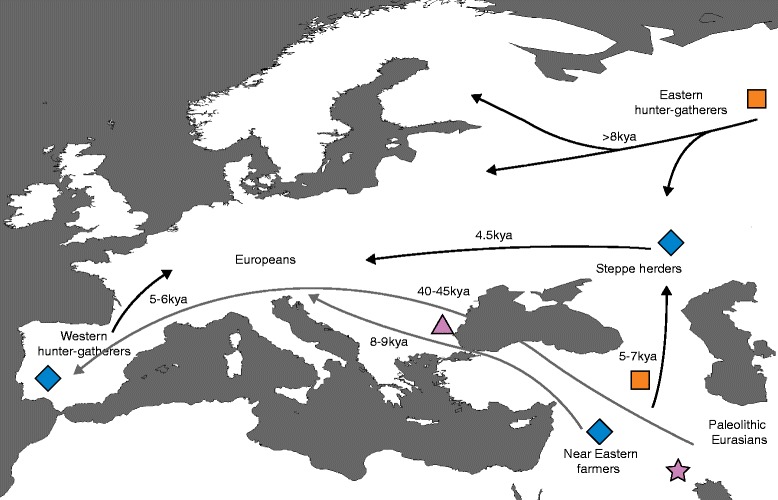
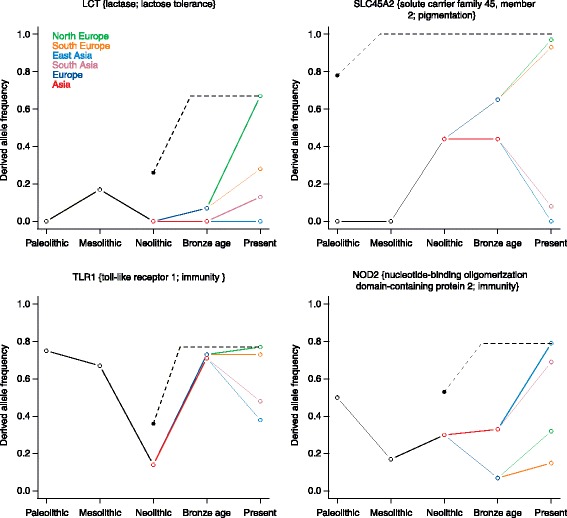
- European population history is more complex than simple demic diffusion: present-day Europeans derive from at least three ancient populations, with a massive migration from the Eurasian Steppe ~4500 ya involving Yamnaya culture people; Y-chromosomal haplogroups shifted from predominantly G2a beforehand to R1a and R1b afterwards. Lactose tolerance was absent in early European farmers, found in only 10% of Bronze Age Europeans, and increased dramatically in just the past 3000 years.
- Native American origins are refined by aDNA: Kennewick Man was genetically closer to modern Native Americans than to any other population; the 24,000-year-old Mal’ta boy linked Upper Paleolithic West Eurasians to Native Americans; Anzick-1 (~12,500 years old) belonged to a meta-population related to many contemporary Native Americans. Native Americans appear to have diverged from Siberian ancestors ~20,000 ya, with another diversification ~13,000 ya in the Americas.
- aDNA is transforming understanding of selection and introgression: the Tibetan EPAS1 advantageous allele is best explained by Denisovan introgression; testes-expressed genes show reduced Neanderthal ancestry, while Neanderthal alleles are enriched in keratin filament genes; adaptive immune variants were already present in Mesolithic hunter-gatherers before agriculture.
Methods
- Narrative review of ancient DNA research and its implications for human population history, not a primary research study.
- Synthesizes published findings from ancient genomes and population-genetic studies, including Neanderthal, Denisovan, European, Native American, and selection examples.
- Main analysis is qualitative and interpretive, discussing how aDNA supports, refines, or overturns models previously inferred from present-day DNA.
Limitations
- The authors state that samples more than 100,000 years old and regions such as the Near East and Africa remain challenging for aDNA research because of time and poor DNA preservation in hot wet climates; sequences below 25 base pairs often do not map uniquely to the human genome, and extraction, library construction, and molecule repair/reconstruction need improvement.
- The paper identifies unresolved questions, including the frequency and number of Neanderthal–modern human mixture events, the source of non-Neanderthal/non-Denisovan archaic admixture, what Denisovans looked like, and the number, timing, and routes of major out-of-Africa expansions.
- As a review, no systematic search strategy or quantitative meta-analysis is described; the synthesis is selective and depends on the cited studies (evident from the text).
Model-written summary. Check it against the paper before relying on it.
Integrity signals
Registry
Cites
Statistics
Figures
Verification
Claims the paper makes
16 Valid · 4 Not valid · 40 Not checked · 23 Own results and interpretations
Every source the paper cites for this claim was checked and supports it.
In the paper
“whereas present-day humans carry, on average, introgressed haplotypes of ~57 kb in length [16].”
§ Ancient DNA and the rewriting of human history: be sparing with Occam’s razor > Origin and expansion of modern humans and admixture with archaic species
What the sources say
- Supportedcites [16] Vernot B Akey JM Resurrecting surviving Neandertal lineages from modern human genomes Science 2014 343 1017 21 10.1126/science.1245938 24476670 source
The Reports section (p. 1) explicitly states that the average length of introgressed haplotypes was approximately 57 kb. The paper identifies these as Neandertal lineages recovered from modern human genomes. (LLM, conf=0.94)
plain- Asserted: passes — The authors put it forward as true.
- Checkable: passes — It can be checked against evidence.
- Load-bearing: unclear — It is unclear whether the paper’s conclusions depend on it.
- Based: passes — The paper gives a reason why it holds.
- Supported
Every source the paper cites for this claim was checked and supports it.
In the paper
“Neanderthal ancestry in all present-day non-Africans is estimated to be 1.5–2.1 % [14].”
§ Ancient DNA and the rewriting of human history: be sparing with Occam’s razor > Origin and expansion of modern humans and admixture with archaic species
What the sources say
- Supportedcites [14] Prufer K Racimo F Patterson N Jay F Sankararaman S Sawyer S The complete genome sequence of a Neanderthal from the Altai Mountains Nature 2014 505 43 9 10.1038/nature12886 24352235 PMC4031459 source
The section “Neandertal gene flow into modern humans” explicitly estimates that 1.5–2.1% of the DNA in people outside Africa is Neandertal-derived. This matches the cited claim. (LLM, conf=0.95)
hedged- Asserted: passes — The authors put it forward as true.
- Checkable: passes — It can be checked against evidence.
- Load-bearing: unclear — It is unclear whether the paper’s conclusions depend on it.
- Based: passes — The paper gives a reason why it holds.
- Supported
Every source the paper cites for this claim was checked and supports it.
In the paper
“Denisovans themselves appear to have received gene flow from other archaic humans.”
§ Ancient DNA and the rewriting of human history: be sparing with Occam’s razor > Origin and expansion of modern humans and admixture with archaic species
What the sources say
- Supportedcites [14] Prufer K Racimo F Patterson N Jay F Sankararaman S Sawyer S The complete genome sequence of a Neanderthal from the Altai Mountains Nature 2014 505 43 9 10.1038/nature12886 24352235 PMC4031459 source
The “Neandertal gene flow into Denisovans” section states that gene flow from Neandertals into Denisovans occurred. The “Unknown archaic gene flow into Denisovan” section also finds gene flow from a deeply diverged hominin consistent with the data, while noting that ancient population structure remains an alternative explanation for that component. (LLM, conf=0.94)
hedgedstates a cause- Asserted: passes — The authors put it forward as true.
- Checkable: passes — It can be checked against evidence.
- Load-bearing: unclear — It is unclear whether the paper’s conclusions depend on it.
- Based: passes — The paper gives a reason why it holds.
- Supported
The cited sources support only part of this claim — read each source’s verdict below.
In the paper
“providing more evidence that archaic admixture occurred in West Asia early during modern humans’ exit from Africa.”
§ Ancient DNA and the rewriting of human history: be sparing with Occam’s razor > Origin and expansion of modern humans and admixture with archaic species
What the sources say
- Partly supportedcites [14] Prufer K Racimo F Patterson N Jay F Sankararaman S Sawyer S The complete genome sequence of a Neanderthal from the Altai Mountains Nature 2014 505 43 9 10.1038/nature12886 24352235 PMC4031459 sourceExperimental — accuracy not yet measured
The Discussion (page not provided) says that allele sharing between Neandertals and non-Africans reflects admixture, and the ‘Neandertal gene flow into modern humans’ section finds their Neandertal-derived DNA closer to a Neandertal from the Caucasus. The copy does not establish that admixture occurred in West Asia or date it to early in modern humans’ exit from Africa; the 77,000–114,000-year estimate is a population split time, not the date of admixture. (LLM, conf=0.82)
hedgedstates a cause- Asserted: passes — The authors put it forward as true.
- Checkable: passes — It can be checked against evidence.
- Load-bearing: passes — The paper’s conclusions depend on it.
- Based: passes — The paper gives a reason why it holds.
- Partly supported
Every source the paper cites for this claim was checked and supports it.
In the paper
“but the Oase genome provides direct evidence that multiple mixture events between modern humans and Neanderthals have occurred.”
§ Ancient DNA and the rewriting of human history: be sparing with Occam’s razor > Origin and expansion of modern humans and admixture with archaic species
What the sources say
- Supportedcites [20] Fu Q Hajdinjak M Moldovan OT Constantin S Mallick S Skoglund P An early modern human from Romania with a recent Neanderthal ancestor Nature 2015 524 216 9 10.1038/nature14558 26098372 PMC4537386 source
The Abstract's concluding paragraph states directly that 'the Oase 1 genome shows that mixture between modern humans and Neanderthals was not limited to the first ancestors of present-day people to leave Africa, nor to the Near East; it occurred later as well and probably in Europe' — i.e. more than one mixture event, with the recent one dated to less than 200 years before Oase 1 lived. The Introduction frames this as direct evidence from a genome of a modern human who could have met Neanderthals ('More direct insight into the interactions between modern and archaic humans...'), against a background where 'where and how often this occurred is not understood'. The Fig. 2/results discussion adds a possible older Neanderthal admixture in Oase 1's ancestors beyond the recent one, reinforcing multiplicity (hedged there, but the Abstract's 'not limited to' claim is stated without hedge). (LLM, conf=0.85)
boostedstates a causeSingle case- Asserted: passes — The authors put it forward as true.
- Checkable: passes — It can be checked against evidence.
- Load-bearing: passes — The paper’s conclusions depend on it.
- Based: passes — The paper gives a reason why it holds.
- Supported
38 more claims · 7 with their cited sources checked
Create a free account to see all 83 claims and to verify the 47 references still open.
- It may state two separate claims as one. 27
- Probably not a substantial claim. 14
Claims other papers make about this one
Each is checked against this paper’s own text: does it say what the citing paper says it does?
The check wasn’t confident either way, so it gives no verdict — never disputed.
In the citing paper
“To address this gap, computational methods for protein function prediction have been developed and significantly advanced over the past 15 years as demonstrated by the recent Critical Assessment of Functional Annotation (CAFA) challenges7,8.”
From Environmental conditions shape the nature of a minimal bacterial genome (2019) · cites this paper as [8]
Experimental — accuracy not yet measured
Citations
Cites
A draft sequence of the Neandertal genome
Green, R. E., Krause, J., Briggs, A. W., Maricic, T., Stenzel, U., Kircher, M., Patterson, N., Li, H., Zhai, W., Fritz, M. H.-Y., et al. (2010) · Science · doi:10.1126/science.1188021 · Cited by 4,318 · cited 2×
“Moreover, the Neanderthal-derived DNA in all non-Africans is more closely related to a Neanderthal from the Caucasus than it is to either the Neanderthal from Siberia or the Neanderthal from Croatia [14], providing more evidence that archaic admixture occurred in West Asia early during modern humans’ exit from Africa.”
BackgroundMitochondrial DNA and human evolution
Cann, R. L., Stoneking, M., & Wilson, A. C. (1987) · Nature · doi:10.1038/325031a0 · Cited by 3,100 · cited 1×
“in Africa around 200,000 years ago (ya) [3], followed by”
BackgroundThe complete genome sequence of a Neanderthal from the Altai Mountains
Prüfer, K., Racimo, F., Patterson, N., Jay, F., Sankararaman, S., Sawyer, S., Heinze, A., Renaud, G., Sudmant, P. H., de Filippo, C., et al. (2014) · Nature · doi:10.1038/nature12886 · Cited by 2,254 · cited 4×
“2 %) of Denisovan ancestry is also found across Eastern Eurasia and in Native American populations [14], but it is unclear whether this originated via gene flow from the same mixture event or through a second one.”
BackgroundInfluentialGenetic history of an archaic hominin group from Denisova Cave in Siberia
Reich, D., Green, R. E., Kircher, M., Krause, J., Patterson, N., Durand, E. Y., Viola, B., Briggs, A. W., Stenzel, U., Johnson, P. L. F., et al. (2010) · Nature · doi:10.1038/nature09710 · Cited by 1,991 · cited 12×
“A more substantial revision of the demic diffusion model was introduced when several 7000–8000-year-old individuals from Western Europe [29] and a 24,000-yearold individual from Siberia [30] were sequenced.”
BackgroundInfluentialMassive migration from the steppe was a source for Indo-European languages in Europe
Haak, W., Lazaridis, I., Patterson, N., Rohland, N., Mallick, S., Llamas, B., Brandt, G., Nordenfelt, S., Harney, E., Stewardson, K., et al. (2015) · Nature · doi:10.1038/nature14317 · Cited by 1,940 · cited 3×
“Controversially, these people were suggested to have also brought Indo-European languages into Europe [31].”
BackgroundOn the genealogy of large populations
Kingmán, J. F. C. (1982) · Journal of Applied Probability · doi:10.1017/s0021900200034446 · Cited by 1,628 · cited 1×
“Kingman in 1982 [49], provided an unprecedented understanding of the genetic relationships among human populations, as well as”
BackgroundSequencing of 50 Human Exomes Reveals Adaptation to High Altitude
Yi, X., Liang, Y., Huerta-Sanchez, E., Jin, X., Cuo, Z. X. P., Pool, J. E., Xu, X., Jiang, H., Vinckenbosch, N., Korneliussen, T. S., et al. (2010) · Science · doi:10.1126/science.1190371 · Cited by 1,611 · cited 1×
“For example, by studying genes that show population-specific allele-frequency differences between Tibetans and Han Chinese, a signal of positive natural selection was detected in EPAS1, a transcription factor involved in the response to hypoxia, which most probably helps the Tibetans to live at high altitudes [40].”
BackgroundPopulation genomics of Bronze Age Eurasia
Allentoft, M. E., Sikora, M., Sjögren, K.-G., Rasmussen, S., Rasmussen, M., Stenderup, J., Damgaard, P. B., Schroeder, H., Ahlström, T., Vinner, L., et al. (2015) · Nature · doi:10.1038/nature14507 · Cited by 1,550 · cited 15×
“In particular, selection on immune genes was believed to have been increased by the spread of diseases after the Neolithic due to dense settlements and proximity to domesticated animals. aDNA from Mesolithic Europeans shows, however, that adaptive variants associated with pathogen resistance in modern populations were…”
BackgroundInfluentialGenome-wide patterns of selection in 230 ancient Eurasians
Mathieson, I., Lazaridis, I., Rohland, N., Mallick, S., Patterson, N., Roodenberg, S. A., Harney, E., Stewardson, K., Fernandes, D., Novak, M., et al. (2015) · Nature · doi:10.1038/nature16152 · Cited by 1,515 · cited 4×
“Even lactose tolerance, assumed to be associated with pastoralism, appears to have been absent in early European farmers, being found in only 10 % of Bronze Age Europeans and increasing dramatically in just the past 3000 years [32, 44] (Fig.”
BackgroundResultInfluentialAncient human genomes suggest three ancestral populations for present-day Europeans
Lazaridis, I., Patterson, N., Mittnik, A., Renaud, G., Mallick, S., Kirsanow, K., Sudmant, P. H., Schraiber, J. G., Castellano, S., Lipson, M., et al. (2014) · Nature · doi:10.1038/nature13673 · Cited by 1,357 · cited 2×
“A more substantial revision of the demic diffusion model was introduced when several 7000–8000-year-old individuals from Western Europe [29] and a 24,000-yearold individual from Siberia [30] were sequenced.”
Background
Cited by
Items 201–300 of 1,019
Qiu, W., Chen, H., Kaeberlein, M. R., & Lee, S. (2023) · The Lancet Healthy Longevity · doi:10.1016/s2666-7568(23)00189-7 · Cited by 92
Guo, X., Huang, Z., Ju, F., Zhao, C., & Yu, L. (2023) · Advanced Science · doi:10.1002/advs.202306329 · Cited by 92
Recurrent evolution and selection shape structural diversity at the amylase locus
Bolognini, D., Halgren, A. S., Lou, R. N., Raveane, A., Rocha, J. L., Guarracino, A., Soranzo, N., Chin, C.-S., Garrison, E. P., & Sudmant, P. H. (2024) · Nature · doi:10.1038/s41586-024-07911-1 · Cited by 98
Vandenbon, A., & Díez, D. (2020) · Nature Communications · doi:10.1038/s41467-020-17900-3 · Cited by 101
Feature selection revisited in the single-cell era
Yang, P., Huang, H., & Liu, C. (2021) · Genome Biology · doi:10.1186/s13059-021-02544-3 · Cited by 83
Dudin, O., Ondracka, A., Grau-Bové, X., Haraldsen, A. A., Toyoda, A., Suga, H., Bråte, J., & Ruiz-Trillo, I. (2019) · eLife · doi:10.7554/elife.49801 · Cited by 90
Schwengers, O., Hoek, A., Fritzenwanker, M., Falgenhauer, L., Hain, T., Chakraborty, T., & Goesmann, A. (2020) · PLoS Computational Biology · doi:10.1371/journal.pcbi.1007134 · Cited by 91
Harris, K. M., Levitt, B. E., Gaydosh, L. M., Martin, C. L., Meyer, J. M., Mishra, A. A., Kelly, A. L., & Aiello, A. E. (2024) · JAMA Network Open · doi:10.1001/jamanetworkopen.2024.27889 · Cited by 89
Examining the role of common variants in rare neurodevelopmental conditions
Huang, Q. Q., Wigdor, E. M., Malawsky, D. S., Campbell, P. H., Samocha, K. E., Chundru, V. K., Danecek, P., Lindsay, S., Marchant, T., Koko, M., et al. (2024) · Nature · doi:10.1038/s41586-024-08217-y · Cited by 89
Lundgren, S., Kuitunen, S., Pietiläinen, K. H., Hurme, M., Kähönen, M. A. P., Männistö, S., Perola, M., Lehtimäki, T. J., Raitakari, O. T., Kaprio, J. A., et al. (2022) · Journal of Internal Medicine · doi:10.1111/joim.13528 · Cited by 91
The Firre locus produces a trans-acting RNA molecule that functions in hematopoiesis
Lewandowski, J. P., Lee, J. C., Hwang, T., Sunwoo, H., Goldstein, J. M., Groff, A. F., Chang, N. P., Mallard, W., Williams, A., Henao-Meija, J., et al. (2019) · Nature Communications · doi:10.1038/s41467-019-12970-4 · Cited by 89
Aging biomarkers and the brain
Higgins‐Chen, A., Thrush, K., & Levine, M. E. (2021) · Seminars in Cell and Developmental Biology · doi:10.1016/j.semcdb.2021.01.003 · Cited by 95
Song, Y. C., Zhang, Y., Xu, J., Li, W., & Li, M. (2019) · Scientific Reports · doi:10.1038/s41598-019-56727-x · Cited by 83
High-Quality Genome Assemblies Reveal Long Non-coding RNAs Expressed in Ant Brains
Shields, E. J., Sheng, L., Weiner, A. K., Garcia, B. A., & Bonasio, R. (2018) · Cell Reports · doi:10.1016/j.celrep.2018.05.014 · Cited by 85
Peng, T., Zhai, Y., Atlasi, Y., ter Huurne, M., Marks, H., Stunnenberg, H. G., & Megchelenbrink, W. (2020) · Genome Biology · doi:10.1186/s13059-020-02156-3 · Cited by 83
Wang, X., Shi, X., Chen, S., Ma, C., & Xu, S. (2018) · Frontiers in Plant Science · doi:10.3389/fpls.2018.00071 · Cited by 87
BRD9 Is a Critical Regulator of Androgen Receptor Signaling and Prostate Cancer Progression
Alpsoy, A., Utturkar, S. M., Carter, B. C., Dhiman, A., Torregrosa‐Allen, S. E., Currie, M. P., Elzey, B. D., & Dykhuizen, E. C. (2021) · Cancer Research · doi:10.1158/0008-5472.can-20-1417 · Cited by 86
Samantara, K., Shiv, A., de Sousa, L. L., Sandhu, K. S., Priyadarshini, P., & Mohapatra, S. R. (2021) · Environmental and Experimental Botany · doi:10.1016/j.envexpbot.2021.104479 · Cited by 83
Bayesian estimation of gene constraint from an evolutionary model with gene features
Zeng, T., Spence, J. P., Mostafavi, H., & Pritchard, J. K. (2024) · Nature Genetics · doi:10.1038/s41588-024-01820-9 · Cited by 81
A unified statistical framework for single cell and bulk RNA sequencing data
Zhu, L., Lei, J., Devlin, B., & Roeder, K. (2018) · The Annals of Applied Statistics · doi:10.1214/17-aoas1110 · Cited by 68
Iturria-Medina, Y., Khan, A. F., Adewale, Q., Shirazi, A. H., & Initiative, T. A. D. N. (2020) · Brain · doi:10.1093/brain/awz400 · Cited by 77
Boggini, T., Pozzoli, S. M., Schiavolin, P., Erario, R., Mosca, F., Brambilla, P., & Fumagalli, M. (2020) · Neuroscience & Biobehavioral Reviews · doi:10.1016/j.neubiorev.2020.12.016 · Cited by 86
LongStitch: high-quality genome assembly correction and scaffolding using long reads
Coombe, L., Li, J. X., Lo, T., Wong, J., Nikolić, V., Warren, R. L., & Birol, İ. (2021) · BMC Bioinformatics · doi:10.1186/s12859-021-04451-7 · Cited by 102
da Rocha, J. A., Henriques, I. S., Gomila, M., & Manaia, C. M. (2022) · Scientific Reports · doi:10.1038/s41598-022-14547-6 · Cited by 87
An epigenome-wide association study meta-analysis of educational attainment
BIOS Consortium, Karlsson Linnér, R., Marioni, R. E., Rietveld, C. A., Simpkin, A. J., Davies, N. M., Watanabe, K., Armstrong, N. J., Auro, K., Baumbach, C., et al. (2017) · Molecular Psychiatry · doi:10.1038/mp.2017.210 · Cited by 80
Skin colour and vitamin D: An update
Hanel, A., & Carlberg, C. (2020) · Experimental Dermatology · doi:10.1111/exd.14142 · Cited by 73
Chen, Z., King, W. C., Hwang, A., Gerstein, M., & Zhang, J. (2022) · Science Advances · doi:10.1126/sciadv.abq3745 · Cited by 89
The genetic architecture and evolution of the human skeletal form
Kun, E., Javan, E. M., Smith, O. S., Gulamali, F. F., de la Fuente, J., Flynn, B. I., Vajrala, K., Trutner, Z. D., Jayakumar, P., Tucker–Drob, E. M., et al. (2023) · Science · doi:10.1126/science.adf8009 · Cited by 80
Genetic impacts on DNA methylation help elucidate regulatory genomic processes
Villicaña, S., Fernandez, J. C., Hannon, E. J., Christiansen, C., Tsai, P.-C., Maddock, J., Kuh, D. J., Suderman, M. J., Power, C., Relton, C. L., et al. (2023) · Genome biology · doi:10.1186/s13059-023-03011-x · Cited by 83
Limited haplotype diversity underlies polygenic trait architecture across 70 years of wheat breeding
Scott, M. F., Fradgley, N. S., Bentley, A. R., Brabbs, T., Corke, F. M. K., Gardner, K. A., Horsnell, R. A., Howell, P., Ladejobi, O., Mackay, I., et al. (2021) · Genome biology · doi:10.1186/s13059-021-02354-7 · Cited by 85
Wang, L., Xu, Z., Khawar, M. B., Liu, C., & Li, W. (2017) · Reproduction · doi:10.1530/rep-17-0153 · Cited by 82
Boyle, K. E., Patinkin, Z. W., Shapiro, A. L. B., Bader, C., Vanderlinden, L., Kechris, K., Janssen, R. C., Ford, R. J., Smith, B. K., Steinberg, G. R., et al. (2017) · Molecular Metabolism · doi:10.1016/j.molmet.2017.08.012 · Cited by 74
Kud, J., Wang, W., Gross, R., Fan, Y.-H., Huang, L., Yuan, Y., Gray, A., Duarte, A. M. D., Kuhl, J. C., Caplan, A., et al. (2019) · PLoS Pathogens · doi:10.1371/journal.ppat.1007720 · Cited by 79
Computer-guided design of optimal microbial consortia for immune system modulation
Stein, R. R., Tanoue, T., Szabady, R. L., Bhattarai, S. K., Olle, B., Norman, J. M., Suda, W., Oshima, K., Hattori, M., Gerber, G. K., et al. (2018) · eLife · doi:10.7554/elife.30916 · Cited by 76
Bayer, P. E., Petereit, J., Durant, É., Monat, C., Rouard, M., Hu, H., Chapman, B., Li, C., Cheng, S., Batley, J., et al. (2022) · The Plant Genome · doi:10.1002/tpg2.20221 · Cited by 82
Hillary, R. F., McCartney, D. L., Bernabeu, E., Gadd, D. A., Gadd, D. A., Chybowska, A. D., Smith, H. M., Murphy, L., Wrobel, N., Campbell, A., et al. (2023) · PLoS Medicine · doi:10.1371/journal.pmed.1004247 · Cited by 78
Genomic dissection of an extended phenotype: Oak galling by a cynipid gall wasp
Hearn, J., Blaxter, M., Schönrogge, K., Nieves‐Aldrey, J. L., Pujade‐Villar, J., Huguet, E., Drezen, J., Shorthouse, J. D., & Stone, G. N. (2019) · PLoS Genetics · doi:10.1371/journal.pgen.1008398 · Cited by 79
Modeling and analysis of RNA‐seq data: a review from a statistical perspective
Li, W. V., & Li, J. J. (2018) · Quantitative Biology · doi:10.1007/s40484-018-0144-7 · Cited by 87
Exploiting single-cell expression to characterize co-expression replicability
Crow, M., Paul, A., Ballouz, S., Huang, Z. J., & Gillis, J. (2016) · Genome Biology · doi:10.1186/s13059-016-0964-6 · Cited by 76
Genome-scale modeling of yeast: chronology, applications and critical perspectives
Lopes, H., & Rocha, I. (2017) · FEMS Yeast Research · doi:10.1093/femsyr/fox050 · Cited by 82
Epigenome-wide association study of asthma and wheeze in childhood and adolescence
Arathimos, R., Suderman, M. J., Sharp, G. C., Burrows, K., Granell, R., Tilling, K. M., Gaunt, T. R., Henderson, J., Ring, S. M., Richmond, R. C., et al. (2017) · Clinical Epigenetics · doi:10.1186/s13148-017-0414-7 · Cited by 77
Accelerating minimap2 for long-read sequencing applications on modern CPUs
Kalikar, S., Jain, C., Md, V., & Misra, S. (2022) · Nature Computational Science · doi:10.1038/s43588-022-00201-8 · Cited by 85
Bayat, P., Rambaud, C., Priem, B., Bourderioux, M., Bilong, M., Poyer, S., Pastoriza‐Gallego, M., Oukhaled, A., Mathé, J., & Daniel, R. (2022) · Nature Communications · doi:10.1038/s41467-022-32800-4 · Cited by 76
Molecular origins of APOBEC-associated mutations in cancer
Petljak, M., & Maciejowski, J. (2020) · DNA repair · doi:10.1016/j.dnarep.2020.102905 · Cited by 81
Knauf, S., Gogarten, J. F., Schuenemann, V. J., Nys, H. M. D., Düx, A., Strouhal, M., Mikalová, L., Bos, K. I., Armstrong, R., Batamuzi, E. K., et al. (2018) · Emerging Microbes & Infections · doi:10.1038/s41426-018-0156-4 · Cited by 82
SC-MEB: spatial clustering with hidden Markov random field using empirical Bayes
Yang, Y., Shi, X., Liu, W., Zhou, Q., Chan Lau, M., Chun Tatt Lim, J., Sun, L., Ng, C. C. Y., Yeong, J., & Liu, J. (2022) · Briefings in Bioinformatics · doi:10.1093/bib/bbab466 · Cited by 72
Zhu, Y.-H., Zhang, C., Yu, D.-J., & Zhang, Y. (2022) · PLOS Computational Biology · doi:10.1371/journal.pcbi.1010793 · Cited by 67
scAMZI: attention-based deep autoencoder with zero-inflated layer for clustering scRNA-seq data
Yuan, L., Xu, Z., Meng, B., & Ye, L. (2025) · BMC Genomics · doi:10.1186/s12864-025-11511-2 · Cited by 75
1,000 ancient genomes uncover 10,000 years of natural selection in EuropePreprint
Le, M. K., Smith, O. S., Akbari, A., Harpak, A., Reich, D., & Narasimhan, V. M. (2022) · bioRxiv (Cold Spring Harbor Laboratory) · doi:10.1101/2022.08.24.505188 · Cited by 79
Larsen, P. A., Lutz, M. W., Hunnicutt, K. E., Mihovilovic, M., Saunders, A. M., Yoder, A. D., & Roses, A. D. (2017) · Alzheimer s & Dementia · doi:10.1016/j.jalz.2017.01.017 · Cited by 79
Clawson, G. A., Matters, G. L., Xin, P., McGovern, C. O., Wafula, E. K., dePamphilis, C. W., Meckley, M., Wong, J. Y., Stewart, L., D’Jamoos, C., et al. (2017) · PLoS ONE · doi:10.1371/journal.pone.0184451 · Cited by 74
Structurally divergent and recurrently mutated regions of primate genomes
(2024) · doi:10.1016/j.cell.2024.01.052 · Cited by 73
How are social determinants of health integrated into epigenetic research? A systematic review
Evans, L. A., Engelman, M., Mikulas, A., & Malecki, K. M. C. (2021) · Social Science & Medicine · doi:10.1016/j.socscimed.2021.113738 · Cited by 74
Inferring human microbial dynamics from temporal metagenomics data: Pitfalls and lessons
Cao, H., Gibson, T. E., Bashan, A., & Liu, Y. (2017) · BioEssays · doi:10.1002/bies.201600188 · Cited by 75
Structurally divergent and recurrently mutated regions of primate genomes
Mao, Y., Harvey, W. T., Porubsky, D., Munson, K. M., Hoekzema, K., Lewis, A. P., Audano, P. A., Rozanski, A., Yang, X., Zhang, S., et al. (2023) · doi:10.1101/2023.03.07.531415 · Cited by 73
Zhang, D., Zhang, J., Kalimuthu, S., Liu, J., Song, Z.-M., He, B.-B., Cai, P., Zhong, Z., Feng, C., Neelakantan, P., et al. (2023) · Microbiome · doi:10.1186/s40168-023-01540-y · Cited by 72
Syme, R. A., Martin, A., Wyatt, N. A., Lawrence, J. A., Muria‐Gonzalez, M. J., Friesen, T. L., & Ellwood, S. R. (2018) · Frontiers in Genetics · doi:10.3389/fgene.2018.00130 · Cited by 74
DNA methylation dynamics during stress response in woodland strawberry ( Fragaria vesca )
López, M.-E., Roquis, D., Becker, C., Denoyes-Rothan, B., & Bucher, E. (2022) · Horticulture Research · doi:10.1093/hr/uhac174 · Cited by 78
Short-term molecular consequences of chromosome mis-segregation for genome stability
Garribba, L., Feudis, G. D., Martis, V., Galli, M. G., Dumont, M., Eliezer, Y., Wardenaar, R., Ippolito, M. R., Iyer, D., Tijhuis, A. E., et al. (2023) · Nature Communications · doi:10.1038/s41467-023-37095-7 · Cited by 72
Moerkens, R., Mooiweer, J., Ramírez-Sánchez, A. D., Oelen, R., Franke, L., Wijmenga, C., Barrett, R. J., Jonkers, I. H., & Withoff, S. (2024) · Cell Reports · doi:10.1016/j.celrep.2024.114247 · Cited by 75
Tong, W., Li, R., Huang, J., Zhao, H., Ge, R., Wu, Q., Mallano, A. I., Wang, Y., Li, F., Deng, W., et al. (2021) · The Plant Journal · doi:10.1111/tpj.15237 · Cited by 72
Continuous evolution of user-defined genes at 1 million times the genomic mutation rate
Rix, G., Williams, R. L., Hu, V. J., Spinner, A., Pisera, A. (., Marks, D. S., & Liu, C. C. (2024) · Science · doi:10.1126/science.adm9073 · Cited by 71
Chang, W. H., & Lai, A. G. (2019) · Annals of the New York Academy of Sciences · doi:10.1111/nyas.14170 · Cited by 75
scCancer: a package for automated processing of single-cell RNA-seq data in cancer
Guo, W., Wang, D., Wang, S., Shan, Y., Liu, C., & Gu, J. (2020) · Briefings in Bioinformatics · doi:10.1093/bib/bbaa127 · Cited by 76
Genetic drivers and cellular selection of female mosaic X chromosome loss
Liu, A., Genovese, G., Zhao, Y., Pirinen, M., Zekavat, S. M., Kentistou, K. A., Yang, Z., Yu, K. F., Vlasschaert, C., Liu, X., et al. (2024) · Nature · doi:10.1038/s41586-024-07533-7 · Cited by 72
Proteomics survey of Solanaceae family: Current status and challenges ahead
Ghatak, A., Chaturvedi, P., Paul, P., Agrawal, G. K., Rakwal, R., Kim, S. T., Weckwerth, W., & Gupta, R. (2017) · Journal of Proteomics · doi:10.1016/j.jprot.2017.05.016 · Cited by 79
Continuous evolution of user-defined genes at 1-million-times the genomic mutation rate
Rix, G., Williams, R. L., Spinner, H., Hu, V. J., Marks, D. S., & Liu, C. C. (2023) · doi:10.1101/2023.11.13.566922 · Cited by 71
Systems Biology – A Guide for Understanding and Developing Improved Strains of Lactic Acid Bacteria
Liu, J., Chan, S. H. J., Chen, J., Solem, C., & Jensen, P. R. (2019) · Frontiers in Microbiology · doi:10.3389/fmicb.2019.00876 · Cited by 76
Ancient Plant Genomics in Archaeology, Herbaria, and the Environment
Kistler, L., Bieker, V. C., Martin, M. D., Pedersen, M. W., Ramos‐Madrigal, J., & Wales, N. (2020) · Annual Review of Plant Biology · doi:10.1146/annurev-arplant-081519-035837 · Cited by 87
“(54) will describe the exciting next years of ancient plant genomics.”
BackgroundRecent Evolutionary History of Tigers Highlights Contrasting Roles of Genetic Drift and Selection
Armstrong, E. E., Khan, A., Taylor, R. W., Gouy, A., Greenbaum, G., Thiéry, A., Kang, J. T. L., Redondo, S. A., Prost, S., Barsh, G. S., et al. (2021) · Molecular Biology and Evolution · doi:10.1093/molbev/msab032 · Cited by 71
Kumar, S., Tao, Q., Weaver, S., Sanderford, M. D., Caraballo‐Ortiz, M. A., Sharma, S., Pond, S. L. K., & Miura, S. (2021) · Molecular Biology and Evolution · doi:10.1093/molbev/msab118 · Cited by 75
Qian, Y., Lan, F., & Venturelli, O. S. (2021) · Current Opinion in Microbiology · doi:10.1016/j.mib.2021.05.003 · Cited by 71
The emerging landscape of dynamic DNA methylation in early childhood
Xu, C., Bonder, M. J., Söderhäll, C., Bustamante, M., Baïz, N., Gehring, U., Jankipersadsing, S. A., van der Vlies, P., van Diemen, C. C., van Rijkom, B., et al. (2017) · BMC Genomics · doi:10.1186/s12864-016-3452-1 · Cited by 72
Anthropological perspectives on genomic data, genetic ancestry, and race
Torres, J. B. (2019) · American Journal of Physical Anthropology · doi:10.1002/ajpa.23979 · Cited by 72
Tumor Hypoxia Drives Genomic Instability
Tang, M., Bolderson, E., O'Byrne, K. J., & Richard, D. J. (2021) · Frontiers in Cell and Developmental Biology · doi:10.3389/fcell.2021.626229 · Cited by 72
Epigenetic Mechanisms of Abiotic Stress Response and Memory in Plants
Mozgová, I., Mikulski, P., Pečinka, A., & Farrona, S. (2019) · Springer eBooks · doi:10.1007/978-3-030-14760-0_1 · Cited by 81
The composition of lung microbiome in lung cancer: a systematic review and meta-analysis
Najafi, S., Abedini, F., Jamalkandi, S. A., Shariati, P., Ahmadi, A., & Fesharaki, M. G. (2021) · BMC Microbiology · doi:10.1186/s12866-021-02375-z · Cited by 70
The effect of maternal care on gene expression and DNA methylation in a subsocial bee
Arsenault, S. V., Hunt, B. G., & Rehan, S. M. (2018) · Nature Communications · doi:10.1038/s41467-018-05903-0 · Cited by 71
Orlandini, E., Marenduzzo, D., & Michieletto, D. (2019) · Proceedings of the National Academy of Sciences · doi:10.1073/pnas.1815394116 · Cited by 74
Hoberecht, L., Perampalam, P., Lun, A. T. L., & Fortin, J. (2022) · Nature Communications · doi:10.1038/s41467-022-34320-7 · Cited by 72
Paralog editing tunes rice stomatal density to maintain photosynthesis and improve drought tolerance
Karavolias, N. G., Patel‐Tupper, D., Seong, K., Tjahjadi, M., Gueorguieva, G.-A. V., Tanaka, J., Cruz, A. G., Lieberman, S. E., Litvak, L., Dahlbeck, D., et al. (2023) · PLANT PHYSIOLOGY · doi:10.1093/plphys/kiad183 · Cited by 67
Evolutionary and phylogenetic aspects of the chloroplast genome of Chaenomeles species
Sun, J., Wang, Y., Liu, Y., Xu, C., Yuan, Q., Guo, L., & Huang, L. (2020) · Scientific Reports · doi:10.1038/s41598-020-67943-1 · Cited by 66
Towards reconstructing the ancestral brain gene-network regulating caste differentiation in ants
Qiu, B., Larsen, R. S., Chang, N., Wang, J., Boomsma, J. J., & Zhang, G. (2018) · Nature Ecology & Evolution · doi:10.1038/s41559-018-0689-x · Cited by 70
Absolute quantification of translational regulation and burden using combined sequencing approaches
Gorochowski, T. E., Chelysheva, I., Eriksen, M., Nair, P., Pedersen, S., & Ignatova, Z. (2019) · Molecular Systems Biology · doi:10.15252/msb.20188719 · Cited by 65
Epigenetics of Hepatic Insulin Resistance
Maude, H., Sanchez-Cabanillas, C., & Cebola, I. (2021) · Frontiers in Endocrinology · doi:10.3389/fendo.2021.681356 · Cited by 69
Cicconardi, F., Lewis, J. J., Martin, S. H., Reed, R. D., Danko, C. G., & Montgomery, S. H. (2021) · Molecular Biology and Evolution · doi:10.1093/molbev/msab185 · Cited by 70
Identical twins carry a persistent epigenetic signature of early genome programming
van Dongen, J., Gordon, S. D., McRae, A. F., Odintsova, V. V., Mbarek, H., Breeze, C. E., Sugden, K., Lundgren, S., Fernandez, J. C., Hannon, E. J., et al. (2021) · Nature Communications · doi:10.1038/s41467-021-25583-7 · Cited by 68
Wu, T., Wu, C., Zhao, X., Wang, G., Wei, N., Tao, Z., Chen, F., & Liu, X. (2022) · Scientific Reports · doi:10.1038/s41598-022-07530-8 · Cited by 70
Genetic architecture of telomere length in 462,666 UK Biobank whole-genome sequences
Burren, O. S., Dhindsa, R. S., Deevi, S. V. V., Wen, S., Nag, A., Mitchell, J., Hu, F., Loesch, D. P., Smith, K. R., Razdan, N., et al. (2024) · Nature Genetics · doi:10.1038/s41588-024-01884-7 · Cited by 67
Implementing the FAIR Data Principles in precision oncology: review of supporting initiatives
Vesteghem, C., Brøndum, R. F., Sønderkær, M., Sommer, M., Schmitz, A., Bødker, J. S., Dybkær, K., El‐Galaly, T. C., & Bøgsted, M. (2019) · Briefings in Bioinformatics · doi:10.1093/bib/bbz044 · Cited by 70
Shu, C., Zhang, X., Aouizerat, B. E., & Xu, K. (2020) · Epigenetics & Chromatin · doi:10.1186/s13072-020-00372-6 · Cited by 81
First Peoples in a New World: Populating Ice Age America
Meltzer, D. J. (2021) · doi:10.1017/9781108632867 · Cited by 45
Orduña, L., Li, M., Navarro‐Payá, D., Zhang, C., Santiago, A., Romero, P., Ramšak, Ž., Magon, G., Höll, J., Merz, P., et al. (2022) · The Plant Journal · doi:10.1111/tpj.15686 · Cited by 71
Gene trajectory inference for single-cell data by optimal transport metrics
Qu, R., Cheng, X., Sefik, E., Stanley, J. S., Landa, B., Strino, F., Platt, S., Garritano, J., Odell, I. D., Coifman, R. R., et al. (2024) · Nature Biotechnology · doi:10.1038/s41587-024-02186-3 · Cited by 69
Hugerth, L. W., Krog, M. C., Vomstein, K., Du, J., Bashir, Z., Kaldhusdal, V., Fransson, E., Engstrand, L. G., Nielsen, H. S., & Schuppe‐Koistinen, I. (2024) · Microbiome · doi:10.1186/s40168-024-01870-5 · Cited by 69
Establishment of single-cell transcriptional states during seed germination
Liew, L. C., You, Y., Auroux, L., Oliva, M., Peirats‐Llobet, M., Ng, S., Tamiru, M., Berkowitz, O., Hong, U. V. T., Haslem, A., et al. (2024) · Nature Plants · doi:10.1038/s41477-024-01771-3 · Cited by 67
CIN and Aneuploidy: Different Concepts, Different Consequences
Schukken, K. M., & Foijer, F. (2017) · BioEssays · doi:10.1002/bies.201700147 · Cited by 69
Guidelines for pre-analytical conditions for assessing the methylation of circulating cell-free DNA
Kerachian, M. A., Azghandi, M., Mozaffari‐Jovin, S., & Thierry, A. R. (2021) · Clinical Epigenetics · doi:10.1186/s13148-021-01182-7 · Cited by 65
NuA4 and H2A.Z control environmental responses and autotrophic growth in Arabidopsis
Bieluszewski, T., Sura, W., Dzięgielewski, W., Bieluszewska, A., Lachance, C., Kabza, M., Szymańska-Lejman, M., Abram, M., Włodzimierz, P., Winne, N. D., et al. (2022) · Nature Communications · doi:10.1038/s41467-021-27882-5 · Cited by 68
Single-cell profiling of transcriptome and histone modifications with EpiDamID
Rang, F. J., de Luca, K. L., de Vries, S. S., Valdes‐Quezada, C., Boele, E., Nguyen, P. D., Guerreiro, I. M., Sato, Y., Kimurâ, H., Bakkers, J., et al. (2022) · Molecular Cell · doi:10.1016/j.molcel.2022.03.009 · Cited by 67
Metadata
- Authors
- Haber, M., Mezzavilla, M., Xue, Y., & Tyler-Smith, C.
- Affiliations
- Wellcome Sanger Institute (GB)
- University of Trieste (IT)
- Venue
- Genome Biology
- Published
- 2016-01-11
- Volume
- 17
- Issue
- 1
- Pages
- 1-1
- ISSN
- 1465-6906 (ISSN-L)
- 1474-760X
- PMC
- PMC4707776
- OpenAlex
- W2233603983
- Semantic Scholar
- c387b4a2b9f15441325a0d52ddc1d3fa20513dd8
- Cited by
- 1,924
- References
- 50
- Citations by year
- 2026: 86 · 2025: 226 · 2024: 204 · 2023: 226 · 2022: 197 · 2021: 404 · 2020: 175 · 2019: 133 · 2018: 92 · 2017: 122 · 2016: 57
- FWCI
- 18.02
- Type
- journal article
- Language
- en
- Open access
- gold
- doi.org
- Licence
- cc-by
- creativecommons.org/licenses/by/4.0/ (tdm)
- Locations
- Genome biology (publishedVersion, cc-by)
- Europe PMC (PubMed Central) (publishedVersion, cc-by)
- PubMed Central (publishedVersion, cc-by)
- PubMed (publishedVersion)
- University of Birmingham Research Portal (University of Birmingham) (submittedVersion)
- Padua Research Archive (University of Padova) (submittedVersion, cc-by)
- Funders
- Wellcome Trust (098051)
- Topics
- Life Sciences › Biochemistry, Genetics and Molecular Biology › Genetics › Forensic and Genetic Research
- Social Sciences › Anthropology › Pleistocene-Era Hominins and Archaeology
- Life Sciences › Biochemistry, Genetics and Molecular Biology › Genetics › Genetic diversity and population structure
- Keywords
- ancient DNA, human migration, human history, population genetics, history of human evolution
- MeSH terms
- DNA, Humans, Selection, Genetic, History, Ancient, Human Migration
About these checks
Registry, retraction, Cites and statistics results are computed, not judged, with one exception: a printed reference that no index lists is read once by a model before it counts as a citation error. Claims are extracted by a model and kept only when their quote appears verbatim in the text; each cited source is then checked, with a model’s help, for whether it says what the claim relies on. Those verdicts can be wrong — read the claim’s quote and the cited source before relying on one.
The claim verdicts this report counts are experimental: their accuracy is not yet measured.
A language model drew the claims from the paper on 2026-10-05, under version 3 of the claim definition (model deepseek-v4.1-flash, prompt extract-v3).
A second model labelled each claim on 2026-10-05 (model jev-1.13-20260917, definition revision gold-guideline-v0.2).
Cited sources are checked with a language model’s help (gpt-6-sol and qwen3.8-omni-flash).
Statistics and arithmetic are recomputed, not judged.
Confidence bands are shown only for fields calibrated on our annotated test set. None is calibrated yet, so no band is shown.
What counts as a claim ›How we measure confidence ›How we check this ›
Are you an author, or do you see a problem with this page? Request a review
Data sources
Bibliographic data: Semantic Scholar, OpenAlex, Crossref.
Contains information from the Semantic Scholar Academic Graph Datasets, made available under the ODC Attribution License (ODC-BY 1.0).
Semantic Scholar’s data is described in: Kinney, R., et al. (2023). The Semantic Scholar Open Data Platform. arXiv:2301.10140.
