

The DOI matches its Crossref record; 60 of the 60 references it cites were found in a registry or an index.
CHiCAGO: robust detection of DNA looping interactions in Capture Hi-C data
Open accessPublished version of a preprint
Abstract
Capture Hi-C (CHi-C) is a method for profiling chromosomal interactions involving targeted regions of interest, such as gene promoters, globally and at high resolution. Signal detection in CHi-C data involves a number of statistical challenges that are not observed when using other Hi-C-like techniques. We present a background model and algorithms for normalisation and multiple testing that are specifically adapted to CHi-C experiments. We implement these procedures in CHiCAGO ( http://regulatorygenomicsgroup.org/chicago ), an open-source package for robust interaction detection in CHi-C. We validate CHiCAGO by showing that promoter-interacting regions detected with this method are enriched for regulatory features and disease-associated SNPs.
Overview
The claims and statistics of this paper haven’t been checked yet.
Run the check — free, no account needed. It reads the open-access text and checks the sources it cites.
Integrity signals
Registry
Cites
Statistics
Figures
Verification
Claims the paper makes
The claims and statistics of this paper haven’t been checked yet.
Run the check — free, no account needed. It reads the open-access text and checks the sources it cites.
Claims other papers make about this one
Each is checked against this paper’s own text: does it say what the citing paper says it does?
The source backs part of the claim, not all of it — or backs it for a different population, condition or comparison.
In the citing paper
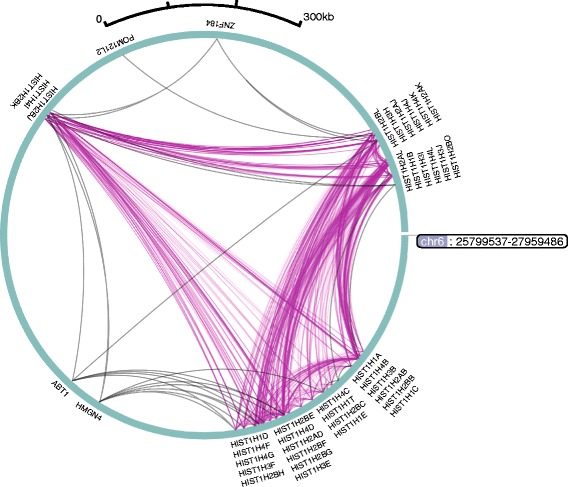
“A similar network of contacts is also detectable between the active promoters of multiple histone genes in many mammalian cell types [243, 279, 471, 492].”
From Transcriptional enhancers and their communication with gene promoters (2021) · cites this paper as [471]
Experimental — accuracy not yet measuredThe cited source says what the claim attributes to it.
In the citing paper
“many computational algorithms for the analysis of data from Hi-C and related techniques explicitly correct for distance decay, identifying “significant interactions” based on how unusual their contact frequency is at a given distance [277, 468–471].”
From Transcriptional enhancers and their communication with gene promoters (2021) · cites this paper as [471]
Self-check
Percentages, sums and reported differences re-computed from the paper’s own numbers.
The self-check needs the paper’s full text.
Citations
Cites
Controlling the False Discovery Rate: A Practical and Powerful Approach to Multiple Testing
Benjamini, Y., & Hochberg, Y. (1995) · Journal of the Royal Statistical Society Series B: Statistical Methodology · doi:10.1111/j.2517-6161.1995.tb02031.x · Cited by 109,482
Moderated estimation of fold change and dispersion for RNA-seq data with DESeq2
Love, M. I., Huber, W., & Anders, S. (2014) · Genome Biology · doi:10.1186/s13059-014-0550-8 · Cited by 95,106
A Simplex Method for Function Minimization
Nelder, J. A., & Mead, R. (1965) · The Computer Journal · doi:10.1093/comjnl/7.4.308 · Cited by 28,905
An integrated encyclopedia of DNA elements in the human genome
The ENCODE Project Consortium (2012) · Nature · doi:10.1038/nature11247 · Cited by 18,072
Differential expression analysis for sequence count data
Anders, S., & Huber, W. (2010) · Genome Biology · doi:10.1186/gb-2010-11-10-r106 · Cited by 15,581
Heinz, S., Benner, C., Spann, N., Bertolino, E., Lin, Y. C., Laslo, P., Cheng, J. X., Murre, C., Singh, H., & Glass, C. K. (2010) · Molecular Cell · doi:10.1016/j.molcel.2010.05.004 · Cited by 13,382
Topological domains in mammalian genomes identified by analysis of chromatin interactions
Dixon, J. R., Selvaraj, S., Yue, F., Kim, A., Li, Y., Shen, Y., Hu, M., Liu, J. S., & Ren, B. (2012) · Nature · doi:10.1038/nature11082 · Cited by 6,829
Systematic Localization of Common Disease-Associated Variation in Regulatory DNA
Maurano, M. T., Humbert, R., Rynes, E., Thurman, R. E., Haugen, E., Wang, H., Reynolds, A. P., Sandstrom, R., Qu, H., Brody, J., et al. (2012) · Science · doi:10.1126/science.1222794 · Cited by 3,716
Orchestrating high-throughput genomic analysis with Bioconductor
Huber, W. K., Carey, V. J., Gentleman, R. C., Anders, S., Carlson, M. R. J., Carvalho, B. S., Bravo, H. C., Davis, S. R., Gatto, L., Girke, T., et al. (2015) · Nature Methods · doi:10.1038/nmeth.3252 · Cited by 3,614
ChromHMM: automating chromatin-state discovery and characterization
Ernst, J., & Kellis, M. (2012) · Nature Methods · doi:10.1038/nmeth.1906 · Cited by 2,457
Research works printed but not linked: 1
- NCBI Gene Expression Omnibus. http://www.ncbi.nlm.nih.gov/geo/query/acc.cgi?acc=GSE81503 . Accessed 25 May 2016.
Cited by
Sorted by citations
Items 101–200 of 423
A multi-layer functional genomic analysis to understand noncoding genetic variation in lipids
Ramdas, S., Judd, J., Graham, S. E., Kanoni, S., Wang, Y., Surakka, I. L., Wenz, B. M., Clarke, S. L., Chesi, A., Wells, A. D., et al. (2022) · The American Journal of Human Genetics · doi:10.1016/j.ajhg.2022.06.012 · Cited by 48
New blood pressure associated loci identified in meta-analyses of 475,000 individuals
Howson, J. M. M., Danesh, J., Surendran, P., & Butterworth, A. S. (2017) · Oxford University Research Archive (ORA) (University of Oxford) · doi:10.17863/cam.13725 · Cited by 50
New Blood Pressure–Associated Loci Identified in Meta-Analyses of 475 000 Individuals
Kraja, A. T., Cook, J. P., Warren, H. R., Surendran, P., Liu, C., Evangelou, E., Manning, A. K., Grarup, N., Drenos, F., Sim, X., et al. (2017) · Circulation Cardiovascular Genetics · doi:10.1161/circgenetics.117.001778 · Cited by 46
Cell Type-Specific Intralocus Interactions Reveal Oligodendrocyte Mechanisms in MS
Factor, D. C., Barbeau, A. M., Allan, K. C., Hu, L. R., Madhavan, M., Hoang, A. T., Hazel, K. E. A., Hall, P. A., Nisraiyya, S., Najm, F. J., et al. (2020) · Cell · doi:10.1016/j.cell.2020.03.002 · Cited by 48
Zhang, N., Mendieta-Esteban, J., Magli, A., Lilja, K. C., Perlingeiro, R. C. R., Martı́-Renom, M. A., Tsirigos, A., & Dynlacht, B. D. (2020) · Nature Communications · doi:10.1038/s41467-020-19999-w · Cited by 49
The 3D Genome: From Structure to Function
Mohanta, T. K., Mishra, A. K., & Al‐Harrasi, A. (2021) · International Journal of Molecular Sciences · doi:10.3390/ijms222111585 · Cited by 51
Pahl, M. C., Coz, C. L., Su, C., Sharma, P. K., Thomas, R. M., Pippin, J. A., Cabrera, E. C., Johnson, M. E., Leonard, M. E., Lu, S., et al. (2022) · Genome biology · doi:10.1186/s13059-022-02691-1 · Cited by 44
Law, P., Sud, A., Mitchell, J. S., Henrion, M., Orlando, G., Lenive, O., Broderick, P., Speedy, H. E., Johnson, D. C., Kaiser, M., et al. (2017) · Scientific Reports · doi:10.1038/srep41071 · Cited by 47
The Pol II preinitiation complex (PIC) influences Mediator binding but not promoter–enhancer loopingPreprint
Sun, F., Sun, T., Kronenberg, M., Tan, X., Huang, C., & Carey, M. (2021) · Genes & Development · doi:10.1101/gad.348471.121 · Cited by 46
Koohy, H., Bolland, D. J., Matheson, L. S., Schoenfelder, S., Stellato, C., Dimond, A., Várnai, C., Chovanec, P., Chessa, T. A. M., Denizot, J., et al. (2018) · Genome biology · doi:10.1186/s13059-018-1489-y · Cited by 41
Self-citationChromatin interactome mapping at 139 independent breast cancer risk signals
Beesley, J., Sivakumaran, H., Marjaneh, M. M., Lima, L. G., Hillman, K. M., Kaufmann, S., Tuano, N., Hussein, N., Ham, S., Mukhopadhyay, P., et al. (2020) · Genome biology · doi:10.1186/s13059-019-1877-y · Cited by 41
Su, C., Argenziano, M., Lu, S., Pippin, J. A., Pahl, M. C., Leonard, M. E., Cousminer, D. L., Johnson, M. E., Lasconi, C., Wells, A. D., et al. (2021) · Progress in Neurobiology · doi:10.1016/j.pneurobio.2021.102000 · Cited by 41
Benhammou, J. N., Ko, A., Alvarez, M., Kaikkonen, M. U., Rankin, C. R., Garske, K. M., Padua, D. M., Bhagat, Y. V., Kamińska, D., Kärjä, V. J., et al. (2019) · Hepatology Communications · doi:10.1002/hep4.1413 · Cited by 43
Gutiérrez-Pérez, I., Rowley, M. J., Lyu, X., Valadéz-Graham, V., Vallejo, D. M., Ballesta‐Illán, E., López‐Atalaya, J. P., Kremsky, I., Caparrós, E., Corces, V. G., et al. (2019) · Cell Reports · doi:10.1016/j.celrep.2019.07.096 · Cited by 42
Enhancer–gene maps in the human and zebrafish genomes using evolutionary linkage conservation
Clément, Y., Torbey, P., Gilardi‐Hebenstreit, P., & Crollius, H. R. (2019) · Nucleic Acids Research · doi:10.1093/nar/gkz1199 · Cited by 43
Sakabe, N. J., Aneas, I., Knoblauch, N., Sobreira, D. R., Clark, N., Paz, C., Horth, C., Ziffra, R. S., Kaur, H., Liu, X., et al. (2020) · Science Advances · doi:10.1126/sciadv.abc8696 · Cited by 38
The potential of epigenetic therapy to target the 3D epigenome in endocrine-resistant breast cancer
Achinger-Kawecka, J., Stirzaker, C., Portman, N., Campbell, E. M., Chia, K.-M., Du, Q., Laven‐Law, G., Nair, S. S., Yong, A., Wilkinson, A., et al. (2024) · Nature Structural & Molecular Biology · doi:10.1038/s41594-023-01181-7 · Cited by 46
Novel insights into chromosomal conformations in cancer
Jia, R., Chai, P., Zhang, H., & Fan, X. (2017) · Molecular Cancer · doi:10.1186/s12943-017-0741-5 · Cited by 45
Joslin, A. C., Sobreira, D. R., Hansen, G. T., Sakabe, N. J., Aneas, I., Montefiori, L. E., Farris, K. M., Gu, J., Lehman, D. M., Ober, C., et al. (2021) · Nature Communications · doi:10.1038/s41467-021-25614-3 · Cited by 37
Comoglio, F., Park, H. J., Schoenfelder, S., Barozzi, I., Bode, D., Fraser, P., & Green, A. R. (2018) · Genome Research · doi:10.1101/gr.227272.117 · Cited by 41
Self-citationp63 cooperates with CTCF to modulate chromatin architecture in skin keratinocytes
Qu, J., Yi, G., & Zhou, H. (2019) · Epigenetics & Chromatin · doi:10.1186/s13072-019-0280-y · Cited by 38
Downes, D. J., Beagrie, R. A., Gosden, M. E., Telenius, J. M., Carpenter, S. J., Nußbaum, L., Ornellas, S. D., Sergeant, M. J., Eijsbouts, C. Q., Schweßinger, R., et al. (2021) · Nature Communications · doi:10.1038/s41467-020-20809-6 · Cited by 44
The global and promoter-centric 3D genome organization temporally resolved during a circadian cycle
Furlan-Magaril, M., Ando-Kuri, M., Arzate-Mejía, R. G., Morf, J., Cairns, J., Román-Figueroa, A., Tenorio-Hernández, L., Poot-Hernández, A. C., Andrews, S., Várnai, C., et al. (2021) · Genome Biology · doi:10.1186/s13059-021-02374-3 · Cited by 39
Self-citationInsight into genetic predisposition to chronic lymphocytic leukemia from integrative epigenomics
Speedy, H. E., Beekman, R., Chapaprieta, V., Orlando, G., Law, P., Martin‐García, D., Gutiérrez‐Abril, J., Catovsky, D., Beà, S., Clot, G., et al. (2019) · Nature Communications · doi:10.1038/s41467-019-11582-2 · Cited by 38
Yun, H., Narayan, N., Vohra, S., Giotopoulos, G., Mupo, A., Madrigal, P., Sasca, D., Lara‐Astiaso, D., Horton, S. J., Singh, S. A., et al. (2021) · Nature Genetics · doi:10.1038/s41588-021-00925-9 · Cited by 38
Self-citationChromosome-level assembly of the common vetch (Vicia sativa) reference genome
Xi, H., Nguyen, V., Ward, C. M., Liu, Z., & Searle, I. R. (2022) · Gigabyte · doi:10.46471/gigabyte.38 · Cited by 36
Keeling, C. I., Campbell, E. O., Batista, P. D., Shegelski, V. A., Trevoy, S. A. L., Huber, D. P. W., Janes, J. K., & Sperling, F. A. H. (2021) · Molecular Ecology Resources · doi:10.1111/1755-0998.13528 · Cited by 34
Detecting chromosomal interactions in Capture Hi-C data with CHiCAGO and companion tools
Freire-Pritchett, P., Ray-Jones, H., Rosa, M. D., Eijsbouts, C., Orchard, W. R., Wingett, S., Wallace, C., Cairns, J. M., Spivakov, M., & Malysheva, V. (2021) · Nature Protocols · doi:10.1038/s41596-021-00567-5 · Cited by 34
Self-citationMost chromatin interactions are not in linkage disequilibriumPreprint
Whalen, S., & Pollard, K. S. (2019) · Genome Research · doi:10.1101/gr.238022.118 · Cited by 35
Computational methods for analyzing and modeling genome structure and organization
Lin, D., Bonora, G., Yardımcı, G. G., & Noble, W. S. (2018) · WIREs Systems Biology and Medicine · doi:10.1002/wsbm.1435 · Cited by 37
Selvarajan, I., Toropainen, A., Garske, K. M., Rodríguez, M. L., Ko, A., Miao, Z., Kamińska, D., Õunap, K., Örd, T., Ravindran, A., et al. (2021) · The American Journal of Human Genetics · doi:10.1016/j.ajhg.2021.02.006 · Cited by 34
An atlas of transcribed enhancers across helper T cell diversity for decoding human diseases
Oguchi, A., Suzuki, A., Komatsu, S., Yoshitomi, H., Bhagat, S., Son, R., Bonnal, R. J. P., Kojima, S., Koido, M., Takeuchi, K., et al. (2024) · Science · doi:10.1126/science.add8394 · Cited by 40
Lasconi, C., Pahl, M. C., Cousminer, D. L., Doege, C. A., Chesi, A., Hodge, K. M., Leonard, M. E., Lu, S., Johnson, M. E., Su, C., et al. (2020) · Cellular and Molecular Gastroenterology and Hepatology · doi:10.1016/j.jcmgh.2020.10.004 · Cited by 32
Identifying Causal Genes at the Multiple Sclerosis Associated Region 6q23 Using Capture Hi-C
Martin, P., McGovern, A., Massey, J., Schoenfelder, S., Duffus, K., Yarwood, A., Barton, A. C., Worthington, J., Fraser, P., Eyre, S., et al. (2016) · PLoS ONE · doi:10.1371/journal.pone.0166923 · Cited by 32
Self-citationChromatin Looping Links Target Genes with Genetic Risk Loci for Dermatological Traits
Shi, C., Ray-Jones, H., Ding, J., Duffus, K., Fu, Y., Gaddi, V. P., Gough, O., Hankinson, J., Martin, P., McGovern, A., et al. (2021) · Journal of Investigative Dermatology · doi:10.1016/j.jid.2021.01.015 · Cited by 32
Buschle, A., Mrozek-Górska, P., Cernilogar, F. M., Ettinger, A. W., Pich, D., Krebs, S., Mocanu, B., Blum, H., Schotta, G., Straub, T., et al. (2021) · Nucleic Acids Research · doi:10.1093/nar/gkab099 · Cited by 32
Ray-Jones, H., Duffus, K., McGovern, A., Martin, P., Shi, C., Hankinson, J., Gough, O., Yarwood, A., Morris, A. P., Adamson, A., et al. (2020) · BMC Biology · doi:10.1186/s12915-020-00779-3 · Cited by 31
Targeted erasure of DNA methylation by TET3 drives adipogenic reprogramming and differentiation
Park, J., Lee, D. H., Ham, S., Oh, J., Noh, J., Lee, Y. K., Park, Y. J., Lee, G., Han, S. M., Han, J. S., et al. (2022) · Nature Metabolism · doi:10.1038/s42255-022-00597-7 · Cited by 31
Lee, B. H., Wu, Z., & Rhie, S. (2022) · Epigenetics & Chromatin · doi:10.1186/s13072-022-00473-4 · Cited by 24
Filipescu, D., Carcamo, S., Agarwal, A., Tung, N., Humblin, É., Goldberg, M. S., Vyas, N. S., Beaumont, K. G., Demircioğlu, D., Sridhar, S., et al. (2023) · Nature Cell Biology · doi:10.1038/s41556-023-01208-7 · Cited by 32
Laverré, A., Tannier, É., & Necşulea, A. (2021) · Genome Research · doi:10.1101/gr.275901.121 · Cited by 30
Mitchelmore, J., Grinberg, N. F., Wallace, C., & Spivakov, M. (2020) · Nucleic Acids Research · doi:10.1093/nar/gkaa123 · Cited by 25
Self-citationp53 rapidly restructures 3D chromatin organization to trigger a transcriptional response
Serra, F., Nieto-Aliseda, A., Fanlo, L., Rovirosa, L., Cabrera-Pasadas, M., Lazarenkov, A., Urmeneta, B., Alcalde-Merino, A., Nola, E., Okorokov, A. L., et al. (2024) · Nature Communications · doi:10.1038/s41467-024-46666-1 · Cited by 30
Self-citationChromatin interactions reveal novel gene targets for drug repositioning in rheumatic diseases
Martin, P., Ding, J., Duffus, K., Gaddi, V. P., McGovern, A., Ray-Jones, H. F., Yarwood, A., Worthington, J., Barton, A. C., & Orozco, G. (2019) · Annals of the Rheumatic Diseases · doi:10.1136/annrheumdis-2018-214649 · Cited by 29
Granell, R., Curtin, J. A., Haider, S., Kitaba, N. T., Mathie, S. A., Gregory, L. G., Yates, L. L., Tutino, M., Hankinson, J., Perretti, M., et al. (2023) · eLife · doi:10.7554/elife.84315 · Cited by 29
The highly improved genome of Ixodes scapularis with X and Y pseudochromosomes
Nuss, A. B., Lomas, J. S., Reyes, J. B., Garcia-Cruz, O., Lei, W., Sharma, A., Pham, M. N., Beniwal, S., Swain, M., McVicar, M., et al. (2023) · Life Science Alliance · doi:10.26508/lsa.202302109 · Cited by 28
Zouari, Y. B., Molitor, A., Sikorska, N., Pancaldi, V., & Sexton, T. (2018) · Genome Biology · doi:10.1186/s13059-019-1706-3 · Cited by 27
Kessler, S., Minoux, M., Joshi, O., Zouari, Y. B., Ducret, S., Ross, F., Vilain, N., Salvi, A., Wolff, J., Kohler, H., et al. (2023) · Nature Communications · doi:10.1038/s41467-023-38953-0 · Cited by 28
Anil, A., Spalinskas, R., Åkerborg, Ö., & Sahlén, P. (2017) · Bioinformatics · doi:10.1093/bioinformatics/btx625 · Cited by 27
Functional dissection of inherited non-coding variation influencing multiple myeloma risk
Ajore, R., Niroula, A., Pertesi, M., Cafaro, C., Thodberg, M., Went, M., Bao, E. L., Duran-Lozano, L., Portilla, A. L. D. L., Olafsdottir, T. A., et al. (2022) · Nature Communications · doi:10.1038/s41467-021-27666-x · Cited by 30
Dimitrova, E., Feldmann, A., van der Weide, R. H., Flach, K. D., Lastuvkova, A., de Wit, E., & Klose, R. J. (2022) · Nature Structural & Molecular Biology · doi:10.1038/s41594-022-00840-5 · Cited by 26
Brown, A., Cohen, C., Mielczarek, O., Migliorini, G., Costantino, F., Allcock, A., Davidson, C., Elliott, K. S., Fang, H., Lara, A. L., et al. (2023) · Cell Genomics · doi:10.1016/j.xgen.2023.100306 · Cited by 28
Cairns, J., Orchard, W. R., Malysheva, V., & Spivakov, M. (2019) · Bioinformatics · doi:10.1093/bioinformatics/btz450 · Cited by 28
Self-citationMeasuring the reproducibility and quality of Hi-C dataPreprint
Yardımcı, G. G., Özadam, H., Sauria, M. E. G., Ursu, O., Yan, K., Yang, T., Chakraborty, A., Kaul, A., Lajoie, B. R., Song, F., et al. (2017) · bioRxiv (Cold Spring Harbor Laboratory) · doi:10.1101/188755 · Cited by 28
Predicting 3D chromatin interactions from DNA sequence using Deep Learning
Piecyk, R. S., Schlegel, L., & Johannes, F. M. (2022) · Computational and Structural Biotechnology Journal · doi:10.1016/j.csbj.2022.06.047 · Cited by 27
3D genome organization links non-coding disease-associated variants to genes
Orozco, G., Schoenfelder, S., Walker, N. J., Eyre, S., & Fraser, P. (2022) · Frontiers in Cell and Developmental Biology · doi:10.3389/fcell.2022.995388 · Cited by 30
Self-citationMiddelkamp, S., Vlaar, J. M., Giltay, J. C., Korzelius, J., Besselink, N. J. M., Boymans, S., Janssen, R., de la Fonteijne, L., van Binsbergen, E., van Roosmalen, M. J., et al. (2019) · Genome Medicine · doi:10.1186/s13073-019-0692-0 · Cited by 27
Using GARDEN-NET and ChAseR to explore human haematopoietic 3D chromatin interaction networks
Madrid-Mencía, M., Raineri, E., Cao, T. B. N., & Pancaldi, V. (2020) · Nucleic Acids Research · doi:10.1093/nar/gkaa159 · Cited by 23
C-TALE, a new cost-effective method for targeted enrichment of Hi-C/3C-seq libraries
Golov, A. K., Ulianov, S. V., Luzhin, A. V., Kalabusheva, E. P., Kantidze, O. L., Flyamer, I. M., Razin, S. V., & Gavrilov, A. A. (2019) · Methods · doi:10.1016/j.ymeth.2019.06.022 · Cited by 28
Pal, A., Noble, M. A., Morales, M., Pal, R., Baumgartner, M., Yang, J. W., Yim, K., Uebbing, S., & Noonan, J. P. (2025) · Cell · doi:10.1016/j.cell.2025.01.007 · Cited by 38
Lee, H., Willi, M., Wang, C., Yang, C. M., Smith, H. E., Liu, C., & Hennighausen, L. G. (2017) · Nucleic Acids Research · doi:10.1093/nar/gkx185 · Cited by 25
Sekelja, M., Paulsen, J., & Collas, P. (2016) · Genome biology · doi:10.1186/s13059-016-0923-2 · Cited by 26
Identification of recurrent noncoding mutations in B-cell lymphoma using capture Hi-C
Cornish, A. J., Hoang, P. H., Dobbins, S. E., Law, P., Chubb, D., Orlando, G., & Houlston, R. S. (2019) · Blood Advances · doi:10.1182/bloodadvances.2018026419 · Cited by 24
Chrom-Lasso: a lasso regression-based model to detect functional interactions using Hi-C data
Lu, J., Wang, X., Sun, K., & Lan, X. (2021) · Briefings in Bioinformatics · doi:10.1093/bib/bbab181 · Cited by 24
Su, C., Pahl, M. C., Grant, S. F. A., & Wells, A. D. (2021) · Human Genetics · doi:10.1007/s00439-021-02326-8 · Cited by 24
Dissection of multiple sclerosis genetics identifies B and CD4+ T cells as driver cell subsets
Guo, M. H., Sama, P., LaBarre, B. A., Lokhande, H. A., Balibalos, J., Chu, C., Du, X., Kheradpour, P., Kim, C. C., Oniskey, T. K., et al. (2022) · Genome biology · doi:10.1186/s13059-022-02694-y · Cited by 23
Villiers, W., Kelly, A., He, X., Kaufman-Cook, J., Elbasir, A., Bensmail, H., Lavender, P., Dillon, R. J., Mifsud, B., & Osborne, C. S. (2021) · Nature Communications · doi:10.1038/s41467-023-36262-0 · Cited by 23
Self-citationGenome-wide association study implicates immune dysfunction in the development of Hodgkin lymphoma
Sud, A., Thomsen, H., Orlando, G., Försti, A., Law, P., Broderick, P., Cooke, R., Hariri, F., Pastinen, T., Easton, D. F., et al. (2018) · Blood · doi:10.1182/blood-2018-06-855296 · Cited by 23
Is reliance on an inaccurate genome sequence sabotaging your experiments?
Baptista, R., & Kissinger, J. (2019) · PLoS Pathogens · doi:10.1371/journal.ppat.1007901 · Cited by 22
Helling, B. A., Sobreira, D. R., Hansen, G. T., Sakabe, N. J., Luo, K., Billstrand, C., Laxman, B., Nicolae, R. I., Nicolae, D. L., Bochkov, Y. A., et al. (2020) · Communications Biology · doi:10.1038/s42003-020-01411-4 · Cited by 23
Nuytemans, K., Vasquez, M. L., Wang, L., Booven, D. V., Griswold, A. J., Rajabli, F., Celis, K., Oron, O., Hofmann, N. K., Rolati, S., et al. (2022) · Alzheimer s & Dementia · doi:10.1002/alz.12534 · Cited by 22
Garske, K. M., Pan, D. Z., Miao, Z., Bhagat, Y. V., Comenho, C., Robles, C. R., Benhammou, J. N., Alvarez, M., Ko, A., Ye, C., et al. (2019) · Nature Metabolism · doi:10.1038/s42255-019-0071-6 · Cited by 22
Identifying high-confidence capture Hi-C interactions using CHiCANE
Holgersen, E. M., Gillespie, A., Leavy, O. C., Baxter, J. S., Zvereva, A., Muirhead, G., Johnson, N., Sipos, O., Dryden, N. H., Broome, L. R., et al. (2021) · Nature Protocols · doi:10.1038/s41596-021-00498-1 · Cited by 22
CaptureCompendium: a comprehensive toolkit for 3C analysisPreprint
Telenius, J. M., Downes, D. J., Sergeant, M. J., Oudelaar, A. M., McGowan, S. J., Kerry, J., Hanssen, L. L. P., Schweßinger, R., Eijsbouts, C. Q., Davies, J. O. J., et al. (2020) · bioRxiv (Cold Spring Harbor Laboratory) · doi:10.1101/2020.02.17.952572 · Cited by 21
Liu, L., Zhang, L., Dao, F., Yang, Y., & Lin, H. (2020) · Molecular Therapy — Nucleic Acids · doi:10.1016/j.omtn.2020.11.011 · Cited by 21
de Smith, A. J., Wahlster, L., Jeon, S., Kachuri, L., Black, S., Langie, J., Cato, L. D., Nakatsuka, N. J., Chan, T. F., Xia, G., et al. (2024) · Cell Genomics · doi:10.1016/j.xgen.2024.100526 · Cited by 23
Molineros, J. E., Singh, B., Terao, C., Okada, Y., Kaplan, J., McDaniel, B., Akizuki, S., Sun, C., Webb, C. F., Looger, L. L., et al. (2019) · Frontiers in Immunology · doi:10.3389/fimmu.2019.01066 · Cited by 21
Xu, M., Mehl, L. C., Zhang, T., Thakur, R., Sowards, H., Myers, T. A., Jessop, L., Chesi, A., Johnson, M. E., Wells, A. D., et al. (2021) · The American Journal of Human Genetics · doi:10.1016/j.ajhg.2021.07.002 · Cited by 17
Barnett, K. R., Mobley, R. J., Diedrich, J. D., Bergeron, B. P., Bhattarai, K. R., Monovich, A. C., Narina, S., Yang, W., Crews, K. R., Manring, C. S., et al. (2023) · Cell Genomics · doi:10.1016/j.xgen.2023.100442 · Cited by 22
MacArthur, I. C., Ma, L., Huang, C., Bhavsar, H., Suzuki, M., & Dawlaty, M. M. (2024) · Science Advances · doi:10.1126/sciadv.ado5424 · Cited by 21
Chromosome contacts in activated T cells identify autoimmune disease candidate genesPreprint
Burren, O. S., García, A. R., Javierre, B. M., Rainbow, D. B., Cairns, J., Cooper, N. J., Lambourne, J. J., Schofield, E. C., Dopico, X. C., Ferreira, R. C., et al. (2017) · bioRxiv (Cold Spring Harbor Laboratory) · doi:10.1101/100958 · Cited by 20
Self-citationcapC-MAP: software for analysis of Capture-C data
Buckle, A., Gilbert, N., Marenduzzo, D., & Brackley, C. (2019) · Bioinform. · doi:10.1093/bioinformatics/btz480 · Cited by 16
3D chromatin connectivity underlies replication origin efficiency in mouse embryonic stem cells
Jodkowska, K., Pancaldi, V., Rigau, M., Almeida, R., Fernández-Justel, J. M., Graña‐Castro, O., Rodríguez‐Acebes, S., Rubio-Camarillo, M., Pau, E. C. D. S., Pisano, D. G., et al. (2022) · Nucleic Acids Research · doi:10.1093/nar/gkac1111 · Cited by 31
Low input capture Hi-C (liCHi-C) identifies promoter-enhancer interactions at high-resolution
Tomás-Daza, L., Rovirosa, L., López-Martí, P., Nieto-Aliseda, A., Serra, F., Planas‐Riverola, A., Molina, Ò., McDonald, R., Ghevaert, C., Cuatrecasas, E., et al. (2023) · Nature Communications · doi:10.1038/s41467-023-35911-8 · Cited by 22
Self-citationFine mapping chromatin contacts in capture Hi-C data
Eijsbouts, C. Q., Burren, O. S., Newcombe, P. J., & Wallace, C. (2019) · BMC Genomics · doi:10.1186/s12864-018-5314-5 · Cited by 19
Shi, L., Song, L., Maurer, K., Dou, Y., Patel, V. R., Su, C., Leonard, M. E., Lu, S., Hodge, K. M., Torres, A., et al. (2020) · The Journal of Immunology · doi:10.4049/jimmunol.1900650 · Cited by 18
Beef Cattle Genome Project: Advances in Genome Sequencing, Assembly, and Functional Genes Discovery
Gao, Z., Lu, Y., Chong, Y., Li, M., Hong, J., Wu, J., Wu, D., Xi, D., & Deng, W. (2024) · International Journal of Molecular Sciences · doi:10.3390/ijms25137147 · Cited by 19
Comparison of computational methods for 3D genome analysis at single-cell Hi-C level
Li, X., An, Z., & Zhang, Z. (2019) · Methods · doi:10.1016/j.ymeth.2019.08.005 · Cited by 18
An enhanced genetic model of relapsed IGH-translocated multiple myeloma evolutionary dynamics
Hoang, P. H., Cornish, A. J., Sherborne, A. L., Chubb, D., Kimber, S. T., Jackson, G. H., Morgan, G. J., Cook, G., Kinnersley, B., Kaiser, M., et al. (2020) · Blood Cancer Journal · doi:10.1038/s41408-020-00367-2 · Cited by 18
Promoter capture Hi-C identifies promoter-related loops and fountain structures in Arabidopsis
Wang, D., Xiao, S., Shu, J., Luo, L., Yang, M., Calonje, M., He, H., Song, B., & Zhou, Y. (2024) · Genome biology · doi:10.1186/s13059-024-03465-7 · Cited by 19
Enhancer-Associated LncRNA-ITGA2 Promotes Vascular Remodeling Through ITGA2
Guo, X., Hou, P., Zhang, S., Xu, Q., Zhou, M., Tang, W., Jin, F., Zhang, B., Guo, Z., Zhao, X., et al. (2025) · Circulation Research · doi:10.1161/circresaha.124.325443 · Cited by 17
Huang, H., Liu, J., Li, M., Guo, H., Zhu, J., Zhu, L., Wu, S., Mo, K., Huang, Y., Tan, J., et al. (2022) · Science Advances · doi:10.1126/sciadv.abo5668 · Cited by 17
Wang, S., Zhang, Q., He, Y., Cui, Z., Guo, Z., Han, K., & Huang, D.-S. (2022) · PLoS Computational Biology · doi:10.1371/journal.pcbi.1010572 · Cited by 16
González‐Serna, D., Shi, C., Kerick, M., Hankinson, J., Ding, J., McGovern, A., Tutino, M., Villanueva-Martín, G., Ortego‐Centeno, N., Callejas-Rubio, J. L., et al. (2022) · Arthritis & Rheumatology · doi:10.1002/art.42396 · Cited by 19
Li, M., Guo, H., Wang, B., Han, Z., Wu, S., Liu, J., Huang, H., Zhu, J., An, F., Lin, Z., et al. (2024) · Nature Communications · doi:10.1038/s41467-023-44471-w · Cited by 17
Genetic coupling of enhancer activity and connectivity in gene expression control
Ray-Jones, H. F., Sung, C. K., Chan, L. T., Haglund, A., Artemov, P., Rosa, M. D., Ruje, L., Burden, F., Kreuzhuber, R., Litovskikh, A., et al. (2025) · Nature Communications · doi:10.1038/s41467-025-55900-3 · Cited by 17
Self-citationTranscriptome-wide association study of multiple myeloma identifies candidate susceptibility genes
Went, M., Kinnersley, B., Sud, A., Johnson, D. C., Weinhold, N., Försti, A., van Duin, M., Orlando, G., Mitchell, J. S., Kuiper, R., et al. (2019) · Human Genomics · doi:10.1186/s40246-019-0231-5 · Cited by 17
Wang, J., Clay‐Gilmour, A., Karaesmen, E., Rizvi, A., Zhu, Q., Yan, L., Preus, L. M., Liu, S., Wang, Y., Griffiths, E. A., et al. (2021) · Frontiers in Genetics · doi:10.3389/fgene.2021.554948 · Cited by 14
Medina‐Gómez, C., Mullin, B. H., Chesi, A., Prijatelj, V., Kemp, J. P., Shochat-Carvalho, C., Trajanoska, K., Wang, C. A., Joro, R., Evans, T. E., et al. (2023) · Communications Biology · doi:10.1038/s42003-023-04869-0 · Cited by 23
Huang, N., Seow, W. Q., Appert, A., Yan, D., Stempor, P., & Ahringer, J. (2021) · Genome Research · doi:10.1101/gr.275669.121 · Cited by 16
Metadata
- Authors
- Cairns, J., Freire-Pritchett, P., Wingett, S. W., Várnai, C., Dimond, A., Plagnol, V., Zerbino, D., Schoenfelder, S., Javierre, B.-M., Osborne, C., Fraser, P., & Spivakov, M.
- Affiliations
- Babraham Institute (GB)
- University College London (GB)
- European Bioinformatics Institute (GB)
- King's College London (GB)
- Corresponding author
- Spivakov, Mikhail
- ORCID
- Venue
- Genome Biology
- Published
- 2016-06-15
- Volume
- 17
- Issue
- 1
- Pages
- 127-127
- ISSN
- 1465-6906 (ISSN-L)
- 1474-760X
- PMC
- PMC4908757
- OpenAlex
- W2950020758
- Cited by
- 417
- References
- 60
- Citations by year
- 2026: 20 · 2025: 34 · 2024: 42 · 2023: 40 · 2022: 45 · 2021: 48 · 2020: 51 · 2019: 52 · 2018: 39 · 2017: 32 · 2016: 11
- FWCI
- 23.22
- Type
- journal article
- Language
- en
- Open access
- gold
- doi.org
- Licence
- cc-by
- Locations
- Genome biology (publishedVersion, cc-by)
- Europe PMC (PubMed Central) (publishedVersion, cc-by)
- PubMed Central (publishedVersion, cc-by)
- PubMed (publishedVersion)
- Research Portal (King's College London) (submittedVersion, cc-by)
- University of Birmingham Research Portal (University of Birmingham) (submittedVersion, cc-by)
- Spiral (Imperial College London) (submittedVersion, other-oa)
- Funders
- Biotechnology and Biological Sciences Research Council (GB)
- Topics
- Life Sciences › Biochemistry, Genetics and Molecular Biology › Molecular Biology › Genomics and Chromatin Dynamics
- Life Sciences › Biochemistry, Genetics and Molecular Biology › Molecular Biology › Bioinformatics and Genomic Networks
- Life Sciences › Biochemistry, Genetics and Molecular Biology › Cancer Research › Cancer-related molecular mechanisms research
- Keywords
- Capture Hi-C, chromatin looping, background modeling, normalization, multiple comparisons, Chicago, promoter interactions, regulatory elements, disease-associated SNPs
- MeSH terms
- Algorithms, Chromatin, Chromosomes, Humans, Software, Internet, Polymorphism, Single Nucleotide, Genomics
About these checks
Registry, retraction, Cites and statistics results are computed, not judged, with one exception: a printed reference that no index lists is read once by a model before it counts as a citation error. Claims are extracted by a model and kept only when their quote appears verbatim in the text; each cited source is then checked, with a model’s help, for whether it says what the claim relies on. Those verdicts can be wrong — read the claim’s quote and the cited source before relying on one.
Statistics and arithmetic are recomputed, not judged.
Confidence bands are shown only for fields calibrated on our annotated test set. None is calibrated yet, so no band is shown.
What counts as a claim ›How we measure confidence ›How we check this ›
Are you an author, or do you see a problem with this page? Request a review
