

The DOI matches its Crossref record; 60 of the 60 references it cites were found in a registry or an index.
CHiCAGO: robust detection of DNA looping interactions in Capture Hi-C data
Open accessPublished version of a preprint
Abstract
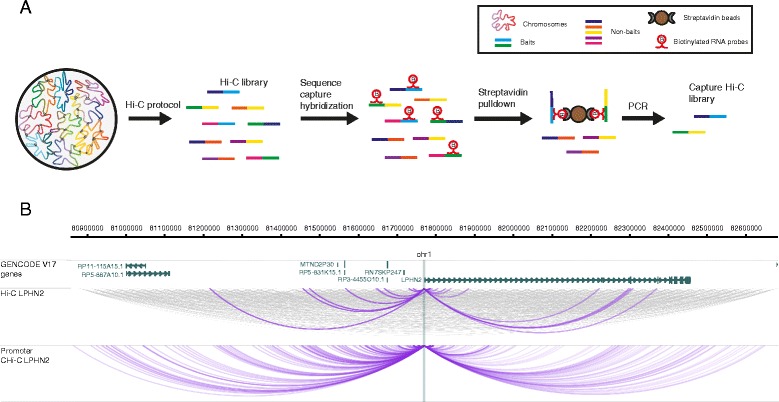
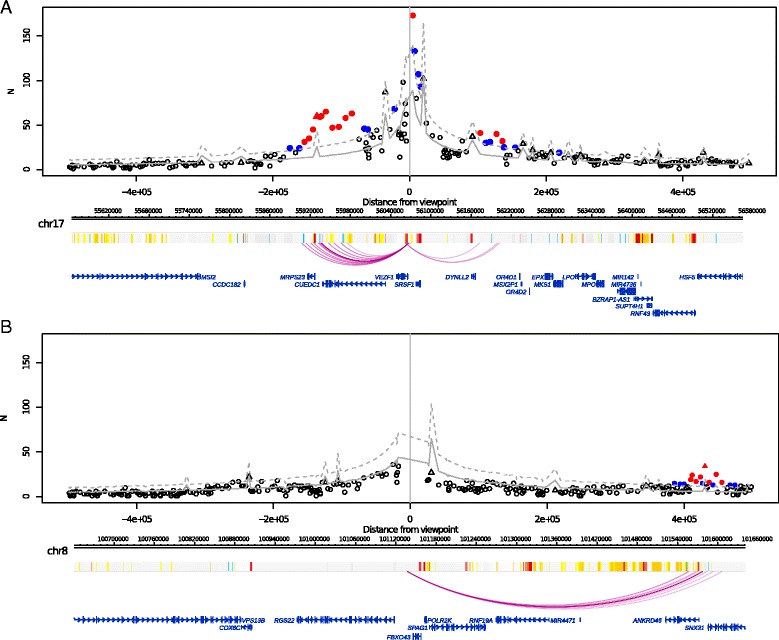
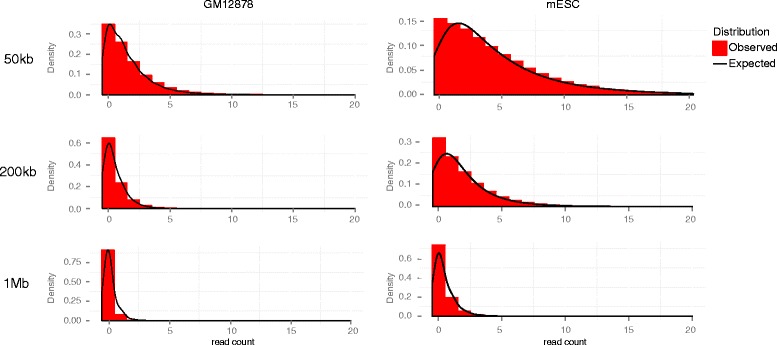
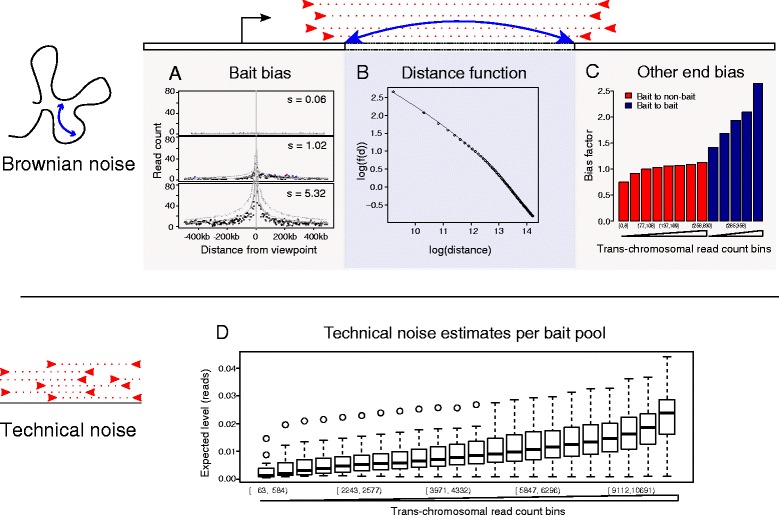
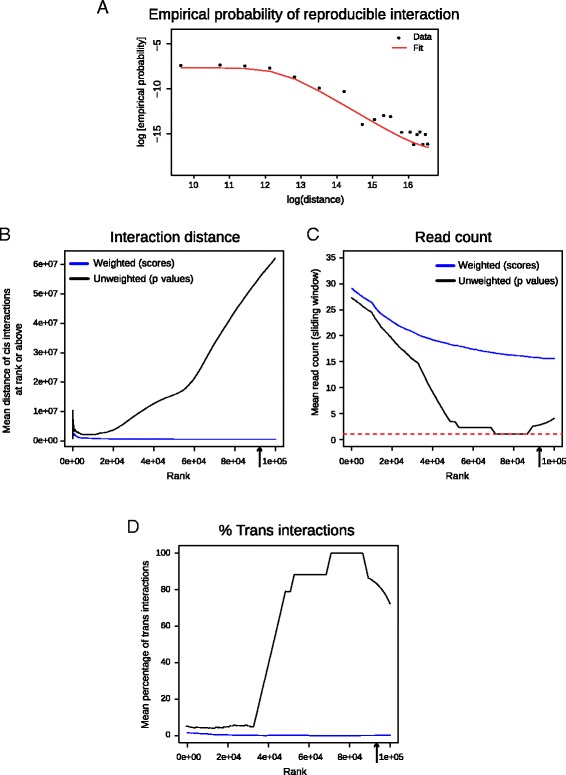
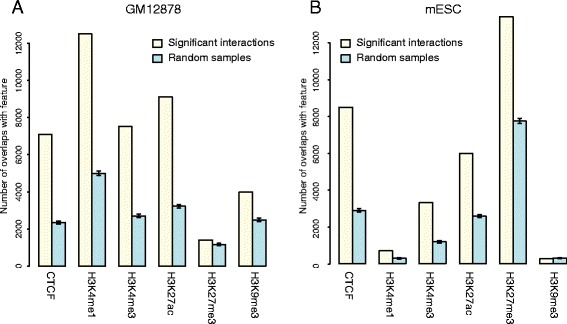
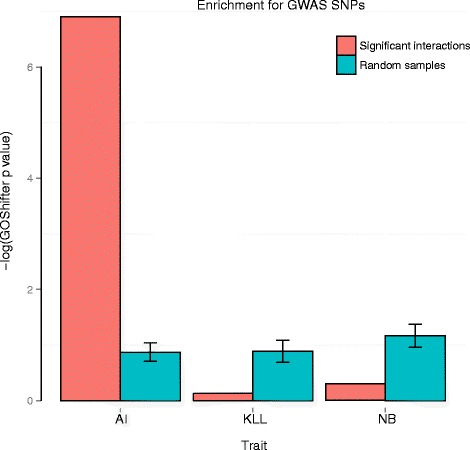
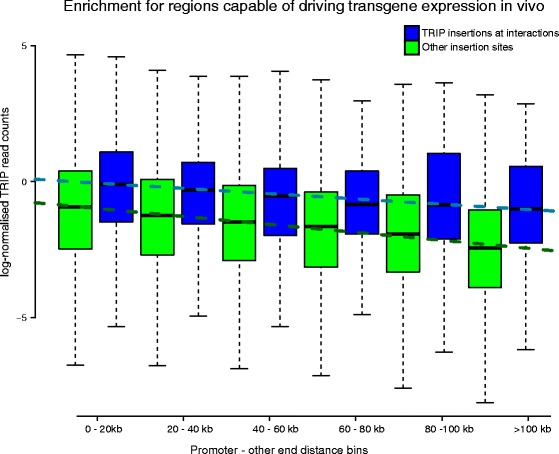
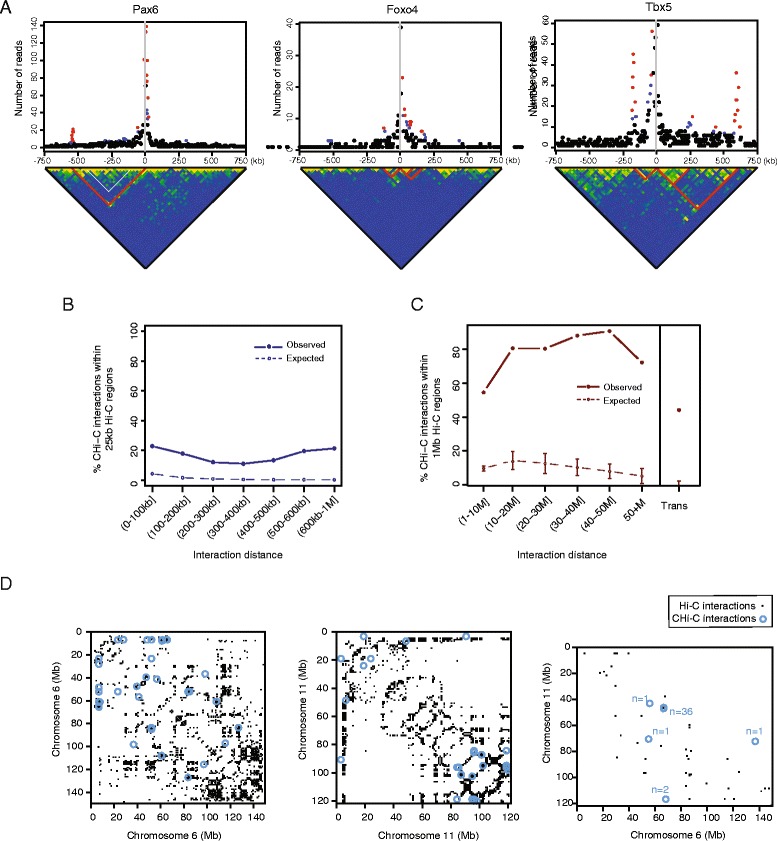
Capture Hi-C (CHi-C) is a method for profiling chromosomal interactions involving targeted regions of interest, such as gene promoters, globally and at high resolution. Signal detection in CHi-C data involves a number of statistical challenges that are not observed when using other Hi-C-like techniques. We present a background model and algorithms for normalisation and multiple testing that are specifically adapted to CHi-C experiments. We implement these procedures in CHiCAGO ( http://regulatorygenomicsgroup.org/chicago ), an open-source package for robust interaction detection in CHi-C. We validate CHiCAGO by showing that promoter-interacting regions detected with this method are enriched for regulatory features and disease-associated SNPs.
Overview
The claims and statistics of this paper haven’t been checked yet.
Run the check — free, no account needed. It reads the open-access text and checks the sources it cites.
Integrity signals
Registry
Cites
Statistics
Figures
Verification
Claims the paper makes
The claims and statistics of this paper haven’t been checked yet.
Run the check — free, no account needed. It reads the open-access text and checks the sources it cites.
Claims other papers make about this one
Each is checked against this paper’s own text: does it say what the citing paper says it does?
The source backs part of the claim, not all of it — or backs it for a different population, condition or comparison.
In the citing paper
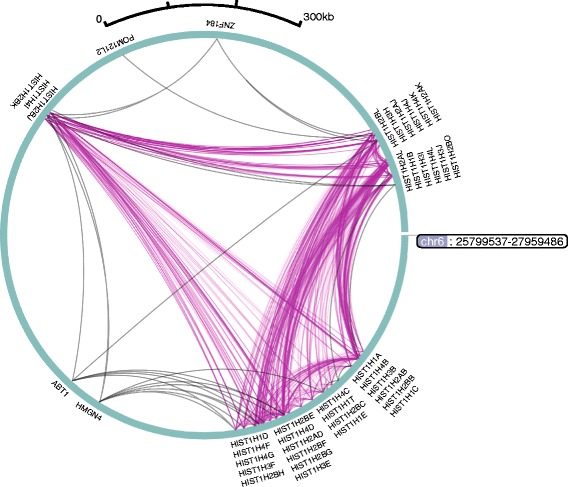
“A similar network of contacts is also detectable between the active promoters of multiple histone genes in many mammalian cell types [243, 279, 471, 492].”
From Transcriptional enhancers and their communication with gene promoters (2021) · cites this paper as [471]
Experimental — accuracy not yet measuredThe cited source says what the claim attributes to it.
In the citing paper
“many computational algorithms for the analysis of data from Hi-C and related techniques explicitly correct for distance decay, identifying “significant interactions” based on how unusual their contact frequency is at a given distance [277, 468–471].”
From Transcriptional enhancers and their communication with gene promoters (2021) · cites this paper as [471]
Self-check
Percentages, sums and reported differences re-computed from the paper’s own numbers.
The self-check needs the paper’s full text.
Citations
Cites
Controlling the False Discovery Rate: A Practical and Powerful Approach to Multiple Testing
Benjamini, Y., & Hochberg, Y. (1995) · Journal of the Royal Statistical Society Series B: Statistical Methodology · doi:10.1111/j.2517-6161.1995.tb02031.x · Cited by 109,482
Moderated estimation of fold change and dispersion for RNA-seq data with DESeq2
Love, M. I., Huber, W., & Anders, S. (2014) · Genome Biology · doi:10.1186/s13059-014-0550-8 · Cited by 95,106
A Simplex Method for Function Minimization
Nelder, J. A., & Mead, R. (1965) · The Computer Journal · doi:10.1093/comjnl/7.4.308 · Cited by 28,905
An integrated encyclopedia of DNA elements in the human genome
The ENCODE Project Consortium (2012) · Nature · doi:10.1038/nature11247 · Cited by 18,072
Differential expression analysis for sequence count data
Anders, S., & Huber, W. (2010) · Genome Biology · doi:10.1186/gb-2010-11-10-r106 · Cited by 15,581
Heinz, S., Benner, C., Spann, N., Bertolino, E., Lin, Y. C., Laslo, P., Cheng, J. X., Murre, C., Singh, H., & Glass, C. K. (2010) · Molecular Cell · doi:10.1016/j.molcel.2010.05.004 · Cited by 13,382
Topological domains in mammalian genomes identified by analysis of chromatin interactions
Dixon, J. R., Selvaraj, S., Yue, F., Kim, A., Li, Y., Shen, Y., Hu, M., Liu, J. S., & Ren, B. (2012) · Nature · doi:10.1038/nature11082 · Cited by 6,829
Systematic Localization of Common Disease-Associated Variation in Regulatory DNA
Maurano, M. T., Humbert, R., Rynes, E., Thurman, R. E., Haugen, E., Wang, H., Reynolds, A. P., Sandstrom, R., Qu, H., Brody, J., et al. (2012) · Science · doi:10.1126/science.1222794 · Cited by 3,716
Orchestrating high-throughput genomic analysis with Bioconductor
Huber, W. K., Carey, V. J., Gentleman, R. C., Anders, S., Carlson, M. R. J., Carvalho, B. S., Bravo, H. C., Davis, S. R., Gatto, L., Girke, T., et al. (2015) · Nature Methods · doi:10.1038/nmeth.3252 · Cited by 3,614
ChromHMM: automating chromatin-state discovery and characterization
Ernst, J., & Kellis, M. (2012) · Nature Methods · doi:10.1038/nmeth.1906 · Cited by 2,457
Research works printed but not linked: 1
- NCBI Gene Expression Omnibus. http://www.ncbi.nlm.nih.gov/geo/query/acc.cgi?acc=GSE81503 . Accessed 25 May 2016.
Cited by
Sorted by citations
Items 301–400 of 423
Targeted high-resolution chromosome conformation capture at genome-wide scalePreprint
Downes, D. J., Gosden, M. E., Telenius, J. M., Carpenter, S. J., Nußbaum, L., Ornellas, S. D., Sergeant, M. J., Eijsbouts, C. Q., Schweßinger, R., Kerry, J., et al. (2020) · bioRxiv (Cold Spring Harbor Laboratory) · doi:10.1101/2020.03.02.953745 · Cited by 3
González‐Serna, D., Shi, C., Kerick, M., Hankinson, J., Ding, J., McGovern, A., Tutino, M., Martin, G. V., Ortego‐Centeno, N., Callejas-Rubio, J. L., et al. (2022) · medRxiv · doi:10.1101/2022.05.08.22274711 · Cited by 3
Malysheva, V., Ray-Jones, H. F., Lakes, N., Brown, R. A., Cazares, T. A., Clay, O., Ohayon, D. E., Artemov, P., Wayman, J. A., Yang, Z. F., et al. (2022) · bioRxiv (Cold Spring Harbor Laboratory) · doi:10.1101/2022.10.19.512842 · Cited by 3
Self-citationPollex, T., Rabinowitz, A. H., Gambetta, M. C., Marco-Ferreres, R., Viales, R. R., Jankowski, A., Schaub, C., & Furlong, E. E. M. (2022) · bioRxiv (Cold Spring Harbor Laboratory) · doi:10.1101/2022.12.07.519443 · Cited by 3
Burton, E. A., Argenziano, M., Cook, K., Ridler, M., Lu, S., Su, C., Manduchi, E., Littleton, S. H., Leonard, M. E., Hodge, K. M., et al. (2024) · doi:10.1101/2024.08.22.609230 · Cited by 3
Arnould, C., Keukeleire, P., Inoue, F., Cui, X., An, K., Murray, E., Zhang, X., Drmanac, R., Peters, B. A., Shendure, J., et al. (2025) · bioRxiv (Cold Spring Harbor Laboratory) · doi:10.1101/2025.06.11.658967 · Cited by 3
Sun, X., Mews, M., Wheeler, N. R., Benchek, P. H., Gu, T., Gomez, L., Ray, N. R., Reitz, C., Naj, A. C., Below, J. E., et al. (2026) · The American Journal of Human Genetics · doi:10.1016/j.ajhg.2026.04.007 · Cited by 2
Rovirosa, L., Tomás-Daza, L., Urmeneta, B., Valencia, A., & Javierre, B. M. (2023) · Journal of Visualized Experiments · doi:10.3791/65316 · Cited by 2
Self-citationQuantitative Determination of DNA Bridging Efficiency of Chromatin Proteins
van der Valk, R. A., van Erp, B., Qin, L., Moolenaar, G. F., & Dame, R. T. (2024) · Methods in molecular biology · doi:10.1007/978-1-0716-3930-6_20 · Cited by 2
Analysis of Chromatin Interactions Mediated by Specific Architectural Proteins in Drosophila Cells
Ando‐Kuri, M., Rivera, S., Rowley, M. J., & Corces, V. G. (2018) · Methods in molecular biology · doi:10.1007/978-1-4939-7768-0_14 · Cited by 2
Long Noncoding RNAs in Diabetes and β-Cell Regulation
Kaur, S., Frørup, C., Hirschberg, V., Mirza, A. H., de Melo, J. M. L., Yarani, R., Overgaard, A. J., Størling, J., & Pociot, F. (2020) · RNA technologies · doi:10.1007/978-3-030-44743-4_20 · Cited by 1
Karasu, N., & Sexton, T. (2021) · Methods in molecular biology · doi:10.1007/978-1-0716-1597-3_13 · Cited by 2
Algorithmic considerations when analysing capture Hi-C data
Disney–Hogg, L., Kinnersley, B., & Houlston, R. S. (2022) · Wellcome Open Research · doi:10.12688/wellcomeopenres.16394.2 · Cited by 2
High resolution genetic mapping of causal regulatory interactions in the human genomePreprint
Kumasaka, N., Knights, A., & Gaffney, D. (2017) · bioRxiv · doi:10.1101/227389 · Cited by 4
DNA methylation oscillation defines classes of enhancersPreprint
Libertini, E., Hamoudi, R., Heath, S. C., Lancashire, L., García, A. R., Grassi, L., Downes, K., Ouwehand, W. H., Javierre, B. M., Cairns, J., et al. (2018) · bioRxiv (Cold Spring Harbor Laboratory) · doi:10.1101/262212 · Cited by 2
Self-citationChesi, A., Wagley, Y., Johnson, M. E., Manduchi, E., Su, C., Lu, S., Leonard, M. E., Hodge, K. M., Pippin, J. A., Hankenson, K. D., et al. (2018) · bioRxiv (Cold Spring Harbor Laboratory) · doi:10.1101/405142 · Cited by 2
Genetic variation near CXCL12 is associated with susceptibility to HIV-related non-Hodgkin lymphomaPreprint
Thorball, C. W., Oudot‐Mellakh, T., Hammer, C., Santoni, F. A., Niay, J., Costagliola, D. G., Goujard, C., Meyer, L., Wang, S., Hussain, S. K., et al. (2019) · medRxiv · doi:10.1101/19011999 · Cited by 3
Lagler, T. M., Yang, Y., Harigaya, Y., Sankaran, V. G., Hu, M., Reiner, A. P., Raffield, L. M., Wen, J., & Li, Y. (2021) · bioRxiv (Cold Spring Harbor Laboratory) · doi:10.1101/2021.03.15.435494 · Cited by 2
Xie, T., Solórzano, J., Madrid-Mencía, M., Essabbar, A., Pernet, J., Kuo, M.-S., Hucteau, A., Coullomb, A., Verstraete, N., Delfour, O., et al. (2021) · bioRxiv (Cold Spring Harbor Laboratory) · doi:10.1101/2021.04.09.439207 · Cited by 2
Dimitrova, E., Feldmann, A., van der Weide, R. H., Flach, K. D., Lastuvkova, A., de Wit, E., & Klose, R. J. (2021) · bioRxiv (Cold Spring Harbor Laboratory) · doi:10.1101/2021.11.04.467119 · Cited by 2
Morgens, D. W., Gulyas, L., Rivera-Madera, A., Souza, A. S., & Glaunsinger, B. A. (2023) · bioRxiv (Cold Spring Harbor Laboratory) · doi:10.1101/2023.07.08.548212 · Cited by 2
Trang, B. K., Sharma, P. K., Cook, L. E., Mount, Z., Thomas, R. M., Kulkarni, N. N., Cabrera, E. C., Rachimi, S., Pahl, M. C., Pippin, J. A., et al. (2024) · medRxiv · doi:10.1101/2024.08.12.24311676 · Cited by 2
Tsoi, L., Dong, Y., Patrick, M. T., Sarkar, M., Zhang, H.-H., Bogle, R., Zhang, Z., Dand, N., Paulsen, M., Ljungman, M., et al. (2025) · Research Square · doi:10.21203/rs.3.rs-5724270/v1 · Cited by 2
The role of enhancers in psoriasis and atopic dermatitis
Sui, J. Y., Eichenfield, D. Z., & Sun, B. K. (2023) · British Journal of Dermatology · doi:10.1093/bjd/ljad321 · Cited by 2
Choudhury, S. R., Kaushal, A., Biswas, P., Padilla, C. C., Sarthy, J. F., Chavan, A., Gonzalez, G. A., Meshinchi, S., & Farrar, J. E. (2025) · Genes & Diseases · doi:10.1016/j.gendis.2025.101843 · Cited by 1
An EGR1-dependent cascade modulates genome architecture at the CSF1R locus
Deliard, S., Barbieri, E., Trizzino, M., Leach, K. A., Zucco, A. J., Picone, F. J., Veglia, F., & Gardini, A. (2025) · Nucleic Acids Research · doi:10.1093/nar/gkaf1496 · Cited by 1
Yun, H., Vohra, S., Lara‐Astiaso, D., & Huntly, B. J. P. (2022) · STAR Protocols · doi:10.1016/j.xpro.2022.101770 · Cited by 1
Boyd, R. J., McClymont, S. A., Barrientos, N. B., Hook, P. W., Law, W., Rose, R. J., Waite, E. L., Rathinavelu, J. K., Avramopoulos, D., & McCallion, A. S. (2023) · BMC Genomics · doi:10.1186/s12864-023-09398-y · Cited by 1
Inferring causal genes at type 2 diabetes GWAS loci through chromosome interactions in islet cells.
Torres, J., Sun, H., Nylander, V., Downes, D. J., van de Bunt, M., McCarthy, M. I., Hughes, J. R., & Gloyn, A. L. (2023) · PubMed Central · doi:10.12688/wellcomeopenres.18653.2 · Cited by 1
Tembrock, L. R., Zink, F. A., & Gilligan, T. M. (2023) · Insects · doi:10.3390/insects14100797 · Cited by 1
Rivera, S., French, J. D., Bitar, M., Sivakumaran, H., Nair, S., Kaufmann, S., Hillman, K. M., Marjaneh, M. M., Beesley, J., & Edwards, S. L. (2024) · PLoS Genetics · doi:10.1371/journal.pgen.1011490 · Cited by 1
Functional dissection of noncoding variants associated with rheumatoid arthritis
Jajodia, A., Mishra, A., Jayavelu, N. D., Lambert, K., Moss, N., Yang, Z., Cerosaletti, K. M., Buckner, J. H., & Hawkins, R. D. (2025) · Annals of the Rheumatic Diseases · doi:10.1016/j.ard.2025.04.001 · Cited by 1
Ho, P., Vu, A., Leung, J., Rosenthal, W. L., Ntranos, V., Bluestone, J. A., & Tang, Q. (2026) · Nature Immunology · doi:10.1038/s41590-026-02655-8 · Cited by 1
Computational Analysis of Epigenetic Modifications in Melanoma
Tang, M., & Rai, K. (2019) · Elsevier eBooks · doi:10.1016/b978-0-12-814513-5.00020-9 · Cited by 1
Water Buffalo Genomic Diversity
Colli, L., Williams, J. L., & Ajmone‐Marsan, P. (2022) · Springer eBooks · doi:10.1007/978-981-16-7531-7_2 · Cited by 1
Watt, S. B., Vasquez, L. J., Walter, K., Mann, A., Kundu, K., Chen, L., Yan, Y., Ecker, S., Burden, F., Farrow, S., et al. (2019) · bioRxiv (Cold Spring Harbor Laboratory) · doi:10.1101/620260 · Cited by 1
Self-citationChovanec, P., Collier, A. J., Krueger, C., Várnai, C., Schoenfelder, S., Corcoran, A. E., & Rugg‐Gunn, P. J. (2019) · bioRxiv (Cold Spring Harbor Laboratory) · doi:10.1101/2019.12.13.875286 · Cited by 1
Self-citationPottinger, T. D., Pesce, L. L., Gacita, A. M., Montefiori, L. E., Hodge, N., Kearns, S. D., Salamone, I. M., Pacheco, J. A., Rasmussen‐Torvik, L. J., Smith, M. E., et al. (2020) · bioRxiv (Cold Spring Harbor Laboratory) · doi:10.1101/2020.05.10.087130 · Cited by 1
Nuytemans, K., Vasquez, M. L., Wang, L., Booven, D. V., Griswold, A. J., Rajabli, F., Celis, K., Oron, O., Hofmann, N. K., Rolati, S., et al. (2021) · bioRxiv (Cold Spring Harbor Laboratory) · doi:10.1101/2021.08.23.457375 · Cited by 1
Kesarwani, A. K., Malhotra, A., Srivastava, A., Ananda, G., Ashoor, H., Kumar, P., Kesharwani, R. K., Sarsani, V., Li, Y., George, J., et al. (2018) · Elsevier eBooks · doi:10.1016/b978-0-12-809633-8.20223-9 · Cited by 1
Inferring causal genes at type 2 diabetes GWAS loci through chromosome interactions in islet cellsPreprint
Torres, J., Sun, H., Nylander, V., Downes, D. J., van de Bunt, M., McCarthy, M. I., Hughes, J. R., & Gloyn, A. L. (2022) · bioRxiv (Cold Spring Harbor Laboratory) · doi:10.1101/2022.09.19.508549 · Cited by 1
Low input capture Hi-C (liCHi-C) identifies promoter-enhancer interactions at high-resolutionPreprint
Tomás-Daza, L., Rovirosa, L., López-Martí, P., Nieto-Aliseda, A., Serra, F., Planas‐Riverola, A., Molina, Ò., McDonald, R., Ghevaert, C., Cuatrecasas, E., et al. (2022) · bioRxiv (Cold Spring Harbor Laboratory) · doi:10.1101/2022.11.04.515239 · Cited by 1
Self-citationMulti-omics analysis in primary T cells elucidates mechanisms behind disease associated genetic lociPreprint
Orozco, G., Shi, C., Zhao, D., Rossi, S., Frantzeskos, A., Ding, J., Ferrazzano, C., Wynn, C., Hum, R. M., Richards, E., et al. (2023) · Research Square · doi:10.21203/rs.3.rs-3256438/v1 · Cited by 1
RNA-mediated SOX2 temporal dynamics govern dual chromatin-engagement modes at NanogPreprint
Li, B., Wong, Y. Y., Kobayashi, Y., Rodriguez, N. F., Davidson, T., Graus, M. S., Smialkovska, V., Pachauri, S., Pradhan, S., Gao, X., et al. (2024) · bioRxiv (Cold Spring Harbor Laboratory) · doi:10.1101/2024.09.10.612363 · Cited by 1
Gill, R., Lu, D., Eres, I. E., Lu, J., Cui, J., Yu, Z., Yamawaki, T., Zhou, H., Pei, B., Amrute, J., et al. (2024) · bioRxiv (Cold Spring Harbor Laboratory) · doi:10.1101/2024.10.08.617295 · Cited by 1
Thakur, R., Xu, M., Sowards, H., Yon, J., Jessop, L., Myers, T., Zhang, T., Chari, R., Long, E., Rehling, T., et al. (2024) · medRxiv · doi:10.1101/2024.11.14.24317204 · Cited by 1
Campbell, E. M., Laven‐Law, G., Jones, A. M., Challis, D., Peters, T. J., Smith, G. C., Colino‐Sanguino, Y., Moulder, D., Du, Q., Giles, K. A., et al. (2024) · bioRxiv (Cold Spring Harbor Laboratory) · doi:10.1101/2024.12.17.628805 · Cited by 1
Single-cell multiomics of neuron activation reveals context-specific genetics of brain disordersPreprint
Liang, L., Zhang, S., Wang, Z., Zhang, H., Li, C., Thapa, C., Oh, E. K., Sirkin, D., Sun, X., Barishman, A., et al. (2025) · bioRxiv (Cold Spring Harbor Laboratory) · doi:10.1101/2025.02.17.638682 · Cited by 1
de Haro-Blazquez, R., Tomás-Daza, L., Fanlo, L., López-Martí, P., Byrne-Alvarez, N., Rovirosa, L., Valero, B., Asensio, J. O., Rigau, M., Medvedeva, G., et al. (2025) · bioRxiv (Cold Spring Harbor Laboratory) · doi:10.64898/2025.12.22.695871 · Cited by 1
Self-citationChoppavarapu, L., Nosirov, B., Kahn, M., & Jin, V. X. (2026) · Cancers · doi:10.3390/cancers18213416
Transcription Factor Binding Dynamics and Spatial Co-localization In Human Genome
Ma, X. (2017) · Apollo (University of Cambridge) · doi:10.17863/cam.15773
The impact of endogenous retroviruses on nuclear organization and gene expressionPreprint
Raviram, R., Rocha, P. P., Luo, V. M., Swanzey, E., Miraldi, E. R., Chuong, E. B., Feschotte, C., Bonneau, R., & Skok, J. A. (2018) · bioRxiv (Cold Spring Harbor Laboratory) · doi:10.1101/295329
High-resolution regulatory maps connect cardiovascular risk variants to disease related pathwaysPreprint
Åkerborg, Ö., Spalinskas, R., Pradhananga, S., Anil, A., Höjer, P., Poujade, F.-A., Folkersen, L., Eriksson, P. O., & Sahlén, P. (2018) · bioRxiv (Cold Spring Harbor Laboratory) · doi:10.1101/376699
High-resolution mapping of regulatory element interactions and genome architecture using ARC-CPreprint
Huang, N., Seow, W. Q., & Ahringer, J. (2018) · bioRxiv (Cold Spring Harbor Laboratory) · doi:10.1101/467506
Investigation of transcription factor binding at distal regulatory elements
Mitchelmore, J. (2017) · Apollo (University of Cambridge) · doi:10.17863/cam.25144
Exploring the genetic architecture and the chromatin organisation of breast cancer
Leavy, O. C. (2018) · LSHTM Research Online (London School of Hygiene and Tropical Medicine) · doi:10.17037/pubs.04650979
Determining the role of the IL2 pathway in susceptibility to juvenile idiopathic arthritis
Taylor, C. J. (2018) · Research Explorer (The University of Manchester)
Integrating epigenomic data and 3D genomic structure with a new measure of chromatin assortativityPreprint
Pancaldi, V., Pau, E. C. D. S., Javierre, B. M., Juan, D., Fraser, P., Spivakov, M., Valencia, A., & Rico, D. (2015) · arXiv (Cornell University) · doi:10.48550/arxiv.1512.00268
Self-citationRay-Jones, H. F., Duffus, K., McGovern, A., Martin, P., Shi, C., Hankinson, J., Gough, O., Yarwood, A., Morris, A. P., Adamson, A. D., et al. (2019) · bioRxiv (Cold Spring Harbor Laboratory) · doi:10.1101/822304
Insulin resistance and sleep apnea
Farooqui, A. A. (2020) · Elsevier eBooks · doi:10.1016/b978-0-12-819603-8.00004-3
Yun, H.-Y., Vohra, S., Mupo, A., Giotopoulos, G., Sasca, D., Horton, S., Agrawal-Singh, S., Meduri, E., Basheer, F., Marando, L., et al. (2019) · bioRxiv · doi:10.1101/2020.03.20.000059 · Cited by 2
Self-citationCharacteristic Topological Features of Promoter Capture Hi-C Interaction Networks
Lāce, L., Melkus, G., Ručevskis, P., Celms, E., Čerāns, K., Ķikusts, P., Opmanis, M., Rituma, D., & Vīksna, J. (2020) · Communications in computer and information science · doi:10.1007/978-3-030-46970-2_10
Genetic Complexity of the Human Genome in Health and Disease: Basic Concepts
Athanassiadou, A. (2020) · Nonlinear Phenomena in Complex Systems · doi:10.33581/1561-4085-2020-23-2-113-120
Bhowmick, B. K. (2021) · Springer eBooks · doi:10.1007/978-981-16-3997-5_1
Análise de vias gênicas reguladas pelo gene HOXB2 em glioblastoma
Bonfa, N. V. S. (2021) · Digital Library of Theses and Dissertations (Universidade de São Paulo) · doi:10.11606/d.17.2021.tde-28012022-113542
Laverré, A., Tannier, É., Veber, P., & Necşulea, A. (2022) · bioRxiv (Cold Spring Harbor Laboratory) · doi:10.1101/2022.06.13.495495
Asenjo, H. G., Alcázar‐Fabra, M., Espinosa-Martínez, M., López-Onieva, L., Gallardo, A., Dimitrova, E., Feldmann, A., Pachano, T., Martorell‐Marugán, J., Carmona‐Sáez, P., et al. (2022) · bioRxiv (Cold Spring Harbor Laboratory) · doi:10.1101/2022.07.26.501502
Saw, A. K., Madhok, A., Bhattacharya, A., Nandi, S., & Galande, S. (2022) · bioRxiv (Cold Spring Harbor Laboratory) · doi:10.1101/2022.11.08.515643
He, B., Zhu, I., Postnikov, Y. V., Furusawa, T., Jenkins, L. M. M., Nanduri, R., Bustin, M., & Landsman, D. (2022) · Figshare · doi:10.6084/m9.figshare.20166939
He, B., Zhu, I., Postnikov, Y. V., Furusawa, T., Jenkins, L. M. M., Nanduri, R., Bustin, M., & Landsman, D. (2022) · Figshare · doi:10.6084/m9.figshare.20166951
He, B., Zhu, I., Postnikov, Y. V., Furusawa, T., Jenkins, L. M. M., Nanduri, R., Bustin, M., & Landsman, D. (2022) · Figshare · doi:10.6084/m9.figshare.20166945
He, B., Zhu, I., Postnikov, Y. V., Furusawa, T., Jenkins, L. M. M., Nanduri, R., Bustin, M., & Landsman, D. (2022) · Figshare · doi:10.6084/m9.figshare.20166948
Identification of multi-cancer risk genes
Rivera, S. (2024) · Queensland University of Technology · doi:10.5204/thesis.eprints.248736
Trang, B. K., Chesi, A., Toikumo, S., Pippin, J. A., Pahl, M. C., O’Brien, J. M., Amundadottir, L. T., Brown, K. M., Yang, W., Welles, J. E., et al. (2024) · medRxiv · doi:10.1101/2024.07.18.24310649
Kalita, B., Martínez-Cebrián, G., McEvoy, J. D., Allensworth, M. L., Knight, M., Magli, A., Perlingeiro, R. C. R., Dyer, M. A., Stewart, E. S., & Dynlacht, B. D. (2024) · bioRxiv (Cold Spring Harbor Laboratory) · doi:10.1101/2024.07.31.606039
The long-range gene regulatory landscape of cerebellar granule neuron progenitorsPreprint
Riegman, K. L. H., George, C., Whittaker, D., Ahmed, M. U., Yun, H., Huntly, B. J. P., Sims, D., Osborne, C. S., & Basson, M. A. (2024) · eLife · doi:10.1101/2024.08.22.609103
Self-citationRead Mapping for Hi-C Analysis
Kelly, S. T., Tanaka, K., Hosaka, C., & Yuhara, S. (2024) · Methods in molecular biology · doi:10.1007/978-1-0716-4136-1_3
Using paired-end read orientations to assess technical biases in capture Hi-C
Hansen, P., Blau, H., Hecht, J., Karlebach, G., Krannich, A., Steinhaus, R., Truß, M., & Robinson, P. N. (2024) · NAR Genomics and Bioinformatics · doi:10.1093/nargab/lqae156
Anti-Phase Clustering of Regulatory Factors Shapes Gene Transcription BurstPreprint
Li, B., Wong, Y. Y., Rodriguez, N. F., Davidson, T., Graus, M. S., Smialkovska, V., Ohishi, H., Feldmann, A., Ochiai, H., & François, M. (2025) · SSRN Electronic Journal · doi:10.2139/ssrn.5157778
Shared loci but distinct variants underlie genetic architecture of allergic diseasesPreprint
Salamone, I. M., Zhong, X., Sakabe, N. J., Mitchell, R., Wentworth-Sheilds, W., Zhang, L., Thompson, E. E., Decker, D. C., Rische, C. H., Liu, X., et al. (2025) · medRxiv · doi:10.1101/2025.06.06.25329154 · Cited by 2
Age-dependent effect of environmental enrichment on the neural 3D chromatin interactome
Gancedo-Verdejo, J., Urdinguio, R. G., Tejedor, J. R., Pérez, R. F., Peñarroya, A., Santamarina‐Ojeda, P., Roberti, A., Kefauver, J. M., Álvarez-Díaz, C., Rodríguez-Santamaría, M., et al. (2025) · Cell Reports · doi:10.1016/j.celrep.2025.116182
Self-citationVučićević, D., Hsu, C., López-Zepeda, L. S., Burkert, M., Hirsekorn, A., Bilić, I., Kastelić, N., Landthaler, M., Lacadie, S. A., & Ohler, U. (2025) · Cell Genomics · doi:10.1016/j.xgen.2025.100984
Nocente, M. C., Rosa, M. D., Malcolm, A. A., Lister, G., Savin, I., Ray-Jones, H. F., Elderkin, S., Tian, R., Andrews, S., Bendall, A., et al. (2026) · Cell Reports · doi:10.1016/j.celrep.2026.117402
Self-citationThakur, R., Xu, M., Thornock, A. M., Yon, J., Anyaso-Samuel, S., Lauss, M., Rehling, T., Bui, L. T., Sowards, H., Duncan, G., et al. (2025) · bioRxiv (Cold Spring Harbor Laboratory) · doi:10.64898/2025.12.03.691936
Ray-Jones, H. F., Duffus, K., McGovern, A., Martin, P., Shi, C., Hankinson, J., Gough, O., Yarwood, A., Morris, A. P., Adamson, A. D., et al. (2020) · Figshare · doi:10.6084/m9.figshare.12246839
Ray-Jones, H. F., Duffus, K., McGovern, A., Martin, P., Shi, C., Hankinson, J., Gough, O., Yarwood, A., Morris, A. P., Adamson, A. D., et al. (2020) · Figshare · doi:10.6084/m9.figshare.12246902
Wang, M., He, B., Hao, Y., Srinivasan, D., Shrinet, J., & Fraser, P. (2024) · Figshare · doi:10.6084/m9.figshare.26642452
Self-citationWang, M., He, B., Hao, Y., Srinivasan, D., Shrinet, J., & Fraser, P. (2024) · Figshare · doi:10.6084/m9.figshare.26642443
Self-citationHe, B., Zhu, I., Postnikov, Y. V., Furusawa, T., Jenkins, L., Nanduri, R., Bustin, M., & Landsman, D. (2022) · Figshare · doi:10.6084/m9.figshare.20166942
Boyd, R. J., McClymont, S. A., Barrientos, N. B., Hook, P. W., Law, W., Rose, R. J., Waite, E. L., Rathinavelu, J., Avramopoulos, D., & McCallion, A. S. (2024) · Figshare · doi:10.6084/m9.figshare.26595251
Tandon, D., Enikö Kubinyi, B., Sándor, S., Faughnan, H., Miklósi, Á., & vonHoldt, B. M. (2024) · Figshare · doi:10.6084/m9.figshare.26758420
Ray-Jones, H. F., Duffus, K., McGovern, A., Martin, P., Shi, C., Hankinson, J., Gough, O., Yarwood, A., Morris, A. P., Adamson, A. D., et al. (2020) · Figshare · doi:10.6084/m9.figshare.12246926
Ray-Jones, H. F., Duffus, K., McGovern, A., Martin, P., Shi, C., Hankinson, J., Gough, O., Yarwood, A., Morris, A. P., Adamson, A. D., et al. (2020) · Figshare · doi:10.6084/m9.figshare.12246872
Pahl, M. C., Coz, C. L., Su, C., Sharma, P. K., Thomas, R. M., Pippin, J. A., Cabrera, E. C., Johnson, M. E., Leonard, M. E., Lu, S., et al. (2022) · Figshare · doi:10.6084/m9.figshare.20001227
Guo, M. H., Sama, P., LaBarre, B. A., Lokhande, H. A., Balibalos, J., Chu, C., Du, X., Kheradpour, P., Kim, C. C., Oniskey, T. K., et al. (2022) · Figshare · doi:10.6084/m9.figshare.20026341
Guo, M. H., Sama, P., LaBarre, B. A., Lokhande, H. A., Balibalos, J., Chu, C., Du, X., Kheradpour, P., Kim, C. C., Oniskey, T. K., et al. (2022) · Figshare · doi:10.6084/m9.figshare.20026338
Wang, M., He, B., Hao, Y., Srinivasan, D., Shrinet, J., & Fraser, P. (2024) · Figshare · doi:10.6084/m9.figshare.26642440
Self-citationRay-Jones, H. F., Duffus, K., McGovern, A., Martin, P., Shi, C., Hankinson, J., Gough, O., Yarwood, A., Morris, A. P., Adamson, A. D., et al. (2020) · Figshare · doi:10.6084/m9.figshare.12246908
Ray-Jones, H. F., Duffus, K., McGovern, A., Martin, P., Shi, C., Hankinson, J., Gough, O., Yarwood, A., Morris, A. P., Adamson, A. D., et al. (2020) · Figshare · doi:10.6084/m9.figshare.12246866
Ray-Jones, H. F., Duffus, K., McGovern, A., Martin, P., Shi, C., Hankinson, J., Gough, O., Yarwood, A., Morris, A. P., Adamson, A. D., et al. (2020) · Figshare · doi:10.6084/m9.figshare.12246851
Metadata
- Authors
- Cairns, J., Freire-Pritchett, P., Wingett, S. W., Várnai, C., Dimond, A., Plagnol, V., Zerbino, D., Schoenfelder, S., Javierre, B.-M., Osborne, C., Fraser, P., & Spivakov, M.
- Affiliations
- Babraham Institute (GB)
- University College London (GB)
- European Bioinformatics Institute (GB)
- King's College London (GB)
- Corresponding author
- Spivakov, Mikhail
- ORCID
- Venue
- Genome Biology
- Published
- 2016-06-15
- Volume
- 17
- Issue
- 1
- Pages
- 127-127
- ISSN
- 1465-6906 (ISSN-L)
- 1474-760X
- PMC
- PMC4908757
- OpenAlex
- W2950020758
- Cited by
- 417
- References
- 60
- Citations by year
- 2026: 20 · 2025: 34 · 2024: 42 · 2023: 40 · 2022: 45 · 2021: 48 · 2020: 51 · 2019: 52 · 2018: 39 · 2017: 32 · 2016: 11
- FWCI
- 23.22
- Type
- journal article
- Language
- en
- Open access
- gold
- doi.org
- Licence
- cc-by
- Locations
- Genome biology (publishedVersion, cc-by)
- Europe PMC (PubMed Central) (publishedVersion, cc-by)
- PubMed Central (publishedVersion, cc-by)
- PubMed (publishedVersion)
- Research Portal (King's College London) (submittedVersion, cc-by)
- University of Birmingham Research Portal (University of Birmingham) (submittedVersion, cc-by)
- Spiral (Imperial College London) (submittedVersion, other-oa)
- Funders
- Biotechnology and Biological Sciences Research Council (GB)
- Topics
- Life Sciences › Biochemistry, Genetics and Molecular Biology › Molecular Biology › Genomics and Chromatin Dynamics
- Life Sciences › Biochemistry, Genetics and Molecular Biology › Molecular Biology › Bioinformatics and Genomic Networks
- Life Sciences › Biochemistry, Genetics and Molecular Biology › Cancer Research › Cancer-related molecular mechanisms research
- Keywords
- Capture Hi-C, chromatin looping, background modeling, normalization, multiple comparisons, Chicago, promoter interactions, regulatory elements, disease-associated SNPs
- MeSH terms
- Algorithms, Chromatin, Chromosomes, Humans, Software, Internet, Polymorphism, Single Nucleotide, Genomics
About these checks
Registry, retraction, Cites and statistics results are computed, not judged, with one exception: a printed reference that no index lists is read once by a model before it counts as a citation error. Claims are extracted by a model and kept only when their quote appears verbatim in the text; each cited source is then checked, with a model’s help, for whether it says what the claim relies on. Those verdicts can be wrong — read the claim’s quote and the cited source before relying on one.
Statistics and arithmetic are recomputed, not judged.
Confidence bands are shown only for fields calibrated on our annotated test set. None is calibrated yet, so no band is shown.
What counts as a claim ›How we measure confidence ›How we check this ›
Are you an author, or do you see a problem with this page? Request a review
