

Ten things you should know about transposable elements
Open accessThe DOI matches its Crossref record; 203 of the 203 references it cites were found in a registry or an index.
Abstract
Transposable elements (TEs) are major components of eukaryotic genomes. However, the extent of their impact on genome evolution, function, and disease remain a matter of intense interrogation. The rise of genomics and large-scale functional assays has shed new light on the multi-faceted activities of TEs and implies that they should no longer be marginalized. Here, we introduce the fundamental properties of TEs and their complex interactions with their cellular environment, which are crucial to understanding their impact and manifold consequences for organismal biology. While we draw examples primarily from mammalian systems, the core concepts outlined here are relevant to a broad range of organisms.
Overview
The claims and statistics of this paper haven’t been checked yet.
Free: it reads the open-access text and checks the first 5 claims that cite a source we can check. Create a free account to check every claim.
Integrity signals
Registry
Cites
Statistics
Figures
Verification
Claims the paper makes
The claims and statistics of this paper haven’t been checked yet.
Free: it reads the open-access text and checks the first 5 claims that cite a source we can check. Create a free account to check every claim.
Claims other papers make about this one
Each is checked against this paper’s own text: does it say what the citing paper says it does?
The source backs part of the claim, not all of it — or backs it for a different population, condition or comparison.
In the citing paper
“Constituting ~45% of the human and rodent genomes, transposable elements are routinely repressed in somatic cells to prevent their mobilization, which otherwise can have deleterious effects [119,120].”
From What would it take to prove that a chronic infection is a causal agent in Alzheimer’s disease? (2025) · cites this paper as [119]
Experimental — accuracy not yet measuredThe cited source says what the claim attributes to it.
In the citing paper
“First, these elements are significantly overrepresented (31).”
From DNA language models are powerful predictors of genome-wide variant effects (2023) · cites this paper as [31]
Self-check
Percentages, sums and reported differences re-computed from the paper’s own numbers.
The self-check needs the paper’s full text.
Citations
Cites
Ultrafast and memory-efficient alignment of short DNA sequences to the human genome.
Langmead, B., Trapnell, C., Pop, M., & Salzberg, S. L. (2009) · Genome Biology · doi:10.1186/gb-2009-10-3-r25 · Cited by 21,849
An integrated encyclopedia of DNA elements in the human genome
The ENCODE Project Consortium (2012) · Nature · doi:10.1038/nature11247 · Cited by 18,072
The B73 Maize Genome: Complexity, Diversity, and Dynamics
Schnable, P. S., Ware, D., Fulton, R. S., Stein, J. C., Wei, F., Pasternak, S., Liang, C., Zhang, J., Fulton, L., Graves, T. A., et al. (2009) · Science · doi:10.1126/science.1178534 · Cited by 4,046
A unified classification system for eukaryotic transposable elements
Wicker, T., Sabot, F., Hua-Van, A., Bennetzen, J. L., Capy, P., Chalhoub, B., Flavell, A., Leroy, P., Morgante, M., Panaud, O., et al. (2007) · Nature Reviews Genetics · doi:10.1038/nrg2165 · Cited by 3,054
Britten, R. J., & Kohne, D. E. (1968) · Science · doi:10.1126/science.161.3841.529 · Cited by 2,802
An integrated map of structural variation in 2,504 human genomes
Sudmant, P. H., Rausch, T., Gardner, E. J., Handsaker, R. E., Abyzov, A., Huddleston, J., Zhang, Y., Ye, K., Jun, G., Hsi-Yang Fritz, M., et al. (2015) · Nature · doi:10.1038/nature15394 · Cited by 2,354
Chiappinelli, K. B., Strissel, P. L., Desrichard, A., Li, H., Henke, C., Akman, B., Hein, A., Rote, N. S., Cope, L. M., Snyder, A., et al. (2015) · Cell · doi:10.1016/j.cell.2015.07.011 · Cited by 2,022
The impact of retrotransposons on human genome evolution
Cordaux, R., & Batzer, M. A. (2009) · Nature Reviews Genetics · doi:10.1038/nrg2640 · Cited by 1,703
Roulois, D., Loo Yau, H., Singhania, R., Wang, Y., Danesh, A., Shen, S. Y., Han, H., Liang, G., Jones, P. A., Pugh, T. J., et al. (2015) · Cell · doi:10.1016/j.cell.2015.07.056 · Cited by 1,527
Regulatory activities of transposable elements: from conflicts to benefits
Chuong, E. B., Elde, N. C., & Feschotte, C. (2017) · Nature Reviews Genetics · doi:10.1038/nrg.2016.139 · Cited by 1,489
Self-citation
Cited by
Items 201–300 of 1,005
Regulation and function of transposable elements in cancer genomes
Lee, M., Ahmad, S. F., & Xu, J. (2024) · Cellular and Molecular Life Sciences · doi:10.1007/s00018-024-05195-2 · Cited by 37
“Moreover, nuclear space became increasingly limited as genomes expanded in size, in part due to the prolific copy number expansion of TEs [45].”
BackgroundAlmenar‐Pérez, E., Ovejero, T., Sánchez-Fito, T., Espejo, J., Nathanson, L., & Oltra, E. (2019) · Clinical Therapeutics · doi:10.1016/j.clinthera.2019.02.012 · Cited by 37
Restricted and non-essential redundancy of RNAi and piRNA pathways in mouse oocytes
Táborská, E., Pasulka, J., Malík, R., Horvat, F., Jenickova, I., Matošević, Z. J., & Svoboda, P. (2019) · PLoS Genetics · doi:10.1371/journal.pgen.1008261 · Cited by 35
“Although retrotransposons threaten genome integrity, they occasionally also provide new functional gene elements, such as promoters, enhancers, exons, splice junctions, or polyA signals, thus contributing to evolution of new traits (reviewed in [1]).”
BackgroundShen, D., Gao, B., Miskey, C., Chen, C., Sang, Y., Zong, W., Wang, S., Wang, Y., Wang, X., Ivics, Z., et al. (2020) · Genome Biology and Evolution · doi:10.1093/gbe/evaa135 · Cited by 43
Fambrini, M., Usai, G., Vangelisti, A., Mascagni, F., & Pugliesi, C. (2020) · genesis · doi:10.1002/dvg.23399 · Cited by 39
“Non-LTR-REs are divided into two classes of elements: long interspersed nuclear elements (LINEs) and short interspersed nuclear elements (SINEs) (Bourque et al., 2018).”
BackgroundInfluentialHeterochiasmy and the establishment of gsdf as a novel sex determining gene in Atlantic halibut
Edvardsen, R. B., Wallerman, O., Furmanek, T., Kleppe, L., Jern, P., Wållberg, A., Kjærner‐Semb, E., Mæhle, S., Olausson, S., Sundström, E., et al. (2022) · PLoS Genetics · doi:10.1371/journal.pgen.1010011 · Cited by 38
“The germline is constantly being invaded by transposable elements and sometimes such insertions will result in host phenotypic change, which may be favored by selection [36].”
BackgroundOrozco-Arias, S., López-Murillo, L. H., Candamil-Cortés, M. S., Arias, M., Jaimes, P. A., Paschoal, A. R., Tabares-Soto, R., Isaza, G. A., & Guyot, R. (2022) · Briefings in Bioinformatics · doi:10.1093/bib/bbac511 · Cited by 38
“They are sub-classified into two superfamilies found in a large number of eukaryotes, namely Ty1/Copia and Ty3/Gypsy [12], which differ structurally by the order of the internal coding domains [13].”
BackgroundPaineau, M., Minio, A., Mestre, P., Fabre, F., Mazet, I. D., Couture, C., Legeai, F., Dumartinet, T., Cantù, D., & Delmotte, F. (2024) · New Phytologist · doi:10.1111/nph.19861 · Cited by 34
“…observed, ranging from 14 to 96 kbp. TEs are likely to play a significant role in this genome evolution, as their mobility can expand the gene space through DNA duplication, interruption or induction of effector gene deletion (Bourque et al ., 2018; Muszewska et al ., 2019; Zaccaron et al ., 2022).”
Bariah, I., Keidar-Friedman, D., & Kashkush, K. (2020) · Frontiers in Plant Science · doi:10.3389/fpls.2020.585515 · Cited by 41
“The role of TEs as regulators of genes in plant genomes has been well established (Slotkin and Martienssen, 2007; Bourque et al., 2018; Dubin et al., 2018) and there is evidence for their involvement in chromosomal rearrangements (Bennetzen, 2005; Parisod et al.”
BackgroundSchwope, R. M., Magris, G., Miculan, M., Paparelli, E., Celii, M., Tocci, A., Marroni, F., Fornasiero, A., Paoli, E. D., & Morgante, M. (2021) · The Plant Journal · doi:10.1111/tpj.15404 · Cited by 34
“A growing body of evidence implicates transposable elements in shaping cis-regulatory networks (Bourque et al., 2018; Long et al., 2016) and, in humans, Alu elements, comprising 10% of the genome, have even been shown to function as enhancers in in vitro assays (Su et al.”
BackgroundCell-Free DNA: Features and Attributes Shaping the Next Frontier in Liquid Biopsy
Swarup, N., Leung, H. Y., Choi, I. F., Aziz, M. A., Cheng, J. C., & Wong, D. T. (2025) · Molecular Diagnosis & Therapy · doi:10.1007/s40291-025-00773-x · Cited by 34
“Transposable elements can also give rise to secondary structures in cfDNA, such as circular [47], stem-loops, and cruciform, which can impact its stability and functionality [48].”
TEtrimmer: a tool to automate the manual curation of transposable elements
Qian, J., Xue, H., Ou, S., Mann, L., Storer, J. M., Fürtauer, L., Heitkam, T., Wildermuth, M. C., Kusch, S., & Panstruga, R. (2025) · Nature Communications · doi:10.1038/s41467-025-63889-y · Cited by 35
“However, TEs play key roles in genome evolution, development, and immunity 5 .”
Contingency in the convergent evolution of a regulatory network: Dosage compensation in Drosophila
Bachtrog, D., & Ellison, C. (2019) · PLoS Biology · doi:10.1371/journal.pbio.3000094 · Cited by 32
Cayuela, H., Dorant, Y., Forester, B. R., Jeffries, D. L., McCaffery, R. M., Eby, L. A., Hossack, B. R., Gippet, J. M. W., Pilliod, D. S., & Funk, W. C. (2021) · Journal of Animal Ecology · doi:10.1111/1365-2656.13545 · Cited by 35
Bleykasten-Grosshans, C., Fabrizio, R., Friedrich, A., & Schacherer, J. (2021) · Molecular Biology and Evolution · doi:10.1093/molbev/msab171 · Cited by 41
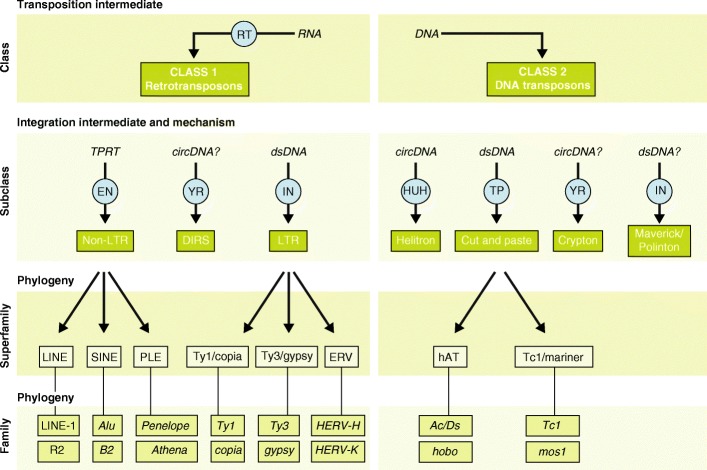
“However, TEs are incredibly diverse, both in terms of structure and mode of transposition, as illustrated by the TE classification [1-4].”
BackgroundTransposable Elements Co-Option in Genome Evolution and Gene Regulation
Gasparotto, E., Burattin, F. V., Gioia, V. D., Panepuccia, M., Ranzani, V., Marasca, F., & Bodega, B. (2023) · International Journal of Molecular Sciences · doi:10.3390/ijms24032610 · Cited by 33
“It is well documented that a plethora of organisms experienced waves of TE mobilization that contributed to their genomic re-sizing and shaping [5,15].”
BackgroundPercharde, M., Sultana, T., & Ramalho‐Santos, M. (2020) · BioEssays · doi:10.1002/bies.201900232 · Cited by 33
Langmüller, A. M., Nolte, V., Dolezal, M., & Schlötterer, C. (2023) · Nucleic Acids Research · doi:10.1093/nar/gkad635 · Cited by 35
Scarpa, A., Pianezza, R., Wierzbicki, F., & Kofler, R. (2024) · Proceedings of the National Academy of Sciences · doi:10.1073/pnas.2313866121 · Cited by 33
Molecular and structural basis of the chromatin remodeling activity by Arabidopsis DDM1
Osakabe, A., Takizawa, Y., Horikoshi, N., Hatazawa, S., Negishi, L., Sato, S., Berger, F., Kakutani, T., & Kurumizaka, H. (2024) · Nature Communications · doi:10.1038/s41467-024-49465-w · Cited by 31
Co-evolving infectivity and expression patterns drive the diversification of endogenous retroviruses
Senti, K.-A., Rafanel, B., Handler, D., Kosiol, C., Schlötterer, C., & Brennecke, J. (2025) · The EMBO Journal · doi:10.1038/s44318-025-00471-8 · Cited by 32
Transposon Reactivation in the Germline May Be Useful for Both Transposons and Their Host Genomes
Maupetit‐Mehouas, S., & Vaury, C. (2020) · Cells · doi:10.3390/cells9051172 · Cited by 32
“showed that the ongoing expansion of the long interspersed nuclear element (LINE) retrotransposons appears to be associated with some gene cluster expansions in the different Muridae genomes [1].”
BackgroundVěchtová, P., Füssy, Z., Čegan, R., Štěrba, J., Erhart, J., Beneš, V., & Grubhoffer, L. (2020) · Parasites & Vectors · doi:10.1186/s13071-020-04173-4 · Cited by 31
“An elevated expression of transposase associated with transposon activity is usually less regulated in order to enable an implementation of developmental regulation of host DNA during embryogenesis [97].”
BackgroundHSV-1 and Endogenous Retroviruses as Risk Factors in Demyelination
Bello‐Morales, R., Andreu, S., Ripa, I., & López‐Guerrero, J. A. (2021) · International Journal of Molecular Sciences · doi:10.3390/ijms22115738 · Cited by 32
“On the contrary, n -LTR retrotranspos ns enc de endonucl ases, and copy their RNA di ectly into the targe DNA via a target-primed revers transcrip io mechanis [42,52].”
BackgroundInfluentialSun, Z., Wu, M., Wang, S., Feng, S., Wang, Y., Wang, T., Zhu, C., Jiang, X., Wang, H., Wang, R., et al. (2023) · Plant Biotechnology Journal · doi:10.1111/pbi.14132 · Cited by 31
Karyotype asymmetry in Cuscuta L. subgenus Pachystigma reflects its repeat DNA composition
Ibiapino, A., Baez, M. A., García, M. A., Costea, M., Stefanović, S., & Pedrosa‐Harand, A. (2022) · Chromosome Research · doi:10.1007/s10577-021-09683-0 · Cited by 30
The salmon louse genome: Copepod features and parasitic adaptations
Skern‐Mauritzen, R., Malde, K., Eichner, C., Dondrup, M., Furmanek, T., Besnier, F., Komisarczuk, A. Z., Nuhn, M., Dalvin, S. T., Edvardsen, R. B., et al. (2021) · Genomics · doi:10.1016/j.ygeno.2021.08.002 · Cited by 33
Wondji, C. S., Hearn, J., Irving, H., Wondji, M. J., & Weedall, G. D. (2021) · G3 Genes Genomes Genetics · doi:10.1093/g3journal/jkab352 · Cited by 32
Pereira, J. A., Milani, D., Ferretti, A. B. S. M., Bardella, V. B., Cabral-de-Mello, D. C., & Lopes, D. M. (2021) · Chromosoma · doi:10.1007/s00412-021-00764-x · Cited by 32
Ai, Z., Xiang, X., Xiang, Y., Szczerbinska, I., Qian, Y., Xu, X., Ma, C., Su, Y., Gao, B., Shen, H., et al. (2022) · Cell Reports · doi:10.1016/j.celrep.2022.111240 · Cited by 32
Grandchamp, A., Kühl, L., Lebherz, M. K., Brüggemann, K., Parsch, J., & Bornberg‐Bauer, E. (2023) · Genome Research · doi:10.1101/gr.277482.122 · Cited by 33
“Yet, thousands of noncoding RNAs have been shown to be derived from TEs (Lu et al. 2014; Bourque et al. 2018).”
BackgroundHuman Endogenous Retroviruses: Our Genomic Fossils and Companions
Stein, R. A., & DePaola, R. V. (2023) · Physiological Genomics · doi:10.1152/physiolgenomics.00171.2022 · Cited by 29
A stepwise guide for pangenome development in crop plants: an alfalfa (Medicago sativa) case study
Kaur, H., Shannon, L. M., & Samac, D. A. (2024) · BMC Genomics · doi:10.1186/s12864-024-10931-w · Cited by 32
Emerging functions of piwi‐interacting RNAs in diseases
Wang, K., Wang, T., Gao, X., Chen, X., Wang, F., & Zhou, L. (2021) · Journal of Cellular and Molecular Medicine · doi:10.1111/jcmm.16466 · Cited by 29
Wang, C., Milgate, A., Solomon, P. S., & McDonald, M. C. (2021) · Molecular Plant Pathology · doi:10.1111/mpp.13064 · Cited by 29
“The regulatory effects of TEs have been observed in cis where the expression of a TE can also influence the expression of nearby genes (Bourque et al., 2018; Chuong et al., 2017).”
BackgroundInfluentialYu, L., Majerčiak, V., Xue, X., Uberoi, A., Lobanov, A. V., Chen, X., Cam, M., Hughes, S. H., Lambert, P. F., & Zheng, Z. (2021) · PLoS Pathogens · doi:10.1371/journal.ppat.1009812 · Cited by 31
Demethylation and derepression of genomic retroelements in the skeletal muscles of aged mice
Min, B., Jeon, K., Park, J. S., & Kang, Y. (2019) · Aging Cell · doi:10.1111/acel.13042 · Cited by 31
“…transcripts and their reverse‐transcribed products in skeletal muscles may trigger an innate immune response and chronic inflammation through inducing IFN‐α and IFN‐β gene expressions, as suggested before (Bourque et al., 2018; De Cecco et al., 2019; Kang, 2018; Simon et al., 2019).”
BackgroundDNA methylation analysis in plants: review of computational tools and future perspectives
Omony, J., Nußbaumer, T., & Gutzat, R. (2019) · Briefings in Bioinformatics · doi:10.1093/bib/bbz039 · Cited by 31
“Genes have evolved different mechanisms for tolerating transposable elements (TEs) in their vicinity [26, 27].”
BackgroundMobile Elements in Ray-Finned Fish Genomes
Carducci, F., Barucca, M., Canapa, A., Carotti, E., & Biscotti, M. A. (2020) · Life · doi:10.3390/life10100221 · Cited by 33
“Class II mobile elements use a DNA intermediate to transpose their genomic DNA copies into a novel chromosomal position [160,161] and can be divided into subclasses I and II.”
BackgroundShen, D., Song, C., Miskey, C., Chan, S., Guan, Z., Sang, Y., Wang, Y., Chen, C., Wang, X., Müller, F., et al. (2021) · Nucleic Acids Research · doi:10.1093/nar/gkab045 · Cited by 29
“Cut-and-paste DNA transposons are mobilized by their respective transposases in trans, and are thus suitable for developing genetic tools for versatile gene-delivery and gene-discovery applications, ranging from transgenesis to functional genomics and gene therapy (7,8).”
BackgroundRead between the Lines: Diversity of Nontranslational Selection Pressures on Local Codon Usage
Callens, M., Pradier, L., Finnegan, M., Rose, C. J., & Bedhomme, S. (2021) · Genome Biology and Evolution · doi:10.1093/gbe/evab097 · Cited by 30
Idiopathic Infertility as a Feature of Genome Instability
Puzuka, A., Alkšere, B., Gailīte, L., & Ērenpreiss, J. (2021) · Life · doi:10.3390/life11070628 · Cited by 29
“RT are the most widespread class of transposons in mammals and represent a potential source of genome instability, mutations, and polymorphisms [52,53].”
BackgroundAn Atlas of Plant Transposable Elements
Pedro, D. L. F., Amorim, T. S., Varani, A. M., Guyot, R., Domingues, D. S., & Paschoal, A. R. (2021) · F1000Research · doi:10.12688/f1000research.74524.1 · Cited by 28
Sehgal, P., & Chaturvedi, P. (2023) · Cancers · doi:10.3390/cancers15020466 · Cited by 30
“The constitutive heterochromatin is hypothesized to reinforce the structural integrity of the nucleus [11], ensuring faithful chromosomal segregation during mitosis, and serving as an “evolutionary laboratory” for novel genes [22].”
BackgroundTransposable Element Interactions Shape the Ecology of the Deer Mouse Genome
Gozashti, L., Feschotte, C., & Hoekstra, H. E. (2023) · Molecular Biology and Evolution · doi:10.1093/molbev/msad069 · Cited by 29
“even after they have lost the ability to transpose (Bourque et al. 2018; Klein and O’Neill 2018).”
BackgroundInfluentialSelf-citationNoncoding RNA-chromatin association: Functions and mechanisms
Yin, Y., & Shen, X. (2023) · Fundamental Research · doi:10.1016/j.fmre.2023.03.006 · Cited by 31
“Furthermore, it should be noted that the DNA sequence of repetitive elements also plays a regulatory role in gene expression by providing binding sites for certain transcriptional regulators [97] .”
BackgroundDuhamel, M., Hood, M. E., de la Vega, R. C. R., & Giraud, T. (2023) · Nature Communications · doi:10.1038/s41467-023-41413-4 · Cited by 28
Ferchaud, A., Leitwein, M., Laporte, M., Boivin‐Delisle, D., Bougas, B., Hernandez, C., Normandeau, É., Thibault, I., & Bernatchez, L. (2020) · Molecular Ecology · doi:10.1111/mec.15566 · Cited by 34
Gag proteins encoded by endogenous retroviruses are required for zebrafish development
Chang, N.-C., Wells, J. N., Wang, A. Y., Schofield, P., Huang, Y.-C., Truong, V. H., Simoes-Costa, M., & Feschotte, C. (2025) · Proceedings of the National Academy of Sciences · doi:10.1073/pnas.2411446122 · Cited by 27
“It has also become widely recognized that, once immobilized, TE coding and noncoding sequences can be repurposed into genes and regulatory sequences serving host cell functions ( 1 , 8 ).”
Self-citationGenomic re-assessment of the transposable element landscape of the potato genome
Zavallo, D., Crescente, J. M., Gantuz, M., Leone, M., Vanzetti, L. S., Masuelli, R. W., & Asurmendi, S. (2020) · Plant Cell Reports · doi:10.1007/s00299-020-02554-8 · Cited by 30
“…neglected in genome assembly projects, partially due to their repetitive nature but also because for their heterogeneity in sequence, size, number of copies, distribution and mutation rates both inter and intra species, which make them very difficult to detect accurately (Bourque et al., 2018).”
BackgroundYang, H., He, J., Huang, S., Yang, H., Yi, Q., Tao, Y., Chen, M., Zhang, X., & Qi, H. (2021) · Frontiers in Immunology · doi:10.3389/fimmu.2021.780779 · Cited by 29
“The proportion of transposons in the human genome is approximately 44% (44, 45).”
BackgroundGeography-Dependent Horizontal Gene Transfer from Vertebrate Predators to Their Prey
Kambayashi, C., Kakehashi, R., Sato, Y., Mizuno, H., Tanabe, H., Rakotoarison, A., Künzel, S., Furuno, N., Ohshima, K., Kumazawa, Y., et al. (2022) · Molecular Biology and Evolution · doi:10.1093/molbev/msac052 · Cited by 33
“It is also known that TEs are mutagens of the genome and occasionally cause genetic disorders (e.g., Bourque et al. 2018).”
Microrchidia CW-Type Zinc Finger 2, a Chromatin Modifier in a Spectrum of Peripheral Neuropathies
Jacquier, A., Roubille, S., Lomonte, P., & Schaeffer, L. (2022) · Frontiers in Cellular Neuroscience · doi:10.3389/fncel.2022.896854 · Cited by 30
“The mechanism allowing transposition is often imprecise resulting in potential alteration of neighboring host sequences and misregulation of gene expression (Bourque et al., 2018).”
BackgroundNair, S. J., Suter, T., Wang, S. S., Lu, Y., Yang, F., & Rosenfeld, M. G. (2022) · Trends in Genetics · doi:10.1016/j.tig.2022.05.015 · Cited by 27
Gag proteins encoded by endogenous retroviruses are required for zebrafish development
Chang, N.-C., Wells, J. N., Wang, A. Y., Schofield, P., Huang, Y.-C., Truong, V. H., Simoes-Costa, M., & Feschotte, C. (2024) · doi:10.1101/2024.03.25.586437 · Cited by 27
Self-citationFerguson, S., Jones, A., Murray, K., Schwessinger, B., & Borevitz, J. (2022) · Molecular Ecology · doi:10.1111/mec.16608 · Cited by 25
RNA‐mediated heterochromatin formation at repetitive elements in mammals
Stamidis, N., & Żylicz, J. J. (2023) · The EMBO Journal · doi:10.15252/embj.2022111717 · Cited by 28
Multiple and diversified transposon lineages contribute to early and recent bivalve genome evolution
Martelossi, J., Nicolini, F., Subacchi, S., Pasquale, D., Ghiselli, F., & Luchetti, A. (2023) · BMC Biology · doi:10.1186/s12915-023-01632-z · Cited by 27
“Background Transposable elements (TEs) are selfish genetic elements that replicate independently from the replication of the host genome [1, 2].”
BackgroundTransposable elements regulate thymus development and function
Larouche, J., Laumont, C. M., Trofimov, A., Vincent, K., Hesnard, L., Brochu, S., Côté, C., Humeau, J., Bonneil, É., Lanoix, J., et al. (2024) · eLife · doi:10.7554/elife.91037 · Cited by 27
Genomic properties of variably methylated retrotransposons in mouse
Elmer, J. L., Hay, A. D., Kessler, N. J., Bertozzi, T. M., Ainscough, E. A. C., & Ferguson‐Smith, A. C. (2021) · Mobile DNA · doi:10.1186/s13100-021-00235-1 · Cited by 27
Jedlička, P., Lexa, M., Vanat, I., Hobza, R., & Kejnovský, E. (2019) · Mobile DNA · doi:10.1186/s13100-019-0186-z · Cited by 25
“The plethora of types, mechanisms, modes and rates of spreading, as well as examples of domestication, all underline the importance of TEs for genome rearrangements and cell functioning [1].”
BackgroundExpansion and Conservation of Biosynthetic Gene Clusters in Pathogenic Pyrenophora spp.
Moolhuijzen, P., Muria‐Gonzalez, M. J., Syme, R. A., Rawlinson, C., See, P. T., Moffat, C. S., & Ellwood, S. R. (2020) · Toxins · doi:10.3390/toxins12040242 · Cited by 25
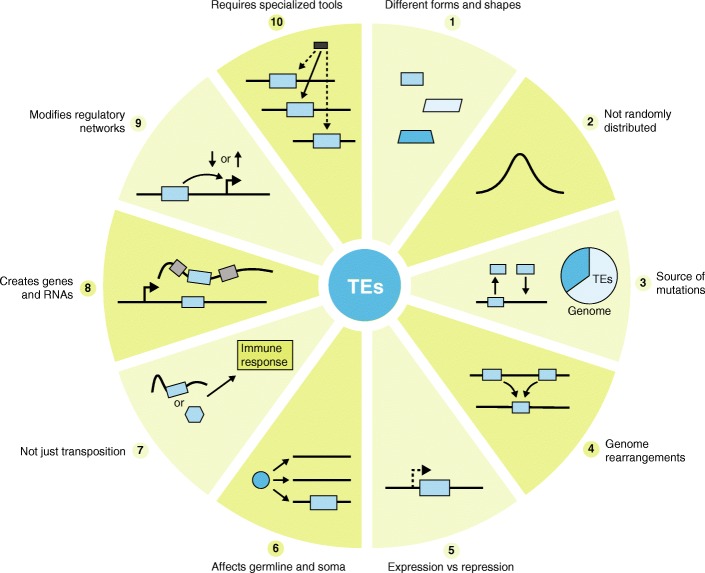
“Transposable elements (TEs) are known not to be randomly distributed, are extensively modified through RIP mutations [53], and are associated with genome rearrangements and horizontal gene transfers between different species [54,55].”
BackgroundRetroelement-derived RNA and its role in the brain
Evans, T. A., & Erwin, J. A. (2020) · Seminars in Cell and Developmental Biology · doi:10.1016/j.semcdb.2020.11.001 · Cited by 28
Engines of change: Transposable element mutation rates are high and variable within Daphnia magna
Ho, E. K. H., Bellis, E. S., Calkins, J., Adrion, J. R., Latta, L. C., & Schaack, S. (2021) · PLoS Genetics · doi:10.1371/journal.pgen.1009827 · Cited by 26
“The potential influence of TEs at the genomic level, whether structural (e.g., [11]), direct (e.g., contributing new coding or regulatory sequences; [12]), or indirect (e.g., changing the epigenomic landscape of the host genome; [13, 14]), is now known to be significant [15].”
Papolu, P. K., Ramakrishnan, M., Wei, Q., Vinod, K. K., Zou, L., Yrjälä, K., Kalendar, R. N., & Zhou, M. (2021) · BMC Plant Biology · doi:10.1186/s12870-021-03339-1 · Cited by 25
“Natural triggers of transposition activity of LTR retrotransposons remain unclear, but it is well documented that they can be activated by stress instances [8], and bear some epigenetic marks.”
BackgroundOn the Base Composition of Transposable Elements
Boissinot, S. (2022) · International Journal of Molecular Sciences · doi:10.3390/ijms23094755 · Cited by 29
Wei, K. H.-C., Mai, D., Chatla, K., & Bachtrog, D. (2022) · Molecular Biology and Evolution · doi:10.1093/molbev/msac080 · Cited by 28
Bevilacqua, G. (2022) · Viruses · doi:10.3390/v14081704 · Cited by 28
Liao, X., Ye, Y., Zhang, X., Peng, D., Hou, M., Fu, G., Tan, J., Zhao, J., Jiang, R., Xu, Y.-C., et al. (2022) · aBIOTECH · doi:10.1007/s42994-022-00081-6 · Cited by 25
“…(Douglas and Futuyma 2017), and that both TEs and methylation can affect gene expression, such as cytosine DNA methylation, which regulates TE silencing, imprinting, and gene expression (Bourque et al. 2018; Liu et al. 2018; Wang et al. 2019), we assessed their distribution in the genome.”
BackgroundTransposable elements are associated with the variable response to influenza infection
Chen, X., Pacis, A., Aracena, K. A., Gona, S., Kwan, T., Groza, C., Lin, Y., Sindeaux, R., Yotova, V., Pramatarova, A., et al. (2023) · Cell Genomics · doi:10.1016/j.xgen.2023.100292 · Cited by 29
“Transposable elements (TEs), which occupy half of the human genome, play critical roles as cis-regulatory elements in various human biological processes (Bourque, 2009; Bourque et al., 2018; Chuong et al., 2017).”
BackgroundSelf-citationEnvironment-induced heritable variations are common in Arabidopsis thaliana
Lin, X., Yin, J., Wang, Y., Yao, J., Li, Q. Q., Latzel, V., Bossdorf, O., & Zhang, Y. (2024) · Nature Communications · doi:10.1038/s41467-024-49024-3 · Cited by 29
“Transposons are mobile elements that constitute a signi fi cantproportionofeukaryoticgenomes 25 .”
Divergent evolution profiles of DD37D and DD39D families of Tc1/mariner transposons in eukaryotes
Wang, S., Diaby, M., Puzakov, M. V., Ullah, N., Wang, Y., Danley, P. D., Chen, C., Wang, X., Gao, B., & Song, C. (2021) · Molecular Phylogenetics and Evolution · doi:10.1016/j.ympev.2021.107143 · Cited by 25
Lykoskoufis, N. M. R., Planet, E., Ongen, H., Trono, D., & Dermitzakis, E. T. (2024) · Nature Communications · doi:10.1038/s41467-023-42405-0 · Cited by 25
“9 and 10; Supplementary Data 8, 9).”
InfluentialLee, H.-E., Huh, J., & Kim, H. (2020) · Life · doi:10.3390/life10060095 · Cited by 25
How Are Biology Concepts Used and Transformed?
Brigandt, I. (2020) · Cambridge University Press eBooks · doi:10.1017/9781108648981.006 · Cited by 31
Mata‐Sucre, Y., Sader, M., Van-Lume, B., Gagnon, E., Pedrosa‐Harand, A., Leitch, I. J., Lewis, G. P., & Souza, G. (2020) · Planta · doi:10.1007/s00425-020-03453-8 · Cited by 25
The epigenetic basis of evolution
Spadafora, C. (2023) · Progress in Biophysics and Molecular Biology · doi:10.1016/j.pbiomolbio.2023.01.005 · Cited by 29
Micro Germline-Restricted Chromosome in Blue Tits: Evidence for Meiotic Functions
Mueller, J. C., Schlebusch, S. A., Pei, Y., Poignet, M., Vontzou, N., Ruíz-Ruano, F. J., Albrecht, T., Reifová, R., Forstmeier, W., Suh, A., et al. (2023) · Molecular Biology and Evolution · doi:10.1093/molbev/msad096 · Cited by 24
“In general, a higher density of ERVs might have facilitated the transposition or rearrangement of flanking and intervening genomic sequences (Bourque et al. 2018) and therefore might have contributed to the recruitment or excision of sequences during GRC evolution.”
BackgroundSainty, R., Silver, M. J., Prentice, A. M., & Monk, D. (2023) · Frontiers in Cell and Developmental Biology · doi:10.3389/fcell.2023.1212199 · Cited by 25
“They are often associated with transposable elements, which evolve fast and often give rise to new cis-regulatory DNA elements or even new exons and genes (Imbeault et al., 2017; Bourque et al., 2018).”
BackgroundFowler, M., Theunissen, F., Carr, J. M., & Rogers, M. (2023) · Molecular Neurobiology · doi:10.1007/s12035-023-03472-y · Cited by 24
“LTR retrotransposons can be transcribed from the host cell genome into ERV RNA, then, in the same cell, reverse transcribed back into double-stranded DNA and reintegrated into another site of the host genome [131, 132].”
BackgroundMcGurk, M. P., Dion‐Côté, A., & Barbash, D. A. (2020) · Genetics · doi:10.1093/genetics/iyaa027 · Cited by 27
Programmed DNA elimination: silencing genes and repetitive sequences in somatic cells
Zagoskin, M. V., & Wang, J. (2021) · Biochemical Society Transactions · doi:10.1042/bst20190951 · Cited by 26
(2022) · doi:10.1093/g3journal/jkac131 · Cited by 23
Rise and SINE: roles of transcription factors and retrotransposons in zygotic genome activation
Kravchenko, P., & Tachibana, K.-E. K. (2024) · Nature Reviews Molecular Cell Biology · doi:10.1038/s41580-024-00772-6 · Cited by 25
“…in human myoblasts activates not only germline genes but also transcription of class I retrotransposons, including ERVL-MaLR (mammalian apparent LTR retro transposons) 106 and MERVL (also called MuERV-L) in mouse embryonic stem cells (mESCs) 104,107,108 , which are activated during ZGA 109–111 .”
Impact of Repetitive DNA Elements on Snake Genome Biology and Evolution
Ahmad, S. F., Singchat, W., Panthum, T., & Srikulnath, K. (2021) · Cells · doi:10.3390/cells10071707 · Cited by 26
“Apart from satDNA, repetitive DNA sequences also comprise TEs that are highly polymorphic, with the ability to jump from one genomic location to another, thus contributing to genome plasticity [35,37].”
BackgroundDynamics of accessible chromatin regions and subgenome dominance in octoploid strawberry
Fang, C. Q., Jiang, N., Teresi, S. J., Platts, A. E., Agarwal, G., Niederhuth, C. E., Edger, P. P., & Jiang, J. (2024) · Nature Communications · doi:10.1038/s41467-024-46861-0 · Cited by 27
Crossroads between transposons and gene regulation
Branco, M. R., & Chuong, E. B. (2020) · Philosophical Transactions of the Royal Society B Biological Sciences · doi:10.1098/rstb.2019.0330 · Cited by 23
“However, in the past decade, large-scale genomic studies have revealed that TEs are a surprisingly substantial source of gene regulatory activity in eukaryotic genomes [2].”
BackgroundMaxwell, P. H. (2020) · Mobile DNA · doi:10.1186/s13100-020-00215-x · Cited by 23
“However, they must be thoughtfully considered and presented, because they raise exciting possibilities, but in many cases additional functional studies are needed to verify these possibilities [2, 5, 6].”
BackgroundInfluentialSeixas, F., Edelman, N. B., & Mallet, J. (2021) · Genome Biology and Evolution · doi:10.1093/gbe/evab069 · Cited by 26
Meslin, C., Mainet, P., Montagné, N., Robin, S., Legeai, F., Bretaudeau, A., Johnston, J. S., Koutroumpa, F., Persyn, E., Monsempès, C., et al. (2021) · doi:10.1101/2021.12.09.471925 · Cited by 23
McEntee, C. M., Cavalier, A. N., & LaRocca, T. J. (2023) · Frontiers in Molecular Neuroscience · doi:10.3389/fnmol.2023.1263369 · Cited by 22
“Additionally, pro-inflammatory CNS cell activation with aging and AD is also associated with other cellular/transcriptomic processes (e.g., increased chromatin accessibility of IRFs, DNA damage, and senescence) (Yu et al., 2015; Frisch and MacFawn, 2020; Rasa et al., 2022), and it will be important to carefully design…”
BackgroundInfluentialPolymorphic transposable elements contribute to variation in recombination landscapes
Huang, Y., Gao, Z. Y., Ly, K., Lin, L., Lambooij, J.-P., King, E. G., Janssen, A., Wei, K. H.-C., & Lee, Y. C. G. (2025) · Proceedings of the National Academy of Sciences · doi:10.1073/pnas.2427312122 · Cited by 27
Mobile genetic elements in Klebsiella pneumoniae
Pan, T., & Li, Q. (2025) · Journal of Bacteriology · doi:10.1128/jb.00012-25 · Cited by 25
“Transposons (Tns) are a class of DNA sequences that can replicate and move autonomously in the genome, carrying the ISs at both ends, and functional genes including drug resistance genes, heavy metal resistance genes, and virulence genes in the central region (83).”
Baril, T., & Hayward, A. (2022) · Mobile DNA · doi:10.1186/s13100-022-00263-5 · Cited by 21
Ramanantsalama, R. V., Goodman, S. M., Dietrich, M., & Lebarbenchon, C. (2022) · Acta Tropica · doi:10.1016/j.actatropica.2022.106462 · Cited by 26
Co-option of the piRNA pathway to regulate neural crest specification
Galton, R., Tóth, K. F., & Bronner-Fraser, M. E. (2022) · Science Advances · doi:10.1126/sciadv.abn1441 · Cited by 25
“New lineage-specific TEs emerge often during the course of evolution, and the repertoire of active transposons can vary widely among species ( 11 , 12 ).”
Kaemena, D. F., Yoshihara, M., Beniazza, M., Ashmore, J., Zhao, S., Bertenstam, M., Olariu, V., Katayama, S., Okita, K., Tomlinson, S. R., et al. (2023) · Nature Communications · doi:10.1038/s41467-023-36097-9 · Cited by 22
Epigenetic and chromosomal features drive transposon insertion inDrosophila melanogaster
Cao, J., Yu, T., Xu, B., Hu, Z., Zhang, X.-O., Theurkauf, W. E., & Weng, Z. (2023) · Nucleic Acids Research · doi:10.1093/nar/gkad054 · Cited by 23
“Therefore, understanding transposon movement provides valuable insights into genome function and disease biology (9).”
BackgroundYu, Z., Li, J., Wang, H., Ping, B., Li, X., Liu, Z., Guo, B., Yu, Q., Zou, Y., Sun, Y., et al. (2024) · Horticulture Research · doi:10.1093/hr/uhae118 · Cited by 24
“TEs within plant genomes exhibit a diverse array of structures and configurations [9].”
BackgroundGenome Size Evolution: Small Transposons with Large Consequences
Suh, A. (2019) · Current Biology · doi:10.1016/j.cub.2019.02.032 · Cited by 23
Metadata
- Authors
- Bourque, G., Burns, K. H., Gehring, M., Gorbunova, V., Seluanov, A., Hammell, M., Imbeault, M., Izsvák, Z., Levin, H. L., Macfarlan, T. S., Mager, D. L., & Feschotte, C.
- Affiliations
- McGill University (CA)
- Johns Hopkins University (US)
- Whitehead Institute for Biomedical Research (US)
- University of Rochester (US)
- Cold Spring Harbor Laboratory (US)
- University of Cambridge (GB)
- Max Delbrück Center (DE)
- National Institutes of Health (US)
- BC Cancer Agency (CA)
- Cornell University (US)
- Corresponding author
- Bourque, Guillaume
- Feschotte, Cédric
- ORCID
- Venue
- Genome Biology
- Published
- 2018-11-19
- Volume
- 19
- Issue
- 1
- Pages
- 199-199
- ISSN
- 1465-6906 (ISSN-L)
- 1474-760X
- PMC
- PMC6240941
- OpenAlex
- W2901901698
- Semantic Scholar
- ca9ba03e2e3c00a26c0a2e017cfefd48368079b2
- Cited by
- 1,430
- References
- 203
- Citations by year
- 2026: 167 · 2025: 243 · 2024: 236 · 2023: 199 · 2022: 202 · 2021: 190 · 2020: 133 · 2019: 58
- FWCI
- 10.00
- Type
- journal article
- Language
- en
- Open access
- gold
- doi.org
- Licence
- cc-by
- creativecommons.org/licenses/by/4.0/ (tdm)
- creativecommons.org/licenses/by/4.0/ (vor)
- Locations
- Genome biology (publishedVersion, cc-by)
- Europe PMC (PubMed Central) (publishedVersion, cc-by)
- PubMed Central (publishedVersion, cc-by)
- PubMed (publishedVersion)
- Cold Spring Harbor Laboratory Institutional Repository (Cold Spring Harbor Laboratory) (acceptedVersion)
- MDC Repository (Max-Delbrueck-Center for Molecular Medicine) (acceptedVersion)
- Apollo (University of Cambridge) (submittedVersion, cc-by)
- cIRcle (University of British Columbia) (submittedVersion, cc-by)
- DOAJ (DOAJ: Directory of Open Access Journals) (submittedVersion, cc-by-sa)
- DSpace@MIT (Massachusetts Institute of Technology) (submittedVersion, cc-by-nc)
- Apollo
- Apollo (cc-by)
- Funders
- Canadian Institutes of Health Research (CIHR-MOP-115090, CIHR-CEE-151618)
- Fonds de Recherche du Québec - Santé (FRSQ-25348, FRSQ-35279)
- European Commission (ERC-2011-AdG 294742)
- National Institutes of Health
- National Science Foundation
- Topics
- Life Sciences › Biochemistry, Genetics and Molecular Biology › Genetics › Chromosomal and Genetic Variations
- Life Sciences › Biochemistry, Genetics and Molecular Biology › Molecular Biology › Genomics and Chromatin Dynamics
- Life Sciences › Biochemistry, Genetics and Molecular Biology › Genetics › Genomic variations and chromosomal abnormalities
- Keywords
- transposable elements, genome evolution, eukaryotic genomes, transposon-host interactions, genome plasticity
- MeSH terms
- Animals, DNA Transposable Elements, Humans, Mutation, Polymorphism, Genetic, Gene Rearrangement
About these checks
Registry, retraction, Cites and statistics results are computed, not judged, with one exception: a printed reference that no index lists is read once by a model before it counts as a citation error. Claims are extracted by a model and kept only when their quote appears verbatim in the text; each cited source is then checked, with a model’s help, for whether it says what the claim relies on. Those verdicts can be wrong — read the claim’s quote and the cited source before relying on one.
Statistics and arithmetic are recomputed, not judged.
Confidence bands are shown only for fields calibrated on our annotated test set. None is calibrated yet, so no band is shown.
What counts as a claim ›How we measure confidence ›How we check this ›
Are you an author, or do you see a problem with this page? Request a review
Data sources
Bibliographic data: Semantic Scholar, OpenAlex, Crossref.
Contains information from the Semantic Scholar Academic Graph Datasets, made available under the ODC Attribution License (ODC-BY 1.0).
Semantic Scholar’s data is described in: Kinney, R., et al. (2023). The Semantic Scholar Open Data Platform. arXiv:2301.10140.
