

Ten things you should know about transposable elements
Open accessThe DOI matches its Crossref record; 203 of the 203 references it cites were found in a registry or an index.
Abstract
Transposable elements (TEs) are major components of eukaryotic genomes. However, the extent of their impact on genome evolution, function, and disease remain a matter of intense interrogation. The rise of genomics and large-scale functional assays has shed new light on the multi-faceted activities of TEs and implies that they should no longer be marginalized. Here, we introduce the fundamental properties of TEs and their complex interactions with their cellular environment, which are crucial to understanding their impact and manifold consequences for organismal biology. While we draw examples primarily from mammalian systems, the core concepts outlined here are relevant to a broad range of organisms.
Overview
The claims and statistics of this paper haven’t been checked yet.
Free: it reads the open-access text and checks the first 5 claims that cite a source we can check. Create a free account to check every claim.
Integrity signals
Registry
Cites
Statistics
Figures
Verification
Claims the paper makes
The claims and statistics of this paper haven’t been checked yet.
Free: it reads the open-access text and checks the first 5 claims that cite a source we can check. Create a free account to check every claim.
Claims other papers make about this one
Each is checked against this paper’s own text: does it say what the citing paper says it does?
The source backs part of the claim, not all of it — or backs it for a different population, condition or comparison.
In the citing paper
“Constituting ~45% of the human and rodent genomes, transposable elements are routinely repressed in somatic cells to prevent their mobilization, which otherwise can have deleterious effects [119,120].”
From What would it take to prove that a chronic infection is a causal agent in Alzheimer’s disease? (2025) · cites this paper as [119]
Experimental — accuracy not yet measuredThe cited source says what the claim attributes to it.
In the citing paper
“First, these elements are significantly overrepresented (31).”
From DNA language models are powerful predictors of genome-wide variant effects (2023) · cites this paper as [31]
Self-check
Percentages, sums and reported differences re-computed from the paper’s own numbers.
The self-check needs the paper’s full text.
Citations
Cites
Ultrafast and memory-efficient alignment of short DNA sequences to the human genome.
Langmead, B., Trapnell, C., Pop, M., & Salzberg, S. L. (2009) · Genome Biology · doi:10.1186/gb-2009-10-3-r25 · Cited by 21,849
An integrated encyclopedia of DNA elements in the human genome
The ENCODE Project Consortium (2012) · Nature · doi:10.1038/nature11247 · Cited by 18,072
The B73 Maize Genome: Complexity, Diversity, and Dynamics
Schnable, P. S., Ware, D., Fulton, R. S., Stein, J. C., Wei, F., Pasternak, S., Liang, C., Zhang, J., Fulton, L., Graves, T. A., et al. (2009) · Science · doi:10.1126/science.1178534 · Cited by 4,046
A unified classification system for eukaryotic transposable elements
Wicker, T., Sabot, F., Hua-Van, A., Bennetzen, J. L., Capy, P., Chalhoub, B., Flavell, A., Leroy, P., Morgante, M., Panaud, O., et al. (2007) · Nature Reviews Genetics · doi:10.1038/nrg2165 · Cited by 3,054
Britten, R. J., & Kohne, D. E. (1968) · Science · doi:10.1126/science.161.3841.529 · Cited by 2,802
An integrated map of structural variation in 2,504 human genomes
Sudmant, P. H., Rausch, T., Gardner, E. J., Handsaker, R. E., Abyzov, A., Huddleston, J., Zhang, Y., Ye, K., Jun, G., Hsi-Yang Fritz, M., et al. (2015) · Nature · doi:10.1038/nature15394 · Cited by 2,354
Chiappinelli, K. B., Strissel, P. L., Desrichard, A., Li, H., Henke, C., Akman, B., Hein, A., Rote, N. S., Cope, L. M., Snyder, A., et al. (2015) · Cell · doi:10.1016/j.cell.2015.07.011 · Cited by 2,022
The impact of retrotransposons on human genome evolution
Cordaux, R., & Batzer, M. A. (2009) · Nature Reviews Genetics · doi:10.1038/nrg2640 · Cited by 1,703
Roulois, D., Loo Yau, H., Singhania, R., Wang, Y., Danesh, A., Shen, S. Y., Han, H., Liang, G., Jones, P. A., Pugh, T. J., et al. (2015) · Cell · doi:10.1016/j.cell.2015.07.056 · Cited by 1,527
Regulatory activities of transposable elements: from conflicts to benefits
Chuong, E. B., Elde, N. C., & Feschotte, C. (2017) · Nature Reviews Genetics · doi:10.1038/nrg.2016.139 · Cited by 1,489
Self-citation
Cited by
Items 901–1,000 of 1,005
McGurk, M. P., Dion-Côté, A.-M., & Barbash, D. A. (2019) · bioRxiv (Cold Spring Harbor Laboratory) · doi:10.1101/782904 · Cited by 3
“While this provides a replicative advantage to the TE, their mobilization has consequences to the host genome that include DNA double-strand breaks, disruption of open reading frames and regulatory elements, and the perturbation of gene expression [1].”
BackgroundAccelerating RepeatClassifier Based on Spark and Greedy Algorithm with Dynamic Upper BoundaryPreprint
Hu, K., Liao, X., Zou, Y. F., & Wang, J. (2021) · bioRxiv (Cold Spring Harbor Laboratory) · doi:10.1101/2021.06.03.446998 · Cited by 3
“Interspersed repetitive sequences are mainly derived from transposable elements (TEs), which are highly identical and distributed separately in the genome(Treangen and Salzberg, 2012; Duan et al. , 2019; Huang et al. , 2012; Bourque et al. , 2018; Guo et al. , 2018).”
BackgroundNooij, S. A. (2014) · Research Repository (Delft University of Technology) · Cited by 8
The Stability and Evolution of Genes and Genomes
Viggiano, L., & Marsano, R. M. (2023) · Genes · doi:10.3390/genes14091747 · Cited by 3
“The regulation of the activity of transposable elements determines to what extent they can act as natural mutagens [12].”
BackgroundDueling Endogenous Viral-Like Sequences Control Synaptic PlasticityPreprint
M'angale, P. G., Lemieux, A., Liu, Y., Graslie, J., Wang, S., Simkin, A., Budnik, V., Kelch, B. A., & Thomson, T. (2023) · bioRxiv (Cold Spring Harbor Laboratory) · doi:10.1101/2023.12.20.572708 · Cited by 3
Comprehensive Hierarchical Classification of Transposable Elements based on Deep LearningPreprint
Qi, Y., Chen, Y., Wu, Y., Li, Y., Gao, M., Zhang, F., Liao, X., & Shang, X. (2024) · bioRxiv (Cold Spring Harbor Laboratory) · doi:10.1101/2024.01.27.577599 · Cited by 3
“Accurate classification of transposons is an essential step in genome annotation and offers an opportunity to unravel their roles in germline and somatic evolution [23].”
BackgroundEvolutionary analysis of THAP9 transposase: conserved regions, novel motifsPreprint
Rashmi, R., Nandi, C., & Majumdar, S. (2021) · Authorea · doi:10.22541/au.170670608.85965223/v1 · Cited by 4
Chen, Y.-C., Maupas, A., & Nowick, K. (2025) · eLife · doi:10.7554/elife.103608 · Cited by 5
Bacterial Genomes: Trees and Networks
Seshasayee, A. S. N. (2025) · Open Book Publishers · doi:10.11647/obp.0446 · Cited by 4
EDTA v2: enabling scalable TE annotation in animal genomesPreprint
Ou, S., Lu, T. T., Nguyen, H., Gerhardt, K., Fang, N. '., Rashid, U., Guhlin, J. G., Dainat, J., Bao, Z., Bayer, P. E., et al. (2026) · bioRxiv (Cold Spring Harbor Laboratory) · doi:10.64898/2026.07.01.735963 · Cited by 3
“Transposable elements (TEs) are a major component of eukaryotic genomes and play important roles in genome evolution, gene regulation, and speciation 1,2 .”
Evolutionary adaptation of an HP1-protein chromodomain integrates chromatin and DNA sequence signals
Baumgartner, L., Ipsaro, J. J., Hohmann, U., Handler, D., Schleiffer, A., Duchek, P., & Brennecke, J. (2024) · eLife · doi:10.7554/elife.93194.3 · Cited by 2
A diploid population model for copy number variation of genetic elements
Pfaffelhuber, P., & Wakolbinger, A. (2023) · Electronic Journal of Probability · doi:10.1214/23-ejp934 · Cited by 2
“Chang (1999) and Rohde et al. (2004) analyse the common ancestry of all living humans.”
BackgroundPogo transposons provide tools to restrict cancer growth
Zueva, E., & Burbage, M. (2025) · Molecular Oncology · doi:10.1002/1878-0261.13801 · Cited by 2
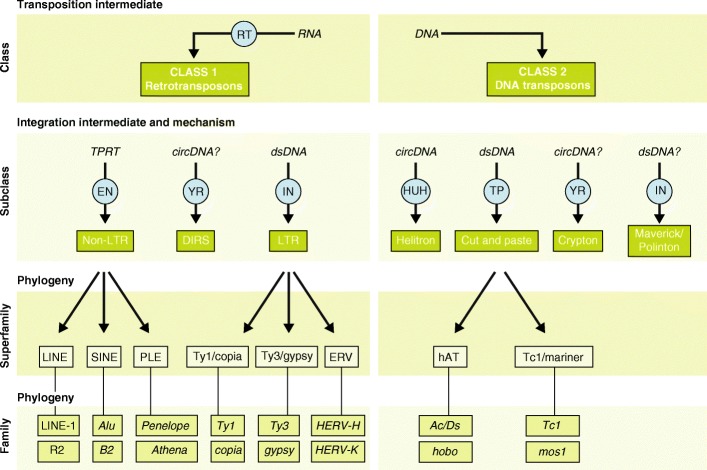
“Class I retrotransposons move via an RNA intermediate using a copy-and-paste mechanism, while Class II DNA transposons use DNA intermediates through “cut-and-paste” or a “peel-and-paste” mechanisms [1].”
Unleashing the potential of a low CpG Passer transposon for superior CAR-T cell therapy
Zeng, J., Sun, Y., Fang, Y., Wang, X., Huang, Q., Zhang, P., Shao, M., Wang, P., Cheng, J., Di, M., et al. (2025) · Frontiers in Immunology · doi:10.3389/fimmu.2025.1541653 · Cited by 2
Li, M., Li, H., & Ye, S. (2025) · Frontiers in Genetics · doi:10.3389/fgene.2025.1544330 · Cited by 2
Zhuang, Q. K.-W., Bauermeister, K., Gálvez, J. H., AlOgayil, N., Batdorj, E., de Villena, F. P., Taketo, T., Bourque, G., & Naumova, A. K. (2025) · Genome biology · doi:10.1186/s13059-025-03547-0 · Cited by 2
Self-citationSantos, J. R. L., Sun, W., Befus, A. D., & Marcet‐Palacios, M. (2025) · BMC Bioinformatics · doi:10.1186/s12859-025-06160-x · Cited by 2
“A potential explanation for the similarity patterns is the presence of transposable elements, which tend to propagate within nearby genomic regions, contributing to structural patterns [56].”
Expression of LTR and LINE1 transposable elements defines atypical teratoid/rhabdoid tumor subtypes
Hamann, M. V., Godbole, S., Adiba, M., Leddy, S. M., Navolić, J., Tabatabai, G., Merk, D. J., Lange, U. C., & Neumann, J. E. (2025) · Acta Neuropathologica Communications · doi:10.1186/s40478-025-02078-w · Cited by 2
The impact of insertion bias into piRNA clusters on the invasion of transposable elements
Pritam, S., Scarpa, A., Kofler, R., & Signor, S. A. (2025) · BMC Biology · doi:10.1186/s12915-025-02370-0 · Cited by 2
“TEs cause genomic instability through various mechanisms including double-stranded DNA breaks, ectopic recombination, and disruption of coding sequences [5].”
Serebrovska, Z. O., Xi, L., Khetsuriani, M., Protsenko, O. V., Morozova, N., Tolstun, D. A., & Maksymchuk, O. (2025) · Brain Research · doi:10.1016/j.brainres.2025.149953 · Cited by 2
From neuropeptides to toxins: illuminating the origins of venom complexity in cone snails
Koch, T. L., Ferrari, G., Sumanam, S. B., Salcedo, P. F., Watkins, M., Chase, K., Tooming‐Klunderud, A., Lluisma, A. O., Yanagihara, A. A., Young, N. D., et al. (2026) · Molecular Biology and Evolution · doi:10.1093/molbev/msag206 · Cited by 2
Revisiting Clonal Evolution Through the Light of Retrotransposons
Lamoureux, A., Elvira‐Matelot, E., Porteu, F., & Laplane, L. (2025) · BioEssays · doi:10.1002/bies.70078 · Cited by 2
Sjursen, W., Svaasand, E. K., Gilde, B., Ravi, A., Korseth, K. M., Singh, A., Johansen, J. A., Rødningen, O. K., Sevatdal, S. G., Hegre, S. A., et al. (2025) · Hereditary Cancer in Clinical Practice · doi:10.1186/s13053-025-00324-9 · Cited by 2
“Retrotransposons (RT) are repetitive sequences inter-spersed throughout the genome, and they have the ability to change their position (Reviewed in Bourque et al. 2018 [2]).”
The Other Side of the Same Coin: Beyond the Coding Region in Amyotrophic Lateral Sclerosis
Ruffo, P., Perrone, B., Perrone, F., Amicis, F. D., Iuliano, R., Bucci, C., Messina, A. A., & Conforti, F. L. (2025) · Pharmaceuticals · doi:10.3390/ph18101573 · Cited by 3
“They function as both substrates for and active orchestrators of epigenetic regulation, profoundly modulating gene expression and actively reshaping the epigenetic landscape [12].”
Geometric inference of cross-species transcriptome correspondence
Tokuta, Y., Nakamura, T., Fujiwara, K., Imamura, M., Nagano, M., Saitou, M., Imoto, Y., & Hiraoka, Y. (2026) · Cell Reports Methods · doi:10.1101/2025.10.23.684069 · Cited by 2
“This has been largely due to the integration and selective co-option of distinctive transposable elements during species evolution, which results in the creation of species-specific gene regulatory networks (GRNs) [8].”
Epigenetic lockdown of type I interferon sensing and signalling in human pluripotent cells
Holt, J. H., Enriquez-Gasca, R., Wilson, R. P., Bochukova, E. G., Maillard, P. V., & Rowe, H. M. (2026) · Nature Communications · doi:10.1038/s41467-026-74147-0 · Cited by 3
Omole, A. D., & Czuppon, P. (2026) · Genome Biology and Evolution · doi:10.1093/gbe/evag244 · Cited by 2
“Transposable elements (TEs) are abundant genomic sequences in eukaryotic genomes that influence the structure, function, and evolution of genomes (Kazazian 2004; Shapiro 2012; Bourque et al. 2018).”
ColabCuraTE: an easy-to-use, web-based pipeline for the manual curation of transposable elements
Travers, S. L., Khansa, A., & Ellison, C. E. (2025) · Mobile DNA · doi:10.1186/s13100-025-00389-2 · Cited by 2
“TEs contribute to genomic diversity by creating mutations, gene duplications, and chromosomal rear-rangements, which are frequently deleterious, but can also provide the substrate for natural selection and adaptive evolution [1–4].”
Emerging trends in genome integration tools for precision engineering of diverse bacterial species
Rohmat, R. K. W., Irvine, T. C. T., Joshi, S. H.-N., Bailey, A. M., Jenkins, C., Ulaeto, D., Buscaill, P., & Gorochowski, T. E. (2025) · Synthetic Biology · doi:10.1093/synbio/ysaf019 · Cited by 3
“Plasmid count for each system excludes excision plasmids used by some of the methods. the DNA element, which is then inserted into a new genomic site without replication [67].”
InfluentialRetroviral Remnants in the Human Genome: Classification, Integration and Regulation
Constantin, M., Barbu, I. C., Vrâncianu, C. O., Chifiriuc, M. C., Pitica, I. M., Casangiu, A., Ruță, S. M., & Bleoţu, C. (2025) · Molecular Diagnosis & Therapy · doi:10.1007/s40291-025-00823-4 · Cited by 2
Liu, H., Lei, L., Jiang, F., Zhang, B., Wang, H., Zhang, Y., Wang, A., Zhao, H., Wang, G., & Fan, W. (2025) · GigaScience · doi:10.1093/gigascience/giaf158 · Cited by 2
The role of disease-associated short tandem repeats in amyotrophic lateral sclerosis
van Vugt, J. J. F. A., Zwamborn, R. A. J., Dolzhenko, E., Eberle, M. A., Weisburd, B., Bekema, E., Kooyman, M., Wang, B.-N., van Damme, P., Corcia, P., et al. (2025) · Brain Communications · doi:10.1093/braincomms/fcaf482 · Cited by 2
Castro, J. P., Degrandi, T. M., Leal, A. O., Júnior, A. L. F., de Almeida, M. C., & Artoni, R. F. (2026) · Frontiers in Molecular Biosciences · doi:10.3389/fmolb.2025.1733652 · Cited by 2
Dissecting the contribution of transposable elements to interphase chromosome structure
Shi, L., Xiao, Z., Babarinde, I. A., Xiuling, F., Ma, G., Huang, Z., Sun, L., Zhou, X., He, J., Strunnikov, A. V., et al. (2026) · Genome biology · doi:10.1186/s13059-026-03945-y · Cited by 2
“TEs are genetic elements that are capable of duplicating themselves across the genome, although the vast majority of human TEs are inactive [11].”
de Abreu, V. A. C., ALVES, R. M., Oliveira, M. D. M., Trinca, V., Falcão, L. L., Marcellino, L. H., Figueira, A. V. O., Domingues, D. S., & Varani, A. M. (2026) · The Plant Genome · doi:10.1002/tpg2.70196 · Cited by 2
Costa, M. F. S., de Almeida, S. S., Monteiro, C. D. S., Trinca, V., Ou, S., Varani, A. M., & de Abreu, V. A. C. (2026) · BMC Genomics · doi:10.1186/s12864-026-12588-z · Cited by 2
“Transposable elements (TEs) are mobile DNA sequences capable of moving within a genome or, in some instances, between genomes [1].”
Zhang, Y. P., Fan, Y., Wu, H., & Zhang, X.-O. (2026) · Nature Communications · doi:10.1038/s41467-026-68934-y · Cited by 2
“With downstream R2 reads, RAMPAGE peaks were assigned to annotated genes from GENCODE (V29) or RefSeq (Curated, updated on 07 April 2018) and de novo assembled transcripts (StringTie 57 with default parameters) from matched RNA-seq data (Supplementary Data 1).”
InfluentialEpigenetic Deregulation of Transposable Elements Links Developmental Processes and Tumorigenesis
Lynch‐Sutherland, C. F., Stockwell, P. A., Chatterjee, A., Eccles, M. R., & Macaulay, E. C. (2026) · International Journal of Molecular Sciences · doi:10.3390/ijms27062690 · Cited by 2
“Alternatively, retrotransposons use RNA intermediates to propagate throughout the genome in a ‘copy/paste’ manner [1].”
Nishihara, H., & Komiya, A. (2026) · Genome biology · doi:10.1186/s13059-026-04050-w · Cited by 2
“…genomes, and the majority of TEs are retrotransposons that propagate via RNA intermediates; these include SINEs (short interspersed nuclear elements), LINEs (long interspersed nuclear elements), and LTR (long terminal repeat) retrotransposons including endogenous retroviruses (ERVs) [1, 2].”
Deflecting the parasitic paradigm: new insights into mutualistic transposons in plant genomes
Gao, Y., van den Heuvel, J., Zhang, X., & Keurentjes, J. J. B. (2026) · Trends in Plant Science · doi:10.1016/j.tplants.2026.03.010 · Cited by 2
Chromosome number variation and repeatome dynamics in Nicotiana section Suaveolentes (Solanaceae)
de Araújo, L. F., Nollet, F., Chase, M. W., Dodsworth, S., & Pedrosa‐Harand, A. (2026) · Annals of Botany · doi:10.1093/aob/mcag110 · Cited by 2
The genetic heist: how transposable elements capture and repurpose genes in plants
Cerda-Hernández, N., & Bureau, T. E. (2026) · Genome biology · doi:10.1186/s13059-026-04054-6 · Cited by 2
“Distinguishing between the neutral and adaptive impacts of gene capture poses a substantial challenge [22].”
Liu, J., Li, Z., Zhao, S., Li, H., Zhang, B., Liu, C., Zhang, W., Mao, H., Huang, L., Dong, Z., et al. (2026) · Plant Communications · doi:10.1016/j.xplc.2026.101887 · Cited by 2
“The enrichment of eRNAs within TE-dense genomic regions, particularly in Triticeae species, suggests that TEs provide a fertile substrate for regulatory evolution and adaptive diversification (Ravindran, 2012; Bourque et al., 2018; Wells and Feschotte, 2020).”
Fourth-generation gene editors: Integration-based genome engineering
Kincaid, A. E., Hewitt, A. W., & Rajendra, K. C. (2026) · Molecular Therapy Advances · doi:10.1016/j.omta.2026.201753 · Cited by 4
“69 Based on the core mechanism used for mobilization, they are further classified into long terminal repeat (LTR) retrotransposons, mobile group II introns, and non-LTR retrotransposons.”
Host-transposable element coexistence: a matter of resistance, tolerance and trade-off
Chambeyron, S., Pélisson, A., Koga, Y., Grimaud, C., & Siomi, M. C. (2026) · The EMBO Journal · doi:10.1038/s44318-026-00795-z · Cited by 2
“Since TEs can, in the long term, fuel host regulatory innovations (Bourque et al, 2018; Fueyo et al, 2022), such “ tolerant ” TE-rich hosts are more likely to have adapted to new environments.”
Engineering Plant-Associated Microorganisms for Bioremediation and Sustainable Agriculture
Flores, A., Morales-Cedeño, L. R., Loeza-Lara, P. D., Schoebitz, M., Orozco-Mosqueda, M. D. C., & Santoyo, G. (2026) · Microorganisms · doi:10.3390/microorganisms14061203 · Cited by 2
“However, their semi-random integration can disrupt essential genes, potentially causing genomic instability and unintended mutational effects [74].”
Ambreen, H., Leduque, B., Quadrana, L., Slotkin, R. K., Bousios, A., & Nützmann, H. (2026) · Genome biology · doi:10.1186/s13059-026-04149-0 · Cited by 2
“In contrast, research on the large-scale dynamics of somatic TEs has not been on par with exploring insertions of TEs in the host germline [5], particularly in plant species.”
InfluentialBeyond gene expression: Single-cell transcriptomics at isoform resolution
Wang, F., Xing, Y., & Lin, L. (2026) · Trends in Genetics · doi:10.1016/j.tig.2026.05.013 · Cited by 2
Gordillo, F., Galiana‐Roselló, C., Grillo-Risco, R., Soler-Sáez, I., Hidalgo, M. R., Siomi, H., Kobayashi‐Ishihara, M., & García-García, F. (2026) · Neurobiology of Disease · doi:10.1016/j.nbd.2026.107580 · Cited by 2
Snapshots of a genetic cut-and-paste
Barábas, O. (2019) · Nature · doi:10.1038/d41586-019-03428-0 · Cited by 2
What Is the Basis of Biological Classification? The Search for Natural Systems
Reydon, T. A. C. (2020) · Cambridge University Press eBooks · doi:10.1017/9781108648981.012 · Cited by 4
Caenorhabditis elegans transposable elements harbor diverse transcription factor DNA-binding sites
Garrigues, J. M., & Pasquinelli, A. E. (2022) · G3 Genes Genomes Genetics · doi:10.1093/g3journal/jkac009 · Cited by 2
“…accessible TF DNA-binding motifs are found within TEs Diverse TF-binding sites have been observed to occur within mammalian TEs (Wang et al. 2007; Bourque et al. 2018; Kunarso et al. 2010; Schmid and Bucher 2010; Schmidt et al. 2012; Yue et al. 2014), and the binding of TFs to DNA is associated…”
BackgroundZvezda—A New Subfamily of Tc1-Like Transposons in Asterozoa Genomes
Puzakova, L. V., & Puzakov, M. V. (2022) · Russian Journal of Genetics · doi:10.1134/s1022795422010094 · Cited by 2
“As a result of transpositions, MGEs can increase the number of their own copies and also have a significant impact on the structure and functioning of the entire genetic apparatus [1].”
BackgroundThe Happy Hopping of Transposons: The Origins of V(D)J Recombination in Adaptive Immunity
Shridharan, R. V., Kalakuntla, N., Chirmule, N. B., & Tiwari, B. (2022) · Frontiers in Ecology and Evolution · doi:10.3389/fevo.2022.836066 · Cited by 2
“A subclass of DNA transposons, Helitrons, mobilize through a peel-and-paste mechanism with a circular DNA intermediate (Bourque et al., 2018).”
BackgroundInfluentialKõks, S., Singleton, L. M., Quinn, J. P., Bubb, V. J., & Pfaff, A. L. (2022) · Neuromethods · doi:10.1007/978-1-0716-2357-2_4 · Cited by 2
Recent insights into crosstalk between genetic parasites and their host genome
Mandal, A. K. (2022) · Briefings in Functional Genomics · doi:10.1093/bfgp/elac032 · Cited by 2
“Besides, they can carry their own promoter and are transcriptionally active to varying degree and some TEs even code for protein products, essentially enzymes needed to achieve mobility around the genome [3].”
BackgroundCorrelated Expression of the Opsin Retrogene LWS-R and its Host Gene in Two Poeciliid Fishes.
Chang, C. (2022) · PubMed Central · doi:10.6620/zs.2022.61-16 · Cited by 3
Liu, X., Zhang, Y., Pu, Y., Ma, Y., & Jiang, L. (2022) · Animal Genetics · doi:10.1111/age.13277 · Cited by 3
Bredthauer, C. J., Fischer, A., Ahari, A. J., Cao, X., Weber, J., Rad, L., Rad, R., Wachutka, L., & Gagneur, J. (2023) · Nucleic Acids Research · doi:10.1093/nar/gkac1215 · Cited by 2
Antoniolli, H., Deprá, M., & Valente, V. L. D. S. (2023) · Genome · doi:10.1139/gen-2022-0073 · Cited by 2
Dionísio, J. F., Pezenti, L. F., de Souza, R. F., Sosa‐Gómez, D. R., & da Rosa, R. (2023) · Molecular Genetics and Genomics · doi:10.1007/s00438-023-02063-9 · Cited by 2
Pogo DNA Transposons in the Genomes of the Aurelia Genus Jellyfish
Ulupova, Y. N., Puzakov, M. V., & Puzakova, L. V. (2023) · Molecular Genetics Microbiology and Virology · doi:10.3103/s089141682302009x · Cited by 2
Evolution of Skipper (SK), a family of DD34E/Tc1 transposons, in animals
Wang, S., Guan, Z., Diaby, M., Asare, E., Ullah, N., Jia, W., Gao, B., Yu, D., & Song, C. (2023) · Biological Journal of the Linnean Society · doi:10.1093/biolinnean/blad141 · Cited by 2
Simoni, S., Usai, G., Vangelisti, A., Castellacci, M., Giordani, T., Natali, L., Mascagni, F., & Cavallini, A. (2024) · Horticulturae · doi:10.3390/horticulturae10020111 · Cited by 2
“Helitron and Maverick TEs belong to subclass II, as they use a different trans-position and insertion mechanism [19–22].”
BackgroundExpression of most retrotransposons in human blood correlates with biological aging
Tsai, Y.-T., Seymen, N., Thompson, I. R., Zou, X., Mumtaz, W., Gerlevik, S., Mufti, G. J., & Karimi, M. M. (2024) · eLife · doi:10.1101/2024.02.09.579582 · Cited by 3
Furuta, T., Ohm, M. S., Moe, S., Win, K. T., Hlaing, M. M., Hlaing, A. L. L., Thein, M. S., Yasui, H., Ashikari, M., Yoshimura, A., et al. (2024) · Ikushugaku zasshi · doi:10.1270/jsbbs.23077 · Cited by 4
“Retroelements and LTRs are transposable elements that copy themselves to other locations, whereas DNA trans‐ posons move from one location to another (Bourque et al. 2018).”
Naderi, N., MozafaryBazargany, M., Maleki, M., & Kalayinia, S. (2024) · Journal of Cellular and Molecular Medicine · doi:10.1111/jcmm.18461 · Cited by 2
Potential to use of viral reverse transcriptase inhibitors in oncology
Vlasova, O. A., Antonova, I., Magomedova, K., Usolkina, M. A., Игоревич, К. К., Belitsky, G. A., Valiev, T. T., & Геннадиевна, Я. М. (2024) · Advances in molecular oncology · doi:10.17650/2313-805x-2024-11-2-8-28 · Cited by 2
A plant virus differentially alters DNA methylation in two cryptic species of a hemipteran vector
Catto, M. A., Ghosh, S., Pandey, S., Mondal, B., Simmons, A. M., Hunt, B. G., & Srinivasan, R. (2024) · npj Viruses · doi:10.1038/s44298-024-00044-2 · Cited by 3
A transposon DNA/hAT-Ac insertion promotes the formation of yellow tepals in lotus (Nelumbo)
Zhou, P., Jiang, H., Li, J., He, X., Jin, Q., Wang, Y., & Xu, Y. (2024) · International Journal of Biological Macromolecules · doi:10.1016/j.ijbiomac.2024.137724 · Cited by 2
Exploring the Role of Transposable Elements to Sex Gap in Longevity in Three Drosophila Species
Merenciano, M., Janillon, S., Mermet‐Bouvier, C., Burlet, N., Rodriguez-Rada, V., Ronget, V., Gibert, P., Gaillard, J., Lemaître, J., Marais, G. A. B., et al. (2026) · Aging Cell · doi:10.1101/2025.01.22.634250 · Cited by 2
“TEs are genomic fragments with the ability to move along the genome, being major components of eukaryotic genomes (Bourque, et al. 2018).”
FishPi: a bioinformatic prediction tool to link piRNA and transposable elements
Godden, A. M., Rix, B., & Immler, S. (2025) · Mobile DNA · doi:10.1186/s13100-025-00342-3 · Cited by 2
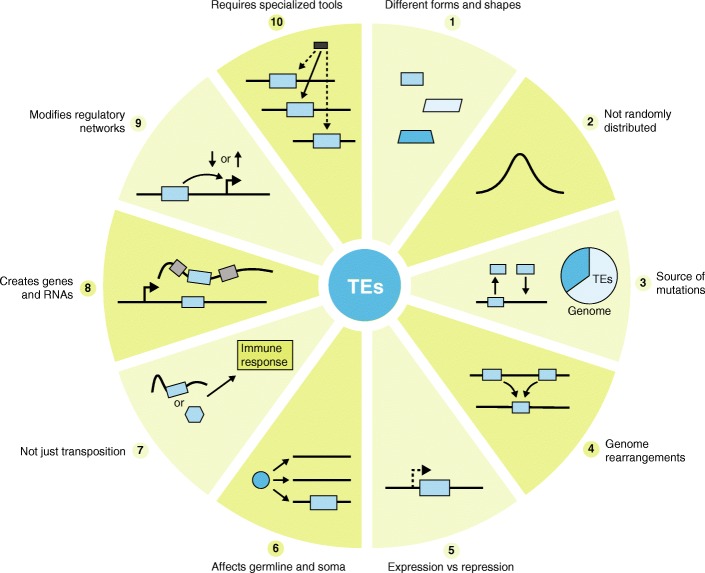
“TEs are expressed in a tissue-specific manner and can affect transcription and gene expression [24] by generating new genes and mRNAs through genomic rearrangements and de novo mutations, and cause alteration of regulatory networks and trigger immune responses [5].”
The histone demethylase dLsd1 regulates organ size by silencing transposable elements
Selmi, I., Texier, M., Aguirrenbegoa, M., Mercé, C., Lepourry, L., Mugat, B., Mohamed, M., Chambeyron, S., Cribbs, D. L., & Stefano, L. D. (2025) · Communications Biology · doi:10.1038/s42003-025-07724-6 · Cited by 2
“As TE activation has been linked to increased genome instability 26 , the upregulation of some TE families in dLsd1 Δ N / dLsd1 Δ N wing discs might explain some of the phenotypes observed in the absence of dLsd1.”
Tullume-Vergara, P. O., Ludwig, A., Yurchenko, V., Coelho, A. C., Coser, E. M., Krieger, M. A., Teixeira, M. M. G., Shaw, J. J., & Alves, J. M. P. (2025) · Parasitology · doi:10.1017/s0031182025100231 · Cited by 4
“…which relocate into the genome through a ‘copy-and-paste’ mechanism involving an RNA intermediate, and Class II TEs (DNA transposons), which move via a DNA intermediate mostly using ‘cut-and-paste’ mechanism of mobilization (Finnegan, 1989; Bourque et al., 2018; Gilbert et al., 2021).”
Ershova, E. S., Umriukhin, P. E., Zinchenko, R. A., Vasilieva, Т. P., Kostyuk, S. E., Shabalin, N., Salimova, T. A., Malinovskaya, E. M., Вейко, Н. Н., & Kostyuk, S. V. (2025) · Journal of Aging Research · doi:10.1155/jare/8847073 · Cited by 4
“Reverse transcriptase encoded by LINE produces RNA–DNA hybrids not only of LINE repeats but also of other genome sequences [81].”
Endogenous Retroelements in Cancer: Molecular Roles and Clinical Approach
Lee, K.-H., & Cho, J. (2021) · IntechOpen eBooks · doi:10.5772/intechopen.93370 · Cited by 2
“Some of these events occur at high enough frequency to result in vast amounts of rearrangement of the host genome sequence [16].”
BackgroundInfluentialHow Do Concepts Contribute to Scientific Advancement? Evolutionary Biology As a Case Study
Depew, D. (2020) · Cambridge University Press eBooks · doi:10.1017/9781108648981.008 · Cited by 3
Ruse, M. (2020) · Cambridge University Press eBooks · doi:10.1017/9781108648981.015 · Cited by 2
Butler, C. L., Bell, E. A., & Taylor, M. I. (2021) · BMC Genomics · doi:10.1186/s12864-021-07569-3 · Cited by 3
“Many TEs display both an insertion site bias [11, 12] and variable TE activity rates (a product of both TE excision and progeny rates) within the lifetime of a cell [13].”
BackgroundA Survey of Transposon Landscapes in the Putative Ancient Asexual Ostracod Darwinula stevensoni
Schön, I., Rodríguez, F., Dunn, M., Martens, K., Shribak, M. I., & Arkhipova, I. R. (2021) · Genes · doi:10.3390/genes12030401 · Cited by 3
“Theoretical studies [26,27] and an ever-increasing number of genomic studies from different host organisms [28,29] suggest that additional factors besides the reproductive mode will also influence transposon diversity and load, such as initial transposon load in sexual ancestors, DNA methylation, population size [30],…”
BackgroundYasuike, M., Kumon, K., Tanaka, Y., Saitoh, K., & Sugaya, T. (2021) · Current Issues in Molecular Biology · doi:10.3390/cimb43030145 · Cited by 2
“Transposable elements of eukaryotic genomes have also been reported to be activated by stress and trigger an innate immune response [45,46].”
BackgroundCRISPR-Mediated Activation of Transposable Elements in Embryonic Stem Cells
Sakashita, A., Ariura, M., & Namekawa, S. H. (2022) · Methods in molecular biology · doi:10.1007/978-1-0716-2380-0_11 · Cited by 2
Detecting Horizontal Transfer of Transposons
Galbraith, J. D., Ivancevic, A. M., Qu, Z., & Adelson, D. L. (2022) · Methods in molecular biology · doi:10.1007/978-1-0716-2883-6_3 · Cited by 2
Structure and Diversity of Tc1/mariner DNA Transposons in the Genome of the Jellyfish Aurelia aurita
Ulupova, Y. N., Puzakova, L. V., & Puzakov, M. V. (2023) · Russian Journal of Genetics · doi:10.1134/s1022795423020138 · Cited by 2
“This mechanism is called “cut-and-paste” [4, 6].”
BackgroundEvolutionary Change Is Naturally Biological and Purposeful
Shapiro, J. A. (2023) · The MIT Press eBooks · doi:10.7551/mitpress/14642.003.0018 · Cited by 2
Exploring horizontal transfer of mariner transposable elements among ants and aphids
Vela, J., Mora, P., Montiel, E. E., Rico-Porras, J. M., Sanllorente, O., Amoasii, D., Lorite, P., & Palomeque, T. (2024) · Gene · doi:10.1016/j.gene.2024.148144 · Cited by 2
Genome diversity and species richness in mammalsPreprint
Herrick, J., & Sclavi, B. (2019) · bioRxiv (Cold Spring Harbor Laboratory) · doi:10.1101/709311 · Cited by 2
Yan, H., Torchiana, F., & Bombarely, A. (2020) · Preprints.org · doi:10.20944/preprints202008.0275.v1 · Cited by 2
“For example, TEs are not 301 distributed equally in the genome [35] and the simulated mutations on TEs might not match real 302 mutations during genome evolution.”
BackgroundWang, L., Taylor, T., Rathnakumar, K., Khyzha, N., Liang, M., Alizada, A., Campitelli, L., Pour, S. E., Patel, Z. M., Antounians, L., et al. (2022) · bioRxiv (Cold Spring Harbor Laboratory) · doi:10.1101/2022.10.25.513724 · Cited by 2
Ruggieri, A. A., Livraghi, L., Lewis, J. J., Evans, E. J., Cicconardi, F., Hebberecht, L., Ortiz-Ruiz, Y., Montgomery, S. H., Ghezzi, A., Rodríguez‐Martínez, J. A., et al. (2022) · Genome Research · doi:10.1101/gr.277534.122 · Cited by 2
Transposon accumulation at xenobiotic gene family loci: a comparative genomic analysis in aphidsPreprint
Baril, T., Pym, A., Bass, C., & Hayward, A. (2023) · bioRxiv (Cold Spring Harbor Laboratory) · doi:10.1101/2023.02.20.529256 · Cited by 2
H1 restricts euchromatin-associated methylation pathways from heterochromatic encroachmentPreprint
Harris, C. J., Zhong, Z., Ichino, L., Feng, S., & Jacobsen, S. E. (2023) · bioRxiv (Cold Spring Harbor Laboratory) · doi:10.1101/2023.05.10.539968 · Cited by 2
Editorial: Inflammation, aging, and disease: new perspectives and interventions
Duggal, N. A., Henson, S. M., & Turner, J. E. (2023) · Frontiers in Aging · doi:10.3389/fragi.2023.1228756 · Cited by 2
Tolerance thresholds underlie responses to DNA damage during germline developmentPreprint
Jansen, G., Gebert, D., Kumar, T. R., Simmons, E. S. G., Murphy, S., & Teixeira, F. K. (2024) · bioRxiv (Cold Spring Harbor Laboratory) · doi:10.1101/2024.01.07.574510 · Cited by 2
Expression of Most Retrotransposons in Human Blood Correlates with Biological AgingPreprint
Tsai, Y.-T., Seymen, N., Thompson, I. R., Zou, X., Mumtaz, W., Gerlevik, S., Mufti, G. J., & Karimi, M. M. (2024) · eLife · doi:10.7554/elife.96575.2 · Cited by 2
Navigating the Maze of Maize Genomics: The Impact of Transposable Elements and Tandem RepeatsPreprint
Heringer, P., Benson, C. W., & Ou, S. (2024) · Cold Spring Harbor Protocols · doi:10.1101/pdb.top108441 · Cited by 2
AGO2 slicing restrains RTL1 to prevent vascular defects and lethal neonatal muscle failurePreprint
Kumar, M., Maria, A. G., Moses, A., Prajapat, M., Clements, J., Kitazawa, M., Shiura, H., Fukuda, K., & Vidigal, J. A. (2025) · bioRxiv (Cold Spring Harbor Laboratory) · doi:10.1101/2025.04.02.646793 · Cited by 2
“They pose an imminent threat to their hosts because of their ability to mobilize to other genomic locations (Bourque et al. 2018; Wells and Feschotte 2020) which can disrupt essential genes or regulatory motifs and thus compromise both the health of tissues (Kazazian and Moran 2017;…”
Genome-wide selection on transposable elements in maizePreprint
Liu, B., Munasinghe, M., Fairbanks, R. A., Hirsch, C. N., & Ross‐Ibarra, J. (2025) · bioRxiv (Cold Spring Harbor Laboratory) · doi:10.1101/2025.09.16.676665 · Cited by 2
Westerberg, I., Li, M., Mercier, E., Ament‐Velásquez, S. L., Sandell, L., Silar, P., Vogan, A. A., Grognet, P., Malagnac, F., & Johannesson, H. (2025) · bioRxiv (Cold Spring Harbor Laboratory) · doi:10.64898/2025.12.02.690432 · Cited by 2
RNA decay via the nuclear exosome is essential for Piwi-mediated transposon silencingPreprint
Yu, C., Manolova, T., Tirián, L., Handler, D., Hohmann, U., Nemčko, F., de Montserrat, J. P. I., Collet, G. G., Schnabl, J., Blake, E., et al. (2025) · bioRxiv (Cold Spring Harbor Laboratory) · doi:10.64898/2025.12.16.694471 · Cited by 3
Metadata
- Authors
- Bourque, G., Burns, K. H., Gehring, M., Gorbunova, V., Seluanov, A., Hammell, M., Imbeault, M., Izsvák, Z., Levin, H. L., Macfarlan, T. S., Mager, D. L., & Feschotte, C.
- Affiliations
- McGill University (CA)
- Johns Hopkins University (US)
- Whitehead Institute for Biomedical Research (US)
- University of Rochester (US)
- Cold Spring Harbor Laboratory (US)
- University of Cambridge (GB)
- Max Delbrück Center (DE)
- National Institutes of Health (US)
- BC Cancer Agency (CA)
- Cornell University (US)
- Corresponding author
- Bourque, Guillaume
- Feschotte, Cédric
- ORCID
- Venue
- Genome Biology
- Published
- 2018-11-19
- Volume
- 19
- Issue
- 1
- Pages
- 199-199
- ISSN
- 1465-6906 (ISSN-L)
- 1474-760X
- PMC
- PMC6240941
- OpenAlex
- W2901901698
- Semantic Scholar
- ca9ba03e2e3c00a26c0a2e017cfefd48368079b2
- Cited by
- 1,430
- References
- 203
- Citations by year
- 2026: 167 · 2025: 243 · 2024: 236 · 2023: 199 · 2022: 202 · 2021: 190 · 2020: 133 · 2019: 58
- FWCI
- 10.00
- Type
- journal article
- Language
- en
- Open access
- gold
- doi.org
- Licence
- cc-by
- creativecommons.org/licenses/by/4.0/ (tdm)
- creativecommons.org/licenses/by/4.0/ (vor)
- Locations
- Genome biology (publishedVersion, cc-by)
- Europe PMC (PubMed Central) (publishedVersion, cc-by)
- PubMed Central (publishedVersion, cc-by)
- PubMed (publishedVersion)
- Cold Spring Harbor Laboratory Institutional Repository (Cold Spring Harbor Laboratory) (acceptedVersion)
- MDC Repository (Max-Delbrueck-Center for Molecular Medicine) (acceptedVersion)
- Apollo (University of Cambridge) (submittedVersion, cc-by)
- cIRcle (University of British Columbia) (submittedVersion, cc-by)
- DOAJ (DOAJ: Directory of Open Access Journals) (submittedVersion, cc-by-sa)
- DSpace@MIT (Massachusetts Institute of Technology) (submittedVersion, cc-by-nc)
- Apollo
- Apollo (cc-by)
- Funders
- Canadian Institutes of Health Research (CIHR-MOP-115090, CIHR-CEE-151618)
- Fonds de Recherche du Québec - Santé (FRSQ-25348, FRSQ-35279)
- European Commission (ERC-2011-AdG 294742)
- National Institutes of Health
- National Science Foundation
- Topics
- Life Sciences › Biochemistry, Genetics and Molecular Biology › Genetics › Chromosomal and Genetic Variations
- Life Sciences › Biochemistry, Genetics and Molecular Biology › Molecular Biology › Genomics and Chromatin Dynamics
- Life Sciences › Biochemistry, Genetics and Molecular Biology › Genetics › Genomic variations and chromosomal abnormalities
- Keywords
- transposable elements, genome evolution, eukaryotic genomes, transposon-host interactions, genome plasticity
- MeSH terms
- Animals, DNA Transposable Elements, Humans, Mutation, Polymorphism, Genetic, Gene Rearrangement
About these checks
Registry, retraction, Cites and statistics results are computed, not judged, with one exception: a printed reference that no index lists is read once by a model before it counts as a citation error. Claims are extracted by a model and kept only when their quote appears verbatim in the text; each cited source is then checked, with a model’s help, for whether it says what the claim relies on. Those verdicts can be wrong — read the claim’s quote and the cited source before relying on one.
Statistics and arithmetic are recomputed, not judged.
Confidence bands are shown only for fields calibrated on our annotated test set. None is calibrated yet, so no band is shown.
What counts as a claim ›How we measure confidence ›How we check this ›
Are you an author, or do you see a problem with this page? Request a review
Data sources
Bibliographic data: Semantic Scholar, OpenAlex, Crossref.
Contains information from the Semantic Scholar Academic Graph Datasets, made available under the ODC Attribution License (ODC-BY 1.0).
Semantic Scholar’s data is described in: Kinney, R., et al. (2023). The Semantic Scholar Open Data Platform. arXiv:2301.10140.
