

Ten things you should know about transposable elements
Open accessThe DOI matches its Crossref record; 203 of the 203 references it cites were found in a registry or an index.
Abstract
Transposable elements (TEs) are major components of eukaryotic genomes. However, the extent of their impact on genome evolution, function, and disease remain a matter of intense interrogation. The rise of genomics and large-scale functional assays has shed new light on the multi-faceted activities of TEs and implies that they should no longer be marginalized. Here, we introduce the fundamental properties of TEs and their complex interactions with their cellular environment, which are crucial to understanding their impact and manifold consequences for organismal biology. While we draw examples primarily from mammalian systems, the core concepts outlined here are relevant to a broad range of organisms.
Overview
The claims and statistics of this paper haven’t been checked yet.
Free: it reads the open-access text and checks the first 5 claims that cite a source we can check. Create a free account to check every claim.
Integrity signals
Registry
Cites
Statistics
Figures
Verification
Claims the paper makes
The claims and statistics of this paper haven’t been checked yet.
Free: it reads the open-access text and checks the first 5 claims that cite a source we can check. Create a free account to check every claim.
Claims other papers make about this one
Each is checked against this paper’s own text: does it say what the citing paper says it does?
The source backs part of the claim, not all of it — or backs it for a different population, condition or comparison.
In the citing paper
“Constituting ~45% of the human and rodent genomes, transposable elements are routinely repressed in somatic cells to prevent their mobilization, which otherwise can have deleterious effects [119,120].”
From What would it take to prove that a chronic infection is a causal agent in Alzheimer’s disease? (2025) · cites this paper as [119]
Experimental — accuracy not yet measuredThe cited source says what the claim attributes to it.
In the citing paper
“First, these elements are significantly overrepresented (31).”
From DNA language models are powerful predictors of genome-wide variant effects (2023) · cites this paper as [31]
Self-check
Percentages, sums and reported differences re-computed from the paper’s own numbers.
The self-check needs the paper’s full text.
Citations
Cites
Ultrafast and memory-efficient alignment of short DNA sequences to the human genome.
Langmead, B., Trapnell, C., Pop, M., & Salzberg, S. L. (2009) · Genome Biology · doi:10.1186/gb-2009-10-3-r25 · Cited by 21,849
An integrated encyclopedia of DNA elements in the human genome
The ENCODE Project Consortium (2012) · Nature · doi:10.1038/nature11247 · Cited by 18,072
The B73 Maize Genome: Complexity, Diversity, and Dynamics
Schnable, P. S., Ware, D., Fulton, R. S., Stein, J. C., Wei, F., Pasternak, S., Liang, C., Zhang, J., Fulton, L., Graves, T. A., et al. (2009) · Science · doi:10.1126/science.1178534 · Cited by 4,046
A unified classification system for eukaryotic transposable elements
Wicker, T., Sabot, F., Hua-Van, A., Bennetzen, J. L., Capy, P., Chalhoub, B., Flavell, A., Leroy, P., Morgante, M., Panaud, O., et al. (2007) · Nature Reviews Genetics · doi:10.1038/nrg2165 · Cited by 3,054
Britten, R. J., & Kohne, D. E. (1968) · Science · doi:10.1126/science.161.3841.529 · Cited by 2,802
An integrated map of structural variation in 2,504 human genomes
Sudmant, P. H., Rausch, T., Gardner, E. J., Handsaker, R. E., Abyzov, A., Huddleston, J., Zhang, Y., Ye, K., Jun, G., Hsi-Yang Fritz, M., et al. (2015) · Nature · doi:10.1038/nature15394 · Cited by 2,354
Chiappinelli, K. B., Strissel, P. L., Desrichard, A., Li, H., Henke, C., Akman, B., Hein, A., Rote, N. S., Cope, L. M., Snyder, A., et al. (2015) · Cell · doi:10.1016/j.cell.2015.07.011 · Cited by 2,022
The impact of retrotransposons on human genome evolution
Cordaux, R., & Batzer, M. A. (2009) · Nature Reviews Genetics · doi:10.1038/nrg2640 · Cited by 1,703
Roulois, D., Loo Yau, H., Singhania, R., Wang, Y., Danesh, A., Shen, S. Y., Han, H., Liang, G., Jones, P. A., Pugh, T. J., et al. (2015) · Cell · doi:10.1016/j.cell.2015.07.056 · Cited by 1,527
Regulatory activities of transposable elements: from conflicts to benefits
Chuong, E. B., Elde, N. C., & Feschotte, C. (2017) · Nature Reviews Genetics · doi:10.1038/nrg.2016.139 · Cited by 1,489
Self-citation
Cited by
Items 701–800 of 1,005
Miyao, A., & Yamanouchi, U. (2022) · BMC Bioinformatics · doi:10.1186/s12859-022-05011-3 · Cited by 6
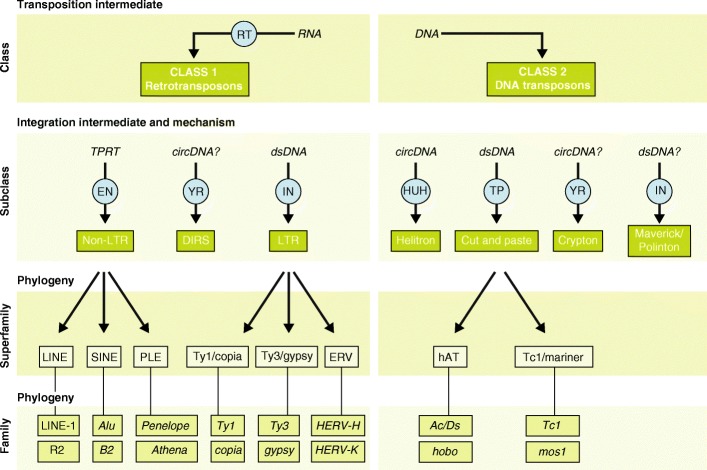
“TEs are categorized into two classes [1, 2].”
Liu, H., Pei, M., Ampomah‐Dwamena, C., He, G., Wei, T., Shi, Q., Yu, Y., & Guo, D. (2023) · Functional & Integrative Genomics · doi:10.1007/s10142-023-01128-7 · Cited by 6
Cross, I., Rodríguez, M. E., Portela-Bens, S., Merlo, M. A., Gálvez-Salido, A., Navajas‐Pérez, R., & Rebordinos, L. G. (2024) · Frontiers in Marine Science · doi:10.3389/fmars.2024.1359531 · Cited by 6
Thieme, M., Minadakis, N., Himber, C., Keller, B., Xu, W., Rutowicz, K., Matteoli, C., Böhrer, M., Rymen, B., Laudencia‐Chingcuanco, D., et al. (2024) · PLoS Genetics · doi:10.1371/journal.pgen.1011200 · Cited by 6
“As the loss of main players of the RdDM silencing pathway leads to increased TE activity [18,27,33,63], the two B . distachyon Pol IV (NRPD1) mutants provided an ideal functional tool to experimentally validate our in silico analysis.”
Chromosomal Rearrangements and Transposable Elements in Locally Adapted Island Drosophila
Turner, B. A., Erlenbach, T. R., Stewart, N. B., Reid, R. W., Moore, C. C., & Rogers, R. L. (2025) · Genome Biology and Evolution · doi:10.1093/gbe/evaf236 · Cited by 6
Silencing of Euchromatic Transposable Elements as a Consequence of Nuclear Lamina Dysfunction
Cavaliere, V., Lattanzi, G., & Andrenacci, D. (2020) · Cells · doi:10.3390/cells9030625 · Cited by 7
“DNA transposons transpose via a mechanism of cut-and-paste transposition, while retrotransposons transpose via reverse transcription of an RNA intermediate [1].”
BackgroundWhat Is the Nature of Scientific Controversies in the Biological Sciences?
Dietrich, M. R. (2020) · Cambridge University Press eBooks · doi:10.1017/9781108648981.013 · Cited by 7
Solovyeva, A. I., Levakin, I. A., Zorin, E. A., Adonin, L., Khotimchenko, Y. S., & Podgornaya, O. I. (2021) · Genes · doi:10.3390/genes12081129 · Cited by 6
Bartha, L., Mandáková, T. M., Kovařík, A., Bulzu, P., Rodde, N., Mahelka, V., Lysák, M. A., Fustier, M., Šafář, J., Cápal, P., et al. (2022) · New Phytologist · doi:10.1111/nph.18171 · Cited by 6
The salmon louse genome may be much larger than sequencing suggests
Wyngaard, G. A., Skern‐Mauritzen, R., Malde, K., Prendergast, R., & Peruzzi, S. (2022) · Scientific Reports · doi:10.1038/s41598-022-10585-2 · Cited by 6
“importance of repetitive elements (mainly transposable elements – TEs) in lateral gene transfer 63 [12] and generation of new phenotypes [13] is becoming increasingly apparent.”
BackgroundSenapati, P., Miyano, M., Sayaman, R. W., Basam, M., Trac, C., Leung, A., LaBarge, M. A., & Schones, D. E. (2020) · bioRxiv (Cold Spring Harbor Laboratory) · doi:10.1101/2020.06.26.170043 · Cited by 6
“Some elements such as Alu, LINE and SVA elements 113 are still retrotransposition competent [20].”
BackgroundTrends in Antimicrobial Resistance in Healthcare-Associated Infections: A Global Concern
Arslan, İ. (2021) · Elsevier eBooks · doi:10.1016/b978-0-12-818731-9.00111-7 · Cited by 10
Lorrain, C., Oggenfuss, U., Croll, D., Duplessis, S., & Stukenbrock, E. H. (2021) · Elsevier eBooks · doi:10.1016/b978-0-12-819990-9.00042-1 · Cited by 7
Mout, L., Moreno-Rodriguez, T., Grillo, G., Nand, A., Keshavarzian, T., Bahl, S., Kang, K., Bootsma, M. L., Minnee, E., Zhou, S., et al. (2025) · bioRxiv (Cold Spring Harbor Laboratory) · doi:10.1101/2025.08.08.668693 · Cited by 7
Self-citationGazolla, C. B., Ludwig, A., Gama, J. D. M., & Bruschi, D. P. (2021) · G3 Genes Genomes Genetics · doi:10.1093/g3journal/jkab391 · Cited by 5
Population genetics of transposable element load: A mechanistic account of observed overdispersion
Smith, R. D., Puzey, J. R., & Smith, G. D. (2022) · PLoS ONE · doi:10.1371/journal.pone.0270839 · Cited by 5
Predicting horizontal gene transfers with perfect transfer networks
Sánchez, A. L., & Lafond, M. (2024) · Algorithms for Molecular Biology · doi:10.1186/s13015-023-00242-2 · Cited by 5
“…of such traits include transposable elements (TEs) which are unique genomic sequences that have integrated into the genome and are rarely lost [50], biochemical markers such as metabolites which are small molecules that function as intermediates and products of metabolic processes [51], and…”
BackgroundThe Roles of Transposable Elements in Transgenerational Inheritance and Genome Evolution
Stefanov, B., & Nowacki, M. (2024) · Springer eBooks · doi:10.1007/978-3-031-59286-7_18 · Cited by 5
Nascimento, J., Sader, M., Ribeiro, T., & Pedrosa‐Harand, A. (2025) · PROTOPLASMA · doi:10.1007/s00709-025-02036-2 · Cited by 5
“Class II is made up of transposon-like elements, which are based on either the direct movement of DNA sequences to a new position or on the integration of DNA replicated elsewhere (Bourque et al. 2018; Muñoz-López and García-Pérez 2010).”
Shimada, Y., Aydın, B., Kon‐Nanjo, K., Handayani, K. S., Gultom, V. D. N., Simakov, O., Fahrurrozi, & Kon, T. (2025) · Zoological Letters · doi:10.1186/s40851-025-00249-0 · Cited by 5
Du, Q., & Li, R. (2025) · Plant Physiology and Biochemistry · doi:10.1016/j.plaphy.2025.109874 · Cited by 5
Zygotic activation of transposable elements during zebrafish early embryogenesis
Li, B., Li, T., Wang, D., Yang, Y., Tan, P., Wang, Y., Yang, Y.-G., Jia, S., & Au, K. F. (2025) · Nature Communications · doi:10.1038/s41467-025-58863-7 · Cited by 6
“20 and 21 and Supplementary Note 11).”
Lee, S., Ho, Y. Y., Hao, S., Ouyang, Y., Liew, U. L., Goyal, A., Li, S., Barbour, J. A., He, M., Huang, Y., et al. (2025) · Journal of Biological Chemistry · doi:10.1016/j.jbc.2025.108568 · Cited by 5
“Transposable element – derived sequences comprise nearly half of the human genome (1), with 8.3% associated with endogenous retroviruses (ERVs) (2).”
InfluentialDiverging repeatomes in holoparasitic Hydnoraceae uncover a playground of genome evolution
Kim, W., Schmidt, N., Jost, M., Mkala, E. M., Winkler, S., Hu, G., Heitkam, T., & Wanke, S. (2025) · New Phytologist · doi:10.1111/nph.70280 · Cited by 5
Li, T. D., Toohill, K., & Modzelewski, A. J. (2025) · Wiley Interdisciplinary Reviews - RNA · doi:10.1002/wrna.70022 · Cited by 8
“Only 4% of mammalian genomes are under obvious evolutionary constraint, which is mostly at protein-coding regions (Bourque et al. 2018; Lindblad-Toh et al. 2011; Venuto and Bourque 2018).”
Transposable elements drive evolution and perturb gene expression in Brassica rapa and B. oleracea
Zheng, P., Ko, C., Ou, J., Zuccolo, A., & Lin, Y. (2025) · The Plant Journal · doi:10.1111/tpj.70452 · Cited by 5
“…sequencing technologies and computational tools such as R EPEAT M ASKER , R EPEAT M ODELER 2, EDTA, REPET, and LTR_ RETRIEVER have improved TE identification, classification, and annotation (Bourque et al., 2018; Flynn et al., 2020; Ou et al., 2018; Ou & Jiang, 2018; Quesneville et al., 2005).”
InfluentialGarza, R., Adami, A., Thiruvalluvan, A., Wijesinghe, S. S., Curle, A. J., Tam, O. H., Forcier, T., Lagka, D. A., Kazakou, N.-L., Atacho, D. A. M., et al. (2026) · Science Advances · doi:10.1126/sciadv.aed2952 · Cited by 6
“TEs are composed of highly repetitive sequences that are technically difficult to analyze using standard molecular technologies ( 19 , 20 ).”
Self-citationMerenciano, M., de Oliveira, D. S., Salces-Ortiz, J., Rebollo, R., Manfré, B., Menezes, B. F., Krasovec, G., Simonet, C., Janillon, S., Burlet, N., et al. (2025) · Mobile DNA · doi:10.1186/s13100-025-00372-x · Cited by 6
“We then focused on full-length (FL) insertions due to their potential mutagenic effects (see Methods) [36].”
Evolutionary dynamics of repetitive elements and genome size in Tetrigidae (Orthoptera: Caelifera)
Salman, M., Wang, P., Liu, N., Liu, X., Deng, W.-A., & Huang, Y. (2025) · Scientific Reports · doi:10.1038/s41598-025-17670-2 · Cited by 5
Han, T., Zheng, Q., Lv, J., Li, S., Du, Z., & Xing, Y. (2025) · Physiologia Plantarum · doi:10.1111/ppl.70601 · Cited by 5
“Beyond whole-genome duplication or poly-ploidy, intrinsic processes such as the accumulation of repetitive and transposable elements (Bourque et al. 2018), as well as extrinsic influences including climate (Bureš et al. 2024), mating system (Roessler et al. 2019), or demographic history (Lefebure…”
Anwar, R., Pande, A., Singh, M. K., Huang, Z., Hallett, E., Xie, Y., Gellhaus, A., Herse, F., Nonn, O., Gauster, M., et al. (2025) · Genome biology · doi:10.1186/s13059-025-03821-1 · Cited by 5
“This recruitment occurs either because of their inherent capacity to function as cis-regulatory elements (CREs), or through the repurposing of components of their gene bodies for host biological functions [2].”
Self-citationA mammalian-like piRNA pathway in Axolotl reveals the origins of piRNA-directed DNA methylation
Xiang, X., Gao, A., Handler, D., Falcon, F., Rodriguez‐Terrones, D., Nowoshilow, S., Liu, W., Tanaka, E. M., & O’Carroll, D. (2025) · The EMBO Journal · doi:10.1038/s44318-025-00631-w · Cited by 6
“When expressed, active transposons can integrate into new genomic locations, potentially causing gene mutations (Bourque et al, 2018).”
Rosspopoff, O., Trono, D., & Feschotte, C. (2025) · Current Opinion in Genetics & Development · doi:10.1016/j.gde.2025.102414 · Cited by 5
Self-citationMeng, X., Nie, Z., Wang, Q., Hu, Y., Deng, Y., Ai, N., Huang, Z., Li, Y., Yuan, Y., Xiao, J., et al. (2025) · Nucleic Acids Research · doi:10.1093/nar/gkaf1235 · Cited by 5
“Based on their transposition mechanisms, TEs are classified into two major classes: retrotransposons and DNA transposons [ 3 ].”
Zheng, T., Zhang, X., Liu, T., Liu, X., Bowler, C., & Lin, X. (2026) · Algal Research · doi:10.1016/j.algal.2026.104605 · Cited by 5
Ghiasi, N. M., Güloglu, T., Mustafa, H., Fırtına, C., Koliogeorgi, K., Kanellopoulos, K., Mao, H., Nadig, R., Sadrosadati, M., Park, J., et al. (2026) · IEEE International Symposium on High-Performance Computer Architecture (HPCA) · doi:10.1109/hpca68181.2026.11408512 · Cited by 10
“Read#1 Mismatch Count”
Marion, S. B., Focht, K., Hamid, I., Iversen, E. S., John, H., Manzano‐Winkler, B., Navarra, A., Pangare, S., Zarei, M., & Noor, M. A. F. (2026) · PLoS Biology · doi:10.1371/journal.pbio.3003467 · Cited by 7
Epigenomic modifications define chromatin states to regulate cell-free DNA fragmentomics
Gong, F., Pan, Y., Lin, H., An, Y., Yang, M., Liu, X., Bai, Y., Zhang, Z., Tang, B., Zhang, K., et al. (2026) · Nature Communications · doi:10.1038/s41467-026-75640-2 · Cited by 5
“TEs, often referred to as “ mobile DNA ” or “ jumping genes ” , play a signi fi cant role inshapingthegeneticlandscapeandaccountforapproximatelyhalfof the human genome 21 .”
Automatic curation of LTR retrotransposon libraries from plant genomes through machine learning
Orozco-Arias, S., Candamil-Cortés, M. S., Jaimes, P. A., Valencia-Castrillon, E., Tabares-Soto, R., Isaza, G. A., & Guyot, R. (2022) · Berichte aus der medizinischen Informatik und Bioinformatik/Journal of integrative bioinformatics · doi:10.1515/jib-2021-0036 · Cited by 6
“…to the genome evolution and adaptation [10], to have significant relations to gene regulation and genome plasticity and evolution [11], having important impacts on the generation of mutations, genetic polymorphisms [12], the generation of biodiversity, and during speciation events [13].”
BackgroundTwo Retrotransposon Elements in Intron of Porcine BMPR1B Is Associated with Phenotypic Variation
Chi, C., He, J., Du, Z., Zheng, Y., D’Alessandro, E., Chen, C., Moawad, A. S., Asare, E., Song, C., & Wang, X. (2022) · Life · doi:10.3390/life12101650 · Cited by 5
“Retrotransposon can disperse vast amounts of promoters, enhancers, and even repressive elements [60,61].”
BackgroundAndrosiuk, P., Milarska, S. E., Dulska, J., Kellmann-Sopyła, W., Szablińska‐Piernik, J., & Lahuta, L. B. (2023) · Journal of Applied Genetics · doi:10.1007/s13353-023-00748-w · Cited by 5
“The TEs activity has also an influence on gene expression as their insertion within the sequence of the particular gene not only may destroy the gene structure and prevent its transcription but also may alter the gene expression profile by insertion into its promoter region (Kumar and Bennetzen 1999; Levin and Moran 2…”
BackgroundmaT and mosquito transposons in cnidarians: evolutionary history and intraspecific differences
Puzakov, M. V., Puzakova, L. V., Shi, S., & Cheresiz, S. V. (2023) · Functional & Integrative Genomics · doi:10.1007/s10142-023-01175-0 · Cited by 5
Eskier, D., Arıbaş, A., & Karakülah, G. (2023) · Methods in molecular biology · doi:10.1007/978-1-0716-3389-2_5 · Cited by 5
Orozco-Arias, S., López-Murillo, L. H., Piña, J. S., Valencia-Castrillon, E., Tabares-Soto, R., Castillo, L., Isaza, G. A., & Guyot, R. (2023) · PLoS ONE · doi:10.1371/journal.pone.0291925 · Cited by 5
Spencer, L. H., Long, W. C., Spies, I., Nichols, K. M., & Foy, R. J. (2024) · PLOS Climate · doi:10.1371/journal.pclm.0000319 · Cited by 5
Cho, H.-M., Choe, S.-H., Lee, J.-R., Park, H., Ko, M.-G., Lee, Y.-J., Lee, H.-Y., Park, S. H., Park, S.-J., Kim, Y., et al. (2024) · npj Aging · doi:10.1038/s41514-024-00158-0 · Cited by 5
Retrotransposon SINEs in age-related diseases: Mechanisms and therapeutic implications
Shah, S., Yu, S., Zhang, C., Ali, I., Wang, X., Qian, Y., & Xiao, T. (2024) · Ageing Research Reviews · doi:10.1016/j.arr.2024.102539 · Cited by 6
Graham, L. A., & Davies, P. L. (2024) · BMC Molecular and Cell Biology · doi:10.1186/s12860-024-00525-5 · Cited by 6
“They can also act as drivers of gene duplication, even after they have lost the ability to transpose on their own [77].”
Chavan, A., Skrutl, L., Uliana, F., Pfister, M., Brändle, F., Tirián, L., Baptista, D., Handler, D., Burke, D. F., Sintsova, A., et al. (2025) · PLoS Biology · doi:10.1371/journal.pbio.3002984 · Cited by 6
Endogenous retroviruses in neurodevelopmental, psychotic and cognitive disorders
Meyer, U., & Penner, I. (2025) · Microbes and Infection · doi:10.1016/j.micinf.2025.105479 · Cited by 5
Jumping in the human brain: A review on somatic transposition
Zhang, Y., Guo, Y., Jia, H., Ma, H., Tan, S., & Zhang, Y. E. (2025) · Fundamental Research · doi:10.1016/j.fmre.2025.03.001 · Cited by 5
“…pio-neering discovery of TEs in the 1940s [ 1 , 2 ], research interests have been accumulating due to their prevalence in eukaryotic and prokaryotic genomes, their mutagenic properties, and their roles in functional evolution through the provision of coding and regulatory sequences [ 3– 6 ].”
Autonomous Shaping of the piRNA Sequence Repertoire by Competition between Adjacent Ping-Pong Sites
Yu, J., Kawasaki, F., Izumi, N., Kiuchi, T., Katsuma, S., Tomari, Y., & Shoji, K. (2024) · Molecular Cell · doi:10.1016/j.molcel.2025.02.015 · Cited by 6
Evolutionary Diversification and Functions of the Candidate Male Killing Gene wmk
Lefoulon, E., Bordenstein, S. R., Carpenter, L. R., Buchser, J. L., Nowicki, C. J., Yakhnina, A. A., Gutierrez, J., Kaur, R., Imchen, M., & Bordenstein, S. R. (2025) · Genome Biology and Evolution · doi:10.1093/gbe/evaf179 · Cited by 5
What Is the Relation between Facts and Values in Biological Science? Biology in Society
Friese, C., & Prainsack, B. (2020) · Cambridge University Press eBooks · doi:10.1017/9781108648981.014 · Cited by 5
Androgenic-Induced Transposable Elements Dependent Sequence Variation in Barley
Orłowska, R., Pachota, K. A., Dynkowska, W. M., Niedziela, A., & Bednarek, P. T. (2021) · International Journal of Molecular Sciences · doi:10.3390/ijms22136783 · Cited by 5
“The others, possibly those that persisted in the genome for a long time, accumulated point mutations and became inactive [42].”
BackgroundSingle cells and transposable element heterogeneity in stem cells and development
Hutchins, A. P. (2021) · Cell Regeneration · doi:10.1186/s13619-021-00085-5 · Cited by 5
Genome Size Dynamics in Marine Ribbon Worms (Nemertea, Spiralia)
Paule, J., von Döhren, J., Sagorny, C., & Nilsson, M. A. (2021) · Genes · doi:10.3390/genes12091347 · Cited by 5
“Genome size can change through the expansion of transposable elements (TE), which are genomic copies that are able to increase in numbers [74].”
BackgroundBowman, T. V., & Trompouki, E. (2021) · Current Stem Cell Reports · doi:10.1007/s40778-021-00201-w · Cited by 5
Pelosi, J. A., Barbazuk, W. B., & Sessa, E. B. (2023) · International Journal of Plant Sciences · doi:10.1086/724824 · Cited by 5
From parasites to partners: exploring the intricacies of host-transposon dynamics and coevolution
Chakrabarty, P., Sen, R., & Sengupta, S. (2023) · Functional & Integrative Genomics · doi:10.1007/s10142-023-01206-w · Cited by 7
“Based on the mechanism of transposition, all transposons may be distributed broadly into two categories namely non-replicative transposons (Cut-and-paste) and replicative transposons (Copy-and-paste) (Bourque et al. 2018).”
Advancing Strongyloides omics data: bridging the gap with Caenorhabditis elegans
Al-Jawabreh, R., Lastik, D., Mckenzie, D., Reynolds, K., Suleiman, M., Mousley, A., Atkinson, L. E., & Hunt, V. L. (2023) · Philosophical Transactions of the Royal Society B Biological Sciences · doi:10.1098/rstb.2022.0437 · Cited by 5
“TEs can be a major driving force behind genetic variation but can also disrupt regular gene activity via different routes of mutagenesis [181].”
BackgroundReynolds, G. L., Mumey, B., Strnadová-Neeley, V., & Lachowiec, J. (2024) · Applications in Plant Sciences · doi:10.1002/aps3.11581 · Cited by 5
“Given that repetitive elements are rapidly evolving sequences that make up a sizeable portion of most of the genomes under investigation (Table S3), they were naturally under suspicion (Bourque et al., 2018; Session and Rokhsar, 2023).”
BackgroundClapes, T., & Trompouki, E. (2020) · Current Opinion in Hematology · doi:10.1097/moh.0000000000000585 · Cited by 5
“DNA transposons are mobilized via a ‘cut-and-paste’ mechanism or through a ‘peel-and-paste’ mechanism that involves a circular DNA molecule [74].”
BackgroundBamboo Transposon Research: Current Status and Perspectives
Ramakrishnan, M., Yrjälä, K., Satheesh, V., & Zhou, M. (2021) · Methods in molecular biology · doi:10.1007/978-1-0716-1134-0_24 · Cited by 5
Muller, H., Loiseau, V., Guillier, S., Cordaux, R., & Gilbert, C. (2021) · Genome Biology and Evolution · doi:10.1093/gbe/evab231 · Cited by 5
LINE-1 and SINE-B1 mapping and genome diversification in Proechimys species (Rodentia: Echimyidae)
Soares, S. C., Eler, E. S., Silva, C. E. F. E., da Silva, M. N. F., Araújo, N. P., Svartman, M., & Feldberg, E. (2022) · Life Science Alliance · doi:10.26508/lsa.202101104 · Cited by 5
“The interactions among these sequences and speci fi c genome sites is a striking feature, and is considered to re fl ect the functionality of TEs because they may play an important role in genomic plasticity and adaptive behavior (Bourque et al, 2018; Razali et al, 2019; Gonçalves et al, 2020).”
Bertocchi, N. Á., de Oliveira, T. D., Deprá, M., Goñi, B., & Valente, V. L. S. (2022) · Genetics and Molecular Biology · doi:10.1590/1678-4685-gmb-2021-0287 · Cited by 7
“The genome can be viewed as an ecosystem inhabited by diverse communities of TEs that seek to proliferate through interactions with each other TEs and with the genome as a whole and other component of the cell (Venner et al. , 2009; Bourque et al. , 2018).”
Transposable element insertions in 1000 Swedish individuals
Sæther, K. B., Nilsson, D., Thonberg, H., Tham, E., Ameur, A., Eisfeldt, J., & Lindstrand, A. (2023) · PLoS ONE · doi:10.1371/journal.pone.0289346 · Cited by 5
Fukuda, K. (2023) · Genes & Genetic Systems · doi:10.1266/ggs.23-00140 · Cited by 5
Broadscale evolutionary analysis of eukaryotic DDE transposonsPreprint
Dupeyron, M., Baril, T., & Hayward, A. (2021) · bioRxiv (Cold Spring Harbor Laboratory) · doi:10.1101/2021.09.26.461848 · Cited by 5
“Thus, while transposons evolved to promote their own selfish replication, they also offer host benefits, and there is growing evidence of their recruitment for diverse functions during host genomic evolution (2-5, 10-12).”
BackgroundInfluentialA new challenge for data analytics: transposons
Wellinger, R. E., & Aguilar–Ruiz, J. S. (2022) · BioData Mining · doi:10.1186/s13040-022-00294-x · Cited by 7
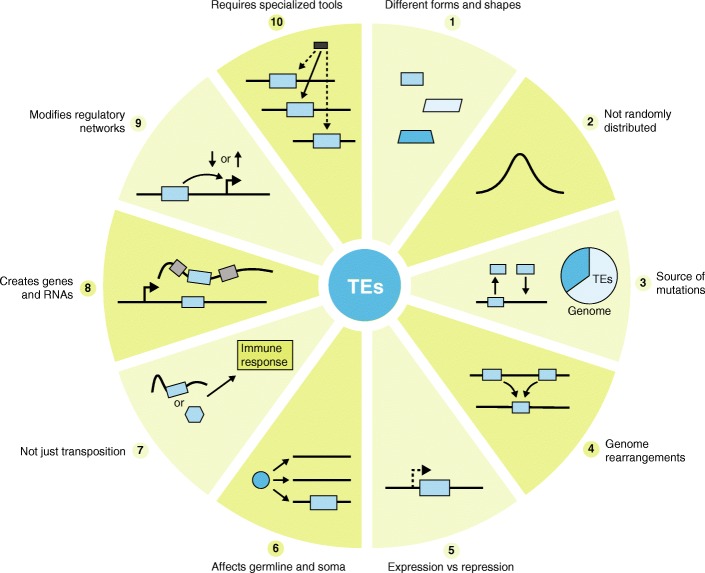
“…is fascinating: they regulate gene transcription, can activate the immune system (see autoimmune diseases), connect regulatory networks, modulate protein structure (see neurodegenerative diseases), are associated with hereditary cancer or contribute to the emergence of new genes, among others [24].”
BackgroundUniversal signatures of transposable element compartmentalization across eukaryotic genomesPreprint
Gozashti, L., Hartl, D. L., & Corbett-Detig, R. B. (2023) · bioRxiv (Cold Spring Harbor Laboratory) · doi:10.1101/2023.10.17.562820 · Cited by 6
Calvet, S., Sallis, S., Saksouk, N., Rebouissou, C., Teyssier, C., Lesne, A., Cammas, F. M., & Forné, T. (2022) · Cells · doi:10.3390/cells11152392 · Cited by 4
“Most organisms have developed efficient silencing mechanisms involving heterochromatin formation that render ERVs unable to be transcribed and/or retro-transposed [4].”
Effects of Hormonal Regulation on Cell Number and Cell Size in Determining Fruit Size: A Mini-Review
Karim, S. K. A., Zainal, Z., & Sidik, N. M. (2024) · Malaysian Applied Biology · doi:10.55230/mabjournal.v53i5.3140 · Cited by 4
Chen, L., Yang, Q., Zhang, Y., & Sun, Y. (2025) · Frontiers in Plant Science · doi:10.3389/fpls.2024.1446383 · Cited by 4
“Secondly, some MITEs might have a neutral impact on genes, which means, insertion itself would not have a signi fi cant impact on gene function in order not to be eliminated by the genome and remain in the genome (Chuong et al., 2017; Bourque et al., 2018).”
Derbyshire, M. C., Newman, T. E., Khentry, Y., Michael, P. J., Bennett, S. J., Lamichhane, A. R., Graham-Taylor, C., Chander, S., Camplone, C., Vicini, S., et al. (2025) · BMC Biology · doi:10.1186/s12915-025-02179-x · Cited by 5
“This occurs when active mobile elements called transposons duplicate or relocate themselves in the genome [26].”
Peng, B., Shen, F., Chen, Z., Yu, Y., Liu, R., Zhang, Y., Long, G., Hu, G., & Liu, Y. (2025) · Biomedicines · doi:10.3390/biomedicines13051177 · Cited by 4
“TEs are divided into two main classes based on their transposition mechanism, and these classes are further divided into subclasses, families, and over 1000 subfamilies [11].”
Genome assembly of Bougainvillia cf. muscus (Cnidaria: Hydrozoa)
Macias-Muñoz, A., Varney, R., Katcher, E., Everhart, M., & Oakley, T. H. (2025) · G3 Genes Genomes Genetics · doi:10.1093/g3journal/jkaf110 · Cited by 4
Beyond Transposons: TIGD1 as a Pan-Cancer Biomarker and Immune Modulator
Albayrak, M. G. B., Korak, T., Akpınar, G., & Kasap, M. (2025) · Genes · doi:10.3390/genes16060674 · Cited by 4
“TEs constitute nearly half of the human genome and, although typically silenced by host epigenetic mechanisms, their aberrant reactivation in cancer can contribute to oncogenesis through insertional mutagenesis, dysregulated gene expression, and activation of immune evasion pathways [7].”
Extrachromosomal Circular DNA: A Mobile Genetic Element Shaping Host Biology
Yao, S., Chung, O. W., Wang, L., & Zhang, Z. Z. (2025) · Annual Review of Cell and Developmental Biology · doi:10.1146/annurev-cellbio-101323-124454 · Cited by 4
Desvignes, T., Rivera‐Colón, A. G., & Postlethwait, J. H. (2025) · Genome Biology and Evolution · doi:10.1093/gbe/evaf184 · Cited by 5
Transposable elements in plants: Silencing, activation and roles
Wen, Y., Wu, X., Zeng, H., Xu, J., & Liu, Z. (2026) · Crop Design · doi:10.1016/j.cropd.2026.100132 · Cited by 4
Gasparotto, A. E., Ferretti, A. B. S. M., Alves-Gomes, R. T., Soares, F. A. F., Orsetti, A., Clarindo, W. R., & Cabral-de-Mello, D. C. (2026) · BMC Genomics · doi:10.1186/s12864-026-12600-6 · Cited by 4
“The chromosomal position of these elements has been associated with chromosomal rearrangements, emphasizing their role in genome reorganization and karyotype evolution [27, 29–31].”
Transposable elements as drivers of genome evolution in Drosophila virilis
Rezvykh, A. P., Kulikova, D. A., Zelentsova, E. S., Protsenko, L., Bespalova, A. V., Guseva, I. O., Blumenstiel, J. P., Евгеньев, М. Б., & Funikov, S. Y. (2026) · Nucleic Acids Research · doi:10.1093/nar/gkag139 · Cited by 5
“Once considered “junk DNA”, these elements are now recognized as crucial drivers of genome plasticity, evolution, and regulation in eukaryotes [ 5 –7 ].”
Mužina, K., Markež, A., Bizjan, B. J., Šamec, N., Kovac, J., Dovč, K., Battelino, T., & Pokorn, M. (2026) · Frontiers in Immunology · doi:10.3389/fimmu.2026.1774863 · Cited by 4
“Beyond their role as innate immune agonists, TEs are extensively exapted as cis-regulatory elements at immune genes (8, 80, 102, 103).”
InfluentialSpecies of Zymoseptoria (Dothideomycetes) as a Model System to Study Plant Pathogen Genome Evolution
Rojas‐Barrera, I. C., Fagundes, W. C., & Stukenbrock, E. H. (2022) · The mycota · doi:10.1007/978-3-031-16503-0_15 · Cited by 5
Morgan, M. A., Parast, S. M., Iwanaszko, M., Aoi, Y., Yoo, D., Dumar, Z. J., Howard, B. C., Helmin, K. A., Liu, Q., Thakur, W. R., et al. (2023) · Science Advances · doi:10.1126/sciadv.adj1261 · Cited by 4
The curious case of the disappearing piRNAs
Sarkies, P. (2024) · Wiley Interdisciplinary Reviews - RNA · doi:10.1002/wrna.1849 · Cited by 4
“Caenorhabditis elegans is richer in DNA transposons that spread via a cut and paste mechanism while Drosophila harbors a higher level of retrotransposons that spread via an RNA intermediate (Bourque et al., 2018).”
BackgroundEpigenetics and genotypic variation
Merenciano, M., Larue, A. E. A., Groza, C., Vieira, C. P., Rebollo, R., & Goubert, C. (2024) · Elsevier eBooks · doi:10.1016/b978-0-443-19051-3.00006-1 · Cited by 4
Grundy, E. E., Shaw, L. C., Wang, L., Lee, A. V., Argueta, J. C., Powell, D. J., Ostrowski, M., Jones, R. B., Cruz, C. C., Gordish‐Dressman, H., et al. (2024) · Mobile DNA · doi:10.1186/s13100-024-00333-w · Cited by 5
de Oliveira, F. S., Brann, T., Wolf, I. R., Nogaroto, V., Martins, C., Protasio, A. V., & Vicari, M. R. (2025) · Chromosome Research · doi:10.1007/s10577-025-09765-3 · Cited by 4
“…rearrangements through mechanisms of homologous or ectopic recombination, which can generate deletions, duplications, inversions, or translocations (Gray et al. 2000; Eichler and Sankoff 2003; Longo et al. 2009; Bourque et al. 2018; Glugoski et al. 2018; Badet et al. 2024; Brann et al. 2024).”
Verneret, M., Le, V. A., Faraut, T., Turpin, J., & Lerat, E. (2025) · Peer Community Journal · doi:10.24072/pcjournal.570 · Cited by 4
Xiao, C., Liu, X., Liu, P., Xu, X., Yao, C., Li, C., Xiao, Q., Guo, T., Zhang, L., Qian, Y., et al. (2025) · Cell Genomics · doi:10.1016/j.xgen.2025.100928 · Cited by 5
“80,81 Notably, recent advances from model organisms 12,15,48 suggest several methodological improvements for human studies, including (1) constructing whole-genome alignments de novo using updated primate genome assemblies 30,31 and progressive alignment tools, 82 rather than relying on existing…”
Purifying selection shapes the dynamics of P-element invasion in Drosophila simulans populations
Langmüller, A. M., Haller, B. C., Nolte, V., & Schlötterer, C. (2025) · Genome biology · doi:10.1186/s13059-025-03688-2 · Cited by 4
“However, TEs can exhibit strong insertion preferences for specific genomic regions [3, 12–14], which makes it difficult to distinguish between insertion bias and purifying selection.”
Silva, G. M., Picone, J. A., Kaplan, A. L., Park, C. R., Lira, D. P., Kim, R. K., Truby, N. L., Neve, R. L., Cui, X., & Hamilton, P. J. (2025) · Biological Psychiatry · doi:10.1016/j.biopsych.2025.07.014 · Cited by 4
Chovatiya, G. L., Huang, S. Y., Wang, A. B., Versluis, P. P., Bai, C. K., DeBerardine, M., Liao, Y.-C., Ray, J., Ozer, A., Lis, J. T., et al. (2025) · Developmental Cell · doi:10.1016/j.devcel.2025.09.017 · Cited by 4
“48 Comparing PReCIS-seq and bulk RNA-seq, we identified 123 TE subfamilies whose transcripts may be relatively stable but are lowly transcribed (Figures S7F–S7H).”
The Evolutionary Misfit: Evolution, Epigenetics, and the Rise of Non-Communicable Diseases
Amatori, S. (2025) · Epigenomes · doi:10.3390/epigenomes9040051 · Cited by 4
“…exerts a dual evolutionary role: it safeguards genome integrity by silencing transposable elements and repetitive sequences, yet intermittent loss of methylation permits their mobilization, providing bursts of regulatory and structural innovation that can be co-opted by natural selection [125–127].”
Expression spectrum of TE-driven transcripts in human adult tissues
Miao, B., Luo, X., Ademovic, A., Yang, Y., Wu, T. P., & Zhang, B. A. (2026) · Genome biology · doi:10.1186/s13059-025-03898-8 · Cited by 4
IRAP-PCR Technique for Determining the Biodiversity between Egyptian Barley Cultivars
Zayed, E., Ghonaim, M. M., Attya, A. M., Morsy, N. A., & Hussein, K. A. (2021) · Egyptian Journal of Botany · doi:10.21608/ejbo.2021.93071.1768 · Cited by 3
Exploiting transposons in the study of Staphylococcus aureus pathogenesis and virulence
Ong, Z. Y. C., Kannan, B., & Becker, D. L. (2022) · Critical Reviews in Microbiology · doi:10.1080/1040841x.2022.2052794 · Cited by 4
Metadata
- Authors
- Bourque, G., Burns, K. H., Gehring, M., Gorbunova, V., Seluanov, A., Hammell, M., Imbeault, M., Izsvák, Z., Levin, H. L., Macfarlan, T. S., Mager, D. L., & Feschotte, C.
- Affiliations
- McGill University (CA)
- Johns Hopkins University (US)
- Whitehead Institute for Biomedical Research (US)
- University of Rochester (US)
- Cold Spring Harbor Laboratory (US)
- University of Cambridge (GB)
- Max Delbrück Center (DE)
- National Institutes of Health (US)
- BC Cancer Agency (CA)
- Cornell University (US)
- Corresponding author
- Bourque, Guillaume
- Feschotte, Cédric
- ORCID
- Venue
- Genome Biology
- Published
- 2018-11-19
- Volume
- 19
- Issue
- 1
- Pages
- 199-199
- ISSN
- 1465-6906 (ISSN-L)
- 1474-760X
- PMC
- PMC6240941
- OpenAlex
- W2901901698
- Semantic Scholar
- ca9ba03e2e3c00a26c0a2e017cfefd48368079b2
- Cited by
- 1,430
- References
- 203
- Citations by year
- 2026: 167 · 2025: 243 · 2024: 236 · 2023: 199 · 2022: 202 · 2021: 190 · 2020: 133 · 2019: 58
- FWCI
- 10.00
- Type
- journal article
- Language
- en
- Open access
- gold
- doi.org
- Licence
- cc-by
- creativecommons.org/licenses/by/4.0/ (tdm)
- creativecommons.org/licenses/by/4.0/ (vor)
- Locations
- Genome biology (publishedVersion, cc-by)
- Europe PMC (PubMed Central) (publishedVersion, cc-by)
- PubMed Central (publishedVersion, cc-by)
- PubMed (publishedVersion)
- Cold Spring Harbor Laboratory Institutional Repository (Cold Spring Harbor Laboratory) (acceptedVersion)
- MDC Repository (Max-Delbrueck-Center for Molecular Medicine) (acceptedVersion)
- Apollo (University of Cambridge) (submittedVersion, cc-by)
- cIRcle (University of British Columbia) (submittedVersion, cc-by)
- DOAJ (DOAJ: Directory of Open Access Journals) (submittedVersion, cc-by-sa)
- DSpace@MIT (Massachusetts Institute of Technology) (submittedVersion, cc-by-nc)
- Apollo
- Apollo (cc-by)
- Funders
- Canadian Institutes of Health Research (CIHR-MOP-115090, CIHR-CEE-151618)
- Fonds de Recherche du Québec - Santé (FRSQ-25348, FRSQ-35279)
- European Commission (ERC-2011-AdG 294742)
- National Institutes of Health
- National Science Foundation
- Topics
- Life Sciences › Biochemistry, Genetics and Molecular Biology › Genetics › Chromosomal and Genetic Variations
- Life Sciences › Biochemistry, Genetics and Molecular Biology › Molecular Biology › Genomics and Chromatin Dynamics
- Life Sciences › Biochemistry, Genetics and Molecular Biology › Genetics › Genomic variations and chromosomal abnormalities
- Keywords
- transposable elements, genome evolution, eukaryotic genomes, transposon-host interactions, genome plasticity
- MeSH terms
- Animals, DNA Transposable Elements, Humans, Mutation, Polymorphism, Genetic, Gene Rearrangement
About these checks
Registry, retraction, Cites and statistics results are computed, not judged, with one exception: a printed reference that no index lists is read once by a model before it counts as a citation error. Claims are extracted by a model and kept only when their quote appears verbatim in the text; each cited source is then checked, with a model’s help, for whether it says what the claim relies on. Those verdicts can be wrong — read the claim’s quote and the cited source before relying on one.
Statistics and arithmetic are recomputed, not judged.
Confidence bands are shown only for fields calibrated on our annotated test set. None is calibrated yet, so no band is shown.
What counts as a claim ›How we measure confidence ›How we check this ›
Are you an author, or do you see a problem with this page? Request a review
Data sources
Bibliographic data: Semantic Scholar, OpenAlex, Crossref.
Contains information from the Semantic Scholar Academic Graph Datasets, made available under the ODC Attribution License (ODC-BY 1.0).
Semantic Scholar’s data is described in: Kinney, R., et al. (2023). The Semantic Scholar Open Data Platform. arXiv:2301.10140.
