

Ten things you should know about transposable elements
Open accessThe DOI matches its Crossref record; 203 of the 203 references it cites were found in a registry or an index.
Abstract
Transposable elements (TEs) are major components of eukaryotic genomes. However, the extent of their impact on genome evolution, function, and disease remain a matter of intense interrogation. The rise of genomics and large-scale functional assays has shed new light on the multi-faceted activities of TEs and implies that they should no longer be marginalized. Here, we introduce the fundamental properties of TEs and their complex interactions with their cellular environment, which are crucial to understanding their impact and manifold consequences for organismal biology. While we draw examples primarily from mammalian systems, the core concepts outlined here are relevant to a broad range of organisms.
Overview
The claims and statistics of this paper haven’t been checked yet.
Free: it reads the open-access text and checks the first 5 claims that cite a source we can check. Create a free account to check every claim.
Integrity signals
Registry
Cites
Statistics
Figures
Verification
Claims the paper makes
The claims and statistics of this paper haven’t been checked yet.
Free: it reads the open-access text and checks the first 5 claims that cite a source we can check. Create a free account to check every claim.
Claims other papers make about this one
Each is checked against this paper’s own text: does it say what the citing paper says it does?
The source backs part of the claim, not all of it — or backs it for a different population, condition or comparison.
In the citing paper
“Constituting ~45% of the human and rodent genomes, transposable elements are routinely repressed in somatic cells to prevent their mobilization, which otherwise can have deleterious effects [119,120].”
From What would it take to prove that a chronic infection is a causal agent in Alzheimer’s disease? (2025) · cites this paper as [119]
Experimental — accuracy not yet measuredThe cited source says what the claim attributes to it.
In the citing paper
“First, these elements are significantly overrepresented (31).”
From DNA language models are powerful predictors of genome-wide variant effects (2023) · cites this paper as [31]
Self-check
Percentages, sums and reported differences re-computed from the paper’s own numbers.
The self-check needs the paper’s full text.
Citations
Cites
Ultrafast and memory-efficient alignment of short DNA sequences to the human genome.
Langmead, B., Trapnell, C., Pop, M., & Salzberg, S. L. (2009) · Genome Biology · doi:10.1186/gb-2009-10-3-r25 · Cited by 21,849
An integrated encyclopedia of DNA elements in the human genome
The ENCODE Project Consortium (2012) · Nature · doi:10.1038/nature11247 · Cited by 18,072
The B73 Maize Genome: Complexity, Diversity, and Dynamics
Schnable, P. S., Ware, D., Fulton, R. S., Stein, J. C., Wei, F., Pasternak, S., Liang, C., Zhang, J., Fulton, L., Graves, T. A., et al. (2009) · Science · doi:10.1126/science.1178534 · Cited by 4,046
A unified classification system for eukaryotic transposable elements
Wicker, T., Sabot, F., Hua-Van, A., Bennetzen, J. L., Capy, P., Chalhoub, B., Flavell, A., Leroy, P., Morgante, M., Panaud, O., et al. (2007) · Nature Reviews Genetics · doi:10.1038/nrg2165 · Cited by 3,054
Britten, R. J., & Kohne, D. E. (1968) · Science · doi:10.1126/science.161.3841.529 · Cited by 2,802
An integrated map of structural variation in 2,504 human genomes
Sudmant, P. H., Rausch, T., Gardner, E. J., Handsaker, R. E., Abyzov, A., Huddleston, J., Zhang, Y., Ye, K., Jun, G., Hsi-Yang Fritz, M., et al. (2015) · Nature · doi:10.1038/nature15394 · Cited by 2,354
Chiappinelli, K. B., Strissel, P. L., Desrichard, A., Li, H., Henke, C., Akman, B., Hein, A., Rote, N. S., Cope, L. M., Snyder, A., et al. (2015) · Cell · doi:10.1016/j.cell.2015.07.011 · Cited by 2,022
The impact of retrotransposons on human genome evolution
Cordaux, R., & Batzer, M. A. (2009) · Nature Reviews Genetics · doi:10.1038/nrg2640 · Cited by 1,703
Roulois, D., Loo Yau, H., Singhania, R., Wang, Y., Danesh, A., Shen, S. Y., Han, H., Liang, G., Jones, P. A., Pugh, T. J., et al. (2015) · Cell · doi:10.1016/j.cell.2015.07.056 · Cited by 1,527
Regulatory activities of transposable elements: from conflicts to benefits
Chuong, E. B., Elde, N. C., & Feschotte, C. (2017) · Nature Reviews Genetics · doi:10.1038/nrg.2016.139 · Cited by 1,489
Self-citation
Cited by
Items 801–900 of 1,005
Lynch‐Sutherland, C. F., McDougall, L. I., Stockwell, P. A., Almomani, S. N., Weeks, R. J., Ludgate, J. L., Gamage, T. K. J. B., Chatterjee, A., James, J. L., Eccles, M. R., et al. (2023) · Molecular Genetics and Genomics · doi:10.1007/s00438-023-02033-1 · Cited by 4
Major changes in domain arrangements are associated with the evolution of termites
Mikhailova, A. A., Dohmen, E., & Harrison, M. C. (2024) · Journal of Evolutionary Biology · doi:10.1093/jeb/voae047 · Cited by 5
Borges, C. H. D. S., Utsunomia, R., Varani, A. M., Uliano‐Silva, M., Lira, L. V. G., Butzge, A. J., Agudelo, J. F. G., Manso, S., Freitas, M. V., Ariede, R. B., et al. (2024) · GigaScience · doi:10.1093/gigascience/giae085 · Cited by 4
Endogenous retroelement expression in modeled airway epithelial repair
Michael, S., Liotta, N., Fei, T., Bendall, M. L., Nixon, D. F., & Dopkins, N. (2024) · Microbes and Infection · doi:10.1016/j.micinf.2024.105465 · Cited by 4
“Collectively, EREs and other transposable elements (TEs) possess diverse roles in cellular biology [13] and immunity [14].”
Song, M.-J., Kim, M.-K., Seo, J., Kwon, H. M., Yang, C. H., Joo, J.-S., Cho, Y., & Kim, H. (2025) · BMB Reports · doi:10.5483/bmbrep.2024-0175 · Cited by 4
“Although TEGs contribute to genomic evolution and adaptability, their mobility can lead to genetic instability, potentially disrupting essential genes and cellular functions if not properly controlled (27, 28).”
Nia, E. Z., Sadeghi, R. N., Ebadi, M., & Faghihi, M. (2025) · Journal of Diabetes Investigation · doi:10.1111/jdi.14405 · Cited by 4
“Alu hypomethylation may activate these sequences, which in turn, could lead to genome instability and changes in gene expression 58 .”
Chickpea diversity driven by transposon insertion polymorpism
Stanin, V. A., Duk, M. A., Kanapin, A. A., Samsonova, A. A., Surkova, S. Y., & Samsonova, М. G. (2025) · Vavilov Journal of Genetics and Breeding · doi:10.18699/vjgb-25-08 · Cited by 4
“Transposon insertions can influence the expression of ad - jacent genes (Bourque et al., 2018); therefore, the analysis of their location relative to genes and their flanking regions is of interest.”
Koutsi, M. A., Pouliou, M., Chatzopoulos, D., Champezou, L., Zagkas, K., Vasilogianni, M., Kouroukli, A. G., & Agelopoulos, M. (2025) · Nucleic Acids Research · doi:10.1093/nar/gkaf207 · Cited by 4
“Given that deleterious TEs’ insertions cannot be maintained within populations [ 134 ] due to the function of the mechanisms of natural selection; it becomes evident that the antiviral response of human cells is privileged by the functional conductance of TEs.”
Lyu, H., Ou, S., Yim, W. C., & Yu, Q. (2025) · Horticulture Research · doi:10.1093/hr/uhaf132 · Cited by 4
Salman, M., Liu, X., Liu, N., & Huang, Y. (2025) · PLoS ONE · doi:10.1371/journal.pone.0325165 · Cited by 4
Genetic features of Haliotis discus hannai by infection of vibrio and virus
Im, J. S. H., & Kim, H. (2019) · Genes & Genomics · doi:10.1007/s13258-019-00892-w · Cited by 5
The Pliable Genome: Epigenomics of Norway Spruce
Yakovlev, I., Viejo, M. D., & Fossdal, C. G. (2020) · Compendium of plant genomes · doi:10.1007/978-3-030-21001-4_5 · Cited by 4
RNA editing in mesothelioma: a look forward
Hariharan, A., Sun, S., Wipplinger, M., & Felley‐Bosco, E. (2020) · Open Biology · doi:10.1098/rsob.200112 · Cited by 4
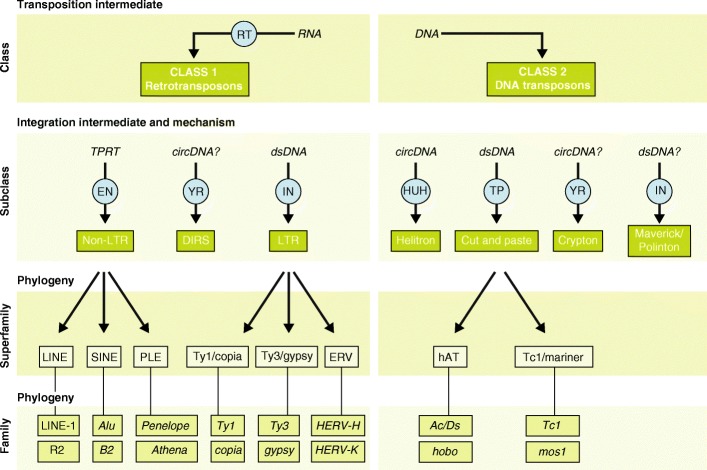
“LTR retrotransposons include endogenous retroviruses (ERVs) and their integration is mediated by an integrase [22].”
BackgroundThe enhancer activity of long interspersed nuclear element derived microRNA 625 induced by NF-κB
Lee, H.-E., Park, S.-J., Huh, J., Imai, H., & Kim, H. (2021) · Scientific Reports · doi:10.1038/s41598-021-82735-x · Cited by 4
Oligomerization of THAP9 Transposase via Amino-Terminal Domains
Sanghavi, H. M., & Majumdar, S. (2021) · Biochemistry · doi:10.1021/acs.biochem.1c00010 · Cited by 4
The Genome of the CTG(Ser1) Yeast Scheffersomyces stipitis Is Plastic
Vega, S. B. P., Armitage, A. D., Bates, H. J., Harrison, R. J., & Buscaino, A. (2021) · mBio · doi:10.1128/mbio.01871-21 · Cited by 6
“Although active transposons can insert into genes to cause functional consequences (37), we did not detect any TE-driven alteration in coding regions.”
BackgroundInfluentialCharacterization and expression pattern of ZB and PS transposons in zebrafish
Wang, Y., Shen, D., Ullah, N., Diaby, M., Gao, B., & Song, C. (2021) · Gene Expression Patterns · doi:10.1016/j.gep.2021.119203 · Cited by 4
Differential expression of transposable elements in the medaka melanoma model
Helmprobst, F., Kneitz, S., Klotz, B. J., Naville, M., Dechaud, C., Volff, J., & Schartl, M. (2021) · PLoS ONE · doi:10.1371/journal.pone.0251713 · Cited by 4
“Consequently, an altered methylation pattern can increase the expression of previously silenced TE [13].”
BackgroundGenome-wide comparative analysis of transposable elements in Palmae genomes
Ibrahim, M. A., Al-Shomrani, B. M., Alharbi, S. N., Elliott, T. A., Alsuabeyl, M. S., Alqahtani, F. A., & Manee, M. M. (2021) · Frontiers in Bioscience-Landmark · doi:10.52586/5014 · Cited by 5
“TEs are classified into two major categories based on the mechanism of transposition [11].”
BackgroundOrozco-Arias, S., Candamil-Cortés, M. S., Valencia-Castrillon, E., Jaimes, P. A., Orozco, N. T., Arias, M., Tabares-Soto, R., Guyot, R., & Isaza, G. A. (2021) · IEEE International Congress of Biomedical Engineering and Bioengineering (CI-IB&BI) · doi:10.1109/ci-ibbi54220.2021.9626130 · Cited by 4
Epigenetic influences of mobile genetic elements on ciliate genome architecture and evolution
Timmons, C., Shazib, S. U. A., & Katz, L. A. (2022) · Journal of Eukaryotic Microbiology · doi:10.1111/jeu.12891 · Cited by 4
“…et al., 2020; Vogt et al., 2013 TEs supply proteins and novel genetic material to facilitate evolutionary diversification Allen and Nowacki, 2017; Bourque et al., 2018; Cosby et al., 2019; Feschotte and Pritham, 2007; Wells and Feschotte, 2020 TE invasion may have driven the evolution of ciliate…”
Advances in Vertebrate (Cyto)Genomics Shed New Light on Fish Compositional Genome Evolution
Matoulek, D., Ježek, B., Vohnoutová, M., & Symonová, R. (2023) · Genes · doi:10.3390/genes14020244 · Cited by 4
“Hence, the general GCrichness of cds across vertebrates can be considered as another indicator of the role of transposable elements (TEs) in shaping the overall AT/GC compositional landscape.”
InfluentialPandita, D., Seethapathy, P., Dhivyapriya, D., Premkumar, R., Pandita, A., & Wani, S. H. (2023) · Springer eBooks · doi:10.1007/978-3-031-21640-4_1 · Cited by 4
Wen, S., Zhao, H., Qiao, G., & Shen, X. (2023) · Plant Biology · doi:10.1111/plb.13532 · Cited by 4
Abbriano, R. M., George, J., Kahlke, T., Commault, A. S., & Fabris, M. (2023) · The Plant Journal · doi:10.1111/tpj.16271 · Cited by 4
Efficient homology‐based annotation of transposable elements using minimizers
González-García, L. N., Lozano‐Arce, D., Londoño, J. P., Guyot, R., & Duitama, J. (2023) · Applications in Plant Sciences · doi:10.1002/aps3.11520 · Cited by 4
“Nevertheless, these tasks are challenging for very large and complex genomes due to the collapse of their copies during the assembly process, their structural polymorphisms, high divergence, high copy number, and the ability of TEs to move to di ff erent areas of the genome (Bourque et al., 2018).”
Structure and Evolution of DNA Transposons of the L31 Superfamily in Bivalves
Puzakov, M. V., & Puzakova, L. V. (2024) · Molecular Biology · doi:10.1134/s0026893324010114 · Cited by 4
“Transposons are main determinants of the genome size owing to their capability of transposition and frequent amplification [1, 2, 5, 6].”
Insertion of short L1 sequences generates inter-strain histone acetylation differences in the mouse
Boyboy, B. A. G., & Ichiyanagi, K. (2024) · Mobile DNA · doi:10.1186/s13100-024-00321-0 · Cited by 4
“In addition to base substitutions, retrotransposition of long interspersed elements (LINEs), short interspersed elements (SINEs), and long-terminal-repeat elements (LTRs), are also important events that generate genetic and phenotypic variations in the mouse [15, 16].”
BackgroundMartelossi, J., Iannello, M., Ghiselli, F., & Luchetti, A. (2024) · Mobile DNA · doi:10.1186/s13100-024-00332-x · Cited by 3
“However, multiple cases of co-option in novel functions have been described in literature [16].”
BackgroundChromatin unfolding via loops can drive clustered transposon insertion
Prizak, R., Gadzekpo, A., & Hilbert, L. (2025) · Biophysical Journal · doi:10.1016/j.bpj.2025.03.038 · Cited by 4
“For instance, they contribute to gene regulation (11), replication (1), and development (12).”
Entangling Viral Encounters, Immunity and the Gift
Shildrick, M. (2022) · interconnections journal of posthumanism · doi:10.26522/posthumanismjournal.v1i2.4012 · Cited by 10
TERAD: Extraction of transposable element composition from RADseq data
Chak, S. T. C., & Rubenstein, D. R. (2019) · Molecular Ecology Resources · doi:10.1111/1755-0998.13080 · Cited by 5
“Furthermore, older and inactive TEs tend to accumulate more mutations (Bourque et al., 2018), which could create new restriction sites.”
BackgroundHow Our Cells Become Our Selves: The Cellular Phylodynamic Biology of Growth and DevelopmentPreprint
Chodrow, P. S., Lasky-Su, J. A., Lee, D., Ahmed, T., He, N., Man, R. D., Tiwari, A., Mannherz, W. P., Citi, L., DiCorpo, D., et al. (2021) · bioRxiv (Cold Spring Harbor Laboratory) · doi:10.1101/2021.09.22.461268 · Cited by 4
Kalendar, R. N., & Karlov, G. I. (2023) · Frontiers in Plant Science · doi:10.3389/fpls.2023.1308536 · Cited by 4
de Melo, E. S., & Wallau, G. L. (2024) · bioRxiv (Cold Spring Harbor Laboratory) · doi:10.1101/2024.02.15.580529 · Cited by 4
Tolerance thresholds underlie responses to DNA damage during germline developmentPreprint
Jansen, G., Gebert, D., Kumar, T. R., Simmons, E. S. G., Murphy, S., & Teixeira, F. K. (2024) · Genes & Development · doi:10.1101/gad.351701.124 · Cited by 4
Transposon-plasmid nesting enables fast response to fluctuating environmentsPreprint
Ha, Y., Maddamsetti, R., Chen, X., Şimşek, E., Lee, D., Son, H.-I., Lee, C., Kussell, E. L., & You, L. (2025) · bioRxiv (Cold Spring Harbor Laboratory) · doi:10.1101/2025.06.04.657954 · Cited by 4
What would it take to prove that a chronic infection is a causal agent in Alzheimer’s disease?
Brutkiewicz, R. R., Cao, W., Morgan, D., Reis, R. S. D., Suryadevara, V., Willette, A. A., Willette, S. A., Wyatt-Johnson, S. K., & Duggan, M. R. (2025) · Trends in Neurosciences · doi:10.1016/j.tins.2025.05.009 · Cited by 3
Drozdov, A. L., Lebedev, E., & Adonin, L. (2023) · International Journal of Molecular Sciences · doi:10.3390/ijms242417163 · Cited by 4
“TEs are repetitive DNA sequences capable of moving within the genome [73].”
BackgroundThe controversy of SARS‐CoV‐2 integration into the human genome
AL-Eitan, L. N., & Mihyar, A. H. (2024) · Reviews in Medical Virology · doi:10.1002/rmv.2511 · Cited by 3
“12 The integration of a viral genome into the human genome can be aided by the activity of Transposable Elements.”
BackgroundBai, Y., Wang, G., Zhang, R., Bai, C., Lv, J., & Zhang, M. (2025) · Journal of Stored Products Research · doi:10.1016/j.jspr.2025.102593 · Cited by 3
Regulatory roles of transposable elements on autism molecular neuropathology
Techaniyom, P., Korsirikoon, C., Chitta, P., & Sae‐Lee, C. (2025) · Epigenomics · doi:10.1080/17501911.2025.2501520 · Cited by 3
Exploring transposons in macroalgae: LTR elements and neighboring genes in red seaweeds
García‐Jiménez, P., & Robaina, R. R. (2025) · Frontiers in Marine Science · doi:10.3389/fmars.2025.1592442 · Cited by 3
Zhao, Z., Quinteros, K., & Machado, C. A. (2025) · Genome Biology and Evolution · doi:10.1093/gbe/evaf158 · Cited by 3
“This study highlights the continued power of existing evolutionary theory to explain context-dependent patterns of genome evolution despite the increasing complexity of genome structures that are being uncovered.”
InfluentialEvolution of Mutator transposons in the genomes of worms
Addy, G. A., Wang, Q., Chen, H., Abdu, W., Diaby, M., Chen, X., Asare, E., Gao, B., & Song, C. (2025) · Gene · doi:10.1016/j.gene.2025.149855 · Cited by 3
Transposons disrupt genomic stability and trigger cancers
Dong, W., Li, M., Li, P., Hou, X. S., He, F., & Ji, S. (2025) · Frontiers in Cellular and Infection Microbiology · doi:10.3389/fcimb.2025.1704405 · Cited by 5
“These elements are fi rst transcribed into RNA, then reverse-transcribed into cDNA copies that integrate at new genomic loci (Bourque et al., 2018).”
Tian, S., Peng, Q., Du, X., Shao, G., Gao, W., Liu, Q., Gu, B., & Liu, X. (2025) · Science Advances · doi:10.1126/sciadv.ady1482 · Cited by 3
“TNT1-94 is a class I retrotransposon known to mobilize through a “copy- and-paste” mechanism that enables genomic insertion and contributes to gene function diversification ( 39 , 40 ).”
Stuart, K. C., Santure, A. W., & Rollins, L. A. (2025) · CABI eBooks · doi:10.1079/9781800626263.0004 · Cited by 3
Gunasekaran, D., Sicard, A., Almeida, R. P. P., & Bennett, G. M. (2026) · Genome Biology and Evolution · doi:10.1093/gbe/evaf252 · Cited by 3
Hu, J., Mao, T., Huang, K., Yang, S., Yu, W., Huang, J., Jin, S., Sun, C., Jiapaer, Z., & Wang, X. (2026) · Cell Cycle · doi:10.1080/15384101.2025.2611968 · Cited by 3
Soriano‐Sexto, A., Sánchez‐Lijarcio, O., Beccari, L. L., Castejón‐Fernández, N., Leal, F., Alcaide, P., de la Morena‐Barrio, B., Bahillo-Curieses, P., Correcher, P., Tresbach, R. H., et al. (2026) · European Journal of Human Genetics · doi:10.1038/s41431-025-01995-7 · Cited by 3
“Among the different classes of TE, only non-Long-Terminal Repeats retrotransposons, such as Long Interspersed Nuclear Elements (LINEs), speci fi cally L1 subfamily, Alu, and SINE-VNTR-Alu (SVA), maintain the ability to move in the human genome [15, 16].”
Cai, S., Abo‐Raya, M. H., Zhou, Y., Chen, X., Wang, J., & Wang, C. (2026) · Aquaculture · doi:10.1016/j.aquaculture.2026.743727 · Cited by 3
Bibi, A. C., Ioannidis, P., Spilianakis, C. G., Vasilarou, M., Bazakos, C., Pavlidis, P., & Kalantidis, K. (2026) · Physiologia Plantarum · doi:10.1111/ppl.70803 · Cited by 3
“Moreover, transposable elements (TEs)—mo-bile genetic elements—play a significant role in shaping genome structure and function by altering gene expression and influencing genome evolution (Kumar et al. 2016; Bourque et al. 2018).”
The molecular evolution of vertebrate organs
Cardoso-Moreira, M. (2026) · Nature Ecology & Evolution · doi:10.1038/s41559-026-03003-7 · Cited by 5
A Rosa pangenome to advance rose genomics, phylogenetics and breeding
Yang, Z., Schijlen, E. G. W. M., Schranz, M. E., Zwaan, B. J., de Ridder, D., Visser, R. G. F., Arens, P., SMULDERS, M. J. M., van Velzen, R., Keurentjes, J. J. B., et al. (2026) · Horticulture Research · doi:10.1093/hr/uhag241 · Cited by 3
Chen, Y.-C., Maupas, A., & Nowick, K. (2025) · eLife · doi:10.7554/elife.103608.3 · Cited by 3
Garza, A. B., Lerat, E., & Girgis, H. Z. (2024) · Mobile DNA · doi:10.1186/s13100-024-00317-w · Cited by 3
“LTR-retrotransposons carry enhancers and promoters that can also affect the expression of nearby genes [2, 18].”
BackgroundMethodJiménez, I., Roscales, G., Garde, E., Tomazeli, E. C., Honda, Y., Lipzen, A., Lail, K., Bauer, D. M., Barry, K., Grigoriev, I. V., et al. (2024) · Current Research in Biotechnology · doi:10.1016/j.crbiot.2024.100244 · Cited by 3
Repetitive Sequence Stability in Embryonic Stem Cells
Shi, G. W., Pang, Q., Lin, Z., Zhang, X., & Huang, K. (2024) · International Journal of Molecular Sciences · doi:10.3390/ijms25168819 · Cited by 4
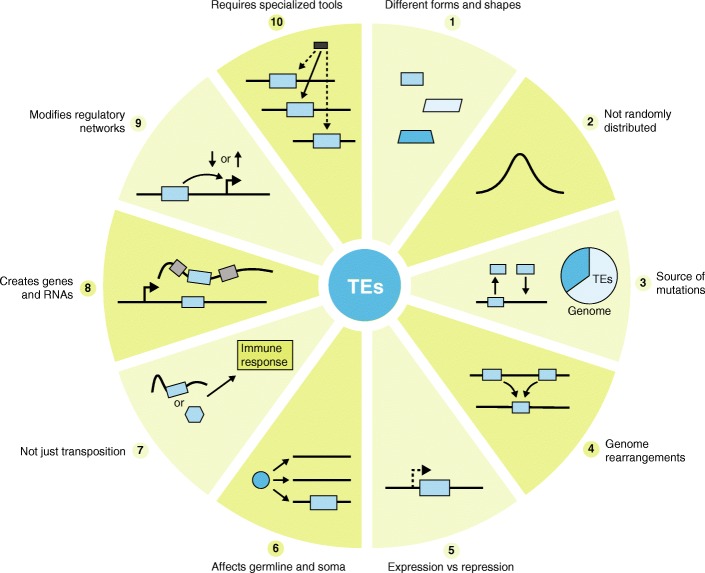
“It has been shown that retrotransposon elements are not randomly distributed in the genome [170], but rather are primarily inserted into introns and intergenic regions, with little in encoded exons, and no insertion in some genes during genome evolution [171,172].”
BackgroundThe Ecology of Transposable Elements
Capy, P., Biémont, C., & Vieira, C. P. (2024) · Wiley eBooks · doi:10.1002/9781394312467.ch9 · Cited by 3
Experimental considerations for precise RNA-mediated insertion of transgenes
Palm, S. M., Treeck, B. V., & Collins, K. (2024) · Methods in enzymology on CD-ROM/Methods in enzymology · doi:10.1016/bs.mie.2024.07.007 · Cited by 7
Kulski, J. K., Pfaff, A. L., & Kõks, S. (2025) · Journal of Molecular Pathology · doi:10.3390/jmp6010001 · Cited by 3
Daigle, A., Whitehouse, L. S., Zhao, R., Emerson, J. J., & Schrider, D. R. (2026) · Genetics · doi:10.1093/genetics/iyag101 · Cited by 4
Bustos, T. C., Eder, T., Ruttkowski, B., & Joachim, A. (2025) · Scientific Reports · doi:10.1038/s41598-025-89372-8 · Cited by 3
Ahrend, F., Κωνσταντινίδου, Π., Loubalová, Z., Wang, Y., Lorenzi, H., Meister, G., & Haase, A. D. (2025) · STAR Protocols · doi:10.1016/j.xpro.2025.103759 · Cited by 3
Talevi, V., Lee, H., Liu, D., Beyer, M., Salomoni, P., Breteler, M. M. B., & Aziz, N. A. (2025) · Aging Cell · doi:10.1111/acel.70092 · Cited by 3
“Indeed, by far the largest proportion of repetitive elements in the human genome is composed of transposable elements (TEs), DNA sequences able to move within the genome (Bourque et al. 2018).”
Hypermutator fungal pathogens: from threat to meltdown
Baril, T., & Croll, D. (2025) · Trends in Microbiology · doi:10.1016/j.tim.2025.07.006 · Cited by 5
A plan or pandemonium? The conundrum of retrotransposon activation in cancer
Zueva, E. (2025) · Mobile DNA · doi:10.1186/s13100-025-00368-7 · Cited by 3
“Unlike most genomic elements, transposons are of foreign origin, and their persistence in the genome likely reflects evolutionary trade-offs that favor the retention of either neutral or beneficial elements [3].”
Tissue-specific restriction of transposon-derived regulatory elements safeguards cell-type identity
Milovanović, D., Duc, J., Matsushima, W., Hamelin, R., Planet, E., Offner, S., Rosspopoff, O., & Trono, D. (2026) · Cell Reports · doi:10.1016/j.celrep.2025.116817 · Cited by 4
Evolutionary history and classification of Micropia retroelements in Drosophilidae species
Cordeiro, J. D. O., Carvalho, T. L., Valente, V. L. D. S., & Robe, L. J. (2019) · PLoS ONE · doi:10.1371/journal.pone.0220539 · Cited by 3
“In fact, current knowledge indicates that TEs have been shaping the evolution of genomes and host species [4], contributing to the creation of new genes [5, 6] and promoting rearrangements frequently associated with new regulatory networks [7, 8, 9].”
BackgroundKelleher, E. S., Lama, J., & Wang, L. (2020) · Current Opinion in Insect Science · doi:10.1016/j.cois.2019.11.002 · Cited by 3
Nascimento, A. M. L., Silva, B. S. M. L., Svartman, M., & Kuhn, G. C. S. (2020) · Genetics and Molecular Biology · doi:10.1590/1678-4685-gmb-2019-0342 · Cited by 3
Son, W., & Choi, K. (2020) · Genetics · doi:10.1534/genetics.120.303486 · Cited by 3
How Can Conceptual Analysis Contribute to Scientific Practice? The Case of Cultural Evolution
Lewens, T. (2020) · Cambridge University Press eBooks · doi:10.1017/9781108648981.009 · Cited by 5
Vargas-Chávez, C., & González, J. (2020) · Population genomics · doi:10.1007/13836_2020_86 · Cited by 3
Maternal Immune Activation and Retrotransposition in Neurodevelopmental Disorders
Meyer, U. (2021) · Biological Psychiatry · doi:10.1016/j.biopsych.2021.02.007 · Cited by 3
Transposons Increase Transcriptional Complexity: The Good Parasite?
Surm, J. M., & Moran, Y. (2021) · Trends in Genetics · doi:10.1016/j.tig.2021.03.009 · Cited by 3
Chae, K., Valentin, C., Jakes, E., Myles, K. M., & Adelman, Z. N. (2021) · RNA Biology · doi:10.1080/15476286.2021.1971440 · Cited by 3
Wybrane zagadnienia z zakresu produkcji surowców, żywności i kosmetyków
Babicz, M., & Kropiwiec-Domańska, K. (2021) · doi:10.24326/mon.2021.9 · Cited by 3
Kim, W. R., Park, E. G., Lee, H.-E., Park, S.-J., Huh, J., Kim, J. N., & Kim, H. (2022) · Molecules and Cells · doi:10.14348/molcells.2022.2158 · Cited by 3
“The RNA intermediate of SINE is reverse-transcribed into complementary DNA (cDNA), and then integrated into different locations in the genome through a copy-and-paste mechanism (Bourque et al., 2018; Ullu and Tschudi, 1984).”
A zebrafish reporter line reveals immune and neuronal expression of endogenous retrovirus
Rutherford, H. A., Clarke, A., Chambers, E. V., Petts, J. J., Carson, E. G., Isles, H. M., Duque‐Jaramillo, A., Renshaw, S. A., Levraud, J., & Hamilton, N. (2022) · Disease Models & Mechanisms · doi:10.1242/dmm.048921 · Cited by 3
Living in Peace with Coronaviruses
Kirksey, E. (2022) · Springer eBooks · doi:10.1007/978-981-19-3942-6_6 · Cited by 3
de Villarreal, J. M., Kalisz, M., Piedrafita, G., Graña‐Castro, O., Chondronasiou, D., Serrano, M., & Real, F. X. (2022) · Bioinformatics · doi:10.1093/bioinformatics/btac737 · Cited by 3
Ahmad, A., & Ren, Z. (2022) · International Journal of Molecular Sciences · doi:10.3390/ijms232415967 · Cited by 7
“Approximately 20 superfamilies of Class II TEs use DDE transposase protein, i.e., Tc1/Mariner, Harbinger, EnSpm, and Mutator-like elements (MULE) [9,10].”
BackgroundMethodResultInfluentialKovač, A., Miskey, C., & Ivics, Z. (2023) · International Journal of Molecular Sciences · doi:10.3390/ijms241914978 · Cited by 3
“[12] and targeting of tRNA sites has independently arisen several times over the course of natural evolution [44], for example by the Ty1 and Ty3 elements.”
BackgroundDynamic Evolution of Repetitive Elements and Chromatin States in Apis mellifera Subspecies
Panyushev, N., Selitskiy, M., Melnichenko, V. D., Lebedev, E., Okorokova, L. S., & Adonin, L. (2024) · Genes · doi:10.3390/genes15010089 · Cited by 3
“Transposons have the ability to move and insert themselves into genes or regulatory sequences, disrupting coding sequences and gene regulation, resulting in chromosomal rearrangements [20].”
BackgroundGenetic conflicts in budding yeast: The 2μ plasmid as a model selfish element
Hays, M. (2024) · Seminars in Cell and Developmental Biology · doi:10.1016/j.semcdb.2024.04.002 · Cited by 3
Wang, B., Saleh, A. A., Yang, N., Asare, E., Chen, H., Wang, Q., Chen, C., Song, C., & Gao, B. (2024) · Animals · doi:10.3390/ani14101425 · Cited by 3
The silent guardian: unraveling the roles of H3K9me3 in genome maintenance
Li, Z., & Zhang, Z. (2024) · Genome Instability & Disease · doi:10.1007/s42764-024-00131-x · Cited by 3
“Mechanistically, transposable elements rewire the core transcription network of stem cells by providing transcription factor binding sites, cis-regulatory elements, alternative splicing sites and non-coding RNA that regulate pluripotency genes (Bourque et al., 2018; Fueyo et al., 2022).”
The occurrence of positive selection on BicA transporter of Microcystis aeruginosa
Kim, E.-J., Doh, H., Yang, J.-H., & Eyun, S. (2024) · Ecotoxicology and Environmental Safety · doi:10.1016/j.ecoenv.2024.116795 · Cited by 3
Shi, Y., Jiang, N., Jiang, W., Chen, J., Wu, L., Yuan, J., Zhou, Y., Wu, L., Huang, Y., Li, D., et al. (2025) · The FASEB Journal · doi:10.1096/fj.202400111r · Cited by 4
Subtelomeric repeat expansion in Hydractinia symbiolongicarpus chromosomes
Kon, T., Kon‐Nanjo, K., & Simakov, O. (2025) · Mobile DNA · doi:10.1186/s13100-025-00355-y · Cited by 4
Çakır, U., Gabed, N., Yurtseven, A., & Kryvoruchko, I. (2025) · Computational and Structural Biotechnology Journal · doi:10.1016/j.csbj.2025.08.023 · Cited by 3
“The information on translated repeat elements is so far very scarce [45-47], especially in plants [48].”
Roussel, A.-J., Suh, A., Ruíz-Ruano, F. J., & Dion‐Côté, A. (2025) · Molecular Biology and Evolution · doi:10.1093/molbev/msaf266 · Cited by 3
Diverging transposon activity among polar bear sub-populations inhabiting different climate zones
Godden, A. M., Rix, B., & Immler, S. (2025) · Mobile DNA · doi:10.1186/s13100-025-00387-4 · Cited by 4
“TEs are mobile genetic elements that can shape evolution through self-replication and insertion events in the genome, which in turn may change gene expression patterns [9, 10].”
Introduction to Epigenetic Inheritance: Definition, Mechanisms, Implications and Relevance
Lassi, M., & Teperino, R. (2020) · Springer eBooks · doi:10.1007/978-3-030-35213-4_9 · Cited by 6
Yepuri, V., Jalali, S., Kancharla, N., Lachagari, V. B. R., & Arockiasamy, S. (2020) · Molecular Biology Reports · doi:10.1007/s11033-020-05579-0 · Cited by 3
What Is the Nature of Theories and Models in Biology?
Parke, E. C., & Plutynski, A. (2020) · Cambridge University Press eBooks · doi:10.1017/9781108648981.005 · Cited by 5
McCain, K. (2020) · Cambridge University Press eBooks · doi:10.1017/9781108648981.004 · Cited by 3
Near-chromosome level genome assembly of devil firefish, Pterois miles
Kitsoulis, C. V., Papadogiannis, V., Kristoffersen, J. B., Kaitetzidou, E., Sterioti, A., Tsigenopoulos, C. S., & Manousaki, T. (2023) · Peer Community Journal · doi:10.24072/pcjournal.295 · Cited by 3
Metadata
- Authors
- Bourque, G., Burns, K. H., Gehring, M., Gorbunova, V., Seluanov, A., Hammell, M., Imbeault, M., Izsvák, Z., Levin, H. L., Macfarlan, T. S., Mager, D. L., & Feschotte, C.
- Affiliations
- McGill University (CA)
- Johns Hopkins University (US)
- Whitehead Institute for Biomedical Research (US)
- University of Rochester (US)
- Cold Spring Harbor Laboratory (US)
- University of Cambridge (GB)
- Max Delbrück Center (DE)
- National Institutes of Health (US)
- BC Cancer Agency (CA)
- Cornell University (US)
- Corresponding author
- Bourque, Guillaume
- Feschotte, Cédric
- ORCID
- Venue
- Genome Biology
- Published
- 2018-11-19
- Volume
- 19
- Issue
- 1
- Pages
- 199-199
- ISSN
- 1465-6906 (ISSN-L)
- 1474-760X
- PMC
- PMC6240941
- OpenAlex
- W2901901698
- Semantic Scholar
- ca9ba03e2e3c00a26c0a2e017cfefd48368079b2
- Cited by
- 1,430
- References
- 203
- Citations by year
- 2026: 167 · 2025: 243 · 2024: 236 · 2023: 199 · 2022: 202 · 2021: 190 · 2020: 133 · 2019: 58
- FWCI
- 10.00
- Type
- journal article
- Language
- en
- Open access
- gold
- doi.org
- Licence
- cc-by
- creativecommons.org/licenses/by/4.0/ (tdm)
- creativecommons.org/licenses/by/4.0/ (vor)
- Locations
- Genome biology (publishedVersion, cc-by)
- Europe PMC (PubMed Central) (publishedVersion, cc-by)
- PubMed Central (publishedVersion, cc-by)
- PubMed (publishedVersion)
- Cold Spring Harbor Laboratory Institutional Repository (Cold Spring Harbor Laboratory) (acceptedVersion)
- MDC Repository (Max-Delbrueck-Center for Molecular Medicine) (acceptedVersion)
- Apollo (University of Cambridge) (submittedVersion, cc-by)
- cIRcle (University of British Columbia) (submittedVersion, cc-by)
- DOAJ (DOAJ: Directory of Open Access Journals) (submittedVersion, cc-by-sa)
- DSpace@MIT (Massachusetts Institute of Technology) (submittedVersion, cc-by-nc)
- Apollo
- Apollo (cc-by)
- Funders
- Canadian Institutes of Health Research (CIHR-MOP-115090, CIHR-CEE-151618)
- Fonds de Recherche du Québec - Santé (FRSQ-25348, FRSQ-35279)
- European Commission (ERC-2011-AdG 294742)
- National Institutes of Health
- National Science Foundation
- Topics
- Life Sciences › Biochemistry, Genetics and Molecular Biology › Genetics › Chromosomal and Genetic Variations
- Life Sciences › Biochemistry, Genetics and Molecular Biology › Molecular Biology › Genomics and Chromatin Dynamics
- Life Sciences › Biochemistry, Genetics and Molecular Biology › Genetics › Genomic variations and chromosomal abnormalities
- Keywords
- transposable elements, genome evolution, eukaryotic genomes, transposon-host interactions, genome plasticity
- MeSH terms
- Animals, DNA Transposable Elements, Humans, Mutation, Polymorphism, Genetic, Gene Rearrangement
About these checks
Registry, retraction, Cites and statistics results are computed, not judged, with one exception: a printed reference that no index lists is read once by a model before it counts as a citation error. Claims are extracted by a model and kept only when their quote appears verbatim in the text; each cited source is then checked, with a model’s help, for whether it says what the claim relies on. Those verdicts can be wrong — read the claim’s quote and the cited source before relying on one.
Statistics and arithmetic are recomputed, not judged.
Confidence bands are shown only for fields calibrated on our annotated test set. None is calibrated yet, so no band is shown.
What counts as a claim ›How we measure confidence ›How we check this ›
Are you an author, or do you see a problem with this page? Request a review
Data sources
Bibliographic data: Semantic Scholar, OpenAlex, Crossref.
Contains information from the Semantic Scholar Academic Graph Datasets, made available under the ODC Attribution License (ODC-BY 1.0).
Semantic Scholar’s data is described in: Kinney, R., et al. (2023). The Semantic Scholar Open Data Platform. arXiv:2301.10140.
