

Ten things you should know about transposable elements
Open accessThe DOI matches its Crossref record; 203 of the 203 references it cites were found in a registry or an index.
Abstract
Transposable elements (TEs) are major components of eukaryotic genomes. However, the extent of their impact on genome evolution, function, and disease remain a matter of intense interrogation. The rise of genomics and large-scale functional assays has shed new light on the multi-faceted activities of TEs and implies that they should no longer be marginalized. Here, we introduce the fundamental properties of TEs and their complex interactions with their cellular environment, which are crucial to understanding their impact and manifold consequences for organismal biology. While we draw examples primarily from mammalian systems, the core concepts outlined here are relevant to a broad range of organisms.
Overview
The claims and statistics of this paper haven’t been checked yet.
Free: it reads the open-access text and checks the first 5 claims that cite a source we can check. Create a free account to check every claim.
Integrity signals
Registry
Cites
Statistics
Figures
Verification
Claims the paper makes
The claims and statistics of this paper haven’t been checked yet.
Free: it reads the open-access text and checks the first 5 claims that cite a source we can check. Create a free account to check every claim.
Claims other papers make about this one
Each is checked against this paper’s own text: does it say what the citing paper says it does?
The source backs part of the claim, not all of it — or backs it for a different population, condition or comparison.
In the citing paper
“Constituting ~45% of the human and rodent genomes, transposable elements are routinely repressed in somatic cells to prevent their mobilization, which otherwise can have deleterious effects [119,120].”
From What would it take to prove that a chronic infection is a causal agent in Alzheimer’s disease? (2025) · cites this paper as [119]
Experimental — accuracy not yet measuredThe cited source says what the claim attributes to it.
In the citing paper
“First, these elements are significantly overrepresented (31).”
From DNA language models are powerful predictors of genome-wide variant effects (2023) · cites this paper as [31]
Self-check
Percentages, sums and reported differences re-computed from the paper’s own numbers.
The self-check needs the paper’s full text.
Citations
Cites
Ultrafast and memory-efficient alignment of short DNA sequences to the human genome.
Langmead, B., Trapnell, C., Pop, M., & Salzberg, S. L. (2009) · Genome Biology · doi:10.1186/gb-2009-10-3-r25 · Cited by 21,849
An integrated encyclopedia of DNA elements in the human genome
The ENCODE Project Consortium (2012) · Nature · doi:10.1038/nature11247 · Cited by 18,072
The B73 Maize Genome: Complexity, Diversity, and Dynamics
Schnable, P. S., Ware, D., Fulton, R. S., Stein, J. C., Wei, F., Pasternak, S., Liang, C., Zhang, J., Fulton, L., Graves, T. A., et al. (2009) · Science · doi:10.1126/science.1178534 · Cited by 4,046
A unified classification system for eukaryotic transposable elements
Wicker, T., Sabot, F., Hua-Van, A., Bennetzen, J. L., Capy, P., Chalhoub, B., Flavell, A., Leroy, P., Morgante, M., Panaud, O., et al. (2007) · Nature Reviews Genetics · doi:10.1038/nrg2165 · Cited by 3,054
Britten, R. J., & Kohne, D. E. (1968) · Science · doi:10.1126/science.161.3841.529 · Cited by 2,802
An integrated map of structural variation in 2,504 human genomes
Sudmant, P. H., Rausch, T., Gardner, E. J., Handsaker, R. E., Abyzov, A., Huddleston, J., Zhang, Y., Ye, K., Jun, G., Hsi-Yang Fritz, M., et al. (2015) · Nature · doi:10.1038/nature15394 · Cited by 2,354
Chiappinelli, K. B., Strissel, P. L., Desrichard, A., Li, H., Henke, C., Akman, B., Hein, A., Rote, N. S., Cope, L. M., Snyder, A., et al. (2015) · Cell · doi:10.1016/j.cell.2015.07.011 · Cited by 2,022
The impact of retrotransposons on human genome evolution
Cordaux, R., & Batzer, M. A. (2009) · Nature Reviews Genetics · doi:10.1038/nrg2640 · Cited by 1,703
Roulois, D., Loo Yau, H., Singhania, R., Wang, Y., Danesh, A., Shen, S. Y., Han, H., Liang, G., Jones, P. A., Pugh, T. J., et al. (2015) · Cell · doi:10.1016/j.cell.2015.07.056 · Cited by 1,527
Regulatory activities of transposable elements: from conflicts to benefits
Chuong, E. B., Elde, N. C., & Feschotte, C. (2017) · Nature Reviews Genetics · doi:10.1038/nrg.2016.139 · Cited by 1,489
Self-citation
Cited by
Items 401–500 of 1,005
Methylation of lysine 36 on histone H3 is required to control transposon activities in somatic cells
Lindehell, H., Schwartz, Y. B., & Larsson, J. (2023) · Life Science Alliance · doi:10.26508/lsa.202201832 · Cited by 15
“They have been shown to drive gene regulation and to exhibit sophisticated ways of selective insertion in the genome (Bourque et al, 2018), thereby making transposon activity a fundamental driver of evolution and gene regulation (Moran etal, 1999; Koga, 2006; Senft & Macfarlan, 2021).”
BackgroundHénault, M., Marsit, S., Charron, G., & Landry, C. R. (2023) · eLife · doi:10.7554/elife.89277 · Cited by 15
“Notably, transposable elements (TEs) are sequences capable of semi-autonomous replication, producing families of repeats spread within genomes (Bourque et al., 2018).”
BackgroundThe transcription factor Traffic jam orchestrates the somatic piRNA pathway in Drosophila ovaries
Alizada, A., Martins, A., Mouniée, N., Suarez, J. V. R., Bertin, B., Gueguen, N., Mirouse, V., Papameletiou, A. M., Rivera, A. J., Lau, N. C., et al. (2025) · Cell Reports · doi:10.1016/j.celrep.2025.115453 · Cited by 16
Santos, D. D. S., Calaça, P. R. D. A., Porto, A. L. F., de Souza, P. R. E., de Freitas, N. S. A., & Cavalcanti, M. T. H. (2020) · OMICS A Journal of Integrative Biology · doi:10.1089/omi.2020.0078 · Cited by 15
“As defined by Bourque et al. (2018) in their work on transposable elements, these enzymes favor genomic rearrangements and gene duplication by incorporating adjacent genes during the transposition or by genetic recombination because they are present in multiple copies and sometimes they create or…”
Depotter, J. R. L., Ökmen, B., Ebert, M. K., Beckers, J., Kruse, J., Thines, M., & Doehlemann, G. (2022) · Microbiology Spectrum · doi:10.1128/spectrum.00349-22 · Cited by 20
“65 TEs are a diverse group of mobile nucleotide sequences that are categorized into two 66 classes (1).”
Bonham, L. W., Geier, E. G., Sirkis, D. W., Leong, J. K., Ramos, E. M., Wang, Q., Karydas, A., Lee, S. E., Sturm, V. E., Sawyer, R. P., et al. (2022) · Journal of Neuroscience · doi:10.1523/jneurosci.1448-22.2022 · Cited by 16
“, 2020) and, importantly, also provide an additional plausible explanation for this phenomenon—the upstream transcriptional derepression of TEs such as L1HS, which is known to trigger interferon signaling (Bourque et al., 2018).”
BackgroundTransposon dynamics in the emerging oilseed crop Thlaspi arvense
Contreras‐Garrido, A., Galanti, D., Movilli, A., Becker, C., Bossdorf, O., Drost, H., & Weigel, D. (2024) · PLoS Genetics · doi:10.1371/journal.pgen.1011141 · Cited by 16
“Many recent studies have confirmed that several TE families do not insert randomly in the genome, and that their apparent enrichment in specific portions of the genome, such as centromeres, is not simply due to purifying selection (38).”
BackgroundAdvances in Molecular Tools and In Vivo Models for the Study of Human Fungal Pathogenesis
Malavia, D., Gow, N. A. R., & Usher, J. (2020) · Microorganisms · doi:10.3390/microorganisms8060803 · Cited by 17
“Although there are many types of TEs, they are broadly classified as retrotransposons and DNA transposons.”
BackgroundInfluentialCastillo, D. M., & Moyle, L. C. (2022) · Journal of Evolutionary Biology · doi:10.1111/jeb.14079 · Cited by 15
Expression of most retrotransposons in human blood correlates with biological agingPreprint
Tsai, Y.-T., Seymen, N., Thompson, I. R., Zou, X., Mumtaz, W., Gerlevik, S., Mufti, G. J., & Karimi, M. M. (2024) · eLife · doi:10.7554/elife.96575 · Cited by 15
“Although SINEs compose up to 13% of the human genome, and Alu elements make up the largest family of human mobile elements, Alu is not studied as extensively as L1 from the LINE class ( Bourque et al., 2018 ).”
BackgroundIntercellular viral spread and intracellular transposition of Drosophila gypsy
Keegan, R. M., Talbot, L. R., Chang, Y.-H., Metzger, M. J., & Dubnau, J. (2021) · PLOS Genetics · doi:10.1371/journal.pgen.1009535 · Cited by 14
“DNA copies can be inserted into de novo chromosomal sites in the genome, thereby increasing copy number with each successive replication cycle (75-77).”
BackgroundLaureau, R., Dyatel, A., Dursuk, G., Brown, S., Adeoye, H., Yue, J., Chiara, M. D., Harris, A. D., Ünal, E., Liti, G., et al. (2020) · Developmental Cell · doi:10.1016/j.devcel.2020.11.008 · Cited by 14
Competition for H2A.Z underlies the developmental impacts of repetitive element de-repression
Meng, F. W., Murphy, K. E., Makowski, C. E., Delatte, B., & Murphy, P. J. (2023) · Development · doi:10.1242/dev.202338 · Cited by 15
Salinas‐Pena, M., Serna‐Pujol, N., & Jordan, A. (2024) · Nucleic Acids Research · doi:10.1093/nar/gkae014 · Cited by 15
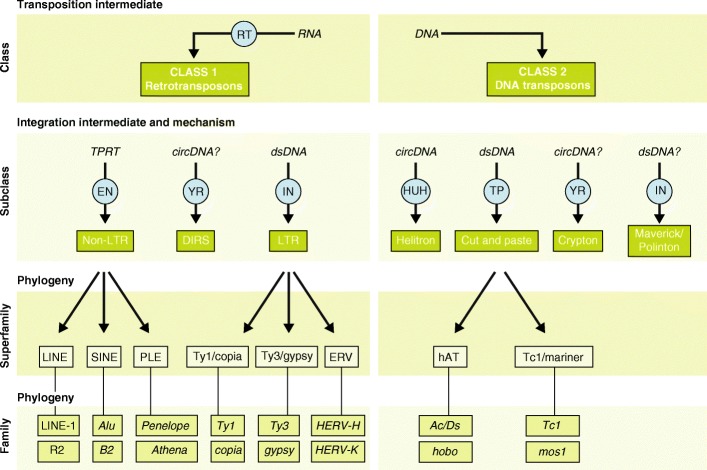
“Other classes of retrotransposons are represented by SINE-VNTR-Alu elements (SVAs) and long-terminal-repeats (LTR) elements, such as endogenous retroviruses (ERVs) ( 1 ,2 ).”
BackgroundOrthoptera-TElib: a library of Orthoptera transposable elements for TE annotation
Liu, X., Zhao, L., Majid, M., & Huang, Y. (2024) · Mobile DNA · doi:10.1186/s13100-024-00316-x · Cited by 14
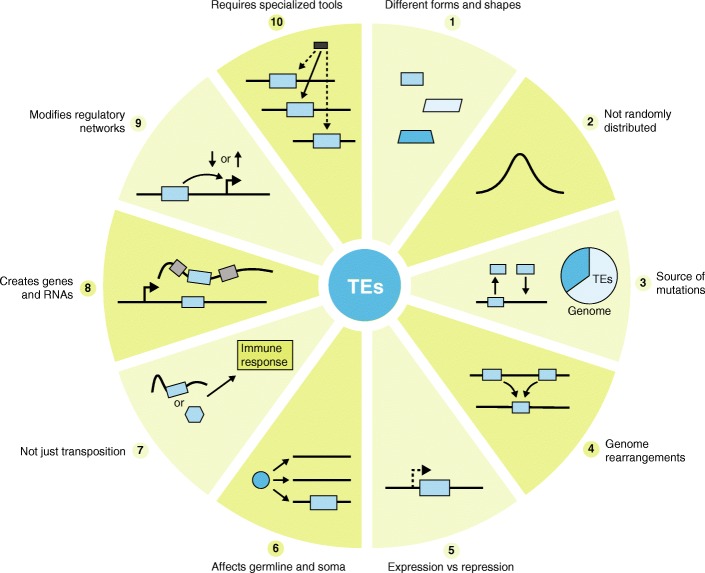
“Transposable elements (TEs) are major components of eukaryotic genomes [1, 2], come in various forms and shapes [2], and have the ability to mobile and replicate themselves within genomes [3–5].”
BackgroundShao, F., Zeng, M., Xu, X., Zhang, H., & Peng, Z. (2024) · Database · doi:10.1093/database/baae044 · Cited by 16
“TEs have gradually gained prominence over recent years, and as such, researchers do not only focus on the individual TE itself; instead, TE–gene associations (expression vs repression) have attracted much attention (4).”
BackgroundThe role of mobile DNA elements in the dynamics of plant genome plasticity
Emmerson, R. A., & Catoni, M. (2025) · Journal of Experimental Botany · doi:10.1093/jxb/erae523 · Cited by 14
Advancing Precision Medicine: Recent Innovations in Gene Editing Technologies
Abhijith, K., & Thangavel, S. (2025) · Advanced Science · doi:10.1002/advs.202410237 · Cited by 15
Yin, M., Song, X., He, C., Li, X., Li, M., Li, J., Wu, H., Chen, C., Zhang, L., Cai, Z., et al. (2025) · Genome biology · doi:10.1186/s13059-025-03535-4 · Cited by 14
“…chromosome recombination, TE insertion preference, and postintegration selection processes [15], which could lead to differences in the gene structure and composition of the cis-regulatory elements of alleles between two haplotypes, resulting in divergent transcriptional regulation levels [16].”
Zhang, W., Fu, H., Huang, Y., Zeng, M., Ouyang, X., Wang, X., Ruan, D., Ma, L., Hu, X., Guo, J., et al. (2025) · Nucleic Acids Research · doi:10.1093/nar/gkaf349 · Cited by 14
“TEs can function as promoters and enhancers, modulate splicing, and perform various other functions [ 30 , 32 ].”
Self-citationFields, C., & Levin, M. G. (2020) · Communicative & Integrative Biology · doi:10.1080/19420889.2020.1838809 · Cited by 14
The IS630/Tc1/mariner transposons in three ctenophore genomes
Puzakov, M. V., Puzakova, L. V., Cheresiz, S. V., & Sang, Y. (2021) · Molecular Phylogenetics and Evolution · doi:10.1016/j.ympev.2021.107231 · Cited by 14
Horizontal transfer of Buster transposons across multiple phyla and classes of animals
Guan, Z., Shi, S., Diaby, M., Danley, P. D., Ullah, N., Puzakov, M. V., Gao, B., & Song, C. (2022) · Molecular Phylogenetics and Evolution · doi:10.1016/j.ympev.2022.107506 · Cited by 14
How human endogenous retroviruses interact with the microbiota in health and disease
Dopkins, N., O’Mara, M. M., Singh, B., Marston, J. L., Bendall, M. L., & Nixon, D. F. (2022) · Trends in Microbiology · doi:10.1016/j.tim.2022.05.011 · Cited by 15
Brückner, A., Barnett, A. A., Bhat, P., Antoshechkin, I. A., & Kitchen, S. A. (2022) · Acarologia · doi:10.24349/pjye-gkeo · Cited by 14
The genome sequence of the scarce swallowtail, Iphiclides podalirius
Mackintosh, A., Laetsch, D. R., Baril, T., Ebdon, S., Jay, P., Vila, R., Hayward, A., & Lohse, K. (2022) · G3 Genes Genomes Genetics · doi:10.1093/g3journal/jkac193 · Cited by 14
EDomics: a comprehensive and comparative multi-omics database for animal evo-devo
Wei, J., Liu, P., Liu, F., Jiang, A., Qiao, J., Pu, Z., Wang, B., Zhang, J., Jia, D., Li, Y., et al. (2022) · Nucleic Acids Research · doi:10.1093/nar/gkac944 · Cited by 14
“TEs are major components of eukaryotic genomes, which have significant effects on genomic function and evolution (29).”
BackgroundEpigenetics across the evolutionary tree: New paradigms from non‐model animals
Sadler, K. C. (2022) · BioEssays · doi:10.1002/bies.202200036 · Cited by 14
Ramsoomair, C. K., Ceccarelli, M., Heiss, J. D., & Shah, A. H. (2023) · Journal of Translational Medicine · doi:10.1186/s12967-023-04725-z · Cited by 15
“While necessary for mammalian embryologic development, ERV activation and transposition can compromise host health secondary to aberrant transcriptional regulation; thus, constant surveillance is needed to maintain homeostasis [62].”
BackgroundSequence and Evolutionary Features for the Alternatively Spliced Exons of Eukaryotic Genes
Chen, S., Li, C., Jia, X., & Lai, S. (2019) · International Journal of Molecular Sciences · doi:10.3390/ijms20153834 · Cited by 16
“The exonizations mainly originate from these transposable elements, such as the long interspersed nuclear elements (LINEs) and short interspersed nuclear elements (SINEs), because they always carry the consensus motifs resembling real splice sites [69].”
BackgroundPRE-1 Revealed Previous Unknown Introgression Events in Eurasian Boars during the Middle Pleistocene
Zhao, P., Du, H., Jiang, L., Zheng, X., Feng, W., Diao, C., Zhou, L., Liu, G. E., Zhang, H., Chamba, Y., et al. (2020) · Genome Biology and Evolution · doi:10.1093/gbe/evaa142 · Cited by 23
Wang, X., Chen, Z., Muráni, E., D’Alessandro, E., An, Y., Chen, C., Li, K., Galeano, G., Wimmers, K., & Song, C. (2021) · Mobile DNA · doi:10.1186/s13100-021-00248-w · Cited by 14
Systems Biology to Understand and Regulate Human Retroviral Proinflammatory Response
Helmy, M., & Selvarajoo, K. (2021) · Frontiers in Immunology · doi:10.3389/fimmu.2021.736349 · Cited by 15
“TEs, whose size range anywhere from a few hundred to several thousand pairs of nucleotides, are currently classified into two major categories: i) DNA transposons (or TE Class II) and ii) retrotransposons (or TE Class I) (Figure 1A) (12).”
BackgroundTn5 tagments and transposes oligos to single-stranded DNA for strand-specific RNA sequencing
Zhang, Y., Tang, Y., Sun, Z., Jia, J., Fang, Y., Wan, X., & Fang, D. (2023) · Genome Research · doi:10.1101/gr.277213.122 · Cited by 14
“Acting as natural DNA transfer vehicles, transposons are widely used as genetic tools in many aspects of life science research, including transgenesis of genetic elements into cells, transgenic ge-netic screening, and mouse generation (Bourque et al. 2018).”
Transposon accumulation at xenobiotic gene family loci in aphids
Baril, T., Pym, A., Bass, C., & Hayward, A. (2023) · Genome Research · doi:10.1101/gr.277820.123 · Cited by 16
“TEs have a nonrandom distribution within host genomes (Bourque et al. 2018).”
InfluentialExtensive horizontal transfer of transposable elements shapes fungal mobilomes
Romeijn, J., Bañales, I., & Seidl, M. F. (2025) · Current Biology · doi:10.1016/j.cub.2025.11.012 · Cited by 14
Molecular Mimicry of Transposable Elements in Plants
Chu, J., Newman, J., & Cho, J. (2024) · Plant and Cell Physiology · doi:10.1093/pcp/pcae058 · Cited by 13
“Transposable elements (TEs) are DNA sequences that can move around the genome and are found in most organisms (Bourque et al. 2018).”
Alves, R. M., de Abreu, V. A. C., de Oliveira, R. P., Almeida, J. V. D. A., Oliveira, M. D. M., Silva, S. R., Paschoal, A. R., de Almeida, S. S., de Souza, P. A. F., Ferro, J. A., et al. (2024) · GigaScience · doi:10.1093/gigascience/giae027 · Cited by 13
“This distribution pattern supports the idea that TEs are advantageously located, r ather than r andoml y, possibl y impacting gene expr ession patterns and their regulator networks [ 89 ].”
León, G. D. T.-D., van Boven, J., Santos‐González, J., Jiao, W., Peng, H., Schneeberger, K., & Köhler, C. (2024) · Nucleic Acids Research · doi:10.1093/nar/gkae572 · Cited by 14
“As first predicted by Barbara McClintock in maize ( 1 ), transposition can result in gene disruption, chromosomal rearrangements, and heterochromatin expansion ( 2 ).”
BackgroundGenomic Signatures of Domestication in a Fungus Obligately Farmed by Leafcutter Ants
Leal-Dutra, C. A., Vizueta, J., Baril, T., Kooij, P. W., Rødsgaard-Jørgensen, A., Conlon, B. H., Croll, D., & Shik, J. Z. (2024) · Molecular Biology and Evolution · doi:10.1093/molbev/msae197 · Cited by 18
“Moreover, transposable elements (TEs) are thought to promote domestication in human domesticated crops since they can generate useful genomic novelty through altered coding sequences (CDS), chromosome rearrangements, and modified gene regulatory networks (Bourque et al. 2018; Thieme and Bucher…”
BackgroundEvolutionary dynamics of repetitive elements and their relationship with genome size in Acrididae
Zhao, L., Yuan, H., Liu, X., Chang, H., Jing, X., Nie, Y., & Huang, Y. (2024) · Genomics · doi:10.1016/j.ygeno.2024.110971 · Cited by 13
Corre, E., Morin, E., Duplessis, S., & Lorrain, C. (2025) · BMC Genomics · doi:10.1186/s12864-025-11726-3 · Cited by 13
“In fungi, TE activity is often controlled through epigenetic silencing mechanisms [27, 28].”
Movilli, A., Sushko, S., Rabanal, F. A., & Weigel, D. (2025) · Genome biology · doi:10.1186/s13059-025-03691-7 · Cited by 14
“Plants have flexible germline specification and in some cases they can clonally propagate, allowing the inheritance of somatic TE variations [4].”
Sun, T., Xu, Y., Angel, N., Chen, L., Zhang, K., Hoffman, B. D., Ou, J., Meng, Z., Varghese, S., & Diao, Y. (2025) · Nature Cell Biology · doi:10.1038/s41556-025-01770-2 · Cited by 13
What Constitutes an Explanation in Biology?
Potochnik, A. (2020) · Cambridge University Press eBooks · doi:10.1017/9781108648981.003 · Cited by 16
Viviani, A., Ventimiglia, M. S., Fambrini, M., Vangelisti, A., Mascagni, F., Pugliesi, C., & Usai, G. (2021) · Biosystems · doi:10.1016/j.biosystems.2021.104566 · Cited by 14
Ibrahim, M. A., Al-Shomrani, B. M., Simenc, M., Alharbi, S. N., Alqahtani, F. A., Al‐Fageeh, M. B., & Manee, M. M. (2021) · BMC Genomics · doi:10.1186/s12864-021-08117-9 · Cited by 15
“The technological developments in genomics and large-scale functional assays has spotlighted the multi-faceted properties of TEs and their importance in shaping genomes [15].”
BackgroundRomine, M. G., Knutie, S. A., Crow, C. M., Vaziri, G. J., Chaves, J. A., Koop, J. A. H., & Lamichhaney, S. (2021) · G3 Genes Genomes Genetics · doi:10.1093/g3journal/jkab414 · Cited by 13
“Transposable elements (TE) are typically non-coding sequences that can insert themselves in various places of the genome, often with neutral or deleterious phenotypic consequences (Bourque et al., 2018).”
BackgroundHerklotz, V., Kovařík, A., Wissemann, V., Lunerová, J., Vozárová, R., Buschmann, S., Olbricht, K., Groth, M., & Ritz, C. M. (2021) · Frontiers in Plant Science · doi:10.3389/fpls.2021.738119 · Cited by 13
Nuclear mitochondrial DNA sequences in the rabbit genome
Biró, B., Gál, Z., Schiavo, G., Ribari, A., Utzeri, V. J., Brookman, M., Fontanesi, L., & Hoffmann, O. I. (2022) · Mitochondrion · doi:10.1016/j.mito.2022.07.003 · Cited by 14
Rybacki, K., Xia, M., Ahsan, M. U., Xing, J., & Wang, K. (2023) · Genes · doi:10.3390/genes14101893 · Cited by 13
“Their insertions significantly impact genomic stability [5–9], leading to a range of effects including developmental abnormalities [10], neurological disorders [11,12], and genetic diseases [3,13].”
BackgroundTolman, E., Beatty, C. D., Bush, J., Kohli, M. K., Frandsen, P. B., Gosnell, J. S., & Ware, J. L. (2023) · Molecular Ecology · doi:10.1111/mec.17147 · Cited by 14
Endogenous retroelement expression in the gut microenvironment of people living with HIV-1
Dopkins, N., Fei, T., Michael, S., Liotta, N., Guo, K., Mickens, K. L., Barrett, B. S., Bendall, M. L., Dillon, S. M., Wilson, C. C., et al. (2024) · EBioMedicine · doi:10.1016/j.ebiom.2024.105133 · Cited by 14
“17 In humans, EREs include long interspersed nuclear elements (LINEs), short interspersed nuclear elements (SINEs), and human endogenous retroviruses (HERVs).”
BackgroundStrain-Specific Epigenetic Regulation of Endogenous Retroviruses: The Role of Trans-Acting Modifiers
Elmer, J. L., & Ferguson‐Smith, A. C. (2020) · Viruses · doi:10.3390/v12080810 · Cited by 14
“This is due to the functional regulatory sequences contained within LTRs, as well as their mobilisation potential through “hijacking” the machinery of transposition-competent full-length elements [12].”
BackgroundThe Singular Evolution of Olea Genome Structure
Mascagni, F., Barghini, E., Ceccarelli, M., Baldoni, L., Trapero, C., Díez, C. M., Natali, L., Cavallini, A., & Giordani, T. (2022) · Frontiers in Plant Science · doi:10.3389/fpls.2022.869048 · Cited by 14
Raskó, T., Pande, A., Radscheit, K., Zink, A., Singh, M., Sommer, C., Wachtl, G., Kolacsek, O., Inak, G., Szvetnik, A., et al. (2022) · Molecular Biology and Evolution · doi:10.1093/molbev/msac175 · Cited by 14
Self-citationSavytska, N., Heutink, P., & Bansal, V. (2022) · Frontiers in Genetics · doi:10.3389/fgene.2022.1026847 · Cited by 19
“retrotransposition in comparison to humans; therefore, it has a relatively complex TE landscape and annotations than the human genome (Bourque et al., 2018).”
BackgroundHoff, S. N. K., Maurstad, M. F., Tørresen, O. K., Berg, P. R., Præbel, K., Jakobsen, K. S., & Jentoft, S. (2024) · bioRxiv (Cold Spring Harbor Laboratory) · doi:10.1101/2024.06.28.599280 · Cited by 15
“Our findings suggest that these translocated syntenic regions include genomic structures that are likely to be involved in the formation of chromosomal inversions, such as transposable elements[72–75].”
BackgroundLuchetti, A., Lomiento, M., & Mantovani, B. (2019) · International Journal of Molecular Sciences · doi:10.3390/ijms20225607 · Cited by 14
Transposable elements shape stemness in normal and leukemic hematopoiesis
Grillo, G., Nadorp, B., Qamra, A., Drylie, B., Mitchell, A., Arlidge, C., Nand, A., Takayama, N., Murison, A., Tonekaboni, S. A. M., et al. (2026) · Nature Genetics · doi:10.1038/s41588-026-02585-z · Cited by 13
“Yet, TEs have diverse roles in development and pathogenesis 23 .”
Statistical learning quantifies transposable element-mediated cis-regulation
Pulver, C., Grün, D., Duc, J., Sheppard, S., Planet, E., Coudray, A., de Fondeville, R., Pontis, J., & Trono, D. (2023) · Genome biology · doi:10.1186/s13059-023-03085-7 · Cited by 12
“…whether that biochemical activity should be interpreted as evidence for an evolutionary process fostering the emergence of collections of CREs to the benefit of the host, or instead as a byproduct of the so-called “selfish” tendency of TEs for genome invasion is subject to debate [10, 11, 15].”
BackgroundSINE‐Associated LncRNA SAWPA Regulates Porcine Zygotic Genome Activation
He, T., Peng, J., Yang, S., Liu, D., Gao, S., Zhu, Y., Chai, Z., Lee, B. C., Wei, R., Wang, J., et al. (2023) · Advanced Science · doi:10.1002/advs.202307505 · Cited by 16
Unexplored power of CRISPR-Cas9 in neuroscience, a multi-OMICs review
Banazadeh, M., Abiri, A., Poortaheri, M. M., Asnaashari, L., Langarizadeh, M. A., & Forootanfar, H. (2024) · International Journal of Biological Macromolecules · doi:10.1016/j.ijbiomac.2024.130413 · Cited by 12
Comparative genomic analyses reveal different genetic basis of two types of fruit in Maloideae
Wang, Y., Hu, H., Jin, J., Yuan, H. Y., Zhang, J., Wang, Y., Wang, M., Yin, S., Zhao, J., Lin, S., et al. (2025) · Nature Communications · doi:10.1038/s41467-025-62850-3 · Cited by 13
“Previous studies have shown that TE movement and other mutation events can drive fragment rearrangement and the generation of new genes in the genome 40 – 42 .”
TE-Seq: a transposable element annotation and RNA-Seq pipeline
Kelsey, M. M. G., Kalekar, R. L., & Sedivy, J. M. (2025) · Mobile DNA · doi:10.1186/s13100-025-00381-w · Cited by 15
“Their impact on biological processes is hard to overstate: they are involved in many fundamental cell-physiological processes, including chromosome-segregation, gene-regulation, and telomere function [1, 2].”
Transposable elements hitchhike on Starships across fungal genomes
Griem-Krey, H., Sant’Ana, J. D. F., Oggenfuss, U., Calegari-Alves, Y. P., MARQUES, A. L., Berger, M., Santi, L., Beys‐da‐Silva, W. O., & Habig, M. (2026) · Nature Communications · doi:10.1038/s41467-026-69410-3 · Cited by 14
“…can drive structural genomevariationnot only via insertions into different sites in different individuals but also through processes such as homologous recombination between TE copies 2 , leading to chromosomal rearrangements including translocations, inversions, duplications, and deletions 3 – 5 .”
Gahlot, P., & Tyagi, V. K. (2026) · Bioresource Technology · doi:10.1016/j.biortech.2026.134349 · Cited by 12
Coupling between Sequence-Mediated Nucleosome Organization and Genome Evolution
Barbier, J., Vaillant, C., Volff, J., Brunet, F., & Audit, B. (2021) · Genes · doi:10.3390/genes12060851 · Cited by 12
“Indeed, TEs are able to integrate and spread within genomes through a mechanism called transposition [97,98].”
BackgroundThe non-coding genome in early human development – Recent advancements
Paloviita, P., & Vuoristo, S. (2022) · Seminars in Cell and Developmental Biology · doi:10.1016/j.semcdb.2022.02.010 · Cited by 14
Transposable Elements in Pluripotent Stem Cells and Human Disease
Ma, G., Babarinde, I. A., Zhou, X., & Hutchins, A. P. (2022) · Frontiers in Genetics · doi:10.3389/fgene.2022.902541 · Cited by 15
“Indeed, even though a TE is inactive due to truncations or mutations, high copy number TEs with similar sequences can provide a sufficient template for recombination and genome rearrangement (Gray, 2000; Bourque et al., 2018).”
BackgroundInfluentialPan-Genomics Reveals a New Variation Pattern of Secreted Proteins in Pyricularia oryzae
Bao, J., Wang, Z., Chen, M., Chen, S., Chen, S., Xie, J., Tang, W., Zheng, H., & Wang, Z. (2022) · Journal of Fungi · doi:10.3390/jof8121238 · Cited by 12
A reference assembly for the legume cover crop hairy vetch (Vicia villosa)
Fuller, T. D., Bickhart, D. M., Koch, L. M., Kucek, L. K., Ali, S., Mangelson, H., Monteros, M. J., Hernandez, T. D., Smith, T. P. L., Riday, H., et al. (2023) · Gigabyte · doi:10.46471/gigabyte.98 · Cited by 14
Metastable epialleles in humans
Derakhshan, M., Kessler, N. J., Hellenthal, G., & Silver, M. J. (2023) · Trends in Genetics · doi:10.1016/j.tig.2023.09.007 · Cited by 12
“They can be categorised into DNA transposons which transpose through a cut-and-paste mechanism, and retrotransposons which copy via an RNA intermediate [36].”
BackgroundNavigating the brain and aging: exploring the impact of transposable elements from health to disease
Breton, A. L., Bettencourt, M. P., & Gendrel, A.-V. (2024) · Frontiers in Cell and Developmental Biology · doi:10.3389/fcell.2024.1357576 · Cited by 13
Assembly of the Tn7 targeting complex by a regulated stepwise process
Shen, Y., Krishnan, S. S., Petassi, M. T., Hancock, M. A., Peters, J. E., & Guarné, A. (2024) · Molecular Cell · doi:10.1016/j.molcel.2024.05.012 · Cited by 13
Epigenetic signatures of trophoblast lineage and their biological functions.
Wang, J.-Q., Zhou, X.-B., Han, T., & Zhang, H. (2024) · Cells and Development · doi:10.1016/j.cdev.2024.203934 · Cited by 9
Vertebrate Genome Size and the Impact of Transposable Elements in Genome Evolution
Biscotti, M. A., Carducci, F., Olmo, E., & Canapa, A. (2019) · Springer eBooks · doi:10.1007/978-3-030-30363-1_12 · Cited by 16
Jump around: transposons in and out of the laboratory
Kumar, A. (2020) · F1000Research · doi:10.12688/f1000research.21018.1 · Cited by 14
Maiwald, S., Weber, B., Seibt, K. M., Schmidt, T., & Heitkam, T. (2020) · Annals of Botany · doi:10.1093/aob/mcaa176 · Cited by 14
The challenges of predicting transposable element activity in hybrids
Hénault, M. (2021) · Current Genetics · doi:10.1007/s00294-021-01169-0 · Cited by 12
“…whole genome sequencing, combined with the development of long-read technologies and bioinformatic tools specialized in TE detection, empower tremendous advances in the characterization of TE diversity across species and populations, including in non-model systems (Goerner-Potvin and Bourque 2018).”
BackgroundZhou, X., Sam, T. W., Lee, A. Y., & Leung, D. (2021) · Nature Communications · doi:10.1038/s41467-021-26630-z · Cited by 14
Carotti, E., Carducci, F., Greco, S., Gerdol, M., Marino, D. D., Perta, N., Teana, A. L., Canapa, A., Barucca, M., & Biscotti, M. A. (2022) · International Journal of Molecular Sciences · doi:10.3390/ijms23095215 · Cited by 12
“It is known that to counteract the negative effects due to transposition, host genomes evolved various TE silencing mechanisms involving small RNAs, chromatin and DNA modification pathways, and sequence-specific repressors such as those based on the KRABZFPs recruiting the NuRD complex [11,17].”
BackgroundInter-Strain Epigenomic Profiling Reveals a Candidate IAP Master Copy in C3H Mice
Rebollo, R., Ferrarini, M. G., Gagnier, L., Zhang, Y., Ferraj, A., Beck, C. R., Lorincz, M. C., & Mager, D. L. (2020) · Viruses · doi:10.3390/v12070783 · Cited by 12
“TEs have been observed in nearly all genomes analyzed to date, attesting to their effectiveness at colonizing host genomes and contributing to genome size variation and diversity between and within species [1,2].”
BackgroundSelf-citationRayford, K. J., Cooley, A., Arun, A., Rachakonda, G., Kleschenko, Y., Villalta, F., Pratap, S., Lima, M. F., & Nde, P. N. (2020) · International Journal of Molecular Sciences · doi:10.3390/ijms21249439 · Cited by 14
“The generated piRNAs target and silence TE mRNAs, indicating that the piRNAs can be classified into TE families, class 1 including long interspersed elements (LINE) and long terminal repeats (LTR) and class 2 including DNA transposons [33,59].”
BackgroundJiang, T., 江西农业大学猪遗传改良与种质创新国家重点实验室, 江. 南. 3., Zhou, Z.-M., Ling, Z., Zhang, Q., Wu, Z., Yang, J., Yang, S., Yang, B. J., & Huang, L. (2023) · 动物学研究 · doi:10.24272/j.issn.2095-8137.2023.060 · Cited by 13
Stephens, D., Faghihi, Z., & Moniruzzaman, M. (2024) · Virus Evolution · doi:10.1093/ve/veae039 · Cited by 11
“…(selfish genetic elements that can proliferate within the genome of the host) (Calos and Miller 1980; Finnegan 1992; Yutin, Raoult, and Koonin 2013; Bourque et al. 2018), these are large elements approximately 10 kb to 50 kb in size (Haapa-Paananen, Wahlberg, and Savilahti 2014; Bellas and…”
BackgroundAdvances on transfer and maintenance of large DNA in bacteria, fungi, and mammalian cells
Bai, S., Luo, H., Tong, H., Wu, Y., & Yuan, Y. (2024) · Biotechnology Advances · doi:10.1016/j.biotechadv.2024.108421 · Cited by 12
IRescue: uncertainty-aware quantification of transposable elements expression at single cell level
Polimeni, B., Marasca, F., Ranzani, V., & Bodega, B. (2024) · Nucleic Acids Research · doi:10.1093/nar/gkae793 · Cited by 13
Trasser, M., Bohl‐Viallefond, G., Barragán‐Borrero, V., Diezma‐Navas, L., Loncsek, L., Nordborg, M., & Marí‐Ordóñez, A. (2024) · EMBO Reports · doi:10.1038/s44319-024-00304-5 · Cited by 13
“Due to their mobile nature, transposable elements (TEs) pose a threat to genome integrity and can cause mutations compromising host fitness (McClintock, 1984; Bennetzen & Wang, 2014; Schubert & Vu, 2016; Bourque et al , 2018).”
BackgroundDonegà, S., Banskota, N., Gupta, E., González‐Freire, M., Moore, A. Z., Ubaida‐Mohien, C., Munk, R. B., Zukley, L. M., Piao, Y., Bergeron, C., et al. (2024) · Journal of Cachexia Sarcopenia and Muscle · doi:10.1002/jcsm.13603 · Cited by 12
Zhang, X., Guo, W.-F., Zhang, Z., Gao, P., Tang, P., Liu, T., Yao, X., & Li, W. (2025) · Environmental Research · doi:10.1016/j.envres.2025.120807 · Cited by 11
An epiallele of a gene encoding a PfkB-type carbohydrate kinase affects plant architecture in maize
Li, R., Xu, Y., Xu, Q., Tang, J., Chen, W., Luo, Z., Liu, H., Li, W., Yan, J., Springer, N. M., et al. (2024) · The Plant Cell · doi:10.1093/plcell/koaf017 · Cited by 12
Human Endogenous Retroviruses and Diseases
Chen, C., Cui, Y., Wang, S., Yang, Y., Liu, Z., Jin, S., Shen, F., Gaipl, U. S., Ma, H., & Zhou, J. (2025) · MedComm · doi:10.1002/mco2.70452 · Cited by 13
“HERV-derived promoters and genes can be actively transcribed and contribute to the regulation of gene expression across the genome [6, 93].”
Pangenomic structural variant patterns reflect evolutionary diversification in Brassica napus
Afsharyan, N. P., Golicz, A. A., & Snowdon, R. J. (2025) · Genome biology · doi:10.1186/s13059-025-03833-x · Cited by 11
“This suggests a potential role for TEs including TE-mediated genomic rearrangements in the origin of many inversions [63].”
Orozco-Arias, S., Orozco, N. T., Piña, J. S., Varón, C. F. J., Tabares-Soto, R., & Guyot, R. (2020) · Biology · doi:10.3390/biology9090281 · Cited by 11
Transposable Element Diversity Remains High in Gigantic Genomes
Haley, A., & Mueller, R. L. (2022) · Journal of Molecular Evolution · doi:10.1007/s00239-022-10063-3 · Cited by 13
Bychkov, I. O., Kuznetsova, A., Baydakova, G., Gorobets, L. V., Kenis, V. M., Dimitrieva, A. J., Filatova, A. Y., Tabakov, V. Y., Skoblov, M. Y., & Zakharova, E. Y. (2022) · npj Genomic Medicine · doi:10.1038/s41525-022-00315-y · Cited by 11
Transposable elements activation triggers necroptosis in mouse embryonic stem cells
Jin, L., He, J., Feng, H., Li, S., Liu, H., Dong, H., Hu, M., Huang, J., Wu, H., Chen, J., et al. (2023) · Cell Death and Disease · doi:10.1038/s41419-023-05705-3 · Cited by 15
“In addition to cis-regulatory elements contributing and transcription networks modifying, TEs may trigger innate immune response by its RNA transcripts and TE-derived extra-chromosomal DNA copies [32].”
BackgroundRibosomal profiling of human endogenous retroviruses in healthy tissues
Dopkins, N., Singh, B., Michael, S., Zhang, P., Marston, J. L., Fei, T., Singh, M., Feschotte, C., Collins, N., Bendall, M. L., et al. (2024) · BMC Genomics · doi:10.1186/s12864-023-09909-x · Cited by 11
“…misconceptions suggested that HERVs were merely inert or parasitic sequences, however it is now appreciated that HERVs innervate host physiology [86], regulate transcriptional networks [87, 88], contribute to the transcriptome [11–13], and provide retroviral motifs that propagate immunity [24, 25].”
BackgroundSelf-citationCui, R., Wu, J., Yan, K., Luo, S., Hu, Y., Wei, F., Lu, B., & Wang, J. (2024) · Molecular Ecology · doi:10.1111/mec.17250 · Cited by 13
“The mutagenic effects of TEs may also contribute to a higher mutational load (Bourque et al., 2018 ).”
Background
Metadata
- Authors
- Bourque, G., Burns, K. H., Gehring, M., Gorbunova, V., Seluanov, A., Hammell, M., Imbeault, M., Izsvák, Z., Levin, H. L., Macfarlan, T. S., Mager, D. L., & Feschotte, C.
- Affiliations
- McGill University (CA)
- Johns Hopkins University (US)
- Whitehead Institute for Biomedical Research (US)
- University of Rochester (US)
- Cold Spring Harbor Laboratory (US)
- University of Cambridge (GB)
- Max Delbrück Center (DE)
- National Institutes of Health (US)
- BC Cancer Agency (CA)
- Cornell University (US)
- Corresponding author
- Bourque, Guillaume
- Feschotte, Cédric
- ORCID
- Venue
- Genome Biology
- Published
- 2018-11-19
- Volume
- 19
- Issue
- 1
- Pages
- 199-199
- ISSN
- 1465-6906 (ISSN-L)
- 1474-760X
- PMC
- PMC6240941
- OpenAlex
- W2901901698
- Semantic Scholar
- ca9ba03e2e3c00a26c0a2e017cfefd48368079b2
- Cited by
- 1,430
- References
- 203
- Citations by year
- 2026: 167 · 2025: 243 · 2024: 236 · 2023: 199 · 2022: 202 · 2021: 190 · 2020: 133 · 2019: 58
- FWCI
- 10.00
- Type
- journal article
- Language
- en
- Open access
- gold
- doi.org
- Licence
- cc-by
- creativecommons.org/licenses/by/4.0/ (tdm)
- creativecommons.org/licenses/by/4.0/ (vor)
- Locations
- Genome biology (publishedVersion, cc-by)
- Europe PMC (PubMed Central) (publishedVersion, cc-by)
- PubMed Central (publishedVersion, cc-by)
- PubMed (publishedVersion)
- Cold Spring Harbor Laboratory Institutional Repository (Cold Spring Harbor Laboratory) (acceptedVersion)
- MDC Repository (Max-Delbrueck-Center for Molecular Medicine) (acceptedVersion)
- Apollo (University of Cambridge) (submittedVersion, cc-by)
- cIRcle (University of British Columbia) (submittedVersion, cc-by)
- DOAJ (DOAJ: Directory of Open Access Journals) (submittedVersion, cc-by-sa)
- DSpace@MIT (Massachusetts Institute of Technology) (submittedVersion, cc-by-nc)
- Apollo
- Apollo (cc-by)
- Funders
- Canadian Institutes of Health Research (CIHR-MOP-115090, CIHR-CEE-151618)
- Fonds de Recherche du Québec - Santé (FRSQ-25348, FRSQ-35279)
- European Commission (ERC-2011-AdG 294742)
- National Institutes of Health
- National Science Foundation
- Topics
- Life Sciences › Biochemistry, Genetics and Molecular Biology › Genetics › Chromosomal and Genetic Variations
- Life Sciences › Biochemistry, Genetics and Molecular Biology › Molecular Biology › Genomics and Chromatin Dynamics
- Life Sciences › Biochemistry, Genetics and Molecular Biology › Genetics › Genomic variations and chromosomal abnormalities
- Keywords
- transposable elements, genome evolution, eukaryotic genomes, transposon-host interactions, genome plasticity
- MeSH terms
- Animals, DNA Transposable Elements, Humans, Mutation, Polymorphism, Genetic, Gene Rearrangement
About these checks
Registry, retraction, Cites and statistics results are computed, not judged, with one exception: a printed reference that no index lists is read once by a model before it counts as a citation error. Claims are extracted by a model and kept only when their quote appears verbatim in the text; each cited source is then checked, with a model’s help, for whether it says what the claim relies on. Those verdicts can be wrong — read the claim’s quote and the cited source before relying on one.
Statistics and arithmetic are recomputed, not judged.
Confidence bands are shown only for fields calibrated on our annotated test set. None is calibrated yet, so no band is shown.
What counts as a claim ›How we measure confidence ›How we check this ›
Are you an author, or do you see a problem with this page? Request a review
Data sources
Bibliographic data: Semantic Scholar, OpenAlex, Crossref.
Contains information from the Semantic Scholar Academic Graph Datasets, made available under the ODC Attribution License (ODC-BY 1.0).
Semantic Scholar’s data is described in: Kinney, R., et al. (2023). The Semantic Scholar Open Data Platform. arXiv:2301.10140.
