

Ten things you should know about transposable elements
Open accessThe DOI matches its Crossref record; 203 of the 203 references it cites were found in a registry or an index.
Abstract
Transposable elements (TEs) are major components of eukaryotic genomes. However, the extent of their impact on genome evolution, function, and disease remain a matter of intense interrogation. The rise of genomics and large-scale functional assays has shed new light on the multi-faceted activities of TEs and implies that they should no longer be marginalized. Here, we introduce the fundamental properties of TEs and their complex interactions with their cellular environment, which are crucial to understanding their impact and manifold consequences for organismal biology. While we draw examples primarily from mammalian systems, the core concepts outlined here are relevant to a broad range of organisms.
Overview
The claims and statistics of this paper haven’t been checked yet.
Free: it reads the open-access text and checks the first 5 claims that cite a source we can check. Create a free account to check every claim.
Integrity signals
Registry
Cites
Statistics
Figures
Verification
Claims the paper makes
The claims and statistics of this paper haven’t been checked yet.
Free: it reads the open-access text and checks the first 5 claims that cite a source we can check. Create a free account to check every claim.
Claims other papers make about this one
Each is checked against this paper’s own text: does it say what the citing paper says it does?
The source backs part of the claim, not all of it — or backs it for a different population, condition or comparison.
In the citing paper
“Constituting ~45% of the human and rodent genomes, transposable elements are routinely repressed in somatic cells to prevent their mobilization, which otherwise can have deleterious effects [119,120].”
From What would it take to prove that a chronic infection is a causal agent in Alzheimer’s disease? (2025) · cites this paper as [119]
Experimental — accuracy not yet measuredThe cited source says what the claim attributes to it.
In the citing paper
“First, these elements are significantly overrepresented (31).”
From DNA language models are powerful predictors of genome-wide variant effects (2023) · cites this paper as [31]
Self-check
Percentages, sums and reported differences re-computed from the paper’s own numbers.
The self-check needs the paper’s full text.
Citations
Cites
Ultrafast and memory-efficient alignment of short DNA sequences to the human genome.
Langmead, B., Trapnell, C., Pop, M., & Salzberg, S. L. (2009) · Genome Biology · doi:10.1186/gb-2009-10-3-r25 · Cited by 21,849
An integrated encyclopedia of DNA elements in the human genome
The ENCODE Project Consortium (2012) · Nature · doi:10.1038/nature11247 · Cited by 18,072
The B73 Maize Genome: Complexity, Diversity, and Dynamics
Schnable, P. S., Ware, D., Fulton, R. S., Stein, J. C., Wei, F., Pasternak, S., Liang, C., Zhang, J., Fulton, L., Graves, T. A., et al. (2009) · Science · doi:10.1126/science.1178534 · Cited by 4,046
A unified classification system for eukaryotic transposable elements
Wicker, T., Sabot, F., Hua-Van, A., Bennetzen, J. L., Capy, P., Chalhoub, B., Flavell, A., Leroy, P., Morgante, M., Panaud, O., et al. (2007) · Nature Reviews Genetics · doi:10.1038/nrg2165 · Cited by 3,054
Britten, R. J., & Kohne, D. E. (1968) · Science · doi:10.1126/science.161.3841.529 · Cited by 2,802
An integrated map of structural variation in 2,504 human genomes
Sudmant, P. H., Rausch, T., Gardner, E. J., Handsaker, R. E., Abyzov, A., Huddleston, J., Zhang, Y., Ye, K., Jun, G., Hsi-Yang Fritz, M., et al. (2015) · Nature · doi:10.1038/nature15394 · Cited by 2,354
Chiappinelli, K. B., Strissel, P. L., Desrichard, A., Li, H., Henke, C., Akman, B., Hein, A., Rote, N. S., Cope, L. M., Snyder, A., et al. (2015) · Cell · doi:10.1016/j.cell.2015.07.011 · Cited by 2,022
The impact of retrotransposons on human genome evolution
Cordaux, R., & Batzer, M. A. (2009) · Nature Reviews Genetics · doi:10.1038/nrg2640 · Cited by 1,703
Roulois, D., Loo Yau, H., Singhania, R., Wang, Y., Danesh, A., Shen, S. Y., Han, H., Liang, G., Jones, P. A., Pugh, T. J., et al. (2015) · Cell · doi:10.1016/j.cell.2015.07.056 · Cited by 1,527
Regulatory activities of transposable elements: from conflicts to benefits
Chuong, E. B., Elde, N. C., & Feschotte, C. (2017) · Nature Reviews Genetics · doi:10.1038/nrg.2016.139 · Cited by 1,489
Self-citation
Cited by
Items 601–700 of 1,005
Maize immune signalling peptide ZIP1 evolved de novo from a retrotransposonPreprint
Depotter, J. R. L., Villamil, J. C. M., & Doehlemann, G. (2022) · bioRxiv (Cold Spring Harbor Laboratory) · doi:10.1101/2022.05.18.492421 · Cited by 9
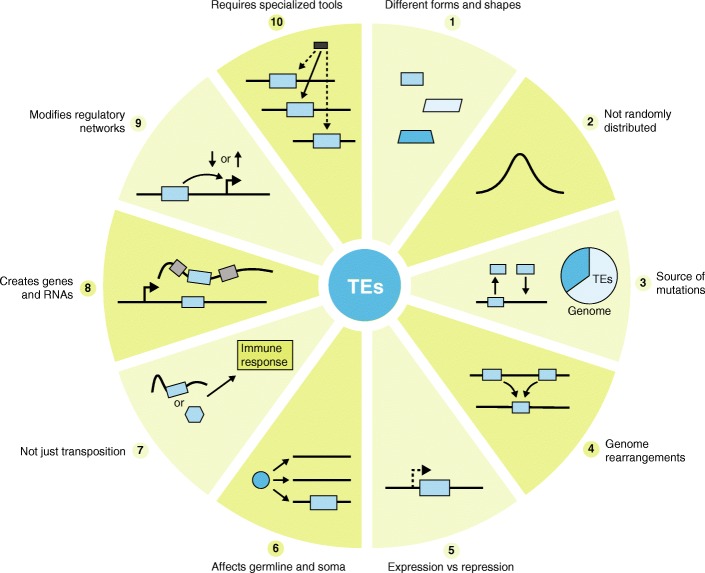
“Transposable elements come in many different forms and shapes (4).”
BackgroundCostanzo, F. D., Marsico, M. D., Orefice, I., Kristoffersen, J. B., Kasapidis, P., Chaumier, T., Ambrosino, L., Miralto, M., Cigliano, R. A., Verret, F., et al. (2025) · Scientific Data · doi:10.1038/s41597-025-04634-4 · Cited by 9
“…are transposable elements (TEs), a group of repetitive sequences able to change their position and expand within the genome through retro-transcription of a RNA intermediate (Class I), “cut and paste” of DNA elements or replicative transposition of a DNA intermediate (Class II) 7,8 .”
Comparative Analysis of Transposable Element Evolution in Crustaceans
Zeng, X., Zhao, W., Kanika, N. H., Dong, Y., Hou, X., Chen, X., Wang, J., & Wang, C. (2025) · Genome Biology and Evolution · doi:10.1093/gbe/evaf115 · Cited by 9
“These mechanisms, coupled with the observed clustering of TEs in non-coding regions, further underscore their role in promoting genome stability while contributing to genome evolution by expanding structural and functional elements (Bourque et al. 2018; Gebrie 2023).”
The secrets of variegated leaves: Molecular to physiological and ecological insights
Bhardwaj, A., Agarwal, D., Bhatt, U., Parihar, S., & Soni, V. (2025) · Flora · doi:10.1016/j.flora.2025.152815 · Cited by 8
Babarinde, I. A., Fu, X., Ma, G., Li, Y., Liang, Z., Xu, J., Xiao, Z., Qiao, Y., Zheng, L., Oleynikova, K., et al. (2025) · Nature Communications · doi:10.1038/s41467-025-63080-3 · Cited by 8
“cause mutations that interfere with regulatory networks and from chimeric spliced coding and noncoding transcripts that alter function 2,4 .”
Baril, T., Puccetti, G., & Croll, D. (2025) · Nature Communications · doi:10.1038/s41467-025-64944-4 · Cited by 8
Davis, J., Voicu, D., Chitnavis, U., Jaksina, J., & Imbeault, M. (2026) · Nature Genetics · doi:10.1038/s41588-025-02498-3 · Cited by 8
Self-citationInverted Alu repeats in loop-out exon skipping across hominoid evolution
Denisko, D., Kim, J., Ku, J., Zhao, B., & Lee, E. A. (2026) · Nucleic Acids Research · doi:10.1093/nar/gkag196 · Cited by 9
Genetic and Epigenetic Mechanisms Underlying Reversible Adaptive Responses in Fungi
Dan, L., Liu, S., Qiang, Z., Ye, X., & Zhang, J. (2026) · Journal of Fungi · doi:10.3390/jof12050309 · Cited by 10
“…are characterized by terminal inverted repeats or long terminal repeats flanking protein-coding regions that encode enzymes such as transposase or reverse transcriptase and integrase, which catalyze transposition and often result in the formation of target site duplications in the host genome [47].”
Direct cell-to-cell transmission of retrotransposons
Voichek, M., Bernhard, A., Lauterjung, L., Novatchkova, M., Handler, D., Möseneder, P., Protsenko, L., Rafanel, B., Iarovenko, S. I., Duchek, P., et al. (2026) · Cell · doi:10.1016/j.cell.2026.08.047 · Cited by 12
Network‐based visualisation reveals new insights into transposable element diversity
Schneider, L., Guo, Y., Birch, D., & Sarkies, P. (2021) · Molecular Systems Biology · doi:10.15252/msb.20209600 · Cited by 9
“Unchecked TE proliferation poses several threats to genomic integrity including gene disruption, ectopic recombination between homologous TEs at different chromosomal loci and competing with endogenous genes for cellular resources (Bourque et al , 2018).”
Khan, M., Shah, S., Lv, B., Lv, Z., Ji, N., Song, Z., Wu, P., Wang, X., & Mehmood, A. (2022) · Ocular Immunology and Inflammation · doi:10.1080/09273948.2022.2112238 · Cited by 8
Štangar, A., Kovač, J., Šket, R., Tesovnik, T., Zajec, A., Kern, B. Č., Bizjan, B. J., Battelino, T., & Dovč, K. (2023) · International Journal of Molecular Sciences · doi:10.3390/ijms24043104 · Cited by 9
“Therefore, most of them are highly regulated, usually methylated, to maintain a heterochromatic repressed state [30,31].”
BackgroundHorizontal Transposon Transfer and Their Ecological Drivers: The Case of Flower-breeding Drosophila
Carvalho, T. L., Cordeiro, J. D. O., Vizentin‐Bugoni, J., Fonseca, P. M., Loreto, É. L. S., & Robe, L. J. (2023) · Genome Biology and Evolution · doi:10.1093/gbe/evad068 · Cited by 9
Detection and characterization of nuclear mitochondrial DNA (NUMTs) in the alpaca genome
Anello, M., Folco, G. G., & Rocco, F. D. (2023) · Small Ruminant Research · doi:10.1016/j.smallrumres.2023.106986 · Cited by 8
Sağbaş, H. İ., Erċışlı, S., Aydın, M., İlhan, E., AYDINYURT, R., Kasapoğlu, A. G., Muslu, S., & Polat, Y. (2023) · Cellular and Molecular Biology · doi:10.14715/cmb/2023.69.10.6 · Cited by 8
“Owing to transposons, which are mobile DNA fragments, it is possible to see base addition/disappearance, or any duplication (19). iPBS (Inter Primer Binding Site), a re - trotransposon-based marker, is based on the amplification of reverse transcriptase primer binding sites (20).”
BackgroundDziulko, A., Allen, H. L., & Chuong, E. B. (2024) · Human Molecular Genetics · doi:10.1093/hmg/ddae084 · Cited by 8
Wang, H., Xu, D., Jiang, F., Wang, S., Wang, A., Liu, H., Lei, L., Qian, W., & Fan, W. (2024) · GigaScience · doi:10.1093/gigascience/giae032 · Cited by 9
“Because TEs can modify regulatory networks and create new genes [ 58 ], the recent expansion of the Gypsy TEs may also contribute to the wide diversity of cultivars of D. pinnata .”
Saidi, S., Blaison, M., Rodríguez-Ordóñez, M. D. P., Confais, J., & Quesneville, H. (2026) · Genome biology · doi:10.1186/s13059-026-03984-5 · Cited by 9
“Their insertions may be neutral for the host or deleterious, for instance, by disrupting gene expression [1–3].”
Sin, J. H., Kashyap, S., Acenas, D. D., II, Cortez, J. T., Lee, J., Marson, A., Matloubian, M., & Waterfield, M. R. (2022) · The Journal of Immunology · doi:10.4049/jimmunol.2100996 · Cited by 9
Evolution of modular and pleiotropic enhancers
Murugesan, S. N., & Monteiro, A. (2022) · Journal of Experimental Zoology Part B Molecular and Developmental Evolution · doi:10.1002/jez.b.23131 · Cited by 9
Chen, T.-H., & Winefield, C. S. (2022) · Mobile DNA · doi:10.1186/s13100-022-00271-5 · Cited by 8
“In addition to possible transposition, transcription of TE loci, containing either intact or fragmented TEs, can impact normal activity of neighbouring genes without generating new TE insertions by interfering with normal gene splicing and epigenetic silencing of these loci [12, 13].”
BackgroundInfluentialIgoshin, A. V., Romashov, G. A., Chernyaeva, E., Elatkin, N. P., Yudin, N. S., & Larkin, D. M. (2022) · Vavilov Journal of Genetics and Breeding · doi:10.18699/vjgb-22-28 · Cited by 8
“Common types of genetic variations, such as single nucleotide polymorphisms, nucleotide insertions and deletions, among others, can have “beneficial” or “harmful” effects on animal health and productivity (Liu, Bickhart, 2012; Bourque et al., 2018).”
BackgroundHigh nucleotide similarity of three Copia lineage LTR retrotransposons among plant genomes
Orozco-Arias, S., Dupeyron, M., Gutiérrez-Duque, D., Tabares-Soto, R., & Guyot, R. (2023) · Genome · doi:10.1139/gen-2022-0026 · Cited by 9
Hejníčková, M., Dalíková, M., Zrzavá, M., Marec, F., Lorite, P., & Montiel, E. E. (2023) · Scientific Reports · doi:10.1038/s41598-023-27757-3 · Cited by 8
Kawahara, K., Inada, T., Tanaka, R., Dayı, M., Makino, T., Maruyama, S., Kikuchi, T., Sugimoto, A., & Kawata, M. (2023) · Genome Biology and Evolution · doi:10.1093/gbe/evad063 · Cited by 9
Evolution of piggyBac Transposons in Apoidea
Li, X., Guan, Z., Wang, F., Wang, Y., Asare, E., Shi, S., Lin, Z., Ji, T., Gao, B., & Song, C. (2023) · Insects · doi:10.3390/insects14040402 · Cited by 8
Shi, S., Puzakov, M. V., Puzakova, L. V., Ulupova, Y. N., Xiang, K., Wang, B., Gao, B., & Song, C. (2023) · Molecular Phylogenetics and Evolution · doi:10.1016/j.ympev.2023.107906 · Cited by 10
Vitamin C activates young LINE-1 elements in mouse embryonic stem cells via H3K9me3 demethylation
Cheng, K. C. L., Frost, J. M., Sanchez-Luque, F. J., García-Cañadas, M., Taylor, D., Yang, W. R., Irayanar, B., Sampath, S., Patani, H., Agger, K., et al. (2023) · Epigenetics & Chromatin · doi:10.1186/s13072-023-00514-6 · Cited by 9
“TEs are a diverse set of abundant repetitive sequences that can impact genome regulation in myriad ways [25].”
BackgroundSelf-citationComparative Analysis of Transposable Elements in Strawberry Genomes of Different Ploidy Levels
Lyu, K., Xiao, J., Lyu, S., & Liu, R. (2023) · International Journal of Molecular Sciences · doi:10.3390/ijms242316935 · Cited by 8
Rajnović, T., Vokurka, A., & Bolarić, S. (2020) · Journal of Central European Agriculture · doi:10.5513/jcea01/21.1.2765 · Cited by 8
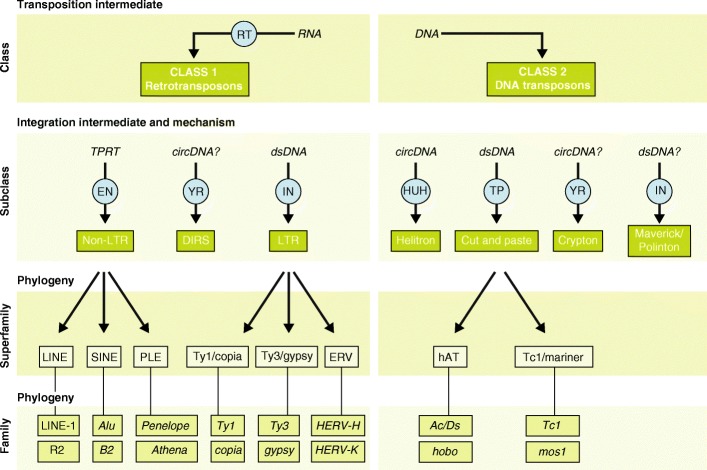
“Main difference between the two classes is their intermediate, class I and class II use an RNA and DNA intermediate, respectively (Bourque et al., 2018).”
BackgroundSassone, A. B., Hojsgaard, D., Giussani, L. M., Brassac, J., & Blattner, F. R. (2021) · Molecular Ecology · doi:10.1111/mec.16009 · Cited by 8
Wang, Y., Zhao, B., Choi, J., & Lee, E. A. (2021) · Mobile DNA · doi:10.1186/s13100-021-00250-2 · Cited by 9
Transposable elements are associated with genome-specific gene expression in bread wheat
Bariah, I., Gribun, L., & Kashkush, K. (2023) · Frontiers in Plant Science · doi:10.3389/fpls.2022.1072232 · Cited by 9
“They are considered a great source for genetic variation, mainly creating new alleles by transposing within gene bodies (Bourque et al., 2018; Dubin et al., 2018).”
BackgroundInfluentialMonsen, Ø., Grønvold, L., Datsomor, A. K., Harvey, T. N., Kijas, J., Suh, A., Hvidsten, T. R., & Sandve, S. R. (2025) · Genome Research · doi:10.1101/gr.278931.124 · Cited by 8
“…et al.2008; Qinet al.2015; Cosby et al. 2019; Diehl et al. 2020), modulating chromatin looping (Diehl et al. 2020), rearranging genome structure (Bourque et al. 2018), and supplying “ raw material ” for gene regulatory evolution in the form of cis -regulatory elements (CREs) (Bourque et al.…”
H3K9me3 loss and ERVs activation as hallmarks for osteoarthritis progression and knee joint aging
Liu, Y., Molchanov, V., Zhao, Y., Lu, D., Liu, H., Jang, H. J., & Yang, T. (2024) · Osteoarthritis and Cartilage · doi:10.1016/j.joca.2024.08.004 · Cited by 7
Beumer, N., Imbusch, C. D., Kaufmann, T., Schmidleithner, L., Guetter, K., Stüve, P., Marchel, H., Weichenhan, D., Bähr, M., Ruhland, B., et al. (2025) · Nature Immunology · doi:10.1038/s41590-025-02210-x · Cited by 9
“TEs can influence immunological processes by providing an enhancer landscape 39,43 .”
You, J. S., Pierce, S., Liang, G., & Jones, P. A. (2025) · Proceedings of the National Academy of Sciences · doi:10.1073/pnas.2502963122 · Cited by 9
“In mammals, TEs are mainly represented by long interspersed nuclear elements (LINEs), short interspersed nuclear elements (SINEs), and long terminal repeats (LTRs) ( 6 , 7 ).”
Transposable elements drive species-specific and tissue-specific transcriptomes in human development
Zhang, Y., She, J., Hu, X., Jin, Y., Zhao, J., Hou, S., Tao, C., Du, M., & Yang, E. (2025) · Genome biology · doi:10.1186/s13059-025-03855-5 · Cited by 9
Endogenous retroviruses in aging and cancer: from genomic defense to oncogenic activation
dos Santos, G. A., D’Alessandre, N. D. R., Guardia, G. D. A., Batista, R. L., & Galante, P. A. F. (2025) · Mobile DNA · doi:10.1186/s13100-025-00383-8 · Cited by 7
“Retrotransposons can be classified into two primary categories [10].”
Hoff, S. N. K., Maurstad, M. F., Tørresen, O. K., Araya, R. A., Berg, P. R., Præbel, K., Jakobsen, K. S., & Jentoft, S. (2026) · Genome biology · doi:10.1186/s13059-026-03975-6 · Cited by 8
“Similar to certain DNA elements capable of gene capture and co-translocation [117], the TEs flanking the afgp genes on chromosome 2 could allow for afgp to hitchhike with the TEs to the new genomic location on chromosome 14 [22, 75].”
Grapevine cell response to carbon deficiency requires transcriptome and methylome reprogramming
Berger, M. M. J., Garcia, V., Lacrampe, N., Rubio, B., Decros, G., Pétriacq, P., Flandin, A., Cassan, C., Hilbert, G., Colombié, S., et al. (2024) · Horticulture Research · doi:10.1093/hr/uhae277 · Cited by 7
Targeting MXD1 sensitises pancreatic cancer to trametinib
Zhang, S., Deng, S., Liu, J., Liu, S., Chen, Z., Liu, S., Xue, C., Zeng, L., Zhao, H., Xu, Z., et al. (2025) · Gut · doi:10.1136/gutjnl-2024-333408 · Cited by 7
Expression of LINE-1 elements is required for preimplantation development and totipotency
Ma, R., Xiao, N., & Liu, N. (2025) · Genes & Diseases · doi:10.1016/j.gendis.2025.101555 · Cited by 9
Wang, J., Zhang, G., Sun, C., Chang, L., Wang, Y.-Y., Yang, X., Chen, G., Itgen, M. W., Haley, A., Tang, J., et al. (2025) · Communications Biology · doi:10.1038/s42003-025-08127-3 · Cited by 7
“homogeneous 11 .”
Παπαδόπουλος, Ν., Kulkarni, S., Baranyi, C., Fromm, B., Setton, E. V. W., Sharma, P. P., Wanninger, A., & Brenneis, G. (2025) · BMC Biology · doi:10.1186/s12915-025-02276-x · Cited by 8
“…that transposable elements (TEs) are potent drivers of genome evolution, offering a mutation source, providing raw material for novel cellular genes, enhancing rearrangements, duplicating or shuffling genes, and dispersing regulatory elements to new loci, among other functions [68, 69].”
Rico-Porras, J. M., Mora, P., Gasparotto, A. E., Bardella, V. B., Palomeque, T., Lorite, P., & Cabral-de-Mello, D. C. (2025) · Heredity · doi:10.1038/s41437-025-00790-w · Cited by 7
“TEs can affect gene expression and genome evolution by mechanisms such as gene disruption, exon shuf fl ing, and the creation of new regulatory elements (Bourque et al. 2018).”
Genetic architecture of the S ‐locus supergene revealed in a tetraploid distylous species
Luo, Z., Barrett, S. C. H., Tu, T., Zhao, Z., Jia, S., Gu, S., Duan, T., Zhang, Y., Xu, B., Gu, L., et al. (2025) · New Phytologist · doi:10.1111/nph.70521 · Cited by 8
“TEs can play a significant role in the evolution of genomes by influencing genetic variation, gene regulation, and genome architecture (Oliver et al ., 2013; Kent et al ., 2017; Bourque et al ., 2018) and in some cases floral morphology (Fambrini & Pug-liesi, 2018).”
Lee, H.-E., Park, S.-J., Huh, J., Imai, H., & Kim, H. (2020) · PubMed Central · doi:10.14348/molcells.2020.0058 · Cited by 10
Search for SINE repeats in the rice genome using correlation-based position weight matrices
Suvorova, Y. M., Kamionskaya, A. M., & Korotkov, E. (2021) · BMC Bioinformatics · doi:10.1186/s12859-021-03977-0 · Cited by 7
Liu, Y., Chen, R.-M., Pu, Q.-T., Nneji, L. M., & Sun, Y. (2022) · Genome Biology and Evolution · doi:10.1093/gbe/evac084 · Cited by 8
Did circular DNA shape the evolution of mammalian genomes?
Holt, S., Arrey, G., & Regenberg, B. (2022) · Trends in Biochemical Sciences · doi:10.1016/j.tibs.2022.09.010 · Cited by 7
“4 Transposable elements (TEs) that involve a circular DNA intermediate are known to integrate back to the chromosome, shaping eukaryotic genomes [12].”
BackgroundGuo, H. J., Shi, W., Zhang, B., Xu, Y.-H., Jiao, J., & Tian, C. F. (2022) · The ISME Journal · doi:10.1038/s41396-022-01344-2 · Cited by 7
Systematic dissection of genomic features determining the vast diversity of conotoxins
Zheng, J.-W., Lu, Y., Yang, Y., Huang, D. F., Li, D., Wang, X., Gao, Y., Yang, W., Guan, Y., & Li, H. (2023) · BMC Genomics · doi:10.1186/s12864-023-09689-4 · Cited by 7
“Similarly, transposon elements (TEs) play crucial roles in genome evolution and function, including genome mutations, rearrangements, and the generation of new genes [14].”
BackgroundInfluentialBringloe, T. T., & Parent, G. J. (2023) · BMC Genomics · doi:10.1186/s12864-023-09779-3 · Cited by 7
“While large segments (> 10 kbp) of misplaced DNA are putatively the result of assembly and/ or scaffolding errors, some smaller segments of translo - cated and relocated sequences could be attributable to natural causes, such as transposable elements [35, 36].”
BackgroundPICKLE and HISTONE DEACETYLASE6 coordinately regulate genes and transposable elements in Arabidopsis
Li, W., Zhang, X., Zhang, Q., Li, Q., Li, Y., Lv, Y., Liu, Y., Cao, Y., Wang, H., Chen, X., et al. (2024) · PLANT PHYSIOLOGY · doi:10.1093/plphys/kiae369 · Cited by 7
da Costa, Z. P., Cauz‐Santos, L. A., Ragagnin, G. T., Sluys, M. V., Dornelas, M. C., Bergès, H., Varani, A. M., & Vieira, M. L. C. (2019) · Molecular Biology Reports · doi:10.1007/s11033-019-05047-4 · Cited by 7
“The success and diversity of TEs in a genome depend on the properties of the elements and the evolutionary forces acting at the level of the host species [95].”
BackgroundWhy Does It Matter That Many Biology Concepts Are Metaphors?
Kampourakis, K. (2020) · Cambridge University Press eBooks · doi:10.1017/9781108648981.007 · Cited by 11
He, G., Jin, H., Cheng, Y., Yu, Y., & Guo, D. (2022) · Journal of Systematics and Evolution · doi:10.1111/jse.12850 · Cited by 7
“Transcription is a prerequisite for the ability of LTR retrotransposons to move (Bourque et al., 2018).”
BackgroundCharacterization of transposable elements within the Bemisia tabaci species complex
Sicat, J. P. A., Visendi, P., Sewe, S. O., Bouvaine, S., & Seal, S. (2022) · Mobile DNA · doi:10.1186/s13100-022-00270-6 · Cited by 7
Pinto, A., Cunha, C., Chaves, R., Butchbach, M. E. R., & Adega, F. (2022) · Biology · doi:10.3390/biology11060824 · Cited by 8
“In this way, active SINEs, such as the primate-specific Alu elements, are completely dependent on the endonuclease and reverse transcriptase of L1 elements for genome propagation [3,6,9].”
BackgroundInfluentialpiRNA-like small RNAs target transposable elements in a Clade IV parasitic nematode
Suleiman, M., Kounosu, A., Murcott, B., Dayı, M., Pawluk, R., Yoshida, A., Viney, M., Kikuchi, T., & Hunt, V. L. (2022) · Scientific Reports · doi:10.1038/s41598-022-14247-1 · Cited by 7
der Mude, A. V. (2020) · Journal of Theoretical Biology · doi:10.1016/j.jtbi.2020.110205 · Cited by 7
Jain, D. S., Chu, C., Alver, B., Lee, S., Lee, E. A., & Park, P. J. (2020) · Bioinformatics · doi:10.1093/bioinformatics/btaa923 · Cited by 8
What Have We Learned in 30 Years of Investigations on Bari Transposons?
Palazzo, A., Caizzi, R., Moschetti, R., & Marsano, R. M. (2022) · Cells · doi:10.3390/cells11030583 · Cited by 8
“The copy number per haploid genome is a critical factor for the resulting fitness of the whole organism since an excessive TE load can be deleterious for various reasons, ranging from the gene inactivation to the disturbance of the physiological expression networks [13].”
BackgroundAn, S., Mi, S., Chen, S., Tang, Y., Xing, Y., Yi, J., & Yu, Y. (2025) · BMC Genomics · doi:10.1186/s12864-025-11740-5 · Cited by 6
Liu, L., Sun, D., & Liu, H. (2025) · Molecular Biology and Evolution · doi:10.1093/molbev/msaf252 · Cited by 6
Alami, N. H., Puteri, Z. R., Esaki, T., Sugai, Y., Pratama, F., Purwasena, I. A., & Aditiawati, P. (2025) · Scientific Reports · doi:10.1038/s41598-025-22911-5 · Cited by 7
Cheon, Y., Alvstad, E., Torre, D., Quach, D. T., Nguyen, J., Hyun, K., Zhou, M., Yu, T., Liu, L., Yoon, Y., et al. (2026) · Nature Structural & Molecular Biology · doi:10.1038/s41594-026-01757-z · Cited by 6
Ma, Z., Xu, X., Peng, W., Zhang, T., Chen, Z., Cao, S., Zhang, F., Wang, Y., Xiao, H., Zhang, Y., et al. (2026) · Nature Communications · doi:10.1038/s41467-026-70026-w · Cited by 8
Zhang, F., Zhang, H., xiao, Y., Liu, M., Ren, A., Liu, S., & Wu, L. (2026) · Nature Communications · doi:10.1038/s41467-026-70296-4 · Cited by 6
“1c and Supplementary Data 4).”
InfluentialWang, S., Zhang, C., Li, Y., Li, R., Du, K., Sun, C., Shen, X., & Guo, B. (2024) · Physiologia Plantarum · doi:10.1111/ppl.14508 · Cited by 6
Nine high-quality Anas genomes provide insights into Anas evolution and domestication
Zhang, Z., Ni, Z., Li, T., Ning, M., Gao, C., Hu, J., Han, M., Yang, J., Wu, F., Chen, L., et al. (2025) · Cell Reports · doi:10.1016/j.celrep.2025.115477 · Cited by 7
Transposable Elements Drive Regulatory and Functional Innovation of F-box Genes
Almeida, M. V., Li, Z., Rebelo‐Guiomar, P., Dallaire, A., Fiedler, L., Price, J. L., Sluka, J., Liu, X., Butter, F., Rödelsperger, C., et al. (2025) · Molecular Biology and Evolution · doi:10.1093/molbev/msaf097 · Cited by 6
“…(i) by providing their protein-coding sequences as building blocks that can be repurposed for other functions; and (ii) by contributing to transcriptional regulation of endogenous genes, some-times even wiring entire regulatory networks (Bourque et al. 2018; Almeida et al. 2022; Fueyo et al. 2022).”
InfluentialFactors determining chromosomal localization of transposable elements in plants
Kejnovský, E., Jedlička, P., Lexa, M., & Kubát, Z. (2025) · Plant Biology · doi:10.1111/plb.70057 · Cited by 6
“2) and/or (ii) integration site preference, or targeting of elements into the specific sites in the genome (Bourque et al .”
Cerca, J., Jaramillo, P., Goubert, C., Yang, H., Bieker, V. C., Fernández‐Mazuecos, M., Vargas, P., Schley, R., Li, S., Guevara, J. E., et al. (2025) · Mobile DNA · doi:10.1186/s13100-025-00362-z · Cited by 6
Ren, C., Comes, H. P., Zhu, S., Zhang, X., Jiang, W., Fu, C., Chen, J., Ma, Y., & Qiu, Y. (2025) · New Phytologist · doi:10.1111/nph.70264 · Cited by 6
“…TE activity in T. hemsleyanum occurs in stress-associated episodic bursts, and whether TE-mediated adaptation shows evolutionary conservation across ecologically diverse Vitaceae species (Bourque et al ., 2018), could provide broader insights into the role of TEs in plant environmental adaptation.”
Single-Cell Transcriptome Patterns of Transposable Elements in Alzheimer’s Disease
McEntee, C. M., & LaRocca, T. J. (2025) · Molecular Neurobiology · doi:10.1007/s12035-025-05140-9 · Cited by 7
Milan, M., Runfola, V., Patel, M., Falbo, L., Noberini, R., Soriani, C., Rodighiero, S., Bonaldi, T., Costanzo, V., Pradeepa, M. M., et al. (2025) · Nucleic Acids Research · doi:10.1093/nar/gkaf916 · Cited by 8
“LTRs are retrotransposons belonging to the Class I of TEs, which also contains the non-LTR retrotransposons LINEs and SINEs [ 56 ].”
Mackey, A. I., Fraunfelter, V. M., Shaltz, S., McCormick, J., Schroeder, C., Perfect, J. R., Feschotte, C., Magwene, P. M., & Gusa, A. A. (2026) · PLoS Genetics · doi:10.1371/journal.pgen.1011979 · Cited by 6
Self-citationMeiosis: Is Spermatogenesis Stress an Opportunity for Evolutionary Innovation?
Bhalla, N. (2020) · Current Biology · doi:10.1016/j.cub.2020.10.042 · Cited by 6
Taylor, R. S., Daniels, R. R., Morata, D., Gundappa, M. K., & Macqueen, D. J. (2022) · Elsevier eBooks · doi:10.1016/b978-0-12-822273-7.00010-0 · Cited by 7
Epigenetics and its essence in understanding human growth, development and disease
Chukwuma, C. (2022) · The Journal of Medical Research · doi:10.31254/jmr.2022.8506 · Cited by 9
Bioinformatic analysis of THAP9 transposase homolog: conserved regions, novel motifs
Rashmi, R., Nandi, C., & Majumdar, S. (2023) · Current Research in Structural Biology · doi:10.1016/j.crstbi.2023.100113 · Cited by 8
“They can cause mutations as well as increase genome size (Bourque et al., 2018).”
BackgroundAlgorithms for the Uniqueness of the Longest Common Subsequence
Wang, Y. (2023) · Journal of Bioinformatics and Computational Biology · doi:10.1142/s0219720023500270 · Cited by 6
“In other words, “transposable” is defined for genes, not gene copies [10].”
BackgroundDu, H., Diao, C., Zhuo, Y., Zheng, X., Hu, Z., Lu, S., Jin, W., Zhou, L., & Liu, J. (2024) · Genomics · doi:10.1016/j.ygeno.2024.110782 · Cited by 6
Diaby, M., Wu, H., Gao, B., Shi, S., Wang, B., Wang, S., Wang, Y., Wu, Z., Chen, C., Wang, X., et al. (2024) · Advanced Science · doi:10.1002/advs.202400969 · Cited by 6
Comparative Evolutionary Genomics in Insects
Feldmeyer, B., Bornberg‐Bauer, E., Dohmen, E., Fouks, B., Heckenhauer, J., Huylmans, A. K., Jones, A. R. C., Stolle, E., & Harrison, M. C. (2024) · Methods in molecular biology · doi:10.1007/978-1-0716-3838-5_16 · Cited by 7
Transposon-mediated genic rearrangements underlie variation in small RNA pathways
Zhang, G., Félix, M., & Andersen, E. C. (2024) · Science Advances · doi:10.1126/sciadv.ado9461 · Cited by 6
The genome of the solitary bee Tetrapedia diversipes (Hymenoptera, Apidae)
Santos, P. K. F., Araujo, N. D. S., Françoso, E., Werren, J. H., Kapheim, K. M., & Arias, M. C. (2024) · G3 Genes Genomes Genetics · doi:10.1093/g3journal/jkae264 · Cited by 6
“1; Bourque et al .”
A High-Quality Phased Genome Assembly of Stinging Nettle (Urtica dioica ssp. dioica)
Hirabayashi, K., Dumigan, C. R., Kučka, M., Percy, D. M., Guerriero, G., Cronk, Q., Deyholos, M. K., & Todesco, M. (2025) · Plants · doi:10.3390/plants14010124 · Cited by 7
Limited impact of the siRNA pathway on transposable element expression in Aedes aegypti
Bergman, A., Crist, A. B., Lopez-Maestre, H., Blanc, H., Castelló-Sanjuán, M., Frangeul, L., Varet, H., Daron, J., Merkling, S. H., Saleh, M., et al. (2025) · BMC Biology · doi:10.1186/s12915-025-02225-8 · Cited by 6
“Transposable elements (TEs), also known as transposons, are DNA sequences capable of moving within genomes [1].”
Nlebedim, V. U., Chaudhuri, R. R., & Walters, K. (2021) · Bioinformatics · doi:10.1093/bioinformatics/btab508 · Cited by 6
Flack, N., & Faulk, C. D. (2021) · Genes · doi:10.3390/genes12081223 · Cited by 6
“Transposable elements (TEs) are DNA sequences that can move or copy themselves to new locations in genomes [1].”
BackgroundRuíz-Ruano, F. J., Navarro-Domínguez, B. M., Camacho, J. P. M., & Garrido-Ramos, M. A. (2021) · Genome · doi:10.1139/gen-2021-0022 · Cited by 8
TC-hunter: identification of the insertion site of a transgenic gene within the host genome
Börjesson, V., Martinez‐Monleon, A., Fransson, S. M., Kogner, P., Johnsen, J. I., Milosevic, J., & López, M. D. (2022) · BMC Genomics · doi:10.1186/s12864-022-08376-0 · Cited by 6
“Genomes harbor thousands of copies of very similar transposable elements sequences and when these regions are sequenced and aligned, the resulting reads map to several locations [24].”
BackgroundWang, K., Xiang, D., Xia, K., Bo, S., Khurshid, H., Esh, A., & Zhang, H. (2022) · Frontiers in Plant Science · doi:10.3389/fpls.2022.814620 · Cited by 7
Weak Effect of Gypsy Retrotransposon Bursts on Sonneratia alba Salt Stress Gene Expression
Wang, Y., Dai, A., & Tang, T. (2022) · Frontiers in Plant Science · doi:10.3389/fpls.2021.830079 · Cited by 8
“Transposable elements (TEs) are genetically diverse mobile sequences that can move to new sites in genomes by a “copy-and-paste” mechanism via an RNA intermediate (Class I, retrotransposons) or a “cut-and-paste” mechanism (Class II, transposons) (Wicker et al., 2007; Bourque et al., 2018).”
BackgroundA Map of 3′ DNA Transduction Variants Mediated by Non-LTR Retroelements on 3202 Human Genomes
Halabian, R., & Makałowski, W. (2022) · Biology · doi:10.3390/biology11071032 · Cited by 6
“Nevertheless, other factors might affect the activity of a source element that need to be considered while interpreting the results, including the genotype zygosity status, the methylation status, and the chromatin accessibility of a full-length source element within the genome [20,54].”
BackgroundDaigle, A., Deiss, T. C., Melde, R. H., Bergthorsson, U., & Katju, V. (2022) · G3 Genes Genomes Genetics · doi:10.1093/g3journal/jkac214 · Cited by 7
Metadata
- Authors
- Bourque, G., Burns, K. H., Gehring, M., Gorbunova, V., Seluanov, A., Hammell, M., Imbeault, M., Izsvák, Z., Levin, H. L., Macfarlan, T. S., Mager, D. L., & Feschotte, C.
- Affiliations
- McGill University (CA)
- Johns Hopkins University (US)
- Whitehead Institute for Biomedical Research (US)
- University of Rochester (US)
- Cold Spring Harbor Laboratory (US)
- University of Cambridge (GB)
- Max Delbrück Center (DE)
- National Institutes of Health (US)
- BC Cancer Agency (CA)
- Cornell University (US)
- Corresponding author
- Bourque, Guillaume
- Feschotte, Cédric
- ORCID
- Venue
- Genome Biology
- Published
- 2018-11-19
- Volume
- 19
- Issue
- 1
- Pages
- 199-199
- ISSN
- 1465-6906 (ISSN-L)
- 1474-760X
- PMC
- PMC6240941
- OpenAlex
- W2901901698
- Semantic Scholar
- ca9ba03e2e3c00a26c0a2e017cfefd48368079b2
- Cited by
- 1,430
- References
- 203
- Citations by year
- 2026: 167 · 2025: 243 · 2024: 236 · 2023: 199 · 2022: 202 · 2021: 190 · 2020: 133 · 2019: 58
- FWCI
- 10.00
- Type
- journal article
- Language
- en
- Open access
- gold
- doi.org
- Licence
- cc-by
- creativecommons.org/licenses/by/4.0/ (tdm)
- creativecommons.org/licenses/by/4.0/ (vor)
- Locations
- Genome biology (publishedVersion, cc-by)
- Europe PMC (PubMed Central) (publishedVersion, cc-by)
- PubMed Central (publishedVersion, cc-by)
- PubMed (publishedVersion)
- Cold Spring Harbor Laboratory Institutional Repository (Cold Spring Harbor Laboratory) (acceptedVersion)
- MDC Repository (Max-Delbrueck-Center for Molecular Medicine) (acceptedVersion)
- Apollo (University of Cambridge) (submittedVersion, cc-by)
- cIRcle (University of British Columbia) (submittedVersion, cc-by)
- DOAJ (DOAJ: Directory of Open Access Journals) (submittedVersion, cc-by-sa)
- DSpace@MIT (Massachusetts Institute of Technology) (submittedVersion, cc-by-nc)
- Apollo
- Apollo (cc-by)
- Funders
- Canadian Institutes of Health Research (CIHR-MOP-115090, CIHR-CEE-151618)
- Fonds de Recherche du Québec - Santé (FRSQ-25348, FRSQ-35279)
- European Commission (ERC-2011-AdG 294742)
- National Institutes of Health
- National Science Foundation
- Topics
- Life Sciences › Biochemistry, Genetics and Molecular Biology › Genetics › Chromosomal and Genetic Variations
- Life Sciences › Biochemistry, Genetics and Molecular Biology › Molecular Biology › Genomics and Chromatin Dynamics
- Life Sciences › Biochemistry, Genetics and Molecular Biology › Genetics › Genomic variations and chromosomal abnormalities
- Keywords
- transposable elements, genome evolution, eukaryotic genomes, transposon-host interactions, genome plasticity
- MeSH terms
- Animals, DNA Transposable Elements, Humans, Mutation, Polymorphism, Genetic, Gene Rearrangement
About these checks
Registry, retraction, Cites and statistics results are computed, not judged, with one exception: a printed reference that no index lists is read once by a model before it counts as a citation error. Claims are extracted by a model and kept only when their quote appears verbatim in the text; each cited source is then checked, with a model’s help, for whether it says what the claim relies on. Those verdicts can be wrong — read the claim’s quote and the cited source before relying on one.
Statistics and arithmetic are recomputed, not judged.
Confidence bands are shown only for fields calibrated on our annotated test set. None is calibrated yet, so no band is shown.
What counts as a claim ›How we measure confidence ›How we check this ›
Are you an author, or do you see a problem with this page? Request a review
Data sources
Bibliographic data: Semantic Scholar, OpenAlex, Crossref.
Contains information from the Semantic Scholar Academic Graph Datasets, made available under the ODC Attribution License (ODC-BY 1.0).
Semantic Scholar’s data is described in: Kinney, R., et al. (2023). The Semantic Scholar Open Data Platform. arXiv:2301.10140.
