

Ten things you should know about transposable elements
Open accessThe DOI matches its Crossref record; 203 of the 203 references it cites were found in a registry or an index.
Abstract
Transposable elements (TEs) are major components of eukaryotic genomes. However, the extent of their impact on genome evolution, function, and disease remain a matter of intense interrogation. The rise of genomics and large-scale functional assays has shed new light on the multi-faceted activities of TEs and implies that they should no longer be marginalized. Here, we introduce the fundamental properties of TEs and their complex interactions with their cellular environment, which are crucial to understanding their impact and manifold consequences for organismal biology. While we draw examples primarily from mammalian systems, the core concepts outlined here are relevant to a broad range of organisms.
Overview
The claims and statistics of this paper haven’t been checked yet.
Free: it reads the open-access text and checks the first 5 claims that cite a source we can check. Create a free account to check every claim.
Integrity signals
Registry
Cites
Statistics
Figures
Verification
Claims the paper makes
The claims and statistics of this paper haven’t been checked yet.
Free: it reads the open-access text and checks the first 5 claims that cite a source we can check. Create a free account to check every claim.
Claims other papers make about this one
Each is checked against this paper’s own text: does it say what the citing paper says it does?
The source backs part of the claim, not all of it — or backs it for a different population, condition or comparison.
In the citing paper
“Constituting ~45% of the human and rodent genomes, transposable elements are routinely repressed in somatic cells to prevent their mobilization, which otherwise can have deleterious effects [119,120].”
From What would it take to prove that a chronic infection is a causal agent in Alzheimer’s disease? (2025) · cites this paper as [119]
Experimental — accuracy not yet measuredThe cited source says what the claim attributes to it.
In the citing paper
“First, these elements are significantly overrepresented (31).”
From DNA language models are powerful predictors of genome-wide variant effects (2023) · cites this paper as [31]
Self-check
Percentages, sums and reported differences re-computed from the paper’s own numbers.
The self-check needs the paper’s full text.
Citations
Cites
Ultrafast and memory-efficient alignment of short DNA sequences to the human genome.
Langmead, B., Trapnell, C., Pop, M., & Salzberg, S. L. (2009) · Genome Biology · doi:10.1186/gb-2009-10-3-r25 · Cited by 21,849
An integrated encyclopedia of DNA elements in the human genome
The ENCODE Project Consortium (2012) · Nature · doi:10.1038/nature11247 · Cited by 18,072
The B73 Maize Genome: Complexity, Diversity, and Dynamics
Schnable, P. S., Ware, D., Fulton, R. S., Stein, J. C., Wei, F., Pasternak, S., Liang, C., Zhang, J., Fulton, L., Graves, T. A., et al. (2009) · Science · doi:10.1126/science.1178534 · Cited by 4,046
A unified classification system for eukaryotic transposable elements
Wicker, T., Sabot, F., Hua-Van, A., Bennetzen, J. L., Capy, P., Chalhoub, B., Flavell, A., Leroy, P., Morgante, M., Panaud, O., et al. (2007) · Nature Reviews Genetics · doi:10.1038/nrg2165 · Cited by 3,054
Britten, R. J., & Kohne, D. E. (1968) · Science · doi:10.1126/science.161.3841.529 · Cited by 2,802
An integrated map of structural variation in 2,504 human genomes
Sudmant, P. H., Rausch, T., Gardner, E. J., Handsaker, R. E., Abyzov, A., Huddleston, J., Zhang, Y., Ye, K., Jun, G., Hsi-Yang Fritz, M., et al. (2015) · Nature · doi:10.1038/nature15394 · Cited by 2,354
Chiappinelli, K. B., Strissel, P. L., Desrichard, A., Li, H., Henke, C., Akman, B., Hein, A., Rote, N. S., Cope, L. M., Snyder, A., et al. (2015) · Cell · doi:10.1016/j.cell.2015.07.011 · Cited by 2,022
The impact of retrotransposons on human genome evolution
Cordaux, R., & Batzer, M. A. (2009) · Nature Reviews Genetics · doi:10.1038/nrg2640 · Cited by 1,703
Roulois, D., Loo Yau, H., Singhania, R., Wang, Y., Danesh, A., Shen, S. Y., Han, H., Liang, G., Jones, P. A., Pugh, T. J., et al. (2015) · Cell · doi:10.1016/j.cell.2015.07.056 · Cited by 1,527
Regulatory activities of transposable elements: from conflicts to benefits
Chuong, E. B., Elde, N. C., & Feschotte, C. (2017) · Nature Reviews Genetics · doi:10.1038/nrg.2016.139 · Cited by 1,489
Self-citation
Cited by
Items 101–200 of 1,004
Vitiello, G. A. F., Ferreira, W. A. S., de Lima, V. C. C., & Medina, T. D. S. (2021) · Frontiers in Immunology · doi:10.3389/fimmu.2021.782852 · Cited by 59
“Non-LTR sequences otherwise comprise long and short interspaced elements (LINEs and SINEs, respectively) and Alu elements (10).”
BackgroundEscape from senescence: molecular basis and therapeutic ramifications
Evangelou, K., Belogiannis, K., Papaspyropoulos, A., Petty, R., & Gorgoulis, V. G. (2023) · The Journal of Pathology · doi:10.1002/path.6164 · Cited by 63
“TEs are DNA sequences able to change their position within the genome [162,163].”
BackgroundXiao, S., Mou, Z., Fan, D., Zhou, H., Zou, M., Zou, Y., Zhou, C., Yang, R., Liu, J., Zhu, S., et al. (2020) · iScience · doi:10.1016/j.isci.2020.101497 · Cited by 62
“o’connori Genome Transposon expansions can even alter model genes in a genome (Bourque et al., 2018).”
BackgroundMarston, J. L., Greenig, M., Singh, M., Bendall, M. L., Duarte, R. R. R., Feschotte, C., Iñiguez, L., & Nixon, D. F. (2021) · JCI Insight · doi:10.1172/jci.insight.147170 · Cited by 65
“However, the 1 non-coding and coding activities of these retroelements impinge on a variety of cellular 2 processes that can directly influence physiological responses, including innate sensing, 3 and disease states(9).”
Self-citationTorres, D. E., Thomma, B. P. H. J., & Seidl, M. F. (2021) · Genome Biology and Evolution · doi:10.1093/gbe/evab135 · Cited by 65
Kanke, M., Ng, M. M. K., Connelly, S. V., Singh, M., Schaner, M. R., Shanahan, M. T., Wolber, E. A., Beasley, C., Lian, G., Jain, A., et al. (2022) · Cellular and Molecular Gastroenterology and Hepatology · doi:10.1016/j.jcmgh.2022.02.005 · Cited by 65
“Transposable Elements Mark Specific Cell Types and Are Expressed Differentially in CD Transposable elements (TEs) comprise approximately half of the human genome and represent an important source of genetic variation.(20) Retroelements predominate in the human genome and recently or currently active families include L…”
BackgroundSelf-citationThe population genetics of adaptation through copy number variation in a fungal plant pathogen
Stalder, L., Oggenfuss, U., Mohd‐Assaad, N., & Croll, D. (2022) · Molecular Ecology · doi:10.1111/mec.16435 · Cited by 62
“Importantly, generation of CNV is often driven by transposable elements (TEs), ubiquitous repetitive DNA sequences that can move from one location in the genome to another (Wells and Feschotte 2020; Bourque et al. 2018; Feschotte 2008).”
BackgroundGupta, Y. K., Marcelino‐Guimarães, F. C., Lorrain, C., Farmer, A. D., Haridas, S., Ferreira, E. G. C., Lopes-Caitar, V. S., Oliveira, L. S., Morin, E., Widdison, S., et al. (2023) · Nature Communications · doi:10.1038/s41467-023-37551-4 · Cited by 65
“However, no systematic and signi fi cant association could be made due to the numerous nested TEs present within the genome 76 .”
BackgroundYu, H., Du, Q., Campbell, M. T., Yu, B., Walia, H., & Zhang, C. (2021) · New Phytologist · doi:10.1111/nph.17189 · Cited by 69
Profiling of repetitive RNA sequences in the blood plasma of patients with cancer
Reggiardo, R. E., Maroli, S. V., Peddu, V., Davidson, A. E., Hill, A., LaMontagne, E., Aaraj, Y. A., Jain, M., Chan, S. Y., & Kim, D. H. (2023) · Nature Biomedical Engineering · doi:10.1038/s41551-023-01081-7 · Cited by 57
“We then aggregated the RNA signal from individual repeat element insertions to the subfamily element level 33 , reducing the number of repeat features from over 5 million to approximately 15,000 repeat features for disease classification and other downstream analyses (Fig.”
MethodALU non-B-DNA conformations, flipons, binary codes and evolution
Herbert, A. G. (2020) · Royal Society Open Science · doi:10.1098/rsos.200222 · Cited by 57
Retrotransposons as pathogenicity factors of the plant pathogenic fungus Botrytis cinerea
Porquier, A., Tisserant, C., Salinas, F., Glassl, C., Wange, L. E., Enard, W., Hauser, A., Hahn, M., & Weiberg, A. (2021) · Genome biology · doi:10.1186/s13059-021-02446-4 · Cited by 57
A virome-wide clonal integration analysis platform for discovering cancer viral etiology
Chen, X., Kost, J., Sulovari, A., Wong, N., Liang, W. S., Cao, J. P., & Li, D. (2019) · Genome Research · doi:10.1101/gr.242529.118 · Cited by 57
“…et al. 2013; Li et al. 2013a; Naeem et al. 2013; Wang et al. 2013, 2015; Katz and Pipas 2014; Naccache et al. 2014; Forster et al. 2015; Ho et al. 2015; Liang etal.2017;TennakoonandSung2017)aswellasexistingtranspos-able element detection tools (Bourque et al. 2018; Goerner-Potvin and Bourque 2018).”
Yu, C., Lei, X., Chen, F., Mao, S., Lv, L., Liu, H., Hu, X., Wang, R., Shen, L., Zhang, N., et al. (2022) · Nature Communications · doi:10.1038/s41467-022-31197-4 · Cited by 56
Miró-Pina, C., Charmant, O., Kawaguchi, T., Holoch, D., Michaud, A., Cohen, I., Humbert, A., Jaszczyszyn, Y., Chevreux, G., Del Maestro, L., et al. (2022) · Developmental Cell · doi:10.1016/j.devcel.2022.03.014 · Cited by 55
The Role of Transposable Elements of the Human Genome in Neuronal Function and Pathology
Chesnokova, E., Beletskiy, A., & Kolosov, P. M. (2022) · International Journal of Molecular Sciences · doi:10.3390/ijms23105847 · Cited by 51
A unified framework to analyze transposable element insertion polymorphisms using graph genomes
Groza, C., Chen, X., Wheeler, T. J., Bourque, G., & Goubert, C. (2024) · Nature Communications · doi:10.1038/s41467-024-53294-2 · Cited by 53
“With the advancement of sequencing technologies, and fostered by the intricate involvement of TEs with a wide array of biological processes 2 , the study of pMEs has risen in popularity.”
Self-citationNguyen, A. H., & Bachtrog, D. (2021) · PLoS Genetics · doi:10.1371/journal.pgen.1009438 · Cited by 52
“Several host-encoded mechanisms have emerged during eukaryotic evolution to suppress TE activity [43, 47].”
BackgroundInfluentialOggenfuss, U., & Croll, D. (2023) · PLoS Pathogens · doi:10.1371/journal.ppat.1011130 · Cited by 56
Neuroinflammaging: A Tight Line Between Normal Aging and Age-Related Neurodegenerative Disorders
Soraci, L., Corsonello, A., Paparazzo, E., Montesanto, A., Piacenza, F., Olivieri, F., Gambuzza, M. E., Savedra, E. V., Marino, S., Lattanzio, F., et al. (2024) · Aging and Disease · doi:10.14336/ad.2023.1001 · Cited by 81
“TEs are DNA sequences that are able to change their position within a genome [67].”
BackgroundAutonomous transposons tune their sequences to ensure somatic suppression
Ilik, İ., Glažar, P., Tse, K., Brändl, B., Meierhofer, D., Müller, F. U., Smith, Z. D., & Aktaş, T. (2024) · Nature · doi:10.1038/s41586-024-07081-0 · Cited by 51
“Transposable elements (TEs) are genomic parasites of virtually all living organisms 4–6 .”
BackgroundThe Long Non-Coding RNA ANRIL in Cancers
Sanchez, A., Lhuillier, J., Grosjean, G., Ayadi, L., & Maenner, S. (2023) · Cancers · doi:10.3390/cancers15164160 · Cited by 56
“Indeed, the evolution of the lncRNAs is a complex process that is influenced by a variety of factors, including TEs, which are DNA sequences that have the ability to move through a genome [71].”
BackgroundHigh-quality genome assembly enables prediction of allele-specific gene expression in hybrid poplar
Shi, T., Jia, K., Bao, Y.-T., Nie, S., Tian, X., Yan, X., Chen, Z.-Y., Li, Z.-C., Zhao, S., Ma, H.-Y., et al. (2024) · PLANT PHYSIOLOGY · doi:10.1093/plphys/kiae078 · Cited by 51
“TEs were scattered among homologous regions at distant genomic locations, resulting in large-scale deletions, duplications, and inversions (Bourque et al. 2018).”
Retrotransposons evolution and impact on lncRNA and protein coding genes in pigs
Chen, C., Wang, W., Wang, X., Shen, D., Wang, S., Wang, Y., Gao, B., Wimmers, K., Mao, J., Li, K., et al. (2019) · Mobile DNA · doi:10.1186/s13100-019-0161-8 · Cited by 50
Heitkam, T., Weber, B., Walter, I., Liedtke, S., Ost, C., & Schmidt, T. (2020) · The Plant Journal · doi:10.1111/tpj.14705 · Cited by 51
Panda, K., McCue, A. D., & Slotkin, R. K. (2020) · Philosophical Transactions of the Royal Society B Biological Sciences · doi:10.1098/rstb.2019.0417 · Cited by 52
Chak, S. T. C., Harris, S. E., Hultgren, K. M., Jeffery, N. W., & Rubenstein, D. R. (2021) · Proceedings of the National Academy of Sciences · doi:10.1073/pnas.2025051118 · Cited by 51
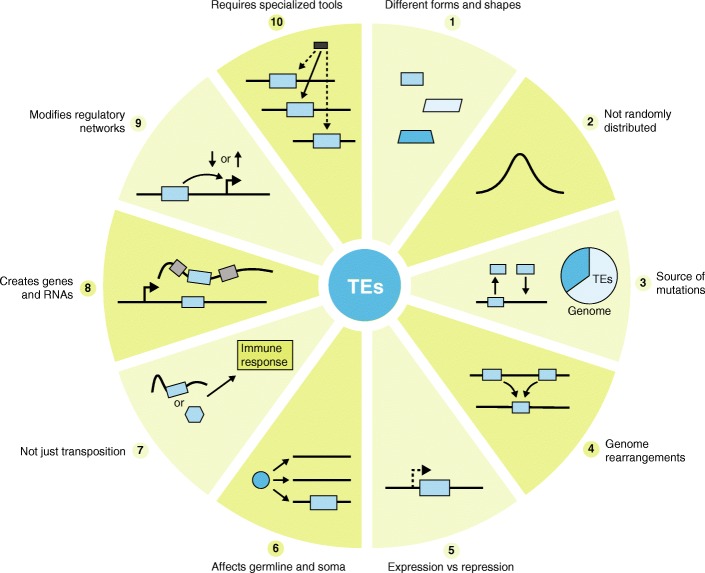
“However, since TEs are a source of mutation and genomic rearrangement (75), it has been hypothesized that they could fuel genomic changes that promoted the evolution of eusociality in termites (33).”
BackgroundBabarinde, I. A., Ma, G., Li, Y., Deng, B., Luo, Z., Liu, H., Abdul, M. M., Ward, C., Chen, M., Fu, X., et al. (2021) · Nucleic Acids Research · doi:10.1093/nar/gkab710 · Cited by 52
“The vast majority of TEs are fragmentary and incapable of transposition due to mutations, but TEs persist in the genome and have been implicated in a wide range of activities (9).”
BackgroundNon-Random Genome Editing and Natural Cellular Engineering in Cognition-Based Evolution
Miller, W. B., Enguita, F. J., & Leitão, A. L. (2021) · Cells · doi:10.3390/cells10051125 · Cited by 50
“Further, these non-random actions proceed along familiar ecological terms including both cooperation and competition [91].”
BackgroundGenomic and Meiotic Changes Accompanying Polyploidization
Blasio, F., Prieto, P., Pradillo, M., & Naranjo, T. (2022) · Plants · doi:10.3390/plants11010125 · Cited by 48
Current strategies employed in the manipulation of gene expression for clinical purposes
Tsai, H., Pietrobon, V., Peng, M., Wang, S., Zhao, L., Marincola, F. M., & Cai, Q. (2022) · Journal of Translational Medicine · doi:10.1186/s12967-022-03747-3 · Cited by 53
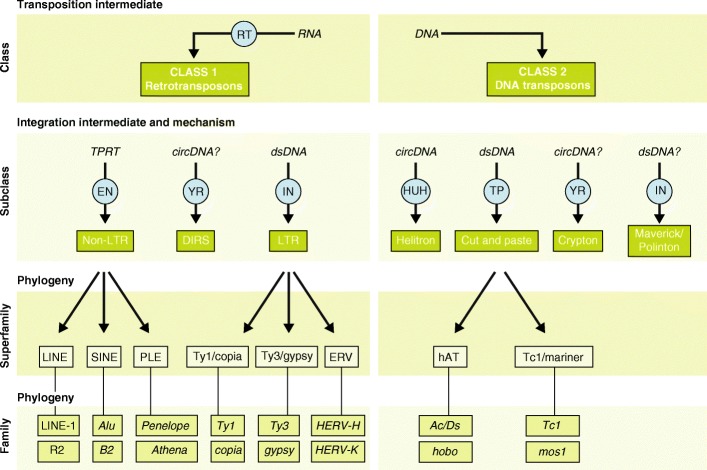
“The expressed transposase recognizes both ends of TIRs and deploys cut-and-paste mechanisms to move the entire transposon to another location of the genome [68].”
BackgroundTransposable elements in plants: Recent advancements, tools and prospects
Ramakrishnan, M., Satish, L., Sharma, A., Vinod, K. K., Emamverdian, A., Zhou, M., & Wei, Q. (2022) · Plant Molecular Biology Reporter · doi:10.1007/s11105-022-01342-w · Cited by 55
Retrotransposons as Drivers of Mammalian Brain Evolution
Ferrari, R., Grandi, N., Tramontano, E., & Dieci, G. (2021) · Life · doi:10.3390/life11050376 · Cited by 50
“Indeed, an enormous amount of studies since their discovery has mitigated the emphasis on TEs as a useless form of parasitic DNA, by revealing their irreplaceable contribution to genome structure, information content and regulation [19,20], thus substantially corroborating early, far-seeing hypotheses about their role…”
BackgroundHistone H1 prevents non-CG methylation-mediated small RNA biogenesis in Arabidopsis heterochromatin
Choi, J., Lyons, D. B., & Zilberman, D. (2021) · eLife · doi:10.7554/elife.72676 · Cited by 50
Transposable elements and their role in aging
Yushkova, E., & Moskalev, A. (2023) · Ageing Research Reviews · doi:10.1016/j.arr.2023.101881 · Cited by 41
Guo, Z., Guo, L., Bai, Y., Kang, S., Sun, D., Qin, J., Ye, F., Wang, S., Wu, Q., Xie, W., et al. (2023) · Proceedings of the National Academy of Sciences · doi:10.1073/pnas.2300439120 · Cited by 50
“TE distribution in the genome is not random as insertions with neutral or beneficial effects persist longer than those that have a deleterious effect on hosts (49).”
Li, S., Ramakrishnan, M., Vinod, K. K., Kalendar, R. N., Yrjälä, K., & Zhou, M. (2019) · Forests · doi:10.3390/f11010031 · Cited by 48
“Two types of TEs have been identified based on their transposition mechanisms, namely class I retrotransposons and class II DNA transposons [28].”
BackgroundNew whole-genome alignment tools are needed for tapping into plant diversity
Song, B., Buckler, E. S., & Stitzer, M. C. (2023) · Trends in Plant Science · doi:10.1016/j.tplants.2023.08.013 · Cited by 48
Gluck‐Thaler, E., & Vogan, A. A. (2024) · Nucleic Acids Research · doi:10.1093/nar/gkae327 · Cited by 48
“Starship distributions within fungal genomes suggest they deploy two common strategies for mobile element persistence ( 91 ).”
Glinsky, G. V., & Barakat, T. S. (2019) · Stem Cell Research · doi:10.1016/j.scr.2019.101456 · Cited by 45
Healthy Aging Interventions Reduce Repetitive Element Transcripts
Wahl, D., Cavalier, A. N., Smith, M., Seals, D. R., & LaRocca, T. J. (2021) · The Journals of Gerontology: Series A · doi:10.1093/gerona/glaa302 · Cited by 41
“Noncoding, repetitive elements (REs, >60% of the genome) have been particularly neglected as “junk DNA,” despite growing evidence that they have many important biological functions (4).”
BackgroundResultInfluentialThe Role of DNA Methylation in Genome Defense in Cnidaria and Other Invertebrates
Ying, H., Hayward, D. C., Klimovich, A. V., Bosch, T. C. G., Baldassarre, L., Neeman, T. M., Forêt, S., Huttley, G. A., Reitzel, A. M., Fraune, S., et al. (2022) · Molecular Biology and Evolution · doi:10.1093/molbev/msac018 · Cited by 45
Guo, Y., Betzen, B., Salcedo, A., He, F., Bowden, R. L., Fellers, J. P., Jordan, K. W., Akhunova, A. R., Rouse, M. N., Szabo, L. J., et al. (2022) · Nature Communications · doi:10.1038/s41467-022-34050-w · Cited by 46
Papolu, P. K., Ramakrishnan, M., Mullasseri, S., Kalendar, R. N., Wei, Q., Zou, L., Ahmad, Z., Vinod, K. K., Yang, P., & Zhou, M. (2022) · Frontiers in Plant Science · doi:10.3389/fpls.2022.1064847 · Cited by 46
Wang, K., Hua, G., Li, J., Yu, Y., Zhang, C., Yang, L., Hu, X., Scheben, A., Wu, Y., Gong, P., et al. (2023) · iMeta · doi:10.1002/imt2.154 · Cited by 47
“TEs transposition propagation experienced insertion and removal processes that easily lead to SV generation because of imprecise manipulation, reshuffling of host genome sequences, and recombining of highly homologous regions [15 – 17].”
BackgroundAgo, Y., Rintz, E., Musini, K. S., Ma, Z., & Tomatsu, S. (2024) · International Journal of Molecular Sciences · doi:10.3390/ijms25021113 · Cited by 49
“This system, named for its ability to reawaken “sleeping” DNA sequences in the genome, uses a type of transposon, which is a segment of DNA that can move around to different positions within the genome [313,314].”
BackgroundCao, X., Zhang, Y., Payer, L. M., Lords, H. J., Steranka, J. P., Burns, K. H., & Xing, J. (2020) · Genome biology · doi:10.1186/s13059-020-02101-4 · Cited by 46
“Mobile genetic elements, or mobile elements (MEs), are segments of DNA that can move around 49 and make copies of themselves within a genome [1].”
BackgroundSelf-citationIFN-Aging: Coupling Aging With Interferon Response
Cao, W. (2022) · Frontiers in Aging · doi:10.3389/fragi.2022.870489 · Cited by 53
“Constituting >40% of the human and rodent genomes, transposable elements (TE), with viral reminiscence, are routinely repressed in somatic cells to prevent their mobilization (Bourque et al., 2018; Makałowski et al., 2019).”
BackgroundIbiapino, A., García, M. A., Amorim, B. S., Baez, M. A., Costea, M., Stefanović, S., & Pedrosa‐Harand, A. (2022) · Frontiers in Plant Science · doi:10.3389/fpls.2022.842260 · Cited by 45
The effect of hybridization on transposable element accumulation in an undomesticated fungal species
Hénault, M., Marsit, S., Charron, G., & Landry, C. R. (2020) · eLife · doi:10.7554/elife.60474 · Cited by 45
Anusha, P., Narayanan, M., Natarajan, D., Kandasamy, S., Chinnathambi, A., Alharbi, S. A., & Brindhadevi, K. (2021) · Chemosphere · doi:10.1016/j.chemosphere.2021.131055 · Cited by 45
Antiviral immunity triggered by infection-induced host transposable elements
Hale, B. G. (2021) · Current Opinion in Virology · doi:10.1016/j.coviro.2021.12.006 · Cited by 50
Transcriptomic diversity in human medullary thymic epithelial cells
Carter, J. A., Strömich, L., Peacey, M., Chapin, S. R., Velten, L., Steinmetz, L. M., Brors, B., Pinto, S., & Meyer, H. V. (2022) · Nature Communications · doi:10.1038/s41467-022-31750-1 · Cited by 45
Grillo, G., Keshavarzian, T., Linder, S., Arlidge, C., Mout, L., Nand, A., Teng, M., Qamra, A., Zhou, S., Kron, K. J., et al. (2023) · Cancer Discovery · doi:10.1158/2159-8290.cd-23-0331 · Cited by 42
“Of all repetitive DNA, we focused on 971 phylogenetically defined families of TEs (43), excluding simple repeats, satellites, short nuclear RNA (snRNA)/rRNA, and repeats of unknown subfamilies from our analysis.”
Bascón-Cardozo, K., Bours, A., Manthey, G., Durieux, G., Dutheil, J. Y., Pruisscher, P., Odenthal-Hesse, L., & Liedvogel, M. (2024) · Genome Biology and Evolution · doi:10.1093/gbe/evad233 · Cited by 42
Rimoldi, M., Wang, N., Zhang, J., Villar, D., Odom, D. T., Taipale, J., Flicek, P., & Roller, M. (2024) · Genome biology · doi:10.1186/s13059-024-03218-6 · Cited by 44
“One mechanism of lineage-specific TF binding divergence is through transposable elements, which have repeatedly introduced novel binding sites in multiple lineages [6–9].”
BackgroundLiu, X., Majid, M., Yuan, H., Chang, H., Zhao, L., Nie, Y., He, L., Liu, X., He, X., & Huang, Y. (2022) · BMC Biology · doi:10.1186/s12915-022-01441-w · Cited by 44
“Somatic transposition is considered a dead-end in TE evolution, with no long-term effects on the host but a more selective burden on the self-reproduction of TEs [83].”
BackgroundIn-cell structure and snapshots of copia retrotransposons in intact tissue by cryo-ET
Klumpe, S., Senti, K.-A., Beck, F., Sachweh, J., Hampoelz, B., Ronchi, P., Oorschot, V. M. J., Brandstetter, M., Yeroslaviz, A., Briggs, J. A. G., et al. (2025) · Cell · doi:10.1016/j.cell.2025.02.003 · Cited by 44
Chromatin and Epigenetic Rearrangements in Embryonic Stem Cell Fate Transitions
Sun, L., Fu, X., Ma, G., & Hutchins, A. P. (2021) · Frontiers in Cell and Developmental Biology · doi:10.3389/fcell.2021.637309 · Cited by 46
Zhang, L., Qian, J., Han, Y., Jia, Y., Kuang, H., & Chen, J. (2021) · The Plant Journal · doi:10.1111/tpj.15563 · Cited by 43
Padeken, J., Methot, S. P., Zeller, P. J., Delaney, C. E., Kalck, V., & Gasser, S. M. (2020) · Genes & Development · doi:10.1101/gad.344234.120 · Cited by 42
“Both transposable elements (Bourque et al. 2018; Klein and O’Neill 2018) and simple repeats are intrinsically unstable and represent a constant threat to genome integrity (Horard et al. 2009; Padeken et al. 2015; Payer and Burns 2019; Khristich and Mirkin 2020) and development (Jachowicz et al.…”
BackgroundThe reverse transcriptase inhibitor 3TC protects against age‐related cognitive dysfunction
Wahl, D., Smith, M. E., McEntee, C. M., Cavalier, A. N., Osburn, S. C., Burke, S. D., Grant, R. A., Nerguizian, D., Lark, D. S., Link, C. D., et al. (2023) · Aging Cell · doi:10.1111/acel.13798 · Cited by 40
Brown, T., Mishra, K., Elewa, A., Iarovenko, S. I., Subramanian, E., Joven, A., Petzold, A., Fromm, B., Friedländer, M. R., Rikk, L., et al. (2025) · Cell Genomics · doi:10.1016/j.xgen.2025.100761 · Cited by 46
“63,64 Therefore, specific mechanisms that may regulate repeat element expression and their potential role in P. waltl regeneration require further investigation.”
Our recent progress in epigenetic research using the model ciliate, Tetrahymena thermophila
Cheng, T., Wang, Y., Huang, J. S., Chen, X., Zhao, X., Gao, S., & SONG, W. B. (2019) · Marine Life Science & Technology · doi:10.1007/s42995-019-00015-0 · Cited by 40
Bell, E. A., Butler, C. L., Oliveira, C., Marburger, S., Yant, L. J., & Taylor, M. I. (2021) · Molecular Ecology Resources · doi:10.1111/1755-0998.13489 · Cited by 42
A masculinizing supergene underlies an exaggerated male reproductive morph in a spider
Hendrickx, F., Corte, Z. D., Sonet, G., Belleghem, S. M. V., Köstlbacher, S., & Vangestel, C. (2021) · Nature Ecology & Evolution · doi:10.1038/s41559-021-01626-6 · Cited by 43
A field guide to endogenous retrovirus regulatory networks
Dopkins, N., O’Mara, M. M., Lawrence, E., Fei, T., Sandoval-Motta, S., Nixon, D. F., & Bendall, M. L. (2022) · Molecular Cell · doi:10.1016/j.molcel.2022.09.011 · Cited by 37
Treiber, C. D., & Waddell, S. (2020) · Genome Research · doi:10.1101/gr.259200.119 · Cited by 42
“activity comprises a wide array of molecular functions (Sienski et al. 2012; Bourque et al. 2018).”
BackgroundBerthelier, J., Furci, L., Asai, S., Sadykova, M., Shimazaki, T., Shirasu, K., & Saze, H. (2023) · Nature Communications · doi:10.1038/s41467-023-38954-z · Cited by 42
Gutman, E. G., Salvio, A. L., Fernandes, R. A., Duarte, L. A., Raposo-Vedovi, J. V., Alcaraz, H. F., Teixeira, M., Passos, G. F., Medeiros, K. Q. M. D., Hämmerle, M. B., et al. (2024) · Molecular Psychiatry · doi:10.1038/s41380-024-02554-0 · Cited by 43
“Further studies are needed to elucidate the extension of the CNS damage and possible neurodegenerating consequences.”
Transposable elements contribute to the genomic response to insecticides in Drosophila melanogaster
Salces-Ortiz, J., Vargas-Chávez, C., Guio, L., Rech, G. E., & González, J. (2020) · Philosophical Transactions of the Royal Society B Biological Sciences · doi:10.1098/rstb.2019.0341 · Cited by 42
“Owing to their repetitive and dynamic nature, TEs can distribute regulatory sequences such as promoters, transcription factor-binding sites and insulators across the genome altering gene expression [50,51].”
BackgroundCharvet, B., Pierquin, J., Brunel, J., Gorter, R. P., Quétard, C., Horvat, B., Amor, S., Portoukalian, J., & Perron, H. (2021) · Virologica Sinica · doi:10.1007/s12250-021-00372-0 · Cited by 39
Liu, J. (2021) · Seminars in Cancer Biology · doi:10.1016/j.semcancer.2021.06.007 · Cited by 42
The origin of RNA interference: Adaptive or neutral evolution?
Torri, A., Jaeger, J., Pradeu, T., & Saleh, M. (2022) · PLoS Biology · doi:10.1371/journal.pbio.3001715 · Cited by 40
Stem Cell DNA Damage and Genome Mutation in the Context of Aging and Cancer Initiation
Zouabi, L. A., & Bardin, A. J. (2020) · Cold Spring Harbor Perspectives in Biology · doi:10.1101/cshperspect.a036210 · Cited by 44
Ruggieri, A. A., Livraghi, L., Lewis, J. J., Evans, E., Cicconardi, F., Hebberecht, L., Ortiz-Ruiz, Y., Montgomery, S. H., Ghezzi, A., Rodríguez‐Martínez, J. A., et al. (2022) · Genome Research · doi:10.1101/gr.276839.122 · Cited by 38
“In several studies, TEs have been correlated to evolutionary changes in chromatin state, gene expression, and adaptive evolution at a genome-wide scale (Bourque et al. 2018; Liu et al. 2019; Diehl et al. 2020; Ohtani and Iwasaki 2021).”
Ghosh, T., Almeida, R., Zhao, C., Mannioui, A., Martin, E., Fleet, A., Chen, C. Z.-Y., Assinck, P., Ellams, S., González, G. A., et al. (2024) · Cell · doi:10.1016/j.cell.2024.01.011 · Cited by 39
“26 Insertions that confer survival fitness to their host are preferentially retained through natural selection.”
Diversification of the Caenorhabditis heat shock response by Helitron transposable elements
Garrigues, J. M., Tsu, B. V., Daugherty, M. D., & Pasquinelli, A. E. (2019) · eLife · doi:10.7554/elife.51139 · Cited by 38
Ullastres, A., Merenciano, M., & González, J. (2021) · Genome biology · doi:10.1186/s13059-021-02471-3 · Cited by 38
Brassinosteroids and metalloids: Regulation of plant biology
Sharma, A., Ramakrishnan, M., Khanna, K., Landi, M., Prasad, R., Bhardwaj, R., & Zheng, B. (2021) · Journal of Hazardous Materials · doi:10.1016/j.jhazmat.2021.127518 · Cited by 38
Nicolau, M., Picault, N., & Moissiard, G. (2021) · Cells · doi:10.3390/cells10112952 · Cited by 39
“Class I TEs (or retrotransposons) mobilize via an RNA intermediate in a “copy-and-paste” strategy, while class II TEs (or DNA transposons) mobilize via a DNA intermediate in a “cut-and-paste” strategy [17].”
BackgroundCapture of a functionally active methyl-CpG binding domain by an arthropod retrotransposon family
de Mendoza, A., Pflueger, J., & Lister, R. (2019) · Genome Research · doi:10.1101/gr.243774.118 · Cited by 39
“…elements, there are two main types depending on their replication strategy: DNA transposons, which are excised and copied in the genome as DNA, and ret-rotransposons, which have an intermediate RNA step before retrotranscription to DNA and integration (Wicker et al. 2007; Bourque et al. 2018).”
BackgroundEndogenous retroelements as alarms for disruptions to cellular homeostasis
Lindholm, H. T., Chen, R. E., & Carvalho, D. D. D. (2022) · Trends in cancer · doi:10.1016/j.trecan.2022.09.001 · Cited by 38
Themes and variations on piRNA-guided transposon control
Loubalová, Z., Κωνσταντινίδου, Π., & Haase, A. D. (2023) · Mobile DNA · doi:10.1186/s13100-023-00298-2 · Cited by 40
Repetitive DNAs: the ‘invisible’ regulators of insect adaptation and speciation
Cabral-de-Mello, D. C., & Palacios-Gimenez, O. M. (2024) · Current Opinion in Insect Science · doi:10.1016/j.cois.2024.101295 · Cited by 37
Sequencing and chromosome-scale assembly of the giant Pleurodeles waltl genome
Brown, T., Elewa, A., Iarovenko, S., Subramanian, E., Araus, A. J., Petzold, A., Suzuki, M., Suzuki, K.-I. T., Hayashi, T., Toyoda, A., et al. (2022) · doi:10.1101/2022.10.19.512763 · Cited by 37
Campbell, L. I., Nwezeobi, J., van Brunschot, S., Kaweesi, T., Seal, S., Swamy, R. A. R., Namuddu, A., Maslen, G. L., Mugerwa, H., Armean, I. M., et al. (2023) · BMC Genomics · doi:10.1186/s12864-023-09474-3 · Cited by 38
“Long terminal repeats (LTRs) are a group of autonomous retrotransposons similar to LINEs in that they are also mediated via a RT mechanism to “copy and paste” to new genomic loci [47].”
BackgroundInfluentialEpigenetic conflict on a degenerating Y chromosome increases mutational burden in Drosophila males
Wei, K., Gibilisco, L., & Bachtrog, D. (2020) · Nature Communications · doi:10.1038/s41467-020-19134-9 · Cited by 34
Bergero, R., Ellis, P. J. I., Haerty, W., Larcombe, L. D., Macaulay, I. C., Mehta, T. K., Mogensen, M. M., Murray, D. S., Nash, W. J., Neale, M. J., et al. (2021) · Biological reviews/Biological reviews of the Cambridge Philosophical Society · doi:10.1111/brv.12680 · Cited by 39
“After such ‘domestication’, the recycling of TE genes has taken place to generate disparate new functions, which range from a role in placental development to involvement in somatic recombination events typical of the vertebrate immune system (Bourque et al., 2018).”
BackgroundInfluentialTransposable Element Mobilization in Interspecific Yeast Hybrids
Heil, C. S., Patterson, K., Hickey, A. S.-M., Alcantara, E., & Dunham, M. J. (2021) · Genome Biology and Evolution · doi:10.1093/gbe/evab033 · Cited by 40
Mammalian PIWI–piRNA–target complexes reveal features for broad and efficient target silencing
Li, Z., Li, Z., Zhang, Y., Zhou, L., Xu, Q., Li, L., Zeng, L., Xue, J., Niu, H., Zhong, J., et al. (2024) · Nature Structural & Molecular Biology · doi:10.1038/s41594-024-01287-6 · Cited by 35
“Transposons, referred to as genomic ‘pathogens,’ are able to mobilize and replicate themselves within a genome 1 .”
Zhu, X., Fang, H., Gladysz, K., Barbour, J. A., & Wong, J. W. H. (2021) · European Journal of Cancer · doi:10.1016/j.ejca.2021.08.003 · Cited by 35
Zhu, T., Xia, C., Yu, R., Zhou, X., Xu, X., Wang, L., Zong, Z., Yang, J., Liu, Y., Ming, L., et al. (2024) · Nature Communications · doi:10.1038/s41467-024-50787-y · Cited by 39
“The above resultsindicate that TEs maycontributetomodi fi cationofregulatory sequences, fi ne-tuning gene expression networks and driving new functions 71 .”
LINE1 and PRC2 control nucleolar organization and repression of the 8C state in human ESCs
Zhang, J., Ataei, L., Mittal, K., Wu, L. L., Caldwell, L., Huynh, L., Sarajideen, S., Tse, K. Y., Simon, M.-M., Mazid, M. A., et al. (2024) · Developmental Cell · doi:10.1016/j.devcel.2024.09.024 · Cited by 35
Defensive Function of Transposable Elements in Bacteria
Fan, C., Wu, Y.-H., Decker, C. M., Rohani, R., Salazar, M. G., Ye, H., Cui, Z., Schmidt, F., & Huang, W. E. (2019) · ACS Synthetic Biology · doi:10.1021/acssynbio.9b00218 · Cited by 39
Zhou, X., He, J., Velanis, C. N., Zhu, Y., He, Y., Tang, K., Zhu, M., Graser, L., de Leau, E., Wang, X., et al. (2021) · Journal of Integrative Plant Biology · doi:10.1111/jipb.13108 · Cited by 35
“Although usually considered as selfish or parasitic, TEs are important sources of emerging new genes (Sinzelle et al., 2009; Bourque et al., 2018).”
BackgroundElliott, T. A., Heitkam, T., Hubley, R. M., Quesneville, H., Suh, A., & Wheeler, T. J. (2021) · Mobile DNA · doi:10.1186/s13100-021-00244-0 · Cited by 35
Errbii, M., Keilwagen, J., Hoff, K. J., Steffen, R., Altmüller, J., Oettler, J., & Schrader, L. (2021) · Molecular Ecology · doi:10.1111/mec.16099 · Cited by 39
Ryazansky, S. S., Chen, C., Potters, M., Naumenko, A. N., Lukyanchikova, V., Masri, R. A., Brusentsov, I. I., Karagodin, D. A., Yurchenko, A. A., dos Anjos, V. L., et al. (2024) · BMC Biology · doi:10.1186/s12915-024-01825-0 · Cited by 39
“The expansion of transposons in a genome is widely considered to be harmful to an organism and therefore expected to be prevented by innate defense systems [78].”
BackgroundSelection on synonymous sites: the unwanted transcript hypothesis
Radrizzani, S., Kudla, G., Izsvák, Z., & Hurst, L. D. (2024) · Nature Reviews Genetics · doi:10.1038/s41576-023-00686-7 · Cited by 34
“For transpositionally competent transposable elements, additional costs will be associated with damage to host DNA through insertion and double-strand breaks that are mutagenic, can cause break-induced genome instability and are toxic 52 .”
InfluentialSelf-citation
Metadata
- Authors
- Bourque, G., Burns, K. H., Gehring, M., Gorbunova, V., Seluanov, A., Hammell, M., Imbeault, M., Izsvák, Z., Levin, H. L., Macfarlan, T. S., Mager, D. L., & Feschotte, C.
- Affiliations
- McGill University (CA)
- Johns Hopkins University (US)
- Whitehead Institute for Biomedical Research (US)
- University of Rochester (US)
- Cold Spring Harbor Laboratory (US)
- University of Cambridge (GB)
- Max Delbrück Center (DE)
- National Institutes of Health (US)
- BC Cancer Agency (CA)
- Cornell University (US)
- Corresponding author
- Bourque, Guillaume
- Feschotte, Cédric
- ORCID
- Venue
- Genome Biology
- Published
- 2018-11-19
- Volume
- 19
- Issue
- 1
- Pages
- 199-199
- ISSN
- 1465-6906 (ISSN-L)
- 1474-760X
- PMC
- PMC6240941
- OpenAlex
- W2901901698
- Cited by
- 1,430
- References
- 203
- Citations by year
- 2026: 167 · 2025: 243 · 2024: 236 · 2023: 199 · 2022: 202 · 2021: 190 · 2020: 133 · 2019: 58
- FWCI
- 10.00
- Type
- journal article
- Language
- en
- Open access
- gold
- doi.org
- Licence
- cc-by
- creativecommons.org/licenses/by/4.0/ (tdm)
- creativecommons.org/licenses/by/4.0/ (vor)
- Locations
- Genome biology (publishedVersion, cc-by)
- Europe PMC (PubMed Central) (publishedVersion, cc-by)
- PubMed Central (publishedVersion, cc-by)
- PubMed (publishedVersion)
- Cold Spring Harbor Laboratory Institutional Repository (Cold Spring Harbor Laboratory) (acceptedVersion)
- MDC Repository (Max-Delbrueck-Center for Molecular Medicine) (acceptedVersion)
- Apollo (University of Cambridge) (submittedVersion, cc-by)
- cIRcle (University of British Columbia) (submittedVersion, cc-by)
- DOAJ (DOAJ: Directory of Open Access Journals) (submittedVersion, cc-by-sa)
- DSpace@MIT (Massachusetts Institute of Technology) (submittedVersion, cc-by-nc)
- Apollo
- Apollo (cc-by)
- Funders
- Canadian Institutes of Health Research (CIHR-MOP-115090, CIHR-CEE-151618)
- Fonds de Recherche du Québec - Santé (FRSQ-25348, FRSQ-35279)
- European Commission (ERC-2011-AdG 294742)
- National Institutes of Health
- National Science Foundation
- Topics
- Life Sciences › Biochemistry, Genetics and Molecular Biology › Genetics › Chromosomal and Genetic Variations
- Life Sciences › Biochemistry, Genetics and Molecular Biology › Molecular Biology › Genomics and Chromatin Dynamics
- Life Sciences › Biochemistry, Genetics and Molecular Biology › Genetics › Genomic variations and chromosomal abnormalities
- Keywords
- transposable elements, genome evolution, eukaryotic genomes, transposon-host interactions, genome plasticity
- MeSH terms
- Animals, DNA Transposable Elements, Humans, Mutation, Polymorphism, Genetic, Gene Rearrangement
About these checks
Registry, retraction, Cites and statistics results are computed, not judged, with one exception: a printed reference that no index lists is read once by a model before it counts as a citation error. Claims are extracted by a model and kept only when their quote appears verbatim in the text; each cited source is then checked, with a model’s help, for whether it says what the claim relies on. Those verdicts can be wrong — read the claim’s quote and the cited source before relying on one.
Statistics and arithmetic are recomputed, not judged.
Confidence bands are shown only for fields calibrated on our annotated test set. None is calibrated yet, so no band is shown.
What counts as a claim ›How we measure confidence ›How we check this ›
Are you an author, or do you see a problem with this page? Request a review
Data sources
Bibliographic data: Semantic Scholar, OpenAlex, Crossref.
Contains information from the Semantic Scholar Academic Graph Datasets, made available under the ODC Attribution License (ODC-BY 1.0).
Semantic Scholar’s data is described in: Kinney, R., et al. (2023). The Semantic Scholar Open Data Platform. arXiv:2301.10140.
