

BART-Seq: cost-effective massively parallelized targeted sequencing for genomics, transcriptomics, and single-cell analysis
Open accessThe DOI matches its Crossref record; 49 of the 50 references it cites were found in a registry or an index.
Abstract
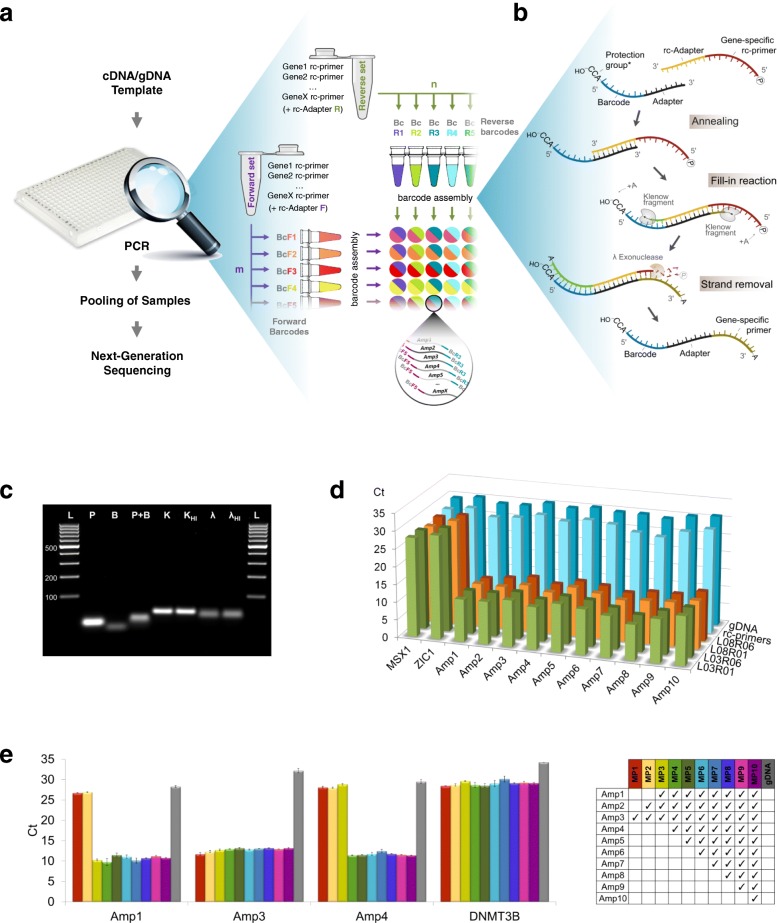
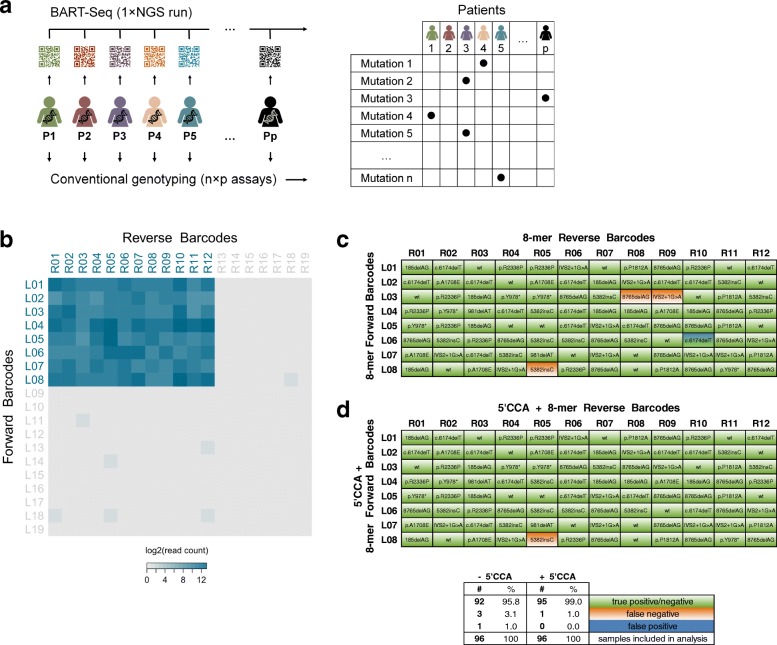
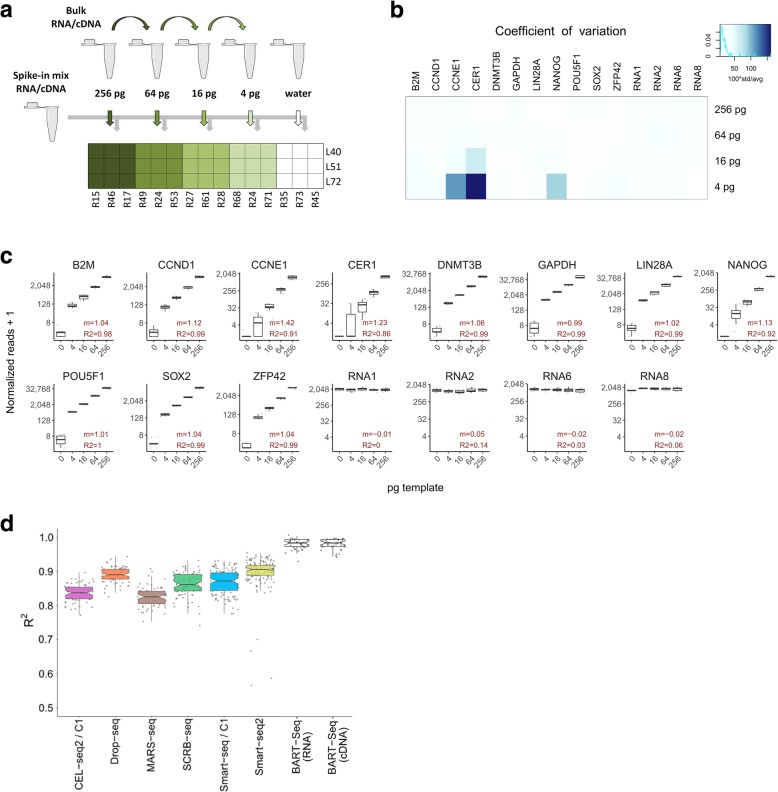
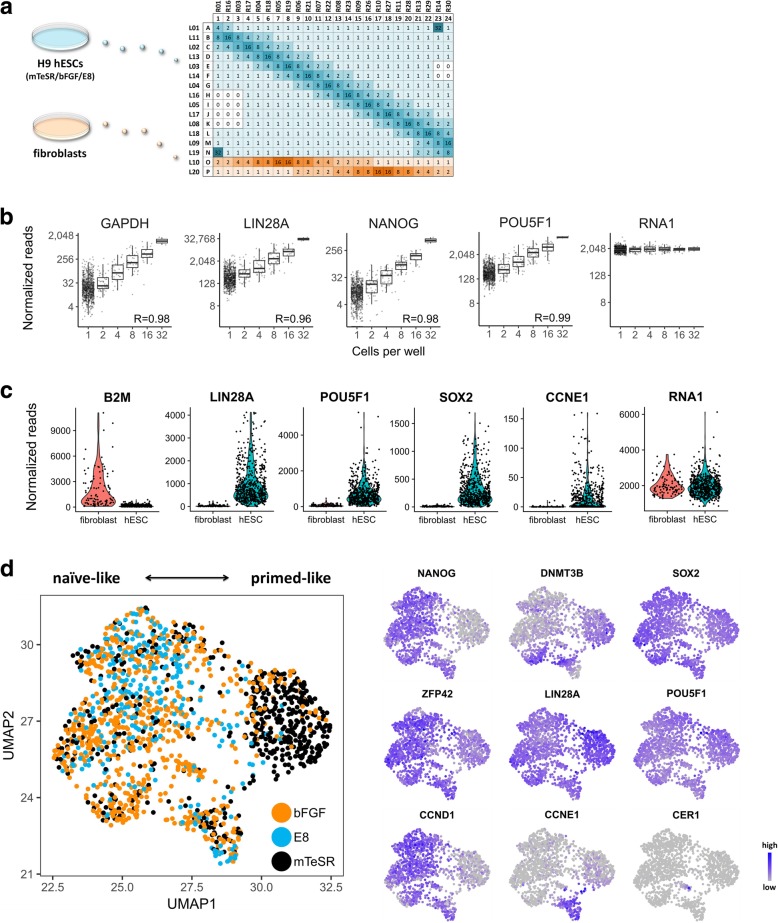
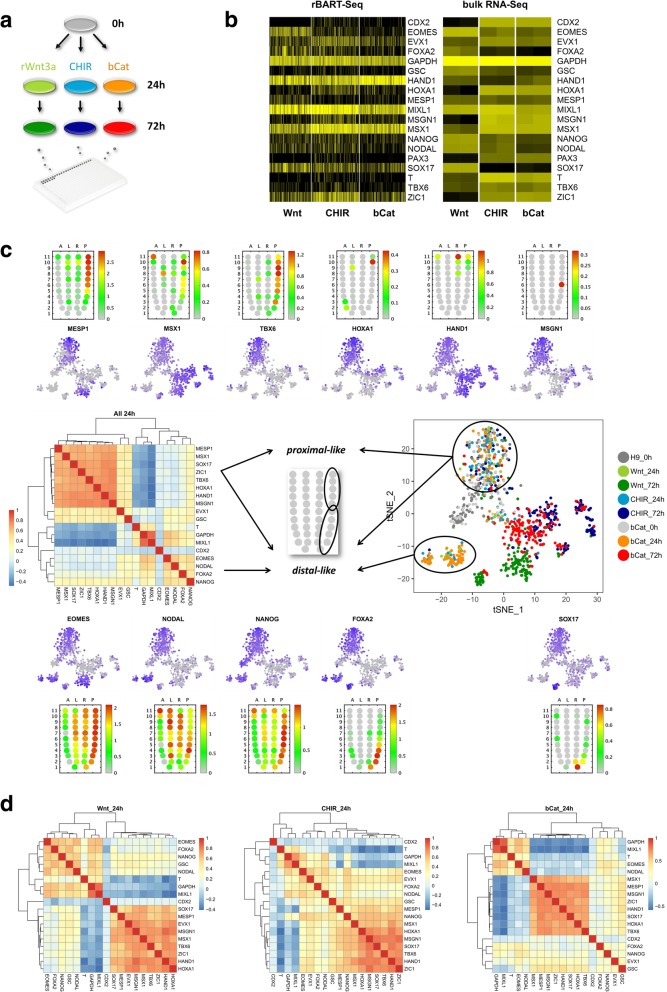
We describe a highly sensitive, quantitative, and inexpensive technique for targeted sequencing of transcript cohorts or genomic regions from thousands of bulk samples or single cells in parallel. Multiplexing is based on a simple method that produces extensive matrices of diverse DNA barcodes attached to invariant primer sets, which are all pre-selected and optimized in silico. By applying the matrices in a novel workflow named Barcode Assembly foR Targeted Sequencing (BART-Seq), we analyze developmental states of thousands of single human pluripotent stem cells, either in different maintenance media or upon Wnt/β-catenin pathway activation, which identifies the mechanisms of differentiation induction. Moreover, we apply BART-Seq to the genetic screening of breast cancer patients and identify BRCA mutations with very high precision. The processing of thousands of samples and dynamic range measurements that outperform global transcriptomics techniques makes BART-Seq first targeted sequencing technique suitable for numerous research applications.
Overview
The claims and statistics of this paper haven’t been checked yet.
Free: it reads the open-access text and checks the first 5 claims that cite a source we can check. Create a free account to check every claim.
Integrity signals
Registry
Cites
Statistics
Figures
Verification
Claims the paper makes
The claims and statistics of this paper haven’t been checked yet.
Free: it reads the open-access text and checks the first 5 claims that cite a source we can check. Create a free account to check every claim.
Claims other papers make about this one
Each is checked against this paper’s own text: does it say what the citing paper says it does?
In the citing paper
“Unlike previous high-throughput27–29 and low-throughput30 targeted single-cell RNA-seq methods, its modular design ensures platform-independent, robust genetic screens.”
From Targeted Perturb-seq enables genome-scale genetic screens in single cells (2020) · cites this paper as [30]
Self-check
Percentages, sums and reported differences re-computed from the paper’s own numbers.
The self-check needs the paper’s full text.
Citations
Cites
HISAT: a fast spliced aligner with low memory requirements
Kim, D., Langmead, B., & Salzberg, S. L. (2015) · Nature Methods · doi:10.1038/nmeth.3317 · Cited by 24,112
<tt>BLAT</tt> —The <tt>BLAST</tt> -Like Alignment Tool
Kent, W. J. (2002) · Genome Research · doi:10.1101/gr.229202 · Cited by 8,480 · cited 2×
“Kent WJ. BLAT—the BLAST-like alignment tool.”
MethodMassively parallel digital transcriptional profiling of single cells
Zheng, G. X. Y., Terry, J. M., Belgrader, P., Ryvkin, P., Bent, Z. W., Wilson, R., Ziraldo, S. B., Wheeler, T. D., McDermott, G. P., Zhu, J., et al. (2017) · Nature Communications · doi:10.1038/ncomms14049 · Cited by 7,353
Highly parallel genome-wide expression profiling of individual cells using nanoliter droplets.
Macosko, E. Z., Basu, A., Satija, R., Nemesh, J., Shekhar, K., Goldman, M., Tirosh, I., Bialas, A. R., Kamitaki, N., Martersteck, E. M., et al. (2015) · Cell · doi:10.1016/j.cell.2015.05.002 · Cited by 7,110
The ground state of embryonic stem cell self-renewal
Ying, Q.-L., Wray, J., Nichols, J., Batlle-Morera, L., Doble, B., Woodgett, J., Cohen, P., & Smith, A. (2008) · Nature · doi:10.1038/nature06968 · Cited by 3,442
Droplet barcoding for single-cell transcriptomics applied to embryonic stem cells
Klein, A. M., Mazutis, L., Akartuna, I., Tallapragada, N., Veres, A., Li, V., Peshkin, L., Weitz, D. A., & Kirschner, M. W. (2015) · Cell · doi:10.1016/j.cell.2015.04.044 · Cited by 3,356 · cited 1×
“, fluorescent marker intensity, to the expression of transcripts and/or genotypes, a level of information that is lost with techniques that utilize pools of cells and barcoded droplets [2, 3, 41, 42].”
BackgroundSpatially resolved, highly multiplexed RNA profiling in single cells
Chen, K. H., Boettiger, A. N., Moffitt, J. R., Wang, S., & Zhuang, X. (2015) · Science · doi:10.1126/science.aaa6090 · Cited by 2,969
Efficient string matching: an aid to bibliographic search
Aho, A. V., & Corasick, M. J. (1975) · Communications of the ACM · doi:10.1145/360825.360855 · Cited by 2,944
Snakemake—a scalable bioinformatics workflow engine
Köster, J., & Rahmann, S. (2012) · Bioinformatics · doi:10.1093/bioinformatics/bts480 · Cited by 2,780
Smart-seq2 for sensitive full-length transcriptome profiling in single cells
Picelli, S., Björklund, Å. K., Faridani, O. R., Sagasser, S., Winberg, G., & Sandberg, R. (2013) · Nature Methods · doi:10.1038/nmeth.2639 · Cited by 2,358 · cited 1×
“Analyzing biological processes in a greater detail requires using either global indexing techniques that provide greater coverage, like SMART-Seq2 [4], but at a significantly higher cost per sample, or using targeted sequencing approaches.”
MethodDirect multiplexed measurement of gene expression with color-coded probe pairs
Geiss, G. K., Bumgarner, R. E., Birditt, B., Dahl, T., Dowidar, N., Dunaway, D. L., Fell, H. P., Ferree, S., George, R. D., Grogan, T., et al. (2008) · Nature Biotechnology · doi:10.1038/nbt1385 · Cited by 2,066 · cited 1×
“[12], and by probe hybridization technologies such as the Nanostring nCounter [13], MERFISH [14], FISSEQ”
MethodChemically defined generation of human cardiomyocytes
Burridge, P. W., Matsa, E., Shukla, P., Lin, Z. C., Churko, J. M., Ebert, A. D., Lan, F., Diecke, S., Huber, B., Mordwinkin, N. M., et al. (2014) · Nature Methods · doi:10.1038/nmeth.2999 · Cited by 1,606
Comparative Analysis of Single-Cell RNA Sequencing Methods
Ziegenhain, C., Vieth, B., Parekh, S., Reinius, B., Guillaumet-Adkins, A., Smets, M., Leonhardt, H., Heyn, H., Hellmann, I., & Enard, W. (2017) · Molecular Cell · doi:10.1016/j.molcel.2017.01.023 · Cited by 1,494
Chemically defined conditions for human iPSC derivation and culture
Chen, G., Gulbranson, D. R., Hou, Z., Bolin, J. M., Ruotti, V., Probasco, M. D., Smuga-Otto, K., Howden, S. E., Diol, N. R., Propson, N. E., et al. (2011) · Nature Methods · doi:10.1038/nmeth.1593 · Cited by 1,447
Counting absolute numbers of molecules using unique molecular identifiers
Kivioja, T., Vähärautio, A., Karlsson, K., Bonke, M., Enge, M., Linnarsson, S., & Taipale, J. (2012) · Nature Methods · doi:10.1038/nmeth.1778 · Cited by 1,010 · cited 1×
“the use of unique molecular identifiers (UMIs) [40] with BART-Seq, which may be important in some applications for counting the absolute number of transcripts.”
MethodTheunissen, T. W., Powell, B. E., Wang, H., Mitalipova, M., Faddah, D. A., Reddy, J., Fan, Z. P., Maetzel, D., Ganz, K., Shi, L., et al. (2014) · Cell Stem Cell · doi:10.1016/j.stem.2014.07.002 · Cited by 888
Characterization of the expression of MHC proteins in human embryonic stem cells
Drukker, M., Katz, G., Urbach, A., Schuldiner, M., Markel, G., Itskovitz-Eldor, J., Reubinoff, B., Mandelboim, O., & Benvenisty, N. (2002) · Proceedings of the National Academy of Sciences · doi:10.1073/pnas.142298299 · Cited by 671
Self-citationNiche-independent high-purity cultures of Lgr5+ intestinal stem cells and their progeny
Yin, X., Farin, H. F., van Es, J. H., Clevers, H., Langer, R., & Karp, J. M. (2014) · Nature Methods · doi:10.1038/nmeth.2737 · Cited by 574
Lee, J. H., Daugharthy, E. R., Scheiman, J., Kalhor, R., Ferrante, T. C., Terry, R., Turczyk, B. M., Yang, J. L., Lee, H. S., Aach, J., et al. (2015) · Nature Protocols · doi:10.1038/nprot.2014.191 · Cited by 529
Targeted RNA sequencing reveals the deep complexity of the human transcriptome
Mercer, T. R., Gerhardt, D. J., Dinger, M. E., Crawford, J., Trapnell, C., Jeddeloh, J. A., Mattick, J. S., & Rinn, J. L. (2012) · Nature Biotechnology · doi:10.1038/nbt.2024 · Cited by 495
Loh, K. M., Chen, A., Koh, P. W., Deng, T. Z., Sinha, R., Tsai, J. M., Barkal, A. A., Shen, K. Y., Jain, R., Morganti, R. M., et al. (2016) · Cell · doi:10.1016/j.cell.2016.06.011 · Cited by 489
An Exonuclease Induced by Bacteriophage λ
Little, J. W. (1967) · Journal of Biological Chemistry · doi:10.1016/s0021-9258(18)96258-7 · Cited by 347
LIN28 Regulates Stem Cell Metabolism and Conversion to Primed Pluripotency
Zhang, J., Ratanasirintrawoot, S., Chandrasekaran, S., Wu, Z., Ficarro, S. B., Yu, C., Ross, C. A., Cacchiarelli, D., Xia, Q., Seligson, M., et al. (2016) · Cell Stem Cell · doi:10.1016/j.stem.2016.05.009 · Cited by 345
Partition function and base pairing probabilities of RNA heterodimers
Bernhart, S. H., Tafer, H., Mückstein, U., Flamm, C., Stadler, P. F., & Hofacker, I. L. (2006) · Algorithms for Molecular Biology · doi:10.1186/1748-7188-1-3 · Cited by 303
Pastor, W. A., Chen, D., Liu, W., Kim, R., Sahakyan, A., Lukianchikov, A., Plath, K., Jacobsen, S. E., & Clark, A. T. (2016) · Cell Stem Cell · doi:10.1016/j.stem.2016.01.019 · Cited by 283
Friedman, C. E., Nguyen, Q., Lukowski, S. W., Helfer, A., Chiu, H. S., Miklas, J., Levy, S., Suo, S., Han, J.-D. J., Osteil, P., et al. (2018) · Cell Stem Cell · doi:10.1016/j.stem.2018.09.009 · Cited by 258
Sinha, R., Stanley, G., Gulati, G. S., Ezran, C., Travaglini, K. J., Wei, E., Chan, C. K. F., Nabhan, A. N., Su, T., Morganti, R. M., et al. (2017) · bioRxiv (Cold Spring Harbor Laboratory) · doi:10.1101/125724 · Cited by 209
Systematic comparison of three genomic enrichment methods for massively parallel DNA sequencing
Teer, J. K., Bonnycastle, L. L., Chines, P. S., Hansen, N. F., Aoyama, N., Swift, A. J., Abaan, H. O., Albert, T. J., Program, N. C. S., Margulies, E. H., et al. (2010) · Genome Research · doi:10.1101/gr.106716.110 · Cited by 206
Genomic Analysis at the Single-Cell Level
Kalisky, T., Blainey, P., & Quake, S. R. (2011) · Annual Review of Genetics · doi:10.1146/annurev-genet-102209-163607 · Cited by 205
Kim, H., Wu, J., Ye, S., Tai, C.-I., Zhou, X., Yan, H., Li, P., Pera, M., & Ying, Q.-L. (2013) · Nature Communications · doi:10.1038/ncomms3403 · Cited by 168
Herbold, C. W., Pelikan, C., Kuzyk, O., Hausmann, B., Angel, R., Berry, D., & Loy, A. (2015) · Frontiers in Microbiology · doi:10.3389/fmicb.2015.00731 · Cited by 165
Krendl, C., Shaposhnikov, D., Rishko, V., Ori, C., Ziegenhain, C., Sass, S., Simon, L., Müller, N. S., Straub, T., Brooks, K. E., et al. (2017) · Proceedings of the National Academy of Sciences · doi:10.1073/pnas.1708341114 · Cited by 165
Self-citationShah, S., Lubeck, E., Zhou, W., & Cai, L. (2017) · Neuron · doi:10.1016/j.neuron.2017.05.008 · Cited by 154
Ståhlberg, A., Krzyzanowski, P. M., Jackson, J., Egyud, M., Stein, L. D., & Godfrey, T. E. (2016) · Nucleic Acids Research · doi:10.1093/nar/gkw224 · Cited by 147
Droplet barcoding for massively parallel single-molecule deep sequencing
Lan, F., Haliburton, J. R., Yuan, A., & Abate, A. R. (2016) · Nature Communications · doi:10.1038/ncomms11784 · Cited by 109
RASL‐seq for Massively Parallel and Quantitative Analysis of Gene Expression
Li, H., Qiu, J., & Fu, X. (2012) · Current Protocols in Molecular Biology · doi:10.1002/0471142727.mb0413s98 · Cited by 105
Synthetic AAV/CRISPR vectors for blocking HIV‐1 expression in persistently infected astrocytes
Kunze, C., Börner, K., Kienle, E., Orschmann, T., Rusha, E., Schneider, M., Radivojkov‐Blagojevic, M., Drukker, M., Desbordes, S., Grimm, D., et al. (2018) · Glia · doi:10.1002/glia.23254 · Cited by 79
Self-citationA comprehensive assay for targeted multiplex amplification of human DNA sequences
Krishnakumar, S., Zheng, J., Wilhelmy, J., Faham, M., Mindrinos, M., & Davis, R. (2008) · Proceedings of the National Academy of Sciences · doi:10.1073/pnas.0803240105 · Cited by 74
Direct comparison of distinct naive pluripotent states in human embryonic stem cells
Warrier, S., Van der Jeught, M., Duggal, G., Tilleman, L., Sutherland, E., Taelman, J., Popovic, M., Lierman, S., Chuva De Sousa Lopes, S., Van Soom, A., et al. (2017) · Nature Communications · doi:10.1038/ncomms15055 · Cited by 66
Lineage-Specific Differentiation Is Influenced by State of Human Pluripotency
Lee, J., Laronde, S., Collins, T. J., Shapovalova, Z., Tanasijevic, B., McNicol, J. D., Fiebig‐Comyn, A., Benoit, Y. D., Lee, J. B., Mitchell, R. R., et al. (2017) · Cell Reports · doi:10.1016/j.celrep.2017.03.036 · Cited by 56
The Human Cell Atlas: Technical approaches and challenges
Hon, C.-C., Shin, J. W., Carninci, P., & Stubbington, M. J. T. (2018) · Briefings in Functional Genomics · doi:10.1093/bfgp/elx029 · Cited by 43
Targeted RNA-Sequencing with Competitive Multiplex-PCR Amplicon Libraries
Blomquist, T. M., Crawford, E. L., Lovett, J. L., Yeo, J., Stanoszek, L. M., Levin, A., Li, J., Lu, M., Shi, L., Muldrew, K., et al. (2013) · PLoS ONE · doi:10.1371/journal.pone.0079120 · Cited by 37
The 8765delAG Mutation in BRCA2 Is Common among Jews of Yemenite Extraction
Lerer, I., Wang, T., Peretz, T., Sagi, M., Kaduri, L., Orr‐Urtreger, A., Stadler, J., Gutman, H., & Abeliovich, D. (1998) · The American Journal of Human Genetics · doi:10.1086/301924 · Cited by 37
Recurrent germline mutations in BRCA1 and BRCA2 genes in high risk families in Israel
Laitman, Y., Simeonov, M., Herskovitz, L., Kushnir, A., Paluch–Shimon, S., Kaufman, B., Zidan, J., & Friedman, E. (2012) · Breast Cancer Research and Treatment · doi:10.1007/s10549-012-2006-8 · Cited by 21
Kaufman, B., Laitman, Y., Carvalho, M. A., Edelman, L., Distelman-Menachem, T., Zidan, J., Monteiro, Á. N. A., & Friedman, E. (2006) · Genetic Testing · doi:10.1089/gte.2006.10.200 · Cited by 9
Targeted sequencing library preparation by genomic DNA circularization
Myllykangas, S., Natsoulis, G., Bell, J., & Ji, H. P. (2011) · BMC Biotechnology · doi:10.1186/1472-6750-11-122 · Cited by 9
Angerer, P. (2019) · Zenodo (CERN European Organization for Nuclear Research) · doi:10.5281/zenodo.3251773 · Cited by 1
Self-citationAngerer, P. (2019) · Zenodo (CERN European Organization for Nuclear Research) · doi:10.5281/zenodo.3251772 · Cited by 1
Self-citationSoftware required for Bart-Seq technology
Sass, S., Angerer, P., Uzbaş, F., Batra, R., & Müller, N. S. (2019) · Zenodo (CERN European Organization for Nuclear Research) · doi:10.5281/zenodo.3252204 · Cited by 1
Self-citation
Research works printed but not linked: 4
- Tao L Raz O Marx Z Biezuner T Amir S Milo L A biological-computational human cell lineage discovery platform based on duplex molecular inversion probes bioRxiv 2018 18 191296
- Andrews S FastQC: a quality control tool for high throughput sequence data 2010
- Uzbas F, Opperer F, Shaposhnikov D, Drukker M. BART-seq: cost-effective massively parallel targeted sequencing for genomics and transcriptomics. GSE107723. Gene Expression Omnibus. 2019; https://www.ncbi.nlm.nih.gov/geo/query/acc.cgi?acc=GSE107723. PMC6683345 31387612
- Shaposhnikov D. Total RNA sequencing of a time course treatment of human embryonic stem cells with CHIR99021, recombinant Wnt3a, and a time course activation of constitutively active beta-catenin expression. GSE130381. Gene Expression Omnibus. 2019; https://www.ncbi.nlm.nih.gov/geo/query/acc.cgi?acc=GSE130381.
Cited by
Targeted Perturb-seq enables genome-scale genetic screens in single cells
Schraivogel, D., Gschwind, A. R., Milbank, J. H., Leonce, D. R., Jakob, P., Mathur, L., Korbel, J. O., Merten, C. A., Velten, L., & Steinmetz, L. M. (2020) · Nature Methods · doi:10.1038/s41592-020-0837-5 · Cited by 245
Prime-seq, efficient and powerful bulk RNA sequencing
Janjic, A., Wange, L. E., Bagnoli, J., Geuder, J., Nguyen, P., Richter, D., Vieth, B., Vick, B., Jeremias, I., Ziegenhain, C., et al. (2022) · Genome biology · doi:10.1186/s13059-022-02660-8 · Cited by 104
Cheng, J., Liao, J., Shao, X., Lu, X., & Fan, X. (2021) · Advanced Science · doi:10.1002/advs.202101229 · Cited by 62
Sample-multiplexing approaches for single-cell sequencing
Zhang, Y., Xu, S., Wen, Z., Gao, J., Li, S., Weissman, S. M., & Pan, X. (2022) · Cellular and Molecular Life Sciences · doi:10.1007/s00018-022-04482-0 · Cited by 40
“They used BART-Seq to profile thousands of single human pluripotent stem cells exposed to different maintenance media and activation of the Wnt/β-catenin pathway [55].”
MethodHyPR-seq: Single-cell quantification of chosen RNAs via hybridization and sequencing of DNA probes
Marshall, J. L., Doughty, B. R., Subramanian, V., Guckelberger, P., Wang, Q. S., Chen, L. M., Rodriques, S. G., Zhang, K., Fulco, C. P., Nasser, J., et al. (2020) · Proceedings of the National Academy of Sciences · doi:10.1073/pnas.2010738117 · Cited by 40
Metadata
- Authors
- Uzbas, F., Opperer, F., Sönmezer, C., Shaposhnikov, D., Sass, S., Krendl, C., Angerer, P., Theis, F. J., Mueller, N. S., & Drukker, M.
- Affiliations
- Helmholtz Munich (DE)
- Corresponding author
- Mueller, Nikola S.
- Drukker, Micha
- Venue
- Genome Biology
- Published
- 2019-08-06
- Volume
- 20
- Issue
- 1
- Pages
- 155-155
- ISSN
- 1465-6906 (ISSN-L)
- 1474-760X
- PMC
- PMC6683345
- OpenAlex
- W2964915735
- Cited by
- 23
- References
- 50
- Citations by year
- 2026: 1 · 2025: 4 · 2024: 2 · 2023: 3 · 2022: 4 · 2021: 4 · 2020: 5
- FWCI
- 1.07
- Type
- journal article
- Language
- en
- Open access
- gold
- doi.org
- Licence
- cc-by
- creativecommons.org/licenses/by/4.0/ (tdm)
- creativecommons.org/licenses/by/4.0/ (vor)
- Locations
- Genome biology (publishedVersion, cc-by)
- Europe PMC (PubMed Central) (publishedVersion, cc-by)
- PubMed Central (publishedVersion, cc-by)
- PubMed (publishedVersion)
- Leiden Repository (Leiden University) (submittedVersion, cc-by)
- PuSH - Publication Server of Helmholtz Zentrum München (submittedVersion, cc-by)
- DOAJ (DOAJ: Directory of Open Access Journals) (submittedVersion)
- mediaTUM – the media and publications repository of the Technical University Munich (Technical University Munich) (submittedVersion, other-oa)
- Leiden Repository (Leiden University) (submittedVersion)
- Site cant be reached (submittedVersion, cc-by)
- Data Archiving and Networked Services (DANS) (submittedVersion, cc-by)
- Funders
- Deutscher Akademischer Austauschdienst (Ph.D. Grant)
- Helmholtz Center Munich
- Topics
- Life Sciences › Biochemistry, Genetics and Molecular Biology › Molecular Biology › Single-cell and spatial transcriptomics
- Life Sciences › Biochemistry, Genetics and Molecular Biology › Molecular Biology › Genomics and Phylogenetic Studies
- Life Sciences › Biochemistry, Genetics and Molecular Biology › Molecular Biology › Gene expression and cancer classification
- Keywords
- targeted sequencing, DNA barcodes, multiplexing, single-cell analysis, transcriptomics, pluripotent stem cells, Wnt/β-catenin signaling, stem cell differentiation, breast cancer, BRCA mutations, genetic screening, cost-effective sequencing
- MeSH terms
- Breast Neoplasms, Cost-Benefit Analysis, Female, Humans, Sequence Analysis, RNA, Gene Expression Profiling, Genomics, Pluripotent Stem Cells, Embryonic Stem Cells, Workflow, Single-Cell Analysis, High-Throughput Nucleotide Sequencing, Wnt Signaling Pathway
About these checks
Registry, retraction, Cites and statistics results are computed, not judged, with one exception: a printed reference that no index lists is read once by a model before it counts as a citation error. Claims are extracted by a model and kept only when their quote appears verbatim in the text; each cited source is then checked, with a model’s help, for whether it says what the claim relies on. Those verdicts can be wrong — read the claim’s quote and the cited source before relying on one.
Statistics and arithmetic are recomputed, not judged.
Confidence bands are shown only for fields calibrated on our annotated test set. None is calibrated yet, so no band is shown.
What counts as a claim ›How we measure confidence ›How we check this ›
Are you an author, or do you see a problem with this page? Request a review
Data sources
Bibliographic data: Semantic Scholar, OpenAlex, Crossref.
Contains information from the Semantic Scholar Academic Graph Datasets, made available under the ODC Attribution License (ODC-BY 1.0).
Semantic Scholar’s data is described in: Kinney, R., et al. (2023). The Semantic Scholar Open Data Platform. arXiv:2301.10140.
