

An expansion of rare lineage intestinal microbes characterizes rheumatoid arthritis
Open accessThe DOI matches its Crossref record; 53 of the 53 references it cites were found in a registry or an index.
Abstract
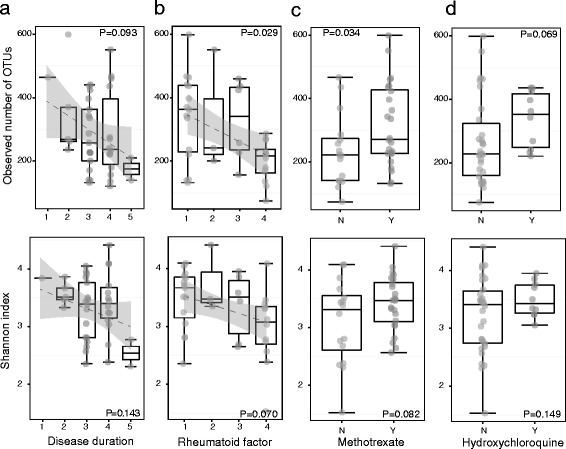
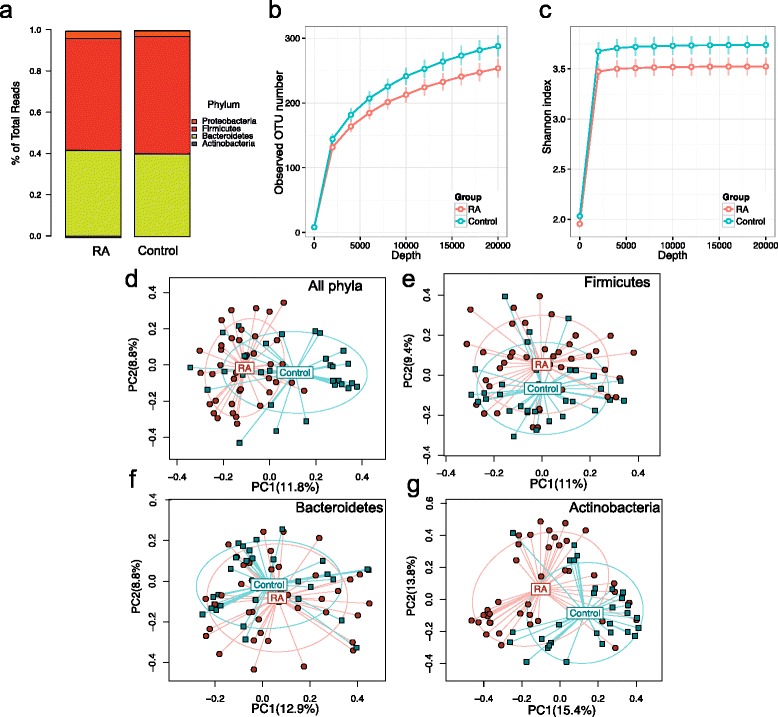
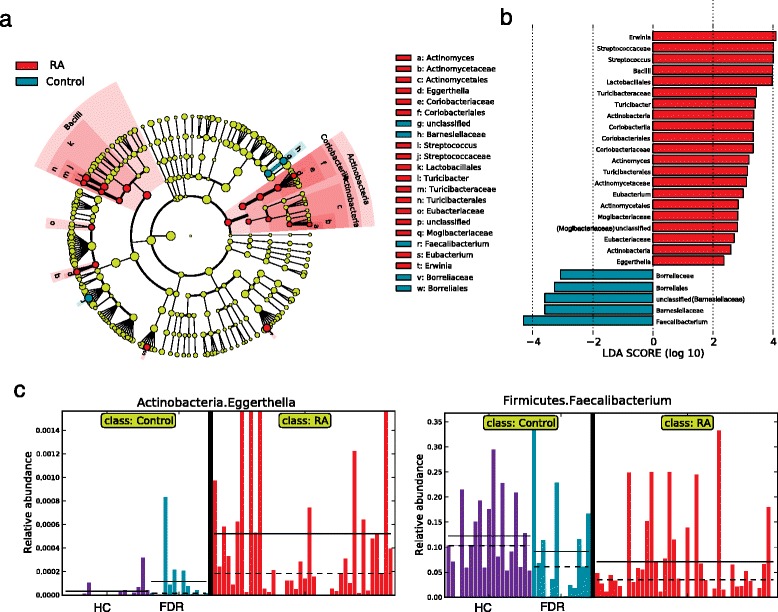
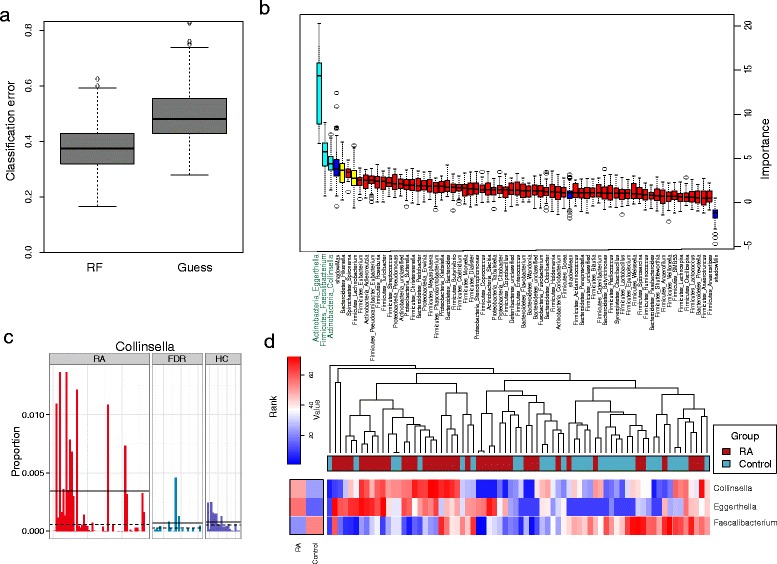
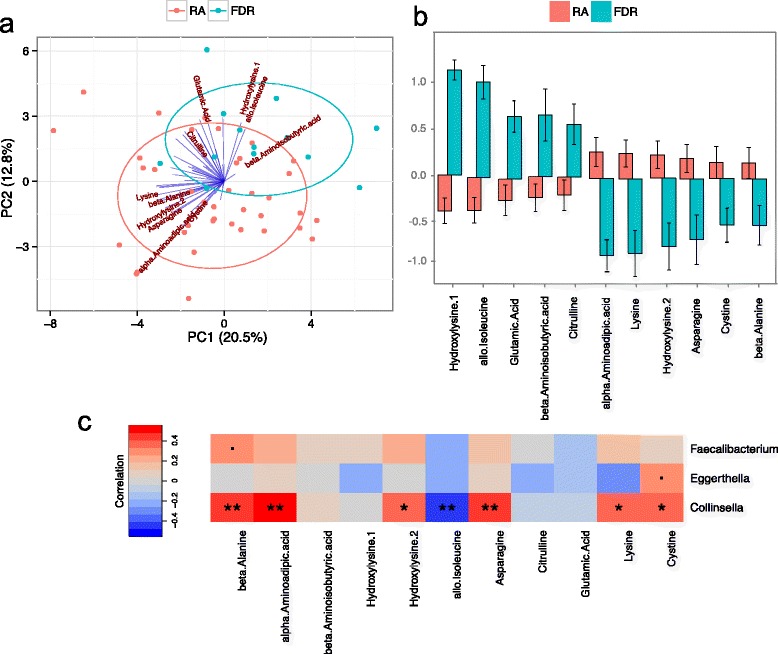
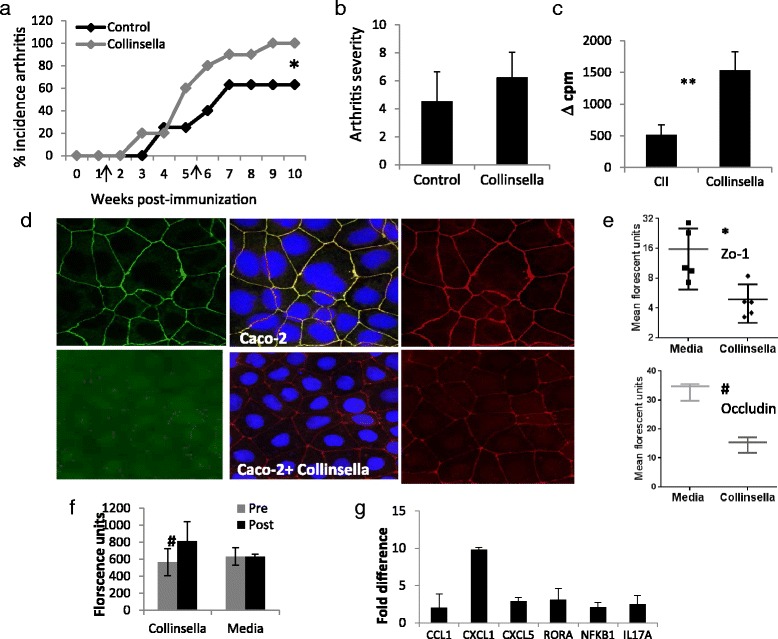
BACKGROUND: The adaptive immune response in rheumatoid arthritis (RA) is influenced by an interaction between host genetics and environment, particularly the host microbiome. Association of the gut microbiota with various diseases has been reported, though the specific components of the microbiota that affect the host response leading to disease remain unknown. However, there is limited information on the role of gut microbiota in RA. In this study we aimed to define a microbial and metabolite profile that could predict disease status. In addition, we aimed to generate a humanized model of arthritis to confirm the RA-associated microbe. METHODS: To identify an RA biomarker profile, the 16S ribosomal DNA of fecal samples from RA patients, first-degree relatives (to rule out environment/background as confounding factors), and random healthy non-RA controls were sequenced. Analysis of metabolites and their association with specific taxa was performed to investigate a potential mechanistic link. The role of an RA-associated microbe was confirmed using a human epithelial cell line and a humanized mouse model of arthritis. RESULTS: Patients with RA exhibited decreased gut microbial diversity compared with controls, which correlated with disease duration and autoantibody levels. A taxon-level analysis suggested an expansion of rare taxa, Actinobacteria, with a decrease in abundant taxa in patients with RA compared with controls. Prediction models based on the random forests algorithm suggested that three genera, Collinsella, Eggerthella, and Faecalibacterium, segregated with RA. The abundance of Collinsella correlated strongly with high levels of alpha-aminoadipic acid and asparagine as well as production of the proinflammatory cytokine IL-17A. A role for Collinsella in altering gut permeability and disease severity was confirmed in experimental arthritis. CONCLUSIONS: These observations suggest dysbiosis in RA patients resulting from the abundance of certain rare bacterial lineages. A correlation between the intestinal microbiota and metabolic signatures could determine a predictive profile for disease causation and progression.
Overview
The claims and statistics of this paper haven’t been checked yet.
Free: it reads the open-access text and checks the first 5 claims that cite a source we can check. Create a free account to check every claim.
Integrity signals
Registry
Cites
Statistics
Figures
Verification
Claims the paper makes
The claims and statistics of this paper haven’t been checked yet.
Free: it reads the open-access text and checks the first 5 claims that cite a source we can check. Create a free account to check every claim.
Claims other papers make about this one
Each is checked against this paper’s own text: does it say what the citing paper says it does?
The source backs part of the claim, not all of it — or backs it for a different population, condition or comparison.
In the citing paper
“Another study identified a strong link between three rare genera (Collinsella, Eggerthella and Faecalibacterium) and RA”
From Interaction between microbiota and immunity in health and disease (2020) · cites this paper as [171]
Experimental — accuracy not yet measuredThe cited source says what the claim attributes to it.
In the citing paper
“among which Collinsella is associated with proinflammatory IL-17A production.171”
From Interaction between microbiota and immunity in health and disease (2020) · cites this paper as [171]
Self-check
Percentages, sums and reported differences re-computed from the paper’s own numbers.
The self-check needs the paper’s full text.
Citations
Cites
Breiman, L. (2001) · Machine Learning · doi:10.1023/a:1010933404324 · Cited by 133,538
Metagenomic biomarker discovery and explanation
Segata, N., Izard, J., Waldron, L., Gevers, D., Miropolsky, L., Garrett, W. S., & Huttenhower, C. (2011) · Genome Biology · doi:10.1186/gb-2011-12-6-r60 · Cited by 16,192 · cited 1×
“Using LFfSe analysis [26], we observed 26 differentially abundant taxa at different taxonomic levels.”
MethodPredictive functional profiling of microbial communities using 16S rRNA marker gene sequences
Langille, M. G. I., Zaneveld, J., Caporaso, J. G., McDonald, D., Knights, D., Reyes, J. A., Clemente, J. C., Burkepile, D. E., Vega Thurber, R. L., Knight, R., et al. (2013) · Nature Biotechnology · doi:10.1038/nbt.2676 · Cited by 9,116
A core gut microbiome in obese and lean twins
Turnbaugh, P. J., Hamady, M., Yatsunenko, T., Cantarel, B. L., Duncan, A., Ley, R. E., Sogin, M. L., Jones, W. J., Roe, B. A., Affourtit, J. P., et al. (2009) · Nature · doi:10.1038/nature07540 · Cited by 7,823 · cited 1×
“RA [8, 9], diabetes, and obesity [11, 12].”
Enterotypes of the human gut microbiome
MetaHIT Consortium (additional members), Arumugam, M., Raes, J., Pelletier, E., Le Paslier, D., Yamada, T., Mende, D. R., Fernandes, G. R., Tap, J., Bruls, T., et al. (2011) · Nature · doi:10.1038/nature09944 · Cited by 7,548 · cited 1×
“The Human Microbiome Project and other studies have documented the diversity of the gut microbiome in healthy individuals and gut-related diseases [16–19].”
BackgroundTurnbaugh, P. J., Ley, R. E., Hamady, M., Fraser-Liggett, C. M., Knight, R., & Gordon, J. I. (2007) · Nature · doi:10.1038/nature06244 · Cited by 6,091 · cited 1×
“The Human Microbiome Project and other studies have documented the diversity of the gut microbiome in healthy individuals and gut-related diseases [16–19].”
BackgroundFeature Selection with the Boruta Package
Kursa, M. B., & Rudnicki, W. R. (2010) · Journal of Statistical Software · doi:10.18637/jss.v036.i11 · Cited by 5,659 · cited 1×
“We next applied Boruta feature selection, which is a feature selection method built around random forests and selects features that have significantly more discriminatory power than random permuted features [29].”
MethodDysfunction of the intestinal microbiome in inflammatory bowel disease and treatment
Morgan, X. C., Tickle, T. L., Sokol, H., Gevers, D., Devaney, K. L., Ward, D. V., Reyes, J. A., Shah, S. A., LeLeiko, N., Snapper, S. B., et al. (2012) · Genome Biology · doi:10.1186/gb-2012-13-9-r79 · Cited by 2,713 · cited 1×
“The Human Microbiome Project and other studies have documented the diversity of the gut microbiome in healthy individuals and gut-related diseases [16–19].”
BackgroundExpansion of intestinal Prevotella copri correlates with enhanced susceptibility to arthritis
Scher, J. U., Sczesnak, A., Longman, R. S., Segata, N., Ubeda, C., Bielski, C., Rostron, T., Cerundolo, V., Pamer, E. G., Abramson, S. B., et al. (2013) · eLife · doi:10.7554/elife.01202 · Cited by 2,047
Nielen, M. M. J., van Schaardenburg, D., Reesink, H. W., van de Stadt, R. J., van der Horst‐Bruinsma, I. E., de Koning, M. H. M. T., Habibuw, M. R., Vandenbroucke, J. P., & Dijkmans, B. A. C. (2004) · Arthritis & Rheumatism · doi:10.1002/art.20018 · Cited by 1,861 · cited 1×
“Autoreactive T-cell responses and auto-antibody production leading up to the onset of RA occur much earlier than the clinical presentation of RA [34].”
Background
Cited by
Items 201–300 of 864
Elolimy, A. A., Alharthi, A. S., Zeineldin, M. M., Parys, C., Helmbrecht, A., & Loor, J. J. (2019) · Frontiers in Microbiology · doi:10.3389/fmicb.2019.02159 · Cited by 72
D’Amico, F., Perrone, A. M., Rampelli, S., Coluccelli, S., Barone, M., Ravegnini, G., Fabbrini, M., Brigidi, P., Iaco, P. D., & Turroni, S. (2021) · Cancers · doi:10.3390/cancers13163999 · Cited by 67
“As for the latter, it was recently associated with metabolic disorders [47,48] and suggested to play a role in altering intestinal permeability, contributing to a pro-inflammatory state through increased production of chemokines and IL-17A, even in other pathological contexts, such as rheumatoid arthritis [49].”
BackgroundThompson, K. N., Bonham, K. S., Ilott, N. E., Britton, G. J., Colmenero, P., Bullers, S. J., McIver, L. J., Ma, S., Nguyen, L. H., Filer, A. D., et al. (2023) · Science Translational Medicine · doi:10.1126/scitranslmed.abn4722 · Cited by 59
Microbiome bacterial influencers of host immunity and response to immunotherapy
Yousefi, Y., Baines, K. J., & Vareki, S. M. (2024) · Cell Reports Medicine · doi:10.1016/j.xcrm.2024.101487 · Cited by 71
“134 The integrity of the intestinal barrier is crucial, and its impairment is linked to the development of cancer.”
BackgroundMa, F., Li, Z., Liu, H., Chen, S., Zheng, S., Zhu, J., Shi, H., Ye, H., Qiu, Z., Gao, L., et al. (2024) · Cell Metabolism · doi:10.1016/j.cmet.2024.08.007 · Cited by 66
Role of the intestinal microbiome in autoimmune diseases and its use in treatments
Marietta, E. V., Horwath, I. E., Balakrishnan, B., & Taneja, V. (2018) · Cellular Immunology · doi:10.1016/j.cellimm.2018.10.005 · Cited by 59
Self-citationEtiologies of Rheumatoid Arthritis: Update on Mucosal, Genetic, and Cellular Pathogenesis
Kronzer, V. L., & Davis, J. M. (2021) · Current Rheumatology Reports · doi:10.1007/s11926-021-00993-0 · Cited by 59
Self-citationExploring the Gut Microbiome in Myasthenia Gravis
Thye, A. Y.-K., Law, J. W., Tan, L. T., Thurairajasingam, S., Chan, K., Letchumanan, V., & Lee, L. (2022) · Nutrients · doi:10.3390/nu14081647 · Cited by 69
The Microbiome: a Revolution in Treatment for Rheumatic Diseases?
Rosenbaum, J. T., & Asquith, M. J. (2016) · Current Rheumatology Reports · doi:10.1007/s11926-016-0614-8 · Cited by 62
Shan, J., Peng, L., Qian, W., Xie, T., An, K., Gao, B., & Di, L. (2018) · Frontiers in Pharmacology · doi:10.3389/fphar.2018.00891 · Cited by 57
“This finding contributed to a better understanding of this complex disease (Cai et al., 2012; Gomez et al., 2012; Li et al., 2015a; Chen et al., 2016).”
BackgroundMucosa–Environment Interactions in the Pathogenesis of Rheumatoid Arthritis
Lucchino, B., Spinelli, F. R., Iannuccelli, C., Guzzo, M. P., Conti, F., & Franco, M. D. (2019) · Cells · doi:10.3390/cells8070700 · Cited by 64
Changes of Intestinal Microbiota in Ovarian Cancer Patients Treated with Surgery and Chemotherapy
Tong, J., Zhang, X., Fan, Y., Chen, L., Ma, X., Yu, H., Li, J., Guan, X., Zhao, P., & Yang, J. (2020) · Cancer Management and Research · doi:10.2147/cmar.s265205 · Cited by 57
Margiotta, E., Caldiroli, L., Callegari, M. L., Miragoli, F., Zanoni, F., Armelloni, S., Rizzo, V., Messa, P., & Vettoretti, S. (2021) · Toxins · doi:10.3390/toxins13070472 · Cited by 65
“Furthermore Blautia has been previously found to be associated with trimethylamineN-oxide (TMAO) [49] and PCs [50].”
BackgroundZeng, L., Deng, Y., He, Q., Yang, K., Li, J., Wang, X., Liu, H., Zhu, X., & Chen, H. (2022) · Frontiers in Immunology · doi:10.3389/fimmu.2022.961325 · Cited by 69
Microbiota and chronic inflammatory arthritis: an interwoven link
Diamanti, A. P., Rosado, M. M., Laganà, B., & D’Amelio, R. (2016) · Journal of Translational Medicine · doi:10.1186/s12967-016-0989-3 · Cited by 63
“In fact, analysis of the 16S ribosomal DNA of fecal samples from RA patients showed the expansion of rare taxa that allowed authors to develop a prediction model identifying three genera, Collinsella, Eggerthella, and Faecalibacterium segregated with RA disease [44].”
BackgroundRodrigues, G. S. P., Cayres, L. C. D. F., Gonçalves, F. J., Takaoka, N. N. C., Lengert, A. V. H., Tansini, A., Brisotti, J. L., Sasdelli, C. B. G., & de Oliveira, G. L. V. (2019) · Microorganisms · doi:10.3390/microorganisms7100413 · Cited by 56
“The Eggerthella and Collinsella abuncances were not associated with MTX, prednisone, and hydroxychloroquine [18].”
BackgroundInfluentialSuskun, C., Kılıç, Ö., Çiftdoğan, D. Y., Güven, Ş., Karbuz, A., Parlakay, A. Ö., Kara, Y., Kaçmaz, E., Şahin, A., Boğa, A., et al. (2022) · European Journal of Pediatrics · doi:10.1007/s00431-022-04494-9 · Cited by 56
Role of Intestinal Microbiota on Gut Homeostasis and Rheumatoid Arthritis
Li, M., & Wang, F. (2021) · Journal of Immunology Research · doi:10.1155/2021/8167283 · Cited by 64
“,Collinsella aerofaciens) have exacerbated arthritis in murine models [57].”
BackgroundInfluentialSynthetic gut microbiome: Advances and challenges
Mabwi, H. A., Kim, E., Song, D., Yoon, H. S., Pan, C., Komba, E. V. G., Ko, G., & Cha, K. H. (2020) · Computational and Structural Biotechnology Journal · doi:10.1016/j.csbj.2020.12.029 · Cited by 59
“Moreover, for customisation and specialisation of the synthetic microbiome, some disease-related or age-related gut microbes may be included to establish a personalised synthetic gut ecosystem [40,41].”
BackgroundBorder Control: The Role of the Microbiome in Regulating Epithelial Barrier Function
Schreiber, F., Balas, I., Robinson, M. J., & Bakdash, G. (2024) · Cells · doi:10.3390/cells13060477 · Cited by 58
“Collinsella aerofaciens that has been reported to reduce the expression of the tight junction proteins ZO-1 and occludin in the Caco-2 cell line and increase disease severity in collagen-induced arthritis-susceptible HLA-DQ8 mice [113].”
Microbial modulation of the gut microbiome for treating autoimmune diseases
Balakrishnan, B., & Taneja, V. (2018) · Expert Review of Gastroenterology & Hepatology · doi:10.1080/17474124.2018.1517044 · Cited by 57
Self-citationAutoimmune Hepatitis: Shifts in Gut Microbiota and Metabolic Pathways among Egyptian Patients
Elsherbiny, N. M., ramadan, M., Hassan, E. A., Ali, M. E., El‐Rehim, A. S. E. A., Abbas, W. A., Abozaid, M. A. A., Hassanin, E. S. A., & Hetta, H. F. (2020) · Microorganisms · doi:10.3390/microorganisms8071011 · Cited by 56
“Interestingly, an obvious lowering in microbial diversity was observed in many autoimmune diseases such as type I diabetes [22], rheumatoid arthritis [23] and inflammatory bowel disease [24].”
BackgroundAlterations of Gut Microbiota in Patients With Graves’ Disease
Chang, S., Lin, S., Chen, S., Chang, P.-Y., Yeh, Y., Lo, F., & Lu, J. (2021) · Frontiers in Cellular and Infection Microbiology · doi:10.3389/fcimb.2021.663131 · Cited by 54
Role of Intestinal Dysbiosis and Nutrition in Rheumatoid Arthritis
Attur, M., Scher, J. U., Abramson, S. B., & Attur, M. G. (2022) · Cells · doi:10.3390/cells11152436 · Cited by 57
Gastrointestinal disorders in Parkinson’s disease and other Lewy body diseases
Hirayama, M., Nishiwaki, H., Hamaguchi, T., & Ohno, K. (2023) · npj Parkinson's Disease · doi:10.1038/s41531-023-00511-2 · Cited by 66
“The increased abundance of Ruminococcus torques and Collinsella are likely to cause abnormal intestinal permeability 84,85 .”
Impact of the gut microbiota on immune checkpoint inhibitor-associated toxicities
Pezo, R. C., Wong, M., & Martin, A. (2019) · Therapeutic Advances in Gastroenterology · doi:10.1177/1756284819870911 · Cited by 55
Molecular Characterization of Circulating Microbiome Signatures in Rheumatoid Arthritis
Hammad, D. B. M., Hider, S., Liyanapathirana, V. C., & Tonge, D. P. (2020) · Frontiers in Cellular and Infection Microbiology · doi:10.3389/fcimb.2019.00440 · Cited by 55
“RA has been associated with dysbiosis of the gastrointestinal tract (Taneja, 2014; Zhang et al., 2015; Chen et al., 2016; Liu et al., 2016; Horta-Baas et al., 2017; Wu et al., 2017; du Teil Espina et al., 2018; PicchiantiDiamanti et al., 2018; Wang and Xu, 2019), oral cavity (Zhang et al.”
BackgroundThe Role of Medicinal and Aromatic Plants against Obesity and Arthritis: A Review
Paul, A. K., Jahan, R., Paul, A., Mahboob, T., Bondhon, T. A., Jannat, K., Hasan, A., Nissapatorn, V., Wilairatana, P., Pereira, M. D. L., et al. (2022) · Nutrients · doi:10.3390/nu14050985 · Cited by 58
“decreases, other opportunistic bacteria such as Collinsella, Eggerthella, Haemophilus, Prevotella, and Streptococcus can grow and produce inflammatory cytokines and/or cause citrullination of proteins, leading to RA [90,92].”
BackgroundJeong, Y., Jhun, J., Lee, S.-Y., Na, H. S., Choi, J., Cho, K.-H., Lee, S. Y., Lee, A. R., Park, S.-J., You, H. J., et al. (2021) · Frontiers in Immunology · doi:10.3389/fimmu.2021.736196 · Cited by 53
“reported that the relative abundance of Collinsella aerofaciens is higher in RA patients (35).”
BackgroundRelationship between gut microbiota and rheumatoid arthritis: A bibliometric analysis
Dong, Y., Yao, J., Deng, Q., Li, X., He, Y., Ren, X., Zheng, Y., Song, R., Zhong, X., Ma, J., et al. (2023) · Frontiers in Immunology · doi:10.3389/fimmu.2023.1131933 · Cited by 55
“can cross the damaged intestinal barrier and migrate to the tissues, triggering autoimmune inflammation and then increasing the risk of RA (11, 18).”
BackgroundNeri-Rosario, D., Martínez-López, Y. E., Esquivel-Hernandez, D. A., Sánchez-Castañeda, J. P., Padrón-Manrique, C., Vázquez-Jiménez, A., Giron-Villalobos, D., & Reséndis-Antonio, O. (2023) · Frontiers in Endocrinology · doi:10.3389/fendo.2023.1170459 · Cited by 57
Villanueva‐Romero, R., Gutiérrez‐Cañas, I., Carrión, M., Pérez‐García, S., Seoane, I. V., Martínez, C., Gomariz, R. P., & Juarranz, Y. (2018) · Journal of Immunology Research · doi:10.1155/2018/6043710 · Cited by 50
“Specifically, it has been found a decreased diversity of abundant commensal taxa such as Bifidobacteria and Bacteroides species [64], parallel to an expansion ofMycoplasma fermentans, Proteus mirabilis [65], and rare taxa such as Actinobacteria (Collinsella, Eggerthella) [66].”
BackgroundAutoimmunity-Associated Gut Commensals Modulate Gut Permeability and Immunity in Humanized Mice
Balakrishnan, B., Luckey, D. H., & Taneja, V. (2019) · Military Medicine · doi:10.1093/milmed/usy309 · Cited by 50
Self-citationMaternal diet and gut microbiome composition modulate early‐life immune development
Grant, E. T., Boudaud, M., Muller, A., Macpherson, A. J., & Desai, M. S. (2023) · EMBO Molecular Medicine · doi:10.15252/emmm.202217241 · Cited by 51
Moentadj, R., Wang, Y., Bowerman, K. L., Rehaume, L. M., Nel, H. J., Cuív, P. Ó., Stephens, J. E., Baharom, A., Maradana, M. R., Lakis, V., et al. (2021) · Annals of the Rheumatic Diseases · doi:10.1136/annrheumdis-2020-219009 · Cited by 50
Gut microbiota changes in patients with spondyloarthritis: A systematic review
Wang, L., Wang, Y., Zhang, P., Song, C., Pan, F., Li, G., Peng, L., Yang, Y., Wei, Z., & Huang, F. (2021) · Seminars in Arthritis and Rheumatism · doi:10.1016/j.semarthrit.2021.11.002 · Cited by 52
Gut microbiota in systemic lupus erythematosus: A fuse and a solution
Chen, Y., Lin, J., Xiao, L., Zhang, X., Zhao, L., Wang, M., & Li, L. (2022) · Journal of Autoimmunity · doi:10.1016/j.jaut.2022.102867 · Cited by 56
Dong, X., Guthrie, B. G. H., Alexander, M., Noecker, C. A., Ramirez, L., Glasser, N. R., Turnbaugh, P. J., & Balskus, E. P. (2022) · Nature Communications · doi:10.1038/s41467-022-33576-3 · Cited by 52
The Effects of Unfermented and Fermented Cow and Sheep Milk on the Gut Microbiota
Rettedal, E. A., Altermann, E., Roy, N. C., & Dalziel, J. E. (2019) · Frontiers in Microbiology · doi:10.3389/fmicb.2019.00458 · Cited by 51
“Increased Collinsella abundance has been associated with both positive and negative health conditions (Malinen et al., 2010; Joossens et al., 2011; Lambeth et al., 2015; Chen et al., 2016), but there is really no consensus of its health effects.”
BackgroundLeite, F., Singer, R. S., Ward, T., Gebhart, C. J., & Isaacson, R. E. (2018) · Scientific Reports · doi:10.1038/s41598-018-21255-7 · Cited by 53
Cai, W., Chen, X., Men, X., Ruan, H., Hu, M., Liu, S., Lü, T., Liao, J., Zhang, B., Lu, D., et al. (2021) · Science Advances · doi:10.1126/sciadv.abe4827 · Cited by 48
Amin, N., Schwarzkopf, S., Tröscher-Mußotter, J., Camarinha‐Silva, A., Dänicke, S., Huber, K., Frahm, J., & Seifert, J. (2023) · Animal Microbiome · doi:10.1186/s42523-023-00233-z · Cited by 53
“This bacterial genus reduces the expression of tight junctions and increases intestinal permeability, resulting in gut leakage and pro-inflammatory dysbiosis [41, 42].”
BackgroundKoh, J. H., Lee, E. H., Cha, K. H., Pan, C., Kim, D.-H., & Kim, W. (2023) · Arthritis Research & Therapy · doi:10.1186/s13075-023-03013-x · Cited by 53
“Discussion Since the beginning of this century, it has been known that the gut microbial composition of RA patients differs from that of healthy individuals [6, 7, 19, 34].”
BackgroundResultInfluentialThe role of the microbiome in rheumatoid arthritis: a review
Tsetseri, M.-N., Silman, A. J., Keene, D. J., & Dakin, S. G. (2023) · Rheumatology Advances in Practice · doi:10.1093/rap/rkad034 · Cited by 57
“Several other bacterial genera have also been associated with human RA, including Collinsella [40, 38, 42, 46], Lactobacillus [43, 45, 49], Eggerthella [44, 46, 47] and Actinomyces [44, 46].”
BackgroundResultFrom Cells to Environment: Exploring the Interplay between Factors Shaping Bone Health and Disease
Singh, S., Sarma, D. K., Verma, V., Nagpal, R., & Kumar, M. (2023) · Medicina · doi:10.3390/medicina59091546 · Cited by 57
Balakrishnan, B., Luckey, D. H., Wright, K., Davis, J. M., Chen, J., & Taneja, V. (2023) · Science Advances · doi:10.1126/sciadv.adg1129 · Cited by 48
“The patient data collected and analyzed previously were reanalyzed for sex differences in autoantibody profiles ( 3 ).”
InfluentialSelf-citationMicrobe-metabolite-host axis, two-way action in the pathogenesis and treatment of human autoimmunity
Meng, X. L., Zhou, H., Shen, H., Lufumpa, E., Li, X., Guo, B., & Li, B. (2019) · Autoimmunity Reviews · doi:10.1016/j.autrev.2019.03.006 · Cited by 47
Role of the microbiome in regulation of the immune system
Kim, S., Ndwandwe, C., Devotta, H., Kareem, L., Yao, L., & O’Mahony, L. (2025) · Allergology International · doi:10.1016/j.alit.2024.12.006 · Cited by 62
The prophylactic effects of different Lactobacilli on collagen-induced arthritis in rats
Fan, Z., Yang, B. K., Ross, R. P., Stanton, C., Zhao, J., Zhang, H., & Chen, W. (2020) · Food & Function · doi:10.1039/c9fo02556a · Cited by 46
Li, B., Ding, M., Liu, X., Zhao, J., Ross, R. P., Stanton, C., Yang, B. K., & Chen, W. (2022) · Journal of Agricultural and Food Chemistry · doi:10.1021/acs.jafc.2c04602 · Cited by 44
Pathogenesis of rheumatoid arthritis and its treatment with anti-inflammatory natural products
Sharma, A., & Goel, A. (2023) · Molecular Biology Reports · doi:10.1007/s11033-023-08406-4 · Cited by 53
“Furthermore, structural and functional changes in the intestinal microbiome have been linked to disease, with patients having less diversity in the gut microbiome than healthy people [21].”
BackgroundVolkova, A., & Ruggles, K. V. (2021) · Frontiers in Microbiology · doi:10.3389/fmicb.2021.621310 · Cited by 48
Hur, B., Gupta, V. K., Huang, H., Wright, K., Warrington, K. J., Taneja, V., Davis, J. M., & Sung, J. (2021) · Arthritis Research & Therapy · doi:10.1186/s13075-021-02537-4 · Cited by 48
“[73]—may help elucidate a microbial-based mechanism explaining the observed alterations in plasma glucuronate.”
BackgroundSelf-citationLi, Y., Liu, C., Luo, J., Zeng, Y., Meng, X., Wang, S., & Zhang, Y. (2022) · Phytomedicine · doi:10.1016/j.phymed.2022.154462 · Cited by 42
Iadsee, N., Chuaypen, N., Techawiwattanaboon, T., Jinato, T., Patcharatrakul, T., Malakorn, S., Petchlorlian, A., Praditpornsilpa, K., & Patarakul, K. (2023) · Scientific Reports · doi:10.1038/s41598-023-33794-9 · Cited by 51
“Collinsella was shown to have a role in elevating gut barrier permeability and inducing the production of proinflammatory IL–17 in patients with rheumatoid arthritis 34 .”
Shared and Distinct Gut Microbiota in Spondyloarthritis, Acute Anterior Uveitis, and Crohn's Disease
Essex, M., Rodríguez, V. R., Rademacher, J., Proft, F. N., Löber, U., Markó, L., Pleyer, U., Strowig, T., Marchand, J., Kirwan, J., et al. (2023) · Arthritis & Rheumatology · doi:10.1002/art.42658 · Cited by 48
“For example, our patients with SpA exhibited higher abundances of Collinsella — in line with previous results (49,50) — a genus that has elsewhere been shown to reduce the expression of enterocyte tight junction proteins in vitro (potentially contributing to gut leakage in vivo), as well as…”
ResultNegi, S., Singh, H., & Mukhopadhyay, A. (2017) · PLOS ONE · doi:10.1371/journal.pone.0180518 · Cited by 42
The Airway Microbiome-IL-17 Axis: a Critical Regulator of Chronic Inflammatory Disease
Mannion, J. M., McLoughlin, R. M., & Lalor, S. J. (2022) · Clinical Reviews in Allergy & Immunology · doi:10.1007/s12016-022-08928-y · Cited by 43
Roszyk, E., & Puszczewicz, M. (2017) · Reumatologia/Rheumatology · doi:10.5114/reum.2017.71641 · Cited by 44
“In vitro Collinsella aerofaciens causes reduction in the expression of tight junction proteins and induces IL-17 expression [24].”
BackgroundMicrobiome, Immunomodulation, and the Neuronal System
Marietta, E. V., Horwath, I. E., & Taneja, V. (2018) · Neurotherapeutics · doi:10.1007/s13311-017-0601-4 · Cited by 49
Self-citationHaro, C., Villatoro, M., Vaquero, L. M., Pastor, J., Giménez, M. J., Ozuna, C. V., Sánchez‐León, S., García-Molina, M. D., Segura, V., Comino, I., et al. (2018) · Nutrients · doi:10.3390/nu10121964 · Cited by 48
Kraeuter, A.-K., Phillips, R., & Sarnyai, Z. (2020) · Frontiers in Psychiatry · doi:10.3389/fpsyt.2020.00799 · Cited by 47
Relationship between intestinal microbiota, diet and biological systems: an integrated view
Ferreira, R. D. S., Mendonça, L. A. B. M., Ribeiro, C. F. A., Calças, N. C., Guimarães, R. D. C. A., do Nascimento, V. A., Freitas, K. D. C., Carvalho, C. M. E., de Castro, A. P., & Franco, O. L. (2020) · Critical Reviews in Food Science and Nutrition · doi:10.1080/10408398.2020.1836605 · Cited by 50
“…by the increase of Clostridium perfringens (Olhagen and Månsson 1968), as well as the bacteria Collinsella aerofaciens, Eggerthella, Enterococci, Clostridium, Colibacteria and Prevotella copri, from the reduction of Lactobacteria and Faecalibacterium (Gul’neva and Noskov 2011; Chen et al. 2016).”
BackgroundLi, J., Cao, Y., Lu, R., Li, H., Pang, Y., Fu, H., Fang, G., Chen, Q., Liu, B., Wu, J., et al. (2021) · Frontiers in Pharmacology · doi:10.3389/fphar.2020.606689 · Cited by 48
Zhu, J., Wang, T., Lin, Y., Xiong, M., Chen, J., Jian, C., Zhang, J., Xie, H., Zeng, F., Huang, Q., et al. (2022) · Frontiers in Microbiology · doi:10.3389/fmicb.2022.931431 · Cited by 49
“The role of gut microbiota in the pathogenesis of arthritis was demonstrated in experimental murine models (Chen et al., 2016; Liu et al., 2016; Wang et al., 2020a).”
BackgroundSelf-citationNoecker, C. A., Sánchez, J. M., Bisanz, J. E., Escalante, V., Alexander, M., Trepka, K. R., Heinken, A., Liu, Y., Dodd, D., Thiele, I., et al. (2023) · PLoS Biology · doi:10.1371/journal.pbio.3002125 · Cited by 50
Ethnic variability associating gut and oral microbiome with obesity in children
Balakrishnan, B., Selvaraju, V., Chen, J., Ayine, P., Yang, L., Babu, J. R., Geetha, T., & Taneja, V. (2021) · Gut Microbes · doi:10.1080/19490976.2021.1882926 · Cited by 50
“High BMI has been associated with a decrease in gut microbial diversity.(15) The obesity-associated gut microbiome can lead to altered colonic gene expression, suggesting an interaction between gene-environmental factors and obesity, as well as other diseases.”
BackgroundSelf-citationThe Role of the Microbiome in Driving RA-Related Autoimmunity
Rooney, C. M., Mankia, K. S., & Emery, P. (2020) · Frontiers in Cell and Developmental Biology · doi:10.3389/fcell.2020.538130 · Cited by 47
“Autoimmune disorders are a primary group of disorders hypothesized to be triggered by interactions of the microbiome and the host (Chervonsky, 2013).”
BackgroundRheumatoid arthritis and the intestinal microbiome: probiotics as a potential therapy
Yang, Y., Hong, Q., Zhang, X., & Liu, Z. (2024) · Frontiers in Immunology · doi:10.3389/fimmu.2024.1331486 · Cited by 54
Gut Microbiota Modulation: A Novel Strategy for Rheumatoid Arthritis Therapy
Chasov, V. V., Gilyazova, E., Ganeeva, I., Zmievskaya, E., Davletshin, D., Valiullina, A., & Bulatov, E. (2024) · Biomolecules · doi:10.3390/biom14121653 · Cited by 44
“Changes in intestinal permeability were determined using 4-KDa FITC-labelled dextran, and Collinsella was found to increase intestinal permeability by reducing the expression of tight junction protein ZO-1 in epithelial cells in a mouse model [48].”
InfluentialAltered gut microbiota in RA: implications for treatment
Kang, Y., Cai, Y., Zhang, X., Kong, X., & Su, J. (2016) · Zeitschrift für Rheumatologie · doi:10.1007/s00393-016-0237-5 · Cited by 42
Kramer, C. D., Simas, A. M., He, X., Ingalls, R. R., Weinberg, E. O., & Genco, C. A. (2017) · Anaerobe · doi:10.1016/j.anaerobe.2017.04.011 · Cited by 43
Microbiota and metabolites in rheumatic diseases
Tong, Y., Marion, T. N., Schett, G. A., Luo, Y., & Liu, Y. (2020) · Autoimmunity Reviews · doi:10.1016/j.autrev.2020.102530 · Cited by 43
B Cells and Microbiota in Autoimmunity
Botía-Sánchez, M., Alarcón-Riquelme, M. E., & Galicia, G. (2021) · International Journal of Molecular Sciences · doi:10.3390/ijms22094846 · Cited by 40
Li, Y., Yang, Y., Wang, J., Cai, P., Li, M., Tang, X., Tan, Y. C., Wang, Y., Zhang, F., Wen, X., et al. (2022) · Cellular and Molecular Immunology · doi:10.1038/s41423-022-00871-4 · Cited by 42
Microbiota — an amplifier of autoimmunity
Vogelzang, A., Guerrini, M. M., Minato, N., & Fagarasan, S. (2018) · Current Opinion in Immunology · doi:10.1016/j.coi.2018.09.003 · Cited by 41
Marazzato, M., Iannuccelli, C., Guzzo, M. P., Nencioni, L., Lucchino, B., Radocchia, G., Gioia, C., Bonfiglio, G., Neroni, B., Guerrieri, F., et al. (2022) · Frontiers in Medicine · doi:10.3389/fmed.2022.921675 · Cited by 43
Roles of Gut Microbiome in Bone Homeostasis and Its Relationship with Bone-Related Diseases
Zemanová, N., Omelka, R., Mondočková, V., Kováčová, V., & Martiniaková, M. (2022) · Biology · doi:10.3390/biology11101402 · Cited by 46
Huang, H., Liu, C., Sun, X., Wei, R., Liu, L., Chen, H.-Y., Abdugheni, R., Wang, C., Wang, X., Jiang, H., et al. (2024) · iMeta · doi:10.1002/imt2.242 · Cited by 43
Ke, P.-F., Xiong, D.-S., Li, J.-H., Pan, Z.-L., Zhou, J., Li, S.-J., Song, J., Chen, X.-Y., Li, G.-X., Chen, J., et al. (2021) · Scientific Reports · doi:10.1038/s41598-021-94007-9 · Cited by 38
Self-citationMechanism‐driven strategies for prevention of rheumatoid arthritis
Holers, V. M., Kuhn, K. A., Demoruelle, M. K., Norris, J. M., Firestein, G. S., James, E. A., Robinson, W. H., Buckner, J. H., & Deane, K. D. (2022) · Rheumatology & autoimmunity · doi:10.1002/rai2.12043 · Cited by 40
“In another study, expansion of rare Collinsella genera was reported to correlate with the production of interleukin‐17A (IL‐17A), and this strain altered gut permeability and increased disease severity in experimental arthritis.(50) Finally, studies of the lung microbiome have identified in the bronchoalveolar lavage…”
ResultZhou, C., Gong, S.-Z., Xiang, S., Liang, L., Hu, X., Huang, R., Liao, Z., Ma, Y., Xiao, Z., & Qiu, J. (2022) · Frontiers in Cellular and Infection Microbiology · doi:10.3389/fcimb.2022.965471 · Cited by 37
“The inter-seizure IL-17A levels were positively correlated with the frequency and severity of seizures (Mao et al., 2013; Chen et al., 2016).”
BackgroundInfluence of immunomodulatory drugs on the gut microbiota
Cohen, I., Ruff, W. E., & Longbrake, E. E. (2021) · Translational research · doi:10.1016/j.trsl.2021.01.009 · Cited by 39
Berryman, M. A., Ilonen, J., Triplett, E. W., & Ludvigsson, J. (2023) · Frontiers in Immunology · doi:10.3389/fimmu.2023.1270488 · Cited by 48
Human Microbiome as an Immunoregulatory Axis: Mechanisms, Dysbiosis, and Therapeutic Modulation
Cortes, M., Olate, P., Rodríguez, R., Díaz, R., Martínez, A., Hernández, G., Sepúlveda, N., Paz, E. A., & Quiñones, J. (2025) · Microorganisms · doi:10.3390/microorganisms13092147 · Cited by 55
“…colorectal cancer, enables early intervention and personalized therapeutic strategies, particularly in oncology and immunotherapy [159,165,166], while early microbial colonization influenced by delivery mode, breastfeeding, and antibiotic exposure significantly shapes immune development [84,133].”
Intestinal Dysbiosis in, and Enteral Bacterial Therapies for, Systemic Autoimmune Diseases
Marietta, E. V., Mangalam, A. K., Taneja, V., & Murray, J. A. (2020) · Frontiers in Immunology · doi:10.3389/fimmu.2020.573079 · Cited by 38
Self-citationMicrobial Stimulation Reverses the Age-Related Decline in M Cells in Aged Mice
Donaldson, D. S., Pollock, J., Vohra, P., Stevens, M. P., & Mabbott, N. A. (2020) · iScience · doi:10.1016/j.isci.2020.101147 · Cited by 39
Predictable and host‐species specific humanization of the gut microbiota in captive primates
Houtz, J. L., Sanders, J. G., Denice, A., & Moeller, A. H. (2021) · Molecular Ecology · doi:10.1111/mec.15994 · Cited by 40
“…in replicate captive chimpanzee populations, and overrepresentation of this genus in the gut microbiota has been associated with reduced fibre intake, insulin resistance, and rheumatoid arthritis in human populations (Chen et al., 2016; Gomez- Arango et al., 2018; Mena- Vázquez et al., 2020).”
BackgroundDecoding the Microbiome’s Influence on Rheumatoid Arthritis
Coradduzza, D., Bo, M., Congiargiu, A., Azara, E., Miglio, M. R. D., Erre, G. L., & Carru, C. (2023) · Microorganisms · doi:10.3390/microorganisms11092170 · Cited by 35
Khaledi, M., Poureslamfar, B., Alsaab, H. O., Tafaghodi, S., Hjazi, A. M., Singh, R., Alawadi, A. H., Alsaalamy, A. H., Qasim, Q. A., & Sameni, F. (2024) · Annals of Microbiology · doi:10.1186/s13213-023-01744-5 · Cited by 59
“The weaned group’s fecal microbial population undergoes considerable alterations as a result of the consumption of an amylose corn starch diet, with Prevo-tella, Veillonella, and Collinsella levels linked with propionate synthesis significantly rising (Wang et al. 2019).”
BackgroundInfluentialA Phylogeny-Regularized Sparse Regression Model for Predictive Modeling of Microbial Community Data
Xiao, J. Y., Chen, L., Yu, Y., Zhang, X., & Chen, J. (2018) · Frontiers in Microbiology · doi:10.3389/fmicb.2018.03112 · Cited by 35
“Dysbiosis of the microbiome has been observed in obesity, type II diabetes, rheumatoid arthritis and multiple sclerosis (Turnbaugh et al., 2009; Kinross et al., 2011; Honda and Littman, 2012; Pflughoeft and Versalovic, 2012; Qin et al., 2012; Chen et al., 2016; Jangi et al., 2016).”
BackgroundSelf-citationMicrobiome and autoimmune diseases: cause and effect relationship
Nogueira, A. R., & Shoenfeld, Y. (2019) · Current Opinion in Rheumatology · doi:10.1097/bor.0000000000000628 · Cited by 35
“After inoculate the mice with these bacteria, the animals developed lower levels of tight junction proteins in the gut, increased expression of interleukin-17 and a higher susceptibility to collagen-induced arthritis [10] (Fig.”
BackgroundYu, L., Duan, H., Kellingray, L., Cen, S., Tian, F., Zhao, J., Zhang, H., Gall, G. L., Mayer, M. J., Zhai, Q., et al. (2020) · Probiotics and Antimicrobial Proteins · doi:10.1007/s12602-020-09677-0 · Cited by 38
“correlated strongly with the production of the proinflammatory cytokine IL-17A and chemokines [53].”
BackgroundMontero, B. K., Wasimuddin, Schwensow, N., Gillingham, M. A. F., Ratovonamana, Y. R., Rakotondranary, S. J., Corman, V. M., Drosten, C., Ganzhorn, J. U., & Sommer, S. (2021) · PLoS Pathogens · doi:10.1371/journal.ppat.1009675 · Cited by 39
Translating Microbiome Research From and To the Clinic
Zhang, Z. J., Lehmann, C. J., Cole, C. G., & Pamer, E. G. (2022) · Annual Review of Microbiology · doi:10.1146/annurev-micro-041020-022206 · Cited by 33
Gut bacteriome, mycobiome and virome alterations in rheumatoid arthritis
Dagar, S., Singh, J., Saini, A., Kumar, Y., Chhabra, S., Minz, R. W., & Rani, L. (2023) · Frontiers in Endocrinology · doi:10.3389/fendo.2022.1044673 · Cited by 41
“lenta Faecalibacterium 16S sequencing & metabolomics (24)”
ResultThe role of the gastrointestinal tract in the pathogenesis of rheumatic diseases
Ciccia, F., Ferrante, A., Guggino, G., & Triolo, G. (2016) · Best Practice & Research Clinical Rheumatology · doi:10.1016/j.berh.2016.10.003 · Cited by 39
“In particular, it has been proved that expansion of rare taxa such as Actinobacteria along with decrease in abundant taxa occur in patients with RA compared with controls [16].”
BackgroundInfluentialXie, N., Wang, Z., Shu, Q., Liang, X., Wang, J., Wu, K., Nie, Y., Shi, Y., Fan, D., fan, D., et al. (2023) · Nutrients · doi:10.3390/nu15132937 · Cited by 40
“Recently, mounting evidence has jointly underlined that Eggerthella was associated with various diseases, such as asthma [26], multiple sclerosis [27], systemic lupus erythematosus [28], rheumatoid arthritis [29], and CRC [30].”
BackgroundGut microbiome-metabolites axis: A friend or foe to colorectal cancer progression
Wu, H., Ma, W., Wang, Y., Wang, Y., Sun, X., & Zheng, Q. (2024) · Biomedicine & Pharmacotherapy · doi:10.1016/j.biopha.2024.116410 · Cited by 37
Qi, P., Chen, X., Tian, J., Zhong, K., Qi, Z., Li, M., & Xie, X. (2024) · Frontiers in Immunology · doi:10.3389/fimmu.2024.1482214 · Cited by 39
Metadata
- Authors
- Chen, J., Wright, K., Davis, J. M., Jeraldo, P., Marietta, E. V., Murray, J., Nelson, H., Matteson, E. L., & Taneja, V.
- Affiliations
- Mayo Clinic (US)
- Corresponding author
- Taneja, Veena
- ORCID
- Venue
- Genome Medicine
- Published
- 2016-04-21
- Volume
- 8
- Issue
- 1
- Pages
- 43-43
- ISSN
- 1756-994X (ISSN-L)
- PMC
- PMC4840970
- OpenAlex
- W2336817596
- Cited by
- 858
- References
- 53
- Citations by year
- 2026: 81 · 2025: 80 · 2024: 97 · 2023: 116 · 2022: 111 · 2021: 128 · 2020: 67 · 2019: 66 · 2018: 62 · 2017: 39 · 2016: 10
- FWCI
- 30.65
- Type
- journal article
- Language
- en
- Open access
- gold
- doi.org
- Licence
- cc-by
- creativecommons.org/licenses/by/4.0/ (tdm)
- creativecommons.org/licenses/by/4.0/ (vor)
- Locations
- Genome Medicine (publishedVersion, cc-by)
- Europe PMC (PubMed Central) (publishedVersion, cc-by)
- PubMed Central (publishedVersion, cc-by)
- PubMed (publishedVersion)
- Funders
- National Institute of Arthritis and Musculoskeletal and Skin Diseases (AR30752)
- Mark and Mary Davis
- Topics
- Life Sciences › Biochemistry, Genetics and Molecular Biology › Molecular Biology › Gut microbiota and health
- Health Sciences › Medicine › Rheumatology › Rheumatoid Arthritis Research and Therapies
- Health Sciences › Medicine › Gastroenterology › Inflammatory Bowel Disease
- Keywords
- rheumatoid arthritis, gut microbiota, rare bacterial taxa, dysbiosis, Collinsella, Eggerthella, Faecalibacterium, actinobacteria, intestinal permeability, IL-17A, alpha-aminoadipic acid, asparagine, metabolites, humanized mice, disease biomarkers, autoantibodies, gut-immune interaction
- MeSH terms
- Gastrointestinal Microbiome, Adult, Aged, Animals, Arthritis, Rheumatoid, Cell Line, Disease Models, Animal, Feces, Female, Humans, Intestinal Mucosa, Male, Middle Aged, Models, Biological, Permeability, Phylogeny, RNA, Ribosomal, 16S, Severity of Illness Index, Case-Control Studies, Cytokines, Chemokines, Computational Biology, Biodiversity, Mice, Metagenome, Metabolome, Metagenomics
About these checks
Registry, retraction, Cites and statistics results are computed, not judged, with one exception: a printed reference that no index lists is read once by a model before it counts as a citation error. Claims are extracted by a model and kept only when their quote appears verbatim in the text; each cited source is then checked, with a model’s help, for whether it says what the claim relies on. Those verdicts can be wrong — read the claim’s quote and the cited source before relying on one.
Statistics and arithmetic are recomputed, not judged.
Confidence bands are shown only for fields calibrated on our annotated test set. None is calibrated yet, so no band is shown.
What counts as a claim ›How we measure confidence ›How we check this ›
Are you an author, or do you see a problem with this page? Request a review
Data sources
Bibliographic data: Semantic Scholar, OpenAlex, Crossref.
Contains information from the Semantic Scholar Academic Graph Datasets, made available under the ODC Attribution License (ODC-BY 1.0).
Semantic Scholar’s data is described in: Kinney, R., et al. (2023). The Semantic Scholar Open Data Platform. arXiv:2301.10140.
