

An expansion of rare lineage intestinal microbes characterizes rheumatoid arthritis
Open accessThe DOI matches its Crossref record; 53 of the 53 references it cites were found in a registry or an index.
Abstract
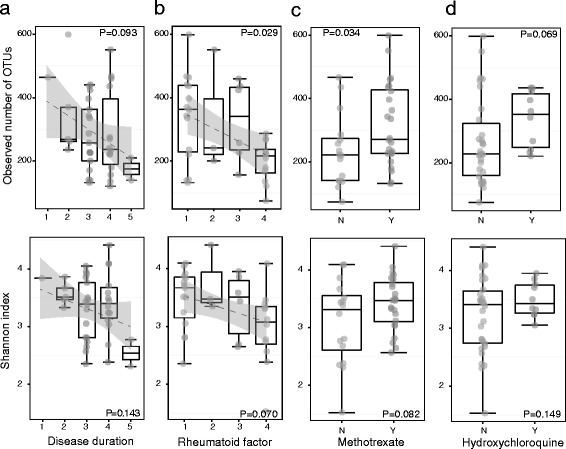
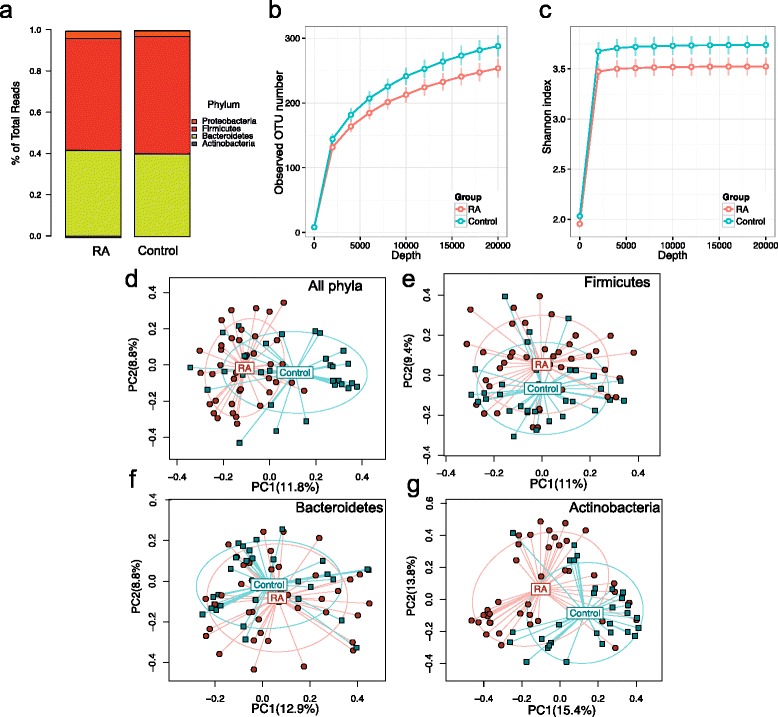
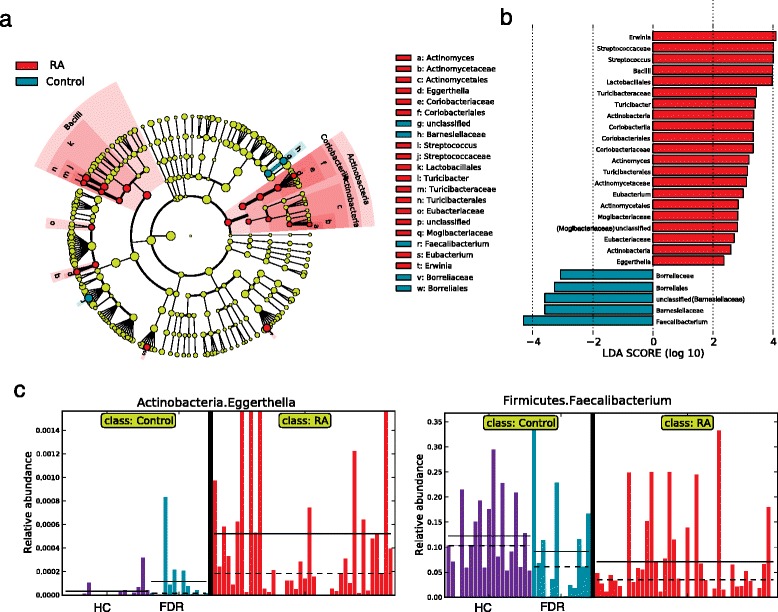
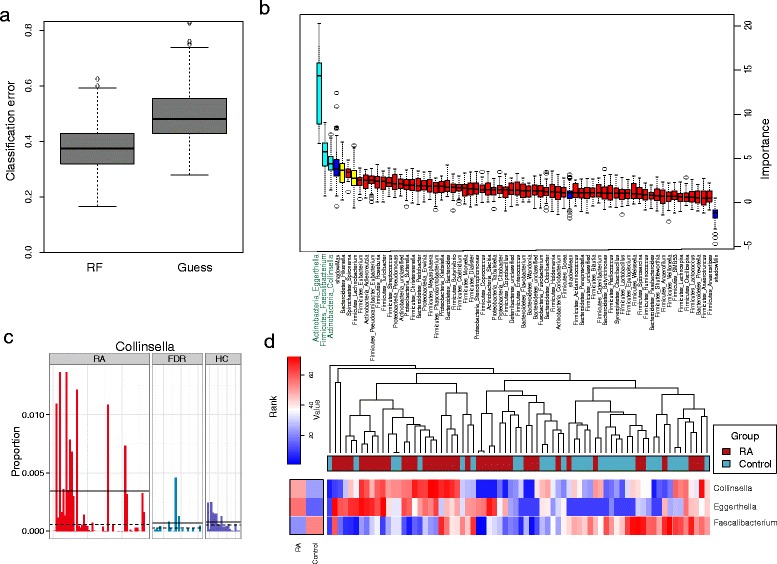
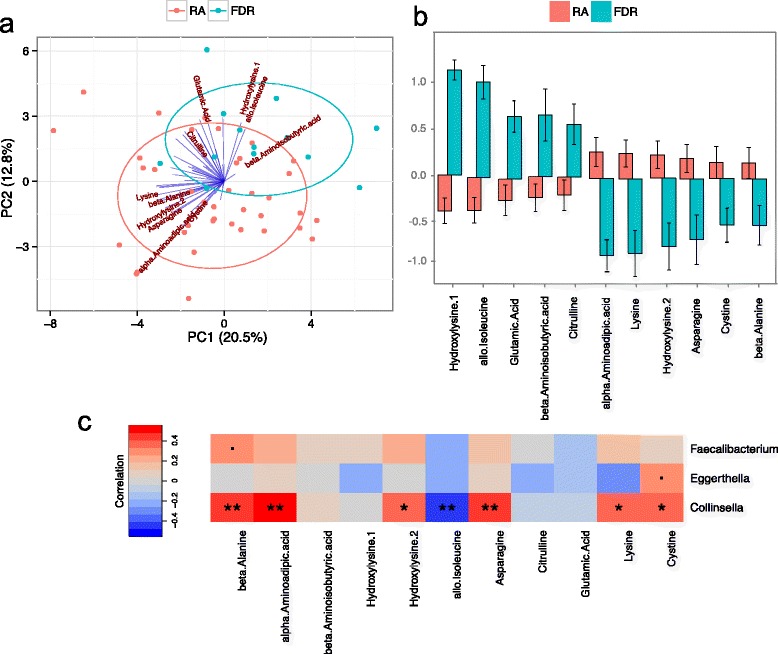
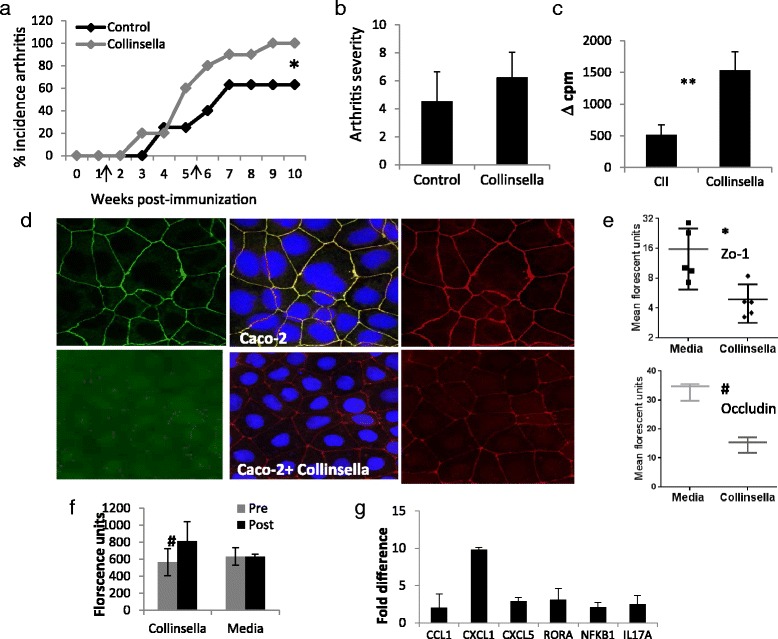
BACKGROUND: The adaptive immune response in rheumatoid arthritis (RA) is influenced by an interaction between host genetics and environment, particularly the host microbiome. Association of the gut microbiota with various diseases has been reported, though the specific components of the microbiota that affect the host response leading to disease remain unknown. However, there is limited information on the role of gut microbiota in RA. In this study we aimed to define a microbial and metabolite profile that could predict disease status. In addition, we aimed to generate a humanized model of arthritis to confirm the RA-associated microbe. METHODS: To identify an RA biomarker profile, the 16S ribosomal DNA of fecal samples from RA patients, first-degree relatives (to rule out environment/background as confounding factors), and random healthy non-RA controls were sequenced. Analysis of metabolites and their association with specific taxa was performed to investigate a potential mechanistic link. The role of an RA-associated microbe was confirmed using a human epithelial cell line and a humanized mouse model of arthritis. RESULTS: Patients with RA exhibited decreased gut microbial diversity compared with controls, which correlated with disease duration and autoantibody levels. A taxon-level analysis suggested an expansion of rare taxa, Actinobacteria, with a decrease in abundant taxa in patients with RA compared with controls. Prediction models based on the random forests algorithm suggested that three genera, Collinsella, Eggerthella, and Faecalibacterium, segregated with RA. The abundance of Collinsella correlated strongly with high levels of alpha-aminoadipic acid and asparagine as well as production of the proinflammatory cytokine IL-17A. A role for Collinsella in altering gut permeability and disease severity was confirmed in experimental arthritis. CONCLUSIONS: These observations suggest dysbiosis in RA patients resulting from the abundance of certain rare bacterial lineages. A correlation between the intestinal microbiota and metabolic signatures could determine a predictive profile for disease causation and progression.
Overview
The claims and statistics of this paper haven’t been checked yet.
Free: it reads the open-access text and checks the first 5 claims that cite a source we can check. Create a free account to check every claim.
Integrity signals
Registry
Cites
Statistics
Figures
Verification
Claims the paper makes
The claims and statistics of this paper haven’t been checked yet.
Free: it reads the open-access text and checks the first 5 claims that cite a source we can check. Create a free account to check every claim.
Claims other papers make about this one
Each is checked against this paper’s own text: does it say what the citing paper says it does?
The source backs part of the claim, not all of it — or backs it for a different population, condition or comparison.
In the citing paper
“Another study identified a strong link between three rare genera (Collinsella, Eggerthella and Faecalibacterium) and RA”
From Interaction between microbiota and immunity in health and disease (2020) · cites this paper as [171]
Experimental — accuracy not yet measuredThe cited source says what the claim attributes to it.
In the citing paper
“among which Collinsella is associated with proinflammatory IL-17A production.171”
From Interaction between microbiota and immunity in health and disease (2020) · cites this paper as [171]
Self-check
Percentages, sums and reported differences re-computed from the paper’s own numbers.
The self-check needs the paper’s full text.
Citations
Cites
Breiman, L. (2001) · Machine Learning · doi:10.1023/a:1010933404324 · Cited by 133,538
Metagenomic biomarker discovery and explanation
Segata, N., Izard, J., Waldron, L., Gevers, D., Miropolsky, L., Garrett, W. S., & Huttenhower, C. (2011) · Genome Biology · doi:10.1186/gb-2011-12-6-r60 · Cited by 16,192 · cited 1×
“Using LFfSe analysis [26], we observed 26 differentially abundant taxa at different taxonomic levels.”
MethodPredictive functional profiling of microbial communities using 16S rRNA marker gene sequences
Langille, M. G. I., Zaneveld, J., Caporaso, J. G., McDonald, D., Knights, D., Reyes, J. A., Clemente, J. C., Burkepile, D. E., Vega Thurber, R. L., Knight, R., et al. (2013) · Nature Biotechnology · doi:10.1038/nbt.2676 · Cited by 9,116
A core gut microbiome in obese and lean twins
Turnbaugh, P. J., Hamady, M., Yatsunenko, T., Cantarel, B. L., Duncan, A., Ley, R. E., Sogin, M. L., Jones, W. J., Roe, B. A., Affourtit, J. P., et al. (2009) · Nature · doi:10.1038/nature07540 · Cited by 7,823 · cited 1×
“RA [8, 9], diabetes, and obesity [11, 12].”
Enterotypes of the human gut microbiome
MetaHIT Consortium (additional members), Arumugam, M., Raes, J., Pelletier, E., Le Paslier, D., Yamada, T., Mende, D. R., Fernandes, G. R., Tap, J., Bruls, T., et al. (2011) · Nature · doi:10.1038/nature09944 · Cited by 7,548 · cited 1×
“The Human Microbiome Project and other studies have documented the diversity of the gut microbiome in healthy individuals and gut-related diseases [16–19].”
BackgroundTurnbaugh, P. J., Ley, R. E., Hamady, M., Fraser-Liggett, C. M., Knight, R., & Gordon, J. I. (2007) · Nature · doi:10.1038/nature06244 · Cited by 6,091 · cited 1×
“The Human Microbiome Project and other studies have documented the diversity of the gut microbiome in healthy individuals and gut-related diseases [16–19].”
BackgroundFeature Selection with the Boruta Package
Kursa, M. B., & Rudnicki, W. R. (2010) · Journal of Statistical Software · doi:10.18637/jss.v036.i11 · Cited by 5,659 · cited 1×
“We next applied Boruta feature selection, which is a feature selection method built around random forests and selects features that have significantly more discriminatory power than random permuted features [29].”
MethodDysfunction of the intestinal microbiome in inflammatory bowel disease and treatment
Morgan, X. C., Tickle, T. L., Sokol, H., Gevers, D., Devaney, K. L., Ward, D. V., Reyes, J. A., Shah, S. A., LeLeiko, N., Snapper, S. B., et al. (2012) · Genome Biology · doi:10.1186/gb-2012-13-9-r79 · Cited by 2,713 · cited 1×
“The Human Microbiome Project and other studies have documented the diversity of the gut microbiome in healthy individuals and gut-related diseases [16–19].”
BackgroundExpansion of intestinal Prevotella copri correlates with enhanced susceptibility to arthritis
Scher, J. U., Sczesnak, A., Longman, R. S., Segata, N., Ubeda, C., Bielski, C., Rostron, T., Cerundolo, V., Pamer, E. G., Abramson, S. B., et al. (2013) · eLife · doi:10.7554/elife.01202 · Cited by 2,047
Nielen, M. M. J., van Schaardenburg, D., Reesink, H. W., van de Stadt, R. J., van der Horst‐Bruinsma, I. E., de Koning, M. H. M. T., Habibuw, M. R., Vandenbroucke, J. P., & Dijkmans, B. A. C. (2004) · Arthritis & Rheumatism · doi:10.1002/art.20018 · Cited by 1,861 · cited 1×
“Autoreactive T-cell responses and auto-antibody production leading up to the onset of RA occur much earlier than the clinical presentation of RA [34].”
Background
Cited by
Items 401–500 of 864
Bixio, R., Bertelle, D., Bertoldo, E., Morciano, A., & Rossini, M. (2023) · Internal and Emergency Medicine · doi:10.1007/s11739-023-03496-1 · Cited by 20
“Other studies suggest IL-17A could be the keystone of gut-related inflammation, since its levels have been correlated both with an increase of Colin-sella and a decrease of Faecalibacterium , usually regarded as beneficial [11, 20].”
Barone, M., Martucci, M., Sciara, G., Conte, M., Medina, J., Iattoni, L., Miele, F., Fonti, C., Franceschi, C., Brigidi, P., et al. (2024) · The EPMA Journal · doi:10.1007/s13167-024-00369-1 · Cited by 23
“The exact mechanisms linking Col-linsella to insomnia remain unclear, but its overabundance has been linked to gut permeability and inflammation [55, 56], which may also impact sleep quality.”
BackgroundGut Dysbiosis and Dietary Interventions in Rheumatoid Arthritis—A Narrative Review
Bakinowska, E., Stańska, W., Kiełbowski, K., Szwedkowicz, A., Boboryko, D., & Pawlik, A. (2024) · Nutrients · doi:10.3390/nu16183215 · Cited by 22
“Multiple studies have demonstrated the abundance of Collinsella in the gut microbiome of patients with RA [42,43].”
BackgroundInfluentialAli, A. Y., Zahran, S. A., Eissa, M., Kashef, M. T., & Ali, A. E. (2025) · Gut Pathogens · doi:10.1186/s13099-025-00683-7 · Cited by 22
Nemoto, N., Takeda, Y., Nara, H., Araki, A., Gazi, M. Y., Takakubo, Y., Naganuma, Y., Takagi, M., & Asao, H. (2019) · International Immunology · doi:10.1093/intimm/dxz058 · Cited by 21
Regulation of Peripheral Inflammation by a Non-Viable, Non-Colonizing Strain of Commensal Bacteria
Ramani, K., Cormack, T. A., Cartwright, A. N. R., Alami, A., Parameswaran, P., Abdou, M., Wang, I., Hilliard, K. L., Argueta, S., Raghunathan, D., et al. (2022) · Frontiers in Immunology · doi:10.3389/fimmu.2022.768076 · Cited by 21
Bisanz, J. E., Soto-Perez, P., Lam, K. N., Bess, E. N., Haiser, H. J., Allen‐Vercoe, E., Rekdal, V. M., Balskus, E. P., & Turnbaugh, P. J. (2018) · bioRxiv (Cold Spring Harbor Laboratory) · doi:10.1101/304840 · Cited by 17
Microbial threads in the tapestry of rheumatoid arthritis
Li, J., & Kuhn, K. A. (2025) · Journal of Clinical Investigation · doi:10.1172/jci195374 · Cited by 22
“Similarly, products from Fusobacterium nucleatum and Eggerthel-la lenta , enriched in the stool from patients with RA, have been identified in the synovial fluid of patients with RA and associated with markers of inflammation and measures of disease severity (20, 23–25).”
InfluentialAhmad, S., Ali, S., Rehman, A. U., Haq, I. U., Liaqat, I., Aftab, M. N., & Shume, T. (2026) · Journal of Medical Microbiology · doi:10.1099/jmm.0.002117 · Cited by 22
“These molecules stimulate neutrophil recruitment and NF κ B activation [159–162].”
Hu, Y., Chen, F., Ye, H., & Lü, B. (2021) · Scientific Reports · doi:10.1038/s41598-021-97083-z · Cited by 23
Dutta, M., Weigel, K. M., Patten, K. T., Valenzuela, A. E., Wallis, C., Bein, K. J., Wexler, A. S., Lein, P. J., & Cui, J. Y. (2022) · Toxicology Reports · doi:10.1016/j.toxrep.2022.03.003 · Cited by 17
Zhang, Y., Liu, Y., Peng, F., Wei, X., Hao, H., Li, W., & Zhao, Y. (2022) · Food & Function · doi:10.1039/d2fo01983c · Cited by 18
Wang, Y., He, Y., Liang, Y., Liu, H., Chen, X., Kulyar, M. F., Shahzad, A., Wei, K., & Li, K. (2023) · Microbial Cell Factories · doi:10.1186/s12934-023-02027-z · Cited by 22
“Oral Collinsella supplements reduced the expression of TJPs in enterocytes and induced “gut leakage”, which were features linked to metabolic endotoxemia [57, 58].”
BackgroundCausal association between gut microbiota and fibromyalgia: a Mendelian randomization study
Wang, Z., Jiang, D. Y., Zhang, M., Teng, Y., & Huang, Y. (2024) · Frontiers in Microbiology · doi:10.3389/fmicb.2023.1305361 · Cited by 18
“And increased levels of citrulline in the gut participate in citrullination, leading to antibody production by the immune response (Chen et al., 2016).”
BackgroundThe role of microbiota on rheumatoid arthritis onset
Juárez‐Chairez, M. F., Cid‐Gallegos, M. S., Jiménez‐Martínez, C., Prieto‐Contreras, L. F., & Bollain-y-Goytia, J. J. (2024) · International Journal of Rheumatic Diseases · doi:10.1111/1756-185x.15122 · Cited by 20
“6,11 Accordingly, an imbalance in the intestinal microbiota can be a contributing factor in the onset or progression of RA.”
BackgroundInfluentialThe Microbiome and Ocular Surface Disease
Watane, A., Cavuoto, K. M., Banerjee, S., & Galor, A. (2019) · Current Ophthalmology Reports · doi:10.1007/s40135-019-00217-w · Cited by 18
Taneja, V. (2017) · Principles of Gender-Specific Medicine · doi:10.1016/b978-0-12-803506-1.00027-9 · Cited by 21
Self-citationGut Microbiota in Health and Disease
Ishiguro, E. E., Haskey, N., & Campbell, K. (2018) · Elsevier eBooks · doi:10.1016/b978-0-12-810541-2.00004-x · Cited by 20
Gut dysbiosis is associated with difficult-to-treat rheumatoid arthritis
Ruiz‐Limón, P., Vázquez, N. M., Moreno‐Indias, I., Lisbona-Montañez, J. M., Mucientes, A., Arija, S. M., Redondo‐Rodríguez, R., Cano‐García, L., Tinahones, F. J., & Fernández‐Nebro, A. (2025) · Frontiers in Medicine · doi:10.3389/fmed.2024.1497756 · Cited by 19
Xie, X., Chen, X., Wang, X., Wang, S., & Qi, P. (2025) · Frontiers in Immunology · doi:10.3389/fimmu.2025.1584023 · Cited by 20
“Experimental evidence indicates that overexpression of Collinsella aerofaciens increases the incidence of collagen-induced arthritis by suppressing the expression of tight junction proteins in intestinal epithelial cells (63).”
Nikolova‐Ganeva, K., Mihaylova, N., Kechidzhieva, L., Ivanova, K. I., Zarkov, A. S., Parzhanov, D. L., Ivanov, M. M., & Marchev, A. S. (2025) · International Journal of Molecular Sciences · doi:10.3390/ijms26146813 · Cited by 20
Han, Y., Li, Y., Hu, Z., Wang, X., Liu, J., Ren, X., Yu, Y., Li, Y., Li, W., & Sun, Y. (2019) · MicrobiologyOpen · doi:10.1002/mbo3.951 · Cited by 16
“A recent study reported an increase in the abundance of Turicibacter in fecal samples from rheumatoid arthritis (RA) patients (Chen et al., 2016).”
BackgroundStability of human gut microbiome: Comparison of ecological modelling and observational approaches
Revel-Muroz, A., Akulinin, M., Shilova, P., Tyakht, A., & Klimenko, N. S. (2023) · Computational and Structural Biotechnology Journal · doi:10.1016/j.csbj.2023.08.030 · Cited by 20
“One of the possible mechanisms is that the members of this genus promote gut permeability and production of pro-inflammatory cytokines [86].”
BackgroundDiet and Lifestyle Impact on Rheumatoid Arthritis: A Comprehensive Review
Shekhar, K. V., Pathak, M. M., & Pisulkar, G. L. (2023) · Cureus · doi:10.7759/cureus.48625 · Cited by 16
RetractedMeng, Q., Lin, M., Song, W., Wu, J., Cao, G., Huang, P., Su, Z., Gu, W., Deng, X., Xu, P., et al. (2023) · Gut Microbes · doi:10.1080/19490976.2023.2281382 · Cited by 18
Wang, Z., Jiang, D., Wang, X., Jiang, Y., Sun, Q., Ling, W., An, X., Ji, C., Li, S., Qi, Y., et al. (2024) · Frontiers in Microbiology · doi:10.3389/fmicb.2023.1292984 · Cited by 18
Development of a real-time PCR method for quantification of Prevotella histicola from the gut
Balakrishnan, B., Luckey, D. H., Marietta, E. V., Karau, M. J., Patel, R., Murray, J. A., & Taneja, V. (2017) · Anaerobe · doi:10.1016/j.anaerobe.2017.06.019 · Cited by 16
Self-citationThe Gut Microbiome in Autoimmune Diseases
de Oliveira, G. L. V. (2019) · Elsevier eBooks · doi:10.1016/b978-0-12-815249-2.00033-6 · Cited by 22
Yao, Y., Cai, X. T., Fei, W., Ren, F., Wang, F., Luan, X., Chen, F., & Zheng, C. (2020) · Frontiers in Pharmacology · doi:10.3389/fphar.2020.594042 · Cited by 16
The Liquid Diet Composition Affects the Fecal Bacterial Community in Pre-weaning Dairy Calves
Júnior, G. F. V., Coelho, M. G., de Toledo, A. F., Montenegro, H., Coutinho, L. L., & Bittar, C. M. M. (2021) · Frontiers in Animal Science · doi:10.3389/fanim.2021.649468 · Cited by 21
“, 2020), increasing intestinal permeability, reducing expression of tight junctions in enterocytes, and stimulating gut leakage (Chen et al., 2016).”
BackgroundHuang, T., Wang, X., Yang, Q., Peng, S., & Peng, M. (2022) · Tropical Animal Health and Production · doi:10.1007/s11250-022-03044-7 · Cited by 16
“These pathogenic bacteria are observed in patients and result in health impairment (Schepici et al. 2019; Xu et al. 2017; Gomez-Arango et al. 2018; Chen et al. 2016).”
Asoudeh, F., Djafarian, K., Akhalghi, M., Mahmoudi, M., Jamshidi, A., Farhadi, E., & Esmaillzadeh, A. (2022) · Trials · doi:10.1186/s13063-022-06113-2 · Cited by 16
“Also, the gut microbiota in RA patients showed lower diversity, and there was a relationship between low diversity of gut microbiota and increased disease duration [31].”
BackgroundPružinská, K., Slovák, L., Dráfi, F., Poništ, S., Juránek, I., Chrastina, M., Švík, K., Strojný, L., Ambro, Ľ., & Bauerová, K. (2022) · Molecules · doi:10.3390/molecules28010297 · Cited by 16
Rogier, R., Ederveen, T. H. A., Wopereis, H., Hartog, A., Boekhorst, J., van Hijum, S. A. F. T., Knol, J., Garssen, J., Walgreen, B., Helsen, M. M. A., et al. (2019) · PLoS ONE · doi:10.1371/journal.pone.0219366 · Cited by 16
Effects of intestinal microbes on rheumatic diseases: A bibliometric analysis
Huang, R., Zhang, M., Lu, Y., Xu, D., Liu, Y., Jin, M., Xian, S., Wang, S., Tong, X., Lu, J., et al. (2023) · Frontiers in Microbiology · doi:10.3389/fmicb.2022.1074003 · Cited by 15
“What’s more, there is a study pointing out that the degree of these bacterial changes was correlated with disease duration and autoantibody levels (Chen et al., 2016).”
BackgroundChang, C.-C., Liu, T.-C., Lu, C.-J., Chiu, H., & Lin, W. (2023) · Frontiers in Microbiology · doi:10.3389/fmicb.2023.1227300 · Cited by 17
“Our findings are consistent with those of previous studies reporting a link between abnormalities in the gut microbiota and several autoimmune disorders (Qin et al., 2010; Chen et al., 2016; Zhou et al., 2018).”
ResultThe Lung in Rheumatoid Arthritis—Friend or Enemy?
Anton, M.-L., Cardoneanu, A., Burlui, A., Mihai, I. R., Richter, P., Bratoiu, I., Macovei, L. A., & Rezuş, E. (2024) · International Journal of Molecular Sciences · doi:10.3390/ijms25126460 · Cited by 17
Exploring the Role of the Microbiome in Rheumatoid Arthritis—A Critical Review
Ermencheva, P., Kotov, G. N., Shumnalieva, R., Velikova, T. V., & Monov, S. V. (2024) · Microorganisms · doi:10.3390/microorganisms12071387 · Cited by 18
Inbreeding status and implications for Amur tigers
Ning, Y., Roberts, N. J., Qi, J., Peng, Z., Long, Z., Zhou, S., Gu, J., Hou, Z., Yang, E., Ren, Y., et al. (2021) · Animal Conservation · doi:10.1111/acv.12761 · Cited by 15
“Collinsella, for example, which is positively associated with circulating insulin and altering intestinal permeability (Chen et al., 2016; Gomez-Arango et al., 2017), was found to be more prevalent in the noninbred group than in the inbred group.”
BackgroundPeppermint oil effects on the gut microbiome in children with functional abdominal pain
Thapa, S., Luna, R. A., Chumpitazi, B. P., Oezguen, N., Abdel‐Rahman, S. M., Garg, U., Musaad, S., Versalovic, J., Kearns, G. L., & Shulman, R. J. (2022) · Clinical and Translational Science · doi:10.1111/cts.13224 · Cited by 15
Gao, Y., Liu, X., Pan, M., Zeng, D., Zhou, X., Tsunoda, M., Zhang, Y., Xi, X., Wang, R., Hu, W., et al. (2022) · Journal of Psychiatric Research · doi:10.1016/j.jpsychires.2022.10.072 · Cited by 17
The Gut Microbiota: Emerging Evidence in Autoimmune and Inflammatory Diseases
Zeng, L., Yang, Q., Luo, Y., Luo, Y., & Sun, L. (2026) · Research · doi:10.34133/research.1097 · Cited by 27
“Cyclophos-phamide immunogenicity is influenced by Enterococcus hirae and Barnesiella intestinihominis ; hydroxychloroquine increases gut microbiota diversity/abundance (especially Prevotellaceae ) [ 125 , 263 ].”
Association of intestinal bacteria with immune activation in a cohort of healthy adults
Riazati, N., Kable, M. E., & Stephensen, C. B. (2023) · Microbiology Spectrum · doi:10.1128/spectrum.01027-23 · Cited by 18
Molecular Mimicry Between Gut Microbiome and Rheumatoid Arthritis: Current Concepts
Muruganandam, A., Migliorini, F., Jeyaraman, N., Vaishya, R., Balaji, S., Ramasubramanian, S., Maffulli, N., & Jeyaraman, M. (2024) · Medical Sciences · doi:10.3390/medsci12040072 · Cited by 19
The role of the intestinal microbiome in antiphospholipid syndrome
van Mourik, D. J. M., Salet, D. M., Middeldorp, S., Nieuwdorp, M., & van Mens, T. E. (2022) · Frontiers in Immunology · doi:10.3389/fimmu.2022.954764 · Cited by 14
“SLE and APS patients showed increased relative abundance of Collinsella, which was previously found in rheumatic arthritis patients and is correlated with IL-17a production (15, 16).”
BackgroundPeterson, S. R., Ali, S., Shrode, R. L., & Mangalam, A. K. (2023) · ImmunoHorizons · doi:10.4049/immunohorizons.2300008 · Cited by 16
“Collinsella , which was identified in several tests, including random forest analysis, was enriched after an FRD. Chen et al. (38) reported that Collinsella was increased in the gut microbiomes of rheumatoid arthritis (RA) patients and strongly correlated with IL-17 production.”
BackgroundImmunomodulatory interplay of the microbiome and therapy of rheumatic diseases
Ostrov, B. E., & Amsterdam, D. (2017) · Immunological Investigations · doi:10.1080/08820139.2017.1373828 · Cited by 16
“(Chen et al., 2016); microbiome-produced antigenic molecules not native to the human host generate new costimulatory inflammatory cell interactions (Scher et al.”
BackgroundOral microbiota in autoimmune polyendocrine syndrome type 1
Bruserud, Ø., Siddiqui, H. A., Marthinussen, M. C., Chen, T., Jonsson, R., Oftedal, B. E., Olsen, I., Husebye, E. S., & Wolff, A. S. B. (2018) · Journal of Oral Microbiology · doi:10.1080/20002297.2018.1442986 · Cited by 16
Microbiome‐based mechanisms hypothesized to initiate obesity‐associated rheumatoid arthritis
Luo, Y., & Blackledge, W. C. (2018) · Obesity Reviews · doi:10.1111/obr.12671 · Cited by 14
“Moreover, compared with healthy controls, rare lineage intestinal microbes were identified and Actinobacteria was found increased in RA patients (45).”
BackgroundMulti–omic analysis of signalling factors in inflammatory comorbidities
Xiao, H., Bartoszek, K., & Lió, P. (2018) · BMC Bioinformatics · doi:10.1186/s12859-018-2413-x · Cited by 15
Luo, Q., Xu, J., Huang, C., Lei, X., Cheng, D., Liu, W., Cheng, A., Tang, L., Fang, J. S., Ou, Y., et al. (2019) · Frontiers in Microbiology · doi:10.3389/fmicb.2019.00624 · Cited by 14
Hoffman, S., Cohen, N. A., Carroll, I. M., Tulchinsky, H., Borovok, I., Dotan, I., & Maharshak, N. (2019) · Journal of Crohn s and Colitis · doi:10.1093/ecco-jcc/jjz086 · Cited by 17
den Bruel, K. V., Kulyk, M., Neerinckx, B., & de Vlam, K. (2025) · Frontiers in Medicine · doi:10.3389/fmed.2025.1655165 · Cited by 18
“Emerging evidence highlights the role of gut microbiota in modulating immune responses and influencing the onset and progression of RA (20).”
Valassi, E., Manichanh, C., Amodru, V., Fernández, P. G., Gaztambide, S., Yáñez, F., Martel‐Duguech, L., Puig‐Domingo, M., & Webb, S. M. (2023) · Frontiers in Endocrinology · doi:10.3389/fendo.2023.1074757 · Cited by 16
“Administration of Collinsella reduced the expression of tight junction proteins in enterocytes thus increasing gut leakage which led to metabolic endotoxemia in patients with rheumatoid arthritis (34).”
BackgroundThe association of gut microbiome with recurrent pregnancy loss: A comprehensive review
Zhu, J., Jin, J., Qi, Q., Li, L., Zhou, J., Cao, L., & Wang, L. (2023) · Drug Discoveries & Therapeutics · doi:10.5582/ddt.2023.01010 · Cited by 17
Gut microbiome and intestinal inflammation in preclinical stages of rheumatoid arthritis
Gilbert, B. T. P., Tito, R. Y., Lamacchia, C., Studer, O., Courvoisier, D. S., Raes, J., & Finckh, A. (2024) · RMD Open · doi:10.1136/rmdopen-2023-003589 · Cited by 14
“13 Other microbes have likewise proven to aggravate arthritis in mice models; they include Eggerthella , 14 22 28 Collinsella , 14 16 28 Subdoligranulum 27 or Fusobacterium nucleatum (F. nucleatum) .”
BackgroundMellai, M., Allesina, M., Edoardo, B., Cascella, F., Nobile, V., Spina, A., Amone, F., Zaccaria, V., Insolia, V., Perri, A., et al. (2024) · Nutrients · doi:10.3390/nu16050586 · Cited by 19
“Among the former, Collinsella aerofaciens is responsible for increased gut permeability by reducing the expression of tight junction proteins and for pro-inflammatory properties that may correspond to an improvement in abdominal discomfort [39,40].”
Probiotics in Allergy and Immunological Diseases: A Comprehensive Review
Vijayan, S., Kandi, V., Palacholla, P. S., Rajendran, R., Jarugu, C., Jayashankar, C. A., Pravallika, M., Reddy, S. C., & Sucharitha, A. S. (2024) · Cureus · doi:10.7759/cureus.55817 · Cited by 21
Pérez-Pérez, M. E., Nieto-Torres, E., Bollain-y-Goytia, J. J., & Delgadillo-Ruíz, L. (2024) · International Journal of Molecular Sciences · doi:10.3390/ijms25105192 · Cited by 14
“Probably, these microorganisms host other citrullinating molecules that use ornithine to produce citrulline, like Eggerthella [57].”
BackgroundGuan, Y., Zhao, X., Lü, Y., Zhang, Y., Lu, Y., & Wang, Y. (2025) · Frontiers in Microbiology · doi:10.3389/fmicb.2025.1528865 · Cited by 15
Benech, N., Legendre, P., Radoszycki, L., Varriale, P., & Sokol, H. (2022) · Neurogastroenterology & Motility · doi:10.1111/nmo.14320 · Cited by 17
Pereira, L. J. R., & Monteiro, R. (2022) · Clinical Nutrition ESPEN · doi:10.1016/j.clnesp.2022.08.002 · Cited by 14
Triggers and regulation: the gut microbiome in rheumatoid arthritis
Mahroum, N., Seida, R., & Shoenfeld, Y. (2023) · Expert Review of Clinical Immunology · doi:10.1080/1744666x.2023.2260103 · Cited by 15
“Furthermore, Collinsella abundance was also highly associated to serum concentrations of the metabolites aminoadipic acid and asparagine, as well as IL-17A production [71].”
BackgroundYu, B., Jin, L., Chen, Z., Nie, W., Chen, L., Ma, Y., Chen, H., Wu, Y., Ma, Y., Chen, J., et al. (2021) · Annals of Translational Medicine · doi:10.21037/atm-21-1315 · Cited by 14
“Chen et al. (39) found that RA patients receiving methotrexate and hydroxychloroquine had an increase in species richness and diversity.”
Self-citationNutraceuticals in the Modulation of the Intestinal Microbiota: Current Status and Future Directions
Spisni, E., Turroni, S., Alvisi, P., Spigarelli, R., Azzinnari, D., Ayala, D., Imbesi, V., & Valerii, M. C. (2022) · Frontiers in Pharmacology · doi:10.3389/fphar.2022.841782 · Cited by 16
Research Progress of Biological Feed in Beef Cattle
Ma, L., Wang, L., Zhang, Z., & Xiao, D. (2023) · Animals · doi:10.3390/ani13162662 · Cited by 19
Pakhomov, N. V., Kostyunina, D. S., Macori, G., Dillon, E., Brady, T., Sundaramoorthy, G. P., Connolly, C., Blanco, A., Fanning, S., Brennan, L., et al. (2023) · Hypertension · doi:10.1161/hypertensionaha.123.20914 · Cited by 14
Understanding the roles of the microbiome in autoimmune rheumatic diseases
Amarnani, A., & Silverman, G. J. (2023) · Rheumatology and Immunology Research · doi:10.2478/rir-2023-0027 · Cited by 16
“[24] Additionally, RA patients with the HLA-DRB1 allele epitope, and especially those who become anti citrul linated protein antibody (ACPA) positive, are atrisk of RA.”
BackgroundPreclinical RA: How to halt its progression
Wu, T., Li, Y., Liu, Y., & Chu, C. (2024) · Best Practice & Research Clinical Rheumatology · doi:10.1016/j.berh.2024.102030 · Cited by 13
Distinct Ocular Surface Microbiome in Keratoconus Patients Correlate With Local Immune Dysregulation
Kumar, N. R., Khamar, P. M., Kannan, R., Padmanabhan, A., Shetty, R., D’Souza, S., Vaidya, T. A., Sethu, S., & Ghosh, A. (2025) · Investigative Ophthalmology & Visual Science · doi:10.1167/iovs.66.1.60 · Cited by 14
“43 Reports suggest Collinsella has been associated with rheumatoid arthritis, type 2 diabetes (T2D), cholesterol metabolism, and glucose metabolism in pregnancy, 44 linking it with chronic inflammatory status.”
Guo, D., Zhang, L., Zhang, L., Han, S., Yang, K., Lin, X., Wen, C., Tong, A., Zhang, M., Yin, Y., et al. (2022) · Frontiers in Microbiology · doi:10.3389/fmicb.2022.838164 · Cited by 17
Huang, C., Lyu, J., Chu, C., Ge, L., Peng, Y., Yang, Z., Xiong, S., Wu, B., Chen, X., & Zhang, X. (2022) · Frontiers in Pediatrics · doi:10.3389/fped.2022.1001789 · Cited by 16
“Compared with the general diet group, we can see a higher abundance of opportunistic pathogen Collinsella and lower butyrate-producing genus Lachnospiracea incertae in the liquid diet group, which can induce severe intestinal inflammation (19, 29).”
BackgroundProbiotics in Postoperative Pain Management
Fyntanidou, B., Amaniti, A., Soulioti, E., Zagalioti, S., Gkarmiri, S., Chorti, A. G., Loukipoudi, L., Ioannidis, A., Dalakakis, I., Menni, A.-E., et al. (2023) · Journal of Personalized Medicine · doi:10.3390/jpm13121645 · Cited by 18
“However, the physical trauma of surgery itself, in cooperation with the surgery-induced alterations in tissue oxygenation, perfusion, and pH and augmented by the stress of anesthesia and the intraoperative pharmacological manipulations, has long been shown to cause gut microbial dysbiosis [93,94].”
BackgroundTreatment-Seeking Behaviors of Persons With Rheumatoid Arthritis
Schlaeger, J. M., Powell-Roach, K. L., Golas, M., Takayama, M., & Wilkie, D. J. (2017) · Journal of Holistic Nursing · doi:10.1177/0898010117693539 · Cited by 14
Kv, C. R. (2021) · Medicine in Microecology · doi:10.1016/j.medmic.2021.100033 · Cited by 15
Metatranscriptome analysis of blood in healthy individuals and irritable bowel syndrome patients
Jagare, L., Rozenberga, M., Silamiķelis, I., Ansone, L., Elbere, I., Brīvība, M., Megnis, K., Konrāde, I., Birka, I., Straume, Z., et al. (2023) · Journal of Medical Microbiology · doi:10.1099/jmm.0.001719 · Cited by 11
Treatment for Rheumatoid Arthritis Associated With Alterations in the Gastrointestinal Microbiota
Andréasson, K., Olofsson, T., Lagishetty, V., Alrawi, Z., Klaassens, E. S., Holster, S., Hesselstrand, R., Jacobs, J. P., Wallman, J. K., & Volkmann, E. R. (2024) · ACR Open Rheumatology · doi:10.1002/acr2.11673 · Cited by 11
Li, H., Dai, J., Zhao, C., Hu, T., Zhao, G., Wang, Q., & Zhang, L. (2024) · Frontiers in Immunology · doi:10.3389/fimmu.2024.1418717 · Cited by 17
Predicting potential microbe–disease associations based on dual branch graph convolutional network
Chen, J., Zhu, Y., & Yuan, Q. (2024) · Journal of Cellular and Molecular Medicine · doi:10.1111/jcmm.18571 · Cited by 11
Self-citationNg, B. C. K., & Lassere, M. N. (2024) · Seminars in Arthritis and Rheumatism · doi:10.1016/j.semarthrit.2024.152574 · Cited by 13
Tursi, A., Procaccianti, G., BASTIANI, R. D., Turroni, S., D’Amico, F., Allegretta, L., Antonino, N., Baldi, E., Casamassima, C., Casella, G., et al. (2025) · Frontiers in Medicine · doi:10.3389/fmed.2025.1487892 · Cited by 13
“On the other hand, the increase in Collinsella is again questionable, as this genus has been negatively associated with IBS severity (50), but is also known as a pathobiont capable of increasing gut permeability and triggering pro-inflammatory cytokines (51, 52).”
New thoughts on the gut–immune axis of arthritis
Thiran, A., & Vereecke, L. (2025) · Trends in Immunology · doi:10.1016/j.it.2025.01.006 · Cited by 14
Yang, C. H., Xie, L., Deng, Z., Ai, H., Xiang, T., Yan, X., Ling, Z., Xiao, S., Tang, Y., Huang, G., et al. (2025) · Journal of Nanobiotechnology · doi:10.1186/s12951-025-03450-7 · Cited by 17
“Population-based studies have documented significant changes in the composition and diversity of the gut microbiota in RA patients compared to healthy individuals [4, 5].”
Microbiome-based prediction of allogeneic hematopoietic stem cell transplantation outcome
Shtossel, O., Eshel, A., Fried, S., Geva, M., Danylesko, I., Yerushalmi, R., Shem‐Tov, N., Fein, J. A., Fabbrini, M., Shimoni, A., et al. (2025) · Genome Medicine · doi:10.1186/s13073-025-01507-8 · Cited by 14
“Collinsella , a gram-positive obligate anaerobe and the most abundant member of the phylum Actinobacteria in a healthy human gut, has been previously linked to increased production of the proinflammatory cytokine IL-17A and gut dysbiosis [78–80].”
de Oliveira, D. G., Machado, A., Lacerda, P., Karakikla-Mitsakou, Z., & Vasconcelos, C. (2025) · Autoimmunity Reviews · doi:10.1016/j.autrev.2025.103921 · Cited by 15
Metabolic hallmarks of type 2 diabetes compromise T cell function
Liang, Y., Chen, W., Gao, Q., Tan, K. C. B., Lee, C., & Ling, G. S. (2025) · Trends in Endocrinology and Metabolism · doi:10.1016/j.tem.2025.08.005 · Cited by 13
Brenner, D., Cherry, P., Switzer, T., Butt, I., Stanton, C., Murphy, K., McNamara, B., Iohom, G., O’Mahony, S. M., & Shorten, G. (2021) · Neurobiology of Pain · doi:10.1016/j.ynpai.2021.100072 · Cited by 15
Analyzing the Role of Gut Microbiota on the Onset of Autoimmune Diseases Using TNFΔARE Murine Model
Edwards, V., Smith, D., Meylan, F., Tiffany, L. J., Poncet, S., Wu, W. W., Phue, J., Santana-Quintero, L. V., Clouse, K. A., & Gabay, O. (2021) · Microorganisms · doi:10.3390/microorganisms10010073 · Cited by 14
The Gut Microbiome of Children during the COVID-19 Pandemic
Bacorn, M., Romero-Soto, H. N., Levy, S., Chen, Q., & Hourigan, S. K. (2022) · Microorganisms · doi:10.3390/microorganisms10122460 · Cited by 15
Kulkarni, A., Beckler, M. D., Amini, S. S., & Kesselman, M. M. (2022) · Cureus · doi:10.7759/cureus.32201 · Cited by 11
“[20] found an increased presence of the phylum Aa in the RA group compared to healthy controls (0.”
BackgroundZaragoza-García, Ó., Castro-Alarcón, N., Pérez-Rubio, G., Falfán‐Valencia, R., Briceño, O., Navarro‐Zarza, J. E., Parra‐Rojas, I., Tello, M., & Guzmán‐Guzmán, I. P. (2023) · International Journal of Molecular Sciences · doi:10.3390/ijms24031958 · Cited by 12
Wang, Y., Liu, T., Wan, Z., Wang, L., Hou, J., Shi, M., & Tsui, S. K. (2023) · Frontiers in Genetics · doi:10.3389/fgene.2023.1153847 · Cited by 13
“lenta under the genera Eggerthella was shown to be highly enriched in the gut flora of patients with asthma and rheumatoid arthritis, comparing to the normal population (Chen et al., 2016; Wang et al., 2018).”
BackgroundDeng, Z.-L., Pieper, D. H., Stallmach, A., Steube, A., Vital, M., Reck, M., & Wagner‐Döbler, I. (2023) · Microbiome · doi:10.1186/s40168-023-01713-9 · Cited by 12
“On the other hand, E. lenta is an emerging path-ogen and can cause bloodstream infections [53, 54] and was correlated with rheumatoid arthritis [55].”
BackgroundT follicular helper cells and the gut microbiome in arthritis
Taneja, V. (2017) · Nature Reviews Rheumatology · doi:10.1038/nrrheum.2016.222 · Cited by 13
Self-citationHerbal Formula-3 ameliorates OVA-induced food allergy in mice may via modulating the gut microbiota.
Liu, S., Yang, B., Yang, P., & Liu, Z. (2019) · PubMed Central · Cited by 16
Turroni, S., Petracci, E., Edefonti, V. C., Giudetti, A. M., D’Amico, F., Paganelli, L., Giovannetti, G., Coco, L. D., Fanizzi, F. P., Rampelli, S., et al. (2021) · Nutrients · doi:10.3390/nu13062081 · Cited by 12
“…enriched in such microbes may influence intestinal absorption of cholesterol, hepatic glycogenesis and triglyceride synthesis, as well as interfere with the expression of tight junction proteins, resulting in loss of barrier integrity, metabolic endotoxemia and chronic low-grade inflammation [17,77].”
BackgroundLai, W.-D., Li, D., Yu, J., Huang, L., Zheng, M., Jiang, Y., Wang, S., Wen, J., Chen, S., Wen, C., et al. (2022) · Frontiers in Pain Research · doi:10.3389/fpain.2022.937259 · Cited by 14
Yang, Y., Kumrungsee, T., Katô, N., Fukuda, S., Kuroda, M., & Yamaguchi, S. (2021) · Fermentation · doi:10.3390/fermentation7040294 · Cited by 13
Alessandro de, S. I. R. E., Mancuso, E., Marotta, N., Massimino, M., Zito, R., Averta, C., Bartalotta, I., Palummo, A., Cerantonio, A., Citrigno, L., et al. (2025) · Scientific Reports · doi:10.1038/s41598-025-24500-y · Cited by 12
Microbiota and Mitochondrial Sex-Dependent Imbalance in Fibromyalgia: A Pilot Descriptive Study
Ramírez‐Tejero, J. A., Durán‐González, E., Martínez‐Lara, A., del Amo, L. L., Sepúlveda, I., Huancas-Díaz, A., Carvajal, M., & Cotán, D. (2023) · Neurology International · doi:10.3390/neurolint15030055 · Cited by 11
“When the distribution of these phyla/genera is altered, intestinal dysbiosis appears and triggers a negative feedback loop that underlies a broad spectrum of diseases located not only in the intestinal system but also in the immune [11], cardiovascular [12,13], and musculoskeletal [14,15] systems, paving the way for t…”
Background
Metadata
- Authors
- Chen, J., Wright, K., Davis, J. M., Jeraldo, P., Marietta, E. V., Murray, J., Nelson, H., Matteson, E. L., & Taneja, V.
- Affiliations
- Mayo Clinic (US)
- Corresponding author
- Taneja, Veena
- ORCID
- Venue
- Genome Medicine
- Published
- 2016-04-21
- Volume
- 8
- Issue
- 1
- Pages
- 43-43
- ISSN
- 1756-994X (ISSN-L)
- PMC
- PMC4840970
- OpenAlex
- W2336817596
- Cited by
- 858
- References
- 53
- Citations by year
- 2026: 81 · 2025: 80 · 2024: 97 · 2023: 116 · 2022: 111 · 2021: 128 · 2020: 67 · 2019: 66 · 2018: 62 · 2017: 39 · 2016: 10
- FWCI
- 30.65
- Type
- journal article
- Language
- en
- Open access
- gold
- doi.org
- Licence
- cc-by
- creativecommons.org/licenses/by/4.0/ (tdm)
- creativecommons.org/licenses/by/4.0/ (vor)
- Locations
- Genome Medicine (publishedVersion, cc-by)
- Europe PMC (PubMed Central) (publishedVersion, cc-by)
- PubMed Central (publishedVersion, cc-by)
- PubMed (publishedVersion)
- Funders
- National Institute of Arthritis and Musculoskeletal and Skin Diseases (AR30752)
- Mark and Mary Davis
- Topics
- Life Sciences › Biochemistry, Genetics and Molecular Biology › Molecular Biology › Gut microbiota and health
- Health Sciences › Medicine › Rheumatology › Rheumatoid Arthritis Research and Therapies
- Health Sciences › Medicine › Gastroenterology › Inflammatory Bowel Disease
- Keywords
- rheumatoid arthritis, gut microbiota, rare bacterial taxa, dysbiosis, Collinsella, Eggerthella, Faecalibacterium, actinobacteria, intestinal permeability, IL-17A, alpha-aminoadipic acid, asparagine, metabolites, humanized mice, disease biomarkers, autoantibodies, gut-immune interaction
- MeSH terms
- Gastrointestinal Microbiome, Adult, Aged, Animals, Arthritis, Rheumatoid, Cell Line, Disease Models, Animal, Feces, Female, Humans, Intestinal Mucosa, Male, Middle Aged, Models, Biological, Permeability, Phylogeny, RNA, Ribosomal, 16S, Severity of Illness Index, Case-Control Studies, Cytokines, Chemokines, Computational Biology, Biodiversity, Mice, Metagenome, Metabolome, Metagenomics
About these checks
Registry, retraction, Cites and statistics results are computed, not judged, with one exception: a printed reference that no index lists is read once by a model before it counts as a citation error. Claims are extracted by a model and kept only when their quote appears verbatim in the text; each cited source is then checked, with a model’s help, for whether it says what the claim relies on. Those verdicts can be wrong — read the claim’s quote and the cited source before relying on one.
Statistics and arithmetic are recomputed, not judged.
Confidence bands are shown only for fields calibrated on our annotated test set. None is calibrated yet, so no band is shown.
What counts as a claim ›How we measure confidence ›How we check this ›
Are you an author, or do you see a problem with this page? Request a review
Data sources
Bibliographic data: Semantic Scholar, OpenAlex, Crossref.
Contains information from the Semantic Scholar Academic Graph Datasets, made available under the ODC Attribution License (ODC-BY 1.0).
Semantic Scholar’s data is described in: Kinney, R., et al. (2023). The Semantic Scholar Open Data Platform. arXiv:2301.10140.
