

An expansion of rare lineage intestinal microbes characterizes rheumatoid arthritis
Open accessThe DOI matches its Crossref record; 53 of the 53 references it cites were found in a registry or an index.
Abstract
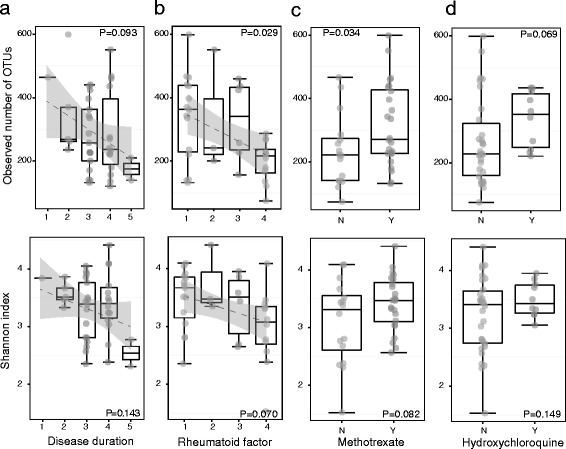
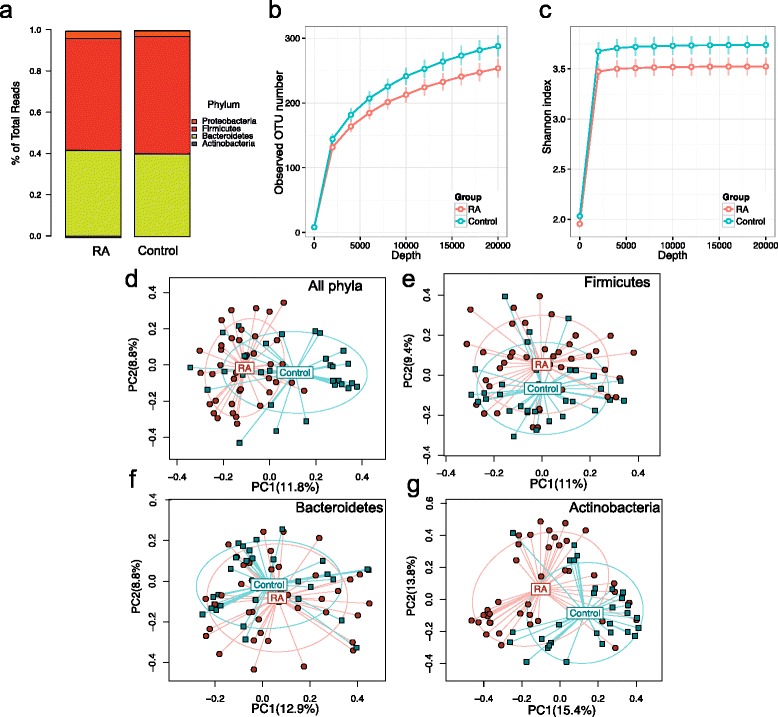
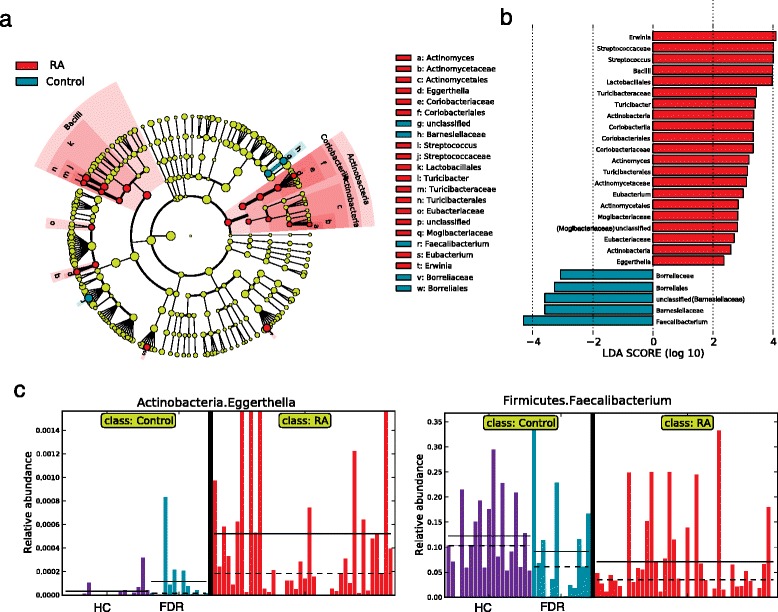
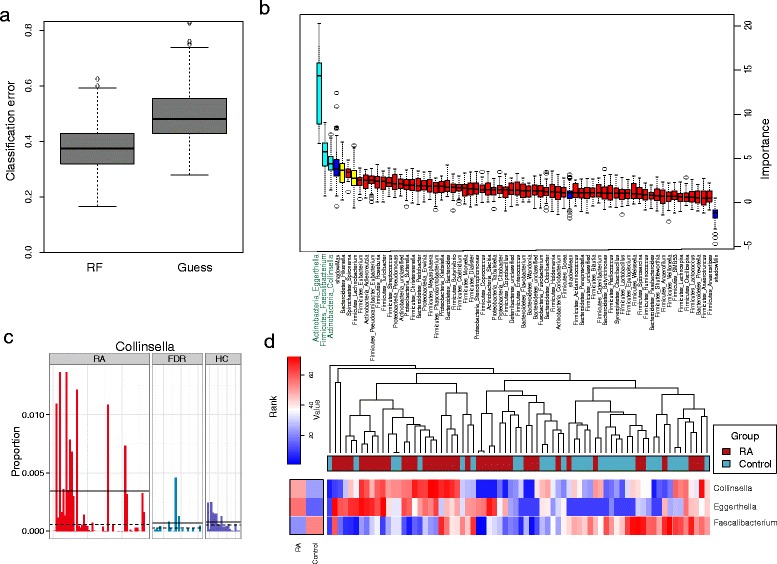
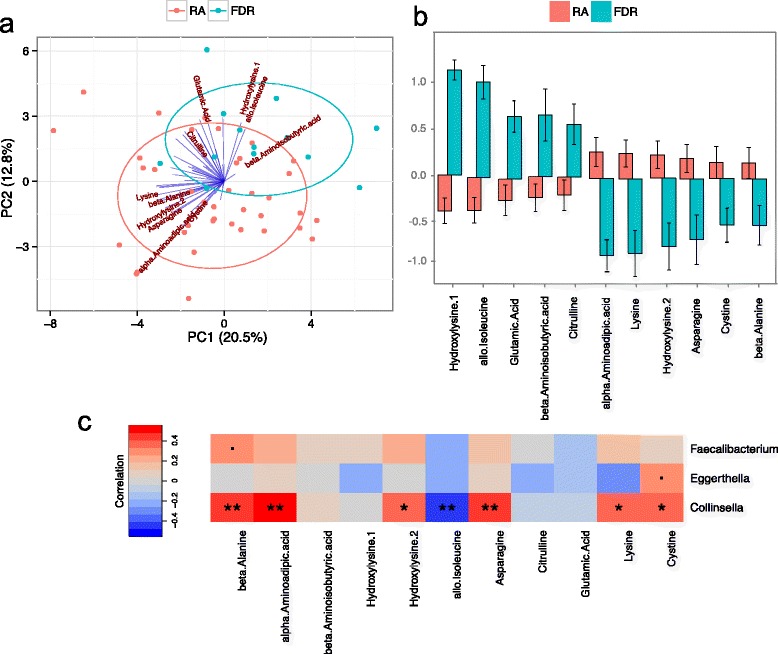
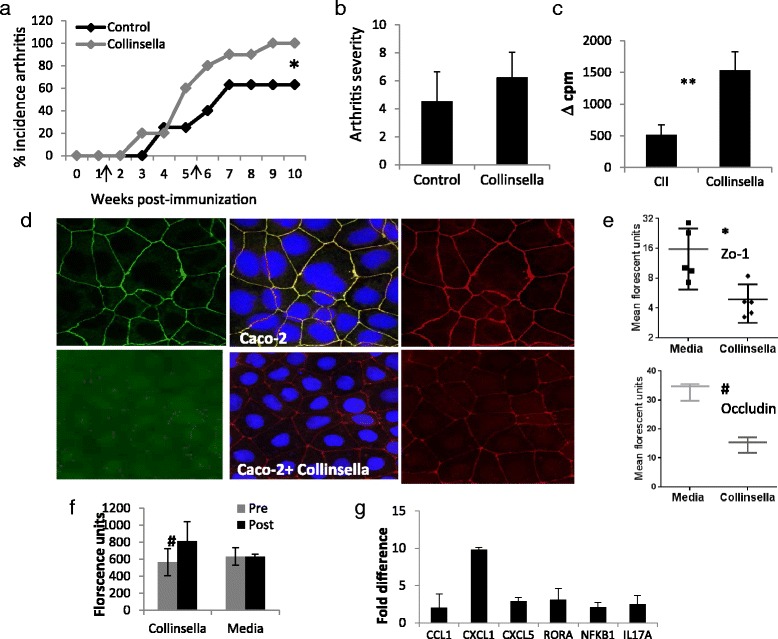
BACKGROUND: The adaptive immune response in rheumatoid arthritis (RA) is influenced by an interaction between host genetics and environment, particularly the host microbiome. Association of the gut microbiota with various diseases has been reported, though the specific components of the microbiota that affect the host response leading to disease remain unknown. However, there is limited information on the role of gut microbiota in RA. In this study we aimed to define a microbial and metabolite profile that could predict disease status. In addition, we aimed to generate a humanized model of arthritis to confirm the RA-associated microbe. METHODS: To identify an RA biomarker profile, the 16S ribosomal DNA of fecal samples from RA patients, first-degree relatives (to rule out environment/background as confounding factors), and random healthy non-RA controls were sequenced. Analysis of metabolites and their association with specific taxa was performed to investigate a potential mechanistic link. The role of an RA-associated microbe was confirmed using a human epithelial cell line and a humanized mouse model of arthritis. RESULTS: Patients with RA exhibited decreased gut microbial diversity compared with controls, which correlated with disease duration and autoantibody levels. A taxon-level analysis suggested an expansion of rare taxa, Actinobacteria, with a decrease in abundant taxa in patients with RA compared with controls. Prediction models based on the random forests algorithm suggested that three genera, Collinsella, Eggerthella, and Faecalibacterium, segregated with RA. The abundance of Collinsella correlated strongly with high levels of alpha-aminoadipic acid and asparagine as well as production of the proinflammatory cytokine IL-17A. A role for Collinsella in altering gut permeability and disease severity was confirmed in experimental arthritis. CONCLUSIONS: These observations suggest dysbiosis in RA patients resulting from the abundance of certain rare bacterial lineages. A correlation between the intestinal microbiota and metabolic signatures could determine a predictive profile for disease causation and progression.
Overview
The claims and statistics of this paper haven’t been checked yet.
Free: it reads the open-access text and checks the first 5 claims that cite a source we can check. Create a free account to check every claim.
Integrity signals
Registry
Cites
Statistics
Figures
Verification
Claims the paper makes
The claims and statistics of this paper haven’t been checked yet.
Free: it reads the open-access text and checks the first 5 claims that cite a source we can check. Create a free account to check every claim.
Claims other papers make about this one
Each is checked against this paper’s own text: does it say what the citing paper says it does?
The source backs part of the claim, not all of it — or backs it for a different population, condition or comparison.
In the citing paper
“Another study identified a strong link between three rare genera (Collinsella, Eggerthella and Faecalibacterium) and RA”
From Interaction between microbiota and immunity in health and disease (2020) · cites this paper as [171]
Experimental — accuracy not yet measuredThe cited source says what the claim attributes to it.
In the citing paper
“among which Collinsella is associated with proinflammatory IL-17A production.171”
From Interaction between microbiota and immunity in health and disease (2020) · cites this paper as [171]
Self-check
Percentages, sums and reported differences re-computed from the paper’s own numbers.
The self-check needs the paper’s full text.
Citations
Cites
Breiman, L. (2001) · Machine Learning · doi:10.1023/a:1010933404324 · Cited by 133,538
Metagenomic biomarker discovery and explanation
Segata, N., Izard, J., Waldron, L., Gevers, D., Miropolsky, L., Garrett, W. S., & Huttenhower, C. (2011) · Genome Biology · doi:10.1186/gb-2011-12-6-r60 · Cited by 16,192 · cited 1×
“Using LFfSe analysis [26], we observed 26 differentially abundant taxa at different taxonomic levels.”
MethodPredictive functional profiling of microbial communities using 16S rRNA marker gene sequences
Langille, M. G. I., Zaneveld, J., Caporaso, J. G., McDonald, D., Knights, D., Reyes, J. A., Clemente, J. C., Burkepile, D. E., Vega Thurber, R. L., Knight, R., et al. (2013) · Nature Biotechnology · doi:10.1038/nbt.2676 · Cited by 9,116
A core gut microbiome in obese and lean twins
Turnbaugh, P. J., Hamady, M., Yatsunenko, T., Cantarel, B. L., Duncan, A., Ley, R. E., Sogin, M. L., Jones, W. J., Roe, B. A., Affourtit, J. P., et al. (2009) · Nature · doi:10.1038/nature07540 · Cited by 7,823 · cited 1×
“RA [8, 9], diabetes, and obesity [11, 12].”
Enterotypes of the human gut microbiome
MetaHIT Consortium (additional members), Arumugam, M., Raes, J., Pelletier, E., Le Paslier, D., Yamada, T., Mende, D. R., Fernandes, G. R., Tap, J., Bruls, T., et al. (2011) · Nature · doi:10.1038/nature09944 · Cited by 7,548 · cited 1×
“The Human Microbiome Project and other studies have documented the diversity of the gut microbiome in healthy individuals and gut-related diseases [16–19].”
BackgroundTurnbaugh, P. J., Ley, R. E., Hamady, M., Fraser-Liggett, C. M., Knight, R., & Gordon, J. I. (2007) · Nature · doi:10.1038/nature06244 · Cited by 6,091 · cited 1×
“The Human Microbiome Project and other studies have documented the diversity of the gut microbiome in healthy individuals and gut-related diseases [16–19].”
BackgroundFeature Selection with the Boruta Package
Kursa, M. B., & Rudnicki, W. R. (2010) · Journal of Statistical Software · doi:10.18637/jss.v036.i11 · Cited by 5,659 · cited 1×
“We next applied Boruta feature selection, which is a feature selection method built around random forests and selects features that have significantly more discriminatory power than random permuted features [29].”
MethodDysfunction of the intestinal microbiome in inflammatory bowel disease and treatment
Morgan, X. C., Tickle, T. L., Sokol, H., Gevers, D., Devaney, K. L., Ward, D. V., Reyes, J. A., Shah, S. A., LeLeiko, N., Snapper, S. B., et al. (2012) · Genome Biology · doi:10.1186/gb-2012-13-9-r79 · Cited by 2,713 · cited 1×
“The Human Microbiome Project and other studies have documented the diversity of the gut microbiome in healthy individuals and gut-related diseases [16–19].”
BackgroundExpansion of intestinal Prevotella copri correlates with enhanced susceptibility to arthritis
Scher, J. U., Sczesnak, A., Longman, R. S., Segata, N., Ubeda, C., Bielski, C., Rostron, T., Cerundolo, V., Pamer, E. G., Abramson, S. B., et al. (2013) · eLife · doi:10.7554/elife.01202 · Cited by 2,047
Nielen, M. M. J., van Schaardenburg, D., Reesink, H. W., van de Stadt, R. J., van der Horst‐Bruinsma, I. E., de Koning, M. H. M. T., Habibuw, M. R., Vandenbroucke, J. P., & Dijkmans, B. A. C. (2004) · Arthritis & Rheumatism · doi:10.1002/art.20018 · Cited by 1,861 · cited 1×
“Autoreactive T-cell responses and auto-antibody production leading up to the onset of RA occur much earlier than the clinical presentation of RA [34].”
Background
Cited by
Items 101–200 of 864
Du, D., Tang, W., Zhou, C., Sun, X., Wei, Z., Zhong, J., & Huang, Z. (2021) · Oxidative Medicine and Cellular Longevity · doi:10.1155/2021/5816837 · Cited by 111
Nutrition Interventions in Rheumatoid Arthritis: The Potential Use of Plant-Based Diets. A Review
Alwarith, J., Kahleová, H., Rembert, E., Yonas, W., Dort, S., Calcagno, M., Burgess, N. N., Crosby, L., & Barnard, N. D. (2019) · Frontiers in Nutrition · doi:10.3389/fnut.2019.00141 · Cited by 122
“This bacterial species appears to lower the abundance of other beneficial species and thrive in untreated RA patients (75).”
BackgroundThe microbiome in systemic autoimmune disease: mechanistic insights from recent studies
Dehner, C. A., Fine, R. L., & Kriegel, M. A. (2018) · Current Opinion in Rheumatology · doi:10.1097/bor.0000000000000574 · Cited by 109
Nanoparticles in the Food Industry and Their Impact on Human Gut Microbiome and Diseases
Ghebretatios, M., Schaly, S., & Prakash, S. (2021) · International Journal of Molecular Sciences · doi:10.3390/ijms22041942 · Cited by 110
“Lactobacillaceae are increased in people with rheumatoid arthritis and systemic sclerosis [98], [95].”
BackgroundArthritis models: usefulness and interpretation
Bessis, N., Decker, P., Assier, É., Semerano, L., & Boissier, M. (2017) · Seminars in Immunopathology · doi:10.1007/s00281-017-0622-4 · Cited by 111
“Depending on the studies, lower abundance of common commensals [195] and decreased [196] or, in contrast, increased [197] gut micro-”
BackgroundCan Gut Microbiota Affect Dry Eye Syndrome?
Moon, J., Yoon, C. H., Choi, S. H., & Kim, M. K. (2020) · International Journal of Molecular Sciences · doi:10.3390/ijms21228443 · Cited by 107
“Chen, 2016 [40] Genus Collinsella, Eggerthella, Faecalibacterium (+) Collinsella”
BackgroundChen, Y., Ma, C., Liu, L., He, J., Zhu, C., Zheng, F., Dai, W., Hong, X., Liu, D. J., Tang, D., et al. (2021) · Aging · doi:10.18632/aging.203641 · Cited by 121
“Increasing evidence has shown that an imbalance in the gut microbiota leads to the occurrence and development of RA and other rheumatic diseases [4, 5].”
BackgroundComprehensive mouse microbiota genome catalog reveals major difference to its human counterpart
Kieser, S., Zdobnov, E. M., & Trajkovski, M. (2022) · PLOS Computational Biology · doi:10.1371/journal.pcbi.1009947 · Cited by 98
“Intriguingly, the genus Collinsella (phylum Actinobacteria), associated with atherosclerosis and rheumatoid arthritis [42,43], was represented with 579 species in the human but not found in the mouse metagenome.”
BackgroundRogier, R., Ederveen, T. H. A., Boekhorst, J., Wopereis, H., Scher, J. U., Manasson, J., Frambach, S. J. C. M., Knol, J., Garssen, J., van der Kraan, P. M., et al. (2017) · Microbiome · doi:10.1186/s40168-017-0278-2 · Cited by 98
Noyes, N. R., Weinroth, M. D., Parker, J. K., Dean, C. J., Lakin, S. M., Raymond, R., Rovira, P., Doster, E., Abdo, Z., Martin, J. N., et al. (2017) · Microbiome · doi:10.1186/s40168-017-0361-8 · Cited by 106
“Aside from epidemiological surveillance, the existence and importance of rare or low-abundance members in the microbiome have been demonstrated clinically and ecologically [13, 14], prompting questions about whether the same dynamics exist within the resistome.”
The relationships between the gut microbiota and its metabolites with thyroid diseases
Jiang, W., Lu, G., Gao, D., Lv, Z., & Li, D. (2022) · Frontiers in Endocrinology · doi:10.3389/fendo.2022.943408 · Cited by 114
Gut microbial determinants of clinically important improvement in patients with rheumatoid arthritis
Gupta, V. K., Cunningham, K. Y., Bakshi, U., Hur, B., Huang, H., Warrington, K. J., Taneja, V., Myasoedova, E., Davis, J. M., & Sung, J. (2021) · Genome Medicine · doi:10.1186/s13073-021-00957-0 · Cited by 101
“Cross-sectional, human gut microbiome studies have elucidated the potential role of gut microbiome “dysbiosis” in RA [13, 14, 17, 18].”
BackgroundSelf-citationJiang, Z., Li, M., McClements, D. J., Liu, X., & Liu, F. (2021) · Food Hydrocolloids · doi:10.1016/j.foodhyd.2021.107438 · Cited by 103
Gut microbiome interventions in human health and diseases
Nie, P., Li, Z., Wang, Y., Zhang, Y., Zhao, M., Luo, J., Du, S., Deng, Z., Chen, J., Wang, Y., et al. (2019) · Medicinal Research Reviews · doi:10.1002/med.21584 · Cited by 99
“Colonization of RA‐enriched Collinsella in predisposed mice results in higher morbidity and might be due to the inflammatory response triggered by Collinsella.(128)”
BackgroundSelf-citationFecal Metabolomics and Potential Biomarkers for Systemic Lupus Erythematosus
Zhang, Q., Yin, X., Wang, H., Wu, X., Li, X., Li, Y., Zhang, X., Chen, F., Li, H., & Qiu, Y. (2019) · Frontiers in Immunology · doi:10.3389/fimmu.2019.00976 · Cited by 96
“Collinsella increased gut permeability and enhanced disease severity in experimental arthritis mice (25).”
BackgroundIljazović, A., Amend, L., Gálvez, E. J. C., de Oliveira, R., & Strowig, T. (2021) · International Journal of Medical Microbiology · doi:10.1016/j.ijmm.2021.151472 · Cited by 106
Li, Y., Zhang, S., Yin, X.-F., Zhang, M.-X., Qiao, J., Xin, X., Chang, M., Gao, C., Li, Y., & Li, X. (2021) · Journal of Immunology Research · doi:10.1155/2021/6665563 · Cited by 110
Stage-specific roles of microbial dysbiosis and metabolic disorders in rheumatoid arthritis
Cheng, M., Zhao, Y., Cui, Y., Zhong, C., Zha, Y., Li, S., Cao, G., Li, M., Zhang, L., Ning, K., et al. (2022) · Annals of the Rheumatic Diseases · doi:10.1136/ard-2022-222871 · Cited by 93
“9 The elevation of C. aerofaciens in RAS1 might contribute to the early breach in gut barrier integrity, through which the translocation of microbial products would then trigger the subsequent clinical arthritis.”
Fungi as Part of the Microbiota and Interactions with Intestinal Bacteria
Kapitan, M., Niemiec, M. J., Steimle, A., Frick, J.-S., & Jacobsen, I. D. (2018) · Current topics in microbiology and immunology · doi:10.1007/82_2018_117 · Cited by 116
Maskarinec, G., Hullar, M. A. J., Monroe, K. R., Shepherd, J., Hunt, J., Randolph, T. W., Wilkens, L. R., Boushey, C. J., Marchand, L. L., Lim, U., et al. (2019) · Journal of Nutrition · doi:10.1093/jn/nxz065 · Cited by 105
Diet as a Modulator of Intestinal Microbiota in Rheumatoid Arthritis
Dourado, E., Ferro, M., Guerreiro, C. S., & Fonseca, J. E. (2020) · Nutrients · doi:10.3390/nu12113504 · Cited by 107
“On the other hand, significant reductions of the genus Flavobacterium, Faecalibacterium and other butyrate-producing taxa [57,88,89], as well as its related species Faecalibacterium prausnitzii and the species Blautia coccoides were described [55].”
BackgroundRoslund, M. I., Puhakka, R., Nurminen, N., Oikarinen, S., Siter, N., Grönroos, M., Cinek, O., Kramná, L., Jumpponen, A., Laitinen, O. H., et al. (2021) · Environment International · doi:10.1016/j.envint.2021.106811 · Cited by 93
Colpitts, S. L., Kasper, E. J., Keever, A., Liljenberg, C., Kirby, T., Magori, K., Kasper, L. H., & Ochoa-Repáraz, J. (2017) · Gut Microbes · doi:10.1080/19490976.2017.1353843 · Cited by 93
“024 [27] Chen J, Wright K, Davis JM, Jeraldo P, Marietta EV, Murray J, Nelson H, Matteson EL, Taneja V.”
BackgroundYang, L., Zhao, X. H., Zou, J., Zhang, Y., Ni, Y., & Yang, J. (2022) · Frontiers in Immunology · doi:10.3389/fimmu.2022.874021 · Cited by 103
Zádori, Z., Király, K. P., Al‐Khrasani, M., & Gyires, K. (2022) · Pharmacology & Therapeutics · doi:10.1016/j.pharmthera.2022.108327 · Cited by 102
Gut microbial dysbiosis in individuals with Sjögren’s syndrome
Méndez, R., Watane, A., Farhangi, M., Cavuoto, K. M., Leith, T., Budree, S., Galor, A., & Banerjee, S. (2020) · Microbial Cell Factories · doi:10.1186/s12934-020-01348-7 · Cited by 99
Pretorius, E., Olumuyiwa-Akeredolu, O.-O. O., Soma, P., & Kell, D. B. (2016) · Experimental Biology and Medicine · doi:10.1177/1535370216681549 · Cited by 96
“350–353 We have sought, we believe successfully, to bring together the evidence for a coherent narrative that links infection, microbial dormancy, iron dysregulation, and inflammation as part of the etiology of RA.”
BackgroundInfluentialGut Microbiome in Inflammatory Bowel Disease and Other Chronic Immune-Mediated Inflammatory Diseases
Bernstein, C. N., & Forbes, J. D. (2017) · Inflammatory Intestinal Diseases · doi:10.1159/000481401 · Cited by 99
Hu, X., Du, J., Xie, Y., Huang, Q., Xiao, Y., Chen, J., Yan, S., Gong, Z., & Ouyang, S. (2020) · BMC Nephrology · doi:10.1186/s12882-020-01741-9 · Cited by 99
“For example, the increased abundance of Eggerthella was associated with type II diabetes [53], rheumatoid arthritis [54] and Crohn’s disease [55], which maybe support the phenomena of our study.”
ResultSelf-citationGut Dysbiosis and Immune System in Atherosclerotic Cardiovascular Disease (ACVD)
Yoo, J. Y., Sniffen, S. E., Percy, K. C. M., Chidipi, B., & Pallaval, V. B. (2022) · Microorganisms · doi:10.3390/microorganisms10010108 · Cited by 96
“Another important function of Collinsella was its ability to decrease the expression of tight junction proteins, leading to increased gut permeability [19].”
BackgroundInfluentialKalinkovich, A., & Livshits, G. (2019) · Seminars in Arthritis and Rheumatism · doi:10.1016/j.semarthrit.2019.05.007 · Cited by 94
Wei, M., Li, C., Dai, Y., Zhou, H., Cui, Y., Zeng, Y., Huang, Q., & Wang, Q. (2021) · Frontiers in Cellular and Infection Microbiology · doi:10.3389/fcimb.2021.630372 · Cited by 102
“Many studies have reported the contributable effect of Eggerthella on inflammatory diseases, including rheumatoid arthritis, ankylosing spondylitis and systemic lupus erythematosus (Scher et al., 2013; Chen et al., 2016; He et al., 2016).”
BackgroundKnox, N., Forbes, J. D., Peterson, C.-L., Domselaar, G. V., & Bernstein, C. N. (2019) · The American Journal of Gastroenterology · doi:10.14309/ajg.0000000000000305 · Cited by 95
Paola, M. D., Cavalieri, D., Albanese, D., Sordo, M., Pindo, M., Donati, C., Pagnini, I., Giani, T., Simonini, G., Paladini, A., et al. (2016) · Frontiers in Microbiology · doi:10.3389/fmicb.2016.01703 · Cited by 96
“Calprotectin level, a measurement of intestinal inflammation, was positive (>100 µg/g) in 10.5% (2/19) of JIA-ERA and in 20% (2/10) of JIA-nERA patients (see Materials and Methods).”
BackgroundInfluentialInteractions between Gut Microbiota and Immunomodulatory Cells in Rheumatoid Arthritis
Xu, H., Zhao, H., Fan, D., Liu, M., Cao, J., Xia, Y., Ju, D., Xiao, C., & Guan, Q. (2020) · Mediators of Inflammation · doi:10.1155/2020/1430605 · Cited by 94
Seppo, A. E., Bu, K., Jumabaeva, M., Thakar, J., Choudhury, R. A., Yonemitsu, C., Bode, L., Martina, C. A., Allen, M., Tamburini, S., et al. (2021) · Allergy · doi:10.1111/all.14877 · Cited by 79
Illescas, O., Rodríguez‐Sosa, M., & Gariboldi, M. (2021) · Nutrients · doi:10.3390/nu13072234 · Cited by 98
Mohr, A. E., Sweazea, K. L., Bowes, D. A., Jasbi, P., Whisner, C. M., Sears, D. D., Krajmalnik-Brown, R., Jin, Y., Gu, H., Klein-Seetharaman, J., et al. (2024) · Nature Communications · doi:10.1038/s41467-024-48355-5 · Cited by 80
Fecal microbiota profile in a group of myasthenia gravis patients
Morís, G., Arboleya, S., Mancabelli, L., Milani, C., Ventura, M., Reyes‐Gavilán, C. G. D. L., & Gueimonde, M. (2018) · Scientific Reports · doi:10.1038/s41598-018-32700-y · Cited by 93
Cancello, R., Turroni, S., Rampelli, S., Cattaldo, S., Candela, M., Cattani, L., Mai, S., Vietti, R., Scacchi, M., Brigidi, P., et al. (2019) · Nutrients · doi:10.3390/nu11123011 · Cited by 89
“The underlying molecular mechanisms are still unknown but are likely to involve alteration of intestinal cholesterol absorption, reduction of glycogenesis in the liver and increase in triglyceride synthesis, as well as reduction of the expression of tight junction proteins, possibly leading to gut leakage and metaboli…”
BackgroundRuiz‐Limón, P., Vázquez, N. M., Moreno‐Indias, I., Arija, S. M., Lisbona-Montañez, J. M., Cano‐García, L., Tinahones, F. J., & Fernández‐Nebro, A. (2022) · Biomedicine & Pharmacotherapy · doi:10.1016/j.biopha.2022.113518 · Cited by 87
Diamanti, A. P., Panebianco, C., Salerno, G., Rosa, R. D., Salemi, S., Sorgi, M. L., Meneguzzi, G., Mariani, M. B., Rai, A., Iacono, D., et al. (2020) · Microorganisms · doi:10.3390/microorganisms8121989 · Cited by 85
Cepharanthine ameliorates dextran sulphate sodium‐induced colitis through modulating gut microbiota
Wang, H., Zhang, M., Wen, X., He, L., Zhang, M., Zhang, J., & Yang, X. (2022) · Microbial Biotechnology · doi:10.1111/1751-7915.14059 · Cited by 81
“It has reported an increase in the abundance of Turicibacter in the RA (Rheumatoid arthritis, RA), an immune-mediated inflammatory disease (Chen et al., 2016).”
BackgroundThe role of the microbiome in gastrointestinal inflammation
Sanders, D. J., Inniss, S., Sebepos‐Rogers, G., Rahman, F. Z., & Smith, A. M. (2021) · Bioscience Reports · doi:10.1042/bsr20203850 · Cited by 91
Diet-driven differential response of Akkermansia muciniphila modulates pathogen susceptibility
Wolter, M., Grant, E. T., Boudaud, M., Pudlo, N. A., Pereira, G. V., Eaton, K. A., Martens, E. C., & Desai, M. S. (2024) · Molecular Systems Biology · doi:10.1038/s44320-024-00036-7 · Cited by 86
“Host transcripts that were not found at least once on average across all samples were fi ltered out; for metatranscriptomic analyses, a cutoff of 2.5 cpm in at least 50% of the sample libraries was used, as described by Chen et al (Chen et al, 2016b).”
InfluentialPeng, J., Lu, X., Xie, K., Xu, Y., He, R., Guo, L., Han, Y., Wu, S., Dong, X., Lü, Y., et al. (2019) · Frontiers in Cellular and Infection Microbiology · doi:10.3389/fcimb.2019.00204 · Cited by 78
Crossing the barriers: Revisiting the gut feeling in rheumatoid arthritis
Brandl, C., Bucci, L., Schett, G. A., & Zaiss, M. M. (2021) · European Journal of Immunology · doi:10.1002/eji.202048876 · Cited by 84
Ferro, M., Charneca, S., Dourado, E., Guerreiro, C. S., & Fonseca, J. E. (2021) · Frontiers in Pharmacology · doi:10.3389/fphar.2021.711788 · Cited by 82
“On the other hand, the GM of RA patients has a significant increase in the order of Lactobacillales (Chen et al., 2016; Picchianti-Diamanti et al., 2018), and a higher variety of lactobacilli compared to healthy controls (Liu et al., 2013).”
BackgroundInfluentialThe oral and gut microbiome in rheumatoid arthritis patients: a systematic review
Chu, X., Cao, N., Zhou, H., Meng, X. L., Guo, B., Zhang, H.-Y., & Li, B. (2020) · Rheumatology · doi:10.1093/rheumatology/keaa835 · Cited by 88
Bazzocchi, G., Turroni, S., Bulzamini, M. C., D’Amico, F., Bava, A., Castiglioni, M., Cagnetta, V., Losavio, E., Cazzaniga, M., Terenghi, L., et al. (2021) · Scientific Reports · doi:10.1038/s41598-021-92027-z · Cited by 86
Gut microbiota mediated T cells regulation and autoimmune diseases
Bhutta, N. K., Xu, X., Jian, C., Wang, Y., Liu, Y., Sun, J., Han, B., Wu, S., & Javeed, A. (2024) · Frontiers in Microbiology · doi:10.3389/fmicb.2024.1477187 · Cited by 83
Recent Advances on Microbiota Involvement in the Pathogenesis of Autoimmunity
Gianchecchi, E., & Fierabracci, A. (2019) · International Journal of Molecular Sciences · doi:10.3390/ijms20020283 · Cited by 85
“↓ gut bacterial diversity and expansion of rare lineage intestinal microbes [57]”
BackgroundKong, C., Gao, R., Yan, X., Huang, L., He, J., Li, H., You, J., & Qin, H. (2019) · Science China Life Sciences · doi:10.1007/s11427-018-9456-x · Cited by 77
Villot, C., Ma, T., Renaud, D. L., Ghaffari, M. H., Gibson, D. J., Skidmore, A. L., Chevaux, E., Guan, L. L., & Steele, M. A. (2019) · Journal of Dairy Science · doi:10.3168/jds.2018-16149 · Cited by 94
Intestinal Dysbiosis and Tryptophan Metabolism in Autoimmunity
Brown, J., Robusto, B. A., & Morel, L. M. (2020) · Frontiers in Immunology · doi:10.3389/fimmu.2020.01741 · Cited by 77
“A reduced microbial diversity in two cohorts was inversely correlated with disease duration (12, 19), while increased diversity positively correlated with treatment (12).”
BackgroundGut Microbial Antigenic Mimicry in Autoimmunity
Garabatos, N., & Santamaría, P. (2022) · Frontiers in Immunology · doi:10.3389/fimmu.2022.873607 · Cited by 79
“A role for Collinsella in altering gut permeability and disease severity was confirmed in experimental arthritis (91).”
BackgroundInfluentialA Two-Way Interaction between Methotrexate and the Gut Microbiota of Male Sprague–Dawley Rats
Letertre, M. P. M., Munjoma, N. C., Wolfer, K., Pechlivanis, A., McDonald, J. A. K., Hardwick, R. N., Cherrington, N. J., Coen, M., Nicholson, J. K., Hoyles, L., et al. (2020) · Journal of Proteome Research · doi:10.1021/acs.jproteome.0c00230 · Cited by 73
Butyrate Improves Skin/Lung Fibrosis and Intestinal Dysbiosis in Bleomycin-Induced Mouse Models
Park, H. J., Jeong, O.-Y., Chun, S. H., Cheon, Y., Kim, M., Kim, S., & Lee, S. (2021) · International Journal of Molecular Sciences · doi:10.3390/ijms22052765 · Cited by 77
“Surprisingly, the gut microbiome of BLM-injected mice showed marked expansion of Actinobacteria, which is a rare taxon among the gut microbiota of normal mice [40].”
BackgroundPaul, A. K., Paul, A., Jahan, R., Jannat, K., Bondhon, T. A., Hasan, A., Nissapatorn, V., Pereira, M. D. L., Wilairatana, P., & Rahmatullah, M. (2021) · Microorganisms · doi:10.3390/microorganisms9051070 · Cited by 82
“, CXCL1 and CXCL5) • cytokines and chemokines activate NFkB and neutrophils • Inflammation in gut epithelium and RA development [75]”
BackgroundInfluentialFecal Microbial Transplant in Individuals With Immune-Mediated Dry Eye
Watane, A., Cavuoto, K. M., Rojas, M., Dermer, H., Day, J. O., Banerjee, S., & Galor, A. (2021) · American Journal of Ophthalmology · doi:10.1016/j.ajo.2021.06.022 · Cited by 72
Doonan, J., Tarafdar, A., Pineda, M. A., Lumb, F. E., Crowe, J., Khan, A., Hoskisson, P. A., Harnett, M. M., & Harnett, W. (2019) · Nature Communications · doi:10.1038/s41467-019-09361-0 · Cited by 76
Du, J., Zayed, A. A., Kigerl, K. A., Zane, K., Sullivan, M. B., & Popovich, P. G. (2021) · mSystems · doi:10.1128/msystems.01356-20 · Cited by 76
Sex differences in the oral microbiome, host traits, and their causal relationships
Liu, X., Tong, X., Jie, Z., Zhu, J., Tian, L., Sun, Q., Ju, Y., Zou, L., Lu, H., Qiu, X., et al. (2022) · iScience · doi:10.1016/j.isci.2022.105839 · Cited by 72
“Increased Fusobacterium uSGB 2817, Parvimonas uSGB 3325, and CAG 793 uSGB 3551 were causally linked to a lower level of alpha-aminoadipic acid, which was found to be amarker of diabetes risk,(48) autoimmunity, and age-associated changes in human collagen.(49,50)”
BackgroundLi, Z., Lu, G., Li, Z., Wu, B., Luo, E., Qiu, X., Guo, J., Xia, Z., Zheng, C., Su, Q., et al. (2021) · Frontiers in Immunology · doi:10.3389/fimmu.2021.632482 · Cited by 66
“A previous report showed that Collinsella (related markers: Coriobacteriales and Coriobacteriaceae) was increased in other diseases, such as rheumatoid arthritis and type 2 diabetes (26), with a role for Collinsella in altering gut permeability and disease severity confirmed in experimental arthritis (27).”
BackgroundPeron, G., Gargari, G., Meroño, T., Miñarro, A., Vegas, E., Castellano‐Escuder, P., González‐Domínguez, R., Hidalgo‐Liberona, N., Bo’, C. D., Bernardi, S., et al. (2021) · Clinical Nutrition · doi:10.1016/j.clnu.2021.08.027 · Cited by 73
Schierová, D., Březina, J., Mrázek, J., Fliegerova, K. O., Kvasnová, S., Bajer, L., & Drastich, P. (2020) · Cells · doi:10.3390/cells9102283 · Cited by 73
“A significant decrease in the family Coriobacteriaceae was observed in stool samples from patients with CD [68], however, some authors consider Collinsella to be a pathobiont because its occurrence has been associated with type 2 diabetes [69], the progression of insulin resistance during pregnancy [70], rheumatoid ar…”
BackgroundMicrobiota, Immune Subversion, and Chronic Inflammation
Kramer, C. D., & Genco, C. A. (2017) · Frontiers in Immunology · doi:10.3389/fimmu.2017.00255 · Cited by 71
“Many studies have also demonstrated that changes in the microbiome correlate with the pathogenesis of various systemic inflammatory diseases (17, 18, 47, 48).”
BackgroundResultMicrobiota‐Dependent Involvement of Th17 Cells in Murine Models of Inflammatory Arthritis
Evans‐Marin, H., Rogier, R., Koralov, S. B., Manasson, J., Roeleveld, D. M., van der Kraan, P. M., Scher, J. U., Koenders, M. I., & Abdollahi‐Roodsaz, S. (2018) · Arthritis & Rheumatology · doi:10.1002/art.40657 · Cited by 70
Infectious Agents and Inflammation: The Role of Microbiota in Autoimmune Arthritis
Diamanti, A. P., Rosado, M. M., & D’Amelio, R. (2018) · Frontiers in Microbiology · doi:10.3389/fmicb.2017.02696 · Cited by 75
“Likewise, other studies Frontiers in Microbiology | www.frontiersin.org 3 January 2018 | Volume 8 | Article 2696 Rheumatoid arthritis Porphyromonas gingivalis (PG) (periodontitis induced by PG is a poor prognostic factor of response to anti-TNFα therapy) Lactobacillus salivarius (active RA) Prevotella copri spp. (RA)…”
BackgroundInfluentialIntestinal microbiome as a novel therapeutic target for local and systemic inflammation
Uchiyama, K., Naito, Y., & Takagi, T. (2019) · Pharmacology & Therapeutics · doi:10.1016/j.pharmthera.2019.03.006 · Cited by 72
Hu, W., Lu, W., Li, L., Zhang, H., Lee, Y., Chen, W., & Zhao, J. (2021) · Journal of the Science of Food and Agriculture · doi:10.1002/jsfa.11207 · Cited by 70
Kawamoto, D., Borges, R., Ribeiro, R. A., de Souza, R. F., Amado, P. P. P., Saraiva, L. M., Horliana, A. C. R. T., Faveri, M., & Mayer, M. P. A. (2021) · Frontiers in Oral Health · doi:10.3389/froh.2021.722495 · Cited by 73
“Moreover, the increased abundance of Lactobacillus has been reported in the fecal samples of subjects with rheumatoid arthritis [17, 62, 63], type 2 diabetes in pregnancy [64], and low fiber diet [65].”
BackgroundGut dysbiosis and multiple sclerosis
Noto, D., & Miyake, S. (2020) · Clinical Immunology · doi:10.1016/j.clim.2020.108380 · Cited by 65
Aarts, J., Boleij, A., Pieters, B. C. H., Feitsma, A. L., van Neerven, R. J. J., ten Klooster, J. P., M’Rabet, L., Arntz, O. J., Koenders, M. I., & van de Loo, F. A. J. (2021) · Frontiers in Immunology · doi:10.3389/fimmu.2021.703277 · Cited by 68
“dysbiosis and associated with many diseases, including autoimmune disorders such as RA (7, 8).”
BackgroundPredictive Modeling of Microbiome Data Using a Phylogeny-Regularized Generalized Linear Mixed Model
Xiao, J. Y., Chen, L., Johnson, S. P., Yu, Y., Zhang, X., & Chen, J. (2018) · Frontiers in Microbiology · doi:10.3389/fmicb.2018.01391 · Cited by 66
“…(e.g., obesity and type II diabetes) to autoimmune diseases (e.g., rheumatoid arthritis and multiple sclerosis) (Turnbaugh et al., 2009; Kinross et al., 2011; Cho and Blaser, 2012; Honda and Littman, 2012; Pflughoeft and Versalovic, 2012; Qin et al., 2012; Chen et al., 2016; Jangi et al., 2016).”
BackgroundSelf-citationA Genomic Toolkit for the Mechanistic Dissection of Intractable Human Gut Bacteria
Bisanz, J. E., Soto-Perez, P., Noecker, C., Aksenov, A. A., Lam, K. N., Kenney, G. E., Bess, E. N., Haiser, H. J., Kyaw, T. S., Yu, F. B., et al. (2020) · Cell Host & Microbe · doi:10.1016/j.chom.2020.04.006 · Cited by 62
Seymour, B. J., Trent, B. J., Allen, B. E., Berlinberg, A. J., Tangchittsumran, J., Jubair, W. K., Chriswell, M. E., Liu, S., Ornelas, A., Stahly, A., et al. (2023) · Journal of Clinical Investigation · doi:10.1172/jci167671 · Cited by 73
Gargari, G., Mantegazza, G., Cremon, C., Taverniti, V., Valenza, A., Barbaro, M. R., Marasco, G., Duncan, R., Fiore, W., Ferrari, R., et al. (2024) · Gut Microbes · doi:10.1080/19490976.2023.2298246 · Cited by 76
“50 In support of this hypothesis, Chen et al. demonstrated that C. aerofaciens may significantly decrease the expression of zonula occlu-dens-1 (ZO-1), 45 a tight junction protein also demonstrated to control endothelial adherens junctions.”
BackgroundMethodReyes-Castillo, Z., Miramontes, E. H. V., Llamas-Covarrubias, M. A., & Muñóz-Valle, J. F. (2020) · Clinical and Experimental Medicine · doi:10.1007/s10238-020-00647-y · Cited by 76
“Intestinal dysbiosis, that is alterations on the composition and/or function of the gut microbiota, has been extensively demonstrated in early [9–11] and established RA patients [12, 13].”
BackgroundBiogeographic Variation and Functional Pathways of the Gut Microbiota in Celiac Disease
Constante, M., Libertucci, J., Galipeau, H. J., Szamosi, J. C., Rueda, G. H., Miranda, P. M., Pinto-Sánchez, M. I., Southward, C. M., Rossi, L., Fontes, M. E., et al. (2022) · Gastroenterology · doi:10.1053/j.gastro.2022.06.088 · Cited by 73
Identification of a Shared Microbiomic and Metabolomic Profile in Systemic Autoimmune Diseases
Bellocchi, C., Fernández‐Ochoa, Á., Montanelli, G., Vigone, B., Santaniello, A., Quirantes‐Piné, R., Borrás‐Linares, I., Gerosa, M., Artusi, C., Gualtierotti, R., et al. (2019) · Journal of Clinical Medicine · doi:10.3390/jcm8091291 · Cited by 63
Fan, Z., Yang, B. K., Ross, R. P., Stanton, C., Shi, G., Zhao, J., Zhang, H., & Chen, W. (2020) · Food & Function · doi:10.1039/d0fo00077a · Cited by 85
Prevotella Copri and Microbiota in Rheumatoid Arthritis: Fully Convincing Evidence?
Drago, L. (2019) · Journal of Clinical Medicine · doi:10.3390/jcm8111837 · Cited by 67
Plichta, D. R., Somani, J., Pichaud, M., Wallace, Z. S., Fernandes, A. D., Perugino, C. A., Lähdesmäki, H., Stone, J. H., Vlamakis, H., Chung, D. C., et al. (2021) · Genome Medicine · doi:10.1186/s13073-021-00853-7 · Cited by 59
Yan, H., Su, R. J., Xue, H., Gao, C., Li, X., & Wang, C. (2021) · Frontiers in Immunology · doi:10.3389/fimmu.2021.789334 · Cited by 74
Sanchez, P., Letarouilly, J.-G., Nguyen, Y., Sigaux, J., Barnetche, T., Czernichow, S., Flipo, R.-M., Sellam, J., & Daïen, C. (2022) · Nutrients · doi:10.3390/nu14020354 · Cited by 74
The Mechanisms and Efficacy of Photobiomodulation Therapy for Arthritis: A Comprehensive Review
Zhang, R., & Qu, J. (2023) · International Journal of Molecular Sciences · doi:10.3390/ijms241814293 · Cited by 75
“Furthermore, the gut microbiota has been linked to the pathogenesis of RA via various molecular mechanisms [36,37].”
Gastrointestinal Manifestations of Rheumatological Diseases
Kröner, P. T., Tolaymat, O., Bowman, A. W., Abril, A., & Lacy, B. E. (2019) · The American Journal of Gastroenterology · doi:10.14309/ajg.0000000000000260 · Cited by 64
Duvvuri, B., Baddour, A. A., Deane, K. D., Feser, M. L., Nelson, J. L., Demoruelle, M. K., & Lood, C. (2021) · Journal of Autoimmunity · doi:10.1016/j.jaut.2021.102630 · Cited by 58
Expansion of Rare and Harmful Lineages is Associated with Established Rheumatoid Arthritis
Vázquez, N. M., Ruiz‐Limón, P., Moreno‐Indias, I., Arija, S. M., Tinahones, F. J., & Fernández‐Nebro, A. (2020) · Journal of Clinical Medicine · doi:10.3390/jcm9041044 · Cited by 66
“aerofaciens might play a role in the pathogenesis of RA include molecular mimicry of HLA-DRB1*0401 [17], increases in intestinal permeability, alterations in neutrophil chemotaxis, and Interleukin 17 (IL-17) production [14].”
BackgroundResultInfluentialThe influence of the gut microbiome on BCG-induced trained immunity
Stražar, M., Mourits, V. P., Koeken, V. A. C. M., de Bree, L. C. J., Moorlag, S. J. C. F. M., Joosten, L. A. B., van Crevel, R., Vlamakis, H. C., Netea, M. G., & Xavier, R. J. (2021) · Genome biology · doi:10.1186/s13059-021-02482-0 · Cited by 67
Gut microbiota in dementia with Lewy bodies
Nishiwaki, H., Ueyama, J., Kashihara, K., Ito, M., Hamaguchi, T., Maeda, T., Tsuboi, Y., Katsuno, M., Hirayama, M., & Ohno, K. (2022) · npj Parkinson's Disease · doi:10.1038/s41531-022-00428-2 · Cited by 70
Heravi, F. S. (2024) · Current Clinical Microbiology Reports · doi:10.1007/s40588-023-00213-6 · Cited by 79
“Similarly, decreased gut microbial diversity and a high abundance of Collinsella (correlated with pro-inflammatory cytokine IL-17A) were associated with RA duration and autoantibody levels, which suggests the potential application of these variations for predicting RA disease status [33].”
Gut microbiota and probiotics: Novel immune system modulators in myasthenia gravis?
Rinaldi, E., Consonni, A., Guidesi, E., Elli, M., Mantegazza, R., & Baggi, F. (2018) · Annals of the New York Academy of Sciences · doi:10.1111/nyas.13567 · Cited by 57
Nutrition and Rheumatoid Arthritis in the ‘Omics’ Era
Cassotta, M., Forbes-Hernández, T. Y., Cianciosi, D., Elexpuru-Zabaleta, M., Cano, S. S., Azpíroz, I. D., Bullón, B., Regolo, L., Álvarez-Suárez, J. M., Giampieri, F., et al. (2021) · Nutrients · doi:10.3390/nu13030763 · Cited by 66
Wang, X., Yang, J., Qiu, X., Wen, Q., Liu, M., Zhou, D., & Chen, Q. (2021) · Frontiers in Public Health · doi:10.3389/fpubh.2021.645035 · Cited by 68
“These populations are reported to associate with obesity (57), insulin resistance (58), gut permeability (59), and anti-inflammation (60).”
BackgroundGut Microbiota and IL-17A: Physiological and Pathological Responses
Douzandeh-Mobarrez, B., & Kariminik, A. (2017) · Probiotics and Antimicrobial Proteins · doi:10.1007/s12602-017-9329-z · Cited by 71
Xiao, M., Fu, X., Ni, Y., Chen, J., Jian, S., Wang, L., Li, L., & Du, G. (2018) · Journal of Ethnopharmacology · doi:10.1016/j.jep.2018.08.012 · Cited by 63
Self-citationDistinct mucosal endotypes as initiators and drivers of rheumatoid arthritis
Holers, V. M., Demoruelle, K., Buckner, J. H., James, E. A., Firestein, G. S., Robinson, W. H., Steere, A. C., Zhang, F., Norris, J. M., Kuhn, K. A., et al. (2024) · Nature Reviews Rheumatology · doi:10.1038/s41584-024-01154-0 · Cited by 68
“An increasing number of studies of the intestinal microbiome of patients with clinical RA have identified patterns of dysbiosis, and metabolomic changes have been associated with these microbial alterations 45,61–64 .”
Update on the Gastrointestinal Microbiome in Systemic Sclerosis
Bellocchi, C., & Volkmann, E. R. (2018) · Current Rheumatology Reports · doi:10.1007/s11926-018-0758-9 · Cited by 60
Metadata
- Authors
- Chen, J., Wright, K., Davis, J. M., Jeraldo, P., Marietta, E. V., Murray, J., Nelson, H., Matteson, E. L., & Taneja, V.
- Affiliations
- Mayo Clinic (US)
- Corresponding author
- Taneja, Veena
- ORCID
- Venue
- Genome Medicine
- Published
- 2016-04-21
- Volume
- 8
- Issue
- 1
- Pages
- 43-43
- ISSN
- 1756-994X (ISSN-L)
- PMC
- PMC4840970
- OpenAlex
- W2336817596
- Cited by
- 858
- References
- 53
- Citations by year
- 2026: 81 · 2025: 80 · 2024: 97 · 2023: 116 · 2022: 111 · 2021: 128 · 2020: 67 · 2019: 66 · 2018: 62 · 2017: 39 · 2016: 10
- FWCI
- 30.65
- Type
- journal article
- Language
- en
- Open access
- gold
- doi.org
- Licence
- cc-by
- creativecommons.org/licenses/by/4.0/ (tdm)
- creativecommons.org/licenses/by/4.0/ (vor)
- Locations
- Genome Medicine (publishedVersion, cc-by)
- Europe PMC (PubMed Central) (publishedVersion, cc-by)
- PubMed Central (publishedVersion, cc-by)
- PubMed (publishedVersion)
- Funders
- National Institute of Arthritis and Musculoskeletal and Skin Diseases (AR30752)
- Mark and Mary Davis
- Topics
- Life Sciences › Biochemistry, Genetics and Molecular Biology › Molecular Biology › Gut microbiota and health
- Health Sciences › Medicine › Rheumatology › Rheumatoid Arthritis Research and Therapies
- Health Sciences › Medicine › Gastroenterology › Inflammatory Bowel Disease
- Keywords
- rheumatoid arthritis, gut microbiota, rare bacterial taxa, dysbiosis, Collinsella, Eggerthella, Faecalibacterium, actinobacteria, intestinal permeability, IL-17A, alpha-aminoadipic acid, asparagine, metabolites, humanized mice, disease biomarkers, autoantibodies, gut-immune interaction
- MeSH terms
- Gastrointestinal Microbiome, Adult, Aged, Animals, Arthritis, Rheumatoid, Cell Line, Disease Models, Animal, Feces, Female, Humans, Intestinal Mucosa, Male, Middle Aged, Models, Biological, Permeability, Phylogeny, RNA, Ribosomal, 16S, Severity of Illness Index, Case-Control Studies, Cytokines, Chemokines, Computational Biology, Biodiversity, Mice, Metagenome, Metabolome, Metagenomics
About these checks
Registry, retraction, Cites and statistics results are computed, not judged, with one exception: a printed reference that no index lists is read once by a model before it counts as a citation error. Claims are extracted by a model and kept only when their quote appears verbatim in the text; each cited source is then checked, with a model’s help, for whether it says what the claim relies on. Those verdicts can be wrong — read the claim’s quote and the cited source before relying on one.
Statistics and arithmetic are recomputed, not judged.
Confidence bands are shown only for fields calibrated on our annotated test set. None is calibrated yet, so no band is shown.
What counts as a claim ›How we measure confidence ›How we check this ›
Are you an author, or do you see a problem with this page? Request a review
Data sources
Bibliographic data: Semantic Scholar, OpenAlex, Crossref.
Contains information from the Semantic Scholar Academic Graph Datasets, made available under the ODC Attribution License (ODC-BY 1.0).
Semantic Scholar’s data is described in: Kinney, R., et al. (2023). The Semantic Scholar Open Data Platform. arXiv:2301.10140.
